
Raven P.H., Johnson G.B., Mason K.A. Biology (Ninth Edition)
Подождите немного. Документ загружается.

Apago PDF Enhancer
a.
b.
c.
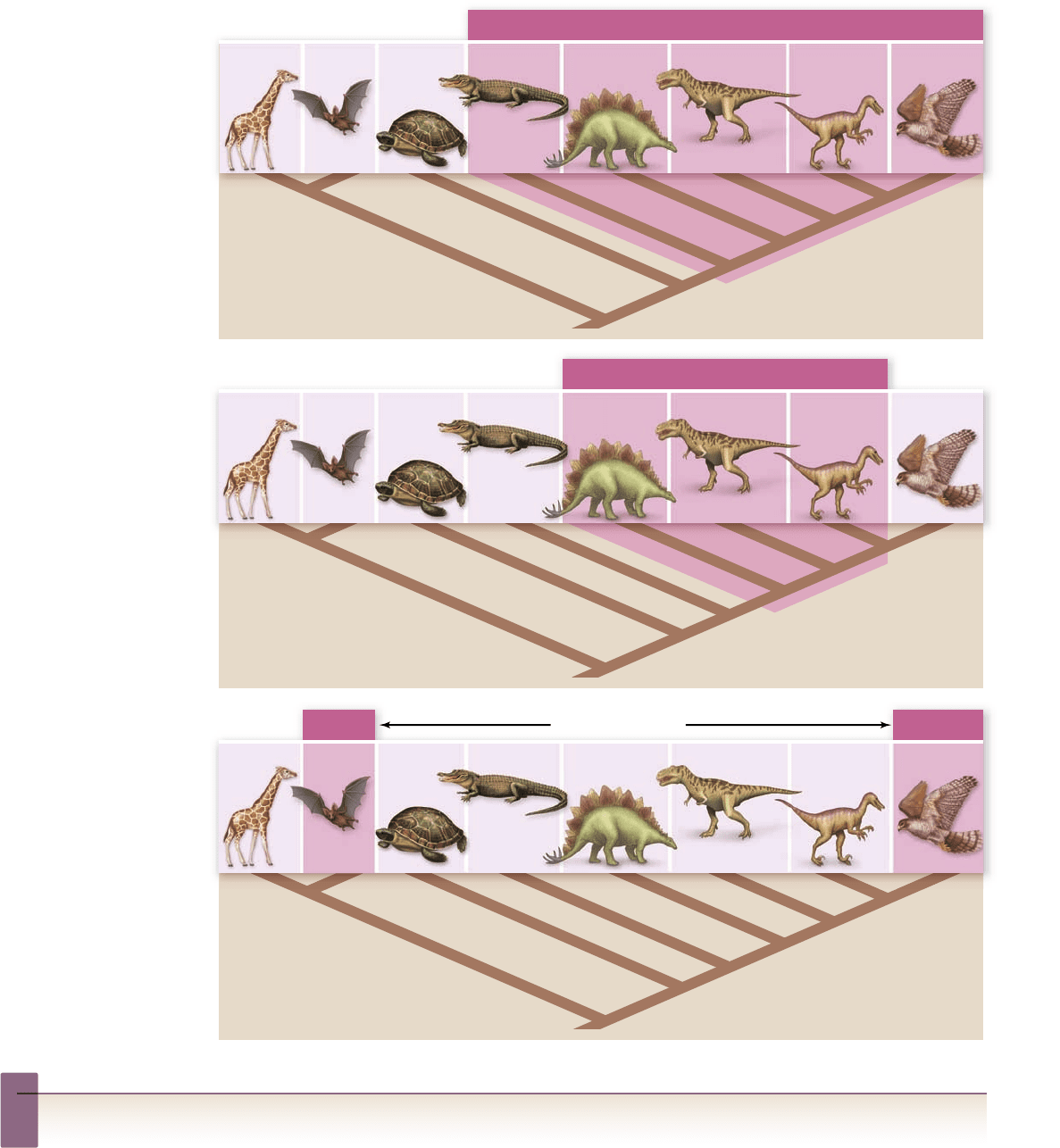
Dinosaurs
Archosaurs
Monophyletic Group
Paraphyletic Group
Polyphyletic Group
Giraffe Bat Turtle
Giraffe Bat Turtle Crocodile
Flying Vertebrates
Giraffe Bat Turtle Crocodile Stegosaurus Tyrannosaurus Velociraptor Hawk
Crocodile Stegosaurus Tyrannosaurus Velociraptor Hawk
Stegosaurus Tyrannosaurus Velociraptor Hawk
Figure 23.5
Monophyletic,
paraphyletic,
and polyphyletic groups.
a. A m onophyletic group
consists of the most recent
common ancestor and all
of its descendants. For
example, the name
“Archosaurs” is given to the
monophyletic group that
includes a crocodile,
Stegosaurus, Tyrannosaurus,
Velociraptor, and a hawk.
b. A paraphyletic group
consists of the most recent
common ancestor and some
of its descendants. For
example, some, but not all,
taxonomists traditionally
give the name “dinosaurs”
to the paraphyletic group
that includes Stegosaurus,
Tyrannosauru s, and
Velociraptor. This group is
paraphyletic because one
descendant of the most
recent ancestor of these
species, the bird, is not
included in the group. Other
taxonomists include birds
within the Dinosauria
because Tyrannosaurus and
Velociraptor are more closely
related to birds than to other
dinosaurs. c. A polyphyletic
group does not contain the
most recent common
ancestor of the group. For
example, bats and birds
could be classi ed in the
same group, which we might
call “ ying vertebrates,”
because they have similar
shapes, anatomical features,
and habitats. However, their
similarities re ect
convergent evolution, not
common ancestry.
its descendants. By definition, a clade is a monophyletic group. A
paraphyletic group includes the most recent common ancestor of
the group, but not all its descendants, and a polyphyletic group
does not include the most recent common ancestor of all members
of the group (figure 23.5) .
Inquiry question
?
Based on this phylogeny, are there any alternatives to convergence to explain the presence of wings in birds and bats? What types of data
might be used to test these hypotheses?
Taxonomic hierarchies are based on shared traits, and
ideally they should reflect evolutionary relationships. Tradi-
tional taxonomic groups, however, do not always fit well with
new understanding of phylogenetic relationships. For example,
birds have historically been placed in the class Aves, and
462
part
IV
Evolution
rav32223_ch23_456-473.indd 462rav32223_ch23_456-473.indd 462 11/12/09 1:21:12 PM11/12/09 1:21:12 PM

Apago PDF Enhancer
Green AlgaeRed Algae
Chlorophytes Charophytes
Bryophytes
Liverworts Hornworts Mosses
Vascular Plants
Figure 23.6
Phylogenetic information transforms plant classi cation. The traditional classi cation included two groups that we
now realize are not monophyletic: the green algae and bryophytes. For this reas on, plant systematists have developed a new classi cation of
plants that does not include these groups (discussed in chapter 30).
dinosaurs have been considered part of the class Reptilia. But
recent phylogenetic advances make clear that birds evolved
from dinosaurs. The last common ancestor of all birds and a
dinosaur was a meat-eating dinosaur (see figure 23.5).
Therefore, having two separate monophyletic groups,
one for birds and one for reptiles (including dinosaurs and
crocodiles, as well as lizards, snakes, and turtles), is not possible
based on phylogeny. And yet the terms Aves and Reptilia are so
familiar and well established that suddenly referring to birds as
a type of dinosaur, and thus a type of reptile, is difficult for
some. Nonetheless, biologists increasingly refer to birds as a
type of dinosaur and hence a type of reptile.
Situations like this are not uncommon. Another example
concerns the classification of plants. Traditionally, three major
groups were recognized: green algae, bryophytes, and vascular
plants (figure 23.6). However, recent research reveals that nei-
ther the green algae nor the bryophytes constitute mono phy-
let ic groups. Rather, some bryophyte groups are more closely
related to vascular plants than they are to other bryophytes, and
some green algae are more closely related to bryophytes and
vascular plants than they are to other green algae. As a result,
systematists no longer recognize green algae or bryophytes as
evolutionary groups, and the classification system has been
changed to reflect evolutionary relationships.
The phylogenetic species concept focuses
on shared derived characters
In the preceding chapter, you read about a number of differ-
ent ideas concerning what determines whether two popula-
tions belong to the same species. The biological species
concept (BSC) defines species as groups of interbreeding pop-
ulations that are reproductively isolated from other groups. In
recent years, a phylogenetic perspective has emerged and has
been applied to the question of species concepts. Advocates of
the phylogenetic species concept (PSC) propose that the
term species should be applied to groups of populations that
have been evolving independently of other groups of popula-
tions. Moreover, they suggest that phylogenetic analysis is the
way to identify such species. In this view, a species is a popula-
tion or set of populations characterized by one or more shared
derived characters.
This approach solves two of the problems with the BSC
that were discussed in chapter 22 . First, the BSC cannot be ap-
plied to allopatric populations because scientists cannot deter-
mine whether individuals of the populations would interbreed
and produce fertile offspring if they ever came together. The
PSC solves this problem: Instead of trying to predict what will
happen in the future if allopatric populations ever come into
contact, the PSC looks to the past to determine whether a pop-
ulation (or groups of populations) has evolved independently
for a long enough time to develop its own derived characters.
Second, the PSC can be applied equally well to both sex-
ual and asexual species, in contrast to the BSC, which deals only
with sexual forms.
The PSC also has drawbacks
The PSC is controversial, however, for several reasons. First,
some critics contend that it will lead to the recognition of every
slightly differentiated population as a distinct species. In Mis-
souri, for example, open, desert-like habitat patches called
glades are distributed throughout much of the state. These
glades contain a variety of warmth-loving species of plants and
animals that do not occur in the forests that separate the glades.
Glades have been isolated from one another for a few thousand
years, allowing enough time for populations on each glade to
evolve differences in some rapidly evolving parts of the genome.
Does that mean that each of the hundreds, if not thousands, of
Missouri glades contains its own species of lizards, grasshop-
pers, and scorpions? Some scientists argue that if one takes the
PSC to its logical extreme, that is exactly what would result.
chapter
23
Systematics and the Phylogenetic Revolution
463www.ravenbiology.com
rav32223_ch23_456-473.indd 463rav32223_ch23_456-473.indd 463 11/12/09 1:21:14 PM11/12/09 1:21:14 PM

Apago PDF Enhancer
A B C E D
Figure 23.7
Paraphyly and the phylogenetic species
concept. The ve populations initially were all members of the
same species, with their historical relationships indicated by the
cladogram. Then, population C evolved in some ways to become
greatly differentiated ecologically and reproductively from the
other populations. By all species concepts, this population would
qualify as a different species. However, the remaining four species
do not form a clade; they are paraphyletic because population C has
been removed and placed in a different species. This scenario may
occur commonly in nature, but most versions of the phylogenetic
species concept do not recognize paraphyletic species.
A second problem is that species may not always be mono-
phyletic, contrary to the definition of some versions of the phy-
logenetic species concept. Consider, for example, a species
composed of five populations, with evolutionary relationships
like those indicated in figure 23.7. Suppose that population C
becomes isolated and evolves differences that make it qualify as
a species by any concept (for example, reproductively isolated,
ecologically differentiated). But this distinction would mean
that the remaining populations, which might still be perfectly
capable of exchanging genes, would be paraphyletic, rather
than monophyletic. Such situations probably occur often in the
natural world.
Phylogenetic species concepts, of which there are many
different permutations, are increasingly used, but are also con-
tentious for the reasons just discussed. Evolutionary biologists
are trying to find ways to reconcile the historical perspective of
the PSC with the process-oriented perspective of the BSC and
other species concepts.
Learning Outcomes Review 23.3
By defi nition, a clade is monophyletic. A paraphyletic group contains the
most recent common ancestor, but not all its descendants; a polyphyletic
group does not contain the most recent common ancestor of all members.
The phylogenetic species concept focuses on the possession of shared
derived characters, in contrast to the biological species concept, which
emphasizes reproductive isolation. The PSC solves some problems of the BSC
but has diffi culties of its own.
■ Under the biological species concept, is it possible for a
species to be polyphyletic?
23.4
Phylogenetics and
Comparative Biology
Learning Outcomes
Explain the concept of homoplasy.1.
Describe how phylogenetic trees can reveal the existence 2.
of homoplasy.
Discuss how a phylogenetic tree can indicate the timing 3.
of species diversification.
Phylogenies not only provide information about evolutionary
relationships among species, but they are also indispensable for
understanding how evolution has occurred. By examining the
distribution of traits among species in the context of their phy-
logenetic relationships, much can be learned about how and
why evolution may have proceeded. In this way, phylogenetics
is the basis of all comparative biology.
Homologous features are derived from the same
ancestral source; homoplastic features are not
In chapter 21 , we pointed out that homologous structures are those
that are derived from the same body part in a common ancestor.
Thus, the forelegs of a dolphin (flipper) and of a horse (leg) are
homologous because they are derived from the same bones in an
ancestral vertebrate. By contrast, the wings of birds and those of
dragonflies are homoplastic structures because they are derived
from different ancestral structures. Phylogenetic analysis can help
determine whether structures are homologous or homoplastic.
Homologous parental care in dinosaurs,
crocodiles, and birds
Recent fossil discoveries have revealed that many species of
dinosaurs exhibited parental care. They incubated eggs laid in
nests and took care of growing baby dinosaurs, many of which
could not have fended for themselves. Some recent fossils show
dinosaurs sitting on a nest in exactly the same posture used
by birds today (figure 23.8a)! Initially, these discoveries were
treated as remarkable and unexpected—dinosaurs apparently
had independently evolved behaviors similar to those of modern-
day organisms. But examination of the phylogenetic position of
dinosaurs (see figure 23.5) indicates that they are most closely
related to two living groups of animals—crocodiles and birds—
both of which exhibit parental care (figure 23.8b).
It appears likely, therefore, that the parental care exhibited
by crocodiles, dinosaurs, and birds did not evolve convergently
from different ancestors that did not exhibit parental care; rather,
the behaviors are homologous, inherited by each of these groups
from their common ancestor that cared for its young.
Homoplastic convergence: Saber teeth
and plant conducting tubes
In other cases, by contrast, phylogenetic analysis can indicate
that similar traits have evolved independently in different
464
part
IV
Evolution
rav32223_ch23_456-473.indd 464rav32223_ch23_456-473.indd 464 11/12/09 1:21:14 PM11/12/09 1:21:14 PM
Apago PDF Enhancer
a. b.
Monotremes
Marsupials
Placentals
Phylogeny of Mammals
Saber-toothed
marsupial
Carnivores
Carnivores
Felines
Nimravids
Saber-toothed
cat
Bears, seals,
weasels, canids,
and raccoons
Hyenas
Civets
Mongooses
Saber-toothed
nimravid
Saber-toothed
nimravid
Phylogeny of Carnivores
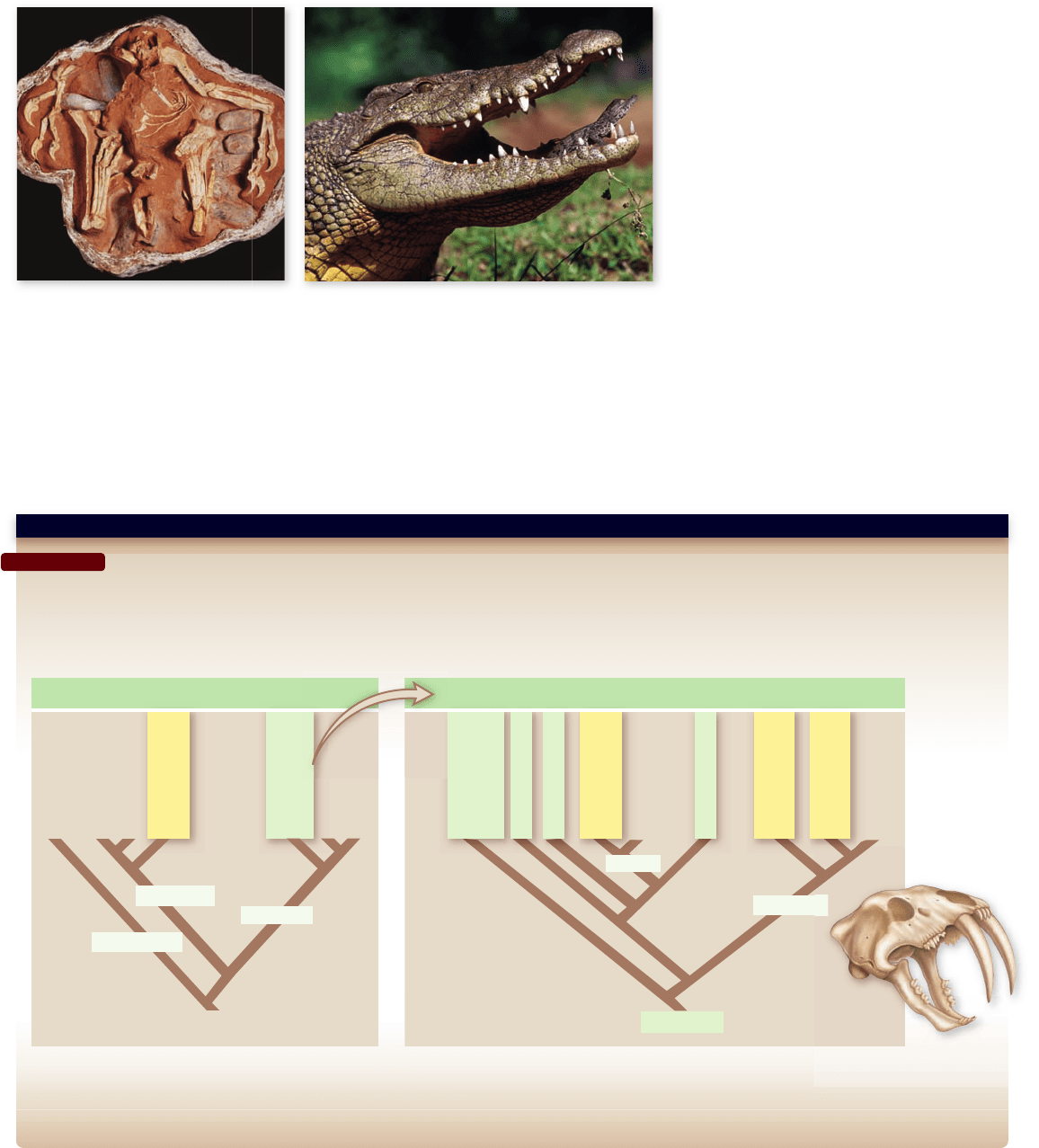
Question: How many times have saber teeth evolved in carnivores?
Hypothesis: Saber teeth are homologous and have only evolved once in carnivores (or, conversely, saber teeth are convergent and have evolved multiple times
in carnivores).
Phylogenic Analysis: Examine the distribution of saber teeth on a phylogeny of carnivores, and use parsimony to infer the history of saber tooth evolution
(note that not all branches within marsupials and placentals are shown on the phylogeny).
Result: Saber teeth have evolved at least three times in mammals: once within marsupials, once in felines, and at least once in nimravids.
Interpretation: Note that it is possible that saber teeth evolved twice in nimravids, but another possibility that requires the same number of evolutionary changes
(and thus is equally parsimonious) is that saber teeth evolved only once in the ancestor of nimravids and then were subsequently lost in one group of nimravids.
SCIENTIFIC THINKING
Figure 23.8
Parental care in dinosaurs
and crocodiles a. Fossil dinosaur incubating
its eggs. This remarkable fossil of Oviraptor
shows the dinosaur sitting on its nest of eggs just
as chickens do today. Not only is the dinosaur
squatting on the nest, but its forelimbs are
outstretched, perhaps to shade the eggs.
b. Crocodile exhibiting parental care. Female
crocodilians build nests and then remain nearby,
guarding them, while the eggs incubate. When
they are ready to hatch, the baby crocodiles
vocalize; females respond by digging up the eggs
and carrying the babies to the water.
clades. This convergent evolution from different ancestral
sources indicates that such traits represent homoplasies. As
one example, the fossil record reveals that extremely elon-
gated canine teeth (saber teeth) occurred in a number of dif-
ferent groups of extinct carnivorous mammals. Although how
these teeth were actually used is still debated, all saber-
toothed carnivores had body proportions similar to those of
cats, which suggests that these different types of carnivores
all evolved into a similar predatory lifestyle. Examination of
the saber-toothed character state in a phylogenetic context
reveals that it most likely evolved independently at least three
times (figure 23.9).
Figure 23.9
Distribution of saber-toothed mammals. Saber teeth have evolved at least three times in mammals: once within
marsupials, once in felines, and at least once in a now-extinct group of catlike carnivores called nimravids. It is possible that the condition
evolved twice in nimravids, but another possibility that requires the same number of evolutionary changes (and thus is equally parsimonious)
is tha t saber teeth evolved only once in the ancestor of nimravids and then were subsequently lost in one group of nimravids (not all of the
branches within marsupials and placentals are shown).
chapter
23
Systematics and the Phylogenetic Revolution
465www.ravenbiology.com
rav32223_ch23_456-473.indd 465rav32223_ch23_456-473.indd 465 11/12/09 1:21:15 PM11/12/09 1:21:15 PM
Apago PDF Enhancer
Angiosperms
Chlorophytes
Liverworts
Hornworts
Alveolates
Red Algae
Chlorophytes
Stramenopiles
Tracheophytes
Mosses
Brown Alga
60
60 µm
2
2 µm
60 µm
2 µm
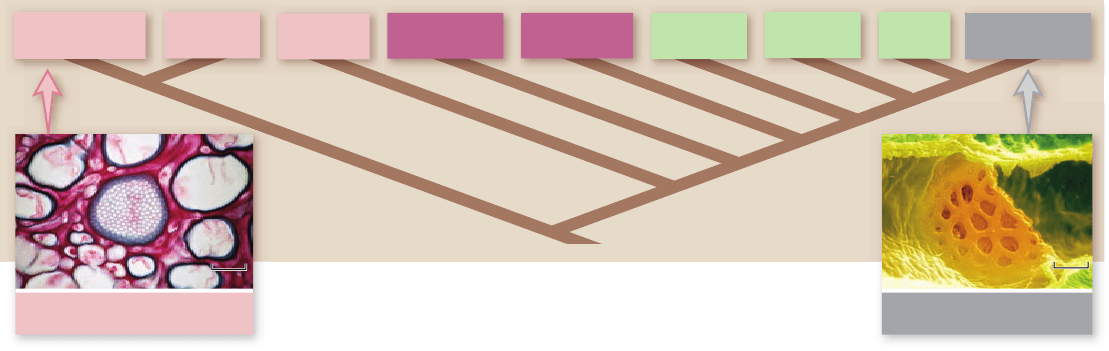
Figure 23.10
Convergent evolution of conducting tubes. Sieve tubes, which transport hormones and other substances throughout
the plant, have evolved in two distantly related plant groups ( brown algae are stramenopiles and angiosperms are tracheophytes).
© Dr. Richard Kessel & Dr. Gene Shih/Visuals Unlimited
Conducting tubes in plants provide a similar example.
The tracheophytes, a large group of land plants discussed in
chapter 30 , transport photosynthetic products, hormones, and
other molecules over long distances through elongated, tubular
cells that have perforated walls at the end. These structures are
stacked upon each other to create a conduit called a sieve tube.
Sieve tubes facilitate long-distance transport that is essential
for the survival of tall plants on land.
Most members of the brown algae, which includes kelp,
also have sieve elements (see figure 23.10 for a comparison of
the sieve plates in brown algae and angiosperms) that aid in the
rapid transport of materials. The land plants and brown algae
are distantly related (see figure 23.10), and their last common
ancestor was a single-celled organism that could not have had a
multicellular transport system. This indicates that the strong
structural and functional similarity of sieve elements in these
plant groups is an example of convergent evolution.
Complex characters evolve through
a sequence of evolutionary changes
Most complex characters do not evolve, fully formed, in one
step. Rather, they are often built up, step-by-step, in a series of
evolutionary transitions. Phylogenetic analysis can help dis-
cover these evolutionary sequences.
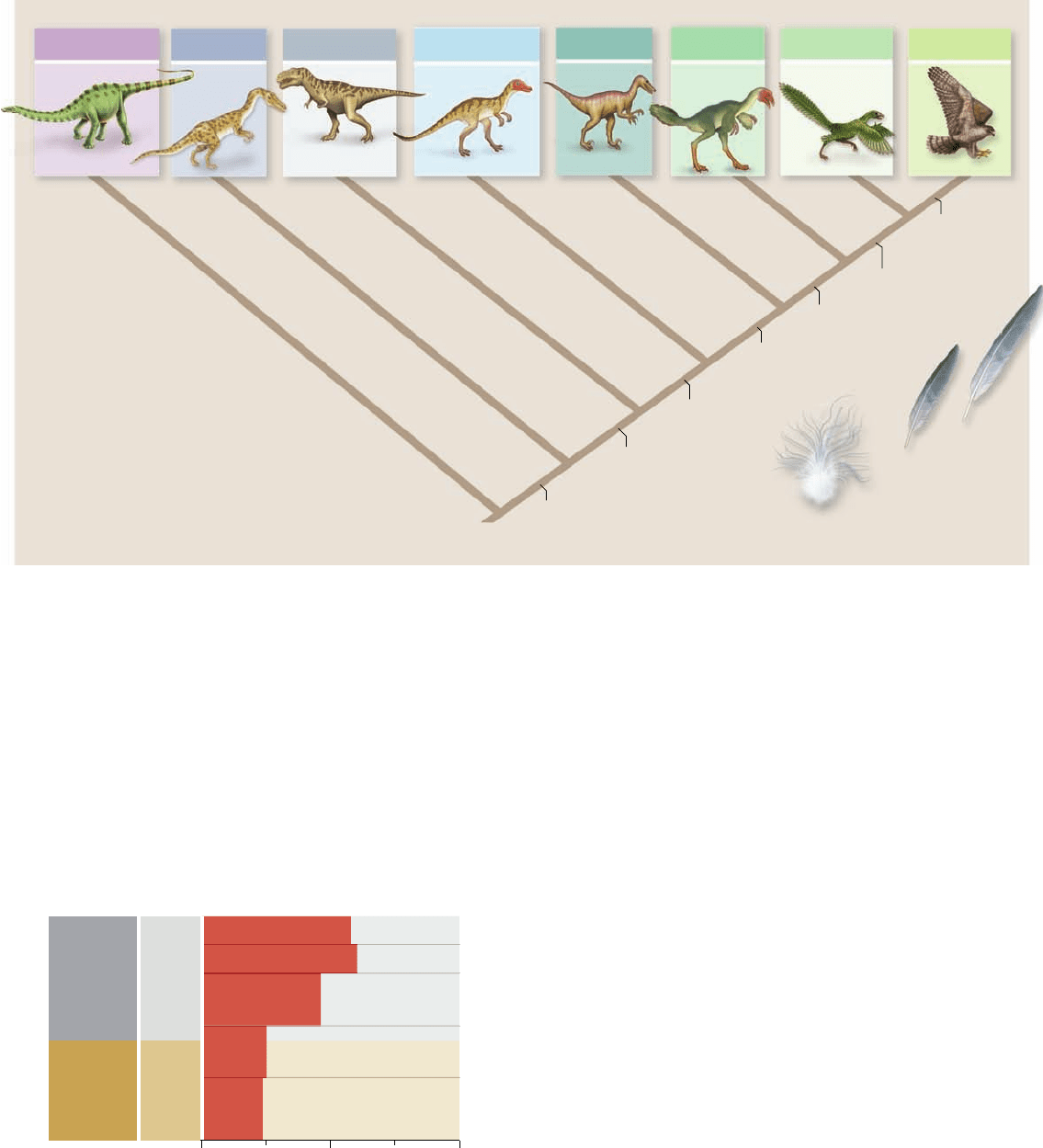
Modern-day birds—with their wings, feathers, light
bones, and breastbone—are exquisitely adapted flying ma-
chines. Fossil discoveries in recent years now allow us to recon-
struct the evolution of these features. When the fossils are
arranged phylogenetically, it becomes clear that the features
characterizing living birds did not evolve simultaneously.
Figure 23.11 shows how the features important to flight evolved
sequentially, probably over a long period of time, in the ances-
tors of modern birds.
One important finding often revealed by studies of the
evolution of complex characters is that the initial stages of a
character evolved as an adaptation to some environmental se-
lective pressure different from that for which the character is
currently adapted. Examination of figure 23.11 reveals that the
first feathery structures evolved deep in the theropod phylog-
eny, in animals with forearms clearly not modified for flight.
Therefore, the initial feather-like structures must have evolved
for some other reason, perhaps serving as insulation or deco-
ration. Through time, these structures have become modified
to the extent that modern feathers produce excellent aerody-
namic performance.
Phylogenetic methods can be used to
distinguish between competing hypotheses
Understanding the causes of patterns of biological diversity ob-
served today can be difficult because a single pattern often
could have resulted from several different processes. In many
cases, scientists can use phylogenies to distinguish between
competing hypotheses.
Larval dispersal in marine snails
An example of this use of phylogenetic analysis concerns the
evolution of larval forms in marine snails. Most species of snails
produce microscopic larvae that drift in the ocean currents,
sometimes traveling hundreds or thousands of miles before be-
coming established and transforming into adults. Some species,
however, have evolved larvae that settle to the ocean bottom
very quickly and thus don’t disperse far from their place of ori-
gin. Studies of fossil snails indicate that the proportion of spe-
cies that produce nondispersing larvae has increased through
geological time (figure 23.12).
Two processes could produce an increase in nondispers-
ing larvae through time. First, if evolutionary change from dis-
persing to nondispersing occurs more often than change in the
opposite direction, then the proportion of species that are non-
dispersing would increase through time.
Alternatively, if species that are nondispersing speciate
more frequently, or become extinct less frequently, than dis-
persing species, then through time the proportion of nondis-
persers would also increase (assuming that the descendants of
nondispersing species also were nondispersing). This latter
case is a reasonable hypothesis because nondispersing species
466
part
IV
Evolution
rav32223_ch23_456-473.indd 466rav32223_ch23_456-473.indd 466 11/12/09 1:21:18 PM11/12/09 1:21:18 PM
Apago PDF Enhancer
Percentage of species with
nondispersing larvae
Eocene
60 MYA
65 MYA
55 MYA
50 MYA
45 MYA
40 MYA
Paleocene
100 50 0
Other dinosaurs Coelophysis Tyrannosaurus Sinosauropteryx Velociraptor Caudipteryx Archaeopteryx Modern Birds
Light bones
Wishbone, breastbone,
loss of fingers 4 and 5
Downy feathers
Long arms, highly mobile
wrist, feathers with vanes,
shafts, and barbs
Long, aerodynamic feathers
Arms longer than legs
Loss of teeth
and reduction
of tail
Figure 23.11
The evolution of birds. Th e traits we think of as characteristic of modern birds have evolved in stages over many
millions of years.
From Richard O. Prum and Alan H. Brush, “The Evolutionary Origin and Diversi cation of Feathers,” Quarterly Review of Biology, September 2002. Reprinted
with permission of the University of Chicago Press.
Figure 23.12
Larvae dispersal.
Increase through time in
the proportion of species whose larvae do not disperse far from
their place of birth.
eny, as shown by more dispersing
→
nondispersing branch-
points in figure 23.13a. In contrast, if nondispersing species
underwent greater speciation, then clades of nondispersing
species would contain more species than clades of dispersing
species, as shown in figure 23.13b.
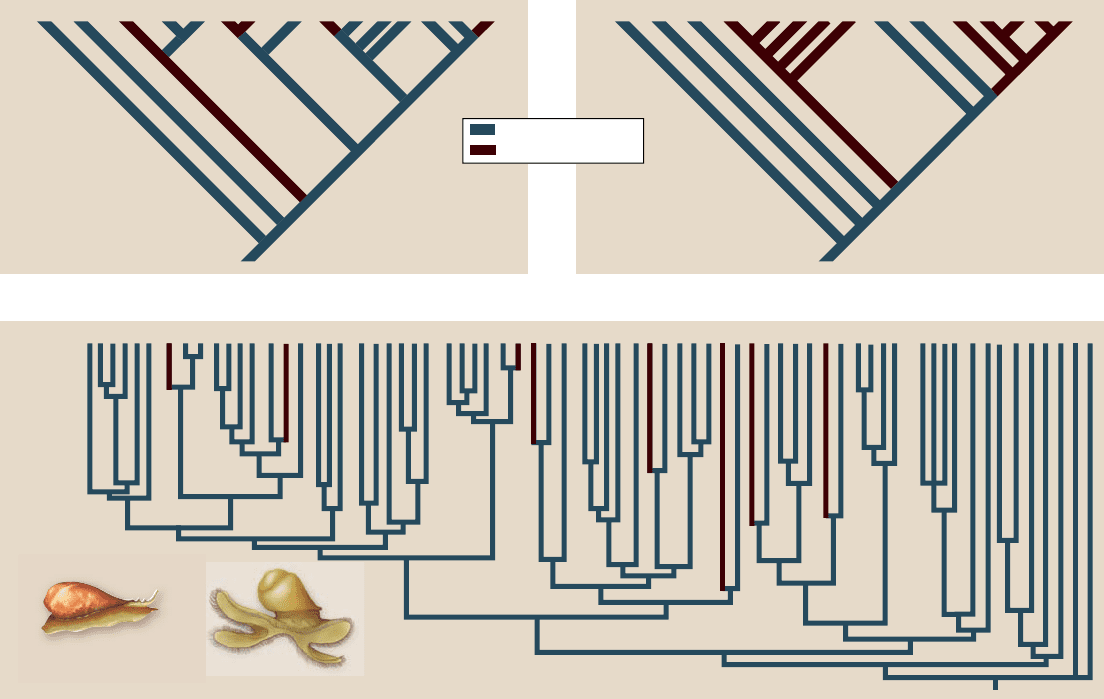
Evidence for both processes was revealed in an examina-
tion of the phylogeny of marine snails in the genus Conus, in
which 30% of species are nondispersing (figure 23.13c). The
phylogeny indicates that possession of dispersing larvae was the
ancestral state; nondispersing larvae are inferred to have evolved
eight times, with no evidence for evolutionary reversal from
nondispersing to dispersing larvae.
At the same time, clades of nondispersing larvae tend to
have on average 3.5 times as many species as dispersing larvae,
which suggests that in nondispersing species, rates of speciation
are higher, rates of extinction are lower, or both.
This analysis therefore indicates that the evolutionary in-
crease in nondispersing larvae through time may be a result
both of a bias in the direction in which evolution proceeds plus
an increase in rate of diversification (that is, speciation rate mi-
nus extinction rate) in nondispersing clades.
The lack of evolutionary reversal is not surprising be-
cause when larvae evolve to become nondispersing, they of-
ten lose a variety of structures used for feeding while drifting
in the ocean current. In most cases, once a structure is lost,
it rarely re-evolves, and thus the standard view is that the
probably have lower amounts of gene flow than dispersing
species, and thus might more easily become geographically
isolated, increasing the likelihood of allopatric speciation (see
chapter 22) .
These two processes would result in different phyloge-
netic patterns. If evolution from a dispersing ancestor to a non-
dispersing descendant occurred more often than the reverse,
then an excess of such changes should be evident in the phylog-
chapter
23
Systematics and the Phylogenetic Revolution
467www.ravenbiology.com
rav32223_ch23_456-473.indd 467rav32223_ch23_456-473.indd 467 11/12/09 1:21:23 PM11/12/09 1:21:23 PM
Apago PDF Enhancer
b.a.
c.
Dispersing larvae Nondispersing larvae
Dispersing larvae
Nondispersing larvae
Figure 23.13
Phylogenetic investigation of the evolution of nondispersing larvae. a. In this hypothetical example, the
evolutionary transition fr om dispersing to nondispersing larvae occurs more frequently (four times) than the converse (once). By contrast, in
(b) clades that have nondispersing larvae diversify to a greater extent due to higher rates of speciation or lower rates of extinction (assuming
that extinct forms are not shown). c. Phylogeny for Conus, a genus of marine snails. Nondispersing larvae have evolved eight separate times
from dispersing larvae, with no instances of evolution in the reverse direction. This phylogeny does not show all species, however;
nondispersing clades contain on average 3.5 times as many species as dispersing clades.
It is important to remember that patterns of evolution
suggested by phylogenetic analysis are not always correct—
evolution does not necessarily occur parsimoniously. In the
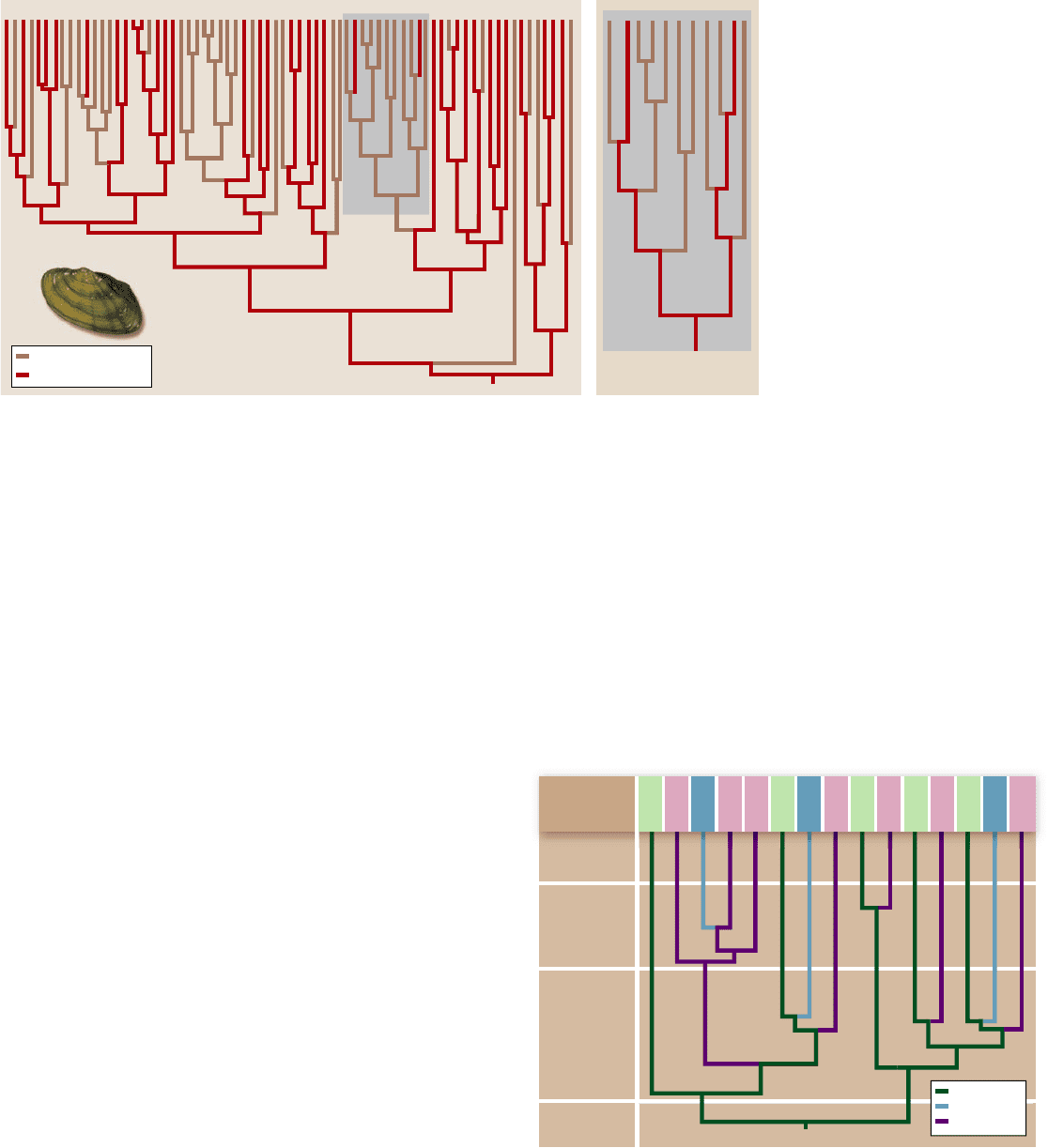
limpet study, for example, it is possible that within the clade in
the light blue box, presence of a larva was retained as the ances-
tral state, and direct development evolved independently six
times (figure 23.14b). Phylogenetic analysis cannot rule out this
possibility, even if it is less phylogenetically parsimonious.
If the re-evolution of lost traits seems unlikely, then the
alternative hypothesis that direct development evolved six times—
rather than only once at the base of the clade, with two instances
of evolutionary reversal—should be considered. For example,
studies of the morphology or embryology of direct-developing
species might shed light on whether such structures are homolo-
gous or convergent. In some cases, artificial selection experiments
in the laboratory or genetic manipulations can test the hypothesis
that it is difficult for lost structures to re-evolve. Conclusions from
phylogenetic analyses are always stronger when supported by re-
sults of other types of studies.
evolution of nondispersing larvae is a one-way street, with
few examples of re-evolution of dispersing larvae.
Loss of the larval stage in marine invertebrates
A related phenomenon in many marine invertebrates is the loss
of the larval stage entirely. Most marine invertebrates—in
groups as diverse as snails, sea stars, and anemones—pass
through a larval stage as they develop. But in a number of dif-
ferent types of organisms, the larval stage is omitted, and the
eggs develop directly into adults.
The evolutionary loss of the larval stage has been sug-
gested as another example of a nonreversible evolutionary
change because once the larval stages are lost, it is difficult for
them to re-evolve—or so the argument goes. A recent study on
one group of marine limpets, shelled marine organisms related
to snails, shows that this is not necessarily the case. Among these
limpets, direct development has evolved many times; however,
in three cases, the phylogeny strongly suggests that evolution
reversed and a larval stage re-evolved (figure 23.14a).
468
part
IV
Evolution
rav32223_ch23_456-473.indd 468rav32223_ch23_456-473.indd 468 11/12/09 1:21:24 PM11/12/09 1:21:24 PM
Apago PDF Enhancer
a
. b.
Direct development
Larval stage
2000
1500
41,602
150
25,000
400
33,400
Number
of Species
85
24
10
20
8
3
18
78
Conifer
Cycad
Angiosperm
Tertiary
Cretaceous
Jurassic
Triassic
Figure 23.14
Evolution of
direct development in a
family of limpets. a. Direct
development evolved many
times (indicated by beige lines
stemming from a red ancestor),
and three instances of reversed
evolution from direct
development to larval
development are indicated (red
lines from a beige ancestor). b. A
less parsimonious interpretation
of evolution in the clade in the
light blue box is that, rather than
two evolutionary reversals, six
instances of the evolution of
development occurred without
any evolutionary reversal.
Figure 23.15
Evolutionary diversi cation of the
Phytophaga, the largest clade of herbivorous beetles.
Clades that originated deep in the phylogenetic tree feed on
conifers; clades that feed on angiosperms, which evolved more
recently, originated more recently. Age of clades is established by
examination of fossil beetles.
appears to have arisen five times independently within herbivo-
rous beetles; in each case, the angiosperm-specializing clade is
substantially more species-rich than the clade to which it is
most closely related (termed a sister clade) and which specializes
on some other type of plant.
Why specialization on angiosperms has led to great
species diversity is not yet clear and is the focus of much
current research. One possibility is that this diversity is
linked to the great species-richness of angiosperms them-
selves. With more than 250,000 species of angiosperms,
beetle clades specializing on them may have had a multitude
Phylogenetics helps explain
species diversi cation
One of the central goals of evolutionary biology is to explain pat-
terns of species diversity: Why do some types of plants and ani-
mals exhibit more species richness—a greater number of species
per clade—than others? Phylogenetic analysis can be used both
to suggest and to test hypotheses about such differences.
Species richness in beetles
Beetles (order Coleoptera) are the most diverse group of ani-
mals. Approximately 60% of all animal species are insects, and
approximately 80% of all insect species are beetles. Among bee-
tles, families that are herbivorous are particularly species-rich.
Examination of the phylogeny provides insight into bee-
tle evolutionary diversification (figure 23.15). Among the Phy-
tophaga, the clade which contains most herbivorous beetle
species, the deepest branches belong to beetle families that spe-
cialize on conifers. This finding agrees with the fossil record
because conifers were among the earliest seed plant groups to
evolve. By contrast, the flowering plants (angiosperms) evolved
more recently, in the Cretaceous, and beetle families specializ-
ing on them have shorter evolutionary branches, indicating
their more recent evolutionary appearance.
This correspondence between phylogenetic position and
timing of plant origins suggests that beetles have been remark-
ably conservative in their diet. The family Nemonychidae, for
example, appears to have remained specialized on conifers since
the beginning of the Jurassic, approximately 210 mya.
Phylogenetic explanations for beetle diversification
The phylogenetic perspective suggests factors that may be re-
sponsible for the incredible diversity of beetles. The phylogeny
for the Phytophaga indicates that it is not the evolution of her-
bivory itself that is linked to great species richness. Rather, spe-
cialization on angiosperms seems to have been a prerequisite
for great species diversification. Specialization on angiosperms
chapter
23
Systematics and the Phylogenetic Revolution
469www.ravenbiology.com
rav32223_ch23_456-473.indd 469rav32223_ch23_456-473.indd 469 11/12/09 1:21:24 PM11/12/09 1:21:24 PM
Apago PDF Enhancer
HIV- 1 group M
HIV- 1 group N
HIV- 1 group O
HIV- 2 group F
HIV- 2 group D
HIV- 2 group C
HIV- 2 group B
HIV- 2 group A
SIV- chimpanzee
SIV- chimpanzee
SIV- chimpanzee
SIV- chimpanzee
SIV- sooty mangabey
SIV- sooty mangabey
SIV- sooty mangabey
SIV- stump-tailed macaque
SIV- pig-tailed macaque
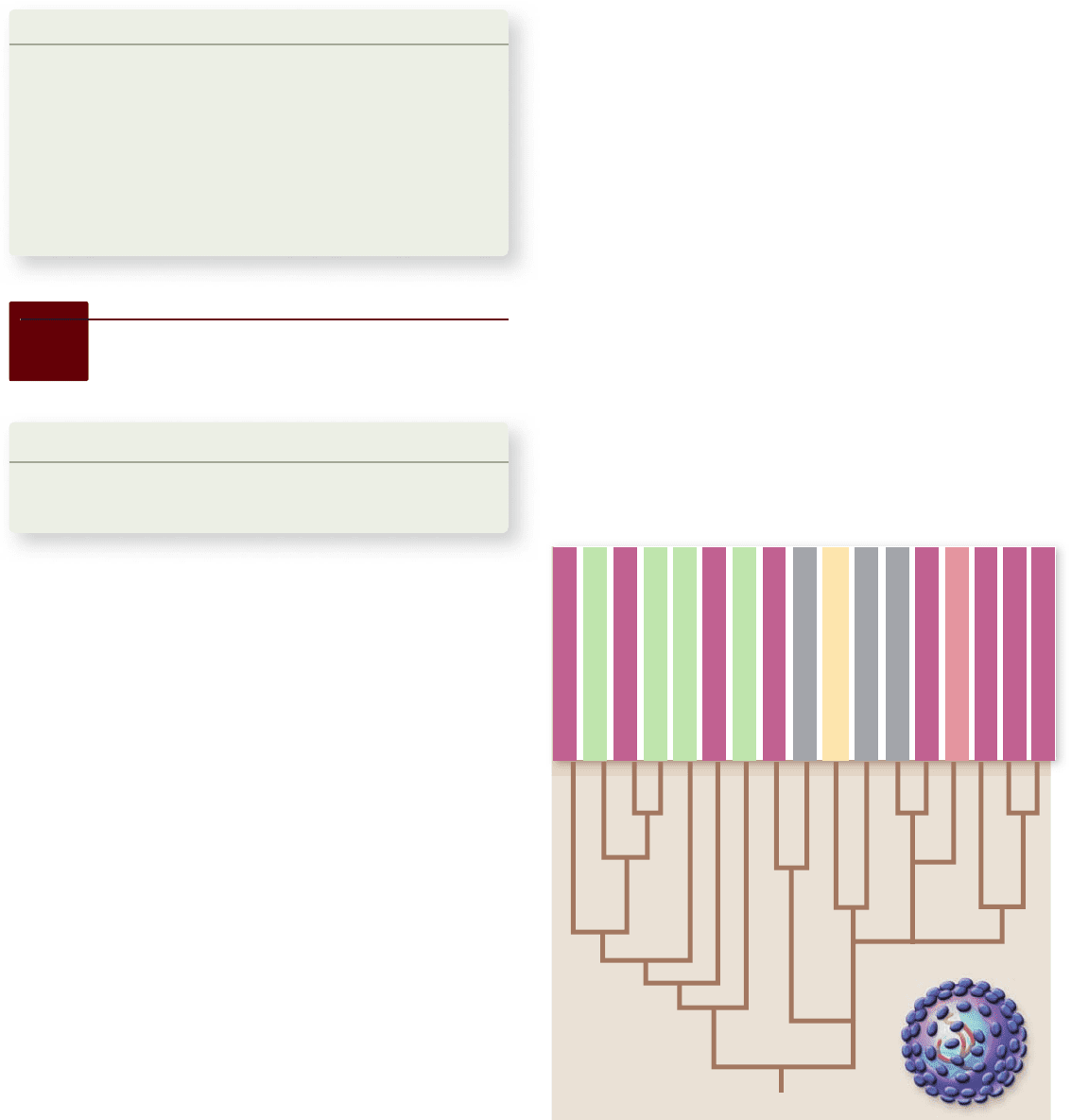
Figure 23.16
Evolution of HIV and SIV. HIV has evolved
multiple times and from strains of SIV in different primate species
(each primate species indicated by a different color). The three-way
branching event on the right side of the phylogeny results because
the data do not clearly indicate the relationships among the
three clades.
of opportunities to adapt to feed on individual species, thus
promoting divergence and speciation.
Learning Outcomes Review 23.4
Homologous traits are derived from the same ancestral character states,
whereas homoplastic traits are not, even though they may have similar
function. Phylogenetic analysis can help determine whether homology or
homoplasy has occurred. By correlating phylogenetic branching with known
evolutionary events, the timing and cause of diversifi cation can be inferred.
■ Does the possession of the same character state by all
members of a clade mean that the ancestor of that
clade necessarily possessed that character state?
23.5
Phylogenetics and Disease
Evolution
Learning Outcome
Discuss how phylogenetic analysis can help identify 1.
patterns of disease transmission.
The examples so far have illustrated the use of phylogenetic
analysis to examine relationships among species. Such analyses
can also be conducted on virtually any group of biological enti-
ties, as long as evolutionary divergence in these groups occurs
by a branching process, with little or no genetic exchange be-
tween different groups. No example illustrates this better than
recent attempts to understand the evolution of the virus that
causes autoimmune deficiency syndrome (AIDS).
HIV has evolved from a simian
viral counterpart
AIDS was first recognized in the early 1980s, and it rapidly
became epidemic in the human population. Current estimates
are that more than 33 million people are infected with the hu-
man immunodeficiency virus (HIV), of whom more than 2 mil-
lion die each year.
At first, scientists were perplexed about where HIV had
originated and how it had infected humans. In the mid-1980s,
however, scientists discovered a related virus in laboratory
mon keys, termed simian immunodeficiency virus (SIV). In
biochemical terms, the viruses are very similar, although genetic
differences exist. At last count, SIV has been detected in 36 spe-
cies of primates, but only in species found in sub-Saharan Africa.
Interestingly, SIV—which appears to be transmitted sexually—
does not appear to cause any illness in these primates.
Based on the degree of genetic differentiation among
strains of SIV, scientists estimate that SIV may have been
around for more than a million years in these primates, perhaps
providing enough time for these species to adapt to the virus
and thus prevent it from having adverse effects.
Phylogenetic analysis identi es
the path of transmission
Phylogenetic analysis of strains of HIV and SIV reveals three
clear findings. First, HIV obviously descended from SIV. All
strains of HIV are phylogenetically nested within clades of SIV
strains, indicating that HIV is derived from SIV (figure 23.16) .
Second, a number of different strains of HIV exist, and
they appear to represent independent transfers from different
primate species. Each of the human strains is more closely re-
lated to a strain of SIV than it is to other HIV strains, indicat-
ing separate origins of the HIV strains.
Finally, humans have acquired HIV from different host
species. HIV-1, which is the virus responsible for the global
epidemic, has three subtypes. Each of these subtypes is most
closely related to a different strain of chimpanzee SIV, indicat-
ing that the transfer occurred from chimps to humans. By con-
trast, subtypes of HIV-2, which is much less widespread (in
some cases known from only one individual), are related to
SIV found in West African monkeys, primarily the sooty man-
gabey (Cercocebus atys). Moreover, the subtypes of HIV-2 also
appear to represent several independent cross-species trans-
missions to humans.
470
part
IV
Evolution
rav32223_ch23_456-473.indd 470rav32223_ch23_456-473.indd 470 11/12/09 1:21:25 PM11/12/09 1:21:25 PM
Apago PDF Enhancer
Community
Victim
Patient
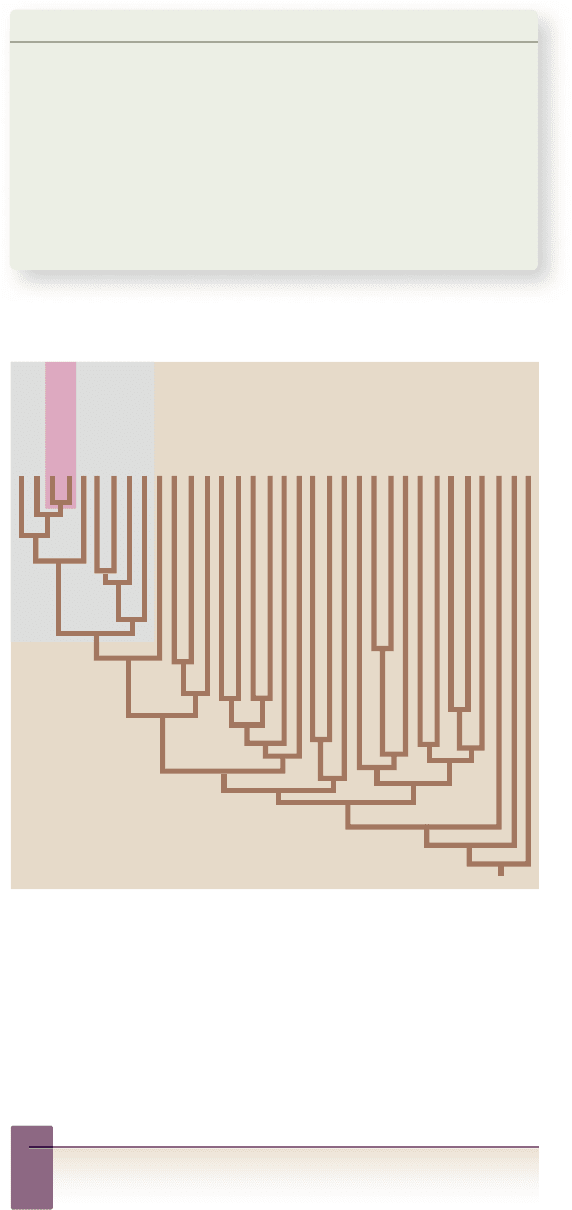
Figure 23.17
Evolution of HIV strains reveals the source
of infection. HIV mutates so rapidly that a single HIV-infected
individual often contains multiple genotypes in his or her body. As
a result, it is possible to create a phylogeny of HIV strains and to
identify the source of infection of a particular individual. In this
case, the HIV strains of the victim clearly are derived from strains
in the body of another individual, the patient. Other HIV strains
are from HIV-infected individuals in the local community.
Inquiry question
?
What would the phylogeny look like if the victim had not
gotten HIV from the patient?
patient, and from a large number of HIV-infected people in
the local community. The phylogenetic analysis clearly dem-
onstrated that the victim’s viral strain was most closely relat-
ed to the patient’s (figure 23.17) . This analysis, which for the
first time established phylogenetics as a legally admissible
form of evidence in courts in the United States, helped con-
vict the dentist, who is now serving a 50-year sentence for
attempted murder.
Learning Outcome Review 23.5
Modern phylogenetic techniques and analysis can track the evolution of
disease strains, uncovering sources and progression. The HIV virus provides
a prime example: Analysis of viral strains has shown that the progression
from simian immunodefi ciency virus (SIV) into human hosts has occurred
several times. Phylogenetic analysis is also used to track the transmission
of human disease .
■ Could HIV have arisen in humans and then have been
transmitted to other primate species?
Transmission from other primates to humans
Several hypotheses have been proposed to explain how SIV
jumped from chimps and monkeys to humans. The most likely
idea is that transmission occurred as the result of blood-to-
blood contact that may occur when humans kill and butcher
monkeys and apes. Recent years have seen a huge increase in
the rate at which primates are hunted for the “bushmeat” mar-
ket, particularly in central and western Africa. This increase has
resulted from a combination of increased human populations
desiring ever greater amounts of protein, combined with in-
creased access to the habitats in which these primates live as the
result of road building and economic development. The unfor-
tunate result is that population sizes of many primate species,
including our closest relatives, are plummeting toward extinc-
tion. A second consequence of this hunting is that humans are
increasingly brought into contact with bodily fluids of these
animals, and it is easy to imagine how during the butchering
process, blood from a recently killed animal might enter the
human bloodstream through cuts in the skin, perhaps obtained
during the hunting process.
Establishing the crossover time line and location
Where and when did this cross-species transmission occur?
HIV strains are most diverse in Africa, and the incidence of
HIV is higher there than elsewhere in the world. Combined
with the evidence that HIV is related to SIV in African pri-
mates, it seems certain that AIDS appeared first in Africa.
As for when the jump from other primates to humans oc-
curred, the fact that AIDS was not recognized until the 1980s
suggests that HIV probably arose recently. Descendants of
slaves brought to North America from West Africa in the 19th
century lacked the disease, indicating that it probably did not
occur at the time of the slave trade.
Once the disease was recognized in the 1980s, scientists
scoured repositories of blood samples to see whether HIV
could be detected in blood samples from the past. The earliest
HIV-positive result was found in a sample from 1959, pushing
the date of origin back at least two decades. Based on the
amount of genetic difference between strains of HIV-1, includ-
ing the 1959 sample, and assuming the operation of a molecular
clock, scientists estimate that the deadly strain of AIDS proba-
bly crossed into humans some time before 1940.
Phylogenies can be used to track the evolution
of AIDS among individuals
The AIDS virus evolves extremely rapidly, so much so that dif-
ferent strains can exist within different individuals in a single
population. As a result, phylogenetic analysis can be applied to
answer very specific questions; just as phylogeny proved useful
in determining the source of HIV, it can also pinpoint the
source of infection for particular individuals.
This ability became apparent in a court case in Louisi-
ana in 1998, in which a dentist was accused of injecting his
former girlfriend with blood drawn from an HIV-infected
patient. The dentist’s records revealed that he had drawn
blood from the patient and had done so in a suspicious man-
ner. Scientists sequenced the viral strains from the victim, the
chapter
23
Systematics and the Phylogenetic Revolution
471www.ravenbiology.com
rav32223_ch23_456-473.indd 471rav32223_ch23_456-473.indd 471 11/12/09 1:21:26 PM11/12/09 1:21:26 PM