
Raven P.H., Johnson G.B., Mason K.A. Biology (Ninth Edition)
Подождите немного. Документ загружается.


Apago PDF Enhancer
H
Introduction
How is it that closely
related species of frogs can have completely different patterns of development? One frog goes from
fertilized egg to adult frog with no intermediate tadpole stage. The sister species has an extra developmental stage neatly
slipped in between early development and the formation of limbs—the tadpole stage. The answer to this and other such
evolutionary differences in development that yield novel phenotypes are now being investigated with modern genetic
and genomic tools. Research findings are accentuating the biological puzzle that many developmental genes are highly
conserved, and a tremendous diversity of life shares this basic toolkit of developmental genes. In this chapter, we explore the
emerging field of developmental evolution, a field that brings together previously distinct fields of biology.
Chapter Outline
25.1 Overview of Evolutionary
Developmental Biology
25.2 One or Two Gene Mutations, New Form
25.3 Same Gene, New Function
25.4 Different Genes, Convergent Function
25.5 Gene Duplication and Divergence
25.6 Functional Analysis of Genes Across Species
25.7 Diversity of Eyes in the Natural World:
A Case Study
Chapter
25
Evolution
of Development
25.1
Overview of Evolutionary
Developmental Biology
Learning Outcomes
Explain how the same gene can produce different 1.
morphologies in different species.
Identify types of genes most likely to affect 2.
morphology.
Ultimately, to explain the differences among species, we need
to look at changes in developmental processes. These chang-
es result in a different phenotype and trace back to changes
in genes.
Phenotypic diversity could either result from many dif-
ferent genes or be explained by how a smaller set of genes are
deployed and regulated. In some cases, changes in the protein-
coding region have been implicated in novel phenotypes. In
other cases, a conserved set of genes appear to be responsible
for the basic body plan of organisms with changes in regulation
of gene expression accounting for phenotypic differences. The
latter is true for two sea urchin species.
CHAPTER
rav32223_ch25_492-506.indd 492rav32223_ch25_492-506.indd 492 11/12/09 2:08:49 PM11/12/09 2:08:49 PM
Apago PDF Enhancer
n
2n
Pluteus
larva
(plankton)
Adult
(benthic)
Metamorphosis
and settlement
to sea floor
Juvenile
Development of
free-swimming larva
Indirect Development
FERTILIZATION
Egg and
sperm
released
MEIOSIS
n
2n
Adult
(benthic)
Juvenile
Direct
development
into adult
Direct Development
FERTILIZATION
Eggs
brooded
by female
MEIOSIS
chapter
25
Evolution of Development
493www.ravenbiology.com
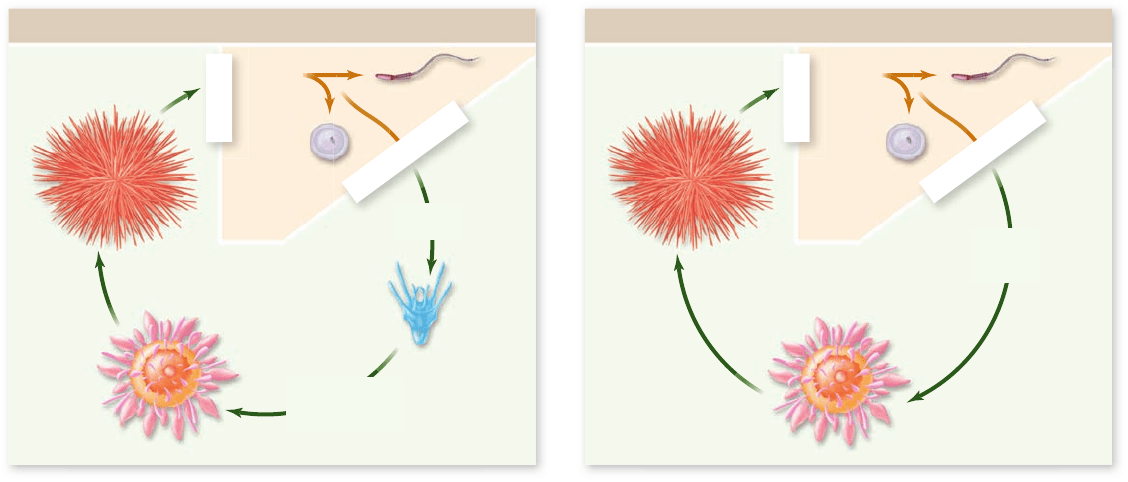
Closely related sea urchins have been discovered that
have very distinctive developmental patterns (figure 25.1). The
direct-developing urchin never makes a pluteus (free-
swimming) larva—it just jumps ahead to its adult form. We
could speculate that the two forms have different develop-
mental genes, but it turns out that this is not the case. Instead,
the two forms have undergone dramatic changes in patterns
of developmental gene expression, even though their adult
form is nearly the same. In this case, patterns of expression
have changed.
Highly conserved genes produce
diverse morphologies
Transcription factors and genes involved in signaling pathways
are responsible for coordination of development. As you saw in
chapter 9, key elements of kinase and G protein-signaling path-
ways are also highly conserved among organisms. Even subtle
changes in a signaling pathway can alter the enzyme that is ac-
tivated or repressed, the transcription factor that is activated or
repressed, or the activation or repression of gene expression.
Any of these changes can have dramatic effects on the develop-
ment of an organism.
A relatively small number of gene families, about two
dozen, regulate animal and plant development. The develop-
mental roles of several of these families, including Hox gene
transcription factors, are described in chapter 19.
Hox (homeobox) genes appeared before the divergence of
plants and animals; in plants, they have a role in shoot growth
and leaf development, and in animals they establish body plans.
These genes code for proteins with a highly conserved homeo-
domain that binds to the regulatory region of other genes to ac-
tivate or repress these genes’ expression. Hox genes specify when
and where genes are expressed.
Another family of transcription factors, MADS box genes,
are found throughout the eukaryotes. The MADS box also codes
for a DNA-binding motif. Large numbers of MADS box genes
establish the body plan of plants, especially the flowers. Although
the MADS box region is highly conserved, variation exists in other
regions of the coding sequence. Later in this chapter, we consider
how there came to be so many MADS box genes in plants and how
such similar genes can have very different functions.
Developmental mechanisms
exhibit evolutionary change
Understanding how development evolves requires integration
of knowledge about genes, gene expression, development, and
evolution. Either transcription factors or signaling molecules
can be modified during evolution, changing the timing or posi-
tion of gene expression and, as a result, gene function.
Heterochrony
Alterations in timing of developmental events due to a genetic
change are called heterochrony. A heterochronic mutation
could affect a gene that controls when a plant transitions from
the juvenile to the adult stage, at which point it can produce
reproductive organs. A mutation in a gene that delays flowering
in plants can result in a small plant that flowers quickly rather
than requiring months or years of growth.
Most mutations that affect developmental regulatory
genes are lethal, but every so often a novel phenotype emerges
that persists because of increased fitness. If a mutation lead-
ing to early flowering increased the fitness of a plant, the new
phenotype will persist. For example, a tundra plant that flowers
earlier, enabling it to be fertilized and set seed, could have in-
creased fitness over an individual of the same species that flow-
ers later, just as the short summer comes to a close.
Figure 25.1
Direct and indirect sea urchin development. Phylogenetic analysis shows that indirect development (pluteus larva)
was the ancestral state. Direct-developing sea urchins have lost an intermediate stage of development.
rav32223_ch25_492-506.indd 493rav32223_ch25_492-506.indd 493 11/12/09 2:08:54 PM11/12/09 2:08:54 PM
Apago PDF Enhancer
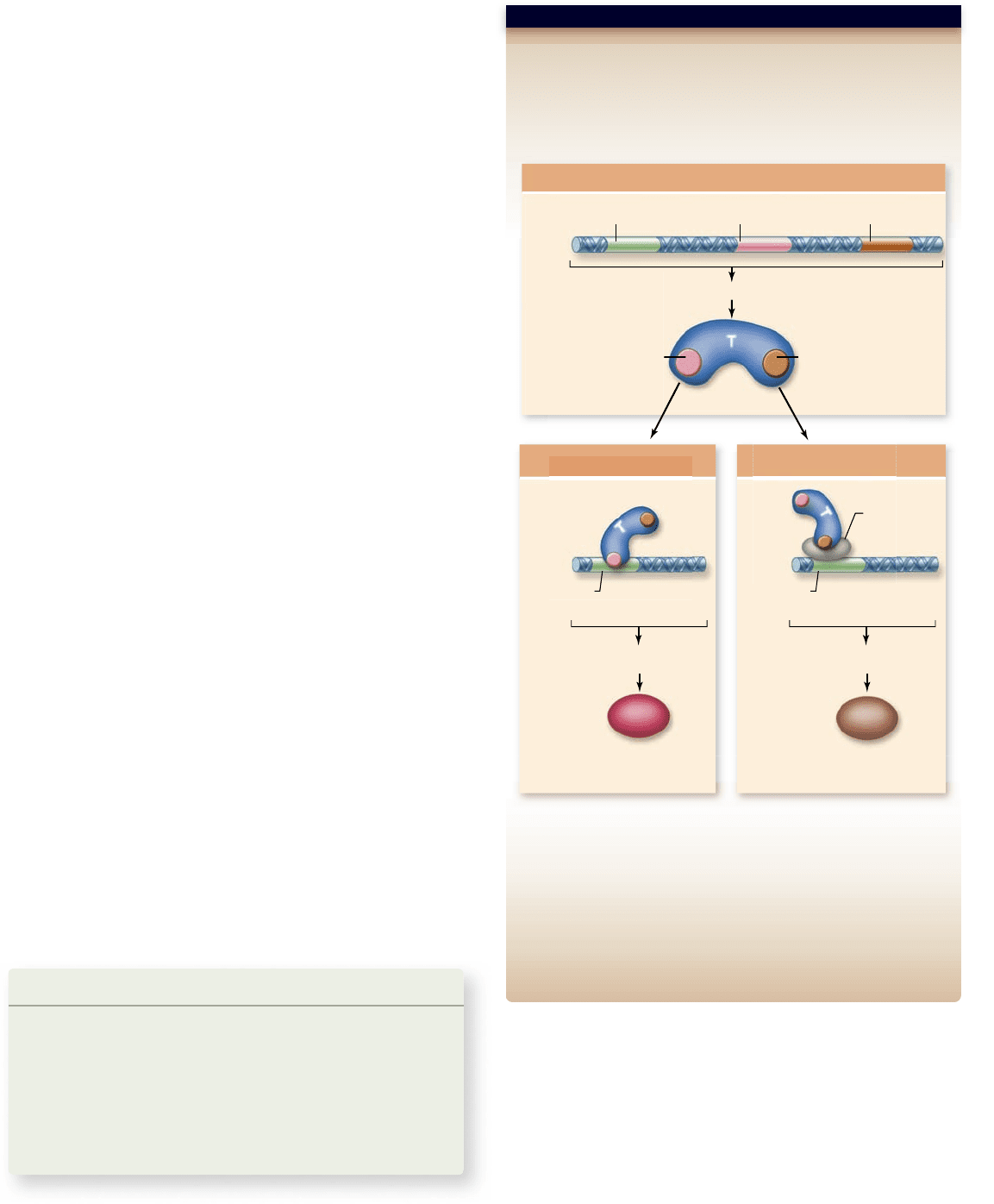
Hypothesis: A transcription factor can affect the expression of more
than one gene.
Prediction: The protein encoded by a transcription factor gene will have
multiple DNA- or protein-binding sites.
Test: Experimentally identify molecules that bind to the transcription factor.
Result: This transcription factor has a site that binds to the regulatory
region of a gene and a site that binds to a transcription factor that
regulates expression of a second gene.
Conclusion: A single transcription factor can regulate the expression of
more than one gene.
Further Experiments: Determine the specific developmental role of
each binding domain by creating mutations in regions of the gene that
code for specific binding sites in the protein.
SCIENTIFIC THINKING
T
gene T
gene X
protein X
protein T
protein Y
gene Y
T
T
DNA-binding
motif
Protein-binding
motif
Protein
Protein
Another
transcription
factor
Transcription and translation
Expression of Transcription Factor Gene T
Regulatory region DNA-binding Protein-binding
Expression of
Developmental Gene X
Expression of
Developmental Gene Y
Transcription
and translation
Transcription
and translation
Regulatory
region
Regulatory
region
494
part
IV
Evolution
Homeosis
Alternations in the spatial pattern of gene expression can re-
sult in homeosis. A four-winged Drosophila fly is an example of
a homeotic mutation in which gene expression patterns shift.
Mutations in three genes in the Bithorax complex are required
to produce this phenotype, which resembles more ancestral in-
sects with four rather than two wings.
The Drosophila Antennapedia mutant, which has a leg where
an antenna should be, is another example of a homeotic mutation.
Mutations in genes such as Antennapedia can arise spontaneously
in the natural world or by mutagenesis in the laboratory, but their
bizarre phenotypes would have little survival value in nature.
Changes in translated regions of transcription factors
The coding sequence of a gene can contain multiple regions
with different functions (figure 25.2). The DNA-binding mo-
tifs, exemplified by MADS box and Hox genes, could be altered
so that they no longer bind to their target genes; as a result, that
developmental pathway would cease to function. Alternatively,
the modified transcription factor might bind to a different tar-
get and initiate a new sequence of developmental events.
The regulatory region sequence of a transcription factor must
also be considered in the evolution of developmental mechanisms.
A sequence change could alter the transcription complex that forms
at a regulatory region, resulting in novel expression patterns. Either
the time or place of gene expression could be affected, giving rise
to heterochrony or homeosis. In this case, the downstream targets
might be the same, but the cells that express the target genes or the
time at which these target genes are expressed could change.
Changes in signaling pathways
Coordinating information about neighboring cells and the exter-
nal environment is essential for successful development. Signaling
pathways are essential for cell-to-cell communication. If the struc-
ture of a ligand changes, it may no longer bind to its target receptor,
or it could bind to a different receptor or no receptor at all. If, as a
result of a genetic change, a receptor is produced in a different cell
type, a homeotic phenotype may appear. And, as mentioned earlier,
small changes in signaling molecules can alter their targets.
The sections that follow use specific examples of the evo-
lution of diverse morphologies. For each example, consider
how the mechanism of development has been altered and what
the outcome is. Keep in mind that these are the successful ex-
amples; most morphological novelties that arise quickly, but do
not improve fitness, go extinct.
Learning Outcomes Review 25.1
Highly conserved genes can undergo small changes in their coding or
regulatory regions that alter the place or time of gene expression and
function, resulting in new body plans. Changes in transcription factors and
signaling pathways are the most common source of new morphologies.
Two closely related species of ■ Drosophila in Hawaii can be
distinguished by the presence of one pair of wings versus two
pairs. How would you explain the evolution of this difference?
F i g u r e 2 5 . 2
Transcription factors have a key role in the
evolution of development.
rav32223_ch25_492-506.indd 494rav32223_ch25_492-506.indd 494 11/12/09 2:08:55 PM11/12/09 2:08:55 PM
Apago PDF Enhancer
Stop
codon
Brassica oleracea
italica
(broccoli)
botrytis
(cauliflower)
oleracea
(wild cabbage)
acephala
(kale)
chapter
25
Evolution of Development
495www.ravenbiology.com
This study points out the importance of having well-
documented phylogenies in place to enable the analysis of de-
velopmental pattern evolution. A second, somewhat unusual,
feature of this example is that the driving selective force for
these subspecies was artificial. Wild relatives are still found
scattered along the rocky coasts of Spain and the Mediterra-
nean region. The most likely scenario is that humans found
a cal mutant and selected for that phenotype through cultiva-
tion. The large heads of broccoli and cauliflower offer a larger
amount of a vegetable material than the wild kale plants and a
tasty alternative to Brassica leaves.
Cichlid sh jaws demonstrate
morphological diversity
Our second example of how a single gene can change form
and function comes from natural selection of cichlid fish in
Lake Malawi in East Africa. In less than a few million years,
hundreds of species have evolved in the lake from a com-
mon ancestor. The rapid speciation of cichlids is discussed
in chapter 22.
One explanation for the successful speciation is that dif-
ferent species have acquired different niches based on feed-
ing habits. There are bottom eaters, biters, and rammers. The
rammers have particularly long snouts with which to ram their
prey; biters have an intermediate snout; and the bottom feeders
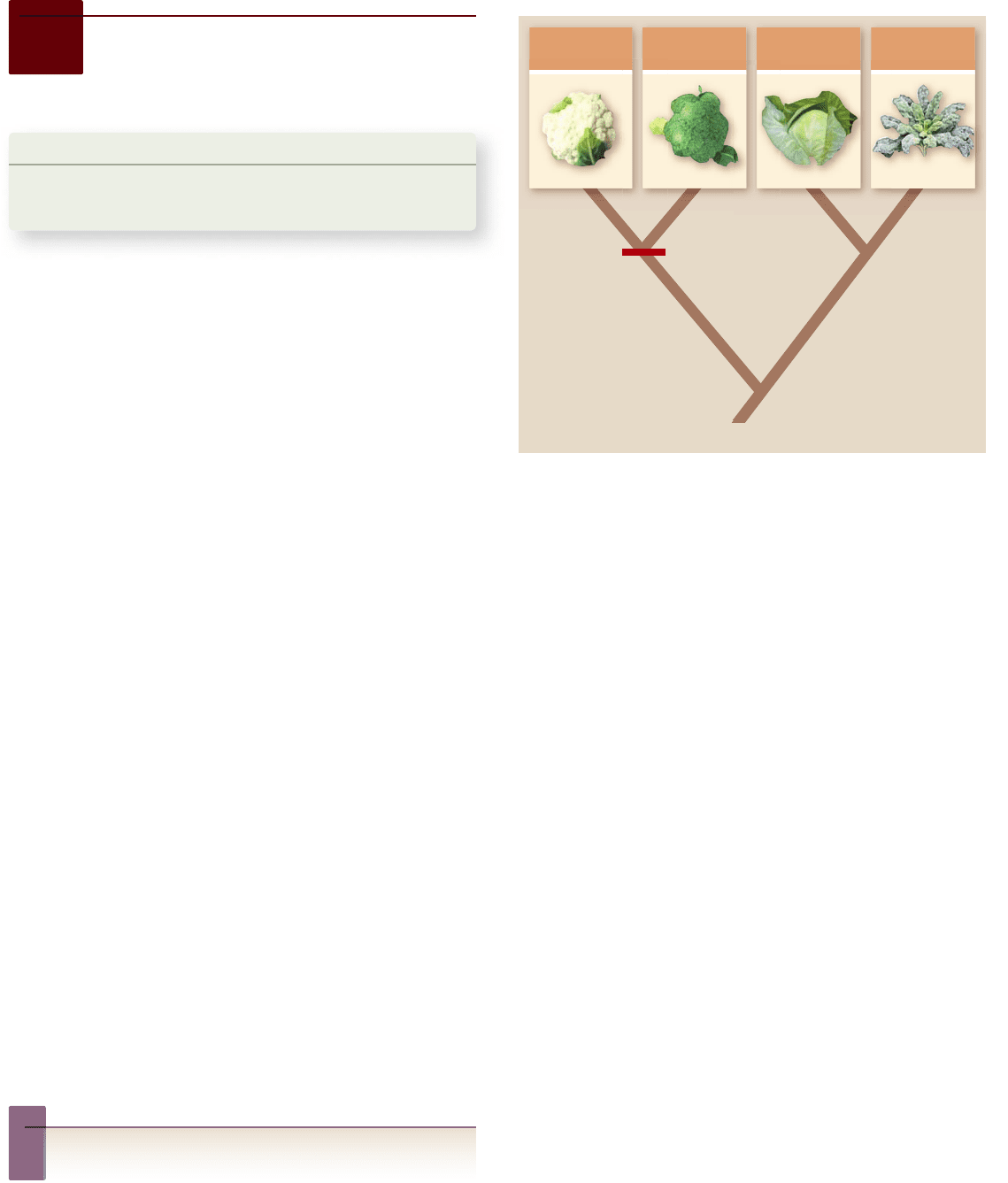
Figure 25.3
Evolution of cauli ower and broccoli.
A point mutation that converted an amino acid-coding region
into a stop codon resulted in the extensive reproductive branching
pattern that was arti cially selected for in two crop plants that are
subspecies of Brassica oleracea.
25.2
One or Two Gene Mutations,
New Form
Learning Outcome
Explain how a small number of mutations can give rise to a 1.
new species.
Here we consider three examples of single gene mutations with
altered morphology: (1) wild cabbage, (2) jaw shape in cichlid
fish, and (3) bony armor in threespine sticklebacks. In all cases,
the change increased fitness in a particular environment at a
specific time, leading to selection of the new phenotypes.
Cauli ower and broccoli began
with a stop codon
The species Brassica oleracea is particularly fascinating because
individual members can have extraordinarily diverse pheno-
types. The diversity in form is so great that B. oleracea members
are divided into subspecies (figure 25.3).
Wild cabbage, kale, tree kale, red cabbage, green cabbage,
brussels sprouts, broccoli, and cauliflower are all members of
the same species. Some flower early, some late. Some have long
stems, others have short ones. Some form a few flowers, and
others, like broccoli and cauliflower, initiate many flowers but
development of the flowers is arrested. Curiously, these plants
with such different appearances are very closely related.
One piece of the puzzle lies with the gene CAL (Cauli-
flower), which was first cloned in a close Brassica relative,
Arabidopsis. In combination with another mutation, Apetala1,
Arabidopsis plants can be turned from plants with a limited
number of simple flowers into miniature broccoli or cauli-
flower plants with masses of arrested flower meristems or
flower buds. These two genes are needed for the transition
to making flowers and arose through duplication of a single
ancestral gene within the brassica group . When they are ab-
sent, meristems continue to make branches, but are delayed in
producing flowers.
The CAL gene was cloned from large numbers of B. olera-
cea subspecies, and a stop codon, TAG, was found in the middle
of the CAL coding sequences of broccoli and cauliflower. A phy-
logenetic analysis of B. oleracea coupled with the CAL sequence
analysis leads to the conclusion that this stop codon appeared
after the ancestors of broccoli and cauliflower diverged from
other subspecies members, but before broccoli and cauliflower
diverged from each other (see figure 25.3).
Inquiry question
?
Knowing that cauliflower and broccoli have a stop codon in the
middle of the CAL gene-coding sequence, predict the wild-type
function of CAL. What additional evolutionary events may have
occurred since broccoli and cauliflower diverged?
rav32223_ch25_492-506.indd 495rav32223_ch25_492-506.indd 495 11/12/09 2:08:55 PM11/12/09 2:08:55 PM

Apago PDF Enhancer
Metriaclima zebra
Short snout Long snout
Labeotropheus fuelleborni
496
part
IV
Evolution
have short snouts adapted to scrounging for food at the base of
the lake (figure 25.4).
How did these fish acquire such different snout forms?
An extensive genetic analysis revealed that two genes, of yet
unknown function, are likely responsible for the shape and
size of the jaw. The results of crossing long- and short-snouted
cichlids indicate the importance of a single gene in determining
jaw length and height.
Regulating the length versus the height of the jaw may well be
an early and important developmental event. The overall size of the
fish and the extent of muscle development both hinge on the form
of the jaw. The range of jaw forms appears to have persisted because
the cichlids establish unique niches for feeding within the lake.
Our third example underscores the critical link between per-
sistence of a new mutation and increased fitness. The freshwater,
threespine stickleback fish,
Gasterousteus aculeatus,
originated after
the last ice age from marine populations with bony plates that protect
the fish from predators. Freshwater populations, subject to less pre-
dation, have lost their bony armor. The
Ectodysplasin (Eda)
gene is
one of a few associated with reduced armor in freshwater threespine
sticklebacks. The
Eda a
llele that causes reduced armor originated
about 2 mya in marine sticklebacks and persists with a frequency of
about 1% in marine environments. The frequency is much higher
in freshwater populations. To test the fitness of the
Eda a
llele in
freshwater, marine sticklebacks that were heterozygous for the
Eda
allele were moved to four freshwater environments and allowed to
breed. Positive selection for the reduced armor allele was observed
and correlated with longer length in juvenile fish, likely because
fewer resources were allocated to armor development. Although
the reduced armor allele has persisted in marine populations for
2 million years as a rare genetic variant, increased frequency of the
allele and phenotype are only seen under adaptive conditions.
Learning Outcome Review 25.2
Although most mutations are lethal, some confer a fi tness advantage.
These may consist of very small mutations, such as a change to a single
codon, that have large eff ects on development and morphology.
A cichlid hatches with a much longer jaw than ever ■
observed before. You determine that a mutation is
responsible for the extra-long jaw. Is this fish a new
species? How would you determine this?
Figure 25.4
Diversity of cichlid sh jaws. A difference in one gene is responsible for a short snout in Labeotropheus fuelleborni and a
long snout in Metriaclima zebra. Genes that affect jaw length can affect body shape as well because of the constraints the size of the jaw places
on muscle development.
25.3
Same Gene, New Function
Learning Outcome
Explain how a gene could acquire a new function. 1.
In the preceding chapter, we discussed the similarity between
human and mouse genomes. If all but 300 of the 20,000 to
25,000 human genes are shared with mice, why are mice and
humans so different? Part of the answer is that genes with simi-
lar sequences in two different species may work in slightly or
even dramatically different ways.
Ancestral genes may be
co-opted for new functions
The evolution of chordates can partially be explained by the
co-option of an existing gene for a new function. Ascidians
are basal chordates that have a notochord but no vertebrae
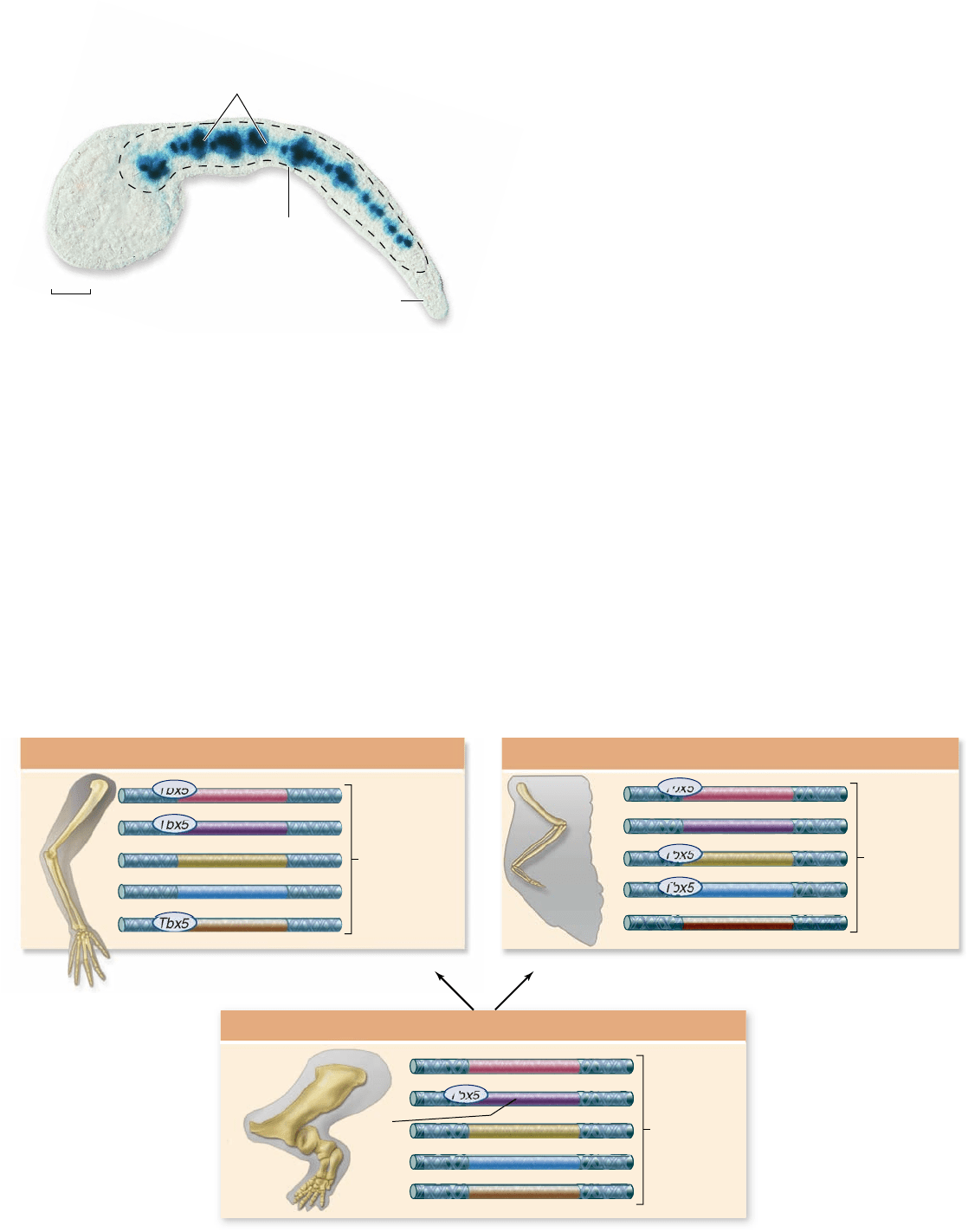
(chapter 35). The Brachyury gene of ascidians encodes a tran-
scription factor, and it is expressed in the developing notochord
(figure 25.5).
Brachyury is not a novel gene that appeared as verte-
brates evolved. It is also found in invertebrates. For example,
a mollusk homologue of Brachyury is associated with anterior–
posterior axis specification. Most likely, an ancestral Brachyury
gene was co-opted for a new role in notochord development.
Brachyury is a member of a gene family with a specific
domain, that is, a conserved sequence of base-pairs within the
gene. A region of Brachyury encodes a protein domain called the
T box, which is a transcription factor. So, Brachyury-encoded
protein turns on a gene or genes. The details of which genes are
regulated by Brachyury are only now being discovered.
In mice and dogs, a mutation in Brachyury that prevents
the encoded protein from binding to DNA causes a short tail to
develop. In some dog breeds it is customary to “bob” (surgically
shorten) a puppy’s tail. Nonlethal, short-tail mutations are be-
ing used to breed dogs like Welsh corgis to avoid bobbing. Hu-
mans lack tails, but have wild-type copies of Brachyury. Genes in
addition to Brachyury must be needed to make a tail.
rav32223_ch25_492-506.indd 496rav32223_ch25_492-506.indd 496 11/12/09 2:08:56 PM11/12/09 2:08:56 PM
Apago PDF Enhancer
Brachyury gene
expression
Tai l
Developing
notochord
200 µm
Gene
activated
by Tbx5
Limb
development
target genes
Tetrapod ancestor
Tbx5
Limb
development
target genes
Human
Tbx5
Tbx5
Tbx5
Limb
development
target genes
Bird
Tbx5
Tbx5
Tbx5
chapter
25
Evolution of Development
497www.ravenbiology.com
Figure 25.5
Co-opting a gene for a new function.
Brachyury is a gene found in invertebrates that has been used
for notochord development in this ascidian, a basal chordate. By
attaching the Brachyury promoter to a gene with a protein product
that stains blue, it is possible to see that Brachyury gene expression
in ascidians is associated with the development of the notochord, a
novel function compared with its function in organisms lacking a
notochord. The orthologue in the nematode Caenorhabditis elegans
is important for hind gut and male tail development, but there is no
evidence of a notochord precursor.
How a single genetic toolkit can be used to build an in-
sect, a bird, a bat, a whale, or a human is an intriguing puzzle
for evolutionary developmental biologists, exemplified with
the Brachyury gene. One explanation is that Brachyury turns on
different genes or combinations of genes in different animals.
Although there are not yet enough data to sort out the details
of Brachyury, we can look at limb formation for an explanation
of how such a change could have evolved.
Limbs have developed through modi cation
of transcriptional regulation
Most tetrapods have four limbs—two hindlimbs and two fore-
limbs, although two or more limbs have been lost in snakes
and many lizards. The forelimb in a bird is actually the wing.
Our forelimb is the arm. Clearly, these are two very different
structures, but they have a common evolutionary origin. As you
learned in chapter 23, these are termed homologous structures.
At the genetic level, humans and birds both express the
Tbx5 gene in developing forelimb buds. Like Brachyury, Tbx5
is a member of a transcription factor gene family with T box
domain, that is, a conserved sequence of base-pairs within
the gene. So, Tbx5-encoded protein turns on a gene or genes
that are needed to make a limb. Mutations in the human Tbx5
gene cause Holt–Oram syndrome, resulting in forelimb and
heart abnormalities.
What seems to have changed as birds and humans evolved
are the genes that are transcribed because of the Tbx5 protein
(figure 25.6). In the ancestral tetrapod, perhaps Tbx5 protein
bound to only one gene and triggered transcription. In humans
and birds, different genes are expressed in response to Tbx5.
Tbx5 evolution corresponds to changes in the coding
sequence for the Tbx5 protein in different species. But, it
is also possible for changes in noncoding regions of a gene
to alter gene expression during evolution. The paired-like
homeo domain transcription factor 1 (pitx1) is expressed in the
hindlimbs of developing mouse embryos and its homologue
Figure 25.6
Tbx5 regulates wing and arm development. Wings and arms are very different, but the development of each
depends on Tbx5. Why the difference? Tbx5 turns on different genes in birds and humans.
rav32223_ch25_492-506.indd 497rav32223_ch25_492-506.indd 497 11/12/09 2:08:59 PM11/12/09 2:08:59 PM
Apago PDF Enhancer
Development of Eyespots
D
evelopment o
f
Eyespo
ts
Mature Wing Eyespots Develop from
Regions of Distal-less Expression
Distal-less gene
expression at
focus
Eyespots
1. Distal-less recruited
for new function
(usually used for limb
development)
2. Additional genes are
recruited for eyespot
formation
3. Divergence of genes
regulating pigment
formation
Results in divergence
of pigment phenotype
Developing Wing of
Precis coenia
Evolution of Eyespots
Development of Eyespots
498
part
IV
Evolution
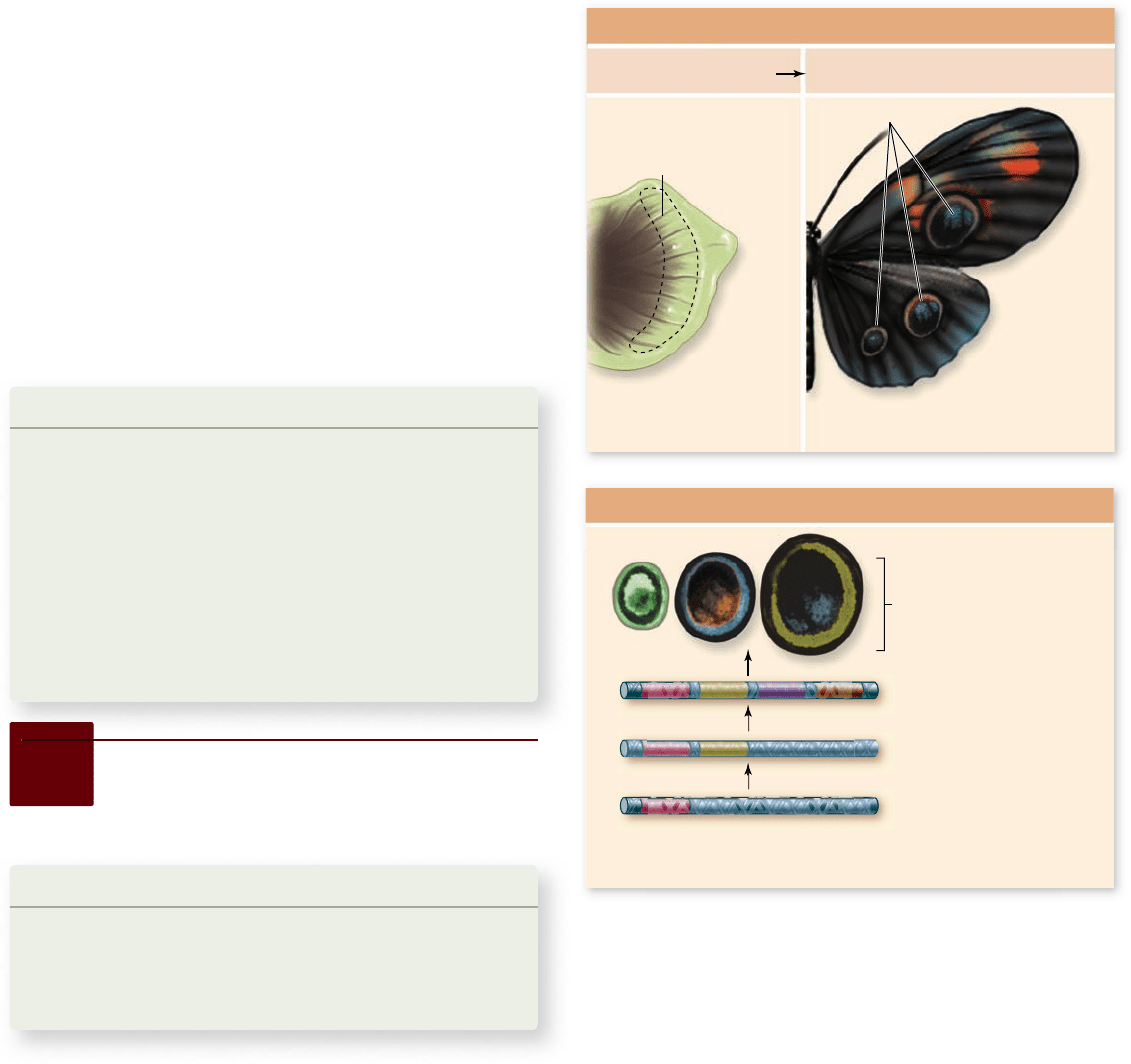
low them to thermoregulate (figure 25.7).The origins of these
patterns are best explained by co-option, the recruitment of ex-
isting regulatory programs for new functions.
Distal-less is one of the genes co-opted for butterfly spot
development. Limb development in insects and arthropods re-
quires Distal-less, but the expression of this gene also predicts
where spots will form on butterfly wings (figure 27.7). Distal-
less determines the center of the spot, but several other genes
have been co-opted to determine the overall size and pattern of
different spots.
Figure 25.7
Butter y eyespot evolution. The Distal-
less gene, usually used for limb development, was recruited for
eyespot development on butterfly wings. Distal-less initiates the
development of different colored spots in different butterfly
species by regulating different pigment genes in different
species. Eyespots can protect butterflies by startling predators.
is expressed in the pelvic region of the ninespine stickleback
fish (Pungitius pungitius). Much like Brachyury gene evolution,
pitx1 was co-opted for a new function in tetrapods. Within the
sticklebacks, pitx1 gene expression is different in marine and
freshwater populations of the same species, yet the pitx1 pro-
teins in both populations have identical amino acid sequences.
The explanation for the difference can be found in the regula-
tory regions of the gene that are not translated into protein.
Marine sticklebacks have skeletal armor, including spines,
in the pelvic region that protects them from predatory fish. Iso-
lated populations in freshwater have lost the pelvic skeletal ar-
mor and do not express pitx1 in the pelvic region. Loss of gene
expression, rather than a change in the protein structure of this
transcription factor accounts for the morphological differences
between the marine and freshwater sticklebacks.
Learning Outcome Review 25.3
During the long course of evolution, genes have been co-opted for new
functions. A change in the protein-coding region of a transcription
factor can change the genes it can bind to and regulate. A change in
the regulatory region of a gene can change where or when that gene is
expressed, which can lead to altered morphology.
A marine threespine stickleback fish is mated with a ■
freshwater threespine with reduced armor, and all the
offspring have reduced armor. Both populations have
identical pitx1 coding regions. Could pitx1 be the cause of
the difference in armor? How could you test this?
25.4
Di erent Genes,
Convergent Function
Learning Outcomes
Differentiate between homologous structures and 1.
homoplastic structures.
Explain how two very similar morphologies can arise from 2.
different developmental pathways.
Homoplastic structures, also known as analogous structures, have
the same or similar functions, but arose independently —unlike
homologous structures that arose once from a common ances-
tor. Phylogenies reveal convergent events, but the origin of the
convergence may not be easily understood. In many cases dif-
ferent developmental pathways have been modified, as is the
case with the spots on butterfly wings. In other cases, such as
flower shape, it is not always as clear whether the same or dif-
ferent genes are responsible for convergent evolution.
Insect wing patterns demonstrate
homoplastic convergence
Insect wings, especially those of moths and butterflies, have
beautiful patterns that can protect them from predation and al-
rav32223_ch25_492-506.indd 498rav32223_ch25_492-506.indd 498 11/12/09 2:09:00 PM11/12/09 2:09:00 PM
Apago PDF Enhancer
Origin of
flowering plants
AP3 duplication
and independent
petal origin
Arabidpsis,
tomato,
apple
Poppy
ancestral gene
Duplication
Ancestral gene
PI
paleoAP3
AP3
AP3 duplicate
Maize
Magnolia
chapter
25
Evolution of Development
499www.ravenbiology.com
Not all insects have co-opted the same sets of genes
for these new functions, but all the evolutionary pathways
have converged around production of these novel, highly
patterned wings.
Flower shapes also
demonstrate convergence
Flowers exhibit two types of symmetry. Looking down on a
radially symmetrical flower, you see a circle. No matter how
you cut that flower, as long as you have a straight line that inter-
sects with the center, you end up with two identical parts. Ex-
amples of radially symmetrical flowers are daisies, roses, tulips,
and many other flowers.
Bilaterally symmetrical flowers have mirror-image
halves on each side of a single central axis. If they are cut in
any other direction, two nonsimilar shapes result. Plants with
bilaterally symmetrical flowers include snapdragons, mints,
and peas. Bilaterally symmetrical flowers are attractive to their
pollinators, and the shape may have been an important factor in
their evolutionary success.
At the crossroads of evolution and development, two
questions arise: first, What genes are involved in bilateral sym-
metry? And second, Are the same genes involved in the numer-
ous, independent origins of asymmetrical flowers?
Cycloidia (CYC) is a snapdragon gene responsible for
the bilateral symmetry of the flower. Snapdragons with
mutations in CYC have radially symmetrical flowers (see
figure 42.17b). Beginning with robust phylogenies, research-
ers have selected flowers that evolved bilateral symmetry
independently from snapdragons and cloned the CYC gene.
The CYC gene in closely related symmetrical flowers has
also been sequenced.
Comparisons of the CYC gene sequence among phylo-
genetically diverse flowers indicate that both radial symmetry
and bilateral symmetry evolved in multiple ways in flowers.
Although radial symmetry is the ancestral condition, some ra-
dially symmetrical flowers have a bilaterally symmetrical an-
cestor. Loss of CYC function accounts for the loss of bilateral
symmetry in some of these plants.
Gain of bilateral symmetry arose independently
among some species because of the CYC gene. This change
is an example of convergent evolution through mutations
of the same gene. In other cases, CYC is not clearly respon-
sible for the bilateral symmetry. Other genes also played
a role in the convergent evolution of bilaterally sym-
metrical flowers.
Learning Outcomes Review 25.4
Homoplastic features have a similar function but diff erent evolutionary
origins and are examples of convergent evolution. Homologous features
have the same evolutionary origins, but may have a diff erent function.
Knowledge of the underlying genes often reveals that a feature thought
to be homoplastic has a more common origin than expected.
Both sharks and whales have pectoral fins. Are these features ■
homologous or homoplastic?
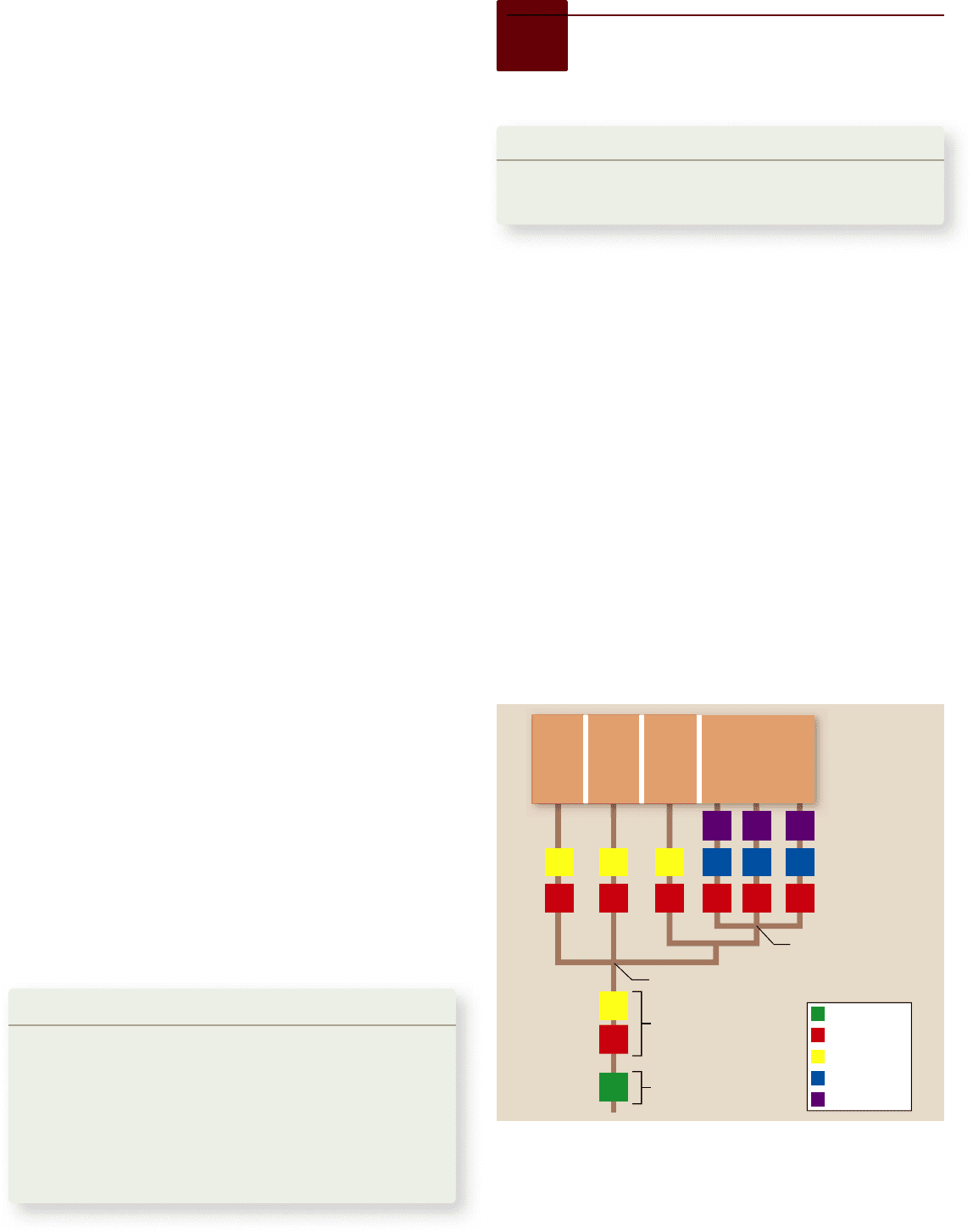
Figure 25.8
Petal evolution through gene duplication.
Two gene duplications resulted in the AP3 gene in the eudicots that
has acquired a role in petal development.
25.5
Gene Duplication
and Divergence
Learning Outcome
Describe how duplicated genes could give rise to new 1.
functions in an organism.
You encountered the role of gene duplication in genome evolu-
tion in chapter 24. In this section, we explore a specific example
of the evolution of development through gene duplication and
divergence in flower form.
Gene duplications of paleoAP3 led
to owering-plant morphology
Before the flowering plants originated, a MADS box gene du-
plicated, giving rise to genes called PI and paleoAP3. In ancestral
flowering plants, these genes affected stamen development, and
this function has been retained. (Stamens are the male repro-
ductive structures of flowering plants.)
The paleoAP3 gene duplicated to produce AP3 and an AP3
duplicate some time after members of the poppy family last shared
a common ancestor with the clade of plants called the eudicots
(plants like apple, tomato, and Arabidopsis). This clade of eudicots
is distinguished on the genome level by both the duplication of
paleoAP3 and the origins of a precise pattern of petal development
in their last common ancestor (figure 25.8). The phylogenetic in-
ference is that AP3 gained a role in petal development.
rav32223_ch25_492-506.indd 499rav32223_ch25_492-506.indd 499 11/12/09 2:09:01 PM11/12/09 2:09:01 PM

Apago PDF Enhancer
No AP3
C terminus
Complete
AP3 Gene
AP3 Gene Construct Added to
AP3 Mutant Arabidopsis
Petals Present Stamen Present
YES
YES
NO
NO
NO
SOME
PI C terminus
replaces AP3
C terminus
MADS
AP3 C terminus
PI C terminus
MADS
MADS
500
part
IV
Evolution
Figure 25.9
AP3
has acquired a domain
necessary for petal
development. The AP3
gene includes MADS box
encoding a DNA-binding
domain and a highly
speci c sequence near the
C terminus. Without the 3
'
region of the AP3 gene, the
Arabidopsis plant will not
make petals.
Gene divergence of AP3 altered function
to control petal development
Although the occurrence of AP3 through duplication corre-
sponds with a uniform developmental process for specifying
petal development, the correlation could simply be coinciden-
tal. Experiments that mix and match parts of the AP3 and PI
genes, and then introduce them into ap3 mutant plants, confirm
that the phylogenetic correspondence is not a coincidence. The
ap3 plants do not produce either petals or stamens. A summary
of the experiments is shown in figure 25.9.
Earlier in this chapter, the MADS box transcription fac-
tor gene family was introduced. One region of a MADS gene
codes for a DNA-binding motif; other regions code for dif-
ferent functions, including protein–protein binding. The PI
and AP3 proteins can bind to each other, and, as a result, can
regulate the transcription of genes needed for stamen and
petal formation.
The C terminus of AP3
Both AP3 and PI have distinct sequences at the C (carboxy)
protein terminus (coded for by the 3 end of the genes). The C-
terminus sequence of the AP3 protein is essential for specify-
ing petal function, and it contains a conserved sequence shared
among the eudicots. The AP3 C-terminus DNA sequence was
deleted from the wild-type gene, and the new construct was
inserted into ap3 plants to create a transgenic plant. Other
transgenic plants were created by inserting the complete AP3
sequence into ap3 plants. The complete AP3 sequence rescued
the mutant, and petals were produced. No petals formed when
the C-terminus motif was absent.
AP3 is also needed for stamen development, an ancestral
trait found in paleoAP3. Plants lacking AP3 fail to produce either
stamens or petals. Transgenic plants with the C-terminus dele-
tion construct also failed to produce stamens.
The C terminus of PI
The pi mutant phenotype also lacks stamens and petals. To
test whether the PI C terminus could substitute for the AP3
C terminus in specifying petal formation, the PI C terminus
was added to the truncated AP3 gene. No petals formed, but
stamen development was partially rescued. These experiments
demonstrate that AP3 has acquired an essential role in petal
development, encoded in a sequence at the 3 end of the gene.
Learning Outcome Review 25.5
Gene duplication allows divergence that can lead to novel function. In
eudicot fl owering plants, the AP3 gene, which arose by duplication from
the paleoAP3 gene, gained a role in petal development in addition to its
function in stamen development.
Suppose duplication of a particular gene proved to be ■
lethal. What changes, if any, would allow this duplication
to persist and possibly evolve into a new function?
25.6
Functional Analysis of Genes
Across Species
Learning Outcome
Evaluate the limitations of comparative genomics in 1.
exploring the evolution of development.
Comparative genomics is amazingly useful for understand-
ing morphological diversity. Limitations exist, however, in
the inferences about evolution of development that we can
draw from sequence comparison alone. Functional genom-
ics includes a range of experiments designed to test the ac-
tual function of a gene in different species as explained in
chapter 18.
Sequence comparisons among organisms are essen-
tial for both phylogenetic and comparative developmental
studies. Careful analysis is needed to distinguish paral-
ogues from orthologues. Rapidly evolving research using
bioinformatics, which utilizes computer programming to
rav32223_ch25_492-506.indd 500rav32223_ch25_492-506.indd 500 11/12/09 2:09:02 PM11/12/09 2:09:02 PM
Apago PDF Enhancer
chapter
25
Evolution of Development
501www.ravenbiology.com
25.7
Diversity of Eyes in the Natural
World: A Case Study
Learning Outcome
Explain how the compound eye of a fly, the human eye, 1.
and the eyespot of a ribbon worm could have a common
evolutionary origin.
The eye is one of the most complex organs. Biologists have studied
it for centuries. Indeed, explaining how such a complicated struc-
ture could evolve was one of the great challenges facing Darwin. If
all parts of a structure such as an eye are required for proper func-
tioning, how could natural selection build such a structure?
Darwin’s response was that even intermediate structures—
which provide, for example, the ability to distinguish light from
dark—would be advantageous compared with the ancestral
state of no visual capability whatsoever, and thus these struc-
tures would be favored by natural selection. In this way, by in-
cremental improvements in function, natural selection could
build a complicated structure.
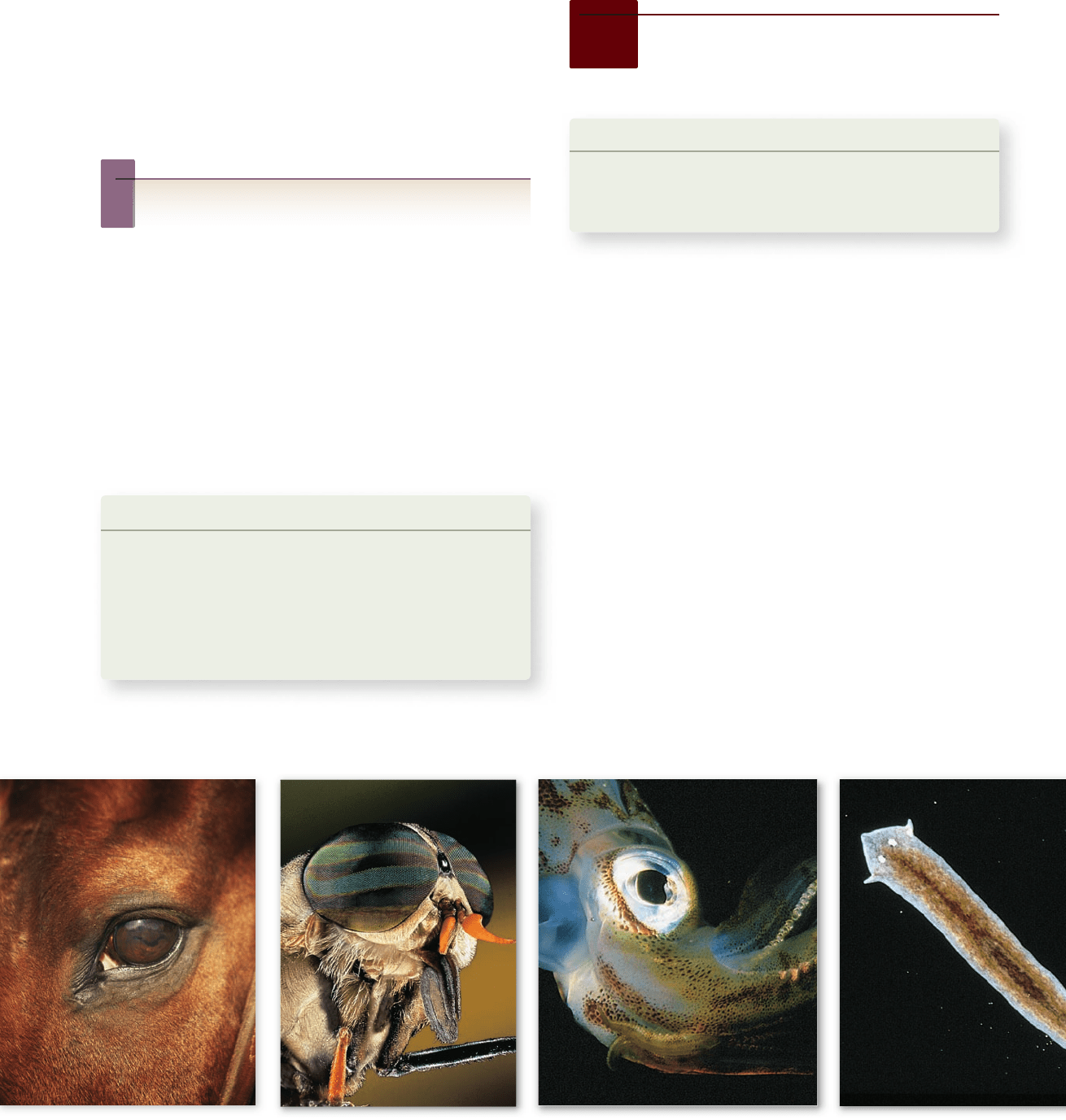
Morphological evidence indicates eyes
evolved at least twenty times
Comparative anatomists long have noted that the structures of
the eyes of different types of animals are quite different. Con-
sider, for example, the difference in the eyes of a vertebrate, an
insect, a mollusk (octopus), and a planarian (figure 25.10). The
eyes of these organisms are extremely different in many ways,
ranging from compound eyes, to simple eyes, to mere eyespots.
Figure 25.10
A diversity of eyes. Morphological and anatomical comparisons of eyes are consistent with the hypothesis of
independent, convergent evolution of eyes in diverse species such as ies and humans.
analyze DNA and protein data, leads to hypotheses that can be
tested experimentally.
You have already seen how this can work with highly
conserved genes such as Tbx5. However, a single base muta-
tion can change an active gene into an inactive pseudogene
and experiments are necessary to demonstrate the actual func-
tion of the gene.
Inquiry question
?
Explain how functional analysis was used to support
the claim that petal development evolved through the
acquisition of petal function in the AP3 gene of Arabidopsis.
Tools for functional analysis exist in model systems
but need to be developed in other organisms on the tree of
life if we are going to piece together evolutionary history.
Model systems such as yeast, the flowering plant Arabidop-
sis, the nematode Caenorhabditis elegans, Drosophila, and the
mouse have been selected because they are easy to manipu-
late in the laboratory, have short life cycles, and have well-
delineated genomes. Also, it is possible to visualize gene
expression within parts of the organism using labeled mark-
ers and to create transgenic organisms that contain and ex-
press foreign genes.
Learning Outcome Review 25.6
Genomic similarities alone are not enough to determine the function
of genes in diff erent species; functional genomics studies whether
conserved genes operate in the same way across species utilizing model
organisms and genetic engineering.
What tests and techniques were used to demonstrate the ■
AP3 gene’s role in petal development?
rav32223_ch25_492-506.indd 501rav32223_ch25_492-506.indd 501 11/12/09 2:09:08 PM11/12/09 2:09:08 PM