
Raven P.H., Johnson G.B., Mason K.A. Biology (Ninth Edition)
Подождите немного. Документ загружается.


Apago PDF Enhancer
The phylogenetic species concept focuses on shared
derived characters.
The phylogenetic species concept emphasizes the possession
of shared derived characters, whereas the biological species concept
focuses on reproductive isolation. Many versions of this concept only
recognize species that are monophyletic.
The PSC ( phylogenetic species concept)
also has drawbacks.
Among criticisms of the PSC (phylogenetic species concept) are that
it subdivides groups too far via impractical distinctions, and that the
PSC de nition of a group may not always apply as
selection proceeds.
23.4 Phylogenetics and Comparative Biology
Homologous features are derived from the same ancestral source;
homoplastic features are not.
Homologous structures can be identi ed by phylogenetic analysis,
establishing whether or not different structures have been built from
the same ancestral structure.
Complex characters evolve through a sequence of evolutionary
changes.
Most complex features do not evolve in a single step but include
stages of transition. They may have begun as an adaptation to a
selective pressure different from the one for which the feature is
currently adapted.
Phylogenetic methods can be used to distinguish between
competing hypotheses.
Different evolutionary scenarios can be distinguished by
phylogenetic analysis. The minimum number of times a trait may
have evolved can be established, as well as the direction of trait
evolution, the timing, and the cause of diversi cation.
Phylogenetics helps explain species diversi cation.
Questions regarding the causes of species richness may be addressed
with phylogenetic analysis.
23.5 Phylogenetics and Disease Evolution
HIV has evolved from a simian viral counterpart.
Phylogenetic methods have indicated that HIV is related to SIV.
Phylogenetic analysis identi es the path of transmission.
It is clear that HIV has descended from SIV, and that independent
transfers from simians to humans have occurred several times.
Application of ndings has allowed identi cation of the rst
occurrence in humans, in 1959.
Phylogenies can be used to track the evolution of AIDS
among individuals.
Even though HIV evolves rapidly, phylogenetic analysis can trace the
origin of a current strain to a speci c source of infection.
23.1 Systematics
Branching diagrams depict evolutionary relationships.
Systematics is the study of evolutionary relationships, which are
depicted on branching evolutionary trees, called phylogenies.
Similarity may not accurately predict evolutionary relationships.
The rate of evolution can vary among species and can even reverse
direction. Closely related species can therefore be dissimilar in
phenotypic characteristics.
Conversely, convergent evolution results in distantly related species
being phenotypically similar.
23.2 Cladistics
The cladistic method requires that character variation be identi ed as
ancestral or derived.
Derived character states are those that differ from the ancestral
condition.
Character polarity is established using an outgroup comparison in
which the outgroup consists of closely related species or a group of
species, relative to the group under study.
Character states exhibited by the outgroup are assumed to be
ancestral, and other character states are considered derived.
A cladogram is a graphically represented hypothesis of evolutionary
relationships.
Homoplasy complicates cladistic analysis.
Homoplasy refers to a shared character state, such as wings of birds
and wings of insects, that has not been inherited from a common
ancestor.
Cladograms are constructed based on the principle of parsimony,
which indicates that the phylogeny requiring the fewest evolutionary
changes is accepted as the best working hypothesis.
Other phylogenetic methods work better than cladistics in
some situations.
When evolutionary change is rapid, other methods, such as
statistical approaches and the use of the molecular clock, are
sometimes more useful.
23.3 Systematics and Classi cation
Current classi cation sometimes does not re ect evolutionary
relationships.
A monophyletic group consists of the most recent common ancestor
and all of its descendants.
A paraphyletic group consists of the most recent common ancestor
and some of its descendants.
A polyphyletic group does not contain the most recent ancestor of
the group. Some currently recognized taxa are not monophyletic,
such as reptiles, which are paraphyletic with respect to birds.
Chapter Review
472
part
IV
Evolution
rav32223_ch23_456-473.indd 472rav32223_ch23_456-473.indd 472 11/12/09 1:21:26 PM11/12/09 1:21:26 PM

Apago PDF Enhancer
c. homoplasy will be common.
d. all of the above
3. In a paraphyletic group
a. all species are more closely related to each other than they
are to a species outside the group.
b. evolutionary reversal is common.
c. polyphyly also usually occurs.
d. some species are more closely related to species outside the
group than they are to some species within the group.
4. Species recognized by the phylogenetic species concept
a. sometimes also would be recognized as species by the
biological species concept.
b. are sometimes paraphyletic.
c. are characterized by symplesiomorphies.
d. are more frequent in plants than in animals.
SYNTHESIZE
1. List the synapomorphy and the taxa de ned by that synapomorphy
for the groups pictured in gure 23.2. Name each group de ned
by a set of synapomorphies in a way that might be construed as
informative about what kind of characters de ne the group.
2. Identifying “outgroups” is a central component of cladistic
analysis. As described on page 458 , a group is chosen that is
closely related to, but not a part of the group under study. If
one does not know the relationships of members of the group
under study, how can one be certain that an appropriate
outgroup is chosen? Can you think of any approaches that
would minimize the effect of a poor choice of outgroup?
3. As noted in your reading, cladistics is a widely utilized method
of systematics, and our classi cation system (taxonomy) is
increasingly becoming re ective of our knowledge of
evolutionary relationships. Using birds as an example, discuss
the advantages and disadvantages of recognizing them as
reptiles versus as a group separate and equal to reptiles.
4. Across many species of limpets, loss of larval development and
reversal from direct development appears to have occurred
multiple times. Under the simple principle of parsimony are
changes in either direction merely counted equally in evaluating
the most parsimonious hypothesis? If it is much more likely to
lose a larval mode than to re-evolve it from direct development,
should that be taken into account? If so, how?
5. Birds, pterosaurs (a type of ying reptile that lived in the
Cretaceous period), and bats all have modi ed their forelimbs
to serve as wings, but they have done so in different ways. Are
these structures homologous? If so, how can they be both
homologous and convergent? Do any organisms possess wings
that are convergent, but not homologous?
6. In what sense does the biological species concept focus on
evolutionary mechanisms and the phylogenetic species concept
on evolutionary patterns? Which, if either, is correct?
UNDERSTAND
1. Overall similarity of phenotypes may not always re ect
evolutionary relationships
a. due to convergent evolution.
b. because of variation in rates of evolutionary change of
different kinds of characters.
c. due to homoplasy.
d. due to all of the above.
2. Cladistics
a. is based on overall similarity of phenotypes.
b. requires distinguishing similarity due to inheritance from a
common ancestor from other reasons for similarity.
c. is not affected by homoplasy.
d. is none of the above.
3. The principle of parsimony
a. helps evolutionary biologists distinguish among competing
phylogenetic hypotheses.
b. does not require that the polarity of traits be determined.
c. is a way to avoid having to use outgroups in a phylogenetic
analysis.
d. cannot be applied to molecular traits.
4. Parsimony suggests that parental care in birds, crocodiles, and
some dinosaurs
a. evolved independently multiple times by convergent evolution.
b. evolved once in an ancestor common to all three groups.
c. is a homoplastic trait.
d. is not a homologous trait.
5. The forelimb of a bird and the forelimb of a rhinoceros
a. are homologous and symplesiomorphic.
b. are not homologous but are symplesiomorphic.
c. are homologous and synapomorphic.
d. are not homologous but are synapomorphic.
6. In order to determine polarity for different states of a character
a. there must be a fossil record of the groups in question.
b. genetic sequence data must be available.
c. an appropriate name for the taxonomic group must be selected.
d. an outgroup must be identi ed.
7. A paraphyletic group includes
a. an ancestor and all of its descendants.
b. an ancestor and some of its descendants.
c. descendants of more than one common ancestor.
d. all of the above.
8. Sieve tubes and sieve elements are
a. homoplastic because they have different function.
b. homologous because they have similar function.
c. homoplastic because their common ancestor was
single-celled.
d. structures involved in transport within animals.
APPLY
1. A taxonomic group that contains species that have similar
phenotypes due to convergent evolution is
a. paraphyletic. c. polyphyletic.
b. monophyletic. d. a good cladistic group.
2. Rapid rates of character change relative to the rate of speciation
pose a problem for cladistics because
a. the frequency with which distantly related species evolve
the same derived character state may be high.
b. evolutionary reversals may occur frequently.
Review Questions
ONLINE RESOURCE
www.ravenbiology.com
Understand, Apply, and Synthesize—enhance your study with
animations that bring concepts to life and practice tests to assess
your understanding. Your instructor may also recommend the
interactive eBook, individualized learning tools, and more.
chapter
23
Systematics and the Phylogenetic Revolution
473www.ravenbiology.com
rav32223_ch23_456-473.indd 473rav32223_ch23_456-473.indd 473 11/12/09 1:21:27 PM11/12/09 1:21:27 PM
Apago PDF Enhancer
G
Introduction
Genomes contain the raw material
for evolution, and many clues to evolution are hidden in the ever-changing nature of
genomes. As more genomes have been sequenced, the new and exciting eld of comparative genomics has emerged and has
yielded some surprising results as well as many, many questions. Comparing whole genomes, not just individual genes, enhances
our ability to understand the workings of evolution, to improve crops, and to identify the genetic basis of disease so that we might
develop more e ective treatments with minimal side e ects. The focus of this chapter is the role of comparative genomics in
enhancing our understanding of genome evolution and how this new knowledge can be applied to improve our lives.
Chapter
24
Genome Evolution
Chapter Outline
24.1 Comparative Genomics
24.2 Whole-Genome Duplications
24.3 Evolution Within Genomes
24.4 Gene Function and Expression Patterns
24.5 Nonprotein-Coding DNA and Regulatory
Function
24.6 Genome Size and Gene Number
24.7 Genome Analysis and Disease Prevention
and Treatment
24.8 Crop Improvement Through Genome Analysis
24.1
Comparative Genomics
Learning Outcomes
Describe the kinds of differences that can be found 1.
between genomes.
Relate timescale to genome evolution.2.
Explain why genomes may evolve at different rates.3.
A key challenge of modern evolutionary biology is finding a
way to link changes in DNA sequences, which we are now
able to study in great detail, with the evolution of the com-
plex morphological characters used to construct a traditional
phylogeny. Many different genes contribute to complex char-
acters. Making the connection between a specific change in a
gene and a modification in a morphological character is par-
ticularly difficult.
Comparing genomes (entire DNA sequences) pro-
vides a powerful tool for exploring evolutionary divergence
among organisms to connect DNA level changes with
CHAPTER
rav32223_ch24_474-491.indd 474rav32223_ch24_474-491.indd 474 11/12/09 2:49:08 PM11/12/09 2:49:08 PM
Apago PDF Enhancer
1996
12.7 Mb
5,805 genes
Saccharomyces cerevisiae
(baker’s yeast)
1998
97 Mb
20,000 genes
Caenorhabditis elegans
(a translucent worm)
1999
120 Mb
21,116 genes
Drosophila melanogaster
(fruit fly)
2000
125 Mb
25,498 genes
Arabidopsis thaliana
(wall cress)
23.25 µm
2000
2,500 Mb
22,698 genes
Homo sapiens
(human)
2002
2,600 Mb
37,000 genes
Mus musculus
(mouse)
2002
365 Mb
33,609 genes
Fugu rubripes
(pufferfish)
2002
230 Mb
13,749 genes
Anopheles gambiae
(mosquito)
2002
13.8 Mb
4,824 genes
Schizosaccharomyces pombe
(fission yeast)
2002
430 Mb
43,000 genes
Oryza sativa
(rice)
2002
23 Mb
5,300 genes
Plasmodium falciparum
(malaria parasite)
2004
2,718 Mb
23,829 genes
Rattus norvegicus
(rat)
2009
2,870 Mb
22,000 genes
Bos taurus
(domestic cow)
2005
3,100 Mb
20,000–25,000 genes
Pan troglodytes
(chimpanzee)
2008
2,500 Mb
59,000 genes
Zea mays
(maize)
2008
2,200 Mb
18,500 genes
Ornithorynchus anatinus
(duck-billed platypus)
2500 µm
1.8 µm
1 µm
chapter
24
Genome Evolution
475
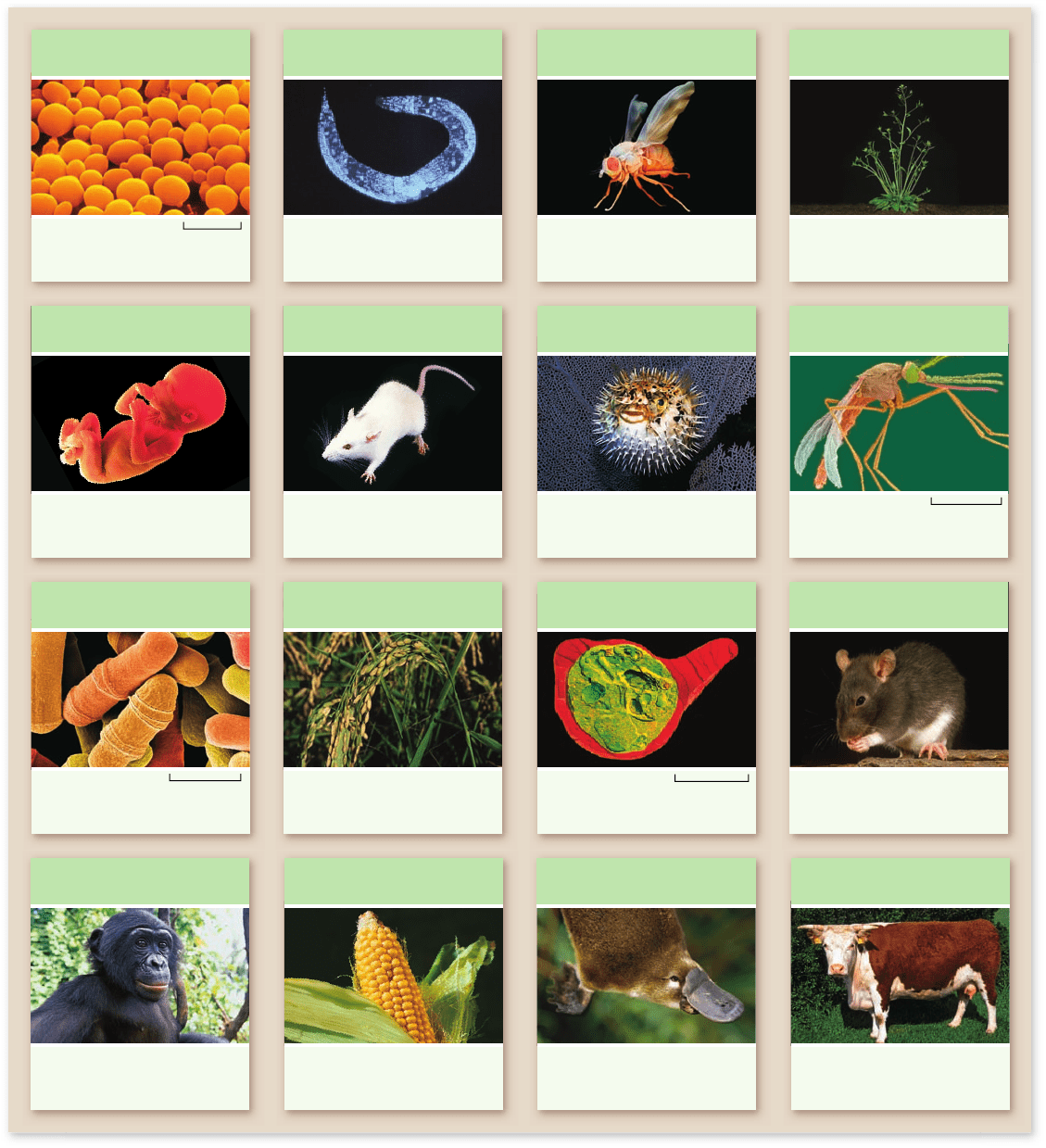
Figure 24.1 Milestones of comparative eukaryotic genomics.
morphological differences. Genomes are more than instruc-
tion books for building and maintaining an organism; they
also record the history of life. The growing number of fully
sequenced genomes in all kingdoms is leading to a revolu-
tion in comparative evolutionary biology (figure 24.1) . Ge-
netic differences between species can be explored in a very
direct way, examining the footprints on the evolutionary
path between different species.
www.ravenbiology.com
rav32223_ch24_474-491.indd 475rav32223_ch24_474-491.indd 475 11/12/09 2:49:13 PM11/12/09 2:49:13 PM
Apago PDF Enhancer
Evolutionary di erences accumulate
over long periods
Genomes of viruses and bacteria can evolve in a matter of
days, whereas complex eukaryotic species evolve over millions
of years. To illustrate this point, we compare four vertebrate
genomes: human, tiger pufferfish (Fugu rubripes), mouse (Mus
musculus), and chimpanzee (Pan troglodytes).
Comparison between human and pufferfish genomes
The draft (preliminary) sequence of the tiger pufferfish was
completed in 2002; it was only the second vertebrate genome
to be sequenced. For the first time, we were able to compare
the genomes of two vertebrates: humans and pufferfish. These
two animals last shared a common ancestor 450 mya.
Some human and pufferfish genes have been conserved
during evolution, but others are unique to each species. About
25% of human genes have no counterparts in Fugu. Also, exten-
sive genome rearrangements have occurred during the 450 mil-
lion years since the mammal lineage and the teleost fish diverged,
indicating a considerable scrambling of gene order. Finally, the
human genome is 97% repetitive DNA (chapter 18 ), but repeti-
tive DNA accounts for less than one-sixth of the Fugu sequence.
Comparison between human and mouse genomes
Later in 2002, a draft sequence of the mouse genome was com-
pleted by an international consortium of investigators, allowing
for the first time a comparison of two mammalian genomes. In
contrast to the human–pufferfish genome comparison, the dif-
ferences between these two mammalian genomes are miniscule.
The human genome has about 400 million more nucleo-
tides than that of the mouse. A comparison of the genomes re-
veals that both have about 25,000 genes, and that they share
the bulk of them; in fact, the human genome shares 99% of its
genes with mice. Humans and mice diverged about 75 mya, ap-
proximately one-sixth of the amount of time that separates hu-
mans from pufferfish. There are only 300 genes unique to either
human or mouse, constituting about 1% of the genome. Even
450 million years after last sharing a common ancestor, 75% of
the genes found in humans have counterparts in pufferfish.
Comparison between human and chimpanzee genomes
Humans and chimpanzees, Pan troglodytes, diverged only
about 4.1 mya, leaving even less time for their genomes to ac-
cumulate mutational differences. The chimp genome was se-
quenced in 2005, providing a comparative window between us
and our closest living relative. A 1.5% difference in insertions
and deletions (indels) is found between chimps and humans.
Comparing chimp and human indels to outgroups can allow
a determination of whether the indel was ancestrally present,
and thus can identify which species has the derived condi-
tion. Fifty-three of the potentially human-specific indels lead
to loss-of-function changes that might correlate with some of
the traits that distinguish us from chimps, including a larger
cranium and lack of body hair. As will be discussed later in this
chapter, mutations leading to differences in the patterns of
gene expression are particularly important in understanding
why chimps are chimps and humans are humans.
Comparisons of single-nucleotide substitutions reveal that
only 2.7% of the two genomes have consistent differences in sin-
gle nucleotides. Mutations in coding DNA are classified into two
groups: those that alter the amino acids coded for in the sequence
(nonsynonymous changes) and those that do not (synonymous
changes). For example, a synonymous mutation that changed
UUU to UUC would still code for phenylalanine (use the genetic
code in table 15.1 to see if you can identify examples of possible
synonymous and nonsynonymous changes ) .
Genomes evolve at di erent rates
A comparison of the mouse and rat genomes reveals a smaller
ratio of nonsynonymous to synonymous changes than that seen
between humans and chimps. The higher ratio in the primates
indicates that fewer nonsynonymous mutations have been
removed by natural selection than has occurred in mice and
rats. The removal of nonsynonymous codons during evolu-
tion is called stabilizing selection. Stabilizing selection prevents
change and maintains the same protein structure across species.
For 387 human and chimp genes, the rate of nonsynonymous
changes was higher than expected. Selection has not been pre-
venting change in protein structure between these genes in hu-
man and chimp. Rather, divergent selection has been at work.
Comparing these sequences with an outgroup, the macaque, we
see that chimps have experienced a higher rate of divergent se-
lection than humans since they last shared a common ancestor.
Plant, fungal, and animal genomes
have unique and shared genes
We now step back farther and consider genomic differences
among the eukaryotic kingdoms that diverged long before the
examples just discussed. You have already seen that many genes
are highly conserved in animals. Are plant genes also highly con-
served, and if so, are they similar to animal and fungal genes?
Comparison between two plant genomes
The first plant genome to be sequenced was Arabidopsis thali-
ana, the wall cress, a tiny member of the mustard family often
used as a model organism for studying flowering plant molec-
ular genetics and development. Its genome sequence, largely
completed in 2000, revealed 25,948 genes, about as many as
humans have, in a genome with a size of only 125 million
base-pairs, a 30-fold smaller genome than that of humans.
Rice, Oryza sativa, belongs to the grass family, which in-
cludes maize (corn), wheat, barley, sorghum, and sugarcane.
Unlike most grasses, rice has a relatively small genome of 430
million base-pairs. Its close relative maize, Zea mays, has a 60-
fold larger genome. Although rice and Arabidopsis are distant
relatives, they share many genes. More than 80% of the genes
found in rice, including duplicates, are also found in Arabidop-
sis. Among the other 20% are genes that may be responsible
for some of the physiological and morphological differences
between rice and Arabidopsis. It is probable that many of the
other differences between the two species reflect differences
in gene expression, as discussed later in this chapter. (The
476
part
IV
Evolution
rav32223_ch24_474-491.indd 476rav32223_ch24_474-491.indd 476 11/12/09 2:49:40 PM11/12/09 2:49:40 PM
Apago PDF Enhancer
Nicotiana sylvestris
Diploid (SS)
Nicotiana tomentosiformis
Diploid (TT)
Nicotiana tabacum
Allopolyploid (SSTT)
ST hybrid
Genome duplication
chapter
24
Genome Evolution
477
morphological and physiological distinctions are described in
chapter 30. )
Comparison of plants with animals and fungi
About one-third of the genes in Arabidopsis and rice appear to
be in some sense “plant” genes—that is, genes not found in any
animal or fungal genome sequenced so far. These include the
many thousands of genes involved in photosynthesis and photo-
synthetic anatomy. Few plant genomes have been sequenced to
date, however.
Among the remaining genes found in plants are many that
are very similar to those found in animal and fungal genomes,
particularly the genes involved in basic intermediary metabo-
lism, in genome replication and repair, and in transcription and
protein synthesis. Prior to the availability of whole-genome
sequences, assessment of the extent of genetic similarity and
difference among diverse organisms had been difficult at best.
Learning Outcomes Review 24.1
Genomes vary in number of similar genes, arrangement of genes,
total number of base pairs, and base-pair diff erences. Closely related
organisms such as humans and chimps exhibit highly similar genomes.
Would you expect a high degree of similarity between ■
genomes of a bony fish, such as a swordfish, and a
cartilaginous fish, such as a shark? What genes might
be different?
24.2
Whole-Genome Duplications
Learning Outcomes
Differentiate between autopolyploidy and allopolyploidy.1.
Explain why most crosses between two species do not 2.
result in a new polyploid species.
Explain why the genome of a polyploid is not identical to 3.
the sum of the two parental genomes.
Polyploidy (three or more chromosome sets) can give rise to
new species, as you learned in chapter 22 . Polyploidy can result
from either genome duplication in one species or from hybrid-
ization of two different species. In autopolyploids , the genome
of one species is duplicated through a meiotic error, resulting in
four copies of each chromosome. Allopolyploids result from the
hybridization and subsequent duplication of the genomes of two
different species (figure 24.2) . The origins of wheat, illustrated
in figure 24.3 , involve two successive allopolyploid events.
Ancient and newly created polyploids guide
studies of genome evolution
Two avenues of research have lead to intriguing insights into
genome alterations following polyploidization. The first
method studies ancient polyploids, called paleopolyploids.
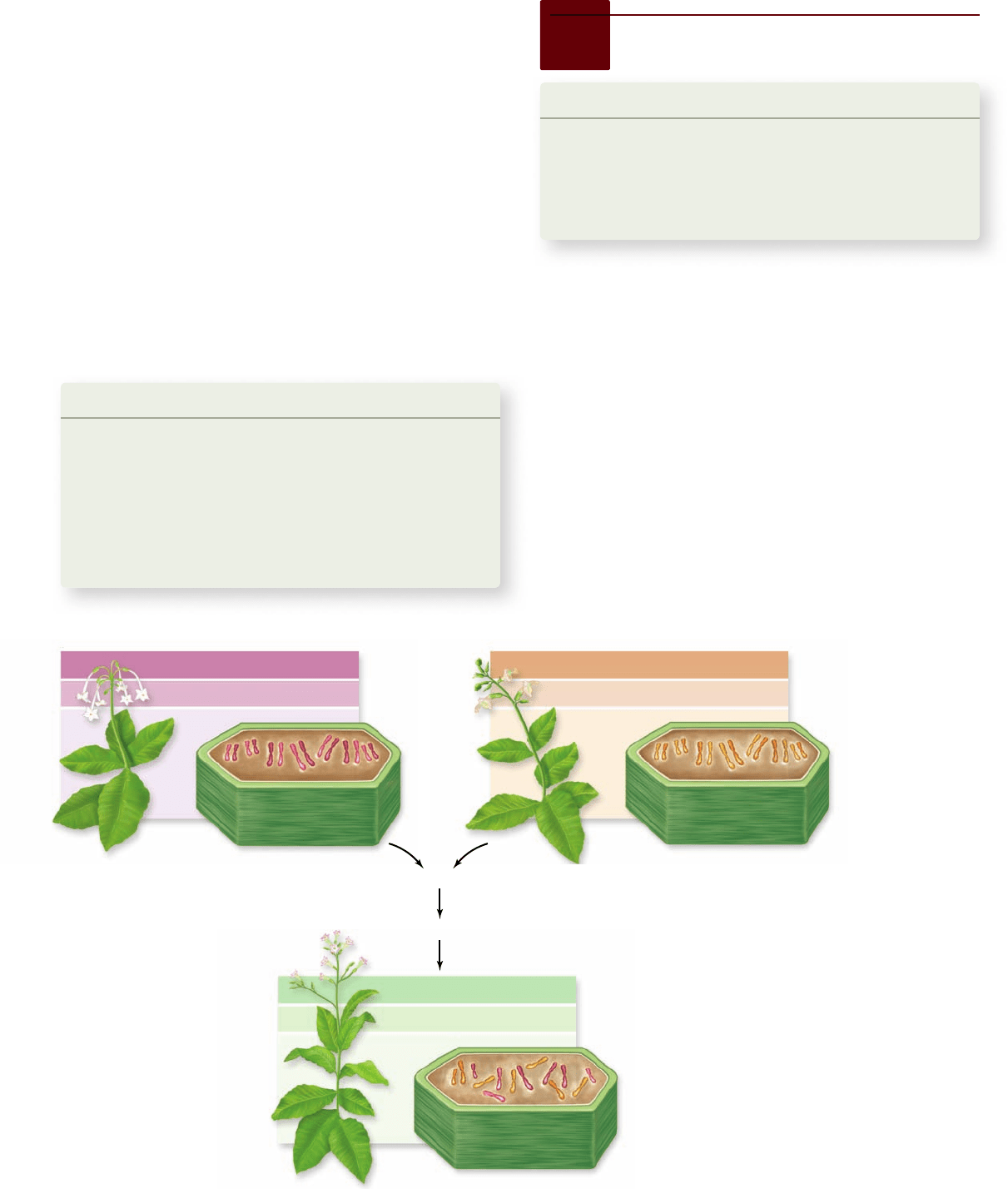
Figure 24.2
Allopolyploidy occurred in
tobacco 5 mya, but can be approximated by crossing
the progenitor species and initiating a doubling
of chromosomes, often through tissue culture
followed by plant regeneration, which can lead to
chromosome doubling. Tobacco species have many
chromosomes, not all of which are visible in a single
plane of a cell.
www.ravenbiology.com
rav32223_ch24_474-491.indd 477rav32223_ch24_474-491.indd 477 11/12/09 2:49:40 PM11/12/09 2:49:40 PM
Apago PDF Enhancer
Triticum turgidum
Tetraploid: 2n=28 (AABB)
Diploid: 2n=14 (AA)
Triticum searsii
Diploid: 2n=14 (BB)
Trticum tauschii
Diploid: 2n=14 (CC)
Triticum aestivum
Hexaploid: 2n=42 (AABBCC)
Sterile hybrid: 1n =14 (AB)
Chromosome doubling
Sterile hybrid: 1n=21 (ABC)
Chromosome doubling
Triticum monococcum
Inquiry question
?
Sketch out what would happen in meiosis in a 3n banana cell,
referring back to chapter 11 if necessary.
Sequence comparisons and phylogenetic tools establish the
time and patterns of polyploidy events (figure 24.4) . Sequence
divergence between homologues, as well as the presence or
absence of duplicated gene pairs from the hybridization, can
be used for historical reconstructions of genome evolution.
All copies of duplicate gene pairs arising through polyploidy
are not necessarily found thousands or millions of years after
polyploidization. The loss of duplicate genes is considered
later in this section.
The second approach is to create synthetic polyploids
by crossing plants most closely related to the ancestral species
and then chemically inducing chromosome doubling. Unless
the hybrid genome becomes doubled , the plant will be sterile
because it will lack homologous chromosomes that need to pair
during metaphase I of meiosis.
Because meiosis requires an even number of chromo-
some sets, species with ploidy levels that are multiples of two
can reproduce sexually. However, meiosis would be a disaster
in a 3n organism such as asexually propagated commercial ba-
nanas since three sets of chromosomes can’t be evenly divided
between two cells. Triploid bananas are seedless . The aborted
ovules appear as the little brown dots in the center of any cross
section of a banana.
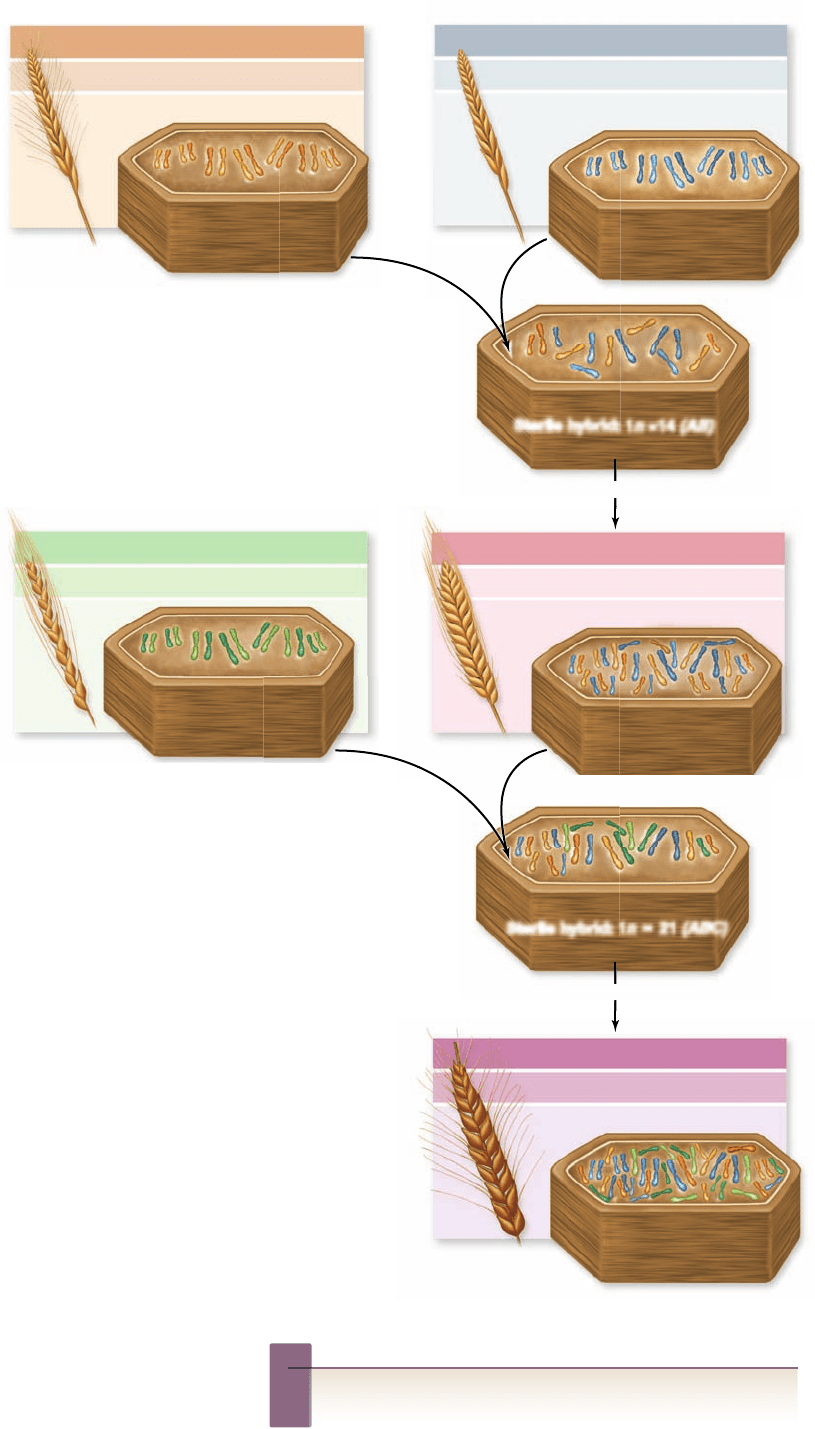
F i g u r e 2 4 . 3
Evolutionary
history of wheat. Domestic wheat
arose in southwestern Asia in the
hilly country of what is now Iraq.
This region contains a rich assembly
of grasses of the genus Triticum.
Domestic wheat (T. aestivum) is
a polyploid species of Triticum
that arose through two so-called
allopolyploid events. (1) Two different
diploid genomes, symbolized here as
AA and BB, hybridized to form an
AB species hybrid; the species were so
different that A and B chromosomes
could not pair in meiosis, so the
AB hybrid was sterile. However, in
some plants the chromosome number
spontaneously doubled due to a
failure of chromosomes to separate in
meiosis, producing a fertile tetraploid
species, AABB. This wheat (durum
semolina) is used in the production
of pasta. (2) In a similar fashion, the
tetraploid species AABB hybridized
much more recently, within the
last 10,000 years, with a different
diploid species, with genome CC. The
second hybridization produced, after
another doubling event, the hexaploid
T. aestivum, AABBCC. This bread
wheat is one of the most important
food plants in the world. Not all
chromosomes appear in a single plane
of any cell.
478
part
IV
Evolution
rav32223_ch24_474-491.indd 478rav32223_ch24_474-491.indd 478 11/12/09 2:49:41 PM11/12/09 2:49:41 PM
Apago PDF Enhancer
75 50 25 0
Time (
MYA)
1
0
2
Average number of gene pairs
genome duplication
loss of duplicate genes
(sugarcane)
Zea (maize)
Lycopersicon
Gossypium
Arabidopsis
thaliana
Sorghum
Saccharum
Oryza (rice)
Triticum
(wheat)
Hordeum
(barley)
(tomato)
Solanum
(potato)
Helianthus
(sunflower)
Lactuca
(lettuce)
Glycine
(soybean)
Medicago
truncatula
(cotton)
Brassica
225–300
150–170
50–70
11–14
Inferred polyploidy event
(
MYA)
11
2.5–
4.5
3–5
1–2
13–15
25–40
M. truncatula
Genome size:
500 Mb
Soybean
Genome size:
1100 Mb
44–58
15
Polyploidy event (MYA)
chapter
24
Genome Evolution
479
tula (a forage legume often used in research), and the garden
pea (Pisum sativum) underwent a major polyploidization event
44 to 58 mya and again 15 mya (figure 24.6) .
A quick comparison of the genomes of soybean and M.
truncatula reveal a huge difference in genome size. In addition
to increasing genome size through polyploidization, genomes
like M. trunculata definitely downsized over evolutionary time
as well. The total size of a genome cannot be explained solely
on the basis of polyploidization.
A number of independent whole-genome duplications in
plants cluster around 65 mya, coinciding with a mass extinction
event caused by a catastrophic change due to an asteroid impact
or increased volcanic activity. Polyploids may have had a better
chance of surviving the extinction event with increased genes
and alleles available for selection.
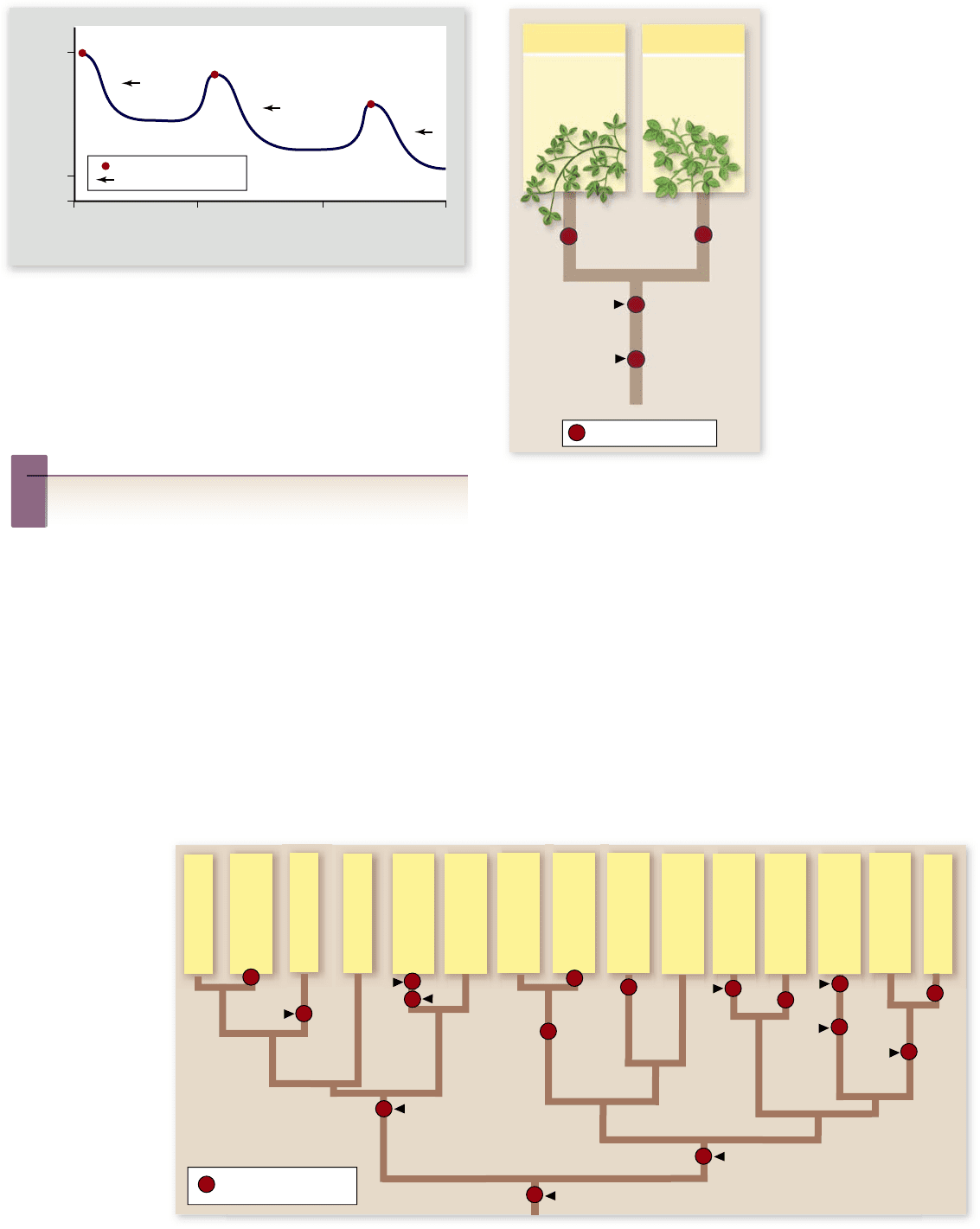
F i g u r e 2 4 . 4
Sequence comparisons of numerous genes
in a polyploid genome tell us how long ago allopolyploidy
or autopolyploidy events occurred. Complex analyses of
sequence divergence among duplicate gene pairs and presence or
absence of duplicate gene pairs provide information about when
both genome duplication and gene loss occurred. The graph reveals
multiple polyploidy events over evolutionary time.
Inquiry question
?
Why is there a decrease in the number of duplicate genes
after multiple rounds of polyploidization?
Figure 24.5
Polyploidy
has occurred
numerous times
in the evolution
of the owering
plants.
In the following sections we examine further the effect of poly-
ploidization on genomes. Plant examples have been selected to
illustrate key points in this section because polyploidization oc-
curs more frequently in plants. The somewhat surprising find-
ings, however, are not limited to the plant kingdom.
Evidence of ancient polyploidy
is found in plant genomes
Polyploidy has occurred numerous times in the evolution of
the flowering plants (figure 24.5) . The legume clade that in-
cludes the soybean (Glycine max), the plant Medicago trunca-
Figure 24.6
Genome downsizing.
Genome downsizing
must have occurred in
M. truncatula.
www.ravenbiology.com
rav32223_ch24_474-491.indd 479rav32223_ch24_474-491.indd 479 11/12/09 2:49:43 PM11/12/09 2:49:43 PM
Apago PDF Enhancer
Hypothesis: Some duplicated genes may be eliminated after polyploidy.
Prediction: More duplicate genes will be present when an allopolyploid
forms than a few generations later.
Test: Make a synthetic polyploid from two Nicotiana species and look at
the chromosomes under a microscope then and after 3 generations of
self-fertilizing offspring.
Result: Over time, N. tomentosiformis chromosomes are lost or shortened.
Conclusion: Chromosomes and genes are preferentially eliminated
following polyploidy.
Further Experiments: Why might the chromosomes and genes of one
species be preferentially eliminated? How could you test your explanation?
SCIENTIFIC THINKING
Nicotiana sylvestris
Diploid Diploid
Nicotiana tabacum
Allpolyploid
Polyploidy
Duplicate gene loss
Nicotiana tabacum
Nicotiana tomentosiformis
Polyploidy induces elimination
of duplicated genes
Formation of an allopolyploid from two different species is of-
ten followed by a rapid loss of genes (figure 24.7) or even whole
chromosomes. In some polyploids, however, loss of one copy
of many duplicated genes arises over a much longer period. In
some species a great deal of gene loss occurs in the first few
generations after polyploidization.
Modern tobacco, Nicotiana tabacum arose from the
hybridization and genome duplication of a cross between
Nicotiana sylvestris (female parent) and N. tomentosiformis
(male parent) (see figure 24.2). To complement the analy-
sis based on a cross that occurred over 5 mya, researchers
constructed synthetic N. tabacum and observed the chro-
mosome loss that followed. Curiously, the loss of chromo-
somes is not even. More N. tomentosiformis chromosomes
were jettisoned than those of N. sylvestris. Similar unequal
chromosome loss has been observed in synthetic wheat hy-
brids, in which 13% of the genome of one parent is lost in
contrast to 0.5% of the other parental genome. It is possi-
ble that different rates of genome replication could explain
the differential loss, as is true for synthetic human–mouse
hybrid cultured cells.
Polyploidy can alter gene expression
A striking discovery is the change in gene expression that
occurs in the early generations after polyploidization. Some
of this may be connected to an increase in the methylation
of cytosines in the DNA. Methylated genes cannot be tran-
scribed, as described in chapter 16 . Simply put, polyploidiza-
tion can lead to a short-term silencing of some genes. In sub-
sequent generations, there is a decrease in methylation.
Transposons jump around following
polyploidization
Barbara McClintock, in her Nobel Prize-winning work on
transposable (mobile) genetic elements, referred to these jump-
ing DNA regions as controlling elements. She hypothesized that
transposons could respond to genome shock and jump into a
new position in the genome. Depending on where the transpo-
son moved, new phenotypes could emerge.
Recent work on transposon activity following hybridiza-
tion supports McClintock’s hypothesis. Again, during the early
generations following a polyploidization event, new transpo-
son insertions occur because of unusually active transposition.
Figure 24.7
Polyploidy may be followed by the unequal
loss of duplicate genes from the combined genomes.
480
part
IV
Evolution
rav32223_ch24_474-491.indd 480rav32223_ch24_474-491.indd 480 11/12/09 2:49:43 PM11/12/09 2:49:43 PM

Apago PDF Enhancer
Interchromosomal duplications
Intrachromosomal duplications
Not sequenced
Heterochromatin that is not expressed
chapter
24
Genome Evolution
481
These new insertions may cause gene mutations, changes in
gene expression, and chromosomal rearrangements, all of
which provide additional genetic variation on which evolution
might act.
Learning Outcomes Review 24.2
Autopolyploids arise from duplication of a species’ genome;
allopolyploids occur from hybridization between two species. Unless the
number of chromosomes doubles, an allopolyploid will likely be sterile
because of lack of homologous pairs at meiosis. Polyploidization can lead
to major changes in genome structure, including loss of genes, alteration
of gene expression, increased transposon hopping, and chromosomal
rearrangements. Polyploidy is considered important in generation of
biodiversity and adaptation, especially in plants.
What would be the result if a synthetic autopolyploid ■
eliminated one of four duplicate chromosomes?
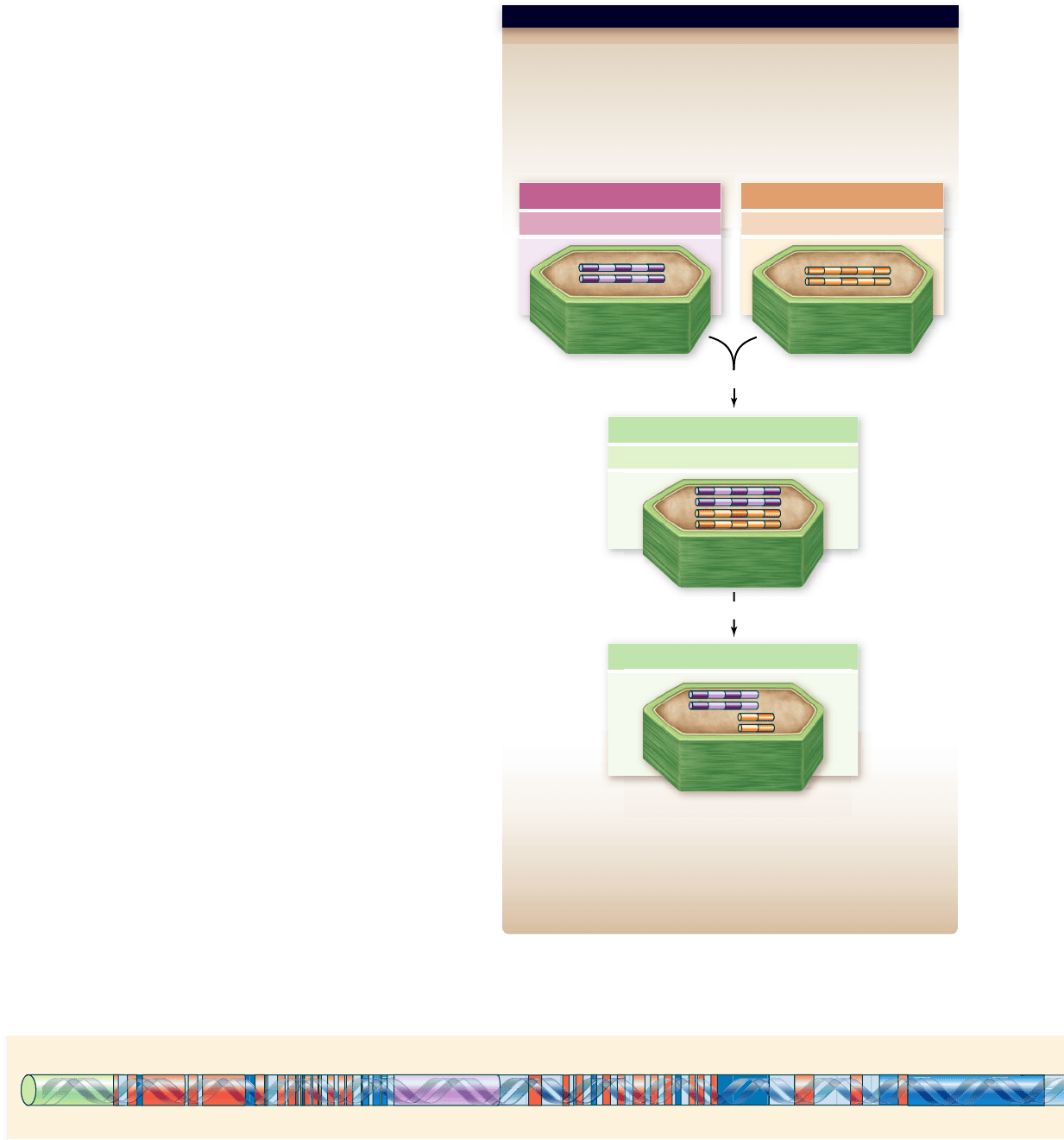
Figure 24.8
Segmental duplication on the human Y chromosome. Each orange region has 98% sequence similarity with a
sequence on a different human chromosome. Each dark blue region has 98% sequence similarity with a sequence elsewhere on the
Y chromosome.
to separate during meiosis is the most common way that
aneuploids occur.
In general, plants are better able to tolerate aneuploidy
than animals, but the explanation for this difference is elusive.
DNA segments may be duplicated
One of the greatest sources of novel traits in genomes is dupli-
cation of segments of DNA. Two genes within an organism that
have arisen from the duplication of a single gene in an ancestor
are called paralogues. In contrast, orthologues reflect the con-
servation of a single gene from a common ancestor.
When a gene duplicates, the most likely fates of the
duplicate gene are (1) losing function through subsequent
mutation, (2) gaining a novel function through subsequent
mutation, and (3) having the total function of the ancestral
gene partitioned into the two duplicates. Gene families grow
through gene duplication. In reality, however, most duplicate
genes lose function.
How then can researchers claim that gene duplication is
a major evolutionary force for gene innovation, that is, genes
gaining new function? One piece of the answer can be found by
noting where gene duplication is most likely to occur in the ge-
nome. In humans, the highest rates of duplication have occurred
in the three most gene-rich chromosomes of the genome. The
seven chromosomes with the fewest genes also show the least
amount of duplication. (Remember, having fewer genes does
not mean that there is less total DNA.)
Even more compelling, certain types of human genes ap-
pear to be more likely to be duplicated: growth and develop-
ment genes, immune system genes, and cell-surface receptors.
About 5% of the human genome consists of segmental duplica-
tions (figure 24.8). Finally, and important, gene duplication is
thought to be a major evolutionary force for gene innovation
because the duplicated genes are found to have different pat-
terns of gene expression (see chapter 25 for examples). For ex-
ample, the two duplicated copies may be expressed in different
or overlapping sets of tissues or organs during development.
Segmental duplications may account for differences be-
tween human and chimp. Species-specific segmental duplica-
tions tend to contain genes that are differentially expressed
between the species. This is true for genes expressed in liver,
kidney, or heart. A simple explanation is that there are more
copies of the gene being expressed, but experimental evidence
shows that it is more likely that the regulatory DNA near the
duplicate is different.
24.3
Evolution Within Genomes
Learning Outcomes
Define the terms segmental duplication, genome 1.
rearrangement, and pseudogene.
Explain why horizontal gene transfer can complicate 2.
evolutionary hypotheses.
From individual genes to whole chromosomes, duplications of
portions of genomes contribute to evolution. Duplications pro-
vide opportunities for genes with the same function to diverge
because a “backup pair” of genes is in place. After duplication,
one gene can lose function, because the duplicate compensates
for it. The mutated gene is not selected against because another
functioning gene, not just an allele, exists. The duplicated gene
can also diverge and acquire new functions because a backup
copy exists.
Individual chromosomes may be duplicated
Aneuploidy refers to the duplication or loss of an individ-
ual chromosome rather than of an entire genome . Failure
of a pair of homologous chromosomes or sister chromatids
www.ravenbiology.com
rav32223_ch24_474-491.indd 481rav32223_ch24_474-491.indd 481 11/12/09 2:49:46 PM11/12/09 2:49:46 PM