
Raven P.H., Johnson G.B., Mason K.A. Biology (Ninth Edition)
Подождите немного. Документ загружается.

Apago PDF Enhancer
100 µm
Surface Dweller — Has Pax6
Cave Dweller — Loss of Pax6
a.
b.
502
part
IV
Evolution
Consequently, these eyes are examples of convergent
evolution and are homoplastic. For this reason, evolutionary
biologists traditionally viewed the eyes of different organisms
as having independently evolved, perhaps as many as 20 times.
Moreover, this view holds that the most recent common ances-
tor of all these forms was a primitive animal with no ability to
detect light.
The same gene, Pax6, initiates y
and mouse eye development
In the early 1990s, biologists studied the development of the
eye in both vertebrates and insects. In each case, a gene was
discovered that codes for a transcription factor important in
lens formation; the mouse gene was given the name Pax6,
whereas the fly gene was called eyeless. A mutation in the eye-
less gene led to a lack of production of the transcription factor,
and thus the complete absence of eye development, giving the
gene its name.
When these genes were sequenced, it became appar-
ent that they were highly similar; in essence, the homologous
Pax6 gene was responsible for triggering lens formation in
both insects and vertebrates. A stunning demonstration of
this homology was conducted by the Swiss biologist Walter
Gehring, who inserted the mouse version of the Pax6 into the
genome of a fruit fly, creating a transgenic fly. In this fly, the
Pax6 gene was turned on by regulatory factors in the fly’s leg
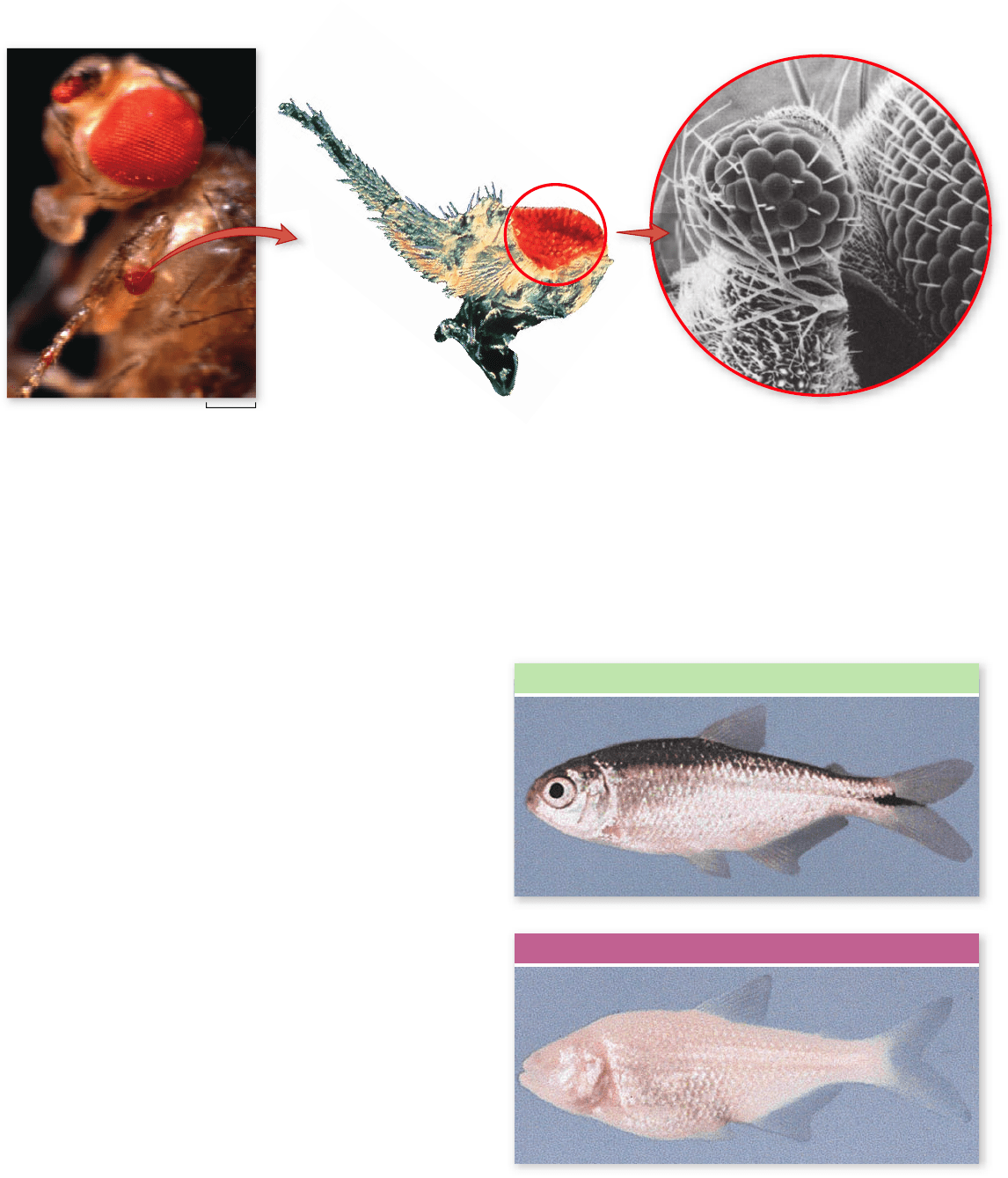
and an eye formed on the leg of the fly (figure 25.11 )!
These results were truly shocking to the evolutionary
biology community. Insects and vertebrates diverged from a
common ancestor more than 500 mya. Moreover, given the
large differences in structure of the vertebrate eye and insect
eye, the standard assumption was that the eyes evolved inde-
pendently, and thus that their development would be controlled
by completely different genes. That eye development was af-
fected by the same homologous gene, and that these genes
Figure 25.11
Mouse Pax6 makes an eye on the leg of a y. Pax6 and eyeless are functional homologues. The Pax6 master
regulator gene can initiate compound eye development in a fruit y or simple eye development in a mouse.
Figure 25.12
Cave sh have lost their sight. Mexican
tetras (Astyanax mexicanus) have (a) surface-dwelling members and
(b) cave-dwelling members of the same species. The cave sh have
very tiny eyes, partly because of reduced expression of Pax6.
were so similar that the vertebrate gene seemed to function
normally in the insect genome, was completely unexpected.
The Pax6 story extends to eyeless fish found in caves
(figure 25.12). Fish that live in dark caves need to rely on senses
other than sight. In cavefish, Pax6 gene expression is greatly
reduced. Eyes start to develop, but then degenerate.
rav32223_ch25_492-506.indd 502rav32223_ch25_492-506.indd 502 11/12/09 2:09:11 PM11/12/09 2:09:11 PM
Apago PDF Enhancer
Eyespot
Eyespot
Probe for
Pax6
Probe for
Pax6
transcripts
Regenerating
head
Regenerated
head
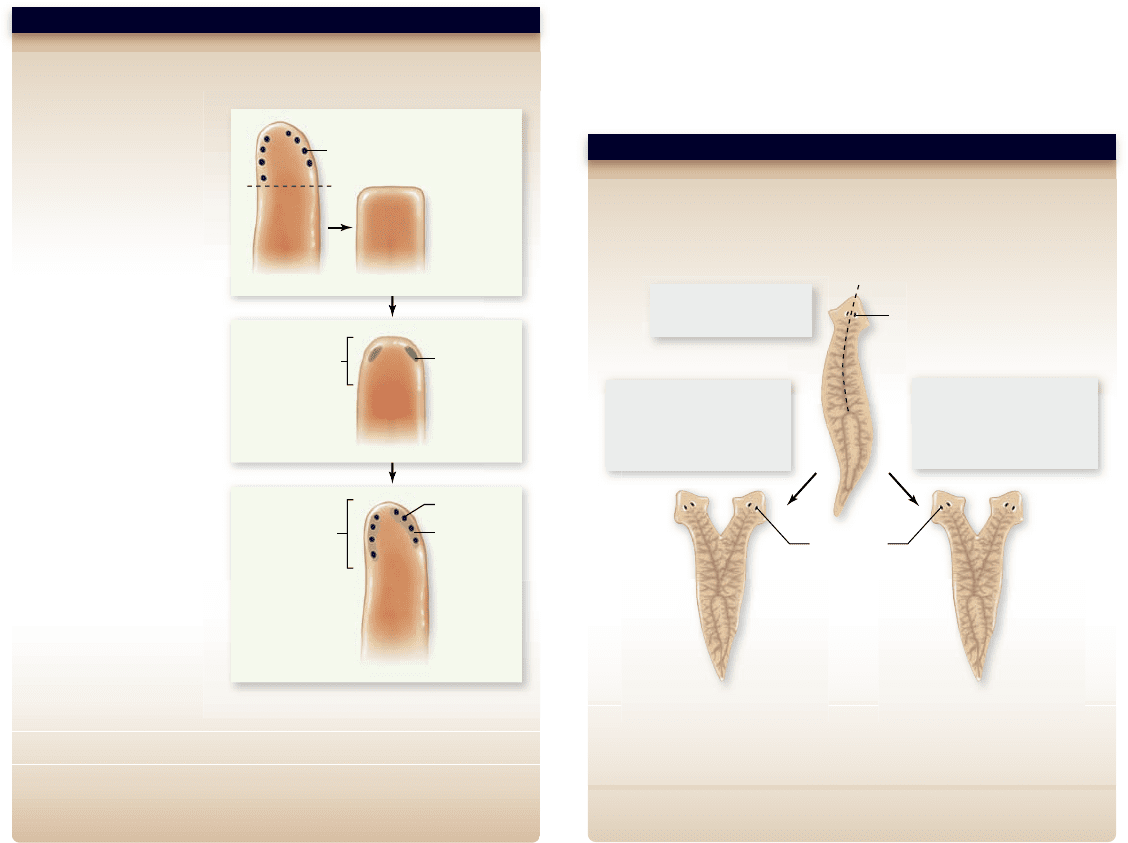
Hypothesis: Pax6 is necessary for eyespot regeneration in ribbon worms.
Prediction: Eyespots will regenerate where Pax6 is expressed.
Test:
2. Visualize Pax6
transcripts (RNA) in the
regenerating head region
using in situ hybridization
with a colored antisense
DNA probe that is
complementary to the
Pax6 RNA.
1. Cut and remove head.
Conclusion: Pax6 is expressed where eyespots regenerate and is likely
necessary for eyespot regeneration.
Further Experiments: What additional evidence would convince you
that Pax6 expression was necessary for eyespot regeneration? Consider
the approach in Scientific Thinking figure 25.14.
Result: Pax6 transcripts
are found only where
eyespots regenerate.
SCIENTIFIC THINKING
Hypothesis: Pax6 is necessary for planaria eyespot regeneration which
occurs when planaria are cut in half longitudinally.
Prediction: Eyespot regeneration will not occur without Pax6 protein.
Test:
Result: Eyespots regenerate.
Conclusion: Pax6 is not required for eyespot regeneration in planaria.
Further Experiments: Can you design an experiment to test if the
planaria Pax6 gene can initiate eyespot development in a ribbon worm or
eye development in a fly?
SCIENTIFIC THINKING
1. Cut a planaria in
half longitudinally.
2. Block expression of
both Pax6-related
genes and allow
heads to regenerate.
3. Control—Allow
heads to regenerate
without blocking
Pax6 expression.
Cut
Eyespot
Eyespots
chapter
25
Evolution of Development
503www.ravenbiology.com
Ribbon worms, but not planaria,
use Pax6 for eye development
Recent discoveries have yielded further surprises about the
Pax6 gene. Even the very simple ribbon worm, Lineus san-
guineus, relies on Pax6 for development of its eyespots. A Pax6
homologue has been cloned and has been shown to express at
the sites where eyespots develop. In contrast, planarian worms
do not rely on Pax6 for eyespot development.
Ribbon worm eyespot regeneration
The simple marine ribbon worm evolved later than the
flatworm planaria. Just like planaria, ribbon worms can
regenerate their head region if it is removed. In an elegant ex-
periment, the head of a ribbon worm was removed, and biolo-
gists followed the regeneration of eyespots. At the same time,
the expression of the Pax6 homologue was observed using
in situ hybridization.
To observe Pax6 gene expression, an antisense RNA se-
quence of the Pax6 was made and labeled with a color marker.
When the regenerating ribbon worms were exposed to the
anti sense Pax6 probe, the antisense RNA paired with expressed
Pax6 RNA transcripts and could be seen as colored spots under
the microscope (figure 25.13).
Planarian eyespot regeneration
Similar experiments were tried with planaria species that are
phylogenetically related to ribbon worms, but the conclusion
was quite different from that in ribbon worms. If a planaria is
cut in half lengthwise, it can regenerate its missing half, includ-
ing the second eyespot, but no Pax6 gene expression is associ-
ated with regenerating the eyespots.
Planaria do have Pax6-related genes, but inactivating
those genes does not stop eye regeneration (figure 25.14).
These Pax6-related genes are, however, expressed in the central
nervous system. A Pax6-responsive element, P3-enhancer, has
also been identified and shown to be active in planaria. Perhaps
some clues as to the origin of Pax6 ’s role in eye development
will be uncovered as comparisons between ribbon worm and
planarian eyespot regeneration continue.
F i g u r e 2 5 . 1 3
Pax6 expression correlates with ribbon
worm eyespot regeneration.
F i g u r e 2 5 . 1 4
Pax6 is not required for planaria eyespot
regeneration.
rav32223_ch25_492-506.indd 503rav32223_ch25_492-506.indd 503 11/12/09 2:09:19 PM11/12/09 2:09:19 PM

Apago PDF Enhancer
504
part
IV
Evolution
Chapter Review
25.1 Overview of Evolutionary
Developmental Biology
Highly conserved genes produce diverse morphologies.
The Hox genes establish body form in animals; MADS box genes
have a similar function in plants. Changes in these transcription
factors and in genes involved in signaling pathways are responsible
for new morphologies.
Developmental mechanisms exhibit evolutionary change.
Heterochrony refers to alteration of timing of developmental events
due to genetic changes; homeosis refers to alterations in the spatial
pattern of gene expression.
Modi cations of different parts of the coding and regulatory
sequences of a transcription factor can alter development and
phenotypic expression (see gure 25.2).
25.2 One or Two Gene Mutations,
New Form
Cauli ower and broccoli began with a stop codon.
The wide diversity of cabbage subspecies is due to a simple mutation
of one gene (see gure 25.3).
Cichlid sh jaws demonstrate morphological diversity.
Jaw and body armor morphology in sh have also been modi ed by
mutations in one or a few genes.
25.3 Same Gene, New Function (see gure 25.6)
Ancestral genes may be co-opted for new functions.
A single gene may act on different genes or combinations of genes in
different species.
Limbs hav
e developed through modi cation of transcriptional
regulation.
Species differences in limbs have resulted from evolutionary changes
in gene expression and timing of expression.
25.4 Di erent Genes, Convergent Function
Insect wing patterns demonstrate homoplastic convergence.
Wing patterns in butter ies have evolved as wing scales developed
from ancestral sensory bristles.
Flower shapes also demonstrate convergence
Both radial and bilateral symmetry have arisen in multiple ways in
owers, even though radial symmetry is considered ancestral.
The initiation of eye development
may have evolved just once
Several explanations are possible for these findings. One is
that eyes in different types of animals evolved truly indepen-
dently, as originally believed. But if this is the case, why is Pax6
so structurally similar and able to play a similar role in so many
different groups? Opponents of single evolution of the eye
point out that Pax6 is involved not only in development of the
eye, but also in development of the entire forehead region of
many organisms. Consequently, it is possible that if Pax6 had
a regulatory role in the forehead of early animals, perhaps it
has been independently co-opted time and time again to serve
a role in eye development. This role would be consistent with
the data on planarians (see figure 25.14).
Many other biologists find this interpretation unlikely. The
consistent use of Pax6 in eye development in so many organisms,
the fact that it functions in the same role in each case, and the
great similarity in DNA sequence and even functional replace-
ability suggest to many that Pax6 acquired its evolutionary role
in eye development only a single time, in the common ancestor
of all extant organisms that use Pax6 in eye development.
Given the great dissimilarity among eyes of different
groups, how can this be? One hypothesis is that the common
ancestor of these groups was not completely blind, as tradition-
ally assumed. Rather, that organism may have had some sort of
rudimentary visual system—maybe no more than a pigmented
photoreceptor cell, maybe a slightly more elaborate organ that
could distinguish light from dark.
Whatever the exact phenotype, the important point is that
some sort of basic visual system existed that used Pax6 in its de-
velopment. Subsequently, the descendants of this ancestor di-
versified independently, evolving the sophisticated and complex
image-forming eyes exhibited by different animal groups today.
Most evolutionary and developmental biologists today
support some form of this hypothesis. Nonetheless, no indepen-
dent evidence exists that the common ancestor of most of today’s
animal groups, a primitive form that lived probably more than
500 mya, had any ability to detect light. The reason for this belief
comes not from the fossil record, but from a synthesis of phylo-
genetic and molecular developmental data.
Learning Outcome Review 25.7
Multidisciplinary approaches can clarify the evolutionary history of the
world’s biological diversity. The Pax6 gene and its many homologues
indicate that eye development, although highly diverse in outcome, may
have a single evolutionary origin.
Why would mutations leading to defective Pax6 persist in ■
cavefish? If these fish were introduced into a habitat with
light, what would you expect to occur?
rav32223_ch25_492-506.indd 504rav32223_ch25_492-506.indd 504 11/12/09 2:09:20 PM11/12/09 2:09:20 PM

Apago PDF Enhancer
chapter
25
Evolution of Development
505www.ravenbiology.com
Review Questions
UNDERSTAND
1. Heterochrony is
a. the alteration of the spatial pattern of gene expression.
b. a change in the relative position of a body part.
c. a change in the relative timing of developmental events.
d. a change in a signaling pathway.
2. Vast differences in the phenotypes of organisms as different
as fruit ies and humans
a. must result from differences among many thousands
of genes controlling development.
b. have apparently arisen largely through manipulation
of the timing and regulation of expression of probably less
than 100 highly conserved genes.
c. can be entirely explained by heterochrony.
d. can be entirely explained by homeotic factors.
3. Homoplastic structures
a. can involve convergence of completely unrelated
developmental pathways.
b. always are morphologically distinct.
c. are produced by divergent evolution of homologous
structures.
d. are derived from the same structure in a shared
common ancestor.
4. Hox genes are
a. found in both plants and animals.
b. found only in animals.
c. found only in plants.
d. only associated with genes in the MADS complex.
5. The Brachyury and pictx1 genes in vertebrates and the Ap3 gene
in owering plants
a. are examples of Hox genes.
b. are examples of co-opting a gene for a new function.
c. are homologues for determining the body plan of eukaryotes.
d. help regulate the formation of appendages.
6. Which of the following statements about Pax6 is false?
a. Pax6 has a similar function in mice and ies.
b. Pax6 is involved in eyespot formation in ribbon worms.
c. Pax6 is required for eye formation in Drosophila.
d. Pax6 is required for eyespot formation in planaria.
7. Which of the following statements about Tbx5 is true?
a. Tbx5 is found only in tetrapods.
b. Tbx5 is involved in limb development in vertebrates.
c. Tbx5 is only found in the ancestors of tetrapods.
d. Tbx5 interacts with the same set of genes across different
tetrapod species.
8. Homeosis
a. refers to a maintained and unchanging genetic environment.
b. is a temporal change in gene expression.
c. is a spatial change in gene expression.
d. is not an important genetic mechanism in development.
9. Transcription factors are
a. genes.
b. sequences of RNA.
c. proteins that affect the expression of genes.
d. none of the above
25.5 Gene Duplication and Divergence
Gene duplications of paleoAP3 led to owering-plant morphology.
Duplication of the AP3 gene and subsequent divergence produced
ower petals, whereas the ancestral form affected only stamen
development.
Gene divergence of AP3 altered function to control
petal development.
Studies have narrowed the active region in AP3 to the C terminus,
which acts differently from the C terminus of the related PI gene;
only AP3 can produce petals (see gure 25.9).
25.6 Functional Analysis of Genes
Across Species
Sequence comparisons are essential for both phylogenetic and
comparative development studies, but we can only infer function
from this information.
25.7 Diversity of Eyes in the Natural World:
A Case Study
Morphological evidence indicates eyes evolved at least twenty times.
Homoplasy and convergent evolution are supported as explaining the
diversity of eyes found in the animal kingdom.
The same gene, Pax6, initiates y and mouse eye development.
Transgenic experiments showed that the Pax6 gene from a mouse,
inserted into the genome of Drosophila, could cause development of
an eye.
Ribbon worms, but not planaria, use Pax6 for eye development.
In planaria, Pax6 gene expression does not occur even when an
eyespot successfully regenerates.
The initiation of eye development may have evolved just once.
It appears that at some distant point in evolutionary time, Pax6 was
part of a visual system that later diverged many times.
rav32223_ch25_492-506.indd 505rav32223_ch25_492-506.indd 505 11/12/09 2:09:20 PM11/12/09 2:09:20 PM

Apago PDF Enhancer
506
part
IV
Evolution
10. Independently derived mutations of the CYC gene in plants
a. suggests bilateral oral symmetry among all plants
is homologous.
b. establishes that radial oral symmetry is preferred
by pollinators.
c. establishes that radial oral symmetry is derived
for all plants.
d. none of the above
APPLY
1. Choose the statement that best explains how the Tbx5 protein
can be responsible for the development of arms in humans and
wings in birds.
a. Tbx5 is a key component of bone.
b. Tbx5 is a transcription factor that binds to the promoters
of different genes in humans and birds to initiate arm and
wing development.
c. Tbx5 was co-opted from its role in tail development for
the role in limb development.
d. Tbx5 is a signaling molecule involved in the signaling
pathway for limb development in both species.
2. Analyze why it was important to create transgenic plants to
determine the role of AP3 in petal formation and choose the
most compelling reason.
a. It provided a functional test of the role of AP3 in
petal development.
b. Duplication of AP3 could not be resolved on the
phylogeny.
c. To check if the phylogenetic position of AP3 is
really derived.
d. Because tests already established the role of paleoAP3
in stamen development.
3. The
Eda a
llele that causes reduced armor originated about
2 mya in marine stickleback fish and persists with a frequency
of about 1% in marine environments. The frequency is much
higher in freshwater populations. Apply your understanding of
evolution to determine the most likely reason for the difference
in
Eda
allele frequency.
a. There is positive selection for armor in marine
environments because fish are more buoyant in salt water.
b. Fish have many predators in the marine environment and
fish with reduced armor have reduced fitness.
c. There is negative selection for armor in freshwater because
building armor is energetically expensive.
d. Both b and c are valid.
4. In Drosophila species, the yellow ( y) gene is responsible for
the patterning of black pigment on the body and the wings. A
comparison of two species reveals that one has a black spot on
each wing, and the other species lacks black pigmentation on
the wing. The sequence of the coding region for y is identical
in both species. Critique the following explanations and choose
the most plausible one.
a. The protein coded for by the y gene has a different
structure in species with the black spots than the
species without.
b. The species without black pigmentation on the wing has a
mutation in a regulatory region of the y gene.
c. There is a deletion mutation in one of the exons of the y
gene in the species without black pigment in the wings.
d. Convergent evolution explains why both species develop
black wing spots.
SYNTHESIZE
1. If the tetrapod ancestor of humans and birds had a single gene
that was regulated by Tbx5 transcription factor, propose an
evolutionary hypothesis for how several genes are regulated by
Tbx5 in humans and birds.
2. From the chapter on evolution of development it would seem
that the generation of new developmental patterns would
be fairly easy and fast, leading to the ability of organisms
to adapt quickly to environmental changes. Construct an
explanation for why it can take millions of years, typically, for
many of the traits examined to evolve. (Hint: Consider the
differences in
Eda
allele frequency in marine and freshwater
threespine stickleback sh.)
3. There are several ways in which phenotypic diversity among
major groups of organisms can be explained. On one end
of the spectrum, such differences could arise out of differences
in many genes that control development. On the other end,
small sets of genes might differ in how they regulate the
expression of various parts of the genome. Evaluate which view
represents our current understanding.
4. Critique the argument that eyes have multiple evolutionary
origins.
5. Based on the information in gure 25.8, construct an
explanation for the evolutionary differences in genes related
to AP3 in maize and tomato. Be sure to consider what
happened before and after the two species diverged from a
common ancestor.
6. Having read all of this chapter, return to the claim that the
difference between direct and indirect development in sea
urchins is caused by a change in gene expression, not differences
in genes. Starting at the level of DNA sequence, formulate an
argument in support of the claim.
ONLINE RESOURCE
www.ravenbiology.com
Understand, Apply, and Synthesize—enhance your study with
animations that bring concepts to life and practice tests to assess
your understanding. Your instructor may also recommend the
interactive eBook, individualized learning tools, and more.
rav32223_ch25_492-506.indd 506rav32223_ch25_492-506.indd 506 11/12/09 2:09:21 PM11/12/09 2:09:21 PM
Apago PDF Enhancer
CHAPTER
D
Part
V
Diversity of Life on Earth
Chapter
26
The Tree of Life
Chapter Outline
26.1 Origins of Life
26.2 Classi cation of Organisms
26.3 Grouping Organisms
26.4 Making Sense of the Protists
26.5 Origin of Plants
26.6 Sorting out the Animals
Introduction
Di erent life forms descended from the same origin event and have many things in common: they are composed of one or
more cells, they carry out metabolism and transfer energy with ATP, and they encode hereditary information in DNA. But
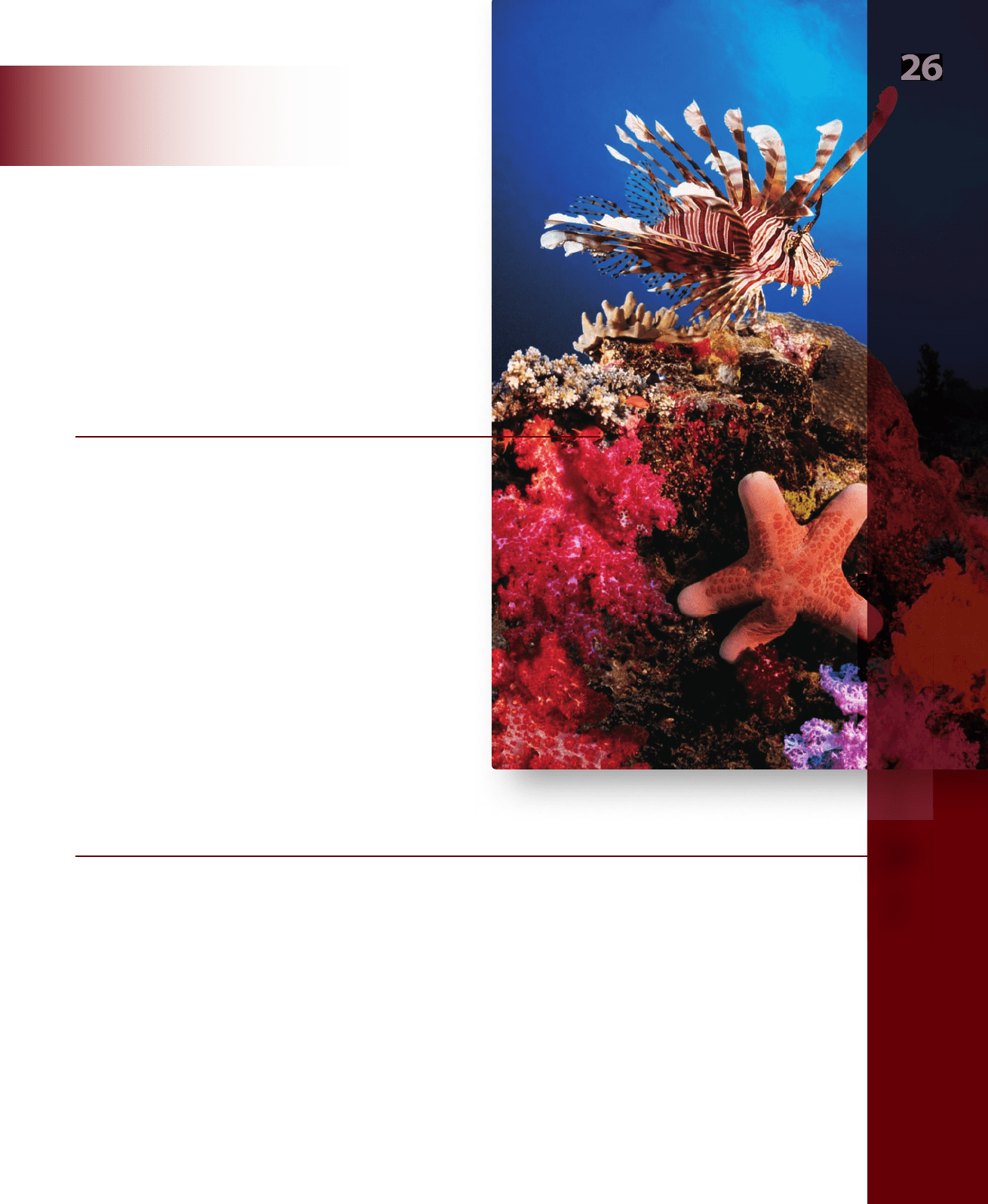
living things are also highly diverse, ranging from bacteria and amoebas to blue whales and sequoia trees. Coral reefs, such
as the one pictured here, are microcosms of diversity, comprising many life forms and sheltering an enormous array of life.
For generations, biologists have tried to group organisms based on shared characteristics. The most meaningful groupings
are based on the study of evolutionary relationships among organisms. These phylogenetic approaches and a sea of
molecular sequence data are leading to new evolutionary hypotheses to explain life’s variety. In this chapter and those that
follow in this unit, we explore the diversity of the living world.
CHAPTER
rav32223_ch26_507-527.indd 507rav32223_ch26_507-527.indd 507 11/12/09 3:51:41 PM11/12/09 3:51:41 PM
Apago PDF Enhancer
66.7 μm
508
part
V
Diversity of Life on Earth
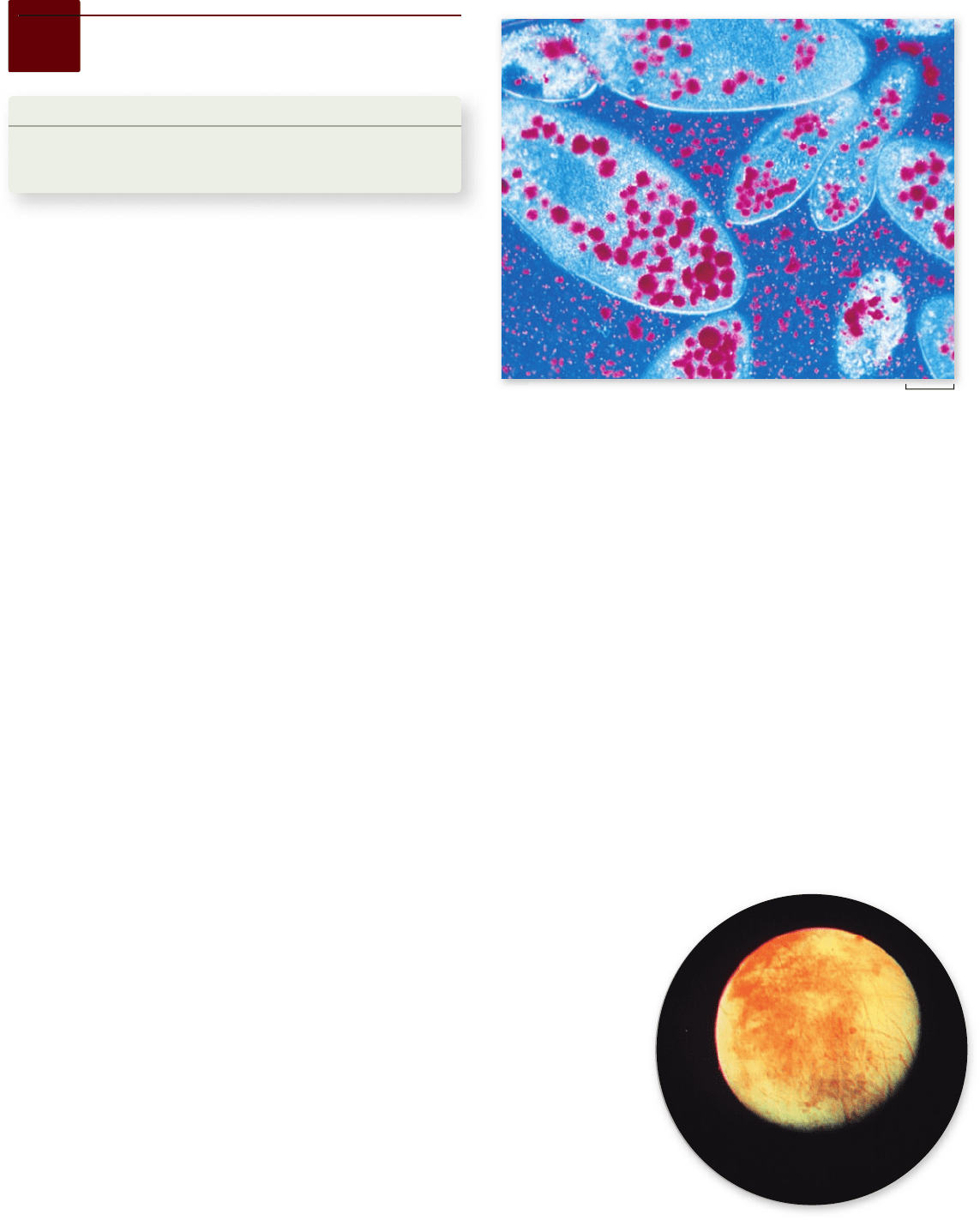
Figure 26.1
Cellular compartmentalization. These
complex, single-celled organisms called Paramecia are classi ed
as protists. The yeasts, stained red in this photograph, have been
consumed and are enclosed within membrane-bounded sacs called
digestive vacuoles.
26.1
Origins of Life
Learning Outcomes
Explain what qualifies something as “living.”1.
Describe different proposals for the origin of life on Earth.2.
The cell is the basic unit of life, and today all cells come
from preexisting cells. But, how can we explain the origins
of the tremendous diversity of life on Earth today? The
Earth formed as a hot mass of molten rock about 4.5 bya. As
it cooled, much of the water vapor present in Earth’s atmo-
sphere condensed into liquid water that accumulated on the
surface in chemically rich oceans. One scenario for the ori-
gin of life is that it originated in this dilute, hot, smelly soup
of ammonia, formaldehyde, formic acid, cyanide, methane,
hydrogen sulfide, and organic hydrocarbons. Whether at
the oceans’ edges, in hydrothermal deep-sea vents, or else-
where, the consensus among researchers is that life arose
spontaneously from these early waters. Although the way in
which this happened remains a puzzle, we cannot escape a
certain curiosity about the earliest steps that eventually led
to the origin of all living things on Earth, including our-
selves. How did organisms evolve from the complex mol-
ecules that swirled in the early oceans?
All organisms share fundamental
properties of life
Before we can address the origins of life, we must consider what
qualifies something as “living.” Biologists have found that the
following set of properties are common to all organisms on
Earth, with heredity playing a particularly key role.
Cellular organization. All organisms consist of one or more
cells—complex, organized assemblages of molecules
enclosed within membranes ( gure 26.1).
Sensitivity. All organisms respond to stimuli—though not
always to the same stimuli in the same ways.
Growth. All living things assimilate energy and use it to
maintain internal order and grow, a process called
metabolism. Plants, algae, and some bacteria use
sunlight to create covalent carbon–carbon bonds from
CO
2
and H
2
O through photosynthesis. This transfer of the
energy in covalent bonds is essential to all life on Earth.
Development. Both unicellular and multicellular organisms
undergo systematic, gene-directed changes as they grow
and mature.
Reproduction. Organisms reproduce, passing on genes from
one generation to the next.
Regulation. All organisms have regulatory mechanisms that
coordinate internal processes.
Homeostasis. All living things maintain relatively constant
internal conditions, different from their environment.
Heredity. All organisms on Earth possess a genetic system that
is based on the replication of a long, complex molecule
called DNA. This mechanism allows for adaptation and
evolution over time and is a distinguishing characteristic
of living organisms.
Long before there were cells with the properties of life,
organic (carbon-based) molecules formed from inorganic mol-
ecules. The formation of proteins, nucleic acids, carbohydrates,
and lipids were essential, but not sufficient for life. The evolu-
tion of cells required early organic molecules to assemble into
a functional, interdependent unit.
Life may have had extraterrestrial origins
Life may not have originated on Earth at all; instead, life may
have “infected” Earth from some
other planet. This hypothesis,
called pan spermia, pro-
poses that meteors or
cosmic dust may have
carried significant
amounts of complex
organic molecules
to Earth, kicking
off the evolution of
life. Hundreds of
thousands of me-
teorites and comets
are known to have
slammed into the early
rav32223_ch26_507-527.indd 508rav32223_ch26_507-527.indd 508 11/13/09 10:54:30 AM11/13/09 10:54:30 AM
Apago PDF Enhancer
www.ravenbiology.com
chapter
26
The Tree of Life
509
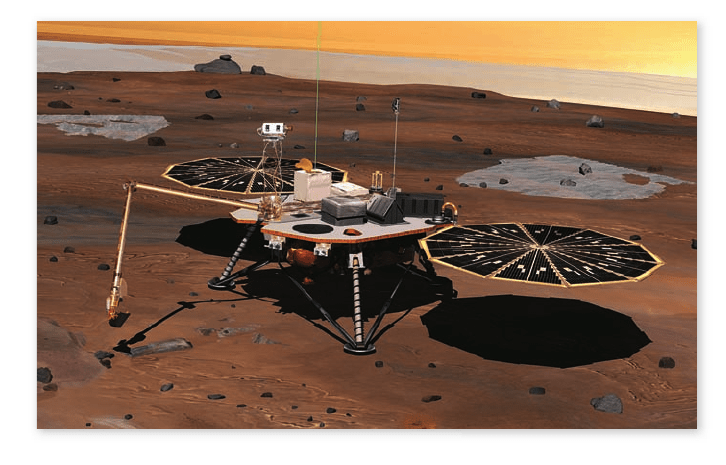
Figure 26.2
The Phoenix lander sent gigabytes
of information and tens of thousands of images of
Mars’ surface back to Earth, providing clues about
the possibility of ancient life on Mars.
Earth, and recent findings suggest that at least some may have
carried organic materials. Nor is life on other planets ruled out.
For example, the discovery of liquid water under the surfaces
of Jupiter’s ice-shrouded moon Europa and Saturn’s moon,
Enceladus, as well as suggestions of fossils in rocks from Mars
lend some credence to this idea. Enceladus may harbor an ocean
of liquid water, raising intriguing questions about whether it is
habitable. Plumes of ice and vapor escape its gravitational field
and contribute to the outermost ring around Saturn. In 2009,
sodium salt was discovered in Saturn’s ring that appears to origi-
nate from Enceladus. The Mars lander Phoenix confirmed the
presence of frozen water on the planet in 2008 (figure 26.2).
Analysis of soil samples from the same mission revealed an alka-
line soil composed of sodium, magnesium, chloride, potassium,
and other chemicals, but many questions remain about the wa-
tery environment that might have harbored life.
Life may have originated on early Earth
Conditions on early Earth
The more we learn about the Earth’s early history, the more
likely it seems that Earth’s first organisms emerged and lived at
very high temperatures. Rubble from the forming solar system
slammed into the early Earth beginning about 4.6 bya, keeping
the surface molten hot. As the bombardment slowed down, tem-
peratures dropped. By about 3.8 bya, ocean temperatures are
thought to have dropped to a hot 49° to 88°C (120° to 190°F).
Between 3.8 and 3.5 bya, life first appeared, promptly after the
Earth was habitable. Thus, as intolerable as early Earth’s infer-
nal temperatures seem to us today, they gave birth to life.
Very few geochemists agree on the exact composition
of the early atmosphere. One popular view is that it con-
tained principally carbon dioxide (CO
2
) and nitrogen gas
(N
2
), along with significant amounts of water vapor (H
2
O).
It is possible that the early atmosphere also contained hy-
drogen gas (H
2
) and compounds in which hydrogen atoms
were bonded to the other light elements (sulfur, nitrogen,
and carbon), producing hydrogen sulfide (H
2
S), ammonia
(NH
3
), and methane (CH
4
).
We refer to such an atmosphere as a reducing atmosphere
because of the ample availability of hydrogen atoms and their
electrons. Because a reducing atmosphere would not require as
much energy as it would today, it would have made it easier to
form the carbon-rich molecules from which life evolved.
Exactly where on Earth life originated is also an open
question. Possible locations include the ocean’s edge, under
frozen oceans, deep in the Earth’s crust, within clay, or at deep-
sea vents.
Organic molecules on early Earth
An early attempt to determine what kinds of organic molecules
might have been produced on the early Earth was carried out
in 1953 by Stanley L. Miller and Harold C. Urey. In what has
become a classic experiment, they attempted to reproduce the
conditions in the Earth’s primitive oceans under a reducing at-
mosphere. Even if this hypothesis proves incorrect—the jury
is still out on this—their experiment is critically important be-
cause it ushered in the whole new field of prebiotic chemistry.
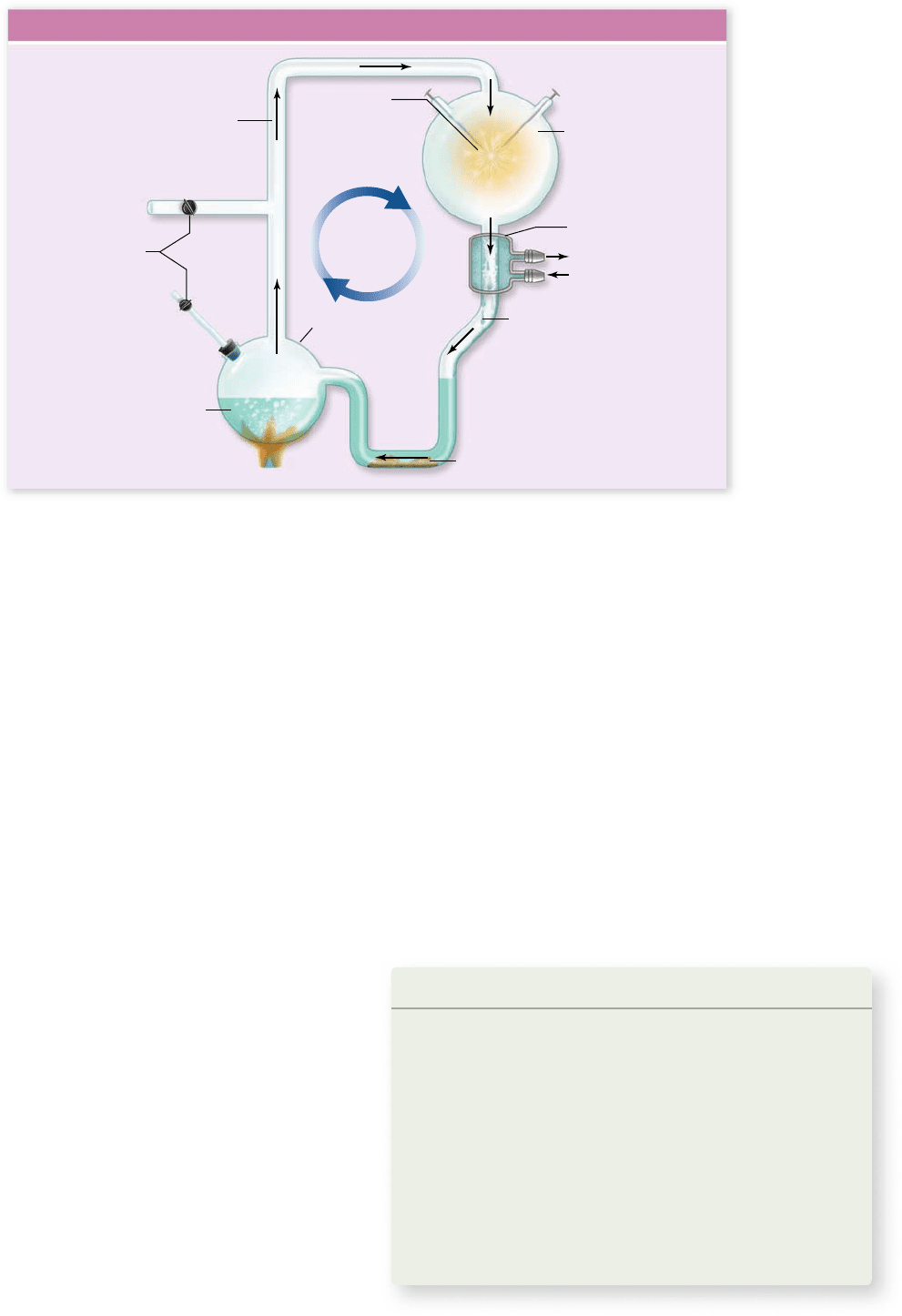
To carry out their experiment, Miller and Urey (1) as-
sembled a reducing atmosphere rich in hydrogen and excluding
gaseous oxygen; (2) placed this atmosphere over liquid water;
(3) maintained this mixture at a temperature somewhat below
100°C; and (4) simulated lightning by bombarding it with en-
ergy in the form of sparks (figure 26.3).
They found that within a week, 15% of the carbon origi-
nally present as methane gas (CH
4
) had converted into other
simple carbon compounds. Among these compounds were
formaldehyde (CH
2
O) and hydrogen cyanide (HCN). These
compounds then combined to form simple molecules, such as
formic acid (HCOOH) and urea (NH
2
CONH
2
), and more
complex molecules containing carbon–carbon bonds, including
the amino acids glycine and alanine.
In similar experiments performed later by other scien-
tists, more than 30 different carbon compounds were identified,
rav32223_ch26_507-527.indd 509rav32223_ch26_507-527.indd 509 11/12/09 3:51:50 PM11/12/09 3:51:50 PM
Apago PDF Enhancer
Small organic molecules
including amino acids
Condensed liquid with
complex molecules
Heated water
(“ocean”)
Heat source
Samples tested
for analysis
Boiler
Cool water
Condenser
Water vapor
Electrodes
discharge
sparks
(lightning
simulation)
Reducing atmosphere
mixture (H
2
O, N
2
, NH
3
,
CO
2
, CO, CH
4
, H
2
)
Many cycles
during one
week
The Miller–Urey Experiment
510
part
V
Diversity of Life on Earth
F i g u r e 2 6 . 3
The Miller–Urey experiment. The apparatus consisted of a closed tube connecting two chambers. The upper
chamber contained a mixture of gases thought to resemble the primitive Earth’s atmosphere. Electrodes discharged sparks through this
mixture, simulating lightning. Condensers then cooled the gases, causing water droplets to form, which passed into the second heated
chamber, the “ocean.” Any complex molecules formed in the atmosphere chamber would be dissolved in these droplets and carried to the
ocean chamber, from which samples were withdrawn for analysis.
including the amino acids glycine, alanine, glutamic acid, valine,
proline, and aspartic acid. As we saw in chapter 3 , amino acids are
the basic building blocks of proteins, and proteins are one of the
major kinds of molecules of which organisms are composed. Other
biologically important molecules were also formed in these experi-
ments. For example, hydrogen cyanide contributed to the produc-
tion of a complex ring-shaped molecule called adenine—one of the
bases found in DNA and RNA. Thus, the key molecules of life
could have formed in the reducing atmosphere of the early Earth.
Cells evolved from the functional
assembly of organic molecules
Organic molecules can convey information or provide energy
to maintain life through metabolism. Although DNA is the he-
reditary information molecule, RNA can both act as an enzyme
used in self-replication (a ribozyme) and may have been the
first genetic material.
Many hypotheses for the emergence of metabolic pathways
exist. One scenario assumes that primitive organisms were auto-
trophic, building all the complex organic molecules they require
from simple inorganic compounds. For example, glucose may
have been synthesized from formaldehyde, CH
2
O, in the alka-
line conditions that could have existed on early Earth. Glycolysis
and a version of the Krebs cycle (see chapter 7) that functioned
without enzymes are proposed to be the core from which other
metabolic pathways emerged. Early autotrophs could have made,
stored, and later used glucose as an energy source.
In addition to information and metabolism, cells require
membranes. Constraining organic molecules to a physical space
within a lipid or protein bubble could lead to an increased con-
centration of specific molecules. This in turn could increase the
probability of metabolic reactions occurring. At some point,
these bubbles became living cells with cell membranes and all
the properties of life described earlier. As detailed in chapter 28 ,
3.5-billion-year-old prokaryotic fossils have been identified. For
most of the history of life on Earth, these single-celled organ-
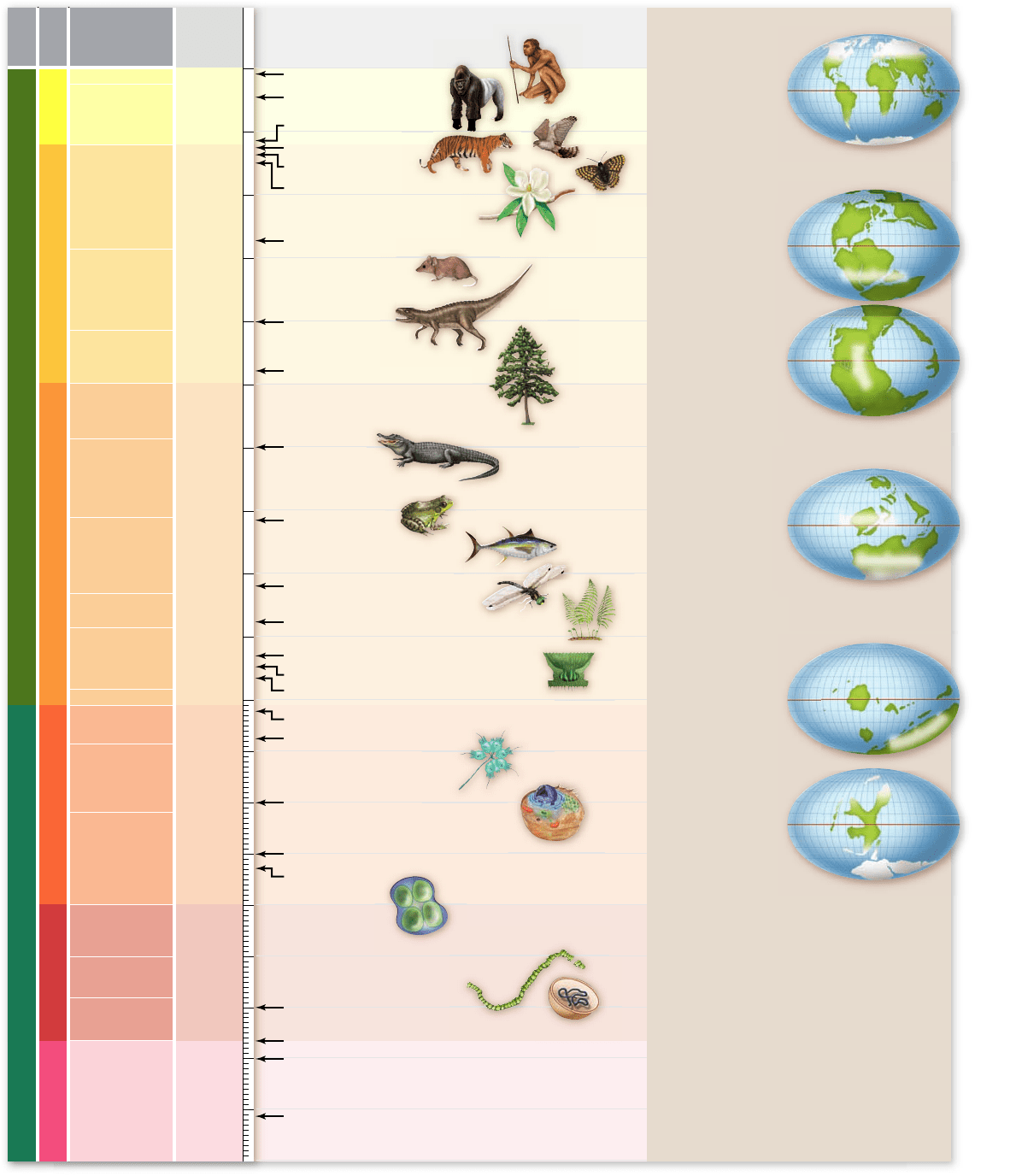
isms were the only life forms. Several major evolutionary innova-
tions—eukaryotic cells, sexual reproduction, and multicellularity—
contributed to the diverse forms of life on Earth today (figure 26.4).
We will continue with an overview of the amazing diversity of life
on Earth and the evolutionary relationships among organisms.
Learning Outcomes Review 26.1
Living organisms consist of one or more cells and are capable of sensing
their environment, reproducing, developing, and maintaining their
internal processes. Whether the organic molecules necessary for
life formed on Earth or formed elsewhere and came to Earth within
meteors remains an open question. Although conditions on early Earth
cannot be completely reconstructed, it is likely that the temperatures
were extreme and that the atmosphere had a very diff erent gaseous
composition than it does today.
If you read a news headline claiming that life has been ■
found on Mars, what type of evidence would you require to
accept the claim?
rav32223_ch26_507-527.indd 510rav32223_ch26_507-527.indd 510 11/12/09 3:51:52 PM11/12/09 3:51:52 PM
Apago PDF Enhancer
Paleozoic Mesozoic Cenozoic
Eons
Eras
Periods
First primate
First dinosaurs
Cambrian explosion; increase in diversity
Early vascular plants diversify
Bony fish, tetrapods, seed plants,
and insects appear
Mammal radiation
First gymnosperms
First amphibians
First reptiles
First flowering plants, birds,
marsupial mammals
Invertebrates dominate
First land plants
Appearance of humans
Diversification of flowering plants
Bird radiation
Pollinating insects
Phanerozoic
Proterozoic
Early
Middle
Late
Early
Middle
Late
Precambrian
ArchaeanHadean
Formation of Earth
Molten-hot surface of Earth becomes somewhat cooler
Appearance of oxygen in atmosphere
Oldest definite fossils of eukaryotes
First multicellular organisms
Appearance of animals and plants
Oldest fossils of prokaryotes
Cyanobacteria
Oldest rocks
Quaternary
Tertiary
Cretaceous
Jurassic
Triassic
Permian
Carboniferous
Devonian
Silurian
Ordovician
Cambrian
North and South
America joined
by land bridge.
Uplift of the
Sierra Nevada.
Worldwide glaciation.
Gondwana
Gondwana
Laurentia
Gondwana begins
to break apart;
interior less arid.
Pangea intact.
Interior of Pangea
arid. Climate
very warm.
Supercontinent of
Laurentia to the
north and
Gondwana to the
south. Climate mild.
Supercontinent of
Gondwana forms.
Oceans cover
much of North
America. Climate
not well known.
Most of Earth
is covered in
ocean and ice.
G
o
n
d
w
a
n
a
P
a
n
g
e
a
450
MYA
400
MYA
350
MYA
300
MYA
250
MYA
200
MYA
50
MYA
Present
150
MYA
100
MYA
4500 MYA
4000 MYA
3500 MYA
3000 MYA
2500 MYA
2000 MYA
500 MYA
1500 MYA
1000 MYA
www.ravenbiology.com
chapter
26
The Tree of Life
511
Figure 26.4
Geological timescale and the evolution of life on earth.
rav32223_ch26_507-527.indd 511rav32223_ch26_507-527.indd 511 11/12/09 3:51:53 PM11/12/09 3:51:53 PM