
Raven P.H., Johnson G.B., Mason K.A. Biology (Ninth Edition)
Подождите немного. Документ загружается.

Apago PDF Enhancer
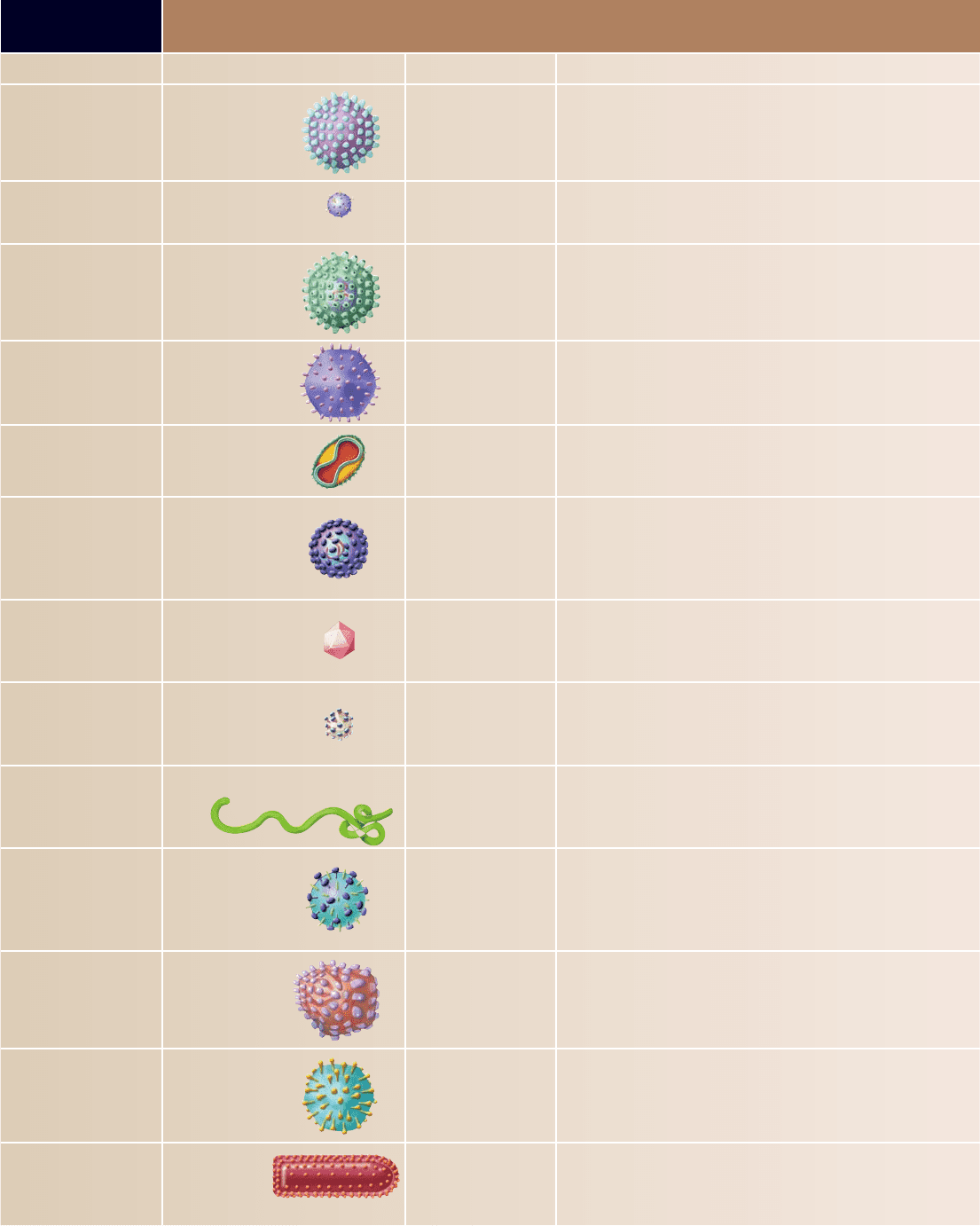
TABLE 27.1
Important Human Viral Diseases
Disease Pathogen Genome Vector/Epidemiology
Chicken pox Varicella-zoster
virus
Double-stranded DNA Spread through contact with infected individuals. No cure. Rarely fatal. Vaccine
approved in U.S. in early 1995. May exhibit latency leading to shingles.
Hepatitis B (viral) Hepadnavirus
Double-stranded DNA Highly infectious through contact with infected body uids. Approximately 1%
of U.S. population infected. Vaccine available. No cure. Can be fatal.
Herpes Herpes simplex
virus
Double-stranded DNA Blisters; spread primarily through skin-to-skin contact with cold sores/blisters.
Very prevalent worldwide. No cure. Exhibits latency—the disease can be
dormant for several years.
Mononucleosis Epstein–Barr
virus
Double-stranded DNA Spread through contact with infected saliva. May last several weeks; common
in young adults. No cure. Rarely fatal.
Smallpox Variola virus
Double-stranded DNA Historically a major killer; the last recorded case of smallpox was in 1977. A worldwide
vaccination campaign wiped out the disease completely.
AIDS HIV
(+) Single-stranded RNA
(two copies)
Destroys immune defenses, resulting in death by opportunistic infection or
cancer. For the year 2007, WHO estimated that 33.2 million people are living
with AIDS, with an estimated 4.1 million new HIV infections and an estimated
2.8 million deaths.
Polio Enterovirus
(+) Single-stranded RNA Acute viral infection of the CNS that can lead to paralysis and is often fatal. Prior
to the development of Salk’s vaccine in 1954, 60,000 people a year contracted
the disease in the U.S. alone.
Yellow fever Flavivirus
(+) Single-stranded RNA Spread from individual to individual by mosquito bites; a notable cause of death
during the construction of the Panama Canal. If untreated, this disease has a
peak mortality rate of 60%.
Ebola Filoviruses
(–) Single-stranded RNA Acute hemorrhagic fever; virus attacks connective tissue, leading to massive
hemorrhaging and death. Peak mortality is 50–90% if untreated. Outbreaks
con ned to local regions of central Africa.
In uenza In uenza viruses
(–) Single-stranded RNA
(eight segments)
Historically a major killer (20–50 million died during 18 months in 1918–1919);
wild Asian ducks, chickens, and pigs are major reservoirs. The ducks are not
a ected by the u virus, which shu es its antigen genes while multiplying
within them, leading to new u strains. Vaccines are available.
Measles Paramyxoviruses
(–) Single-stranded RNA Extremely contagious through contact with infected individuals. Vaccine
available. Usually contracted in childhood, when it is not serious; more
dangerous to adults.
SARS Coronavirus
(–) Single-stranded RNA Acute respiratory infection; an emerging disease, can be fatal, especially in the
elderly. Commonly infected animals include bats, foxes, skunks, and raccoons.
Domestic animals can be infected.
Rabies Rhabdovirus
(–) Single-stranded RNA An acute viral encephalomyelitis transmitted by the bite of an infected animal. Fatal
if untreated. Commonly infected animals include bats, foxes, skunks, and raccoons.
Domestic animals can be infected.
532
part
V
Diversity of Life on Earth
rav32223_ch27_528-544.indd 532rav32223_ch27_528-544.indd 532 11/12/09 4:18:27 PM11/12/09 4:18:27 PM

Apago PDF Enhancer
Once inside the bacterial cell a phage may immediately
take over the cell’s replication and protein synthesis enzymes to
synthesize viral components. This is the synthesis phase. Once
the components are made, they are assembled (assembly) and
mature virus particles are released, either through the action of
enzymes that lyse the host cell or by budding through the host
cell wall.
The time between adsorption and the formation of new
viral particles is called an eclipse period because if a cell is lysed at
this point, few if any active virions can be released.
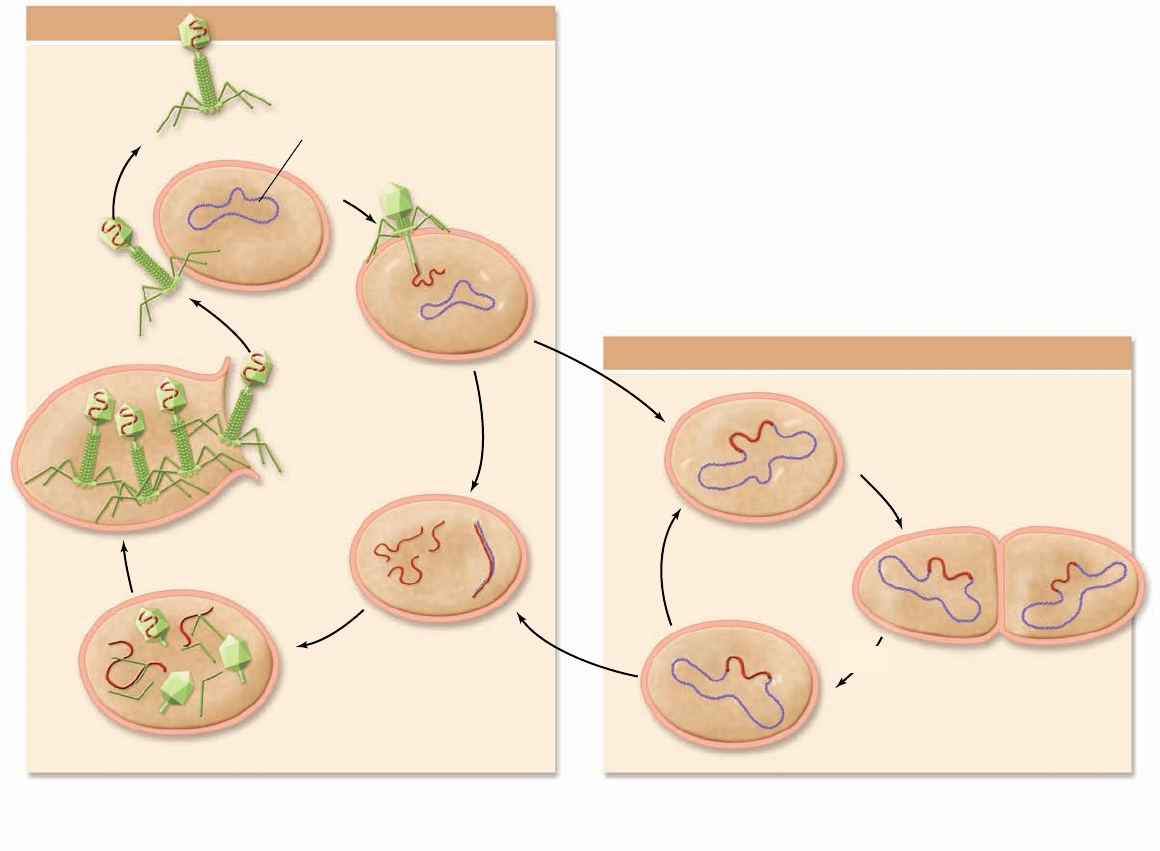
The lytic cycle
When a virus lyses the infected host cell in which it is replicating,
the reproductive cycle is referred to as a lytic cycle (figure 27.5 ,
left). The basic steps of a lytic bacteriophage cycle are similar to
those of a nonenveloped animal virus. The T-series bacterio-
phage are all virulent, or lytic, phage, multiplying within in-
fected cells and eventually lysing (rupturing) them.
The lysogenic cycle
In contrast to the rather simple lytic cycles, some bacteriophage
do not immediately kill the cells they infect, instead they inte-
grate their nucleic acid into the genome of the infected host
cell. This integration gives them a distinct advantage; integra-
tion allows a virus to be replicated along with the host cell’s
DNA as the host divides. These viruses are called temperate,
or lysogenic, phage. The DNA segment that is integrated into
a host cell’s genome is called a prophage, and the resulting cell is
called a lysogen.
Among the bacteriophage that do this is the binal phage
lambda (λ) of E. coli. Lambda may be the best studied biological
particle; the complete sequence of its 48,502 bases has been
determined. At least 23 proteins are associated with the devel-
opment and maturation of phage λ, and other enzymes are in-
volved in integrating this virus into the host genome.
When phage λ infects a cell, the early events constitute
a genetic switch that will determine whether the virus will
replicate and destroy the cell or become a lysogen and be pas-
sively replicated with the cell’s genome. This lysis/lysogeny
“decision” depends on the expression of early genes. Early on,
two regulatory proteins are produced that will compete for
binding to sites on the phage’s DNA. Depending on which
protein “wins” either the genes necessary for replication of
the genome will be expressed beginning the lytic cycle, or the
enzymes necessary for integrating the viral genome into the
chromosome will be expressed and the lysogenic cycle initi-
ated (figure 27.5, right).
A lysogenic phage has the expression of its genome re-
pressed (see chapter 16 ) by one of the two viral regulatory pro-
teins mentioned earlier. This is not a permanent state, however;
in times of cell stress, the prophage can be derepressed, and the
enzymes necessary for excision of the genome expressed. The
viral genome then is in the same state as the initial stage of in-
fection, and the lytic cycle can commence, leading to formation
of viral particles and lysis of the cell.
The switch from a lysogenic prophage to a lytic cycle is
called induction because it requires turning on the gene ex-
pression necessary for the lytic cycle . It can be stimulated in
27.2
Bacteriophage : Bacterial Viruses
Learning Outcomes
Distinguish between lytic and lysogenic cycles in 1.
bacteriophage.
Describe how viruses can contribute DNA to their hosts.2.
Bacteriophage (both singular and plural) are viruses that infect bac-
teria. They are diverse, both structurally and functionally, and are
united solely by their occurrence in bacterial hosts. Many of these
types of bacteriophage, called phage for short, are large and com-
plex, with relatively large amounts of DNA and proteins.
E. coli-infecting viruses were among the first bacterio-
phage to be discovered and are still some of the best studied.
Some of these viruses that infect E. coli have been named as
members of a “T” series (T1, T2, and so forth); others have
been given different types of names. To illustrate the diversity
of these viruses, T3 and T7 phage are icosahedral and have
short tails. In contrast, the so-called T-even phage (T2, T4, and
T6) have an icosahedral head, a capsid that consists primarily of
three proteins, a connecting neck with a collar and long “whis-
kers,” a long tail, and a complex base plate (see figure 27.3).
Archaeal viruses have diverse morphologies
Archaeal viruses were initially thought to be similar to bacterial
viruses, but recent evidence argues against this. Surveys of viruses
in several extreme environments dominated by archaeal species
have uncovered an unexpected diversity of viral forms. In addition
to the viral types described in the previous section, viruses with a
two-tailed structure, with a bottle-shaped structure, and with a
spindle-shaped structure have all been observed. All of these vi-
ruses have double-stranded DNA genomes, and most appear to be
unrelated to any bacteriophage. The characterization of these vi-
ruses is in the early stages, so we will not discuss them further.
Bacterial viruses exhibit two reproductive cycles
During the process of bacterial infection by phage T4, at least
one of the tail fibers of the phage—they are normally held near
the phage head by the “whiskers”—contacts proteins of the
host bacterial cell wall. The other tail fibers set the phage per-
pendicular to the surface of the bacterium and bring the base
plate into contact with the cell surface.
Contact with the host
Different phages may target different parts of the outer surface of a
bacterial cell. This first step is called attachment, or adsorption. The
next step, release of the phage genome into the host, is best under-
stood in the binal phage, such as T4. Once contact is established,
the tail contracts, and the tail tube passes through an opening that
appears in the base plate, piercing the bacterial cell wall. The con-
tents of the head, the DNA genome, are then injected into the host
cytoplasm. This step is called penetration, or injection.
chapter
27
Viruses
533www.ravenbiology.com
rav32223_ch27_528-544.indd 533rav32223_ch27_528-544.indd 533 11/12/09 4:18:28 PM11/12/09 4:18:28 PM
Apago PDF Enhancer
Release:
lysis of cell
Attachment:
virus attaching
to cell wall
Bacterial
chromosome
Penetration:
viral DNA
injected
into cell
Propagation:
of prophage along with
host genome
Reproduction of
lysogenic bacteria
Integration: of genome
leads to prophage
Induction: prophage exits the bacterial
chromosome, viral genes are expressed
Synthesis:
protein and
nucleic acid
Assembly:
involves spontaneous assembly
of capsid and enzyme to insert DNA
Lytic Cycle
Lysogenic Cycle
Cell stress
form, the bacterium is responsible for the deadly disease chol-
era, but how the bacteria changed from harmless to deadly was
not known until recently.
Research now shows that a lysogenic bacteriophage that
infects V. cholerae introduces into the host bacterial cell a gene
that codes for the cholera toxin. This gene, along with the rest
of the phage genome, becomes incorporated into the bacterial
chromosome. The toxin gene is expressed along with the other
host genes, thereby converting the benign bacterium to a
disease-causing agent.
The receptors used by this toxin-encoding phage are pili
(hairlike projections) found on the outer surface of V. cholerae
(chapter 28) ; in recent experiments, it was determined that
mutant bacteria that did not have pili were resistant to infec-
tion by the bacteriophage. This discovery has important impli-
cations in efforts to develop vaccines against cholera, which
have been unsuccessful up to this point. Phage conversion
could change any pili-expressing, nontoxigenic V. cholerae into
a toxin-producing, potentially deadly form.
Another example involved in human disease is the toxin
found in Corynebacterium diphtheriae. This toxin is the product
of phage conversion, as are the changes to the outer surface of
certain infectious Salmonella species.
the laboratory by stressors such as starvation or ultraviolet ra-
diation. The molecular events of induction take advantage of
host proteins that respond to stress to produce a protease that
can destroy the repressor protein that is keeping the viral ge-
nome silent. The normal function of this protease is to degrade
a host repressor that controls DNA repair genes. The two re-
pressor proteins are similar enough that both are degraded by
the protease.
Bacteriophage can contribute genes
to the host genome
During the integrated portion of a lysogenic reproductive cycle,
a few viral genes may be expressed at the same time as host cell
genes. Sometimes the expression of these genes has an important
effect on the host cell, altering it in novel ways. When the pheno-
type or characteristics of the lysogenic bacterium is altered by
the prophage, the alteration is called phage conversion.
Phage conversion of the cholera-causing bacterium
The bacterium Vibrio cholerae usually exists in a harmless form,
but a second, disease-causing form also occurs. In this latter
Figure 27.5
Lytic and lysogenic cycles of a
bacteriophage. In the lytic cycle the viral DNA directs the
production of new viral particles by the host cell until the virus kills
the cell by lysis. In the lysogenic cycle, the bacteriophage DNA is
integrated into the host chromosome. This prophage is replicated
along with the host DNA as the bacterium divides. It may persist as
a prophage, or enter the lytic cycle and kill the cell. Bacteriophage
not drawn to scale in this diagram.
534
part
V
Diversity of Life on Earth
rav32223_ch27_528-544.indd 534rav32223_ch27_528-544.indd 534 11/12/09 4:18:28 PM11/12/09 4:18:28 PM

Apago PDF Enhancer
successful vaccination and immunization, smallpox has been
eradicated from the human population; however, before its
eradication, it caused billions of deaths worldwide.
In order for smallpox to infect a cell, the cell must have a
receptor protein in its plasma membrane that the virus can bind
to. Individuals with mutated receptors would have been more
resistant to smallpox and would have passed their genes on to
their offspring. It has been suggested that one of the receptors
used by HIV, CCR5, is also a receptor for smallpox. It is known
that people resistant to HIV infection have a mutation in the
CCR5 gene. The historical appearance and distribution of this
mutation in human populations correlates with the historical
distribution of smallpox. The AIDS epidemic is discussed fur-
ther in chapter 52 .
HIV infection compromises
the host immune system
In AIDS patients, HIV primarily targets CD4
+
cells, particu-
larly T-helper cells. T-Helper cells are responsible for mount-
ing the immune response against foreign invaders, and their
action is described more fully in chapter 52 .
HIV infects and kills the CD4
+
cells until very few are
left. Without these crucial immune system cells, the body can-
not mount a defense against invading bacteria or viruses. AIDS
patients die of infections that a healthy person could fight off.
These diseases, called opportunistic infections, normally do not
cause disease and are part of the progression from HIV infec-
tion to having AIDS.
Clinical symptoms typically do not begin to develop until
after a long latency period, generally 8 to 10 years after the
initial infection with HIV. Some individuals, however, may de-
velop symptoms in as few as two years. During latency, HIV
particles are not in circulation, but the virus can be found inte-
grated within the genome of macrophages and CD4
+
T cells as
a provirus (equivalent to a prophage in bacteria).
HIV testing
HIV tests do not test for the presence of circulating virus but
rather for the presence of antibody against HIV. Because only
those people exposed to HIV in their bloodstream at one time
or another would have anti-HIV antibodies, this screening pro-
vides an effective way to determine whether further testing is
needed to confirm HIV-positive status.
The spread of AIDS
Although carriers of HIV have no clinical symptoms during the
long latency period, they are apparently fully infectious, which
makes the spread of HIV very difficult to control. The reason
HIV remains hidden for so long seems to be that its infection
cycle continues throughout the 8- to 10-year latency period
without doing serious harm to the infected person because of
an effective immune response. Eventually, however, a random
mutational event in the virus or a failure of the immune re-
sponse allows the virus to quickly overcome the immune de-
fense, beginning the course of AIDS.
27.3
Human Immunode ciency
Virus (HIV)
Learning Outcomes
Explain how the HIV virus compromises the immune 1.
system.
Describe the disease AIDS.2.
Illustrate the different therapeutic options for AIDS.3.
A diverse array of viruses occurs among animals. A good way to
gain a general idea of the characteristics of these viruses is to
look at one animal virus in detail. Here we examine the virus
responsible for a comparatively new and fatal viral disease, ac-
quired immune deficiency syndrome (AIDS).
AIDS is caused by HIV
The disease now known as AIDS was first reported in the
United States in 1981, although a few dozen people in the
United States had likely died of AIDS prior to that time and
had not been diagnosed. Frozen plasma samples and esti-
mates based on evolutionary speed and current diversity of
HIV strains trace the origins of HIV in the human popula-
tion to Africa in the 1950s. It was not long before the infec-
tious agent, a retrovirus, was identified by laboratories in
France. Study of HIV revealed it to be closely related to a
chimpanzee virus (simian immunodeficiency virus, SIV), sug-
gesting a recent host expansion to humans from chimpanzees
in central Africa.
Infected humans have varying degrees of resistance to
HIV. Some have little resistance to infection and rapidly pro-
gress from having HIV-positive status to developing AIDS and
eventually die. Others, even after repeated exposure, fail to be-
come HIV-positive or may become HIV-positive without de-
veloping AIDS.
A relatively recent hypothesis to explain this great vari-
ability in susceptibility is genetic variation among these groups
due to the selective pressure put on the human population by
the smallpox virus (variola major) over the centuries. Because of
Learning Outcomes Review 27.2
Bacteriophage are viruses that infect bacteria. They have two major types
of life cycle: the lytic cycle that results in immediate death of the host, and
the lysogenic cycle in which the virus becomes part of the host genome. This
viral genome is then transmitted vertically by cell division. Under certain
conditions the lysogenic phage can switch to the lytic cycle. Lysogenic
phage contribute genes to the host, as is the case with V. cholera. The toxin
responsible for the disease cholera came from a phage.
■ What would be the result of a mutation in the λ
repressor gene that resulted in a protein resistant to
host protease?
chapter
27
Viruses
535www.ravenbiology.com
rav32223_ch27_528-544.indd 535rav32223_ch27_528-544.indd 535 11/12/09 4:18:30 PM11/12/09 4:18:30 PM
Apago PDF Enhancer
Attachment Entry into CD4
+
Cells
Replication and Assembly
1. The gp120 glycoprotein
on the surface of HIV
attaches to CD4 and one
of two coreceptors on the
surface of a CD4
+
cell.
2. The viral contents enter
the cell by endocytosis.
6. Complete HIV particles
are assembled and HIV
buds out of the cell. As the
disease progresses
HIV-infected T-helper cells,
but not macrophages, are
killed by a poorly
understood mechanism.
gp120
glycoprotein
HIV
Envelope
Ruptured
capsid
Viral RNA
Viral RNA
DNA
Reverse
transcriptase
Double-stranded DNA
Host cell's
DNA
RNA
Ribosome
Assembly
Transcription
Virus exits
by budding.
CD4 receptor
Nucleus
CCR5 or CXCR4
coreceptor
CD4
+
cell
3. Reverse transcriptase catalyzes,
first, the synthesis of a DNA
copy of the viral RNA, and,
second, the synthesis of a
second DNA strand
complementary to the first one.
4. The double-stranded
DNA is then incorporated
into the host cell's DNA
by a viral enzyme.
5. Transcription of the
DNA results in the
production of RNA. This
RNA can serve as the
genome for new viruses
or can be translated to
produce viral proteins.
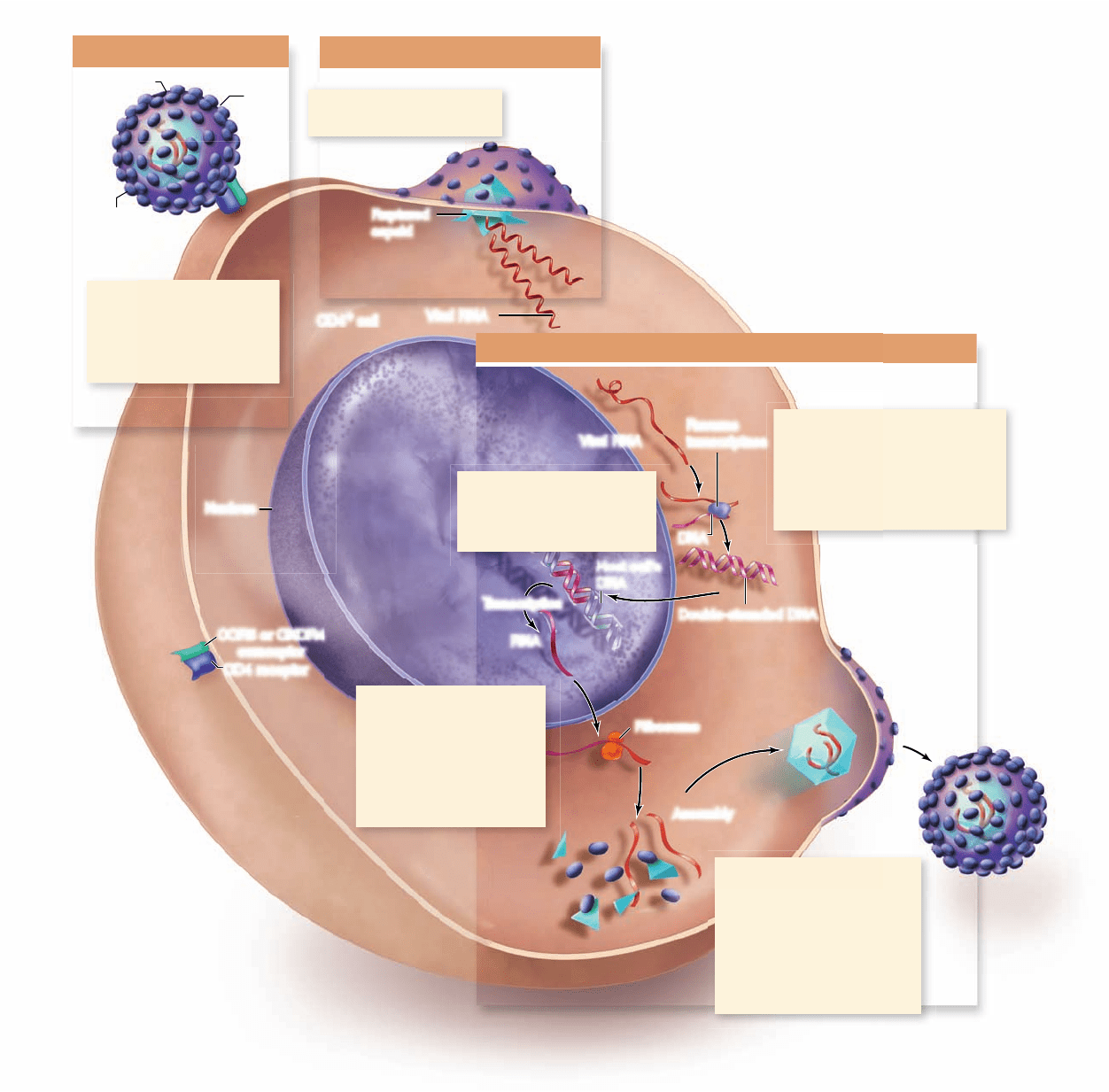
Figure 27.6
The HIV infection cycle.
The cycle begins and ends with free HIV
particles present in the bloodstream of its
human host. These free viruses infect white
blood cells that have CD4 receptors, cells
called CD4
+
cells.
to the brain. This tissue tropism is determined by the proteins
found on a cell surface and on a viral surface.
For example, the common cold virus uses the ICAM-1 mem-
brane protein as a receptor to enter cells. ICAM-1 is a protein that
is up-regulated (increased) in times of immune activation and stress.
So, the more inflammation and stress in an area, the more receptors
exist for the virus to enter a cell and continue the disease process.
How does a virus such as HIV recognize a target cell? Re-
call from chapter 4 that every kind of cell in the human body has
a specific array of cell-surface glycoprotein markers that serve to
identify them to other, similar cells. Invading viruses take advan-
tage of this to bind to specific cell types. Each HIV particle pos-
sesses a glycoprotein called gp120 on its surface that
precisely fits the cell-surface marker protein CD4 on the
surfaces of the immune system macrophages and T cells.
Macrophages, another type of white blood cell, are in-
fected first. Because macrophages commonly interact
with CD4
+
T cells, this may be one way that the T cells
HIV infects key immune-system cells
The way in which HIV infects humans provides a good exam-
ple of how animal viruses replicate (figure 27.6) . Most other
viral infections follow a similar course, although the details of
entry and replication differ in individual cases.
Attachment
When HIV is introduced into the human bloodstream, the vi-
rus particles circulate throughout the body but only infect
CD4
+
cells. Most other animal viruses are similarly narrow in
their requirements; hepatitis goes only to the liver, and rabies
536
part
V
Diversity of Life on Earth
rav32223_ch27_528-544.indd 536rav32223_ch27_528-544.indd 536 11/12/09 4:18:31 PM11/12/09 4:18:31 PM
Apago PDF Enhancer
Virus-cell
fusion
Reverse
transcriptase
Coreceptor
Host cell DNA
Transcription
Translation
Processing
by viral
protease
Polypeptide
DNA
Integrase
Integration
Viral RNA
+
cellCD4
Blocking Entry
Fusion inhibitors
Blocking Entry
Coreceptor
antagonists
Blocking Replication
Reverse transcriptase
inhibitors (NRTI, NNRTI)
Blocking
Maturation
Protease
inhibitors
Blocking
Integration
Integrase
inhibitors
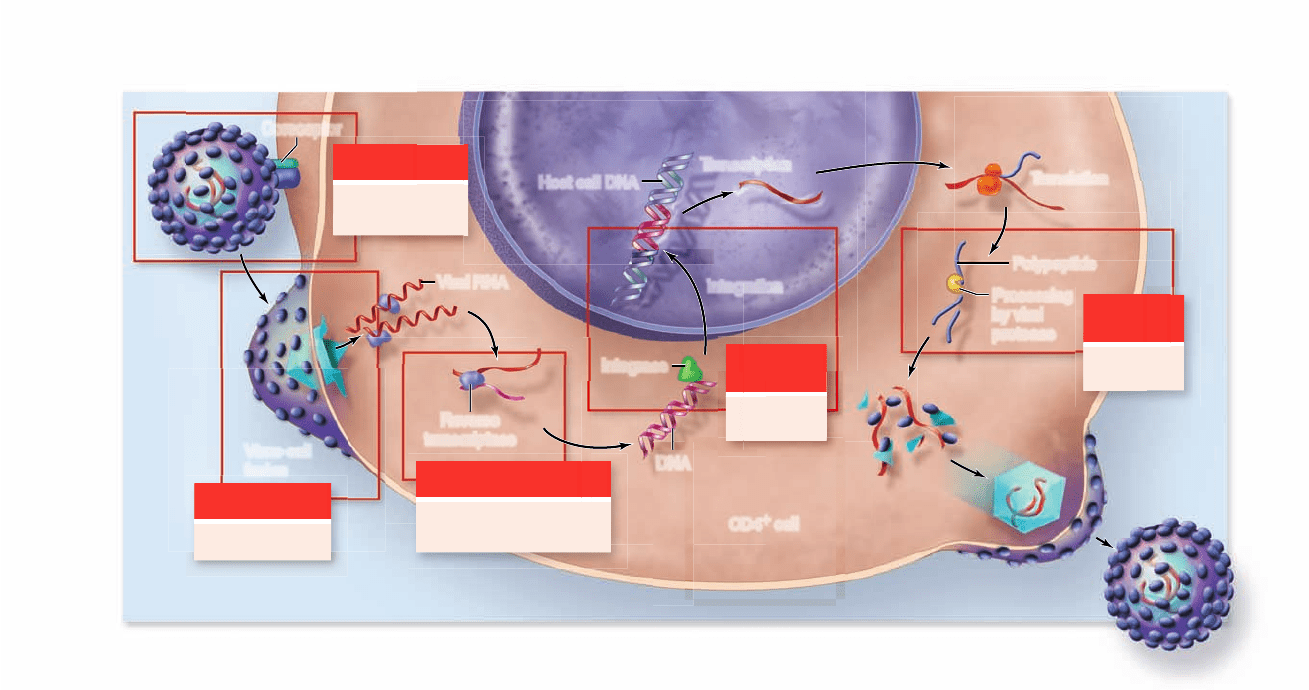
Figure 27.7
Viral targets for therapeutic drugs. A simpli ed version of the HIV infection cycle is shown with the steps targeted for
drug intervention. Four parts of the life cycle have been targeted: viral entry, genome replication, integration of the genome, and maturation
of viral proteins. NRTI, nucleoside reverse transcriptase inhibitor; NNRTI, nonnucleoside reverse transcriptase inhibitor.
lyse the host cell in order to exit. Some enveloped viruses may
produce enzymes that damage the host cell enough to kill it or
may produce lytic enzymes as well.
Evolution of HIV during infection
During an infection, HIV is constantly replicating and mutating.
The reverse transcriptase enzyme is less accurate than DNA poly-
merases, leading to a high mutation rate. Eventually, by chance,
variants in the gene for gp120 arise that cause the gp120 protein to
alter its second-receptor partner. This new form of gp120 protein
will bind to a different second receptor, for example CXCR4, in-
stead of CCR5. During the early phase of an infection, HIV pri-
marily targets immune cells with the CCR5 receptor. Eventually
the virus mutates to infect a broader range of cells. Ultimately, in-
fection results in the destruction and loss of critical T-helper cells .
This destruction of T cells blocks the body’s immune re-
sponse and leads directly to the onset of AIDS, with cancers
and opportunistic infections free to invade the defenseless vic-
tim. Most deaths due to AIDS are not a direct result of HIV, but
are from other diseases that normally do not harm a host with
a normal immune system.
AIDS treatment targets di erent phases
of the HIV life cycle
The federal Food and Drug Administration (FDA) currently
lists 32 antiretroviral drugs that are used in AIDS therapy.
These target four aspects of the HIV life cycle: viral entry, ge-
nome replication, integration of viral DNA, and maturation of
HIV proteins (figure 27.7). Of these, the vast majority are
are infected. Several coreceptors also significantly affect the
likelihood of viral entry into cells, including the CCR5 receptor,
which is mutated in HIV-immune individuals.
Entry of virus
After docking onto the CD4 receptor of a cell, HIV requires a
coreceptor such as CCR5, to pull itself across the cell mem-
brane. After gp120 binds to CD4, it goes through a conforma-
tional change that allows it to then bind the coreceptor.
Receptor binding is thought to ultimately result in fusion of the
viral and target cell membranes and entry of the virus through
a fusion pore. The coreceptor, CCR5, is hypothesized to have
been used by the smallpox virus as was mentioned earlier.
Replication
Once inside the host cell, the HIV particle sheds its protective
coat. This leaves viral RNA floating in the cytoplasm, along
with the reverse transcriptase enzyme that was also within the
virion. Reverse transcriptase synthesizes a double strand of
DNA complementary to the virus RNA, often making mistakes
and introducing new mutations. This double-stranded DNA
then enters the nucleus along with a viral enzyme that incorpo-
rates the viral DNA into the host cell’s DNA. After a variable
period of dormancy the HIV provirus directs the host cell’s ma-
chinery to produce many copies of the virus.
As is the case with most enveloped viruses, HIV does not
directly rupture and kill the cells it infects. Instead, the new vi-
ruses are released from the cell by budding, a process much like
exocytosis. HIV synthesizes large numbers of viruses in this
way, challenging the immune system over a period of years. In
contrast, naked viruses, those lacking an envelope, generally
chapter
27
Viruses
537www.ravenbiology.com
rav32223_ch27_528-544.indd 537rav32223_ch27_528-544.indd 537 11/12/09 4:18:38 PM11/12/09 4:18:38 PM

Apago PDF Enhancer
ies had an opportunity to develop tolerance to any single drug.
Widespread use of this combination therapy, otherwise known as
highly active antiretroviral therapy (HAART) has cut the U.S.
AIDS death rate by three-fourths since its introduction in the
mid-1990s.
Unfortunately, this sort of combination therapy does
not appear to actually eliminate HIV from the body. Although
the virus disappears from the bloodstream, traces of it can still
be detected in the patient’s lymph tissue. When combination
therapy is discontinued, virus levels in the bloodstream once
again rise.
In addition to the search for new drugs to add to the
mix of HAART, much effort has been put into simplifying
the drug regimens. The more complex the regimen of drugs,
the less likely that patients will stick with it. Thus drugs
have been developed that combine two NRTIs into one
dose, for example.
Vaccine development for HIV
has been unsuccessful
A large amount of effort has been put toward developing an
anti-HIV vaccine. Thus far, this has been totally unsuccessful. A
recent large-scale international HIV vaccine trial was halted
when an early examination of data indicated that the vaccine
was essentially useless for preventing infection or lowering vi-
ral load. This has led to a retooling of clinical trials to have
periodic examination of data instead of waiting for endpoints,
but has not helped in terms of the vaccine itself. This vaccine
was a subunit vaccine in which a specific HIV protein was engi-
neered into an adenovirus vector.
While the high mutation rate of HIV has always been
seen as a problem for vaccine development, it appears that
the reason for vaccine failures may be more basic, and harder
to surmount. A vaccine needs to produce a strong cellular
immune response, and thus far no trial HIV subunit vaccine
has done this. The only type of vaccine in an animal system
that has been shown to provide protection against infection
was a vaccine made from attenuated SIV. Unfortunately over
time, the attenuated virus was able to mutate into an infec-
tive virus, and the experimental animals eventually developed
simian AIDS.
Learning Outcomes Review 27.3
HIV is a retrovirus that enters cells via membrane fusion. The virus primarily
infects host CD4
+
T cells, ultimately resulting in massive death of these cells,
which thereby compromises the host’s immune system. Most deaths result
from cancer and infections that typically do not harm hosts with normal
immune systems. Combination drug therapy is a treatment modality in
developed countries, and much research is being done to develop vaccines or
to fi nd agents that can prevent infection.
■ Does combination therapy such as HAART represent a
cure for AIDS?
inhibitors of the replication enzyme, reverse transcriptase, and
the protease that is involved in maturation of proteins. Only
two drugs block viral entry: one that blocks the fusion of virus
with the cell membrane, and one that blocks the chemokine
coreceptor CCR5. A single drug has also been approved that
targets the integrase protein that integrates the viral genome
into a chromosome.
Reverse transcriptase inhibitors
The first drug licensed for clinical use was AZT, a reverse
transcriptase inhibitor. This class of drugs falls into two cat-
egories: nucleotide or nucleoside reverse transcriptase in-
hibitors (NRTI) such as AZT, and nonnucleoside reverse
transcriptase inhibitors (NNRTI). These drugs are selective
for HIV (or other retroviruses) because reverse transcriptase
is not a cellular enzyme. So although the NRTI drugs affect
cellular enzymes, they inhibit reverse transcriptase at much
lower doses. More than 17 RT inhibitors are currently ap-
proved by FDA.
Protease inhibitors
The second class of drugs discovered to be effective in AIDS
treatment were the protease inhibitors. These drugs target a
protease that cleaves a polyprotein into the smaller proteins
necessary for viral replication and assembly. Some of these
drugs are actually a good example of the concept of rational
drug design. Drug designers started with the protease enzyme,
then targeted drugs at transition state analogues of this enzyme.
There are now more than 10 of these drugs that have received
FDA approval.
Blocking viral entry
Two drugs have been approved by the FDA that block the entry
of HIV into the cell. One of these, the fusion inhibitor, was ap-
proved in 2003. The drug blocks the fusion of the viral enve-
lope with the plasma membrane of a target cell. This entry also
requires recognizing the CD4 receptor protein, and a corecep-
tor such as CCR5. The coreceptor blocker is a new drug that
was just approved in mid-2007.
Integrase inhibitors
A number of companies have been working on drugs target-
ing the viral integrase protein. This protein catalyzes the inte-
gration reaction of the viral genome. One of these was
approved in late 2007. At least one other is currently in testing
for approval.
Combination therapy
The most successful form of therapy has been to use combina-
tions of the previously discussed drugs. The standard treatment
regimen consists of a minimum of three active drugs: an
NNRTI or protease inhibitor combined with two different
NRTIs. This form of combination therapy has entirely elimi-
nated the HIV virus from many patients’ bloodstreams. All of
these patients began to receive the combination drug therapy
within three months of contracting the virus, before their bod-
538
part
V
Diversity of Life on Earth
rav32223_ch27_528-544.indd 538rav32223_ch27_528-544.indd 538 11/12/09 4:18:40 PM11/12/09 4:18:40 PM
Apago PDF Enhancer
Antigenic shift
Original influenza virus
New strain of virus
H antigen
New H antigen
N antigen
27.4
Other Viral Diseases
Learning Outcomes
Explain why we need a new vaccine each year 1.
for influenza.
Illustrate where emerging viruses come from.2.
Humans have known and feared diseases caused by viruses for
thousands of years. Among the diseases that viruses cause (see
table 27.1) are influenza, smallpox, hepatitis, yellow fever, polio,
AIDS, and SARS. In addition, viruses have been implicated in
some cancers including leukemias. Viruses not only cause many
human diseases, but also cause major losses in agriculture, for-
estry, and the productivity of natural ecosystems.
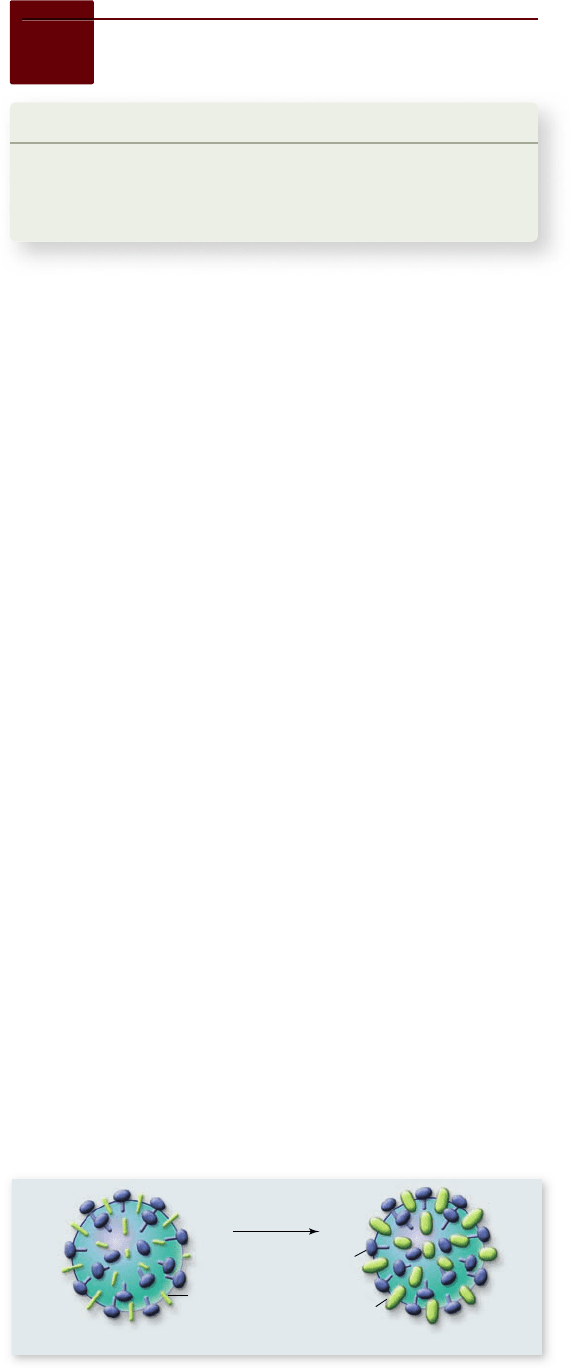
The u is caused by in uenza virus
Perhaps the most lethal virus in human history has been the in-
fluenza virus. As mentioned earlier, some 20 to 50 million people
worldwide died of flu within 18 months in 1918 and 1919.
Types and subtypes
Flu viruses are enveloped segmented RNA viruses that infect ani-
mals. An individual flu virus resembles a rod studded with spikes
composed of two kinds of protein. The three general “types” of flu
virus are distinguished by their capsid protein, which surrounds the
viral RNA segments and is different for each type: Type A flu virus
causes most of the serious flu epidemics in humans and also occurs
in mammals and birds. Type B and type C viruses are restricted to
humans and rarely cause serious health problems.
Different strains of flu virus, called subtypes, differ in
their protein spikes. One of these proteins, hemagglutinin (H),
aids the virus in gaining access to the cell interior. The other,
neuraminidase (N), helps the daughter viruses break free of the
host cell once virus replication has been completed.
Parts of the H molecule contain “hotspots” that display
an unusual tendency to change as a result of mutation of the
viral RNA during imprecise replication. Point mutations cause
changes in these spike proteins in 1 of 100,000 viruses during
the course of each generation. These highly variable segments
of the H molecule are targets against which the body’s antibod-
ies are directed. These constantly changing H-molecule regions
improve the reproductive capacity of the virus and hinder our
ability to make effective vaccines.
Because of accumulating changes in the H and N mole-
cules, different flu vaccines are required to protect against dif-
ferent subtypes. Type A flu viruses are currently classified into
13 distinct H subtypes and 9 distinct N subtypes, each of which
requires a different vaccine to protect against infection. Thus,
the type A virus that caused the 1918 influenza pandemic (that
is, worldwide epidemic) has type 1H and type 1N and is desig-
nated A(H1N1).
The importance of recombination
The greatest problem in combating flu viruses arises not through
mutation, but through recombination. Viral RNA segments are
readily reassorted by genetic recombination when two different
subtypes simultaneously infect the same cell. This may put to-
gether novel combinations of H and N spikes unrecognizable by
human antibodies specific for the old configuration.
Viral recombination of this kind seems to have been re-
sponsible for the three major flu pandemics that occurred in
the 20th century, by producing drastic shifts in H–N combina-
tions. The “Spanish flu” of 1918, A(H1N1 ) , killed 20–50 mil-
lion people worldwide. The Asian flu of 1957, A(H2N2), killed
over 100,000 Americans. The Hong Kong flu of 1968, A(H3N2),
infected 50 million people in the United States alone, of whom
70,000 died.
Origin of new strains
It is no accident that new strains of flu usually originate in the
Far East. The most common hosts of influenza virus are ducks,
chickens, and pigs, which in Asia often live in close proximity to
each other and to humans. Pigs are subject to infection by both
bird and human strains of the virus, and individual animals are
often simultaneously infected with multiple strains. This cre-
ates conditions favoring genetic recombination between strains,
producing new combinations of H and N subtypes.
The Hong Kong flu, for example, arose from recombina-
tion between A(H3N8) from ducks and A(H2N2) from humans.
The new strain of influenza, in this case A(H3N2), then passed
back to humans, causing a pandemic in 1968-69.
In 1997, a form of avian influenza, A(H5N1), was dis-
covered that could infect humans. Avian influenza, or “bird
flu,” is highly contagious and deadly among domestic bird
populations, and it is now clear that this H5N1 strain is trans-
mitted between domestic birds, which live in close contact
with humans, and wild birds that have worldwide migratory
patterns. This new influenza variant has caused much concern
because, while the number of infections worldwide is low, the
mortality rate in these rare infections has been around 50%.
However, these infections all appear to be transmitted from
birds to humans, and it does not appear to spread by human-
to-human contact.
While H5N1 captured the interest of the press world-
wide, another viral reassortment occurred that has resulted in
an actual pandemic. An A(H1N1) virus was isolated that ap-
pears to be the result of reassortment of human A(H3N2) and
pig A(H1N1). Epidemiological studies indicate that this virus
first appeared in an outbreak of influenza in Veracruz, Mexico.
chapter
27
Viruses
539www.ravenbiology.com
rav32223_ch27_528-544.indd 539rav32223_ch27_528-544.indd 539 11/12/09 4:18:40 PM11/12/09 4:18:40 PM
Apago PDF Enhancer
0.3 µm
M
E
RNA
N
S
R
A
R
B
SEMN
SARS genes
Figure 27.8
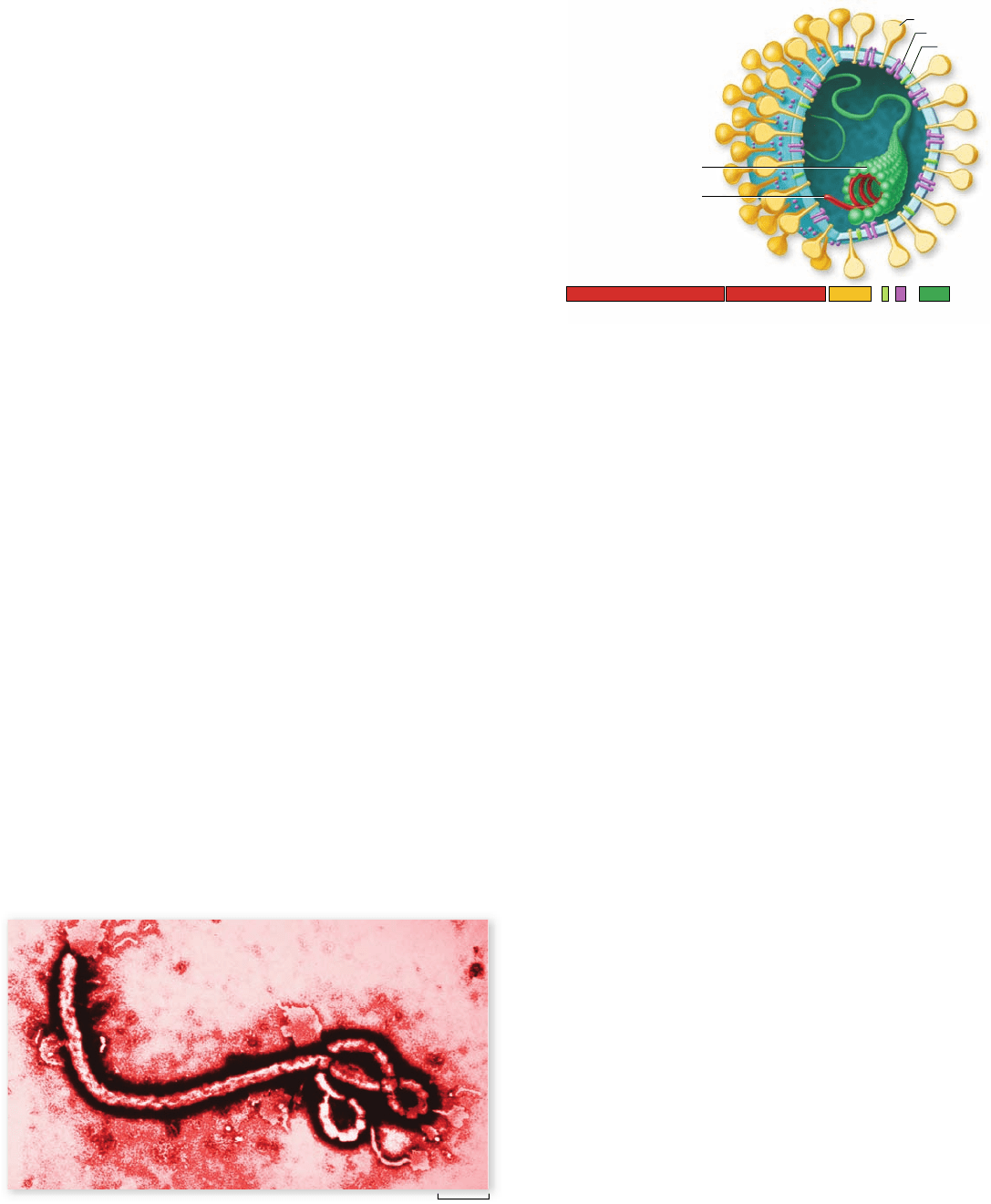
The Ebola virus. This virus, with a fatality rate
that can exceed 90%, appears sporadically in central Africa. The
natural host of the virus currently is unknown.
Figure 27.9
SARS coronavirus. The 29,751-nucleotide
SARS genome is composed of RNA and contains six principal
genes: R
A
and R
B
, replicases; S, spike proteins; E, envelope
glycoproteins; M, membrane glycoprotein; N, nucleocapsid protein.
and 7 deaths. This outbreak was rapidly contained by isolating
patients from family members as soon as symptoms appeared.
The natural host of Ebola is unknown.
SARS
A recently emerged species of coronavirus (figure 27.9) was
responsible for the 2003 worldwide outbreak of severe acute
respiratory syndrome (SARS), a respiratory infection with
pneumonia-like symptoms that is fatal in over 8% of cases.
When the 29,751-nucleotide RNA genome of the SARS coro-
navirus was sequenced, it proved to be a completely new form
of coronavirus, not closely related to any of the three previ-
ously described forms.
Virologists suspect that the SARS coronavirus most likely
came from civets (a weasel-like mammal) and possibly other
wild animals that live in China and are eaten as delicacies. If the
SARS virus indeed exists in natural populations, future out-
breaks will be difficult to prevent without an effective vaccine.
Recent data have implicated bats as the natural reservoir for
SARS virus. The significance of this finding for control of the
virus is unclear at present.
Genome sequences have been analyzed from SARS pa-
tients at various stages of the outbreak, and these analyses indi-
cate that the virus’s mutation rate is low, in marked contrast to
HIV, another RNA virus. The stable genome of the SARS virus
should make development of a SARS vaccine practical. The les-
sons learned from developing antiviral agents against other
RNA viruses, such as HIV and influenza have helped develop
drugs to treat SARS. Several anti-SARS agents and vaccines are
currently being tested in laboratories across the world.
Viruses can cause cancer
Through epidemiological studies and research, scientists have es-
tablished a link between some viral infections and the subsequent
development of cancer. Examples include the association between
chronic hepatitis B infections and the development of liver cancer,
The virus has since spread worldwide with the WHO raising
the event to pandemic status in May, 2009. As of September,
2009, more than 300,000 cases have been reported worldwide.
Fortunately, as of this writing, the pathogenicity of this virus is
low, with a mortality rate of around 1.5%.
New viruses emerge by infecting new hosts
Sometimes viruses that originate in one organism pass to an-
other, thus expanding their host range. Often, this expansion is
deadly to the new host. HIV, for example, is thought to have
arisen in chimpanzees and relatively recently passed to humans.
Influenza is fundamentally a bird virus. Viruses that originate in
one organism and then pass to another and cause disease are
called emerging viruses. They represent a considerable threat
in an age when airplane travel potentially allows infected indi-
viduals to move about the world quickly, spreading an infection.
Hantavirus
An emerging virus caused a sudden outbreak of a deadly pneumo-
nia in the southwestern United States in 1993. This disease was
traced to a species of hantavirus and was called the sin nombre, or
no-name, virus. Hantavirus is a single-stranded RNA virus associ-
ated with rodents. This virus was eventually traced to deer mice.
The deer mouse hantavirus is transmitted to humans through fe-
cal and urine contamination in areas of human habitation. Con-
trolling the deer mouse population has limited the disease.
Hemorrhagic fever: Ebola
Sometimes the origin of an emerging virus is unknown, making
an outbreak more difficult to control. Among the most lethal of
emerging viruses are a collection of filamentous viruses arising
in central Africa that cause severe hemorrhagic fever. With le-
thality rates in excess of 50%, these so-called filoviruses are
among the most lethal infectious diseases known. One, Ebola
virus (figure 27.8) , has exhibited lethality rates in excess of 90%
in isolated outbreaks in central Africa. The outbreak of Ebola
virus in the summer of 1995 in Zaire killed 245 people out of
316 infected—a mortality rate of 78%. A recent (2004) out-
break of Ebola in Yambio, southern Sudan, caused 17 infections
540
part
V
Diversity of Life on Earth
rav32223_ch27_528-544.indd 540rav32223_ch27_528-544.indd 540 11/12/09 4:18:41 PM11/12/09 4:18:41 PM

Apago PDF Enhancer
and the development of cervical carcinoma following infections
with certain strains of human papillomaviruses (HPV).
Viruses may contribute to about 15% of all human cancer
cases worldwide. They are capable of altering the growth prop-
erties of human cells they infect by triggering the expression of
cancer-causing genes called oncogenes (see chapter 10) . Changes
in the normal function of these genes leads to cancer.
These changes can occur because viral proteins interfere
with the regulation of oncogene expression. Alternatively, the
integration of a viral genome into a host chromosome may
disrupt a gene required to control the cell cycle. Viruses them-
selves may encode these oncogenes as well. Virus-induced
cancer involves complex interactions with cellular genes and
requires a series of events in order to develop. The association
of viruses with some forms of cancer has led to research on
vaccine development for the prevention of these cancers. In
June 2006, the FDA approved the use of a new HPV vaccine
in women and young girls from the age of 11 to prevent cervi-
cal cancer.
Learning Outcomes Review 27.4
Many types of viruses have caused disease in humans for as long as we have
recorded history. Some of these, such as infl uenza, have caused pandemics
responsible for millions of deaths worldwide. Recombination is common in
the infl uenza virus, making natural immunity and development of vaccines
problematic. Emerging diseases can occur when viruses switch hosts, that is,
jump from another species to humans. Hantavirus, Ebola, and SARS all fall
into this category. Virus infection has also been linked to the development of
certain cancers.
■ Why does the effectiveness of flu shots vary from year
to year?
27.5
Prions and Viroids: Subviral
Particles
Learning Outcomes
Explain why prion replication was a “heretical” concept.1.
Describe the mechanism of prion transmission.2.
For decades, scientists have been fascinated by a peculiar group
of fatal brain diseases. These diseases have an unusual property:
Years and often decades pass after infection before the disease is
detected in infected individuals. The brains of infected indi-
viduals develop numerous small cavities as neurons die, pro-
ducing a marked spongy appearance. Called transmissible
spongiform encephalopathies ( TSEs), these diseases include scrapie
in sheep; bovine spongiform encephalopathy (BSE), or “mad
cow” disease in cattle; chronic wasting disease in deer and elk;
and kuru, Creutzfeldt–Jakob disease (CJD), and variant
Creutzfeldt–Jakob disease (vCJD) in humans.
TSEs can be transmitted experimentally by injecting in-
fected brain tissue into a recipient animal’s brain. TSEs can also
spread via tissue transplants and, apparently, tainted food. The
disease kuru was once common in the Fore people of Papua
New Guinea, because they practiced ritual cannibalism, eating
the brains of infected individuals. Mad cow disease spread
widely among the cattle herds of England in the 1990s because
cows were fed bonemeal prepared from sheep and cattle car-
casses to increase the protein content of their diet. Like the
Fore, the British cattle were eating the tissue of cattle that had
died of the disease.
In the years following the outbreak of BSE, there has
been a significant increase in CJD incidence in England. Some
cases appear to be genetic. Mysteriously, patients with no fam-
ily history of CJD were being diagnosed with the disease. This
led to the discovery of a new form of CJD called variant CJD,
or vCJD, that is acquired from eating meat of BSE-infected
animals. Concern exists that vCJD may be transmitted from
person to person through blood products, similar to the trans-
mission of HIV through blood and blood products.
Prion replication was a heretical suggestion
In the 1960s, British researchers Tikvah Alper and John Stanley
Griffith noted that infectious TSE preparations remained in-
fectious even after exposure to radiation that would destroy
DNA or RNA. They suggested that the infectious agent was a
protein. They speculated that the protein could sometimes
misfold, and then catalyze other proteins to do the same, the
misfolding spreading like a chain reaction. This “heretical” sug-
gestion was not accepted by the scientific community, because
it violated a key tenet of molecular biology: Only DNA or RNA
act as hereditary material, transmitting information from one
generation to the next.
Evidence has accumulated
that prions cause TSEs
In the early 1970s, physician Stanley Prusiner began to study
TSEs. Try as he might, Prusiner could find no evidence of nu-
cleic acids or viruses in the infectious TSE preparations. He
concluded, as Alper and Griffith had, that the infectious agent
was a protein, which in a 1982 paper he named a prion, for
“proteinaceous infectious particle.”
Prusiner went on to isolate a distinctive prion protein,
and to amass evidence that prions play a key role in triggering
TSEs. Every host tested to date expresses a normal prion pro-
tein (PrP
c
) in their cells. The disease-causing prions are the
same protein, but folded differently (PrP
sc
). These misfolded
proteins have been shown in vitro to serve as a template for
normal PrP to misfold. The misfolded PrP proteins are very
resistant to degradation, making it possible for them to pass
through the acidic digestive tract intact and therefore to be
transmitted by ingesting tainted food .
Experimental evidence has accumulated to support this
idea. Injection of prions with different abnormal conformations
into hosts leads to the same abnormal conformations as the
parent prions. Mice genetically engineered to lack PrP
c
are
chapter
27
Viruses
541www.ravenbiology.com
rav32223_ch27_528-544.indd 541rav32223_ch27_528-544.indd 541 11/12/09 4:18:42 PM11/12/09 4:18:42 PM