
Raven P.H., Johnson G.B., Mason K.A. Biology (Ninth Edition)
Подождите немного. Документ загружается.

Apago PDF Enhancer
Scrapie
infected
mouse
Brain homogenate
Mice die of neurological
disorder. Brain sections
show characteristic damage.
Control mouse
Mice live normal life span.
Brain appears normal.
PrP deletion
mouse
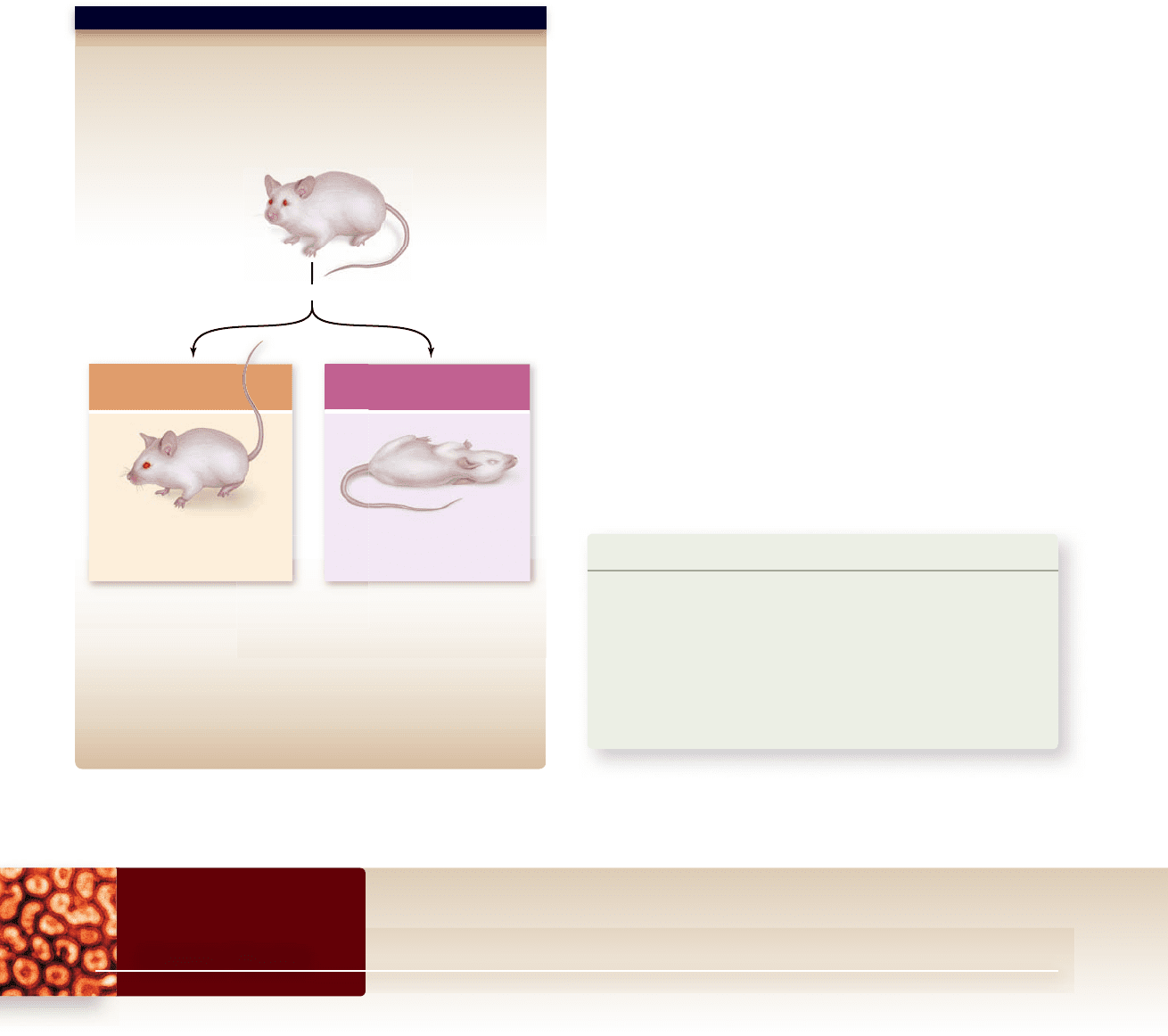
Hypothesis: Normal cellular PrP protein is required for scrapie infection.
Prediction: Infection of mice lacking PrP with scrapie agent should not
lead to scrapie.
Test: Construct "knockout" mice with PrP deleted. Inject PrP knockout
mice, and control mice with normal PrP, with brain homogenates from
scrapie infected mice.
Result: All control mice died with scrapie like neurological damage. Periodic
sacrice and histological examination showed normal disease progress. None
of the PrP knockout mice showed any sign of neurological disorder.
Conclusion: Normal PrP protein is necessary for productive infection by
scrapie infectious particle.
Further Experiments: What kind of experiment would conclusively
prove that the infectious agent of scrapie is a misfolded PrP protein?
SCI E NT I FIC THINKING
Figure 27.10
Demonstration that normal prion protein
is necessary for scrapie infectivity.
immune to TSE infection (figure 27.10) . If brain tissue with the
prion protein is grafted into the mice, the grafted tissue—but
not the rest of the brain—can then be infected with TSE. How-
ever, infectious PrP has not been generated in vitro in quanti-
ties that would produce disease in nature. The mechanism of
pathogenesis also remains controversial.
Prions have also been found in yeast and other fungi.
Three different “genes” that behave in a nonmendelian fash-
ion have all been shown to be prions in yeast. There has been
greater progress in the in vitro conversion of normal cellular
proteins to the prion form in the yeast system.
Viroids are infectious RNA with no protein coat
Viroids are tiny, naked molecules of circular RNA, only a few
hundred nucleotides long, that are important infectious disease
agents in plants. A recent viroid outbreak killed over 10 million
coconut palms in the Philippines. Despite their small size, vi-
roids autonomously replicate without a helper virus, although
they obviously use host proteins. Despite being nucleic acids,
the important information they carry appears to be in their
three-dimensional structure. There are also some intriguing
hints that they might use the plant siRNA machinery to affect
gene expression.
Learning Outcomes Review 27.5
Prions and viroids are smaller and simpler than viruses. Prions are infectious
particles that do not seem to contain any nucleic acid. They appear to be
misfolded proteins that cause related cellular proteins to also misfold.
Prions are the causative agent of TSEs. Viroids are infectious RNAs that are
implicated in some plant diseases.
■ If prions are infectious proteins, then what is the form of
genetic information that they carry?
27.1 The Nature of Viruses
Viruses are strands of nucleic acids encased in a protein coat.
Viral genomes can consist of either DNA or RNA and can
be classi ed as DNA viruses, RNA viruses, or retroviruses.
Most viruses have a protein sheath or capsid around their nucleic
acid core. Many animal viruses have an envelope around the capsid
composed of proteins that are virally encoded, lipids from the host
cell, and glycoproteins.
Some viruses also have enzymes inside their capsid that are important
in early infection.
Chapter Review
Viral hosts include virtually every kind of organism.
Each virus has a limited host range, and many also exhibit
tissue tropism.
Viruses replicate by taking over host machinery.
Viruses are obligate intracellular parasites lacking ribosomes and
proteins needed for replication. Viruses take over host machinery and
direct their own nucleic acid and protein synthesis.
Most viruses come in two simple shapes.
Viruses vary in size and come in two simple shapes: helical (rodlike)
or icosahedral (spherical) (see gures 27.1 and 27.4).
542
part
V
Diversity of Life on Earth
rav32223_ch27_528-544.indd 542rav32223_ch27_528-544.indd 542 11/12/09 4:18:42 PM11/12/09 4:18:42 PM

Apago PDF Enhancer
to the CXCR4 receptor found only on the surface of CD4
+
cells.
Incorporation of the altered HIV particle leads to a rapid decline in
T cells and immune response.
AIDS treatment targets di erent phases of the HIV life cycle.
Drugs target reverse transcriptase, a protease involved in protein
maturation, viral entry, and the integration of the genome. Most
approved drugs are reverse transcriptase and protease inhibitors.
Combination drug therapy using nucleoside analogues and protease
inhibitors eliminates HIV from the bloodstream but not totally from
the body.
Vaccine development for HIV has been unsuccessful.
Successful vaccines must elicit a strong immune response, and
attempts to create immunity against a speci c HIV subunit have
failed. Attenuated viruses in animal tests have also proved capable of
mutating into infectious forms.
27.4 Other Viral Diseases
The u is caused by in uenza virus.
One of the most lethal viruses in human history is type A in uenza
virus. In uenza can also infect other mammals and birds.
Genes in in uenza viruses undergo recombination frequently, so they
are not recognized by antibodies against past infections. Each year
the composition of u vaccines must be changed.
New viruses emerge by infecting new hosts.
Viruses can extend their host range by jumping to another species.
Examples include hantavirus, hemorrhagic fever, and SARS
(see gure 27.9).
Viruses can cause cancer.
Viruses have been linked to formation of cancers, including liver
cancer and cervical papillomas.
27.5 Prions and Viroids: Subviral Particles
Prion replication was a heretical suggestion.
Prions are proteinaceous infectious particles consisting of a misfolded
form of a protein. This misfolding catalyzes a chain reaction of
misfolding in normal proteins, causing disease.
Evidence has accumulated that prions cause TSEs (see gure 27.10).
TSE disease-causing prions (PrP
sc
) are the same protein as the
normal version (PrP
c
) but misfolded.
Viroids are infectious RNA with no protein coat.
Viroids are circular, naked molecules of RNA that infect plants. They
use host protein to replicate.
Viral genomes exhibit great variation.
The DNA or RNA viral genome may be linear or circular,
single- or double-stranded. RNA viruses may have multiple RNA
molecules (segmented), or only one RNA molecule (nonsegmented).
Retroviruses contain RNA that is transcribed into DNA by reverse
transcriptase.
27.2 Bacteriophage: Bacterial Viruses
Archaeal viruses have diverse morphologies.
Bacterial viruses exhibit two reproductive cycles.
The lytic cycle kills the host cell, whereas the lysogenic cycle
incorporates the virus into the host genome as a prophage (see gure
27.5). A cell containing a prophage is called a lysogen.
The prophage can be induced by DNA damage and other
environmental cues to reenter the lytic cycle.
For most phage, steps in infection include attachment, injection of
DNA (penetration), macromolecular synthesis, assembly of new
phage, and release of progeny phage.
Bacteriophage can contribute genes to the host genome.
Phage conversion occurs when foreign DNA is contributed
to the host by a bacterial virus.
27.3 Human Immunode ciency Virus (HIV)
AIDS is caused by HIV.
Human immunode ciency virus (HIV) causes acquired
immunode ciency syndrome (AIDS) (see gure 27.6).
HIV infection compromises the host immune system.
HIV speci cally targets macrophages and CD4
+
cells, a type of helper
T-lymphocyte cell. With the loss of these cells the body cannot ght
off opportunistic infections, which ultimately lead to death.
HIV infects key immune-system cells.
The viral glycoprotein gp120 precisely ts on the cell-surface marker
protein CD4
+
on macrophages and T cells. When HIV attaches to
two receptors, CD4
+
and CCR5, receptor-mediated endocytosis is
activated, bringing the HIV particle into the cell.
Once inside the cell, the protective coat is shed, releasing viral RNA
and reverse transcriptase into the cytoplasm. Reverse transcriptase
makes double-stranded DNA complementary to the viral RNA. This
DNA may be incorporated into the host DNA as a provirus.
Replicated viruses are budded off the host cell by exocytosis.
HIV has a high mutation rate because the reverse transcriptase
enzyme is much less accurate than DNA polymerases. Mutations
lead to an altered glycoprotein gp120, which now binds instead
Review Questions
U N DERS TAN D
1. The reverse transcriptase enzyme is active in which class of viruses?
a. Positive-strand RNA viruses
b. Double-stranded DNA viruses
c. Retroviruses
d. Negative-strand RNA viruses
2. Which of the following is not part of a virus?
a. Capsid
b. Ribosomes
c. Genetic material
d. All of the above are found in viruses.
chapter
27
Viruses
543www.ravenbiology.com
rav32223_ch27_528-544.indd 543rav32223_ch27_528-544.indd 543 11/12/09 4:18:44 PM11/12/09 4:18:44 PM

Apago PDF Enhancer
5. Phage conversion in which viruses add genes to a bacterial cell
can be considered to be a form of
a. standard inheritance.
b. horizontal gene transfer.
c. vertical gene transfer.
d. parasitism.
6. According to the prion hypothesis, the infectious agent for
scrapie must have “genetic” information in
a. the sequence of amino acids in the scrapie protein.
b. the sequence of bases in the scrapie gene.
c. the three-dimensional structure of the scrapie prion.
d. all of the above.
7. The dif culty designing a single u vaccine that will work
forever is that in uenza
a. is an RNA virus.
b. is a DNA virus.
c. both mutates and can be recombined to form new viruses.
d. infects only humans.
8. The SARS outbreak is an example of
a. a virus jumping from one species to another.
b. mutation of a virus that only infects humans.
c. how viruses can disable the human immune system.
d. two viruses combining to form a new virus.
SYNTHESIZE
1. E. coli lysogens derived from infection by phage λ can be
induced to form progeny viruses by exposure to radiation. The
inductive event is the destruction of a repressor protein that
keeps the prophage genome unexpressed. What might be the
normal role of the protein that recognizes and destroys the
λ repressor?
2. Most biologists believe that viruses evolved following
the origin of the rst cells. Defend or critique this concept.
3. Much effort has been expended to produce a vaccine for HIV.
To date, this has not been successful. Why has this been such a
dif cult task? Are any other viruses equally resistant to a
vaccine, and are the reasons the same? Why do you think that
we could make a vaccine against the smallpox virus that allowed
us to completely eradicate this virus?
4. What do we mean by the term “emerging virus”? How is this a
medical problem, and what is a recent example?
5. How might phage λ be used to transfer E. coli genes between
different bacterial cells? Could this be used to transfer any gene?
3. Which of the following is common in animal viruses but not
in bacteriophage?
a. DNA c. Envelope
b. Capsid d. Icosahedral shape
4. Which of the following would not be part of the life cycle
of a lytic virus?
a. Macromolecular synthesis
b. Attachment to host cell
c. Assembly of progeny virus
d. Integration into the host genome
5. A process by which a virus may change a benign bacteria
into a virulent strain is called
a. induction. c. lysogeny.
b. phage conversion. d. replication.
6. Prior to entry, the _________ glycoprotein of the HIV virus
recognizes the ______ receptor on the surface of the
macrophage.
a. CCR5; gp120 c. CD4 ; CCR5
b. CXCR4; CCR5 d. gp120; CD4
7. The use of multiple drugs in HAART to treat AIDS has
a. completely removed the virus from infected individuals.
b. reduced the viral level in the bloodstream to undetectable
levels.
c. been a complete failure.
d. been supplanted by the new HIV vaccine.
APPLY
1. The varying degrees of resistance to HIV in populations has
been suggested to be related to the patterns of smallpox
outbreaks over human history. This explanation hinges on
a. the similarity in the genomes of the two viruses.
b. the fact that both viruses use reverse transcriptase.
c. both viruses using the same receptor to bind to host cells.
d. the fact that both viruses compromise the immune system.
2. The idea of a protein that was an infectious agent was
heretical because
a. proteins are not that important in cells.
b. proteins are not the informational molecules in cells.
c. the function of proteins does not depend on their structure.
d. proteins require nucleic acids for their function.
3. Bacterial viruses and animal viruses are similar in that they both
a. have only DNA as genetic material.
b. have only RNA as genetic material.
c. require host functions for some aspect of their life cycle.
d. do not require any host proteins.
4. The drugs used against HIV in AIDS therapy are not effective
against the u because
a. HIV is an RNA virus and in uenza is a DNA virus.
b. HIV is a DNA virus and in uenza is an RNA virus.
c. the two viruses have different sized genomes.
d. the proteins targeted by HIV drugs are not found
in in uenza.
O N LIN E RES OURCE
www.ravenbiology.com
Understand, Apply, and Synthesize—enhance your study with
animations that bring concepts to life and practice tests to assess
your understanding. Your instructor may also recommend the
interactive eBook, individualized learning tools, and more.
544
part
V
Diversity of Life on Earth
rav32223_ch27_528-544.indd 544rav32223_ch27_528-544.indd 544 11/12/09 4:18:44 PM11/12/09 4:18:44 PM
Apago PDF Enhancer
0.6
μ
m
O
Chapter
28
Prokaryotes
C h a p t e r O u t l i n e
28.1 The First Cells
28.2 Prokaryotic Diversity
28.3 Prokaryotic Cell Structure
28.4 Prokaryotic Genetics
28.5 Prokaryotic Metabolism
28.6 Human Bacterial Disease
28.7 Bene cial Prokaryotes
Introduction
One of the hallmarks of living organisms is their cellular organization. You learned earlier that living things come in two
basic cell types: prokaryotes and eukaryotes. To review, prokaryotes lack the membrane-bounded nucleus found in all
eukaryotes, and they also have a much less complex cellular structure, lacking many of the organelles seen in eukaryotes
(chapter 4) . Prokaryotes are considerably smaller and more numerous than their eukaryotic counterparts. If we examined a
human being closely, we would discover that for every single cell of the human body there are approximately 10 prokaryotic
cells—and there are trillions of human cells.
Prokaryotic microbes play an important role in global ecology as well. Most biologists think prokaryotes were the first
organisms to evolve. The diversity of eukaryotic organisms that currently live on Earth could not exist without prokaryotes
because they make possible many of the essential functions of ecosystems. Prokaryotic photosynthesis, for example, is
thought to have been the source for the oxygen in the ancient Earth’s atmosphere, and it still contributes significantly to
oxygen production today. An understanding of prokaryotes is essential to understanding all life on Earth, past and present.
CHAPTER
rav32223_ch28_545-566.indd 545rav32223_ch28_545-566.indd 545 11/12/09 4:49:41 PM11/12/09 4:49:41 PM
Apago PDF Enhancer
10 µm
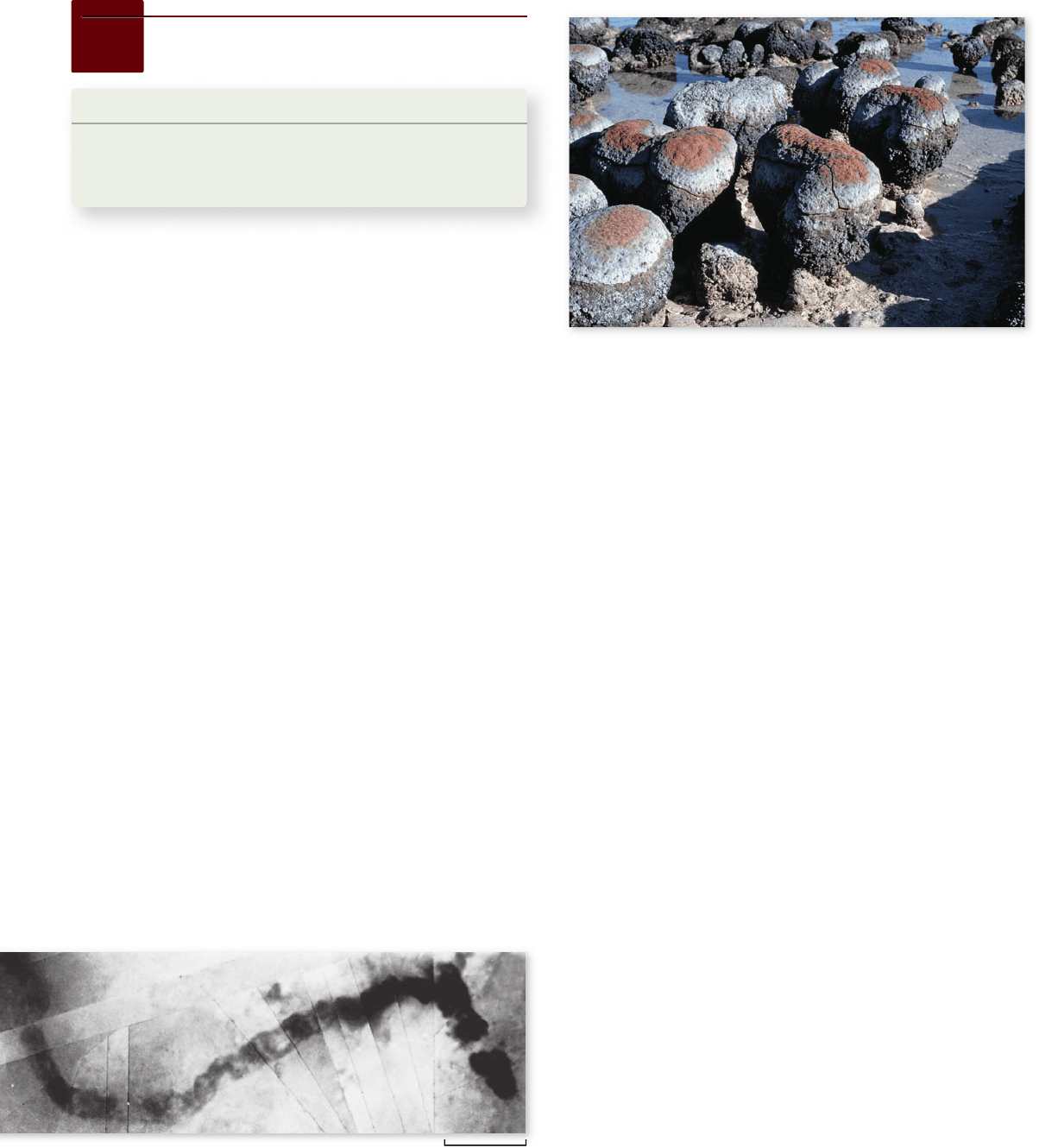
Figure 28.1
Evidence of bacterial fossils. Rocks
approximately 3.5 billion years old to 1 billion years old have tiny
fossils resembling bacterial cells embedded within them.
Figure 28.2
Stromatolites.
Mats of bacterial cells that trap
mineral deposits and form the characteristic dome shapes seen here.
ing organisms is supported by isotopic data (described shortly)
and by spectroscopic analysis that indicates they do contain
complex carbon molecules. Whether these microscopic struc-
tures are true fossil cells is still controversial, and the identity
of the prokaryotic groups represented by the various micro-
fossils is still unclear. Arguments have been made for vari-
ous bacteria, including cyanobacteria (described later on)
being the microfossils in question , but definitive interpreta-
tion is difficult.
In addition to these microfossils, indirect evidence for an-
cient life can be found in the form of sedimentary deposits
called stromatolites. These structures are commonly inter-
preted as a combination of sedimentary deposits and precipi-
tated material that are held in place by mats of microorganisms.
The microorganisms that make up the mats are thought to be
cyanobacteria. Formations of stromatolites are as old as 2.7 bil-
lion years. Because relatively modern stromatolites are also
known, the formation and biological nature of these structures
is less contentious (figure 28.2) .
Isotopic data indicate that carbon
xation is an ancient process
Another way to ask when life began is to look for the signature
of living systems in the geological record. Living systems alter
their environments, and sometimes this change can be detected.
The most obvious change is that living systems are selective in
the isotopes of carbon in compounds they use. Living organ-
isms incorporate carbon-12 into their cells before any other
carbon isotope, and thus they can alter the ratios of these iso-
topes in the atmosphere. They also have a higher level of
carbon-12 in their fossilized bodies than does the nonorganic
rock around them.
Much work has been done on dating and analyzing car-
bon compounds in the oldest rocks, looking for signatures of
life. Although this work is controversial, it has been argued
that carbon signatures indicate carbon fixation, the incorpora-
tion of inorganic carbon into organic form, was active as long
as 3.8 bya.
28.1
The First Cells
Learning Outcomes
Explain the evidence for the earliest cells. 1.
Describe possible pathways of carbon fixation by early 2.
life forms.
As no human was present at the formation of life, we are left
with indirect evidence for the earliest life-forms. The most di-
rect evidence we have are fossils, but these can be difficult to
interpret, especially since we are looking for microscopic evi-
dence of life. We also can analyze the composition of carbon-
containing rocks to look for signs of life acting on organic
material, as indicated by a change in isotopic ratios. Finally, we
can look for the presence of organic chemicals, which are of
biological origin.
Microfossils indicate that the rst cells
were probably prokaryotic
Evidence of life in the form of microfossils is difficult both to
find and to interpret. Rocks older than 3 billion years are rarely
unchanged by geologic action over time. Two main formations
of 3.5- to 3.8-billion-year-old rocks have been found that are
mostly intact: the Kaapvaal craton in South Africa and the Pil-
bara craton in western Australia. (A craton is a rock layer of un-
disturbed continental crust.) Structures have been found in
each of these formations and others that are interpreted to be
biological in origin. Although this interpretation has been con-
troversial, the accumulation of evidence over time favors these
structures as being true fossil cells.
Microfossils are fossilized forms of microscopic life. Many
microfossils are small (1–2 μm in diameter) and appear to be
single-celled, lack external appendages, and have little evidence
of internal structure (figure 28.1) . Thus, microfossils seem to
resemble present-day prokaryotes.
The currently oldest microfossils are 3.5 billion years
old. The claim that these microfossils are the remains of liv-
546
part
V
Diversity of Life on Earth
rav32223_ch28_545-566.indd 546rav32223_ch28_545-566.indd 546 11/12/09 4:49:45 PM11/12/09 4:49:45 PM

Apago PDF Enhancer
The ancient fixation of carbon happened via four possible
pathways. The most common pathway for carbon fixation is the
Calvin cycle (see chapter 8). This is the pathway used by
cyanobacteria, algae, and modern land plants that perform oxy-
genic photosynthesis using two photosystems. The Calvin cycle
is also active in green and purple sulfur bacteria that perform
anoxygenic photosynthesis using a single photosystem. This
anoxygenic form of photosynthesis could account for ancient
carbon fixation.
To date, the entire Calvin cycle has not been demon-
strated in the domain Archaea, although the key enzyme for
this pathway has been identified in a few archaeal isolates. In-
stead, some archaea use a reductive version of the Krebs cycle
(see chapter 7) . This pathway of carbon fixation is also used by
some lithotrophic bacteria, which derive energy from the oxi-
dation of inorganic compounds, and by the green sulfur bac-
teria. Two other pathways may also occur in the lithotrophs,
archaea, and the green nonsulfur bacteria. Evidence suggests
that the ability to fix carbon has evolved multiple times over
the course of evolution.
Some hydrocarbons found in ancient
rocks may have biological origins
Another way to look for evidence of ancient life is to look
for organic molecules, which are clearly of biological ori-
gin; such molecules are called biomarkers. Although the proc-
ess sounds simple, it has proved difficult to find such
markers. One type of biomarker molecule is hydrocarbons,
which are derived from the fatty acid tails of lipids. These
can be analyzed for their carbon isotope ratios to indicate
biological origin. The analysis of extractable hydrocarbons
from the Pilbara formation in Australia found lipids that are
indicative of cyanobacteria as long ago as 2.7 billion years.
The search for definitive chemical markers for living sys-
tems in the oldest rocks and in meteorites is an area of in-
tense interest.
Arguments for the oldest microfossils have been sup-
ported by analysis of the carbon isotope ratios in carbonaceous
material from the same formations. If these fossils indeed rep-
resent living cells, it implies that life was much more abundant
3.5 bya than previously thought. Although much of this work
is still being debated, it pushes the possible origin of life back
well beyond 3.5 bya.
Learning Outcomes Review 28.1
Evidence for the earliest cells exists in microfossils. The earliest microfossils
are controversial, but they are at least 3.5 billion years old. Other evidence
for early life includes isotopic ratios that are skewed by biological activity.
The Calvin cycle and a reductive version of the Krebs cycle, as well as other
pathways, appear to have led to carbon fi xation in ancient life. Some
hydrocarbons appear to be biomarkers and may therefore also indicate
ancient life forms.
■ When we are looking for life on Mars, what kind of
evidence would be the most convincing?
28.2
Prokaryotic Diversity
Learning Outcomes
Differentiate among archaea, bacteria, and eukarya.1.
Describe the basic features of bacteria and archaea.2.
Explain classification methods for prokaryotes.3.
Although thousands of different kinds of prokaryotes are cur-
rently recognized, many thousands more await proper identifi-
cation. New molecular techniques have allowed scientists to
identify and study microorganisms without culturing them. As
a result, microbiologists have discovered thousands of new spe-
cies that were never discovered or characterized because they
could not be maintained in culture.
It is estimated that only between 1 and 10% of all prokary-
otic species are known and characterized, leaving between 90
and 99% unknown and undescribed. Every place microbiolo-
gists look, new species are being discovered, often altering the
way we think about prokaryotes. In the 1970s and 1980s, a new
type of prokaryote was identified and analyzed that eventually
led to the division of prokaryotes into two groups: the Archaea
(formerly called Archaebacteria) and the Bacteria (sometimes
also called Eubacteria).
Archaea and bacteria are the oldest, structurally simplest,
and most abundant forms of life. They are also the only organ-
isms with prokaryotic cellular organization. Prokaryotes were
abundant for over a billion years before eukaryotes appeared in
the world. Early photosynthetic bacteria (cyanobacteria) al-
tered the Earth’s atmosphere by producing oxygen, which stim-
ulated extreme bacterial and eukaryotic diversity.
Prokaryotes are ubiquitous and live everywhere eukaryotes
do; they are also able to thrive in places no eukaryote could live.
Bacteria and archaea have been found in deep-sea caves, volca-
nic rims, and deep within glaciers. Some of the extreme envi-
ronments in which prokaryotes can be found would be lethal to
any other life-form.
Many archaea are extremophiles . They live in hot springs
that would cook other organisms, in hypersaline environments
that would dehydrate other cells, and in atmospheres rich in
otherwise-toxic gases such as methane or hydrogen sulfide.
They have even been recovered living beneath 435 m of ice
in Antarctica!
These harsh environments may be similar to the condi-
tions present on the early Earth when life first began. It is likely
that prokaryotes evolved to dwell in these harsh conditions
early on and have retained the ability to exploit these areas as
the rest of the atmosphere has changed.
Prokaryotes are fundamentally
di erent from eukaryotes
Prokaryotes differ from eukaryotes in numerous important fea-
tures. These differences represent some of the most fundamen-
tal distinctions that separate any groups of organisms.
chapter
28
Prokaryotes
547www.ravenbiology.com
rav32223_ch28_545-566.indd 547rav32223_ch28_545-566.indd 547 11/12/09 4:49:47 PM11/12/09 4:49:47 PM
Apago PDF Enhancer
Unicellularity. With a few exceptions prokaryotes are
fundamentally single-celled) . In some types, individual
cells adhere to one another within a matrix and form
laments; however, the cells retain their individuality.
Cyanobacteria, in particular, are likely to form such
associations, but their cytoplasm is not directly
interconnected, as is often the case in multicellular
eukaryotes. These laments do have a common cell wall,
however, making it dif cult to isolate single cells.
In their natural environments, most bacteria appear
to be capable of forming a complex community of
different species called a bio lm. Although not a
multicellular organism, a bio lm is more resistant to
antibiotics, dessication, and other environmental stressors
than is a simple colony of a single type of microbe, such as
a laboratory culture.
Cell size. As new species of prokaryotes are discovered,
investigators are nding that the size of prokaryotic cells
varies tremendously, by as much as ve orders of
magnitude. The largest bacterial cells currently
characterized are from Thiomargarita namibia. A single
cell from this species is up to 750 μm across, which is
visible to the naked eye and is roughly the size of the eye
of a bumblebee. Most prokaryotic cells, however, are only
1 μm or less in diameter, whereas most eukaryotic cells
are well over 10 times bigger. This generality is
misleading, however, because there are very small
eukaryotes as well as very large prokaryotes.
Chromosomes. Eukaryotic cells have a membrane-bounded
nucleus containing linear chromosomes made up of both
nucleic acids and histone proteins. Prokaryotes do not
have membrane-bounded nuclei; instead they usually
have a single circular chromosome made up of DNA and
histonelike proteins in a nucleoid region of the cell. An
exception to this single chromosome includes Vibrio
cholerae, which has two circular chromosomes. Prokaryotic
cells often have accessory DNA molecules called plasmids
as well. Plasmids are genetic elements that can sometimes
be transferred between prokaryotic cells.
Cell division and genetic recombination. Cell division in
eukaryotes takes place by mitosis and involves spindles
made up of microtubules. Cell division in prokaryotes
takes place mainly by binary ssion (see chapter 10) ,
which is also a form of asexual reproduction. True sexual
reproduction occurs only in eukaryotes and involves the
production of haploid gametes that fuse to form a diploid
zygote that grows to adulthood, producing more gametes
and starting the cycle over again (see chapter 11).
Despite their asexual mode of reproduction,
prokaryotes do have mechanisms that lead to the transfer
of genetic material and generation of genetic diversity.
These mechanisms are collectively called horizontal gene
transfer and are not a form of reproduction.
Internal compartmentalization. In eukaryotes, the enzymes
for cellular respiration are packaged in mitochondria. In
prokaryotes, the corresponding enzymes are not packaged
separately, but instead are bound to the cell membranes or
are in the cytosol. The cytoplasm of prokaryotes, unlike
that of eukaryotes, contains no internal compartments
and no membrane-bounded organelles. Ribosomes are
found in both prokaryotes and eukaryotes, but differ
signi cantly in structure. (See chapter 4 for a review of
cell structure.)
Flagella. Prokaryotic agella are simple in structure,
composed of a single ber of the protein agellin.
Eukaryotic agella and cilia are complex, having a 9
+
2
structure of microtubules (see gure 4.23). Bacterial
agella also function differently, being rigid and
spinning like propellers, whereas eukaryotic agella have
a whiplike motion (described in more detail later and in
gure 28.8).
Metabolic diversity. Only one kind of photosynthesis occurs in
eukaryotes, and it involves the release of oxygen.
Photosynthetic bacteria have two basic patterns of
photosynthesis: oxygenic, producing oxygen, and
anoxygenic, nonoxygen producing. Anoxygenic
photosynthesis involves the formation of products such as
sulfur and sulfate instead of oxygen.
Prokaryotic cells can also be chemolithotrophic,
meaning that they use the energy stored in chemical
bonds of inorganic molecules to synthesize carbohydrates;
eukaryotes are not capable of this metabolic process.
Despite similarities, bacteria and archaea
d i er fundamentally
Archaea and bacteria are similar in that both have a prokaryotic
cellular structure, but they vary considerably at the biochemical
and molecular levels. They differ in four key areas: plasma
membranes, cell walls, DNA replication, and gene expression.
Plasma membranes. All prokaryotes have plasma membranes
with a uid mosaic architecture (see chapter 5) . The
plasma membranes of archaea differ from both bacteria
and eukaryotes. Archaean membrane lipids are
composed of glycerol linked to hydrocarbon chains by
ether linkages, not the ester linkages seen in bacteria and
eukaryotes ( gure 28.3a) . These hydrocarbons may also
be branched, and they may be organized as tetraethers
that form a monolayer instead of a bilayer ( gure 28.3b).
In the case of some hyperthermophiles, the majority
of the membrane may be this tetraether monolayer. This
structural feature is part of what allows these archaeans to
withstand high temperatures.
Cell wall. Both kinds of prokaryotes typically have cell walls
covering the plasma membrane that strengthen the cell.
The cell walls of bacteria are constructed, minimally, of
peptidoglycan, which is formed from carbohydrate
polymers linked together by peptide cross-bridges. The
peptide cross-bridges also contain d-amino acids, which
are never found in cellular protein. The cell walls of
archaea lack peptidoglycan, although some have
pseudomurein, which is similar to peptidogylcan in
structure and function. This wall layer is also a
carbohydrate polymer with peptide cross-bridges, but the
carbohydrates are different, and the peptide cross-bridge
548
part
V
Diversity of Life on Earth
rav32223_ch28_545-566.indd 548rav32223_ch28_545-566.indd 548 11/12/09 4:49:48 PM11/12/09 4:49:48 PM
Apago PDF Enhancer
a. b.
Bacterial or Eukaryotic Lipid Archael Lipid
CH
CH
2
CH
2
J
J
J
J
J
OH O O
CO
J
J
CO
J
J
Glycerol
Ester bond
CH
2
J
J
J
OH O O
Ether bond
CH
2
CH
2
Tetraether
CH
CH
2
CH
2
J
J
J
J
J
OH
O
O
OH
OO
CH
CH
2
CH
2
J
J
J
J
J
Monolayer
Domain
Bacteria
Domain
Archaea
Common ancestor
Domain
Eukarya
Molecular approaches to classification
With the development of genetic and molecular approaches,
prokaryotic classifications may help reflect true evolutionary
relatedness. Molecular approaches include
the analysis of the amino acid sequences of key proteins1.
the analysis of nucleic acid–base sequences by establishing 2.
the percent of guanine (G) and cytosine (C)
nucleic acid hybridization, which is essentially the mixing 3.
of single-stranded DNA from two species and determin-
ing the amount of base-pairing (closely related species
will have more bases pairing)
gene and RNA sequencing, especially looking at 4.
ribosomal RNA
whole-genome sequencing5.
The three-domain, or Woese, system of phylogeny
(figure 28.4) relies on all of these molecular methods, but em-
phasizes the comparison of rRNA sequences to establish the
evolutionary relatedness of all organisms. The rRNA se-
quences were chosen for their high degree of evolutionary
structure also differs. Other archaeal cell walls have been
found to be composed of a variety of proteins and
carbohydrates, making generalizations dif cult.
DNA replication. Although both archaea and bacteria have a
single replication origin, the nature of this origin and the
proteins that act there are quite different. Archaeal
initiation of DNA replication is more similar to that of
eukaryotes (see chapter 14 ).
Gene expression. The machinery used for gene expression
also differs between archaea and bacteria. The archaea
may have more than one RNA polymerase, and these
enzymes more closely resemble the eukaryotic RNA
polymerases than they do the single bacterial RNA
polymerase. Some of the translation machinery is also
more similar to that of eukaryotes (see chapter 15).
Most prokaryotes have not
been characterized
Prokaryotes are not easily classified according to their forms,
and only recently has enough been learned about their bio-
chemical and metabolic characteristics to develop a satisfactory
overall classification scheme comparable to that used for
other organisms.
Early classification characteristics
Early systems for classifying prokaryotes relied on differential
stains such as the Gram stain and differences in the observable
phenotype of the organism. Key characteristics once used in
classifying prokaryotes were
photosynthetic or nonphotosynthetic1.
motile or nonmotile2.
unicellular or colony-forming or lamentous3.
formation of spores or division by transverse 4.
binary ssion
importance as human pathogens or not5.
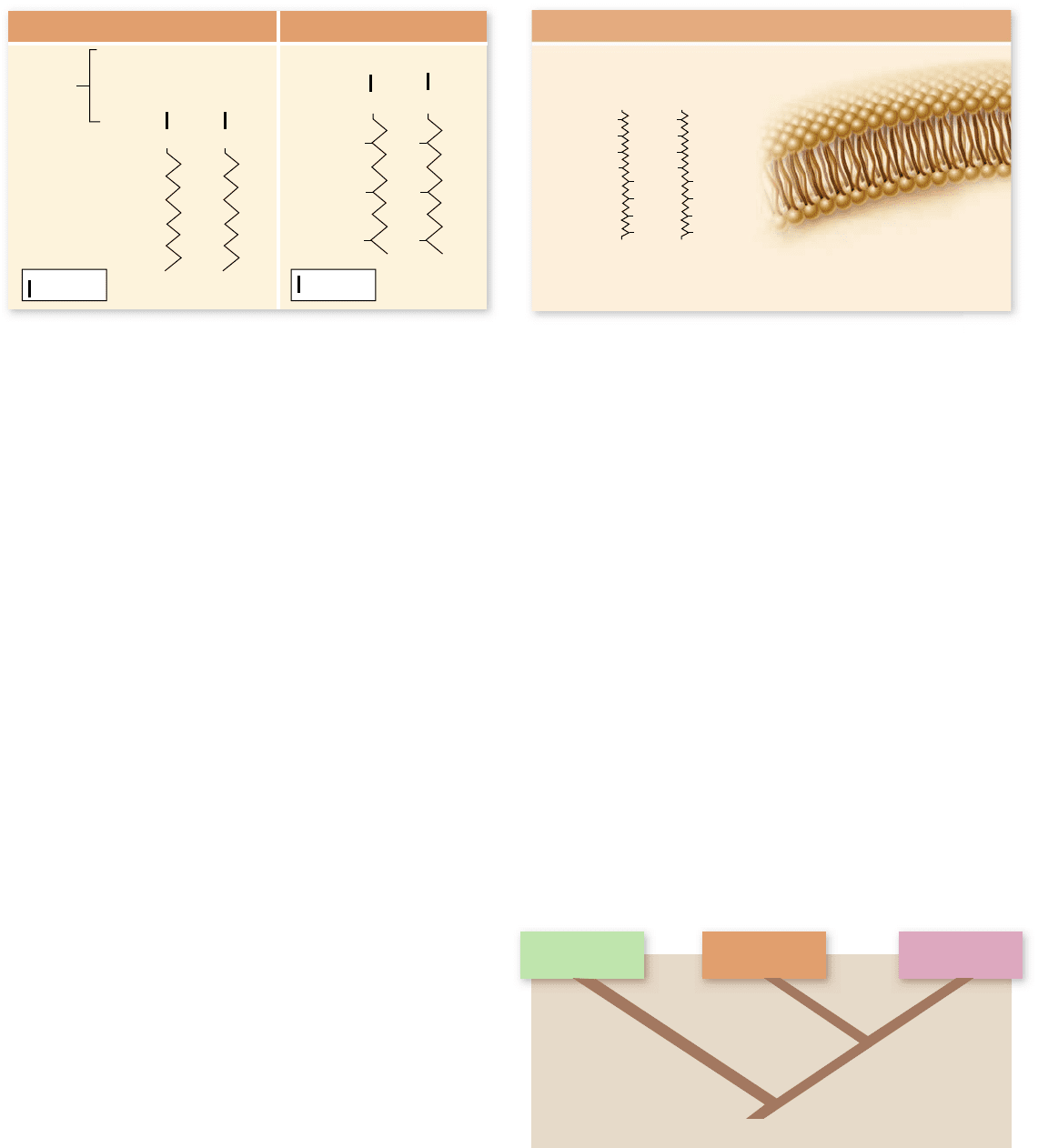
Figure 28.3
Archaea membrane lipids.
a. Archaea membrane lipids are formed on a glycerol skeleton similar to bacterial and
eukaryotic lipids, but the hydrocarbon chains are connected to the glycerol by ether linkages not ester linkages. The hydrocarbons can also be
branched and even contain rings. b. These lipids can also form as tetraethers instead of diethers. The tetraether forms a monolayer as it
includes two polar regions connected by hydrophobic hydrocarbons.
Figure 28.4
The three domains of life.
The two
prokaryotic domains, Archaea and Bacteria, are not closely related,
though both are prokaryotes. In many ways (see text), archaea more
closely resemble eukaryotes than bacteria. This tree is based on
rRNA sequences.
chapter
28
Prokaryotes
549www.ravenbiology.com
rav32223_ch28_545-566.indd 549rav32223_ch28_545-566.indd 549 11/12/09 4:49:48 PM11/12/09 4:49:48 PM
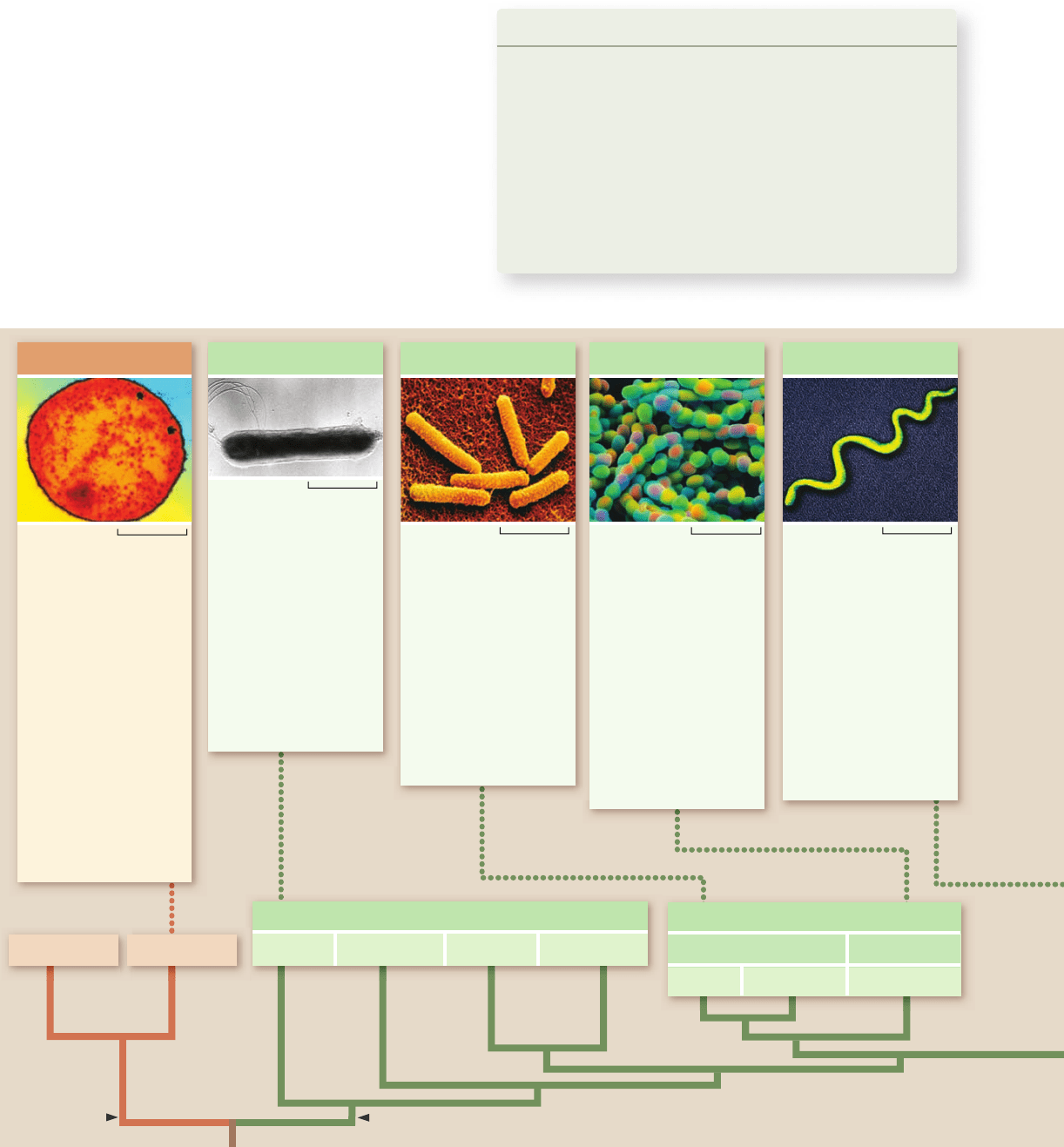
Apago PDF Enhancer
Archaea differ greatly
from bacteria. Although
both are prokaryotes,
archaeal cell walls lack
peptidoglycan; plasma
membranes are made of
different kinds of lipids
than bacterial plasma
membranes; RNA and
ribosomal proteins are
more like eukaryotes
than bacteria. Mostly
anaerobic. Examples
include Methanococcus,
Thermoproteus,
Halobacterium.
The Aquificae
represent the deepest
or oldest branch of
bacteria. Aquifex
pyrophilus is a
rod-shaped hyper-
thermophile with a
temperature optimum
at 858C; a chemo-
autotroph, it oxidizes
hydrogen or sulfur.
Several other related
phyla are also thermo-
philes.
Gram-positive bacteria.
Largely solitary; many
form endospores.
Responsible for many
significant human
diseases, including
anthrax (Bacillus
anthracis); botulism
(Clostridium
botulinum); and other
common diseases
(staphylococcus,
streptococcus).
Some gram-positive
bacteria form branching
filaments and some
produce spores; often
mistaken for fungi.
Produce many
commonly used
antibiotics, including
streptomycin and
tetracycline. One of the
most common types of
soil bacteria; also
common in dental
plaque. Streptomyces,
Actinomyces.
Crenarchaeota Euryarchaeota Aquificae Thermotogae Chloroflexi
Deinococcus-
Thermus
Thermophiles
Bacteria
Archaea
Bacilli Clostridium Actinobacteria
Gram-positive bacteria
High G/C Low G/C (Firmicutes)
Long, coil-shaped cells
that stain gram-
negative. Common in
aquatic environments.
Rotation of internal
filaments produces a
corkscrew movement.
Some spirochetes
such as Treponema
pallidum (syphilis) and
Borrelia burgdorferi
(Lyme disease) are
significant human
pathogens.
Euryarchaeota
1.37 µm
Aquificae Bacilli
23.80 µm
1 µm
Actinobacteria
22.15 µm
Spirochaetes
25.96 µm
conservation to ask questions about these most ancient splits
in the tree of life.
Based on these sorts of molecular data, several groupings
of prokaryotes have been proposed. The most widely accepted
is that presented in Bergey’s Manual of Systematic Bacteriology,
second edition, which is being published in 5 volumes, 3 of
which have been completed (figure 28.5) . At the same time,
large scale sequencing of randomly sampled collections of bac-
teria show an incredible amount of diversity. While it has al-
ways been challenging to assign bacteria to species, these new
data indicate that the vast majority of bacteria have never been
cultured and studied in any detail. The field is in a state of flux
as attempts are made to define the nature of bacterial species.
Figure 28.5
Some major clades of prokaryotes.
The classi cation adopted here is that of Bergey’s Manual of Systematic Bacteriology,
second edition, 2001. G/C refers to %G/C in genome.
Learning Outcomes Review 28.2
Compared with eukaryotyes, prokaryotes are distinctly diff erent,
lacking both a membrane-bounded nucleus and diverse organelles.
Prokaryotes also reproduce by binary fi ssion. Bacteria and archaea
are clearly diff erent from each other based on both structure and
metabolism. Classifi cation of prokaryotes had been based on physical
characteristics, and it has now been aided by the use of DNA analysis; but
a vast number of prokaryotes remain unidentifi ed because they cannot
be cultured.
■ What features distinguish archaea from both bacteria
and eukaryotes?
550
part
V
Diversity of Life on Earth
rav32223_ch28_545-566.indd 550rav32223_ch28_545-566.indd 550 11/13/09 2:28:45 PM11/13/09 2:28:45 PM
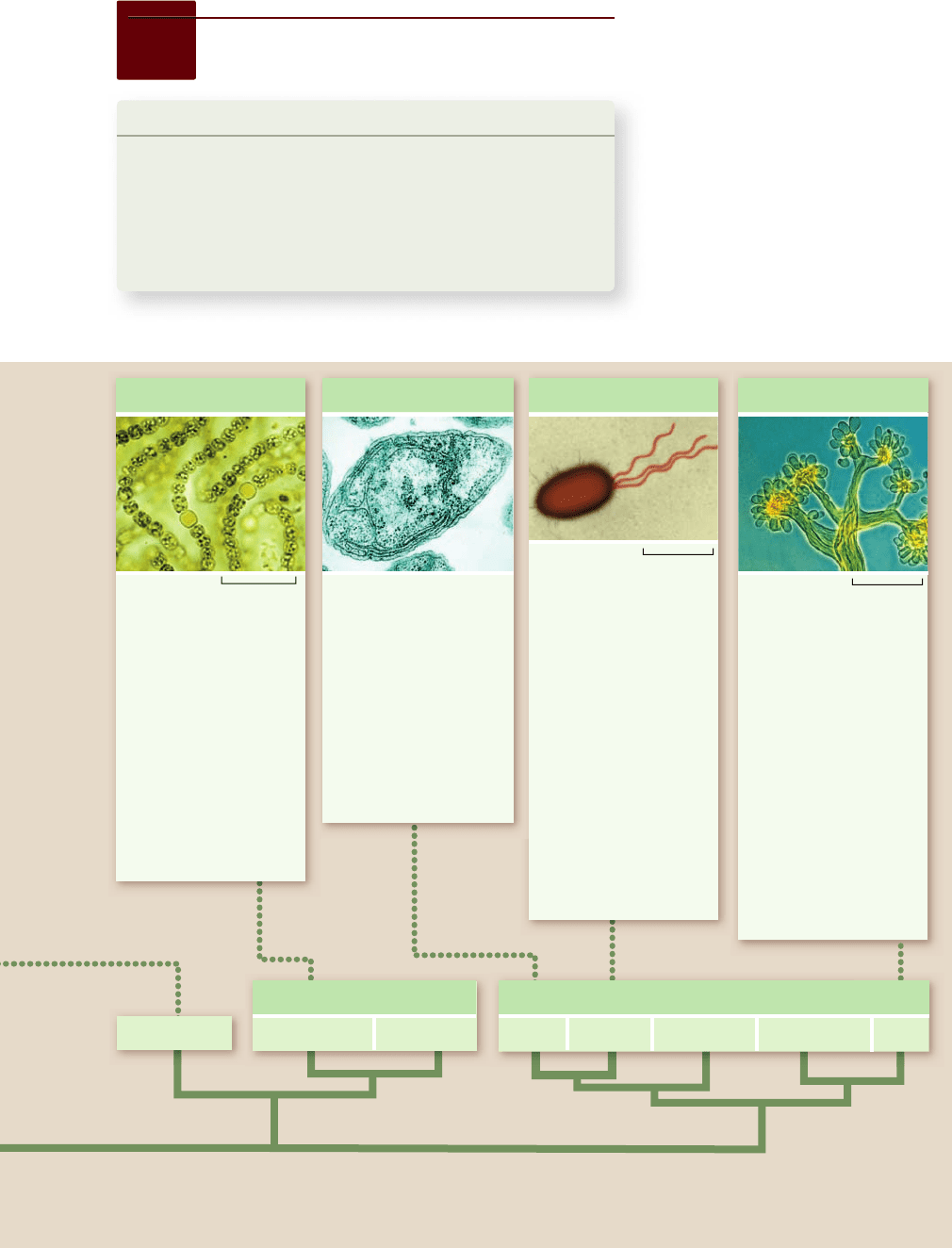
Apago PDF Enhancer
Cyanobacteria are a
form of photosynthetic
bacterium common in
both marine and
freshwater environ-
ments. Deeply
pigmented; often
responsible for “blooms”
in polluted waters. Both
colonial and solitary
forms are common.
Some filamentous
forms have cells
specialized for nitrogen
fixation.
A nutritionally diverse
group that includes
soil bacteria like the
lithotroph Nitrosomonas
that recycle nitrogen
within ecosystems by
oxidizing the
ammonium ion (NH
4
+
).
Other members are
heterotrophs and
photoheterotrophs.
Gammas are a diverse
group including
photosynthetic sulfur
bacteria, pathogens,
like Legionella, and the
enteric bacteria that
inhabit animal
intestines. Enterics
include Escherichia
coli, Salmonella (food
poisoning), and Vibrio
cholerae (cholera).
Pseudomonas
are a common form
of soil bacteria,
responsible for many
plant diseases, and are
important opportunistic
pathogens.
The cells of
myxobacteria exhibit
gliding motility by
secreting slimy
polysaccharides over
which masses of cells
glide; when the soil
dries out, cells
aggregate to form
upright multicellular
colonies called fruiting
bodies. Other delta
bacteria are solitary
predators that attack
other bacteria
(Bdellovibrio) and
bacteria used in
bioremediation
(Geobacter).
Cyanobacteria Chlorobi
Beta Gamma
Alpha–
Rickettsia
Epsilon–
Helicobacter
Delta
ProteobacteriaPhotosynthetic
Spirochaetes
Cyanobacteria Beta Gamma Delta
25.04 µm
10.57 µm
750 µm
28.3
Prokaryotic Cell Structure
Learning Outcomes
Describe the general features common to all prokaryotic 1.
cells.
Explain the differences between gram-positive and gram-2.
negative bacterial cells.
Describe the features that distinguish different kinds of 3.
prokaryotic cells.
Prokaryotic cells are relatively simple, but they can be catego-
rized based on cell shape. They also have some variations in
structure that give them different staining properties for cer-
tain dyes. Other features are found in some types of cells but
not in others.
Prokaryotes have three basic forms: rods,
cocci, and spirals
Although it is an oversimplification, it is useful to divide bacte-
ria based on easily definable morphologies. Most prokaryotes
exhibit one of three basic shapes: rod- shaped, often called a
chapter
28
Prokaryotes
551www.ravenbiology.com
rav32223_ch28_545-566.indd 551rav32223_ch28_545-566.indd 551 11/13/09 2:28:52 PM11/13/09 2:28:52 PM