
Raven P.H., Johnson G.B., Mason K.A. Biology (Ninth Edition)
Подождите немного. Документ загружается.

Apago PDF Enhancer
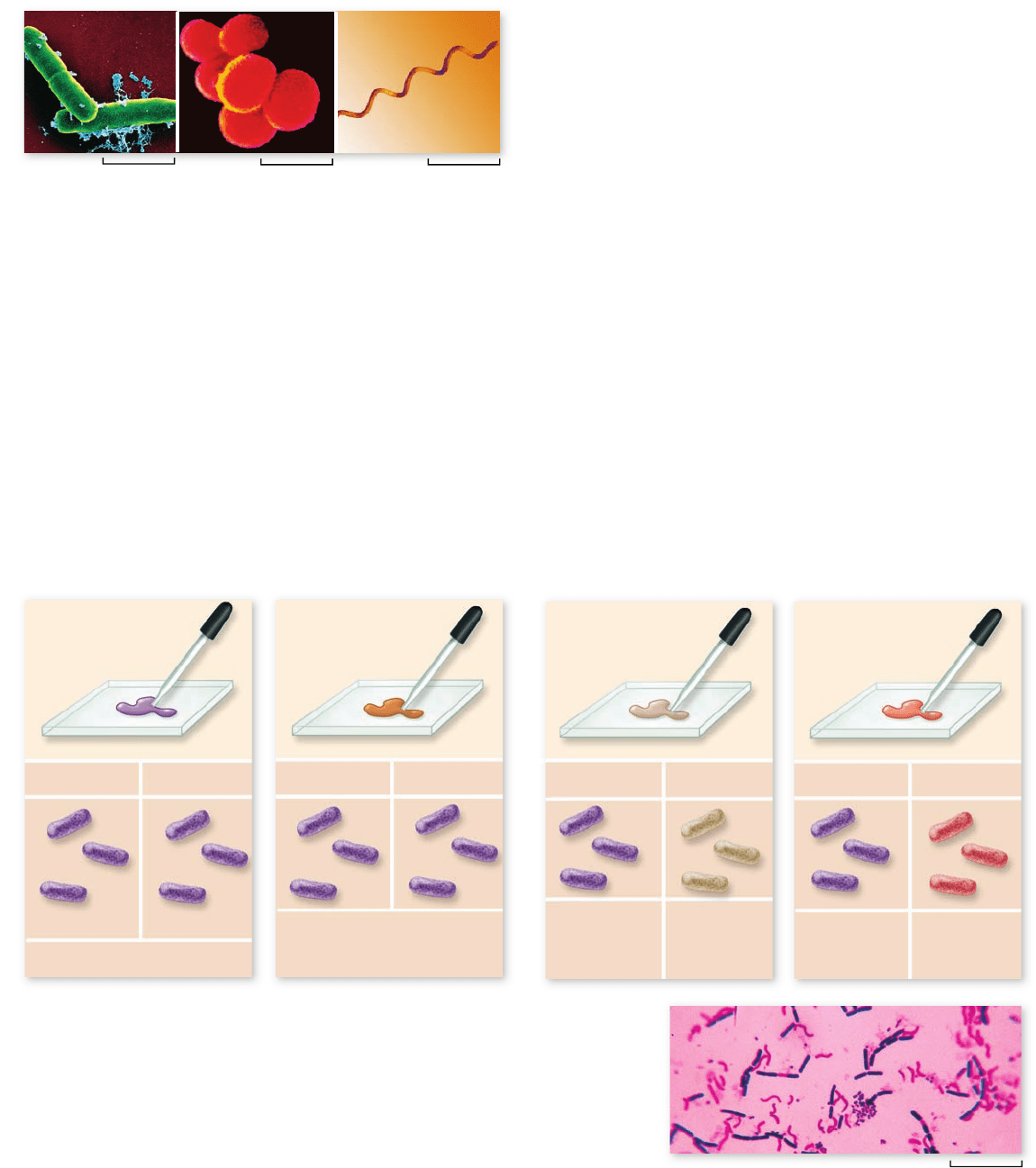
Both cell walls affix the dye.
1. Crystal violet
is applied.
Gram-positive Gram-negative
Crystal violet–iodine complex
formed inside cells.
All one color.
2. Gram’s iodine
is applied.
Gram-positive Gram-negative
3. Alcohol wash
is applied.
Gram-positive Gram-negative
4. Safranin (red dye)
is applied.
Gram-positive Gram-negative
Alcohol
dehydrates thick
PG layer trapping
dye complex.
Red dye has
no effect.
Red dye
stains the
colorless cell.
a.
b.
10 µm
Alcohol
has minimal
effect on thin
PG layer.
Bacillus Coccus Spirillum
0.5 µm
2.2 µm 3.07 µm
Figure 28.6
The Gram stain.
a. The thick peptidoglycan (PG) layer encasing
gram-positive bacteria traps crystal violet dye, so the bacteria appear purple in a gram-
stained smear (named after Hans Christian Gram—Danish bacteriologist, 1853–1938 —
who developed the technique). Because gram-negative bacteria have much less
peptidoglycan (located between the plasma membrane and an outer membrane), they do
not retain the crystal violet dye and so exhibit the red counterstain (usually a safranin
dye). b. A micrograph showing the results of a Gram stain with both gram-positive and
gram-negative cells.
bacillus (plural, bacilli ); coccus (plural, cocci ), spherical- or ovoid-
shaped; and spirillum (plural, spirilla), long and helical-shaped;
these bacteria are also called spirochetes.
The bacterial cell wall is the single most important con-
tributor to cell shape. Bacteria that normally lack cell walls,
such as the mycoplasmas, do not have a set shape.
As diverse as their shapes may be, prokaryotic cells also
have many different methods to move through their environ-
ment. A flagellum or several flagella may be found on the outer
surface of many prokaryotic cells. These structures are used to
propel the organisms in a fluid environment. Some rod-shaped
and spherical bacteria form colonies, adhering end-to-end af-
ter they have divided, forming chains. Some bacterial cells
change into stalked structures or grow long, branched fila-
ments. Some filamentous bacteria are capable of a gliding mo-
tion on solid surfaces, often combined with rotation around a
longitudinal axis.
Prokaryotes have a tough cell wall
and other external structures
The prokaryotic cell wall is often complex, consisting of many
layers. Minimally it consists of peptidoglycan, a polymer unique
to bacteria. This polymer forms a rigid network of polysaccha-
ride strands cross-linked by peptide side chains. It is an impor-
tant structure because it maintains the shape of the cell and
protects the cell from swelling and rupturing in hypotonic solu-
tions, which are most commonly found in the environment. The
archaea do not possess peptidoglycan, but some have a similar
structure called pseudomurein, or pseudopeptidoglycan.
Gram-positive and gram-negative bacteria
Two types of bacteria can be identified using a staining process
called the Gram stain, hence their names. Gram-positive bac-
teria have a thicker peptidoglycan wall and stain a purple color,
whereas the more common gram-negative bacteria contain
less peptidoglycan and do not retain the purple-colored dye.
These gram-negative bacteria can be stained with a red counter-
stain and then appear dark pink (figure 28.6) .
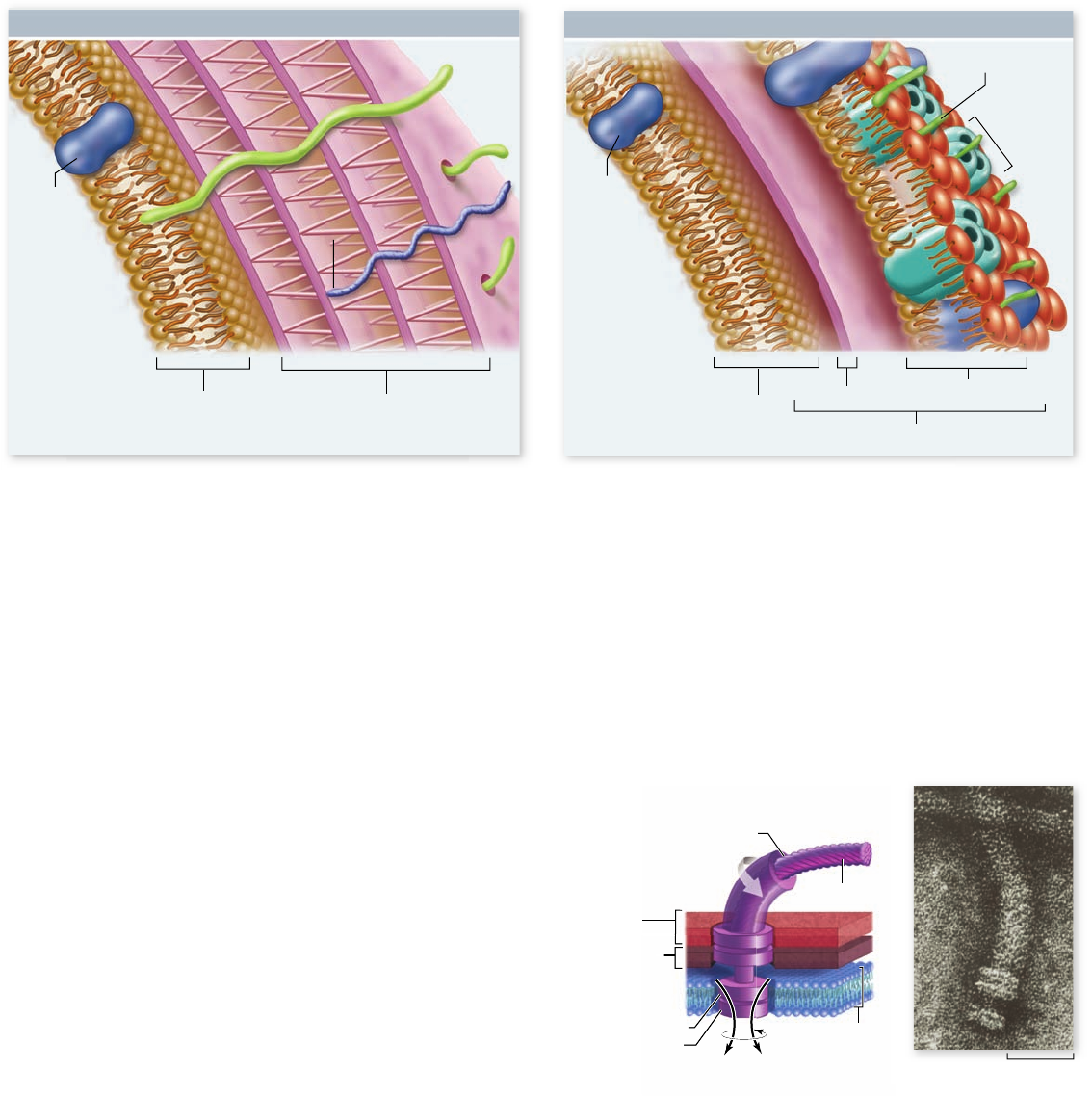
In the gram-positive bacteria, the peptidoglycan forms a
thick, complex network around the outer surface of the cell.
This network also contains lipoteichoic and teichoic acid,
which protrudes from the cell wall. In the gram-negative
bacteria, a thin layer of peptidoglycan is sandwiched between
the plasma membranes and a second outer membrane
(figure 28.7) . The outer membrane contains large molecules
© Dr. Richard Kessel & Dr. Gene Shih/Visuals Unlimited
552
part
V
Diversity of Life on Earth
rav32223_ch28_545-566.indd 552rav32223_ch28_545-566.indd 552 11/12/09 4:49:58 PM11/12/09 4:49:58 PM
Apago PDF Enhancer
Gram-positive Gram-negative
Plasma membrane
Cell wall
(peptidoglycan)
Plasma membrane
Peptidoglycan Outer membrane
Cell wall
Cell interior
Protein
Lipoteichoic acid
Cell interior
Protein
Lipopolysaccharide
Porin
Teichoic acid
a.
b.
Plasma
membrane
Outer
membrane
a.
Outer protein ring
Hook
Filament
Peptidoglycan
portion of
cell wall
Inner protein ring
H
+
H
+
0.02 µm
Figure 28.7
The structure of gram-positive and gram-negative cell walls.
The gram-positive cell wall is much simpler,
composed of a thick layer of cross-linked peptidoglycan chains. Molecules of lipoteichoic acid and teichoic acid are also embedded in the wall
and exposed on the surface of the cell. The gram-negative cell wall is composed of multiple layers. The peptidoglycan layer is thinner than in
gram-positive bacteria and is surrounded by an additional membrane composed of lipopolysaccharide. Porin proteins form aqueous pores in
the outer membrane. The space between the outer membrane and peptidoglycan is called the periplasmic space.
Bacterial cells that have lost the genes for flagellin are not
able to swim.
Pili (singular, pilus) are other hairlike structures that
occur on the cells of some gram-negative prokaryotes . They
are shorter than prokaryotic flagella and about 7.5 to 10 nm
of lipopolysaccharide, lipids with polysaccharide chains at-
tached. The outer membrane layer makes gram-negative bac-
teria resistant to many antibiotics that interfere with cell-wall
synthesis in gram-positive bacteria. For example, penicillin
acts to inhibit the cross-linking of peptidoglycan in a gram-
positive cell wall, killing growing bacterial populations.
S-layer
In some bacteria and archaea, an additional protein or glyco-
protein layer forms a rigid paracrystalline surface called an
S-layer outside of the peptidoglycan or outer membrane layers
of gram-positive and gram-negative bacteria, respectively.
Among the archaea, the S-layer is almost universal and can be
found outside of a pseudopeptidoglycan layer or, in contrast to
the bacteria, may be the only rigid layer surrounding the cell.
The functions of S-layers are diverse and variable but often in-
volve adhesion to surfaces or protection.
The capsule
In some bacteria, an additional gelatinous layer, the capsule,
surrounds the other wall layers. A capsule enables a prokaryotic
cell to adhere to surfaces and to other cells, and, most impor-
tant, to evade an immune response by interfering with recogni-
tion by phagocytic cells. Therefore, a capsule often contributes
to the ability of bacteria to cause disease.
Bacterial flagella and pili
Many kinds of prokaryotes have slender, rigid, helical flagella
composed of the protein flagellin (figure 28.8) . These flagella
range from 3 to 12 μm in length and are very thin—only 10 to
20 nm thick. They are anchored in the cell wall and spin like
a propeller, moving the cell through a liquid environment.
Figure 28.8
The agellar motor of a gram-negative
bacterium.
a. A protein lament, composed of the protein
agellin, is attached to a protein rod that passes through a sleeve in
the outer membrane and through a hole in the peptidoglycan layer
to rings of protein anchored in the cell wall and plasma membrane,
like rings of ball bearings. The rod rotates when the inner protein
ring attached to the rod turns with respect to the outer ring xed to
the cell wall. The inner ring is an H
+
ion channel, a proton pump
that uses the ow of protons into the cell to power the movement of
the inner ring past the outer one. The membrane wall anchor of the
agellum is called the basal body. b. Electron micrograph of
bacterial agellum.
chapter
28
Prokaryotes
553www.ravenbiology.com
rav32223_ch28_545-566.indd 553rav32223_ch28_545-566.indd 553 11/12/09 4:50:06 PM11/12/09 4:50:06 PM
Apago PDF Enhancer
a.
b.
0.47 µm 0.86 µm
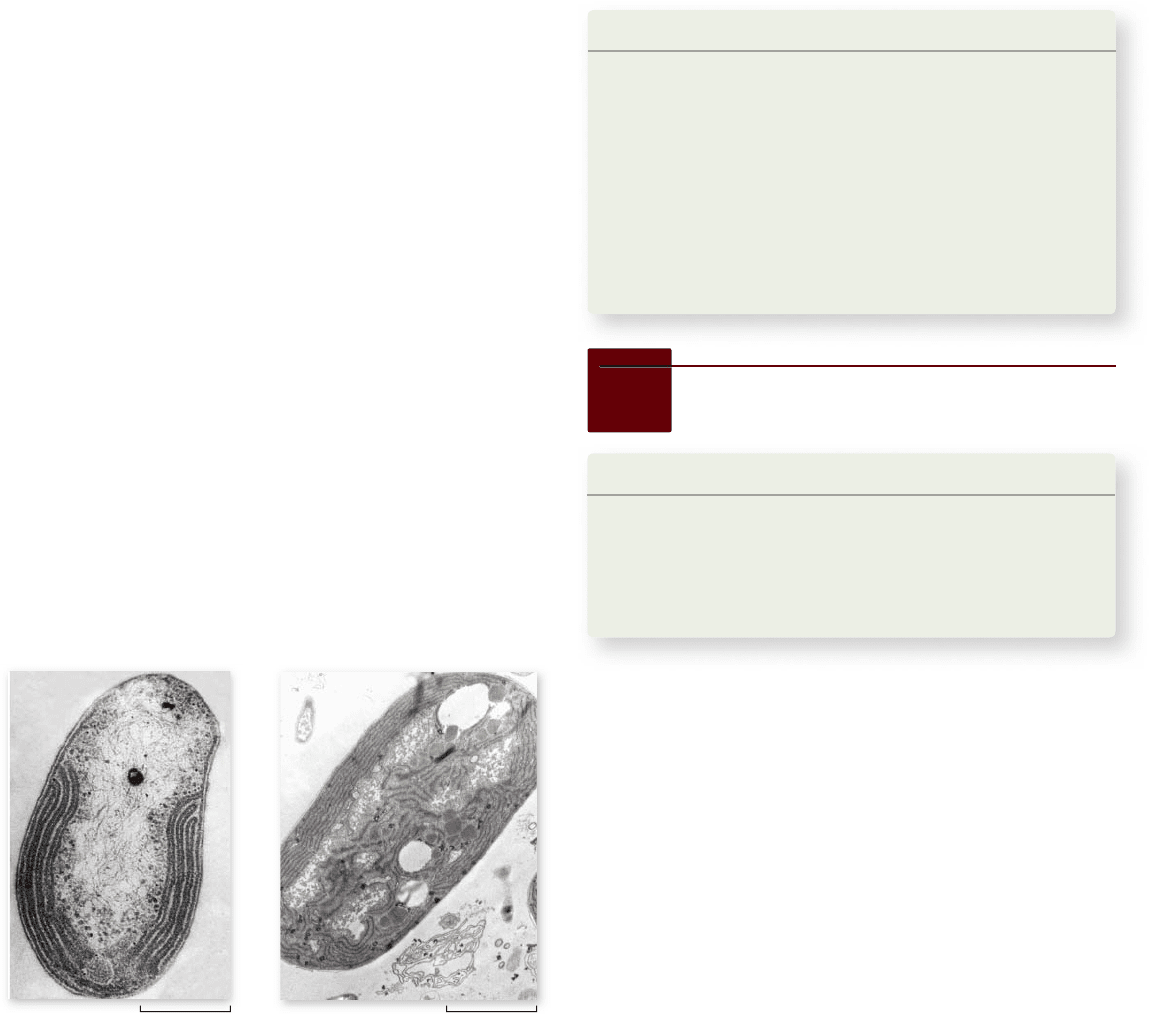
Figure 28.9
Prokaryotic cells often have complex
internal membranes.
a. This aerobic bacterium exhibits
extensive respiratory membranes (long dark curves that hug the cell
wall ) within its cytoplasm not unlike those seen in mitochondria.
b. This cyanobacterium has thylakoid-like membranes (ripple-like
shapes along the edges and in the center) that provide a site for
photosynthesis.
confer a selective advantage, they are not essential for the
cell’s survival.
Ribosomes. Prokaryotic ribosomes are smaller than those of
eukaryotes and differ in protein and RNA content.
Antibiotics such as tetracycline and chloramphenicol can
tell the difference, however—they bind to prokaryotic
ribosomes and block protein synthesis, but they do not
bind to eukaryotic ribosomes.
Learning Outcomes Review 28.3
The three basic shapes of prokaryotes are rod-shaped, spherical, and
spiral-shaped. Bacteria have a cell wall containing peptidoglycan, which is
the basis for the Gram stain. Gram-positive bacteria have a thick cell wall,
relative to gram-negative species. Many also have an external capsule. Some
bacteria have fl agella and pili. Some can form heat-resistant endospores.
Although prokaryotes do not have membrane-bounded organelles, the
interior of the cell is organized and may include infolding of the plasma
membrane. Prokaryotic DNA is localized in a nucleoid region.
■ What would be the simplest method to determine
whether two bacteria belong to the same species?
thick. Pili are more important in adhesion than movement,
and they also have a role in exchange of genetic information
(discussed later).
Endospore formation
Some prokaryotes are able to form endospores, developing a
thick wall around their genome and a small portion of the cyto-
plasm when they are exposed to environmental stress. These
endospores are highly resistant to environmental stress, espe-
cially heat, and when environmental conditions improve, they
can germinate and return to normal cell division to form new
individuals after decades or even centuries.
The bacteria that cause tetanus, botulism, and anthrax are
all capable of forming spores. With a puncture wound, tetanus
endospores may be driven deep into the skin where conditions are
favorable for them to germinate and cause disease, or even death.
The interior of prokaryotic cells is organized
The most fundamental characteristic of prokaryotic cells is
their simple interior organization. Prokaryotic cells lack the ex-
tensive functional compartmentalization seen within eukary-
otic cells, but they do have the following structures:
Internal membranes. Many prokaryotes possess invaginated
regions of the plasma membrane that function in
respiration or photosynthesis ( gure 28.9) .
Nucleoid region. Prokaryotes lack nuclei and generally do not
possess linear chromosomes. Instead, their genes are
encoded within a single double-stranded ring of DNA
that is highly condensed to form a visible region of the
cell known as the nucleoid region. Many prokaryotic
cells also possess plasmids, which as described earlier are
small, independently replicating circles of DNA. Plasmids
contain only a few genes, and although these genes may
28.4
Prokaryotic Genetics
Learning Outcomes
Contrast the mechanisms of DNA exchange in 1.
prokaryotes.
Explain genetic mapping in E. coli. 2.
Describe how genetics explains the spread of antibiotic 3.
resistance.
In sexually reproducing populations, traits are transferred verti-
cally from parent to child. Prokaryotes do not reproduce sexually,
but they can exchange DNA between different cells. This horizon-
tal gene transfer occurs when genes move from one cell to another
by conjugation, requiring cell-to-cell contact, or by means of vi-
ruses (transduction). Some species of bacteria can also pick up ge-
netic material directly from the environment (transformation ).
All of these processes have been observed in archaea, but the
study of archaeal genetics is still in its infancy because of the diffi-
culty in culturing most species. We concentrate here on bacterial
systems, primarily E. coli, which has been studied extensively.
Conjugation depends on the presence
of a conjugative plasmid
Plasmids may encode functions that can confer an advantage to
the cell, such as antibiotic resistance, on which natural selection
can operate—but they are not required for normal function. In
some cases, plasmids can be transferred from one cell to another
via conjugation. The best known plasmid capable of transfer is
called the F plasmid, for fertility factor; cells containing
F plasmids are termed F
+
cells, and cells that lack the F plasmid
554
part
V
Diversity of Life on Earth
rav32223_ch28_545-566.indd 554rav32223_ch28_545-566.indd 554 11/12/09 4:50:13 PM11/12/09 4:50:13 PM
Apago PDF Enhancer
E. coli chromosome
F plasmid
Origin of
transfer
IS
Integrated F plasmid
Integration
F
+
cell
Hfr cell
Excision
F
+
cell
Hfr cell
a.
2 µm
b.
F
+
(donor cell)
F
–
(recipient cell)
F plasmid
Conjugation
bridge
Rolling-circle
replication:
single strand enters
recipient cell
Second strand
synthesis begins
F
+
F
+
Bacterial chromosome
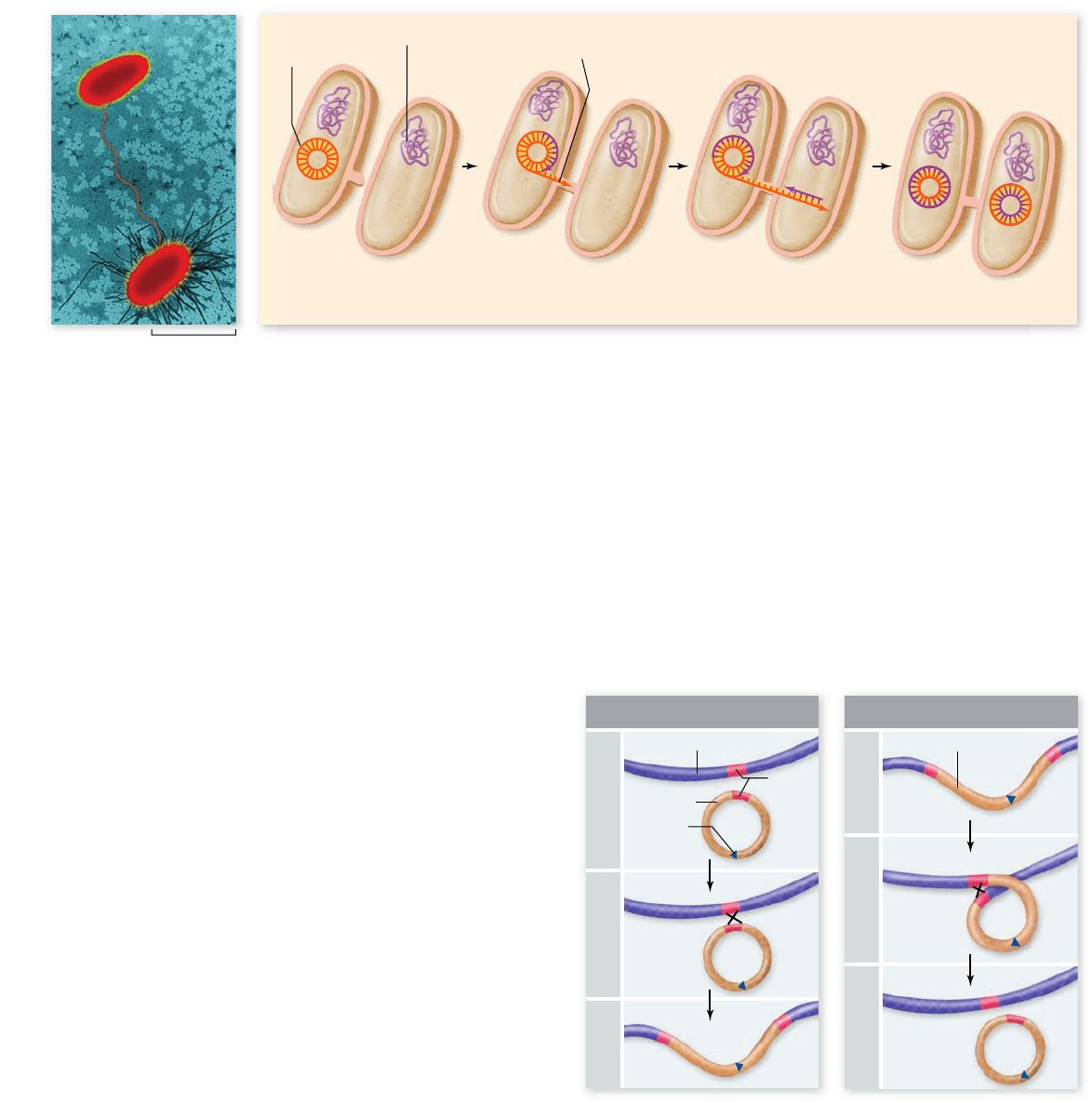
Figure 28.10
Conjugation bridge and transfer of F plasmid between F
+
and F
–
cell.
a. The electron micrograph shows two
E. coli cells caught in the act of conjugation. The connection between the cells is the extended F pilus. b. F
–
cells are converted to F
+
cells by
the transfer of the F plasmid. The cells are joined by a conjugation bridge and the plasmid is replicated in the donor cell, displacing one
parental strand. The displaced strand is transferred to the recipient cell then replicated. After successful transfer, the recipient cell becomes an
F
+
cell capable of expressing genes for the F pilus and acting as a donor.
Figure 28.11
Integration and excision of F plasmid.
The F plasmid contains short insertion sequences (IS) that also exist
in the chromosome. This allows the plasmid to pair with the
chromosome, and a single recombination event between two circles
leads to a larger circle. This integrates the plasmid into the
chromosome, creating an Hfr cell, as shown on the left. The process
is reversible because the IS sequences in the integrated plasmid can
pair, and now a recombination event will return the two circles and
convert the Hfr back to an F
+
cell as shown on the right.
are F
–
cells. The F plasmid occurs in E. coli and, like all plasmids,
acts as an independent genetic entity that nevertheless depends
on the cell for replication. Studies involving the F plasmid were
critical to our current understanding of bacterial genetics and the
organization of the E. coli chromosome.
F plasmid transfer
The F plasmid contains a DNA replication origin and several
genes that promote its transfer to other cells. These genes en-
code protein subunits that assemble on the surface of the bacte-
rial cell, forming a hollow pilus that is necessary for the transfer
process (figure 28.10a) .
First, the F plasmid binds to a site on the interior of the
F
+
cell just beneath the pilus, now called a conjugation bridge.
Then, by a process called rolling-circle replication, the F plasmid
begins to copy its DNA at the binding point. As it is replicated,
the displaced single strand of the plasmid passes into the other
cell. There, a complementary strand is added, creating a new,
stable F plasmid (figure 28.10b).
Recombination between the F plasmid
and host chromosome
The F plasmid can integrate into the host chromosome by re-
combining with it (see chapter 13) . The molecular events in
this process are similar to events during meiosis in eukaryotes
when crossing over (recombination) exchanges material be-
tween chromosomes. This process is also called homologous
recombination. In the case of the F plasmid and the E. coli chro-
mosome, a single recombination event between two circles
produces a larger circle, consisting of the chromosome and the
integrated plasmid. This integration is actually mediated by
host-encoded proteins, but it takes advantage of regions in the
F plasmid called insertion sequences (IS) that also exist in the
E. coli chromosome. These IS elements are actually transpos-
able elements that probably moved from the chromosome to
the F plasmid.
When the F plasmid is integrated into the chromosome,
the cell is called an Hfr cell for high frequency of recombination
(figure 28.11) , because now transfer by the F plasmid will include
chromosomal DNA. The site on the F plasmid where transfer
initiates is located in the middle of the integrated plasmid, so that
the entire chromosome would have to be transferred to also
chapter
28
Prokaryotes
555www.ravenbiology.com
rav32223_ch28_545-566.indd 555rav32223_ch28_545-566.indd 555 11/12/09 4:50:17 PM11/12/09 4:50:17 PM
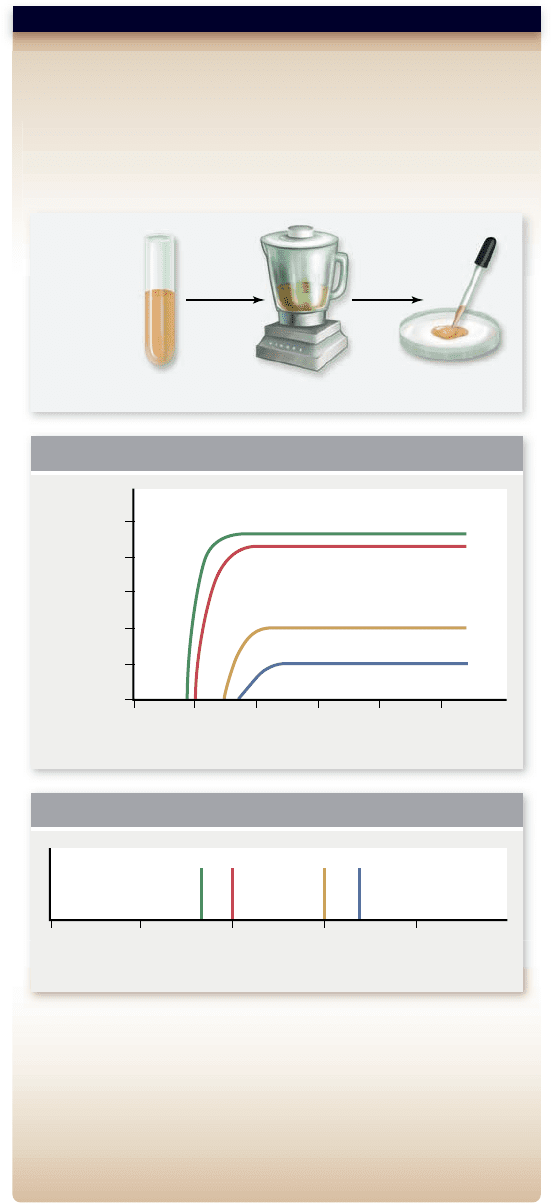
Apago PDF Enhancer
0
30 40 50
100
80
60
40
20
0
90%
85%
40%
20%
2010
0
15 20105
Minutes prior to interruption of conjugation
Mating interrupted by agitation in blender
Sample
placed in
blender.
Sample
plated.
Donor Hfr
azi
r
ton
r
lac
+
gal
+
Recipient F
-
azi
s
ton
s
lac
−
gal
−
Minutes after mating
Percentage of cells with
Hfr genetic markers
Data from Interrupted Mating
Genetic Map
azi ton lac gal
azi
r
ton
r
lac
+
gal
+
Hypothesis: Conjugation using Hfr strains involves the linear transfer of
information from donor to recipient cell.
Prediction: If there is a linear transfer of information, then dierent
markers should appear in a time sequence.
Test: Mating strains are agitated at time points to break the conjugation
bridge, then plated to determine genotype.
Result: The dierent genes from the donor strain appear in a linear
time sequence.
Conclusion: The transfer of genetic information is linear. This sequence
can be used to construct a genetic map ordering the genes on the
chromosomes.
Further Experiments: Can other methods of DNA exchange also be
used for genetic mapping?
SCI E NT IFI C THINKING
Figure 28.12
Interrupted mating experiment allows
construction of genetic map.
conjugation. In transduction, the closer together two genes are,
the more likely it is that they will be transferred in a single
transduction event. This can be expressed mathematically as
the cotransduction frequency. Correlation of maps from the two
transfer all of the integrated plasmid. The transfer of the entire
chromosome takes around 100 minutes, and the conjugation
bridge is usually broken before that time. This leads to transfer
of portions of donor chromosome that can then replace regions
of the recipient chromosome by homologous recombination.
This occurs by two recombination events between the linear
piece and the circular chromosome, similar to a double crossover
in eukaryotic meiosis.
Geneticists have taken advantage of this process to map the
order of genes in the E. coli chromosome. Genes close to the ori-
gin of transfer are transferred early in the process, and those far
from the origin are transferred later. If the process of mating is
experimentally interrupted at different times, then gene order
can be mapped based on time of entry of each gene (figure 28.12).
The entry of genes can be detected by using a donor with wild-
type alleles that can replace mutant alleles in the recipient by
homologous recombination as described. These experiments
have shown that the E. coli chromosome is indeed circular, and
the genetic map is therefore circular. The units of the map are
minutes, and the entire map is 100 minutes long.
The F plasmid can also excise itself by reversing the inte-
gration process. In this case, the IS elements bounding the in-
tegrated plasmid pair and now a single recombination event
will restore the two circles (see figure 28.11). If excision is inac-
curate, the F plasmid can pick up some chromosomal DNA in
the process. This creates what is called an F plasmid that can
then be transferred rapidly and in its entirety to another cell. In
this case, the cell already has the same genetic material in its
chromosome as that carried by the F'. This makes the cell a
partial diploid, sometimes called a merodiploid. Merodiploids
can be used to determine if new isolated mutations are alleles of
known genes. This is done by using wild types of alleles of known
genes of the F' plasmid to provide normal function heterozygous
to unknown mutant alleles in the chromosome.
Viruses transfer DNA by transduction
Horizontal transfer of DNA can also be mediated by bacterio-
phage. In generalized transduction, virtually any gene can be
transferred between cells; in specialized transduction, only a
few genes are transferred.
Generalized transduction
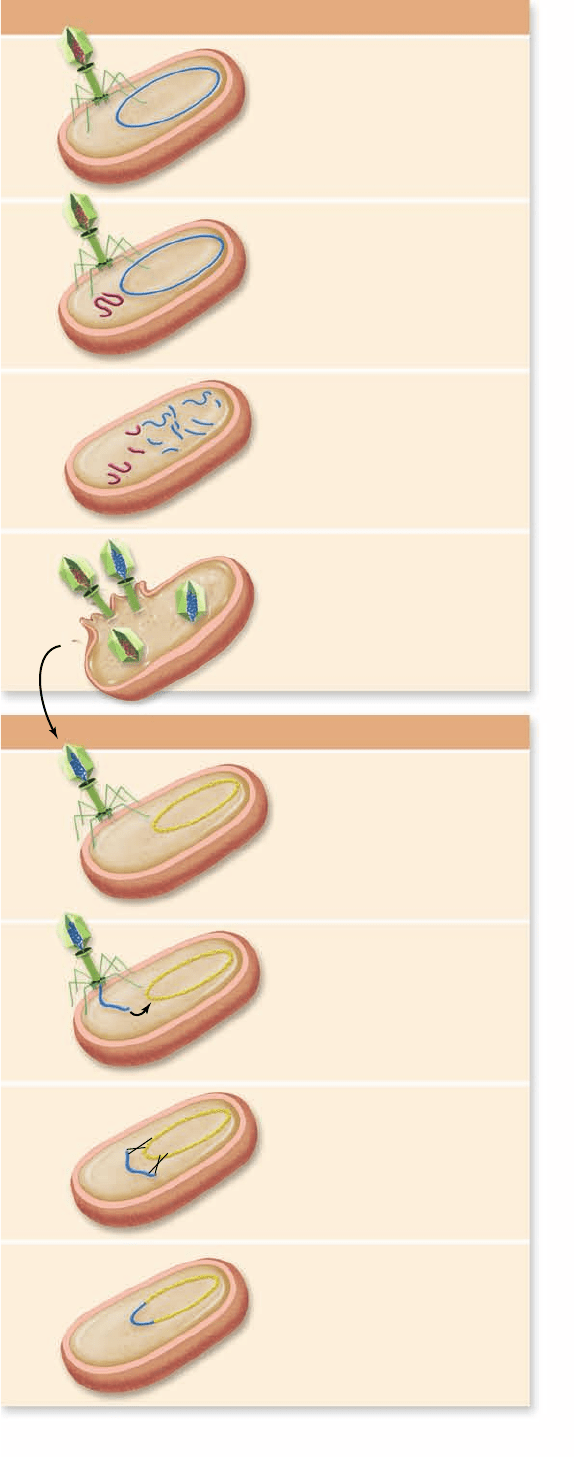
Generalized transduction can be thought of as an accident of
the biology of some types of lytic phage (see chapter 27). In
these viruses, after the viral genome is replicated and the phage
head is constructed, the phage packaging machinery stuffs
DNA into the phage head until no more fits, so-called headfull
packaging. Sometimes the phage begins with bacterial DNA
instead of phage DNA and packages this DNA into a phage
head (figure 28.13) . When this viral particle goes on to infect
another cell, it injects the bacterial DNA into the infected cell
instead of viral DNA. This DNA can then be incorporated into
the recipient chromosome by homologous recombination.
Similar to transfer by Hfr cells described earlier, two recombi-
nation events are necessary to integrate the linear piece of DNA
into the circular chromosome (see figure 28.13).
Generalized transduction has also been used for mapping
purposes in E. coli, although the logic is different from that in
556
part
V
Diversity of Life on Earth
rav32223_ch28_545-566.indd 556rav32223_ch28_545-566.indd 556 11/12/09 4:50:20 PM11/12/09 4:50:20 PM
Apago PDF Enhancer
Infection with Phage
Infection with Transducing Phage
Transducing phage
adheres to cell.
Phage injects a piece of
chromosomal DNA.
DNA is incorporated by
homologous recombination.
Cell contains DNA from donor.
Phage adheres to cell.
Phage DNA is injected into cell.
Phage DNA is replicated and
host DNA is degraded.
Phage particles are packaged
with DNA and are released.
Figure 28.13
Transduction by generalized transducing
phage.
When some phage infect cells, they degrade the host
DNA into pieces. When the phage package their DNA, they can
package host DNA in place of phage DNA to produce a transducing
phage as shown on the top. When a transducing phage infects a cell,
it injects host DNA that can then be integrated into the host
genome by homologous recombination. With a linear piece of
DNA, it requires two recombination events, which replace the
chromosomal DNA with the transducing DNA as shown on the
bottom. If the new allele is different from the old, the cell’s
phenotype will change.
methods allows an empirical conversion between cotransduc-
tion frequency and minutes in the genetic map.
Specialized transduction
Specialized transduction is limited to phage that exhibit a lyso-
genic life cycle (see chapter 27) . The prototype for this is phage
λ from E. coli. When λ infects a cell and its genome integrates
into the host chromosome, it does not destroy the cell but
is passed on by cell division. This integration event is similar to
the integration of the F plasmid, except that in the case of λ
the recombination is a site-specific event mediated by phage-
encoded proteins.
In this lysogenic state, the phage is called a prophage and
it is dormant. The prophage encodes the functions necessary to
eventually excise itself and undergo lytic growth, leading to the
death of the cell. If this excision event is imprecise, it may take
some chromosomal DNA with it, in the process making a spe-
cialized transducing phage. These phage carry both phage
genes and chromosomal genes, unlike generalized transducing
phage that carry only chromosomal DNA.
Because the phage head can carry only as much DNA as
is found in the phage genome, imprecise excision results in
deletion of phage genes. Thus specialized transducing phage
may be defective if genes necessary for phage growth are lost
in the process.
Specialized transducing phage particles can then inte-
grate into the chromosome, just like wild-type phage, also mak-
ing the cell diploid for the genes carried by the phage. Phage
particles that can integrate as prophages may become trapped
in the host genome if the genes necessary for excision become
defective by mutation or are lost. The E. coli genome contains a
number of such cryptic prophage, some of which encode func-
tions important to the cell and must now be considered part of
the host genome.
Transformation is the uptake of DNA
directly from the environment
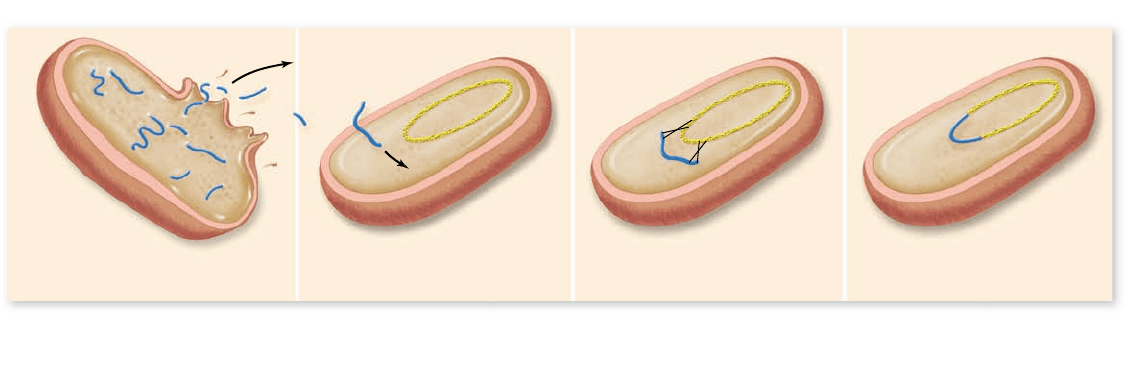
Transformation is a naturally occurring process in some spe-
cies, such as the bacteria that were studied by Frederick Griffith
(see chapter 14 ) . Griffith discovered the process despite not
knowing what chemical component was transferred. Transfor-
mation occurs when one bacterial cell has died and ruptured,
chapter
28
Prokaryotes
557www.ravenbiology.com
rav32223_ch28_545-566.indd 557rav32223_ch28_545-566.indd 557 11/12/09 4:50:20 PM11/12/09 4:50:20 PM
Apago PDF Enhancer
Cell death of a bacterium
causes release of DNA fragments.
A DNA fragment is taken up
by another live cell.
DNA is incorporated by
homologous recombination.
Cell contains DNA from
dead donor cell.
Figure 28.14
Natural transformation.
Natural transformation occurs when one cell dies and releases its contents to the surrounding
environment. The DNA is usually fragmented, and small pieces can be taken up by other, living cells. The DNA taken up can replace
chromosomal DNA by homologous recombination as in conjugation and transduction. If the new DNA contains different alleles from the
chromosome, the phenotype of the cell changes, possibly providing a selective advantage.
cause dysentery, typhoid, and other major diseases. At times,
some of the genetic material from these pathogenic species is
exchanged with or transferred to E. coli by transmissible plas-
mids or bacteriophage. Because of its abundance in the human
digestive tract, E. coli poses a special threat if it acquires harm-
ful traits, as seen by the outbreaks of the food-borne
O157:H7 strain of E. coli. Infection with this strain of E. coli
can lead to serious illness. This is a new strain of E. coli that
evolved by acquiring genes for pathogenic traits. Evidence
suggests this occurred by both transduction and the acquisi-
tion of a large virulence plasmid by conjugation.
Variation can also arise by mutation
Just as with any organism, mutations can arise spontaneously in
bacteria. Certain factors, especially those that damage DNA,
such as radiation, ultraviolet light, and various chemicals, in-
crease the likelihood of mutation.
A typical bacterium such as E. coli contains about 5000
genes. The probability of mutation occurring by chance is
about in one out of every million copies of a gene. With 5000
genes in a bacterium, we can predict that approximately 1 out
of every 200 bacteria will have a mutation. With adequate food
and nutrients, a population of E. coli can double in 20 minutes.
Because bacteria multiply so rapidly, mutations can spread rap-
idly in a population and can change the characteristics of that
population in a relatively short time.
In the laboratory, bacteria are grown on different sub-
strates, called growth media, that reflect their nutritional needs.
For a particular species, the medium that contains only those
nutrients required for wild-type growth is termed a minimal
medium. A mutant that can no longer survive on minimal me-
dium and needs particular nutritional supplements, such as an
amino acid, is called an auxotroph. Replica plating allows
identification of bacterial auxotrophs from a master plate of
rich growth media by isolating individual colonies and observ-
ing their growth (or failure to grow) on different supplemented
media. The technique is somewhat like using a rubber stamp—
an impression of colonies growing in a Petri plate is made on a
velvet surface, and then this surface is pressed onto different
spilling its fragmented DNA into the surrounding environ-
ment. This DNA can be taken up by another cell and incorpo-
rated into its genome, thereby transforming it (figure 28.14) .
When the uptake occurs under natural conditions, it is termed
natural transformation. Some species of both gram-positive
and gram-negative bacteria exhibit natural transformation, al-
though the mechanisms seem to differ between the groups.
The proteins involved in the process of natural transfor-
mation are all encoded by the bacterial chromosome. The im-
plication is that natural transformation may be the only one of
the mechanisms of DNA exchange that evolved as part of nor-
mal cellular machinery. The transfer of chromosomal DNA by
either conjugation or transduction can be thought of as acci-
dents of plasmid or phage biology, respectively.
Transformation is also important in molecular cloning,
but E. coli does not exhibit natural transformation. When trans-
formation is accomplished in the laboratory it is called artificial
transformation. Artificial transformation is useful for cloning
and DNA manipulation (see chapter 17).
Antibiotic resistance can be transferred
by resistance plasmids
Some conjugative plasmids pick up antibiotic resistance genes, be-
coming resistance plasmids, or R plasmids. The rapid transfer of
newly acquired, antibiotic resistance genes by plasmids has been an
important factor in the appearance of the resistant strains of the
pathogen Staphylococcus aureus discussed in the next section.
The means by which resistance plasmids acquire antibi-
otic resistance genes is often through transposable elements,
which were described in chapter 18. These elements can move
from chromosome to chromosome or from plasmid to chro-
mosome and back again, and they can transfer antibiotic resis-
tance genes in the process. If a conjugative plasmid picks up
these genes, then the bacterium carrying it has a selective ad-
vantage in the presence of those antibiotics.
An important example in terms of human health involves
the Enterobacteriaceae, the family of bacteria to which the
common intestinal bacterium E. coli belongs. This family con-
tains many pathogenic bacteria, including the organisms that
558
part
V
Diversity of Life on Earth
rav32223_ch28_545-566.indd 558rav32223_ch28_545-566.indd 558 11/12/09 4:50:21 PM11/12/09 4:50:21 PM

Apago PDF Enhancer
Other prokaryotes are heterotrophs that obtain at least some of
their carbon from organic molecules, such as glucose. Depend-
ing on the method by which they acquire energy, autotrophs
and heterotrophs are categorized as follows:
Photoautotrophs. Many bacteria carry out photosynthesis,
using the energy of sunlight to build organic molecules
from carbon dioxide. The cyanobacteria use chlorophyll a
as the key light-capturing pigment and H
2
O as an electron
donor, releasing oxygen gas as a by-product. They are
therefore oxygenic, and their method of photosynthesis is
very similar to that found in algae and plants.
Other bacteria use bacteriochlorophyll as their
light-capturing pigment and H
2
S as an electron donor,
leaving elemental sulfur as the by-product. These bacteria
do not produce oxygen (anoxygenic) and have a simpler
method of photosynthesis. These are the purple and
green sulfur bacteria.
Archaeal species also carry out photosynthesis, the
simplest form known. This involves a single protein,
bacteriorhodopsin, that uses energy from light to
translocate protons across a membrane. This then
provides a proton motive force for ATP synthesis. Recent
surveys of microbial diversity in marine ecosystems using
DNA sequencing have found a new relative of the
rhodopsin family called proteorhodopsin. First found in a
bacterial species, these proteorhodopsins are quite
widespread, found in bacterial, archaeal, and even algal
species. This raises the possibility that photosynthesis in
marine systems may be more widespread and complex
than previously thought.
Chemolithoautotrophs. Some prokaryotes obtain energy by
oxidizing inorganic substances. Nitri ers, for example,
oxidize ammonia or nitrite to obtain energy, producing
the nitrate that is taken up by plants. This process is
called nitri cation, and it is essential in terrestrial
ecosystems because plants primarily absorb nitrogen in
the form of nitrate.
Other chemolithoautotrophs oxidize sulfur,
hydrogen gas, and other inorganic molecules. On the dark
ocean oor at depths of 2500 m, entire ecosystems subsist
on prokaryotes that oxidize hydrogen sul de as it escapes
from thermal vents.
Photoheterotrophs. The so-called purple and green nonsulfur
bacteria use light as their source of energy but obtain
carbon from organic molecules, such as carbohydrates or
alcohols that have been produced by other organisms.
Chemoheterotrophs. The majority of prokaryotes obtain both
carbon atoms and energy from organic molecules. These
include decomposers and most pathogens. Human beings
and all nonphotosynthetic eukaryotes are
chemoheterotrophs as well.
Some bacteria can attack other cells directly
Invading pathogens of the genera Yersinia can introduce pro-
teins directly into host cells by a specialized form of secre-
tion. (Yersinia pestis is the bacterial species responsible for
bubonic plague.) Most proteins secreted by gram-negative
28.5
Prokaryotic Metabolism
Learning Outcomes
Describe the different ways that prokaryotes acquire 1.
energy and carbon.
Explain how bacterial proteins can cause disease 2.
in humans.
The variation seen in prokaryotes manifests itself most notice-
ably in biochemical rather than morphological diversity. Wide
variation has been found in the types of metabolism prokaryotes
exhibit, especially in the means by which they acquire energy
and carbon.
Prokaryotes acquire carbon and energy
in four basic ways
Prokaryotes have evolved many mechanisms to acquire the en-
ergy and carbon they need for growth and reproduction. Many
are autotrophs that obtain their carbon from inorganic CO
2
.
media in other plates. The impression contains many thousands
if not millions of cells from each colony—and each colony has
grown from a single cell. In this way, a bacterium with a highly
specific mutation can be isolated, identified, and grown.
The ability of prokaryotes to change rapidly in response to
new challenges often has adverse effects on humans. A number of
antibiotic-resistant strains of the bacterium Staphylococcus aureus
(termed methicillin-resistant Staphylococcus aureus, or MRSA) had
been known in hospital settings for some time. More recently
these have been observed in infections out of the hospital setting,
so-called community acquired MRSA.
Of most concern among these strains is vancomycin-
resistant Staphylococcus aureus (VRSA). This appears to have
arisen rapidly by mutation and is alarming because vancomycin
is the drug of last resort, making these strains and the infections
they cause very difficult to stop. Staphylococcus infections, or
“staph” infections for short, provide an excellent example of the
way in which mutation and intensive selection can bring about
rapid change in bacterial populations.
Learning Outcomes Review 28.4
Prokaryotic DNA exchange is horizontal, from donor cell to recipient cell.
DNA can be exchanged by conjugation via plasmids, by transduction via
viruses, and by transformation through the direct uptake of DNA from the
environment. These forms of DNA exchange can be used experimentally to
map genes. Variation in prokaryotes also arises by mutation. Extensive use
of antibiotics has lead to selection for resistant organisms. Resistance genes
can be transferred, rapidly spreading resistance.
■ How does transfer of genetic information in bacteria
differ from eukaryotic sex?
chapter
28
Prokaryotes
559www.ravenbiology.com
rav32223_ch28_545-566.indd 559rav32223_ch28_545-566.indd 559 11/12/09 4:50:21 PM11/12/09 4:50:21 PM

Apago PDF Enhancer
bacteria have special signal sequences that allow them to
pass through the bacterium’s double membrane. The pro-
teins secreted by Yersinia lacked a key signal sequence that
two known secretion mechanisms require for transport. The
proteins must therefore have been secreted by means of a
third type of system, which researchers called the type III sys-
tem. This kind of system acts like a kind of molecular syringe
allowing the pathogen to inject proteins directly into the
cytoplasm of host cells.
As more bacterial species are studied, the genes coding
for the type III system are turning up in other gram-negative
animal pathogens, and even in more distantly related plant
pathogens. The genes seem more closely related to one another
than are the bacteria. Furthermore, the genes are similar to
those that code for bacterial flagella.
These proteins are used to transfer other virulence pro-
teins, such as toxins, into nearby eukaryotic cells. Given the
similarity of the type III genes to the genes that code for fla-
gella, the transfer proteins may form a flagellum-like structure
that shoots virulence proteins into the host cells. Once in the
eukaryotic cells, the virulence proteins affect the host’s response
to the pathogen.
In Yersinia, proteins secreted by the type III system are
injected into macrophages; the proteins disrupt signals that tell
the macrophages to engulf bacteria. Salmonella and Shigella use
their type III proteins to enter the cytoplasm of eukaryotic
cells, and thus they are protected from the immune system of
their host. The proteins secreted by certain strains of E. coli al-
ter the cytoskeleton of nearby intestinal eukaryotic cells, result-
ing in a bulge onto which the bacterial cells can tightly bind.
Bacteria are costly plant pathogens
Although the majority of commercially relevant plant patho-
gens are fungi, many diseases of plants are associated with par-
ticular heterotrophic bacteria. Almost every kind of plant is
susceptible to one or more kinds of bacterial disease, including
blights, soft rots, and wilts. Fire blight, which destroys pear and
apple trees and related plants, is a well-known example of bac-
terial disease.
The early symptoms of these plant diseases vary, but they
are commonly manifested as spots of various sizes on the stems,
leaves, flowers, or fruits. Most bacteria that cause plant diseases
are members of the group of rod-shaped gram-negative bacte-
ria known as pseudomonads.
Learning Outcomes Review 28.5
Prokaryotes exhibit amazing metabolic diversity with both autotrophic
and heterotrophic species. Photoautotrophs use light as an energy source;
chemolithoautotrophs oxidize inorganic compounds. Photoheterotrophs
use light as an energy source and organic compounds as carbon sources.
Chemoheterotrophs use organic compounds for both energy and carbon.
Bacterial animal pathogens attack host cells with toxic proteins that disrupt
the host’s immune response, among other eff ects.
■ Why is metabolism a better way than morphology to
characterize prokaryotes?
28.6
Human Bacterial Disease
Learning Outcomes
Describe common human bacterial pathogens.1.
Explain how bacteria can cause ulcers.2.
Identify sexually transmitted diseases caused by bacteria.3.
In the early 20th century, before the discovery and widespread
use of antibiotics, infectious diseases killed nearly 20% of all U.S.
children before they reached the age of five. Sanitation and anti-
biotics considerably improved the situation. In recent years,
however, we have seen the appearance or reappearance of many
bacterial diseases, including cholera, leprosy, tetanus, bacterial
pneumonia, whooping cough, diphtheria, and Lyme disease
(table 28.1). Members of the genus Streptococcus are associated
with scarlet fever, rheumatic fever, pneumonia, “flesh-eating dis-
ease,” and other infections. Tuberculosis, another bacterial
disease, is still a leading cause of death in humans worldwide.
Bacteria have many different methods to spread through a
susceptible population. Tuberculosis and many other bacterial
diseases of the respiratory tract are mostly spread through the
air in droplets of mucus or saliva. Diseases such as typhoid fever,
paratyphoid fever, and bacillary dysentery are spread by fecal
contamination of food or water. Lyme disease and Rocky Moun-
tain spotted fever are spread to humans by tick vectors.
Tuberculosis has infected humans
for all of recorded history
Tuberculosis (TB) has been a scourge to humanity for thou-
sands of years. There is evidence that peoples from ancient
Egypt and pre-Columbian South America died from TB; the
TB bacillus (Mycobacterium tuberculosis) has been identified in
prehistoric mummies. TB afflicts the respiratory system, thwarts
the immune system, and is easily transmitted from person to
person through the air.
The spread of tuberculosis
Currently, about one-third of all people worldwide are
regularly exposed to Mycobacterium tuberculosis. An estimated
9.27 million new cases were diagnosed, and 1.8 million deaths
occurred in 2007. In 2006, the World Health Organization re-
ported the incidence of TB falling in five of six WHO regions,
but the numbers continue to rise in Africa driven by the spread
of HIV.
Since the mid-1980s, the United States has experienced a
resurgence of TB. This peaked in the mid-1990s and has been
declining since, although the rate of decline is leveling off. The
latest statistics from the CDC indicate 13,300 TB cases in 2007,
down from 13,754 cases in 2006.
Tuberculosis treatment
Most TB patients are placed on multiple, expensive antibiotics for
six to twelve months. Alarming outbreaks of multidrug-resistant
560
part
V
Diversity of Life on Earth
rav32223_ch28_545-566.indd 560rav32223_ch28_545-566.indd 560 11/12/09 4:50:22 PM11/12/09 4:50:22 PM

Apago PDF Enhancer
(MDR) strains of TB have occurred, however, in the United
States and worldwide. These MDR strains are resistant to most of
the best available anti-TB medications. MDR TB is of particular
concern because it requires much more time and is more expen-
sive to treat. Also, it is more likely to prove fatal.
This spread of MDR TB is likely due to the extremely
long course of antibiotics required to treat the disease. Patients
often quit taking the antibiotics before completing the course,
setting up conditions in their bodies to allow drug-resistant
bacteria to thrive.
The basic principles of TB treatment and control are to
make sure all patients complete a full course of medication, so
that all of the bacteria causing the infection are killed and drug-
resistant strains do not develop. Great efforts are being made to
ensure that high-risk individuals who are infected but not yet
sick receive preventive therapy under observation. Such pro-
grams are approximately 90% effective in reducing the likeli-
hood of developing active TB and spreading it to others. These
efforts are having an effect, since the disease is on the decline in
the United States, decreasing by 3.3% from 2006 to 2007 .
Bacterial bio lms are involved in tooth decay
Bacteria and other organisms may form mixed cultures on cer-
tain surfaces that are extremely difficult to treat. On teeth, this
biofilm, or plaque, consists largely of bacterial cells surrounded
by a polysaccharide matrix. Most of the bacteria in plaque are
filaments of rod-shaped cells classified as various species of
Actinomyces, which extend out perpendicular to the surface of the
tooth. Many other bacterial species are also present in plaque.
TABLE 28.1
Important Human Bacterial Diseases
Disease Pathogen Vector/Reservoir Epidemiology
Anthrax Bacillus antbracis Animals, including processed skins Bacterial infection that can be transmitted through contact or ingestion. Rare
except in sporadic outbreaks. May be fatal.
Botulism Clostridium botulinum Improperly prepared food Contracted through ingestion or contact with wound. Produces acute toxic
poison; can be fatal.
Chlamydia Chlamydia trachomatis Humans, sexually transmitted
disease (STD)
Urogenital infections with possible spread to eyes and respiratory tract.
Increasingly common over past 20 years.
Cholera Vibrio cholerae Human feces, plankton Causes severe diarrhea that can lead to death by dehydration; 50% peak
mortality rate if untreated. A major killer in times of crowding and poor
sanitation; over 100,000 died in Rwanda in 1994 outbreak.
Dental caries Streptococcus mutans,
Streptococcus sabrinus
Humans A dense collection of these bacteria on the surface of teeth leads to secretion
of acids that destroy minerals in tooth enamel; sugar alone does not
cause caries.
Diphtheria Corynebacterium diphtheriae Humans Acute in ammation and lesions of respiratory mucous membranes. Spread
through respiratory droplets. Vaccine available.
Gonorrhea Neisseria gonorrhoeae Humans only STD, on the increase worldwide. Usually not fatal.
Hansen disease (leprosy) Mycobacterium leprae Humans, feral armadillos Chronic infection of the skin; worldwide incidence about 10–12 million,
especially in southeast Asia. Spread through contact with infected individuals.
Lyme disease Borrelia burgdorferi Ticks, deer, small rodents Spread through bite of infected tick. Lesion followed by malaise, fever,
fatigue, pain, sti neck, and headache.
Peptic ulcers Helicobacter pylori Humans Originally thought to be caused by stress or diet, most peptic ulcers now
appear to be caused by this bacterium; good news for ulcer su erers because
it can be treated with antibiotics.
Plague Yersinia pestis Fleas of wild rodents: rats and
squirrels
Killed one-fourth of the population of Europe in the 14th century; endemic in
wild rodent populations of the western United States today.
Pneumonia Streptococcus, Mycoplasma, Chlamydia,
Haemophilus
Humans Acute infection of the lungs; often fatal without treatment. Vaccine for
streptococcal pneumonia available.
Tuberculosis Mycobacterium tuberculosis Humans An acute bacterial infection of the lungs, lymph, and meninges. Its incidence
is on the rise, complicated by the development of new strains of the bacterium
that are resistant to antibiotics.
Typhoid fever Salmonella typhi Humans A systemic bacterial disease of worldwide incidence. Fewer than 500 cases a
year are reported in the United States. Spread through contaminated water
or foods (such as improperly washed fruits and vegetables). Vaccines are
available for travelers.
Typhus Rickettsia typhi Lice, rat eas, humans Historically a major killer in times of crowding and poor sanitation;
transmitted from human to human through the bite of infected lice and eas.
Peak untreated mortality rate of 70%.
chapter
28
Prokaryotes
561www.ravenbiology.com
rav32223_ch28_545-566.indd 561rav32223_ch28_545-566.indd 561 11/12/09 4:50:23 PM11/12/09 4:50:23 PM