
Raven P.H., Johnson G.B., Mason K.A. Biology (Ninth Edition)
Подождите немного. Документ загружается.

Apago PDF Enhancer
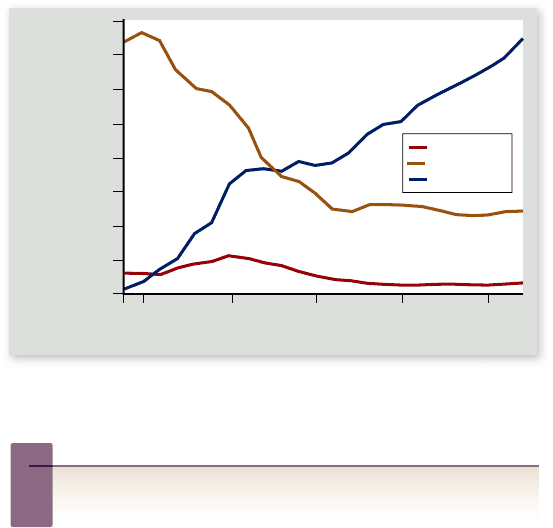
Number of cases
(per 100,000 people)
Syphilis
Gonorrhea
Chlamydia
Year
1985 1990 1995 2000 2005
150
100
50
0
200
250
300
350
400
Gonorrhea
Gonorrhea is one of the most prevalent communicable diseases
in North America. Caused by the bacterium Neisseria gonor-
rhoeae, gonorrhea can be transmitted through sexual inter-
course or any other sexual contact in which body fluids are
exchanged, such as oral or anal intercourse. It can also pass
from mother to baby during delivery through the birth canal.
The incidence of gonorrhea has been on the decline in
the United States, but it remains a serious threat worldwide. Of
particular concern is the appearance of antibiotic-resistant
strains of N. gonorrhoeae.
Syphilis
Syphilis, a very destructive STD, was once prevalent and deadly
but is now less common due to the advent of blood-screening
procedures and antibiotics. Syphilis is caused by a spirochete
bacterium, Treponema pallidum, transmitted during sexual inter-
course or through direct contact with an open syphilis chancre
sore. The bacterium can also be transmitted from a mother to
her fetus, often causing damage to the heart, eyes, and nervous
system of the baby.
Once inside the body, the disease progresses in four dis-
tinct stages. The first, or primary stage, is characterized by the
appearance of a small, painless, often unnoticed sore called a
chancre. The chancre resembles a blister and occurs at the loca-
tion where the bacterium entered the body about three weeks
following exposure. This stage of the disease is highly infectious,
and an infected person may unwittingly transmit the disease to
others. This sore heals without treatment in approximately four
weeks, deceptively indicating a “cure” of the disease, although
the bacterium remains in the body.
The second stage of syphilis, or secondary syphilis, is
marked by a rash, a sore throat, and sores in the mouth. The
bacteria can be transmitted at this stage through kissing or con-
tact with an open sore. Commonly at this point, the disease
enters the third stage, a latent period. This latent stage of syph-
ilis is symptomless and may last for several years. At this point,
the person is no longer infectious, but the bacteria are still pres-
ent in the body, attacking the internal organs.
The final stage of syphilis is the most debilitating, as the
damage done by the bacteria in the third stage becomes evi-
dent. Sufferers at this stage of syphilis experience heart disease,
mental deficiency, and nerve damage, which may include loss of
motor functions or blindness.
Chlamydia
Chlamydia is caused by an unusual bacterium. Chlamydia tracho-
matis is genetically a bacterium but is an obligate intracellular
parasite, much like a virus in this respect. It is susceptible to
antibiotics but it depends on its host to replicate its genetic
material. The bacterium is transmitted through vaginal, anal, or
oral intercourse with an infected person.
Chlamydia is called the “silent STD” because women
usually experience no symptoms until after the infection has
become established. In part because of this symptomless na-
ture, the incidence of chlamydia has skyrocketed, increasing
from 142 cases per 100,000 population in 1988 to 544 cases per
100,000 population in 2007.
Tooth decay, or dental caries, is caused by the bacteria
present in the plaque, which persist especially in places that are
difficult to reach with a toothbrush. Diets that are high in sim-
ple sugars are especially harmful to teeth because certain bacte-
ria, notably Streptococcus sobrinus and S. mutans, ferment the
sugars to lactic acid. This acid production reduces the pH in
the area around the plaque, breaking down the structure of the
hydroxyapatite that makes tooth enamel hard. As the enamel
degenerates, the remaining soft matrix of the tooth becomes
vulnerable to bacterial attack.
Bacteria can cause ulcers
Bacteria can also be the cause of disease states that on the sur-
face appear to have no infectious basis. Peptic ulcer disease is
due to craterlike lesions in the gastrointestinal tract that are
exposed to peptic acid. Ulcers can be caused by drugs, such as
nonsteroidal anti-inflammatory drugs, and also by some tumors
of the pancreas that cause an oversecretion of peptic acid. In
1982, a bacterium named Campylobacter pylori (now named He-
licobacter pylori) was isolated from gastric juices. Over the years
evidence has accumulated that this bacterium is actually the
causative agent in the majority of cases of peptic ulcer disease.
Antibiotic therapy can now eliminate H. pylori, treating
the cause of the disease, and not just the symptoms. The discov-
ery of the action of this bacterial species illustrates how even
disease states that appear to be unrelated to infectious disease
may actually be caused by cryptic (unknown) infection.
Many sexually transmitted
diseases are bacterial
A number of bacteria cause sexually transmitted diseases
(STDs), three particularly important examples of which are
gonorrhea, syphilis, and chlamydia (figure 28.15) .
Figure 28.15
Trends in sexually transmitted diseases in
the United States.
Inquiry question
?
How is it possible for the incidence of one STD (chlamydia) to
rise as another (gonorrhea) falls?
562
part
V
Diversity of Life on Earth
rav32223_ch28_545-566.indd 562rav32223_ch28_545-566.indd 562 11/12/09 4:50:23 PM11/12/09 4:50:23 PM

Apago PDF Enhancer
The effects of an established chlamydia infection on the
female body are extremely serious. Chlamydia can cause pelvic
inflammatory disease (PID), which can lead to sterility and
sometimes death.
It has recently been established that infection of the male
or female reproductive tract by chlamydia can cause heart dis-
ease. Chlamydiae produce a peptide similar to one produced by
cardiac muscle. As the body’s immune system tries to fight off the
infection, it recognizes and reacts to this peptide. The similarity
between the bacterial and cardiac peptides confuses the immune
system, and T cells attack cardiac muscle fibers, inadvertently
causing inflammation of the heart and other problems.
Within the last few years, two types of tests for chlamydia
have been developed. The treatment for the disease is antibiotics,
usually tetracycline, which can penetrate the eukaryotic plasma
membrane to attack the bacterium. Any woman who experiences
the symptoms associated with this STD or who is at risk of de-
veloping an STD should be tested for the presence of the chla-
mydia bacterium; otherwise, her fertility may be at risk.
Learning Outcomes Review 28.6
Many human diseases are due to bacterial infection, including tuberculosis,
streptococcal and staphylococcal infection, and sexually transmitted
diseases. The causative agent of most peptic ulcers is Helicobacter pylori, an
inhabitant of the digestive tract. Bacteria are responsible for many STDs,
including gonorrhea, syphilis, and chlamydia. In many cases symptoms of
infection disappear although the disease is still present, and all can have
serious consequences if untreated, especially for women.
■ Why is infection by most pathogens not fatal?
28.7
Bene cial Prokaryotes
Learning Outcomes
Recognize the role of prokaryotes in the global cycling 1.
of elements.
Describe examples of bacterial/eukaryote symbiosis.2.
Explain how bacteria can be used for bioremediation.3.
Prokaryotes were largely responsible for creating the current
properties of the atmosphere and the soil through billions of
years of their activity. Today, they still affect the Earth and hu-
man life in many important ways.
Prokaryotes are involved in cycling
important elements
Life on Earth is critically dependent on the cycling of chemical
elements between organisms and the physical environments in
which they live—that is, between the living and nonliving ele-
ments of ecosystems. Prokaryotes, algae, and fungi play many
key roles in this chemical cycling, a process discussed in detail
in chapter 58 .
Decomposition
The carbon, nitrogen, phosphorus, sulfur, and other atoms of
biological systems all have come from the physical environ-
ment, and when organisms die and decay, these elements all
return to it. The prokaryotes and fungi that carry out the de-
composition portion of chemical cycles, releasing a dead organ-
ism’s atoms to the environment, are called decomposers.
Fixation
Other prokaryotes play important roles in fixation, the other half
of chemical cycles, helping to return elements from inorganic
forms to organic forms that heterotrophic organisms can use.
Carbon.
The role of photosynthetic prokaryotes in xing
carbon is obvious. The organic compounds that plants, algae,
and photosynthetic prokaryotes produce from CO
2
pass up
through food chains to form the bodies of all the ecosystem’s
heterotrophs. Ancient cyanobacteria are thought to have added
oxygen to the Earth’s atmosphere as a by-product of their pho-
tosynthesis. Modern photosynthetic prokaryotes continue to
contribute to the production of oxygen.
Nitrogen.
Less obvious, but no less critical to life, is the role
of prokaryotes in recycling nitrogen. The nitrogen in the
Earth’s atmosphere is in the form of N
2
gas. A triple covalent
bond links the two nitrogen atoms and is not easy to break.
Among the Earth’s organisms, only a very few species of
prokaryotes are able to accomplish this feat, reducing N
2
to
ammonia (NH
3
), which is used to build amino acids and other
nitrogen-containing biological molecules. When the organ-
isms that contain these molecules die, decomposers return ni-
trogen to the soil as ammonia. This is then converted to nitrate
(NO
3–
) by nitrifying bacteria, making nitrogen available for
plants. The nitrate can also be converted back into molecular
nitrogen by denitri ers that return the nitrogen to the atmo-
sphere, completing the cycle.
To fix atmospheric nitrogen, prokaryotes employ an en-
zyme complex called nitrogenase, encoded by a set of genes
called nif (“nitrogen fixation”) genes. The nitrogenase complex
is extremely sensitive to oxygen and is found in a wide range of
free-living prokaryotes.
In aquatic environments, nitrogen fixation is carried
out largely by cyanobacteria such as Anabaena, which forms
long chains of cells. Because the nitrogen fixation process is
strictly anaerobic, individual cyanobacteria cells may develop
into heterocysts, specialized nitrogen-fixing cells impermeable
to oxygen.
In soil, nitrogen fixation occurs in the roots of plants that
harbor symbiotic colonies of nitrogen-fixing bacteria. These
associations include Rhizobium (a genus of proteobacteria; see
figure 28.5) with legumes, Frankia (an actinomycete) with many
woody shrubs, and Anabaena with water ferns.
Prokaryotes may live in symbiotic
associations with eukaryotes
Many prokaryotes live in symbiotic association with eukaryotes.
Symbiosis refers to the ecological relationship between different
species that live in direct contact with each other. The symbiotic
chapter
28
Prokaryotes
563www.ravenbiology.com
rav32223_ch28_545-566.indd 563rav32223_ch28_545-566.indd 563 11/12/09 4:50:23 PM11/12/09 4:50:23 PM
Apago PDF Enhancer
association of nitrogen-fixing bacteria with plant roots is an ex-
ample of mutualism, a form of symbiosis in which both parties
benefit. The bacteria supply the plant with useful nitrogen, and
the plant supplies the bacteria with sugars and other organic nu-
trients (see chapter 39).
Many bacteria live symbiotically within the digestive tracts
of animals, providing nutrients to their hosts. Cattle and other
grazing mammals are unable to digest cellulose in the grass and
plants they eat because they lack the required cellulase enzyme.
Colonies of cellulase-producing bacteria inhabiting the gut al-
low cattle to digest their food (see chapter 48 for a fuller ac-
count). Similarly, humans maintain large colonies of bacteria in
the large intestine that produce vitamins—particularly B
12
and
K—that the body cannot make.
Many bacteria inhabit the outer surfaces of animals and
plants without doing damage. These associations are examples
of commensalism, in which one organism (the bacterium) re-
ceives benefits while the animal or plant is neither benefited
nor harmed.
Parasitism is a form of symbiosis in which one member (in
this case, the bacterium) benefits, and the other (the infected
animal or plant) is harmed. Infection might be considered a
form of parasitism.
Bacteria are used in genetic engineering
Because the genetic code is universal, a gene from a human can
be inserted into a bacterial cell, and the bacterium produces a
human protein. The use of bacteria in genetic engineering was
discussed in chapter 17, and it is a large part of modern molecu-
lar biology.
In addition to the production of pharmaceutical agents
such as insulin, discussed in chapter 17, applying genetic engi-
neering methods to produce improved strains of bacteria for
commercial use holds promise for the future. Bacteria are now
widely used as “biofactories” in the commercial production of a
variety of enzymes, vitamins, and antibiotics. Immense cultures
of bacteria, often genetically modified to enhance performance,
are used to produce commercial acetone and other industrially
important compounds.
Bacteria can be used for bioremediation
The use of organisms to remove pollutants from water, air, and
soil is called bioremediation. The normal functioning of sewage
treatment plants depends on the activity of microorganisms. In
sewage treatment plants, the solid matter from raw sewage is
broken down by bacteria and archaea naturally present in the
sewage. The end product, methane gas (CH
4
) is often used as
an energy source to heat the treatment plant.
Biostimulation, that is, the addition of nutrients such as
nitrogen and phosphorus sources, has been used to encourage
the growth of naturally occurring microbes that can degrade
crude oil spills. This approach was used successfully to clean up
the Alaskan shoreline after the crude oil spill of the Exxon Val-
dez in 1998 . Similarly, biostimulation has been used to encour-
age the growth of naturally occurring microbial flora in
contaminated groundwater. Current efforts include those con-
centrated on the use of endogenous microbes such as Geobacter
(see figure 28.5) to eliminate radioactive uranium from ground-
water contaminated during the cold war.
Chlorinated compounds released into the environment
by a variety of sources are another serious pollutant. Some bac-
teria can actually use these compounds for energy by perform-
ing reductive dehalogenation that is linked to electron transport,
a process termed halorespiration. Although still at the develop-
ment stage, the use of such bacteria to remove halogenated
compounds from toxic waste holds great promise.
Learning Outcomes Review 28.7
Prokaryotes are vital to ecosystems for both recycling elements and fi xation,
or making elements available in organic form. Bacteria are involved in
fi xation of both carbon and nitrogen and are the only organisms that can fi x
nitrogen. These nitrogen-fi xing bacteria may live in symbiotic association
with plants. Bacteria are a key component of waste treatment, and they are
also being used in bioremediation to remove toxic compounds introduced
into the environment.
■ Does the information about nitrogen fixation shed any
light on the practice of crop rotation?
Some hydrocarbons found in ancient rocks may have biological origins.
Biomarkers such as lipids indicate that cyanobacteria are at least
2.7 billion years old.
28.2 Prokaryotic Diversity
Prokaryotes are fundamentally di erent from eukaryotes.
Prokaryotic features include unicellularity, small circular DNA,
division by binary ssion, lack of internal compartmentalization, a
singular agellum, and metabolic diversity.
28.1 The First Cells
Microfossils indicate that the rst cells were probably prokaryotic.
The oldest microfossils are 3.5 billion years old. Stromatolites, a
combination of sedimentary deposits and precipitated materials, are
as old as 2.7 billion years.
Isotopic data indicate that carbon xation is an ancient process.
Relatively higher levels of carbon-12 in fossils compared with
neighboring rocks indicate the action of ancient carbon xation.
Chapter Review
564
part
V
Diversity of Life on Earth
rav32223_ch28_545-566.indd 564rav32223_ch28_545-566.indd 564 11/12/09 4:50:24 PM11/12/09 4:50:24 PM
Apago PDF Enhancer
Despite similarities, bacteria and archaea di er fundamentally.
Bacteria and archaea differ in four key areas: plasma membranes, cell
walls, DNA replication, and gene expression.
Archaeal lipids have ether instead of ester linkages and can
form tetraether monolayers. The cell walls of bacteria contain
peptidoglycans, but those of archaea do not.
Both bacteria and archaea DNA have a single replication origin,
but the origin and the replication proteins are different. Archaeal
initiation of DNA replication and RNA polymerases are more like
those of eukaryotes.
Most prokaryotes have not been characterized.
Nine clades of prokaryotes have been found so far, but many bacteria
have not been studied (see gure 28.5 ) .
28.3 Prokaryotic Cell Structure
Prokaryotes have three basic forms: rods, cocci, and spirals.
Prokaryotes have a tough cell wall and other external structures.
Bacteria are classi ed as gram-positive or gram-negative based on
the Gram stain (see gure 28.6 ). Gram-positive bacteria have a thick
peptidoglycan layer in the cell wall that contains teichoic acid (see
gure 28.7). Gram-negative bacteria have a thin peptidoglycan layer
and an outer membrane containing lipopolysaccharides in their cell
wall (see gure 28.7).
Some bacteria have a gelatinous layer, the capsule, enabling the
bacterium to adhere to surfaces and evade an immune response.
Many bacteria have a slender, rigid, helical agellum composed of agellin,
which can rotate to drive movement (see gure 28.8). Some bacteria
have hairlike pili that have roles in adhesion and exchange of genetic
information.
Some bacteria form highly resistant endospores in response
to environmental stress.
The interior of prokaryotic cells is organized.
In prokaryotes, invaginated regions of the plasma membrane function
in respiration and photosynthesis. The nucleoid region contains a
compacted circular DNA with no bounding membrane.
Prokaryotic ribosomes are smaller than those of eukaryotes and some
antibiotics work by binding to these ribosomes, blocking protein
synthesis.
28.4 Prokaryotic Genetics
Conjugation depends on the presence of a conjugative plasmid.
DNA can be exchanged by conjugation (see gure 28.10), which
depends on the presence of conjugative plasmids like the F plasmid
in E coli. The F
+
donor cell transfers the F plasmid to the
F
–
recipient cell.
The F plasmid can also integrate into the bacterial genome. Excision
may be imprecise, so that the F plasmid carries genetic information
from the host.
Viruses transfer DNA by transduction (see gure 28.13).
Generalized transduction occurs when viruses package host DNA
and transfer it on subsequent infection. Specialized transduction is
limited to lysogenic phage.
Transformation is the uptake of DNA directly from the environment
(see gure 28.14).
Transformation occurs when cells take up DNA from the
surrounding medium. It can be induced arti cially in the laboratory.
Antibiotic resistance can be transferred by resistance plasmids.
R plasmids have played a signi cant role in the appearance of strains
resistant to antibiodies, such as S. aureus and E. coli O157:H7.
Variation can also arise by mutation.
Mutations can occur spontaneously in bacteria due to radiation, UV,
and various chemicals.
28.5 Prokaryotic Metabolism
Prokaryotes acquire carbon and energy in four basic ways.
Photoautotrophs carry out photosynthesis and obtain carbon from
carbon dioxide. Chemolithoautotrophs obtain energy by oxidizing
inorganic substances. Photoheterotrophs use light for energy but
obtain carbon from organic molecules. Chemoheterotrophs, the
largest group, obtain carbon and energy from organic molecules.
Some bacteria can attack other cells directly.
Some bacteria release proteins through their cell walls, and these
proteins may transfer other, virulent proteins into eukaryotic cells.
Bacteria are costly plant pathogens.
Gram-negative bacteria known as pseudomonads are responsible for
most plant diseases.
28.6 Human Bacterial Disease (see table 28.1)
Bacterial diseases are spread through mucus or saliva droplets,
contaminated food and water
, and insect vectors.
Tuberculosis has infected humans for all of recorded history.
Tuberculosis continues to be a major public health problem.
Treatment requires a long course of antibiotics.
Bacterial bio lms are involved in tooth decay.
Bacteria can cause ulcers.
Most stomach ulcers are caused by infection with Helicobacter pylori.
Many sexually transmitted diseases are bacterial.
The potentially dangerous sexually transmitted diseases gonorrhea,
syphilis, and chlamydia are caused by bacteria.
28.7 Bene cial Prokaryotes
Prokaryotes are involved in cycling important elements.
Prokaryotes are involved in the recycling of carbon and nitrogen;
only bacteria can x nitrogen.
Prokaryotes may live in symbiotic associations with eukaryotes.
Bacteria are used in genetic engineering.
Genetically engineered prokaryotes can be used to produce human
pharmaceutical agents and other useful products.
Bacteria can be used for bioremediation.
chapter
28
Prokaryotes
565www.ravenbiology.com
rav32223_ch28_545-566.indd 565rav32223_ch28_545-566.indd 565 11/12/09 4:50:24 PM11/12/09 4:50:24 PM

Apago PDF Enhancer
b. a target for antibiotics that affect peptidoglycan synthesis.
c. composed of peptidoglycan.
d. surrounded by a membrane.
4. The three domains of life
a. represent variations of the same basic cell type.
b. include two different basic cell types.
c. consist of three different basic cell types.
d. describe current cells but say nothing about their history.
5. Ulcers and tooth decay do not appear related, but in fact both
a. are due to eating particular kinds of foods.
b. are caused by viral infection.
c. are caused by environmental factors.
d. can be due to bacterial infection.
6. Bacteria lack independent internal membrane systems, but are able
to perform photosynthesis and respiration, both of which use
membranes. They are able to perform these functions because
a. they actually have internal membranes, but only
for these functions.
b. invaginations of the plasma membrane can provide
an internal membrane surface.
c. they take place outside of the cell between the membrane
and the cell wall.
d. they use protein-based structures to take the place of
internal membraes.
7. Plants cannot x nitrogen, yet some plants do not need nitrogen
from the soil. This is because
a. of a symbiotic association with a bacterium that can
x nitrogen.
b. these plants are the exceptions that can x nitrogen.
c. they have been infected by a parasitic virus that can
x nitrogen.
d. they are able to obtain nitrogen from the air.
S Y N THES IZE
1. If a new form of carbon xation was discovered that was
not biased toward carbon-12, would this affect our analysis
of the earliest evidence for life?
2. Frederick Grif th’s experiments (see chapter 14) played an
important role in showing that DNA is the genetic material.
Grif th showed that dead virulent bacteria mixed with live
nonvirulent bacteria could cause pneumonia in mice. Live rough
bacteria could also be cultured from the infected mice. The
difference between the two strains is a polysaccharide capsule
found in the smooth strain. Given what you have learned in this
chapter, how would you explain these observations?
3. In the 1960s, it was common practice to prescribe multiple
antibiotics to ght bacterial infections. It is also often the case that
patients do not always take the entire “course” of their antibiotics.
Antibiotic resistance genes are often found on conjugative
plasmids. How do these factors affect the evolution of antibiotic
resistance and of resistance to multiple antibiotics in particular?
4. Soil-based nitrogen- xing bacteria appear to be highly
vulnerable to exposure to UV radiation. Suppose that the ozone
level continues to be depleted, what are the long-term effects
on the planet?
U N DERS TAN D
1. Which of the following would be an example of a biomarker?
a. A microfossil found in a meteorite
b. A hydrocarbon found in an ancient rock layer
c. An area that is high in carbon-12 concentration in a rock layer
d. A newly discovered formation of stromatolites
2. A cell that can use energy from the sun, and CO
2
as a carbon
source is a
a. photoautotroph. c. photoheterotroph.
b. chemoautotroph. d. chemoheterotroph.
3. Gram-positive (+) and gram-negative (–) bacteria are characterized
by differences in
a. the cell wall: gram+ have peptidoglycan, gram– have
pseudo-peptidoglycan.
b. the plasma membrane: gram+ have ester-linked lipids,
gram– have ether-linked lipids.
c. the cell wall: gram+ have a thick layer of peptidoglycan and
gram– have an outer membrane.
d. chromosomal structure: gram+ have circular chromosomes,
gram– have linear chromosomes.
4. Which of the following characteristics is unique to the archaea?
a. A uid mosaic model of plasma membrane structure
b. The use of an RNA polymerase during gene expression
c. Ether-linked phospholipids
d. A single origin of DNA replication
5. The horizontal transfer of DNA using a plasmid is an example of
a. generalized transduction.
b. binary ssion.
c. transformation.
d. conjugation.
6. The disease tuberculosis is
a. caused by a bacterial pathogen.
b. an emerging disease that is now worldwide.
c. caused by a viral pathogen.
d. not treatable with antibiotics.
7. Prokaryotes participate in the global cycling of
a. proteins and nucleic acids.
b. carbon and nitrogen.
c. carbohydrates and lipids.
d. all of the above.
APPLY
1. Which of the following is typically not associated with a prokaryote?
a. Horizontal transfer of genetic information
b. A lack of internal compartmentalization
c. Multiple, linear chromosomes
d. A cell size of 1 μm
2. The mechanisms of DNA exchange in prokaryotes share the
feature of
a. vertical transmission of information.
b. horizontal transfer of information.
c. requiring cell contact.
d. the presence of a plasmid in one cell.
3. The cell wall in both gram-positive and gram-negative cells is
a. composed of phospholipids.
Review Questions
566
part
V
Diversity of Life on Earth
rav32223_ch28_545-566.indd 566rav32223_ch28_545-566.indd 566 11/12/09 4:50:24 PM11/12/09 4:50:24 PM
Apago PDF Enhancer
F
500
μ
m
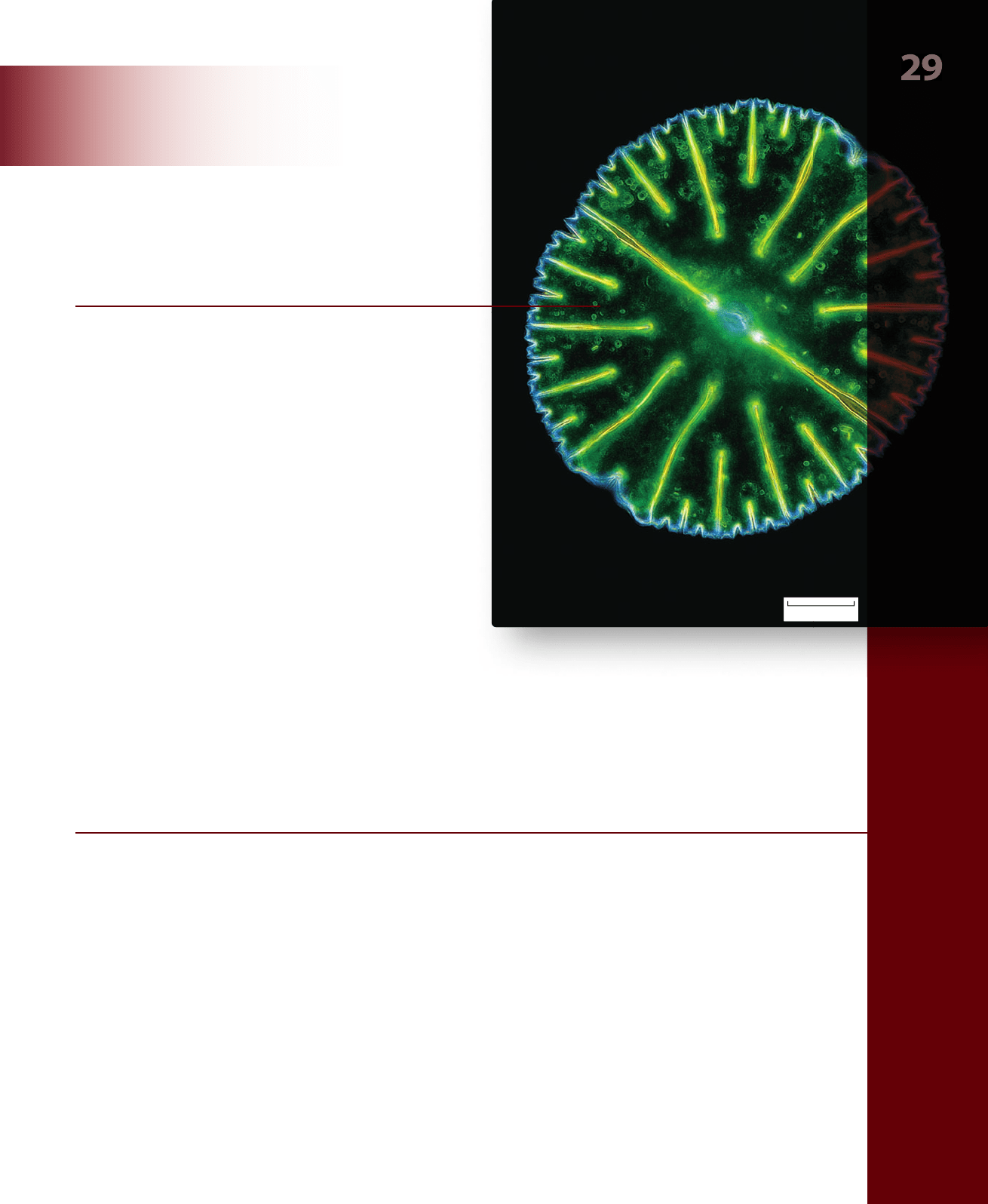
Chapter
29
Protists
Chapter Outline
2 9 . 1 Eukaryotic Origins and Endosymbiosis
29.2 De ning Protists
29.3 Diplomonads and Parabasalids:
Flagellated Protists Lacking Mitochondria
29.4 Euglenozoa: A Diverse Group in Which Some
Members Have Chloroplasts
29.5 Alveolata: Protists with Submembrane Vesicles
29.6 Stramenopila: Protists with Fine Hairs
29.7 Rhodophyta: Red Algae
29.8 Choano agellida: Possible Animal Ancestors
29.9 Protists Without a Clade
Introduction
For more than half of the long history of life on Earth, all life was microscopic. The biggest organisms that existed for over
2 billion years were single-celled bacteria fewer than 6 μm thick. These prokaryotes lacked internal membranes, except for
invaginations of surface membranes in photosynthetic bacteria.
The first evidence of a different kind of organism is found in tiny fossils in rock 1.5 billion years old. These fossil cells
are much larger than bacteria (up to 10 times larger) and contain internal membranes and what appear to be small,
membrane-bounded structures. The complexity and diversity of form among these single cells is astonishing. The step from
relatively simple to quite complex cells marks one of the most important events in the evolution of life, the appearance of a
new kind of organism, the eukaryote . Eukaryotes that are clearly not animals, plants, or fungi have been lumped together
and called protists.
CHAPTER
rav32223_ch29_567-587.indd 567rav32223_ch29_567-587.indd 567 11/13/09 11:33:20 AM11/13/09 11:33:20 AM
Apago PDF Enhancer
50 µm
Prokaryotic cell
Prokaryotic ancestor
of eukaryotic cells
Eukaryotic cell
DNA
Plasma membrane
Infolding of the
plasma membrane
Endoplasmic reticulum (ER)
Nuclear
envelope
Nucleus
Plasma membrane
In the sections that follow, the origins of eukaryotic inter-
nal structure are considered. Keep in mind that, as discussed in
chapter 24 , horizontal gene transfer occurred frequently while
eukaryotic cells were evolving. Eukaryotic cells evolved not
only through horizontal gene transfer, but through infolding of
membranes and engulfing other cells. Today’s eukaryotic cell is
the result of cutting and pasting of DNA and organelles from
different species.
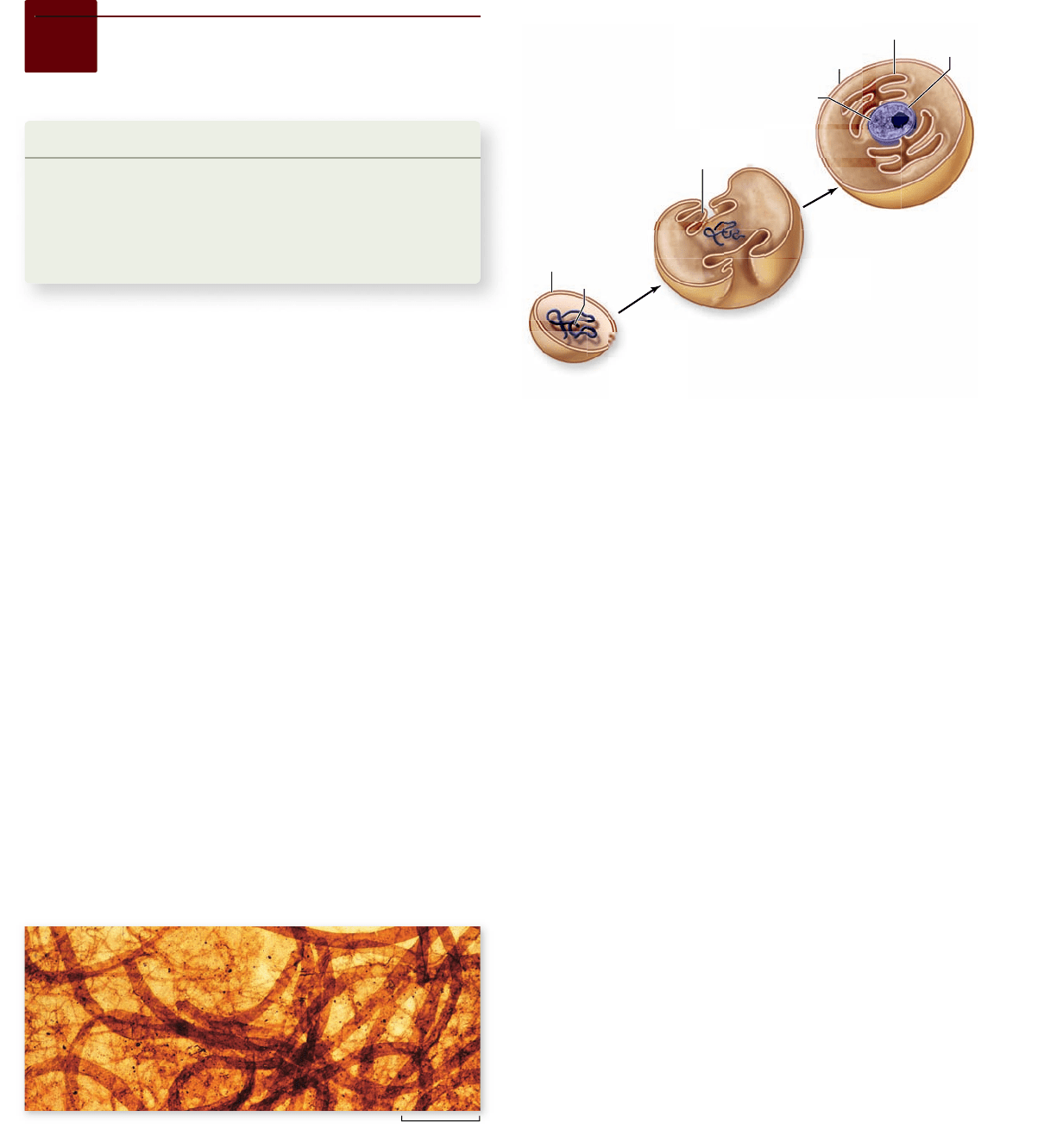
The nucleus and ER arose
from membrane infoldings
Many prokaryotes have infoldings of their outer membranes
extending into the cytoplasm that serve as passageways to the
surface. The network of internal membranes in eukaryotes is
called the endoplasmic reticulum (ER), and the nuclear enve-
lope, an extension of the ER network that isolates and protects
the nucleus, is thought to have evolved from such infoldings
(figure 29.2) .
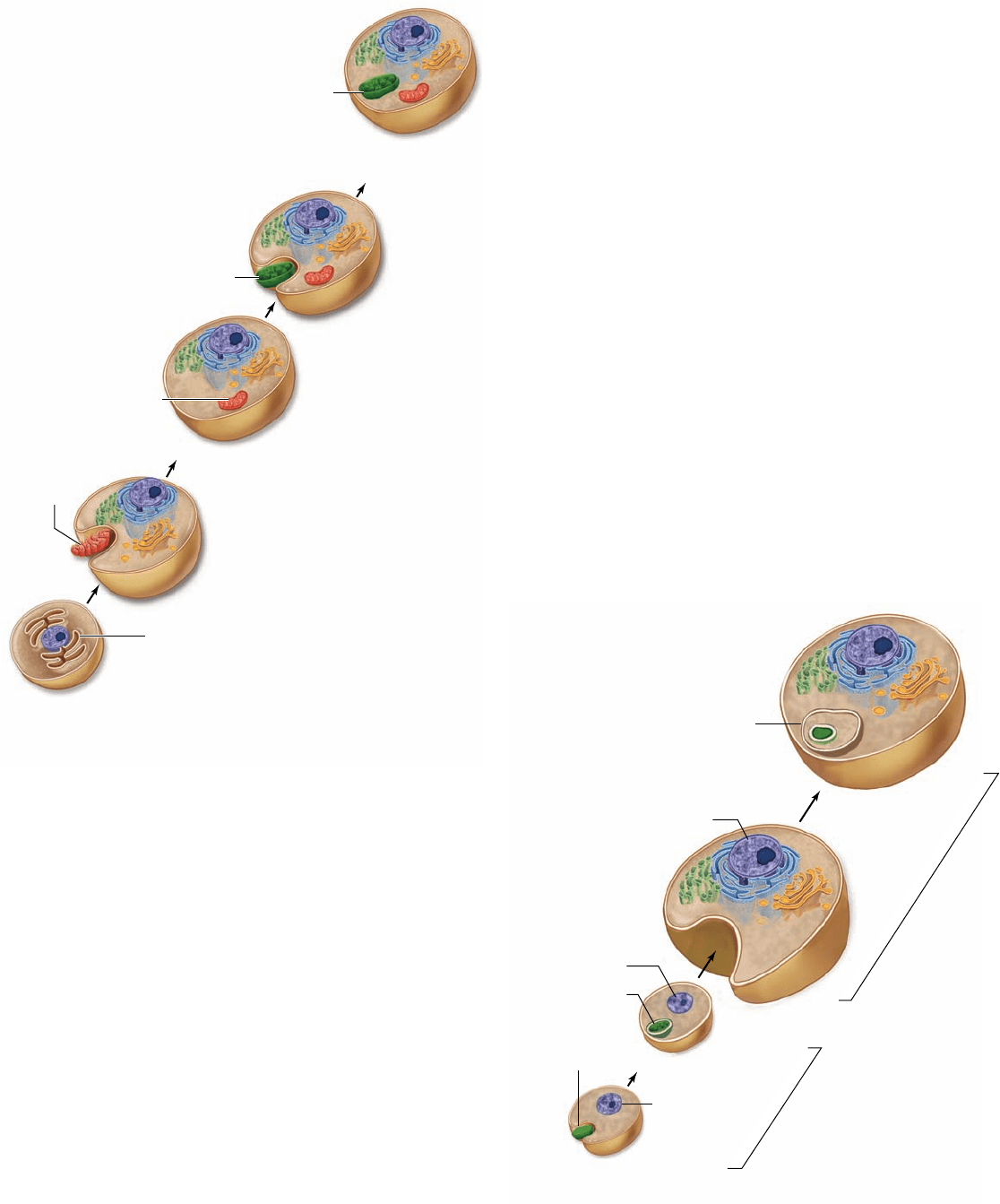
Mitochondria evolved from
engulfed aerobic bacteria
Bacteria that live within other cells and perform specific
functions for their host cells are called endosymbiotic bacteria.
Their widespread presence in nature led biologist Lynn
Margulis in the early 1970s to champion the theory of en-
dosymbiosis, which was first proposed by Konstantin
29.1
Eukaryotic Origins
and Endosymbiosis
Learning Outcomes
List the defining features of eukaryotes.1.
Define endosymbiosis and explain how it relates to the 2.
evolution of mitochondria and chloroplasts.
Explain why mitosis is not believed to have evolved all 3.
at once.
Eukaryotic cells are distinguished from prokaryotes by the
presence of a cytoskeleton and compartmentalization that in-
cludes a nuclear envelope and organelles. The exact sequence
of events that led to large, complex eukaryotic cells is un-
known, but several key events are agreed upon. Loss of a rigid
cell wall allowed membranes to fold inward, increasing sur-
face area. Membrane flexibility also made it possible for one
cell to engulf another.
Fossil evidence dates
the origins of eukaryotes
Indirect chemical traces hint that eukaryotes may go as far back
as 2.7 billion years, but no fossils as yet support such an early
appearance. In rocks about 1.5 billion years old, we begin to see
the first microfossils that are noticeably different in appearance
from the earlier, simpler forms, none of which were more than
6 μm in diameter (figure 29.1) . These cells are much larger
than those of prokaryotes and have internal membranes and
thicker walls.
These early fossils mark a major event in the evolution
of life: A new kind of organism had appeared. These new
cells are called eukaryotes, from the Greek words meaning
“true nucleus,” because they possess an internal structure
called a nucleus. All organisms other than prokaryotes
are eukaryotes.
Figure 29.1
Early eukaryotic fossil. Fossil algae that lived
in Siberia 1 bya .
Figure 29.2
Origin of the nucleus and endoplasmic
reticulum.
Many prokaryotes today have infoldings of the plasma
membrane (see also gure 27.6 ). The eukaryotic internal membrane
system, called the endoplasmic reticulum (ER), and the nuclear
envelope may have evolved from such infoldings of the plasma
membrane, encasing the DNA of prokaryotic cells that gave rise to
eukaryotic cells.
568
part
V
Diversity of Life on Earth
rav32223_ch29_567-587.indd 568rav32223_ch29_567-587.indd 568 11/13/09 11:33:25 AM11/13/09 11:33:25 AM
Apago PDF Enhancer
Ancestral
eukaryotic cell
Eukaryotic cell with mitochondrion
Chloroplast
Eukaryotic cell with chloroplast
and mitochondrion
Endosymbiosis
Endosymbiosis
Photosynthetic bacterium
Mitochondrion
Aerobic
bacterium
Internal membrane system
Eukaryotic cell
Nucleus
Red algal nucleus lost
Cyanobacteria
Red alga
Eukaryotic cell
Brown alga
Nucleus
Chloroplast
with two
membranes
Nucleus
Organelle with
four membranes
Primary
Endosymbiosis
Secondary
Endosymbiosis
Mereschkowsky in 1905. Endosymbiosis means living to-
gether in close association.
Endosymbiosis, a concept that is now widely accepted,
suggests that a critical stage in the evolution of eukaryotic
cells involved endosymbiotic relationships with prokaryotic
organisms. According to this theory, energy-producing bac-
teria may have come to reside within larger bacteria, eventu-
ally evolving into what we now know as mitochondria
(figure 29.3 ). Possibly the original host cell was anaerobic
with hydrogen-dependent metabolic pathways. The symbi-
ont had a form of respiration that produced H
2
. The host
depended on the symbiont for H
2
under anaerobic conditions
and was able later to adapt to an O
2
-rich atmosphere using
the symbiont’s respiratory pathways.
Chloroplasts evolved from engulfed
photosynthetic bacteria
Photosynthetic bacteria may have come to live within other
larger bacteria, leading to the evolution of chloroplasts, the
photosynthetic organelles of plants and algae (see figure 29.3).
The history of chloroplast evolution is an example of the
care that must be taken in phylogenetic studies. All chloro-
plasts are likely derived from a single line of cyanobacteria,
but the organisms that host these chloroplasts are not
monophyletic. This apparent paradox is resolved by consid-
ering the possibility of secondary, and even tertiary endo-
symbiosis. Figure 26.8 explains how red and green algae
both obtained their chloroplasts by engulfing photosyn-
thetic cyanobacteria. The brown algae most likely obtained
their chloroplasts by engulfing one or more red algae, a
process called secondary endosymbiosis (figure 29.4) . (As
mentioned, green algae are considered in the following
chapter even though they are protists.)
A phylogenetic tree based only on chloroplast gene se-
quences from red and green algae reveals an incredibly close
evolutionary relationship. This tree is misleading, however,
because it is not possible to tell just from these data how
Figure 29.3
The theory of endosymbiosis.
Scientists
propose that ancestral eukaryotic cells, which already had an
internal system of membranes, engulfed aerobic bacteria, which
then became mitochondria in the eukaryotic cell. Chloroplasts
also originated this way, with eukaryotic cells engul ng
photosynthetic bacteria.
Figure 29.4
Endosymbiotic origins of chloroplasts in
red and brown algae.
chapter
29
Protists
569www.ravenbiology.com
rav32223_ch29_567-587.indd 569rav32223_ch29_567-587.indd 569 11/13/09 11:33:28 AM11/13/09 11:33:28 AM
Apago PDF Enhancer
Bacteria Archaea
Diplomonads,
Parabasalids
Euglenozoa Alveolata Stramenopila Rhodophyta
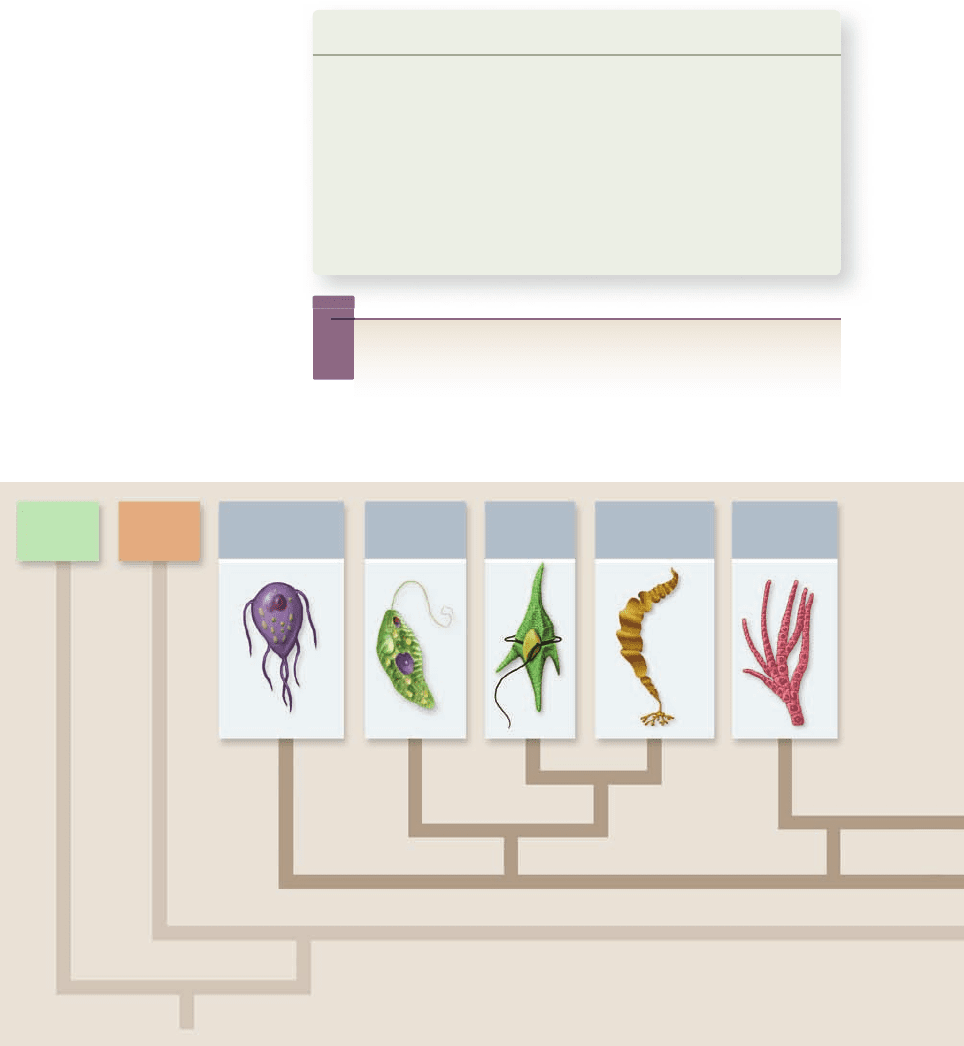
much the two algal lines had diverged at the time they en-
gulfed the same line of cyanobacteria. Morphological and
chemical traits are more helpful than chloroplast gene se-
quences in sorting out red and green algal relations. More
data and analyses are still needed to confirm the position of
red algae in figure 29.5.
Endosymbiosis is supported
by a range of evidence
The fact that we now witness so many symbiotic relation-
ships lends general support to the endosymbiotic theory.
Even stronger support comes from the observation that
present-day organelles such as mitochondria and chloro-
plasts contain their own DNA, which is remarkably similar
to the DNA of bacteria in size and character. During the
billion and a half years in which mitochondria have existed
as endosymbionts within eukaryotic cells, most of their
genes have been transferred to the chromosomes of the host
cells—but not all. Each mitochondrion still has its own ge-
nome, a circular, closed molecule of DNA similar to that
found in bacteria, on which are located genes encoding the
essential proteins of oxidative metabolism. These genes are
transcribed within the mitochondrion, using mitochondrial
ribosomes that are smaller than those of eukaryotic cells,
very much like bacterial ribosomes in size and structure.
Many antibiotics that inhibit protein synthesis in bacteria
also inhibit protein synthesis in mitochondria and chloro-
plasts, but not in the cytoplasm. Chloroplasts and mito-
chondria replicate via binary fission, not mitosis, further
supporting bacterial origins.
Mitosis evolved in eukaryotes
The mechanisms of mitosis and cytokinesis, now so common
among eukaryotes, did not evolve all at once. Traces of very differ-
ent, and possibly intermediate, mechanisms survive today in some
of the eukaryotes. In fungi and in some groups of protists, for
example, the nuclear membrane does not dissolve, as it does in
plants, animals, and most other protists, and mitosis is confined to
the nucleus. When mitosis is complete in these organisms, the
nucleus divides into two daughter nuclei, and only then does the
rest of the cell divide. We do not know whether mitosis without
nuclear membrane dissolution represents an intermediate step on
the evolutionary journey, or simply a different way of solving the
same problem. We cannot see the interiors of dividing cells well
enough in fossils to be able to trace the history of mitosis.
Learning Outcomes Review 29.1
Eukaryotes are organisms that contain a nucleus and other membrane-
bounded organelles. Endoplasmic reticulum and the nuclear membrane are
believed to have evolved from infoldings of the outer membranes. According
to the endosymbiont theory, mitochondria and chloroplasts evolved from
engulfed bacteria that remained intact. Mitochondria, chloroplasts, and
centrioles have their own DNA, which is similar to that of prokaryotes. Mitosis
did not evolve all at once; diff erent mechanisms persist in diff erent organisms.
■ What evidence supports the endosymbiont theory?
Inquiry question
?
How could you distinguish between primary and secondary
endosymbiosis by looking at micrographs of cells with
chloroplasts?
Figure 29.5
The
challenge of protistan
classi cation.
Our
understanding of the
evolutionary relationships
among protists is currently
in ux. The most recent data
support seven major,
monophyletic groups within
the protists. Consider this a
working model, not fact. The
green algae (Chlorophyta)
are not truly monophyletic
in that another branch,
Streptophyta, gave rise to
the land plants. Protist
lineages are shaded in blue.
570
part
V
Diversity of Life on Earth
rav32223_ch29_567-587.indd 570rav32223_ch29_567-587.indd 570 11/13/09 11:33:29 AM11/13/09 11:33:29 AM

Apago PDF Enhancer
Streptophyta
(Includes
Land Plants)
Fungi Animals Choanoflagellida Chlorophyta
isms have typically been grouped together and called protists.
This lumps 200,000 different and only distantly related forms
together. The “single-kingdom” classification of the Protista is
artificial and not representative of any evolutionary relation-
ships. You may be wondering why biologists continue to refer
to the protista as a kingdom and why we have a chapter devoted
to the protists. While we wait for the evolutionary relationships
among protists to be sorted out, lumping the protists together
allows us to explore the biology of a number of fascinating
eukaryotes that might otherwise disappear from the pages of
your textbook.
Monophyletic clades have been
identi ed among the protists
Applications of a variety of molecular methods are providing
insights into the relationships among protists. Many questions
about how to classify the protists are being addressed with these
techniques. Are protists best considered as several different
kingdoms, each of equal rank with animals, plants, and fungi?
Are some of the protists actually members of other kingdoms?
While these questions continue to be debated, new information
is becoming available concerning which organisms among the
protists are most likely to be monophyletic.
In this chapter, we group the 15 major protist phyla into
seven major monophyletic groups, based on our current under-
standing of phylogeny (figure 29.5). Although these lineages
may change, this approach allows us to examine groups with
many shared traits. Keep in mind that about 60 of the protist
lineages cannot yet be placed on the tree of life with any confi-
dence! Protists exemplify the challenges and excitement of the
revolutionary changes in taxonomy and phylogeny we explored
in chapter 26 . Understanding the evolution of protists is key to
understanding the origins of plants, fungi, and animals.
Because green algae and land plants form a monophyletic
clade, the green algae are explored in more detail in the follow-
ing chapter on plant diversity. The characteristics of green al-
gae and land plants are best understood when considered in
concert because of their shared evolutionary history. The re-
maining six monophyletic clades that are loosely called protists
are examined in this chapter.
Protist cell surfaces vary widely
Protists possess a varied array of cell surfaces. Some protists,
such as amoebas, are surrounded only by their plasma mem-
brane. All other protists have a plasma membrane with an ex-
tracellular matrix (ECM) deposited on the outside of the
membrane. Some ECMs form strong cell walls; for instance,
diatoms and foraminifera secrete glassy shells of silica.
Many protists with delicate surfaces are capable of surviv-
ing unfavorable environmental conditions. How do they man-
age to survive so well? They form cysts, which are dormant
forms with resistant outer coverings in which cell metabolism is
more or less completely shut down. Not all cysts are so sturdy,
however. Vertebrate parasitic amoebas, for example, form cysts
that are quite resistant to gastric acidity, but will not tolerate
desiccation or high temperature.
29.2
De ning Protists
Learning Outcomes
Describe the feature that distinguishes protists from 1.
other eukaryotes.
Define monophyletic.2.
Describe the various kinds of protist cell surfaces. 3.
List the two main means of locomotion used by protists.4.
Distinguish between phototrophs, phagotrophs, 5.
and osmotrophs.
Protists are the most diverse of the four kingdoms in the domain
Eukarya. Protists are united on the basis of a single negative
characteristic: They are eukaryotes that are not fungi, plants, or
animals. In all other respects, they vary considerably, with no
uniting features. Many are unicellular, but numerous colonial
and multicellular groups also exist. Most are microscopic, but
some are as large as trees. They represent all symmetries and
exhibit all types of nutrition. The origin of eukaryotes, which
began with ancestral protists, is among the most significant
events in the evolution of life.
Protista is not monophyletic
One of the most important statements we can make about the
kingdom Protista is that it is paraphyletic and not a kingdom at
all; as a matter of convenience, single-celled eukaryotic organ-
chapter
29
Protists
571www.ravenbiology.com
rav32223_ch29_567-587.indd 571rav32223_ch29_567-587.indd 571 11/13/09 11:33:30 AM11/13/09 11:33:30 AM