
Raven P.H., Johnson G.B., Mason K.A. Biology (Ninth Edition)
Подождите немного. Документ загружается.

Apago PDF Enhancer
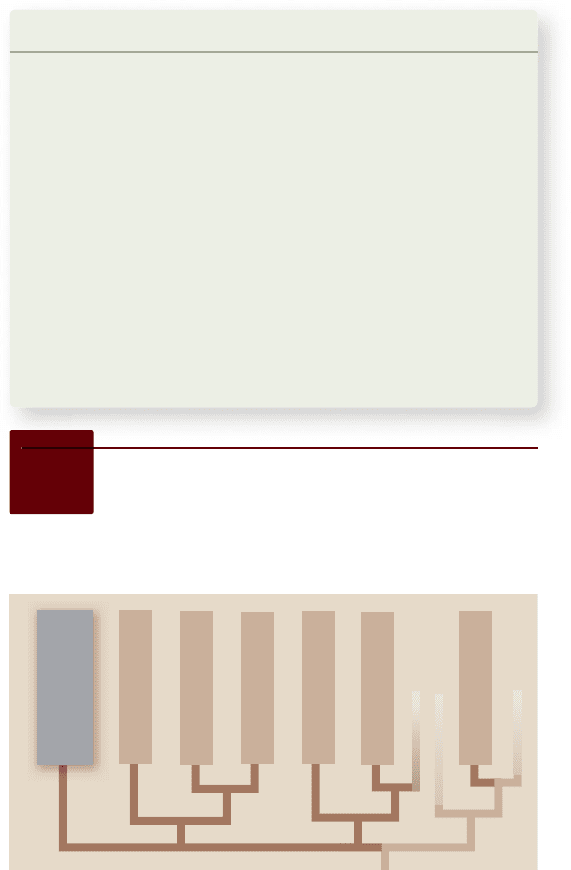
Diplomonadia,
Parabasalida
Euglenozoa
Choanoflagellida
Alveolata
Stramenopila
Rhodophyta
Chlorophyta
Protists have several means of locomotion
Movement in protists is also accomplished by diverse mecha-
nisms. Protists move chiefly by either flagellar rotation or pseu-
dopodial movement. Many protists wave one or more flagella to
propel themselves through the water, and others use banks of
short, flagella-like structures called cilia to create water currents
for their feeding or propulsion. Pseudopods (Greek, meaning
“false feet”) are the chief means of locomotion among amoebas,
whose pseudopods are large, blunt extensions of the cell body
called lobopodia. Other related protists extend thin, branching
protrusions called filopodia. Still other protists extend long, thin
pseudopods called axopodia supported by axial rods of microtu-
bules. Axopodia can be extended or retracted. Because the tips can
adhere to adjacent surfaces, the cell can move by a rolling motion,
shortening the axopodia in front and extending those in the rear.
Protists have a range of nutritional strategies
Protists can be heterotrophic or autotrophic. Some autotrophic
protists are photosynthetic and are called phototrophs . Others
are heterotrophs that obtain energy from organic molecules
synthesized by other organisms.
Among the heterotrophic protists are some called
phago trophs, which ingest visible particles of food by pulling
them into intracellular vesicles called food vacuoles or phago-
somes . Lysosomes fuse with the food vacuoles, introducing en-
zymes that digest the food particles within. Digested molecules
are absorbed across the vacuolar membrane.
Protists that ingest food in soluble form are called
osmo trophs. Another example of the protists’ tremendous nutri-
tional flexibility is seen in mixo trophs, protists that are both
phototrophic and heterotrophic.
Protists reproduce asexually and sexually
Protists typically reproduce asexually, although some have an
obligate sexual reproductive phase and others undergo sexual
reproduction at times of stress, including food shortages.
Asexual reproduction
Asexual reproduction involves mitosis, but the process often
differs from the mitosis in multicellular animals. For example,
the nuclear membrane often persists throughout mitosis, with
the microtubular spindle forming within it.
In some species, a cell simply splits into nearly equal
halves after mitosis. Sometimes the daughter cell is consid-
erably smaller than its parent and then grows to adult size—
a type of cell division called budding. In schizogony, common
among some protists, cell division is preceded by several
nuclear divisions. This allows cytokinesis to produce several
individuals almost simultaneously.
Sexual reproduction
Most eukaryotic cells also possess the ability to reproduce sexu-
ally, something prokaryotes cannot do at all. Meiosis (see
chapter 11 ) is a major evolutionary innovation that arose in an-
cestral protists and allows for the production of haploid cells
from diploid cells. Sexual reproduction is the process of pro-
ducing offspring by fertilization, the union of two haploid cells.
The great advantage of sexual reproduction is that it allows for
frequent genetic recombination, which generates the variation
that is the starting point of evolution. Not all eukaryotes repro-
duce sexually, but most have the capacity to do so. The evolu-
tion of meiosis and sexual reproduction contributed to the
tremendous explosion of diversity among the eukaryotes.
Protists are the bridge to multicellularity
Diversity was also promoted by the development of multi-
cellularity. Some single eukaryotic cells began living in association
with others, in colonies. Eventually, individual members of the
colony began to assume different duties, and the colony began to
take on the characteristics of a single individual. Multicellularity
has arisen many times among the eukaryotes. Practically every
organism big enough to be seen with the unaided eye, including
all animals and plants, is multicellular. The great advantage of
multicellularity is that it fosters specialization; some cells devote
all of their energies to one task, other cells to another. Few in-
novations have had as great an influence on the history of life as
the specialization made possible by multicellularity.
Learning Outcomes Review 29.2
A monophyletic group is one in which all members have a single common
ancestor. Protista is paraphyletic, however, so it is not really a kingdom.
The major protist phyla have been grouped into seven major monophyletic
groups. All protists have plasma membranes, but other cell-surface
components, such as deposited extracellular material (ECM), are highly
variable. Protists mainly use fl agella or pseudopodial movement to propel
themselves. Phototrophic protists carry out photosynthesis; phagotrophs
ingest food particles; and osmotrophs ingest dissolved nutrients. Sexual
reproduction is common, but asexual reproduction also occurs in many
groups. Multicellular organisms likely arose from colonial protists.
■ Why is Kingdom Protista considered to be a
paraphyletic group?
■ What would be the advantage of movement
by pseudopodia?
29.3
Diplomonads and
Parabasalids: Flagellated
Protists Lacking Mitochondria
572
part
V
Diversity of Life on Earth
rav32223_ch29_567-587.indd 572rav32223_ch29_567-587.indd 572 11/13/09 11:33:30 AM11/13/09 11:33:30 AM
Apago PDF Enhancer
0.62 µm
0.83 µm
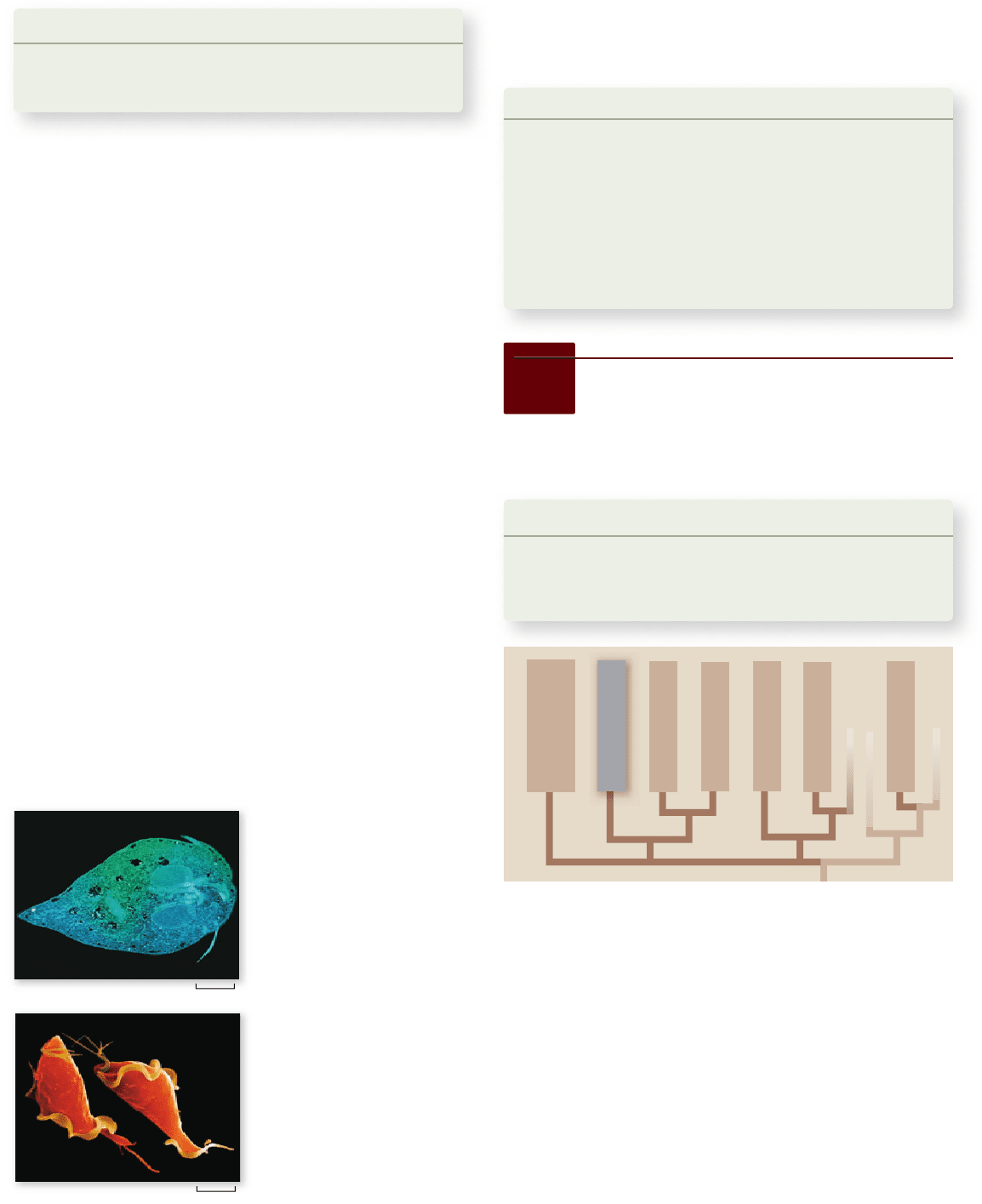
Diplomonads,
Parabasalids
Euglenozoa
Choanoflagellida
Alveolata
Stramenopila
Rhodophyta
Chlorophyta
Learning Outcomes
List the main features of diplomonads and parabasalids.1.
Give examples of diplomonads and parabasalids.2.
What was the first eukaryote like? We cannot be sure, but the
diplomonads and the parabasalids likely had early eukaryotic an-
cestors. Although these groups have similar features, their dif-
ferences put them into separate clades.
Diplomonads have two nuclei
Diplomonads are unicellular and move with flagella. This group
lacks mitochondria, but has two nuclei. Giardia intestinalis is an
example of a diplomonad (figure 29.6). Giardia is a parasite that
can pass from human to human via contaminated water and cause
diarrhea. Mitochondrial genes are found in their nuclei, leading
to the conclusion that Giardia evolved from aerobes. Electron
micrographs of Giardia cells stained with mitochondrial-
specific antibodies reveal degenerate mitochondria. Thus, Giar-
dia is unlikely to represent an early protist.
Parabasalids have undulating membranes
Parabasalids contain an intriguing array of species. Some live in
the gut of termites and digest cellulose, the main component of
the termite’s wood-based diet. The symbiotic relationship is
one layer more complex because these parabasalids have a sym-
biotic relationship with bacteria that also aid in the digestion of
cellulose. The persistent activity of these three symbiotic or-
ganisms from three different kingdoms can lead to the collapse
of a home built of wood or recycle tons of fallen trees in a for-
est. Another parabasalid, Trichomonas vaginalis, causes a sexually
transmitted disease in humans.
Parabasalids have undulating membranes that assist in
loco motion (figure 29.7) . Like diplomonads, parabasalids also
Figure 29.6
Giardia
intestinalis.
This parasitic
diplomonad lacks a
mitochondrion.
Figure 29.7
Undulating membrane
characteristic of
parabasalids.
Vaginitis can
be caused by this parasite
species, Trichomonas vaginalis.
use flagella to move and lack mitochondria. The lack of mito-
chondria in both groups is now believed to be a derived rather
than an ancestral trait.
Learning Outcomes Review 29.3
The ancestors of diplomonads and parabasalids are likely to be among
the earliest eukaryotes. Diplomonads lack mitochondria but may contain
mitochondrial genes. They are unicellular, have two nuclei, and move with
fl agella; an example is Giardia. Parabasalids also lack mitochondria and use
fl agella and undulating membranes for locomotion; an example
is Trichomonas.
■ In what type of habitat would it be useful to use
undulating membranes for locomotion?
29.4
Euglenozoa: A Diverse Group
in Which Some Members
Have Chloroplasts
Learning Outcomes
Explain why Euglenozoa cannot be classified as either 1.
plants or animals.
Describe the distinguishing feature of kinetoplastids.2.
Among their distinguishing features, a number of the Euglen-
ozoa have acquired chloroplasts through endosymbiosis. None
of the algae are closely related to Euglenozoa, a reminder that
endosymbiosis is widespread.
Euglenoids are free-living eukaryotes
with anterior agella
Euglenoids diverged early and were among the earliest free-
living eukaryotes to possess mitochondria. Euglenoids clearly
illustrate the impossibility of distinguishing “plants” from “an-
imals” among the protists. About one-third of the approxi-
mately 40 genera of euglenoids have chloroplasts and are fully
autotrophic; the others lack chloroplasts, ingest their food, and
are heterotrophic.
chapter
29
Protists
573www.ravenbiology.com
rav32223_ch29_567-587.indd 573rav32223_ch29_567-587.indd 573 11/13/09 11:33:31 AM11/13/09 11:33:31 AM
Apago PDF Enhancer
a.
b.
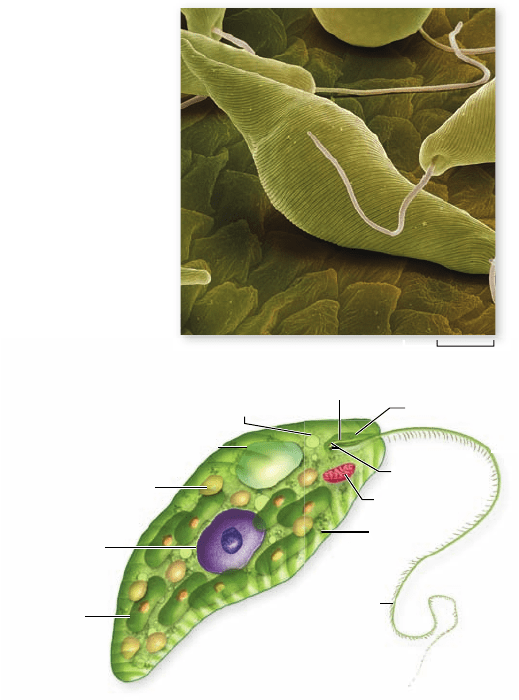
Reservoir
Pellicle
Basal bodies
Contractile vacuole
Second flagellum
Stigma
Flagellum
Nucleus
Chloroplast
Paramylon granule
Mitochondrion
6.5 µm
Figure 29.8
Euglenoids.
a. Micrograph
of Euglena gracilis.
b. Diagram of Euglena.
Paramylon granules are
areas where food
reserves are stored.
ganism. The stigma, which also occurs in the green algae
(phylum Chlorophyta), helps these photosynthetic organisms
move toward light.
Cells of Euglena contain numerous small chloroplasts.
These chloroplasts, like those of the green algae and plants,
contain chlorophylls a and b, together with carotenoids. Al-
though the chloroplasts of euglenoids differ somewhat in struc-
ture from those of green algae, they probably had a common
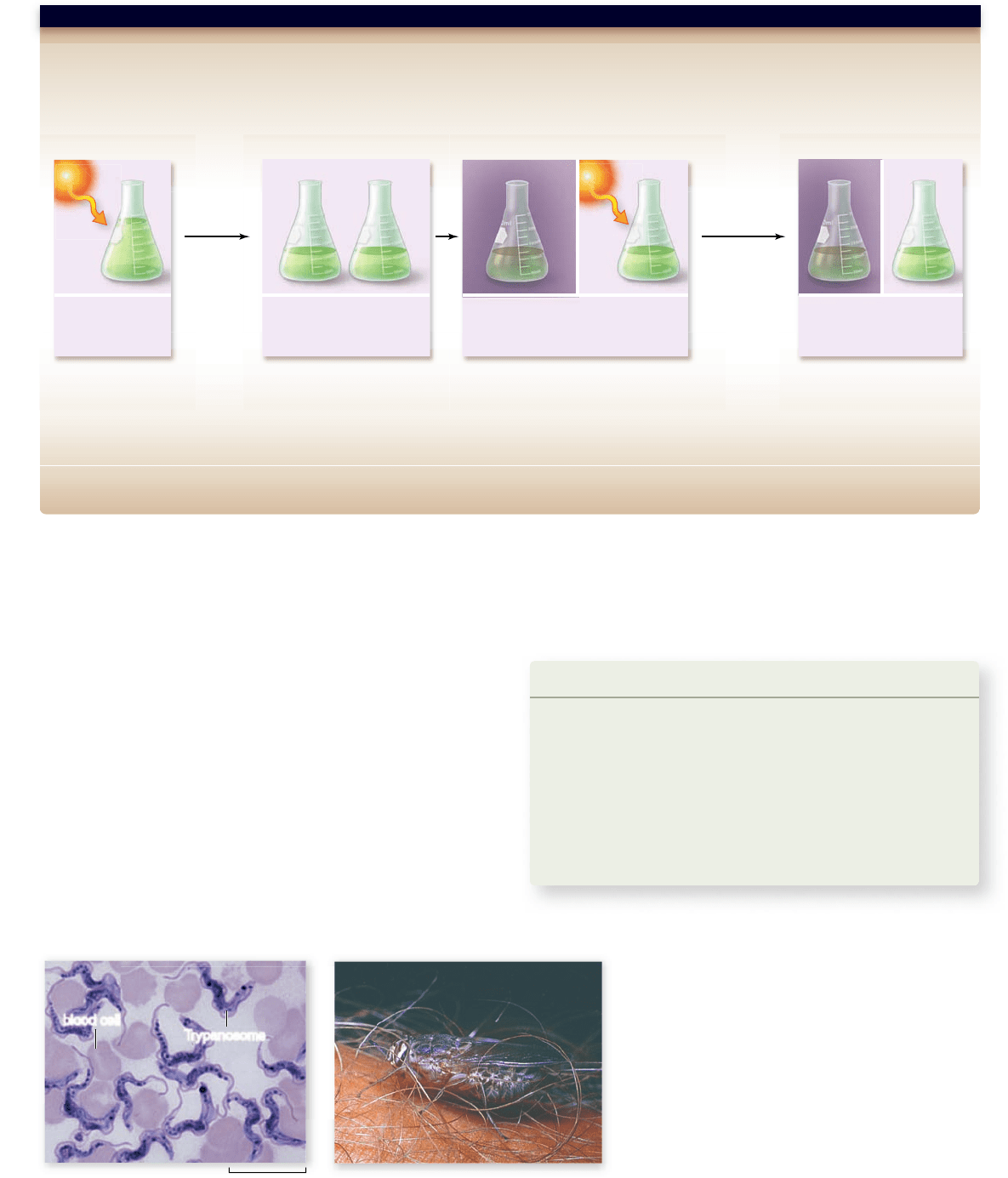
origin. Euglena’s photosynthetic pigments are light-sensitive
(figure 29.9) . It seems likely that euglenoid chloroplasts ulti-
mately evolved from a symbiotic relationship through inges-
tion of green algae. Recent phylogenetic evidence indicates
that Euglena had multiple origins within the Euglenoids, and
the concept of a single Euglena genus is now being debated.
Kinetoplastids are parasitic
A second major group within the Euglenozoa is the kineto-
plastids. The name kinetoplastid refers to a unique, single mito-
chondrion in each cell. The mitochondria have two types of
DNA: minicircles and maxicircles. (Remember that prokaryotes
have circular DNA, and mitochondria had prokaryotic origins.)
This mitochondrial DNA is responsible for very rapid glycoly-
sis and also for an unusual kind of editing of the RNA by guide
RNAs encoded in the minicircles.
Trypanosomes: Disease-causing kinetoplastids
Parasitism has evolved multiple times within the kinetoplastids.
Trypanosomes are a group of kinetoplastids that cause many
serious human diseases, the most familiar being trypanosomia-
sis, also known as African sleeping sickness, which causes ex-
treme lethargy and fatigue (figure 29.10).
Leishmaniasis, which is transmitted by sand flies, is a try-
panosomic disease that causes skin sores and in some cases can
affect internal organs, leading to death. About 1.5 million new
cases are reported each year. The rise in leishmaniasis in South
America correlates with the move of infected individuals from
rural to urban environments, where there is a greater chance of
spreading the parasite.
Chagas disease is caused by Trypanosoma cruzi. At least
90 million people, from the southern United States to Argen-
tina, are at risk of contracting T. cruzi from small wild mammals
that carry the parasite and can spread it to other mammals and
humans through skin contact with urine and feces. Blood trans-
fusions have also increased the spread of the infection. Chagas
disease can lead to severe cardiac and digestive problems in hu-
mans and domestic animals, but it appears to be tolerated in the
wild mammals.
Control is especially difficult because of the unique
attributes of these organisms. For example, tsetse fly-transmitted
trypanosomes have evolved an elaborate genetic mechanism for
repeatedly changing the antigenic nature of their protective
glyco protein coat, thus dodging the antibodies their hosts pro-
duce against them (see chapter 52 ). Only a single one out of some
1000 variable-surface glycoprotein (VSG) genes is expressed at a
time. A VSG gene is usually duplicated and moved to 1 of about
20 expression sites near the telomere where it is transcribed.
Only one expression site is transcribed at a time.
Some euglenoids with chloroplasts may become het-
erotrophic in the dark; the chloroplasts become small and non-
functional. If they are put back in the light, they may become
green within a few hours. Photosynthetic euglenoids may
sometimes feed on dissolved or particulate food.
Individual euglenoids range from 10 to 500 μm long and
vary greatly in form. Interlocking proteinaceous strips ar-
ranged in a helical pattern form a flexible structure called the
pellicle, which lies within the plasma membrane of the eugle-
noids. Because its pellicle is flexible, a euglenoid is able to
change its shape.
Reproduction in this phylum occurs by mitotic cell divi-
sion. The nuclear envelope remains intact throughout the pro-
cess of mitosis. No sexual reproduction is known to occur in
this group.
Euglena, the best known euglenoid
In Euglena (figure 29.8) , the genus for which the phylum is
named, two flagella are attached at the base of a flask-shaped
opening called the reservoir, which is located at the anterior
end of the cell. One of the flagella is long and has a row of
very fine, short, hairlike projections along one side. A second,
shorter flagellum is located within the reservoir but does not
emerge from it. Contractile vacuoles collect excess water from
all parts of the organism and empty it into the reservoir, which
apparently helps regulate the osmotic pressure within the or-
574
part
V
Diversity of Life on Earth
rav32223_ch29_567-587.indd 574rav32223_ch29_567-587.indd 574 11/13/09 11:33:35 AM11/13/09 11:33:35 AM
Apago PDF Enhancer
a.
20 µm
b.
Trypanosome
Blood cell
Hypothesis: Euglena cells do not retain photosynthetic pigments in a dark environment.
Prediction: Photosynthetic pigments will be degraded when light-grown Euglena cells are transferred to the dark and new pigment will not be produced.
Test: Grow Euglena under normal light conditions. Transfer the culture to two asks. Take a sample from each ask and measure the amount of photosynthetic
pigments in each. Maintain one ask in the light and transfer the other to the dark. After several days, extract the photosynthetic pigments from each ask, and
compare amounts with each other and with initial levels.
Result: Photosynthetic pigment levels are lower in the dark-grown ask than in the light-grown one. Pigment levels in the dark-grown ask are lower than at
the beginning of the experiment. Pigment levels in the light-grown ask are unchanged.
Conclusion: The hypothesis is supported. Maintenance of Euglena in the dark resulted in a loss of photosynthetic pigment. Pigments were degraded in the
dark-grown ask.
Further Experiments: Transfer dark-grown asks back to the light and measure changes in pigment levels over time. Are original pigment levels restored after
growth in light?
SCI ENT I FI C THINKING
Grow culture
of Euglena
under light.
Take a sample from
each flask and quantify
photosynthetic pigment.
Partition into
two flasks.
Put one flask in dark, and
expose the other to light.
Allow growth
for several days.
Quantify photosynthetic
pigment in each flask.
Figure 29.10
A kinetoplastid.
a. Trypanosoma among red blood cells. The nuclei
(dark-staining bodies), anterior agella, and
undulating, changeable shape of the trypanosomes
are visible in this photomicrograph. b. The tsetse y,
shown here sucking blood from a human arm, can
carry trypanosomes.
Figure 29.9
E ect of light on Euglena photosynthetic pigments.
In the guts of the flies that spread them, trypanosomes are
noninfective. When they are ready to transfer to the skin or
bloodstream of their host, trypanosomes migrate to the salivary
glands and acquire the thick coat of glycoprotein antigens that
protect them from the host’s antibodies. Later, when they are
taken up by a tsetse fly, the trypanosomes again shed their coats.
The production of vaccines against such a system is com-
plex, but tests are under way. Releasing sterilized flies to im-
pede the reproduction of populations is another technique
being tried to control the fly population. Traps made of dark
cloth and scented like cows, but poisoned with insecticides,
have likewise proved effective.
The recent sequencing of the genomes of the three kinet-
oplastids described earlier revealed a core of common genes in
all three, as described in chapter 24 . The devastating toll of all
three on human life could be alleviated by the development of
a single drug targeted at one or more of the core proteins shared
by the three parasites.
Learning Outcomes Review 29.4
The Euglenozoa were among the earliest protists to contain mitochondria.
This group contains phototrophs and heterotrophs. Some members have
chloroplasts that remain nonfunctional unless light is present, and some
phototrophs may feed if food particles are present. The kinetoplastids
contain a single mitochondrion with two types of DNA and the ability to edit
RNA with RNA guides. Trypanosomes are disease-causing kinetoplastids.
■ How does a contractile vacuole regulate osmotic
pressure in a Euglena cell?
chapter
29
Protists
575www.ravenbiology.com
rav32223_ch29_567-587.indd 575rav32223_ch29_567-587.indd 575 11/13/09 11:33:36 AM11/13/09 11:33:36 AM
Apago PDF Enhancer
Diplomonads,
Parabasalids
Euglenozoa
Choanoflagellida
Alveolata
Stramenopila
Rhodophyta
Chlorophyta
Apical
complex
Alveolar
sac
1 µm
Noctiluca
Ptychodiscus
Ceratium
Gonyaulax
Red tide: Overgrowth of dinoflagellates
The poisonous and destructive “red tides” that occur frequently
in coastal areas are often associated with great population ex-
plosions, or “blooms,” of dinoflagellates, whose pigments color
the water (figure 29.13) . Red tides have a profound, detrimental
effect on the fishing industry worldwide . Some 20 species of
dinoflagellates produce powerful toxins that inhibit the dia-
phragm and cause respiratory failure in many vertebrates.
When the toxic dinoflagellates are abundant, many fishes, birds,
and marine mammals may die.
Although sexual reproduction does occur under starvation
conditions, dinoflagellates reproduce primarily by asexual cell
division. Asexual cell division relies on a unique form of mitosis
in which the permanently condensed chromosomes divide with-
in a permanent nuclear envelope. After the numerous chromo-
somes duplicate, the nucleus divides into two daughter nuclei.
Also, the dinoflagellate chromosome is unique among
eukaryotes in that the DNA is not generally complexed with
29.5
Alveolata: Protists with
Submembrane Vesicles
Learning Outcomes
Identify the distinguishing feature of the members 1.
of Alveolata.
Describe the swimming motion of a dinoflagellate.2.
Explain the function of the apical complex in 3.
Apicomplexans.
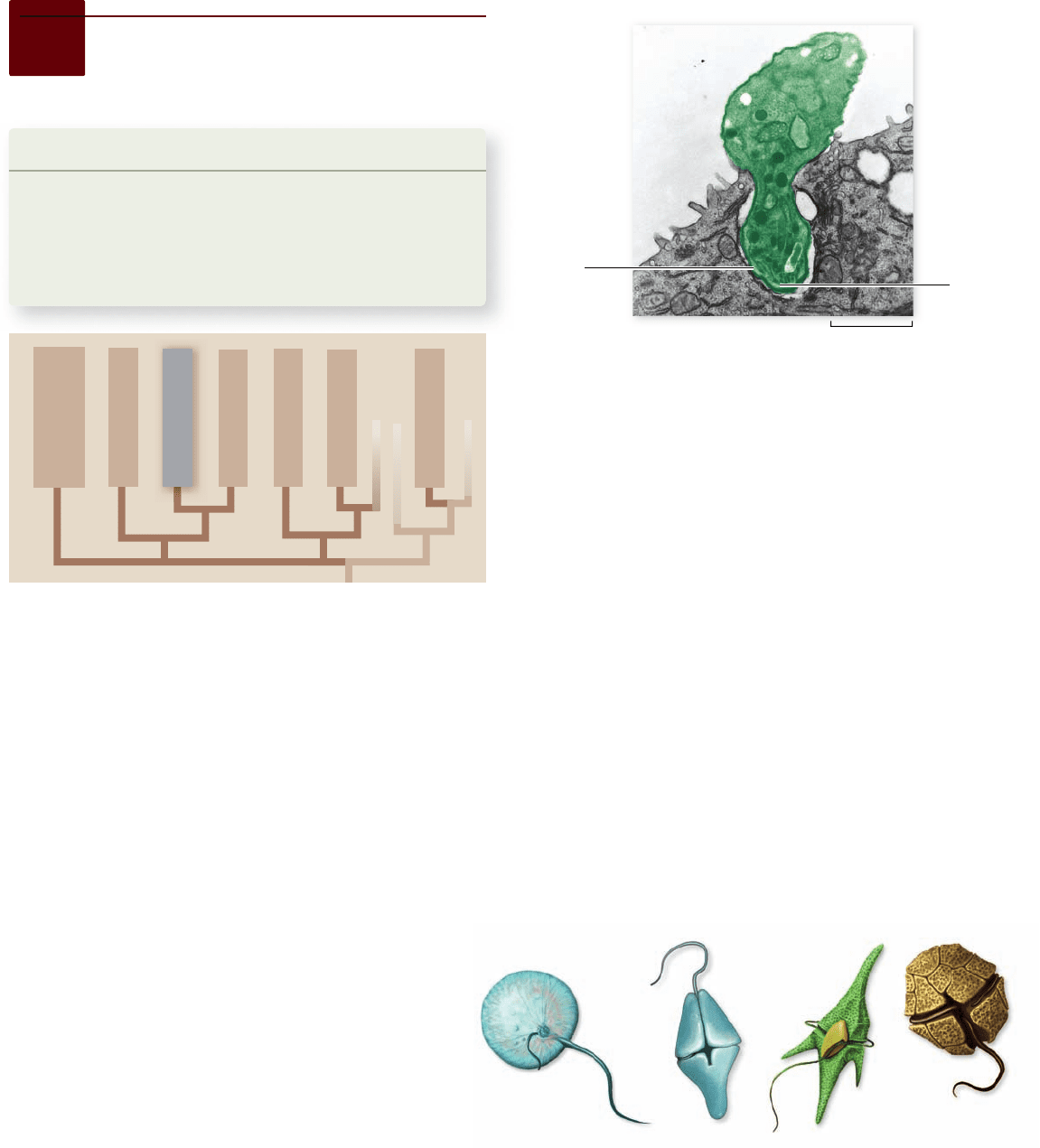
Members of the Alveolata include the dinoflagellates, api-
complexans, and ciliates, all of which have a common lineage
but diverse modes of locomotion. One common trait is the
presence of flattened vesicles called alveoli (hence the name
alveolata) stacked in a continuous layer below their plasma
membranes (figure 29.11) . The alveoli may function in
membrane transport, similar to Golgi bodies.
Dino agellates are photosynthesizers
with distinctive features
Most dinoflagellates are photosynthetic unicells with two fla-
gella. Dinoflagellates live in both marine and freshwater envi-
ronments. Some dinoflagellates are luminous and contribute to
the twinkling or flashing effects seen in the sea at night, espe-
cially in the tropics.
The flagella, protective coats, and biochemistry of
dinoflagellates are distinctive, and the dinoflagellates do
not appear to be directly related to any other phylum.
Plates made of a cellulose-like material, often encrusted
with silica, encase the dinoflagellate cells (figure 29.12) .
Grooves at the junctures of these plates usually house the
flagella, one encircling the cell like a belt, and the other per-
pendicular to it. By beating in their grooves, these flagella cause
the dinoflagellate to spin as it moves.
Most dinoflagellates have chlorophylls a and c, in addi-
tion to carotenoids, so that in the biochemistry of their chloro-
plasts, they resemble the diatoms and the brown algae. Possibly
this lineage acquired such chloroplasts by forming endosymbi-
otic relationships with members of those groups.
Figure 29.11
Alveoli are a continuum of vesicles just
below the plasma membrane of dino agellates,
apicomplexans, and ciliates.
The apical complex of
apicomplexans forces the parasite into host cells.
Figure 29.12
Some dino agellates. Noctiluca, which lacks
the heavy cellulose armor characteristic of most dino agellates, is
one of the bioluminescent organisms that cause the waves to sparkle
in warm seas. In the other three genera, the shorter, encircling
agellum is seen in its groove, with the longer one projecting away
from the body of the dino agellate. (Not drawn to scale.)
576
part
V
Diversity of Life on Earth
rav32223_ch29_567-587.indd 576rav32223_ch29_567-587.indd 576 11/13/09 11:33:38 AM11/13/09 11:33:38 AM
Apago PDF Enhancer
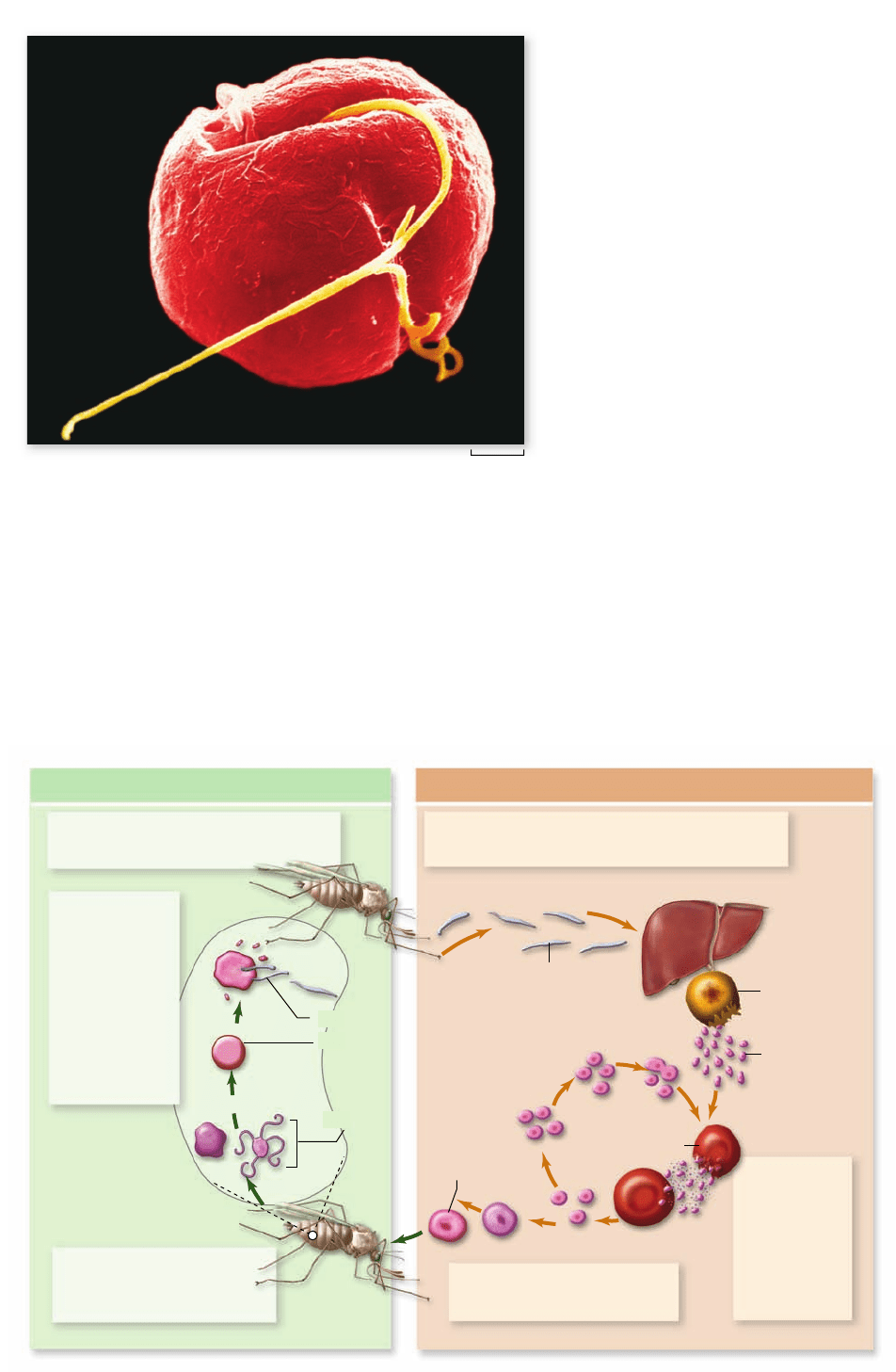
Inside Mosquito Inside Mammal
1. While feeding, mosquito injects
Plasmodium sporozoites into human.
2. Sporozoites enter the liver, reproduce asexually
and release merozoites into the bloodstream.
3. Merozoites
multiply
inside red
blood cells
and are
released.
The cycle
repeats.
4. Certain merozoites
develop into gametocytes.
5. Gametocytes are ingested
by another, previously
uninfected mosquito.
6. The game-
tocytes
develop into
gametes and
reproduce
sexually,
forming
sporozoites
within the
mosquito.
Sporozoite
Merozoite
Host’s red
blood cell
Host’s
liver cell
Gametocyte
Fertilization
Oocyst
Sporozoite
Gametes
0.83 µm
Figure 29.13
Red tide.
Although small in size, huge
populations of dino agellates, including this Gymnopodium species,
can color the sea red and release toxins into the water.
Figure 29.14
The life cycle of
Plasmodium.
Plasmodium, the
apicomplexan that
causes malaria, has a
complex life cycle that
alternates between
mosquitoes and
mammals.
Apicomplexans include the malaria parasite
Apicomplexans are spore-forming parasites of animals. They
are called apicomplexans because of a unique arrangement of
fibrils, microtubules, vacuoles, and other cell organelles at one
end of the cell, termed an apical complex (see figure 29.11). The
apical complex is a cytoskeletal and secretory complex that en-
ables the apicomplexan to invade its host. The best known api-
complexan is the malarial parasite Plasmodium. (The use of the
genome sequence of the parasite and the mosquito that carries
it is discussed in chapter 24 .)
Plasmodium and malaria
Plasmodium glides inside the red blood cells of its host with
amoeboid-like contractility. Like other apicomplexans, Plasmo-
dium has a complex life cycle involving sexual and asexual
phases and alternation between different hosts, in this case
mosquitoes (Anopheles gambiae) and humans (figure 29.14) .
Even though Plasmodium has mitochondria, it grows best in a
low-O
2
, high-CO
2
environment.
Efforts to eradicate malaria have focused on (1) elimi-
nating the mosquito vectors; (2) developing drugs to poison
the parasites that have entered the human body; and (3) de-
veloping vaccines. From the 1940s to the 1960s, wide-scale
applications of dichlorodiphenyltrichloroethane (DDT)
killed mosquitoes in the United States, Italy, Greece, and cer-
tain areas of Latin America. For a time, the worldwide elimi-
nation of malaria appeared possible. But this hope was soon
crushed by the development of DDT-resistant mosquitoes in
many regions. Furthermore, the use of DDT has had serious
histone proteins. In all other eukaryotes, the chromosomal DNA
is complexed with histones to form nucleosomes, structures that
represent the first order of DNA packaging in the nucleus
(chapter 10 ). How dinoflagellates maintain distinct chromo-
somes with a small amount of histones remains a mystery.
chapter
29
Protists
577www.ravenbiology.com
rav32223_ch29_567-587.indd 577rav32223_ch29_567-587.indd 577 11/13/09 11:33:40 AM11/13/09 11:33:40 AM
Apago PDF Enhancer
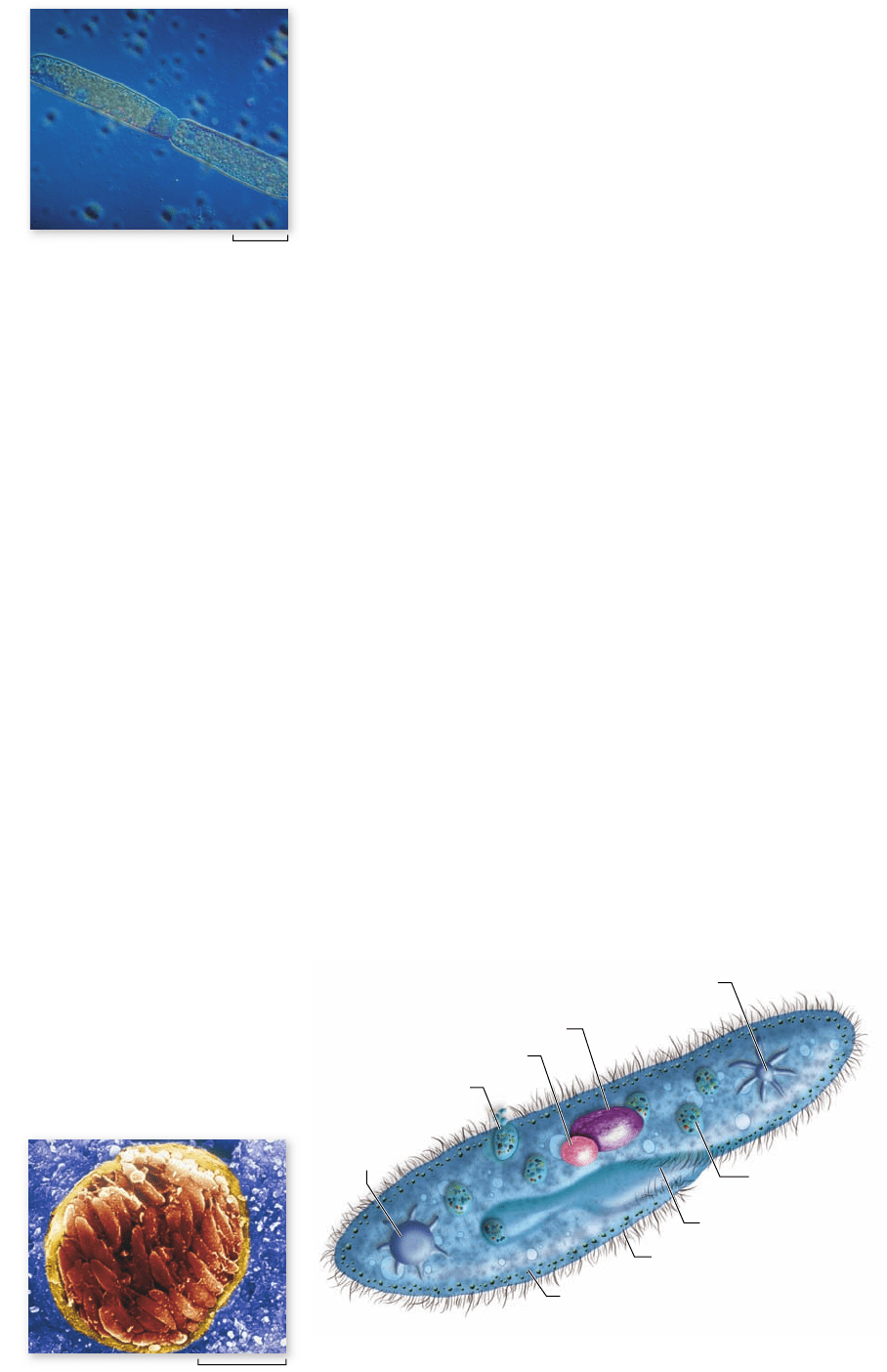
Anterior contractile vacuole
Micronucleus
Macronucleus
Pellicle
Posterior
contractile
vacuole
Food vacuole
Gullet
Cilia
Cytoproct
200 µm
10 µm
Figure 29.17
Paramecium.
The main features of this ciliate
include cilia, two nuclei, and numerous specialized organelles.
Ciliates are characterized by their
mode of locomotion
As the name indicates, most ciliates feature large numbers of
cilia (tiny beating hairs). These heterotrophic, unicellular pro-
tists are 10 to 3000 μm long. Their cilia are usually arranged
either in longitudinal rows or in spirals around the cell. Cilia
are anchored to microtubules beneath the plasma membrane
(see chapter 5 ), and they beat in a coordinated fashion. In some
groups, the cilia have specialized functions, becoming fused
into sheets, spikes, and rods that may then function as mouths,
paddles, teeth, or feet.
The ciliates have a pellicle, a tough but flexible outer
covering, that enables them to squeeze through or move
around obstacles.
Micronucleus and macronucleus
All known ciliates have two different types of nuclei within
their cells: a small micronucleus and a larger macronucleus
(figure 29.17 ). Macronuclei divide by mitosis and are essential
for the physiological function of the well-known ciliate Para-
mecium. The micronucleus of some individuals of Tetrahymena
pyriformis, a common laboratory species, was experimentally
removed in the 1930s, and their descendants continue to re-
produce asexually to this day! Paramecium, however, is not im-
mortal. The cells divide asexually for about 700 generations
and then die if sexual reproduction has not occurred. The mi-
cronucleus in ciliates is evidently needed only for sexual
reproduction.
Vacuoles
Ciliates form vacuoles for ingesting food and regulating water
balance. Food first enters the gullet, which in Paramecium is
lined with cilia fused into a membrane (see figure 29.17). From
the gullet, the food passes into food vacuoles, where enzymes
and hydrochloric acid aid in its digestion. Afterward, the vacu-
ole empties its waste contents through a special pore in the
pellicle called the cytoproct, which is essentially an exocytotic
environmental consequences. In addition to the problems
with resistant strains of mosquitoes, strains of Plasmodium
have appeared that are resistant to the drugs historically used
to kill them, including quinine.
An experimental vaccine containing a surface protein of
one malaria-causing parasite, P. falciparum, seems to induce the
immune system to defend against future infections. In tests, six
out of seven vaccinated people did not get malaria after being
bitten by mosquitoes that carried P. falciparum. Many are
hopeful that this new vaccine may be able to fight malaria.
(Chapter 24 contains a discussion of the genome sequences of
both Plasmodium and its mosquito vector.)
Gregarines
Gregarines are another group of apicomplexans that use their
distinctive apical complex to attach themselves in the intestinal
epithelium of arthropods, annelids, and mollusks. Most of the
gregarine body, aside from the apical complex, is in the intesti-
nal cavity, and nutrients appear to be obtained through the api-
complex attachment to the cell (figure 29.15) .
Toxoplasma
Using its apical complex, Toxoplasma gondii invades the epithe-
lial cells of the human gut. Most individuals infected with the
parasite mount an immune response, preventing any perma-
nent damage. In the absence of a fully functional immune sys-
tem, however, Toxoplasma can damage brain (figure 29.16 ),
heart, and skeletal tissues, in addition to gut and lymph tissue,
during extended infections. Individuals with AIDS are particu-
larly susceptible to Toxoplasma infection. If a pregnant women
touches a cat litter box, Toxoplasma parasites from the cat can, if
ingested, cross the placental barrier and harm the developing
fetus with an immature immune system.
Figure 29.15
Gregarine entering a cell.
Figure 29.16
Micrograph of a cyst
lled with Toxoplasma.
Toxoplasma can enter the
brain and form cysts lled
with slowly replicating
parasites.
578
part
V
Diversity of Life on Earth
rav32223_ch29_567-587.indd 578rav32223_ch29_567-587.indd 578 11/13/09 11:33:42 AM11/13/09 11:33:42 AM
Apago PDF Enhancer
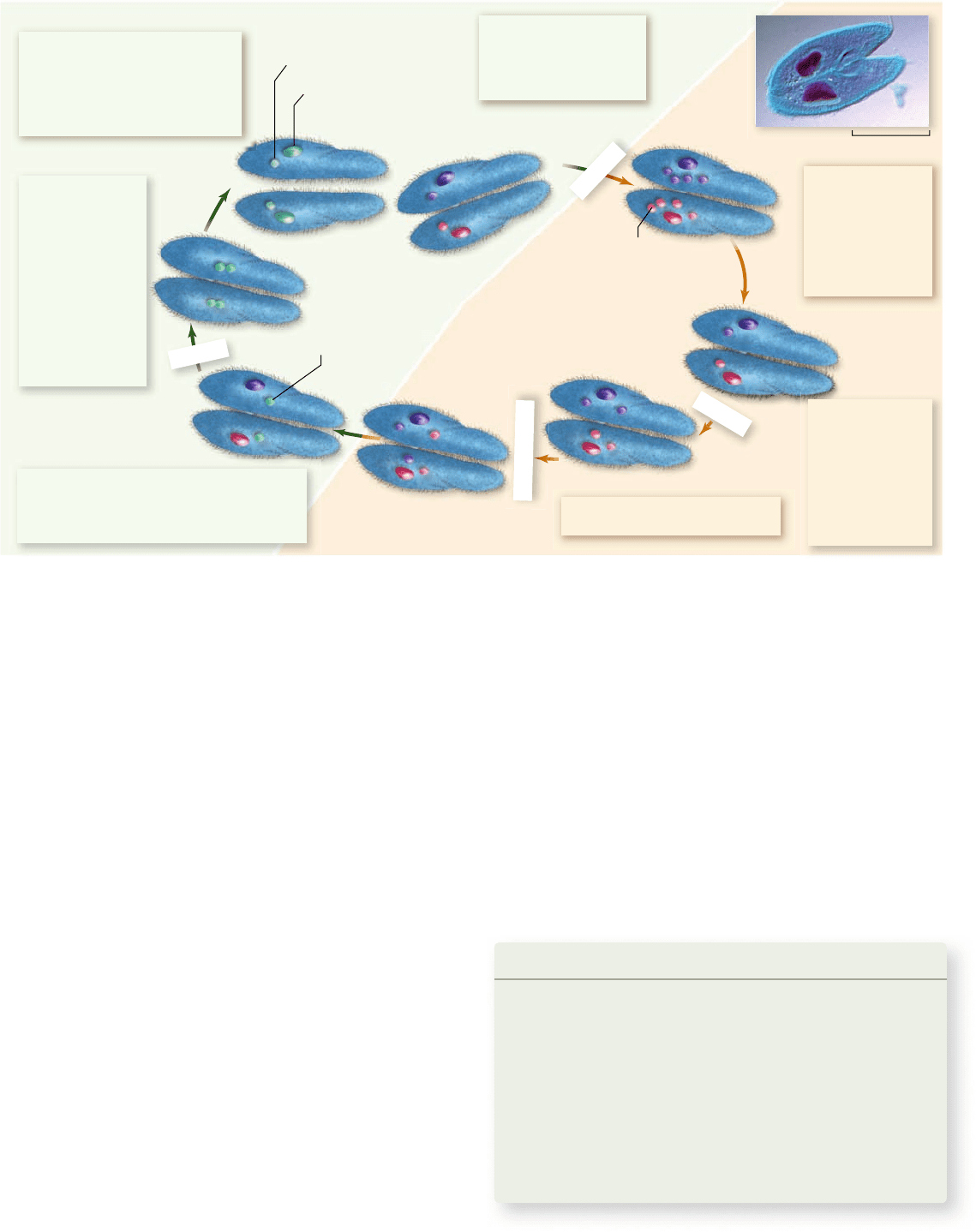
1. Two Paramecium
individuals of different
mating types come
into contact.
2. The diploid
micronucleus
in each divides
by meiosis to
produce four
haploid
micronuclei.
3. Three of
the haploid
micronuclei
degenerate.
The remaining
micronucleus
in each divides
by mitosis.
4. Mates exchange micronuclei.
5. In each individual, the new micronucleus
fuses with the micronucleus already
present, forming a diploid micronucleus.
6. The macro-
nucleus
disintegrates,
and the diploid
micronucleus
divides by
mitosis to
produce two
identical diploid
micronuclei
within each
individual.
7. One of these micronuclei is
the precursor of the
micronucleus for that cell, and
the other eventually gives rise
to the macronucleus.
Macronucleus (2n)
Micronucleus (2n)
MEIOSIS
MITOSIS
CONJUGATION
n
2n
Diploid
micronucleus (2n)
Haploid
micronucleus (n)
MITOSIS
100 µm
Figure 29.18
Life cycle of Paramecium.
In sexual reproduction, two mature cells fuse in a process called conjugation.
vesicle that appears periodically when solid particles are ready
to be expelled.
The contractile vacuoles, which regulate water balance,
periodically expand and contract as they empty their contents
to the outside of the organism.
Conjugation: Exchange of micronuclei
Like most ciliates, Paramecium undergoes a sexual process called
conjugation , in which two individual cells remain attached to
each other for up to several hours (figure 29.18) .
Paramecia have multiple mating types. Only cells of
two different genetically determined mating types can conju-
gate. Meiosis in the micronuclei produces several haploid
micronuclei, and the two partners exchange a pair of their
micronuclei through a cytoplasmic bridge between them.
In each conjugating individual, the new micronucleus
fuses with one of the micronuclei already present in that indi-
vidual, resulting in the production of a new diploid micro-
nucleus. After conjugation, the macronucleus in each cell
disintegrates, and the new diploid micronucleus undergoes mi-
tosis, thus giving rise to two new identical diploid micronuclei
in each individual.
One of these micronuclei becomes the precursor of the
future micronuclei of that cell, while the other micronucleus
undergoes multiple rounds of DNA replication, becoming the
new macronucleus. This complete segregation of the genetic
material is unique to the ciliates and makes them ideal organ-
isms for the study of certain aspects of genetics.
“Killer” strains
Paramecium strains that kill other, sensitive strains of Parame-
cium long puzzled researchers. Initially, killer strains were be-
lieved to have genes coding for a substance toxic to sensitive
strains. The true source of the toxin turned out to be an endo-
symbiotic bacterium in the “killer” strains. If this bacterium is
engulfed by a “nonkiller” strain, the toxin is released, and the
sensitive Paramecium dies.
Learning Outcomes Review 29.5
All members of the Alveolata contain fl attened vesicles called alveoli.
Dinofl agellates have pairs of fl agella arranged perpendicular to each
other, which causes them to swim with a spinning motion. Blooms of
dinofl agellates cause red tides. Apicomplexans are animal parasites
that produce a structure called an apical complex, which is composed of
cytoskeleton and secretory structures and aids in penetrating their host.
The ciliates are unicellular, heterotrophic protists with cilia used for feeding
and propulsion.
■ What would be a major difficulty in finding a poison to
fight the malaria-causing protist Plasmodium?
chapter
29
Protists
579www.ravenbiology.com
rav32223_ch29_567-587.indd 579rav32223_ch29_567-587.indd 579 11/13/09 11:33:47 AM11/13/09 11:33:47 AM
Apago PDF Enhancer
20 µm
Diplomonads,
Parabasalids
Euglenozoa
Choanoflagellida
Alveolata
Stramenopila
Rhodophyta
Chlorophyta
kelps. The gametophytes are often much smaller, filamentous
individuals, perhaps a few centimeters in width.
Even in an aquatic environment, transport can be a chal-
lenge for the very large brown algal species. Distinctive trans-
port cells that stack one upon the other enhance transport
within some species (see figure 23.10). However, even though
the large kelp look like plants, it is important to realize that
they do not contain the complex tissues such as xylem that are
found in plants.
Diatoms are unicellular
organisms with double shells
Diatoms , members of the phylum Chrysophyta, are photo-
synthetic, unicellular organisms with unique double shells
made of opaline silica, which are often strikingly marked
(figure 29.22). The shells of diatoms are like small boxes with
lids, one half of the shell fitting inside the other. Their chloro-
plasts, containing chlorophylls a and c, as well as carotenoids,
resemble those of the brown algae and dinoflagellates. Diatoms
produce a unique carbohydrate called chrysolaminarin.
Figure 29.19
Stramenopiles have very ne hairs on
their agella.
Figure 29.20
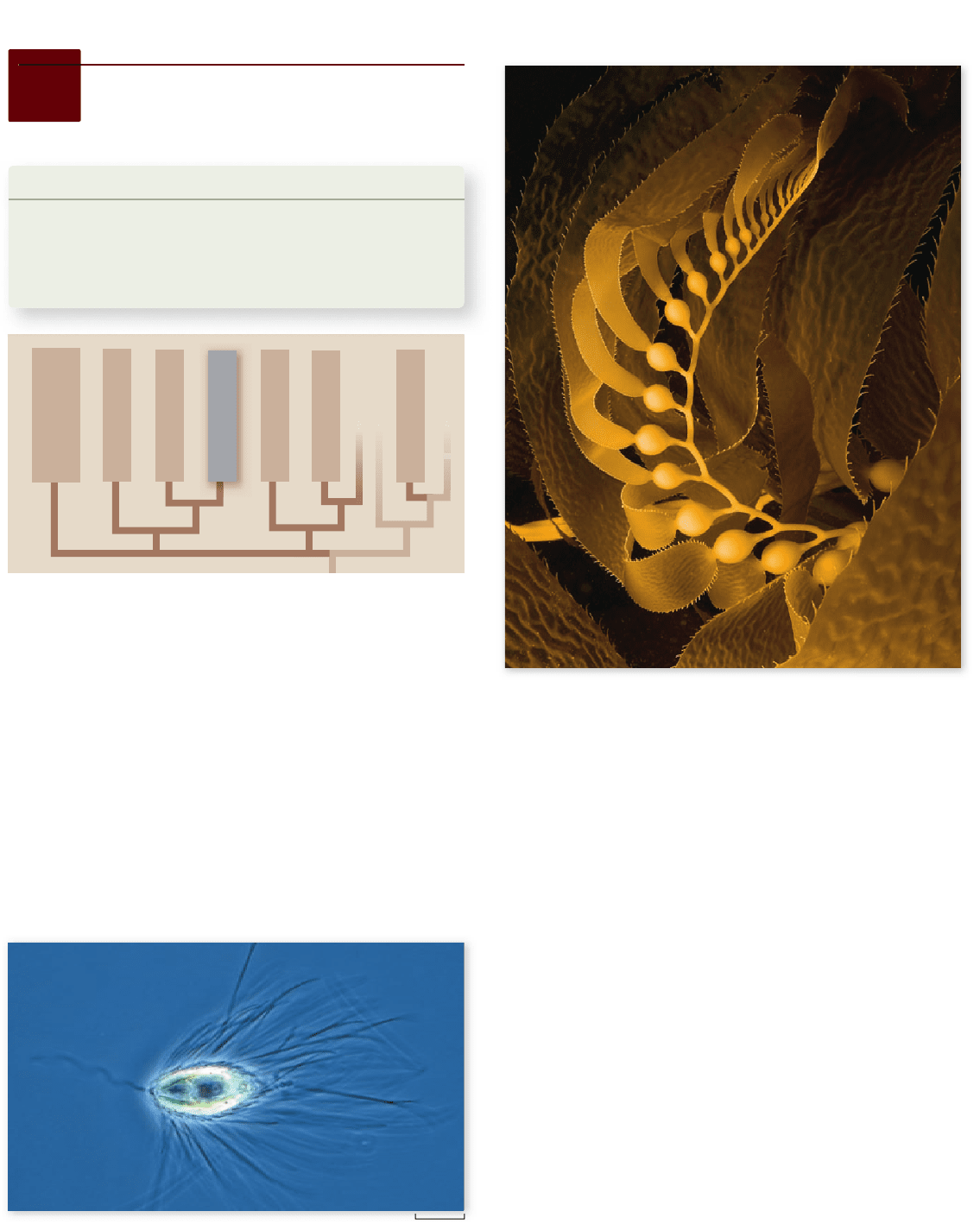
Brown alga.
The giant kelp, Macrocystis
pyrifera, grows in relatively shallow water along the coasts
throughout the world and provides food and shelter for many
different kinds of organisms.
Learning Outcomes
Describe the characteristic features of the Stramenopila. 1.
Describe the composition of the unique shells of diatoms.2.
Explain how the oomycetes are distinguished from 3.
other protists.
Stramenopiles include brown algae, diatoms, and the oomycetes
(water molds). The name stramenopila refers to unique, fine hairs
(figure 29.19) found on the flagella of members of this group,
although a few species have lost their hairs during evolution.
Brown algae include large seaweeds
Brown algae are the most conspicuous seaweeds in many north-
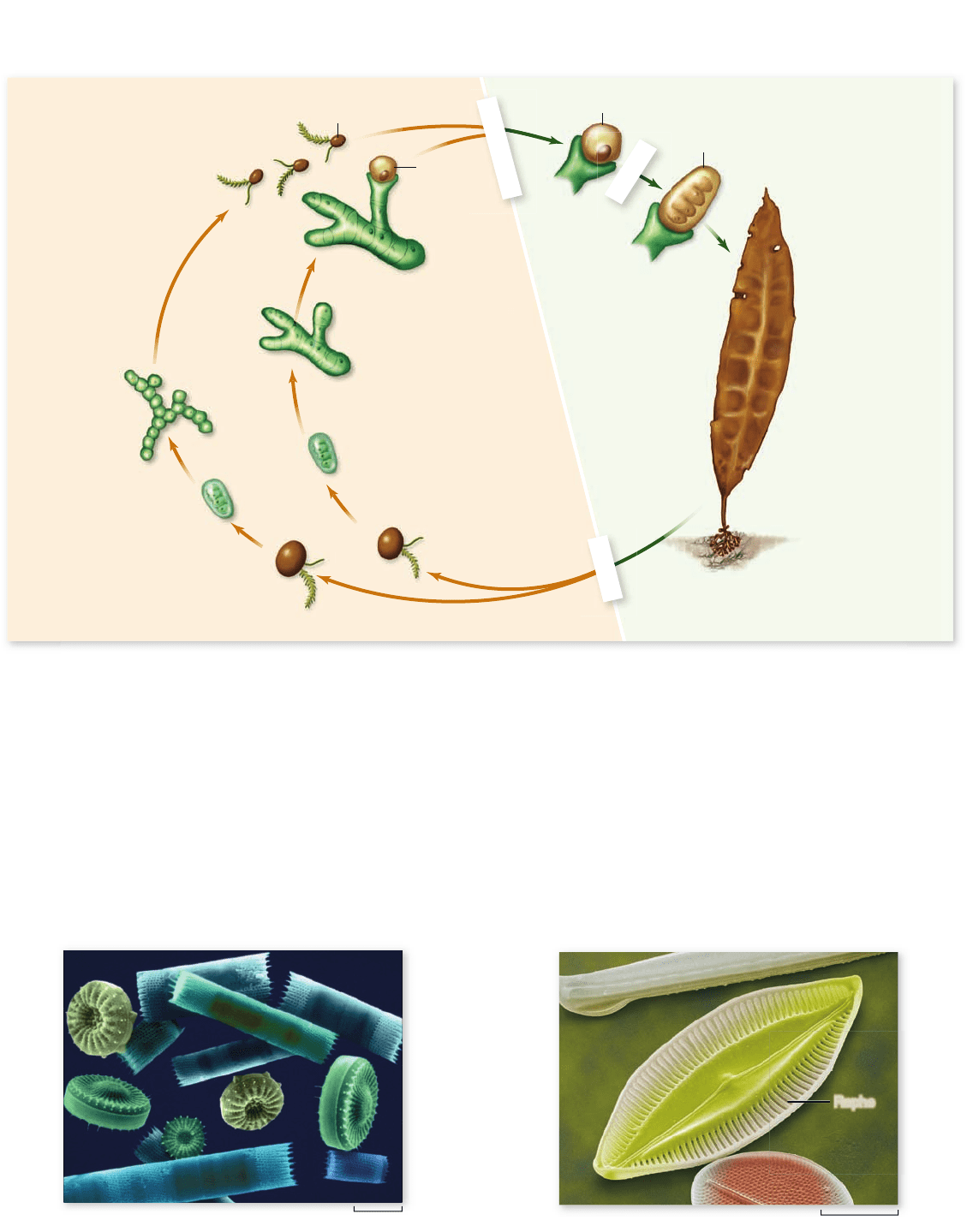
ern regions (figure 29.20) . The life cycle of the brown algae is
marked by an alternation of generations between a multicellu-
lar sporophyte (diploid) and a multicellular gametophyte (hap-
loid) (figure 29.21) . Some sporophyte cells go through meiosis
and produce spores. These spores germinate and undergo mi-
tosis to produce the large individuals we recognize, such as the
29.6
Stramenopila: Protists
with Fine Hairs
580
part
V
Diversity of Life on Earth
rav32223_ch29_567-587.indd 580rav32223_ch29_567-587.indd 580 11/13/09 11:33:49 AM11/13/09 11:33:49 AM
Apago PDF Enhancer
86 µm
5.4 µm
Raphe
FERTILIZATION
MEIOSIS
n 2n
Sporophyte (2n)
Zygote (2n)
Developing
sporophyte
Sperm
Egg
Zoospores (n)
Gametophytes (n)
Germinating
zoospores
MITOSIS
Figure 29.21
Life cycle of Laminaria, a brown alga.
Multicellular haploid and diploid stages are found in this life cycle, although
the male and female gametophytes are quite small.
Figure 29.22
Diatoms.
These different radially
symmetrical diatoms have unique silica, two-part shells.
Figure 29.23
Diatom raphe are lined with brils that
aid in locomotion.
Oomycetes, the “water molds,”
have some pathogenic members
All oomycetes are either parasites or saprobes (organisms that
live by feeding on dead organic matter) . At one time, these or-
ganisms were considered fungi, which is the origin of the term
water mold and why their name contains -mycetes.
Some diatoms move by using two long grooves, called
raphes, which are lined with vibrating fibrils (figure 29.23) .
The exact mechanism is still being unraveled and may in-
volve the ejection of mucopolysaccharide streams from the
raphe that propel the diatom. Pencil-shaped diatoms can
slide back and forth over each other, creating an ever-
changing shape.
chapter
29
Protists
581www.ravenbiology.com
rav32223_ch29_567-587.indd 581rav32223_ch29_567-587.indd 581 11/13/09 11:33:54 AM11/13/09 11:33:54 AM