
Raven P.H., Johnson G.B., Mason K.A. Biology (Ninth Edition)
Подождите немного. Документ загружается.

Apago PDF Enhancer
Diplomonads,
Parabasalids
Euglenozoa
Choanoflagellida
Alveolata
Stramenopila
Rhodophyta
Chlorophyta
They are distinguished from other protists by the
structure of their motile spores, or zoospores, which bear
two unequal flagella, one pointed forward and the other
backward. Zoospores are produced asexually in a sporan-
gium. Sexual reproduction involves the formation of male
and female reproductive organs that produce gametes. Most
oomycetes are found in water, but their terrestrial relatives
are plant pathogens.
Phytophthora infestans, which causes late blight of potatoes,
was responsible for the Irish potato famine of 1845 and 1847.
During the famine, about 400,000 people starved to death or
died of diseases complicated by starvation and about 2 million
Irish immigrated to the United States and elsewhere.
Another oomycete, Saprolegnia, is a fish pathogen that can
cause serious losses in fish hatcheries. When these fish are re-
leased into lakes, the pathogen can infect amphibians and kill
millions of amphibian eggs at a time at certain locations. This
pathogen is thought to contribute to the phenomenon of am-
phibian decline.
Learning Outcomes Review 29.6
Most members of the Stramenopila have fi ne hairs on their fl agella.
Brown algae are large seaweeds that provide food and habitat for marine
organisms. They undergo an alternation of generations. Diatoms are
unicellular with silica in their cell walls, which forms a shell with two halves.
Some can propel themselves. Oomycetes are unique in the production of
zoospores that bear two unequal fl agella.
■ How could you distinguish between the sporophyte and
the gametophyte of a brown alga?
Learning Outcomes
List the major characteristics of red algae.1.
Describe how humans use red algae. 2.
Rhodophyta, the red algae, range in size from microscopic organ-
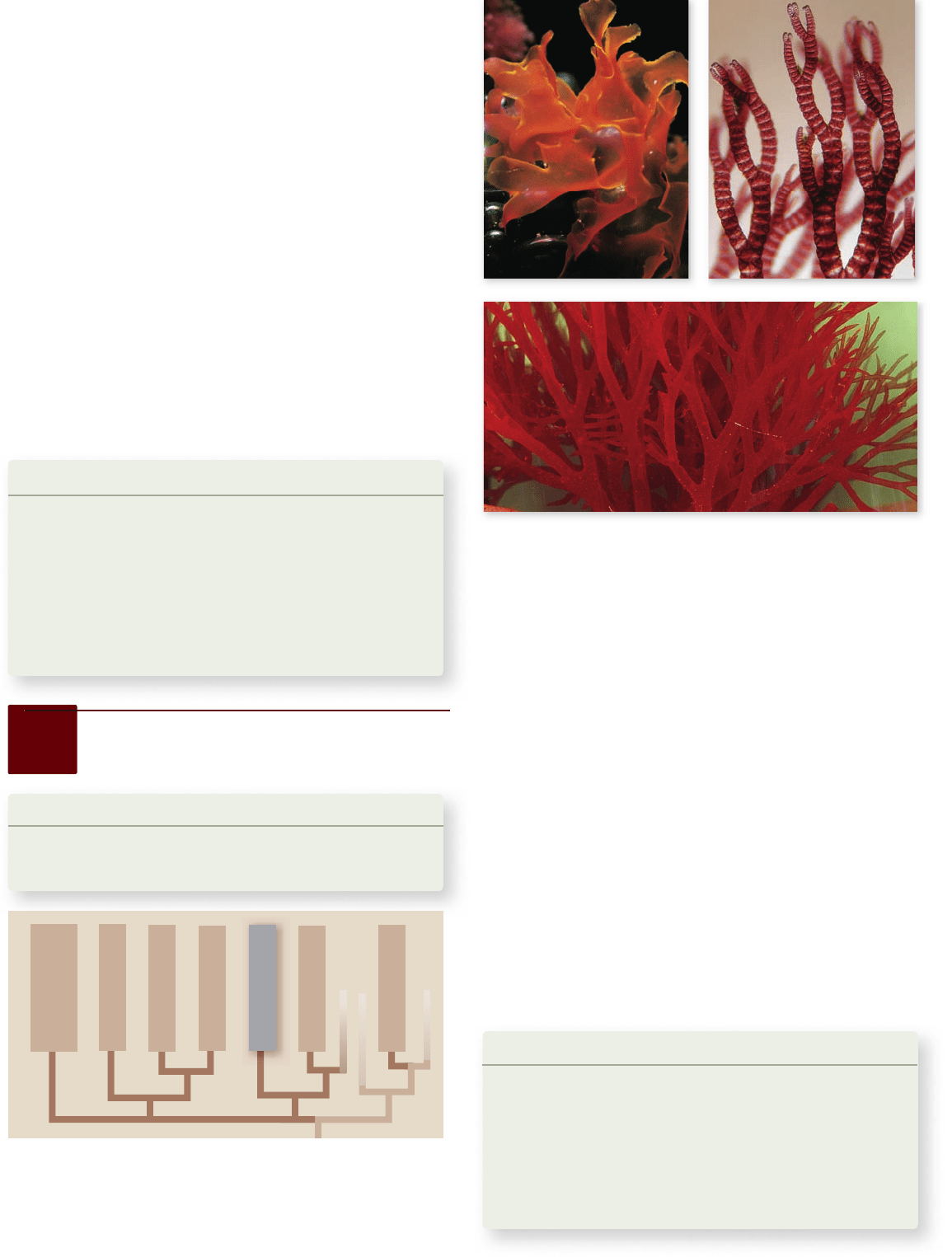
isms to Schizymenia borealis with blades as long as 2 m (figure 29.24) .
Sushi rolls are wrapped in nori, a red alga. Red algal polysaccha-
rides are used commercially to thicken ice cream and cosmetics.
29.7
Rhodophyta: Red Algae
This lineage lacks flagella and centrioles, and has the acces-
sory photosynthetic pigments phycoerythrin, phycocyanin, and al-
lophycocyanin, which are arranged within structures called
phycobilisomes. They reproduce using alternation of generations.
The origin of the over 7000 species of Rhodophyta has been
a source of controversy. Evidence supporting very early eukaryotic
origins and a common ancestry with green algae has been consid-
ered. Molecular comparisons of the chloroplasts in red and green
algae support a single endosymbiotic origin for both.
Comparisons of the nuclear DNA coding for the large
subunit of RNA polymerase II from two red algae, a green
alga, and another protist support the conclusion that the Rho-
dophyta emerged before the evolutionary lineage that led to
plants, animals, and fungi.
How can we reconcile the data from plastid and nuclear
DNA? The host cells and the cyanobacterial symbionts probably
did not follow congruent evolutionary pathways. The host cell
that gave rise to red algae may have been distinct from the one
that gave rise to plants. One possibility is that different host cells
engulfed the same bacterial symbiont. Tentatively, we will treat
Rhodophyta and Chlorophyta (the green algae; see chapter 30 ) as
sister clades based on the substantial amount of chloroplast data.
Learning Outcomes Review 29.7
Red algae vary greatly in size and produce accessory pigments that may
give them a red color. They lack centrioles and fl agella, and they reproduce
using an alternation of generations. Humans use red algae as a food and a
thickening agent. The evolutionary origin of red algae is a subject
of controversy.
■ Why would you expect to get different results from
analysis of nuclear DNA versus plastid DNA?
Figure 29.24
Red algae come in many forms and sizes.
582
part
V
Diversity of Life on Earth
rav32223_ch29_567-587.indd 582rav32223_ch29_567-587.indd 582 11/13/09 11:33:59 AM11/13/09 11:33:59 AM
Apago PDF Enhancer
Diplomonads,
Parabasalids
Euglenozoa
Choanoflagellida
Alveolata
Stramenopila
Rhodophyta
Chlorophyta
33 µm
62.5
µ
m
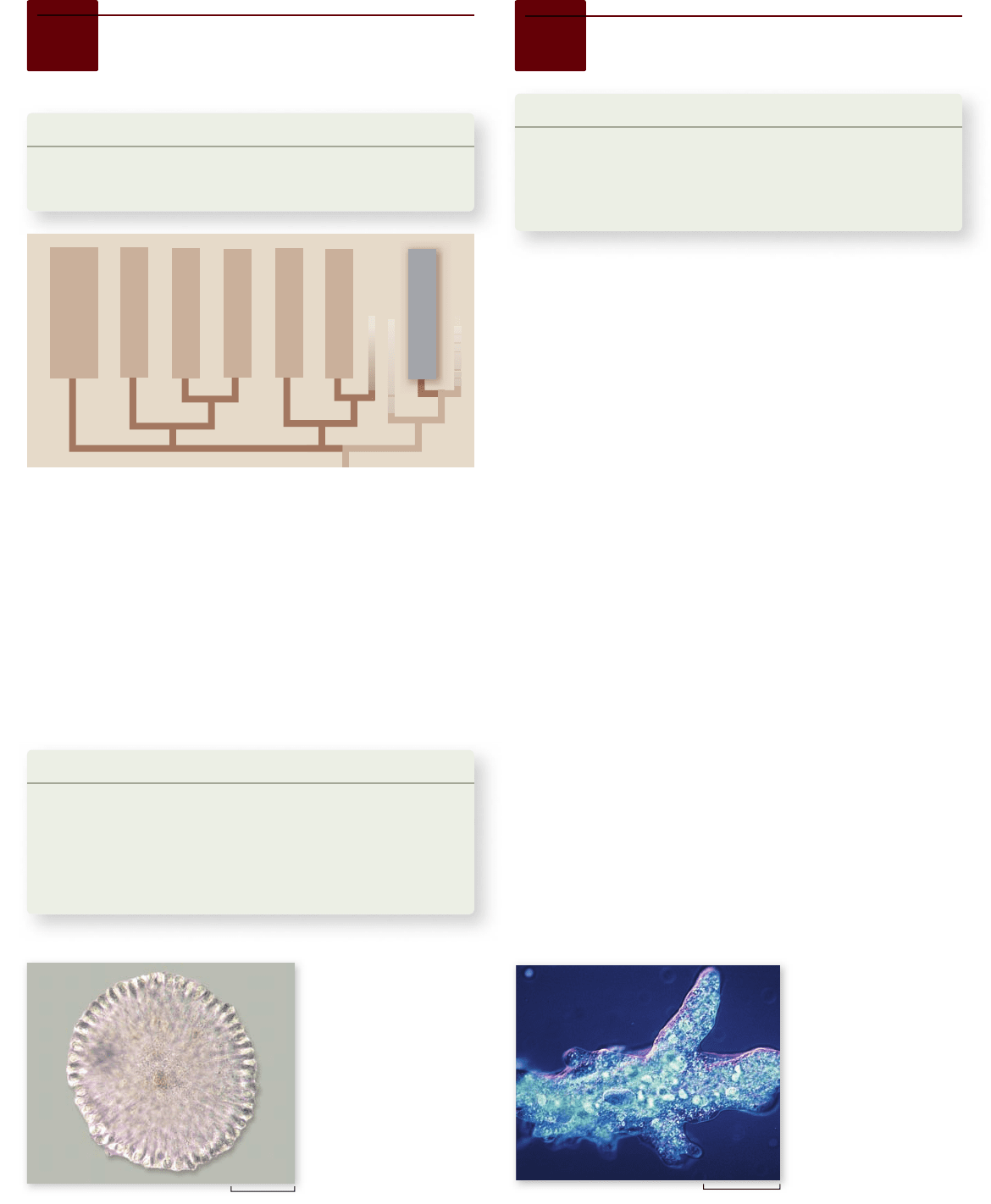
Figure 29.25
Colonial
choano agellates
resemble their close
animal relatives, the
sponges.
Figure 29.26
Amoeba proteus.
The projections are
pseudopods; an amoeba
moves by owing into
them.
Learning Outcomes
Explain how amoebas move.1.
Distinguish between the shells of most foraminifera and 2.
those of diatoms.
Distinguish between cellular and plasmodial slime molds.3.
Many protists remain to be placed on the tree of life. The fol-
lowing examples are of particular importance to human health
and the environment.
Amoebas are paraphyletic
So far, we have organized the protists based on their closest
relatives. Some lineages vary tremendously if you consider just
a single trait. For example, the stramenopiles include auto-
trophic, marine algae, and terrestrial plant pathogens. As seen
in chapter 25 , it is also possible for unrelated organisms to ac-
quire similar traits. That is the case with amoebas, which have
similar cell morphology, but are not monophyletic.
Rhizopoda: True amoebas
Amoebas move from place to place by means of their pseudo-
pods. Pseudopods are flowing projections of cytoplasm that
extend and pull the amoeba forward or engulf food particles.
An amoeba puts a pseudopod forward and then flows into it
(figure 29.26) . Microfilaments of actin and myosin similar to
those found in muscles are associated with these movements.
The pseudopods can form at any point on the cell body so that
it can move in any direction.
Actinopoda: Radiolarians
The pseudopods of amoeboid cells give them truly amorphous
bodies. One group, however, has more distinct structures. Mem-
bers of the phylum Actinopoda, often called radiolarians, secrete
glassy exoskeletons made of silica. These skeletons give the uni-
cellular organisms a distinct shape, exhibiting either bilateral or
radial symmetry. The shells of different species form many elab-
orate and beautiful shapes, with pseudopods extruding outward
29.9
Protists Without a Clade
Learning Outcome
Describe the evolutionary significance of the 1.
choanoflagellates.
Choanoflagellates are most like the common ancestor of the
sponges and, indeed, all animals. Choanoflagellates have a single
emergent flagellum surrounded by a funnel-shaped, contractile
collar composed of closely placed filaments, a structure that is
exactly matched in the sponges, which are animals. These pro-
tists feed on bacteria strained out of the water by their collar.
Colonial forms resemble freshwater sponges (figure 29.25 ).
The close relationship of choanoflagellates to animals
was further demonstrated by the strong homology between a
surface receptor (a tyrosine kinase receptor) found in choano-
flagellates and sponges. This surface receptor initiates a signal-
ing pathway involving phosphorylation (see chapter 9 ).
Learning Outcome Review 29.8
The choanofl agellates are believed to be the closest relatives of animals.
Colonial forms are similar to freshwater sponges, and both organisms have a
homologous cell surface receptor.
■ What other types of studies might connect
choanoflagellates with sponges?
29.8
Choano agellida: Possible
Animal Ancestors
chapter
29
Protists
583www.ravenbiology.com
rav32223_ch29_567-587.indd 583rav32223_ch29_567-587.indd 583 11/13/09 11:34:14 AM11/13/09 11:34:14 AM
Apago PDF Enhancer
33.3 µm
8.3 µm
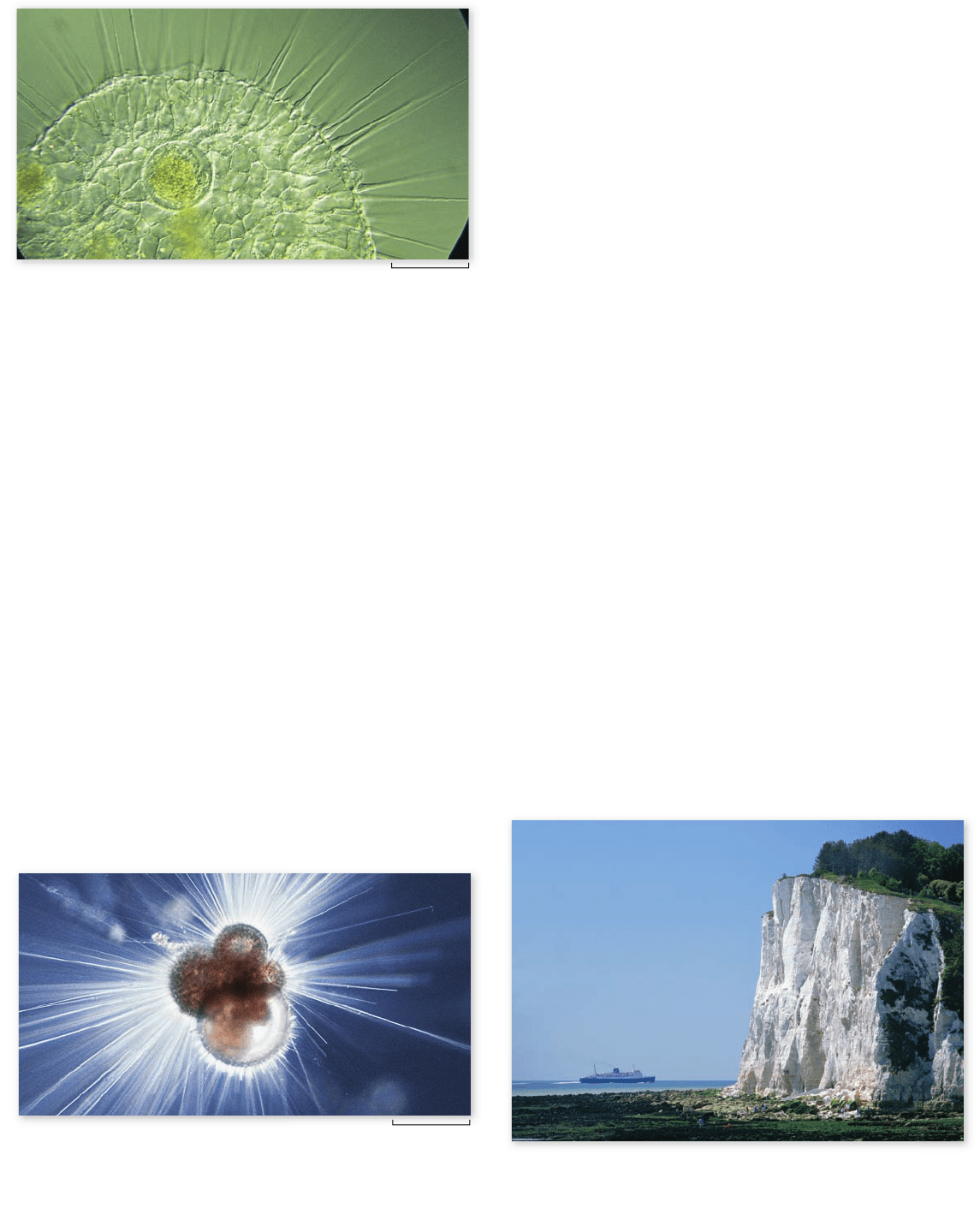
Figure 29.27
Actinosphaerium with needle-like
pseudopods.
Figure 29.28
A representative of the foraminifera.
Podia, thin cytoplasmic projections, extend through pores in the
calcareous test, or shell, of this living foram.
Figure 29.29
White Cli s of Dover.
The limestone that
forms these cliffs is composed almost entirely of fossil shells of
protists, including foraminifera.
Podia are used for swimming, gathering materials for the tests,
and feeding. Foraminifera eat a wide variety of small organisms.
The life cycles of foraminifera are extremely complex, in-
volving alternation between haploid and diploid generations.
Foraminifera have contributed massive accumulations of their
tests to the fossil record for more than 200 million years. Because
of the excellent preservation of their tests and the striking differ-
ences among them, forams are very important as geological
markers. The pattern of occurrence of different forams is often
used as a guide in searching for oil-bearing strata. Limestones all
over the world, including the famous White Cliffs of Dover in
southern England, are often rich in forams (figure 29.29 ).
Slime molds exhibit “group behavior”
Slime molds originated at least three distinct times, and the
three lineages are very distantly related. Like water molds, these
organisms were once considered fungi. We will explore two lin-
eages: the plasmodial slime molds, which are huge, single-
celled, multinucleate, oozing masses, and the cellular slime
molds, in which single cells combine and differentiate, creating
an early model of multicellularity.
Plasmodial slime molds
Plasmodial slime molds stream along as a plasmodium, a non-
walled, multinucleate mass of cytoplasm that resembles a moving
mass of slime (figure 29.30) . This form is called the feeding phase,
and the plasmodia may be orange, yellow, or another color.
Plasmodia show a back-and-forth streaming of cytoplasm
that is very conspicuous, especially under a microscope. They are
able to pass through the mesh in cloth or simply to flow around
or through other obstacles. As they move, they engulf and digest
bacteria, yeasts, and other small particles of organic matter.
A multinucleated Plasmodium cell undergoes mitosis syn-
chronously, with the nuclear envelope breaking down, but only
at late anaphase or telophase. Centrioles are absent.
along spiky projections of the skeleton (figure 29.27) . Micro-
tubules support these cytoplasmic projections.
Foraminifera fossils created
huge limestone deposits
Members of the phylum Foraminifera are heterotrophic ma-
rine protists. They range in diameter from about 20 μm to sev-
eral centimeters. They resemble tiny snails and can form
3-m-deep layers in marine sediments. Characteristic of the
group are pore-studded shells (called tests) composed of organic
materials usually reinforced with grains of calcium carbonate,
sand, or even plates from shells of echinoderms or spicules
(minute needles of calcium carbonate) from sponge skeletons.
Depending on the building materials they use, foramin-
ifera may have shells of very different appearance. Some of
them are brilliantly colored red, salmon, or yellow-brown.
Most foraminifera live in sand or are attached to other
organisms, but two families consist of free-floating planktonic
organisms. Their tests may be single-chambered, but are more
often multichambered, and they sometimes have a spiral shape
resembling that of a tiny snail. Thin cytoplasmic projections
called podia emerge through openings in the tests (figure 29.28) .
584
part
V
Diversity of Life on Earth
rav32223_ch29_567-587.indd 584rav32223_ch29_567-587.indd 584 11/13/09 11:34:17 AM11/13/09 11:34:17 AM
Apago PDF Enhancer
0.01 µm
1
2
3
4
5
6
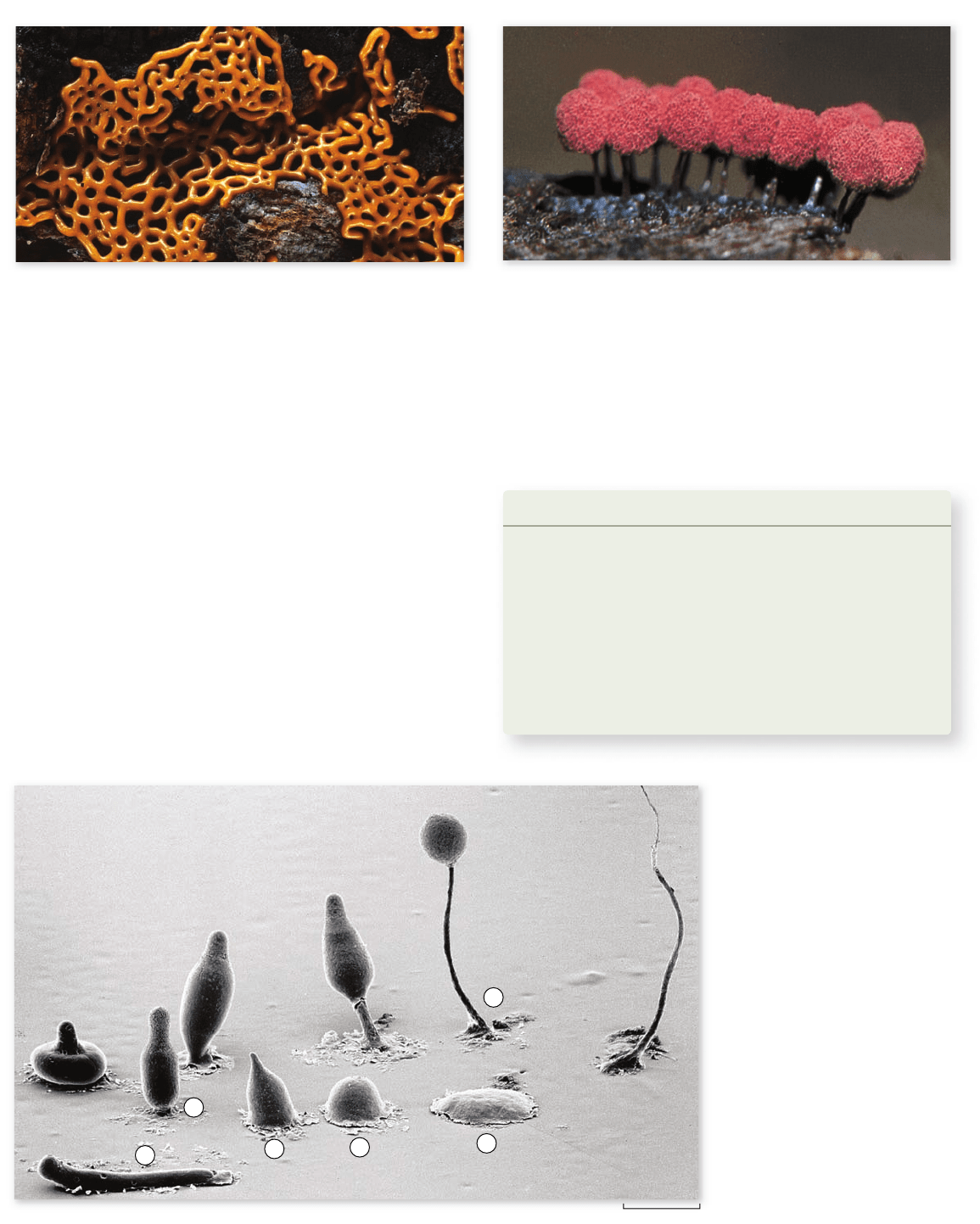
Figure 29.30
A plasmodial protist.
This multinucleate
pretzel slime mold, Hemitrichia serpula, moves about in search of the
bacteria and other organic particles that it ingests.
Figure 29.31
Sporangia of a plasmodial slime mold.
These Arcyria sporangia are found in the phylum Myxomycota.
Figure 29.32
Development in Dictyostelium
discoideum, a cellular slime
mold.
1. First, a spore
germinates, forming an amoeba
that feeds and reproduces until the
food runs out. At that point,
amoebas aggregate and move
toward a xed center. 2. The
aggregated amoebas begin to form
a mound. 3. The mound produces
a tip and begins to fall sideways.
4. Next, the aggregate forms a
multicellular “slug,” 2–3 mm long,
that migrates toward light. 5. The
slug stops moving and a process
called culmination begins. Cells
differentiate into stalk and spore
cells. 6. In the mature fruiting
body, amoebas become encysted
as spores.
When either food or moisture is in short supply, the
plasmodium migrates relatively rapidly to a new area. Here it
stops moving and either forms a mass in which spores differ-
entiate or divides into a large number of small mounds, each
of which produces a single, mature sporangium, the structure
in which spores are produced. These sporangia are often
beautiful and extremely complex in form (figure 29.31) . The
spores are highly resistant to unfavorable environmental in-
fluences and may last for years if kept dry.
Cellular slime molds
The cellular slime molds have become an important group for
the study of cell differentiation because of their relatively sim-
ple developmental systems (figure 29.32) . The individual or-
ganisms behave as separate amoebas, moving through the soil
and ingesting bacteria. When food becomes scarce, the indi-
viduals aggregate to form a moving “slug.” Cyclic adenosine
monophosphate (cAMP) is sent out in pulses by some of the
cells, and other cells move in the direction of the cAMP to form
the slug. In the cellular slime mold Dictyostelium discoideum, this
slug goes through morphogenesis to make stalk and spore cells.
The spores then go on to form a new amoeba if they land in a
moist habitat.
Learning Outcomes Review 29.9
Amoebas such as Rhizopodia and Actinopoda are polyphyletic. They move
with the aid of pseudopods. Many members of the foraminifera occupy
marine habitats. Most of them have calcium carbonate shells responsible
for large fossil deposits of limestone, whereas most diatoms have silica
shells. At least three lineages of slime mold exist. Cellular slime molds are
multicellular, and plasmodial slime molds consist of large multinucleate
single cells.
■ Would you say that cellular slime molds are closely
related to plasmodial slime molds?
chapter
29
Protists
585www.ravenbiology.com
rav32223_ch29_567-587.indd 585rav32223_ch29_567-587.indd 585 11/13/09 11:34:22 AM11/13/09 11:34:22 AM

Apago PDF Enhancer
29.4 Euglenozoa: A Diverse Group in Which Some
Members Have Chloroplasts
Euglenoids are free-living eukaryotes with anterior agella.
Euglenoids can produce chloroplasts to carry out photosynthesis in
the light. They contain a pellicle and move via anterior agella.
Kinetoplastids are parasitic.
Kinetoplastids are parasitic and are distinctive in having a single,
unique mitochondrion with two types of circular DNA.
29.5 Alveolata: Protists with Submembrane Vesicles
Dinoagellates are photosynthesizers with distinctive features.
Dino agellates have pairs of agella arranged so that they swim with
a spinning motion. Blooms of dino agellates cause red tides.
Apicomplexans include the malaria parasite.
Apicomplexans are spore-forming animal parasites. They have a
unique arrangement of organelles at one end of the cell, called the
apical complex, which is used to invade the host.
Ciliates are characterized by their mode of locomotion.
Ciliates are unicellular, heterotrophic protists that use numerous
cilia for feeding and propulsion. Each cell has a macronucleus and a
micronucleus. Micronuclei are exchanged during conjugation.
29.6 Stramenopila: Protists with Fine Hairs
Brown algae include large seaweeds.
Brown algae are typically large seaweeds that undergo an alternation
of generations, producing gametophyte and sporophyte stages.
Diatoms are unicellular organisms with double shells.
Diatoms have silica in their cell walls. Each diatom produces two
overlapping glassy shells that t like a box and lid.
Oomycetes, the “water molds,” have some pathogenic members.
Oomycetes are parasitic and are unique in the production of asexual
spores (zoospores) that bear two unequal agella.
29.7 Rhodophyta: Red Algae
Red algae produce accessory pigments that may give them a red
color. They lack centrioles and agella, and they reproduce using an
alternation of generations.
29.8 Choano agellida: Possible Animal Ancestors
Colonial choano agellates are structurally similar to freshwater
sponges, and molecular similarities have been found.
29.9 Protists Without a Clade
Amoebas are paraphyletic.
Amoebas have formed through several lineages. Two main groups are
Rhizopoda and Actinopoda (radiolarians).
Foraminifera fossils created huge limestone deposits.
The Foraminifera are heterotrophic marine protists with pore-
studded shells primarily formed by deposit of calcium carbonate.
Slime molds exhibit “group behavior.”
Two of the three lineages of slime molds are the plasmodial slime
molds and the cellular slime molds. All can aggregate to form a
moving “slug” that produces spores.
29.1 Eukaryotic Origins and Endosymbiosis
Protista is not monophyletic.
Protists are the most diverse of the four kingdoms in the domain
Eukarya; however, Kingdom Protista is polyphyletic.
Monophyletic clades have been identied among the protists.
The correct classi cation of protists is under debate. Seven major
monophyletic groups are considered in this chapter.
Fossil evidence dates the origins of eukaryotes.
Although eukaryotes may have arisen earlier, the fossil evidence of
their appearance dates back to 1.5 bya.
The nucleus and ER arose from membrane infoldings.
Mitochondria evolved from engulfed aerobic bacteria.
According to the theory of endosymbiosis, ancestral eukaryotic cells
engulfed aerobic bacteria, which then became mitochondria.
Chloroplasts evolved from engulfed photosynthetic bacteria.
Chloroplasts are believed to have arisen when ancestral eukaryotic
cells engulfed photosynthetic bacteria.
Endosymbiosis is supported by a range of evidence.
Centrioles may have also arisen by endosymbiosis. In support of
endosymbiosis, several organelles are found to contain their own
DNA, which closely resembles that of prokaryotes.
Genes have migrated from endosymbiotic organelles.
Many genes in the mitochondria have moved into the eukaryotic
nucleus over time.
Mitosis evolved in eukaryotes.
Mechanisms of mitosis vary among organisms, suggesting that the
process did not evolve all at once.
29.2 De ning Protists
Protista is not monophyletic.
Monophyletic clades have been identi ed among the protists.
Protist cell surfaces vary widely.
Extracellular material (ECM) may cover the plasma membrane.
Protists have several means of locomotion.
Protists mainly use agella or pseudopods for locomotion, although
many other means of propulsion are found.
Protists have a range of nutritional strategies.
Protists include phototrophs, heterotrophs, (phagotrophs or
osmotrophs), and mixotrophs capable of both modes.
Protists reproduce asexually and sexually.
Protists can reproduce asexually by mitosis, budding, or schizogony.
They may also carry out sexual reproduction.
Protists are the bridge to multicellularity.
Colonial protists may be the precursors of multicellular organisms.
29.3 Diplomonads and Parabasalids:
Flagellated Protists Lacking Mitochondria
Diplomonads have two nuclei.
Diplomonads are unicellular, move with agella, and have two nuclei.
Parabasalids have undulating membranes.
Parabasalids use agella and undulating membranes for locomotion.
Chapter Review
586
part
V
Diversity of Life on Earth
rav32223_ch29_567-587.indd 586rav32223_ch29_567-587.indd 586 11/13/09 11:34:28 AM11/13/09 11:34:28 AM

Apago PDF Enhancer
APPLY
1. Analyze the following statements and choose the one that most
accurately supports the endosymbiotic theory.
a. Mitochondria rely on mitosis for replication.
b. Chloroplasts contain DNA but translation does not occur
in chloroplasts.
c. Vacuoles have double membranes.
d. Antibiotics that inhibit protein synthesis in bacteria can
have the same effect on mitochondria.
2. Determine which feature of the choano agellates was likely the
most signi cant for the evolution of animals?
a. Flagellum with a funnel-shaped, contractile collar also
found in sponges
b. A tyrosine kinase receptor on the surface of
choano agellates that has strong homology to fungi
c. A colonial form that resembles some fungi
d. Eyespots that are similar to ribbonworms
3. Examine the life cycle of cellular slime molds, and determine
which feature affords the greatest advantage for surviving food
shortages.
a. Cellular slime molds produce spores when starved.
b. Cellular slime molds are saprobes.
c. A diet of bacteria ensures there will never be a shortage of food.
d. Cellular slime molds use cAMP to guide each other to food
sources.
S Y N THES IZE
1. Modern taxonomic treatments rely heavily on phylogenetic data
to classify organisms. In the past, taxonomists often used a
morphological species concept, in which species were de ned
based on similarities in growth form. Give an example to show
how a morphological species concept would group a set of
protists differently than a phylogenetic species concept would.
2. Three methods have been used to try to eradicate malaria. One
is to eliminate the mosquito vectors of the parasite, a second is
to kill the parasites after they entered the human body, and the
third is to develop a vaccine against the parasite, allowing the
human immune system to provide protection from the disease.
Which do you suppose is the most promising in the long run?
Why? Think about both the biology of the disease and the
ef cacy of carrying out each of the methods on a large scale.
3. Design an experiment to demonstrate that cells of cellular slime
molds are attracted to cyclic-AMP. Then, design a follow-up
experiment to determine whether they are always attracted to
cAMP or only when resources are scarce.
U N DERS TAN D
1. Fossil evidence of eukaryote dates back to Hemitrichia serpula
a. 2.5 bya. c. 2.5 mya.
b. 1.5 bya. d. 1.5 mya.
2. DNA is not found in this organelle.
a. Endoplasmic reticulum
b. Nucleus
c. Chloroplast
d. Centriole
e. Mitochondrion
3. The products of budding are
a. two cells of equal size.
b. two cells, one of which is smaller than the other.
c. many cells of equal size.
d. many cells of variable size.
4. Both diplomonads and parabasalids
a. contain chloroplasts.
b. have multinucleate cells.
c. lack mitochondria.
d. have silica in their cell walls.
5. Trypanosomes are examples of
a. euglenoids. c. parabasilids.
b. diplomonads. d. kinetoplastids.
6. The function of the apical complex in Apicomplexans is to
a. propel the cell through water.
b. penetrate host tissue.
c. absorb food.
d. detect light.
7. If a cell contains a pellicle, it
a. can change shape readily.
b. is shaped like a sphere.
c. is shaped like a torpedo.
d. must have a contractile vacuole.
8. Stramenopila are
a. tiny agella. c. small hairs on agella.
b. large cilia. d. pairs of large agella.
9. Choose all of the following that exhibit an alternation of
multicellular generations.
a. Dino agellates c. Red algae
b. Brown algae d. Diatoms
10. Choose all of the following that are photosynthetic.
a. Diatoms c. Apicomplexans
b. Ciliates d. Dino agellates
11. Which is most likely the ancestor of animals?
a. Trypanosomes c. Ciliates
b. Diplomonads d. Choano agellates
12. When food is scarce, cells of this organism communicate with
each other to form a multicellular slug.
a. Cellular slime molds c. Foraminifera
b. True amoebas d. Diatoms
Review Questions
O N LIN E RES OURCE
www.ravenbiology.com
Understand, Apply, and Synthesize—enhance your study with
animations that bring concepts to life and practice tests to assess
your understanding. Your instructor may also recommend the
interactive eBook, individualized learning tools, and more.
chapter
29
Protists
587www.ravenbiology.com
rav32223_ch29_567-587.indd 587rav32223_ch29_567-587.indd 587 11/13/09 11:34:28 AM11/13/09 11:34:28 AM

Apago PDF Enhancer
C
Chapter
30
Green Plants
Chapter Outline
30.1 De ning Plants
30.2 Chlorophytes and Charophytes: Green Algae
30.3 Bryophytes: Dominant Gametophyte Generation
30.4 Tracheophyte Plants: Roots, Stems, and Leaves
30.5 Lycophytes: Dominant Sporophyte Generation
and Vascular Tissue
30.6 Pterophytes: Ferns and Their Relatives
30.7 The Evolution of Seed Plants
30.8 Gymnosperms: Plants with “Naked Seeds”
30.9 Angiosperms: The Flowering Plants
Introduction
Colonization of land by plants fundamentally altered the history of life on Earth. A terrestrial environment o ers abundant CO
2
and solar radiation for photosynthesis. But for at least 500 million years, the lack of water and higher ultraviolet (UV) radiation on
land con ned green algal ancestors to an aquatic environment. Evolutionary innovations for reproduction, structural support, and
prevention of water-loss are key in the story of plant adaptation to land. The evolutionary shift on land to life cycles dominated by
a diploid generation masks recessive mutations arising from higher UV exposure . As a result, larger numbers of alleles persist in
the gene pool, creating greater genetic diversity. Numerous evolutionary solutions to terrestrial challenges have resulted in over
300,000 species of plants dominating all terrestrial communities today, from forests to alpine tundra and from agricultural elds to
deserts. Plants a ect almost every aspect of our lives, from improving environmental quality to providing pharmaceuticals, food,
fuels, building materials, and clothing . This chapter explores the evolutionary history and strategies of the green plants.
30.1
De ning Plants
Learning Outcomes
Explain the relationship between the different algae 1.
clades and plants.
Describe the haplodiplontic life cycle.2.
Distinguish between a sporophyte and a gametophyte.3.
Identify two major environmental challenges for land 4.
plants and associated adaptations.
As you saw in chapter 26 , the phylogenetic revolution has com-
pletely altered our definition of a plant. We now know that all
green algae and the land plants shared a common ancestor a
little over 1 bya, and the two groups are now recognized as a
kingdom or crown group referred to as the Viridiplantae, or
simply, the green plants. DNA sequence data are consistent
with the claim that a single individual gave rise to all plants.
Thus, plants are all members of the Viridiplantae, extending an
older definition of plants to include the green algae.
Plants are photoautotrophic, but not all photo auto-
trophs are members of the Viridiplantae. The definition of
a plant is broad, but it excludes the red and brown algae. All
CHAPTER
rav32223_ch30_588-613.indd 588rav32223_ch30_588-613.indd 588 11/13/09 12:05:56 PM11/13/09 12:05:56 PM
Apago PDF Enhancer
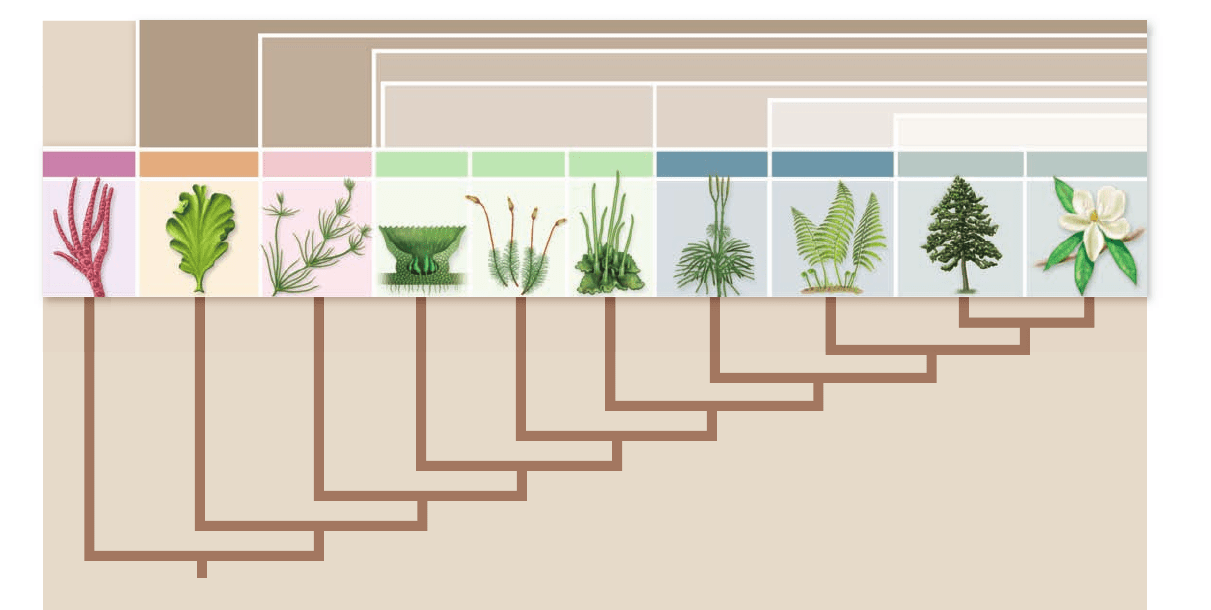
Ancestral alga
Red Algae Chlorophytes Charophytes Liverworts HornwortsMosses Lycophytes Ferns + Allies Gymnosperms Angiosperms
Seed plants
Tracheophytes
Euphyllophytes
Bryophytes
Land plants
Streptophyta
Green plants
Green algaeGreen algae
Figure 30.1
Green plant phylogeny.
algae—red, brown, and green—shared a primary endosym-
biotic event 1.5 bya . But sharing an ancestral chloroplast
lineage is not the same as being monophyletic. Red and
green algae last shared a common ancestor about 1.4 bya .
Brown algae became photosynthetic through endosymbio-
sis with a eukaryotic red alga that had itself already acquired
a photosynthetic cyanobacterium, as described in the pre-
ceding chapter.
Plants are also not fungi, which are more closely related
to metazoan animals (see chapter 32) . Fungi, however, were es-
sential to the colonization of land by plants, enhancing plants’
nutrient uptake from the soil.
Land plants evolved
from freshwater algae
Some saltwater algae evolved to thrive in a freshwater environ-
ment. Just a single species of freshwater green algae gave rise to
the entire terrestrial plant lineage, from mosses through the
flowering plants (angiosperms). Given the incredibly harsh
conditions of life on land, it is not surprising that all land plants
share a single common ancestor. Exactly what this ancestral
alga was is still a mystery, but close relatives, members of the
charophytes, exist in freshwater lakes today.
The green algae split into two major clades: the chloro-
phytes, which never made it to land, and the charophytes, which
are sister to all the land plants (figure 30.1) . Land plants, al-
though diverse, have certain characteristics in common. Unlike
the charophytes, land plants have multicellular haploid and
diploid stages. Diploid embryos are also land plant innovations.
Over time, the trend has been toward more embryo protection
and a smaller haploid stage in the life cycle.
Land plants have adapted
to terrestrial life
Unlike their freshwater ancestors, most land plants have
only limited amounts of water available. As an adaptation to
living on land, most plants are protected from desication—
the tendency of organisms to lose water to the air—by a
waxy surface material called the cuticle that is secreted onto
their exposed surfaces. The cuticle is relatively imperme-
able, preventing water loss. This solution, however, limits
the gas exchange essential for respiration and photosynthe-
sis. Gas diffusion into and out of a plant occurs through tiny
mouth-shaped openings called stomata (singular, stoma),
which allows water to diffuse out at the same time.
Chapter 36 describes how stomata can be closed at times to
limit water loss.
Moving water within plants is a challenge that increases
with plant size. Members of the land plants can be distinguished
based on the presence or absence of tracheids, specialized cells
that facilitate the transport of water and minerals (see
chapter 36 ). Tracheophytes have specialized transport cells
called tracheids and have evolved highly efficient transport sys-
tems: water-conducting xylem and food-conducting phloem
strands of tissues in their stems, roots, and leaves. Some plants
that grow in aquatic environments, including water lilies, have
tra cheids. Aquatic tracheophytes had terrestrial ancestors that
adapted back to a watery environment.
chapter
30
Green Plants
589www.ravenbiology.com
rav32223_ch30_588-613.indd 589rav32223_ch30_588-613.indd 589 11/13/09 12:06:05 PM11/13/09 12:06:05 PM
Apago PDF Enhancer
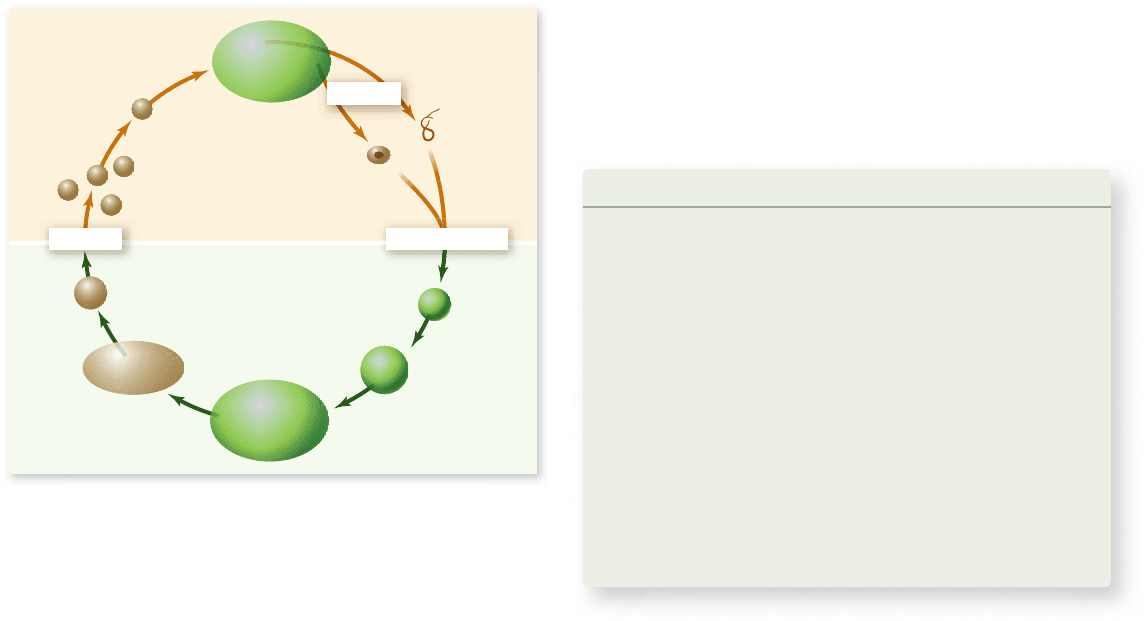
Egg
Spore
Spores
Sperm
Gametophyte
(n)
Sporophyte
(2n)
Sporangia
Spore mother
cell
2n
Embryo
2n
Zygote
2n
n
n
n
n
MEIOSIS
MITOSIS
FERTILIZATION
n
2n
Figure 30.2
A generalized multicellular plant life cycle.
Note that both haploid and diploid individuals can be multicellular.
Also, spores are produced by meiosis, while gametes are produced
by mitosis.
Terrestrial plants are exposed to higher intensities of UV
irradiation than aquatic algae, increasing the chance of mutation.
Diploid genomes mask the effect of a single, deleterious allele. All
land plants have both haploid and diploid generations, and the
evolutionary shift toward a dominant diploid generation allows
for greater genetic variability to persist in terrestrial plants .
Most multicellular Viridiplantae have haplodiplontic life
cycles. Many multicellular green algae and all land plants have
haplodiplontic life cycles and undergo mitosis after both gamete
fusion and meiosis. The result is a multicellular haploid individ-
ual and a multicellular diploid individual—unlike in the human
life cycle, in which gamete fusion directly follows meiosis. Hu-
mans have a diplontic life cycle, meaning that only the diploid
stage is multicellular; by contrast, the land plant life cycle is
haplodiplontic, having multicellular haploid and diploid stages.
The haplodiplontic cycle produces
alternation of generations
The basic haplodiplontic cycle is summarized in figure 30.2 .
Many brown, red, and green algae are also haplodiplontic. Hu-
mans produce gametes via meiosis, but land plants actually pro-
duce gametes by mitosis in a multicellular, haploid individual.
The diploid generation, or sporophyte, alternates with the
haploid generation, or gametophyte. Sporophyte means “spore
plant,” and gametophyte means “gamete plant.” These terms
indicate the kinds of reproductive cells the respective genera-
tions produce.
The diploid sporophyte produces haploid spores (not ga-
metes) by meiosis. Meiosis takes place in structures called
sporangia , where diploid spore mother cells (sporocytes)
undergo meiosis, each producing four haploid spores. Spores
are the first cells of the gametophyte generation. Spores divide
by mitosis, producing a multicellular, haploid gametophyte.
The haploid gametophyte is the source of gametes. When
the gametes fuse, the zygote they form is diploid and is the first
cell of the next sporophyte generation. The zygote grows into
a diploid sporophyte by mitosis and produces sporangia in
which meiosis ultimately occurs.
The relative sizes of haploid
and diploid generations vary
All land plants are haplodiplontic; however, the haploid genera-
tion consumes a much larger portion of the life cycle in mosses
and ferns than it does in gymnosperms and angiosperms. In
mosses, liverworts, and ferns, the gametophyte is photosyn-
thetic and free-living. When you look at mosses, what you see
is largely gametophyte tissue; the sporophytes are usually
smaller, brownish or yellowish structures attached to the tissues
of the gametophyte. In other plants, the gametophyte is usually
nutritionally dependent on the sporophyte. When you look at a
gymnosperm or angiosperm, such as most trees, the largest,
most visible portion is a sporophyte.
Although the sporophyte generation can get very large,
the size of the gametophyte is limited in all plants. The game-
tophyte generation of mosses produces gametes at its tips. The
egg is stationary, and sperm lands near the egg in a droplet of
water. If the moss were the height of a sequoia, not only would
vascular tissue be needed for conduction and support, but the
sperm would have to swim up the tree! In contrast, the small
gametophyte of the fern develops on the forest floor where
gametes can meet. Tree ferns are especially abundant in Austra-
lia; the haploid spores the sporophyte trees produce fall to the
ground and develop into gametophytes.
Having completed an overview of plant life cycles, we
next consider the major plant groups within Viridiplantae . As
we proceed, you will see a reduction of the gametophyte from
group to group, a loss of multicellular gametangia (structures
in which gametes are produced), and increasing specialization
for life on land, including the remarkable structural adaptations
of the flowering plants, which are the dominant plants today.
Learning Outcomes Review 30.1
All algae acquired chloroplasts necessary for photosynthesis, but green
algae diverged from red algae after that event. A single freshwater green
alga successfully invaded land; its descendants eventually developed
reproductive strategies, conducting systems, stomata, and cuticles as
adaptations. Green plants (Viridiplantae) include all green algae and the
land plants. Most plants have a haplodiplontic life cycle, a haploid form
alternates with a diploid form in a single organism. Diploid sporophytes
produce haploid spores by meiosis. Each spore can develop into a haploid
gametophyte by mitosis; the gametophyte form produces haploid gametes,
again by mitosis. When the gametes fuse, the diploid sporophyte is formed
once more.
■ How would you distinguish a small aquatic
tracheophyte from a freshwater alga?
■ What distinguishes gamete formation in plants from
gamete formation in humans?
590
part
V
Diversity of Life on Earth
rav32223_ch30_588-613.indd 590rav32223_ch30_588-613.indd 590 11/13/09 12:06:05 PM11/13/09 12:06:05 PM
Apago PDF Enhancer
Charophytes
Liverworts
Chlorophytes
n
2n
+ Gamete
– Gamete
+ Strain
FERTILIZATION
MITOSIS
MITOSIS
Zygospore
(diploid)
Asexual
reproduction
Pairing of positive
and negative
mating strains
– Strain
MEIOSIS
4 µm
Vegetative cells
22.1 nm
Reproductive cells
30.2
Chlorophytes and
Charophytes:
Green Algae
Learning Outcomes
Explain why chlorophytes are considered close relatives 1.
of land plants.
Explain why charophytes are considered the closest 2.
relatives of land plants.
Green algae have two distinct lin-
eages: the chlorophytes, discussed
here, and another lineage, the
streptophytes, that gave rise to
the land plants (see figure 30.1).
The chlorophytes are of special
interest here because of their un-
usual diversity and lines of spe-
cialization. The chlorophytes have
an extensive fossil record dating
back 900 million years. Modern
chlorophytes closely resemble land plants, especially in
their chloroplasts, which are biochemically similar to those
of the plants. They contain chlorophylls a and b, as well
as carotenoids.
Chlorophytes can be unicellular
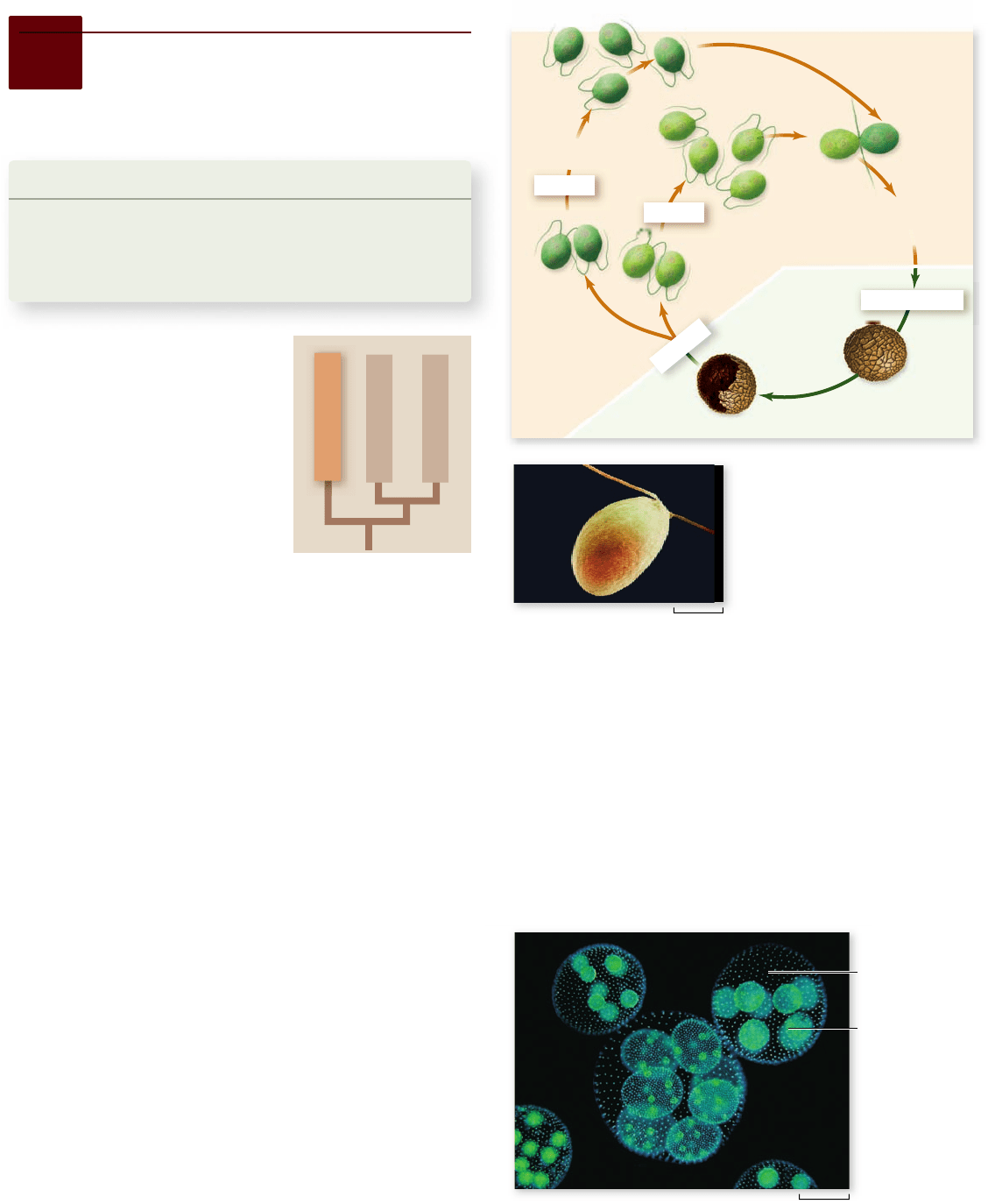
Early green algae probably resembled Chlamydomonas rein-
hardtii, diverging from land plants over 1 bya (figure 30.3) .
Individuals are microscopic (usually less than 25 μ m long),
green, and rounded, and they have two flagella at the ante-
rior end. They are soil dwellers that move rapidly in water
by beating their flagella in opposite directions. Most indi-
viduals of Chlamydomonas are haploid. Chlamydomonas
reproduces asexually as well as sexually, but because it is al-
ways unicellular the life cycle is not haplodiplontic (see
figure 30.3).
Several lines of evolutionary specialization have been
derived from organisms such as Chlamydomonas, including
the evolution of nonmotile, unicellular green algae. Chlamy-
domonas is capable of retracting its flagella and settling down
as an immobile unicellular organism if the pond in which it
lives dries out. Some common algae found in soil and bark,
such as Chlorella, are essentially like Chlamydomonas in this
trait, but they do not have the ability to form flagella.
Genome-sequencing projects are providing new insights
into the evolution of the Viridiplantae. A comparison of the
6968 protein families predicted by the Chlamydomonas genome
were compared with a red algal genome and two streptophyte
genomes (moss and Arabidopsis). Of these proteins, 172 are
found only in the Viridiplantae. Comparing these conserved
proteins in the green plants will provide new information about
the evolution of the green plants.
Figure 30.3
Chlamydomonas life cycle.
This single-celled chlorophyte
has both asexual and sexual
reproduction. Unlike
multicellular green plants, gamete
fusion is not followed by mitosis.
© Dr. Richard Kessel & Dr. Gene
Shih/Visuals Unlimited
Colonial chlorophytes have
some cell specialization
Multicellularity arose many times in the eukaryotes. Colonial
chlorophytes provide examples of cellular specialization, an as-
pect of multicellularity. A line of specialization from cells like
those of Chlamydomonas concerns the formation of motile,
colonial organisms. In these genera of green algae, the
Chlamydomonas-like cells retain some of their individuality.
The most elaborate of these organisms is Volvox
(figure 30.4) , a hollow sphere made up of a single layer of
Figure 30.4
Volvox. This chlorophyte forms a colony where
some cells specialize for reproduction.
chapter
30
Green Plants
591www.ravenbiology.com
rav32223_ch30_588-613.indd 591rav32223_ch30_588-613.indd 591 11/13/09 12:06:06 PM11/13/09 12:06:06 PM