
Raven P.H., Johnson G.B., Mason K.A. Biology (Ninth Edition)
Подождите немного. Документ загружается.

Apago PDF Enhancer
Charophytes
Liverworts
Chlorophytes
FERTILIZATION
n
2n
-Gametophyte (n)
+Gametophyte (n)
+Gametangia
Gametes
-Gametangia
Zygote
Germinating
zygote
Sporophyte (2n)
Sporangia
Spores
-
+
MEIOSIS
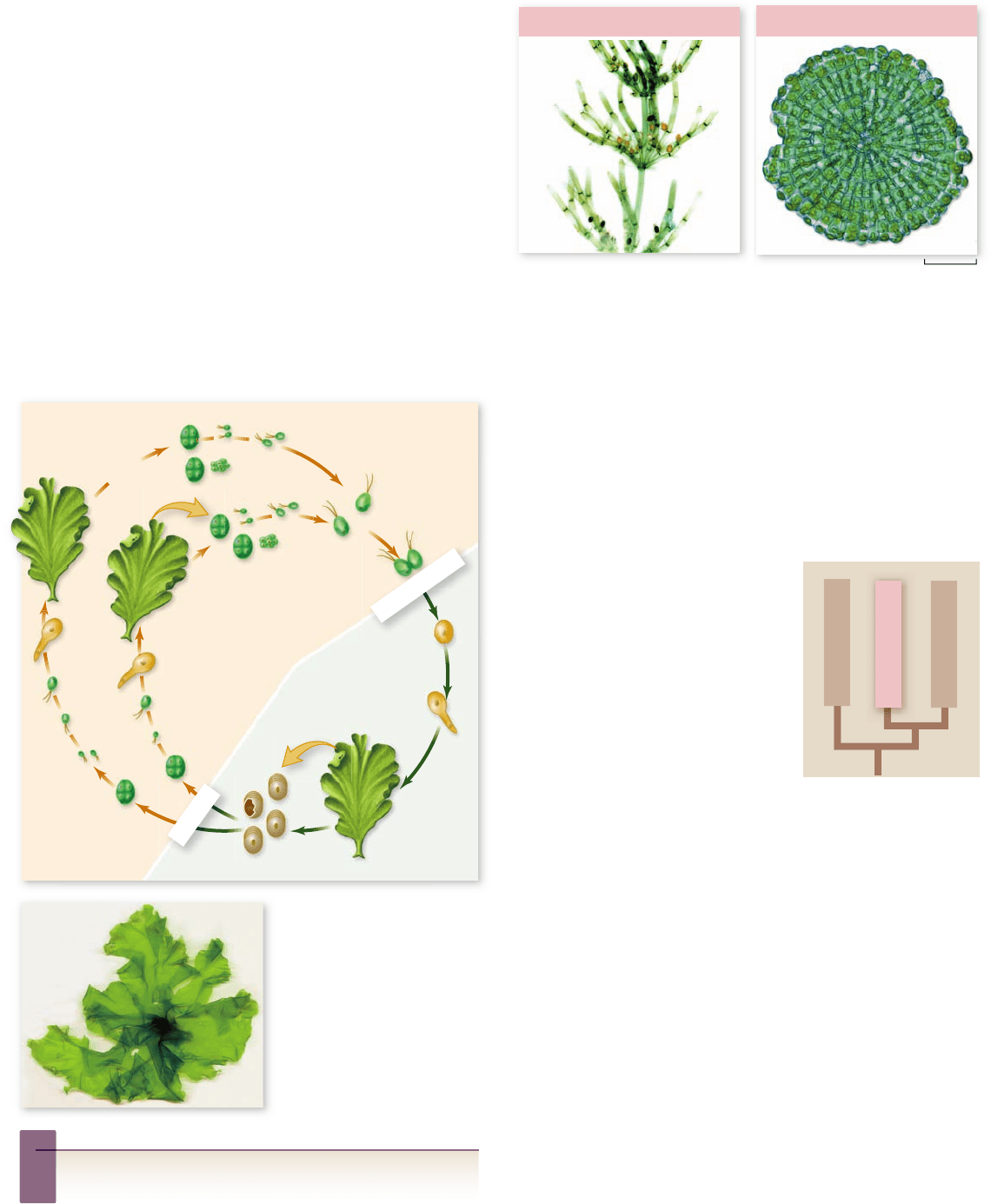
Chara Coleochaete
45 µm
500 to 60,000 individual cells, each cell having two flagella.
Only a small number of the cells are reproductive. Some repro-
ductive cells may divide asexually, bulge inward, and give rise to
new colonies that initially remain within the parent colony.
Others produce gametes.
Multicellular chlorophytes can
have haplodiplontic life cycles
Haplodiplontic life cycles are found in some chlorophytes and
the streptophytes, which include both charophytes and land
plants. Ulva, a multicellular chlorophyte, has identical gameto-
phyte and sporophyte generations that consist of flattened
sheets two cells thick (figure 30.5) . Unlike the charophytes,
none of the ancestral chlorophytes gave rise to land plants.
Figure 30.6
Chara, a member of the Charales, and
Coleochaete, a member of the Coleochaetales, represent
the two clades most closely related to land plants.
Charophytes are the closest
relatives to land plants
Charophytes, a clade of strepto-
phytes, are also green algae, and they
are distinguished from chlorophytes
by their close phylogenetic relation-
ship to the land plants. Charophytes
have haplontic life cycles, indicating
that the evolution of a diplontic em-
bryo and haplodiplontic life cycle
occurred after the move onto land.
Identifying which of the
char o phyte clades is sister (most
closely related) to the land plants puzzled biologists for a
long time. The charophyte algae fossil record is scarce. Cur-
rently, the molecular evidence from rRNA and DNA se-
quences favors the charophytes as the green algal clade in
the streptophytes.
The two candidate Charophyta clades have been the
Cha rales, with about 300 species, and the Coleochaetales,
with about 30 species (figure 30.6) . Both lineages are primar-
ily freshwater algae, but the Charales are huge, relative to the
microscopic Coleochaetales. Both clades have similarities to
land plants. Coleochaete and its relatives have cytoplasmic link-
ages between cells called plasmodesmata, which are found in
land plants. The species Chara in the Charales undergoes mi-
tosis and cytokinesis like land plant cells. Sexual reproduction
in both relies on a large, nonmotile egg and flagellated sperm.
These gametes are more similar to those of land plants than
many charophyte relatives. Both charophyte clades form green
mats around the edges of freshwater ponds and marshes. One
species must have successfully inched its way onto land through
adaptations to drying.
Figure 30.5
Life cycle
of Ulva. This chlorophyte
alga has a haplodiplontic life
cycle. The gametophyte and
sporophyte are multicellular
and identical in appearance.
Inquiry question
?
Are Ulva gametes formed by meiosis? Explain your response.
592
part
V
Diversity of Life on Earth
rav32223_ch30_588-613.indd 592rav32223_ch30_588-613.indd 592 11/13/09 12:06:08 PM11/13/09 12:06:08 PM
Apago PDF Enhancer
Charophytes
Liverworts
Hornworts
Tracheophytes
Mosses
Female
gametophyte
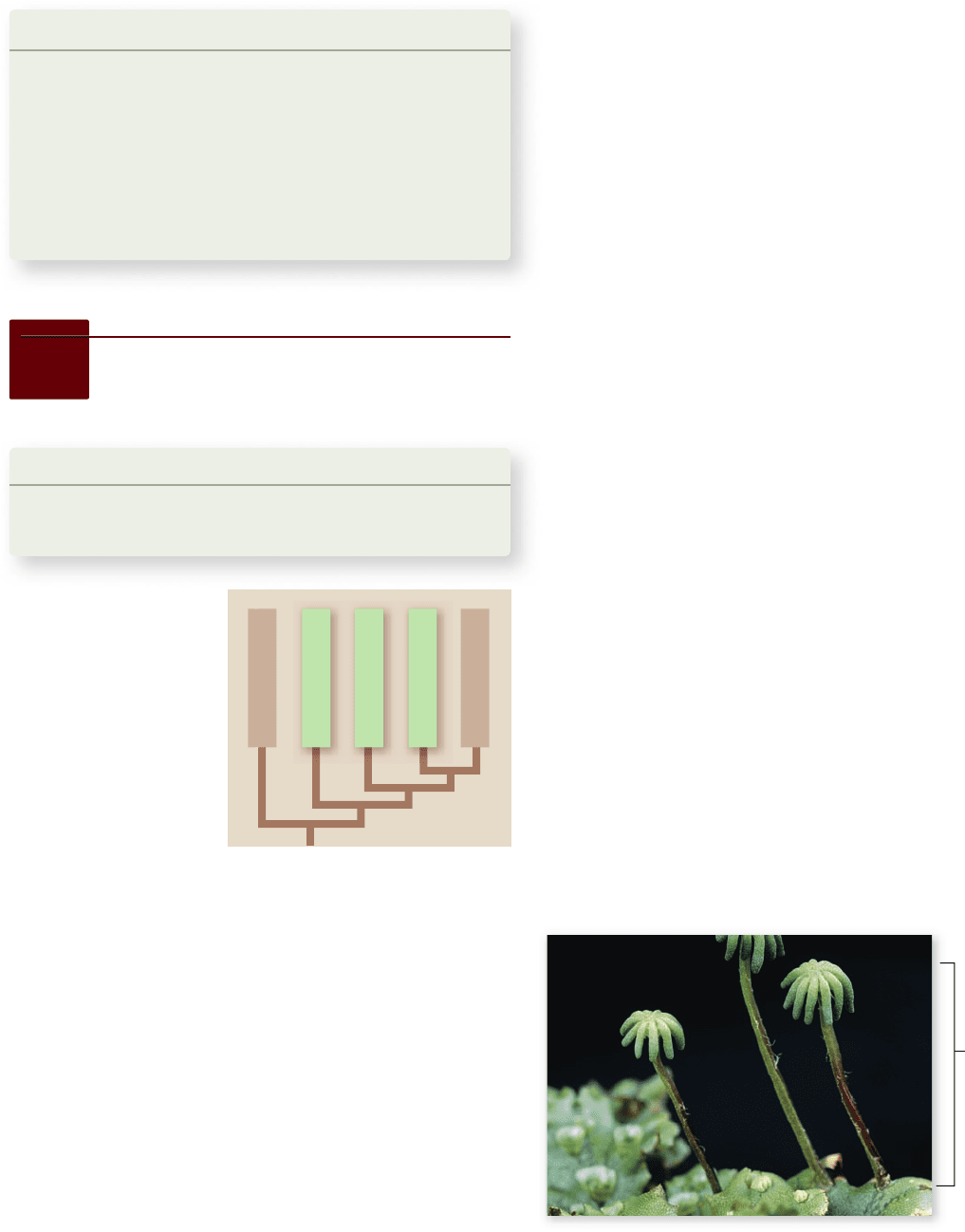
Figure 30.7
A common liverwort, Marchantia (phylum
Hepaticophyta). The microscopic sporophytes are formed by
fertilization within the tissues of the umbrella-shaped structures
that arise from the surface of the at, green, creeping gametophyte.
30.3
Bryophytes: Dominant
Gametophyte Generation
Learning Outcome
Describe adaptations of bryophytes for terrestrial 1.
environments.
Bryophytes are the clos-
est living descendants of
the first land plants.
Plants in this group are
also called nontracheo-
phytes because they lack
the derived transport cell
called a tracheid.
Fossil evidence and
molecular systematics can
be used to reconstruct
early terrestrial plant life.
Water and gas availability were limiting factors. These plants
likely had little ability to regulate internal water levels and likely
tolerated desication, traits found in most extant mosses, although
some are aquatic.
Algae, including the Charales, lack roots. Fungi and early
land plants cohabitated, and the fungi formed close associations
with the plants that enhanced water uptake. The tight symbi-
otic relationship between fungi and plants, called mycorrhizal
associations, are also found in many existing bryophytes. More
information on mycorrhizal fungi is found in chapter 31 .
Bryophytes are unspecialized but
successful in many environments
The approximately 24,700 species of bryophytes are simple but
highly adapted to a diversity of terrestrial environments, even
deserts. Most bryophytes are small; few exceed 7 cm in height.
Bryophytes have conducting cells other than tracheids for wa-
ter and nutrients. The tracheid is a derived trait that character-
izes the tracheophytes, all land plants but the bryophytes.
Bryophytes are sometimes called nonvascular plants, but non-
tracheophyte is a more accurate term because they do have con-
ducting cells of different types.
Scientists now agree that bryophytes consist of three
quite distinct clades of relatively unspecialized plants: liver-
worts, mosses, and hornworts. Their gametophytes are photo-
synthetic and are more conspicuous than the sporophytes.
Sporophytes are attached to the gametophytes and depend on
them nutritionally in varying degrees. Some of the sporophytes
are completely enclosed within gametophyte tissue; others are
not and usually turn brownish or straw-colored at maturity.
Like ferns and certain other vascular (tracheophyte) plants,
bryophytes require water (such as rainwater) to reproduce sex-
ually, tracing back to their aquatic origins. It is not surprising
that they are especially common in moist places, both in the
tropics and temperate regions.
Liverworts are an ancient phylum
The Old English word wyrt means “plant” or “herb.” Some
common liverworts (phylum Hepaticophyta) have flattened
gametophytes with lobes resembling those of liver—hence
the name “liverwort.” Although the lobed liverworts are the
best known representatives of this phylum, they constitute
only about 20% of the species (figure 30.7) . The other 80%
are leafy and superficially resemble mosses. The gameto-
phytes are prostrate instead of erect, and the rhizoids are
one-celled.
Some liverworts have air chambers containing upright,
branching rows of photosynthetic cells, each chamber having a
pore at the top to facilitate gas exchange. Unlike stomata, the
pores are fixed open and cannot close.
Sexual reproduction in liverworts is similar to that in
mosses. Lobed liverworts may form gametangia in umbrella-
like structures. Asexual reproduction occurs when lens-shaped
pieces of tissue that are released from the gametophyte grow to
form new gametophytes.
Learning Outcomes Review 30.2
The chlorophytes have chloroplasts very similar to those of land plants.
Specializations in this group include the evolution of nonmotile, unicellular
species that can tolerate drying and formation of colonial organisms that
exhibit a degree of cell specialization. Charophytes are the green algae
that are most likely sister to the land plants based on molecular evidence,
morphology, and reproduction.
■ What major barrier must be overcome for sexual
reproduction of land-based organisms?
chapter
30
Green Plants
593www.ravenbiology.com
rav32223_ch30_588-613.indd 593rav32223_ch30_588-613.indd 593 11/13/09 12:06:12 PM11/13/09 12:06:12 PM
Apago PDF Enhancer
Sporophyte
Gametophyte
n
2n
2n
2n
1n
1n
Sperm
Sporangium
Antheridia
Egg
Archegonia
Gametophytes
Spores
MEIOSIS
FERTILIZATION
Germinating
spores
Rhizoids
Female
Male
Zygote
Developing
sporophyte in
archegonium
Mature
sporophyte
Parent
gametophyte
MITOSIS
MITOSIS
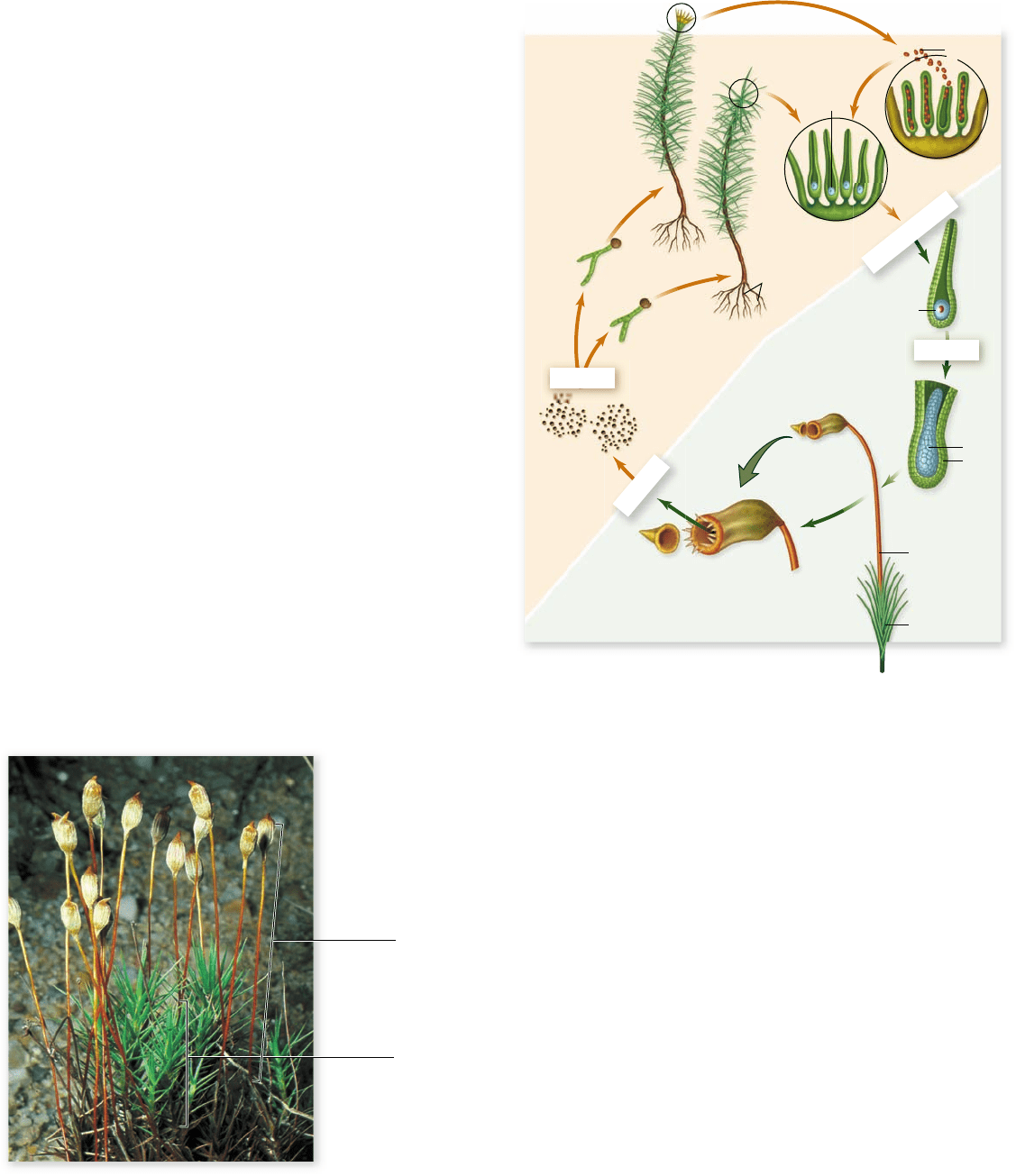
Figure 30.8
A hair-cup moss, Polytrichum (phylum
Bryophyta). The lea ike structures belong to the gametophyte.
Each of the yellowish-brown stalks with a capsule, or sporangium,
at its summit is a sporophyte.
Figure 30.9
Life cycle of a typical moss. The majority
of the life cycle of a moss is in the haploid state. The leafy
gametophyte is photosynthetic, but the smaller sporophyte is not
and is nutritionally dependent on the gametophyte. Water is
required to carry sperm to the egg.
Mosses have rhizoids and
water-conducting tissue
Unlike other bryophytes, the gametophytes of mosses typically
consist of small, leaflike structures (not true leaves, which con-
tain vascular tissue) arranged spirally or alternately around a
stemlike axis (figure 30.8 ); the axis is anchored to its substrate
by means of rhizoids. Each rhizoid consists of several cells that
absorb water, but not nearly the volume of water that is ab-
sorbed by a vascular plant root.
Moss leaflike structures have little in common with leaves
of vascular plants, except for the superficial appearance of the
green, flattened blade and slightly thickened midrib that runs
lengthwise down the middle. Only one cell layer thick (except
at the midrib), they lack vascular strands and stomata, and all
the cells are haploid.
Water may rise up a strand of specialized cells in the center
of a moss gametophyte axis. Some mosses also have specialized
food-conducting cells surrounding those that conduct water.
Moss reproduction
Multicellular gametangia are formed at the tips of the leafy
gametophytes (figure 30.9 ). Female gametangia (archegonia)
may develop either on the same gametophyte as the male
gametangia (antheridia) or on separate plants. A single egg is
produced in the swollen lower part of an archegonium, whereas
numerous sperm are produced in an antheridium.
When sperm are released from an antheridium, they
swim with the aid of flagella through a film of dew or rainwater
to the archegonia. One sperm (which is haploid) unites with an
egg (also haploid), forming a diploid zygote. The zygote divides
by mitosis and develops into the sporophyte, a slender, basal
stalk with a swollen capsule, the sporangium, at its tip. As the
sporophyte develops, its base is embedded in gametophyte tis-
sue, its nutritional source.
The sporangium is often cylindrical or club-shaped. Spore
mother cells within the sporangium undergo meiosis, each pro-
ducing four haploid spores. In many mosses at maturity, the top
of the sporangium pops off, and the spores are released. A spore
that lands in a suitable damp location may germinate and grow,
using mitosis, into a threadlike structure, which branches to form
rhizoids and “buds” that grow upright. Each bud develops into a
new gametophyte plant consisting of a leafy axis.
Moss distribution
In the Arctic and the Antarctic, mosses are the most abundant
plants. The greatest diversity of moss species, however, is found
in the tropics. Many mosses are able to withstand prolonged pe-
riods of drought, although mosses are not common in deserts.
Most mosses are highly sensitive to air pollution and are
rarely found in abundance in or near cities or other areas with
high levels of air pollution. Some mosses, such as the peat
mosses (Sphagnum), can absorb up to 25 times their weight in
594
part
V
Diversity of Life on Earth
rav32223_ch30_588-613.indd 594rav32223_ch30_588-613.indd 594 11/13/09 12:06:14 PM11/13/09 12:06:14 PM
Apago PDF Enhancer
Photosynthetic
sporophyte
RNARNARNA
Control
84%
water loss
95%
water loss
Control 84% 95%
Water
stress
gene
RNA
isolation
Hypothesis: Desiccation tolerance genes in moss and owering plants
rst appeared in a common ancestor.
Prediction: The late embryogenesis abundant (LEA) protein gene, a
desiccation tolerance gene, from owering plants will be expressed in
moss plants when they experience severe water loss.
Test: Isolate RNA from moss plants that have not been water stressed
(control), have been dehydrated to 84% water loss, and have been
dehydrated to 95% water loss. Load a gel with equal amounts of RNA
from each treatment. Probe the gel with a cDNA sequence for the LEA
gene that is labeled.
Conclusion: Moss and owering plants share a gene that is expressed
under water stress conditions.
Further Experiments: Are other stress genes shared by bryophytes and
owering plants? Repeat the experiment with other stress-induced genes.
Result:
SCI ENT I FI C THINKING
Figure 30.11
Hornworts (phylum Anthocerotophyta).
Hornwort sporophytes are seen in this photo. Unlike the
sporophytes of other bryophytes, most hornwort sporophytes are
photosynthetic.
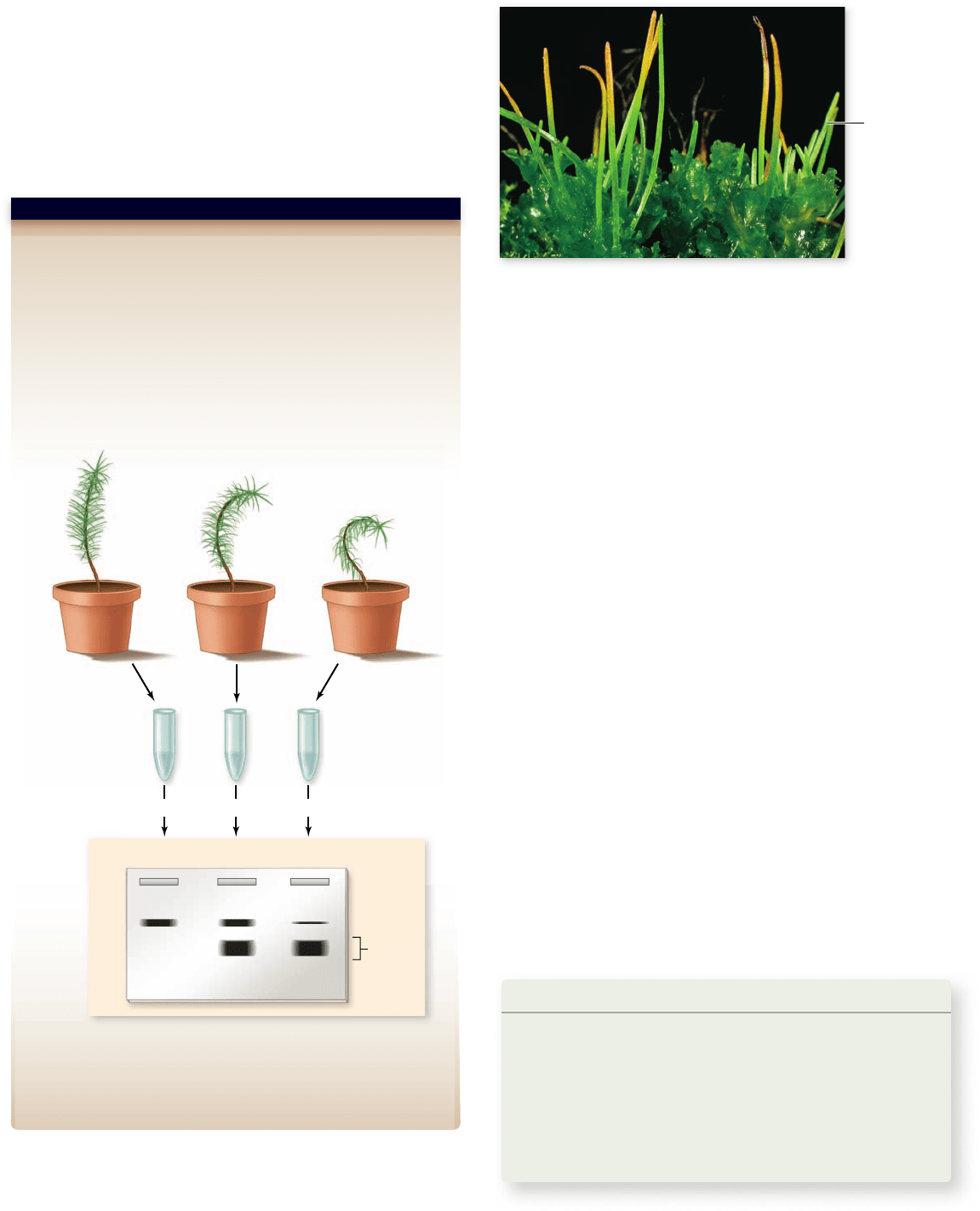
Figure 30.10
Moss and owering plants share
desication tolerance genes.
water and are valuable commercially as a soil conditioner or as
a fuel when dry.
The moss genome
Moss plants can survive extreme water loss—an adaptive trait
in the early colonization of land that has been lost from vegeta-
tive tissues of tracheophytes (figure 30.10) . Desication toler-
ance and phylogenetic position were among the traits that led
researchers to sequence the genome of the moss Physcomitrella
patens as being the first streptophyte that is not a seed plant.
Although the moss genome is a single genome bracketed by
Chlamydomonas and the flowering plant Arabidopsis, many evo-
lutionary hints are hidden within it. Evidence indicates the loss
of genes associated with a watery life, including flagellar arms,
which have completely vanished in the flowering plants. Genes
associated with tolerance of terrestrial stresses, including tem-
perature and water availability, are absent in Chlamydomonas
and present in moss. The genome data add rich sets of traits to
be used in phylogenetic analyses.
Hornworts developed stomata
The origin of hornworts (phylum Anthocerotophyta) is a puz-
zle. They are most likely among the earliest land plants, yet the
earliest hornwort fossil spores date from the Cretaceous period
(65 to 145 mya), when angiosperms were emerging.
The small hornwort sporophytes resemble tiny green
broom handles or horns, rising from filmy gametophytes usu-
ally less than 2 cm in diameter (figure 30.11) . The sporophyte
base is embedded in gametophyte tissue, from which it derives
some of its nutrition. However, the sporophyte has stomata to
regulate gas exchange, is photosynthetic, and provides much of
the energy needed for growth and reproduction. Hornwort
cells usually have a single large chloroplast.
Learning Outcome Review 30.3
The bryophytes exhibit adaptations to terrestrial life. Moss adaptations
include rhizoids to anchor the moss body and to absorb water, and water-
conducting tissues. Mosses are found in a variety of habitats, and some can
survive droughts. Hornworts developed stomata that can open and close to
regulate gas exchange.
■ What might account for the abundance of mosses in the
Arctic and Antarctic?
chapter
30
Green Plants
595www.ravenbiology.com
rav32223_ch30_588-613.indd 595rav32223_ch30_588-613.indd 595 11/13/09 12:06:16 PM11/13/09 12:06:16 PM
Apago PDF Enhancer
Sporangia
sist of strands of specialized cylindrical or elongated cells that form
a network throughout a plant, extending from near the tips of the
roots, through the stems, and into true leaves, defined by the pres-
ence of vascular tissue in the blade. One type of vascular tissue,
xylem, conducts water and dissolved minerals upward from the
roots; another type of tissue, phloem, conducts sucrose and hor-
mones throughout the plant. Vascular tissue enables enhanced
height and size in the tracheophytes. It develops in the sporophyte,
but (with a few exceptions) not in the gametophyte. (Vascular tis-
sue structure is discussed more fully in chapter 38 .) A cuticle and
stomata are also characteristic of vascular plants.
Inquiry question
?
Explain why tracheophytes may have had a selective
advantage during the evolution of land plants.
Tracheophytes include seven extant
phyla grouped in three clades
Three clades of vascular plants exist today: (1) lycophytes (club
mosses), (2) pterophytes (ferns and their relatives), and (3) seed
plants. Advances in molecular systematics have changed the
way we view the evolutionary history of vascular plants. Whisk
ferns and horsetails were long believed to be distinct phyla that
were transitional between bryophytes and vascular plants. Phy-
logenetic evidence now shows they are the closest living rela-
tives to ferns, and they are grouped as pterophytes.
Tracheophytes dominate terrestrial habitats everywhere, ex-
cept for the highest mountains and the tundra. The haplodiplontic
life cycle persists, but the gametophyte has been reduced in size
relative to the sporophyte during the evolution of tracheophytes. A
similar reduction in multicellular gametangia has occurred as well.
Stems evolved prior to roots
Fossils of early vascular plants reveal stems, but no roots or leaves.
The earliest vascular plants, including Cooksonia, had transport cells
in their stems, but the lack of roots limited the size of these plants.
Roots provide structural support
and transport capability
True roots are found only in the tracheophytes. Other, somewhat
similar structures enhance either transport or support in non-
tracheophytes, but only roots have a dual function—providing
both transport and support. Lycophytes diverged from other
tracheophytes before roots appeared, based on fossil evidence. It
appears that roots evolved at least two separate times.
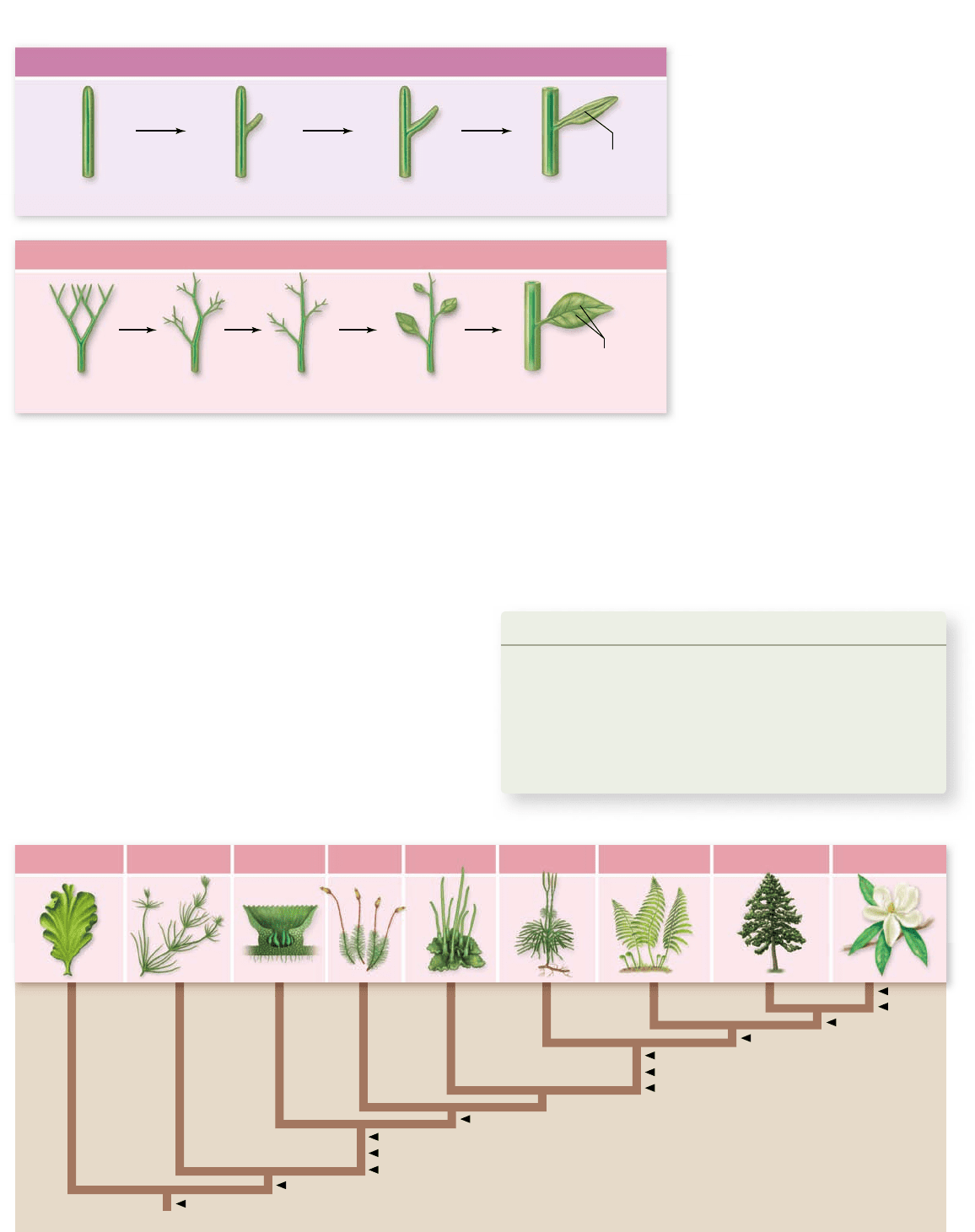
Leaves evolved more than once
Leaves increase surface area of the sporophyte, enhancing
photo synthetic capacity. Lycophytes have single vascular
strands supporting relatively small leaves called lycophylls. True
leaves, called euphylls, are found only in ferns and seed plants,
having distinct origins from lycophylls (figure 30.13 ). Lyco-
phylls may have resulted from vascular tissue penetrating small,
leafy protuberances on stems. Euphylls most likely arose from
branching stems that became webbed with leaf tissue.
30.4
Tracheophyte Plants: Roots,
Stems, and Leaves
Learning Outcomes
Explain the evolutionary significance of tracheids.1.
Analyze the claim that roots, stems, and leaves are 2.
evolutionary innovations unique to tracheophytes .
The first tracheophytes with a relatively complete record be-
longed to the phylum Rhyniophyta. We are not certain what
the earliest of these vascular plants looked like, but fossils of
Cooksonia provide some insight into their characteristics
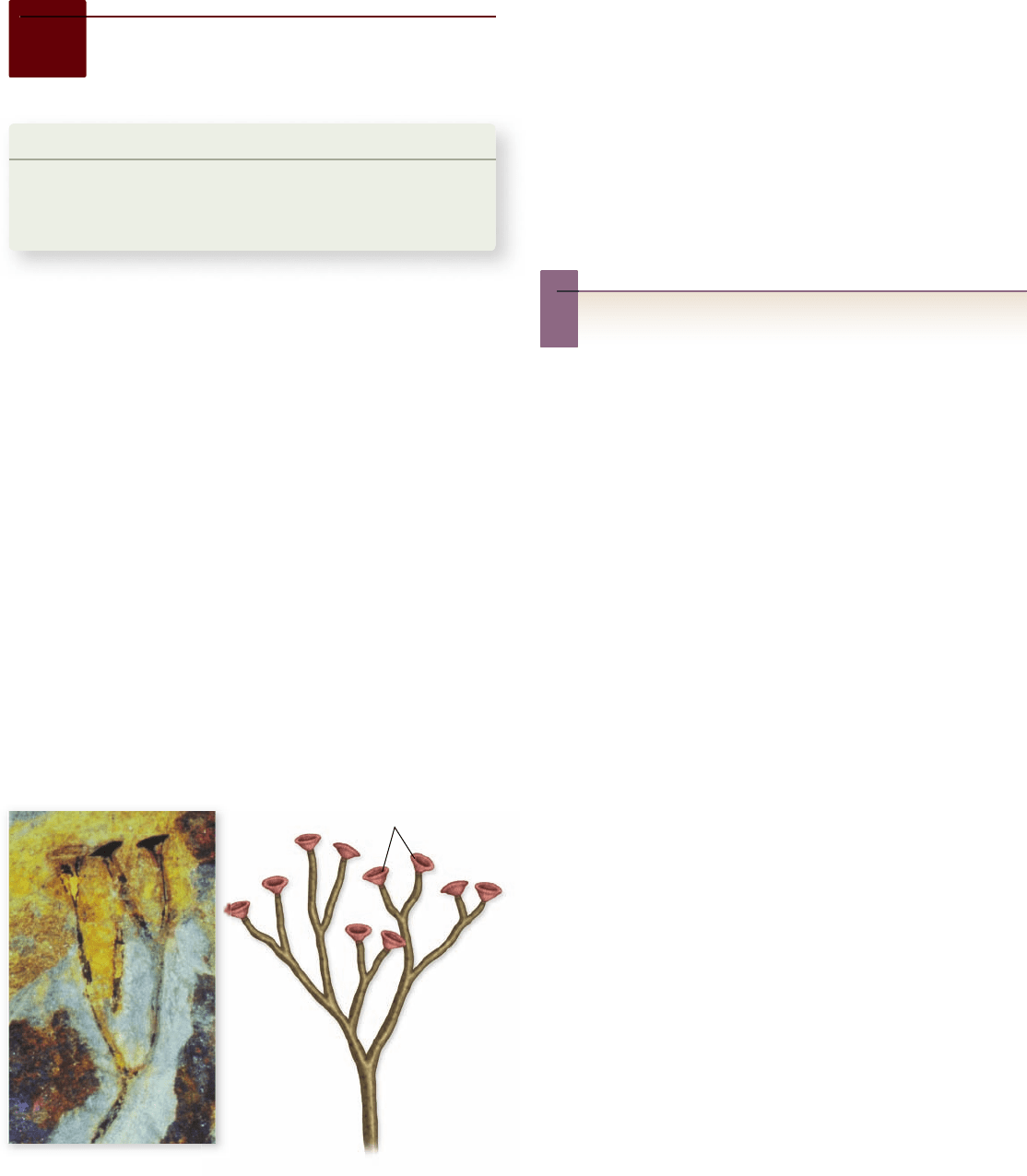
(figure 30.12 ).
Cooksonia, the first known vascular land plant, appeared in
the late Silurian period about 420 mya, but is now extinct. It was
successful partly because it encountered little competition as it
spread out over vast tracts of land. The plants were only a few
centimeters tall and had no roots or leaves. They consisted
of little more than a branching axis, the branches forking
evenly and expanding slightly toward the tips. They were
homosporous (producing only one type of spore). Sporangia
formed at branch tips. Other ancient vascular plants that fol-
lowed evolved more complex arrangements of sporangia.
Vascular tissue allows for
distribution of nutrients
Cooksonia and the other early plants that followed it became suc-
cessful colonizers of the land by developing efficient water- and
food-conducting systems called vascular tissues. These tissues con-
Figure 30.12
Cooksonia, the rst known vascular land
plant. This fossil represents a plant that lived some 420 mya.
Cooksonia belongs to phylum Rhyniophyta, consisting entirely of
extinct plants. Its upright, branched stems, which were no more
than a few centimeters tall, terminated in sporangia, as seen here.
It probably lived in moist environments such as mud ats, had a
resistant cuticle, and produced spores typical of vascular plants.
596
part
V
Diversity of Life on Earth
rav32223_ch30_588-613.indd 596rav32223_ch30_588-613.indd 596 11/13/09 12:06:18 PM11/13/09 12:06:18 PM
Apago PDF Enhancer
Euphyll Origins
Branching stems
with vascular tissue
Unequal
branching
Branches in
single planes
Photosynthetic tissue
“webs” branches
Branched
vascular strands
(veins)
Lycophyll Origins
Stem with
vascular tissue
Stem, leafy tissue
without vascular tissue
Stem, leafy tissue
with vascular tissue
Single
vascular strand
(vein)
Ancestral alga
Chlorophytes Charophytes Liverworts HornwortsMosses Lycophytes Ferns + Allies Gymnosperms Angiosperms
Chlorophyll a and b
Plasmodesmata
Cuticle
Antheridia and archegonia
Multicellular embryo
Stomata
Euphylls
Seeds
Flowers
Fruits
Vascular tissue
Dominant sporophyte
Stems, roots, leaves
About 400 million years separates the appearance of vascular
tissue and the wide euphyll leaf—a curiously large amount of time.
The current hypothesis is that a 90% drop in atmospheric CO
2
360 mya allowed for the increase in leaf size because of an increase
in the number of stomata on a leaf. Large, horizontal leaves capture
200% more radiation than thin, axial leaves. Although beneficial for
photosynthesis, larger leaves correspondingly increase leaf tem-
perature, which can be lethal. Stomatal openings in the leaf en-
hance the movement of water out of the leaf, thereby cooling it.
The density of stomata on leaf surfaces correlates with CO
2
con-
centration, as the stomatal openings are essential for gas exchange.
As the atmospheric CO
2
levels dropped, plants could not obtain
sufficient CO
2
for photosynthesis. In the low-CO
2
atmosphere,
natural selection favored plants with higher stomatal densities.
Higher stomatal densities favored larger leaves with a photosyn-
thetic advantage that did not overheat. Leaves up to 120 mm wide
Figure 30.13
Evolution of leaves.
and 160 mm long have been identi-
fied in the fossil record from that
time period.
Seeds are another
innovation in some phyla
Seeds are highly resistant struc-
tures well suited to protecting a
plant embryo from drought and
to some extent from predators. In
addition, almost all seeds contain
a supply of food for the young
plant. Lycophytes and pterophytes
do not have seeds.
Fruits in the flowering plants
(angiosperms) add a layer of pro-
tection to seeds and attract animals
that assist in seed dispersal, ex-
panding the potential range of the
species. Flowers allow plants to
secure the benefits of wide outcrossing in promoting genetic di-
versity. Before moving on to the specifics of lycophytes and ptero-
phytes, review the evolutionary history of terrestrial innovations
in the land plants illustrated in figure 30.14 . The advantages con-
ferred by seeds have led to the current dominance of seed plants
in terrestrial environments .
Learning Outcomes Review 30.4
Most tracheophytes have well-developed vascular tissues, including
tracheids, that enable effi cient delivery of water and nutrients throughout
the organism. They also exhibit specialized roots, stems, leaves, cuticles, and
stomata. Many produce seeds, which protect and nourish embryos.
■ Why would vascular tissue be prevalent in the
sporophyte, but not the gametophyte, generation?
Figure 30.14
Land plant innovations.
chapter
30
Green Plants
597www.ravenbiology.com
rav32223_ch30_588-613.indd 597rav32223_ch30_588-613.indd 597 11/13/09 12:06:20 PM11/13/09 12:06:20 PM
Apago PDF Enhancer
Hornworts
Lycophytes
Seed Plants
Ferns and Allies
Seed Plants
Ferns
Lycophytes
Ferns
Whisk Ferns
Horsetail Ferns
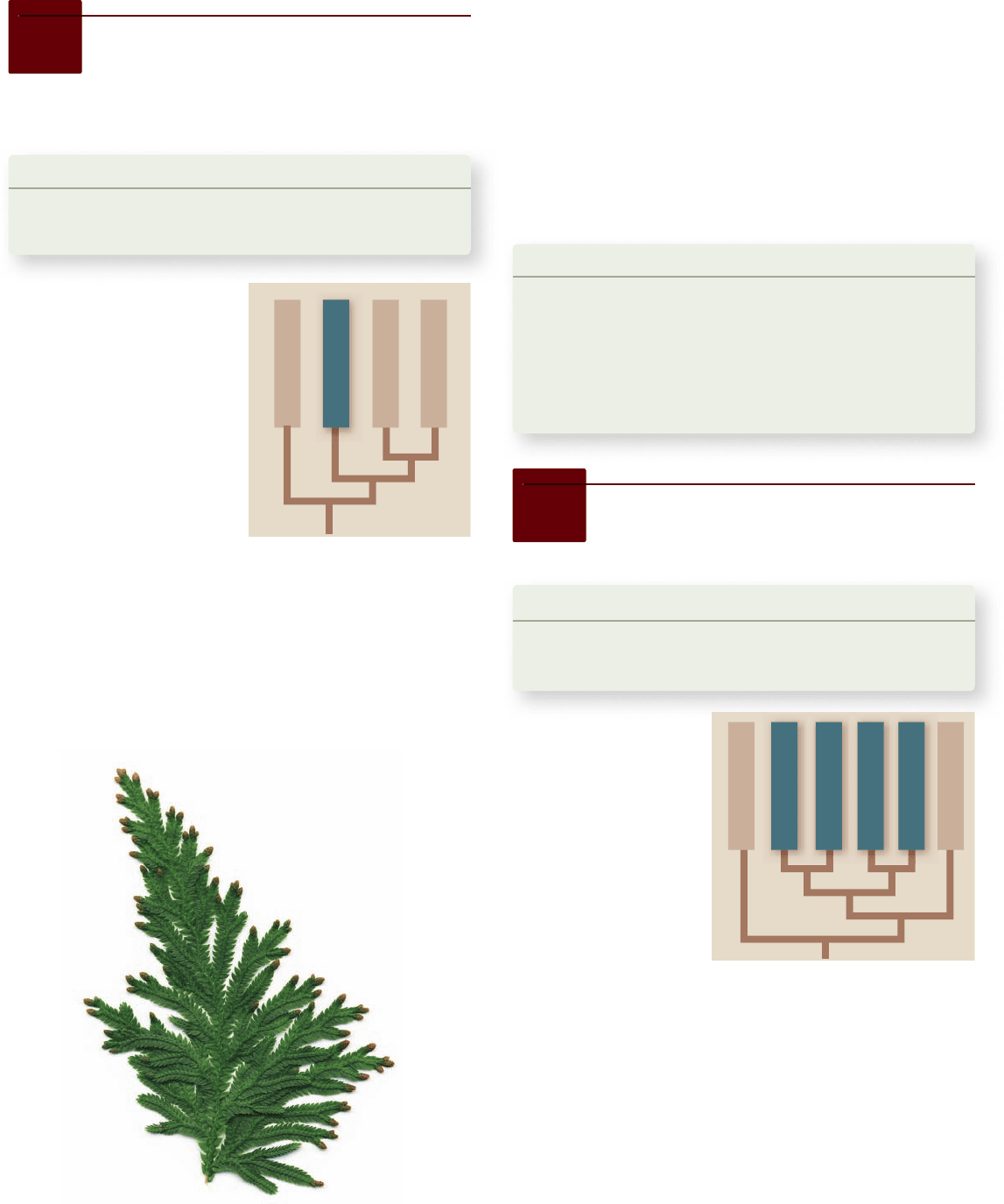
Figure 30.15
A club moss. Selaginella moellendorf i’s
sporophyte generation grows on moist forest oors.
30.6
Pterophytes: Ferns
and Their Relatives
Learning Outcomes
List the features exhibited by pterophytes.1.
Contrast pterophyte and moss sporophytes. 2.
The phylogenetic rela-
tionships among ferns
and their near relations
are still being sorted out.
A common ancestor gave
rise to two clades: One
clade diverged to produce
a line of ferns and horse-
tails; the other diverged
to yield another line of
ferns and whisk ferns—
ancient-looking plants.
Whisk ferns and horsetails are close relatives of ferns.
Like lycophytes and bryophytes, they all form antheridia and
archegonia. Free water is required for the process of fertiliza-
tion, during which the sperm, which have flagella, swim to and
unite with the eggs. In contrast, most seed plants have nonflag-
ellated sperm.
Whisk ferns lost their roots
and leaves secondarily
In whisk ferns, which occur in the tropics and subtropics, the
sporophytic generation consist merely of evenly forking green
stems without roots (figure 30.16 ). The two or three species of
30.5
Lycophytes: Dominant
Sporophyte Generation
and Vascular Tissue
Learning Outcome
Explain features that differentiate lycophytes 1.
from bryophytes.
The earliest vascular plants
lacked seeds. Members of four
phyla of living vascular plants
also lack seeds, as do at least
three other phyla known only
from fossils. As we explore the
adaptations of the vascular
plants, we focus on both
reproductive strategies and
the advantages of increasingly
complex transport systems.
The lycophytes (club
mosses) are relic species of an
ancient past when vascular plants first evolved (figure 30.15 ).
They are the sister group to all vascular plants. Several genera
of club mosses, some of them treelike, became extinct about
270 mya. Today, club mosses are worldwide in distribution but
are most abundant in the tropics and moist temperate regions.
Members of the 12 to 13 genera and about 1150 living
species of club mosses superficially resemble true mosses, but
once their internal vascular structure and reproductive pro-
cesses became known, it was clear that they are unrelated to
mosses. The sporophyte stage is the dominant (obvious) stage;
sporophytes have leafy stems that are seldom more than
30 cm long.
Selaginella moellendorffii is a lycophyte whose genome is
now being analyzed. Comparisons with the moss genome will
help us understand more about genes that are important in a
dominant sporophyte generation and in the evolution of vascu-
lar tissue. Are the genes new or were they co-opted from the
gametophyte generation?
Learning Outcome Review 30.5
Lycophytes are basal to all other vascular plants. Although they superfi cially
resemble bryophytes, they contain tracheid-based vascular tissues, and
their reproductive cycle is like that of other vascular plants; however, they
lack vascularized leaves.
■ What events might have contributed to the extinction of
large club mosses 270
MYA?
598
part
V
Diversity of Life on Earth
rav32223_ch30_588-613.indd 598rav32223_ch30_588-613.indd 598 11/13/09 12:06:22 PM11/13/09 12:06:22 PM
Apago PDF Enhancer
Ferns have fronds that bear sori
Ferns are the most abundant group of seedless vascular plants,
with about 11,000 living species. Recent research indicates that
they may be the closest relatives to the seed plants.
The fossil record indicates that ferns originated during
the Devonian period about 350 mya and became abundant and
varied in form during the next 50 million years. Their apparent
ancestors were established on land as much as 375 mya. Rain-
forests and swamps of lycopsid and fern trees growing in the
Eastern United States and Europe over 300 mya formed the
coal currently being mined. Today, ferns flourish in a wide
range of habitats throughout the world; however, about 75% of
the species occur in the tropics.
The conspicuous sporophytes may be less than a centi-
meter in diameter (as in small aquatic ferns such as Azolla) , or
more than 24 m tall, with leaves up to 5 m or longer in the tree
ferns (figure 30.18) . The sporophytes and the much smaller
the genus Psilotum do, however, have tiny, green, spirally ar-
ranged flaps of tissue lacking veins and stomata. Another genus,
Tmesipteris, has more leaflike appendages. Currently, system-
atists believe that whisk ferns lost leaves and roots when they
diverged from others in the fern lineage.
Given the simple structure of whisk ferns, it was particu-
larly surprising to discover that they are monophyletic with
ferns. The gametophytes of whisk ferns are essentially colorless
and are less than 2 mm in diameter, but they can be up to
18 mm long. They form symbiotic associations with fungi,
which furnish their nutrients. Some develop elements of vascu-
lar tissue and have the distinction of being the only gameto-
phytes known to do so.
Horsetails have jointed stems
with brushlike leaves
The 15 living species of horsetails are all homosporous. They
constitute a single genus, Equisetum. Fossil forms of Equisetum
extend back 300 million years to an era when some of their
relatives were treelike. Today, they are widely scattered around
the world, mostly in damp places. Some that grow among the
coastal redwoods of California may reach a height of 3 m, but
most are less than a meter tall (figure 30.17 ).
Horsetail sporophytes consist of ribbed, jointed, pho-
tosynthetic stems that arise from branching underground
rhizomes with roots at their nodes. A whorl of nonphotosyn-
thetic, scalelike leaves emerges at each node. The hollow
stems have silica deposits in the epidermal cells of the ribs,
and the interior parts of the stems have two sets of vertical,
tubular canals. The larger outer canals, which alternate with
the ribs, contain air, while the smaller inner canals opposite
the ribs contain water. Horsetails are also called scouring
rushes because pioneers of the American West used them to
scrub pans.
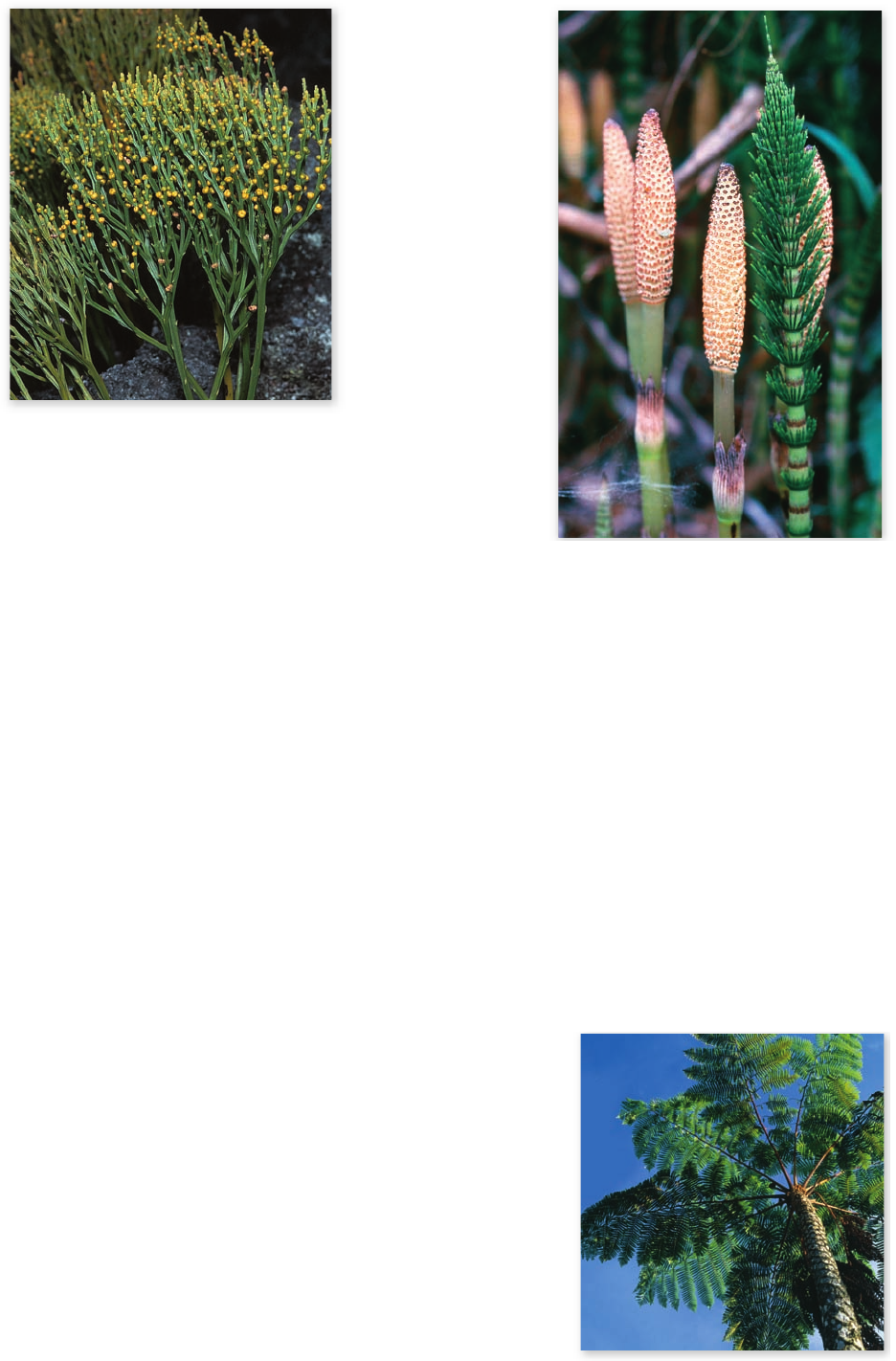
Figure 30.16
A whisk fern. Whisk
ferns have no roots or
leaves. The green,
photosynthetic stems
have yellow sporangia
attached.
Figure 30.17
A horsetail,
Equisetum
telmateia. This
species forms two
kinds of erect stems;
one is green and
photosynthetic, and
the other, which
terminates in a
spore-producing
“cone,” is mostly
light brown.
Figure 30.18
A tree fern (phylum
Pterophyta) in the
forests of Malaysia.
The ferns are by far the
largest group of seedless
vascular plants.
chapter
30
Green Plants
599www.ravenbiology.com
rav32223_ch30_588-613.indd 599rav32223_ch30_588-613.indd 599 11/13/09 12:06:23 PM11/13/09 12:06:23 PM
Apago PDF Enhancer
Tightly Coiled Fern Uncoiling Fern
MITOSIS
MEIOSIS
MITOSIS
FERTILIZATION
n
2n
Archegonium
Archegonium
Antheridium
Antheridium
Egg
Sperm
Embryo
Zygote
2n
1n
Leaf of young
sporophyte
Gametophyte
Rhizome
Adult
sporophyte
Underside
of leaf frond
Sorus (cluster
of sporangia)
Mature
sporangium
Sporangium
Spores
Rhizoids
Gametophyte
Mature
frond
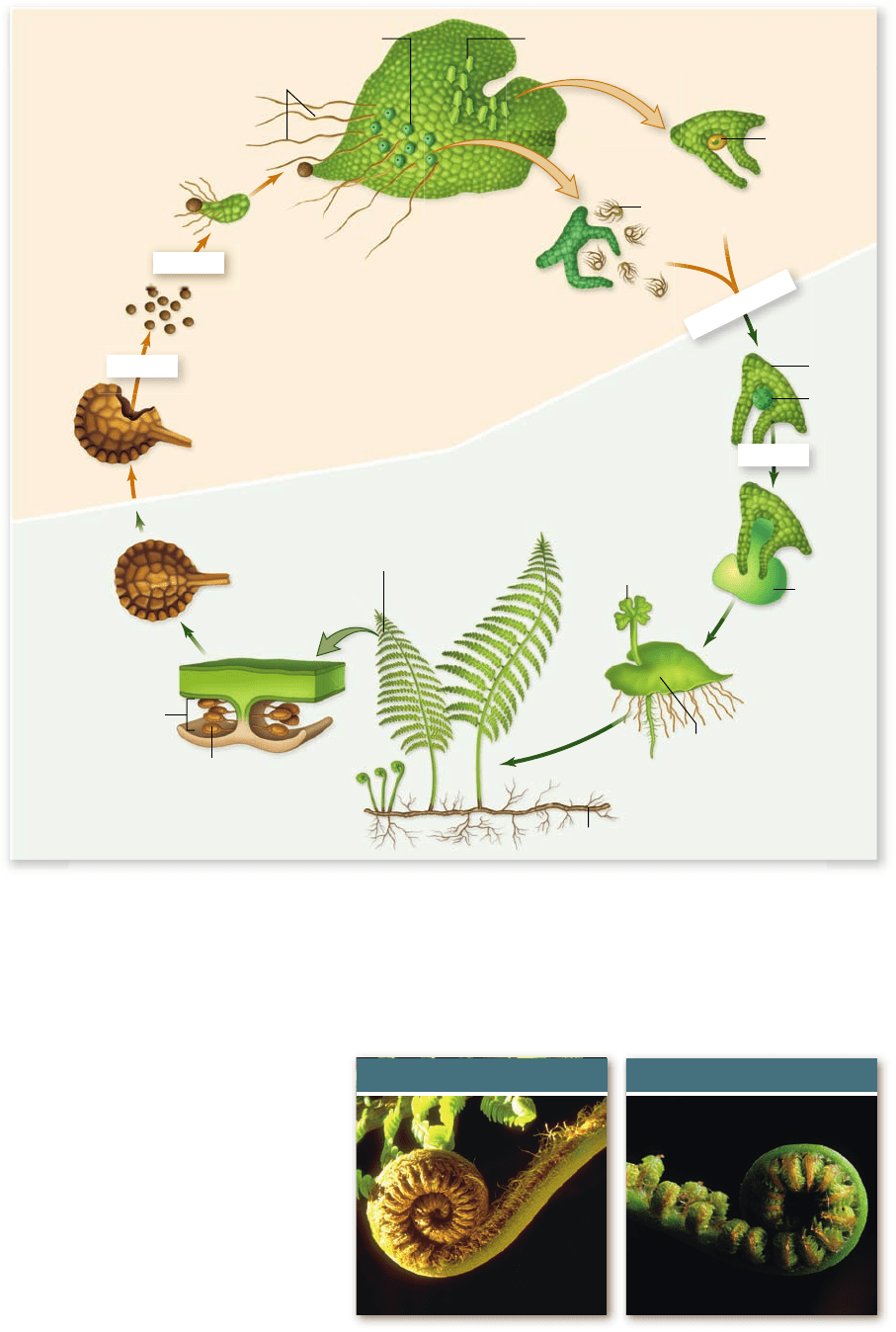
Figure 30.20
Fern “ ddlehead.” Fronds develop in a
coil and slowly unfold on ferns, including the tree fern fronds in
these photos.
gametophytes, which rarely reach 6 mm in diameter, are
both photosynthetic.
The fern life cycle (figure 30.19) differs from that of a
moss primarily in the much greater development, indepen-
dence, and dominance of the fern’s sporophyte. The fern sporo-
phyte is structurally more complex than the moss sporophyte,
having vascular tissue and well-differentiated roots, stems, and
leaves. The gametophyte, however, lacks the vascular tissue
found in the sporophyte.
Fern morphology
Fern sporophytes, like horsetails, have rhizomes. Leaves, re-
ferred to as fronds, usually develop at the tip of the rhizome as
tightly rolled-up coils (“fiddleheads”) that unroll and expand
(figure 30.20) . Fiddleheads are considered a delicacy in several
cuisines, but some species contain secondary compounds linked
to stomach cancer.
Many fronds are highly dissected and feathery, making
the ferns that produce them prized as ornamental garden plants.
Some ferns, such as Marsilea, have fronds that resemble a four-
Figure 30.19
Life
cycle of a typical fern.
Both the gametophyte
and sporophyte are
photosynthetic and can
live independently. Water
is necessary for
fertilization. Sperm are
released on the underside
of the gametophyte and
swim in moist soil to
neighboring
gametophytes. Spores are
dispersed by wind.
leaf clover, but Marsilea fronds still begin as coiled fiddleheads.
Other ferns produce a mixture of photosynthetic fronds and
nonphotosynthetic reproductive fronds that tend to be brown-
ish in color.
600
part
V
Diversity of Life on Earth
rav32223_ch30_588-613.indd 600rav32223_ch30_588-613.indd 600 11/13/09 4:29:33 PM11/13/09 4:29:33 PM
Apago PDF Enhancer
Fern reproduction
Ferns, produce distinctive sporangia, usually in clusters called
sori (singular, sorus), typically on the underside of the fronds.
Sori are often protected during their development by a trans-
parent, umbrella-like covering. (At first glance, one might mis-
take the sori for an infection on the plant.) Diploid spore
mother cells in each sporangium undergo meiosis, producing
haploid spores.
At maturity, the spores are catapulted from the sporan-
gium by a snapping action, and those that land in suitable damp
locations may germinate, producing gametophytes that are of-
ten heart-shaped, are only one cell layer thick (except in the
center), and have rhizoids that anchor them to their substrate.
These rhizoids are not true roots because they lack vascular tis-
sue, but they do aid in transporting water and nutrients from
the soil. Flask-shaped archegonia and globular antheridia are
produced on either the same or a different gametophyte. The
multicellular archegonia provide some protection for the de-
veloping embryo.
The sperm formed in the antheridia have flagella, with
which they swim toward the archegonia when water is present,
often in response to a chemical signal secreted by the archego-
nia. One sperm unites with the single egg toward the base of an
archegonium, forming a zygote. The zygote then develops into
a new sporophyte, completing the life cycle (see figure 30.19).
The developing fern embryo has substantially more pro-
tection from the environment than a charophyte zygote, but it
cannot enter a dormant phase to survive a harsh winter the way
a seed plant embryo can. Although extant ferns do not produce
seeds, seed fern fossils have been found that date back 365 mil-
lion years. The seed ferns are not actually pterophytes, but
gymnosperms. Of the seven tracheophyte phyla (table 30.1),
only two—gymnosperms and angiosperms—produce seeds.
Learning Outcomes Review 30.6
Ferns and their relatives have a large and conspicuous sporophyte with
vascular tissue. Many have well-diff erentiated roots, stems, and leaves
(fronds). The gametophyte generation is small and lacks vascular tissue.
■ What would be the advantage of silica deposits in
stems, as is found in horsetails?
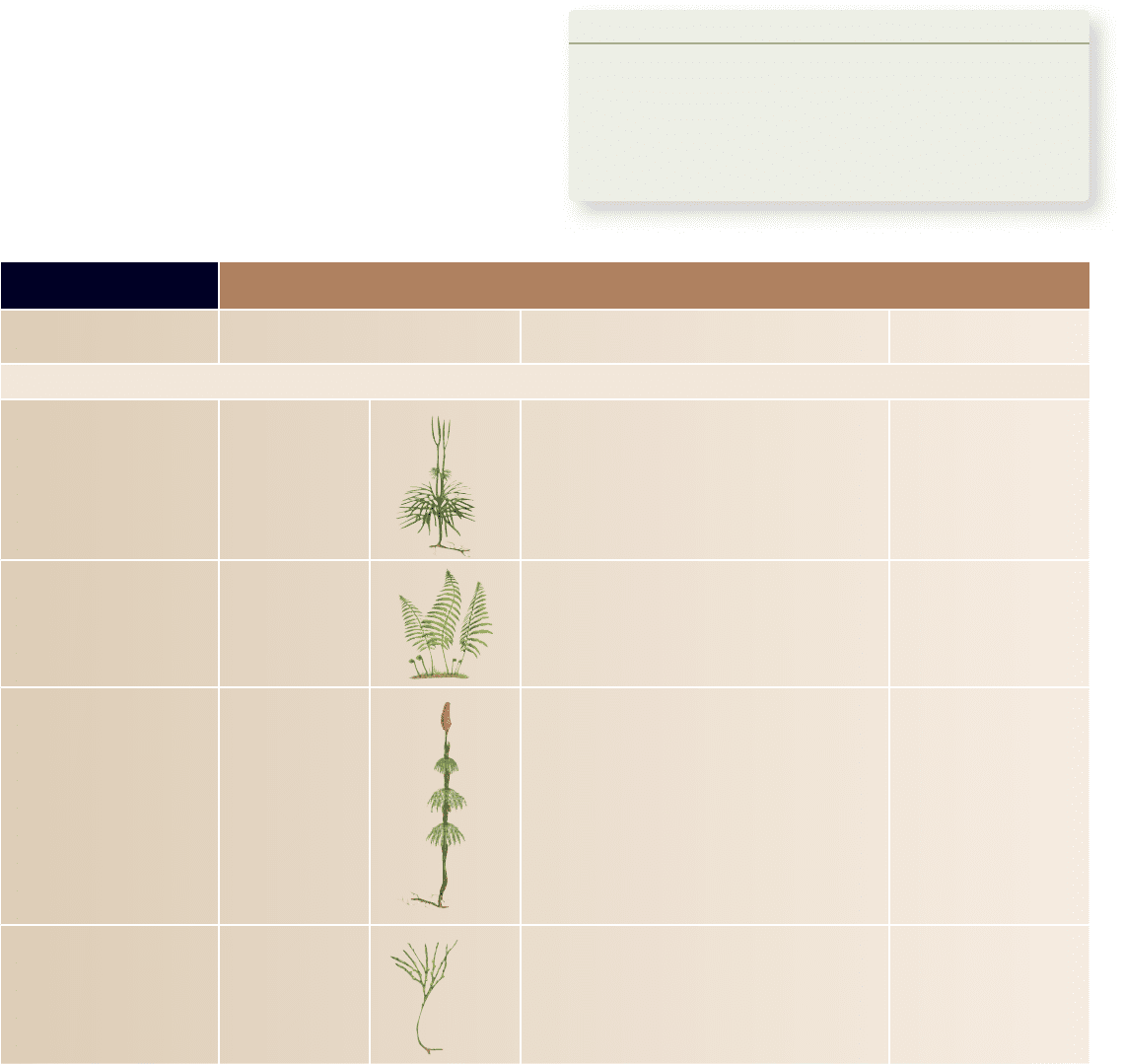
TABLE 30.1
The Seven Phyla of Extant Vascular Plants
Phylum Examples Key Characteristics
Approximate Number
of Living Species
SEEDLESS VASCULAR PLANTS
Lycophyta Club mosses Homosporous or heterosporous. Sperm motile. External
water necessary for fertilization. About 12–13 genera.
1150
Pterophyta Ferns Primarily homosporous (a few heterosporous). Sperm motile.
External water necessary for fertilization. Leaves uncoil as
they mature. Sporophytes and virtually all gametophytes are
photosynthetic. About 365 genera.
11,000
Horsetails
Homosporous. Sperm motile. External water necessary for
fertilization. Stems ribbed, jointed, either photosynthetic
or nonphotosynthetic. Leaves scalelike, in whorls;
nonphotosynthetic at maturity. One genus.
15
Whisk ferns
Homosporous. Sperm motile. External water necessary for
fertilization. No di erentiation between root and shoot. No
leaves; one of the two genera has scalelike extensions and
the other lea ike appendages.
6
(Continued on next page)
chapter
30
Green Plants
601www.ravenbiology.com
rav32223_ch30_588-613.indd 601rav32223_ch30_588-613.indd 601 11/13/09 12:06:39 PM11/13/09 12:06:39 PM