
Raven P.H., Johnson G.B., Mason K.A. Biology (Ninth Edition)
Подождите немного. Документ загружается.


Apago PDF Enhancer
3. Which of the following would not be found in a bryophytes?
a. Mycorrhizal associations
b. Rhizoids
c. Tracheid cells
d. Photosynthetic gametophytes
4. Which of the following statements is correct regarding
the bryophytes?
a. The bryophytes represent a monophyletic clade.
b. The sporophyte stage of all bryophytes is photosynthetic.
c. Archegonium and antheridium represent haploid structures
that produce reproductive cells.
d. Stomata are common to all bryophytes.
U N DERS TAN D
1. Which of the following plant structures is not matched to its
correct function?
a. Stomata—allow gas transfer
b. Tracheids—allow the movement of water and minerals
c. Cuticle—prevents desication
d. All of the above are matched correctly.
2. Which of the following genera most likely directly gave rise to
the land plants?
a. Volvox c. Ulva
b. Chlamydomonas d. Chara
Review Questions
30.8 Gymnosperms: Plants with “Naked Seeds”
(see gure 30.23)
Gymnosperms have ovules that are not completely enclosed in
sporophyte (diploid) tissue at the time of pollination.
The four groups of gymnosperms are coniferophytes,
cycadophytes,
gnetophytes, and ginkgophytes; all lack owers and true fruits.
Conifers are the largest gymnosperm phylum.
Conifers include pines, spruces, rs, cedars, and many other groups.
Both the tallest and the oldest vascular plants are conifers.
Pines are an exemplary conifer genus.
Pines have tough, needlelike leaves in clusters of two to ve. They
produce male and female cones.
In the male cones, microspore mother cells in the microsporangia
give rise to microspores that then develop into four-celled pollen
grains, the male gametophytes.
In the female cones, a megasporangium (nucellus) produces a single
megaspore mother cell that becomes four megaspores; three of
these break down, and the remaining one develops into a female
gametophyte, which produces archegonia that carry eggs.
Upon fertilization, a pollen tube emerges from the pollen grain
and grows through the nucellus. Eventually two sperm cells
migrate through the tube, and one unites with the egg; the
other disintegrates.
Cycads resemble palms, but are not owering plants.
Most cycads can reach heights of 15 m or more. Cycads, unlike
palms, produce cones; in some species the female cones are huge.
Their life cycle is like that of conifers.
Gnetophytes have xylem vessels.
Xylem vessels, a common feature in angiosperms, are highly
ef cient conducting cells. Gnetophytes are the only gymnosperms
that have them.
This group includes the strange Welwitschia genus of southwestern
Africa and the numerous worldwide Ephedra species.
Only one species of the ginkgophytes remains extant.
Ginkgo biloba is a gymnosperm with broad leaves that it sheds in the
fall. It is dioecious, and the eshy seeds of the female tree have a
foul odor.
30.9 Angiosperms: The Flowering Plants
(see gure 30.28)
Angiosperms are distinct from gymnosperms and other plants
because their ovules are enclosed within diploid tissue called the
ovary at the time of fertilization,
and they form fruits.
Angiosperm origins are a mystery.
No one is certain how the angiosperms arose, although the extinct
family Archaefructaceae may have been a sister clade. The earliest
extant angiosperm appears to be Amborella trichopoda, found on the
island of New Caledonia.
Flowers house the gametophyte generation of angiosperms.
Flowers are considered to be modi ed stems that bear modi ed
leaves. Flower parts are organized into four whorls: sepals, petals,
androecium, and gynoecium (see gure 30.29a ).
The male androecium consists of the stamens where haploid pollen,
the male gametophyte, is produced.
The female gynoecium consists of one or more carpels that contain
the female gametophyte. The carpel has three major regions: the
ovary, which later becomes the fruit; the stigma, which is the tip of
the carpel; and the style, a stalk that connects the stigma and ovary.
Most species use owers to attract pollinators and reproduce.
Many angiosperm owers have nectaries near the base of the ovary
that produce nectar containing nutrients and other molecules. Nectar
and scent attracts animal pollinators, which carry pollen from one
ower to another; some angiosperms are wind pollinated, however.
The angiosperm life cycle includes double fertilization.
The megaspore produces eight haploid nuclei. The female
gametophyte consists of a large embryo sac with the eight nuclei in
seven cells. The egg and the two polar nuclei (in a single cell) are
most important.
After landing on a receptive stigma, a pollen grain develops a pollen
tube that grows toward the embryo sac. Eventually, two sperm pass
through this tube. One fuses with the egg to form a zygote, and the
other unites with the polar bodies to form a triploid endosperm
nucleus that develops into endosperm to nourish the embryo.
612
part
V
Diversity of Life on Earth
rav32223_ch30_588-613.indd 612rav32223_ch30_588-613.indd 612 11/13/09 12:07:12 PM11/13/09 12:07:12 PM

Apago PDF Enhancer
5. The lack of seeds is a characteristic of all
a. lycophytes. c. tracheophytes.
b. conifers. d. gnetophytes.
6. Which of the following adaptations allows plants to pause their
life cycle until environmental conditions are optimal?
a. Stomata c. Seeds
b. Phloem and xylem d. Flowers
7. Which of the following gymnosperms possesses a form
of vascular tissue that is similar to that found in the
angiosperms?
a. Cycads c. Ginkgophytes
b. Gnetophytes d. Conifers
8. In a pine tree, the microspores and megaspores are produced
by the process of
a. fertilization. c. fusion.
b. mitosis. d. meiosis.
9. Which of the following terms is not associated with a male
portion of a plant?
a. Megaspore c. Pollen grains
b. Antheridium d. Microspore
10. Which of the following potentially represents the oldest known
living species of angiosperm?
a. Cooksonia c. Archaefructus
b. Chlamydomonas d. Amborella
APPLY
1. Compare what happens to a spore mother cell as it gives rise
to a spore with what happens to a spore as it gives rise to
a gametophyte.
a. The spore mother cell and the spore both go
through meiosis.
b. The spore mother cell and the spore both go
through mitosis.
c. The spore mother cell goes through mitosis and the spore
goes through meiosis.
d. The spore mother cell goes through meiosis and the spore
goes through mitosis.
2. How could a plant without roots obtain suf cient nutrients
from the soil?
a. It cannot, all land plants have roots.
b. Mychorrizal fungi associate with the plant and assist with
the transfer of nutrients.
c. Charophytes associate with the plant and assist with the
transfer of nutrients.
d. It relies on its xylem in the absence of a root.
3. A major innovation of land plants is embryo protection. How is
a moss embryo protected from desication?
a. By the seed
b. By the antheridium
c. By the archegonium
d. By the lycophyll
4. Reproduction in angiosperms can occur more quickly than in
gymnosperms because
a. gymnosperm sperm requires water to swim to the egg.
b. owers always increase the rate of reproduction.
c. angiosperm pollen tubes grow more quickly than
gymnosperm pollen tubes.
d. angiosperms have nectaries.
5. In double fertilization, one sperm produces a diploid ________,
and the other produces a triploid ___________.
a. zygote; primary endosperm
b. primary endosperm; microspore
c. antipodal; zygote
d. polar nuclei; zygote
6. Apply your understanding of angiosperms to identify which
innovations likely contributed to the tremendous success
of angiosperms.
a. Homospory in angiosperms
b. Fruits that attract animal dispersers
c. Cones that protect the seed
d. Dominant gametophyte generation
7. Comparing stems of two plant specimens under the microscope,
you identify vessels in one sample and conclude the specimen
a. with vessels must be an angiosperm.
b. with vessels is either Ephedra or a cycad.
c. without vessels is a pterophyte.
d. without vessels must be a tracheophyte.
8. In a ower after fertilization, the following tissues are diploid:
a. carpel, integuments, and megaspore mother cell.
b. carpel, integuments, and megaspore.
c. carpel, megaspore, and zygote.
d. carpel, megaspore mother cell, and endosperm.
S Y N THES IZE
1. You have access to the sequenced genomes for moss and the
lycophyte Selaginella. Your goal in analyzing the data is to write
a ground-breaking paper that answers an important question
about the evolution of plants. What question would you try
to answer?
2. You have been hired as a research assistant to investigate the
origins of the angiosperms, speci cally the boundary between a
gymnosperm and an angiosperm. Which characteristics would
you use to clearly de ne a new fossil as a gymnosperm?
An angiosperm?
3. Assess the bene ts and drawbacks of self-pollination for a
owering plant? Explain your answer.
4. The relationship between owering plants and pollinators is
often used as an example of coevolution. Many owering plant
species have ower structures that are adaptive to a single
species of pollinator. Evaluate the bene ts and drawbacks of
using such a specialized relationship.
O N LIN E RES OURCE
www.ravenbiology.com
Understand, Apply, and Synthesize—enhance your study with
animations that bring concepts to life and practice tests to assess
your understanding. Your instructor may also recommend the
interactive eBook, individualized learning tools, and more.
chapter
30
Green Plants
613www.ravenbiology.com
rav32223_ch30_588-613.indd 613rav32223_ch30_588-613.indd 613 11/13/09 12:07:13 PM11/13/09 12:07:13 PM
Apago PDF Enhancer
T
Mycologists, scientists who study fungi as well as fungi-like protists,
believe there may be as many as 1.5 million fungal species. Fungi
exist either as single-celled yeasts or in multicellular form with sev-
eral different cell types. Their reproduction may be either sexual or
asexual, and they exhibit an unusual form of mitosis. They are spe-
cialized to extract and absorb nutrients from their surroundings
through external secretion of enzymes. Recent phylo genetic analy-
sis of DNA sequences and protein sequences indicates that fungi
are more closely related to animals than to plants. Fossils and mo-
lecular data indicate that animals and fungi last shared a common
ancestor at least 460 mya, but inconsistencies remain. The oldest
31.1
De ning Fungi
Learning Outcomes
Identify characteristics that distinguish fungi from 1.
other eukaryotes.
Compare mitosis in fungi and animals.2.
Explain why fungi are useful for bioremediation.3.
CHAPTER
Chapter
31
Fungi
Chapter Outline
31.1 De ning Fungi
31.2 Microsporidia: Unicellular Parasites
31.3 Chytridiomycota and Relatives: Fungi
with Flagellated Zoospores
31.4 Zygomycota: Fungi That Produce Zygotes
31.5 Glomeromycota: Asexual Plant Symbionts
31.6 Basidiomycota: The Club (Basidium) Fungi
31.7 Ascomycota: The Sac (Ascus) Fungi
31.8 Ecology of Fungi
31.9 Fungal Parasites and Pathogens
Introduction
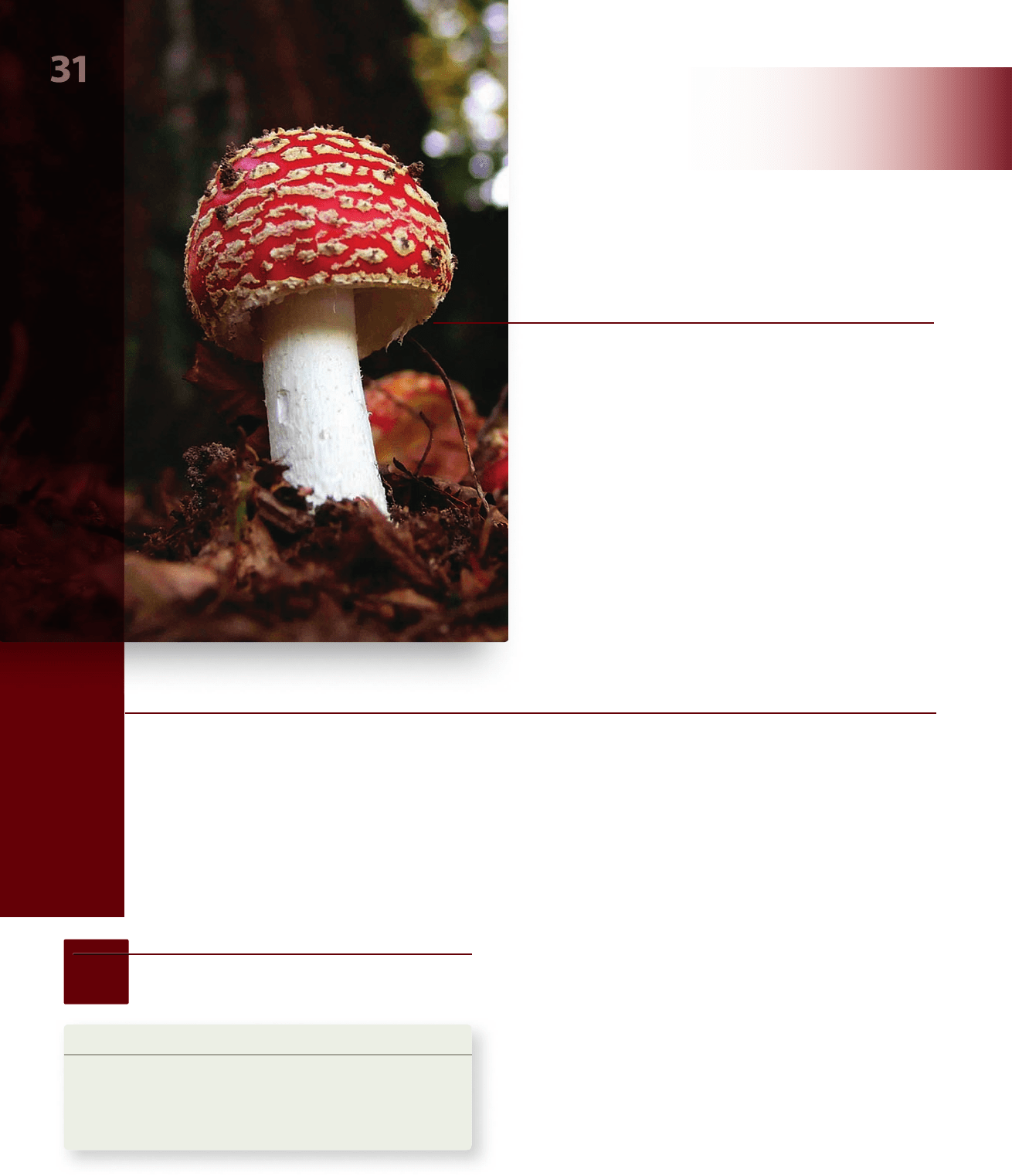
The fungi, an often overlooked group of unicellular and multicellular organisms, have a profound influence on ecology
and human health. Along with bacteria, they are important decomposers and disease-causing organisms. Fungi are found
everywhere—from the tropics to the tundra and in both terrestrial and aquatic environments. Fungi made it possible for
plants to colonize land by associating with rootless stems and aiding in the uptake of nutrients and water. Mushrooms and
toadstools are the multicellular spore-producing part of fungi that grow rapidly under proper conditions. A single Armillaria
fungus can cover 15 hectares underground and weigh 100 tons, making it the largest organism in the world based on area.
Some puffball fungi are almost a meter in diameter and may contain 7 trillion spores—enough to circle the Earth’s equator!
Yeasts are used to make bread and beer, but other fungi cause disease in plants and animals. These fungal killers are
particularly problematic because fungi are animals’ closest relatives. Drugs that can kill fungi often have toxic effects on
animals, including humans. In this chapter we present the major groups of this intriguing life form.
rav32223_ch31_614-632.indd 614rav32223_ch31_614-632.indd 614 11/13/09 1:37:50 PM11/13/09 1:37:50 PM
Apago PDF Enhancer
a. b. c. d. e. f. g. h.
Microsporidia Blastocladiomycota Zygomycota Neocallimastigomycota Chytridiomycota Glomeromycota Basidiomycota
Fungi
Ascomycota
Dikarya
10 µm 520 µm 333 µm 312 µm 300 µm160 µm
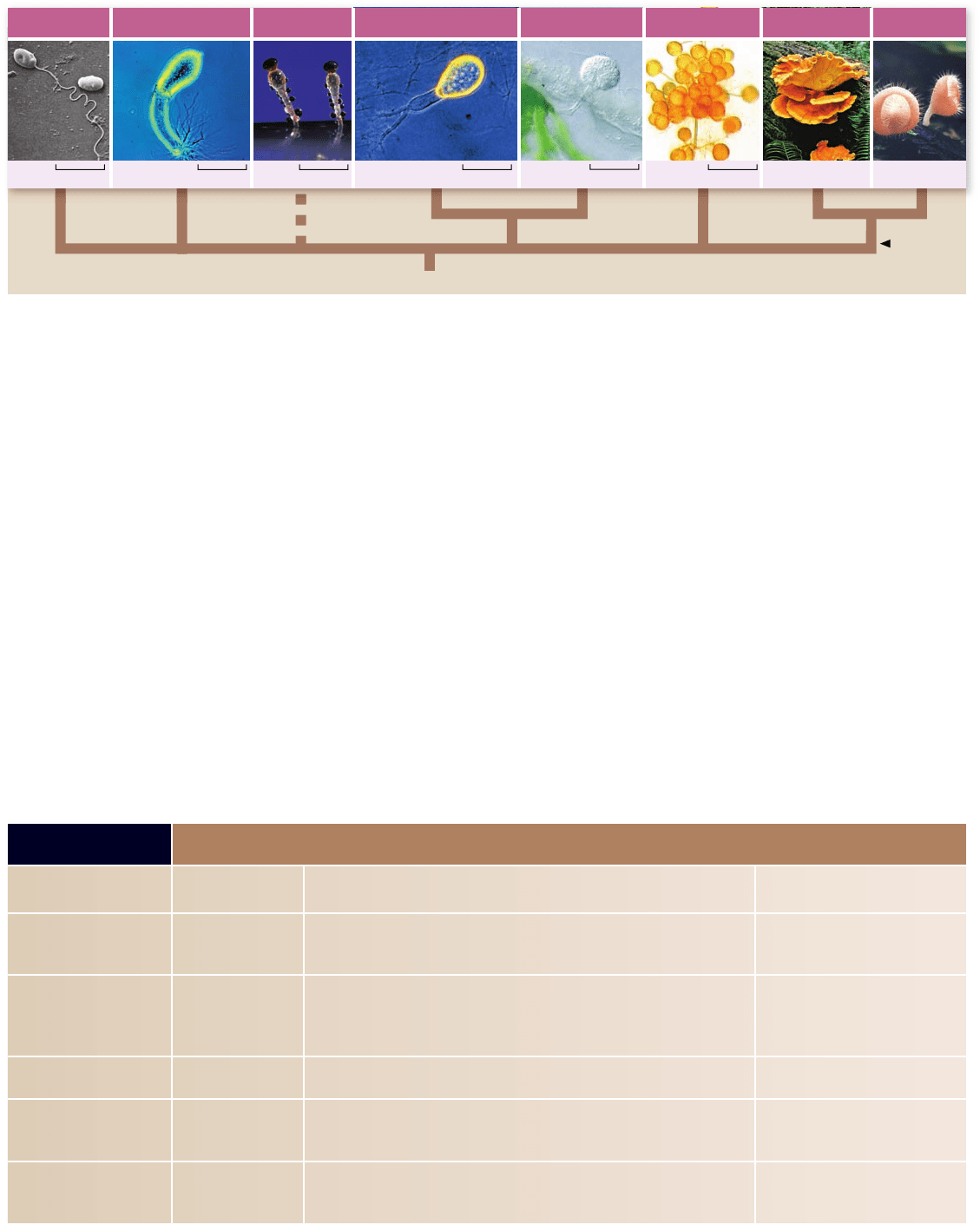
Figure 31.1
Seven major phyla of fungi. All phyla, except Zygomycota, are monophyletic. a. Microsporidia, including Encephalitozoon
cuniculis, are animal parasites. b. Allomyces arbuscula, a water mold, is a blastocladiomycete. c. Pilobolus, a zygomycete, grows on animal dung and also
on culture medium. Stalks about 10 mm long contain dark, spore-bearing sacs. d. Neocallimastigales, including Piromyces communis, decompose
cellulose in the rumens of herbivores. e. Some chytrids, including members of the genus Rhizophydium , parasitize green algae. f. Spores of Glomus
intraradices, a glomeromycete associated with roots. g. Amanita muscaria, the y agaric, is a toxic basidiomycete. h. The cup fungus Cookeina
tricholoma is an ascomycete from the rain forest of Costa Rica. In the cup fungi, the spore-producing structures line the cup; in basidiomycetes that
form mushrooms such as Amanita, they line the gills beneath the cap of the mushroom. All visible structures of fungi, including the ones shown
here, arise from an extensive network of lamentous hyphae that penetrates and is interwoven with the substrate on which they grow.
fossil resembles extant members of the genus Glomus that arose
within the Glomeromycota. One DNA analysis placed the animal/
fungal divergence at 1.5500 bya. This latter estimate is not gener-
ally accepted, but many researchers believe that the last common
ancestor existed around close to 670 mya based on an analysis of
multiple genes. The last common ancestor with animals was a sin-
gle cell, and unique solutions to multicellularity evolved both in
fungi and in animals.
The phylogenetic relationships among fungi have been the
cause of much debate. Traditionally, four fungal phyla were recog-
nized, based primarily on characteristics of the cells undergoing
meiosis: Chytridiomycota (“chytrids”), Zygomycota (“zygomy-
cetes”), Ascomycota (“ascomycetes”), and Basidiomycota (“basidio-
mycetes ”). The chytrids and zygomycetes are not monophyletic.
The understanding of fungal phylogeny is going through rapid and
exciting changes, aided by increasing molecular sequence data
(figure 31.1 and table 31.1 ). In 2007, mycologists agreed on seven
monophyletic phyla: Microsporidia, Blastocladiomycota, Neocal-
lismastigomycota, Chytridiomycota, Glomeromycota, Basidio-
mycota, and Ascomycota (see figure 31.1). Blastomycetes and
neocallistmastigamycetes were formerly grouped with the chytrids.
The Microsporidia are sister to all other fungi, but there is dis-
agreement as to whether or not they are true fungi.
In reading the chapter you will find that phyla with com-
mon characteristics are sometimes grouped under one head-
ing. Phylogenies are included as reminders of the evolutionary
relationships among phyla. Not all fungi are currently assigned
to a monophyletic clade, yet their biology is fascinating.
TABLE 31.1
Fungi
Group Typical Examples Key Characteristics
Approximate Number
of Living Species
Chytridiomycota Allomyces Aquatic, agellated fungi that produce haploid gametes in sexual reproduction or
diploid zoospores in asexual reproduction.
1000
Zygomycota Rhizopus, Pilobolus Multinucleate hyphae lack septa, except for reproductive structures; fusion of hyphae
leads directly to formation of a zygote in zygosporangium, in which meiosis occurs just
before it germinates; asexual reproduction is most common.
1050
Glomeromycota Glomus Form arbuscular mycorrhizae. Multinucleate hyphae lack septa. Reproduce asexually. 150
Ascomycota Tru es, morels In sexual reproduction, ascospores are formed inside a sac called an ascus; asexual
reproduction is also common.
45,000
Basidiomycota Mushrooms,
toadstools, rusts
In sexual reproduction, basidiospores are borne on club-shaped structures called
basidia; asexual reproduction occurs occasionally.
22,000
chapter
31
Fungi
615www.ravenbiology.com
rav32223_ch31_614-632.indd 615rav32223_ch31_614-632.indd 615 11/13/09 1:17:15 PM11/13/09 1:17:15 PM
Apago PDF Enhancer
Hypha
Nuclei Nuclei
Septa with
pores
Pore
Septum
Dikaryotic
cell
0.2 µm
Mycelium
Hyphae
13.3 µm
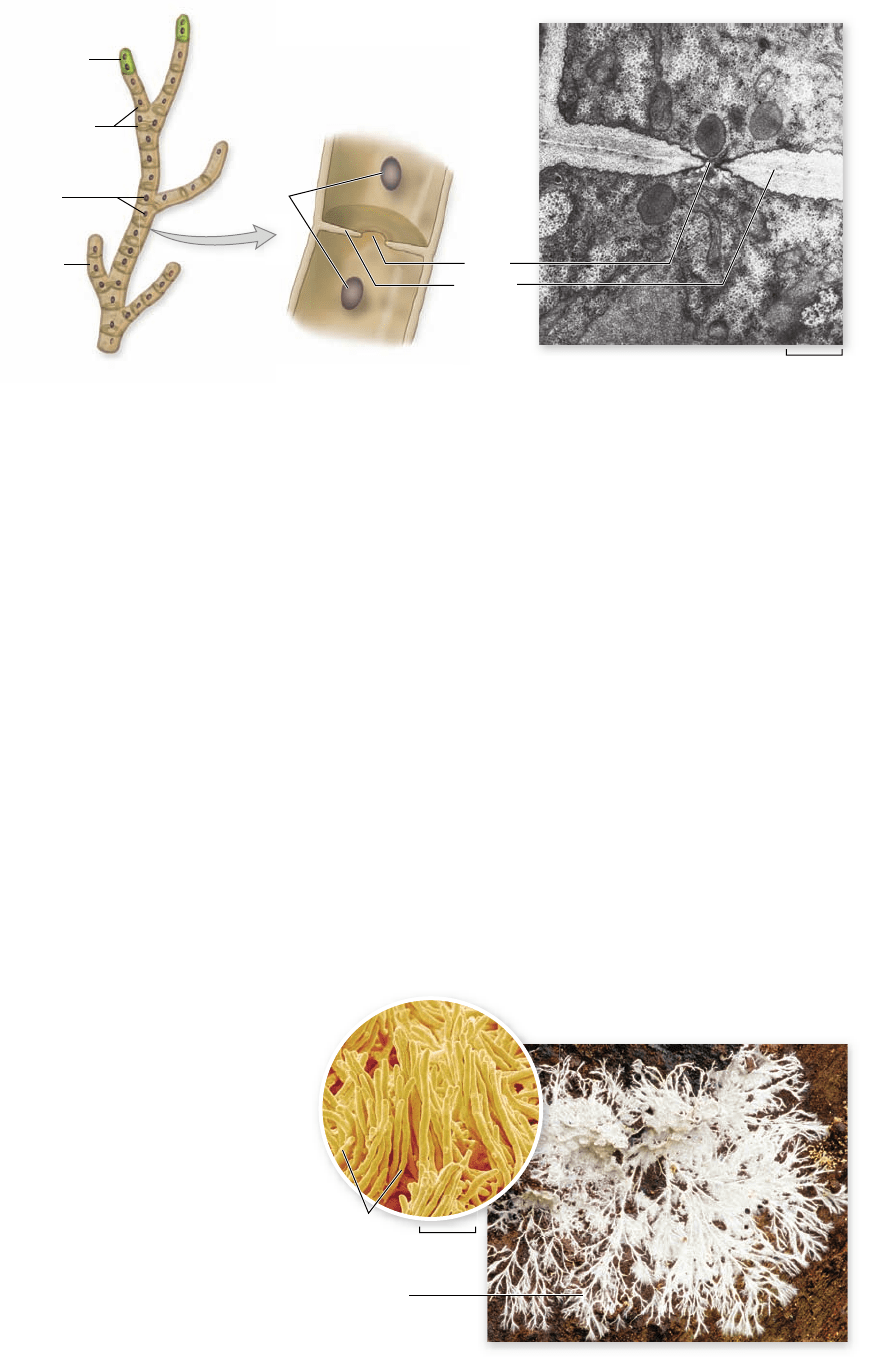
Figure 31.2
A septum.
This transmission electron
micrograph of a section
through a hypha of an
ascomycete shows a pore
through which the
cytoplasm streams.
Figure 31.3
Fungal mycelium. This mycelium, composed of
hyphae, is growing through leaves on the forest oor in Maryland.
the shared traits that has led scientists to believe that fungi and
animals are more closely related than fungi and plants.
Fungal cells may have more than one nucleus
Fungi are different from most animals and plants in that each
cell (or hypha) can house one, two, or more nuclei. A hypha that
has only one nucleus is called monokaryotic; a cell with two
nuclei is dikaryotic. In a dikaryotic cell, the two haploid nuclei
exist independently. Dikaryotic hyphae have some of the genetic
properties of diploids, because both genomes are transcribed.
Sometimes, many nuclei intermingle in the common cy-
toplasm of a fungal mycelium, which can lack distinct cells. If a
dikaryotic or multinucleate hypha has nuclei that are derived
from two genetically distinct individuals, the hypha is called
heterokaryotic. Hyphae whose nuclei are genetically similar
to one another are called homokaryotic.
Mitosis is not followed by cell division
Mitosis in multicellular fungi differs from that in most other
organisms. Because of the linked nature of the cells, the cell
The body of a fungus is a mass
of connected hyphae
Some hyphae are continuous or branching tubes filled with cy-
toplasm and multiple nuclei. Other hyphae are typically made
up of long chains of cells joined end-to-end and divided by
cross-walls called septa (singular, septum). The septa rarely form
a complete barrier, except when they separate the reproductive
cells. Even fungi with septa can be considered one long cell.
Cytoplasm characteristically flows or streams freely
throughout the hyphae, passing through major pores in the
septa (figure 31.2). Because of this streaming, proteins synthe-
sized throughout the hyphae may be carried to their actively
growing tips. As a result, fungal hyphae may grow very rapidly
when food and water are abundant and the temperature is opti-
mum. For example, you may have seen mushrooms suddenly
appear in a lawn overnight after a rain in summer.
The mycelium
A mass of connected hyphae is called a mycelium (plural,
mycelia). (This word and the term mycology, the study of fungi,
are both derived from the Greek word mykes, meaning fungi.)
The mycelium of a fungus (figure 31.3) constitutes a system
that may, in the aggregate, be many meters long. This myce-
lium grows into the soil, wood, or other material and diges-
tion of the material begins quickly. In two of the four major
groups of fungi, reproductive structures formed of interwo-
ven hyphae, such as mushrooms, puffballs, and morels, are
produced at certain stages of the life cycle. These structures
expand rapidly because of rapid inflation of the hyphae.
Cell walls with chitin
The cell walls of fungi are formed of polysaccharides, including
chitin. In contrast, cell walls of plants and many protists contain
cellulose, not chitin. Chitin is a modified cellulose consisting
of linked glucose units to which nitrogen groups have been
added; this polymer is then cross-linked with proteins. Chitin is
the same material that makes up the major portion of the hard
shells, or exoskeletons, of arthropods, a group of animals that
includes insects and crustaceans (chapter 34 ). Chitin is one of
616
part
V
Diversity of Life on Earth
rav32223_ch31_614-632.indd 616rav32223_ch31_614-632.indd 616 11/13/09 1:17:24 PM11/13/09 1:17:24 PM
Apago PDF Enhancer
9.5 µm
a. b.
370 µm
Fungus
Nematode
Fungal
loop
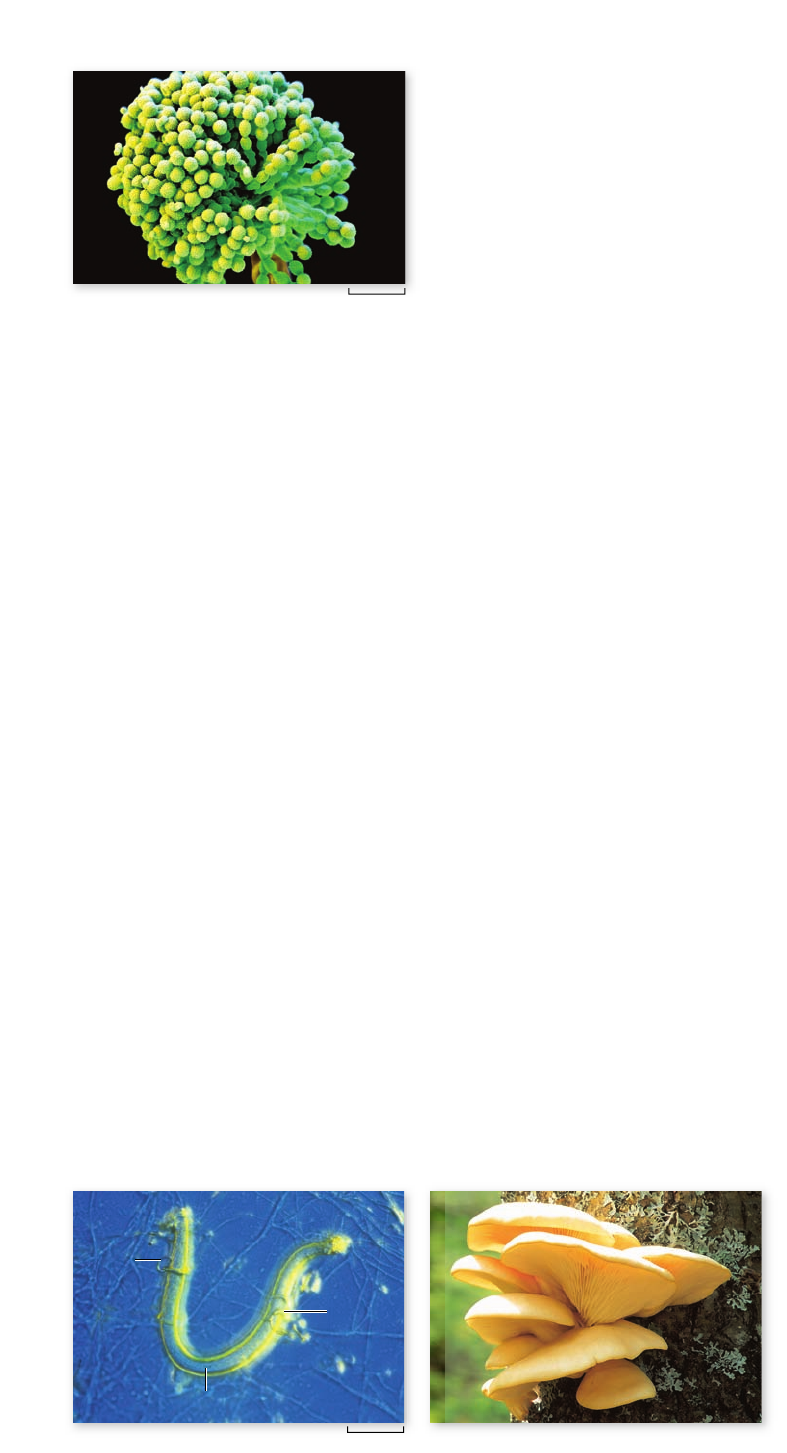
Figure 31.4
Fungal spores.
Scanning electron
micrograph of fungal
spores from
Aspergillus.
As noted previously, the cytoplasm in fungal hyphae nor-
mally flows through perforated septa or moves freely in their
absence. Reproductive structures are an important exception to
this general pattern. When reproductive structures form, they
are cut off by complete septa that lack perforations or that have
perforations that soon become blocked.
Spores
Spores are the most common means of reproduction among
fungi. They may form as a result of either asexual or sexual
processes, and they are often dispersed by the wind. When
spores land in a suitable place, they germinate, giving rise to a
new fungal mycelium.
Because the spores are very small, between 2 and 75 μm
in diameter (figure 31.4) , they can remain suspended in the air
for a long time. Unfortunately, many of the fungi that cause
diseases in plants and animals are spread rapidly by such means.
The spores of other fungi are routinely dispersed by insects or
other small animals. A few fungal phyla retain the ancestral fla-
gella and have motile zoospores.
Biologists had believed for a long time that the worldwide
presence of fungal species could be accounted for, on an evolu-
tionary timescale, by the almost limitless, long-distance dispersal
of fungal spores. Recent biogeographic studies, however, have
examined the phylogenetic relationships among fungi in distant
parts of the world and disproved this long-held assumption.
Fungi are heterotrophs that absorb nutrients
All fungi obtain their food by secreting digestive enzymes into
their surroundings and then absorbing the organic molecules pro-
duced by this external digestion. The fungal body plan reflects this
approach. Unicellular fungi have the greatest surface area-to-
volume ratio of any fungus, maximizing the surface area for ab-
sorption. Extensive networks of hyphae also provide an enormous
surface area for absorptive nutrition in a fungal mycelium.
Many fungi are able to break down the cellulose in wood,
cleaving the linkages between glucose subunits and then ab-
sorbing the glucose molecules as food. Most fungi also digest
lignin, an insoluble organic compound that strengthens plant
cell walls. The specialized metabolic pathways of fungi allow
them to obtain nutrients from dead trees and from an extraor-
dinary range of organic compounds, including tiny round-
worms called nematodes (figure 31.5a) .
itself is not the relevant unit of reproduction; instead, the nu-
cleus is. The nuclear envelope does not break down and re-
form; instead, the spindle apparatus is formed within it.
Centrioles are absent in all fungi except chytrids; instead,
fungi regulate the formation of microtubules during mitosis
with small, relatively amorphous structures called spindle plaques.
This unique combination of features strongly suggests that
fungi originated from some unknown group of single-celled
eukaryotes with these characteristics.
Fungi can reproduce both
sexually and asexually
Many fungi are capable of producing both sexual and asexual
spores. When a fungus reproduces sexually, two haploid hyphae
of compatible mating types may come together and fuse.
The dikaryon stage
In animals, plants, and some fungi, the fusion of two haploid
cells during reproduction immediately results in a diploid cell
(2n). But in other fungi, namely basidiomycetes and ascomy-
cetes, an intervening dikaryotic stage (1n + 1n) occurs before
the parental nuclei fuse and form a diploid nucleus. In ascomy-
cetes, this dikaryon stage is brief, occurring in only a few cells
of the sexual reproductive structure. In basidiomycetes, how-
ever, it can last for most of the life of the fungus, including both
the feeding and sexual spore-producing structures.
Reproductive structures
Some fungal species produce specialized mycelial structures to
house the production of spores. Examples are the mushrooms we
see above ground, the “shelf ” fungus that appears on the trunks of
dead trees, and puffballs, which can house billions of spores.
Figure 31.5
Carnivorous fungi. a. Fungus
obtaining nutrients from a nematode. b. The
oyster mushroom Pleurotus ostreatus not only
decomposes wood but also immobilizes
nematodes, which the fungus uses as a source
of nitrogen.
chapter
31
Fungi
617www.ravenbiology.com
rav32223_ch31_614-632.indd 617rav32223_ch31_614-632.indd 617 11/13/09 1:17:30 PM11/13/09 1:17:30 PM
Apago PDF Enhancer
0.5 µm
Polar tube
Spore
Neocallimastigomycota
Zygomycota
Chytridiomycota
Glomeromycota
Basidiomycota
Ascomycota
Blastocladiomycota
Microsporidia
Fungi
The mycelium of the edible oyster mushroom Pleurotus
ostreatus (figure 31.5b) excretes a substance that paralyzes nem-
atodes that feed on the fungus. When the worms become slug-
gish and inactive, the fungal hyphae envelop and penetrate their
bodies. Then the fungus secretes digestive juices and absorbs
the nematode’s nutritious contents, just like it would from a
plant source.
This fungus usually grows within living trees or on old
stumps, obtaining the bulk of its glucose through the
enzymatic digestion of cellulose and lignin from plant cell
walls. The nematodes it consumes apparently serve mainly as
a source of nitrogen—a substance almost always in short sup-
ply in biological systems. Other fungi are even more active
predators than Pleurotus, snaring, trapping, or firing projec-
tiles into nematodes, rotifers, and other small animals on
which they prey.
Because of their ability to break down almost any carbon-
containing compound—even jet fuel—fungi are of interest for
use in bioremediation, using organisms to clean up soil or water
that is environmentally contaminated. As one example, some
fungal species can remove selenium, an element that is toxic in
high accumulations, from soils by combining it with other
harmless volatile compounds.
Learning Outcomes Review 31.1
Fungi are more closely related to animals than to plants. Many, but not
all, fungi form seven monophyletic phyla. A fungus consists of a mass of
hyphae (cells) termed a mycelium; cell walls contain the polysaccharide
chitin. Mitosis in fungi divides the nucleus but not the hypha itself. Sexual
reproduction may occur when hyphae of two diff erent mating types fuse.
Haploid nuclei from each type may persist separately in some groups,
termed a dikaryon stage. Spores are produced sexually or asexually and are
spread by wind or animals. Fungi secrete digestive enzymes externally and
then absorb the products of the digestion. Fungi can break down almost any
organic compound.
■ What differentiates fungi from animals, since both are
heterotrophs?
■ What protects hyphae from being digested by the
fungus’s own secreted enzymes?
31.2
Microsporidia: Unicellular
Parasites
Learning Outcomes
Explain characteristics that led microsporidians to be 1.
classified as protists.
Describe evidence for placing microsporidians with fungi. 2.
Microsporidia are obligate, intracellular, animal parasites, long
thought to be protists. The lack of mitochondria led biologists
to believe that microsporidians were in a deep branch of pro-
tists that diverged before endosymbiosis led to mitochondria.
Genome sequencing of the microsporidian Encephalitozoon
cuniculi revealed genes related to mitochondrial functions with-
in the tiny 2.9-Mb genome. Finding mitochondrial genes led to
the hypothesis that microsporidia ancestors had mitochondria,
and that greatly reduced, mitochondrion-derived organelles
exist in microsporidia. Coupled with phylogenies derived from
analyses of new sequence data, microsporidia have been tenta-
tively moved from the protists to the fungi.
E. cuniculi and other microsporidia commonly cause dis-
ease in immunosuppressed patients, such as those with AIDS
and people who have received organ transplants. Microsporid-
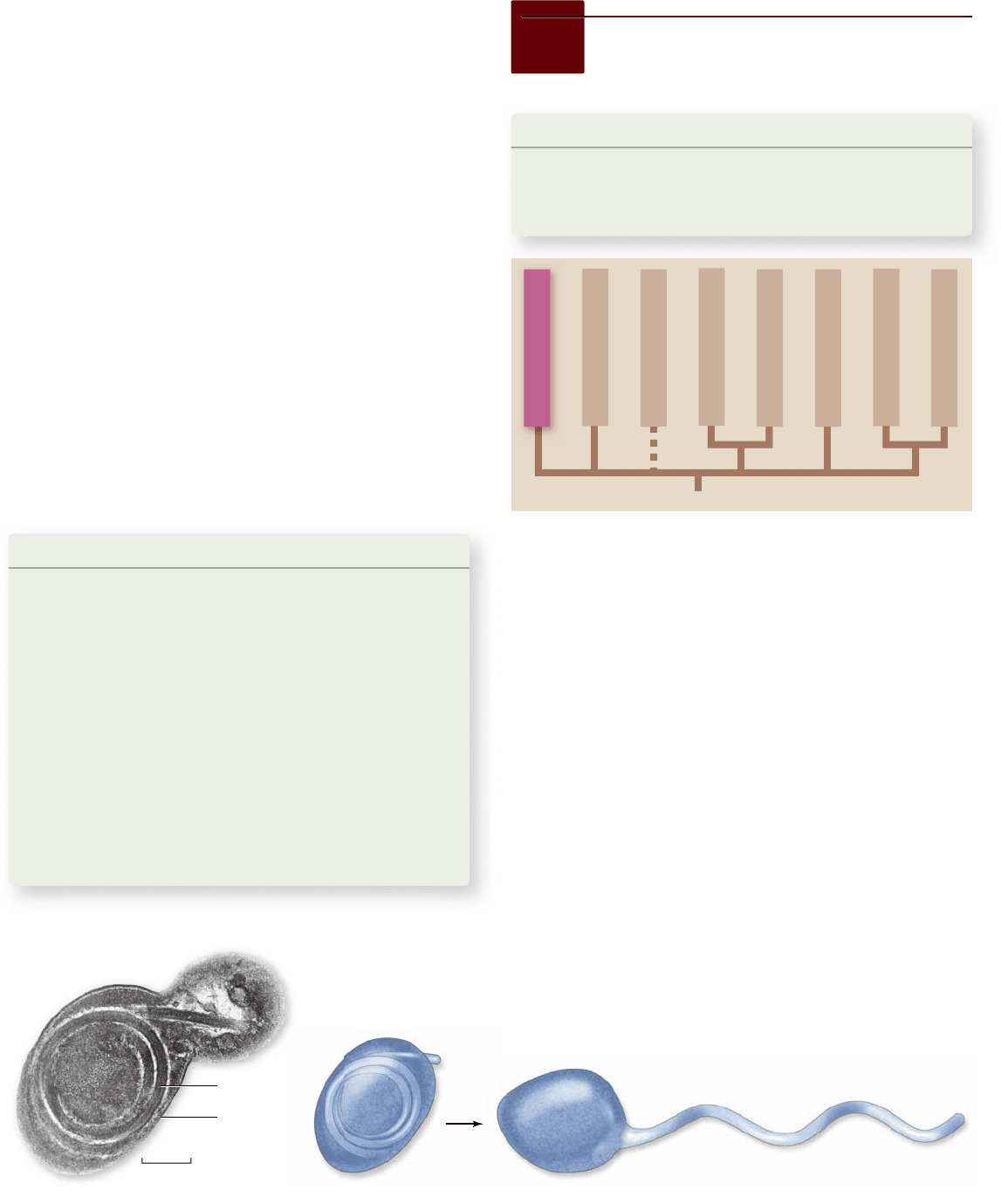
ians infect hosts with their spores, which contain a polar tube
(figure 31.6) . The polar tube extrudes the contents of the spore
Figure 31.6
Polar tube of an E. cuniculi spore
infects cells.
618
part
V
Diversity of Life on Earth
rav32223_ch31_614-632.indd 618rav32223_ch31_614-632.indd 618 11/13/09 1:17:36 PM11/13/09 1:17:36 PM
Apago PDF Enhancer
Zoospore
Neocallimastigomycota
Zygomycota
Chytridiomycota
Glomeromycota
Basidiomycota
Ascomycota
Blastocladiomycota
Microsporidia
Fungi
Chytrid
Oedogonium
filament
into the cell and the parasite sets up housekeeping in a vacuole.
E. cuniculi infects intestinal and neuronal cells, leading to diar-
rhea and neurodegenerative disease. Understanding the phylo-
genetic placement of the microsporidia is important in
identifying effective disease treatments.
Learning Outcomes Review 31.2
Microsporidia lack mitochondria; however, the presence of mitochondrial
genes indicates that at one time an ancestral form possessed them.
As obligate parasites, microsporidia cause diseases in animals,
including humans.
■ How would you distinguish a microsporidian from the
parasitic protistan Plasmodium?
chytridion, meaning “little pot,” referring to the structure that re-
leases the flagellated zoospores (figure 31.7).
Chytrids include Batrachochytrium dendrobatidis, which has
been implicated in the die-off of amphibians. Other chytrids
have been identified as plant pathogens (figure 31.8 ). Tradi-
tionally the blastocladiomycetes and the neocallismastigomy-
cetes have been grouped with the chytrids. Recent phylogenetic
inferences have accorded the two groups their own phyla. Both
proposed phyla are discussed here because of their many simi-
larities with the chytrids.
Blastocladiomycota have
single agella
Blastocladiomycetes have uniflagellated zoospores. Blasto-
cladiomycetes, neocallimastigomycetes, and chytridiomycetes
were originally grouped as a single phylum because they all
have flagella that have been lost in other groups, except the
microsporidians. Inclusion of multiple genes in phylogenetic
analyses has established that the three groups form three sep-
arate, monophyletic phyla.
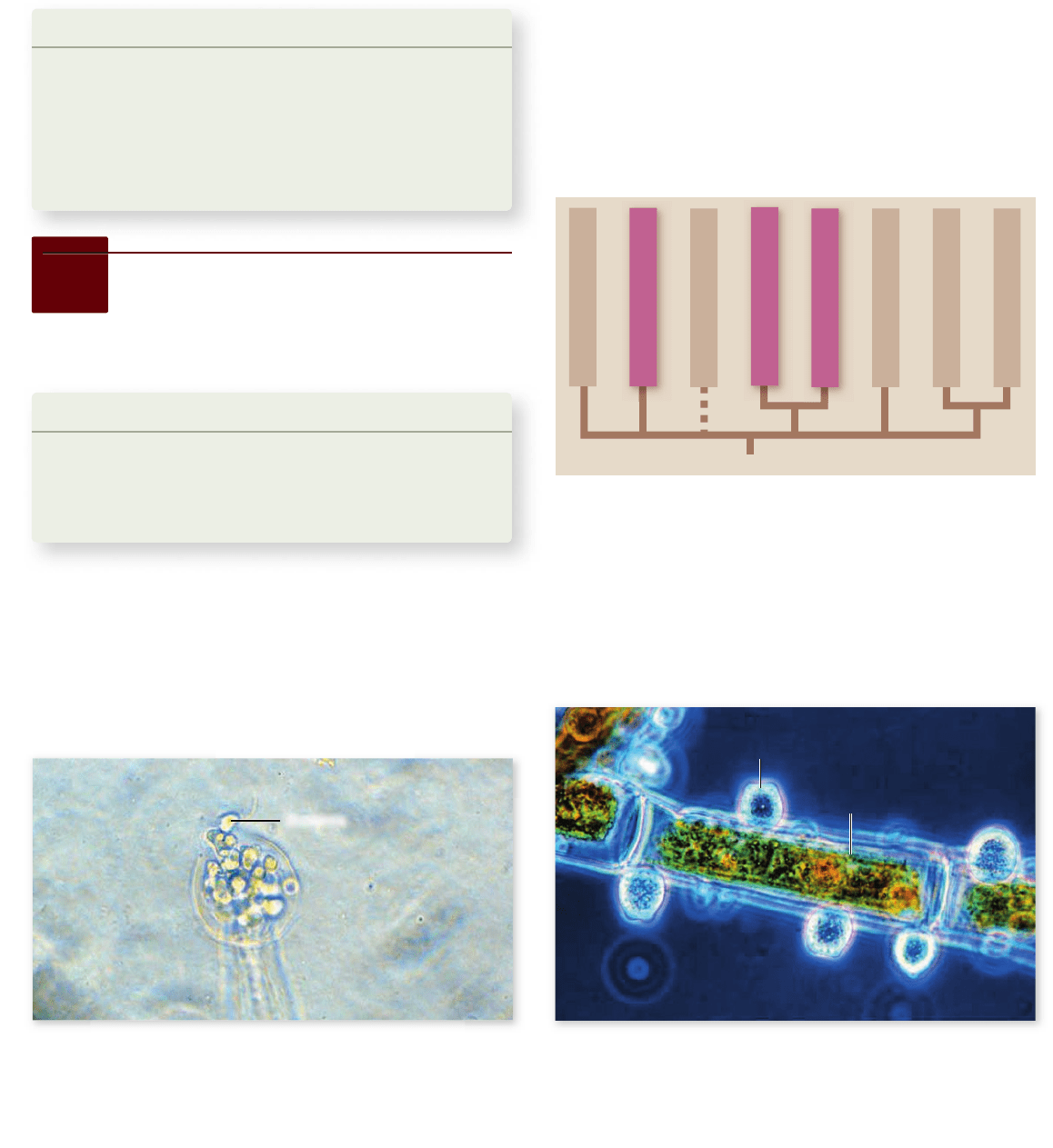
Figure 31.7
Zoospore release. The potlike structure
(chytridion in Greek) containing the zoospores gives chytrids
their name.
Figure 31.8
Chytridiomycota can be plant pathogens.
Rhizophydium granulosporum sporangia on a lament of the green
algae Oedogonium.
31.3
Chytridiomycota and
Relatives: Fungi with
Flagellated Zoospores
Learning Outcomes
Distinguish between blastocladiomycetes 1.
and microsporidians.
Explain the meaning of “chytrid.”2.
Discuss possible uses of neocallimastigomycetes. 3.
Members of phylum Chytridiomycota, the chitridiomy cetes or
chytrids, are aquatic, flagellated fungi that are closely related to
ancestral fungi. Motile zoospores are a distinguishing character
of this fungal group . Chytrid has its origins in the Greek word
chapter
31
Fungi
619www.ravenbiology.com
rav32223_ch31_614-632.indd 619rav32223_ch31_614-632.indd 619 11/13/09 1:17:38 PM11/13/09 1:17:38 PM
Apago PDF Enhancer
100 μm
Haploid
zoospore (n)
Young
gametophyte (n)
Female gametangium
Male gametangium
Haploid gametes (n)
Sporophyte(2n)
Gametophyte (n)
Young
sporophyte (2n)
Young sporophyte (2n)
Mature sporophyte (2n)
Asexual sporangium
Sporophyte
Sporangium (2n)
n
2n
Mature
gametophyte (n)
Diploid
zoospores (2n)
Asexual
reproduction
FERTILIZATION
MEIOSIS
MITOSIS
a. b.
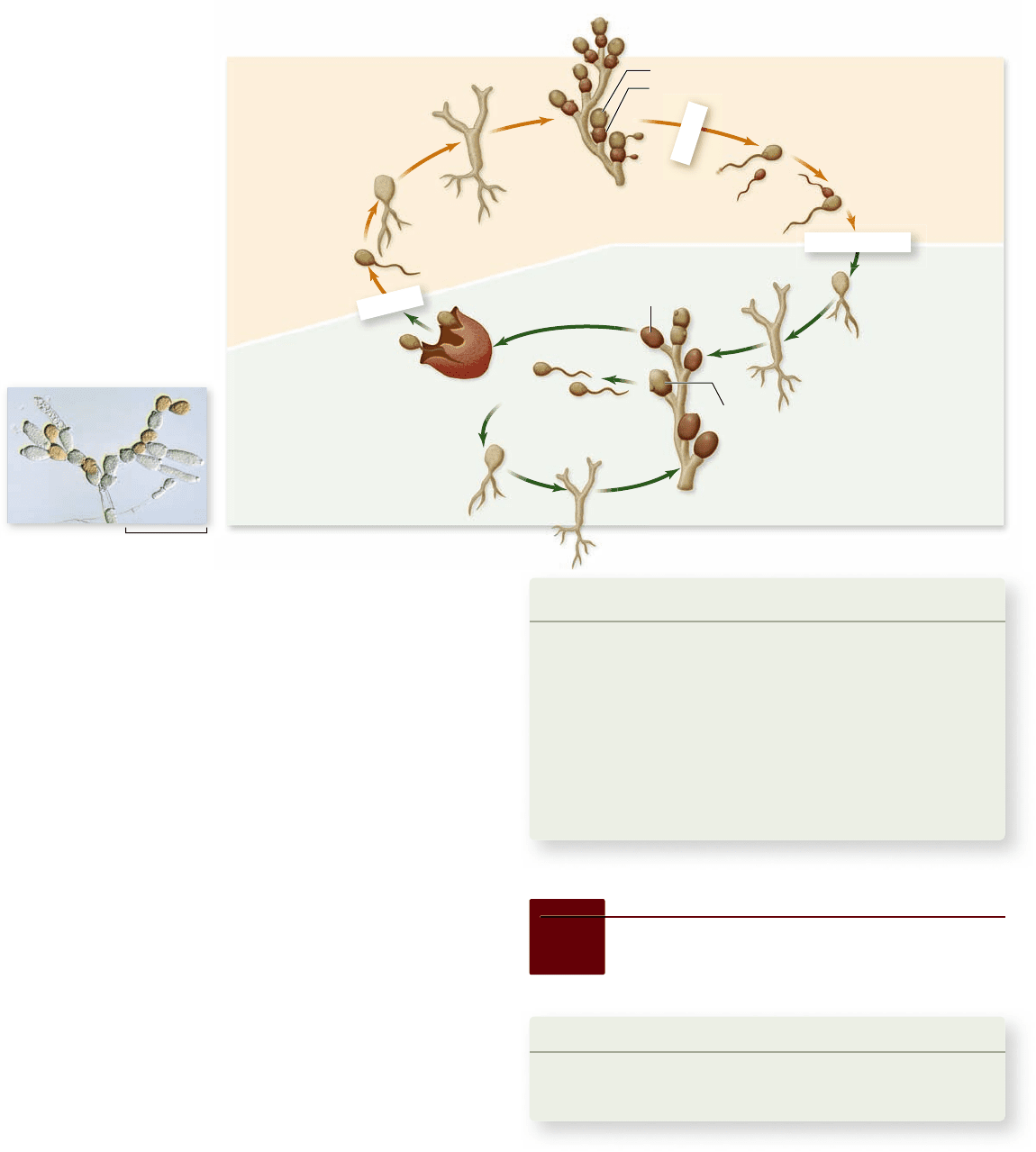
Allomyces is a typical blastocladiomycete genus. A water mold,
it exhibits a true haplodiplontic life cycle (figure 31.9) . Reproduction
in Allomyces species is enhanced by the secretion of a pheromone, a
long-distance chemical signal, from the female gametes that attracts
male gametes. Pheromones are similar to hormones, but work be-
tween organisms, rather than within organisms. The Allomyces pher-
omone is called sirenin (after the Sirens in Greek mythology) and
was the first fungal sex hormone to be identified chemically.
Unlike microsporidia, which lack mitochondria, A. macro-
gynus has giant mitochondria in its zoospores. Each flagellated zoo-
spore contains a single giant mitochondrion that is fragmented into
several normal-sized organelles in vegetative cells.
Neocallimastigomycota digest cellulose
in ruminant herbivores
Within the rumens of mammalian herbivores, neocallimastigo-
mycetes enzymatically digest the cellulose and lignin of the plant
biomass in their grassy diet. Sheep, cows, kangaroos, and elephants
all depend on these fungi to obtain sufficient calories. These an-
aerobic fungi have greatly reduced mitochondria that lack cristae.
Their zoospores have multiple flagella. “Mastig” in Neocallimas-
tigomycota is Latin for “whips,” referencing the multiple flagella.
The genus Neocallimastix can survive on cellulose alone.
Genes encoding digestive enzymes such as cellulase made their
way into the Neocallimastix genomes via horizontal gene transfer
from bacteria. Horizontal gene transfer is covered in chapter 26 .
The many enzymes that neocallimastigamycetes use to di-
gest cellulose and lignin in plant cell walls may be useful in biofuel
production from cellulose. Although it is possible to obtain etha-
nol from cellulose, breaking down the cellulose is a major techni-
cal hurdle. The use of neocallimastigamycetes fungi to produce
cellulosic ethanol is a promising, cost-effective approach.
31.4
Zygomycota: Fungi
That Produce Zygotes
Learning Outcomes
Describe the defining feature of the zygomycetes. 1.
Explain the advantage of zygospore formation.2.
Zygomycetes (phylum Zygomycota) include only about 1050
named species, but they are incredibly diverse. The zygomy-
cota are not monophyletic, but are included in this chapter as a
group while research on their evolutionary history continues.
Among them are some of the more common bread molds,
which have been assigned to the monophyletic subphylum
Mucoromycotina (figure 31.10) , as well as a variety of others
Figure 31.9
Allomyces, a
blastocladiomycete
that grows in the soil.
a. The spherical sporangia
can produce either diploid
zoospores via mitosis or
haploid zoospores via
meiosis. b. Life cycle of
Allomyces, which has both
haploid and diploid
multicellular stages
(alternation of generations).
Learning Outcomes Review 31.3
Three closely related phyla, Chytridiomycota, Blastocladiomycota, and
Neocallimastigomycota have fl agellated zoospores. Chytrid refers to
the potlike shape of the structure releasing the zoospores. Allomyces, a
representative blastocladiomycete, has unifl agellated zoospores with giant
mitochondria, and a haplodiplontic life cycle. Neocallimastigamycetes
acquired cellulases from bacteria. They aid ruminant animals in digesting
cellulose from plants and may be useful in production of biofuels.
■ What two features differentiate blastocladiomycetes
from microsporidians?
620
part
V
Diversity of Life on Earth
rav32223_ch31_614-632.indd 620rav32223_ch31_614-632.indd 620 11/13/09 1:17:41 PM11/13/09 1:17:41 PM
Apago PDF Enhancer
a.
b.
(Meiosis occurs
during germination)
Rhizoid
Sporangiophore
Sporangium
-Mating strain
n
n + n
(;)
(:)
Zygosporangium
Germinating
zygosporangium
GERMINATION
Asexual
reproduction
Hypha
Gametangia
GERMINATION
Spores
Spores
+Mating strain
FERTILIZATION
MEIOSIS
2n
KARYOGAMY
667 µm
Neocallimastigomycota
Zygomycota
Chytridiomycota
Glomeromycota
Basidiomycota
Ascomycota
Blastocladiomycota
Microsporidia
Fungi
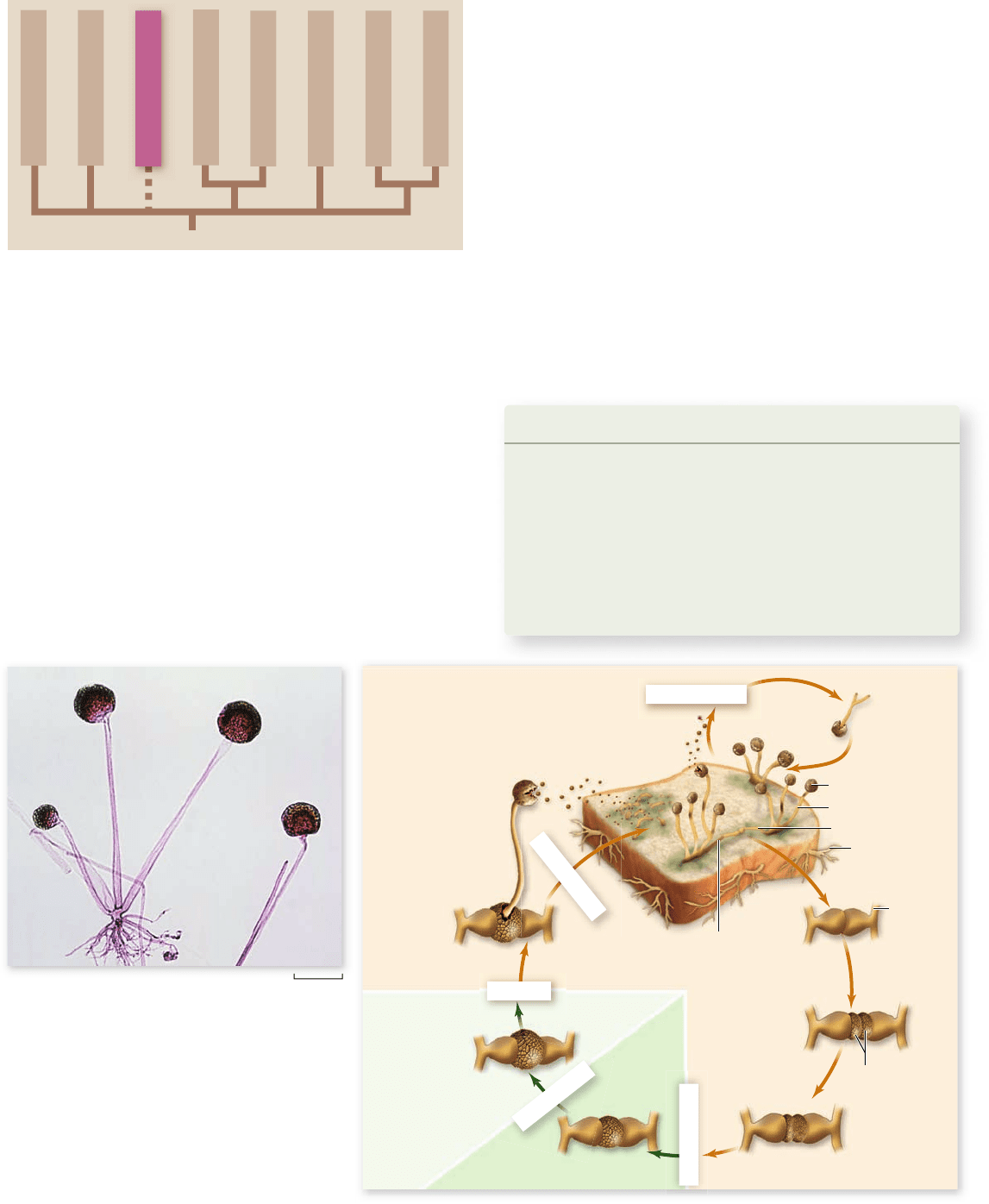
Figure 31.10
Rhizopus, a zygomycete
that grows on simple sugars. This fungus is
often found on moist bread or fruit. a. The dark,
spherical, spore-producing sporangia are on
hyphae about 1 cm tall. The rootlike hyphae
(rhizoids) anchor the sporangia. b. Life cycle of
Rhizopus. The Zygomycota group is named for
the zygosporangia characteristic of Rhizopus.
The (+) and (-) denote mating types.
place develops into a zygosporangium (figure 31.10b), within
which a zygospore develops. The zygospore, which may con-
tain one or more diploid nuclei, acquires a thick coat that helps
the fungus survive conditions not favorable for growth.
Meiosis, followed by mitosis, occurs during the germina-
tion of the zygospore, which releases haploid spores. Haploid
hyphae grow when these haploid spores germinate. Except for
the zygote nuclei, all nuclei of the zygomycetes are haploid.
Asexual reproduction is more common
Asexual reproduction occurs much more frequently than sexual
reproduction in the zygomycetes. During asexual reproduction,
hyphae produce clumps of erect stalks, called sporangio-
phores. The tips of the sporangiophores form sporangia, which
are separated by septa. Thin-walled haploid spores are pro-
duced within the sporangia. These spores are shed above the
food substrate, in a position where they may be picked up by
the wind and dispersed to a new food source.
Learning Outcomes Review 31.4
Zygomycetes are named for the production of diploid zygote nuclei by fusion
of haploid nuclei, a process called karyogamy. The hyphae of zygomycetes
are multinucleate, with septa only where gametangia or sporangia are
separated. Many zygomycetes form characteristic resting structures called
zygosporangia, which contain zygospores that are able to withstand
harsh conditions.
■ Under what conditions would you expect a zygomycete
to produce zygospores rather than haploid spores?
found on decaying organic material, including strawberries and
other fruits. A few human pathogens are in this group.
In sexual reproduction, zygotes
form inside a zygosporangium
The zygomycetes lack septa in their hyphae except when they
form sporangia or gametangia (structures in which spores or
gametes are produced). The group is named after a characteris-
tic feature of the sexual phase of the life cycle, the formation of
diploid zygote nuclei.
Sexual reproduction begins with the fusion of gametangia,
which contain numerous nuclei. The gametangia are cut off from
the hyphae by complete septa. These gametangia may be formed
on hyphae of different mating types or on a single hypha.
The haploid nuclei fuse to form a diploid zygote nucleus,
a process called karyogamy. The area where the fusion has taken
chapter
31
Fungi
621www.ravenbiology.com
rav32223_ch31_614-632.indd 621rav32223_ch31_614-632.indd 621 11/13/09 1:17:43 PM11/13/09 1:17:43 PM