
Raven P.H., Johnson G.B., Mason K.A. Biology (Ninth Edition)
Подождите немного. Документ загружается.

Apago PDF Enhancer
Neocallimastigomycota
Zygomycota
Chytridiomycota
Glomeromycota
Basidiomycota
Ascomycota
Blastocladiomycota
Microsporidia
Fungi
Neocallimastigomycota
Zygomycota
Chytridiomycota
Glomeromycota
Basidiomycota
Ascomycota
Blastocladiomycota
Microsporidia
Fungi
31.5
Glomeromycota: Asexual
Plant Symbionts
Learning Outcome
Explain why Glomeromycota is now considered separate 1.
from Zygomycota.
The glomeromycetes, a tiny group of fungi with approxi-
mately 150 described species, likely made the evolution of
terrestrial plants possible. Tips of hyphae grow within the
root cells of most trees and herbaceous plants, forming a
branching structure that allows nutrient exchange. The intrac-
ellular associations with plant roots are called arbuscular
mycorrhizae. The specifics of arbuscular mycorrhizal associa-
tions and other forms of mycorrhizal interactions are detailed
in section 31.8.
Glomeromycetes cannot survive in the absence of a host
plant. The symbiotic relationship is mutualistic, with the
glomeromycetes providing essential minerals, especially phos-
phorous, and the plants providing carbohydrates.
The glomeromycetes are challenging to characterize, in
part, because there is no evidence of sexual reproduction.
These fungi exemplify our emerging understanding of fungal
phylogeny. Like zygomycetes, glomeromycetes lack septae in
their hyphae and were once grouped with the zygomycetes.
However, comparisons of DNA sequences of small-subunit
rRNAs reveal that glomeromycetes are a monophyletic clade
that is phylogenetically distinct from zygo my cetes. Unlike
zygomycetes, glomeromycetes lack zygospores. Glomeromy-
cota originated at least 600 to 620 mya, well before the split
of the Ascomycota and Basidiomycota, which we will con-
sider next.
Learning Outcome Review 31.5
Glomeromycetes are a monophyletic fungal lineage based on analysis of
small-subunit rRNAs. Their obligate symbiotic relationship with the roots
of many plants appears to be ancient and may have made it possible for
terrestrial plants to evolve.
■ Why do glomeromycetes require a host plant?
31.6
Basidiomycota: The Club
(Basidium) Fungi
Learning Outcomes
Explain which cells in the life cycle of a basidiomycete 1.
are diploid.
Distinguish between primary and secondary mycelium in 2.
basidiomycetes.
The basidiomycetes (phylum Basidiomycota) include some of
the most familiar fungi. Among the basidiomycetes are not only
the mushrooms, toadstools, puffballs, jelly fungi, and shelf
fungi, but also many important plant pathogens, including rusts
and smuts (figure 31.11a). Rust infections resemble rusting
metals, and smut infections appear black and powdery due to
the spores. Many mushrooms are used as food, but others are
hallucinogenic or deadly poisonous.
Basidiomycetes sexually
reproduce within basidia
Basidiomycetes are named for their characteristic sexual repro-
ductive structure, the club-shaped basidium (plural, basidia).
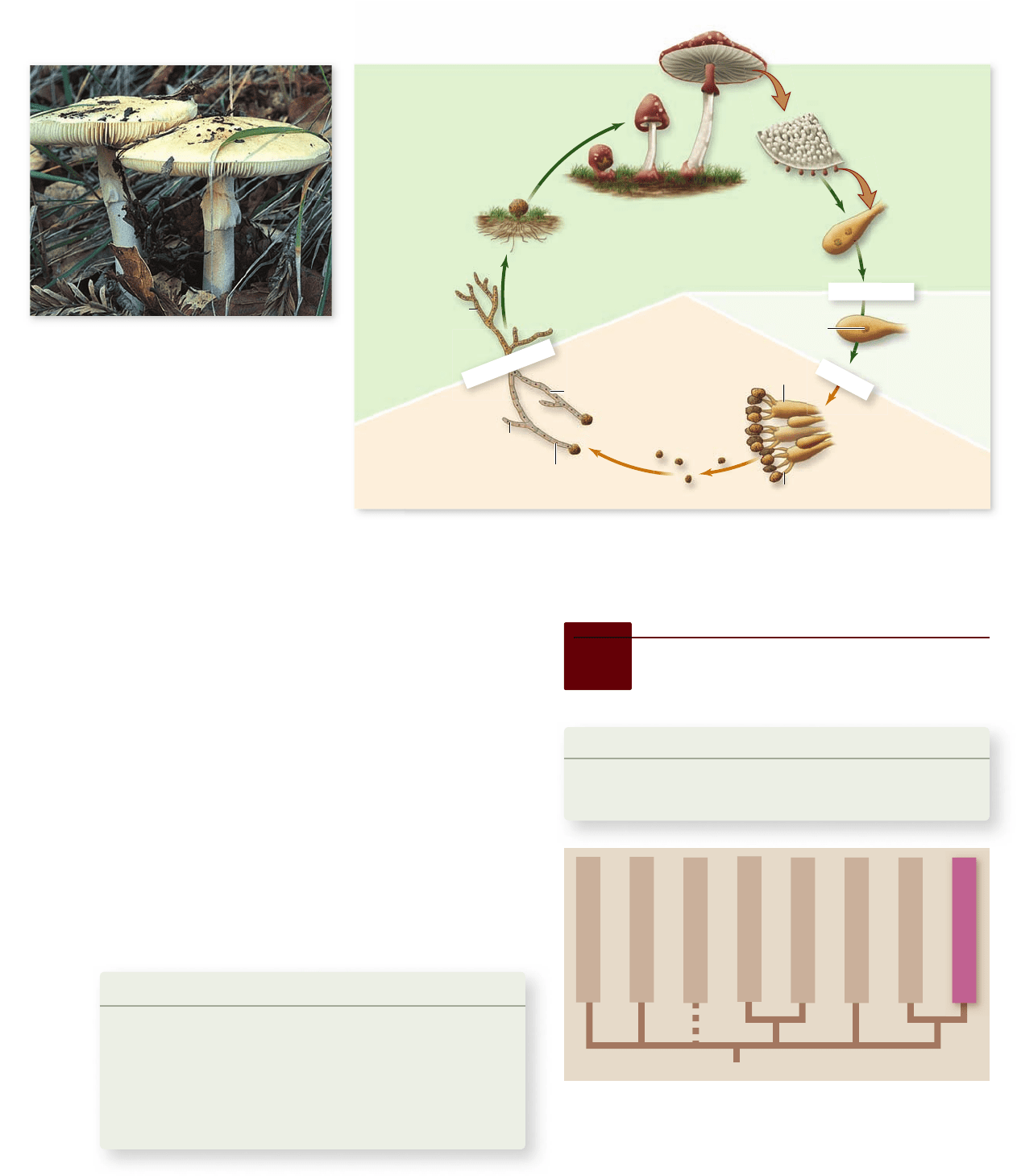
Karyogamy (fusion of two nuclei) occurs within the basid-
ium, giving rise to the only diploid cell of the life cycle
(figure 31.11b). Meiosis occurs immediately after karyogamy.
In the basidiomycetes, the four haploid products of meiosis are
incorporated into basidiospores. In most members of this
phylum, the basidiospores are borne at the end of the basidia on
slender projections (sterigmata).
The secondary mycelium of
basidiomycetes is heterokaryotic
The life cycle of a basidiomycete continues with the production
of monokaryotic hyphae after spore germination. These hy-
phae lack septa early in development. Eventually, septa form
between the nuclei of the monokaryotic hyphae. A basidiomy-
cete mycelium made up of monokaryotic hyphae is called a pri-
mary mycelium.
622
part
V
Diversity of Life on Earth
rav32223_ch31_614-632.indd 622rav32223_ch31_614-632.indd 622 11/13/09 1:17:46 PM11/13/09 1:17:46 PM
Apago PDF Enhancer
a.
b.
Primary mycelium
(monokaryotic)
Secondary
mycelium
(dikaryotic)
2n
n
-Mating strain
+Mating strain
n + n
Basidiocarp
Gills lined
with basidia
Basidium
Basidium
SterigmaBasidiospores
MEIOSIS
FERTILIZATION
Zygote
KARYOGAMY
Neocallimastigomycota
Zygomycota
Chytridiomycota
Glomeromycota
Basidiomycota
Ascomycota
Blastocladiomycota
Microsporidia
Fungi
Figure 31.11
Basidiomycetes.
a. The death cap mushroom, Amanita
phalloides. When eaten, these
mushrooms are usually fatal. b. Life
cycle of a basidiomycete. The basidium
is the reproductive structure.
Different mating types of monokaryotic hyphae may fuse,
forming a dikaryotic mycelium, or secondary mycelium. Such a
mycelium is heterokaryotic, with two nuclei representing the
two different mating types, between each pair of septa. This
stage is the dikaryon stage described earlier as being a distin-
guishing feature of fungi. It is found in both the ascomycetes
and the basidiomycetes. The two phyla are grouped as the sub-
kingdom Dikarya because of this commonality. The mainte-
nance of two genomes in the heterokaryon allows for more
genetic plasticity than in a diploid cell with one nucleus. One
genome may compensate for mutations in the other.
The basidiocarps, or mushrooms, are formed entirely of
secondary (dikaryotic) mycelium. Gills, sheets of tissue on the
undersurface of the cap of a mushroom, produce vast numbers
of minute spores. It has been estimated that a mushroom with
a cap measuring 7.5 cm in diameter produces as many as
40 million spores per hour!
Learning Outcomes Review 31.6
Basidiomycetes undergo karyogamy, after which meiosis occurs within
club-shaped basidia. The primary mycelium consists of monokaryotic
hyphae resulting from spore germination. The secondary mycelium of
basidiomycetes is the dikaryon stage, in which two nuclei exist within a
single hyphal segment.
■ What distinguishes a dikaryotic cell from a diploid cell?
31.7
Ascomycota: The Sac
(Ascus) Fungi
Learning Outcomes
Compare the ascomycetes and the basidiomycetes 1.
List the ways ascomycetes affect humans. 2.
The phylum Ascomycota contains about 75% of the known
fungi. Among the ascomycetes are such familiar and eco-
nomically important fungi as bread yeasts, common molds,
chapter
31
Fungi
623www.ravenbiology.com
rav32223_ch31_614-632.indd 623rav32223_ch31_614-632.indd 623 11/13/09 1:17:48 PM11/13/09 1:17:48 PM
Apago PDF Enhancer
a.
b.
c.
n
2n
MEIOSIS
KARYOGAMY
FERTILIZATION
-Mating strain
+Mating strain
Antheridium
Ascogonium
Conidia
Conidia
Developing
mycelium
Asexual
reproduction
Young
ascus
(formation of
young ascus)
Each haploid
nucleus divides
once by mitosis
Ascospore
Fully developed ascocarp composed
of dikaryotic (ascogenic) hyphae
and sterile hyphae
Dikaryotic hyphae form
from ascogonium
n + n
GERMINATION
MITOSIS
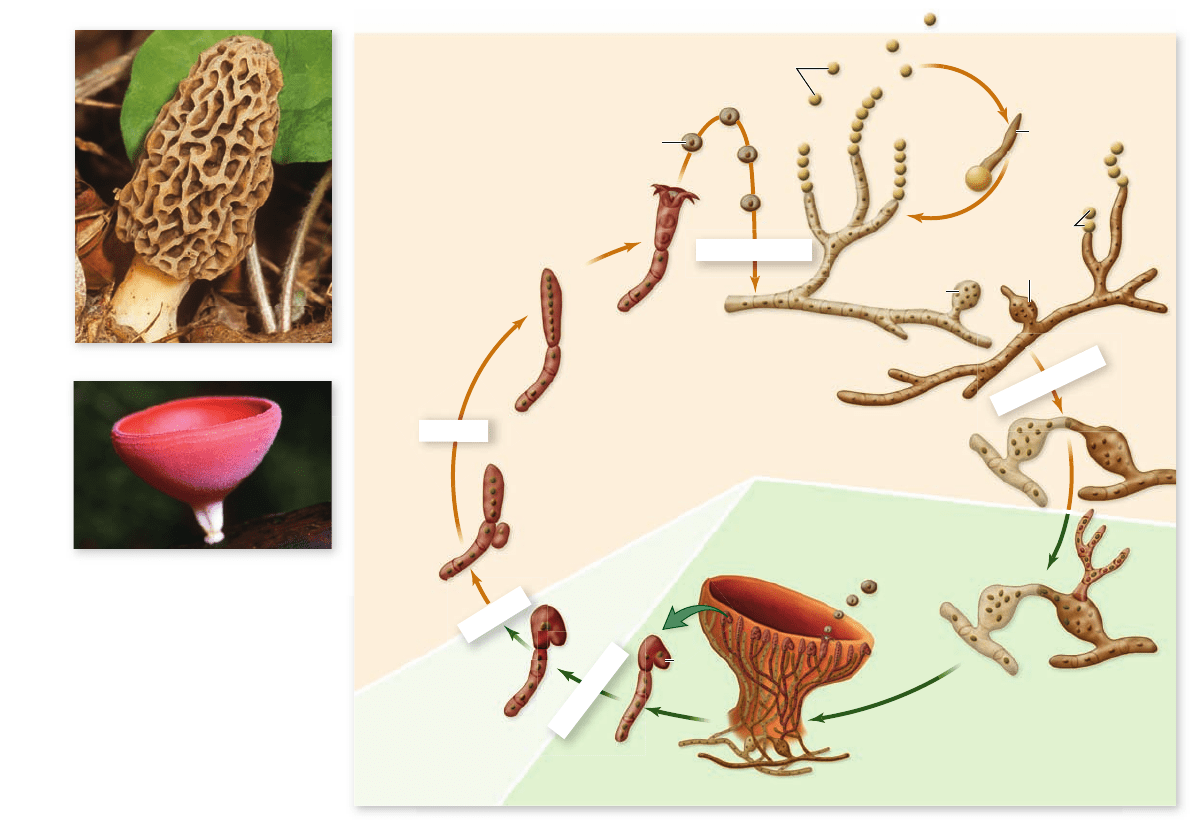
Figure 31.12
Ascomycetes.
a. This morel, Morchella esculenta,
is a delicious edible ascomycete
that appears in early spring.
b. A cup fungus. c. Life cycle of an
ascomycete. Haploid ascospores
form within the ascus.
cospores of the ascomycetes are borne internally in asci instead
of externally as in basidiospores.
In many ascomycetes, the ascus becomes highly turgid at
maturity and ultimately bursts, often at a preformed area. When
this occurs, the ascospores may be thrown as far as 31 cm, an
amazing distance considering that most ascospores are only
about 10 μm long. This would be equivalent to throwing a
baseball (diameter 7.5 cm) 1.25 km—about 10 times the length
of a home run!
Asexual reproduction occurs
within conidiophores
Asexual reproduction is very common in the ascomycetes. It
takes place by means of conidia (singular, conidium), asexual
spores cut off by septa at the ends of modified hyphae called
conidiophores. Conidia allow for the rapid colonization of a
new food source. Many conidia are multinucleate. The hyphae
of ascomycetes are divided by septa, but the septa are perfo-
rated, and the cytoplasm flows along the length of each hypha.
The septa that cut off the asci and conidia are initially perfo-
rated, but later become blocked.
morels (figure 31.12a) , cup fungi (figure 31.12b), and
truffles. Also included in this phylum are many serious
plant pathogens, including those that produce chestnut
blight, Cryphonectria parasitica, and Dutch elm disease,
Ophio stoma ulmi. Penicillin-producing ascomycetes are in
the genus Penicillium.
Sexual reproduction
occurs within the ascus
The ascomycetes are named for their characteristic reproduc-
tive structure, the microscopic, saclike ascus (plural, asci).
Karyogamy, the production of the only diploid nucleus of the
ascomycete life cycle (figure 31.12c), occurs within the ascus.
The structure of an ascus differs from that of a basidium, al-
though functionally the two are identical.
Asci are differentiated within a structure made up of
densely interwoven hyphae, corresponding to the visible por-
tions of a morel or cup fungus, called the ascocarp. Meiosis
immediately follows karyogamy, forming four haploid daugh-
ter nuclei. These usually divide again by mitosis, producing
eight haploid nuclei that become walled ascospores. The as-
624
part
V
Diversity of Life on Earth
rav32223_ch31_614-632.indd 624rav32223_ch31_614-632.indd 624 11/13/09 1:17:49 PM11/13/09 1:17:49 PM
Apago PDF Enhancer
5.18 µm
Some ascomycetes have yeast morphology
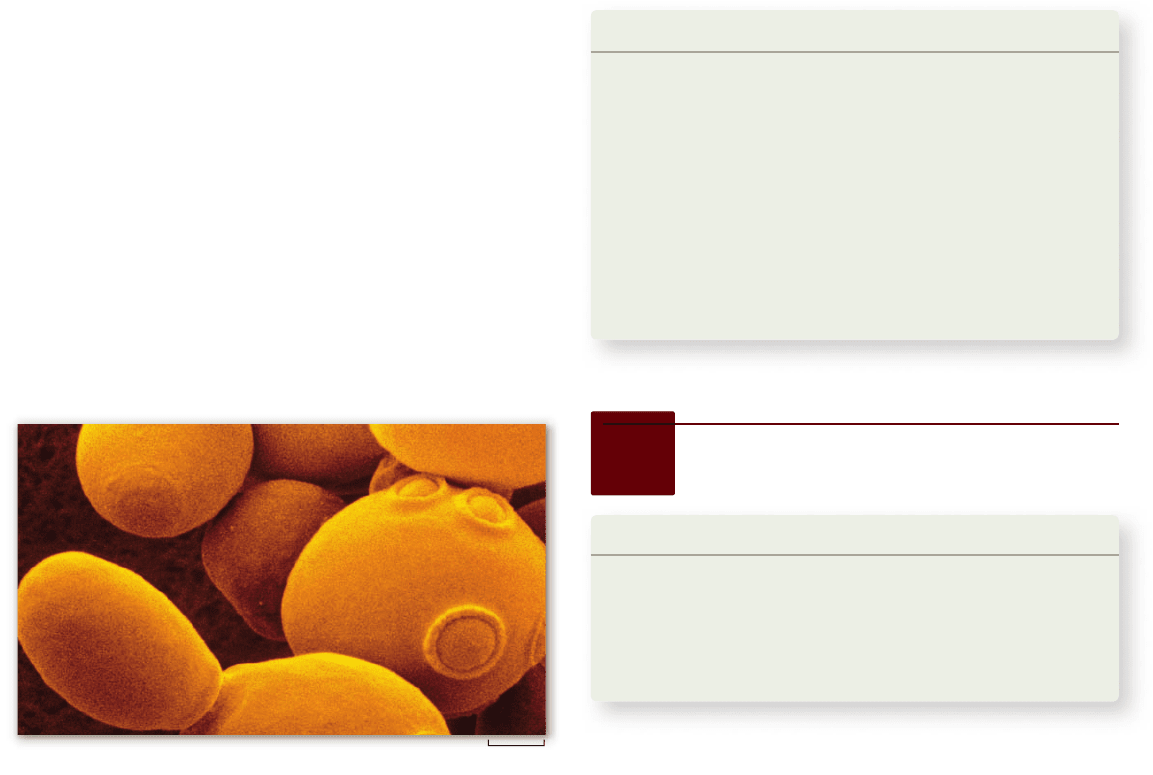
Most yeasts are ascomycetes with a single-celled lifestyle. Most
of yeasts’ reproduction is asexual and takes place by cell fission
or budding, when a smaller cell forms from a larger one
(figure 31.13). Sometimes two yeast cells fuse, forming one cell
containing two nuclei. This cell may then function as an ascus,
with karyogamy followed immediately by meiosis. The result-
ing ascospores function directly as new yeast cells.
The ability of yeasts to ferment carbohydrates, breaking
down glucose to produce ethanol and carbon dioxide, is funda-
mental in the production of bread, beer, and wine. About four
billion of these tiny, powerful organisms can fit in a teaspoon.
Many different strains of yeast have been domesticated and se-
lected for these processes, using the sugars in rice, barley, wheat,
and corn. Wild yeasts—ones that occur naturally in the areas
where wine is made—were important in wine making histori-
cally, but domesticated cultured yeasts are normally used now.
Wild yeast, often Candida milleri, is still important in
making sourdough bread. Unlike most breads that are made
with pure cultures of yeast, sourdough uses an active culture of
wild yeast and bacteria that generate acid. This culture is main-
tained, and small amounts—“starter” cultures—are used for
each batch of bread. The combination of yeast and acid-
producing bacteria is needed for fermentation and gives sour-
dough bread its unique flavor.
The most important yeast in baking, brewing, and wine
making is Saccharomyces cerevisiae. This yeast has been used by
humans throughout recorded history. Yeast is also employed as
a nutritional supplement because it contains high levels of
B vitamins and because about 50% of yeast is protein.
Ascomycete genetics and genomics
have practical applications
Yeast is a long-standing model system for genetic research. It
was the first eukaryote to be manipulated extensively by the
techniques of genetic engineering, and they still play the lead-
Figure 31.13
Budding in Saccharomyces. As shown in
this scanning electron micrograph, the cells tend to hang together
in chains, a feature that calls to mind the derivation of single-celled
yeasts from multicellular ancestors.
ing role as models for research in eukaryotic cells. In 1996, the
genome sequence of S. cerevisiae, the first eukaryote to be se-
quenced entirely, was completed. The yeast two-hybrid system
has been an important component of research on protein inter-
actions (see chapter 17 ).
The fungal genome initiative is now under way to pro-
vide sequence information on other fungi. More than 25 fungi
have been or are being sequenced. These fungi were selected
based on their effects on human health, including plant patho-
gens that threaten our food supply.
The ascomycetes Coccidioides posadasii and its relative
C. immitis were included because they are endemic in soil in
the southwestern portion of the United States, can cause a
fatal infection called coccidioidomycosis (“valley fever”),
and have been considered a possible bioterrorism threat. In
the United States the annual infection rate is about 100,000
individuals, although only a small percentage of infected in-
dividuals die.
A second important criterion in selecting which fungi to
sequence was the potential to provide information on fungal
evolution. This new information will complement and expand
our understanding of the diverse fungal kingdom.
Learning Outcomes Review 31.7
Ascomycetes undergo karyogamy within a characteristic saclike structure,
the ascus. The function of the ascus is therefore identical to that of the
basidium, although they are structurally diff erent. Meiosis follows,
resulting in the production of ascospores. Yeasts within this group
generally reproduce asexually by budding. Ascomycetes include both
benefi cial forms used as foods, and in the production of foods, and harmful
forms responsible for diseases and spoilage. Many ascomycetes are
employed in scientifi c research.
■ Coccidioidomycosis is caused by inhaling spores; it often
occurs in farmworkers in the Southwest United States.
What would help prevent this disease?
31.8
Ecology of Fungi
Learning Outcomes
Identify a trait that contributes to the value of fungi 1.
in symbiotic relationships.
Describe the living components of a lichen.2.
List examples of fungal associations with 3.
different organisms.
Fungi, together with bacteria, are the principal decomposers in
the biosphere. They break down organic materials and return
the substances locked in those molecules to circulation in the
ecosystem. Fungi can break down cellulose and lignin, an insolu-
ble organic compound that is one of the major constituents of
wood. By breaking down such substances, fungi release carbon,
chapter
31
Fungi
625www.ravenbiology.com
rav32223_ch31_614-632.indd 625rav32223_ch31_614-632.indd 625 11/13/09 1:17:57 PM11/13/09 1:17:57 PM
Apago PDF Enhancer
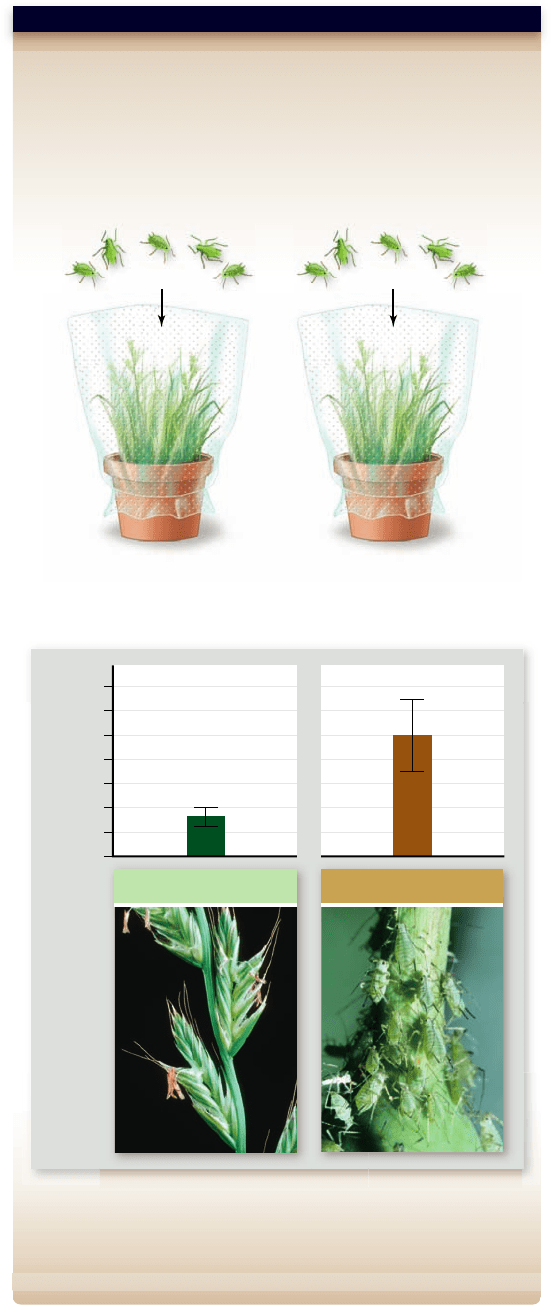
Hypothesis: Endophytic fungi can protect their host from herbivory.
Prediction: There will be fewer aphids (Rhopalosiphum padi, an
herbivore) on perennial ryegrass (Lolium perenne) infected with
endophytic fungi than on uninfected ryegrass.
Test: Place ve adult aphids on each pot of 2-week-old grass plants with
and without endophytic fungi. Place pots in perforated bags and grow for
36 days. Count the number of aphids in each pot.
Conclusion: Endophytic fungi protect host plants from herbivory.
Further Experiments: How do you think the fungi protect the plants
from herbivory? If they secrete chemical toxins, could you use this basic
experimental design to test specic fungal compounds?
Result: Signicantly more aphids were found on the uninfected
grass plants.
SCI ENTI FIC THINKING
Fungal endophyte No endophyte
Fungal Endophyte
No Endophyte
Aphids after 36 days
0
20
40
60
80
100
120
140
5 aphids 5 aphids
Figure 31.14
E ect of the fungal endophyte
Neotyphodium on the aphid population living on perennial
ryegrass (Lolium perenne).
nitrogen, and phosphorus from the bodies of living or dead or-
ganisms and make them available to other organisms.
In addition to their role as decomposers, fungi have entered
into fascinating relationships with a variety of life forms. Interac-
tions between different species are described in chapter 57 where
we discuss community ecology, but we cover fungal relationships
briefly here because of their unique character.
Fungi have a range of symbioses
The interactions, or symbioses , between fungi and other living
organisms fall into a broad range of categories. In some cases,
the symbiosis is an obligate symbiosis (essential for survival),
and in other cases it is a facultative symbiosis (the fungus can
survive without the host). Within a group of closely related
fungi, several different types of symbiosis can be found.
First, here is a summary of ways in which living things can
interact. Pathogens and parasites gain resources from their
host, but they have a negative effect on the host that can even
lead to death. The difference between pathogens and parasites
is that pathogens cause disease, but parasites do not, except in
extreme cases.
Commensal relationships benefit one partner but do not
harm the other. Fungi that are in a mutualistic relationship
benefit both themselves and their hosts. Many of these rela-
tionships are described in the discussion that follows.
Endophytes live inside plants and may
protect plants from parasites
Endophytic fungi live inside plants, actually in the intercellular
spaces. Found throughout the plant kingdom, many of these
relationships may be examples of parasitism or commensalism.
There is growing evidence that some of these fungi pro-
tect their hosts from herbivores by producing chemical toxins
or deterrents. Most often, the fungus synthesizes alkaloids that
protect the plant. As you will learn in chapter 40 , plants also
synthesize a wide range of alkaloids, many of which serve to
defend the plant.
One way to assess whether an endophyte is enhancing the
health of its host plant is to grow plots of plants with and with-
out the same endophyte. An experiment with perennial ryegrass,
Lolium perenne, demonstrated that it is more resistant to aphid
feeding when an endophytic fungus, Neotyphodium, is present
(figure 31.14 ).
Lichens are an example of symbiosis
between di erent kingdoms
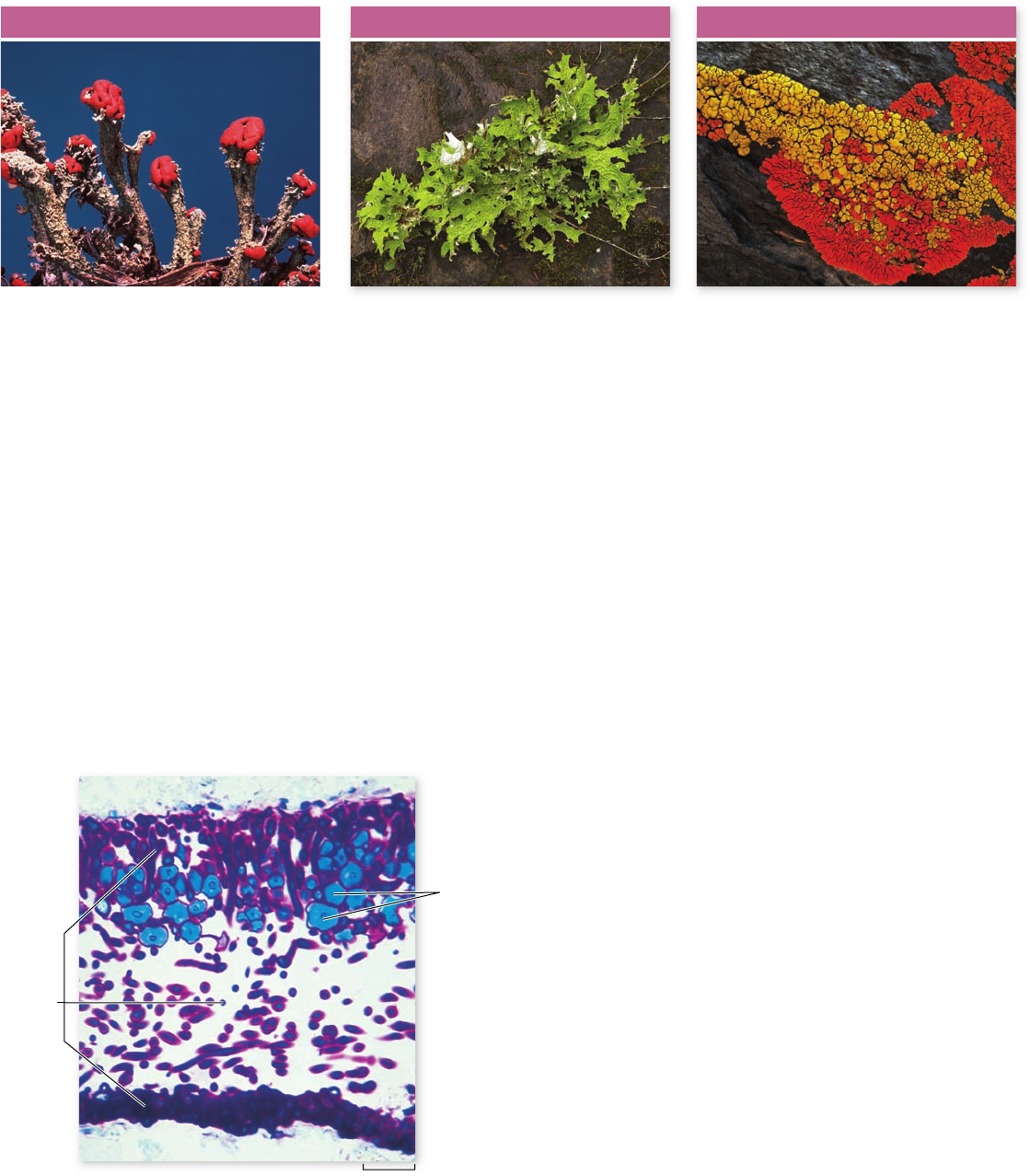
Lichens (figure 31.15) are symbiotic associations between a
fungus and a photosynthetic partner. Although many lichens
are excellent examples of mutualism, some fungi are parasitic
on their photosynthetic host.
Composition of a lichen
Ascomycetes are the fungal partners in all but about 20 of the
approximately 15,000 species of lichens estimated to exist. Most
of the visible body of a lichen consists of its fungus, but between
626
part
V
Diversity of Life on Earth
rav32223_ch31_614-632.indd 626rav32223_ch31_614-632.indd 626 11/13/09 1:18:00 PM11/13/09 1:18:00 PM
Apago PDF Enhancer
a
. b. c.
Fruticose Lichen
Crustose Lichen
Foliose Lichen
Fungal
hyphae
Algal
cells
40 µm
Figure 31.15
Lichens are found in a variety of habitats. a. A fruticose lichen, growing in the soil. b. A foliose (“leafy”) lichen,
growing on the bark of a tree in Oregon. c. A crustose lichen, growing on rocks leading to the breakdown of rock into soil.
Figure 31.16
Stained section of a lichen. This section
shows fungal hyphae (purple) more densely packed into a protective
layer on the top and, especially, the bottom layer of the lichen. The
blue cells near the upper surface of the lichen are those of a green
alga. These cells supply carbohydrate to the fungus.
Ecology of lichens
The durable construction of the fungus combined with the
photosynthetic properties of its partner have enabled lichens to
invade the harshest habitats—the tops of mountains, the far-
thest northern and southern latitudes, and dry, bare rock faces
in the desert. In harsh, exposed areas, lichens are often the first
colonists, breaking down the rocks and setting the stage for the
invasion of other organisms.
Lichens are often strikingly colored because of the pres-
ence of pigments that probably play a role in protecting the
photosynthetic partner from the destructive action of the sun’s
rays. These same pigments may be extracted from the lichens
and used as natural dyes. The traditional method of manufac-
turing Scotland’s famous Harris tweed used fungal dyes.
Lichens vary in sensitivity to pollutants in the atmosphere,
and some species are used as bioindicators of air quality. Their
sensitivity results from their ability to absorb substances dis-
solved in rain and dew. Lichens are generally absent in and
around cities because of automobile traffic and industrial activ-
ity, but some are adapted to these conditions. As pollution de-
creases, lichen populations tend to increase.
Mycorrhizae are fungi associated
with roots of plants
The roots of about 90% of all plant families have species that
are involved in mutualistic symbiotic relationships with certain
kinds of fungi. It has been estimated that these fungi probably
amount to 15% of the total weight of the world’s plant roots.
Associations of this kind are termed mycorrhizae, from the
Greek words for fungus and root.
The fungi in mycorrhizal associations function as exten-
sions of the root system. The fungal hyphae dramatically in-
crease the amount of soil contact and total surface area for
absorption. When mycorrhizae are present, they aid in the di-
rect transfer of phosphorus, zinc, copper, and other mineral
nutrients from the soil into the roots. The plant, on the other
hand, supplies organic carbon to the fungus, so the system is an
example of mutualism.
the filaments of that fungus are cyanobacteria, green algae, or
sometimes both (figure 31.16) .
Specialized fungal hyphae penetrate or envelop the
photo synthetic cell walls within them and transfer nutrients di-
rectly to the fungal partner. Note that although fungi penetrate
the cell wall, they do not penetrate the plasma membrane. Bio-
chemical signals sent out by the fungus apparently direct its
cyanobacterial or green algal component to produce metabolic
substances that it does not produce when growing indepen-
dently of the fungus.
The fungi in lichens are unable to grow normally without
their photosynthetic partners, and the fungi protect their part-
ners from strong light and desiccation. When fungal compo-
nents of lichens have been experimentally isolated from their
photosynthetic partner, they survive, but grow very slowly.
chapter
31
Fungi
627www.ravenbiology.com
rav32223_ch31_614-632.indd 627rav32223_ch31_614-632.indd 627 11/13/09 1:18:09 PM11/13/09 1:18:09 PM
Apago PDF Enhancer
Arbuscular Mycorrhizae Ectomycorrhizae
a. b.
Root
50 μm
3.7 μm
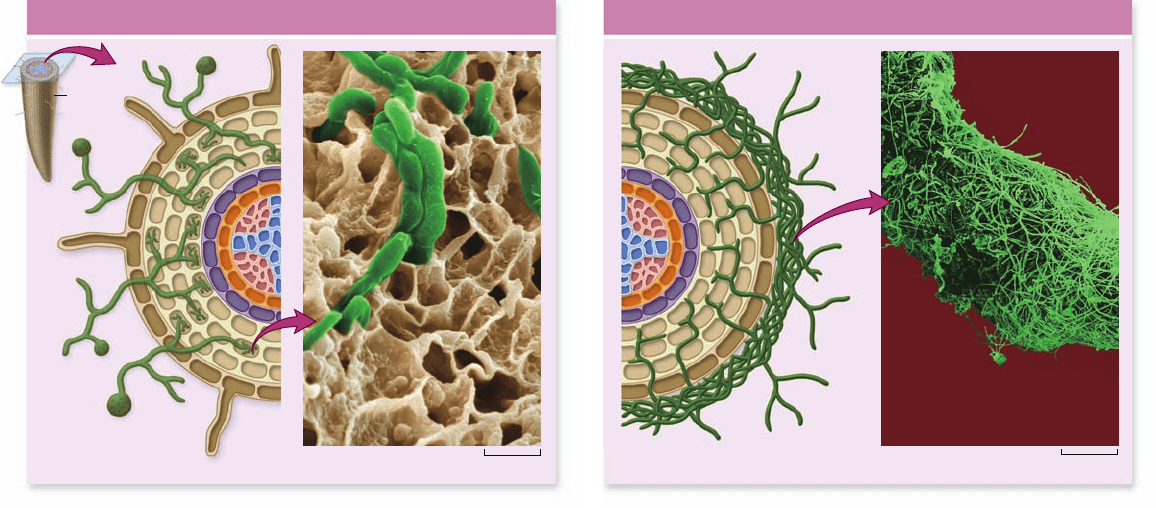
Figure 31.17
Arbuscular mycorrhizae and ectomycorrhizae. a. In arbuscular mycorrhizae, fungal hyphae penetrate the root cell
wall of plants but not the plant membranes. b. Ectomycorrhizae on the roots of a Eucalyptus tree do not penetrate root cells, but grow around
and extend between the cells.
Some nonphotosynthetic plants also have mycorrhizal as-
sociations, but the symbiosis is one-way because the plant has
no photosynthetic resources to offer. Instead of a two-partner
symbiosis, a tripartite symbiosis is established. The fungal my-
celium extends between a photosynthetic plant and a non-
photo synthetic, parasitic plant. This third, nonphotosynthetic
member of the symbiosis is called an epiparasite. Not only does
it obtain phosphate from the fungus, but it uses the fungus to
channel carbohydrates from the photosynthetic plant to itself.
Epiparasitism also occurs in ectomycorrhizal symbiosis.
Ectomycorrhizae
Ectomycorrhizae (see figure 31.17b) involve far fewer kinds of
plants than do arbuscular mycorrhizae—perhaps a few thou-
sand. Most ectomycorrhizal hosts are forest trees, such as pines,
oaks, birches, willows, eucalyptus, and many others. The fungal
components in most ectomycorrhizae are basidiomycetes, but
some are ascomycetes.
Most ectomycorrhizal fungi are not restricted to a single
species of plant, and most ectomycorrhizal plants form associa-
tions with many ectomycorrhizal fungi. Different combinations
have different effects on the physiological characteristics of the
plant and its ability to survive under different environmental
conditions. At least 5000 species of fungi are involved in ecto-
mycorrhizal relationships.
Fungi also form mutual
symbioses with animals
A range of mutualistic fungal–animal symbioses has been iden-
tified. Ruminant animals host neocallimastigomycete fungi in
There are two principal types of mycorrhizae
(figure 31.17 ). In arbuscular mycorrhizae , the fungal hyphae
penetrate the outer cells of the plant root, forming coils, swell-
ings, and minute branches; they also extend out into the sur-
rounding soil. In ectomycorrhizae, the hyphae surround but
do not penetrate the cell walls of the roots. In both kinds of
mycorrhizae, the mycelium extends far out into the soil. A sin-
gle root may associate with many fungal species, dividing the
root at a millimeter-by-millimeter level.
Arbuscular mycorrhizae
Arbuscular mycorrhizae are by far the more common of the
two types, involving roughly 70% of all plant species
(figure 31.17a). The fungal component in them are glomero-
mycetes, a monophyletic group that arose within one of the
zygomycete lineages. The glomeromycetes are associated with
more than 200,000 species of plants.
Unlike mushrooms, none of the glomeromycetes produce
aboveground fruiting structures, and as a result, it is difficult to
arrive at an accurate count of the number of extant species. Ar-
buscular mycorrhizal fungi are being studied intensively be-
cause they are potentially capable of increasing crop yields with
lower phosphate and energy inputs.
The earliest fossil plants often show arbuscular mycorrhizal
roots. Such associations may have played an important role in al-
lowing plants to colonize land. The soils available at such times
would have been sterile and lacking in organic matter. Plants that
form mycorrhizal associations are particularly successful in infer-
tile soils; considering the fossil evidence, it seems reasonable that
mycorrhizal associations helped the earliest plants succeed on such
soils. In addition, the closest living relatives of early vascular plants
surviving today continue to depend strongly on mycorrhizae.
628
part
V
Diversity of Life on Earth
rav32223_ch31_614-632.indd 628rav32223_ch31_614-632.indd 628 11/13/09 1:18:14 PM11/13/09 1:18:14 PM
Apago PDF Enhancer
a.
b.
c.
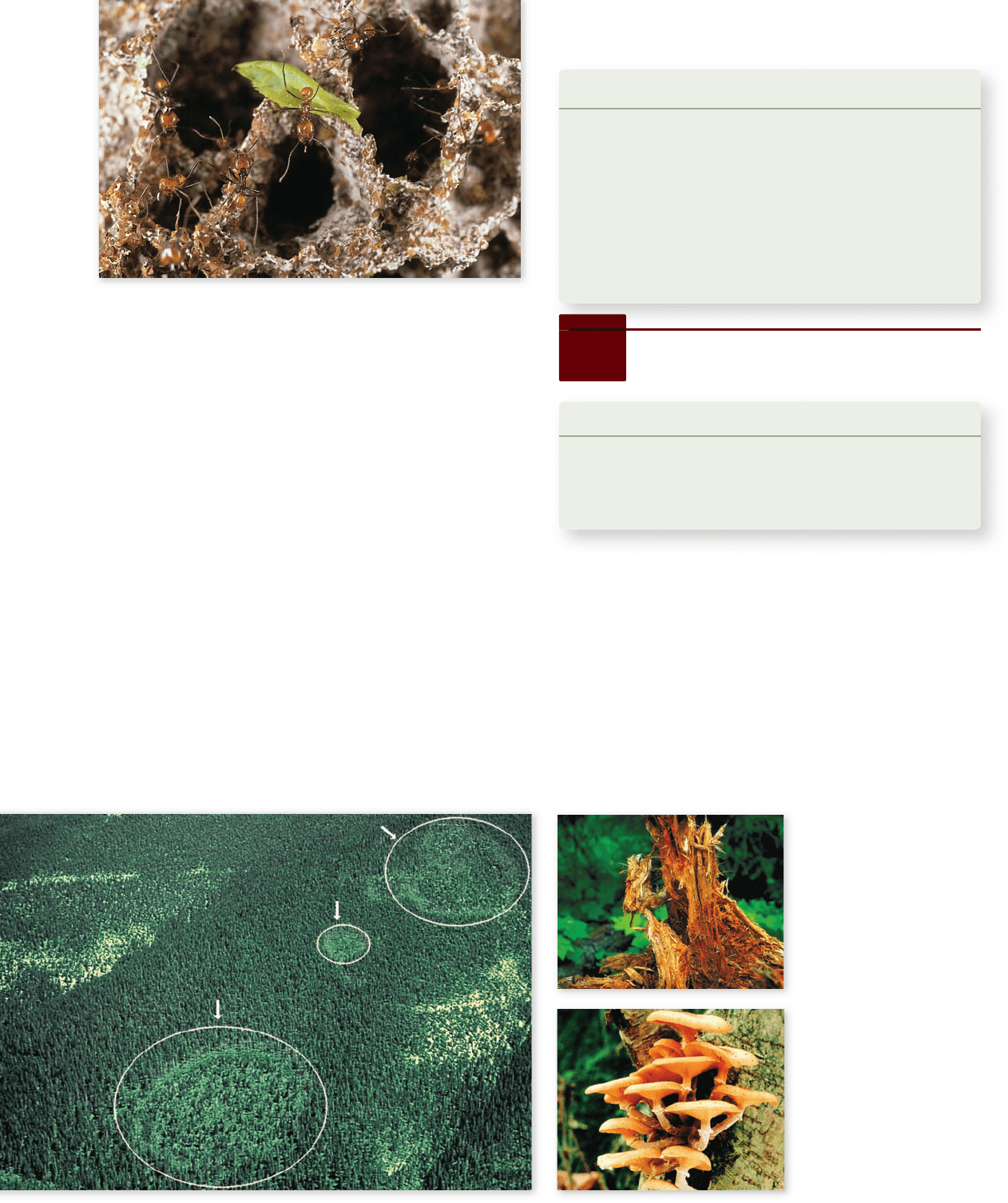
Figure 31.18
Ant–fungal symbiosis. Ants farming their
fungal garden.
Figure 31.19
World’s
largest organism?
a. Armillaria, a pathogenic
fungus shown here af icting
three discrete regions of
coniferous forest in
Montana, grows out from a
central focus as a single,
circular clone. The large
patch at the bottom of the
picture is almost 8 hectares.
b. Closeup of tree destroyed
by Armillaria. c. Armillaria
growing on a tree.
their gut. The fungus gains a nutrient-rich environment in ex-
change for releasing nutrients from grasses with high cellulose
and lignin content.
One tripartite symbiosis involves ants, plants, and fungi.
Leaf-cutter ants are the dominant herbivore in the New World
tropics. These ants, members of the phylogenetic tribe Attini,
have an obligate symbiosis with specific fungi that they have
domesticated and maintain in an underground garden. The
ants provide fungi with leaves to eat and protection from patho-
gens and other predators (figure 31.18) . The fungi are the ants’
food source.
Depending on the species of ant, the ant nest can be as
small as a golf ball or as large as 50 cm in diameter and many
feet deep. Some nests are inhabited by millions of leaf-cutter
ants that maintain fungal gardens. These social insects have a
caste system, and different ants have specific roles. Traveling on
trails as long as 200 m, leaf-cutter ants search for foliage for
their fungi. A colony of ants can defoliate an entire tree in a day.
This ant farmer–fungi symbiosis has evolved multiple times
and may have occurred as early as 50 mya.
Learning Outcomes Review 31.8
Fungi are the primary decomposers in ecosystems. A range of symbiotic
relationships have evolved between fungi and plants. Endophytes live
inside tissues of a plant and may protect it from parasites. Lichens are a
complex symbiosis between fungal species and cyanobacteria or green
algae. Mycorrhizal associations between fungi and plant roots are mutually
benefi cial and in some cases are obligate symbioses. Fungi have also
coevolved with animals in mutualistic relationships.
■ How might the symbiosis between fungi and ants
have evolved?
31.9
Fungal Parasites and Pathogens
Learning Outcomes
Review the pathogenic effects of fungi and the targets 1.
they affect.
Explain why treating fungal disease in animals is 2.
particularly difficult.
Fungi can destroy a crop of plants and create significant prob-
lems for human health. A major problem in treatment and pre-
vention is that fungi are eukaryotes, as are plants and animals.
Understanding how fungi are distinct from these other two eu-
karyotic kingdoms may lead to safer and more efficient means
of treating diseases caused by fungal parasites and pathogens.
Fungal infestation can harm plants
and those who eat them
Fungal species cause many diseases in plants (figure 31.19 ), and
they are responsible for billions of dollars in agricultural losses
chapter
31
Fungi
629www.ravenbiology.com
rav32223_ch31_614-632.indd 629rav32223_ch31_614-632.indd 629 11/13/09 1:18:26 PM11/13/09 1:18:26 PM
Apago PDF Enhancer
a.
b.
4.50 µm
Chytrid
10 µm
every year. Not only are fungi among the most harmful pests of
living plants, but they also spoil food products that have been
harvested and stored. In addition, fungi often secrete sub stances
into the foods they are infesting that make these foods unpalat-
able, carcinogenic, or poisonous.
Pathogenic fungal–plant symbioses are numerous, and
fungal pathogens of plants can also harm the animals that con-
sume the plants. Fusarium species growing on spoiled food pro-
duce highly toxic substances, including vomitoxin, which has
been implicated in brain damage in humans and animals in the
southwestern United States.
Aflatoxins, which are among the most carcinogenic com-
pounds known, are produced by some Aspergillus flavus strains
growing on corn, peanuts, and cotton seed (figure 31.20 ). Afla-
toxins can also damage the kidneys and the nervous system of
animals, including humans. Most developed countries have le-
gal limits on the concentration of aflatoxin permitted in differ-
ent foods. More recently, aflatoxins have been considered as
possible bioterrorism agents.
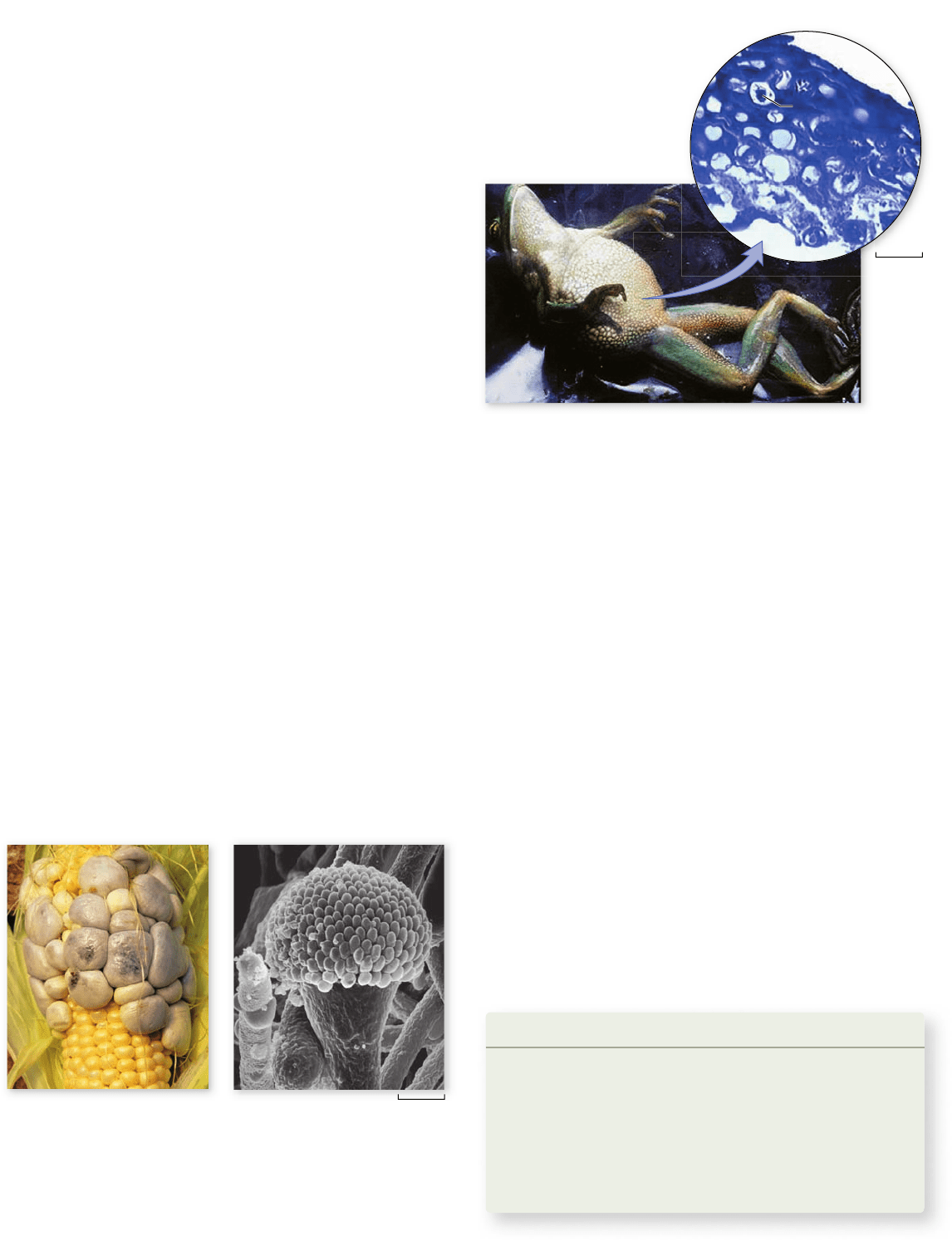
In contrast, corn smut is a maize fungal disease that is
harmful to the plant, but not animals that consume it
(figure 31.20). Corn smut is caused by the basidiomycete Usti-
lago maydi and is edible.
Fungal infections are di cult to treat
in humans and other animals
Human and animal diseases can also be fungal in origin. Some
common diseases, such as ringworm (which is not a worm but a
fungus), athlete’s foot, and nail fungus, can be treated with topical
antifungal ointments and in some cases with oral medication.
Fungi can create devastating human diseases that are often
difficult to treat because of the close phylogenetic relationship
between fungi and animals. Yeast ascomycetes are important
pathogens that cause diseases such as thrush, an infection of the
mouth; the yeast Candida causes common oral or vaginal infec-
tions. Pneumocystis jiroveci (formerly P. carinii ) invades the lungs,
disrupting breathing, and can spread to other organs. In immune-
suppressed AIDS patients, this infection can lead to death.
Figure 31.20
Maize (corn) fungal infections. a. Ustilago
maydis infections of maize are a delicacy in Hispanic cuisine.
b. A photomicrograph of Aspergillus avus conidia. Aspergillus
avus infects maize and can produce a atoxins that are harmful
to animals.
Figure 31.21
Frog killed
by chytridiomycosis.
Lesions formed by the chytrid
can be seen on the abdomen
of this frog.
Mold allergies are common, and mold-infested “sick” build-
ings pose concerns for inhabitants. Individuals with suppressed im-
mune systems and people undergoing steroid treatments for
inflammatory disorders are particularly at risk for fungal disease.
An example of a parasitic fungal–animal symbiosis is
chytridiomycosis, first identified in 1998 as an emerging in-
fectious disease of amphibians. Amphibian populations have
been declining worldwide for over three decades. The many
possible causes for the decline in amphibian numbers are cov-
ered in chapter 60 . In this chapter, a primary causative agent,
fungal infection, is explored. The decline correlates with the
presence of the chytrid Batrachochytrium dendrobatidis encased in
the skin (figure 31.21 ), identified after extensive studies of frog
carcasses. Sick and dead frogs were more likely than healthy
frogs to have flasklike structures encased in their skin, which
proved to be associated with chytrid spore production (see
figure 31.21).
The connection with B. dendrobatidis has been supported by
DNA sequence data, by isolating and culturing the chytrid, and by
infecting healthy frogs with the organism and replicating disease
symptoms. The B. dendrobatidis genome has now been sequenced.
The infection reduces sodium and potassium transport across
the skin, altering electrolyte balance which leads to cardiac ar-
rest. Bathing frogs in antifungal drugs can halt the disease or even
eliminate the chytrids.
How the disease emerged simultaneously on different
continents is a yet unsolved mystery. Both environmental
change and carriers are being considered.
Learning Outcomes Review 31.9
Fungi can severely harm or kill both plants and animals, either by direct
infection or by secretion of toxins and carcinogens. Treatment of fungal
disease and parasitism in animals is made diffi cult by the close relationship
between fungi and animals; what is damaging to the fungus may also have
ill eff ects on the host.
■ What is likely to be the most common mechanism for
the spread of fungal disease?
630
part
V
Diversity of Life on Earth
rav32223_ch31_614-632.indd 630rav32223_ch31_614-632.indd 630 11/13/09 1:18:30 PM11/13/09 1:18:30 PM

Apago PDF Enhancer
31.5 Glomeromycota: Asexual Plant Symbionts
Glomeromycete hyphae form intracellular associations with plant
roots and are called arbuscular mycorrhizae.
The glomeromycetes show no evidence of sexual reproduction.
31.6 Basidiomycota: The Club (Basidium) Fungi
The basidiocarp is the visible reproductive structure of this group,
which includes mushrooms, toadstools, puffballs, and others.
Basidiomycetes sexually reproduce within basidia (see gure 31.11 ).
Karyogamy occurs within the basidia, giving rise to a diploid cell.
Meiosis then ultimately results in four haploid basidiospores.
The secondary mycelium of basidiomycetes is heterokaryotic.
Primary mycelium is monokaryotic, but different mating types may
fuse to form the secondary mycelium. Maintenance of two haploid
genomes allows greater genetic plasticity.
31.7 Ascomycota: The Sac (Ascus) Fungi
Sexual reproduction occurs within the ascus (see gure 31.12) .
Karyogamy occurs only in the ascus and results in a diploid nucleus.
Meiosis and mitosis then result in eight haploid nuclei in walled
ascospores.
Asexual reproduction occurs within conidiophores.
Asexual reproduction is very common and occurs by means of
conidia formed at the end of modi ed hyphae called conidiophores.
Some ascomycetes have yeast morphology.
Yeasts usually reproduce by cell ssion or budding.
Ascomycete genetics and genomics have practical applications.
31.8 Ecology of Fungi
Fungi are organisms capable of breaking down cellulose and lignin.
Fungi have a range of symbioses.
Fungi can be pathogenic or parasitic, commensal or mutualistic.
Endophytes live inside plants and may protect plants from parasites.
Lichens are an example of symbiosis between di erent kingdoms.
A lichen is composed of a fungus, usually an ascomycete, along with
cyanobacteria, green algae, or both.
Mycorrhizae are fungi associated with roots of plants.
Arbuscular mycorrhizae are common and involve glomeromycetes;
ectomycorrhizae are primarily found in forest trees and involve
basidiomycetes and a few ascomycetes.
Fungi also form mutual symbioses with animals.
Some ants grow “farms” of fungi by providing plant material.
31.9 Fungal Parasites and Pathogens
Fungal infestation can harm plants and those who eat them.
Fungi spread via spores and can secrete chemicals that make food
unpalatable, carcinogenic, or poisonous.
Fungal infections are di cult to treat in humans and other animals.
Treatment of fungal diseases in animals is dif cult because of the
similarities between the two kingdoms.
31.1 De ning Fungi
Fungi are more closely related to animals than to plants and form
seven monophyletic phyla (see gure 31.1).
Fungi are heterotrophic and have hyphal cells; their cell walls
contain chitin. They may have a dikaryon stage and undergo
nuclear mitosis.
The body of a fungus is a mass of connected hyphae.
A mass of connected hyphae is termed a mycelium. Hyphae can
be continuous and multinucleate, or they may be divided into long
chains of cells separated by cross-walls called septa.
The chitin found in fungi cell walls is the same material found in the
exoskele tons of arthropods.
Fungal cells may have more than one nucleus.
A hypha with only one nucleus is monokaryotic; a hypha with two
nuclei is dikaryotic. The two haploid nuclei exist independently, but
both genomes are transcribed so that some properties of diploids
may be observed.
Mitosis is not followed by cell division.
Because cells are linked, the cell is not the relevant unit of
reproduction, but rather the nucleus is. The spindle forms inside the
nuclear envelope, which does not break down and re-form.
Fungi can reproduce both sexually and asexually.
Fungi can reproduce sexually by fusion of hyphae from two
compatible mating types or hyphae from the same fungus. Spores
can form either by asexual or sexual reproduction and are usually
dispersed by the wind.
Fungi are heterotrophs that absorb nutrients.
Fungi obtain their nutrients through excreting enzymes for external
digestion and then absorbing the products.
31.2 Microsporidia: Unicellular Parasites
Microsporidia are obligate cellular parasites that lack mitochondria
but may have had them at one time; they were previously classed
with the protists.
31.3 Chytridiomycota and Relatives: Fungi
with Flagellated Zoospores
Chytrids form symbiotic relationships; they have been implicated in
the decline of amphibian species.
Blastocladiomycota have single agella.
Allomyces, a blastocladiomycete, is an example of a fungus with a
haplodiplontic life cycle.
Neocallimastigomycota digest cellulose in ruminant herbivores.
Neocallimastigomycetes have enzymes that can digest cellulose and
lignin; they may have uses in production of biofuels.
31.4 Zygomycota: Fungi That Produce Zygotes
In sexual reproduction, zygotes form inside a zygosporangium.
Zygomycetes all produce a diploid zygote. In sexual reproduction,
fusion (karyogamy) of the haploid nuclei of gametangia produces
diploid zygote nuclei. These become zygospores.
Asexual reproduction is more common.
Sporangia produce haploid spores that are airborne; bread mold is a
common example of a zygomycete.
Chapter Review
chapter
31
Fungi
631www.ravenbiology.com
rav32223_ch31_614-632.indd 631rav32223_ch31_614-632.indd 631 11/13/09 1:18:37 PM11/13/09 1:18:37 PM