
Raven P.H., Johnson G.B., Mason K.A. Biology (Ninth Edition)
Подождите немного. Документ загружается.


Apago PDF Enhancer
Review Questions
UNDERSTAND
1. The property that distinguishes an atom of one element
(carbon, for example) from an atom of another element (oxygen,
for example) is
a. the number of electrons.
b. the number of protons.
c. the number of neutrons.
d. the combined number of protons and neutrons.
2. If an atom has one valence electron, that is, a single electron in
its outer energy level, it will most likely form
a. one polar, covalent bond.
b. two nonpolar, covalent bonds.
c. two covalent bonds.
d. an ionic bond.
3. An atom with a net positive charge must have more
a. protons than neutrons.
b. protons than electrons.
c. electrons than neutrons.
d. electrons than protons.
4. The isotopes carbon-12 and carbon-14 differ in
a. the number of neutrons.
b. the number of protons.
c. the number of electrons.
d. both b and c.
5. Which of the following is NOT a property of the elements
most commonly found in living organisms?
a. The elements have a low atomic mass.
b. The elements have an atomic number less than 21.
c. The elements possess eight electrons in their outer
energy level.
d. The elements are lacking one or more electrons from their
outer energy level.
6. Ionic bonds arise from
a. shared valence electrons.
b. attractions between valence electrons.
c. charge attractions between valence electrons.
d. attractions between ions of opposite charge.
7. A substance with a high concentration of hydrogen ions
a. is called a base. c. has a high pH.
b. is called an acid. d. both b and c.
APPLY
1. Using the periodic table on page 22 , which of the following
atoms would you predict could form a positively charged ion
(cation)?
a. Fluorine (F) c. Potassium (K)
b. Neon (Ne) d. Sulfur (S)
2. Refer to the element pictured. How many covalent bonds could
this atom form?
a. Two
b. Three
c. Four
d. None
3. A molecule with polar covalent bonds would
a. be soluble in water.
b. not be soluble in water.
c. contain atoms with very similar electronegativity.
d. contain atoms that have gained or lost electrons.
4. Hydrogen bonds are formed
a. between any molecules that contain hydrogen.
b. only between water molecules.
c. when hydrogen is part of a polar bond.
d. when two atoms of hydrogen share an electron.
5. Which of the following properties of water is NOT
a consequence of its ability to form hydrogen bonds?
a. Cohesiveness
b. High speci c heat
c. Ability to function as a solvent
d. Neutral pH
6. The decay of radioactive isotopes involves changes to the
nucleus of atoms. Explain how this differs from the changes in
atoms that occur during chemical reactions.
SYNTHESIZE
1. Elements that form ions are important for a range of biological
processes. You have learned something about the cations sodium
(Na
+
), calcium (Ca
2+
) and potassium (K
+
) in this chapter. Use
your knowledge of the de nition of a cation to identify other
examples from the periodic table.
2. A popular theme in science ction literature has been the idea
of silicon-based life-forms in contrast to our carbon-based life.
Evaluate the possibility of silicon-based life based on the
chemical structure and potential for chemical bonding of a
silicon atom.
3. Recent efforts by NASA to search for signs of life on Mars have
focused on the search for evidence of liquid water rather than
looking directly for biological organisms (living or fossilized).
Use your knowledge of the in uence of water on life on Earth
to construct an argument justifying this approach.
ONLINE RESOURCE
www.ravenbiology.com
Understand, Apply, and Synthesize—enhance your study with
animations that bring concepts to life and practice tests to assess
your understanding. Your instructor may also recommend the
interactive eBook, individualized learning tools, and more.
32
part
I
The Molecular Basis of Life
rav32223_ch02_017-032.indd 32rav32223_ch02_017-032.indd 32 11/9/09 12:02:41 PM11/9/09 12:02:41 PM
Apago PDF Enhancer
A
Chapter Outline
3.1 Carbon: The Framework of Biological Molecules
3.2 Carbohydrates: Energy Storage and Structural
Molecules
3.3 Nucleic Acids: Information Molecules
3.4 Proteins: Molecules with Diverse Structures and
Functions
3.5 Lipids: Hydrophobic Molecules
Chapter
3
The Chemical Building
Blocks of Life
Introduction
A cup of water contains more molecules than there are stars in the sky. But many molecules are much larger than water
molecules. Many thousands of distinct biological molecules are long chains made of thousands or even billions of atoms.
These enormous assemblages, which are almost always synthesized by living things, are macromolecules . As you may know,
biological macromolecules can be divided into four categories: carbohydrates, nucleic acids, proteins, and lipids, and they
are the basic chemical building blocks from which all organisms are composed.
We take the existence of these classes of macromolecules for granted now, but as late as the 19th century many
theories of “vital forces” were associated with living systems. One such theory held that cells contained a substance,
protoplasm, that was responsible for the chemical reactions in living systems. Any disruption of cells was thought to
disturb the protoplasm. Such a view makes studying the chemical reactions of cells in the lab (in vitro) impossible. The
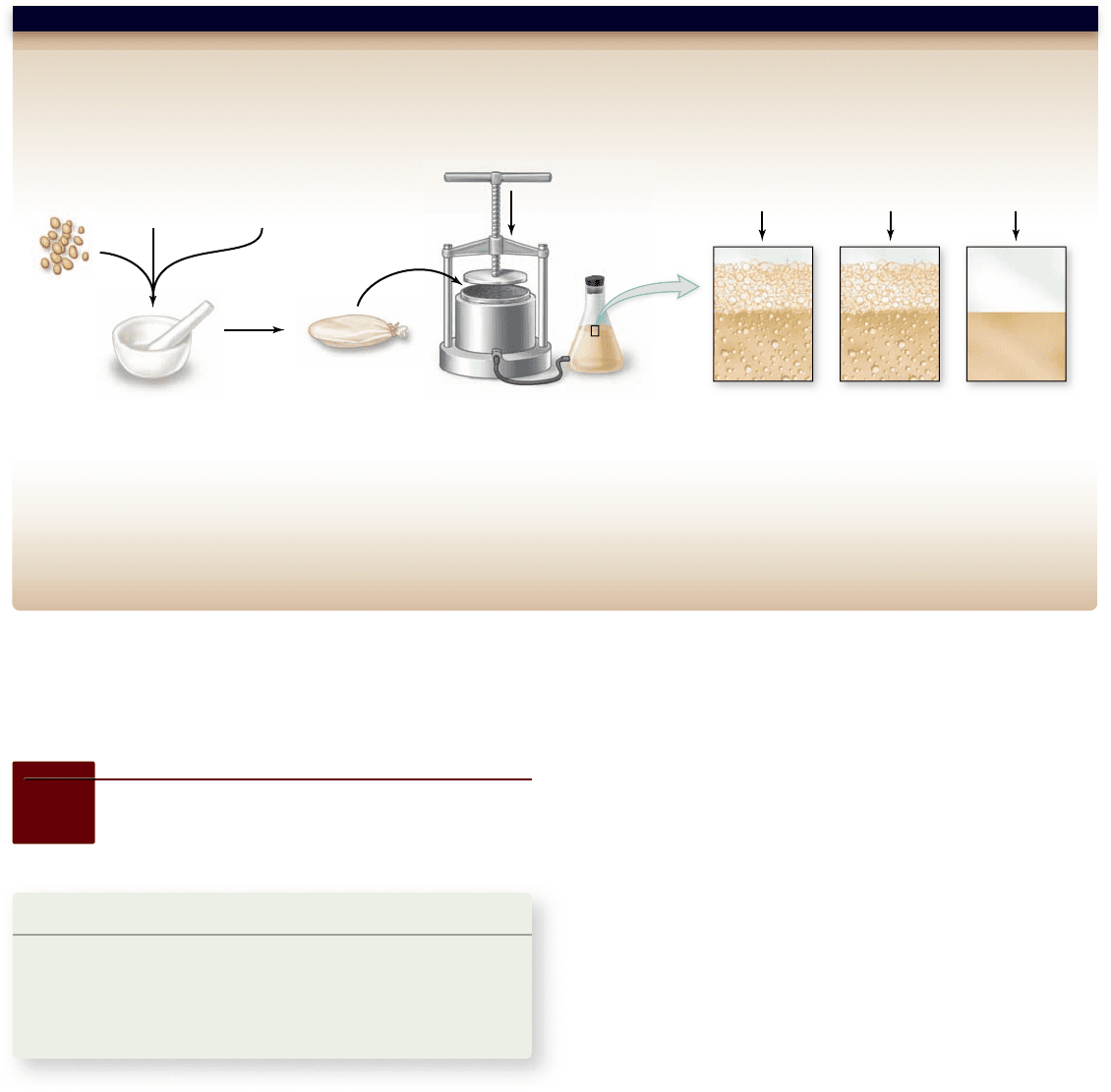
demonstration of fermentation in a cell-free system marked the beginning of modern biochemistry (figure 3.1). This approach
involves studying biological molecules outside of cells to infer their role inside cells. Because these biological macromolecules
all involve carbon-containing compounds, we begin with a brief summary of carbon and its chemistry.
CHAPTER
rav32223_ch03_033-058.indd 33rav32223_ch03_033-058.indd 33 11/6/09 12:43:19 PM11/6/09 12:43:19 PM
Apago PDF Enhancer
Hypothesis: Chemical reactions, such as the fermentation reaction in yeast, are controlled by enzymes and do not require living cells.
Prediction: If yeast cells are broken open, these enzymes should function outside of the cell.
Test: Yeast is mixed with quartz sand and diatomaceous earth and then ground in a mortar and pestle. The resulting paste is wrapped in canvas and subjected
to 400–500 atm pressure in a press. Fermentable and nonfermentable substrates are added to the resulting fluid, with fermentation being measured by the
production of CO
2
.
Result: When a fermentable substrate (cane sugar, glucose) is used, CO
2
is produced, when a nonfermentable substrate (lactose, mannose) is used, no CO
2
is
produced. In addition, visual inspection of the fluid shows no visible yeast cells.
Conclusion: The hypothesis is supported. The fermentation reaction can occur in the absence of live yeast.
Historical Significance: Although this is not precisely the intent of the original experiment, it represents the first use of a cell-free system. Such systems allow
for the study of biochemical reactions in vitro and the purification of proteins involved. We now know that the “fermentation reaction” is actually a complex
series of reactions. Would such a series of reactions be your first choice for this kind of demonstration?
SCIENTIFIC THINKING
Quartz
sand
Yeast
400
–
500 atm
pressure
Cane sugar Glucose
Lactose,
mannoseDiatomaceous
earth
Grind in mortar/pestle.
Wrap in canvas and apply pressure in a press.
3.1
Carbon: The Framework
of Biological Molecules
Learning Outcomes
Describe the relationship between functional groups and 1.
macromolecules.
Recognize the different kinds of isomers.2.
List the different kinds of biological macromolecules.3.
In chapter 2, we reviewed the basics of chemistry. Biological sys-
tems obey all the laws of chemistry. Thus, chemistry forms the
basis of living systems.
The framework of biological molecules consists predomi-
nantly of carbon atoms bonded to other carbon atoms or to at-
oms of oxygen, nitrogen, sulfur, phosphorus, or hydrogen.
Because carbon atoms can form up to four covalent bonds, mol-
ecules containing carbon can form straight chains, branches, or
even rings, balls, tubes, and coils.
Molecules consisting only of carbon and hydrogen are
called hydrocarbons . Because carbon–hydrogen covalent bonds
store considerable energy, hydrocarbons make good fuels. Gaso-
line, for example, is rich in hydrocarbons, and propane gas, an-
Figure 3.1
The demonstration of cell-free fermentation. Eduard Buchner’s (1860–1917) demonstration of fermentation by uid
produced from yeast, but not containing any live cells both argued against the protoplasm theory and provided a method for future
biochemists to examine the chemistry of life outside of cells.
other hydrocarbon, consists of a chain of three carbon atoms,
with eight hydrogen atoms bound to it. The chemical formula
for propane is C
3
H
8
. Its structural formula is
H H H
⎪ ⎪ ⎪
H—C—C—C—H Propane structural formula
⎪
⎪
⎪
H H H
Theoretically speaking, the length of a chain of carbon
atoms is unlimited. As described in the rest of this chapter, the
four main types of biological molecules often consist of huge
chains of carbon-containing compounds.
Functional groups account for di erences
in molecular properties
Carbon and hydrogen atoms both have very similar electro-
negativities. Electrons in C—C and C—H bonds are therefore
evenly distributed, with no significant differences in charge
over the molecular surface. For this reason, hydrocarbons are
nonpolar. Most biological molecules produced by cells, how-
ever, also contain other atoms. Because these other atoms fre-
quently have different electronegativities, molecules containing
them exhibit regions of partial positive or negative charge.
They are polar. These molecules can be thought of as a C—H
34
part
I
The Molecular Basis of Life
rav32223_ch03_033-058.indd 34rav32223_ch03_033-058.indd 34 11/6/09 12:43:25 PM11/6/09 12:43:25 PM
Apago PDF Enhancer
C
Mirror
W
Y
W
Y
C
Z
X
Z
X
Functional
Group
Structural
Formula
Example
Found
In
Hydroxyl
Carbonyl
Carboxyl
Amino
Sulfhydryl
Phosphate
Methyl
HS
O
–
P
O
–
O
O
HC
H
H
O
OH
C
H
H
N
C
O
Ethanol
C
H
H
CH
H
H
OH
Acetic acid
CH
H
H
C
O
OH
Alanine
C
H
CH
3
CHO
O
N
H
H
Acetaldehyde
CH
H
H
HC
O
Cysteine
Glycerol phosphate
CH
OH
H
C
OH
HH
O
C
H
O
–
O
–
P
O
carbo-
hydrates,
proteins,
nucleic
acids,
lipids
carbo-
hydrates,
nucleic
acids
proteins,
lipids
proteins,
nucleic
acids
proteins
nucleic
acids
proteins
OH
CH
NH
2
SH
CH
2
C
H
H
C
CHO
O
NH
2
HH
Alanine
COOH
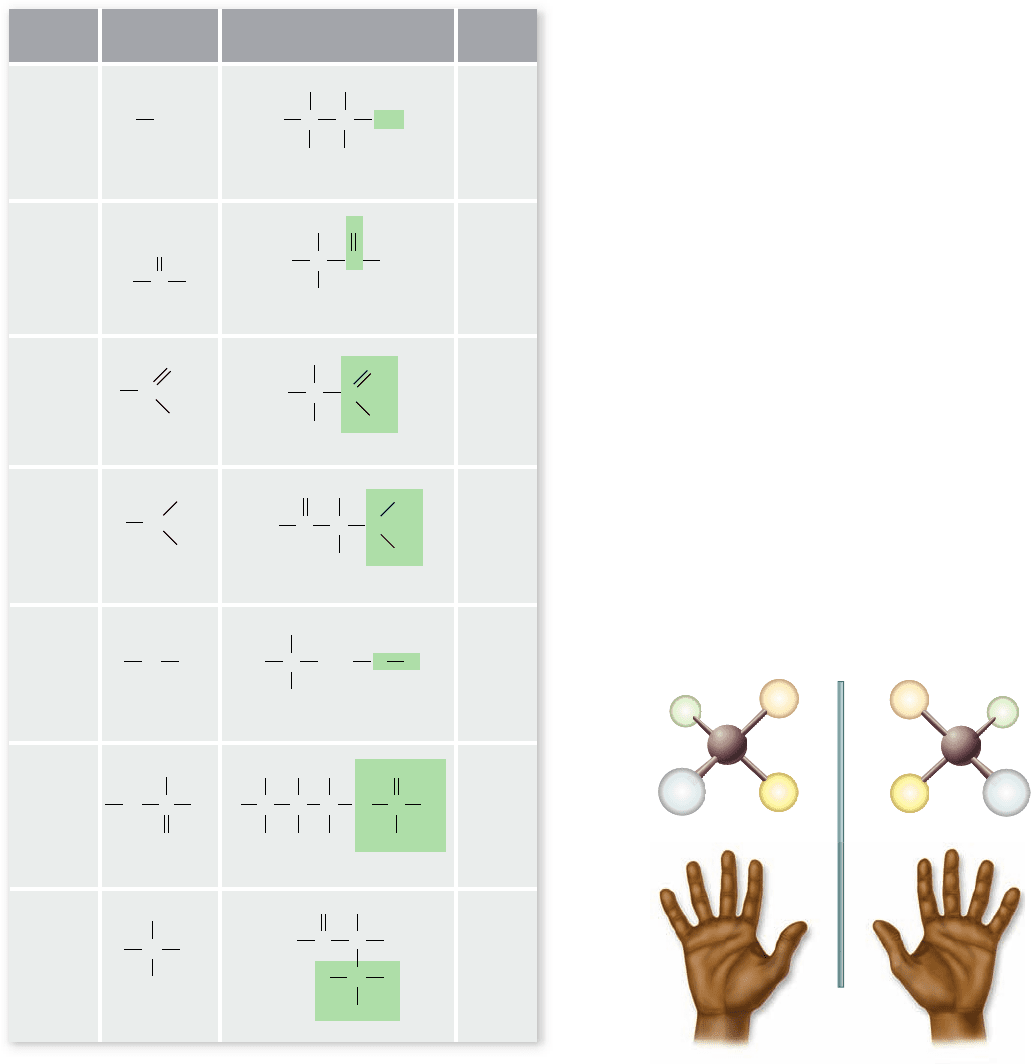
core to which specific molecular groups, called functional
groups, are attached. One such common functional group is
—OH, called a hydroxyl group.
Functional groups have definite chemical properties that
they retain no matter where they occur. Both the hydroxyl and
carbonyl (C==O) groups, for example, are polar because of the
electronegativity of the oxygen atoms (see chapter 2). Other
common functional groups are the acidic carboxyl (COOH),
phosphate (PO
4
), and the basic amino (NH
2
) group. Many of
these functional groups can also participate in hydrogen bond-
ing. Hydrogen bond donors and acceptors can be predicted
based on their electronegativities shown in table 2.2. Figure 3.2
illustrates these biologically important functional groups and
lists the macromolecules in which they are found.
Isomers have the same molecular
formulas but di erent structures
Organic molecules having the same molecular or empirical for-
mula can exist in different forms called isomers. If there are dif-
ferences in the actual structure of their carbon skeleton, we call
them structural isomers. Later you will see that glucose and fructose
are structural isomers of C
6
H
12
O
6
. Another form of isomers, called
stereoisomers, have the same carbon skeleton but differ in how the
groups attached to this skeleton are arranged in space.
Enzymes in biological systems usually recognize only a
single, specific stereoisomer. A subcategory of stereoisomers,
called enantiomers, are actually mirror images of each other. A
molecule that has mirror-image versions is called a chiral mol-
ecule. When carbon is bound to four different molecules, this
inherent asymmetry exists (figure 3.3).
Chiral compounds are characterized by their effect on
polarized light. Polarized light has a single plane, and chiral
molecules rotate this plane either to the right (Latin, dextro) or
left (Latin, levo). We therefore call the two chiral forms D for
dextrorotatory and L for levorotatory. Living systems tend to pro-
duce only a single enantiomer of the two possible forms; for
example, in most organisms we find primarily d-sugars and
l-amino acids.
Figure 3.3
Chiral molecules. When carbon is bound to four
different groups, the resulting molecule is said to be chiral (from
Greek cheir, meaning “hand.”) . A chiral molecule will have
stereoisomers that are mirror images. The two molecules shown
have the same four groups but cannot be superimposed, much like
your two hands cannot be superimposed but must be ipped to
match. These types of stereo iso mers are called enantiomers.
Figure 3.2
The primary functional chemical groups.
These groups tend to act as units during chemical reactions and
give speci c chemical properties to the molecules that possess
them. Amino groups, for example, make a molecule more basic, and
carboxyl groups make a molecule more acidic. These functional
groups are also not limited to the examples in the “Found In”
column but are widely distributed in biological molecules.
chapter
3
The Chemical Building Blocks of Life
35www.ravenbiology.comwww.ravenbiology.com
rav32223_ch03_033-058.indd 35rav32223_ch03_033-058.indd 35 11/9/09 1:00:30 PM11/9/09 1:00:30 PM
Apago PDF Enhancer
O
Cellular Structure Polymer Monomer
Carbohydrate
Nucleic AcidProtein
Starch grains in a chloroplast Starch Monosaccharide
Chromosome DNA strand Nucleotide
Intermediate filament Polypeptide Amino acid
Lipid
Adipose cell with fat droplets Triglyceride Fatty acid
Ala
Ala
Val
Val
Ser
O
N
H
C
H
OH
H
C
CH
3
HO HHHHHHH HHH
HHO C C C C C C C C C C C C
HHHHHHHH HHH
P
P
P
P
P
P
P
P
G
C
T
A
A
T
G
C
P
A
P
P
P
P
G
C
A
T
P
P
P
OH
5-carbon sugar
Nitrogenous base
Phosphate
group
HO
CH
2
OH
H
OH
H
OH
OH
H
H
H
O
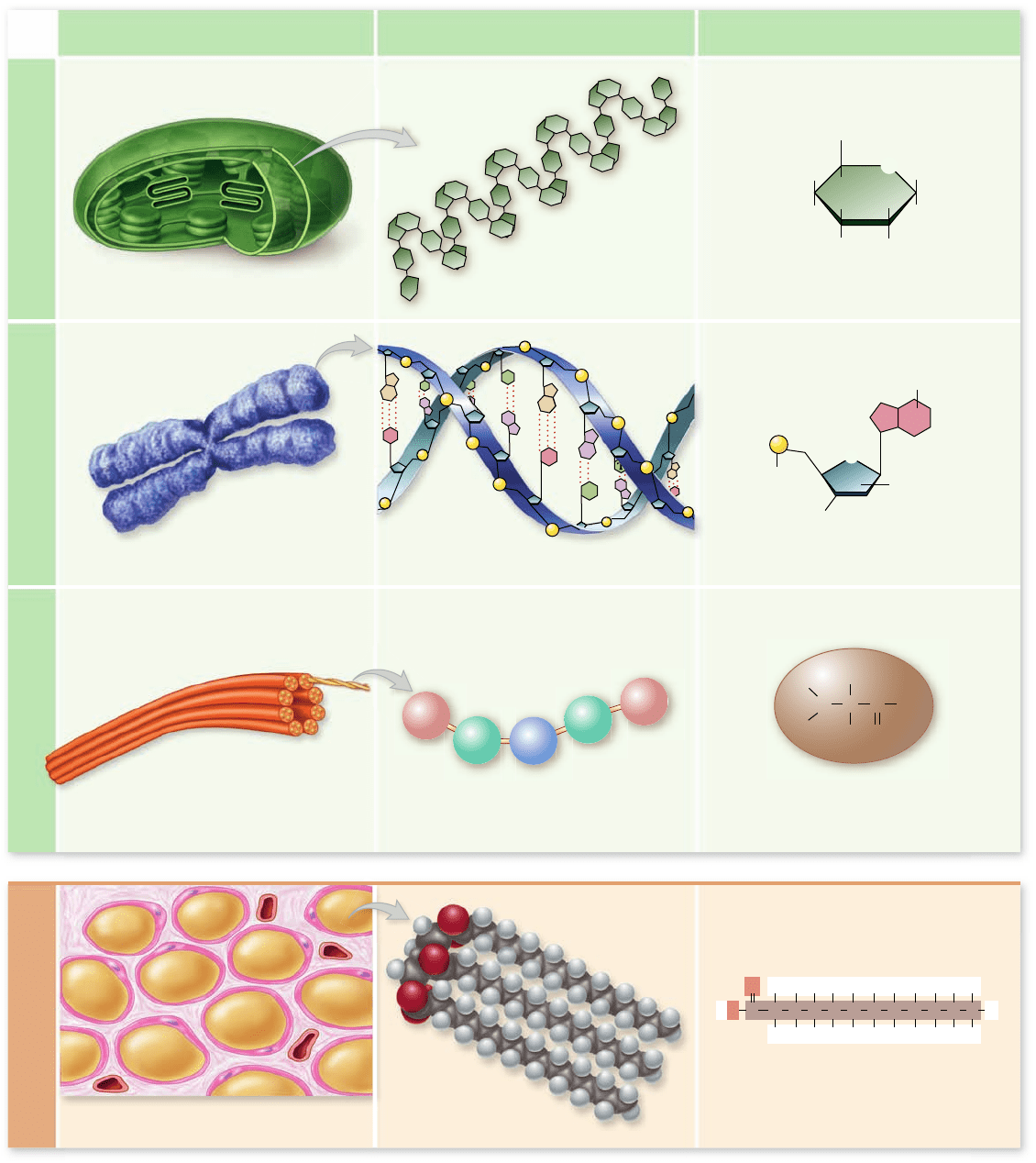
Figure 3.4
Polymer macromolecules. The four major biological macromolecules are shown. Carbohydrates, nucleic acids, and
proteins all form polymers and are shown with the monomers used to make them. Lipids do not t this simple monomer–polymer
relationship, however, because they are constructed from glycerol and fatty acids. All four types of macromolecules are also shown in their
cellular context.
36
part
I
The Molecular Basis of Life
rav32223_ch03_033-058.indd 36rav32223_ch03_033-058.indd 36 11/6/09 12:43:27 PM11/6/09 12:43:27 PM
Apago PDF Enhancer
HO
HO H
HO H H H HO
HO H H HO
a
. Dehydration reaction
b. Hydrolysis reaction
H
2
O H
2
O
Biological macromolecules include
carbohydrates, nucleic acids,
proteins, and lipids
Remember that biological macromolecules are traditionally
grouped into carbohydrates, nucleic acids, proteins, and lipids
(table 3.1). In many cases, these macromolecules are polymers.
A polymer is a long molecule built by linking together a large
number of small, similar chemical subunits called monomers.
They are like railroad cars coupled to form a train. The nature
of a polymer is determined by the monomers used to build the
polymer. Here are some examples. Complex carbohydrates
such as starch are polymers composed of simple ring-shaped
sugars. Nucleic acids (DNA and RNA) are polymers of nucle-
otides (figure 3.4) . Proteins are polymers of amino acids, and
lipids are polymers of fatty acids (see figure 3.4) . These long
chains are built via chemical reactions termed dehydration reac-
tions and are broken down by hydrolysis reactions.
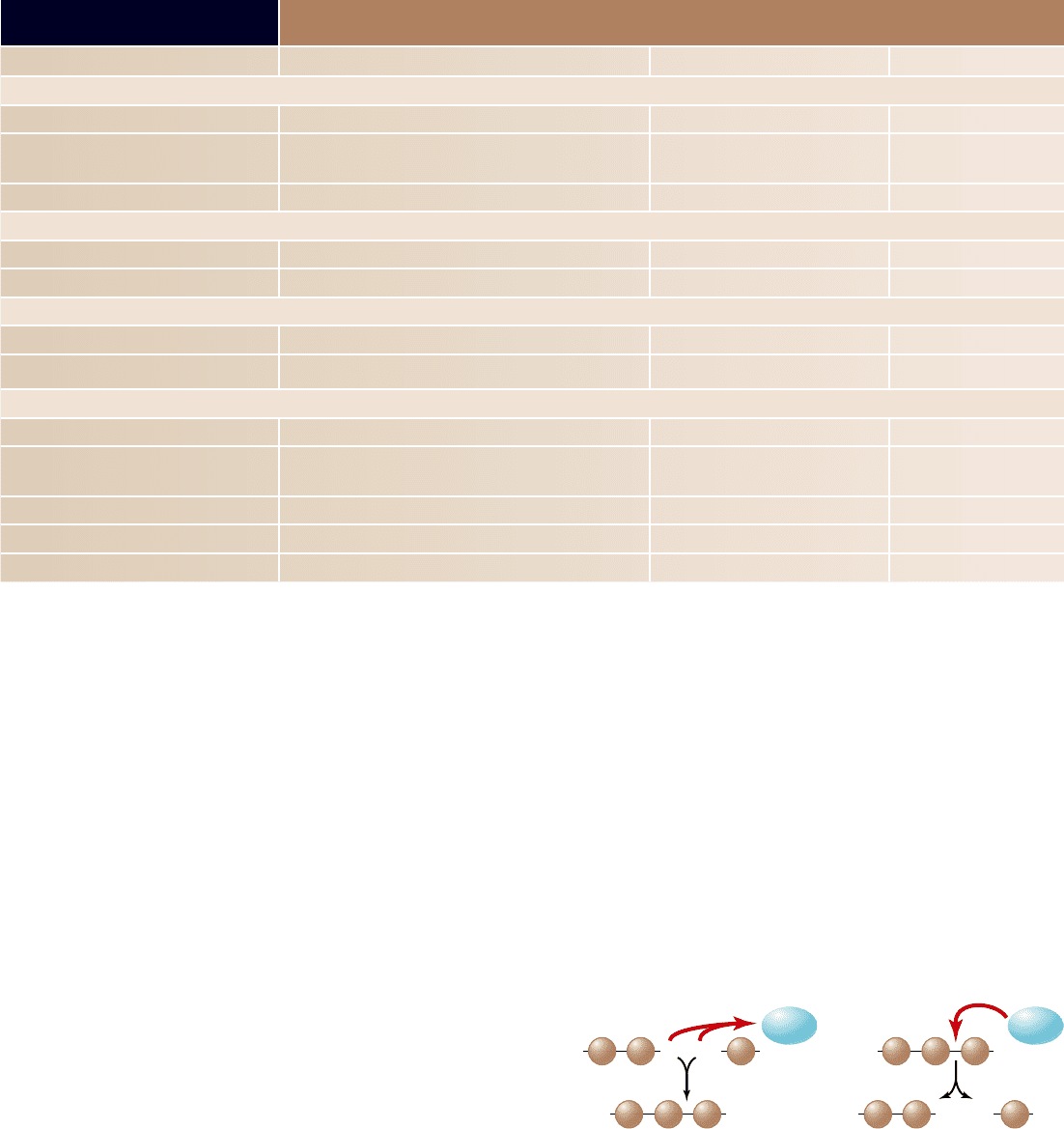
The dehydration reaction
Despite the differences between monomers of these major poly-
mers, the basic chemistry of their synthesis is similar: To form a
covalent bond between two monomers, an —OH group is re-
moved from one monomer, and a hydrogen atom (H) is removed
from the other (figure 3.5a). For example, this simple chemistry
is the same for linking amino acids together to make a protein or
assembling glucose units together to make starch. This reaction
is also used to link fatty acids to glycerol in lipids. This chemical
reaction is called condensation, or a dehydration reaction , be-
cause the removal of —OH and —H is the same as the removal
TABLE 3.1
Macromolecules
Macromolecule Subunit Function Example
CARBOHYDRATES
Starch, glycogen Glucose Energy storage Potatoes
Cellulose Glucose Structural support in plant cell walls Paper; strings
of celery
Chitin Modi ed glucose Structural support Crab shells
NUCLEIC ACIDS
DNA Nucleotides Encodes genes Chromosomes
RNA Nucleotides Needed for gene expression Messenger RNA
PROTEINS
Functional Amino acids Catalysis; transport Hemoglobin
Structural Amino acids Support Hair; silk
LIPIDS
Fats Glycerol and three fatty acids Energy storage Butter; corn oil; soap
Phospholipids Glycerol, two fatty acids, phosphate, and polar
R groups
Cell membranes Phosphatidylcholine
Prostaglandins Five-carbon rings with two nonpolar tails Chemical messengers Prostaglandin E (PGE)
Steroids Four fused carbon rings Membranes; hormones Cholesterol; estrogen
Terpenes Long carbon chains Pigments; structural support Carotene; rubber
of a molecule of water (H
2
O). For every subunit added to a mac-
romolecule, one water molecule is removed. These and other
biochemical reactions require that the reacting substances are
held close together and that the correct chemical bonds are
stressed and broken. This process of positioning and stressing,
termed catalysis, is carried out within cells by enzymes.
The hydrolysis reaction
Cells disassemble macromolecules into their constituent sub-
units through reactions that are the reverse of dehydration—a
molecule of water is added instead of removed (figure 3.5b). In this
process, called hydrolysis, a hydrogen atom is attached to one
subunit and a hydroxyl group to the other, breaking a specific
covalent bond in the macromolecule.
Figure 3.5
Making and breaking macromolecules.
a. Biological macromolecules are polymers formed by linking
monomers together through dehydration reactions. This process
releases a water molecule for every bond formed. b. Breaking the
bond between subunits involves hydrolysis, which reverses the loss
of a water molecule by dehydration.
chapter
3
The Chemical Building Blocks of Life
37www.ravenbiology.com
rav32223_ch03_033-058.indd 37rav32223_ch03_033-058.indd 37 11/6/09 12:43:29 PM11/6/09 12:43:29 PM
Apago PDF Enhancer
Galactose Fructose Glucose Glyceraldehyde
3-carbon Sugar 5-carbon Sugars 6-carbon Sugars
C
J J
C
C
J
H
H OH
O H
J
J
H
J
OH
J
J
J
J
Ribose
CH
2
OH
H
H H
H
OH OH
OH
O
Deoxyribose
CH
2
OH
H
H H
H
OH H
OH
O
H
CH
2
OH
OH
OH
OH
OH
H
H
H
H
O
HO
CH
2
OH
H
OH
H
OH
OH
H
H
H
O
CH
2
OH
HO
H
CH
2
OH
OH H
H
O
OH
1
3
2
4
5
1
3
2
4
5
1
3
2
4
5
6
1
3
2
4
5
6
1
3
2
4
5
6
1
3
2
Learning Outcomes Review 3.1
Functional groups account for diff erences in chemical properties in
organic molecules. Isomers are compounds with the same empirical
formula but diff erent structures. This diff erence may aff ect biological
function. Macromolecules are polymers consisting of long chains of similar
subunits that are joined by dehydration reactions and are broken down by
hydrolysis reactions.
■ What is the relationship between dehydration
and hydrolysis?
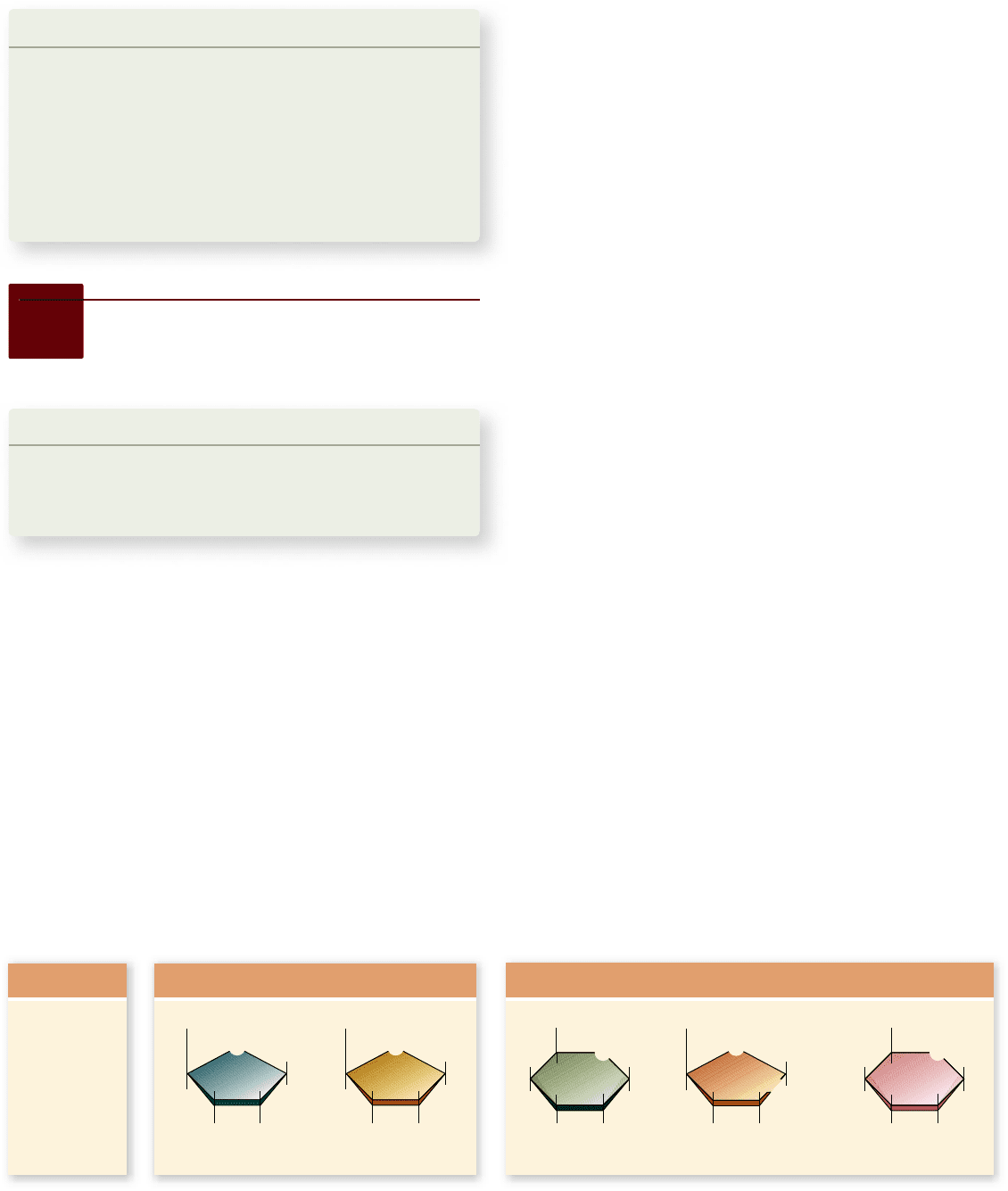
Figure 3.6
Monosaccharides. Monosaccharides, or simple sugars, can contain as few as three carbon atoms and are often used as
building blocks to form larger molecules. The ve-carbon sugars ribose and deoxyribose are components of nucleic acids (see gure 3.15 ) .
The carbons are conventionally numbered from the more oxidized end.
3.2
Carbohydrates: Energy Storage
and Structural Molecules
Learning Outcomes
Describe the structure of a sugar.1.
Name the different forms of carbohydrate molecules.2.
Relate the structure of polysaccharides to their functions3.
Monosaccharides are simple sugars
Carbohydrates are a loosely defined group of molecules that
all contain carbon, hydrogen, and oxygen in the molar ratio
1:2:1. Their empirical formula (which lists the number of atoms
in the molecule with subscripts) is (CH
2
O)
n
, where n is the
number of carbon atoms. Because they contain many carbon–
hydrogen (C—H) bonds, which release energy when oxidation
occurs, carbohydrates are well suited for energy storage. Sugars
are among the most important energy-storage molecules, and
they exist in several different forms.
The simplest of the carbohydrates are the monosaccharides
(Greek mono, “single,” and Latin saccharum, “sugar”). Simple sugars
contain as few as three carbon atoms, but those that play the cen-
tral role in energy storage have six (figure 3.6). The empirical for-
mula of six-carbon sugars is:
C
6
H
12
O
6
or (CH
2
O)
6
Six-carbon sugars can exist in a straight-chain form, but dis-
solved in water (an aqueous environment) they almost always
form rings.
The most important of the six-carbon monosaccharides
for energy storage is glucose, which you first encountered in the
examples of chemical reactions in chapter 2. Glucose has seven
energy-storing C—H bonds (figure 3.7). Depending on the ori-
entation of the carbonyl group (C
=
O) when the ring is closed,
glucose can exist in two different forms: alpha (α) or beta (β).
Sugar isomers have structural di erences
Glucose is not the only sugar with the formula C
6
H
12
O
6
. Both
structural isomers and stereoisomers of this simple six-carbon
skeleton exist in nature. Fructose is a structural isomer that dif-
fers in the position of the carbonyl carbon (C==O); galactose is
a ste reo iso mer that differs in the position of —OH and —H
groups relative to the ring (figure 3.8). These differences often
account for substantial functional differences between the iso-
mers. Your taste buds can discern them: Fructose tastes much
sweeter than glucose, despite the fact that both sugars have
identical chemical composition. Enzymes that act on different
sugars can distinguish both the structural and stereoisomers of
this basic six-carbon skeleton. The different stereoisomers of
glucose are also important in the polymers that can be made us-
ing glucose as a monomer, as you will see later in this chapter.
Disaccharides serve as transport molecules
in plants and provide nutrition in animals
Most organisms transport sugars within their bodies. In hu-
mans, the glucose that circulates in the blood does so as a simple
monosaccharide. In plants and many other organisms, however,
glucose is converted into a transport form before it is moved
from place to place within the organism. In such a form, it is
less readily metabolized during transport.
Transport forms of sugars are commonly made by linking
two monosaccharides together to form a disaccharide (Greek
di, “two”). Disaccharides serve as effective reservoirs of glucose
because the enzymes that normally use glucose in the organism
cannot break the bond linking the two monosaccharide sub-
units. Enzymes that can do so are typically present only in the
tissue that uses glucose.
38
part
I
The Molecular Basis of Life
rav32223_ch03_033-058.indd 38rav32223_ch03_033-058.indd 38 11/6/09 12:43:29 PM11/6/09 12:43:29 PM
Apago PDF Enhancer
OH
H
2
O
Sucrose Fructose
a-glucose
HO
CH
2
OH
H
OH
H
OH
H
H
H
O
CH
2
OH
H
CH
2
OH
OH H
H
O
HO
CH
2
OH
H
OH
H
OH
O
H
H
H
O
CH
2
OH
H OH
CH
2
OH
OH H
H
O
+
a. b.
Maltose
HO
CH
2
OH
H
OH
H
OH
O
H
H
H
O
CH
2
OH
H
OH
H
OH
OH
H
H
H
O
OH
HO
H
CH
2
OH
H
OH
OH H
H
H
C
C C
C
C
O
J
J J
J J
J J
J
J JJ
J
J J
C
C
H
C H
HO
OH H
OH H
C
OH H
C
OH H
C
H
J
J J
OH
C H H
OH
H
OH
H
OH
H
OH
H
OH H
H
H
C
C C
C
C
O
CH
2
OH
OH
OH H
H
H
C
C C
C
O
J
J
J J
J
J
J
J
C
JJ
OH
OH
O
O
H
2 3
5
1 4
6
5
4
3
2
1
2 3
5
6
1 4
2 3
5
1 4
J
J
J
J
J
J
J
a-glucose
or
b-glucose
Structural
isomer
Stereo-
isomer
Fructose Glucose Galactose
H OH
O
C
J J
C
J
C
J
C
J
C
J
C
J
H
H
J J
HO
J
H
J
H
J
OH
J
H
J
OH
J
H
J
OH
J
J
J
H
O C
J J
C
J
C
J J
C
J
C
J
H
H
J
HO
J
H
J
OH
H
J
OH
J
H
J
OH
J
J
J
J
O C
J J
C
J
C
J
C
J
C
J
C
J
H
H
H
J
HO
J
H
J
OH
J
H
J
OH
J
H
J J
J
J
J
OH
C
H
J
OH
J
HO
J
H
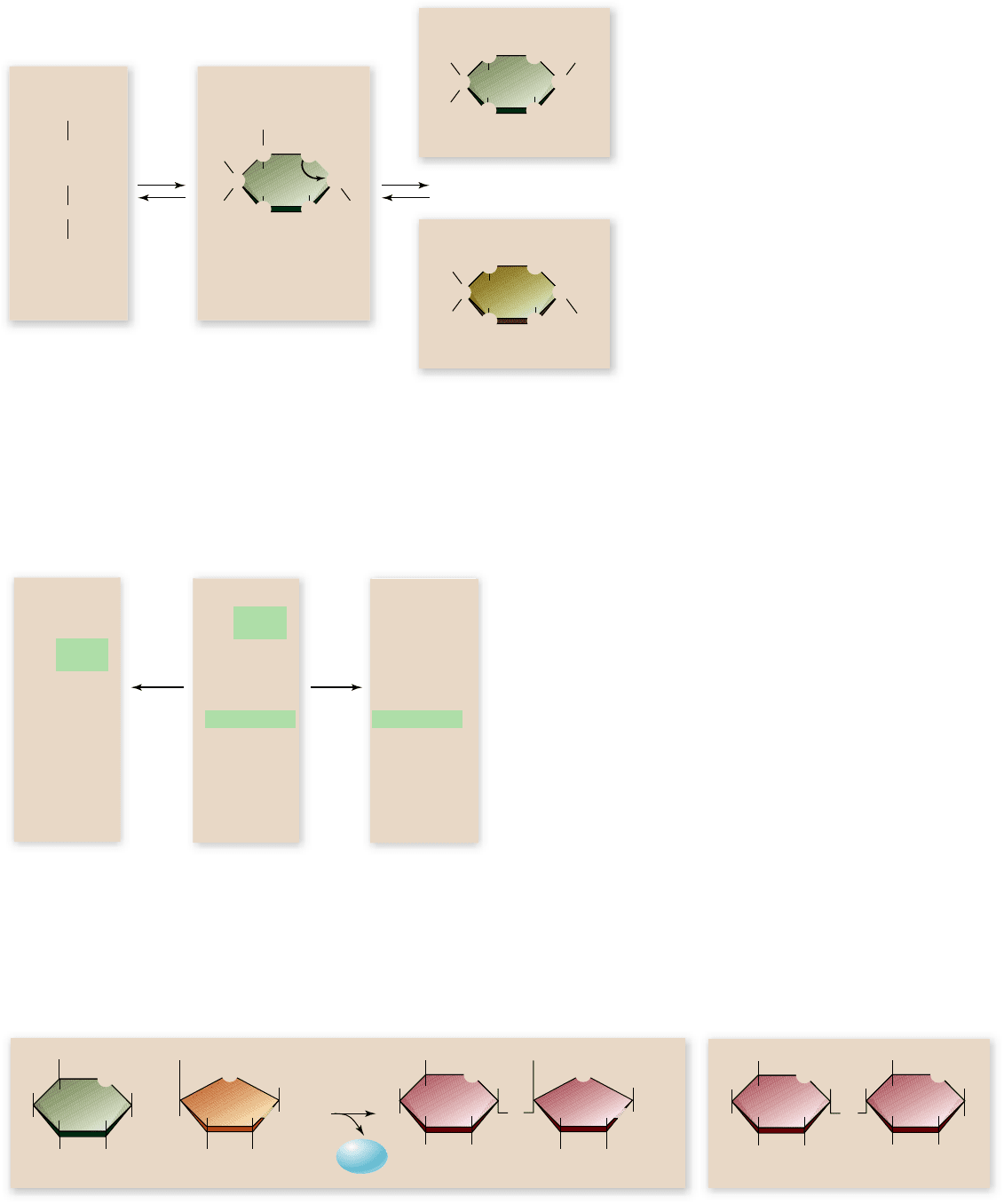
Figure 3.7
Structure of the glucose molecule. Glucose is a linear, six-carbon
molecule that forms a six-membered ring in solution. Ring closure occurs such that two
forms can result: α-glucose and β-glucose. These structures differ only in the position of
the
—OH bound to carbon 1. The structure of the ring can be represented in many
ways; shown here are the most common, with the carbons conventionally numbered (in
blue) so that the forms can be compared easily. The heavy lines in the ring structures
represent portions of the molecule that are projecting out of the page toward you.
Figure 3.9
How disaccharides form. Some disaccharides are used to transport glucose from one part of an organism’s body to
another; one example is sucrose (a), which is found in sugarcane. Other disaccharides, such as maltose (b), are used in grain for storage.
Figure 3.8
Isomers and stereoisomers. Glucose, fructose,
and galactose are isomers with the empirical formula C
6
H
12
O
6
. A
structural isomer of glucose, such as fructose, has identical chemical
groups bonded to different carbon atoms. Notice that this results in a
ve-membered ring in solution (see gure 3.6 ). A stereoisomer of
glucose, such as galactose, has identical chemical groups bonded to the
same carbon atoms but in different orientations (the —OH at carbon 4).
Transport forms differ depending on
which monosaccharides are linked to form the
disaccharide. Glucose forms transport disac-
charides with itself and with many other mono-
saccharides, including fructose and galactose.
When glucose forms a disaccharide with the
structural isomer fructose, the resulting disac-
charide is sucrose, or table sugar (figure 3.9a).
Sucrose is the form most plants use to trans-
port glucose and is the sugar that most humans
and other animals eat. Sugarcane and sugar
beets are rich in sucrose.
When glucose is linked to the stereoiso-
mer galactose, the resulting disaccharide is lac-
tose, or milk sugar. Many mammals supply
energy to their young in the form of lactose.
Adults often have greatly reduced levels of
lactase, the enzyme required to cleave lactose
into its two monosaccharide components, and
thus they cannot metabolize lactose efficiently.
This can result in lactose intolerance in hu-
mans. Most of the energy that is channeled into
lactose production is therefore reserved for off-
spring. For this reason, lactose as an energy
source is primarily for offspring in mammals.
Polysaccharides provide energy storage
and structural components
Polysaccharides are longer polymers made up of monosaccha-
rides that have been joined through dehydration reactions. Starch,
a storage polysaccharide, consists entirely of α- glucose molecules
linked in long chains. Cellulose, a structural polysaccharide, also
consists of glucose molecules linked in chains, but these molecules
are β-glucose. Because starch is built from α-glucose we call the
linkages α linkages; cellulose has β linkages.
Starches and Glycogen
Organisms store the metabolic energy contained in monosac-
charides by converting them into disaccharides, such as maltose
(figure 3.9 b). These are then linked together into the insoluble
polysaccharides called starches. These polysaccharides differ
mainly in how the polymers branch.
The starch with the simplest structure is amylose. It is com-
posed of many hundreds of α-glucose molecules linked together in
long, unbranched chains. Each linkage occurs between the carbon 1
chapter
3
The Chemical Building Blocks of Life
39www.ravenbiology.com
rav32223_ch03_033-058.indd 39rav32223_ch03_033-058.indd 39 11/6/09 12:43:30 PM11/6/09 12:43:30 PM
Apago PDF Enhancer
a.
b.
HO
CH
2
OH
H
OH
H
OH H
H
H
O
CH
2
OH
H H
OH
H
OH H
H
H
O
O
CH
2
OH
H
OH
H
OH H
H
H
O
OH H
H
OH H
H
CH
2
OH
O
b
-glucose b-1
→
4 linkages
OH
O O
O
4 1
500 μm
Amylose + Amylopectin
a
-1
→
4 linkages
a-glucose
a-1
→
4 linkage
a-1
→
6 linkage
a.
b.
c.
Glycogen
HO
CH
2
OH
H
OH
H
OH H
H
H
O
CH
2
OH
OH
H
OH H
H
O
CH
2
OH
OH
H
OH H
H
O
CH
2
OH
OH
H
OH H
H
O
CH
2
OH
O
H
OH
H
OH H
H
H
O
CH
2
H
OH
H
OH H
H
H
O
O
CH
2
OH
H
OH
H
OH H
H
H
O
OH
4 1
O O
H
7.5 μm
3.3
μ
m
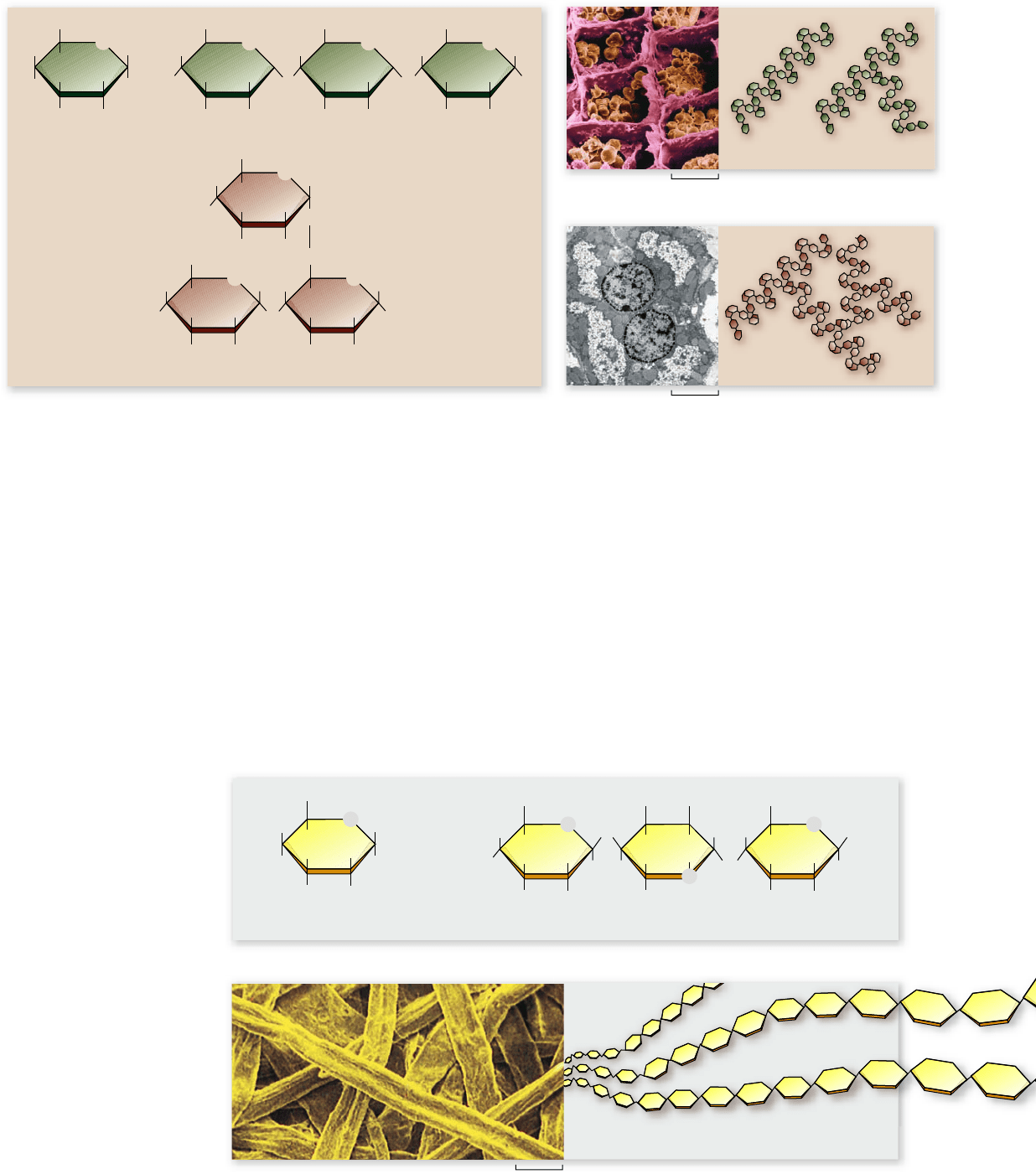
F i g u r e 3 . 1 1
Polymers
of glucose: Cellulose.
Starch chains consist of
α-glucose subunits, and
cellulose chains consist of
β-glucose subunits. a. Thus
the bonds between adjacent
glucose molecules in cellulose
are β-(1
→
4) glycosidic
linkages. b. Cellulose is
unbranched and forms long
bers. Cellulose bers can be
very strong and are quite
resistant to metabolic
breakdown, which is one
reason wood is such a good
building material.
F i g u r e 3 . 1 0
Polymers of glucose: Starch and glycogen. a. Starch chains consist of polymers of α-glucose subunits joined by
α-(1
→
4) glycosidic linkages . These chains can be branched by forming similar α-(1
→
6) glycosidic bonds. These storage polymers then
differ primarily in their degree of branching. b. Starch is found in plants and is composed of amylose and amylopectin, which are unbranched
and branched, respectively. The branched form is insoluble and forms starch granules in plant cells. c. Glycogen is found in animal cells and is
highly branched and also insoluble, forming glycogen granules.
(C-1) of one glucose molecule and the C-4 of another, making them
α-(1
→
4) linkages (figure 3.10a). The long chains of amylose
tend to coil up in water, a property that renders amylose insoluble.
Potato starch is about 20% amylose (figure 3.10 b) .
Most plant starch, including the remaining 80% of potato
starch, is a somewhat more complicated variant of amylose called
amylopectin. Pectins are branched polysaccharides with the
branches occurring due to bonds between the C-1 of one molecule
and the C-6 of another [α-(1
→
6) linkages]. These short amy-
lose branches consist of 20 to 30 glucose subunits (figure 3.10 b ).
The comparable molecule to starch in animals is glycogen.
Like amylopectin, glycogen is an insoluble polysaccharide contain-
ing branched amylose chains. Glycogen has a much longer average
chain length and more branches than plant starch (figure 3.10 c) .
Cellulose
Although some chains of sugars store energy, others serve as
structural material for cells. For two glucose molecules to link
together, the glucose subunits must be of the same form. Cel-
lulose is a polymer of β-glucose (figure 3.11). The bonds between
40
part
I
The Molecular Basis of Life
rav32223_ch03_033-058.indd 40rav32223_ch03_033-058.indd 40 11/6/09 12:43:31 PM11/6/09 12:43:31 PM
Apago PDF Enhancer
a. b.
2 nm
3.3
Nucleic Acids: Information
Molecules
Learning Outcomes
Describe the structure of nucleotides.1.
Compare and contrast the structures of DNA 2.
and RNA.
Explain the functions of DNA and RNA.3.
Recognize other nucleotides involved in energy 4.
metabolism.
The biochemical activity of a cell depends on production of a
large number of proteins, each with a specific sequence. The in-
formation necessary to produce the correct proteins is passed
through generations of organisms, even though the protein mol-
ecules themselves are not.
Nucleic acids carry information inside cells, just as disks
contain the information in a computer or road maps display
information needed by travelers. Two main varieties of nucleic
acids are deoxyribonucleic acid (DNA; figure 3.13) and
ribonucleic acid (RNA).
DNA encodes the genetic information used to assemble
proteins (as discussed in detail in chapter 15 ) similar to the way
the letters on this page encode information. Unique among
macromolecules, nucleic acids are able to serve as templates to
produce precise copies of themselves. This characteristic allows
genetic information to be preserved during cell division and
Figure 3.12
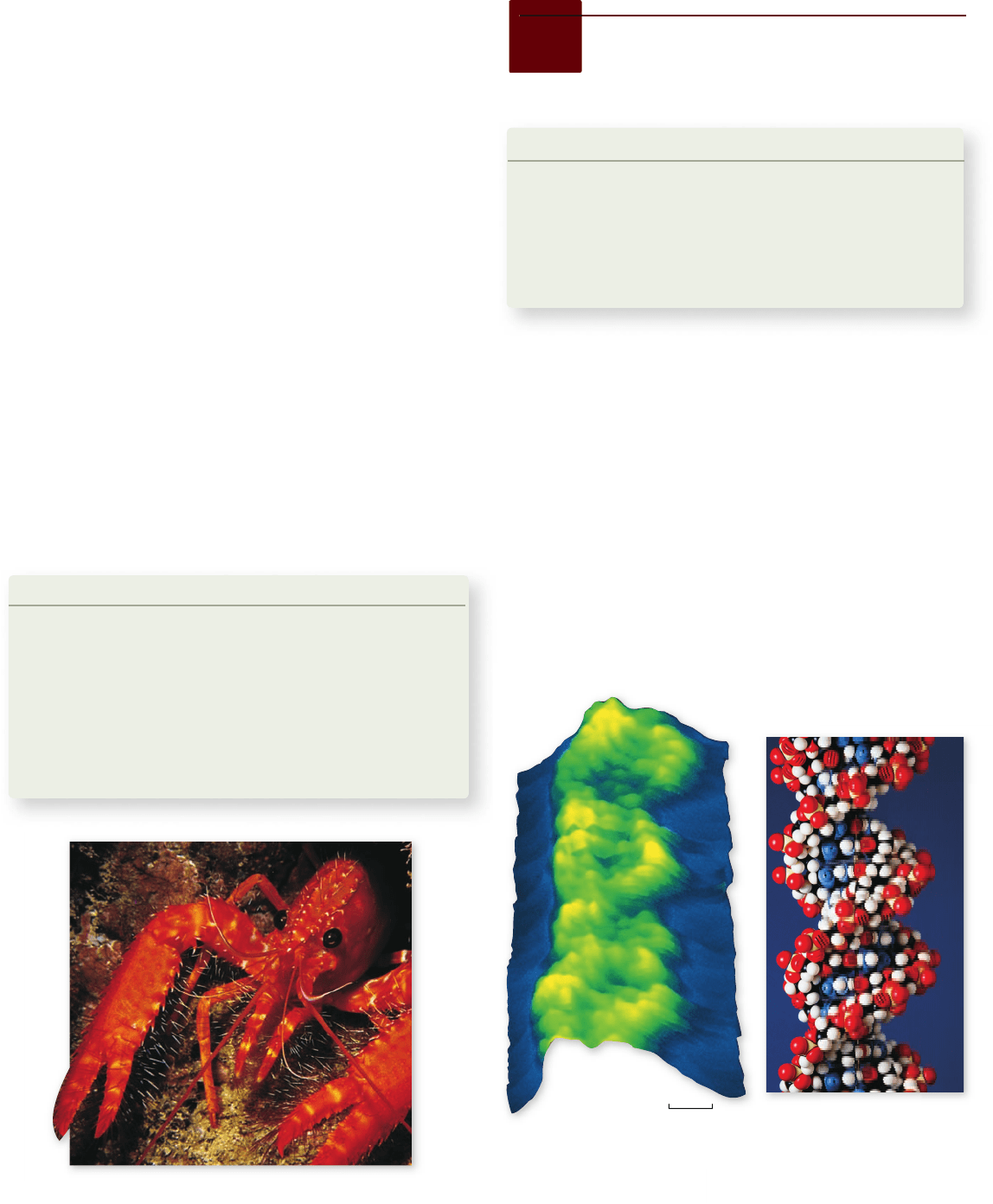
Chitin. Chitin is the principal structural element
in the external skeletons of many invertebrates, such as this lobster.
Figure 3.13
Images of DNA. a. A scanning-tunneling
micrograph of DNA (false color; 2,000,000×) showing
approximately three turns of the DNA double helix. b. A space-
lling model for comparison to the image of actual DNA in (a).
adjacent glucose molecules still exist between the C-1 of the
first glucose and the C-4 of the next glucose, but these are
β-(1
→
4) linkages.
The properties of a chain of glucose molecules consisting
of all β-glucose are very different from those of starch. These
long, unbranched β-linked chains make tough fibers. Cellulose
is the chief component of plant cell walls (see figure 3.11b). It is
chemically similar to amylose, with one important difference:
The starch-hydrolyzing enzymes that occur in most organisms
cannot break the bond between two β-glucose units because
they only recognize α linkages.
Because cellulose cannot be broken down readily by most
creatures, it works well as a biological structural material. But some
animals, such as cows, are able to break down cellulose by means of
symbiotic bacteria and protists in their digestive tracts. These or-
ganisms provide the necessary enzymes for cleaving the β-(1
→
4)
linkages, thus enabling access to a rich source of energy .
Chitin
Chitin, the structural material found in arthropods and many
fungi, is a polymer of N-acetylglucosamine, a substituted ver-
sion of glucose. When cross-linked by proteins, it forms a
tough, resistant surface material that serves as the hard exoskel-
eton of insects and crustaceans (figure 3.12; see chapter 34 ) .
Few organisms are able to digest chitin, but most possess a chi-
tinase enzyme, probably to protect against fungi.
Learning Outcomes Review 3.2
Monosaccharides have three to six or more carbon atoms typically arranged
in a ring form. Disaccharides consist of two linked monosaccharides;
polysaccharides are long chains of monosaccharides. Structural diff erences
between sugar isomers can lead to functional diff erences. Starches are
branched polymers of α-glucose used for energy storage. Cellulose in plants
consists of unbranched chains of β-glucose that are not easily digested.
■ How do the structures of starch, glycogen, and cellulose
affect their function?
chapter
3
The Chemical Building Blocks of Life
41www.ravenbiology.com
rav32223_ch03_033-058.indd 41rav32223_ch03_033-058.indd 41 11/6/09 12:43:32 PM11/6/09 12:43:32 PM