
Raven P.H., Johnson G.B., Mason K.A. Biology (Ninth Edition)
Подождите немного. Документ загружается.

Apago PDF Enhancer
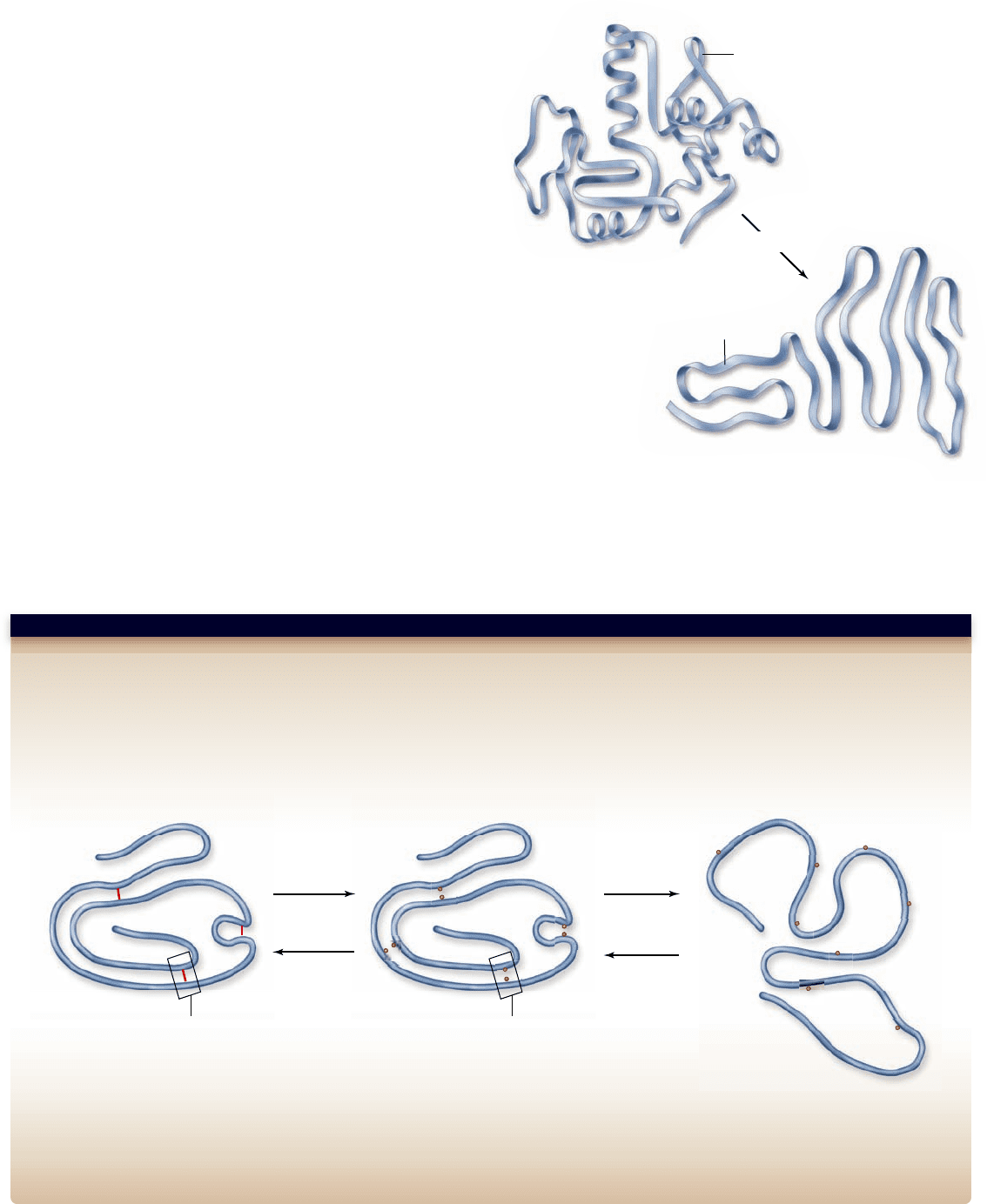
Hypothesis: The 3-D structure of a protein is the thermodynamically stable structure. It depends only on the primary structure of the protein and the
solution conditions.
Prediction: If a protein is denatured and allowed to renature under native conditions, it will refold into the native structure.
Test: Ribonuclease is treated with a reducing agent to break disulfide bonds and is then treated with urea to completely unfold the protein. The disulfide bonds
are reformed under nondenaturing conditions to see if the protein refolds properly.
Result: Denatured Ribonuclease refolds properly under nondenaturing conditions.
Conclusion: The hypothesis is supported. The information in the primary structure (amino acid sequence) is sufficient for refolding to occur. This implies that
protein folding results in the thermodynamically stable structure.
Further Experiments: If the disulfide bonds were allowed to reform under denaturing conditions, would we get the same result? How can we rule out that the
protein had not been completely denatured and therefore retained some structure?
SCIENTIFIC THINKING
Native
ribonuclease
Reduced
ribonuclease
Heating or
addition of urea
Reducing
agents
Cooling or
removal of urea
Oxidizing
agents
S-S disulfide
bonds
Broken disulfide
bonds (SH)
Unfolded
ribonuclease
Denatured
protein
Properly folded protein
Denaturation
is a hereditary disorder in which a mutation disables a vital pro-
tein that moves ions across cell membranes. As a result, people
with cystic fibrosis have thicker than normal mucus. This results
in breathing problems, lung disease, and digestive difficulties,
among other things. One interesting feature of the molecular
analysis of this disease has been the number of different muta-
tions found in human populations. One diverse class of muta-
tions all result in problems with protein folding. The number of
different mutations that can result in improperly folded proteins
may be related to the fact that the native protein often fails to
fold properly.
Denaturation inactivates proteins
If a protein’s environment is altered, the protein may change its
shape or even unfold completely. This process is called
denaturation (figure 3.25). Proteins can be denatured when
the pH, temperature, or ionic concentration of the surrounding
solution changes.
Denatured proteins are usually biologically inactive. This ac-
tion is particularly significant in the case of enzymes. Because prac-
tically every chemical reaction in a living organism is catalyzed by a
specific enzyme, it is vital that a cell’s enzymes work properly.
The traditional methods of food preservation, salt curing
and pickling, involve denaturation of proteins. Prior to the gen-
eral availability of refrigerators and freezers, the only practical
Figure 3.25
Protein denaturation. Changes in a protein’s
environment, such as variations in temperature or pH, can cause a
protein to unfold and lose its shape in a process called denaturation.
In this denatured state, proteins are biologically inactive.
Figure 3.26
Primary structure determines tertiary structure.
52
part
I
The Molecular Basis of Life
rav32223_ch03_033-058.indd 52rav32223_ch03_033-058.indd 52 11/9/09 4:23:22 PM11/9/09 4:23:22 PM

Apago PDF Enhancer
way to keep microorganisms from growing in food was to keep
the food in a solution containing a high concentration of salt or
vinegar, which denatured the enzymes of most microorganisms
and prevented them from growing on the food.
Most enzymes function within a very narrow range of en-
vironmental conditions. Blood-borne enzymes that course
through a human body at a pH of about 7.4 would rapidly be-
come denatured in the highly acidic environment of the stom-
ach. Conversely, the protein-degrading enzymes that function
at a pH of 2 or less in the stomach would be denatured in the
relatively basic pH of the blood. Similarly, organisms that live
near oceanic hydrothermal vents have enzymes that work well
at these extremes of temperature (over 100°C). They cannot
survive in cooler waters, because their enzymes do not function
properly at lower temperatures. Any given organism usually has
a tolerance range of pH, temperature, and salt concentration.
Within that range, its enzymes maintain the proper shape to
carry out their biological functions.
When a protein’s normal environment is reestablished
after denaturation, a small protein may spontaneously refold
into its natural shape, driven by the interactions between its
nonpolar amino acids and water (figure 3.26). This process is
termed renaturation, and it was first established for the enzyme
ribonuclease (RNase). The renaturation of RNase led to the
doctrine that primary structure determines tertiary structure.
Larger proteins can rarely refold spontaneously, however, be-
cause of the complex nature of their final shape, so this simple
idea needs to be qualified.
The fact that some proteins can spontaneously renature im-
plies that tertiary structure is strongly influenced by primary struc-
ture. In an extreme example, the E. coli ribosome can be taken apart
and put back together experimentally. Although this process re-
quires temperature and ion concentration shifts, it indicates an
amazing degree of self-assembly. That complex structures can arise
by self-assembly is a key idea in the study of modern biology.
It is important to distinguish denaturation from
dissociation. For proteins with quaternary structure, the
subunits may be dissociated without losing their individual
tertiary structure. For example, the four subunits of hemo-
globin may dissociate into four individual molecules (two
α-globins and two β-globins) without denaturation of the
folded globin proteins. They readily reassume their four-
subunit quaternary structure.
Learning Outcomes Review 3.4
Proteins are molecules with diverse functions. They are constructed from
20 diff erent kinds of amino acids. Protein structure can be viewed at four
levels: (1) the amino acid sequence, or primary structure; (2) coils and sheets,
called secondary structure; (3) the three-dimensional shape, called tertiary
structure; and (4) individual polypeptide subunits associated in a quaternary
structure. Diff erent proteins often have similar substructures called motifs
and can be broken down into functional domains. Proteins have a narrow
range of conditions in which they fold properly; outside that range, proteins
tend to unfold (denaturation). Under some conditions, denatured proteins
can refold and become functional again (renaturation).
■ How does our knowledge of protein structure help us to
predict the function of unknown proteins?
3.5
Lipids: Hydrophobic Molecules
Learning Outcomes
Understand the structure of triglycerides.1.
Explain how fats function as energy-storage molecules.2.
Apply knowledge of the structure of phospholipids to the 3.
formation of membranes.
Lipids are a somewhat loosely defined group of molecules with
one main chemical characteristic: They are insoluble in water.
Storage fats such as animal fat are one kind of lipid. Oils such as
those from olives, corn, and coconut are also lipids, as are waxes
such as beeswax and earwax. Even some vitamins are lipids!
Lipids have a very high proportion of nonpolar carbon–
hydrogen (C—H) bonds, and so long-chain lipids cannot fold up
like a protein to confine their nonpolar portions away from the
surrounding aqueous environment. Instead, when they are placed
in water, many lipid molecules spontaneously cluster together
and expose what polar (hydrophilic) groups they have to the sur-
rounding water, while confining the nonpolar (hydrophobic)
parts of the molecules together within the cluster. You may have
noticed this effect when you add oil to a pan containing water,
and the oil beads up into cohesive drops on the water’s surface.
This spontaneous assembly of lipids is of paramount importance
to cells, as it underlies the structure of cellular membranes.
Fats consist of complex polymers of fatty
acids attached to glycerol
Many lipids are built from a simple skeleton made up of two
main kinds of molecules: fatty acids and glycerol. Fatty acids are
long-chain hydrocarbons with a carboxylic acid (COOH) at one
end. Glycerol is a three-carbon polyalcohol (three —OH groups).
Many lipid molecules consist of a glycerol molecule with three
fatty acids attached, one to each carbon of the glycerol backbone.
Because it contains three fatty acids, a fat molecule is commonly
called a triglyceride (the more accurate chemical name is triacyl-
glycerol). This basic structure is depicted in figure 3.27. The three
fatty acids of a triglyceride need not be identical, and often they
are very different from one another. The hydrocarbon chains of
fatty acids vary in length. The most common are even-numbered
chains of 14 to 20 carbons. The many C—H bonds of fats serve
as a form of long-term energy storage.
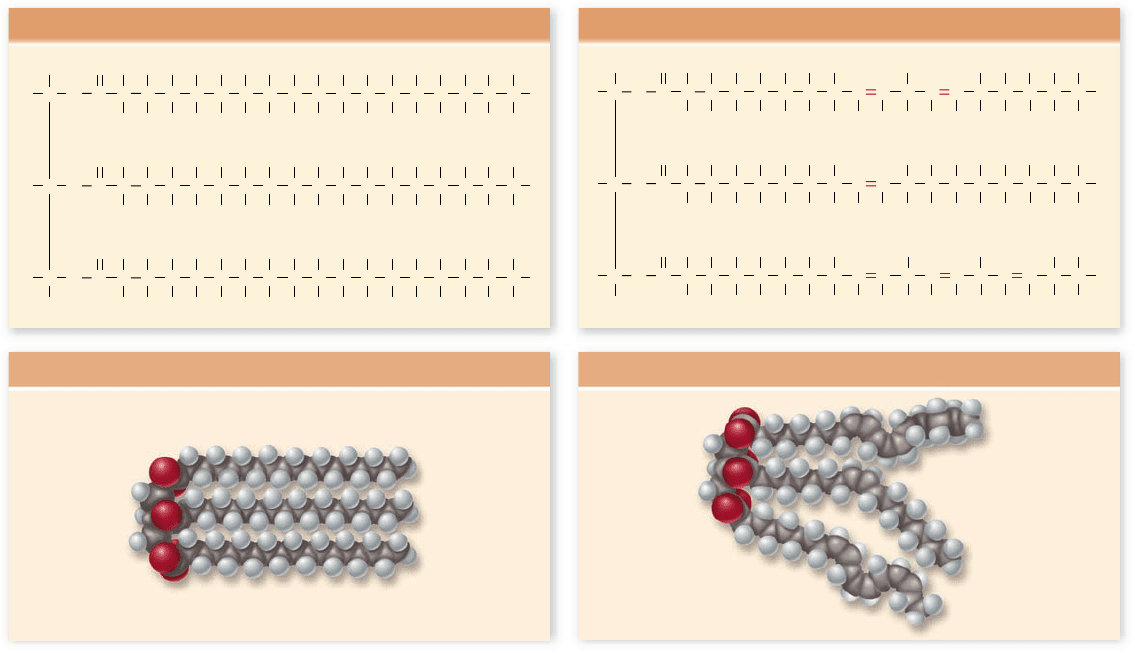
If all of the internal carbon atoms in the fatty acid chains
are bonded to at least two hydrogen atoms, the fatty acid is said
to be saturated, which refers to its having all the hydrogen at-
oms possible (see figure 3.27). A fatty acid that has double bonds
between one or more pairs of successive carbon atoms is said to
be unsaturated. Fatty acids with one double bond are called
monounsaturated, and those with more than one double bond
are termed polyunsaturated. Most naturally occurring unsatu-
rated fatty acids have double bonds with a cis configuration
where the carbon chain is on the same side before and after the
double bond (double bonds in fatty acids in 3.27b are all cis) .
chapter
3
The Chemical Building Blocks of Life
53www.ravenbiology.com
rav32223_ch03_033-058.indd 53rav32223_ch03_033-058.indd 53 11/6/09 12:43:47 PM11/6/09 12:43:47 PM
Apago PDF Enhancer
C
C
H
H
C
H
H
C
H
H
O
C
H
C H C
H
H
C
H
H
C
H
H
C
H
H
C
H
H
C
H
H
C
H
C
H H
C
H
C C
H H H H
C
H
C C
H
O
H
H H H
C
H
H
C
H
H
O
C
H
C H C
H
H
C
H
H
C
H
H
C
H
H
C
H
H
C
H
H
C
H
C
H
C
H
C
H
C
H H H
C
H
C
H
C
H H
O
H
H H
C
H
H
C
H
H
O
C
H
C H C
H
H
C
H
H
C
H
H
C
H
H
C
H
H
C
H
H
C
H
C
H H
C
H H
C
H
C
H
H
C
H H
C
H H
C
H H
C
O
O
C
H
C
H
H
C
H
H
C
H
H
C H C
H
H
C
H
H
C
H
H
C
H
H
C
H
H
C
H
H
C
H
H
C
H
H
C
H
H
C
H
H
C
H
H
C
H
O
O
C
H
C
H
H
C
H
H
C
H
H
C H C
H
H
C
H
H
C
H
H
C
H
H
C
H
H
C
H
H
C
H
H
C
H
H
C
H
H
C
H
H
C
H
H
C
H
O
O
C
H
C
H
H
C
H
H
C
H
H
C H C
H
H
C
H
H
C
H
H
C
H
H
C
H
H
C
H
H
C
H
H
C
H
H
C
H
H
C
H
H
C
H
H
C
H
H
C
H
H
C
H
H
H
C
H
H
C
H
H
H
C
H
H
C
H
H
b.
O
H
H
a.
Space-Filling Model Space-Filling Model
Structural Formula Structural Formula
When fats are partially hydrogenated industrially, this can pro-
duce double bonds with a trans configuration where the carbon
chain is on opposite sides before and after the double bond.
These are the so called trans fats. These have been linked to
elevated levels of low-density lipoprotein (LDL) “bad choles-
terol” and lowered levels of high-density lipoprotein (HDL)
“good cholesterol.” This condition is thought to be associated
with an increased risk for coronary heart disease.
Having double bonds changes the behavior of the mole-
cule because free rotation cannot occur about a C
=
C double
bond as it can with a C—C single bond. This characteristic
mainly affects melting point: that is, whether the fatty acid is a
solid fat or a liquid oil at room temperature. Fats containing
polyunsaturated fatty acids have low melting points because
their fatty acid chains bend at the double bonds, preventing
the fat molecules from aligning closely with one another. Most
saturated fats, such as animal fat or those in butter, are solid at
room temperature.
Placed in water, triglycerides spontaneously associate to-
gether, forming fat globules that can be very large relative to
the size of the individual molecules. Because fats are insoluble
in water, they can be deposited at specific locations within an
organism, such as in vesicles of adipose tissue.
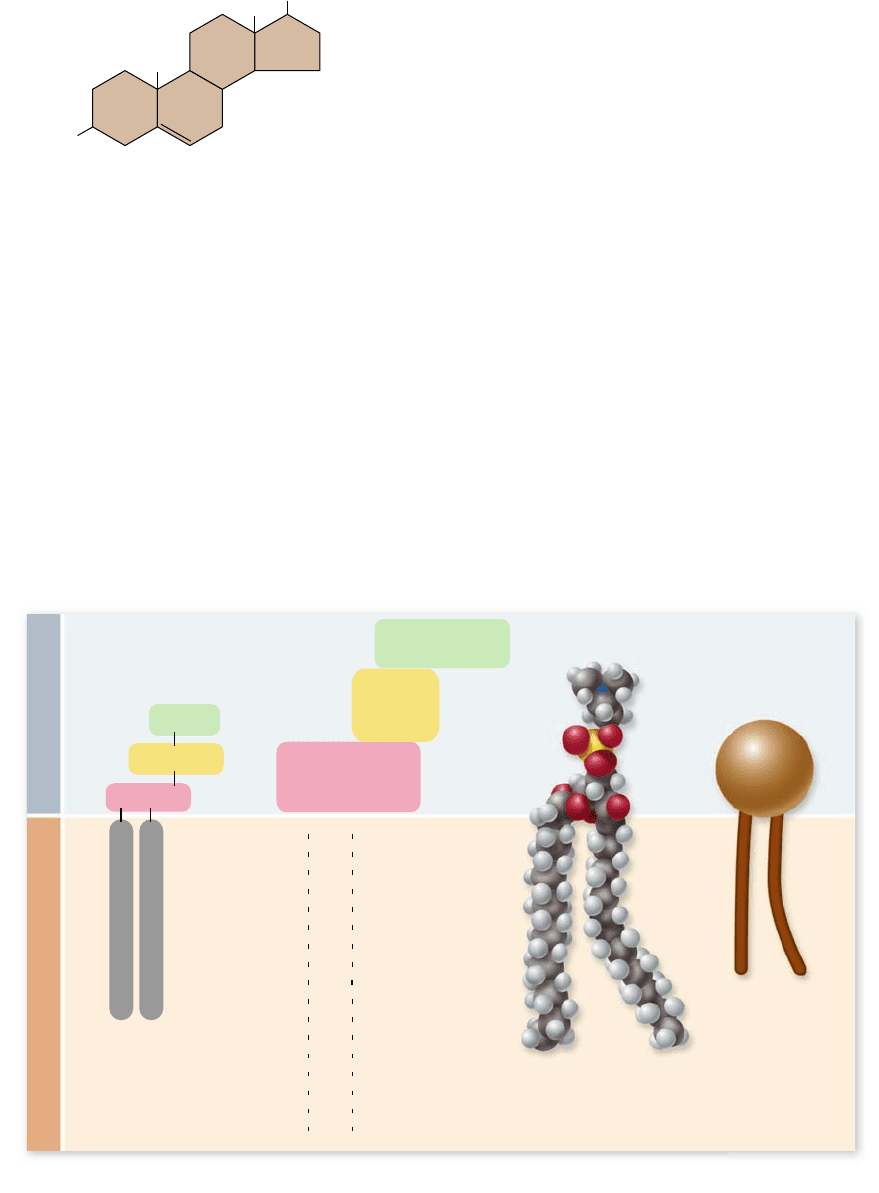
Organisms contain many other kinds of lipids besides fats
(figure 3.28). Terpenes are long-chain lipids that are components
of many biologically important pigments, such as chlorophyll
and the visual pigment retinal. Rubber is also a terpene. Ste-
roids, another class of lipid, are composed of four carbon rings.
Most animal cell membranes contain the steroid cholesterol.
Other steroids, such as testosterone and estrogen, function as
hormones in multicellular animals. Prostaglandins are a group of
about 20 lipids that are modified fatty acids, with two nonpolar
“tails” attached to a five-carbon ring. Prostaglandins act as local
chemical messengers in many vertebrate tissues. Later chapters
explore the effects of some of these complex fatty acids.
Fats are excellent energy-storage molecules
Most fats contain over 40 carbon atoms. The ratio of energy-
storing C—H bonds in fats is more than twice that of carbohy-
drates (see section 3.2), making fats much more efficient
molecules for storing chemical energy. On average, fats yield
about 9 kilocalories (kcal) of chemical energy per gram, as com-
pared with about 4 kcal/g for carbohydrates.
Most fats produced by animals are saturated (except
some fish oils), whereas most plant fats are unsaturated (see
Figure 3.27
Saturated and unsaturated fats. a. A saturated fat is composed of triglycerides that contain three saturated fatty acids
(the kind that have no double bonds). A saturated fat therefore has the maximum number of hydrogen atoms bonded to its carbon chain.
Most animal fats are saturated. b. Unsaturated fat is composed of triglycerides that contain three unsaturated fatty acids (the kind that have
one or more double bonds). These have fewer than the maximum number of hydrogen atoms bonded to the carbon chain. This example
includes both a monounsaturated and two polyunsaturated fatty acids. Plant fats are typically unsaturated. The many kinks of the double
bonds prevent the triglyceride from closely aligning, which makes them liquid oils at room temperature .
54
part
I
The Molecular Basis of Life
rav32223_ch03_033-058.indd 54rav32223_ch03_033-058.indd 54 11/6/09 12:43:48 PM11/6/09 12:43:48 PM
Apago PDF Enhancer
CH
2
CH
2
CH
3
CH
3
H
3
C
CH
HO
J
J
CH
2
J
J
CH
3
CH
J
J
CH
3
J
H
3
C
H
3
C
J
CH
CH
2
CH
2
J
OH
J
CH
2
CH
2
CH
J
J
J
J
CH
3
J
J
J
J
b. Steroid (cholesterol)
a. Terpene (citronellol)
CH
Polar Hydrophilic HeadsNonpolar Hydrophobic Tails
CH
2
J
N
;
(CH
3
)
3
CH
2
CH
2
H
2
C
O
O
OP
CH
2
CH
2
CH
2
CH
2
CH
2
CH
2
CH
2
CH
2
CH
2
CH
2
CH
2
CH
2
CH
2
CH
2
CH
2
CH
2
CH
3
CH
2
CH
2
CH
2
CH
2
CH
2
CH
2
CH
2
CH
CH
CH
2
CH
2
CH
2
CH
2
CH
2
CH
2
CH
2
CH
3
C
OO
OO
C
H
C
Choline
Phosphate
Glycerol
F
a
t
t
y
a
c
i
d
F
a
t
t
y
a
c
i
d
a. b. c. d.
JJJ
J
JJ
J
J
J
J
J
J
J
J
J
J
J
J
J
O
:
figure 3.27). The exceptions are the tropical plant oils (palm
oil and coconut oil), which are saturated even though they are
liquid at room temperature. An oil may be converted into a
solid fat by chemically adding hydrogen. Most peanut butter is
usually artificially hydrogenated to make the peanut fats so-
lidify, preventing them from separating out as oils while the jar
sits on the store shelf. However, artificially hydrogenating un-
saturated fats produces the trans-fatty acids described above.
When an organism consumes excess carbohydrate, it is con-
verted into starch, glycogen, or fats reserved for future use. The
reason that many humans in developed countries gain weight as
Figure 3.28
Other kinds of lipids. a. Terpenes are found
in biological pigments, such as chlorophyll and retinal , and (b)
steroids play important roles in membranes and as the basis for a
class of hormones involved in chemical signaling.
they grow older is that the amount of energy they need decreases
with age, but their intake of food does not. Thus, an increasing
proportion of the carbohydrates they ingest is converted into fat.
A diet heavy in fats is one of several factors thought to con-
tribute to heart disease, particularly atherosclerosis. In atheroscle-
rosis, sometimes referred to as “hardening of the arteries,” fatty
substances called plaque adhere to the lining of blood vessels,
blocking the flow of blood. Fragments of a plaque can break off
from a deposit and clog arteries to the brain, causing a stroke.
Phospholipids form membranes
Complex lipid molecules called phospholipids are among the
most important molecules of the cell because they form the core
of all biological membranes. An individual phospholipid can be
thought of as a substituted triglyceride, that is, a triglyceride
with a phosphate replacing one of the fatty acids. The basic
structure of a phospholipid includes three kinds of subunits:
Glycerol,1. a three-carbon alcohol, in which each carbon
bears a hydroxyl group. Glycerol forms the backbone of
the phospholipid molecule.
2. Fatty acids, long chains of —CH
2
groups (hydrocarbon
chains) ending in a carboxyl (—COOH) group. Two fatty
acids are attached to the glycerol backbone in a
phospholipid molecule.
3. A phosphate group (—PO
4
2–
) attached to one end of the
glycerol. The charged phosphate group usually has a
charged organic molecule linked to it, such as choline,
ethanolamine, or the amino acid serine.
The phospholipid molecule can be thought of as having a
polar “head” at one end (the phosphate group) and two long,
very nonpolar “tails” at the other (figure 3.29). This structure is
essential for how these molecules function, although it first
Figure 3.29
Phospholipids.
The phospholipid
phosphatidylcholine is shown
as (a) a schematic, (b) a
formula, (c) a space- lling
model, and (d) an icon used in
depictions of biological
membranes.
chapter
3
The Chemical Building Blocks of Life
55www.ravenbiology.com
rav32223_ch03_033-058.indd 55rav32223_ch03_033-058.indd 55 11/6/09 12:43:49 PM11/6/09 12:43:49 PM
Apago PDF Enhancer
Water
Water
Water
Lipid head
(hydrophilic)
Lipid tail
(hydrophobic)
a.
b
.
appears paradoxical. Why would a molecule need to be soluble
in water, but also not soluble in water? The formation of a
membrane shows the unique properties of such a structure.
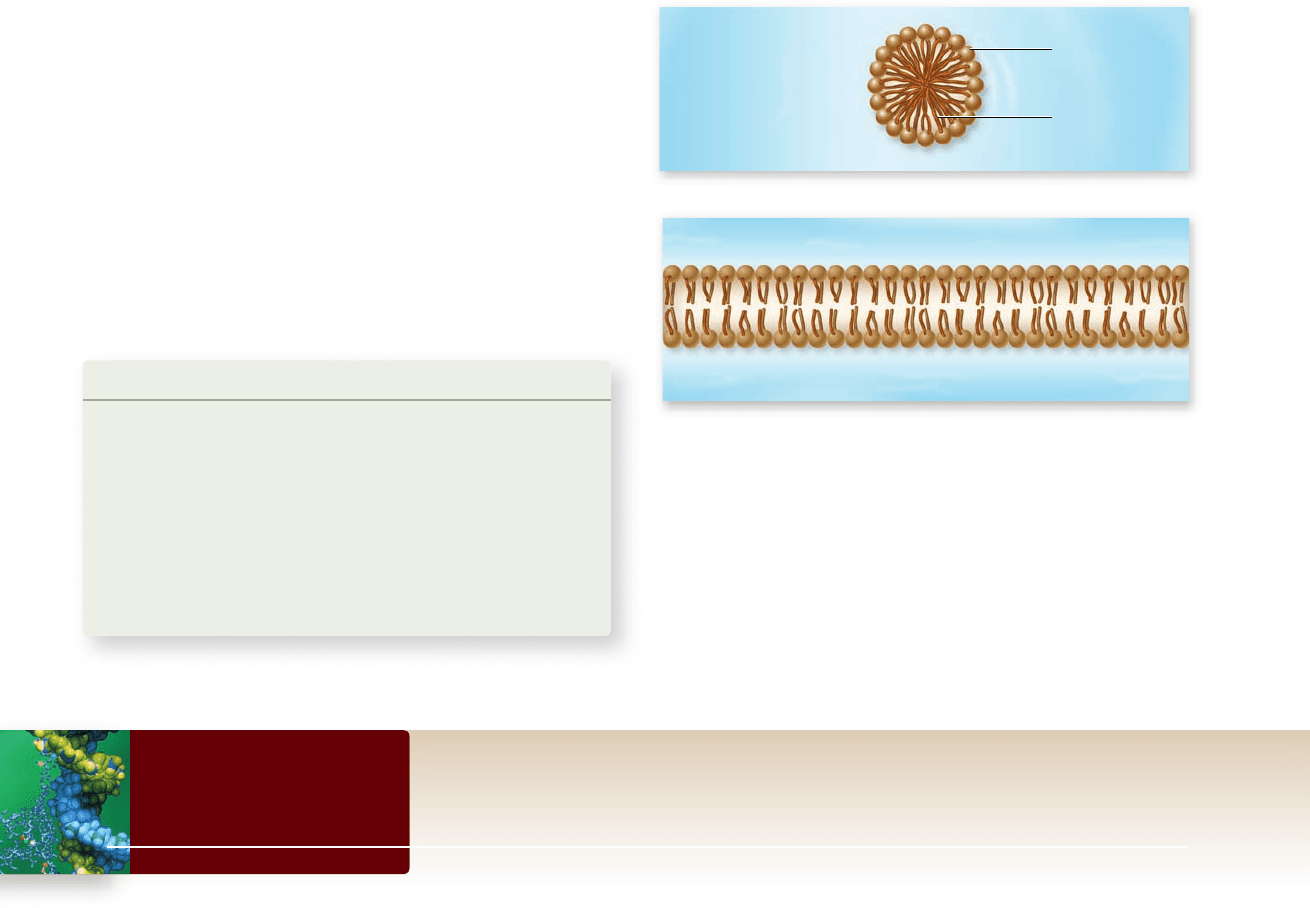
In water, the nonpolar tails of nearby lipid molecules aggre-
gate away from the water, forming spherical micelles, with the tails
facing inward (figure 3.30a). This is actually how detergent mole-
cules work to make grease soluble in water. The grease is soluble
within the nonpolar interior of the micelle and the polar surface of
the micelle is soluble in water. With phospholipids, a more com-
plex structure forms in which two layers of molecules line up, with
the hydrophobic tails of each layer pointing toward one another,
or inward, leaving the hydrophilic heads oriented outward, form-
ing a bilayer (figure 3.30b). Lipid bilayers are the basic framework
of biological membranes, discussed in detail in chapter 5 .
Learning Outcomes Review 3.5
Triglycerides are made of fatty acids linked to glycerol. Fats can contain
twice as many C—H bonds as carbohydrates and thus they store energy
effi ciently. Because the C—H bonds in lipids are nonpolar, they are not
water-soluble and aggregate together in water. Phospholipids replace
one fatty acid with a hydrophilic phosphate group. This allows them to
spontaneously form bilayers, which are the basis of biological membranes.
■ Why do phospholipids form membranes while
triglycerides form insoluble droplets?
Figure 3.30
Lipids spontaneously form micelles or lipid
bilayers in water. In an aqueous environment, lipid molecules
orient so that their polar (hydrophilic) heads are in the polar medium,
water, and their nonpolar (hydrophobic) tails are held away from the
water. a. Droplets called micelles can form, or (b) phospholipid
molecules can arrange themselves into two layers; in both structures,
the hydrophilic heads extend outward and the hydrophobic tails
inward. This second example is called a phospholipid bilayer.
Chapter Review
3.1 Carbon: The Framework
of Biological Molecules
Carbon, the backbone of all biological molecules, can form four
covalent bonds and make long chains. Hydrocarbons consist of
carbon and hydrogen, and their bonds store considerable energy.
Functional groups account for di erences in molecular properties.
Functional groups are small molecular entities that confer speci c
chemical characteristics when attached to a hydrocarbon.
Carbon and hydrogen have similar electronegativity so C—H bonds
are not polar. Oxygen and nitrogen have greater electronegativity,
leading to polar bonds.
Isomers have the same molecular formulas but di erent structures.
Structural isomers are molecules with the same formula but
different structures; stereoisomers differ in how groups are attached.
Enantiomers are mirror-image stereoisomers.
Biological macromolecules include carbohydrates, nucleic acids,
proteins, and lipids.
Most important biological macromolecules are polymers—long
chains of monomer units. Biological polymers are formed by
elimination of water (H and OH) from two monomers (dehydration
reaction). They are broken down by adding water (hydrolysis).
3.2 Carbohydrates: Energy Storage
and Structural Molecules
The empirical formula of a carbohydrate is (CH
2
O)
n.
Carbohydrates
are used for energy storage and as structural molecules.
Monosaccharides are simple sugars.
Simple sugars contain three to six or more carbon atoms. Examples
are glyceraldehyde (3 carbons), deoxyribose (5 carbons), and glucose
(6 carbons).
Sugar isomers have structural di erences.
The general formula for six-carbon sugars is C
6
H
12
O
6
, and many
isomeric forms are possible. Living systems often have enzymes for
converting isomers from one to the other.
Disaccharides serve as transport molecules in plants and provide
nutrition in animals.
Plants convert glucose into the disaccharide sucrose for transport
within their bodies. Female mammals produce the disaccharide
lactose to nourish their young.
Polysaccharides provide energy storage and structural components.
Glucose is used to make three important polymers: glycogen (in
animals), and starch and cellulose (in plants). Chitin is a related
structural material found in arthropods and many fungi.
56
part
I
The Molecular Basis of Life
rav32223_ch03_033-058.indd 56rav32223_ch03_033-058.indd 56 11/6/09 12:43:51 PM11/6/09 12:43:51 PM

Apago PDF Enhancer
3.3 Nucleic Acids: Information Molecules
Deoxyribonucleic acid (DNA) and ribonucleic acid (RNA) are
polymers composed of nucleotide monomers. Cells use nucleic acids
for information storage and transfer.
Nucleic acids are nucleotide polymers.
Nucleic acids contain four different nucleotide bases. In DNA these
are adenine, guanine, cytosine, and thymine. In RNA, thymine is
replaced by uracil.
DNA carries the genetic code.
DNA exists as a double helix held together by speci c base pairs:
adenine with thymine and guanine with cytosine. The nucleic acid
sequence constitutes the genetic code.
RNA is a transcript of a DNA strand.
RNA is made by copying DNA. This transcript is then used as a
template to make proteins.
Other nucleotides are vital components of energy reactions.
Adenosine triphosphate (ATP) provides energy in cells; NAD
+
and
FAD transport electrons in cellular processes.
3.4 Proteins: Molecules with Diverse Structures
and Functions
Most enzymes are proteins. Proteins also provide defense, transport,
motion, and regulation, among many other roles.
Proteins are polymers of amino acids.
Amino acids are joined by peptide bonds to make polypeptides.
The 20 common amino acids are characterized by R groups that
determine their properties.
Proteins have levels of structure.
Protein structure is de ned by the following hierarchy: primary
(amino acid sequence), secondary (hydrogen bonding patterns),
tertiary (three-dimensional folding), and quaternary (associations
between two or more polypeptides).
Motifs and domains are additional structural characteristics.
Motifs are similar structural elements found in dissimilar proteins.
They can create folds, creases, or barrel shapes. Domains are
functional subunits or sites within a tertiary structure.
The process of folding relies on chaperone proteins.
Chaperone proteins assist in the folding of proteins. Heat shock
proteins are an example of chaperone proteins.
Some diseases may result from improper folding.
Some forms of cystic brosis and Alzheimer disease are associated
with misfolded proteins.
Denaturation inactivates proteins.
Denaturation refers to an unfolding of tertiary structure, which
usually destroys function. Some denatured proteins may recover
function when conditions are returned to normal. This implies that
primary structure strongly in uences tertiary structure.
Disassociation refers to separation of quaternary subunits with no
changes to their tertiary structure.
3.5 Lipids: Hydrophobic Molecules
Lipids are insoluble in water because they have a high proportion of
nonpolar C
—H bonds.
Fats consist of complex polymers of fatty acids attached to glycerol.
Many lipids exist as triglycerides, three fatty acids connected to
a glycerol molecule. Saturated fatty acids contain the maximum
number of hydrogen atoms. Unsaturated fatty acids contain one or
more double bonds between carbon atoms.
Fats are excellent energy-storage molecules.
The energy stored in the C
—H bonds of fats is more than twice that
of carbohydrates: 9 kcal/g compared with 4 kcal/g. For this reason,
excess carbohydrate is converted to fat for storage.
Phospholipids form membranes
Phospholipids contain two fatty acids and one phosphate attached to
glycerol. In phospholipid-bilayer membranes, the phosphate heads
are hydrophilic and cluster on the two faces of the membrane, and
the hydrophobic tails are in the center.
Review Questions
UNDERSTAND
1. How is a polymer formed from multiple monomers?
a. From the growth of the chain of carbon atoms
b. By the removal of an —OH group and a hydrogen atom
c. By the addition of an —OH group and a hydrogen atom
d. Through hydrogen bonding
2. Why are carbohydrates important molecules for energy storage?
a. The C—H bonds found in carbohydrates store energy.
b. The double bonds between carbon and oxygen are very
strong.
c. The electronegativity of the oxygen atoms means that a
carbohydrate is made up of many polar bonds.
d. They can form ring structures in the aqueous environment
of a cell.
3. Plant cells store energy in the form of _________, and animal
cells store energy in the form of ___________.
a. fructose; glucose
b. disaccharides; monosaccharides
c. cellulose; chitin
d. starch; glycogen
4. Which carbohydrate would you nd as part of a molecule of RNA?
a. Galactose
b. Deoxyribose
c. Ribose
d. Glucose
5. A molecule of DNA or RNA is a polymer of
a. monosaccharides. c. amino acids.
b. nucleotides. d. fatty acids.
chapter
3
The Chemical Building Blocks of Life
57www.ravenbiology.com
rav32223_ch03_033-058.indd 57rav32223_ch03_033-058.indd 57 11/6/09 12:43:53 PM11/6/09 12:43:53 PM

Apago PDF Enhancer
6. What makes cellulose different from starch?
a. Starch is produced by plant cells, and cellulose is produced
by animal cells.
b. Cellulose forms long laments, and starch is highly branched.
c. Starch is insoluble, and cellulose is soluble.
d. All of the above.
7. What monomers make up a protein?
a. Monosaccharides c. Amino acids
b. Nucleotides d. Fatty acids
8. A triglyceride is a form of _______ composed of ___________.
a. lipid; fatty acids and glucose
b. lipid; fatty acids and glycerol
c. carbohydrate; fatty acids
d. lipid; cholesterol
APPLY
1. Amino acids are linked together to form a protein by
a. phosphodiester bonds.
b. β-(1
→
4) linkages .
c. peptide bonds.
d. hydrogen bonds.
2. Which of the following is NOT a difference between DNA
and RNA?
a. Deoxyribose sugar versus ribose sugar
b. Thymine versus uracil
c. Double-stranded versus single-stranded
d. Phosphodiester versus hydrogen bonds
3. Which part of an amino acid has the greatest in uence on the
overall structure of a protein?
a. The (—NH
2
) amino group
b. The R group
c. The (—COOH) carboxyl group
d. Both a and c
4. A mutation that alters a single amino acid within a protein
can alter
a. the primary level of protein structure.
b. the secondary level of protein structure.
c. the tertiary level of protein structure.
d. all of the above.
5. Two different proteins have the same domain in their structure.
From this we can infer that they have
a. the same primary structure.
b. similar function.
c. very different functions.
d. the same primary structure but different function.
6. What chemical property of lipids accounts for their insolubility
in water?
a. The COOH group of fatty acids
b. The large number of nonpolar C—H bonds
c. The branching of saturated fatty acids
d. The C==C bonds found in unsaturated fatty acids
7. The spontaneous formation of a lipid bilayer in an aqueous
environment occurs because
a. the polar head groups of the phospholipids can interact
with water.
b. the long fatty acid tails of the phospholipids can interact
with water.
c. the fatty acid tails of the phospholipids are hydrophobic.
d. both a and c.
SYNTHESIZE
1. How do the four biological macromolecules differ from one
another? How does the structure of each relate to its function?
2. Hydrogen bonds and hydrophobic interactions each play an
important role in stabilizing and organizing biological
macromolecules. Consider the four macromolecules discussed
in this chapter. Describe how these affect the form
and function of each type of macromolecule. Would a
disruption in the hydrogen bonds affect form and function?
Hydrophobic interactions?
3. Plants make both starch and cellulose. Would you predict that
the enzymes involved in starch synthesis could also be used by
the plant for cellulose synthesis? Construct an argument to
explain this based on the structure and function of the enzymes
and the polymers synthesized.
ONLINE RESOURCE
www.ravenbiology.com
Understand, Apply, and Synthesize—enhance your study with
animations that bring concepts to life and practice tests to assess
your understanding. Your instructor may also recommend the
interactive eBook, individualized learning tools, and more.
58
part
I
The Molecular Basis of Life
rav32223_ch03_033-058.indd 58rav32223_ch03_033-058.indd 58 11/9/09 12:29:43 PM11/9/09 12:29:43 PM
Apago PDF Enhancer
A
1.25
μ
m
Chapter Outline
4.1 Cell Theory
4.2 Prokaryotic Cells
4.3 Eukaryotic Cells
4.4 The Endomembrane System
4.5 Mitochondria and Chloroplasts: Cellular Generators
4.6 The Cytoskeleton
4.7 Extracellular Structures and Cell Movement
4.8 Cell-to-Cell Interactions
Introduction
All organisms are composed of cells. The gossamer wing of a butter y is a thin sheet of cells and so is the glistening outer layer of
your eyes. The hamburger or tomato you eat is composed of cells, and its contents soon become part of your cells. Some organisms
consist of a single cell too small to see with the unaided eye. Others, such as humans, are composed of many specialized cells, such
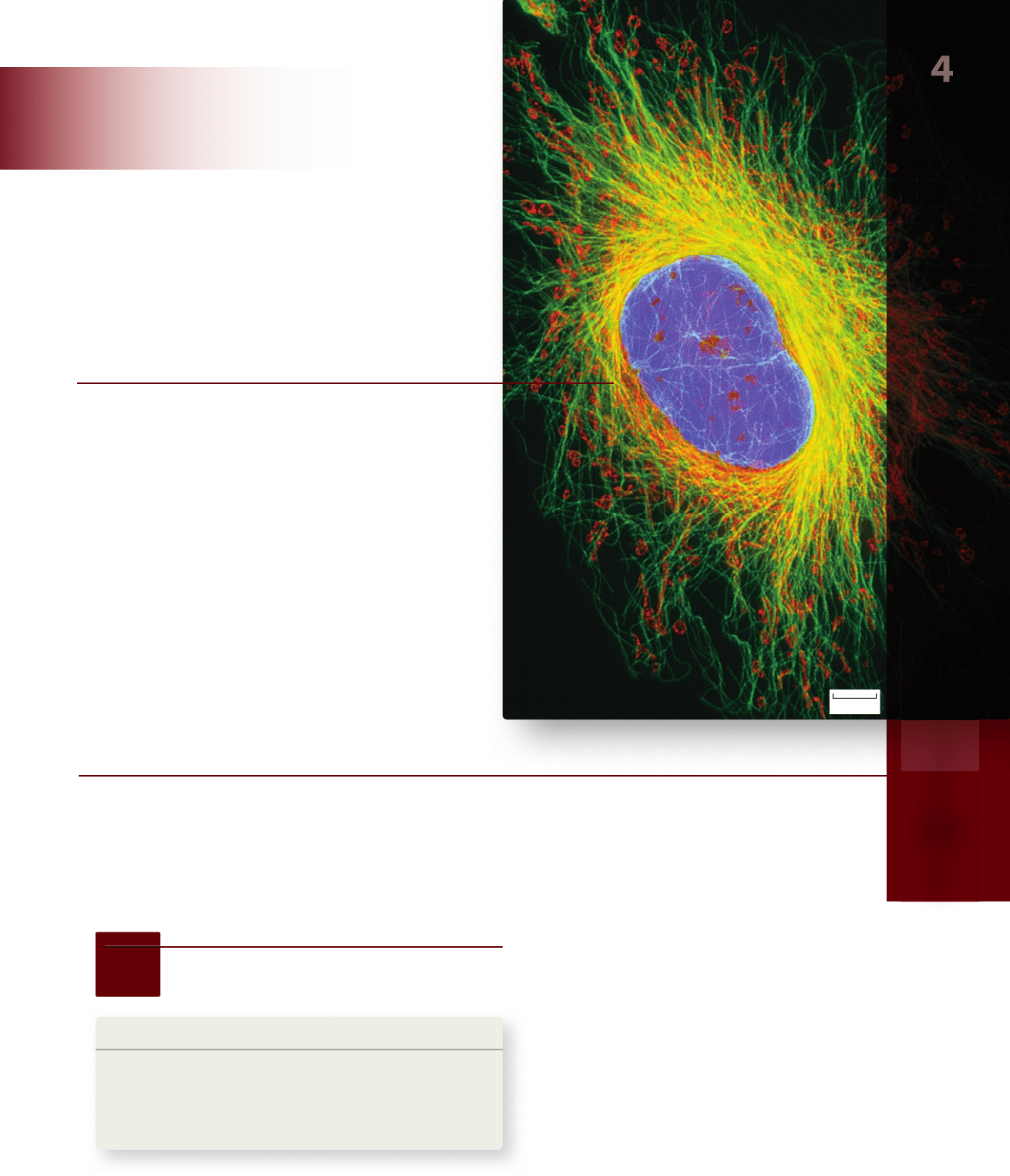
as the broblast cell shown in the striking uorescence micrograph on this page. Cells are so much a part of life that we cannot
imagine an organism that is not cellular in nature. In this chapter, we take a close look at the internal structure of cells. In
chapters 4 to 10 , we will focus on cells in action—how they communicate with their environment, grow, and reproduce.
Chapter
4
Cell Structure
Part
II
Biology of the Cell
CHAPTER
Learning Outcomes
1. Explain the cell theory.
2. Describe the factors that limit cell size.
3. Categorize structural and functional similarities
in cells.
4.1
Cell Theory
Cells are characteristically microscopic in size. Although there
are exceptions, a typical eukaryotic cell is 10 to 100 microme-
ters (μm) (10 to 100 millionths of a meter) in diameter, while
most prokaryotic cells are only 1 to 10 μm in diameter.
Because cells are so small, they were not discovered until
the invention of the microscope in the 17th century. Robert
Hooke was the first to observe cells in 1665, naming the shapes
he saw in cork cellulae (Latin, “small rooms”). This is known to
us as cells. Another early microscopist, Anton van Leeuwenhoek
first observed living cells, which he termed “animalcules,” or
little animals. After these early efforts, a century and a half
rav32223_ch04_059-087.indd 59rav32223_ch04_059-087.indd 59 11/6/09 12:23:11 PM11/6/09 12:23:11 PM
Apago PDF Enhancer
Cell radius (r)
Surface area (4pr
2
)
Volume (
4
–
3
pr
3
)
1 unit
12.57 unit
2
4.189 unit
3
10 unit
1257 unit
2
4189 unit
3
Surface Area / Volume
3
0.3
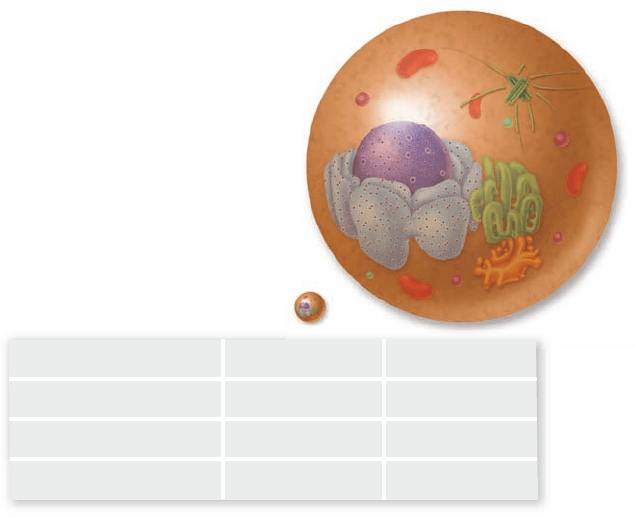
Figure 4.1
Surface area-to-
volume ratio. As a cell gets larger, its
volume increases at a faster rate than
its surface area. If the cell radius
increases by 10 times, the surface
area increases by 100 times, but
the volume increases by 1000
times. A cell’s surface area must be
large enough to meet the metabolic
needs of its volume.
passed before biologists fully recognized the importance of
cells. In 1838, botanist Matthias Schleiden stated that all plants
“are aggregates of fully individualized, independent, separate
beings, namely the cells themselves.” In 1839, Theodor Schwann
reported that all animal tissues also consist of individual cells.
Thus, the cell theory was born.
Cell theory is the unifying foundation
of cell biology
The cell theory was proposed to explain the observation that all
organisms are composed of cells. It sounds simple, but it is a
far-reaching statement about the organization of life.
In its modern form, the cell theory includes the following
three principles:
All organisms are composed of one or more cells, and the 1.
life processes of metabolism and heredity occur within
these cells.
Cells are the smallest living things, the basic units of 2.
organization of all organisms.
Cells arise only by division of a previously existing cell.3.
Although life likely evolved spontaneously in the envi-
ronment of early Earth, biologists have concluded that no ad-
ditional cells are originating spontaneously at present. Rather,
life on Earth represents a continuous line of descent from those
early cells.
Cell size is limited
Most cells are relatively small for reasons related to the diffu-
sion of substances into and out of cells. The rate of diffusion is
affected by a number of variables, including (1) surface area
available for diffusion, (2) temperature, (3) concentration gradi-
ent of diffusing substance, and (4) the distance over which dif-
fusion must occur. As the size of a cell increases, the length of
time for diffusion from the outside membrane to the interior of
the cell increases as well. Larger cells need to synthesize more
macromolecules, have correspondingly higher energy require-
ments, and produce a greater quantity of waste. Molecules used
for energy and biosynthesis must be transported through the
membrane. Any metabolic waste produced must be removed,
also passing through the membrane. The rate at which this
transport occurs depends on both the distance to the mem-
brane and the area of membrane available. For this reason, an
organism made up of many relatively small cells has an advan-
tage over one composed of fewer, larger cells.
The advantage of small cell size is readily apparent in terms
of the surface area-to-volume ratio. As a cell’s size increases, its
volume increases much more rapidly than its surface area. For a
spherical cell, the surface area is proportional to the square of the
radius, whereas the volume is proportional to the cube of
the radius. Thus, if the radii of two cells differ by a factor of 10,
the larger cell will have 10
2
, or 100 times, the surface area, but
10
3
, or 1000 times, the volume of the smaller cell (figure 4.1).
The cell surface provides the only opportunity for inter-
action with the environment, because all substances enter and
exit a cell via this surface. The membrane surrounding the cell
plays a key role in controlling cell function. Because small cells
have more surface area per unit of volume than large ones,
control over cell contents is more effective when cells are rela-
tively small.
Although most cells are small, some quite large cells do
exist. These cells have apparently overcome the surface area-
to-volume problem by one or more adaptive mechanisms. For
example, some cells, such as skeletal muscle cells, have more
than one nucleus, allowing genetic information to be spread
around a large cell. Some other large cells, such as neurons, are
long and skinny, so that any given point within the cell is close
to the plasma membrane. This permits diffusion between the
inside and outside of the cell to still be rapid .
Microscopes allow visualization
of cells and components
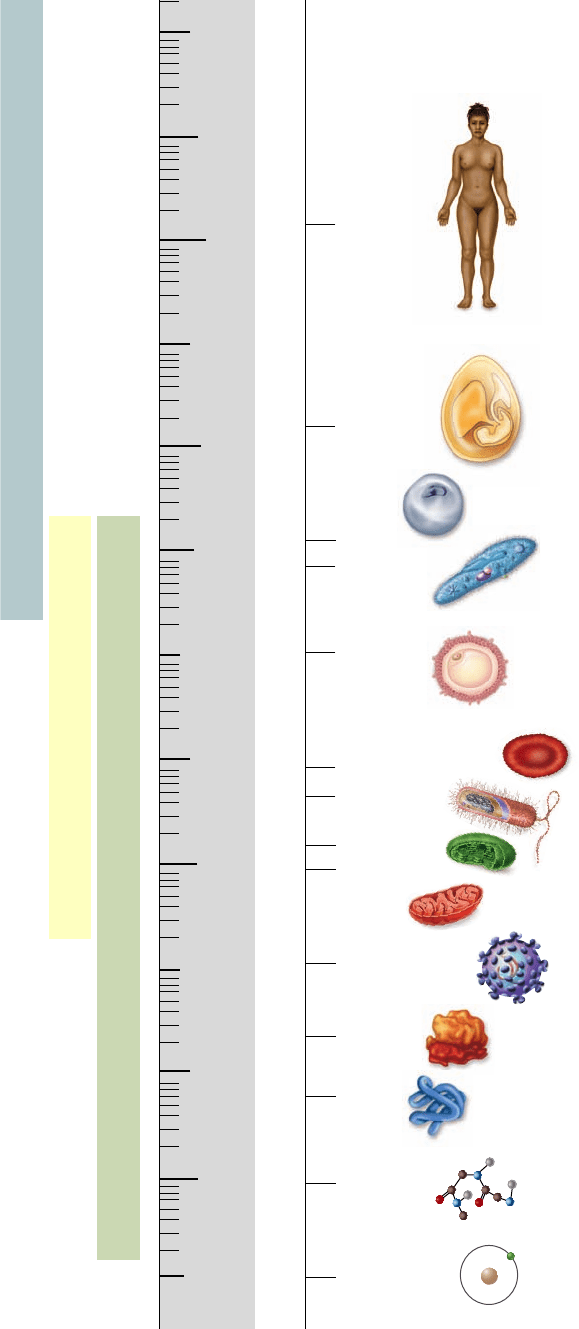
Other than egg cells, not many cells are visible to the naked eye
(figure 4.2). Most are less than 50 μm in diameter, far smaller
than the period at the end of this sentence. So, to visualize cells
we need the aid of technology. The development of micro-
scopes and their refinement over the centuries has allowed us
to continually explore cells in greater detail.
The resolution problem
How do we study cells if they are too small to see? The key is
to understand why we can’t see them. The reason we can’t see
such small objects is the limited resolution of the human eye.
Resolution is the minimum distance two points can be apart and
still be distinguished as two separate points. When two objects
are closer together than about 100 μm, the light reflected from
each strikes the same photoreceptor cell at the rear of the eye.
Only when the objects are farther than 100 μm apart can the
light from each strike different cells, allowing your eye to re-
solve them as two distinct objects rather than one.
60
part
II
Biology of the Cell
rav32223_ch04_059-087.indd 60rav32223_ch04_059-087.indd 60 11/6/09 12:23:18 PM11/6/09 12:23:18 PM
Apago PDF Enhancer
Human Eye
Light Microscope
Electron Microscope
Hydrogen atom
Amino acid
Logarithmic scale
Protein
Ribosome
Large virus (HIV)
Human red blood cell
Prokaryote
Human egg
Paramecium
Chicken egg
Adult human
Frog egg
Chloroplast
Mitochondrion
100
m
10
m
1 m
10
cm
1 cm
1 mm
100 μm
10 μm
1 μm
100
nm
10
nm
1 nm
0.1 nm
(1 Å)
Figure 4.2
The size of cells and their contents. Except for
vertebrate eggs, which can typically be seen with the unaided eye,
most cells are microscopic in size. Prokaryotic cells are generally
1 to 10 μm across.
1 m = 10
2
cm = 10
3
mm = 10
6
μm = 10
9
nm
Types of microscopes
One way to overcome the limitations of our eyes is to increase
magnification so that small objects appear larger. The first mi-
croscopists used glass lenses to magnify small cells and cause
them to appear larger than the 100-μm limit imposed by the
human eye. The glass lens increases focusing power. Because
the glass lens makes the object appear closer, the image on the
back of the eye is bigger than it would be without the lens.
Modern light microscopes, which operate with visible light,
use two magnifying lenses (and a variety of correcting lenses) to
achieve very high magnification and clarity (table 4.1). The first
lens focuses the image of the object on the second lens, which
magnifies it again and focuses it on the back of the eye. Micro-
scopes that magnify in stages using several lenses are called
compound microscopes. They can resolve structures that are sepa-
rated by at least 200 nanometers (nm).
Light microscopes, even compound ones, are not power-
ful enough to resolve many of the structures within cells. For
example, a cell membrane is only 5 nm thick. Why not just add
another magnifying stage to the microscope to increase its re-
solving power? This doesn’t work because when two objects are
closer than a few hundred nanometers, the light beams reflect-
ing from the two images start to overlap each other. The only
way two light beams can get closer together and still be re-
solved is if their wavelengths are shorter. One way to avoid
overlap is by using a beam of electrons rather than a beam of
light. Electrons have a much shorter wavelength, and an
electron microscope, employing electron beams, has 1000 times
the resolving power of a light microscope. Transmission electron
microscopes, so called because the electrons used to visualize the
specimens are transmitted through the material, are capable of
resolving objects only 0.2 nm apart—which is only twice the
diameter of a hydrogen atom!
A second kind of electron microscope, the scanning elec-
tron microscope, beams electrons onto the surface of the speci-
men. The electrons reflected back from the surface, together
with other electrons that the specimen itself emits as a result
of the bombardment, are amplified and transmitted to a
screen, where the image can be viewed and photographed.
Scanning electron microscopy yields striking three- dimensional
images. This technique has improved our understanding of
many biological and physical phenomena (see table 4.1).
Using stains to view cell structure
Although resolution remains a physical limit, we can improve
the images we see by altering the sample. Certain chemical
stains increase the contrast between different cellular compo-
nents. Structures within the cell absorb or exclude the stain dif-
ferentially, producing contrast that aids resolution.
Stains that bind to specific types of molecules have made
these techniques even more powerful. This method uses antibod-
ies that bind, for example, to a particular protein. This process,
called immunohistochemistry, uses antibodies generated in animals
such as rabbits or mice. When these animals are injected with
specific proteins, they produce antibodies that bind to the injected
protein. The antibodies are then purified and chemically bonded
to enzymes, to stains, or to fluorescent molecules. When cells are
incubated in a solution containing the antibodies, the antibodies
chapter
4
Cell Structure
61www.ravenbiology.com
rav32223_ch04_059-087.indd 61rav32223_ch04_059-087.indd 61 11/6/09 12:23:19 PM11/6/09 12:23:19 PM