
Raven P.H., Johnson G.B., Mason K.A. Biology (Ninth Edition)
Подождите немного. Документ загружается.

Apago PDF Enhancer
181.1 µm
Intestine
Testis
Spicules
Genital pore
Pharynx
Mouth
Excretory pore
Anus
Intestine
Epidermis
Muscle
Pseudocoelom
Excretory duct
Testis
Ventral nerve cord
Dorsal nerve cord
Cuticle
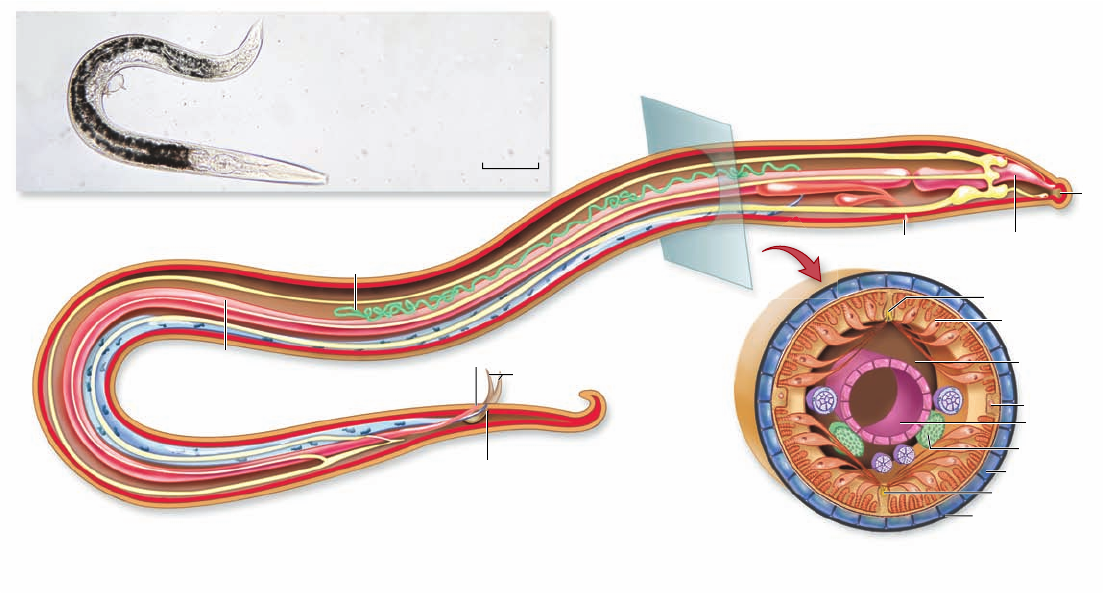
Figure 33.18
Phylum Nematoda: Roundworms.
Roundworms such as this male nematode possess a body cavity between the gut
and the body wall called the pseudocoelom. It allows nutrients to circulate throughout the body and prevents organs from being deformed by
muscle movements.
Nematode lifestyles
Many nematodes are active hunters, preying on protists and
other small animals. Many are parasites of plants or live within
the bodies of larger animals. Almost every species of plant and
animal that has been studied has been found to have at least one
parasitic species of nematode. The largest known nematode,
which can attain a length of 9 m, parasitizes the placenta of
sperm whales.
Nematode-caused human diseases
About 50 species of nematodes, including several that are rather
common in the United States, regularly parasitize human be-
ings. Hookworms, most of the genus Necator, can be common
in southern states. By sucking blood through the intestinal wall,
they can produce anemia.
The most serious and common nematode-caused disease
in temperate regions is trichinosis. Worms of the genus Trichi-
nella (see figure 33.17) live in the small intestine of some mam-
mals, especially pigs and bears, where fertilized females burrow
through the intestinal wall and release live young (as many as
1500 per female). The young enter the lymph channels, which
transport them to muscles throughout the body. There they ma-
ture and form highly resistant, calcified cysts. Eating under-
cooked or raw pork or bear in which cysts are present transmits
the worm. Fatal infections, which can occur if the worms are
abundant, are rare: in the United States, only about 20 deaths
have been attributed to trichinosis during the past decade.
It is estimated that pinworms, Enterobius vermicularis, in-
fect about 30% of children and 16% of adults in the United
States. Adult pinworms live in the human rectum where they
diameter. The pulling of these longitudinal muscles against
both the cuticle and the pseudocoelom produces the character-
istic wriggling motion of nematodes.
Nematodes possess a well-developed digestive system
and feed on a diversity of food sources. Near the mouth, at the
anterior end, are hairlike sensory structures. The mouth may be
equipped with piercing organs called stylets. Food passes into
the mouth as a result of the sucking action produced by the
rhythmic contraction of a muscular pharynx and continues
through the intestine; waste is eliminated through the anus
(figure 33.18) .
Reproduction and development
Reproduction in nematodes is sexual; most nematodes are
gonochoric. Nematode males and females differ in form, a state
known as sexual dimorphism (meaning “two bodies”): the tail
end of the smaller male is hooked (see figure 33.18), whereas
that of a female is straight. Fertilization is internal, the male
using its hooked end and associated structure to help insemi-
nate the female. Development is indirect, meaning that an egg
hatches into a larva, which does not grow directly into an adult,
but must pass through several molts and, in parasitic species,
transfer from one host to another.
The adults of some species consist of a fixed number of
cells, a phenomenon known as eutely . For this reason, nema-
todes have become extremely important subjects for genetic
and developmental studies (see chapter 19). The 1 mm long
Caenorhabditis elegans matures in three days; its body is trans-
parent, and it has precisely 959 cells. It is the only animal whose
complete developmental cellular anatomy is known.
662
part
V
Diversity of Life on Earth
rav32223_ch33_649-665.indd 662rav32223_ch33_649-665.indd 662 11/13/09 3:23:42 PM11/13/09 3:23:42 PM
Apago PDF Enhancer
14.5 µm
Mouth
Corona
Brain
Anus
Toe
Pharynx
Digestive
tract
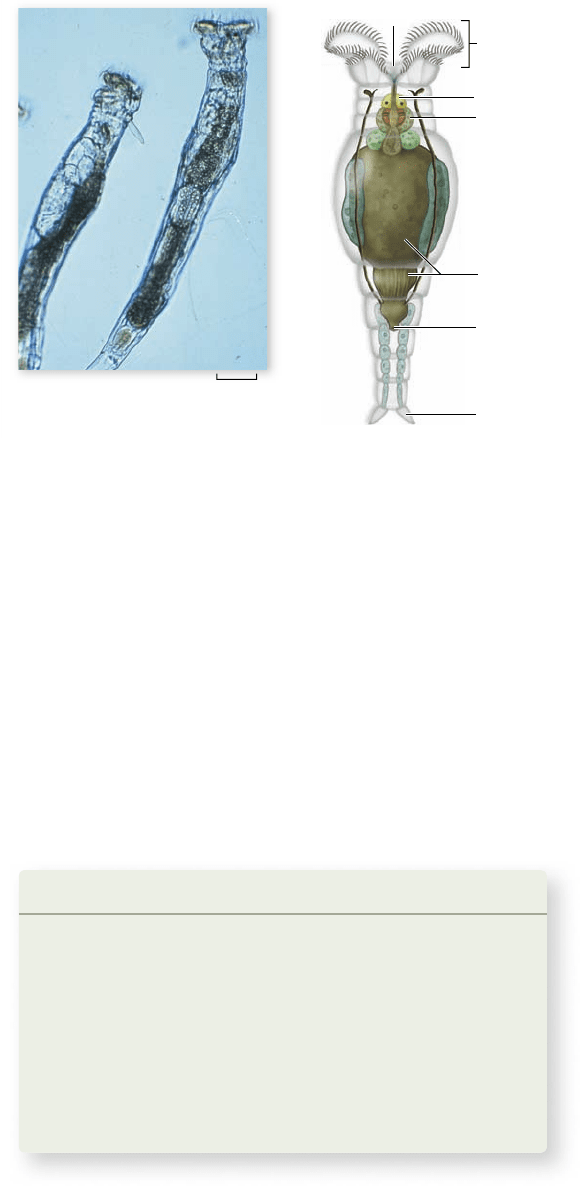
Figure 33.19
Phylum Rotifera.
Microscopic in size,
rotifers are smaller than some ciliate protists, and yet have complex
internal organs.
iccated, inactive state on the leaves of plants; when rain falls,
the rotifers become active and feed in the film of water that
temporarily covers the leaf.
Food gathering
The corona, a conspicuous ring of cilia at the anterior end (see
figure 33.19), is the source of the common name “wheel ani-
mals” for rotifers because its beating cilia make it appear that a
wheel is rotating around the head of the animal. The corona is
used for locomotion, but its cilia also sweep food into the roti-
fer’s mouth. Once food is swallowed, it is crushed with a com-
plex jaw in the pharynx.
Learning Outcomes Review 33.4
Pseuodocoelomates have fl uid-fi lled body cavities lined by endoderm and
mesoderm. Nematodes are bilaterally symmetrical, unsegemented worms
that have longitudinal muscle, but not muscle in a circle around the body.
Aside from the many free-living species, some nematodes are parasites of
animals and plants. Rotifers are extremely small but with highly complex
body structure; the name “wheel animals” comes from the apparent motion
of their beating cilia.
■ What modern development is most effective in
combating the spread of intestinal roundworms?
usually cause nothing more serious than itching of the anus;
large numbers, however, can lead to prolapse of the rectum.
The worms can easily be killed by drugs.
The intestinal roundworm Ascaris lumbricoides infects ap-
proximately one of six people worldwide, but is rare in areas
with modern plumbing. An adult female, which can be as much
as 30 cm long, can release as many as 20,000 fertilized eggs each
day into the gut of its host. The eggs, are carried from the body
in the host’s feces, and can remain viable for years in the soil;
dust may carry them onto food, eating implements, or lips. Be-
cause the embryo has developed in each egg before it is shed,
once it is ingested, it hatches. The larva follows a circuitous
path through the body, and metamorphoses into an adult, which
lives in the human intestine.
Some nematode-caused diseases are extremely serious in
the tropics. Filariasis is caused by several species of nematodes
that infect at least 250 million people worldwide. Filarial worms
of some species live in the circulatory system. Infection by
Wuchereria bancrofti may produce the condition known as ele-
phantiasis, in which the lower extremities may swell to disfigur-
ing proportions. This occurs because worms clog the lymph
nodes, causing severe inflammation and resulting in swelling by
preventing the lymph from circulating. The larval filarial worms
are transmitted by an intermediate host, typically a blood-
sucking insect such as a mosquito.
The rotifers, phylum Rotifera, are tiny
Rotifers (phylum Rotifera) are bilaterally symmetrical, unseg-
mented pseudocoelomates (figure 33.19) that look nothing like
nematodes. Several features suggest their ancestors may have
resembled flatworms, with which they are classified in the spi-
ralian Platyzoa.
At 50 to 500 μm long, rotifers are smaller than some cili-
ate protists. But they have complex bodies with three cell lay-
ers, highly developed internal organs, and a complete gut. An
extensive pseudocoelom acts as a hydrostatic skeleton; the cy-
toskeleton provides rigidity. A rotifer has a rigid external cover-
ing, but its body can lengthen and shorten greatly because the
posterior part is tapered so it can fold up like a telescope. Many
have adhesive toes used for clinging to vegetation and other
such objects.
Diversity and distribution
About 1800 species are known, most of which occur in fresh
water; a few rotifers live in soil, the capillary water in cushions
of mosses, and the ocean. The lifespan of a rotifer is typically no
longer than 1 or 2 weeks, but some species can survive in a des-
chapter
33
Noncoelomate Invertebrates
663www.ravenbiology.com
rav32223_ch33_649-665.indd 663rav32223_ch33_649-665.indd 663 11/13/09 3:23:43 PM11/13/09 3:23:43 PM

Apago PDF Enhancer
The atworms, phylum Platyhelminthes, have an incomplete gut.
Free-living atworms, phylum Platyhelminthes, move by muscles and
ciliated epithelial cells. They also exhibit a head and an incomplete
gut (see gure 33.11).
Flatworms have an excretory system containing a ne network of
tubules with ame cells. The primary function of this system is
water balance.
Flatworms reproduce sexually and are hermaphroditic. They also
have the capacity for asexual regeneration.
Flatworms comprise two major groups.
Free-living atworms belong to the groups Turbellaria, which is
likely not to be monophyletic.
Parasitic atworms belong to the group Neodermata, of which there
are two groups: the ukes (Trematoda), and the tapeworms and
their relatives (Cercomeromorpha). Flukes and tapeworms can cause
disease in humans.
Acoel atworms appear to be distinct from Platyhelminthes:
A case study.
Acoel atworms, phylum Acoela, were once considered basal to the
phylum Platyhelminthes, but they may have evolved before the split
between protostomes and deuterostomes.
Phylum Cycliophora was discovered relatively recently.
Cycliophorans are tiny organisms that live on the mouthparts of claw
lobsters. They undergo sexual reproduction that coincides with the
lobsters’ molts.
33.4 The Pseudocoelomates
A pseudocoelom is a cavity between tissues derived from mesoderm
and tissues derived from endoderm. The pseudocoelomate animals
do not represent a clade.
The roundworms, phylum Nematoda, are ecdysozoans comprising
many species.
Nematodes, which are ecdysozoans, reproduce sexually and exhibit
sexual dimorphism. More species of nematodes may exist than species
of arthropods.
Some important human, veterinary, and plant diseases are caused by
nematodes, including hookworm, pinworm, trichinosis, intestinal
roundworm, and lariasis.
The rotifers, phylum Rotifera, are tiny.
The tiny rotiferans are spiralian, and belong to the Platyzoa.
Rotifers propel themselves and gather food with cilia and break down
food with a complex jaw located in the pharynx. They are either free-
swimming or sessile.
33.1 Parazoa: Animals That Lack
Specialized Tissues
The sponges, phylum Porifera, have a loose body organization.
Sponges lack tissues and organs and a de nite symmetry, but they do
have a complex multicellularity. Larval sponges are free-swimming,
and the adults are anchored onto submerged objects.
The sponge body is composed of several cell types.
Sponges are composed of three layers: an external protective
epithelial layer; a central protein-rich matrix called mesohyl with
amoeboid cells; and an inner layer of choanocytes that circulate water
and capture food particles (see gure 33.1b).
Choanocytes help circulate water though the sponge.
The mesohyl may contain spicules and/or bers of a tough protein
called spongin that strengthen the body of the sponge.
Sponges reproduce both asexually and sexually.
Fragments of a sponge are able to grow into complete individuals.
Sperm and eggs may be produced by mature individuals; these
undergo fertilization to form zygotes that develop into free-
swimming larvae that eventually become sessile adults.
33.2 Eumetazoa: Animals with True Tissues
All cnidarians, phylum Cnidaria, are carnivores.
Members of the carnivorous and radially (or biradially) symmetrical
Cnidaria have distinct tissues but no organs. They are diploblastic
and have two body forms: a sessile, cylindrical polyp and a free-
oating medusa (see gure 33.3).
Cnidarians are distinguished by capsules called nematocysts that are
used in offense and defense.
Cnidarians have no circulatory, excretory, or respiratory systems.
They have a latticework of nerve cells and are sensitive to touch;
some have gravity receptors and light receptors.
Cnidarians are grouped into four—or ve—classes.
The ve classes of Cnidaria are the Anthozoa (sea anemones,
corals, seafans); Cubozoa (box jellies); Hydrozoa (hydroids, Hydra),
Scyphozoa (jellysh); and Staurozoa (star jellies). The Staurozoa class
is not accepted by all scientists.
The comb jellies, phylum Ctenophora, use cilia for movement.
Ctenophora (comb jellies) is a small phylum of medusa-like animals that
propel themselves with bands of fused cilia. They may be triploblastic.
They capture prey with colloblasts, cells that release an adhesive.
33.3 The Bilaterian Acoelomates
The Bilateria are characterized by bilateral symmetry, which allows
for functional specialization such as having nerve receptors at the
anterior end of the body.
Chapter Review
664
part
V
Diversity of Life on Earth
rav32223_ch33_649-665.indd 664rav32223_ch33_649-665.indd 664 11/13/09 3:23:45 PM11/13/09 3:23:45 PM

Apago PDF Enhancer
APPLY
1. All animals have which of the following characteristics?
a. Body symmetry c. Multicellularity
b. Tissues d. Body cavity
2. Which of the following cell layers is not necessary to be
considered a eumetazoan?
a. Ectoderm
b. Endoderm
c. Mesoderm
d. All of the above are found in all eumetazoans.
3. Which of the following would be considered a neodermatan?
a. Earthworm c. Tapeworm
b. Fluke d. Both b and c
SYNTHESIZE
1. What do the phyla Acoela and Cycliophora tell you about our
understanding of noncoelomate invertebrates? Do you think
that the phylogeny presented in section 33.2 is complete?
Explain your answer.
2. What bene t would being a hermaphrodite confer on a
parasitic species?
3. Does the lack of a digestive system in tapeworms indicate that it is a
primitive, ancestral form of platyhelminthes? Explain your answer.
UNDERSTAND
1. In modern phylogenetic analysis of the animals, the
protostomes are divided into two major groups based on what
characteristic?
a. Their symmetry
b. Having a head
c. Their ability to molt
d. The presence or absence of vertebrae
2. Which of the following cell types of a sponge possesses a
agellum?
a. Choanocyte c. Epithelial
b. Amoebocyte d. Spicules
3. Spicules and spongin are found _______ of a sponge.
a. within the osculum
b. within the mesohyl
c. within the choanocytes
d. outside of the epithelial cells
4. The larval stage of a cnidarian is known as a
a. medusa. c. polyp.
b. planula. d. cnidocyte.
5. In the atworm, ame cells are involved in what metabolic
process?
a. Reproduction c. Locomotion
b. Digestion d. Osmoregulation
6. Which of the following nematodes cause disease?
a. Filarial worms c. Trichina worms
b. Pinworms d. All of the above
7. Which of the following have a complete gut?
a. Tapeworms c. Nematodes
b. Medusae d. None of the above
Review Questions
ONLINE RESOURCE
www.ravenbiology.com
Understand, Apply, and Synthesize—enhance your study with
animations that bring concepts to life and practice tests to assess
your understanding. Your instructor may also recommend the
interactive eBook, individualized learning tools, and more.
chapter
33
Noncoelomate Invertebrates
665www.ravenbiology.com
rav32223_ch33_649-665.indd 665rav32223_ch33_649-665.indd 665 11/13/09 3:23:45 PM11/13/09 3:23:45 PM
Apago PDF Enhancer
T
Nemertea
Loricifera
Kinorhyncha
Nematoda
Mollusca
Brachiopoda
Bryozoa (Ectoprocta)
Annelida
Rotifera
Cycliophora
Platyhelminthes
Tardigrada
Chordata
Echinodermata
Chaetognatha
Onychophora
Arthropoda
Chapter
34
Coelomate
Invertebrates
Chapter Outline
34.1 Phylum Mollusca: The Mollusks
34.2 Phylum Nemertea: The Ribbon Worms
34.3 Phylum Annelida: The Annelids
34.4 The Lophophorates: Bryozoa and Brachiopoda
34.5 Phylum Arthropoda: The Arthropods
34.6 Phylum Echinodermata: The Echinoderms
Introduction
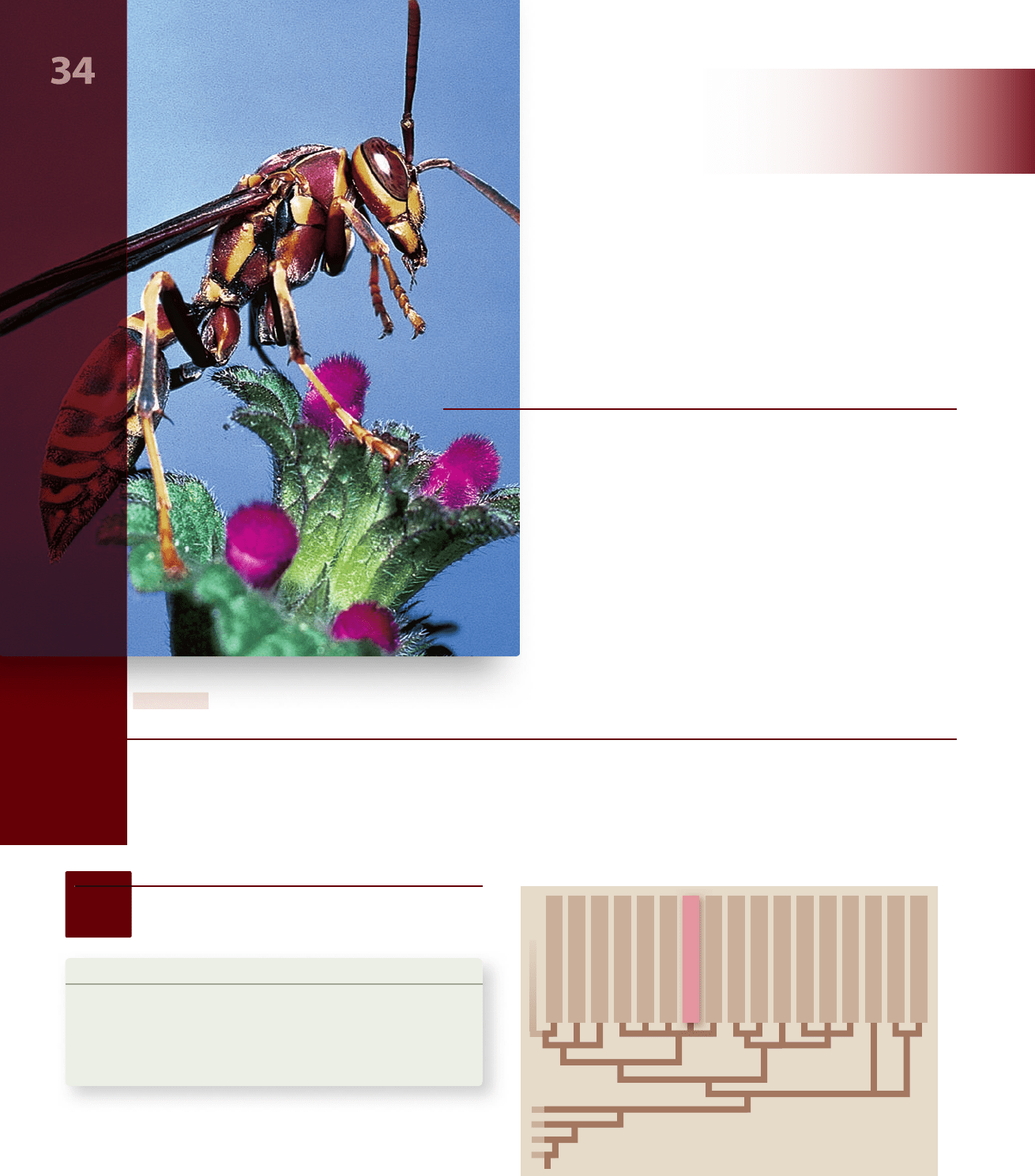
The body cavity of some animals is a coelom. As described in chapter 32, a coelom is an internal space lined with tissue
derived from mesoderm. Clades of coelomate animals can be recognized by details of how the coelom develops and other
features such as whether the body is segmented or the skeleton is internal or external. Some animals with a coelom are
protostomes; all deuterostomes have a coelom. Among coelomate protostomes are mollusks , annelids, and arthropods.
Deuterostomes include echinoderms, which are exclusively marine animals, and chordates (the subject of chapter 35).
34.1
Phylum Mollusca: The Mollusks
Learning Outcomes
List the defining features of phylum Mollusca.1.
Describe representatives of the four best-known groups 2.
of mollusks.
Explain the distinguishing features of cephalopods.3.
Mollusks (phylum Mollusca) are diverse morphologically
and live in many types of environments. With more than
110,000 described species, the phylum is second only to ar-
thropods. Mollusks include snails, slugs, clams, scallops,
CHAPTER
rav32223_ch34_666-692.indd 666rav32223_ch34_666-692.indd 666 11/13/09 4:20:48 PM11/13/09 4:20:48 PM
Apago PDF Enhancer
a.
b.
c.
d.
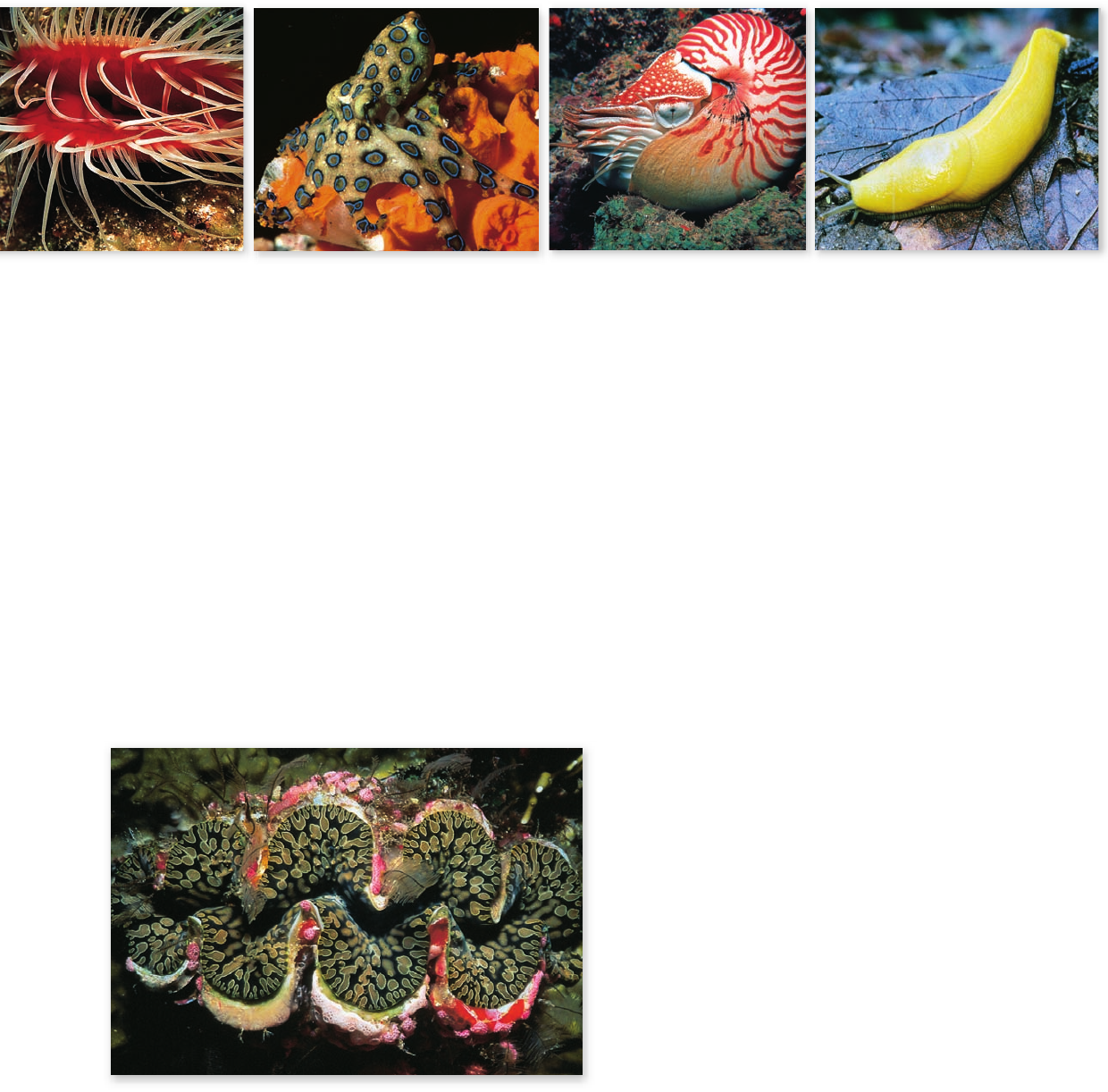
Figure 34.1
Mollusk diversity.
Mollusks exhibit a broad range of variation. a. The ame scallop, Lima scabra, is a lter feeder. b. The
blue-ringed octopus, Hapalochlaena maculosa, is one of the few mollusks dangerous to humans. Strikingly beautiful, it is equipped with a sharp
beak that can deliver a poisonous bite! c. Nautiluses, such as this chambered nautilus, Nautilus pompilius, have been around since before the age
of the dinosaurs. d. The banana slug, Ariolimax columbianus, native to the Paci c Northwest, is the second largest slug in the world, attaining a
length of 25 cm.
Figure 34.2
Giant clam.
Second only to the arthropods in
number of described species, members of the phylum Mollusca
occupy almost every habitat on Earth. This giant clam, Tridacna
maxima, contains symbiotic dino agellates (zooxanthellae) as do
reef-forming corals. Through photosynthesis, the dino agellates
probably contribute to the food of the clam, although it is a lter
feeder like most bivalves. Some individual giant clams may be nearly
1.5 m long and weigh as much as 270 kg.
oysters, cuttlefish, octopuses, and many other familiar ani-
mals (figures 34.1 and 34.2). The shells of many mollusks
are beautiful and elegant; they have long been collected,
preserved, and studied by professional scientists and ama-
teurs. Some mollusks, however, lack a shell.
Mollusks are extremely diverse—
and important to humans
Mollusks range in size from almost microscopic to huge. Al-
though most measure a few millimeters to centimeters in their
largest dimension, the giant squid may grow to more than 15 m
long and weigh as much as 250 kg. It is therefore one of the
heaviest invertebrates (although nemerteans can be longer, as
discussed later). Other large mollusks are the giant clams of the
genus Tridacna, which may be as long as 1.5 m and may weigh
as much as 270 kg (see figure 34.2).
Like all major animal groups, mollusks evolved in the
oceans, and most groups have remained there. Marine mol-
lusks are widespread and many are abundant. Snails and slugs
have invaded freshwater and terrestrial habitats, and fresh-
water mussels live in lakes and streams (the flat foot of a snail
or slug allows it to crawl, but the foot of clams, mussels, and
other bivalved mollusks is adapted to digging, so they cannot
move about on land). Some places where terrestrial mollusks
live, such as crevices of desert rocks, may appear dry, but if
mollusks live there, the habitat has at least a temporary supply
of water.
Mollusks—including oysters, clams, scallops, mussels,
octopuses, and squids—are an important source of food for
humans. They are also economically significant in other ways.
For example, the material called mother-of-pearl (nacre),
which is used for jewelry and other decorative objects, and
formerly for buttons, comes from mollusk shells, most nota-
bly that of the abalone. Mollusks can also be pests. Bivalves
called ship-worms burrow through wood exposed to the sea,
damaging boats, docks, and pilings. The zebra mussel (Dreis-
sena polymorpha) (see figure 60.16) has recently invaded many
North American freshwater ecosystems. Many slugs and snails
damage flowers, vegetable gardens, and crops. Other mollusks
serve as hosts to the larval stages of many serious parasites, as
discussed in chapter 33.
The mollusk body plan is complex and varied
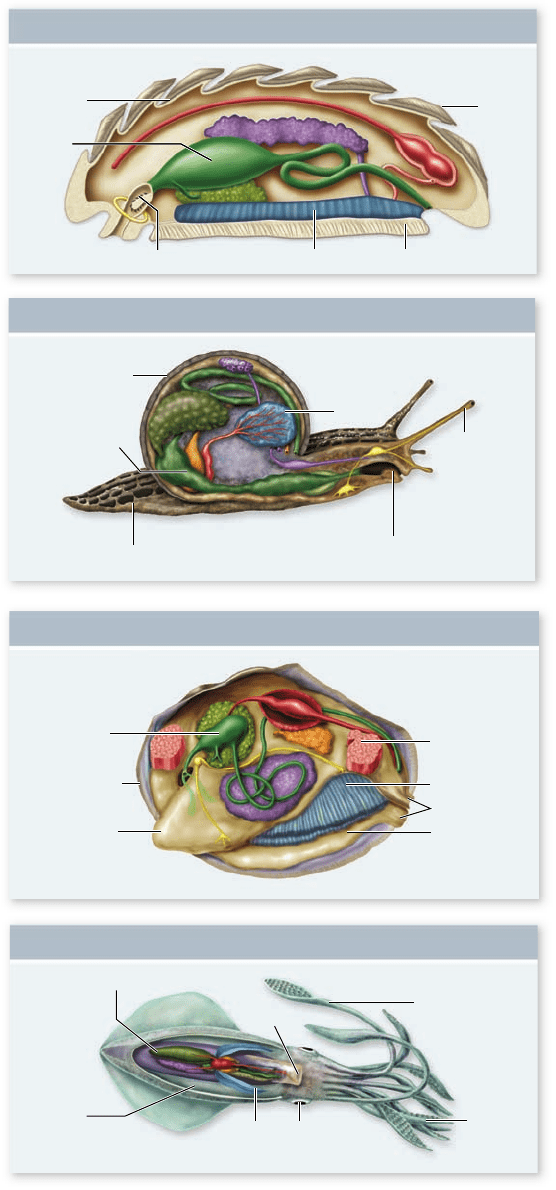
Some mollusk body plans are illustrated in figure 34.3. The
mantle, a thick epidermal sheet, covers the dorsal side of the
body, and bounds the mantle cavity. The mantle secretes
the calcium carbonate of the shell in those mollusks with a
shell. The muscular foot is the primary means of locomotion
in mollusks other than cephalopods (octopuses, squid, and
chapter
34
Coelomate Invertebrates
667www.ravenbiology.com
rav32223_ch34_666-692.indd 667rav32223_ch34_666-692.indd 667 11/13/09 4:21:01 PM11/13/09 4:21:01 PM
Apago PDF Enhancer
Gut
Gill
Mantle
cavity
Radula
Gut
Gut
Gill
Adductor
muscle
Lung
Foot
Foot
Mantle
Shell
Cephalopods
Bivalves
Gastropods
Shell
Antenna
Siphons
Siphon
Eye
Tentacle
Arm
Radula
Mantle
Gut
Shell
Gill Foot
Chitons
Figure 34.3
Body plans of some mollusks.
functions. The foot of slugs and snails secretes mucus, form-
ing a path that it glides along. In cephalopods, the foot is di-
vided into tentacles and, in some cephalopods, arms. Clams
burrow into mud and sand using their hatchet-shaped foot. In
some mollusks that live in the open ocean, the foot is modified
into winglike projections, the large surface area of which
serves to slow its sinking. The feet of these mollusks can beat
like wings .
Internal organs
In all mollusks, the coelom is highly reduced, being limited to
small spaces around the excretory organs, heart, and part of the
intestine. An important role of the coelom in some other inver-
tebrates (that is, forming the hydrostatic skeleton) is served in
mollusks by the shell. The digestive, excretory, and reproduc-
tive organs are concentrated in a visceral mass.
In aquatic mollusks, the ctenidia (or gills, the respiratory
structures) project into the mantle cavity (see figure 34.3). They
consist of filaments rich in blood vessels that greatly increase
the surface area and capacity for gas exchange. The continuous
stream of water that passes through the mantle cavity, propelled
by cilia on the gills of all mollusks except cephalopods, carries
oxygen in and carbon dioxide away. Mollusk ctenidia are so ef-
ficient that they can extract 50% or more of the dissolved oxy-
gen from the water that passes through the mantle cavity. In
addition to extracting oxygen from incoming water, the gills of
most bivalves filter out food. Because the outlets from the ex-
cretory, reproductive, and digestive organs open into the man-
tle cavity, wastes and gametes are carried away from a mollusk’s
body with the exiting water stream.
Shells
One of the best known characters of the phylum is the shell. A
mollusk shell, which is secreted by the outer surface of the
mantle, protects against predators and adverse environmental
conditions. However, a shell is clearly not essential: reduction,
internalization, and loss of the shell have evolved repeatedly.
Examples of shell-less mollusks are cuttlefish, squids, and octo-
puses (cephalopods) as well as slugs (gastropods).
A typical mollusk shell consists of two layers of cal-
cium carbonate, which is precipitated extracellularly. The
outer layer consists of densely packed crystals. In some spe-
cies, the inner layer is pearly in appearance, and is called
mother-of-pearl or nacre. Particularly in freshwater mol-
lusks, the mineralic layers are covered by a thin organic
coating rich in the protein conchiolin that protects the shell
from dissolving. Pearls are formed when a foreign object,
such as a grain of sand, becomes lodged between the mantle
and the inner shell layer. The mantle coats the object with
layer upon layer of nacre to reduce the irritation caused by
the object. The most beautiful and highly valued pearls are
produced by oysters.
Feeding and prey capture: Radula
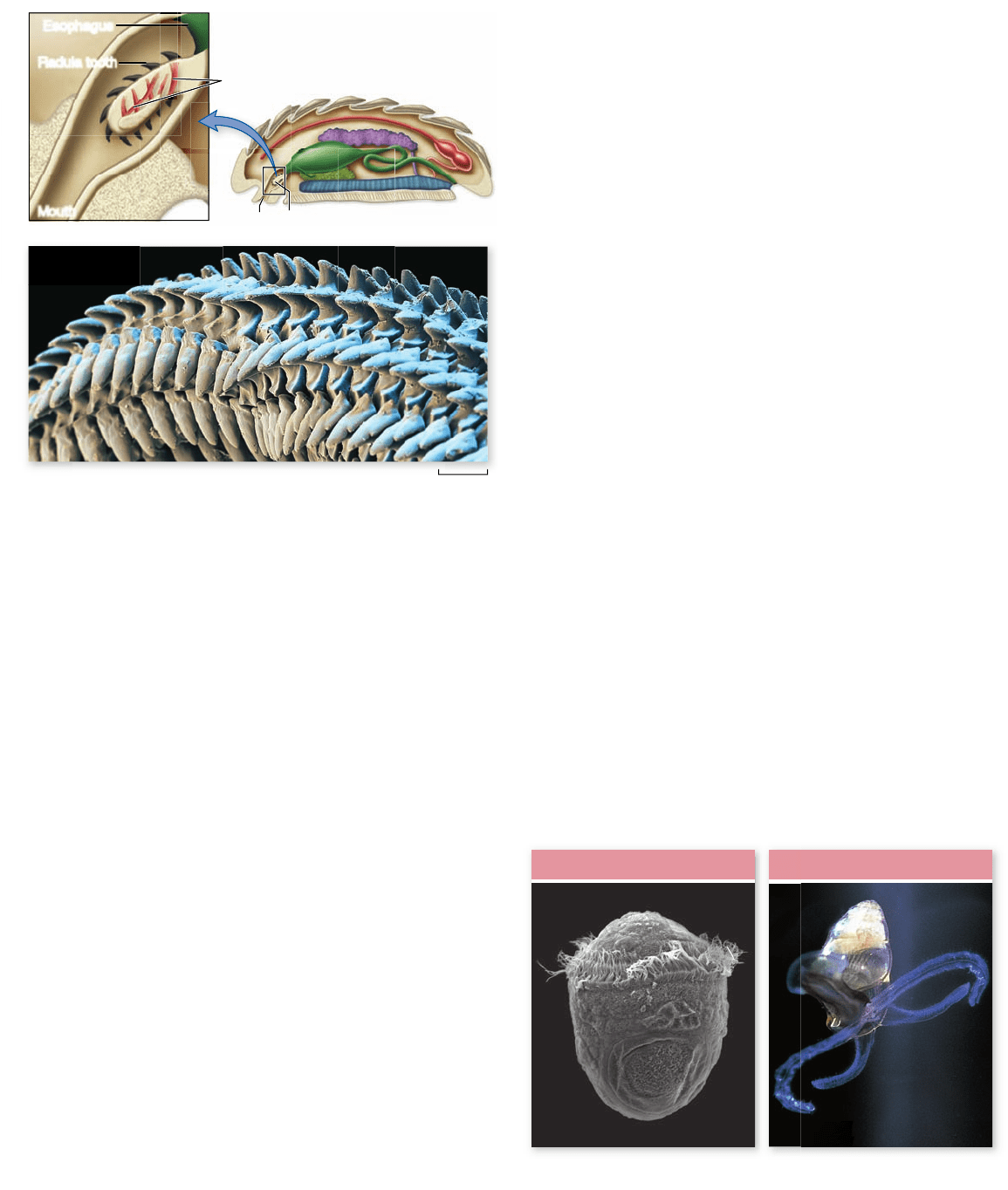
A characteristic feature of most mollusks is the radula (plu-
ral, radulae), a rasping, tonguelike structure used in feeding.
It consists of dozens to hundreds of microscopic, chitinous
teeth arranged in rows on an underlying membrane and lies
in a chamber at the anterior end of the gut (figure 34.4). The
chambered nautilus). The head may be well developed or not.
Like all coelomates, mollusks are bilaterally symmetrical, but
this symmetry is modified during development of many gas-
tropods (snails and their relatives), which undergo torsion (a
twisting of the body discussed in detail later on).
The muscular foot is variously adapted for locomotion,
attachment, food capture, digging, or combinations of these
668
part
V
Diversity of Life on Earth
rav32223_ch34_666-692.indd 668rav32223_ch34_666-692.indd 668 11/13/09 4:21:04 PM11/13/09 4:21:04 PM
Apago PDF Enhancer
RadulaMouth
Radula tooth
Muscles
Esophagus
Mouth
25 μm
a. b.
Mollusk Trochophore Larva Gastropod Veliger Larva
Figure 34.4
Structure of the radular apparatus in a
chiton.
The radula consists of rows of teeth made of chitin. As the
animal feeds, its mouth opens, and the radula is thrust out to scrape
food off surfaces.
The circulatory system
The main coelomic cavity of a mollusk is a hemocoel, which
comprises several sinuses and a network of vessels in the gills,
where gas exchange takes place. Except for cephalopods, all
mollusks have such an open circulatory system ; blood (techni-
cally termed “hemolymph”) is propelled by a heart through the
aorta vessel that empties to the hemocoel. The blood moves
through the hemocoel being recaptured by other venous ves-
sels before re-entering the heart (see chapter 50 ). The heart of
most, but not all mollusks has three chambers, two that collect
aerated blood from the gills, and a third that pumps it into the
hemocoel. The blood of the closed circulatory system of ce-
phalopods is contained in a continuous system of vessels, so it
does not contact other tissues directly.
Reproduction
Most mollusks have separate sexes although a few bivalves and
many freshwater and terrestrial gastropods are hermaphroditic.
Most hermaphroditic mollusks engage in cross-fertilization.
Some oysters are able to change sex.
As is typical of animals living in the sea, many marine mol-
lusks have external fertilization: gametes are released by males
and females into the water where fertilization occurs. Most gas-
tropods, however, have internal fertilization, with the male in-
serting sperm directly into the female’s body (not, that is, into a
preformed channel). Internal fertilization, a foot, and an effi-
cient excretory system that prevents desiccation are some of the
key adaptations that allowed gastropods to colonize the land.
A mollusk zygote undergoes spiral cleavage (thus
Mollusca is part of the Spiralia; see chapter 32). The embryo
develops into a free-swimming larva called a trochophore
(figure 34.5a) that closely resembles the larval stage of many
marine annelids and other lophotrochozoans. A trochophore
swims by means of cilia that encircle the middle of its body.
In most marine snails and in bivalves, the trochophore
develops into a second free-swimming stage, the veliger. The
veliger forms the beginnings of a foot, shell, and mantle
(figure 35.5b). Trochophores and veligers drift widely in the
ocean, dispersing these otherwise sedentary mollusks.
membrane wraps around a muscular support structure so
the radula can be protruded through the mouth and move
something like a sanding belt over what is being rasped.
Benthic mollusks use their radulae to scrape up algae and
other food materials.
In some predatory gastropods (such as moon snails),
the radula is modified to drill through clam shells so the
snail can eat the clams. In snails of the genus Conus, the
radula has been transformed into a harpoon that is associ-
ated with a venom gland; cone snails use this harpoon to
capture prey such as fish, and some cone snails can harm—
or even kill—humans.
Bivalves are the only mollusks that have no radula. The
gills of most bivalves are adapted to filter food particles from
the water, although primitive bivalves pick up bits of food from
soft sediments (this is, they are deposit feeders) using append-
ages around the mouth.
Removal of wastes
Nitrogenous wastes are removed from the mollusk body by
the nephridium (plural, nephridia), a sort of kidney. A typical
nephridium has an open funnel, the nephrostome, which is
lined with cilia. A coiled tubule runs from the nephrostome
into a bladder, which in turn connects to an excretory pore.
Wastes are gathered by the nephridia from the coelomic cavity
and discharged into the mantle cavity. Sugars, salts, water, and
other materials are reabsorbed by the walls of the nephridia
and returned to the animal’s body as needed to maintain os-
motic balance.
Figure 34.5
Stages in the molluskan life cycle.
a. The
trochophore larva. Similar larvae are characteristic of some annelid
worms as well as a few other phyla. b. The veliger stage of a gastropod.
chapter
34
Coelomate Invertebrates
669www.ravenbiology.com
rav32223_ch34_666-692.indd 669rav32223_ch34_666-692.indd 669 11/13/09 4:21:06 PM11/13/09 4:21:06 PM
Apago PDF Enhancer
mantle cavity and anus are moved from a posterior location to
the front of the body. Torsion may lead to the reduction or
disappearance of the nephridium, gonad, or other internal or-
gans on one side. Most adult gastropods are therefore not bilat-
erally symmetrical. Torsion should not be confused with coiling,
the spiral winding of the shell. Coiling also occurs in cephalo-
pods. The fossil record suggests that the first gastropods were
coiled but did not undergo torsion.
Like many gastropods, nudibranchs (sea slugs) are active
predators. Nudibranchs get their name from their gills, which,
instead of being enclosed within the mantle cavity, are exposed
along the dorsal surface (figure 34.8). Nudibranchs would
seem vulnerable to predation, but many secrete distasteful
chemicals. They prey on animals that are avoided by other
predators. Some are specialist feeders on sponges, most spe-
cies of which form spicules and noxious chemicals. Other
nudibranchs specialize in feeding on cnidarians, which are
protected from most predators by their nematocysts. Some of
these nudibranchs have the extraordinary ability to extract the
Four classes of mollusks show
the diversity of the phylum
We examine four of the seven or eight recognized classes
of mollusks: (1) Polyplacophora—chitons; (2) Gastropoda—
limpets, snails, slugs, and their relatives; (3) Bivalvia—clams,
oysters, scallops, and their relatives; and (4) Cephalopoda—
squids, octopuses, cuttlefishes, and the chambered nautilus.
By studying living mollusks and the fossil record, some
scientists have deduced that the ancestral mollusk was probably
a bilateral, dorsoventrally flattened, unsegmented, wormlike
animal that glided on its ventral surface. This animal may have
had a chitinous cuticle that secreted calcareous spicules. Other
scientists infer that mollusks arose from segmented ancestors
and became unsegmented secondarily.
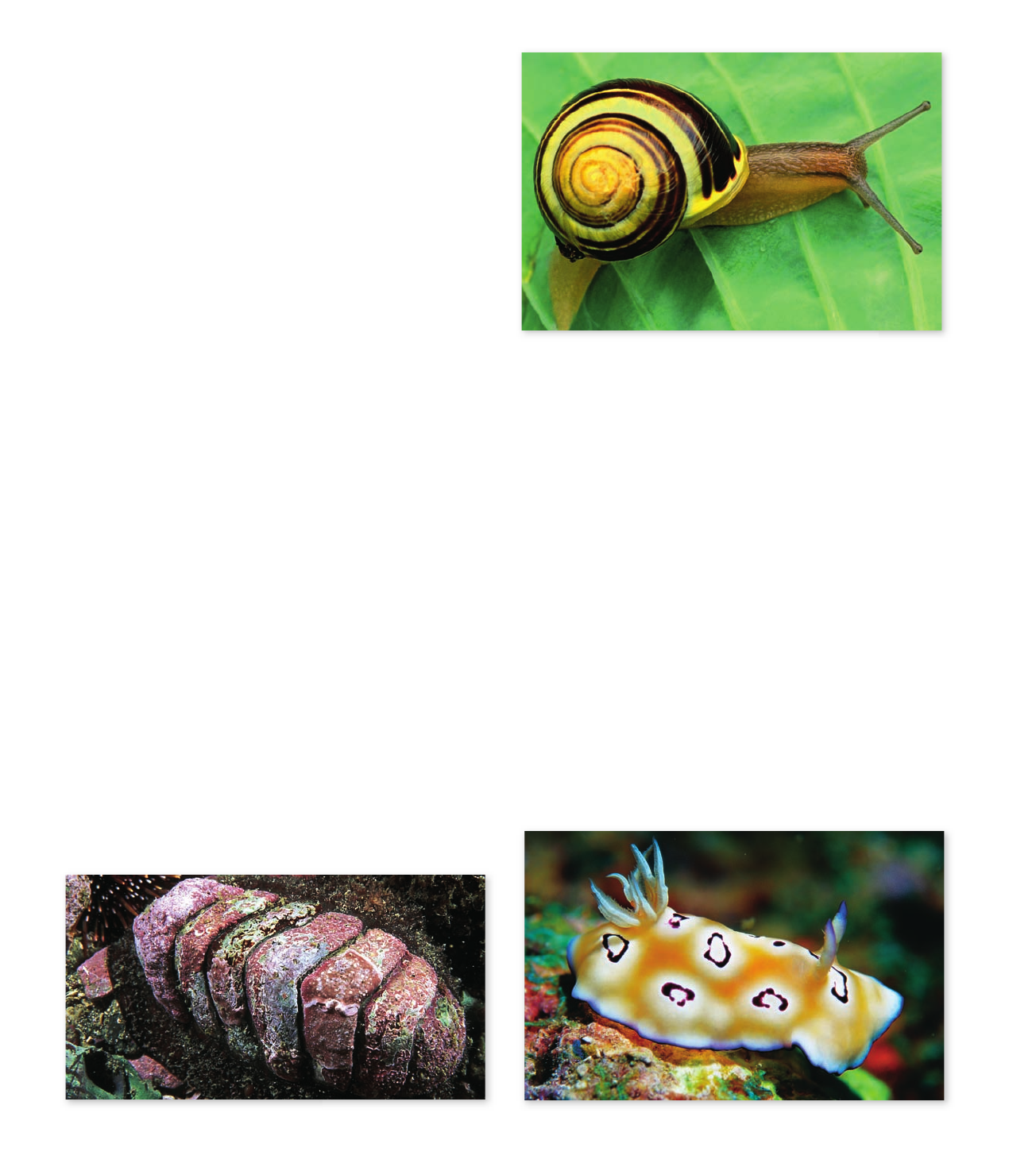
Class Polyplacophora: Chitons
Chitons are exclusively marine; there are perhaps 1000 species.
The oval body is covered dorsally with eight overlapping dorsal
calcareous plates (figure 34.6). The body is not segmented, but
chitons do have eight sets of dorsoventral pedal retractor mus-
cles and serially repeated gills. The broad, flat ventral foot, on
which the animal creeps, is surrounded by a groove, the mantle
cavity, in which the gills are suspended. Most chitons are graz-
ing herbivores, and live in shallow marine habitats, but chitons
occur to depths of more than 7000 m.
Class Gastropoda: Snails and slugs
The 40,000 or so species of limpets, snails and slugs belong to
this class, which is primarily marine. However, this group
contains many freshwater species and the only terrestrial mol-
lusks (figure 34.7). Most gastropods have a single shell, but
some, such as slugs and nudibranchs (or sea slugs), have lost
the shell through the course of evolution. Most gastropods
creep on a foot, but in some it is modified for swimming.
The head of most gastropods has a pair of tentacles, which
serve as chemo- or mechanoreceptors, with eyes at the base. A
typical garden snail may have two sets of tentacles, one of them
bearing eyes at the ends (see figure 34.7).
Uniquely among animals, gastropods undergo torsion
during larval life. Torsion involves twisting of the body so the
Figure 34.6
The noble chiton, Eudoxochiton nobilis,
from New Zealand.
The foot of the chiton can grip the substrate
very strongly, making chitons hard to dislodge by waves or predators.
Figure 34.7
A Gastropod mollusk.
The terrestrial Oregon
forest snail Allogona townsendiana.
Figure 34.8
A nudibranch (or sea slug).
The bright
colors of many nudibranchs such as this alert predators to their
repulsive taste.
670
part
V
Diversity of Life on Earth
rav32223_ch34_666-692.indd 670rav32223_ch34_666-692.indd 670 11/13/09 4:21:10 PM11/13/09 4:21:10 PM
Apago PDF Enhancer
Inhalant
siphon
Gills
Mantle
Intestine
Gonad
Foot
Stomach
Mouth
Adductor
muscle
KidneyHeart
Hinge
Shell
Exhalant
siphon
Anus
The edges of the mantle may be partly fused. In bi-
valves in which this is the case, typically two areas are not
fused, and may be drawn out to form tubes called siphons (see
figure 34.9). Water enters the mantle chamber through the
inhalant siphon bringing oxygen and food, and water exits
through the exhalant siphon, taking wastes and gametes
with it. In bivalves that live buried deeply in mud or burrow
into rock, the siphons allow the animals to eat and breathe,
functioning essentially as snorkels.
Class Cephalopoda: Octopuses,
squids, and nautiluses
The more than 600 species of cephalopods are strictly ma-
rine. They are active predators that swim, often swiftly, and
they are the only mollusks with a closed circulatory system.
The foot has evolved into a series of arms equipped with
suction cups, adhesive structures, or hooks that seize prey.
Octopuses, as their name suggests, have eight arms; squids
have eight arms and two tentacles; and the chambered nau-
tilus has 80 to 90 tentacles (which lack suckers). After snar-
ing prey with its arms, a cephalopod bites the prey with its
strong, beak-like jaws, then pulls it into its mouth by the ac-
tion of the radula. The salivary gland of many cephalopods
secretes a toxin that can be injected into prey; the tiny blue-
ringed octopus of Australia (see figure 34.1b) can kill a hu-
man with its deadly bite.
Cephalopods have the largest relative brain sizes among
invertebrates and highly developed nervous systems. Many ex-
hibit complex patterns of behavior and are highly intelligent
(figure 34.10); octopuses can be easily trained to distinguish
nematocysts undischarged, transfer them through their diges-
tive tract to the surface of their bodies, and use them for their
own protection.
In terrestrial gastropods, the mantle cavity, which is oc-
cupied by gills in aquatic snails, is extremely rich in blood ves-
sels and serves as a lung. This lung absorbs oxygen from the air
much more effectively than a gill could; however, a snail will
drown if its lung fills with water; for this reason, terrestrial gas-
tropods can close the opening of the lung to the outside.
Class Bivalvia: Clams, mussels,
and cockles
Most of the 10,000 species of bivalves are marine, but some live
in fresh water. More than 500 species of pearly freshwater mus-
sels, or naiads, occur in the rivers and lakes of North America.
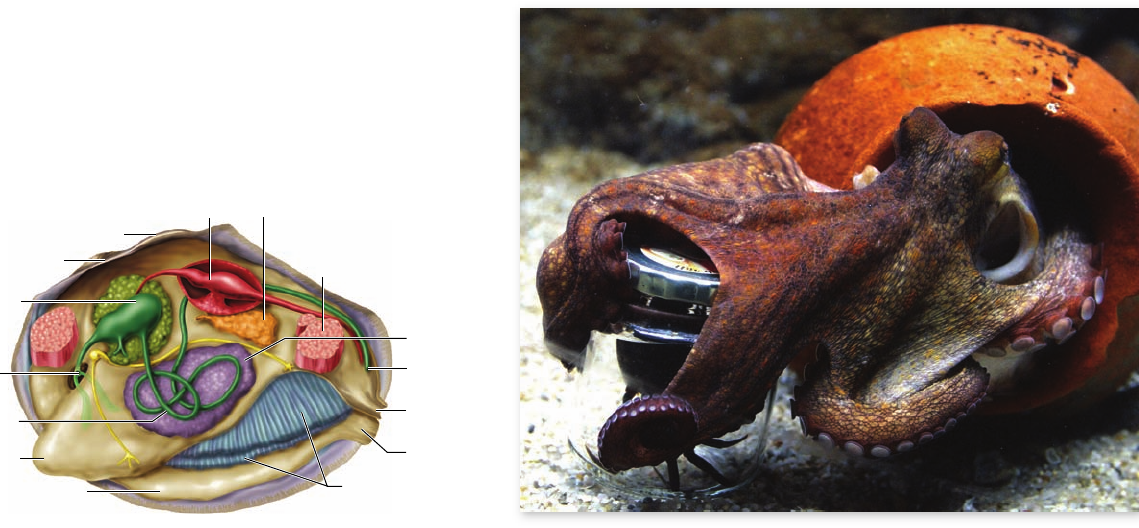
Unlike other mollusks, a bivalve does not have a radula or
distinct head (figure 34.9). The foot of most is wedge-shaped,
adapted for burrowing or anchoring the animal in its burrow.
Some species of clams can dig into sand or mud very rapidly by
means of muscular contractions of their foot. Some species of
scallops and file clams can move swiftly by clapping their shells
rapidly together (although they cannot control the direction of
their movement); the adductor muscle that allows this clapping
is the part of a scallop eaten by humans. Projecting from the
edge of a scallop’s mantle are tentacle-like projections having
complex eyes between them.
Bivalves, as their name implies, have two shells (valves)
that are hinged dorsally so the shells are oriented laterally (left
and right). A ligament lying along the hinge is structured so it
causes the shells to gape open. One or two large adductor mus-
cles link the shells internally (see figure 34.9), and when they
contract, they counteract the hinge ligament to draw the shells
together. The mantle covers the internal surface of the shells,
enveloping the visceral mass on its inner side and secreting the
shells on its outer side. As is typical of mollusks, the respiratory
structures, a set of complexly folded gills on each side of the
visceral mass, lie in the mantle cavity.
Figure 34.9
Diagram of a clam.
The left shell and mantle
are removed to show the internal organs and the foot. Bivalves
such as this clam circulate water across their gills and lter out
food particles.
Figure 34.10
Problem-solving by an octopus.
This
two-month-old common octopus (Octopus vulgaris) was presented
with a crab in a jar. It tried to unscrew the lid to get to the crab.
Although it failed in this attempt, in some cases it was successful.
chapter
34
Coelomate Invertebrates
671www.ravenbiology.com
rav32223_ch34_666-692.indd 671rav32223_ch34_666-692.indd 671 11/13/09 4:21:17 PM11/13/09 4:21:17 PM