
Raven P.H., Johnson G.B., Mason K.A. Biology (Ninth Edition)
Подождите немного. Документ загружается.

Apago PDF Enhancer
Plant cells Plant cells
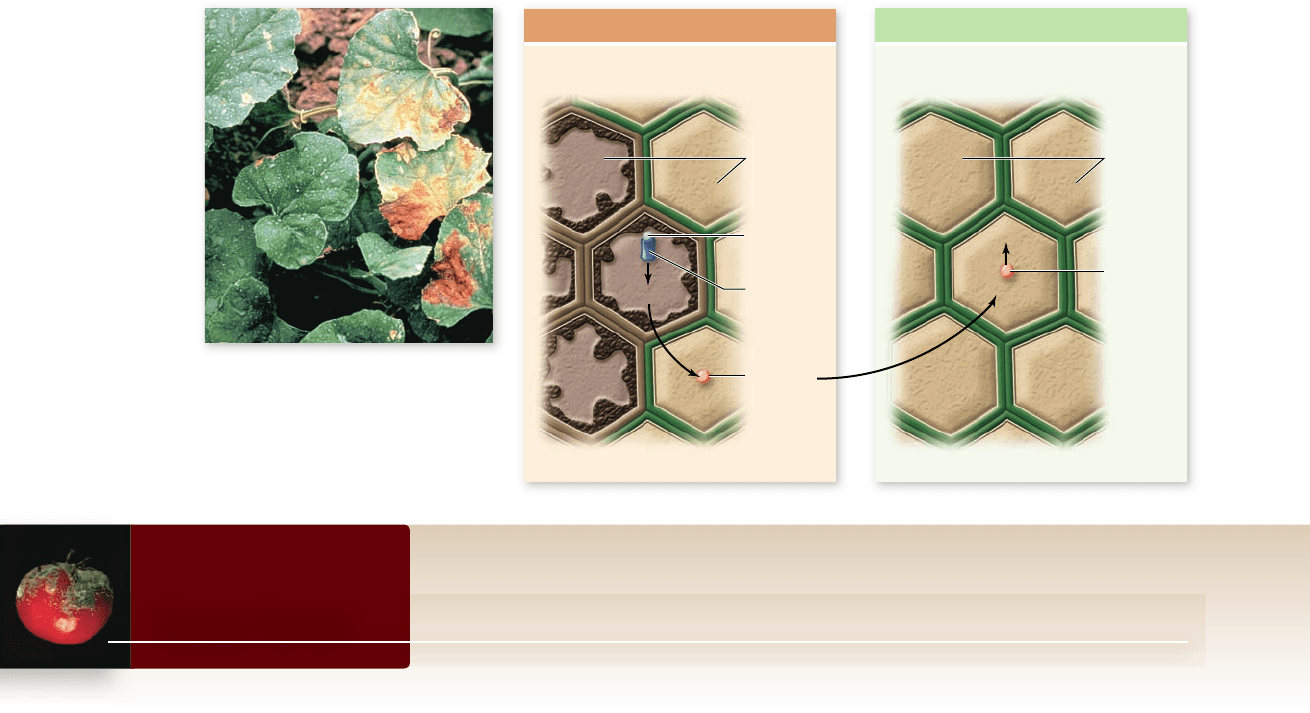
HR
R protein
Microbial
protein
Hypersensitive Response (HR)
Temporary broad-ranging
resistance to pathogen
Local cell death seals off pathogen
Systemic Acquired Resistance (SAR)
Signal
molecule
Signal
molecule
SAR
Figure 40.13
Plant defense responses.
In the gene-for-gene response, a cascade of events is
triggered, leading to local cell death (HR) and to the
production of a mobile signal that provides longer
term resistance in the rest of the plant (SAR).
Chapter Review
40.1 Physical Defenses
Pathogens can harm plants in many ways, including exploiting
nutrient resources and taking over DNA replication machinery.
Dermal tissue provides rst-line defense.
Dermal tissues are covered with lipids such as cutin and suberin,
which reduce water loss and prevent attack. Morphological features
such as trichomes, bark, and thorns protect some plants.
Invaders can penetrate dermal defenses.
In spite of defense mechanisms, invaders can cause damage by piercing
plants, eating plant parts, or entering the plant through the stomata.
Bacteria and fungi can also be benecial to plants.
Mycorrhizal fungi form benecial relationships with plants by
enhancing uptake of water and minerals. Nitrogen- xing bacteria
provide nitrogen to plants in a usable form.
40.2 Chemical Defenses
Plants maintain chemical arsenals.
Plants may produce and stockpile secondary metabolites such as
alkaloids, tannins, and oils that provide protection from predators
(see table 40.1). Plants protect themselves from their own toxins
either by sequestering them in vesicles or producing compounds that
are not toxic until they are ingested by a predator.
Plants can poison other plants.
Allelopathic plants secrete chemicals to block seed germination or
inhibit growth of nearby plants. This strategy minimizes competition
for resources such as light and nutrients.
Humans are susceptible to plant toxins.
Ricin is an example of a powerful plant toxin. It is found in the
endosperm of castor beans (see gure 40.8). Ricin is six times more
lethal than cyanide.
Secondary metabolites may have medicinal value.
Plant secondary metabolites such as phytoestrogens, taxol, and
quinine have pharmaceutical value for humans. Many other plant-
based remedies have been used for centuries in human cultures.
40.3 Animals That Protect Plants
Mutualistic associations are bene cial to both the plant and animal
partners. One example is the relationship between acacia trees and
ants, in which ants protect the trees from herbivores.
Another example is the association between certain plants, caterpillars,
and parasitoid wasps. When chewed or damaged, the leaves release
compounds that attract the wasps, which lay their eggs in the caterpillars.
The wasps’ larvae feed on the caterpillar, killing it (see gure 40.10).
40.4 Systemic Responses to Invaders
Plants avoid an unnecessary expenditure of energy if they produce
defense mechanisms only when needed.
Wound responses protect plants from herbivores.
Wound responses are generalized reactions that occur regardless of
the cause of the injury.
During a wound response, a signal spreads throughout the phloem,
inducing the production of proteinase inhibitors that bind to digestive
enzymes in the gut of the animal eating the plant (see gure 40.11).
Defense responses can be pathogen-specic.
In many plants, the plant R gene product may interact with an
avirulence gene product of a pathogen in a gene-for-gene reaction
that induces a defense response.
Plants can also produce antimicrobial agents such as phytoalexins as
defense compounds.
After exposure to a pathogen, a plant may be protected against
pathogen attack in the short-term future through a mechanism called
systemic acquired resistance.
812
part
VI
Plant Form and Function
rav32223_ch40_802-813.indd 812rav32223_ch40_802-813.indd 812 11/16/09 1:34:26 PM11/16/09 1:34:26 PM

Apago PDF Enhancer
Review Questions
U N DERS TAN D
1. Nonnative invasive species are often a threat to native species
because they
a. typically grow larger than other plants.
b. are not susceptible to any diseases.
c. are parasitic.
d. do not have natural enemies in their new location.
2. Fungal pathogens transfer nutrients across a plant cell
membrane using
a. an adhesion pad. c. guard cells.
b. a haustorium. d. tumors.
3. Casparian strips in roots contain _______, which helps to
defend against invaders.
a. wax b. suberin
c. cutin d. cuticle
4. Which of the following is not a secondary metabolite?
a. Caffeine c. Taxol
b. Morphine d. Glucose
5. Parasitoid wasps protect plants from caterpillars by
a. stinging them. c. eating them.
b. repelling them. d. enclosing them in a capsule.
6. In response to wounding, a tomato plant rst produces a
peptide called
a. systemin. c. ricin.
b. jasmonic acid. d. salicylic acid.
7. When a cell undergoes a hypersensitive response, it
a. builds cell walls quickly.
b. releases defense response molecules from its vacuole.
c. dies rapidly.
d. destroys avirulence gene products.
8. The wound response products that bind to digestive enzymes in
herbivores are
a. proteinase inhibitors. c. lipase inhibitors.
b. proteinase promoters. d. lipase promoters.
9. If a plant has been attacked by a pathogen, then it is likely to be
able to respond more quickly to a subsequent attack due to a
mechanism called
a. basal defense.
b. induced hypersensitive response.
c. antimicrobial pathogen resistance.
d. systemic acquired resistance.
APPLY
1. Some plants have developed a mutualistic relationship with
parasitoid wasps. This mutualistic relationship would not occur if
a. the plant quit producing nectar for the wasp.
b. the wasp ceased to live on the plant.
c. the plant quit producing volatile compounds that attract
the wasp.
d. the plant attracted too many caterpillars.
2. Both plant and animal immune systems can
a. develop memory of past pathogens to more effectively deal
with subsequent infections.
b. initiate expression of proteins to help ght the infection.
c. kill their own cells to prevent spread of the infection.
d. all of the above
3. Your friend informs you that it is highly likely all of the plants
in your yard are “infected” with some kind of fungi or bacteria.
The plants look perfectly healthy to you at this time. The most
prudent thing for you to do would be:
a. Remove all your plants because they are likely to die.
b. Spray your plants with chemicals to remove all bacteria
and fungi.
c. Remove all your plants and replace the soil.
d. Do nothing because many of these bacteria and fungi may
be bene cial.
4. Some plants are recognized by fungal pathogens on the basis of
their stomatal pores. Which of the following would provide
these plants immunity from fungal infection?
a. Removing all of the stomata from the plant
b. Changing the spacing of stomatal pores in these plants
c. Reinforcing the cell wall in the guard cells of stomatal pores
d. Increasing the number of trichomes on the surfaces
5. You decide to plant a garden with a beautiful black walnut at one
end and a majestic white oak at the other end. You are quite
disappointed, however, when none of the seeds you plant around
the walnut tree grow. What might explain this observation?
a. The walnut tree lters out too much light, so the seeds fail
to germinate.
b. The roots of the walnut tree deplete all of the nutrients
from the soil, so the new seedlings starve.
c. The walnut tree produces chemical toxins that prevent
seed germination.
6. If a pathogen contains an avr gene not recognized by a plant,
the plant will most likely
a. develop a disease.
b. eliminate the pathogen because it is unrecognized.
c. develop proteinase inhibitors.
d. develop a different R gene.
S Y N THES IZE
1. During the domestication of crops, humans have intentionally or
inadvertently selected for lower levels of toxic compounds. Explain
why each of these two types of selection would have occurred.
2. Parasitoid wasps seem like an effective method to control
caterpillars. Discuss some limitations of this strategy. That is,
outline some scenarios in which a plant might not be effectively
protected by the wasps.
3. Systemin is transported through the phloem of a tomato plant
to induce a wound response to herbivores. However, the
direction of phloem movement is always from source to sink.
Explain how the sites that receive the wound signal may vary
with stages of the plant’s life cycle.
O N LIN E RES OURCE
www.ravenbiology.com
Understand, Apply, and Synthesize—enhance your study with
animations that bring concepts to life and practice tests to assess
your understanding. Your instructor may also recommend the
interactive eBook, individualized learning tools, and more.
chapter
40
Plant Defense Responses
813www.ravenbiology.com
rav32223_ch40_802-813.indd 813rav32223_ch40_802-813.indd 813 11/16/09 1:34:29 PM11/16/09 1:34:29 PM

Apago PDF Enhancer
A
Chapter Outline
41.1 Responses to Light
41.2 Responses to Gravity
41.3 Responses to Mechanical Stimuli
41.4 Responses to Water and Temperature
41.5 Hormones and Sensory Systems
Chapter
41
Sensory Systems
in Plants
Introduction
All organisms sense and interact with their environments. This is particularly true of plants. Plant survival and growth are
critically influenced by abiotic factors, including water, wind, and light. The effect of the local environment on plant growth
also accounts for much of the variation in adult form within a species. In this chapter, we explore how a plant senses such
factors and transduces these signals to elicit an optimal physiological, growth, or developmental response. Although
responses can be observed on a macroscopic scale, the mechanism of response occurs at the level of the cell. Signals are
perceived when they interact with a receptor molecule, causing a shape change and altering the receptor’s ability to interact
with signaling molecules. Hormones play an important role in the internal signaling that brings about environmental
responses and are keyed in many ways to the environment.
CHAPTER
rav32223_ch41_814-838.indd 814rav32223_ch41_814-838.indd 814 11/16/09 2:06:08 PM11/16/09 2:06:08 PM
Apago PDF Enhancer
H
2
N
COOH
Chromophore
Apoprotein
Serine Protein-binding site Protein kinase
Ubiquitin-binding site
PHYA
Phytochrome synthesis
P
r
Red light (660 nm)
Far-red light
(730 nm)
mRNA
P
fr
Proteasome
Degraded P
fr
Ubiquitin
Response
(germination, shoot
elongation, etc.)
P
fr
Ubiquitin
+
+
Ubiquitin-
binding site
ATP
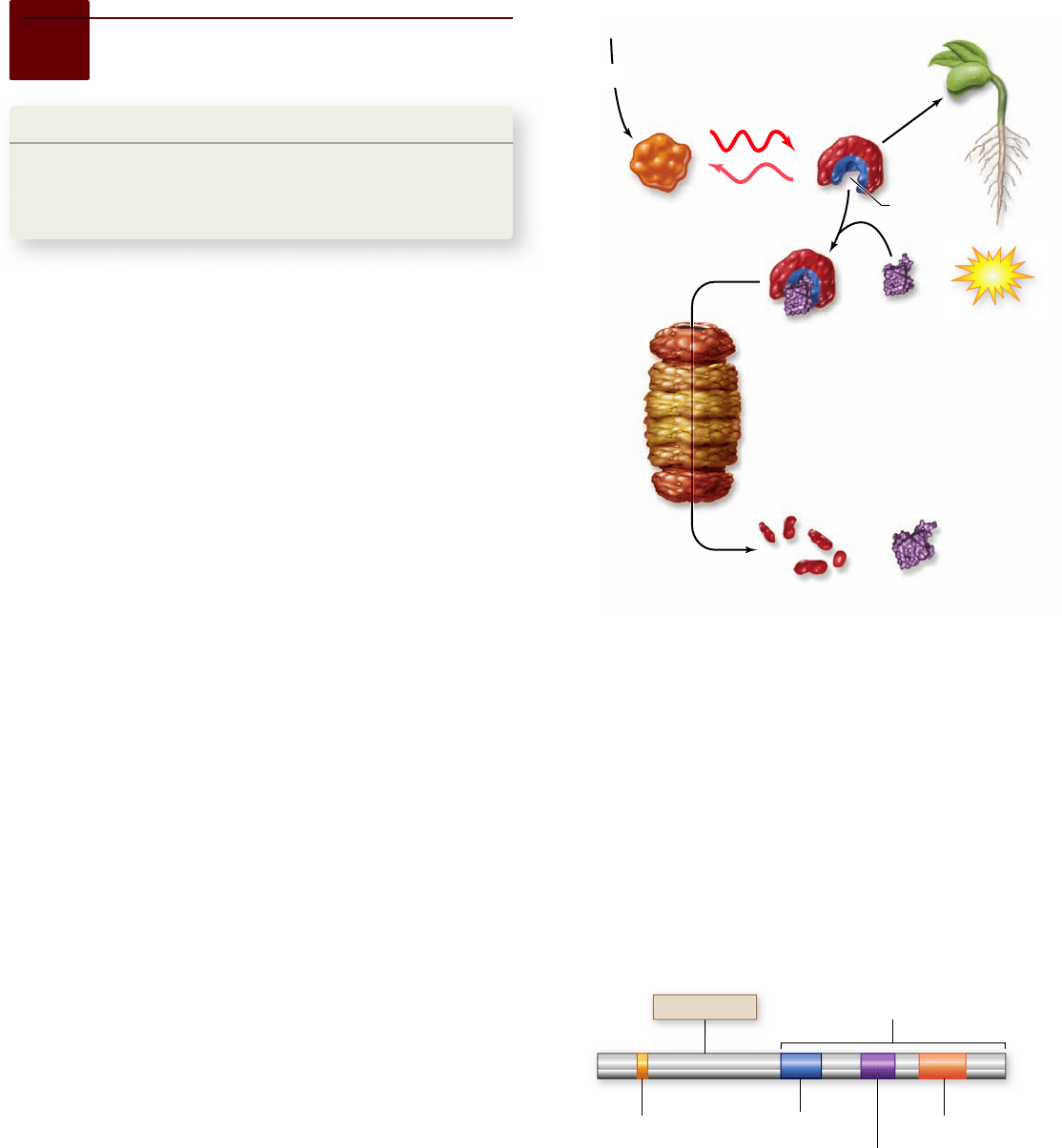
Figure 41.2
Phytochrome. Different parts of the
phytochrome molecule have distinct roles in light regulation of
growth and development. Phytochrome changes conformation
when the chromophore responds to relative amounts of red and
far-red light. The shape change affects the ability of phytochrome
to bind to other proteins that participate in the signaling process.
The ubiquitin-binding sites allow for degradation, and the protein
kinase domain allows for further signaling via phosphorylation.
Figure 41.1
How phytochrome works. PHYA is one of the
ve Arabidopsis phytochrome genes. When exposed to red light, P
r
changes to P
fr
, the active form that elicits a response in plants. P
fr
is
converted to P
r
when exposed to far-red light. The amount of P
fr
is
regulated by protein degradation. The protein ubiquitin tags P
fr
for
degradation in the proteasome.
regulated genes (figure 41.3). Phytochrome’s protein-binding
site (see figure 41.2) is essential for interactions with tran-
scription factors.
Phytochrome also works through protein kinase-signaling
pathways. When phytochrome converts to the P
fr
form, the
protein kinase domain of the apoprotien may phosphorylate a
serine and the amino (N) terminus of the phytochrome itself
41.1
Responses to Light
Learning Outcomes
Compare the pigments phytochrome and chlorophyll.1.
List growth responses influenced by phytochrome.2.
Define phototropism.3.
In chapter 8 we covered the details of photosynthesis, the pro-
cess by which plants convert light energy into chemical bond
energy. We described pigments, molecules that are capable of
absorbing light energy; you learned that chlorophylls are the
primary pigment molecules of photosynthesis. Plants contain
other pigments as well, and one of the functions of these other
pigments is to detect light and to mediate plants’ response to
light by passing on information.
Several environmental factors, including light, can initi-
ate seed germination, flowering, and other critical developmen-
tal events in the life of a plant. Photomorphogenesis is the
term used for nondirectional, light-triggered development. It
can result in complex changes in form, including flowering.
Unlike photomorphogenesis, phototropisms are direc-
tional growth responses to light. Both photomorphogenesis
and phototropisms compensate for the plant’s inability to walk
away from unfavorable environmental conditions.
P
fr
facilitates expression of light-response genes
Phytochrome is present in all groups of plants and in a few gen-
era of green algae, but not in other protists, bacteria, or fungi.
Phytochrome systems probably evolved among the green algae
and were present in the common ancestor of the plants.
The phytochrome molecule exists in two interconvertible
forms: The first form, P
r
, absorbs red light at 660 nm wavelength;
the second, P
fr
, absorbs far-red light at 730 nm. Sunlight has
more red than far-red light. P
r
is biologically inactive; it is con-
verted into P
fr
, the active form, when red photons are present. P
fr
is converted back into P
r
when far-red photons are available. In
other words, biological reactions that are affected by phytochrome
occur when P
fr
is present. When most of the P
fr
has been replaced
by P
r
, the reaction will not occur (figure 41.1) .
The pigment-containing protein phytochrome (P) con-
sists of two parts: a smaller part that is sensitive to light, called
the chromophore, and a larger portion called the apoprotein
(figure 41.2) . The apoprotein facilitates expression of light-
response genes. Over 2500 genes, 10% of the Arabidopsis ge-
nome, are involved in biological responses that begin with a
conformational change in one of the phytochromes in response
to red light. Phytochromes are involved in numerous signaling
pathways that lead to gene expression. Some pathways also in-
volve protein kinases or G proteins (described in chapter 9).
Phytochrome is found in the cytoplasm, but enters the
nucleus to facilitate transcription of light response genes.
When P
r
is converted to P
fr
, it can move into the nucleus.
Once in the nucleus, P
fr
binds with other proteins that form a
transcription complex, leading to the expression of light-
chapter
41
Sensory Systems in Plants
815www.ravenbiology.com
rav32223_ch41_814-838.indd 815rav32223_ch41_814-838.indd 815 11/16/09 2:06:13 PM11/16/09 2:06:13 PM
Apago PDF Enhancer
Protein-
binding
site of P
fr
Transcription
Gene
Transcription factors
P
r
P
fr
P
fr
P
fr
Red light
Far-red light
Cell wall
Plasma
membrane
Nucleus
1. P
fr
(but not P
r
)
can enter the
nucleus.
2. P
fr
binds to
transcription
factors of a
light-regulated
gene.
ADP
Red light
Cell wall
Plasma
membrane
Gene
P
r
P
fr
Nucleus
P
fr
P
fr
Signal
transduction
Transcription factor
T
r
a
n
s
c
r
i
p
t
i
o
n
Protein kinase
region of P
fr
Far-red light
ATP
P
i
P
P
Chlorophyll also absorbs red light, but it is not a receptor like
phytochrome. Unlike receptors that transduce information,
chlorophyll transduces energy.
The amount of P
fr
is also regulated by degradation. Ubiq-
uitin is a protein that tags P
fr
for transport to the proteasome,
a protein shredder composed of 28 proteins. The proteasome
has a channel in the center, and as proteins pass through, they
are clipped into amino acids that can be used to build other pro-
teins as described in chapter 16. The process of tagging and re-
cycling P
fr
is precisely regulated to maintain needed amounts of
phytochrome in the cell.
Although we often refer to phytochrome as a single mol-
ecule here, several different phytochromes have been identified
that appear to have specific functions. In Arabidopsis five forms
of phytochrome, PHYA to PHYE, have been characterized,
each playing overlapping but distinct roles in the light regula-
tion of growth and development.
(autophosphorylation) , or it may phosphorylate the serine of an-
other protein involved in light signaling (figure 41.4) . Phos phor-
y la tion initiates a signaling cascade that can activate transcription
factors and lead to the transcription of light-regulated genes.
Although phytochrome is involved in multiple signaling
pathways, it does not directly initiate the expression of that
10% of the Arabidopsis plant genome. Rather, phytochrome ini-
tiates expression of master regulatory genes that manage the
complex interactions leading to photomorphogenesis and
photo tropisms. Gene expression is just the first step, with hor-
mones playing important roles as well.
Inquiry question
?
You are given seed of a plant with a mutation in the protein
kinase domain of phytochrome. Would you expect to see any
red-light–mediated responses when you germinate the seed?
Explain your answer.
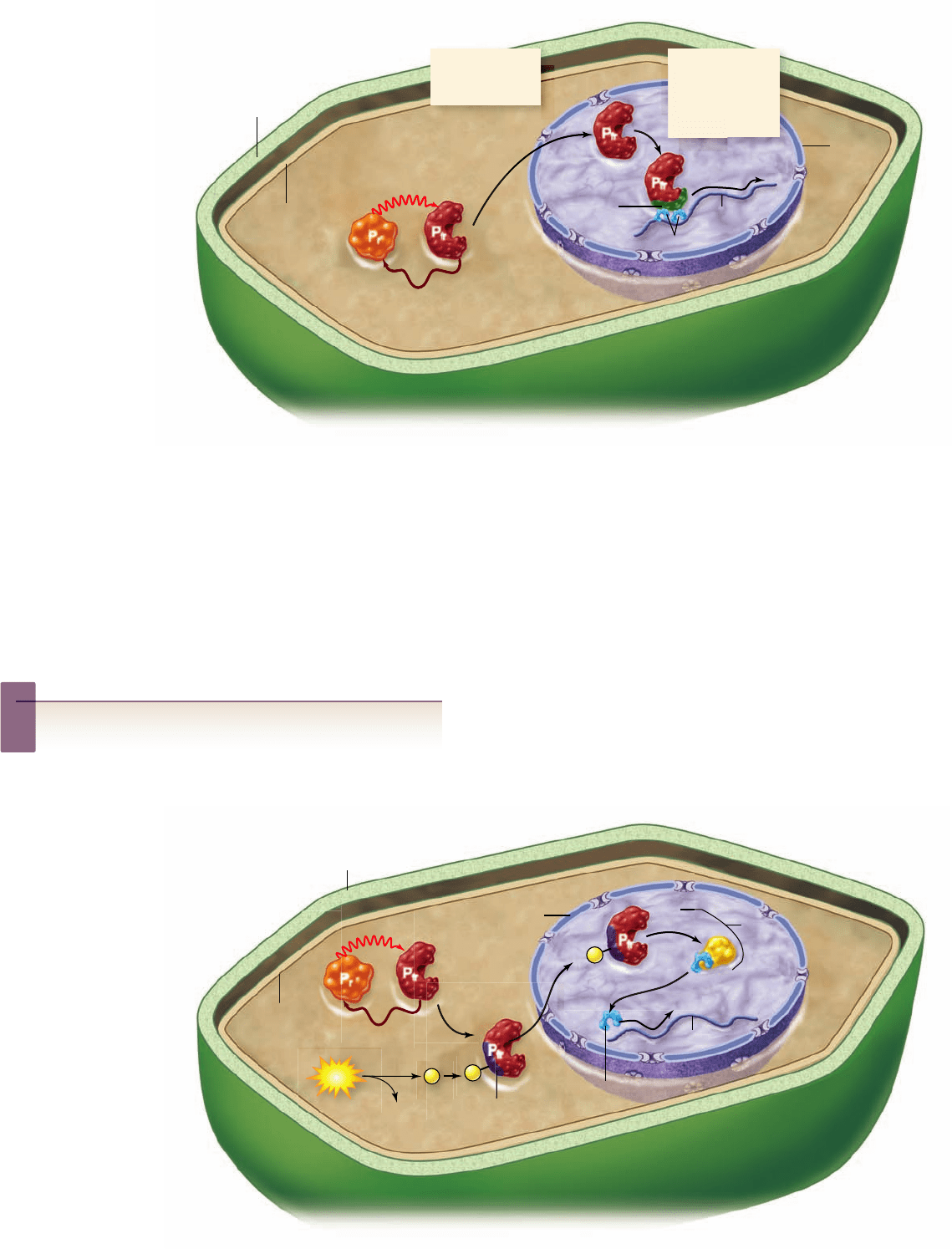
Figure 41.3
P
fr
enters
the nucleus and regulates
gene expression.
Figure 41.4
The kinase
domain of P
fr
phosphorylates
P
fr,
leading directly or
indirectly to light-regulated
gene expression. In this
example, signaling leads
to the release of a
transcription factor
from a protein
complex.
816
part
VI
Plant Form and Function
rav32223_ch41_814-838.indd 816rav32223_ch41_814-838.indd 816 11/16/09 2:06:13 PM11/16/09 2:06:13 PM
Apago PDF Enhancer
det2
Dark
Wild type
Light
a. b.
c. d.
1 µm1 µm
1 µm1 µm
Light with blue
wavelength
Light without
blue wavelength
Coleoptile bends
toward light with
blue wavelength
Coleoptile does
not bend toward
light without
blue wavelength
Green
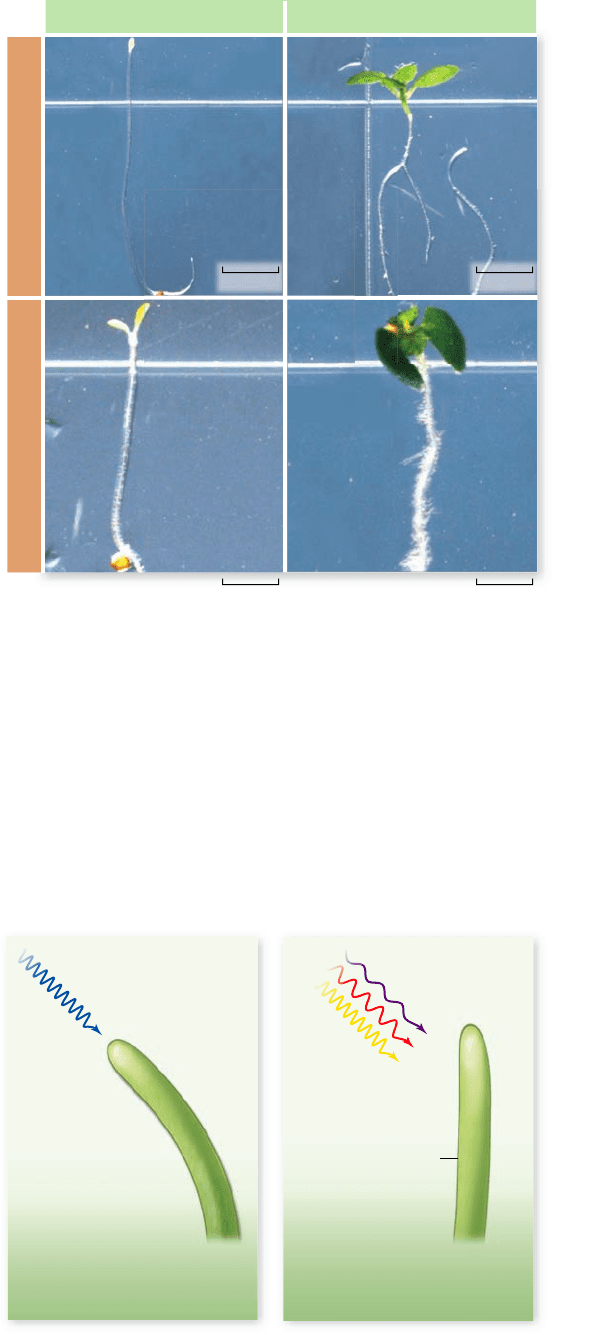
Figure 41.5
Etiolation is regulated by light and the
det2 gene in Arabidopsis. det2 is needed for etiolation in dark
grown plants.
Positive phototropism in stems
Phototropic responses include the bending of growing stems
and other plant parts toward sources of light with blue wave-
lengths (460-nm range) (figure 41.6) . In general, stems are
positively phototropic, growing toward a light source, but most
roots do not respond to light, or in exceptional cases, exhibit
only a weak negative phototropic response.
Many growth responses are linked
to phytochrome action
Phytochrome is involved in a number of plant growth responses,
including seed germination, shoot elongation, and detection of
plant spacing.
Seed germination
Seed germination is inhibited by far-red light and stimulated by
red light in many plants. Because chlorophyll absorbs red light
strongly but does not absorb far-red light, light filtered through
the green leaves of canopy trees above a seed contains a reduced
amount of red light. The far-red light inhibits seed germination
by converting P
fr
into the biologically inactive P
r
form.
Consequently, seeds on the ground under deciduous
plants, which lose their leaves in winter, are more apt to germi-
nate in the spring after the leaves have decomposed and the
seeds are exposed to direct sunlight and a greater amount of red
light. This adaptation greatly improves the chances that seed-
lings will become established before leaves on taller plants shade
the seedlings and reduce sunlight available for photosynthesis.
Shoot elongation
Elongation of the shoot in an etiolated seedling (one that is pale
and slender from having been kept in the dark) is caused by a lack
of red light. The morphology of such plants becomes normal
when they are exposed to red light, increasing the amount of P
fr
.
Etiolation is an energy conservation strategy to help plants
growing in the dark reach the light before they die. They don’t
green up until light becomes available, and they divert energy to
internode elongation. This strategy is useful for seedlings when
they have sprouted underground or under leaf cover.
The de-etiolated (det2) Arabidopsis mutant has a poor
etiolation response; seedlings fail to elongate in the dark
(figure 41.5) . The det2 mutants are defective in an enzyme nec-
essary for biosynthesis of a brassinosteroid hormone, leading
researchers to propose that brassinosteroids play a role in plant
responses to light through phytochrome. (Brassinosteroids and
other hormones are discussed later in this chapter.)
Detection of plant spacing
Red and far-red light also signal plant spacing. Again, leaf shad-
ing increases the amount of far-red light relative to red light.
Plants somehow measure the amount of far-red light bounced
back to them from neighboring plants. The closer together
plants are, the more far-red relative to red light they perceive
and the more likely they are to grow tall, a strategy for outcom-
peting others for sunshine. If their perception is distorted by
putting a light-blocking collar around the stem, the elongation
response no longer occurs.
Light a ects directional growth
Phototropisms, directional growth responses, contribute to the
variety of overall plant shape we see within a species as shoots
grow toward light. Tropisms are particularly intriguing because
they challenge us to connect environmental signals with cellu-
lar perception of the signal, transduction into biochemical
pathways, and ultimately an altered growth response.
Figure 41.6
Phototropism. Oat coleoptiles growing toward
light with blue wavelengths. Colors indicate the color of light
shining on coleoptiles. Arrows indicate the direction of light.
chapter
41
Sensory Systems in Plants
817www.ravenbiology.com
rav32223_ch41_814-838.indd 817rav32223_ch41_814-838.indd 817 11/16/09 2:06:17 PM11/16/09 2:06:17 PM
Apago PDF Enhancer
Blue light
Cell
membrane
PHOT1
Cytosol
1. Light with b
lue wavelengths strikes plant
cell membrane with phototropin 1 (PHOT1).
2. Blue light is absorbed by PHOT1, causing
a change in conformation.
Signal
transduction
3. This conformational change results in auto-
phosphorylation, triggering a signal transduction.
PHOT1
PHO
T1
ADP
P
A
TP ATP
ATP
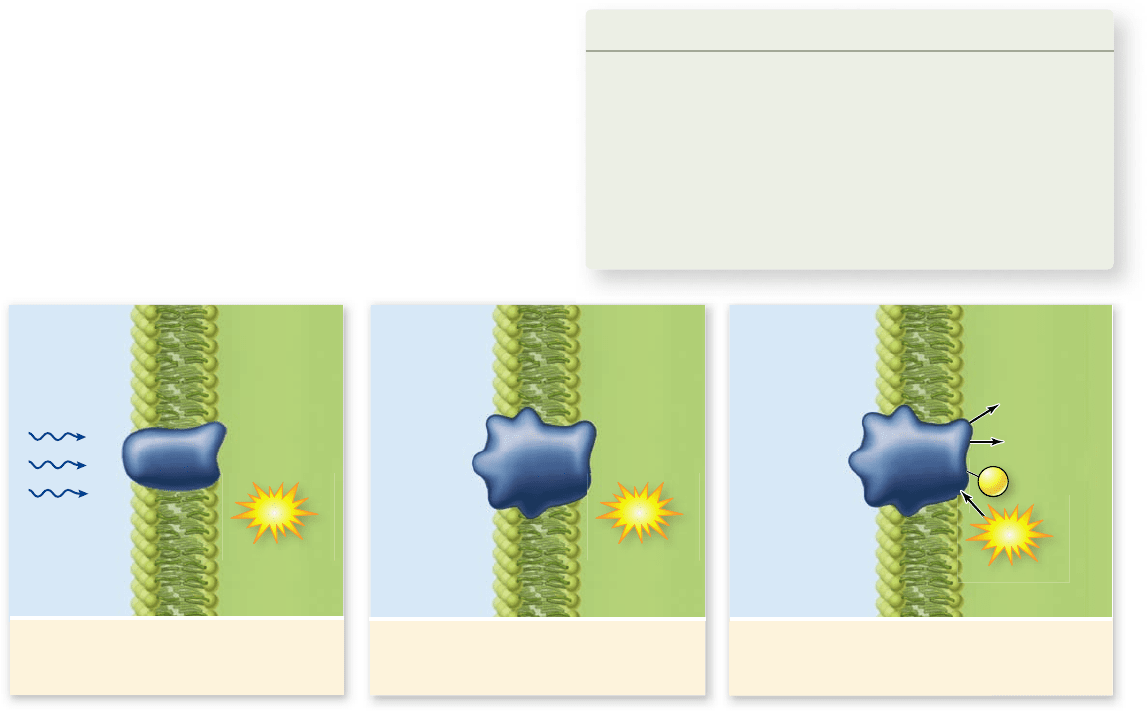
Figure 41.7
Blue-light receptor. Blue light activates the light-sensing region of PHOT1, which in turn stimulates the kinase region of
PHOT1 to autophosphorylate. This is just the rst step in a signal transduction pathway that leads to phototropic growth.
de Mairan put the plants in total darkness, they continued “sleep-
ing” and “waking” just as they had when exposed to night and
day. This is one of four characteristics of a circadian rhythm—it
must continue to run in the absence of external inputs. Plants
with a circadian rhythm do not actually have to be experiencing
a pattern of daylight and darkness for their cycle to occur.
In addition, a circadian rhythm must be about 24 hr in
duration, and the cycle can be reset or entrained. Although
plants kept in darkness will continue the circadian cycle, the
cycle’s period may gradually move away from the actual day–
night cycle, becoming desynchronized. In the natural environ-
ment, the cycle is entrained to a daily cycle through the action
of phytochrome and blue-light photoreceptors.
Other eukaryotes, including humans, have circadian
rhythms, and perhaps you have experienced jet lag when you
traveled by airplane across a few time zones. Recovery from jet
lag involves entrainment to the new time zone.
Another characteristic of a circadian cycle is that the clock
can compensate for differences in temperature, so that the du-
ration remains unchanged. This characteristic is unique, con-
sidering what we know about biochemical reactions, because
most rates of reactions vary significantly based on temperature.
Circadian clocks exist in many organisms, and they appear to
have evolved independently multiple times.
The reversible circadian rhythm changes in leaf move-
ments are typically brought about by alteration of cells’ turgor
pressure; we describe these changes in a later section.
Learning Outcomes Review 41.1
Plants grow and develop in response to environmental signals. Phytochrome,
a red-light receptor, transduces information, while chlorophyll transduces
energy. Phytochrome infl uences seed germination, shoot elongation, and
other growth. Phototropism is directional growth in response to light and
is controlled by a blue-light receptor. Circadian rhythms are 24-hr cycles
entrained to the day–night cycle.
■ Why would it be an advantage to have both
phytochromes and chlorophylls as pigments?
The phototropic reactions of stems are clearly of adaptive
value, giving plants greater exposure to available light. They are
also important in determining the development of plant organs
and, therefore, the appearance of the plant. Individual leaves
may also display phototropic responses; the position of leaves is
important to the photosynthetic efficiency of the plant. A plant
hormone called auxin, discussed in a later section, is probably
involved in most, if not all, of the phototropic growth responses
of plants.
Blue-light receptors
The recent identification of blue-light receptors in plants is
leading to exciting discoveries of how the light signal can ulti-
mately be connected with a phototropic response. A blue-light
receptor phototropin 1 (PHOT1) was identified through the
characterization of a nonphototropic mutant.
The phot1 protein has two light-sensing regions, and
they change conformation in response to blue light. This
change activates another region of the protein that is a kinase.
Both PHOT1 and a similar receptor, PHOT2, are receptor ki-
nases unique to plants. A portion of PHOT1 is a kinase that
autophosphorylates (figure 41.7) . Currently, only the early
steps in this signal transduction are understood. It will be in-
triguing to watch the story of the phot1 signal transduction
pathway unfold, leading to an explanation of how plants grow
toward the light.
Circadian clocks are independent of light
but are entrained by light
Although shorter and much longer naturally occurring rhythms
also exist, circadian rhythms (“around the day”) are particu-
larly common and widespread among eukaryotic organisms.
They relate the day–night cycle on Earth, although they are
not exactly 24 hr in duration.
Jean de Mairan, a French astronomer, first identified circa-
dian rhythms in 1729. He studied the sensitive plant (Mimosa
pudica), which closes its leaflets and leaves at night. When
818
part
VI
Plant Form and Function
rav32223_ch41_814-838.indd 818rav32223_ch41_814-838.indd 818 11/16/09 2:06:19 PM11/16/09 2:06:19 PM
Apago PDF Enhancer
Gravity
Vascular tissue
Endodermal cells
Epidermal cells
Signal
Gravity
response cells
Gravity-
sensing cells
Amyloplasts
Zone of
elongation
Signal
Columella
cells with
amyloplasts
Gravity-
sensing
cells in
root cap
b.
a.
Stem
Root
Gravity
response
cells
Figure 41.8
Plant response to gravity. This plant was
placed horizontally and allowed to grow for seven days. Note the
negative gravitational response of the shoot.
Inquiry question
?
Where would you expect to find the highest concentration
of auxin?
41.2
Responses to Gravity
Learning Outcomes
Identify the structures in cells that perceive gravity.1.
Explain how stems and roots bend in response to gravity.2.
When a potted plant is tipped over and left in place, the shoot
bends and grows upward. The same thing happens when a
storm pushes plants over in a field. These are examples of
gravitropism, the response of a plant to the gravitational field
of the Earth (figure 41.8; see also chapter opener). Because
plants also grow in response to light, separating out photo-
tropic effects is important in the study of gravitropism.
Plants align with the gravitational
eld: An overview
Gravitropic responses are present at germination, when the root
grows down and the shoot grows up. Why does a shoot have a
negative gravitropic response (growth away from gravity), while
a root has a positive one? Auxins play a primary role in grav i tro-
pic responses, but they may not be the only way gravitational
information is sent through the plant.
The opportunity to experiment on the Space Shuttle in a
gravity-free environment has accelerated research in this area.
Analysis of gravitropic mutants is also adding to our under-
standing of gravitropism. Investigators propose that four gen-
eral steps lead to a gravitropic response:
Gravity is perceived by the cell.1.
A mechanical signal is transduced into a physiological 2.
signal in the cell that perceives gravity.
The physiological signal is transduced inside the cell and 3.
externally to other cells.
Differential cell elongation occurs, affecting cells in the 4.
“up” and “down” sides of the root or shoot.
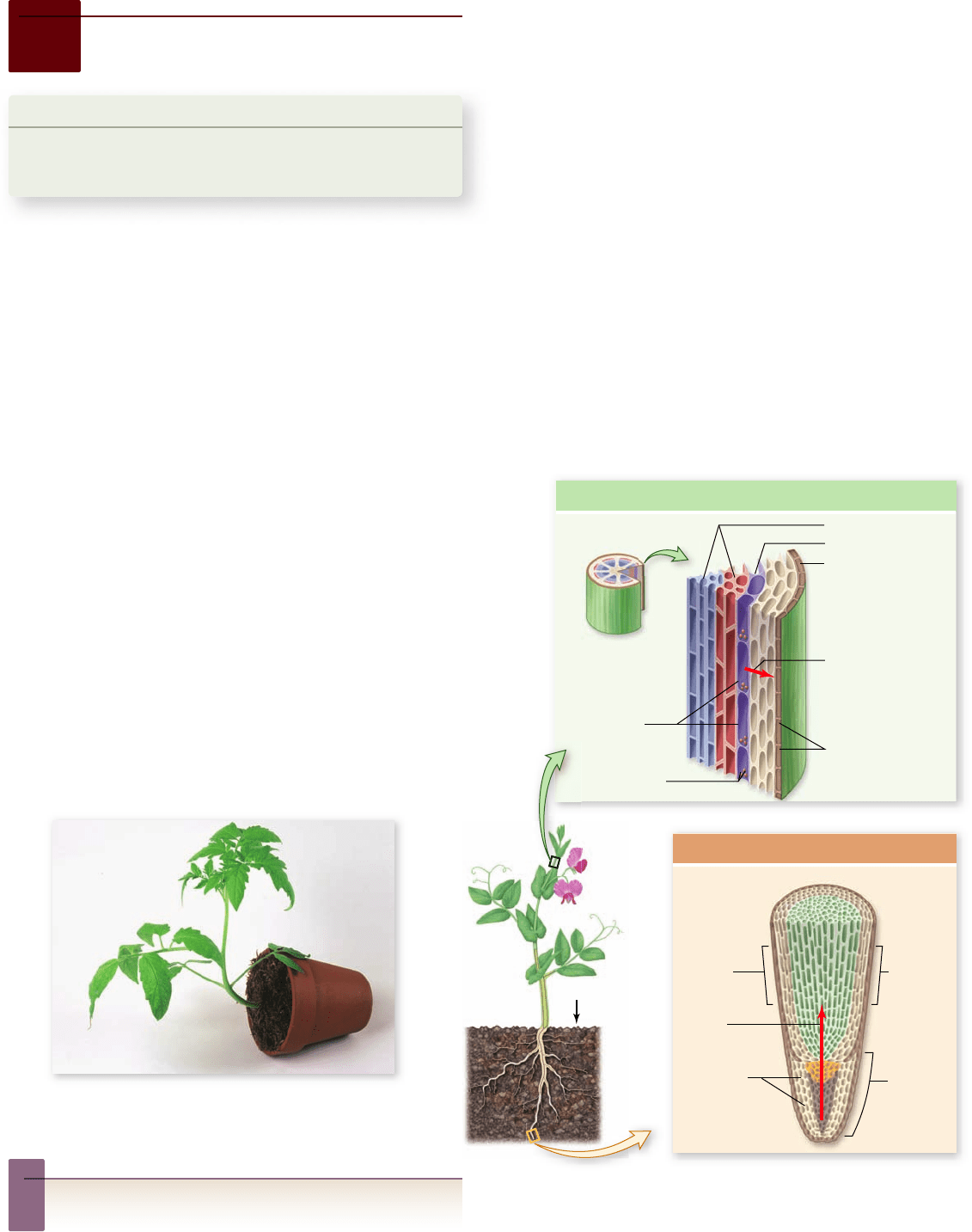
Currently researchers are debating the steps involved in
perception of gravity. In shoots, gravity is sensed along the
length of the stem in the endodermal cells that surround
the vascular tissue (figure 41.9a) , and signaling occurs toward
the outer epidermal cells. In roots, the cap is the site of gravity
perception, and a signal must trigger differential cell elonga-
tion and division in the elongation zone (figure 41.9b).
In both shoots and roots, amyloplasts , plastids that con-
tain starch, sink toward the center of the gravitational field and
thus may be involved in sensing gravity. Amyloplasts interact
with the cytoskeleton. Auxin evidently plays a role in transmit-
ting a signal from the gravity-sensing cells that contain amylo-
plasts and the site where growth occurs. The link between
amyloplasts and auxin is not fully understood.
Stems bend away from a center of gravity
Increased auxin concentration on the lower side in stems causes
the cells in that area to grow more than the cells on the upper
side. The result is a bending upward of the stem against the
Figure 41.9
Sites of gravity sensing and response in
roots and shoots.
chapter
41
Sensory Systems in Plants
819www.ravenbiology.com
rav32223_ch41_814-838.indd 819rav32223_ch41_814-838.indd 819 11/16/09 2:06:22 PM11/16/09 2:06:22 PM
Apago PDF Enhancer
a.
Endodermis
Epidermis
Loss of
functional
endodermis
Epidermis
Gravity Gravity
Wild Type Mutants
Root sections
1,600 µm 1,600 µm
1,600 µm
b.
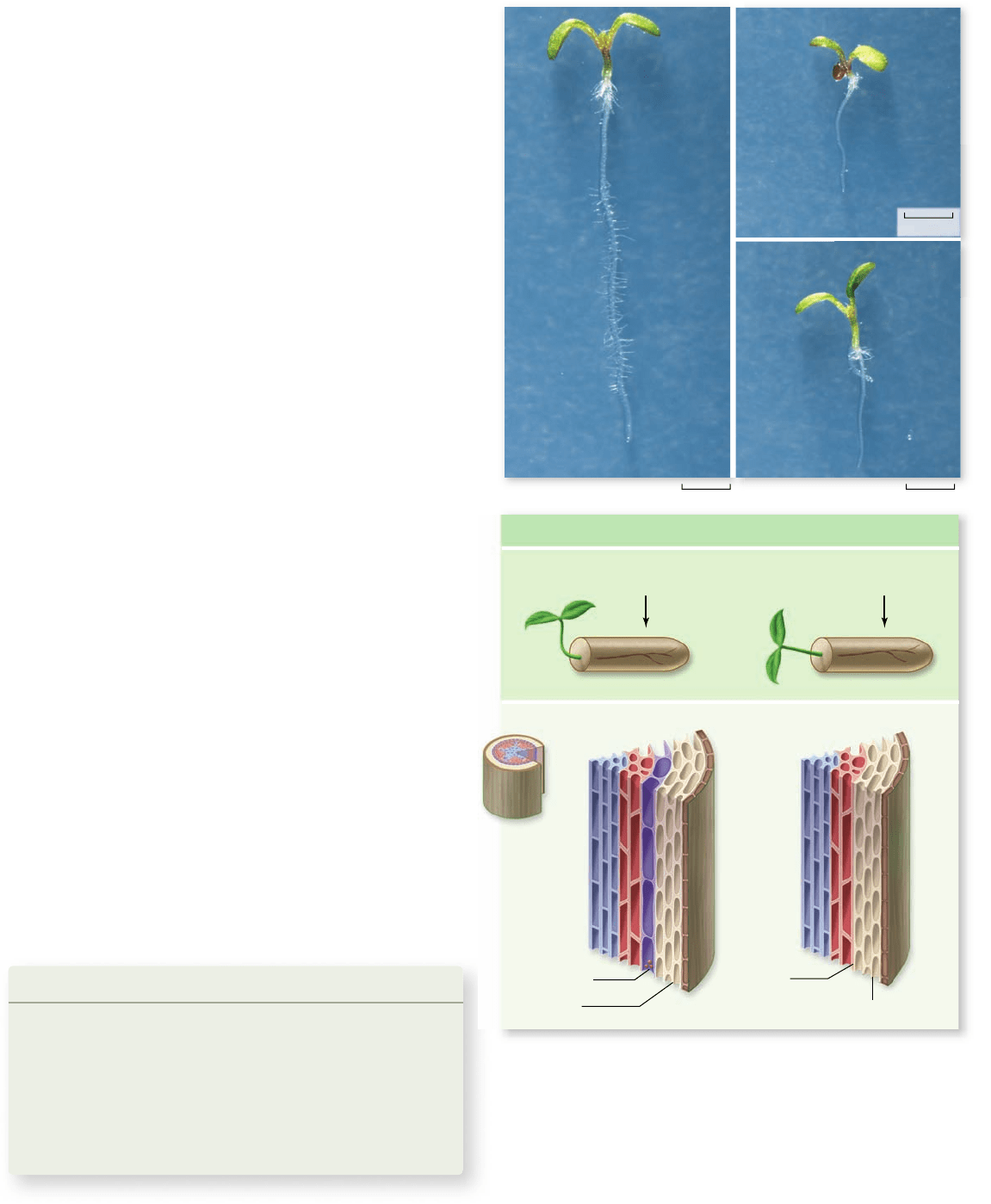
Figure 41.10
Amyloplasts in stem endoderm is needed
for gravitropism. a. The scr and shr mutants of Arabidopsis have
abnormal root development because they lack a fully differentiated
endodermal layer. b. The endodermal defect extends into the stem,
eliminating the positive gravitropic response of wild-type stems.
force of gravity—in other words, a negative gravitropic response.
Such differences in hormone concentration have not been as
well documented in roots. Nevertheless, the upper sides of
roots oriented horizontally grow more rapidly than the lower
sides, causing the root ultimately to grow downward; this phe-
nomenon is known as positive gravitropic response.
Two Arabidopsis mutants, scarecrow (scr) and short root (shr),
were initially identified by aberrant root phenotypes, but they
also affect shoot gravitropism (figure 41.10) . Both genes are
needed for normal endodermal development (see figure 36.16).
Without a fully functional endodermis, stems lack a normal
gravitropic response. These endodermal cells carry amyloplasts
in the stems, and in the mutants, stem endodermis fails to dif-
ferentiate and produce gravity-sensing amyloplasts.
Roots bend toward a center of gravity
In roots, the gravity-sensing cells are located in the root cap,
and the cells that actually undergo asymmetrical growth are in
the distal elongation zone, which is closest to the root cap. How
the information is transferred over this distance is an intriguing
question. Auxin may be involved, but when auxin transport is
suppressed, a gravitropic response still occurs in the distal elon-
gation zone. Some type of electrical signaling involving mem-
brane polarization has been hypothesized, and this idea was
tested aboard the Space Shuttle. So far, the jury is still out on
the exact mechanism.
The growing number of auxin mutants in roots do con-
firm that auxin has an essential role in root gravitropism, even
if it may not be the long-distance signal between the root cap
and the elongation zone. Mutations that affect both auxin in-
flux and efflux can eliminate the gravitropic response by alter-
ing the directional transport of this hormone.
It may surprise you to learn that in tropical rain forests,
the roots of some plants may grow up the stems of neighbor-
ing plants, instead of exhibiting the normal positive grav-
itropic responses typical of other roots. It appears that
rainwater dissolves nutrients, both while passing through the
lush upper canopy of the forest, and subsequently while trick-
ling down the tree trunks. This water is a more reliable source
of nutrients for the roots than the nutrient-poor rain forest
soils in which the plants are anchored. Explaining this obser-
vation in terms of current hypotheses is a challenge. It has
been proposed that roots are more sensitive to auxin than are
shoots, and that auxin may actually inhibit growth on the low-
er side of a root, resulting in a positive gravitropic response.
Perhaps in these tropical plants, the sensitivity to auxin in
roots is reduced.
Learning Outcomes Review 41.2
Gravitropism is the response of a plant to gravity. In endodermis cells of
shoots and root cap cells of roots, amyloplasts settle to the bottom, allowing
the plant to sense the direction of gravitational pull. In response, cells on
the lower side of stems and the upper side of roots grow faster than other
cells, causing stems to grow upward and roots to grow downward.
■ What would happen to a plant growing under
weightless conditions, such as in an orbiting spacecraft?
820
part
VI
Plant Form and Function
rav32223_ch41_814-838.indd 820rav32223_ch41_814-838.indd 820 11/16/09 2:06:24 PM11/16/09 2:06:24 PM

Apago PDF Enhancer
Figure 41.11
Thigmotropism. The thigmotropic response
of these twining stems causes them to coil around the object with
which they have come in contact.
of trap closure is enhanced by the shape of the leaf, which flips
between a concave and convex form.
What is particularly amazing about this response is that
the outer cells actually grow. The cell walls may soften in re-
sponse to an electrical signal that moves through the leaf when
the trigger hairs are touched, and the high pressure (turgor) of
the water inside the cells pushes against the softened walls to
enlarge the cell. This growth mechanism is distinct from other
turgor movements (to be discussed shortly) because the water is
already within the cell, not transferred into it in response to the
electrical signal.
If digestible prey is caught, the trap will open about 24 hr
later through the growth of inner cells of the flytrap. This
growth response can only be triggered about four times before
the leaf dies, presumably because so much energy is required
for the individual flytrap to do this trick .
Arabidopsis is proving valuable as a model system to ex-
plore plant responses to touch. A gene has been identified that
is expressed in 100-fold higher levels 10 to 30 min after touch.
The gene codes for a calmodulin-like protein that binds Ca2
+
,
which is involved in a number of plant physiological processes.
Given the value of a molecular genetics approach in dissecting
the pathways leading from an environmental signal to a growth
response, the touch gene provides a promising first step in un-
derstanding how plants respond to touch.
Reversible responses to touch and other
stimuli involve turgor pressure
Unlike tropisms, some touch-induced plant movements are not
based on growth responses, but instead result from reversible
changes in the turgor pressure of specific cells. Turgor, as de-
scribed in chapter 38, is pressure within a living cell resulting
from diffusion of water into it. If water leaves turgid cells, the
cells may collapse, causing plant movement; conversely, water
41.3
Responses to Mechanical Stimuli
Learning Outcomes
Define thigmomorphogenesis.1.
Contrast thigmotropism with thigmonastic responses.2.
Explain why the movement of leaves of a sensitive plant is 3.
not an example of a tropism.
Plants respond to touch and other mechanical stimuli in differ-
ent ways, depending on the species and the type of stimulus. In
some cases, plants permanently change form in response to me-
chanical stresses, a process termed thigmomorphogenesis.
This change can be seen in trees growing where an almost con-
stant wind blows from one direction. Other responses are re-
versible and occur in the short term, as when mimosa leaves
droop in response to touch. These responses are not tropisms,
but rather turgor movements that come about due to changes
in the internal water pressure of cells.
Touch can trigger irreversible
growth responses
A thigmotropism is directional growth of a plant or plant
part in response to contact with an object, animal, other plant,
or even the wind. Thigmonastic responses are very similar to
thigmotropisms, except that the direction of the growth re-
sponse is the same regardless of the direction of the stimulus.
Tall, slender plants are more likely to snap during a wind
or rain storm than are plants with short, wide internodes. Envi-
ronmental signals such as regularly occurring winds or the rub-
bing of one plant against another are sufficient to induce
morphogenetic change leading to thicker, shorter internodes.
In some cases, even repeated touching of a plant with a finger is
enough to cause a change in plant growth.
Tendrils are modified stems that some species use to an-
chor themselves in the environment (figure 41.11 ). When a
tendril makes contact with an object, specialized epidermal cells
perceive the contact and promote uneven growth, causing the
tendril to curl around the object, sometimes within only 3 to
10 min. Two hormones, auxin and ethylene, appear to be in-
volved in tendril movements, and they can induce coiling even
in the absence of any contact stimulus. Curiously, the tendrils
of some species coil toward the site of the stimulus (thigmotro-
pic growth), while those of other species may always coil clock-
wise, regardless of the side of the tendril that makes contact
with an object. In some other plants, such as clematis, bind-
weed, and dodder, leaf petioles or unmodified stems twine
around other stems or solid objects.
Perhaps the most dramatic touch response is the snap-
ping of a Venus flytrap. As discussed in chapter 39, the
modified leaves of the flytrap close in response to a touch stim-
ulus, trapping insects or other potential sources of protein. A
flytrap can shut in a mere 0.5 sec. The enlarged epidermal or
mesophyll cells of the flytrap cause the trap to close. The speed
chapter
41
Sensory Systems in Plants
821www.ravenbiology.com
rav32223_ch41_814-838.indd 821rav32223_ch41_814-838.indd 821 11/16/09 2:06:30 PM11/16/09 2:06:30 PM