
Raven P.H., Johnson G.B., Mason K.A. Biology (Ninth Edition)
Подождите немного. Документ загружается.

Apago PDF Enhancer
a.
b.
Pulvinus
Vascular tissue
Leaflet blade
Petiole
Cells losing turgor
Cl
:
K
;
H
2
O
Cells gaining turgor
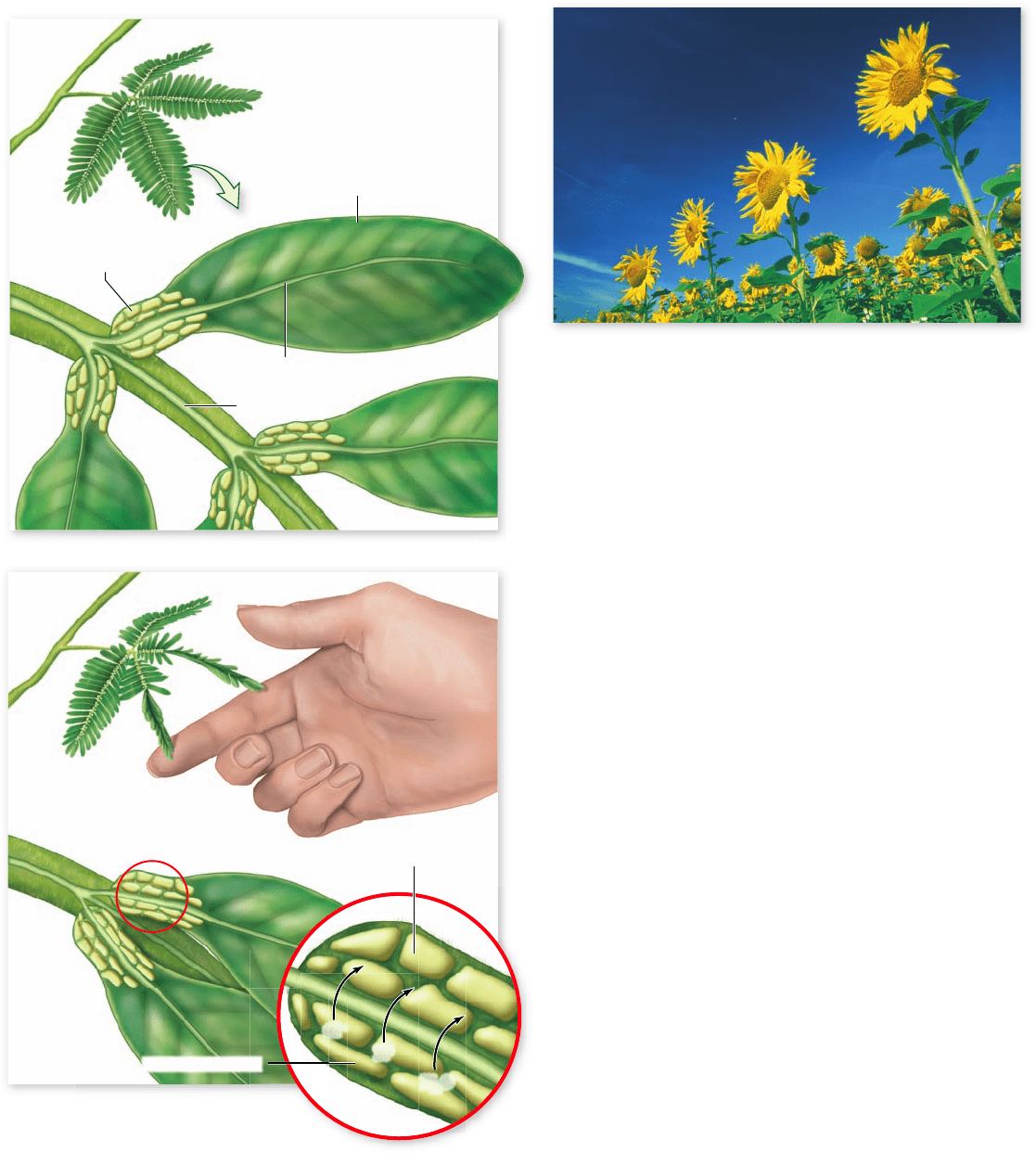
Figure 41.12
Sensitive plant (Mimosa pudica).
a. The blades of Mimosa leaves are divided into numerous lea ets;
at the base of each lea et is a swollen structure called a pulvinus.
b. Changes in turgor cause lea ets to fold in response to a stimulus.
When leaves are touched (center two leaves), ions move to the outer
side of the pulvinus, water follows by osmosis, and the decreased
interior turgor pressure leads to folding.
entering a limp cell may also cause movement as the cell once
more becomes turgid.
Many plants, including those of the legume family (Fa-
baceae), exhibit leaf movements in response to touch or other
stimuli. After exposure to a stimulus, the changes in leaf orien-
tation are mostly associated with rapid turgor pressure changes
in pulvini (singular, pulvinus), two-sided multicellular swellings
located at the base of each leaf or leaflet. When leaves with
pulvini, such as those of the sensitive plant (Mimosa pudica), are
stimulated by wind, heat, touch, or in some instances, intense
light, an electrical signal is generated. The electrical signal is
translated into a chemical signal, with potassium ions being
pumped from the cells in one-half of a pulvinus to the intercel-
lular spaces in the other half, leading to the rapid osmosis of
water to one side of the pulvinus.
The loss of turgor in half of the pulvinus causes the leaf to
“fold.” The movements of the leaves and leaflets of a sensitive
plant are especially rapid; the folding occurs within a second or
two after the leaves are touched (figure 41.12) . Over a span of
about 15 to 30 min after the leaves and leaflets have folded,
water usually diffuses back into the same cells from which it
left, and the leaf returns to its original position.
Some turgor movements are triggered by light. For ex-
ample, the leaves of some plants may track the Sun, with their
blades oriented at right angles to it; how their orientation is
directed, however, is poorly understood. Such leaves can move
quite rapidly (as much as 15 degrees an hour). This movement
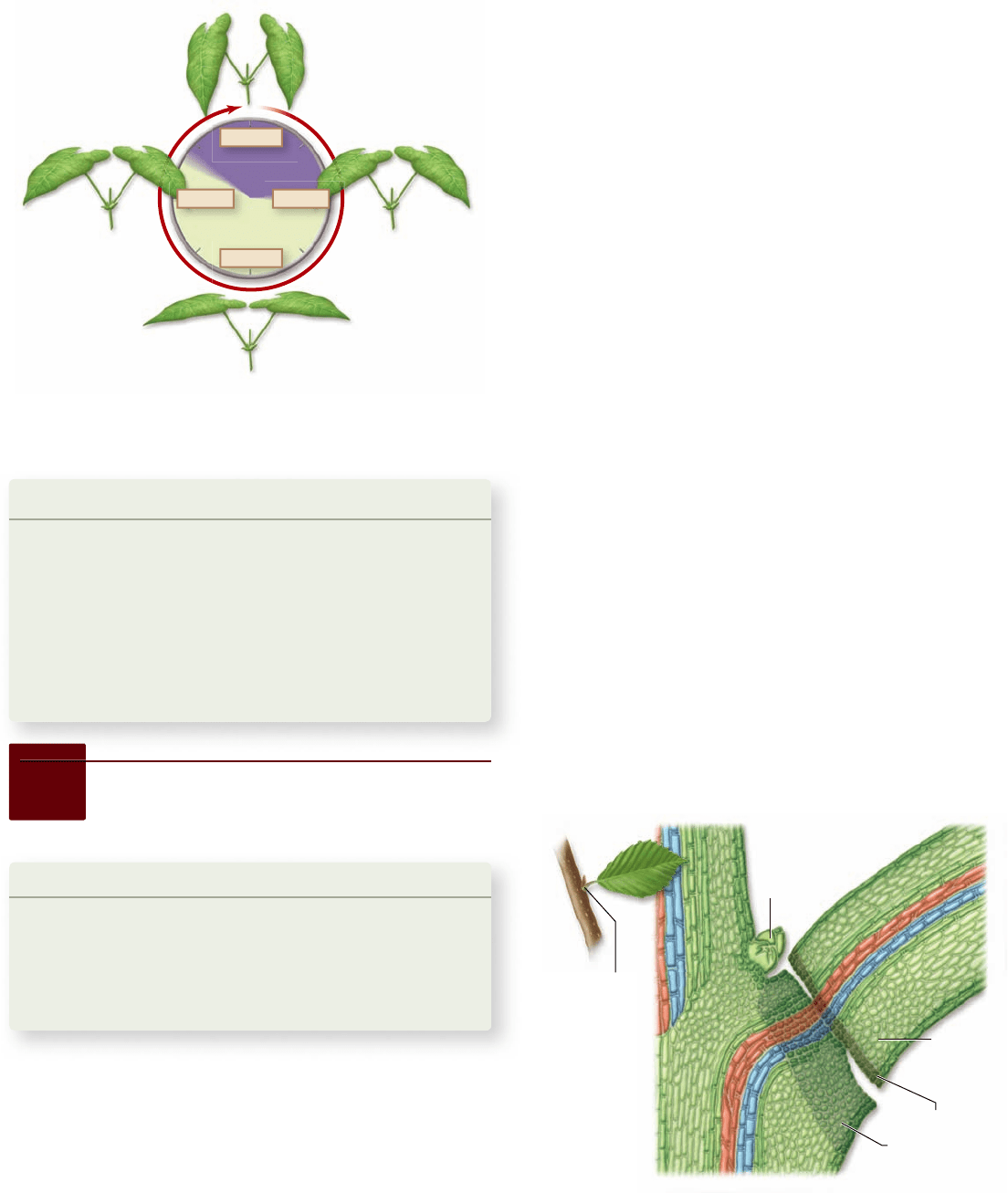
maximizes photosynthesis and is analogous to solar panels de-
signed to track the Sun (figure 41.13) .
Some of the most familiar reversible changes due to turgor
pressure are the circadian rhythms seen in leaves and flowers that
open during the day and close at night, or vice versa. For example,
the flowers of four o’clocks open in the afternoon, and evening
primrose petals open at night. As described earlier, sensitive plant
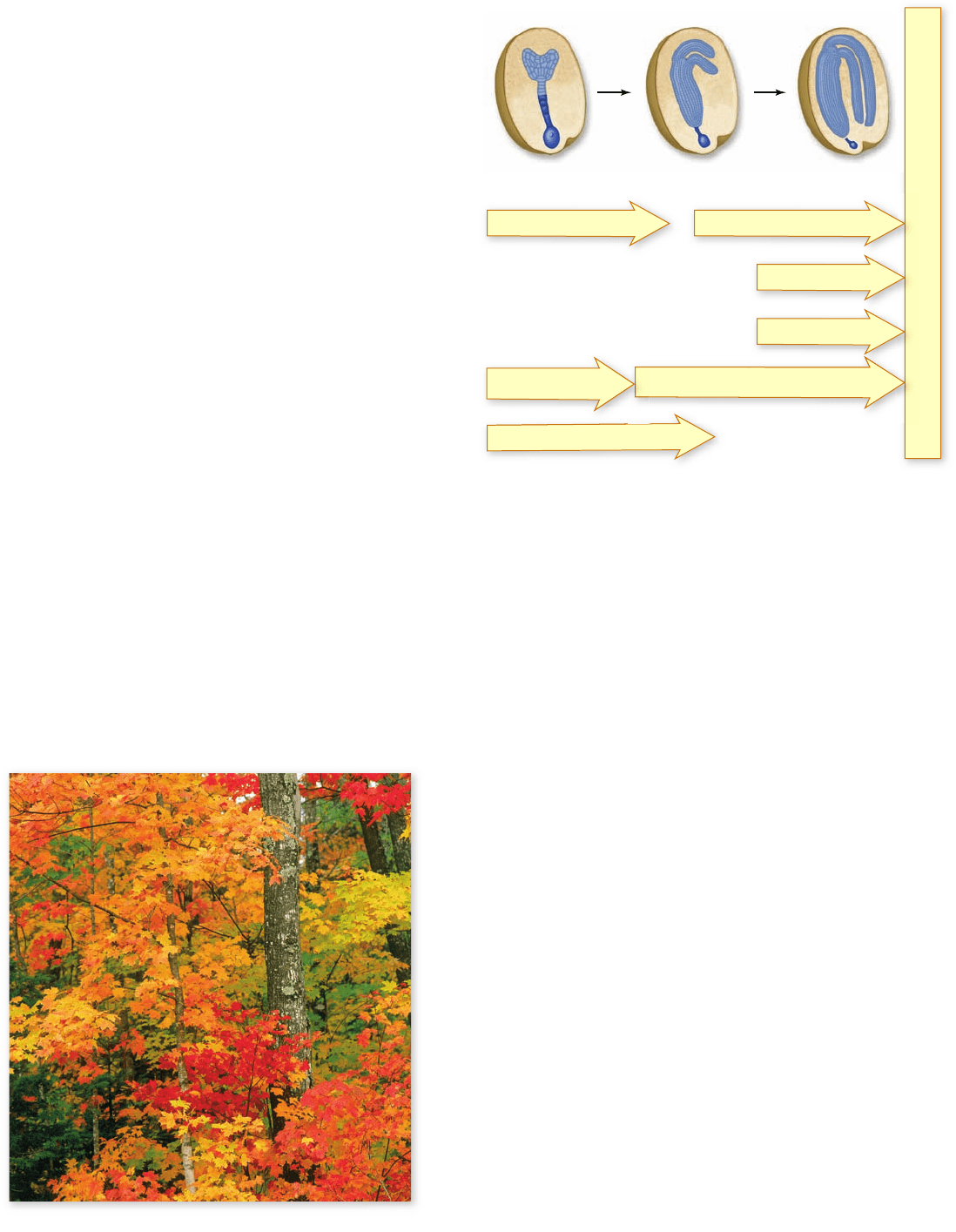
leaves also close at night. Bean leaves are horizontal during the day
when their pulvini are turgid, but become more or less vertical at
night as the pulvini lose turgor (figure 41.14) . These sleep move-
ments reduce water loss from transpiration during the night, but
maximize photosynthetic surface area during the day.
Figure 41.13
Heliotropism. These sun owers track the
movement of the Sun every day.
822
part
VI
Plant Form and Function
rav32223_ch41_814-838.indd 822rav32223_ch41_814-838.indd 822 11/16/09 2:06:32 PM11/16/09 2:06:32 PM
Apago PDF Enhancer
6:00 am6:00 pm
12:00 am
12:00 pm
Axillary bud
Petiole
Separation layer
Protective layer
Abscission
zone
Figure 41.14
Sleep movements in bean leaves. In the
bean plant, leaf blades are oriented horizontally during the day and
vertically at night.
41.4
Responses to Water
and Temperature
Learning Outcomes
List the environmental factors that can lead to dormancy.1.
Explain why seed dormancy is an important evolutionary 2.
innovation.
Identify the types of biological molecules that are most 3.
directly affected by low and high temperatures.
Sometimes, modifying the direction of growth is not enough to
protect a plant from harsh conditions. The ability to cease
growth and go into a dormant stage when conditions become
unfavorable, such as during seasonal changes in temperate cli-
mates, provides a survival advantage. The extreme example is
seed dormancy, but there are intermediate approaches to wait-
ing out the bad times as well.
Plants also have developed adaptations to more short-term
fluctuations in temperature, such as might occur during a heat
wave or cold snap. These strategies include changes in mem-
brane composition and the production of heat shock proteins.
Learning Outcomes Review 41.3
Thigmomorphogenesis is a change in growth form in response to a
mechanical stress (physical contact or wind). Thigmotropism is directional
growth, whereas a thigmonastic response has no directionality. A tropism
is an irreversible growth response; a touch-induced plant movement, such
as exhibited by Mimosa pudica, is reversible and is based on changes in
turgor pressure.
■ What would be some advantages of having leaves that
fold when stimulated?
Dormancy is a response to water,
temperature, and light
In temperate regions, we generally associate dormancy with win-
ter, when freezing temperatures and the accompanying unavail-
ability of water make it impossible for most plants to grow.
During this season, buds of deciduous trees and shrubs remain
dormant, and apical meristems remain well protected inside en-
folding scales. Perennial herbs spend the winter underground,
existing as stout stems or roots packed with stored food. Many
other kinds of plants, including most annuals, pass the winter as
seeds. Often dormancy begins with the dropping of leaves, which
you have probably seen occur in deciduous trees in the autumn.
Organ abscission
Deciduous leaves are often shed as the plant enters dormancy. The
process by which leaves or petals are shed is called abscission.
Abscission can be useful even before dormancy is estab-
lished. For example, shaded leaves that are no longer photosyn-
thetically productive can be shed. Petals, which are modified leaves,
may senesce once pollination occurs. Orchid flowers remain fresh
for long periods of time, even in a florist shop; however, once pol-
lination occurs, a hormonal change is triggered that leads to petal
senescence. This strategy makes sense in terms of allocation of
energy resources because the petals are no longer necessary to at-
tract a pollinator. One advantage of organ abscission, therefore, is
that nutrient sinks can be discarded, conserving resources.
On a larger scale, deciduous plants in temperate areas
produce new leaves in the spring and then lose them in the fall.
In the tropics, however, the production and subsequent loss of
leaves in some species is correlated with wet and dry seasons.
Evergreen plants, such as most conifers, usually have a com-
plete change of leaves every two to seven years, periodically
losing some but not all of their leaves.
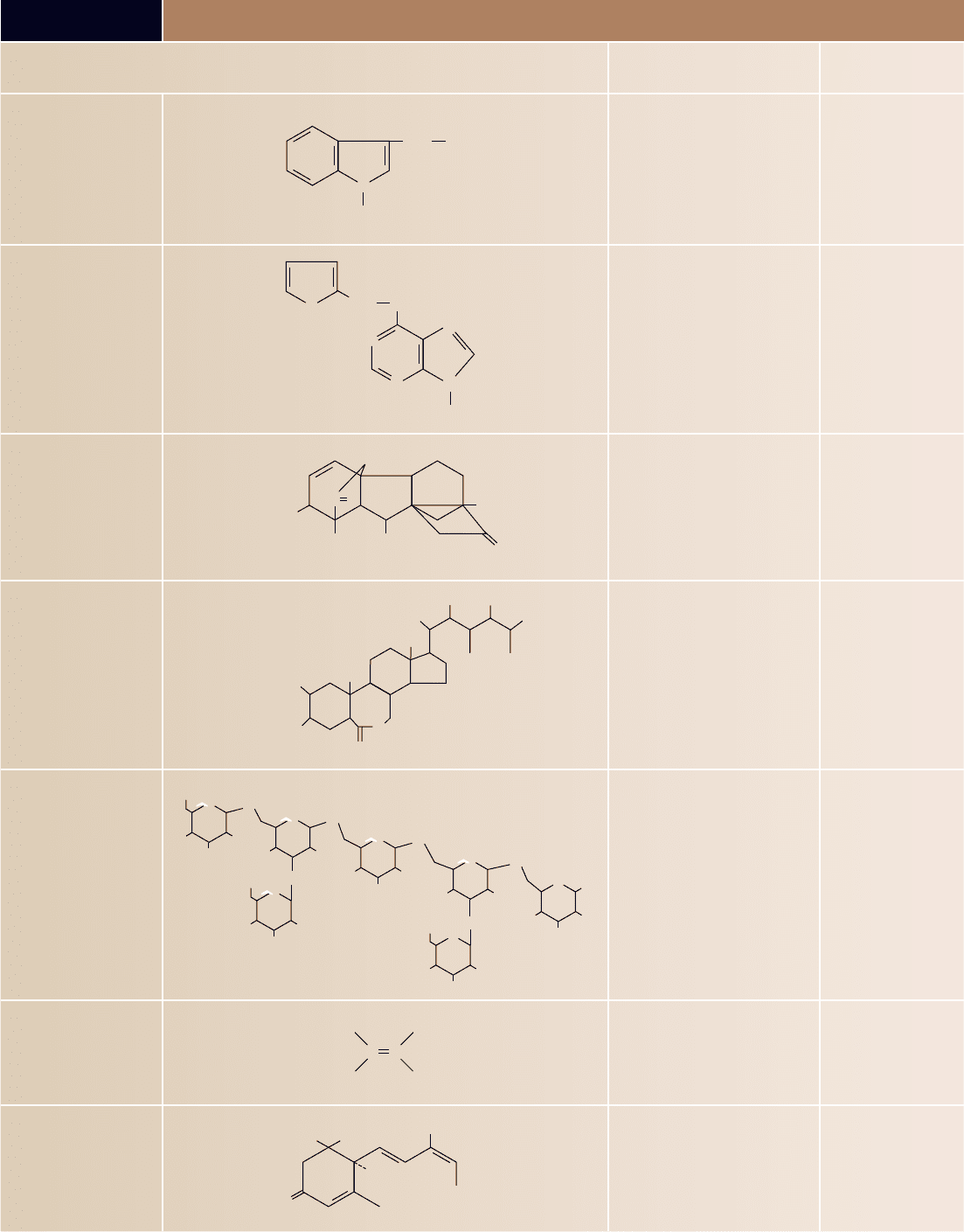
Abscission involves changes that take place in an abscission
zone at the base of the petiole (figure 41.15) . Young leaves produce
Figure 41.15
Leaf abscission. Hormonal changes in the
leaf’s abscission zone cause abscission. Two layers of cells in the
abscission zone differentiate into a protective layer and a separation
layer. As pectins in the separation layer break down, wind and rain
can easily separate the leaf from the stem.
chapter
41
Sensory Systems in Plants
823www.ravenbiology.com
rav32223_ch41_814-838.indd 823rav32223_ch41_814-838.indd 823 11/16/09 2:06:37 PM11/16/09 2:06:37 PM
Apago PDF Enhancer
Increase in maternal ABA Increase in embryonic ABA
Seed coat hardens
Dehydration
Cessation of RNA and protein synthesis
Increase in lipids and proteins
Dormancy
RNA and protein
synthesis
Figure 41.16
Leaf color changes during abscission.
When it rains, these seeds can germinate, and the plants can
grow rapidly, having adapted to the relatively short periods
when water is available.
Chapter 37 covered some of the mechanisms involved in
breaking seed dormancy and allowing germination under fa-
vorable circumstances. These include water leaching away the
chemicals that inhibit germination or mechanically cracking
the seed coats due to osmotic swelling, a procedure particularly
suitable for promoting growth in seasonally dry areas.
Seeds may remain dormant for a surprisingly long time.
Many legumes have tough seeds that are virtually impermeable to
water and oxygen. These seeds often last decades and even longer
without special care; they will eventually germinate when their
seed coats have been cracked and water is available. Seeds that are
thousands of years old have been successfully germinated!
Favorable temperatures, day length, and amounts of water
can release buds, underground stems and roots, and seeds from a
dormant state. Requirements vary among species. For example,
some weed seeds germinate in cooler parts of the year and are in-
hibited from germinating by warmer temperatures. Day length dif-
ferences can have dramatic effects on dormancy. For example, tree
dormancy is common in temperate climates when the days are
short, but is unusual in tropical trees growing near the equator,
where day length remains about the same regardless of season.
Plants can survive temperature extremes
Sometimes temperatures change rapidly, and dormancy is not
possible. How do plants survive temperature extremes? A num-
ber of adaptations, including some rapid response strategies,
help plants overcome sudden chilling or extreme heat.
hormones (especially cytokinins) that inhibit the development of
specialized layers of cells in this zone. Hormonal changes take
place as the leaf ages, however, and two layers of cells become dif-
ferentiated. A protective layer, which may be several cells wide, de-
velops on the stem side of the petiole base. These cells become
impregnated with suberin, which you may recall is a fatty sub-
stance impervious to moisture. A separation layer develops on the
leaf-blade side; the cells of the separation layer sometimes divide,
swell, and become gelatinous.
When temperatures drop, when the duration and intensity
of light diminishes, or when other environmental changes occur,
enzymes break down the pectins in the middle lamellae of the
separation cells. Wind and rain can then easily separate the leaf
from the stem. Left behind is a sealed leaf scar that is protected
from invasion by bacteria and other disease organisms.
As the abscission zone develops, the green chlorophyll
pigments present in the leaf break down, revealing the yellows
and oranges of other pigments, such as carotenoids, that previ-
ously had been masked by the intense green colors. At the same
time, water-soluble red or blue pigments called anthocyanins
and betacyanins may also accumulate in the vacuoles of the leaf
cells—all contributing to an array of fall colors in leaves
(figure 41.16).
Seed dormancy
The extraordinary evolutionary innovation of the seed plants is
the dormant seed that allows plant offspring to wait until con-
ditions for germination are optimal. Sometimes the seeds can
endure a wait of hundreds of years (figure 41.17) . In seasonally
dry climates, seed dormancy occurs primarily during the dry
season, often the summer. Rainfalls trigger germination when
conditions for survival are more favorable.
Annual plants occur frequently in areas of seasonal
drought. Seeds are ideal for allowing annual plants to bypass
the dry season, when there is insufficient water for growth.
Figure 41.17
Seed dormancy. Accumulating food reserves,
forming a protective seed coat, and dehydration are essential steps
leading to dormancy. Abscisic acid (ABA) from both maternal and
embryonic tissue is necessary for dormancy.
824
part
VI
Plant Form and Function
rav32223_ch41_814-838.indd 824rav32223_ch41_814-838.indd 824 11/16/09 2:06:40 PM11/16/09 2:06:40 PM

Apago PDF Enhancer
Chilling
Knowing the lipid composition of a plant’s membranes can help
predict whether the plant will be sensitive or resistant to chilling.
Saturated lipids solidify at a higher temperature because they pack
together more closely (see chapter 5 ), so the more unsaturated the
membrane lipids are, the more resistant the plant is to chilling. Ara-
bidopsis plants genetically modified to contain a higher percentage of
saturated fatty acids have proved to be more sensitive to chilling.
When chilling occurs, the enzyme desaturase converts
the single bonds in the saturated lipids to double bonds. This
process lowers the temperature at which the membrane be-
comes rigid and cannot function properly.
Even highly unsaturated membranes are not enough to
protect plants from freezing temperatures. At freezing, ice crys-
tals form and the cells die from dehydration—not enough liquid
water is available for metabolism. Some plants, however, have the
ability to undergo deep supercooling and survive temperatures as
low as –40°C. Supercooling occurs when ice crystal formation is
limited, and the crystals occur in extracellular spaces where they
cannot damage cell organelles. Furthermore, the cells of these
plants must be able to withstand gradual dehydration.
Acquiring tolerance to chilling or freezing as the tempera-
ture drops can be explained by increased solute concentration. In
addition, antifreeze proteins prevent ice crystals from forming. Ice
crystals can also form (nucleate) around bacteria naturally found on
the leaf surface. Some bacteria have been genetically engineered so
that they do not nucleate ice crystals. Spraying leaves with these
modified bacteria can provide frost tolerance in some crops.
High temperatures
High temperatures can be harmful because proteins denature
and lose their function when heated. If temperatures suddenly
rise 5° to 10°C, heat shock proteins (HSPs) are produced. These
proteins can stabilize other proteins so that they don’t unfold or
misfold at higher temperatures. In some cases, HSPs induced
by temperature increases can also protect plants from other
stresses, including chilling.
Plants can survive otherwise lethal temperatures if they
are gradually exposed to increasing temperature. These plants
have acquired thermotolerance. More is being learned about tem-
perature acclimation by isolating mutants that fail to acquire
thermotolerance, including the aptly named hot mutants in
Arabidopsis. One of the HOT genes codes for an HSP. Charac-
terization of other HOT genes indicates that thermotolerance
requires more than the synthesis of HSPs; some HOT genes
stabilize membranes and are necessary for protein activity.
Learning Outcomes Review 41.4
Seasonal changes, such as reduction in temperature, light, and water
availability, may lead to plant dormancy; in deciduous trees, leaf abscission
is part of entering dormancy. Seed dormancy prevents germination until
growth conditions are optimal. At low temperatures, lipids in membranes
begin to solidify and ice crystals may form in tissues; at high temperatures,
proteins denature.
■ Why is it advantageous for broadleaf trees to drop
leaves in autumn, when they must grow them again
in spring?
41.5
Hormones and Sensory
Systems
Learning Outcomes
Discuss properties of hormones.1.
Compare auxins with cytokinins.2.
Describe the major roles of abscisic acid.3.
Sensory responses that alter morphology rely on complex
physiological networks. Many internal signaling pathways in-
volve plant hormones, which are the focus of this section. Hor-
mones are involved in responses to the environment, as well as
in internally regulated development (see chapter 37 ).
The hormones that guide growth
are keyed to the environment
Hormones are chemical substances produced in small, often
minute quantities in one part of an organism and then trans-
ported to another part where they bring about physiological or
developmental responses. How hormones act in a particular in-
stance is influenced both by the hormone and the tissue that
receives the message.
In animals, hormones are usually produced at definite sites,
most commonly in organs such as glands. In plants, hormones
are not produced in specialized tissues but, instead, in tissues that
also carry out other, usually more obvious functions. Seven major
kinds of plant hormones have been identified: auxin, cytokinins,
gibberellins, brassinosteroids, oligosaccharins, ethylene, and ab-
scisic acid (table 41.1 ). Current research is focused on the bio-
synthesis of hormones and on characterizing the hormone
receptors involved in signal transduction pathways. Much of the
molecular basis of hormone function remains enigmatic.
Because hormones are involved in so many aspects of
plant function and development, we have chosen to integrate
examples of hormone activity with specific aspects of plant bi-
ology throughout the text. In this section, our goal is to give a
brief overview of these hormones.
Auxin allows elongation and organizes
the body plan
More than a century ago, an organic substance known as auxin
was the first plant hormone to be discovered. Auxin increases the
plasticity of plant cell walls and is involved in elongation of stems.
Cells can enlarge in response to changes in turgor pressure, but
cell walls must be fairly plastic for this expansion to occur. Auxin
plays a role in softening cell walls. The discovery of auxin and its
role in plant growth is an elegant example of thoughtful experi-
mental design and is recounted here for that reason.
Discovery of auxin
Later in life, the great evolutionist Charles Darwin became in-
creasingly devoted to the study of plants. In 1881, he and his
chapter
41
Sensory Systems in Plants
825www.ravenbiology.com
rav32223_ch41_814-838.indd 825rav32223_ch41_814-838.indd 825 11/16/09 2:06:43 PM11/16/09 2:06:43 PM
Apago PDF Enhancer
TABLE 41.1
Functions of the Major Plant Hormones
Hormone Major Functions
Where Produced
or Found in Plant
Auxins Promotion of stem elongation and
growth; formation of adventitious
roots; inhibition of leaf abscission;
promotion of cell division (with
cytokinins); inducement of ethylene
production; promotion of lateral
bud dormancy
Apical meristems; other
immature parts of plants
Cytokinins Stimulation of cell division, but only
in the presence of auxin; promotion of
chloroplast development; delay of leaf
aging; promotion of bud formation
Root apical meristems;
immature fruits
Gibberellins Promotion of stem elongation;
stimulation of enzyme production in
germinating seeds
Roots and shoot tips;
young leaves; seeds
Brassinosteroids Overlapping functions with auxins
and gibberellins
Pollen, immature seeds,
shoots, leaves
Oligosaccharins Pathogen defense, possibly
reproductive development
Cell walls
Ethylene Control of leaf, ower, and fruit
abscission; promotion of fruit ripening
Roots, shoot apical
meristems; leaf nodes;
aging owers;
ripening fruits
Abscisic acid Inhibition of bud growth; control of
stomatal closure; some control of seed
dormancy; inhibition of e ects of
other hormones
Leaves, fruits, root
caps, seeds
CH
2
COOH
H
N
CH
2
NH
N
N
N
H
N
O
OH
CH
2
COOH
O
HO
CO
HO
HO
O
O
OH
OH
O
OH
OH
HO
HO
O
O
OHHO
O
OH
OHHO
O
O
OHHO
O
OH
OHHO
OH
OH
HO
OH
HO
OH
OH
HO
OH
O
O
O
O
O
O
CCC
H
H
H
H
CH
3
OH
CH
3
COOH
O
CH
3
CH
3
CH
3
826
part
VI
Plant Form and Function
rav32223_ch41_814-838.indd 826rav32223_ch41_814-838.indd 826 11/16/09 2:06:43 PM11/16/09 2:06:43 PM
Apago PDF Enhancer
a.
b.
c.
d.
Light
Lightproof cap
Transparent cap
Lightproof collar
Light
Light
Light
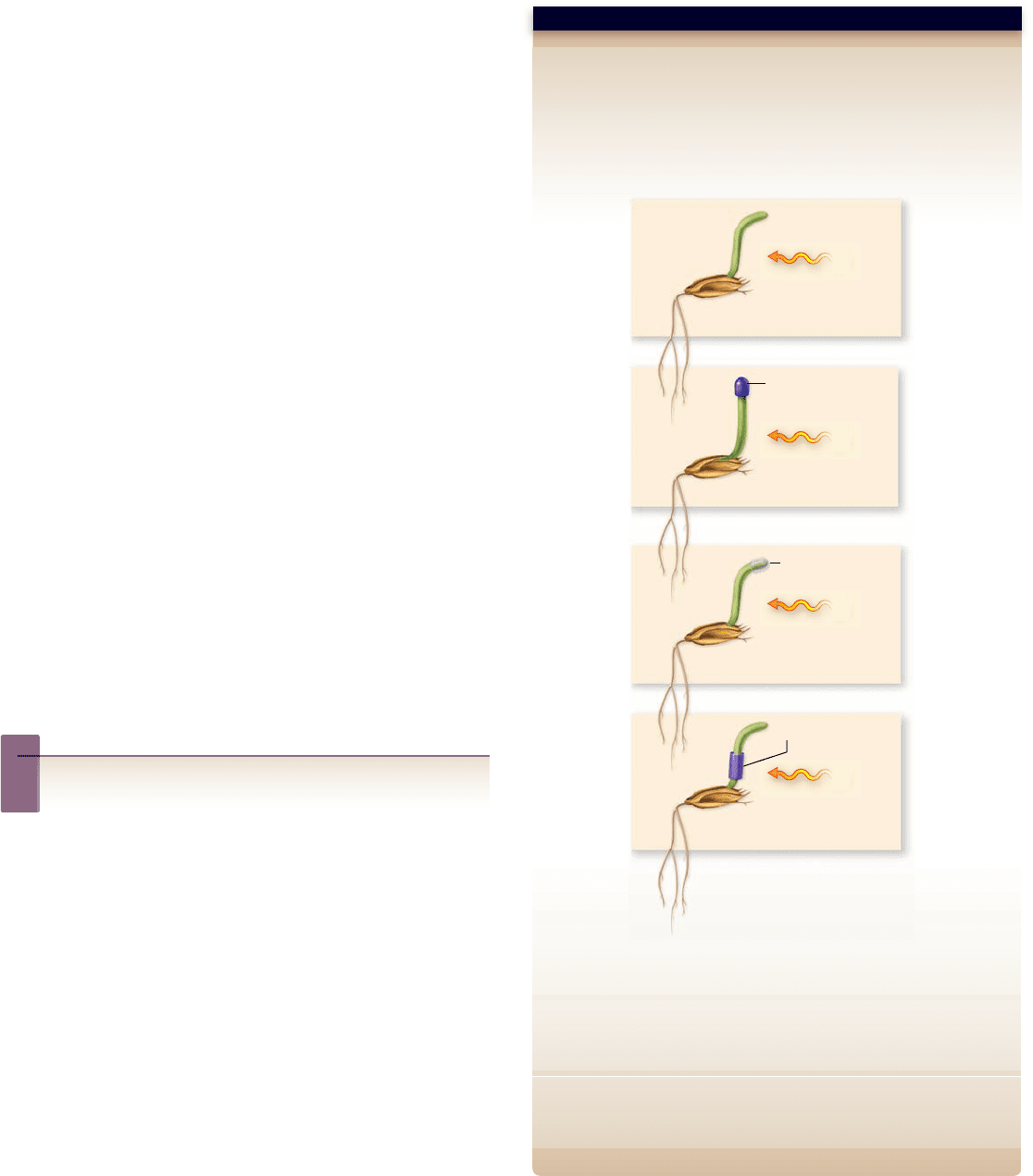
Hypothesis: The shoot tip of a plant detects the direction of light.
Prediction: The shoot tip of a grass seedling will grow toward a
unidirectional light source if it is not covered.
Test: Make four treatment groups, including (1) untreated seedling,
(2) tip covered with lightproof cap, (3) tip covered with transparent cap,
and (4) lightproof collar placed below tip.
Result: a. Young grass seedlings normally bend toward the light. b. The
bending did not occur when the tip of a seedling was covered with a lightproof
cap. c. Bending did occur when it was covered with a transparent one. d. When
a collar was placed below the tip, the characteristic light response took place.
Conclusion: In response to light, an “influence” that caused bending
was transmitted from the tip of the seedling to the area below, where
bending normally occurs.
Further Experiments: How could you determine if the light response in
a shoot tip requires the movement of a signal from one side of the shoot
to the other? (Hint: See Went’s experiment in figure 41.19).
SCIENTIFIC THINKING
Figure 41.18
Shoot tips perceive unidirectional light.
son Francis published a book called The Power of Movement of
Plants. In this book, the Darwins reported their systematic ex-
periments on the response of growing plants to light—the re-
sponses that came to be known as phototropisms. They used
germinating oat and canary grass seedlings in their experiments
and made many observations in this field.
Charles and Francis Darwin knew that if light came pri-
marily from one direction, seedlings would bend strongly to-
ward it. If they covered the tip of a shoot with a thin glass tube,
the shoot would bend as if it were not covered. However, if they
used a metal foil cap to exclude light from the plant tip, the
shoot would not bend (figure 41.18) . They also found that us-
ing an opaque collar to exclude light from the stem below the
tip did not keep the area above the collar from bending.
In explaining these unexpected findings, the Darwins
hypothesized that when the shoots were illuminated from one
side, they bent toward the light in response to an “influence”
that was transmitted downward from its source at the tip of
the shoot.
For some 30 years, the Darwins’ perceptive experiments
remained the sole source of information about this interest-
ing phenomenon. Then the Danish plant physiologist Peter
Boysen- Jensen and the Hungarian plant physiologist Arpad
Paal independently demonstrated that the substance causing
the shoots to bend was a chemical. They showed that if the
tip of a germinating grass seedling was cut off and then re-
placed, with a small block of agar separating it from the rest
of the seedling, the seedling would still grow as if there had
been no change. Something evidently was passing from the
tip of the seedling through the agar into the region where the
bending occurred.
On the basis of these observations under conditions of
either uniform illumination or darkness, Paal suggested that an
unknown substance continually moves down from the tips of
grass seedlings and promotes growth on all sides. Such a light
pattern would not, of course, cause the shoot to bend.
Inquiry question
?
Propose a mechanism to explain how seedlings could bend in
the light using what Paal discovered.
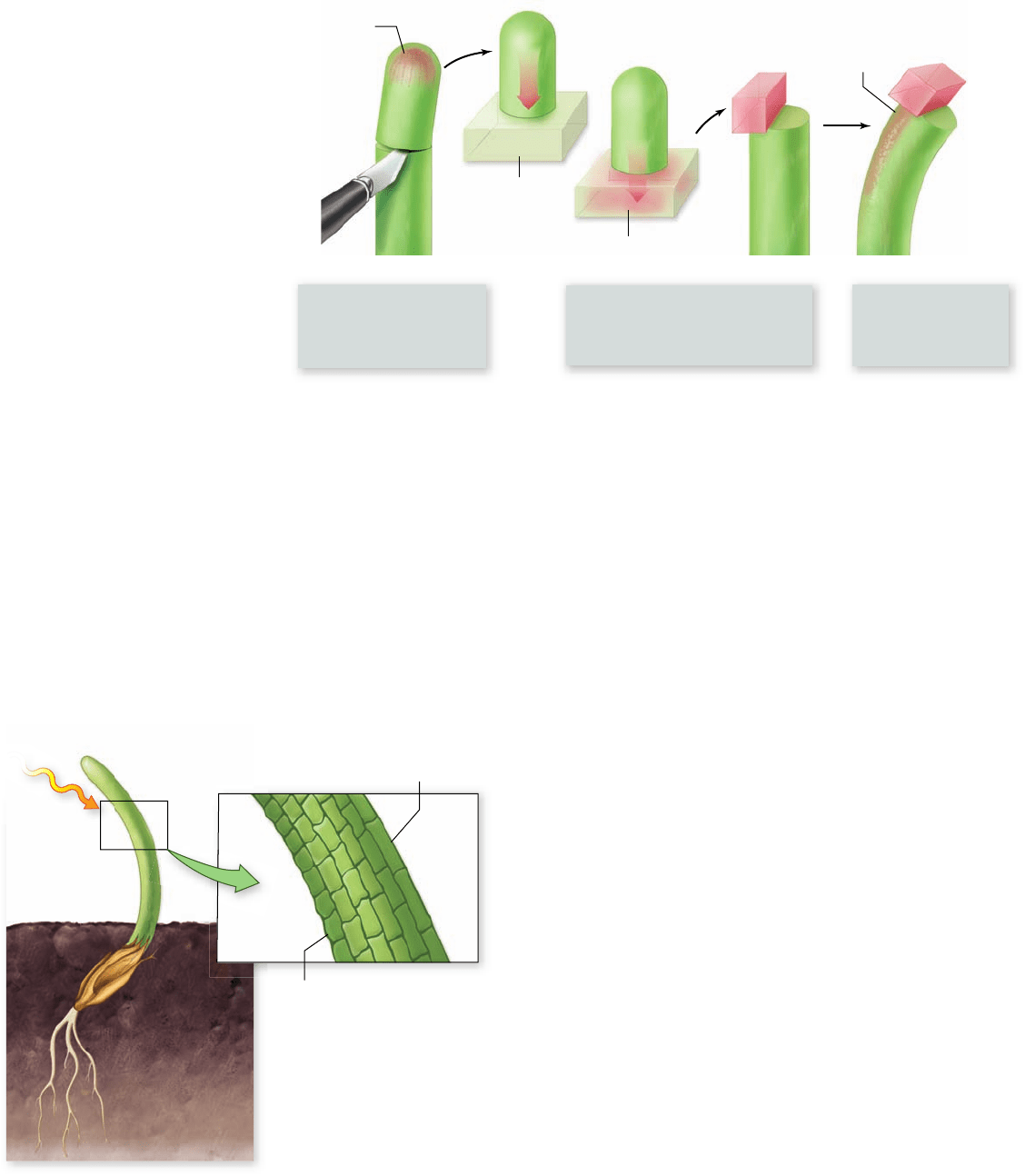
Then, in 1926, the Dutch plant physiologist Frits Went
carried Paal’s experiments a step further. Went cut off the tips
of oat seedlings that had been illuminated normally and set
these tips on agar. He then took oat seedlings that had been
grown in the dark and cut off their tips in a similar way. Finally,
Went cut tiny blocks from the agar on which the tips of the
light-grown seedlings had been placed and placed them off-
center on the tops of the decapitated dark-grown seedlings
(figure 41.19) . Even though these seedlings had not been ex-
posed to the light themselves, they bent away from the side on
which the agar blocks were placed.
As an experimental control, Went put blocks of pure agar
on the decapitated stem tips and noted either no effect or a slight
bending toward the side where the agar blocks were placed.
Finally, Went cut sections out of the lower portions of the light-
grown seedlings. He placed these sections on the tips of decapi-
tated, dark-green oat seedlings and again observed no effect.
chapter
41
Sensory Systems in Plants
827www.ravenbiology.com
rav32223_ch41_814-838.indd 827rav32223_ch41_814-838.indd 827 11/16/09 2:06:44 PM11/16/09 2:06:44 PM
Apago PDF Enhancer
1. Went removed the tips
of oat seedlings and put
them on agar, an inert,
gelatinous substance.
2. Blocks of agar were then placed
off-center on the ends of other
oat seedlings from which the
tips had been removed.
3. The seedlings bent
away from the side
on which the agar
block was placed.
Auxin in tip
of seedling
Agar
Auxin diffuses
into agar block
Auxin
Light-grown seedling Dark-grown seedlings
Time
Lighted side
of seedling
Shaded side
of seedling
Light
Figure 41.19
Frits Went’s
experiment. Went concluded that a
substance he named auxin promoted
the elongation of the cells and that it
accumulated on the side of an oat
seedling away from the light.
Figure 41.20
Auxin causes cells on the dark side to
elongate. Plant cells that are in the shade have more auxin and
grow faster than cells on the lighted side, causing the plant to bend
toward light. Further experiments showed exactly why there is more
auxin on the shaded side of a plant.
The side of the shoot that was in the shade had more auxin, and
its cells therefore elongated more than those on the lighted
side, bending the plant toward the light.
The effects of auxin
Auxin acts to adapt the plant to its environment in a highly
advantageous way by promoting growth and elongation. En-
vironmental signals directly influence the distribution of aux-
in in the plant. How does the environment—specifically,
light—exert this influence? Theoretically, light might destroy
the auxin, might decrease the cells’ sensitivity to auxin, or
might cause the auxin molecules to migrate away from the
light into the shaded portion of the shoot. This last possibility
has proved to be the case.
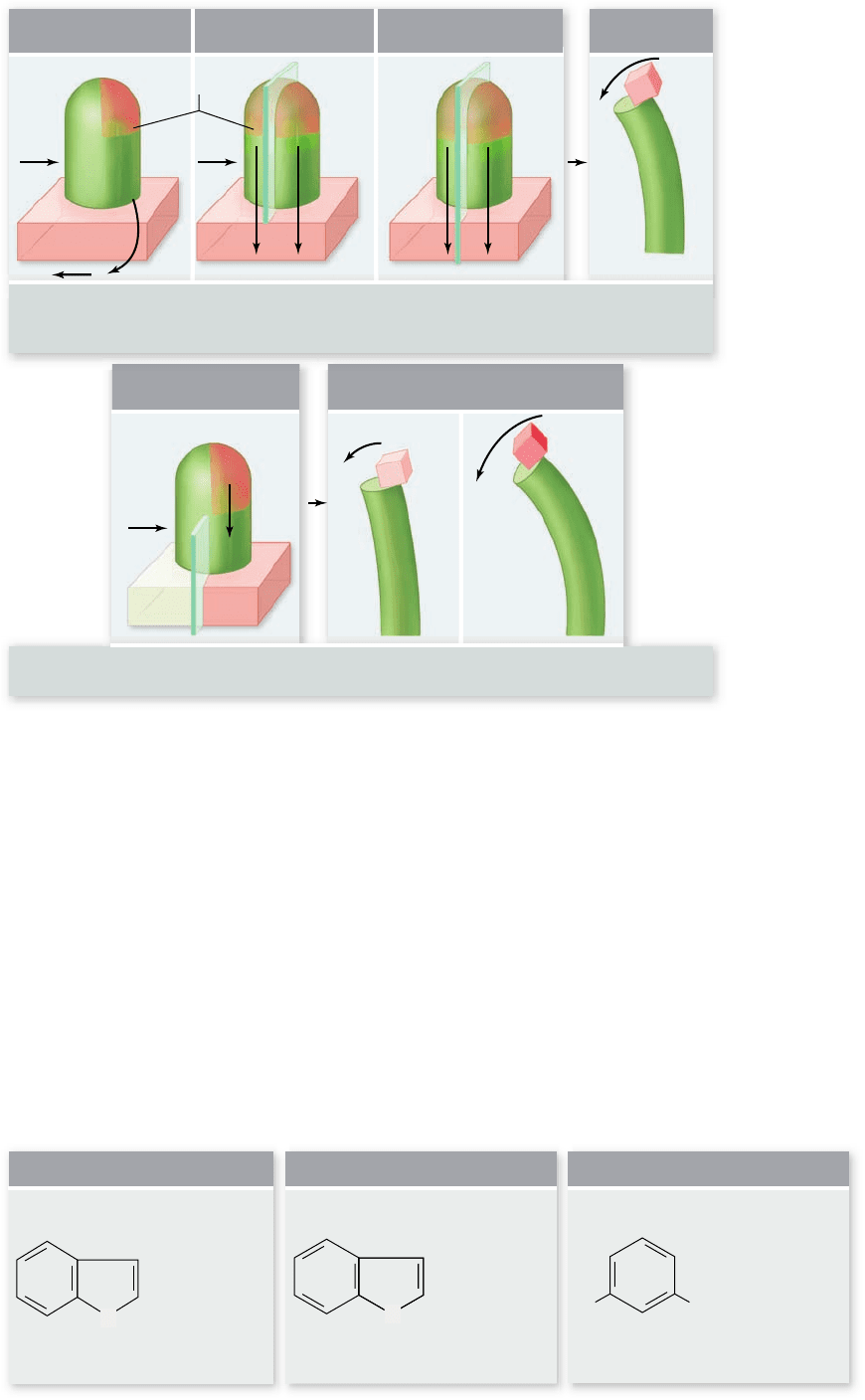
In a simple but effective experiment, Winslow Briggs in-
serted a thin sheet of transparent mica vertically between the
half of the shoot oriented toward the light and the half of the
shoot oriented away from it (figure 41.21) . He found that light
from one side does not cause a shoot with such a barrier to
bend. When Briggs examined the illuminated plant, he found
equal auxin levels on both the light and dark sides of the barrier.
He concluded that a normal plant’s response to light from one
direction involves auxin migrating from the light side to the
dark side, and that the mica barrier prevented a response by
blocking the migration of auxin.
The effects of auxin are numerous and varied. Auxin pro-
motes the activity of the vascular cambium and the vascular
tissues. Also, auxin is present in pollen in large quantities and
plays a key role in the development of fruits. Synthetic auxins
are used commercially for the same purpose. Fruits will nor-
mally not develop if fertilization has not occurred and seeds are
not present, but frequently they will develop if auxin is applied.
Pollination may trigger auxin release in some species, leading
to fruit development even before fertilization has taken place.
How auxin works
In spite of this long history of research, auxin’s molecular ba-
sis of action has been an enigma. The chemical structure of
the most common auxin, indoleacetic acid (IAA), resembles
that of the amino acid tryptophan, from which it is probably
As a result of his experiments, Went was able to show that
the substance that had diffused into the agar from the tips of
light-grown oat seedlings could make seedlings bend when
they otherwise would have remained straight. He also showed
that this chemical messenger caused the cells on the side of the
seedling into which it flowed to grow more than those on the
opposite side (figure 41.20) . In other words, the chemical en-
hanced rather than retarded cell elongation. He named the
substance that he had discovered auxin.
Went’s experiments provided a basis for understanding
the responses that the Darwins had obtained some 45 years ear-
lier. The oat seedlings bent toward the light because of differ-
ences in the auxin concentrations on the two sides of the shoot.
828
part
VI
Plant Form and Function
rav32223_ch41_814-838.indd 828rav32223_ch41_814-838.indd 828 11/16/09 2:06:44 PM11/16/09 2:06:44 PM
Apago PDF Enhancer
Barrier in Auxin Block
Auxin Concentration Dependant
Curvature
Light
Auxin in
seedling tip
24°
31° 12°
Light
Unidirectional Light
Barrier Blocks Auxin
Development
Dark Grown Shoot
Auxin Induced
Curvature
Light
A
B
A B
The same amount of total auxin is produced by a shoot tip grown with directional light, even when
a barrier divides the shoot tip, and a shoot tip grown in the dark. All three blocks of agar cause the
same amount of curvature in a tipless shoot.
Separating the base of the shoot tip and the agar block results in two agar blocks with different
concentrations of auxin that produce different degrees of curvature in tipless shoots.
IAA (Indoleacetic acid)
Tryptophan Dichlorophenoxyacetic Acid (2,4-D)
c.b.a.
JCH
2
JCH
NH
2
COOH
JOJCH
2
JCOOH
J J
J
JCH
2
JCOOH
Cl
Cl
N
H
H
N
J
Figure 41.21
Phototropism
and auxin: The Winslow Briggs
experiments. Directional light causes the
accumulation of auxin in the dark side of the
shoot tip, which can move down the stem.
Barriers inserted in the tip revealed that light
affects auxin displacement rather than rate of
auxin production.
teins function a bit earlier in the auxin response pathway and
have been shown to bind to and repress proteins that activate
the expression of ARF genes.
ARF genes are activated when Aux/IAA proteins are de-
graded by ubiquitin tagging and protein degradation in the
proteasome. Auxin binding to ARF protein is not sufficient to
initiate gene expression in response to auxin signaling because
of Aux/IAA repression of ARF activity. How then does a plant
sense auxin and degrade Aux/IAA proteins?
The identification of the elusive auxin receptor in 2005
hints at how plants sense and respond to auxin. Auxin binds
directly to a protein called the transport inhibitor response
protein 1 (TIR1). TIR1 is the enigmatic auxin receptor. It is
part of a protein complex known as SCF which is found
synthesized by plants (figure 41.22). Although other forms of
auxin exist, IAA is the most common natural auxin.
An auxin-binding protein (ABP1) was identified two de-
cades ago. ABP1 is found in the cytoplasm and its role in auxin
response is still unclear. Mutants that lack ABP1 do not make it
past embryogenesis because cell elongation is inhibited and the
basic body plan described in chapter 36 is not organized. But,
the abp1 mutant cells divide, which indicates that part of the
auxin pathway is still functioning.
More recently, two families of proteins that mediate rap-
id, auxin-induced changes in gene expression have been identi-
fied: the auxin response factors (ARFs) and the Aux/IAA
proteins. Transcription can be either enhanced or suppressed
by ARFs, which are known to bind DNA. The Aux/IAA pro-
Figure 41.22
Auxins.
a. Indoleacetic acid (IAA),
the principal naturally
occurring auxin.
b. Tryptophan, the amino
acid from which plants
probably synthesize IAA.
c. Dichlorophenoxyacetic acid
(2,4-D), a synthetic auxin, is
a widely used herbicide.
chapter
41
Sensory Systems in Plants
829www.ravenbiology.com
rav32223_ch41_814-838.indd 829rav32223_ch41_814-838.indd 829 11/16/09 2:06:45 PM11/16/09 2:06:45 PM
Apago PDF Enhancer
ARF
transcription
factor
Aux/IAA
Aux/IAA
Auxin
SCF
TIR1
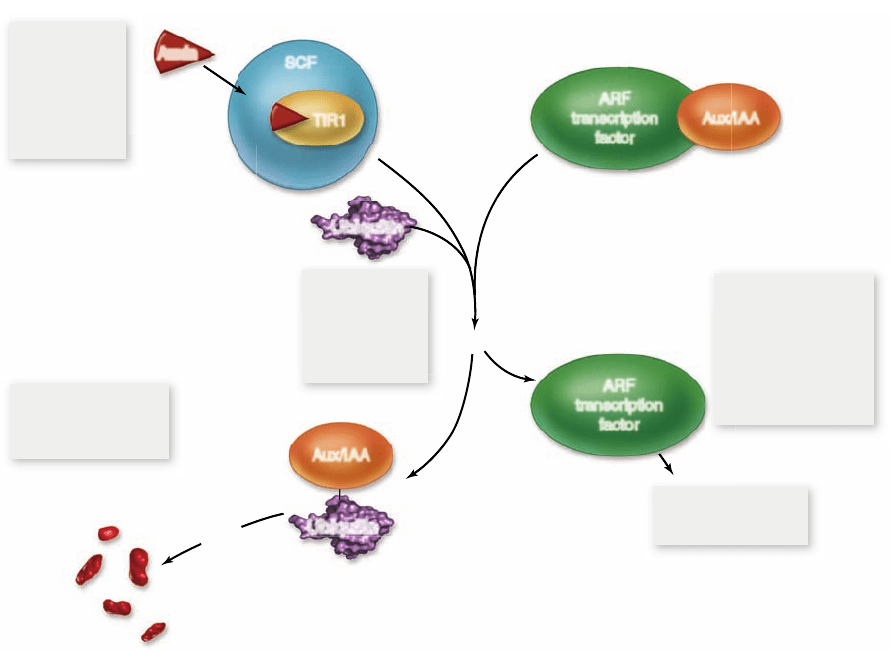
1. Auxin
binds TIR1
in the SCF
complex if
Aux/IAA is
present.
Ubiquitin
2. The SCF
complex tags
Aux/IAA
proteins with
ubiquitin.
Ubiquitin
Degraded
Aux/IAA
proteins
3. Aux/IAA proteins
are degraded in
the proteasome.
ARF
transcription
factor
Auxin-induced
gene expression
Proteasome
4. Aux/IAA proteins
no longer bind
and repress
transcriptional
activators of an
auxin-induced
gene.
Figure 41.23
Auxin
regulation of gene
expression. Auxin
activates a ubiquitination
pathway that releases ARF
transcription factors from
repression by Aux/IAA
proteins. The result is
auxin-induced gene
expression.
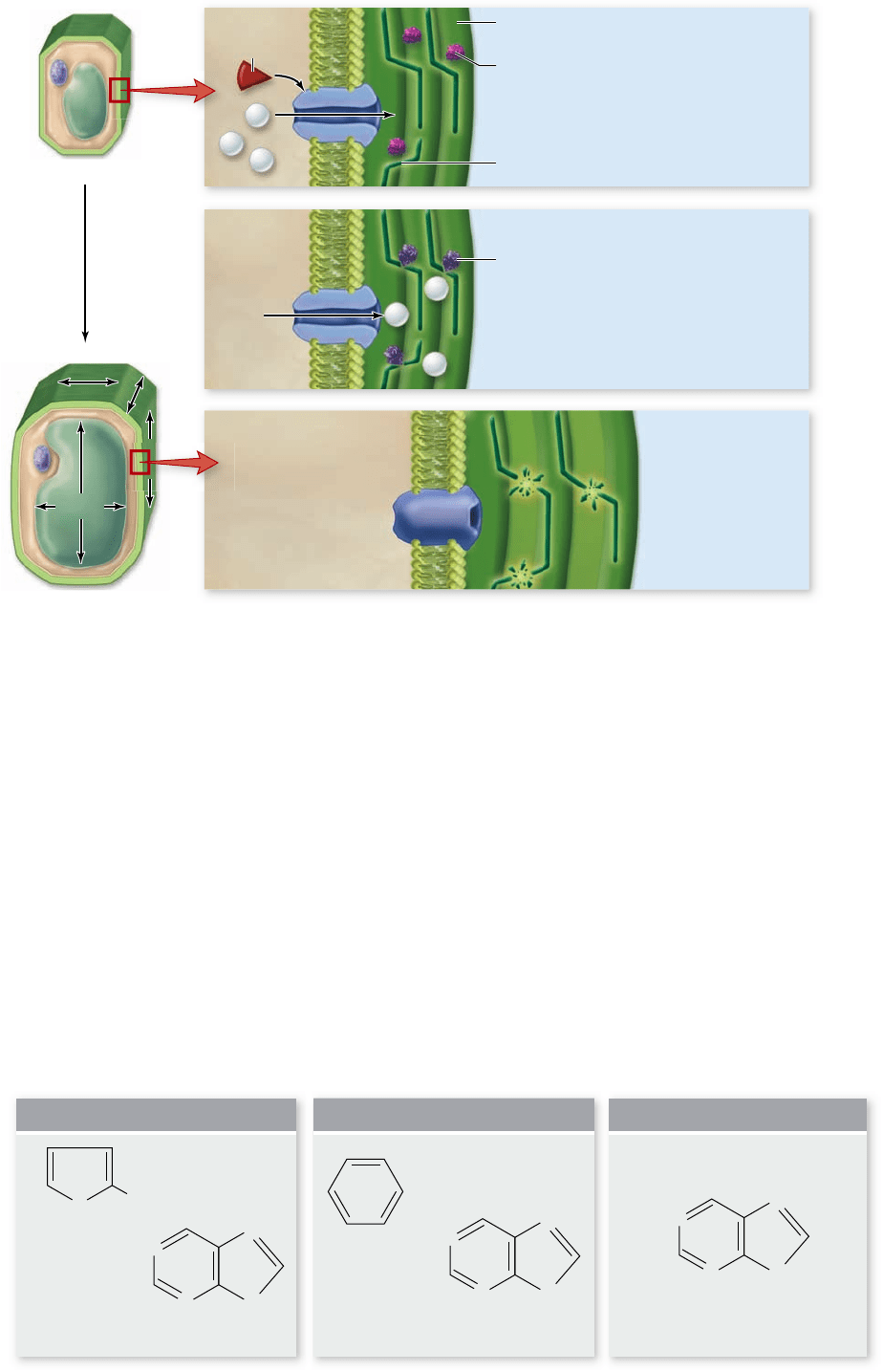
growth hypothesis provides a model linking auxin to cell wall
expansion (figure 41.24) . According to this hypothesis, auxin causes
responsive cells to actively transport hydrogen ions from the cyto-
plasm into the cell wall space. This decreases the pH, which acti-
vates enzymes that can break the bonds between cell wall fibers.
This hypothesis has been experimentally supported in
several ways. Buffers that prevent cell wall acidification block
cell expansion. And, other compounds that release hydrogen
ions from the cell can also cause cell expansion. Finally, the
movement of hydrogen ions has been observed in response to
auxin treatment. The snapping of the Venus flytrap is postu-
lated to involve an acid growth response that allows cells to
grow in just 0.5 sec and close the trap.
Synthetic auxins
Synthetic auxins, such as naphthalene acetic acid (NAA) and
indolebutyric acid (IBA), have many uses in agriculture and
horticulture. One of their most important uses is based on their
prevention of abscission. Synthetic auxins are used to prevent
fruit drop in apples before they are ripe and to hold berries on
holly that is being prepared for shipping during the winter season.
Synthetic auxins are also used to promote flowering and fruiting
in pineapples and to induce the formation of roots in cuttings.
Synthetic auxins are routinely used to control weeds.
When used as herbicides, they are applied in higher concentra-
tions than IAA would normally occur in plants. One of the most
important synthetic auxin herbicides is 2,4-dichlorophenoxyacetic
acid, usually known as 2,4-D (see figure 41.22c). It kills weeds
in grass lawns by selectively eliminating broad-leaved dicots.
The stems of the dicot weeds cease all axial growth.
throughout eukaryotes. SCF is shorthand for the three poly-
peptide subunits found in the complex: Skp, Cullin, and F-box.
Auxin binds to TIR1 in the SCF complex if Aux/IAA proteins
are present. Once auxin binds, the SCF complex degrades the
Aux/IAA proteins through the ubiquitin pathway.
Five steps lead from auxin perception to auxin-induced
gene expression (figure 41.23) :
Auxin binds TIR1 in the SCF complex. 1.
The activated SCF complex tags Aux/IAA proteins 2.
with ubiquitin.
Aux/IAA proteins are degraded in the proteasome.3.
Aux/IAA proteins are no longer available to bind and 4.
repress ARF (auxin response factor) transcriptional
activators.
ARF transcription factors facilitate transcription of 5.
auxin-response genes.
Unlike with animal hormones, a specific signal is not sent
to specific cells, eliciting a predictable response. Most likely, mul-
tiple auxin perception sites are present. Auxin is also unique
among the plant hormones in that it is transported toward the
base of the plant. Two families of genes have been identified in
Arabidopsis that are involved in auxin transport. For example, one
family of proteins (the PINs ) are involved in the top-to-bottom
transport of auxin, while two other proteins function in the root
tip to regulate the growth response to gravity, described earlier.
One of the direct effects of auxin is an increase in the plastic-
ity of the plant cell wall, but this effect works only on young cell
walls lacking extensive secondary cell wall formation and may or
may not involve rapid changes in gene expression. The acid
830
part
VI
Plant Form and Function
rav32223_ch41_814-838.indd 830rav32223_ch41_814-838.indd 830 11/16/09 2:06:46 PM11/16/09 2:06:46 PM
Apago PDF Enhancer
Cellulose fiber
in cell wall
Enzyme
(inactive)
Cross-bridge
Active
enzyme
1. Auxin causes
cells to pump
hydrogen ions
into the cell wall.
2. pH in the cell
wall decreases,
activating
enzymes that
break cross-
bridges between
cellulose fibers
in the cell wall.
3. Cellulose fibers
loosen and
allow the cell to
expand as turgor
pressure inside
the cell pushes
against the
cell wall.
Cytosol
Auxin
H
;
H
;
H
;
H
;
H
;
H
;
Turgor
J
J
J
J
J
J
6-Benzylamino Purine (BAP)Kinetin Adenine
O
CH
2
J
NH
NN
N
H
N
NH
2
NN
N
H
N
NN
N
H
N
J
CH
2
J
NH
Figure 41.24
Acid
growth hypothesis.
Auxin stimulates the release
of hydrogen ions from the
target cells, which alters the
pH of the cell wall. This
optimizes the activity of
enzymes that break bonds
in the cell wall, allowing
the wall to expand.
to cut potato tubers, would cause parenchyma cells to become
meristematic, and would induce the differentiation of a cork
cambium. In other research, coconut milk, subsequently found
to contain cytokinins was used to promote the differentiation
of organs in masses of plant tissue growing in culture. Subse-
quent studies have focused on the role cytokinins play in the
differentiation of tissues from callus.
A cytokinin is a plant hormone that, in combination with
auxin, stimulates cell division and differentiation. Most cytokinins
are produced in the root apical meristems and transported
throughout the plant. Developing fruits are also important sites
of cytokinin synthesis. In mosses, cytokinins cause the formation
of vegetative buds on the gametophyte. In all plants, cytokinins,
working with other hormones, seem to regulate growth patterns.
Cytokinins are purines that appear to be derivatives of
adenine (figure 41.25). Other chemically diverse molecules, not
known to occur naturally, have effects similar to those of cyto-
kinins. Cytokinins promote the growth of lateral buds into
The herbicide 2,4,5-trichlorophenoxyacetic acid, better
known as 2,4,5-T, is closely related to 2,4-D. 2,4,5-T was widely
used as a broad-spectrum herbicide to kill weeds and the seedlings
of woody plants. It became notorious during the Vietnam War as a
component of a jungle defoliant known as Agent Orange. When
2,4,5-T is manufactured, it is unavoidably contaminated with min-
ute amounts of dioxin. Dioxin, in doses as low as a few parts per
billion, has produced liver and lung diseases, leukemia, miscarriag-
es, birth defects, and even death in laboratory animals. This chemi-
cal was banned in 1979 for most uses in the United States.
Cytokinins stimulate cell division
and di erentiation
Cytokinins comprise another group of naturally occurring
growth hormones in plants. Studies by Gottlieb Haberlandt of
Austria around 1913 demonstrated the existence of an unknown
chemical in various tissues of vascular plants that, when applied
Figure 41.25
Some cytokinins.
Two commonly used
synthetic cytokinins:
kinetin and
6-benzylamino
purine. Note
their resemblance
to the purine
base adenine.
chapter
41
Sensory Systems in Plants
831www.ravenbiology.com
rav32223_ch41_814-838.indd 831rav32223_ch41_814-838.indd 831 11/16/09 2:06:47 PM11/16/09 2:06:47 PM