
Raven P.H., Johnson G.B., Mason K.A. Biology (Ninth Edition)
Подождите немного. Документ загружается.

Apago PDF Enhancer
Auxin
Lateral
(axillary)
buds
No auxin
Apical bud
removed
Lateral
branches
Apical bud
removed
Auxin added
Lateral
(axillary)
buds
a. b. c.
Auxin:
high
Cytokinin:
low
Auxin:
low
Cytokinin:
high
Auxin:
intermediate
Cytokinin:
intermediate
a. b. c.
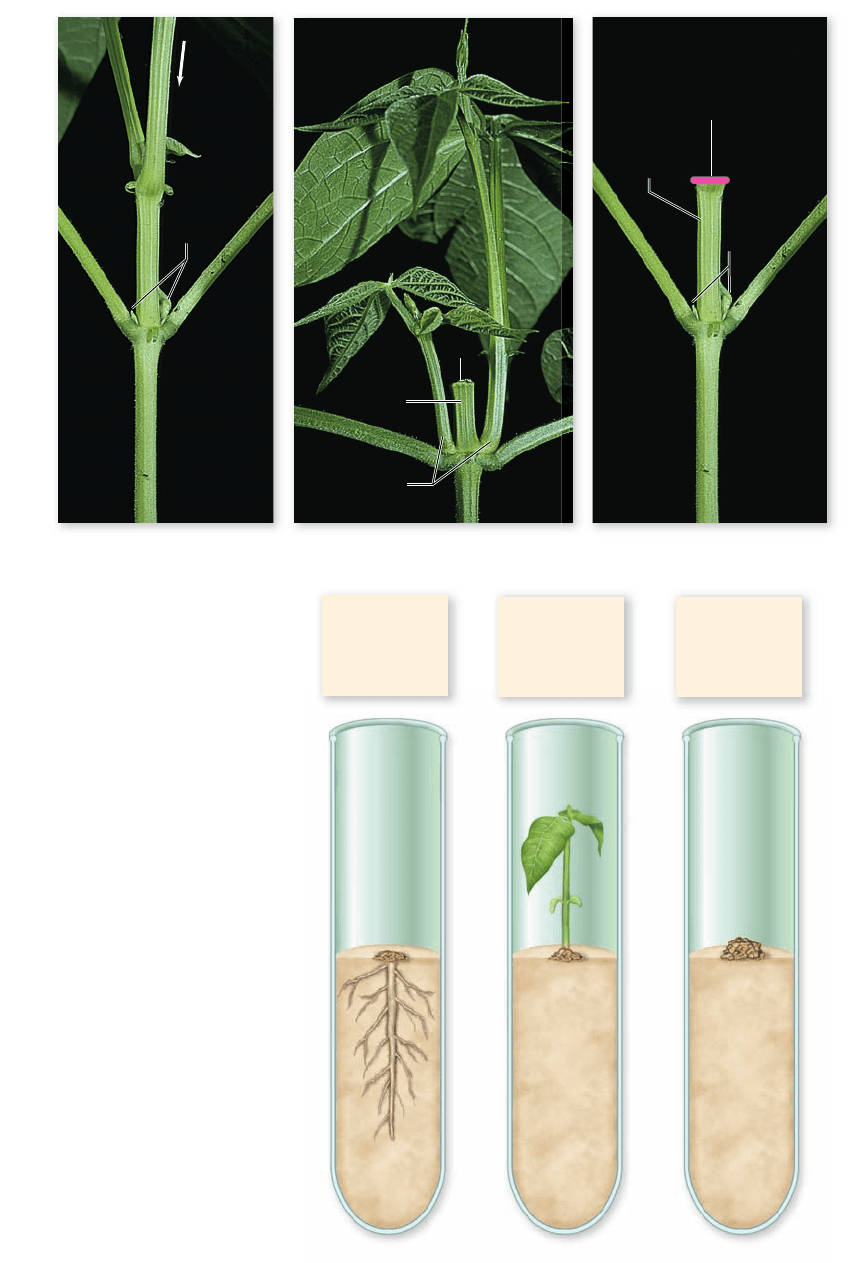
Figure 41.26
Cytokinins
stimulate lateral bud growth.
a. When the apical meristem of a plant
is intact, auxin from the apical bud will
inhibit the growth of lateral buds.
b. When the apical bud is removed,
cytokinins are able to induce the
growth of lateral buds into branches.
c. When the apical bud is removed and
auxin is added to the cut surface, lateral
bud outgrowth is suppressed.
branches (figure 41.26). Conversely, cytokinins inhibit the for-
mation of lateral roots, while auxins promote their formation.
As a consequence of these relationships, the balance be-
tween cytokinins and auxin, along with many other factors, de-
termines the form of a plant. In addition, the application of
cytokinins to leaves detached from a plant retards their yellow-
ing. Therefore, they function as antiaging hormones.
The action of cytokinins, like that of other hormones, has
been studied in terms of its effects on the growth and differen-
tiation of masses of tissue growing in defined media. Plant tissue
can form shoots, roots, or an undifferentiated mass, depending
on the relative amounts of auxin and cytokinin (figure 41.27) .
In the early cell-growth experiments in culture, coconut
milk was an essential factor. Eventually, researchers discovered
that coconut milk is not only rich in amino acids and other re-
duced nitrogen compounds required for growth, but it also con-
tains cytokinins. Cytokinins apparently promote the synthesis or
activation of proteins specifically required for cytokinesis .
Cytokinins have also been used against plants by patho-
gens. The bacterium Agrobacterium, for example, introduces
genes into the plant genome that increase the rate of cytokinin,
as well as auxin, production. This causes massive cell division
and the formation of a tumor called crown gall (figure 41.28) .
How these hormone–biosynthesis genes ended up in a bacte-
rium is an intriguing evolutionary question. Coevolution does
not always work to a plant’s advantage.
Gibberellins enhance plant growth
and nutrient utilization
Gibberellins are named after the fungus Gibberella fujikuroi,
which causes rice plants, on which it is parasitic, to grow abnor-
mally tall. The Japanese plant pathologist Eiichi Kurosawa in-
vestigated bakanae (“foolish seedling”) disease in the 1920s.
Figure 41.27
Relative amounts of cytokinins and auxin
a ect organ regeneration in culture. In tobacco, a. high
auxin-to-cytokinin ratios favor root development; b. high cytokinin-
to-auxin ratios favor shoot development; and c. intermediate
concentrations result in the formation of undifferentiated cells.
These developmental responses to cytokinin–auxin ratios in culture
are species-speci c.
832
part
VI
Plant Form and Function
rav32223_ch41_814-838.indd 832rav32223_ch41_814-838.indd 832 11/16/09 2:06:48 PM11/16/09 2:06:48 PM
Apago PDF Enhancer
b.
GID1
GID1
GA-
TRXN
GA-
TRXN
No tr
anscription Transcription
SCF
SCF
GA
DELLA
DELLA
GA
a.
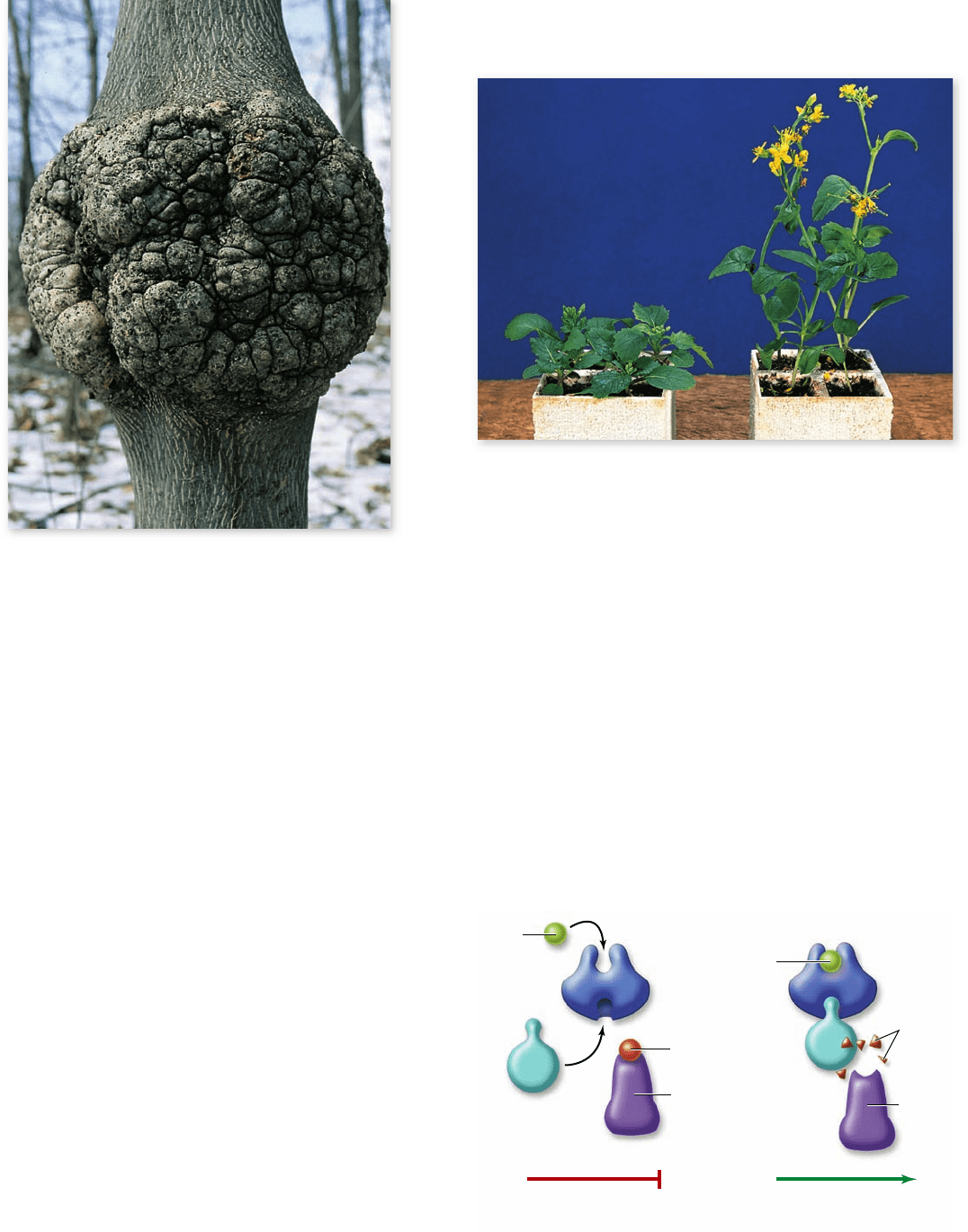
Figure 41.28
Crown gall tumor. Sometimes cytokinins can
be used against the plant by a pathogen. In this case, Agrobacterium
tumefaciens (a bacterium) has incorporated a piece of its DNA into
the plant genome. This DNA contains genes coding for enzymes
necessary for cytokinin and auxin biosynthesis. The increased levels
of these hormones in the plant cause massive cell division and the
formation of a tumor.
GA is used as a signal from the embryo that turns on tran-
scription of one or more genes encoding hydrolytic enzymes
in the aleurone layer. The GA receptor has been identified.
When GA binds to its receptor, it frees GA-dependent tran-
scription factors from a repressor. These transcription factors
can now directly affect gene expression (figure 41.30) . Syn-
thesis of DNA does not seem to occur during the early stages
of seed germination, but it becomes important when the radi-
cle has grown through the seed coats.
Gibberellins also affect a number of other aspects of
plant growth and development. In some cases, GAs hasten seed
He grew Gibberella in culture and obtained a substance that, when
applied to rice plants, produced bakanae. This substance was iso-
lated and its structural formula identified by Japanese chemists in
1939. British chemists reconfirmed the formula in 1954.
Although such chemicals were first thought to be only a
curiosity, they have since turned out to belong to a large class of
more than 100 naturally occurring plant hormones. All are
acidic and are usually abbreviated GA (for gibberellic acid),
with a different subscript (GA
1
, GA
2
, and so forth) to distin-
guish each one.
Gibberellins, which are synthesized in the apical portions
of stems and roots, have important effects on stem elongation.
The elongation effect is enhanced if auxin is also present. The
application of gibberellins to certain dwarf mutants is known
to restore normal growth and development in many plants
(figure 41.29) . Some dwarf mutants produce insufficient
amounts of gibberellin and respond to GA applications; others
lack the ability to respond to gibberellin.
The large number of gibberellins are all part of a complex
biosynthetic pathway that has been unraveled using gibberellin-
deficient mutants in maize (corn). Although many of these gib-
berellins are intermediate forms in the production of GA
1
, recent
work shows that some forms may have specific biological roles.
In chapter 37 , we noted the role of gibberellins in stimu-
lating the production of α-amylase and other hydrolytic en-
zymes needed for utilization of food resources during
germination and establishment of cereal seedlings. How is
transcription of the genes encoding these enzymes regulated?
Figure 41.29
E ects of gibberellins. This rapid-cycling
member of the mustard family (Brassica rapa) will “bolt” and ower
because of increased gibberellin levels. Mutants such as the rosette
mutant (left) are defective in producing gibberellins. They can be
rescued by applying gibberellins to the shoot tip (right). Other
mutants have been identi ed that are defective in perceiving
gibberellins, and they will not respond to gibberellin applications.
Figure 41.30
Gibberellins activate gibberellin-
dependent transcription factors (GA-TRXN). a. GA-TRXN
cannot bind to a promotor when they are bound to DELLA
proteins. b. GA activates a protein complex that degrades DELLA
proteins, freeing GA-TRXN to bind to a promoter, inducing gene
transcription.
chapter
41
Sensory Systems in Plants
833www.ravenbiology.com
rav32223_ch41_814-838.indd 833rav32223_ch41_814-838.indd 833 11/16/09 2:06:50 PM11/16/09 2:06:50 PM
Apago PDF Enhancer
Plant Animal
Brassinolide TestosteroneCortisol
HO
HO
O
O
OH
OH
OH
OH
O
HO
O
OH
J
K
O
K
K
K
J
J
J
J
J
J
J
H
3
C
J
H
3
C
J
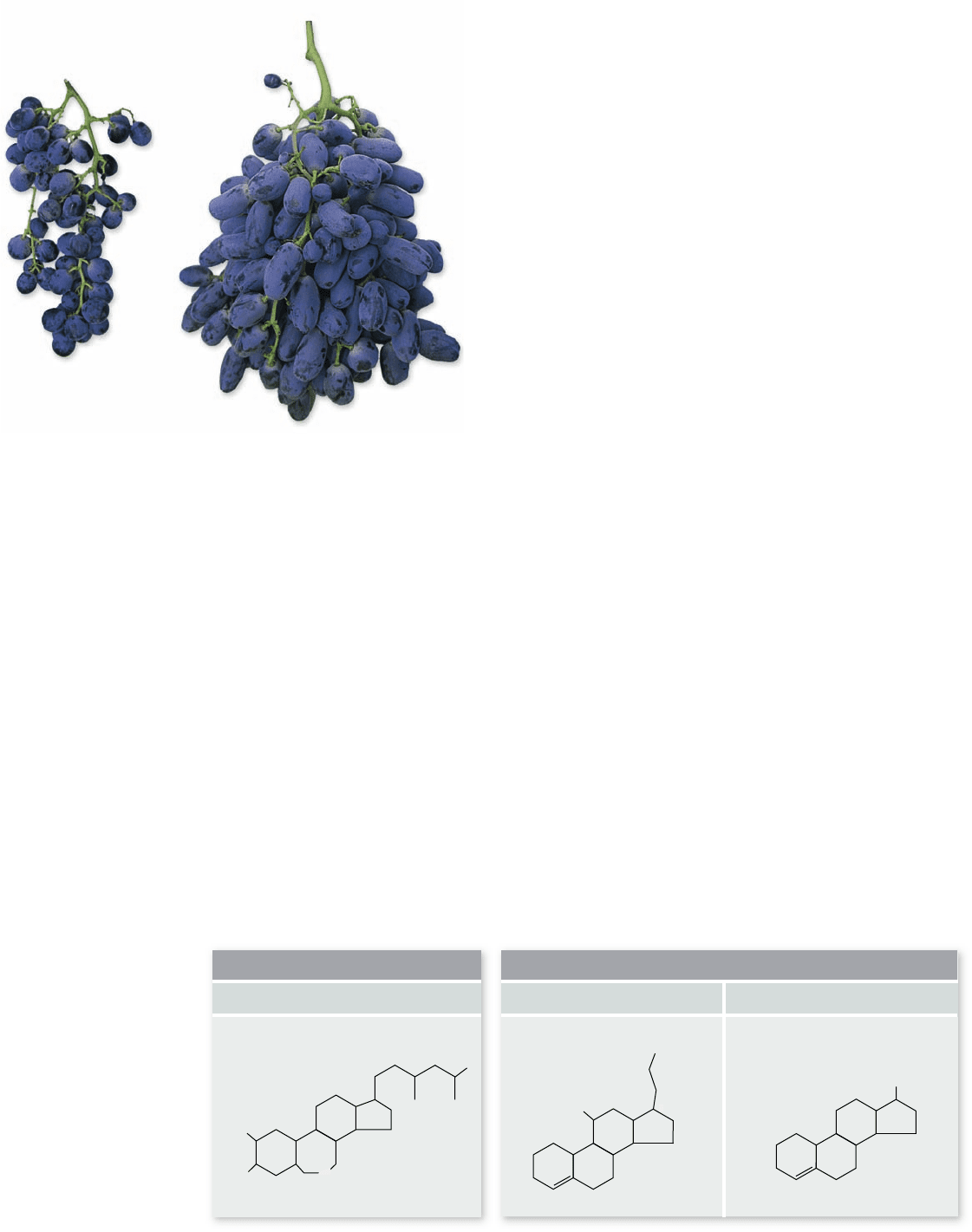
Figure 41.31
Applications of gibberellins increase the
space between grapes. Larger grapes (right) develop because
there is more room between individual grapes.
in Brassica spp. pollen, hence the name. Their historical ab-
sence in discussions of hormones may be partially due to their
functional overlap with other plant hormones, especially aux-
ins and gibberellins. Additive effects among these three classes
have been reported.
The application of molecular genetics to the study of
brassinosteroids has advanced our understanding of how they
are made and, to some extent, how they function in signal trans-
duction pathways. What is particularly intriguing about
brassinosteroids is their similarity to animal steroid hormones
(figure 41.32) . One of the genes coding for an enzyme in the
brassinosteroid biosynthetic pathway has significant similarity
to an enzyme used in the synthesis of testosterone and related
steroids. Brassinosteroids have also been identified in algae, and
they appear to be ubiquitous among the plants. It is plausible
that their evolutionary origin predated the plant–animal split.
Brassinosteroids have a broad spectrum of physiological
effects—elongation, cell division, bending of stems, vascular tis-
sue development, delayed senescence, membrane polarization,
and reproductive development. Environmental signals can trig-
ger brassinosteroid actions. Mutants have been identified that
alter the response to a brassinosteroid, but signal transduction
pathways remain to be uncovered. From an evolutionary per-
spective, it will be quite interesting to see how these pathways
compare with animal steroid signal transduction pathways.
Oligosaccharins act as
defense-signaling molecules
Plant cell walls are composed not only of cellulose but also of
numerous complex carbohydrates called oligosaccharides. Some
evidence indicates that these cell wall components (when de-
graded by pathogens) function as signaling molecules as well as
structural wall components. Oligosaccharides that are proposed
to have a hormone-like function are called oligosaccharins.
Oligosaccharins can be released from the cell wall by en-
zymes secreted by pathogens. These carbohydrates are believed
to signal defense responses, such as the hypersensitive response
(HR) discussed in chapter 40.
Another oligosaccharin has been shown to inhibit auxin-
stimulated elongation of pea stems. These molecules are active
at concentrations one to two orders of magnitude less than
those of the traditional plant hormones; you have seen how
germination, apparently by substituting for the effects of cold
or light requirements. Gibberellins are used commercially to
increase space between grape flowers by extending internode
length, so that the fruits have more room to grow. The result
is a larger bunch of grapes containing larger individual fruits
(figure 41.31) .
Although gibberellins function endogenously as hor-
mones, they also function as pheromones in ferns. In ferns,
gibberellin-like compounds released from one gametophyte
can trigger the development of male reproductive structures on
a neighboring gametophyte.
Brassinosteroids are structurally
similar to animal hormones
Although plant biologists have known about brassinoste roids
for 30 years, it is only recently that they have claimed their
place as a class of plant hormones. They were first discovered
Figure 41.32
Brassinosteroids.
Brassinolide and other
brassinosteroids have
structural similarities to
animal steroid hormones.
Cortisol, testosterone, and
estradiol (not shown) are
animal steroid hormones.
834
part
VI
Plant Form and Function
rav32223_ch41_814-838.indd 834rav32223_ch41_814-838.indd 834 11/16/09 2:06:53 PM11/16/09 2:06:53 PM
Apago PDF Enhancer
Wild-type Tomatoes
Transgenic Tomatoes
Functional
enzyme for
ethylene
biosynthesis
Gene for ethylene biosynthesis enzyme
Transcription
mRNA
Translation
Ethylene synthesis (in plant)
DNA
Ripe tomatoes
harvested
Antisense copy of gene
Transcription
Sense mRNA Antisense mRNA
Hybridization
No translation and
no ethylene synthesis
DNA
Green tomatoes
harvested
Ethylene applied
the evolution of photosynthetic organisms, sharing features
with environmental-sensing proteins identified in bacteria.
Ethylene plays a major role in fruit development. At first,
auxin, which is produced in significant amounts in pollinated
flowers and developing fruits, stimulates ethylene production;
this, in turn, hastens fruit ripening. Complex carbohydrates are
broken down into simple sugars, chlorophylls are broken down,
cell walls become soft, and the volatile compounds associated
with flavor and scent in ripe fruits are produced.
One of the first observations that led to the recognition
of ethylene as a plant hormone was the premature ripening in
bananas produced by gases coming from oranges. Such rela-
tionships have led to major commercial uses of ethylene. For
example, tomatoes are often picked green and artificially rip-
ened later by the application of ethylene. Ethylene is widely
used to speed the ripening of lemons and oranges as well. Car-
bon dioxide has the opposite effect of arresting ripening; fruits
are often shipped in an atmosphere of carbon dioxide.
Also, a biotechnology solution has been developed in
which one of the genes necessary for ethylene biosynthesis has
been cloned, and its antisense copy inserted into the tomato
genome (figure 41.33) . The antisense copy of the gene is a nu-
cleotide sequence that is complementary to the sense copy of
the gene. In this transgenic plant, both the sense and antisense
auxin and cytokinin ratios can affect organogenesis in culture
(see figure 41.27).
Oligosaccharins also affect the phenotype of regenerated
tobacco tissue, inhibiting root formation and stimulating flower
production in tissues that are competent to regenerate flowers.
How the culture results translate to in vivo systems remains an
open question.
Ethylene induces fruit ripening
and aids plant defenses
Long before its role as a plant hormone was appreciated,
the simple, gaseous hydrocarbon ethylene (H
2
C
–
CH
2
) was
known to defoliate plants when it leaked from gaslights in old-
fashioned streetlamps. Ethylene is, however, a natural product
of plant metabolism that, in minute amounts, interacts with
other plant hormones.
When auxin is transported down from the apical mer-
istem of the stem, it stimulates the production of ethylene in
the tissues around the lateral buds and thus retards their
growth. Ethylene also suppresses stem and root elongation,
probably in a similar way. An ethylene receptor has been iden-
tified and characterized, and it appears to have evolved early in
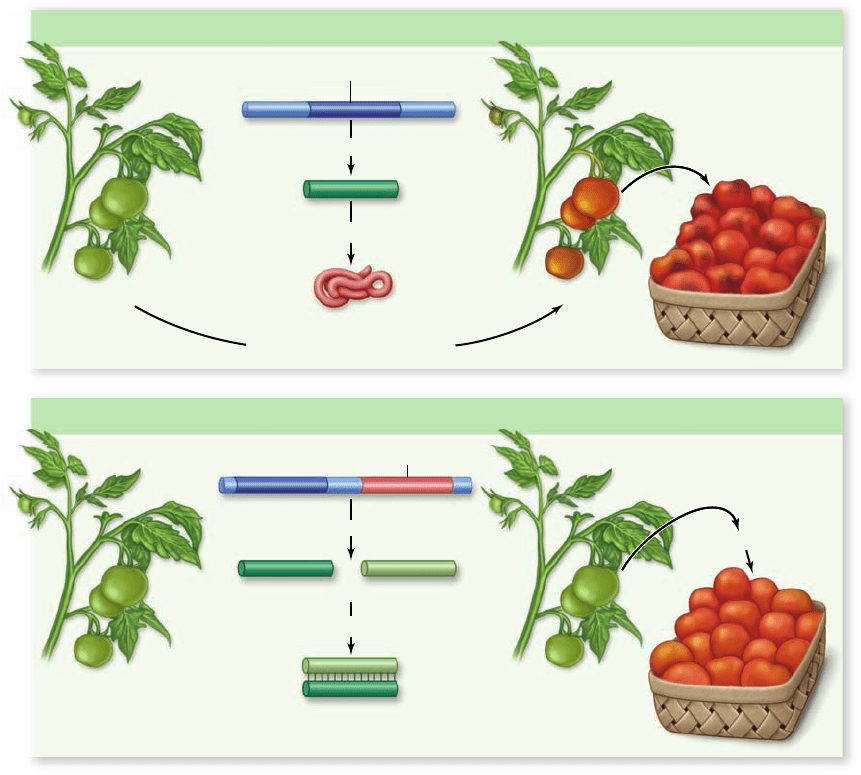
Figure 41.33
Genetic
regulation of fruit ripening.
An antisense copy of the gene for
ethylene biosynthesis prevents
the formation of ethylene and
subsequent ripening of
transgenic fruit. The antisense
strand is complementary to
the sequence for the ethylene
biosynthesis gene. After
transcription, the antisense
mRNA pairs with the
sense mRNA, and the double-
stranded mRNA cannot be
translated into a functional
protein. Ethylene is not
produced, and the fruit does not
ripen. The fruit is sturdier for
shipping in its unripened form
and can be ripened later with
exposure to ethylene.
Thus, while wild-type tomatoes
may already be rotten and
damaged by the time they reach
stores, transgenic tomatoes stay
fresh longer .
chapter
41
Sensory Systems in Plants
835www.ravenbiology.com
rav32223_ch41_814-838.indd 835rav32223_ch41_814-838.indd 835 11/16/09 2:06:54 PM11/16/09 2:06:54 PM
Apago PDF Enhancer
Dormant bud
a.
Seedling shoot
b.
c.
20 μm
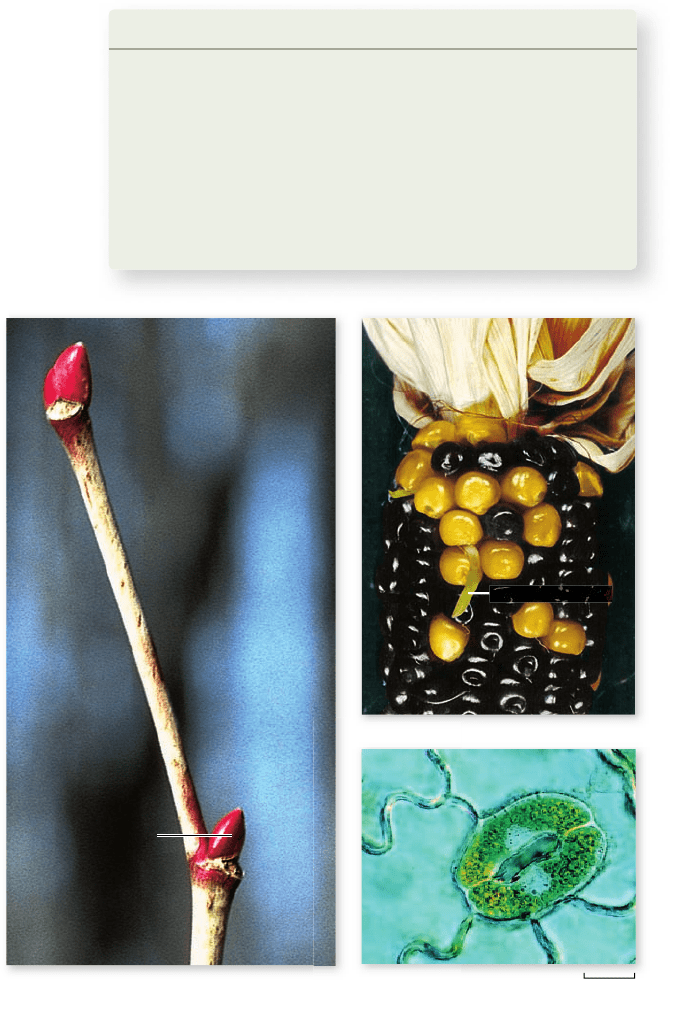
Figure 41.34
E ects of abscisic acid.
a. Abscisic acid plays a role in the formation of these
winter buds of an American basswood. These buds
will remain dormant for the winter, and bud scales—
modi ed leaves—will protect the buds from desiccation.
b. In addition to bud dormancy, abscisic acid is necessary
for dormancy in seeds. This viviparous mutant in maize
is de cient in abscisic acid, and the embryos begin
germinating on the developing cob. c. Abscisic acid also
affects the closing of stomata by in uencing the
movement of potassium ions out of guard cells.
induce dormancy and prevent precocious germination, called
vivipary (figure 41.34b). It is also important in controlling the
opening and closing of stomata (figure 41.34c).
Found to occur in all groups of plants, abscisic acid appar-
ently has been functioning as a growth-regulating substance
since early in the evolution of the plant kingdom. Relatively
little is known about the exact nature of its physiological and
biochemical effects, but these effects are very rapid—often tak-
ing place within a minute or two—and therefore they must be
at least partly independent of gene expression.
All of the genes have been sequenced in Arabidopsis, mak-
ing it easier to identify which genes are transcribed in response
to abscisic acid. Abscisic acid levels become greatly elevated
when the plant is subject to stress, especially drought. Like
other plant hormones, abscisic acid will probably prove to have
valuable commercial applications when its mode of action is
better understood.
Learning Outcomes Review 41.5
Hormones are chemicals produced in small quantities in one region of
the plant and then transported to another region, where they cause a
physiological or developmental response. Both auxins and cytokinins are
produced in meristems and promote growth; however, auxins stimulate
growth by cell elongation, while cytokinins stimulate cell division. In
contrast, abscisic acid inhibits growth and promotes dormancy.
■ What methods could you use to test whether abscisic acid
produced in root caps can affect bud growth in stems?
sequences for the ethylene biosynthesis gene are transcribed.
The sense and antisense mRNA sequences then pair with each
other. This pairing blocks translation, which requires single-
stranded RNA; as a result, ethylene is not synthesized, and the
transgenic tomatoes do not ripen. In this way, the sturdy green
tomatoes can be shipped without ripening and rotting. Expos-
ing these tomatoes to ethylene later induces them to ripen.
Studies have shown that ethylene plays an important eco-
logical role. Ethylene production increases rapidly when a plant
is exposed to ozone and other toxic chemicals, temperature ex-
tremes, drought, attack by pathogens or herbivores, and other
stresses. The increased production of ethylene that occurs can
accelerate the loss of leaves or fruits that have been damaged by
these stresses. Some of the damage associated with exposure to
ozone is due to the ethylene produced by the plants.
The production of ethylene by plants attacked by herbi-
vores or infected with pathogens may be a signal to activate the
defense mechanisms of the plants and may include the produc-
tion of molecules toxic to the pests.
Abscisic acid suppresses growth
and induces dormancy
Abscisic acid appears to be synthesized mainly in mature green
leaves, fruits, and root caps. The hormone earned its name be-
cause applications of it appear to stimulate fruit abscission in
cotton, but there is little evidence that it plays an important
role in this process. Ethylene is actually the chemical that pro-
motes senescence and abscission.
Abscisic acid probably induces the formation of
winter buds—dormant buds that remain through the
winter. The conversion of leaf primordia into bud
scales follows (figure 41.34a) . Like ethylene, abscisic
acid may also suppress growth of dormant lateral buds.
It appears that abscisic acid, by suppressing growth
and elongation of buds, can counteract some of the
effects of gibberellins; it also promotes senescence by
counteracting auxin.
Abscisic acid plays a role in seed dormancy and
is antagonistic to gibberellins during germination.
Abscisic acid levels in seeds rise during embryogen-
esis (see figure 41.17). As maize embryos develop in
the kernels on the cob, abscisic acid is necessary to
836
part
VI
Plant Form and Function
rav32223_ch41_814-838.indd 836rav32223_ch41_814-838.indd 836 11/16/09 2:06:55 PM11/16/09 2:06:55 PM

Apago PDF Enhancer
41.1 Responses to Light
P
fr
facilitates expression of light response genes ( gure 41.1)
Phytochrome exists as two interconvertible forms. The inactive
form, P
r
, absorbs red light and is converted to the active form,
P
fr
. P
fr
absorbs far-red light and is converted to the inactive form,
P
r
. P
fr
enters the nucleus and binds with other proteins to form a
transcription complex, leading to expression of light-regulated genes.
It can also activate a cascade of transcription factors.
Many growth responses are linked to phytochrome action.
P
fr
is involved in seed germination, shoot elongation, and detection
of plant spacing. Far-red light inhibits germination by inactivating
P
fr
, and red light stimulates it by activating P
r
.
Crowded plants receive a greater proportion of far-red light, which
is re ected from neighboring plants. The plants respond by growing
taller to compete more effectively for sunlight.
Light a ects directional growth.
Phototropisms are directional growth responses of stems toward blue
light. Blue-light receptors such as phototropin 1 are a recent discovery.
Circadian clocks are independent of light but are entrained by light.
Circadian rhythms entrain to the daily cycle through the action of
phytochrome and blue-light photoreceptors. In the absence of light,
the cycle’s period may become desynchronized, but it resets when
light is available.
41.2 Responses to Gravity
Plants align with the gravitational eld: An overview.
Gravitropism is the growth response to a gravitational eld.
Certain cells in plants perceive gravity when amyloplasts are pulled
downward. Following the detection of gravity, a physiological signal
causes cell elongation in other cells. The hormone auxin is believed
to transmit the signal.
Stems bend away from a center of gravity.
Shoots bend away from gravity, so they exhibit negative gravitropism.
When auxin accumulates on the lower side of the stem, those cells
elongate, causing the stem to bend upward.
Roots bend toward a center of gravity.
Roots bend toward gravity, so they exhibit positive gravitropism. If
the root cap is horizontally oriented, the cells on the upper side of
the root become elongated, causing the root to grow downward.
41.3 Responses to Mechanical Stimuli
Touch can trigger irreversible growth responses.
Thigmotropism is a permanent directional growth of a plant toward
or away from a physical stimulus. It results in thigmomorphogenesis,
a change in growth form.
Thigmonastic responses are independent of the direction of the
stimulus and are usually produced by changes in turgor pressure.
Reversible responses to touch and other stimuli involve turgor pressure.
Touch-induced responses result from changes in turgor pressure.
A stimulus causes an electrical signal, which results in a loss of
potassium ions and water from cells of the pulvini. The loss of turgor
causes the leaves to move.
Light can induce changes in turgor pressure, resulting in leaf tracking
of sunlight, ower opening, and leaf sleep movements.
41.4 Responses to Water and Temperature
Dormancy is a response to water, temperature, and light.
Dormancy is the cessation of growth that occurs when a plant is
exposed to environmental stress. Seasonal leaf abscission occurs in
deciduous trees in the fall. Seed dormancy suspends germination
until environmental conditions are optimal.
Plants can survive temperature extremes.
Plants respond to cold temperatures by increasing unsaturated lipids
in membranes, limiting ice crystal formation to extracellular spaces,
and producing antifreeze proteins.
When exposed to rapid increases in temperature, plants produce heat
shock proteins, which help to stabilize other proteins.
41.5 Hormones and Sensory Systems
The hormones that guide growth are keyed to the environment.
Hormones are produced in small quantities in one part of a plant and
then transported to another, where they bring about physiological or
developmental responses.
Auxin allows elongation and organizes the body plan.
Auxins are produced in apical meristems and immature parts of a
plant. They affect DNA transcription by binding to proteins. Auxins
promote stem elongation, adventitious root formation, cell division,
and lateral bud dormancy. They also inhibit leaf abscission and
induce ethylene production.
Cytokinins stimulate cell division and di erentiation.
Cytokinins are purines produced in root apical meristems and
immature fruits. They promote mitosis, chloroplast development,
and bud formation. Cytokinins also delay leaf aging.
Gibberellins enhance plant growth and nutrient utilization.
Gibberellins are produced by root and shoot tips, young leaves,
and seeds. They promote the elongation of stems and the production
of enzymes in germinating seeds. In ferns, gibberellins function
as pheromones.
Brassinosteroids are structurally similar to animal hormones.
Brassinosteroids are steroids produced in pollen, immature seeds,
shoots, and leaves. They produce a broad spectrum of effects related
to growth, senescence, and reproductive development.
Oligosaccharins act as defense-signaling molecules.
Pathogens secrete enzymes that release oligosaccharins from
cell walls; these molecules induce pathogen defense responses.
Oligosaccharins can also inhibit auxin-stimulated elongation, inhibit
root formation, and stimulate ower production.
Ethylene induces fruit ripening and aids plant defenses.
Roots, shoot apical meristems, aging owers, and ripening fruits
produce ethylene, a gas that controls leaf, ower, and fruit abscission,
promotes fruit ripening, and suppresses stem and root elongation.
Ethylene may activate a defense response to attacks by pathogens
and herbivores.
Abscisic acid suppresses growth and induces dormancy.
Mature green leaves, fruits, root caps, and seeds produce abscisic acid.
Abscisic acid inhibits bud growth and the effects of other hormones,
induces seed dormancy, and controls stomatal closure.
Chapter Review
chapter
41
Sensory Systems in Plants
837www.ravenbiology.com
rav32223_ch41_814-838.indd 837rav32223_ch41_814-838.indd 837 11/16/09 2:07:02 PM11/16/09 2:07:02 PM

Apago PDF Enhancer
UNDERSTAND
1. Which of the following is stimulated by blue light?
a. Seed germination
b. Detection of plant spacing
c. Phototropism
d. Shoot elongation
2. Stems and roots, respectively, exhibit
a. a positive phototropic response and no phototropic
response.
b. a negative phototropic response and no phototropic
response.
c. no phototropic response and a positive phototropic
response.
d. no phototropic response and a negative phototropic
response.
3. In stems, gravity is detected by cells of the
a. epidermis. c. periderm.
b. cortex. d. endodermis.
4. Chilling most directly affects
a. nuclear proteins. c. the cytoskeleton.
b. vacuolar inclusions. d. membrane lipids.
5. Which of the following does not happen as a seed approaches a
state of dormancy?
a. The seed loses water.
b. Abscisic acid levels in the embryo decrease.
c. The seed coat hardens.
d. Protein synthesis stops.
6. Dwarf mutants can sometimes be induced to grow normally
by applying
a. auxin. c. ethylene.
b. abscisic acid. d. gibberellin.
APPLY
1. If you exposed seeds to a series of red-light versus far-red-light
treatments, which of the following exposure treatments would
result in seed germination?
a. Red; far-red
b. Far-red; red
c. Red; far-red; red; far-red; red; far-red; red; far-red
d. None of the above
2. If you were to plant a de-etiolated (det2) mutant Arabidopsis seed
and keep it in a dark box, what would you expect to happen?
a. The seed would germinate normally, but the plant would
not become tall and spindly while it sought a light source.
b. The seed would fail to germinate because it would not
have light.
c. The seed would germinate, and the plant would become
tall and spindly while it sought a light source.
d. The seed would germinate, and the plant would immediately
die because it could not make sugar in the dark.
3. When Charles and Francis Darwin investigated phototropisms
in plants, they discovered that
a. auxin was responsible for light-dependent growth.
b. light was detected at the shoot tip of a plant.
Review Questions
c. light was detected below the shoot tip of a plant.
d. only red light stimulated phototropism.
4. Auxin promotes a plant to grow toward a light source by
a. increasing the rate of cell division on the shaded side
of the stem.
b. shortening the cells on the light side of the stem.
c. causing cells on the shaded side of the stem to elongate.
d. decreasing the rate of cell division on the light side of
the stem.
5. You have come up with a brilliant idea to stretch your grocery
budget by buying green fruit in bulk and then storing it in a bag
that you have blown up like a balloon. As you need fruit, you
would take it out of the bag, and it would miraculously ripen.
How would this work?
a. The bag would block light from reaching the fruit,
so it would not ripen.
b. The bag would keep the fruit cool, so it would not ripen.
c. The high CO
2
levels in the bag would prevent ripening.
d. The high O
2
levels in the bag would prevent ripening.
6. Gibberellins are used to increase productivity in grapes because they
a. cause fruits to be larger by promoting cell division
within the fruit.
b. increase the internode length so the fruits have more room
to grow.
c. increase the number of owers produced, thus increasing
the number of fruits.
d. do all of the above.
7. Which of the following might not be observed in a plant that
is grown on the Space Shuttle in space?
a. Phototropism c. Circadian rhythms
b. Photomorphogenesis d. Gravitropism
SYNTHESIZE
1. If you buy a bag of potatoes and leave them in a dark cupboard
for too long, they will begin to form long white sprouts with
tiny leaves. Name this process and explain why the potatoes are
behaving as they are.
2. Find the discussion of taxis in this book. Compare and contrast
tropism with taxis.
3. The current model for gravitropism suggests that the
accumulation of amyloplasts on the bottom of a cell allows the cell
to sense gravity. Suggest a plausible mechanism for the sensing of
gravity that does not involve the settling out of particles.
4. Farmers who grow crops that are planted as seedlings may
prepare them for their transition from the greenhouse to the
eld by brushing them gently every day for a few weeks. Why is
this bene cial?
ONLINE RESOURCE
www.ravenbiology.com
Understand, Apply, and Synthesize—enhance your study with
animations that bring concepts to life and practice tests to assess
your understanding. Your instructor may also recommend the
interactive eBook, individualized learning tools, and more.
838
part
VI
Plant Form and Function
rav32223_ch41_814-838.indd 838rav32223_ch41_814-838.indd 838 11/16/09 2:07:03 PM11/16/09 2:07:03 PM
Apago PDF Enhancer
T
Chapter Outline
42.1 Reproductive Development
42.2 Flower Production
42.3 Structure and Evolution of Flowers
42.4 Pollination and Fertilization
42.5 Asexual Reproduction
42.6 Plant Life Spans
Chapter
42
Plant Reproduction
Introduction
The remarkable evolutionary success of flowering plants can be linked to their novel reproductive strategies. In this chapter,
we explore the reproductive strategies of the angiosperms and how their unique features—flowers and fruits—have
contributed to their success. This is, in part, a story of coevolution between plants and animals that ensures greater genetic
diversity by dispersing plant gametes widely. In a stable environment, however, there are advantages to maintaining the
status quo genetically; asexual reproduction, for example, is a strategy that produces cloned individuals. An unusual twist to
sexual reproduction in some flowering plants is that senescence and death of the parent plant immediately follow.
CHAPTER
rav32223_ch42_839-862.indd 839rav32223_ch42_839-862.indd 839 11/16/09 2:31:45 PM11/16/09 2:31:45 PM
Apago PDF Enhancer
Phase
change
Juvenile Adult Flowering
Floral promoters
Floral inhibitors
Temperature
Light
Gamete
production and
pollination
Fertilization
Embryo
development
Fruit
and seed
maturation
Development
of plant body
Maturation
and flowering
Dispersal
and
germination
2n
2n
2n
2n
2n
2n
n
n
Zygote
CHAPTER 42
CHAPTER 37
CHAPTER 36
2n
2n
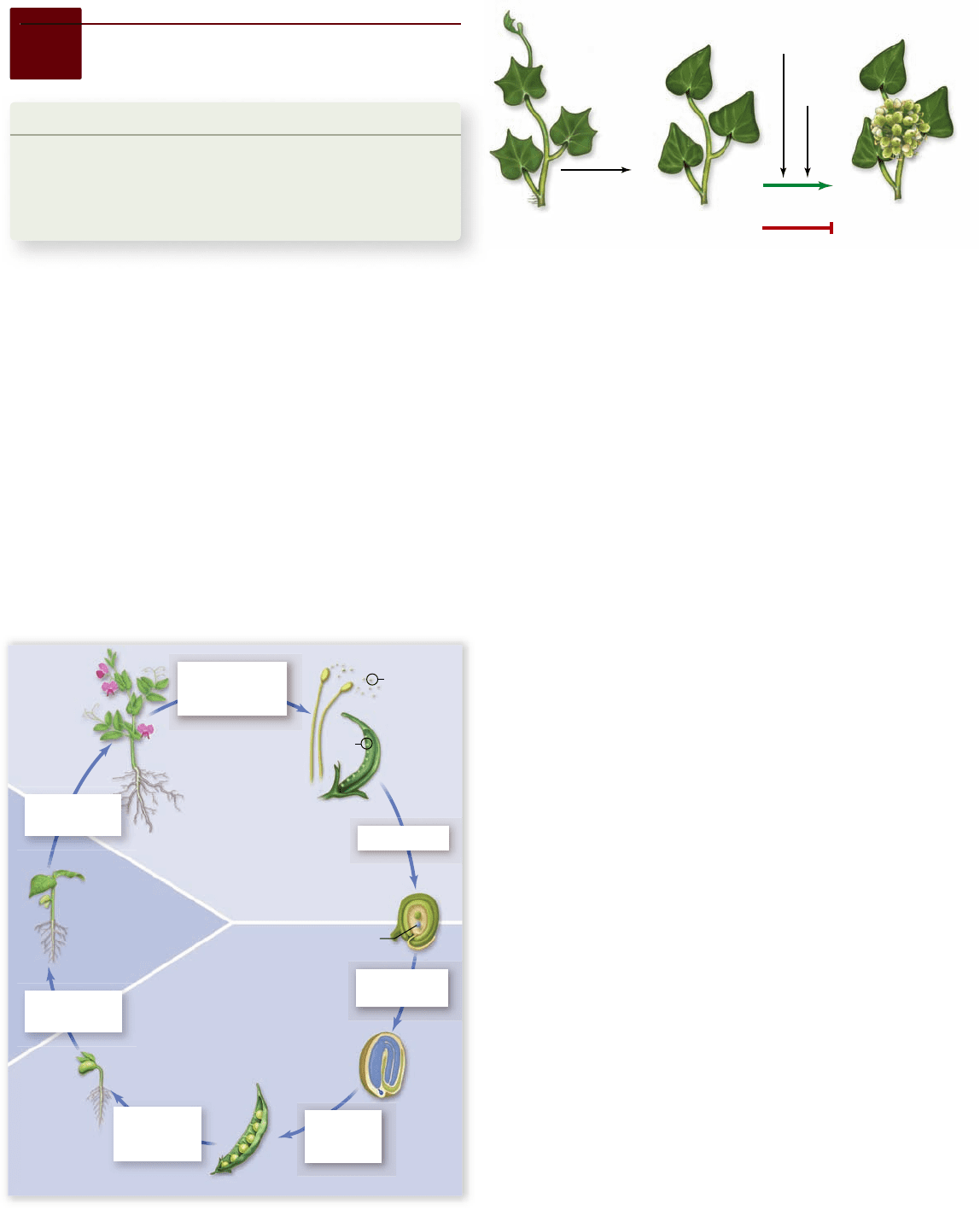
Figure 42.1
Life cycle of a owering plant (Angiosperm).
Figure 42.2
Factors involved in initiating owering.
This model depicts the environmentally cued and internally
processed events that result in a shoot meristem initiating owers.
During phase change, the plant acquires competence to respond to
owering signals.
tence to respond to internal or external signals regulating flow-
ering. Once plants are competent to reproduce, a combination
of factors—including light, temperature, and both promotive
and inhibitory internal signals—determines when a flower is
produced (figure 42.2). These signals turn on genes that specify
formation of the floral organs—sepals, petals, stamens, and car-
pels. Once cells have instructions to become a specific floral
organ, yet another developmental cascade leads to the three-
dimensional construction of flower parts. We describe details of
this process in the following sections.
The transition to owering competence
is termed phase change
At germination, most plants are incapable of producing a flower,
even if all the environmental cues are optimal. Internal develop-
mental changes allow plants to obtain competence to respond
to external or internal signals (or both) that trigger flower for-
mation. This transition is referred to as phase change.
Phase change can be morphologically obvious or very
subtle. Take a look at an oak tree in the winter: Leaves will still
be clinging to the lower branches until spring when the new
buds push them off, but leaves on the upper branches will have
fallen earlier (figure 42.3a). Those lower branches were initi-
ated by a juvenile meristem. The fact that they did not respond
to environmental cues and drop their leaves indicates that they
are juvenile branches and have not made a phase change. Al-
though the lower branches are older, their juvenile state was
established when they were initiated and will not change.
Ivy also has distinct juvenile and adult phases of growth
(figure 42.3b). Stem tissue produced by a juvenile meristem ini-
tiates adventitious roots that can cling to walls. If you look at
very old brick buildings covered with ivy, you will notice that
the uppermost branches are falling off because they have tran-
sitioned to the adult phase of growth and have lost the ability to
produce adventitious roots.
It is important to note that even though a plant has
reached the adult stage of development, it may or may not pro-
duce reproductive structures. Other factors may be necessary
to trigger flowering.
42.1
Reproductive Development
Learning Outcomes
Describe the general life cycle of a flowering plant.1.
Define phase change.2.
Identify two 3. Arabidopsis mutants that have been used to
study phase change.
In chapter 30, we noted that angiosperms represent an evolu-
tionary innovation with their production of flowers and fruits.
In chapter 37 , we outlined the development of form, or mor-
phogenesis, which a germinating seed undergoes to become a
vegetative plant. In this section, we describe the additional
changes that occur in a vegetative plant to produce the elabo-
rate structures associated with flowering (figure 42.1) .
Plants go through developmental changes leading to re-
productive maturity just as many animals do. This shift from
juvenile to adult development is seen in the metamorphosis of
a tadpole to an adult frog or a caterpillar to a butterfly that can
then reproduce. Plants undergo a similar metamorphosis that
leads to the production of a flower. Unlike the juvenile frog,
which loses its tail, plants just keep adding structures to existing
structures with their meristems.
Carefully regulated processes determine when and where
flowers will form. Moreover, plants must often gain compe-
840
part
VI
Plant Form and Function
rav32223_ch42_839-862.indd 840rav32223_ch42_839-862.indd 840 11/16/09 2:31:50 PM11/16/09 2:31:50 PM
Apago PDF Enhancer
Normal
Flowering
Accelerated
Flowering
a. b.
a. b.
Carpel-
like
structure
Roots
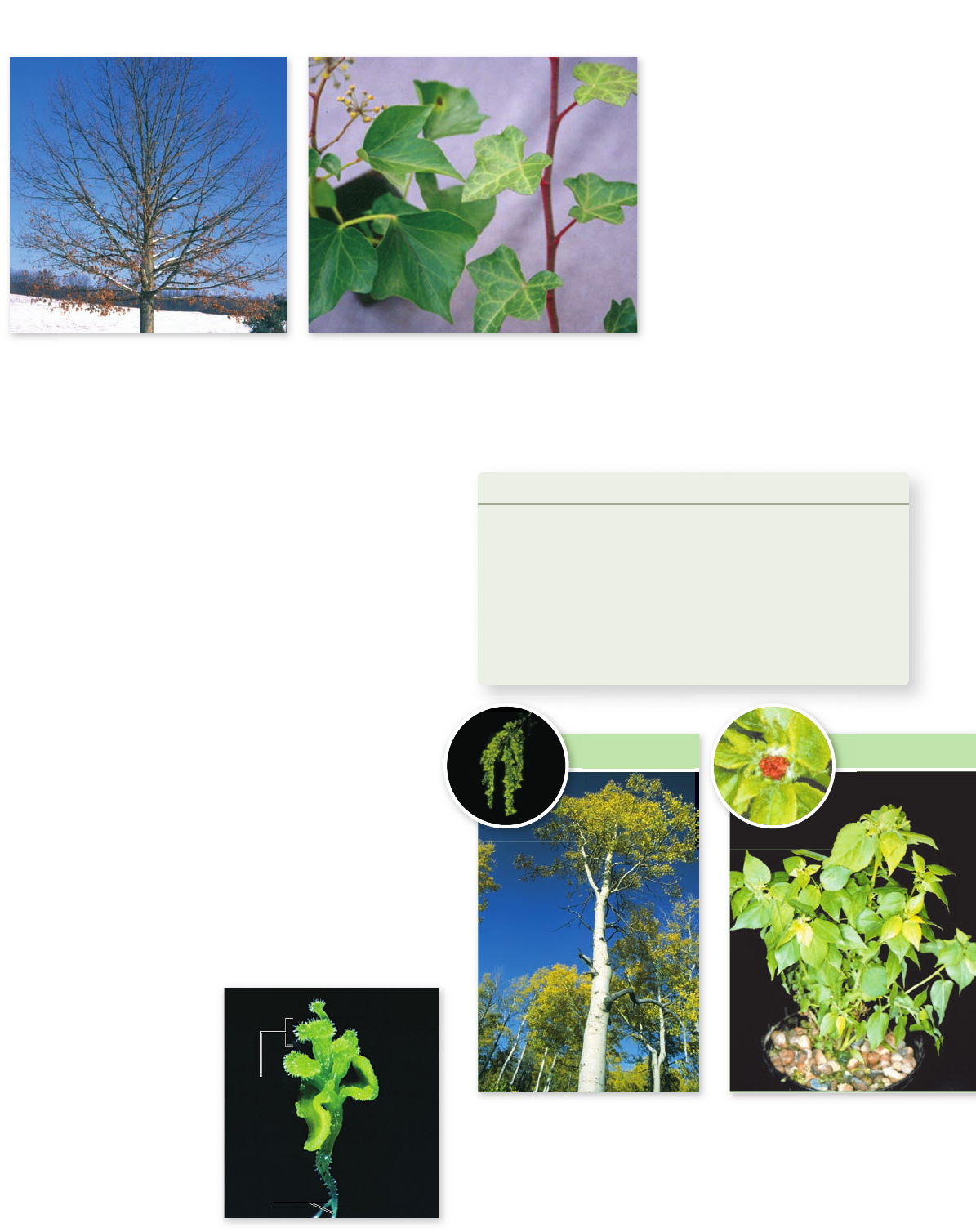
Figure 42.3
Phase change.
a. The lower branches of this oak tree
represent the juvenile phase of
development; they cling to their leaves
in the winter. The lower leaves are not
able to form an abscission layer and
break off the tree in the fall. Such
visible changes are marks of phase
change, but the real test is whether the
plant is able to ower. b. Juvenile ivy
(right) makes adventitious roots and has
an alternating leaf phyllotaxy. Mature
ivy (left) lacks adventitious roots, has
spiral phyllotaxy, and can make owers.
Figure 42.4
Embryonic
ower (EMF) prevents
early owering.
Mutant
plants that lack EMF protein
ower as soon as they
germinate. The owers have
malformed carpels and other
defective oral structures close
to the roots.
Figure 42.5
Overexpression of a owering gene can
accelerate phase change.
a. Normally, an aspen tree grows for
several years before producing owers (see inset). b. Overexpression
of the Arabidopsis owering gene, LFY, causes rapid owering in a
transgenic aspen (see inset).
Phase change, as we said earlier, results in an adult plant,
but not necessarily a flowering plant. The ability to reproduce is
distinct from actual reproductive development. Flower produc-
tion depends on a number of factors, which we explore next.
Learning Outcomes Review 42.1
In a fl owering plant life cycle, fertilization produces an embryo in a seed. The
embryo develops into a plant that eventually fl owers, and the fl owers once
again produce gametes. Phase change is the transition from vegetative to
reproductive growth. In Arabidopsis, expression of the embryonic
fl o w e r m u t a n t (emf) or overexpression of the LEAFY gene (LFY) result
in early fl owering.
■ In evolutionary terms, why is flower production the
default state in plants?
Mutations have clari ed how phase
change is controlled
Generally it is easier to get a plant to revert from an adult to
juvenile state than to induce phase change experimentally. Ap-
plications of the plant hormone gibberellin and severe pruning
can cause reversion. In the latter case, new vegetative growth
occurs, as when certain shrubs are cut back and put out lush
new growth in response.
The embryonic flower (emf ) mutant of Arabidopsis flowers
almost immediately (figure 42.4), which is consistent with the
hypothesis that the wild-type allele suppresses flowering. As the
wild-type plant matures, EMF expression decreases. This finding
suggests that flowering is the default state, and that mechanisms
have evolved to delay flowering. This delay presumably allows
the plant to store more energy to be allocated for reproduction.
An example of inducing the juvenile-to-adult transition
comes from overexpressing a gene necessary for flowering that is
found in many species. This gene, LEAFY (LFY ), was cloned in
Arabidopsis, and its promoter was replaced with a viral promoter
that results in constant, high levels of LFY transcription. LFY with
its viral promoter was then introduced into cultured aspen cells
that were used to regenerate plants. When LFY is overexpressed in
aspen, flowering occurs in weeks instead of years (figure 42.5).
Phase change requires both a sufficiently strong promo-
tive signal and the ability to perceive the signal. Phase change
can result in the production of receptors in the shoot to per-
ceive a signal of a certain intensity. Alternatively an increase of
promotive signal(s) or a decrease of inhibitory signal(s) can
trigger phase change .
chapter
42
Plant Reproduction
841www.ravenbiology.com
rav32223_ch42_839-862.indd 841rav32223_ch42_839-862.indd 841 11/16/09 2:31:51 PM11/16/09 2:31:51 PM