
Raven P.H., Johnson G.B., Mason K.A. Biology (Ninth Edition)
Подождите немного. Документ загружается.

Apago PDF Enhancer
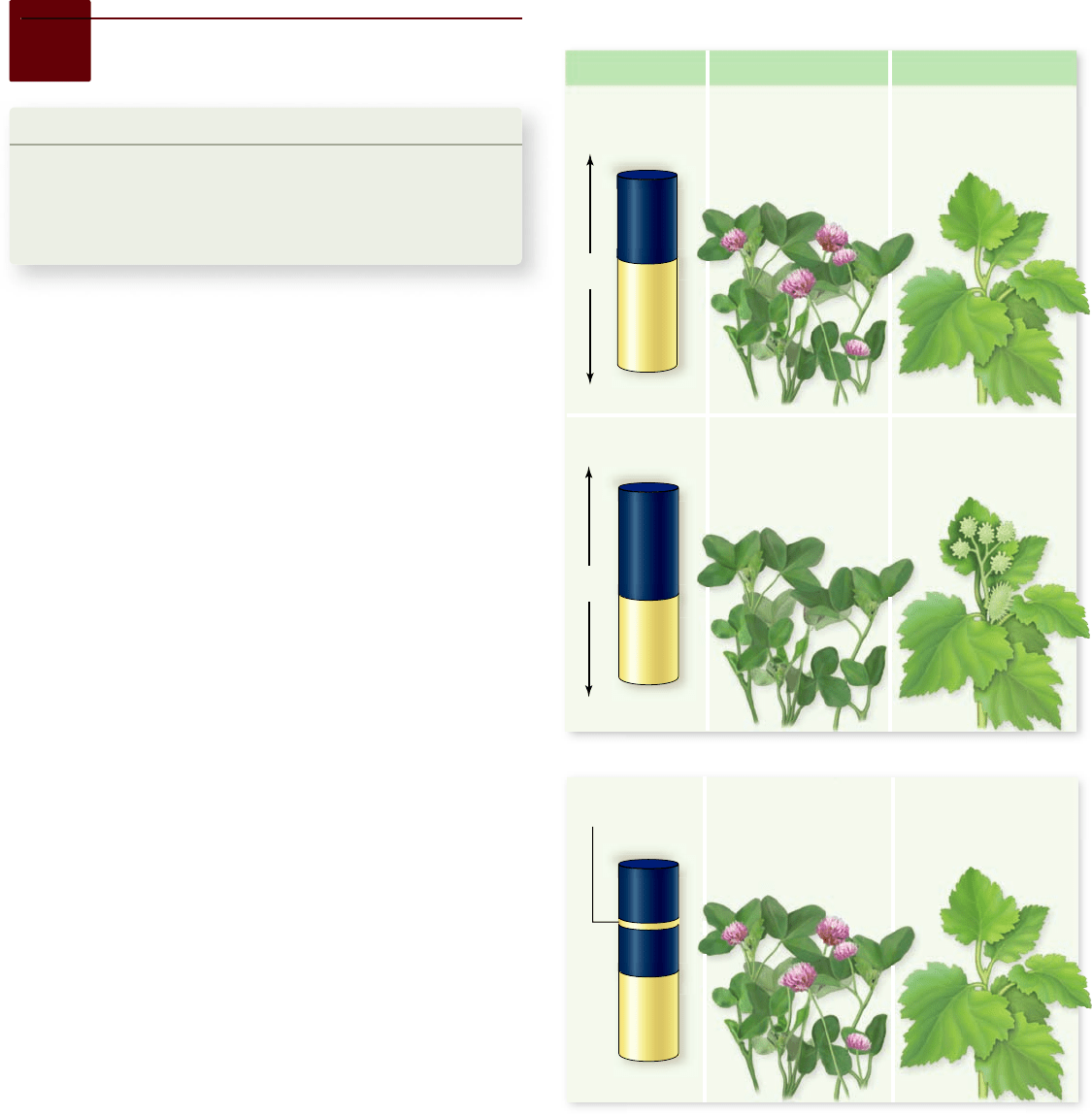
Long-Day Plants Short-Day Plants
24
hours
Night
Day
Earl
y summer
Late fall
24
hours
Night
Day
a.
b.
Clover
Short length of dark
required for bloom
Cocklebur
Long length of dark
required for bloom
Night
Day
Flash of light
Figure 42.6
How owering responds to day length.
a. Clover (center panels) is a long-day plant that is stimulated by
short nights to ower in the spring. Cocklebur (right-hand panels) is
a short-day plant that, throughout its natural distribution in the
northern hemisphere, is stimulated by long nights to ower in the
fall. b. If the long night of late fall is arti cially interrupted by a
ash of light, the cocklebur will not ower, and the clover will.
Although the terms long-day and short-day refer to the length of day,
in each case, it is the duration of uninterrupted darkness that
determines when owering will occur.
42.2
Flower Production
Learning Outcomes
Name the four genetically regulated flowering pathways.1.
Define floral determination.2.
Explain the relationship between floral meristem identity 3.
genes and floral organ identity genes.
Four genetically regulated pathways to flowering have been
identified: (1) the light-dependent pathway, (2) the temperature-
dependent pathway, (3) the gibberellin-dependent pathway, and
(4) the autonomous pathway.
Plants can rely primarily on one pathway, but all four
pathways can be present.
The environment can promote or repress flowering, and
in some cases, it can be relatively neutral. For example, increas-
ing light duration can be a signal that long summer days have
arrived in a temperate climate and that conditions are favorable
for reproduction. In other cases, plants depend on light to ac-
cumulate sufficient amounts of sucrose to fuel reproduction,
but flower independently of day length.
Temperature can also be used as a signal. Vernalization,
the requirement for a period of chilling of seeds or shoots for
flowering, affects the temperature-dependent pathway. Assum-
ing that regulation of reproduction first arose in more constant
tropical environments, many of the day-length and tempera-
ture controls would have evolved as plants colonized more tem-
perate climates. Plants with a vernalization requirement flower
after, not during, a cold winter, enhancing reproductive success.
The existence of redundant pathways to flowering helps ensure
new generations.
The light-dependent pathway is geared
to the photoperiod
Flowering requires much energy accumulated via photosynthe-
sis. Thus, all plants require light for flowering, but this is dis-
tinct from the photoperiodic, or light-dependent, flowering
pathway. Aspects of growth and development in most plants are
keyed to changes in the proportion of light to dark in the daily
24-hr cycle (day length).
Sensitivity to the photoperiod provides a mechanism for
organisms to respond to seasonal changes in the relative length
of day and night. Day length changes with the seasons; the far-
ther a region is from the equator, the greater the variation in
day length.
Short-day and long-day plants
The flowering responses of plants to day length fall into sev-
eral basic categories. In short-day plants, flowering is initiated
when daylight becomes shorter than a critical length
(figure 42.6). In long-day plants, flowering begins when day-
light becomes longer. Other plants, such as snapdragons,
roses, and many native to the tropics, flower when mature
842
part
VI
Plant Form and Function
rav32223_ch42_839-862.indd 842rav32223_ch42_839-862.indd 842 11/16/09 2:31:59 PM11/16/09 2:31:59 PM
Apago PDF Enhancer
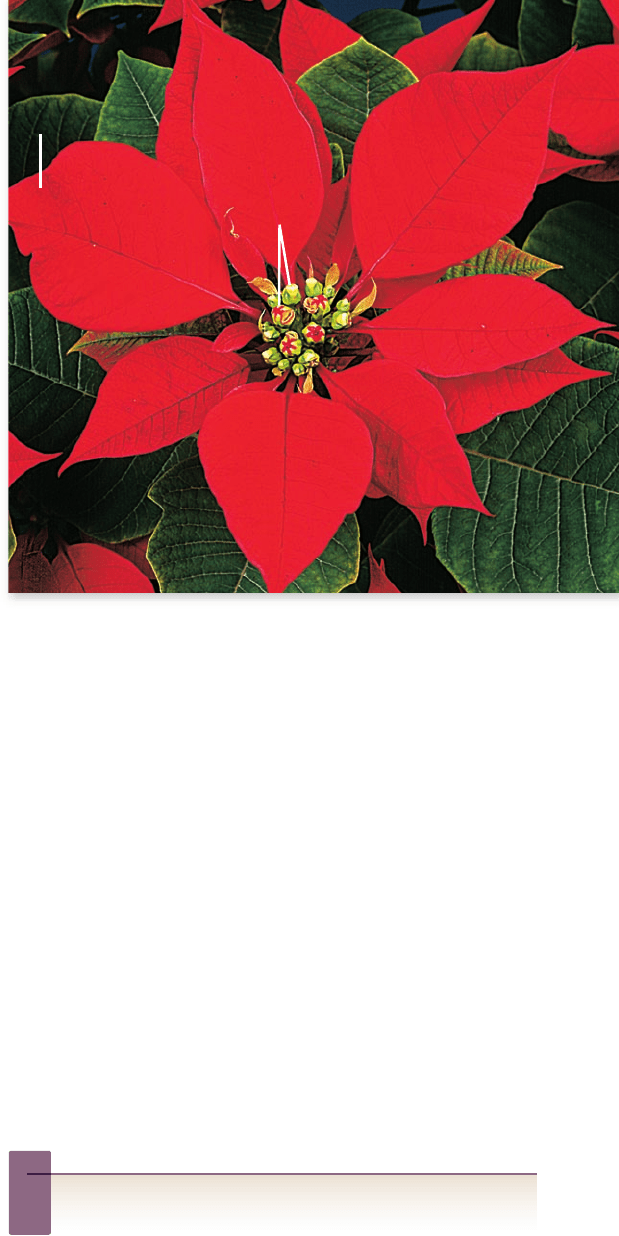
Bract
Flowers
Figure 42.7
Flowering time can be altered.
Manipulation of photoperiod in greenhouses ensures that short-day
poinsettias ower in time for the winter holidays. Even after
owering is induced, many developmental events must occur in
order to produce species-speci c owers.
Photoperiodic Regulation of Transcription of the CO
Gene.
Arabidopsis, which as you know is commonly used in
plant studies, is a facultative long-day plant that owers in re-
sponse to both far-red and blue light. Phytochrome and crypto-
chrome, the red- and blue-light receptors, respectively, regulate
owering via the gene CONSTANS (CO). Precise levels of CO
protein are maintained in accordance with the circadian clock,
and phytochrome regulates the transcription of CO. Levels of
CO mRNA are low at night and increase at daybreak. In addi-
tion, CO protein levels are modulated through the action of
cryptochrome. CO is an important protein because it links the
perception of day length with the production of a signal that
moves from the leaves to the shoot where a change in gene
transcription leads to the production of owers.
Inquiry question
?
If levels of CO mRNA follow a circadian pattern, how could
you determine whether protein levels are modulated by
a mechanism other than transcription? Why would an
additional level of control even be necessary?
The importance of posttranslational regulation of CO ac-
tivity became apparent through studies of transgenic Arabidopsis
plants. These plants contain a CO gene fused to a viral pro-
moter that is always on and produces high levels of CO mRNA
regardless of whether it is day or night. The regulation of CO
gene expression by phytochrome A is therefore eliminated
when this viral promoter is fused to the gene. Curiously, CO
protein levels still follow a circadian pattern.
regardless of day length, as long as they have received enough
light for normal growth. These are referred to as day-neutral
plants. Still other plants, including ivy, have two critical
photoperiods; they will not flower if the days are too long, and
they also will not flower if the days are too short.
Although plants are referred to as long-day or short-day
plants, it is actually the amount of darkness that determines
whether a plant flowers. In obligate long- or short-day
species, there is a sharp distinction between short and long
nights, respectively. Flowering occurs in obligate long-day
plants when the night length is less than the maximal amount
of required darkness (critical night length) for that species. For
obligate short-day plants, the amount of darkness must exceed
the critical night length for the species.
In other long- or short-day plants, flowering occurs more
rapidly or slowly depending on the length of day. These plants,
which rely on other flowering pathways as well, are called
facultative long- or short-day plants because the photo-
periodic requirement is not absolute. The garden pea is an ex-
ample of a facultative long-day plant.
Advantages of photoperiodic control of flowering
Using light as a cue permits plants to flower when abiotic en-
vironmental conditions are optimal, pollinators are available,
and competition for resources with other plants may be less.
For example, the spring herbaceous plants termed ephemerals
flower in the woods before the tree canopy leafs out and blocks
the sunlight necessary for photosynthesis. An example is the
trailing arbutus (Epigaea repens) of the Northeast woods, which
is also known as mayflower because of the time of year in which
it blooms.
At middle latitudes, most long-day plants flower in the
spring and early summer; examples of such plants include clo-
ver, irises, lettuce, spinach, and hollyhocks. Short-day plants
usually flower in late summer and fall; these include chrysanthe-
mums, goldenrods, poinsettias, soybeans, and many weeds, such
as ragweed. Commercial plant growers use these responses to
day length to bring plants into flower at specific times. For ex-
ample, photoperiod is manipulated in greenhouses so that poin-
settias flower just in time for the winter holidays (figure 42.7).
The geographic distribution of certain plants may be determined
by their flowering responses to day length.
The mechanics of light signaling
Photoperiod is perceived by several different forms of phy-
tochrome and also by a blue-light–sensitive molecule (cryp-
tochrome). Another type of blue-light–sensitive molecule
(phototropin) was discussed in chapter 41. Phototropin af-
fects photomorphogenesis, and cryptochrome affects photo-
periodic responses.
The conformational change in a phytochrome or crypto-
chrome light-receptor molecule triggers a cascade of events
that leads to the production of a flower. There is a link between
light and the circadian rhythm regulated by an internal clock
that facilitates or inhibits flowering. At a molecular level, the
gaps in information about how light signaling and flower pro-
duction are related are rapidly being filled in, and the control
mechanisms have been found to be quite complex.
chapter
42
Plant Reproduction
843www.ravenbiology.com
rav32223_ch42_839-862.indd 843rav32223_ch42_839-862.indd 843 11/16/09 2:32:01 PM11/16/09 2:32:01 PM
Apago PDF Enhancer
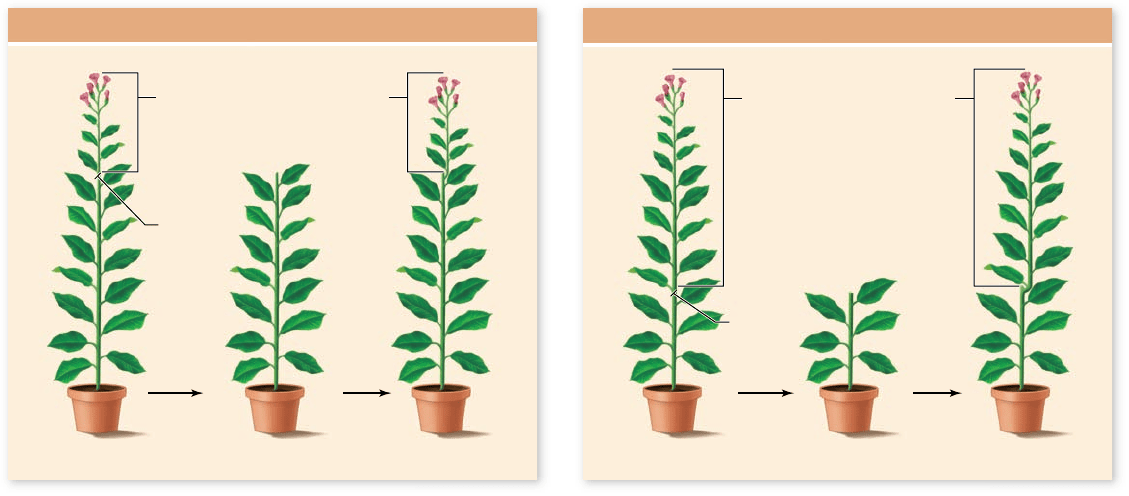
Upper Axillary Bud Released from Apical Dominance Lower Axillary Bud Released from Apical Dominance
Intact plant Shoot removed Replacement shoot
Shoot
removed
here
5 nodes*
removed
5 nodes*
replaced
Intact plant Shoot removed Replacement shoot
Shoot
removed
here
13 nodes*
removed
13 nodes*
replaced
*nodes = leaf bearing node
Figure 42.8
Plants can “count.”
When axillary buds of owering, day-neutral tobacco plants are released from apical dominance by
removing the main shoot, they replace the number of nodes that were initiated by the main shoot.
phloem, it is possible that this is the protein that moves in the
grafted plant to cause flowering. Equally likely, however, is the
possibility that CO directly or indirectly affects a separate graft-
transmissible factor that is essential for flowering.
The temperature-dependent
pathway is linked to cold
Cold temperatures can accelerate or permit flowering in many
species. As with light, this environmental connection ensures
that plants flower at more optimal times.
Some plants require a period of chilling before flowering,
called vernalization. This phenomenon was discovered in the
1930s by the Ukrainian scientist T. D. Lysenko while trying to
solve the problem of winter wheat rotting in the fields. Because
winter wheat would not flower without a period of chilling, Ly-
senko chilled the seeds and then planted them in the spring.
The seeds successfully sprouted, grew, and produced grain.
Although this discovery was scientifically significant,
Lysenko erroneously concluded that he had converted one spe-
cies, winter wheat, to another, spring wheat, by simply altering
the environment. Lysenko’s point of view was supported by the
communist philosophy of the time, which held that people could
easily manipulate nature to increase production. Unfortunately,
this philosophy led to a great many problems, including mis-
treatment of legitimate geneticists in the former Soviet Union.
In addition, genetics and Darwinian evolution were suspect in
the Soviet Union until the mid-1960s.
Vernalization is necessary for some seeds or plants in
later stages of development. Analysis of mutants in Arabidopsis
and pea plants indicate that vernalization is a separate flower-
ing pathway.
Although CO protein is produced day and night, levels
of CO are lower at night because of targeted protein degrada-
tion. Ubiquitin tags the CO protein, and it is degraded by the
proteasome as was described in chapter 41 for phytochrome
degradation. Blue light acting via cryptochrome stabilizes CO
during the day and protects it from ubiquitination and subse-
quent degradation.
CO and LFY Expression.
CO is a transcription factor that
turns on other genes, which results in the expression of LFY.
As discussed in connection with phase change earlier in this
section, LFY is one of the key genes that “tells” a meristem to
switch over to owering. We will see that other pathways also
converge on this important gene. Genes that are regulated by
LFY are discussed later in this chapter.
Florigen—The elusive flowering hormone
Long before any genes regulating flowering were cloned, a
flowering hormone called florigen was postulated to trigger
flower production. A considerable amount of evidence demon-
strates the existence of substances that promote flowering and
substances that inhibit it. Grafting experiments have shown
that these substances can move from leaves to shoots. The com-
plexity of their interactions, as well as the fact that multiple
chemical messengers are evidently involved, has made this sci-
entifically and commercially interesting search very difficult.
The existence of a flowering hormone remains strictly hypo-
thetical even after a scientific quest of 50 years.
One intriguing possibility is that CO protein is a graft-
transmissible flowering signal or that it affects such a signal.
CO has been found in the phloem that moves throughout the
plant body. When co mutant shoots are grafted to stocks that
produce CO, flowering occurs. Because CO is found in the
844
part
VI
Plant Form and Function
rav32223_ch42_839-862.indd 844rav32223_ch42_839-862.indd 844 11/17/09 1:20:53 PM11/17/09 1:20:53 PM
Apago PDF Enhancer
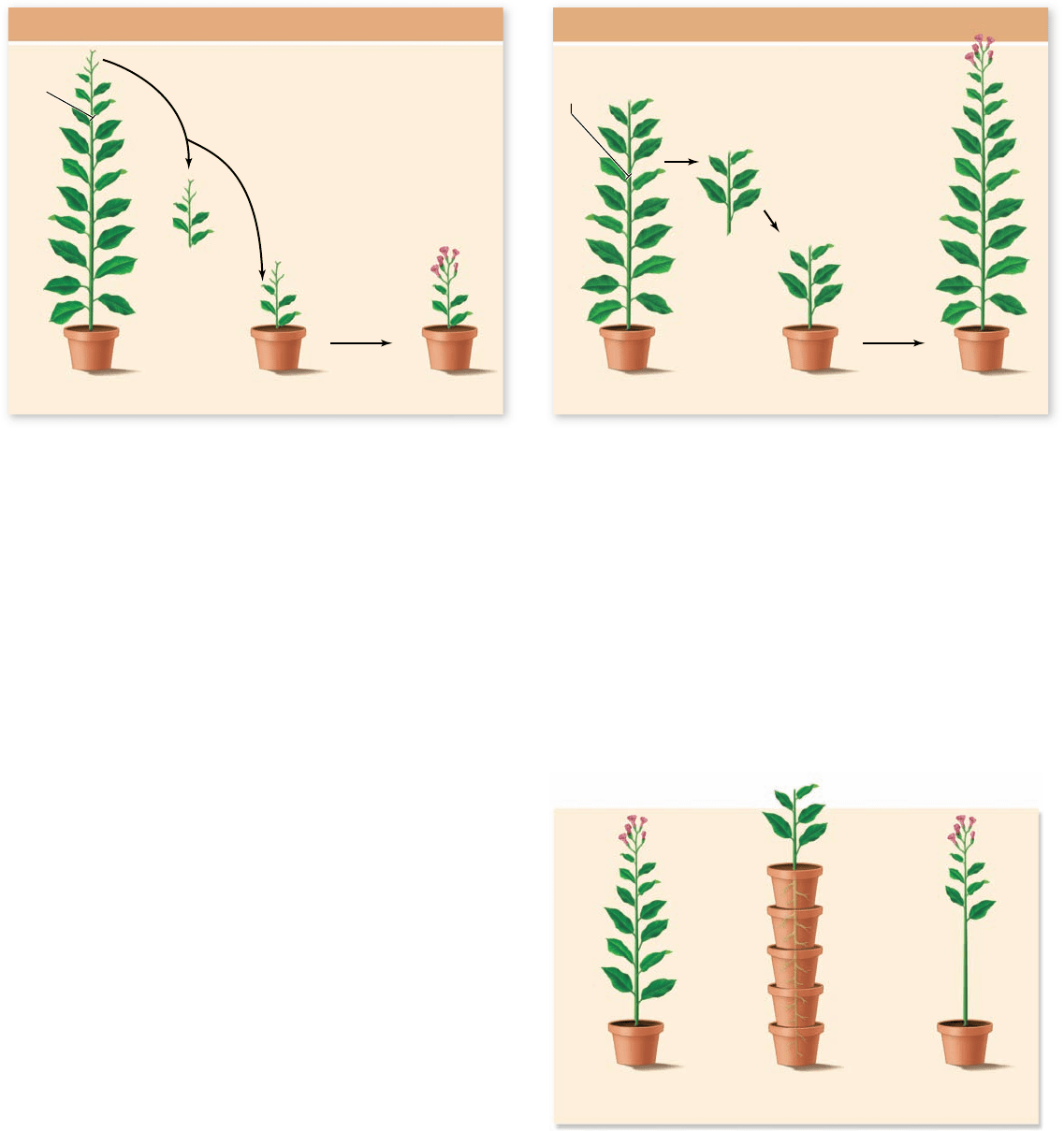
Shoot Florally Determined Shoot Not Florally Determined
a.
b.
Intact plant
Shoot
removed
Shoot
removed
here
Rooted shoot
Flowering
rooted shoot
Shoot
removed
here
Intact plant
Shoot
removed
Rooted shoot
Flowering
rooted shoot
Control plant:
no treatment
Experimental plant:
pot-on-pot treatment
Experimental plant:
Lower leaves were
continually removed
Figure 42.9
Plants can “remember.”
At a certain point in the owering process, shoots become committed to making a ower. This
is called oral determination. a. Florally determined shoots “remember” their position when rooted in a pot. That is, they produce the same
number of nodes that they would have if they had grown out on the plant, and then they ower. b. Shoots that are not yet orally determined
cannot remember how many nodes they have left, so they start counting again. That is, they develop like a seedling and then ower.
Figure 42.10
Roots can inhibit owering.
Adventitious
roots formed as bottomless pots were continuously placed over
growing tobacco plants, delaying owering. The delay in owering
is caused by the roots, not by the loss of the leaves. This was shown
by removing leaves on plants at the same time and in the same
position as leaves on experimental plants that became buried as pots
were added.
continuously placed over a growing tobacco plant and filled
with soil, flowering is delayed by the formation of adventitious
roots (figure 42.10 ). Control experiments with leaf removal
show that the addition of roots, and not the loss of leaves, de-
lays flowering. A balance between floral promoting and inhibit-
ing signals may regulate when flowering occurs in the
autonomous pathway and the other pathways as well.
The gibberellin-dependent pathway requires
an increased hormone level
In Arabidopsis and some other species, decreased levels of gib-
berellins delay flowering. Thus the gibberellin pathway is pro-
posed to promote flowering. It is known that gibberellins
enhance the expression of LFY. Gibberellin actually binds the
promoter of the LFY gene, so its effect on flowering is direct.
The autonomous pathway is independent
of environmental cues
The autonomous pathway to flowering does not depend on ex-
ternal cues except for basic nutrition. Presumably, this was the
first pathway to evolve. Day-neutral plants often depend pri-
marily on the autonomous pathway, which allows plants to
“count” and “remember.”
As an example, a field of day-neutral tobacco plants will
produce a uniform number of nodes before flowering. If the
shoots of these plants are removed at different positions, axil-
lary buds will grow out and produce the same number of nodes
as the removed portion of the shoot (figure 42.8). The upper
axillary buds of flowering tobacco will remember their position
when rooted or grafted. The terminal shoot tip becomes com-
mitted, or determined, to flower about four nodes before it ac-
tually initiates a flower (figure 42.9) . In some other species, this
commitment is less stable or it occurs later.
How do shoots “know” where they are and at some point
“remember” that information? It has become clear that inhibi-
tory signals are sent from the roots. When bottomless pots are
chapter
42
Plant Reproduction
845www.ravenbiology.com
rav32223_ch42_839-862.indd 845rav32223_ch42_839-862.indd 845 11/16/09 2:32:05 PM11/16/09 2:32:05 PM
Apago PDF Enhancer
inhibition
activation
Repression of Floral Inhibitors
Activation of Floral Meristem Identity Genes
Adult meristem Floral meristem
Temperature-
dependent
pathway
Autonomous
pathway
Flower-
repressing
genes
Flower-
promoting
genes
Vernalization
Autonomous
gene expression
Cold
Gibberellin-
dependent
pathway
Light-
dependent
pathway
Gibberellin
CO
Light
LFY
AP1
ABCDE
floral organ
identity genes
Floral organ
development
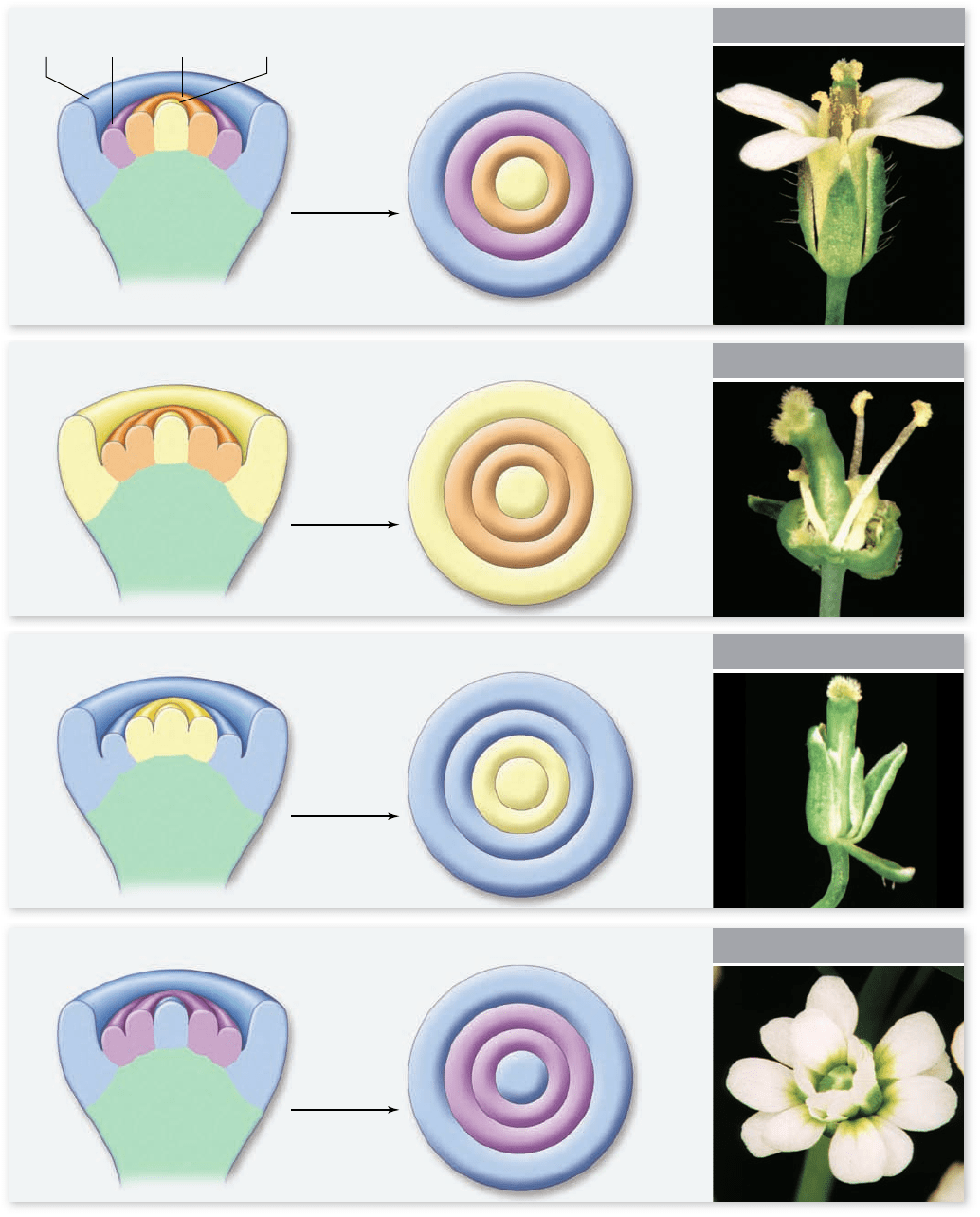
(figure 42.12). The ABC model proposes that three classes of
organ identity genes (A, B, and C) specify the floral organs in
the four floral whorls. By studying mutants, the researchers
have determined the following:
Class 1. A genes alone specify the sepals.
Class 2. A and class B genes together specify the petals.
Class 3. B and class C genes together specify the stamens.
Class 4. C genes alone specify the carpels.
The beauty of the ABC model is that it is entirely test-
able by making different combinations of floral organ identity
mutants. Each class of genes is expressed in two whorls, yield-
ing four different combinations of the gene products. When
any one class is missing, aberrant floral organs occur in pre-
dictable positions.
Modifications to the ABC model
As compelling as the ABC model is, it cannot fully explain
specification of floral meristem identity. Class D genes that
are essential for carpel formation have been identified, but
even this discovery did not explain why a plant lacking A, B,
and C gene function produced four whorls of sepals rather
than four whorls of leaves. Floral parts are thought to have
evolved from leaves; therefore, if the floral organ identity
genes are removed, whorls of leaves, rather than sepals, would
be predicted.
The answer to this puzzle is found in the more recently
discovered class E genes, SEPALATA1 (SEP1) through
SEPALATA4 (SEP4). The triple mutant sep1 sep2 sep3 and the
sep4 mutant both produce four whorls of leaves. The proteins
encoded by the SEP genes can interact with class A, B, and C
proteins and possibly affect transcription of genes needed for
the development of floral organs. Identification of the SEP
Determination for flowering is tested at the organ or
whole-plant level by changing the environment and ascertain-
ing whether the developmental fate has changed. In Arabidopsis,
floral determination correlates with the increase of LFY gene
expression, and it has already occurred by the time a second
flowering gene, APETALA1 (AP1), is expressed. Because all
four flowering pathways appear to converge with increased lev-
els of LFY, this determination event should occur in species
with a variety of balances among the pathways (figure 42.11).
Inquiry question
?
Why would it be advantageous for a plant to have four
distinct pathways that all affect the expression of LFY?
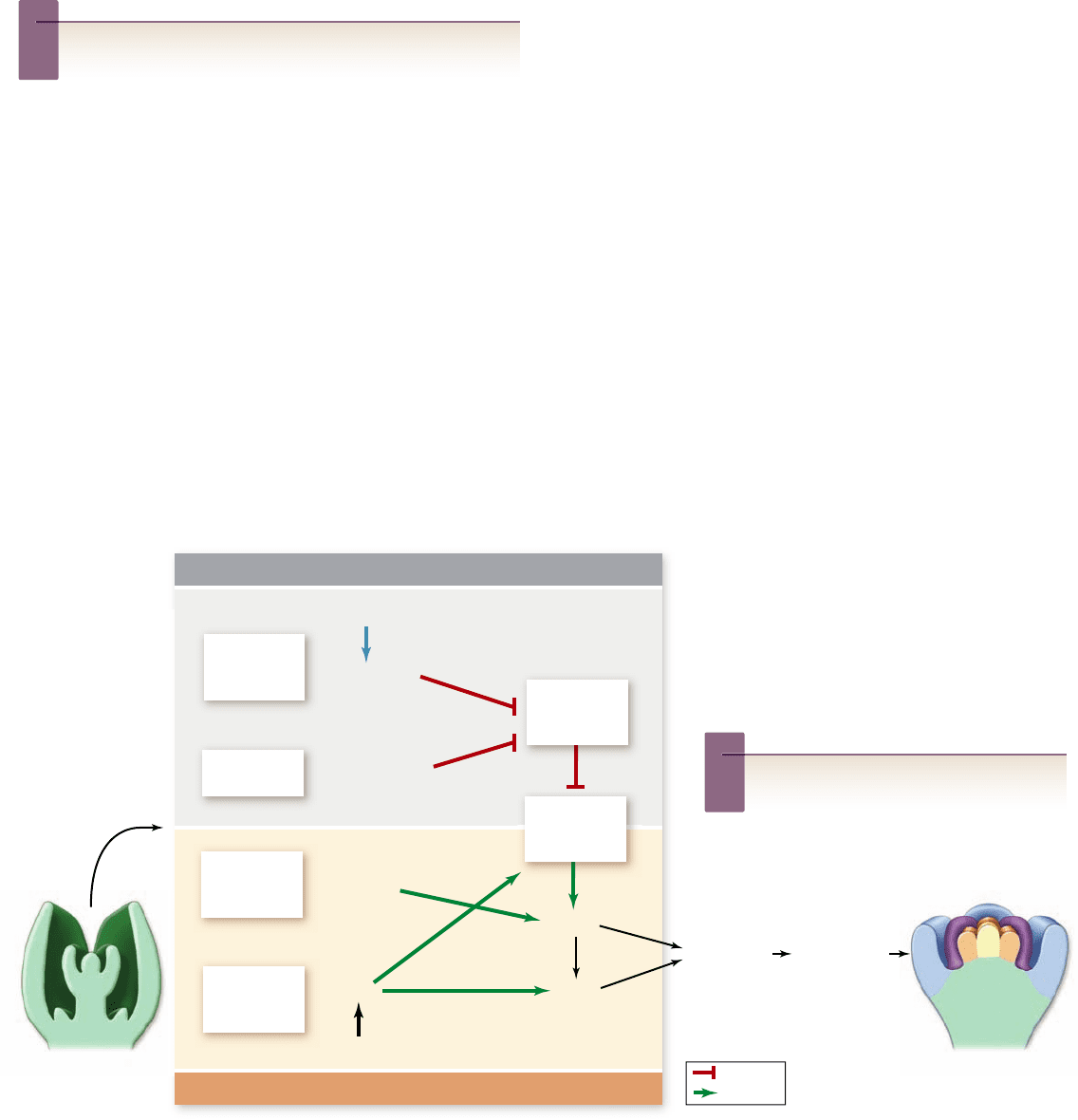
Floral meristem identity genes activate
oral organ identity genes
Arabidopsis and snapdragons are valuable model systems for
identifying flowering genes and understanding their interac-
tions. The four flowering pathways discussed earlier in this
section lead to an adult meristem becoming a floral meristem
by either activating or repressing the inhibition of floral
meristem identity genes (see figure 42.11). Two of the key flo-
ral meristem identity genes are LFY and AP1. These genes es-
tablish the meristem as a flower meristem. They then turn on
floral organ identity genes. The floral organ identity genes de-
fine four concentric whorls, moving inward in the floral mer-
istem, as sepal, petal, stamen, and carpel.
The ABC model
To explain how three classes of floral organ identity genes could
specify four distinct organ types, the ABC model was developed
Figure 42.11
Model for owering.
The temperature-dependent, gibberellin-
dependent, and light-dependent owering
pathways promote the formation of oral
meristems from adult meristems by repressing
oral inhibitors and activating oral meristem
identity genes.
Inquiry question
?
Would you expect plants to flower at a
different time if there were no flower-
repressing genes and the vernalization
and autonomous pathway genes induced
expression of flower-promoting genes?
846
part
VI
Plant Form and Function
rav32223_ch42_839-862.indd 846rav32223_ch42_839-862.indd 846 11/16/09 2:32:05 PM11/16/09 2:32:05 PM
Apago PDF Enhancer
Whorl 1
sepals
Whorl 2
petals
Whorl 3
stamens
Whorl 4
carpels
A A
A
and
B
A
and
B
B
and
C
B
and
C
C
Wild-type
floral meristem
Sepals
Petals
Stamens
Carpels
Development
C C
B
and
C
B
and
C
B
and
C
B
and
C
C
:A mutant
floral meristem:
missing gene
class A
Development
Cross section of wild-type flower
Stamens
Carpels
Cross section of :A mutant flower
Wild-type Flower
:
:
A Mutant Flower
A A
A A
C C
C
:B mutant
floral meristem:
missing gene
class B
Development
Sepals
Carpels
Cross section of :B mutant flower
:
B Mutant Flower
A A
A
and
B
A
and
B
A
and
B
A
and
B
A
:C mutant
floral meristem:
missing gene
class C
Development
Sepals
Petals
Cross section of :C mutant flower
:
C Mutant Flower
Stamens
Carpels
Sepals
Carpels
Petals
Sepals
Figure 42.12
ABC model for oral organ speci cation.
Letters labeling whorls indicate which gene classes are active. When
A function is lost (–A), C expands to the rst and second whorls. When B function is lost (–B), The outer twowhorls have just A function,
and both inner two whorls have just C function; none of the whorls have dual gene function. When C function is lost (–C), A expands into
the inner two whorls. These new combinations of gene expression patterns alter which oral structures form in each whorl.
chapter
42
Plant Reproduction
847www.ravenbiology.com
rav32223_ch42_839-862.indd 847rav32223_ch42_839-862.indd 847 11/16/09 2:32:07 PM11/16/09 2:32:07 PM

Apago PDF Enhancer
Stamen
Anther
Filament
Carpel
Stigma
Style
Ovary
Ovule
Petal
Receptacle
Sepal
all stamens = androecium
all carpels = gynoecium
all petals = corolla
all sepals = calyx
A
SEP1
A, B
SEP1
SEP3
B, C
SEP2
SEP3
B, C
SEP2
SEP3
C
SEP2
SEP3
A, B
SEP1
SEP3
A
SEP1
Figure 42.13
Class E genes are needed to specify oral
organ identity.
When all three SEP genes are mutated, four
whorls of leaves are produced.
Figure 42.14
A complete angiosperm ower.
The complex and elegant process that gives rise to the reproduc-
tive structure called the flower is often compared with metamor-
phosis in animals. It is indeed a metamorphosis, but the subtle
shift from mitosis to meiosis in the megaspore mother cell that
leads to the development of a haploid, gamete-producing game-
tophyte is perhaps even more critical. The same can be said for
pollen formation in the anther of the stamen.
The flower not only houses the haploid generations that
will produce gametes, but it also functions to increase the prob-
ability that male and female gametes from different (or some-
times the same) plants will unite.
Flowers evolved in the angiosperms
The evolution of the angiosperms is a focus of chapter 30. The
diversity of angiosperms is partly due to the evolution of a great
variety of floral phenotypes that may enhance the effectiveness
of pollination. As mentioned previously, floral organs are
thought to have evolved from leaves. In some early angio-
sperms, these organs maintain the spiral developmental pattern
often found in leaves. The trend has been toward four distinct
whorls of parts. A complete flower has four whorls (calyx,
corolla, androecium, and gynoecium) (figure 42.14). An
incomplete flower lacks one or more of the whorls.
Flower morphology
In both complete and incomplete flowers, the calyx usually
constitutes the outermost whorl; it consists of flattened append-
ages, called sepals , which protect the flower in the bud. The
petals collectively make up the corolla and may be fused. Many
petals function to attract pollinators. Although these two outer
whorls of floral organs are not involved directly in gamete pro-
duction or fertilization, they can enhance reproductive success.
Male structures.
Androecium is a collective term for all the
stamens (male structures) of a ower. Stamens are specialized
42.3
Structure and Evolution
of Flowers
Learning Outcomes
List the parts of a typical angiosperm flower.1.
Distinguish between bilateral symmetry and2.
radial symmetry.
Differentiate between microgametophytes and 3.
mega gametophytes.
genes lead to a new floral organ identity model that includes
these class E genes (figure 42.13).
It is important to recognize that the ABCDE genes are
actually only the beginning of the making of a flower. These
organ identity genes are transcription factors that turn on many
more genes that actually give rise to the three-dimensional
flower. Other genes “paint” the petals—that is, complex bio-
chemical pathways lead to the accumulation of anthocyanin
pigments in petal cell vacuoles. These pigments can be orange,
red, or purple, and the actual color is influenced by pH as well.
Learning Outcomes Review 42.2
Four pathways have been identifi ed that lead to fl owering: light-dependent,
temperature-dependent, gibberellin-dependent, and autonomous. Floral
determination marks the point at which shoots become committed to
making fl owers. Floral meristem identity genes turn on fl oral organ identity
genes, which control the development of fl ower parts.
■ How would you test whether day length or night length
determines flowering in plants with light-dependent
flowering pathways?
848
part
VI
Plant Form and Function
rav32223_ch42_839-862.indd 848rav32223_ch42_839-862.indd 848 11/17/09 1:22:20 PM11/17/09 1:22:20 PM
Apago PDF Enhancer
a.
b.
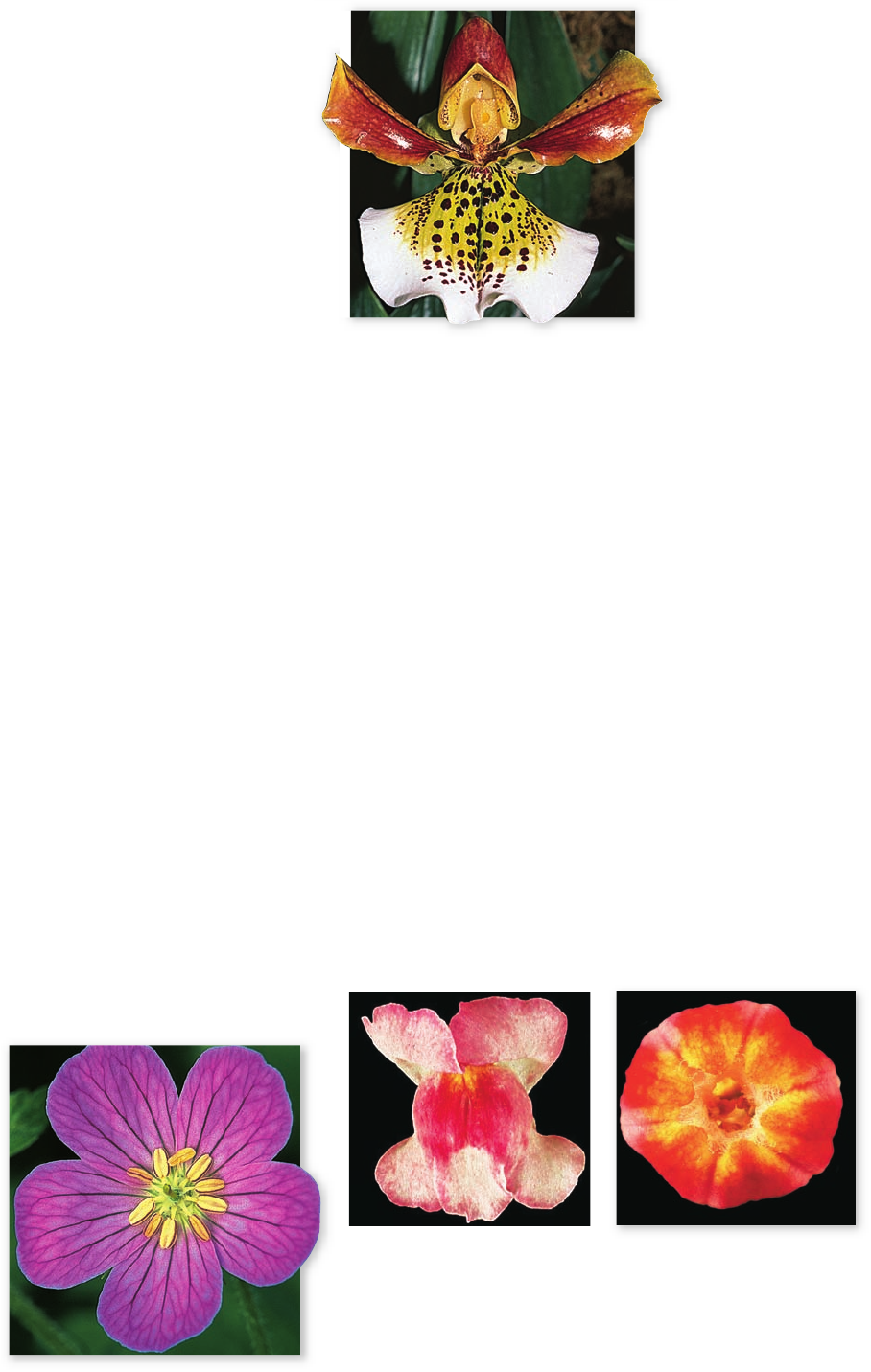
Figure 42.15
Trends in oral
specialization.
Wild
geranium, Geranium
maculatum, a typical
eudicot. The petals are
reduced to ve each, the
stamens to ten, compared
with early angiosperms.
Figure 42.17
Genetic regulation of asymmetry in
owers.
a. Snapdragon owers normally have bilateral symmetry.
b. The CYCLOIDIA gene regulates oral symmetry, and cycloidia
mutant snapdragons have radially symmetrical owers.
Figure 42.16
Bilateral symmetry
in an orchid.
Although more basal
owers are usually
radially symmetrical,
owers of many derived
groups, such as the
orchid family
(Orchidaceae), are
bilaterally symmetrical.
giosperms have, in the course of evolution, given way to a single
whorl at each level. The central axis of many flowers has short-
ened, and the whorls are close to one another. In some evolu-
tionary lines, the members of one or more whorls have fused
with one another, sometimes joining into a tube. In other kinds
of flowering plants, different whorls may be fused together.
Whole whorls may even be lost from the flower, which
may lack sepals, petals, stamens, carpels, or various combina-
tions of these structures. Modifications often relate to pollina-
tion mechanisms, and in plants such as the grasses, wind has
replaced animals for pollen dispersal.
Trends in floral symmetry
Other trends in floral evolution have affected the symmetry of
the flower. Primitive flowers such as those of buttercups are
radially symmetrical ; that is, one could draw a line anywhere
through the center and have two roughly equal halves. Flowers
of many advanced groups are bilaterally symmetrical ; they are
divisible into two equal parts along only a single plane. Exam-
ples of such flowers are snapdragons, mints, and orchids
(figure 42.16) . Bilaterally symmetrical flowers are also common
among violets and peas. In these groups, they are often associ-
ated with advanced and highly precise pollination systems.
Bilateral symmetry has arisen independently many times.
In snapdragons, the CYCLOIDIA gene regulates floral symme-
try, and in its absence flowers are more radial (figure 42.17) .
structures that bear the angiosperm microsporangia. Similar
structures bear the microsporangia in the pollen cones of
gymnosperms. Most living angiosperms have stamens with
laments (“stalks”) that are slender and often threadlike; four
microsporangia are evident at the apex in a swollen portion,
the anther. Some of the more primitive angiosperms have sta-
mens that are attened and lea ike, with the sporangia pro-
duced from the upper or lower surface.
Female structures.
The gynoecium is a collective term for
all the female parts of a ower. In most owers, the gynoe-
cium, which is unique to angiosperms, consists of a single car-
pel or two or more fused carpels. Single or fused carpels are
often referred to as simple or compound pistils, respectively.
Most owers with which we are familiar—for example, those
of tomatoes and oranges—have a compound pistil. Other, less
specialized owers—for example, buttercups and stonecups—
may have several to many separate, simple pistils, each formed
from a single carpel.
Ovules (which develop into seeds) are produced in the
pistil’s swollen lower portion, the ovary, which usually narrows
at the top into a slender, necklike style with a pollen-receptive
stigma at its apex. Sometimes the stigma is divided, with the
number of stigma branches indicating how many carpels com-
pose the particular pistil.
Carpels are essentially rolled floral leaves with ovules
along the margins. It is possible that the first carpels were leaf
blades that folded longitudinally; the leaf margins, which had
hairs, did not actually fuse until the fruit developed, but the hairs
interlocked and were receptive to pollen. In the course of evolu-
tion, evidence indicates that the hairs became localized into a
stigma; a style was formed; and the fusing of the carpel margins
ultimately resulted in a pistil. In many modern flowering plants,
the carpels have become highly modified and are not visually
distinguishable from one another unless the pistil is cut open.
Trends of floral specialization
Two major evolutionary trends led to the wide diversity of
modern flowering plants: (1) Separate floral parts have grouped
together, or fused, and (2) floral parts have been lost or reduced
(figure 42.15).
In the more advanced angiosperms, the number of parts
in each whorl has often been reduced from many to few. The
spiral patterns of attachment of all floral parts in primitive an-
chapter
42
Plant Reproduction
849www.ravenbiology.com
rav32223_ch42_839-862.indd 849rav32223_ch42_839-862.indd 849 11/16/09 2:32:12 PM11/16/09 2:32:12 PM
Apago PDF Enhancer
Anther
Microspore
mother cell
Pollen sac
Microspores
Megaspores
Pollen grains
(microgametophytes)
Tube cell
nucleus
Generative cell
Ovule
Megaspore
mother cell
Surviving
megaspore
Antipodals
Polar
nuclei
Degenerated
megaspores
Eight-nucleate embryo sac
(megagametophyte)
Synergids
Egg
cell
diploid (2n)
haploid (n)
MEIOSIS
MEIOSIS
MITOSIS
MITOSIS
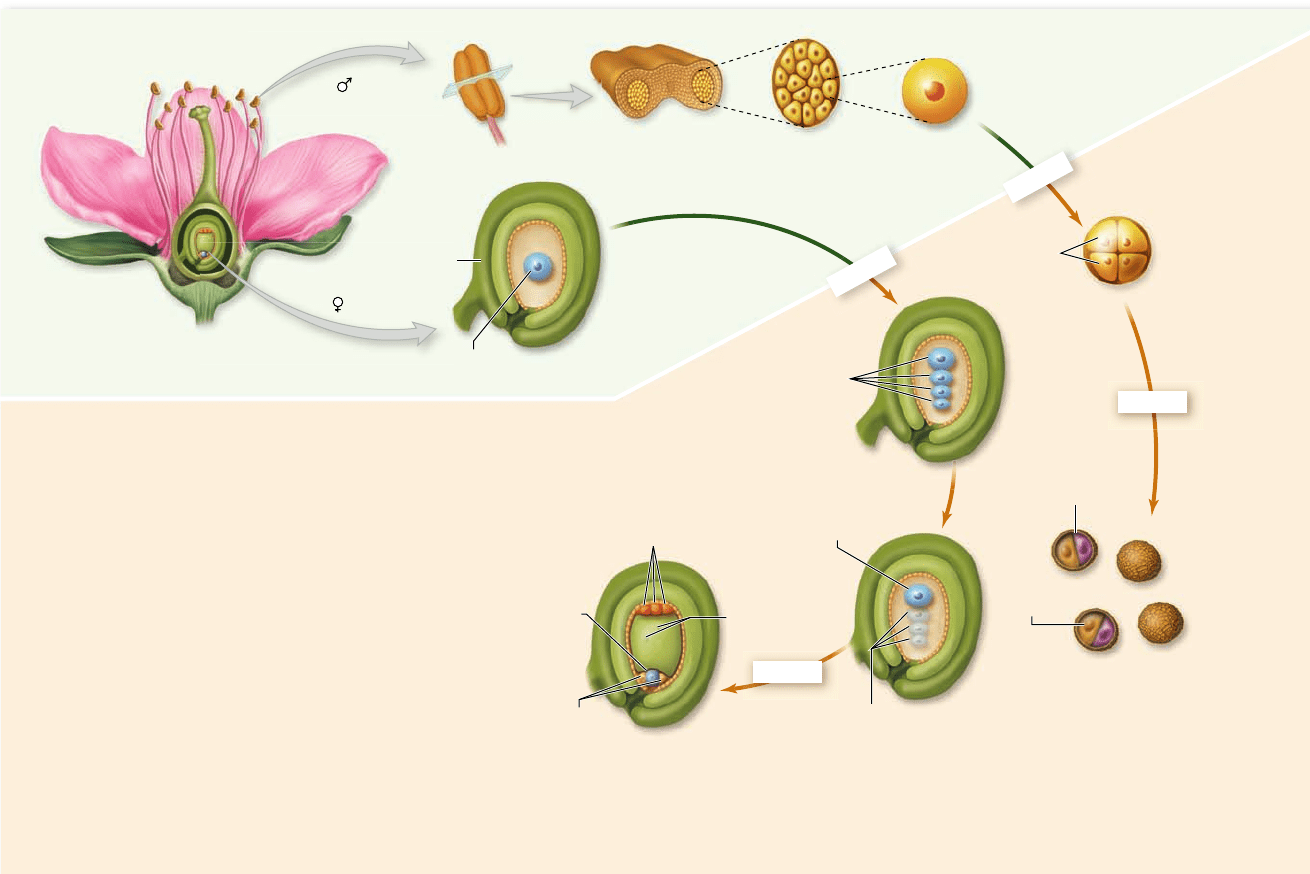
Figure 42.18
Formation of pollen grains
and the embryo sac.
Diploid (2n) microspore
mother cells are housed in the anther and divide by
meiosis to form four haploid (n) microspores. Each
microspore develops by mitosis into a pollen grain.
The generative cell within the pollen grain later
divides to form two sperm cells. Within the ovule,
one diploid megaspore mother cell divides by meiosis
to produce four haploid megaspores. Usually only
one of the megaspores survives, and the other three
degenerate. The surviving megaspore divides by
mitosis to produce an embryo sac with eight nuclei.
very small and is completely enclosed within the tissues of the
parent sporophyte. The male gametophytes, or microgameto-
phytes, are pollen grains. The female gametophyte, or mega-
gametophyte, is the embryo sac. Pollen grains and the embryo
sac both are produced in separate, specialized structures of the
angiosperm flower.
Like animals, angiosperms have separate structures for
producing male and female gametes (figure 42.18) , but the re-
productive organs of angiosperms are different from those of
animals in two ways. First, both male and female structures
usually occur together in the same individual flower. Second,
angiosperm reproductive structures are not permanent parts of
the adult individual. Angiosperm flowers and reproductive or-
gans develop seasonally, at times of the year most favorable for
pollination. In some cases, reproductive structures are produced
only once, and the parent plant dies. And, as you learned earlier
in this chapter, the germ line in angiosperms is not set aside
early on, but forms quite late during phase change.
Pollen formation
Anthers contain four microsporangia, which produce micro-
spore mother cells (2n). Microspore mother cells produce mi-
crospores (n) through meiotic cell division. The microspores,
through mitosis and wall differentiation, become pollen. Inside
each pollen grain is a generative cell; this cell later divides to
produce two sperm cells.
Here the experimental alteration of a single gene is sufficient to
cause a dramatic change in morphology. Whether the same
gene or functionally similar genes arose naturally in parallel in
other species is an open question.
The human influence on flower morphology
Although much floral diversity is the result of natural selection
related to pollination, it is important to recognize the effect
breeding (artificial selection) has on flower morphology. Hu-
mans have selected for practical or aesthetic traits that may
have little adaptive value to species in the wild. For example,
maize (corn) has been bred to satisfy the human palate. Human
intervention ensures the reproductive success of each genera-
tion; however, in a natural setting, modern corn would not have
the same protection from herbivores as its ancestors, and the
fruit dispersal mechanism would be quite different.
Gametes are produced
in the gametophytes of owers
Reproductive success depends on uniting the gametes (egg and
sperm) found in the embryo sacs and pollen grains of flowers.
As you learned in chapter 30, plant sexual life cycles are char-
acterized by an alternation of generations, in which a diploid
sporophyte generation gives rise to a haploid gametophyte
generation. In angiosperms, the gametophyte generation is
850
part
VI
Plant Form and Function
rav32223_ch42_839-862.indd 850rav32223_ch42_839-862.indd 850 11/16/09 2:32:16 PM11/16/09 2:32:16 PM
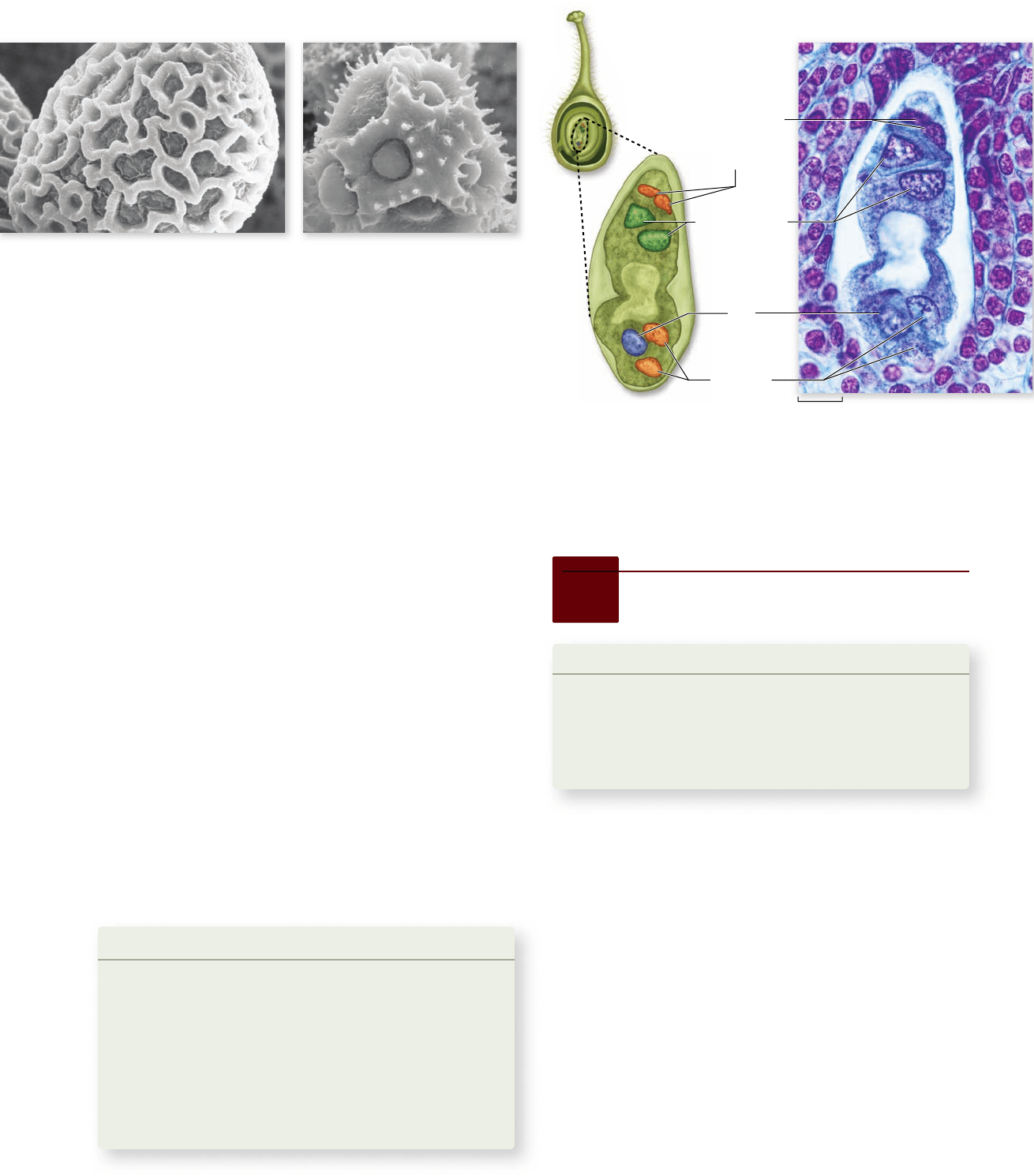
Apago PDF Enhancer
a. b.
Two antipodals
(third antipodal
not visible in
this plane)
Two polar nuclei
Egg
Synergids
8.3 µm
Figure 42.19
Pollen grains.
a. In the Easter lily, Lilium
candidum, the pollen tube emerges from the pollen grain through
the groove or furrow that occurs on one side of the grain. b. In a
plant of the sun ower family, Hyoseris longiloba, three pores are
hidden among the ornamentation of the pollen grain. The pollen
tube may grow out through any one of them.
Figure 42.20
A mature embryo sac of a lily.
Eight nuclei
are produced by mitotic divisions of the haploid megaspore. One is
in the egg, two are polar nuclei, two occur in synergid cells, and
three are in antipodal cells. The micrograph is falsely colored.
42.4
Pollination and Fertilization
Learning Outcomes
Discuss conditions under which self-pollination may 1.
be favored.
Describe three evolutionary strategies that promote 2.
outcrossing.
List the products of double fertilization.3.
Pollination is the process by which pollen is placed on the stig-
ma. Pollen may be carried to the flower by wind or by animals,
or it may originate within the individual flower itself. When
pollen from a flower’s anther pollinates the same flower’s
stigma, the process is called self-pollination. When pollen from
the anther of one flower pollinates the stigma of a different
flower, the process is termed cross-pollination, or outcrossing.
As you just learned, pollination in angiosperms does not
involve direct contact between the pollen grain and the ovule.
When pollen reaches the stigma, it germinates, and a pollen
tube grows down, carrying the sperm nuclei to the embryo sac.
After double fertilization takes place, development of the em-
bryo and endosperm begins. The seed matures within the rip-
ening fruit; eventually, the germination of the seed initiates
another life cycle.
Successful pollination in many angiosperms depends on
the regular attraction of pollinators, such as insects, birds, and
other animals, which transfer pollen between plants of the same
Pollen grain shapes are specialized for specific flower spe-
cies. As discussed in more detail later in this section, fertiliza-
tion requires that the pollen grain grow a tube that penetrates
the style until it encounters the ovary. Most pollen grains have
a furrow or pore from which this pollen tube emerges; some
grains have three furrows (figure 42.19).
Embryo sac formation
Eggs develop in the ovules of the angiosperm flower. Within
each ovule is a megaspore mother cell. Just as in pollen produc-
tion, the megaspore mother cell undergoes meiosis to produce
four haploid megaspores. In most plants, however, only one of
these megaspores survives; the rest are absorbed by the ovule.
The lone remaining megaspore enlarges and undergoes re-
peated mitotic divisions to produce eight haploid nuclei that
are enclosed within a seven-celled embryo sac.
Within the embryo sac, the eight nuclei are arranged in
precise positions. One nucleus is located near the opening of
the embryo sac in the egg cell. Two others are located together
in a single cell in the middle of the embryo sac; these are called
polar nuclei. Two more nuclei are contained in individual cells
called synergids that flank the egg cell; the other three nuclei
reside in cells called the antipodals, located at the end of the sac,
opposite the egg cell (figure 42.20).
The first step in uniting the two sperm cells in the pollen
grain with the egg and polar nuclei is the germination of pollen on
the stigma of the carpel and its growth toward the embryo sac.
Learning Outcomes Review 42.3
An angiosperm fl ower consists of four concentric whorls: calyx, corolla,
androecium, and gynoecium. Bilaterally symmetrical fl owers are divisible
into two equal parts along only a single plane; radially symmetrical fl owers
can be divided equally on any plane. The microspore mother cells in fl owers
undergo meiosis to produce microspores, which undergo mitosis to produce
microgametophytes (pollen grains). Megaspore mother cells undergo a
similar process to produce megaspores, which result in megagametophytes
(embryo sacs).
■ What is the main evolutionary advantage of the flower?
chapter
42
Plant Reproduction
851www.ravenbiology.com
rav32223_ch42_839-862.indd 851rav32223_ch42_839-862.indd 851 11/16/09 2:32:20 PM11/16/09 2:32:20 PM