
Raven P.H., Johnson G.B., Mason K.A. Biology (Ninth Edition)
Подождите немного. Документ загружается.

Apago PDF Enhancer
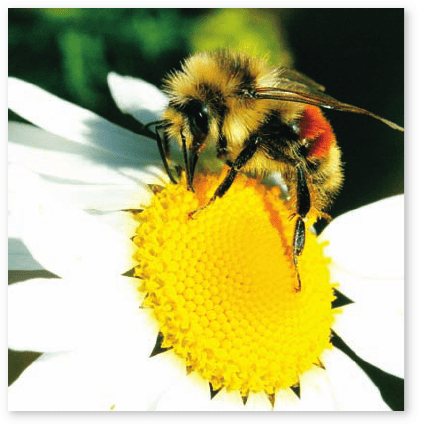
Figure 42.21
Pollination by a bumblebee.
As this
bumblebee, Bombus sp., collects nectar , pollen sticks to its body.
The pollen will be distributed to the next plant the bee visits.
produce only a single generation in the course of a year. Often,
they are active as adults for as little as a few weeks a year.
Solitary bees often use the flowers of a particular group of
plants almost exclusively as sources of their larval food. The
highly constant relationships of such bees with those flowers
may lead to modifications, over time, in both the flowers and
the bees. For example, the time of day when the flowers open
may correlate with the time when the bees appear; the mouth-
parts of the bees may become elongated in relation to tubular
flowers; or the bees’ pollen-collecting apparatuses may be
adapted to the anthers of the plants that they normally visit.
When such relationships are established, they provide both an
efficient mechanism of pollination for the flowers and a con-
stant source of food for the bees that “specialize” on them.
Insects other than bees
Among flower-visiting insects other than bees, a few groups are
especially prominent. Flowers such as phlox, which are visited
regularly by butterflies, often have flat “landing platforms” on
which butterflies perch. They also tend to have long, slender
floral tubes filled with nectar that is accessible to the long,
coiled proboscis characteristic of Lepidoptera, the order of in-
sects that includes butterflies and moths.
Flowers such as jimsonweed (Datura stramonium), eve-
ning primrose (Oenothera biennis), and others visited regularly
by moths are often white, yellow, or some other pale color; they
also tend to be heavily scented, making the flowers easy to lo-
cate at night (figure 42.22 ).
Birds
Several interesting groups of plants are regularly visited and
pollinated by birds, especially the hummingbirds of North and
South America and the sunbirds of Africa (figure 42.23) . Such
plants must produce large amounts of nectar because birds will
not continue to visit flowers if they do not find enough food to
species. When animals disperse pollen, they perform the same
function for flowering plants that they do for themselves when
they actively search out mates.
The relationship between plant and pollinator can be
quite intricate. Mutations in either partner can block reproduc-
tion. If a plant flowers at the “wrong” time, the pollinator may
not be available. If the morphology of the flower or pollinator
is altered, the result may be physical barriers to pollination.
Clearly, floral morphology has coevolved with pollinators, and
the result is a much more complex and diverse morphology,
going beyond the simple initiation and development of four
distinct whorls of organs.
Early seed plants were wind-pollinated
Early seed plants were pollinated passively, by the action of the
wind. As in present-day conifers, great quantities of pollen were
shed and blown about, occasionally reaching the vicinity of the
ovules of the same species.
Individual plants of any wind-pollinated species must
grow relatively close to one another for such a system to oper-
ate efficiently. Otherwise, the chance that any pollen will arrive
at an appropriate destination is very small. The vast majority of
windblown pollen travels less than 100 m. This short distance is
significant compared with the long distances pollen is routinely
carried by certain insects, birds, and other animals.
Flowers and animal pollinators have coevolved
The spreading of pollen from plant to plant by pollinators visit-
ing flowers of an angiosperm species has played an important
role in the evolutionary success of the group. It now seems clear
that the earliest angiosperms, and perhaps their ancestors also,
were insect-pollinated, and the coevolution of insects and plants
has been important for both groups for over 100 million years.
Such interactions have also been important in bringing about
increased floral specialization. As flowers become increasingly
specialized, so do their relationships with particular groups of
insects and other animals.
Bees
Among insect-pollinated angiosperms, the most numerous
groups are those pollinated by bees (figure 42.21) . Like most
insects, bees initially locate sources of food by odor and then
orient themselves on the flower or group of flowers by its shape,
color, and texture.
Flowers that bees characteristically visit are often blue or
yellow. Many have stripes or lines of dots that indicate the loca-
tion of the nectaries, which often occur within the throats of
specialized flowers. Some bees collect nectar, which is used as a
source of food for adult bees and occasionally for larvae. Most
of the approximately 20,000 species of bees visit flowers to ob-
tain pollen, which is used to provide food in cells where bee
larvae complete their development.
Except for a few hundred species of social and semisocial
bees and about 1000 species that are parasitic in the nests of
other bees, the great majority of bees—at least 18,000 species—
are solitary. Solitary bees in temperate regions characteristically
852
part
VI
Plant Form and Function
rav32223_ch42_839-862.indd 852rav32223_ch42_839-862.indd 852 11/16/09 2:32:25 PM11/16/09 2:32:25 PM
Apago PDF Enhancer
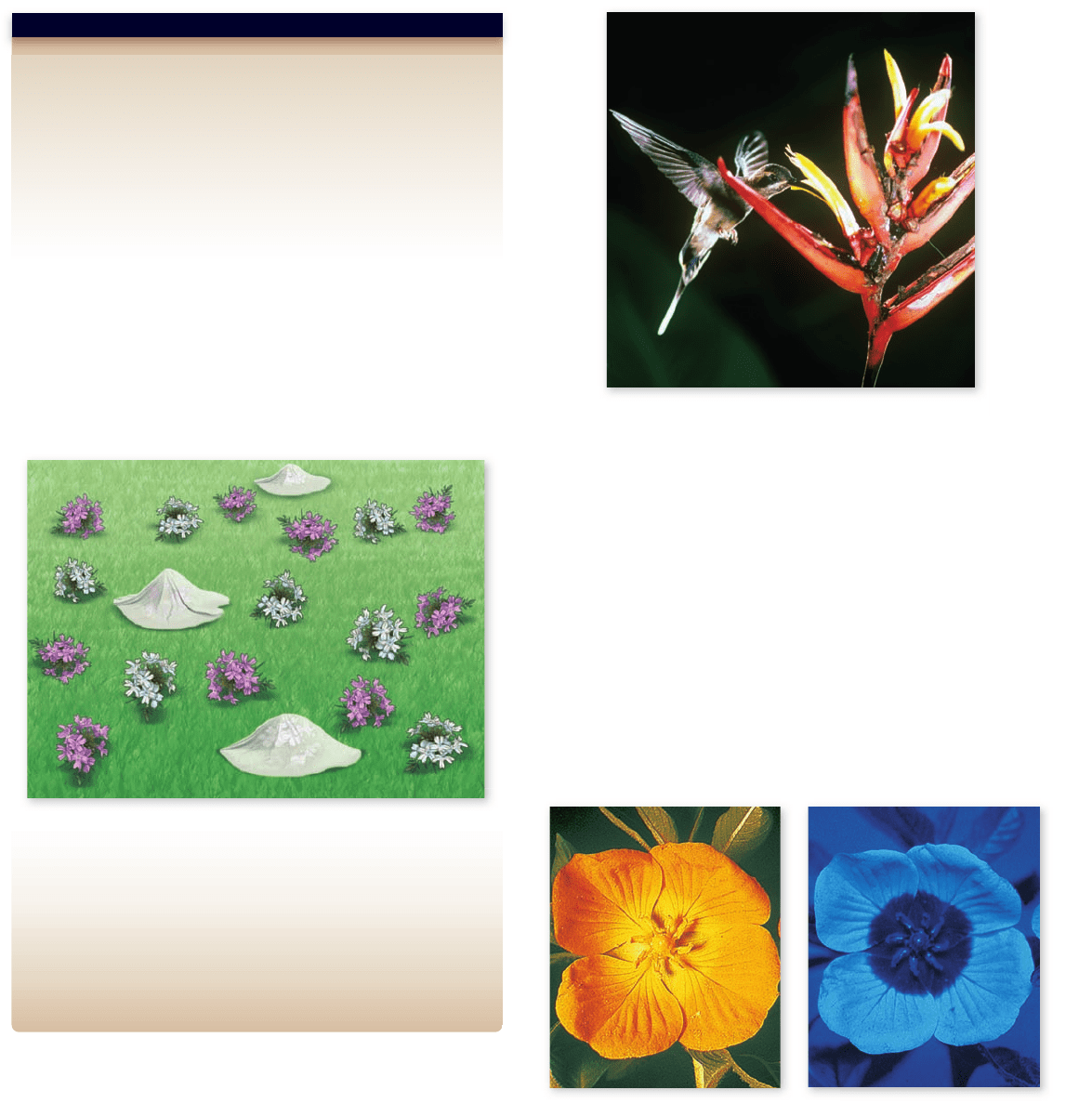
Hypothesis: Moths are more eective than bumblebees at moving pollen
long distances.
Prediction: The pollen donors of seeds of wild plants are more widely
distributed if moths carried the pollen than if bees carried it.
Test: Locate a large natural patch of the wild plant. Make sure that both
moths and bees are abundant and that the plants are variable for a
genetically controlled trait. In this case, assume the population contains
some purple-owered plants (a dominant trait) and some with white owers
(a recessive trait). Remove all the owers from the purple-owered plants
except those at the edge of the population. Find a white-owered plant at
the center of the population to use as the test plant. Cover some owers
during the day and uncover them in the evening so moths, but not bees, can
pollinate them. With other owers, cover in the evening but not during the
day, so bees, but not moths, can pollinate them. Collect seeds from each set of
owers and grow the plants. For each treatment, count the number of plants
that produce purple owers. These will have pollen donors that were a long
distance from the test plant.
Result: Seeds produced by bee pollination produced the same number of
plants with purple owers as those produced by moth pollination.
Conclusion: The hypothesis is not supported. Bees carry pollen as far as
moths do.
Further Experiments: Growing plants from seed to check for ower color
is very time-consuming. Propose another way to determine the source of the
pollen in this experiment.
SCI ENT I FIC THINKING
Cover some flowers during the day and others in the evening. Count
the number of purple flowered plants obtained from each treatment.
a. b.
Figure 42.22
Bees and moths as pollinators.
Figure 42.23
Hummingbirds and owers.
A long-tailed
hermit hummingbird (Phaethornis superciliosus) extracts nectar from
the owers of Heliconia imbricata in the forests of Costa Rica. Note
the pollen on the bird’s beak. Hummingbirds of this group obtain
nectar primarily from long, curved owers that more or less match
the length and shape of their beaks.
Figure 42.24
How a bee sees a ower.
a. The yellow
ower of Ludwigia peruviana (Peruvian primrose) photographed in
normal light and (b) with a lter that selectively transmits
ultraviolet light. The outer sections of the petals re ect both yellow
and ultraviolet, a mixture of colors called “bee’s purple”; the inner
portions of the petals re ect yellow only and therefore appear dark
in the photograph that emphasizes ultraviolet re ection. To a bee,
this ower appears as if it has a conspicuous central bull’s-eye.
maintain themselves. But flowers producing large amounts of
nectar have no advantage in being visited by insects, because an
insect could obtain its energy requirements at a single flower
and would not cross-pollinate the flower. How are these differ-
ent selective forces balanced in flowers that are “specialized”
for hummingbirds and sunbirds?
The answer involves the evolution of flower color. Ultra-
violet light is highly visible to insects. Carotenoids, the yellow
or orange pigments we described in chapter 8 in the context
of photosynthesis, are responsible for the colors of many flow-
ers, including sunflowers and mustard. Carotenoids reflect
both in the yellow range and in the ultraviolet range, the mix-
ture resulting in a distinctive color called “bee’s purple.” Such
yellow flowers may also be marked in distinctive ways nor-
mally invisible to us, but highly visible to bees and other in-
sects (figure 42.24). These markings can be in the form of a
bull’s-eye or a landing strip.
chapter
42
Plant Reproduction
853www.ravenbiology.com
rav32223_ch42_839-862.indd 853rav32223_ch42_839-862.indd 853 11/16/09 2:32:27 PM11/16/09 2:32:27 PM
Apago PDF Enhancer
flowers
flowers
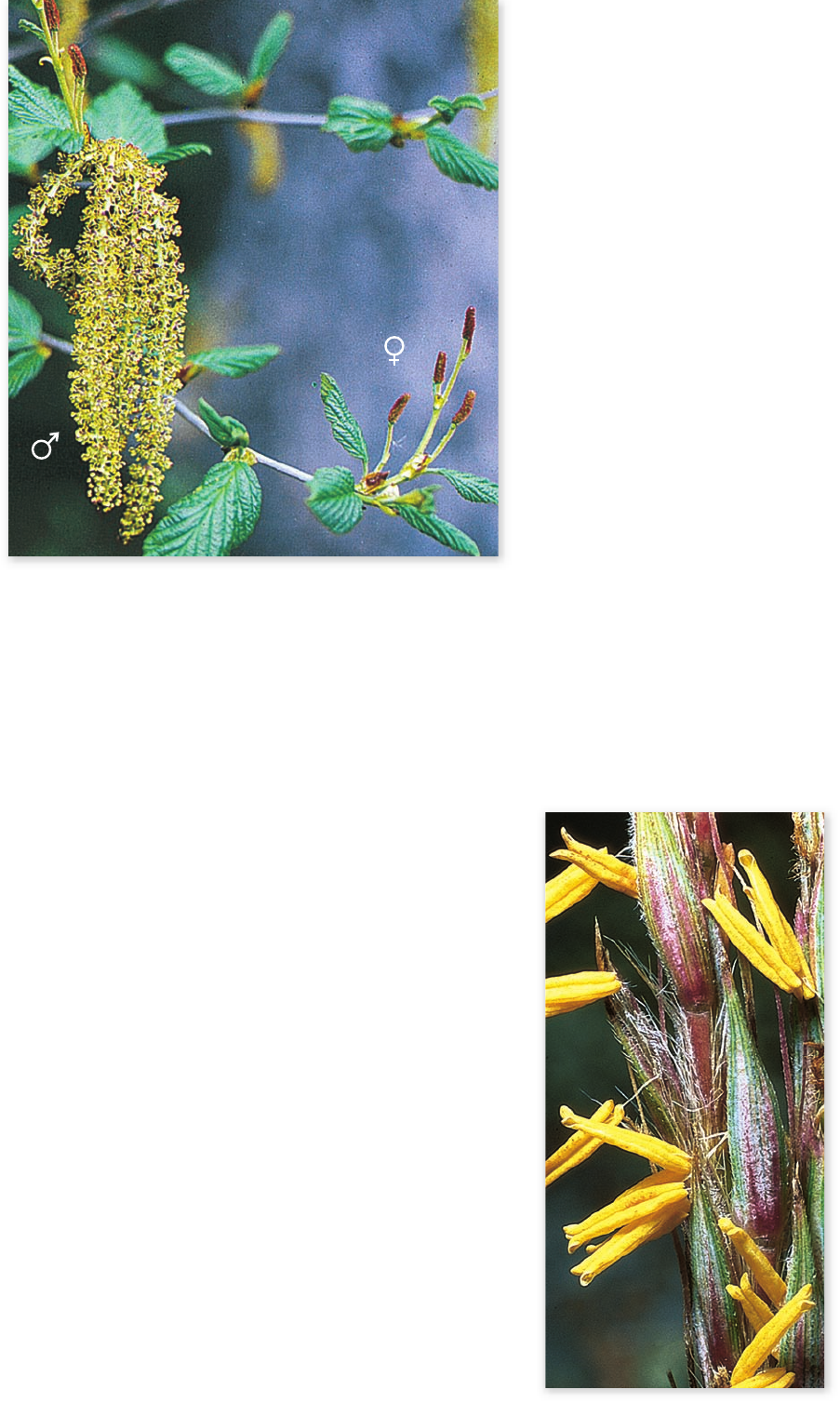
Figure 42.26
Wind-pollinated
owers.
The large
yellow anthers, dangling
on very slender laments,
are hanging out, about to
shed their pollen to the
wind. Later, these owers
will become pistillate,
with long, feathery
stigmas—well suited for
trapping windblown
pollen—sticking far out
of them. Many grasses ,
like this one, are
therefore dichogamous.
and may hang down in tassels that wave about in the wind and
shed pollen freely.
Many wind-pollinated plants have stamen- and carpel-
containing flowers separated between individuals or physi-
cally separated on a single individual. Maize is a good example,
with pollen-producing tassels at the top of the plant and axil-
lary shoots with female flowers lower down. Separation of
pollen-producing and ovule-bearing flowers is a strategy that
greatly promotes outcrossing, since pollen from one flower
must land on a different flower for fertilization to have any
chance of occurring. Some wind-pollinated plants, especially
trees and shrubs, flower in the spring, before the develop-
ment of their leaves can interfere with the wind-borne pol-
len. Wind-pollinated species do not depend on the presence
of a pollinator for species survival, which may be another sur-
vival advantage.
Self-pollination is favored
in stable environments
Thus far we have considered examples of pollination that tend
to lead to outcrossing, which is as highly advantageous for
plants and for eukaryotic organisms generally. Nevertheless,
self-pollination also occurs among angiosperms, particularly in
temperate regions. Most self-pollinating plants have small, rel-
atively inconspicuous flowers that shed pollen directly onto the
stigma, sometimes even before the bud opens.
You might logically ask why many self-pollinated plant
species have survived if outcrossing is as important genetically
In contrast, red does not stand out as a distinct color to
most insects, but it is a very conspicuous color to birds. To most
insects, the red upper leaves of poinsettias look just like the
other leaves of the plant. Consequently, even though the flow-
ers produce abundant supplies of nectar and attract humming-
birds, insects tend to bypass them. Thus, the red color both
signals to birds the presence of abundant nectar and makes that
nectar as inconspicuous as possible to insects. Red is also seen
again in fruits that are dispersed by birds (see chapter 37).
Other animal pollinators
Other animals, including bats and small rodents, may aid in
pollination. The signals here are also species-specific. As an ex-
ample, the saguaro cactus (Carnegeia gigantea) of the Sonoran
desert is pollinated by bats that feed on nectar at night, as well
as by birds and insects.
These animals may also assist in dispersing the seeds and
fruits that result from pollination. Monkeys are attracted to or-
ange and yellow, and thus can be effective in dispersing fruits of
this color in their habitats.
Some owering plants continue
to use wind pollination
A number of groups of angiosperms are wind-pollinated—a
characteristic of early seed plants. Among these groups are
oaks, birches, cottonwoods, grasses, sedges, and nettles. The
flowers of these plants are small, greenish, and odorless; their
corollas are reduced or absent (figures 42.25 and 42.26) . Such
flowers often are grouped together in fairly large numbers
Figure 42.25
Staminate and pistillate owers of a
birch, Betula sp.
Birches are monoecious; their staminate owers
hang down in long, yellowish tassels, and their pistillate owers
mature into clusters of small, brownish, conelike structures.
854
part
VI
Plant Form and Function
rav32223_ch42_839-862.indd 854rav32223_ch42_839-862.indd 854 11/16/09 2:32:32 PM11/16/09 2:32:32 PM
Apago PDF Enhancer
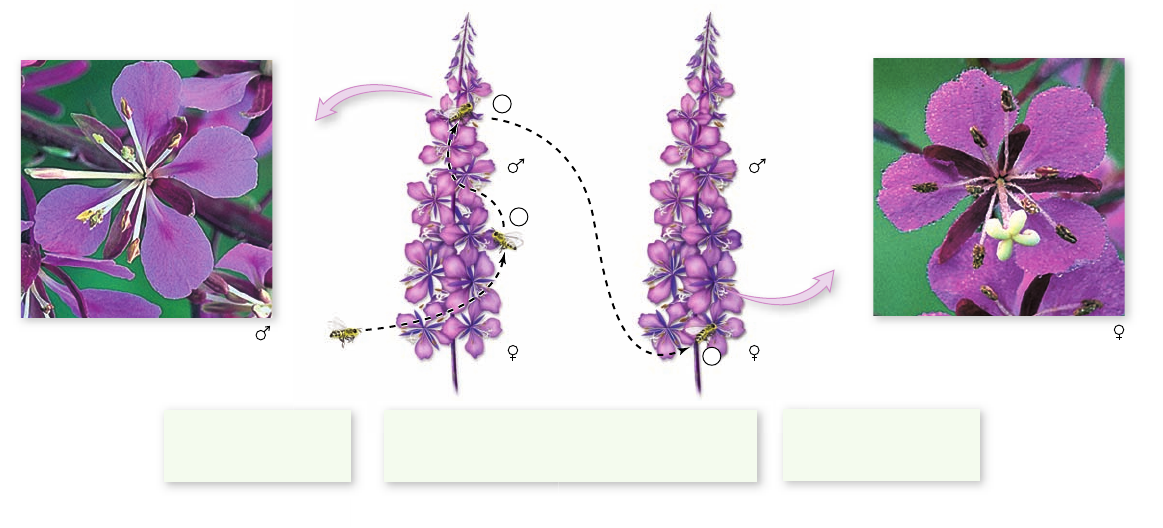
1. Bee starts at bottom,
encountering older,
pistillate flowers.
2. Bee moves up the stalk, encountering younger
staminate flowers with pollen. Once it runs out
of flowers to visit, it flies to a new stalk.
3. Bee starts at bottom,
bringing pollen to the
older pistillate flowers.
2
3
1
a. b.
P
o
l
l
e
n
t
r
a
n
s
f
e
r
Figure 42.27
Dichogamy, as illustrated by the owers of reweed, Epilobium angustifolium.
More than 200 years ago
(in the 1790s) reweed, which is outcrossing, was one of the rst plant species to have its process of pollination described. First, the anthers
shed pollen, and then the style elongates above the stamens while the four lobes of the stigma curl back and become receptive. Consequently,
the owers are functionally staminate at rst, becoming pistillate about two days later. The owers open progressively up the stem, so that the
lowest are visited rst, promoting outcrossing. Working up the stem, the bees encounter pollen-shedding, staminate-phase owers and
become covered with pollen, which they then carry to the lower, functionally pistillate owers of another plant. Shown here are owers in
(a) the staminate phase and (b) the pistillate phase.
which increases the likelihood of self-pollination. One general
strategy to promote outcrossing, therefore, is to separate sta-
mens and pistils. Another strategy involves self-incompatibility
that prevents self-fertilization.
Separation of male and female structures
in space or in time
In a number of species—for example, willows and some mulber-
ries—staminate and pistillate flowers may occur on separate plants.
Such plants, which produce only ovules or only pollen, are called
dioecious , meaning “two houses.” These plants clearly cannot self-
pollinate and must rely exclusively on outcrossing. In other kinds
of plants, such as oaks, birches, corn (maize), and pumpkins,
separate male and female flowers may both be produced on the
same plant. Such plants are called monoecious, meaning “one
house” (see figure 42.25). In monoecious plants, the separation of
pistillate and staminate flowers, which may mature at different
times, greatly enhances the probability of outcrossing.
Even if, as usually is the case, functional stamens and pis-
tils are both present in each flower of a particular plant species,
these organs may reach maturity at different times. Plants in
which this occurs are called dichogamous. If the stamens ma-
ture first, shedding their pollen before the stigmas are recep-
tive, the flower is effectively staminate at that time. Once the
stamens have finished shedding pollen, the stigma or stigmas
may become receptive, and the flower may become essentially
pistillate (see figures 42.26 and 42.27). This separation in time
has the same effect as if individuals were dioecious; the out-
crossing rate is thereby significantly increased.
Many flowers are constructed such that the stamens and
stigmas do not come in contact with each other. With this
for plants as it is for animals. Biologists propose two basic reasons
for the frequent occurrence of self-pollinated angiosperms:
Self-pollination is ecologically advantageous under certain 1.
circumstances because self-pollinators do not need to
be visited by animals to produce seed. As a result, self-
pollinated plants expend less energy in producing pollinator
attractants and can grow in areas where the kinds of insects
or other animals that might visit them are absent or very
scarce—as in the Arctic or at high elevations.
In genetic terms, self-pollination produces progenies that 2.
are more uniform than those that result from outcrossing.
Remember that because meiosis is involved, recombination
still takes place, as described in chapter 11—and therefore
the offspring will not be identical to the parent. However,
such progenies may contain high proportions of individuals
well-adapted to particular habitats.
Self-pollination in normally outcrossing species tends to
produce large numbers of ill-adapted individuals because it
brings together deleterious recessive alleles—but some of these
combinations may be highly advantageous in particular habi-
tats. In these habitats, it may be advantageous for the plant to
continue self-pollinating indefinitely.
Several evolutionary strategies
promote outcrossing
Outcrossing, as we have stressed, is critically important for the
adaptation and evolution of all eukaryotic organisms, with a few
exceptions. Often, flowers contain both stamens and pistils,
chapter
42
Plant Reproduction
855www.ravenbiology.com
rav32223_ch42_839-862.indd 855rav32223_ch42_839-862.indd 855 11/16/09 2:32:35 PM11/16/09 2:32:35 PM
Apago PDF Enhancer
a.
b.
Gametophytic Self-Incompatibility Sporophytic Self-Incompatibility
S
1
S
2
pollen parent
S
2
S
3
stigma of
pollen recipient
S
1
S
2
pollen parent
S
2
S
3
stigma of
pollen recipient
S
1
S
1
S
2
S
2
S
1
S
2
X
S
1
S
2
X X
Generative cell
Tube
cell
Stigma
Style
Ovary
Ovule
Carpel
Pollination
Pollen grain
Embryo
sac
Tube cell
Sperm cells
Tube cell
nucleus
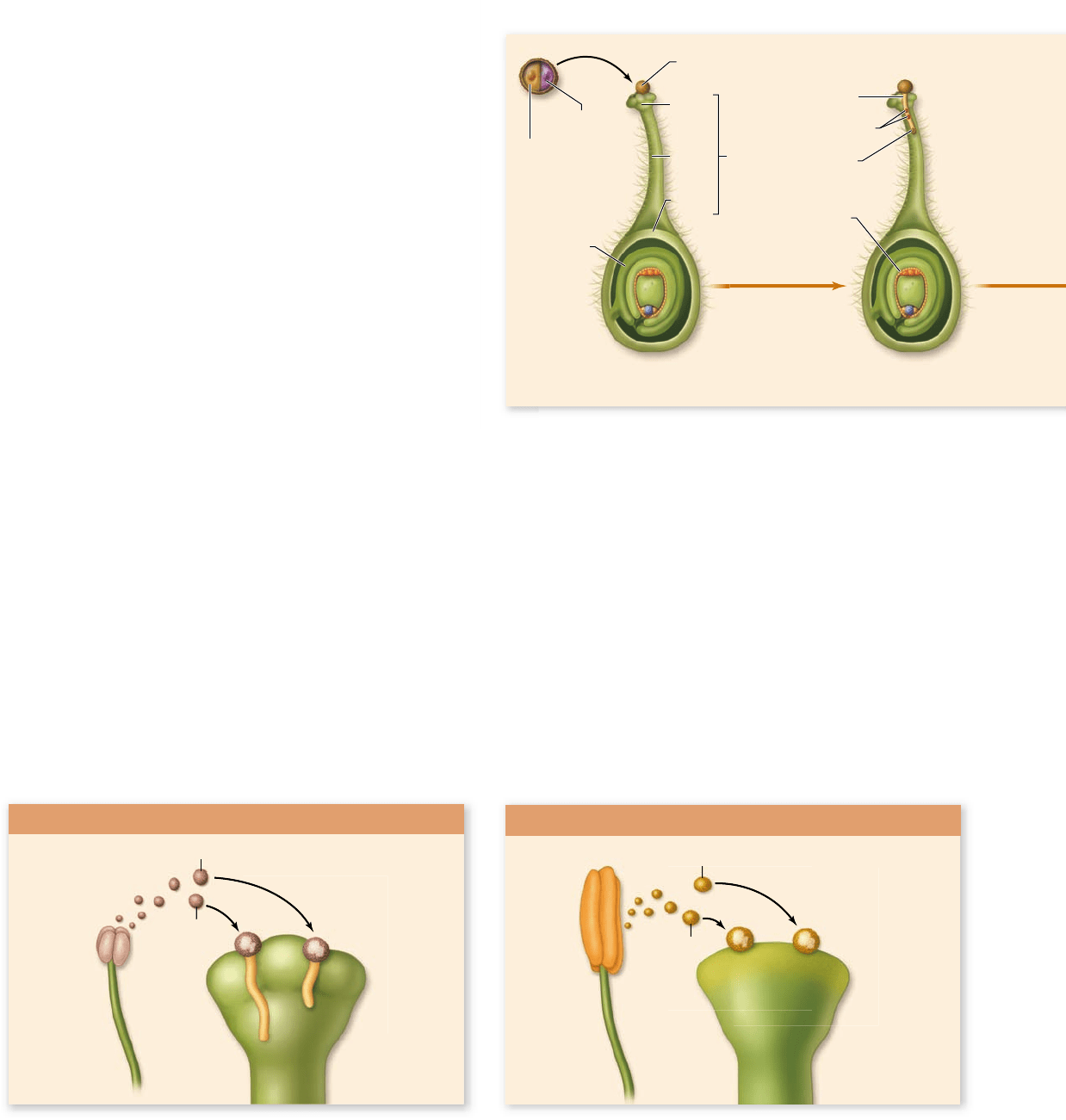
Figure 42.28
Genetic control can block self-pollination.
a. Gametophytic self-incompatibility is determined by the haploid
pollen genotype. b. Sporophytic self-incompatibility recognizes the genotype of the diploid pollen parent, not just the haploid pollen
genotype. The pollen contains proteins produced by the S
1
S
2
parent. In both cases, the recognition is based on the S locus, which has many
different alleles. The subscript numbers indicate the S allele genotype. In gametophytic self-incompatibility, the block comes after pollen tube
germination. In sporophytic self-incompatibility, the pollen tube fails to germinate.
arrangement, the natural tendency is for the pollen to be trans-
ferred to the stigma of another flower, rather than to the stig-
ma of its own flower, thereby promoting outcrossing.
Self-incompatibility
Even when a flower’s stamens and stigma mature at the same
time, genetic self-incompatibility, which is widespread in flower-
ing plants, increases outcrossing. Self-incompatibility results
when the pollen and stigma recognize each other as being geneti-
cally related, and pollen tube growth is blocked (figure 42.28).
Self-incompatibility is controlled by the S (self-incompati-
bility) locus. Many alleles at the S locus regulate recognition re-
sponses between pollen and stigma. Researchers have identified
two types of self-incompatibility. Gametophytic self-incompatibility
depends on the haploid S locus of the pollen and the diploid S lo-
cus of the stigma. If either of the S alleles in the stigma matches the
pollen’s S allele, pollen tube growth stops before it reaches the
embryo sac. Petunias exhibit gametophytic self-incompatibility.
In sporophytic self-incompatibility, as occurs in broccoli, both
S alleles of the pollen parent, not just the S allele of the pollen it-
self, are important. If the alleles in the stigma match either of the
pollen parent’s S alleles, the haploid pollen will not germinate.
Pollen-recognition mechanisms may have originated in a
common ancestor of the gymnosperms. Fossils with pollen tubes
from the Carboniferous period are consistent with the hypothe-
sis that they had highly evolved pollen-recognition systems.
Angiosperms undergo double fertilization
Fertilization in angiosperms is a complex, somewhat unusual pro-
cess in which two sperm cells are utilized in a unique process called
double fertilization. Double fertilization results in two key develop-
ments: (1) the fertilization of the egg, and (2) the formation of a
nutrient substance called endosperm that nourishes the embryo.
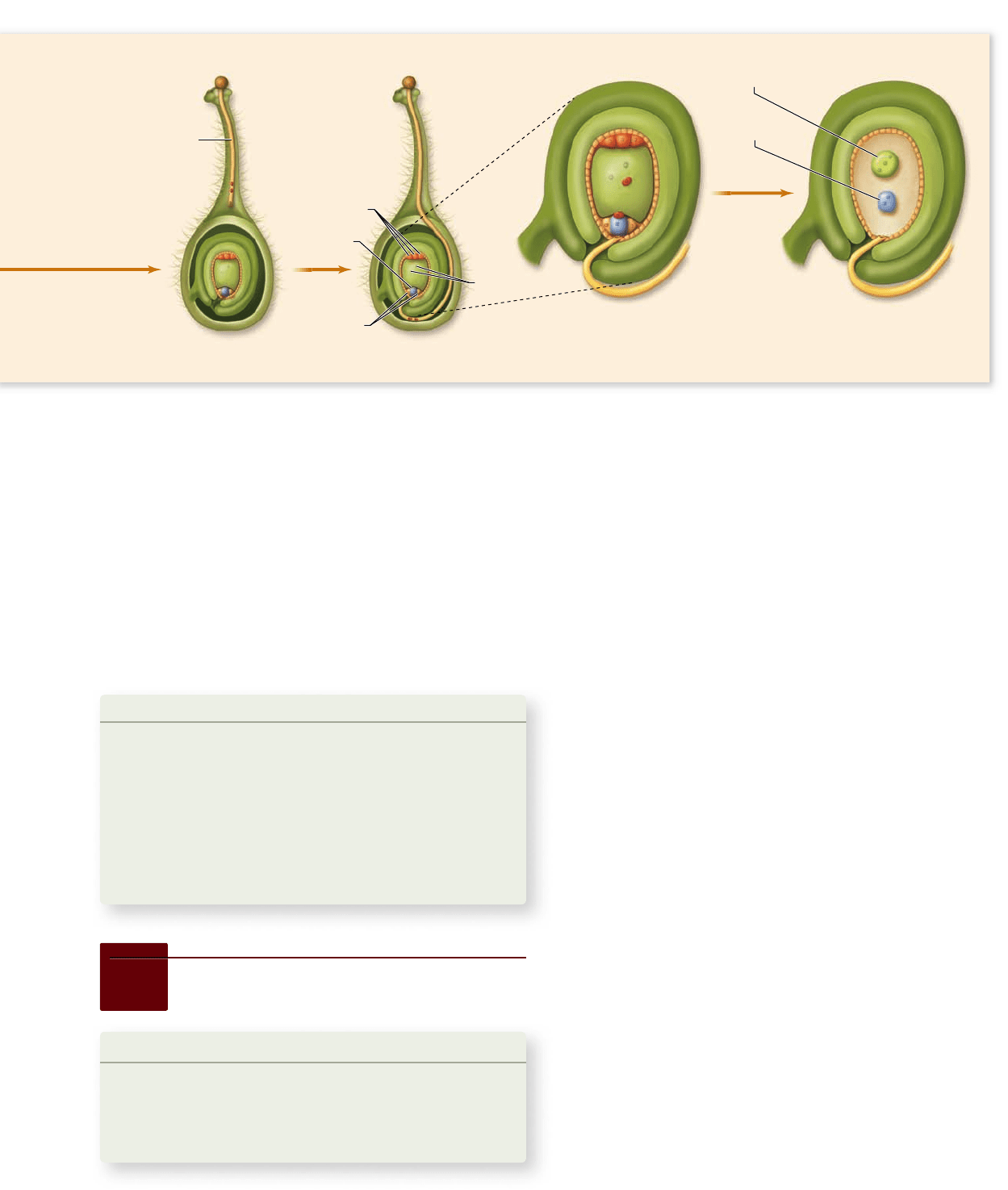
Once a pollen grain has been spread by wind, by animals,
or through self-pollination, it adheres to the sticky, sugary sub-
stance that covers the stigma and begins to grow a pollen tube
that pierces the style (figure 42.29). The pollen tube, nourished
by the sugary substance, grows until it reaches the ovule in the
ovary. Meanwhile, the generative cell within the pollen grain
tube cell divides to form two sperm cells.
The pollen tube eventually reaches the embryo sac in the
ovule. At the entry to the embryo sac, one of the nuclei flanking
the egg cell degenerates, and the pollen tube enters that cell.
The tip of the pollen tube bursts and releases the two sperm
cells. One of the sperm cells fertilizes the egg cell, forming a
zygote. The other sperm cell fuses with the two polar nuclei
located at the center of the embryo sac, forming the triploid
(3n) primary endosperm nucleus. The primary endosperm nu-
cleus eventually develops into the endosperm (food supply).
Once fertilization is complete, the embryo develops as
its cells divide numerous times. Meanwhile, protective tissues
856
part
VI
Plant Form and Function
rav32223_ch42_839-862.indd 856rav32223_ch42_839-862.indd 856 11/16/09 2:32:40 PM11/16/09 2:32:40 PM
Apago PDF Enhancer
Growth of pollen tube
Pollen tube
Double fertilizationRelease of sperm cells
Zygote (2n)
Antipodals
Polar nuclei
Egg cell
Synergids
Endosperm nucleus (3n)
Figure 42.29
The formation of the pollen tube and double fertilization.
When pollen lands on the stigma of a ower, the
pollen tube cell grows toward the embryo sac, forming a pollen tube. While the pollen tube is growing, the generative cell divides to form two
sperm cells. When the pollen tube reaches the embryo sac, it enters one of the synergids and releases the sperm cells. In a process called
double fertilization, one sperm cell nucleus fuses with the egg cell to form the diploid (2n) zygote, and the other sperm cell nucleus fuses with
the two polar nuclei to form the triploid (3n) endosperm nucleus.
42.5
Asexual Reproduction
Learning Outcomes
Define apomixis.1.
List examples of plant parts involved in vegetative 2.
reproduction.
Outline the steps involved in protoplast regeneration.3.
enclose the embryo, resulting in the formation of the seed. The
seed, in turn, is enclosed in another structure, called the fruit.
These typical angiosperm structures evolved in response to the
need for seeds to be dispersed over long distances to ensure
genetic variability.
Learning Outcomes Review 42.4
Self-pollination may be favored when pollinators are absent or when plants
are adapted to a stable environment, and therefore uniform off spring are
advantageous. Mechanisms to promote outcrossing include the production
of separate male and female fl owers, maturation of male fl owers at
a diff erent time than female fl owers, and genetically controlled self-
incompatibility. Double fertilization produces a diploid embryo and triploid
endosperm that provides nutrition.
■ Are all offspring of a self-pollinating plant identical?
Self-pollination reduces genetic variability, but asexual repro-
duction results in genetically identical individuals because only
mitotic cell divisions occur. In the absence of meiosis, individu-
als that are highly adapted to a relatively unchanging environ-
ment persist for the same reasons that self-pollination is favored.
Should conditions change dramatically, there will be less varia-
tion in the population for natural selection to act on, and the
species may be less likely to survive.
Asexual reproduction is also used in agriculture and hor-
ticulture to propagate a particularly desirable plant with traits
that would be altered by sexual reproduction or even by self-
pollination. Most roses and potatoes, for example, are vegeta-
tively (asexually) propagated.
Apomixis involves development
of diploid embryos
In certain plants, including some citruses, certain grasses (such
as Kentucky bluegrass), and dandelions, the embryos in the
seeds may be produced asexually from the parent plant. This
kind of asexual reproduction is known as apomixis. Seeds pro-
duced in this way give rise to individuals that are genetically
identical to their parents.
Although these plants reproduce by cloning diploid cells
in the ovule, they also gain the advantage of seed dispersal, an
adaptation usually associated with sexual reproduction. Asexual
reproduction in plants is far more common in harsh or mar-
ginal environments, where there is little leeway for variation.
For example, a greater proportion of asexual plants occur in the
Arctic than in temperate regions.
chapter
42
Plant Reproduction
857www.ravenbiology.com
rav32223_ch42_839-862.indd 857rav32223_ch42_839-862.indd 857 11/16/09 2:32:42 PM11/16/09 2:32:42 PM
Apago PDF Enhancer
a. b. c. d.
100 µm 1 µm 1 µm 1 µm
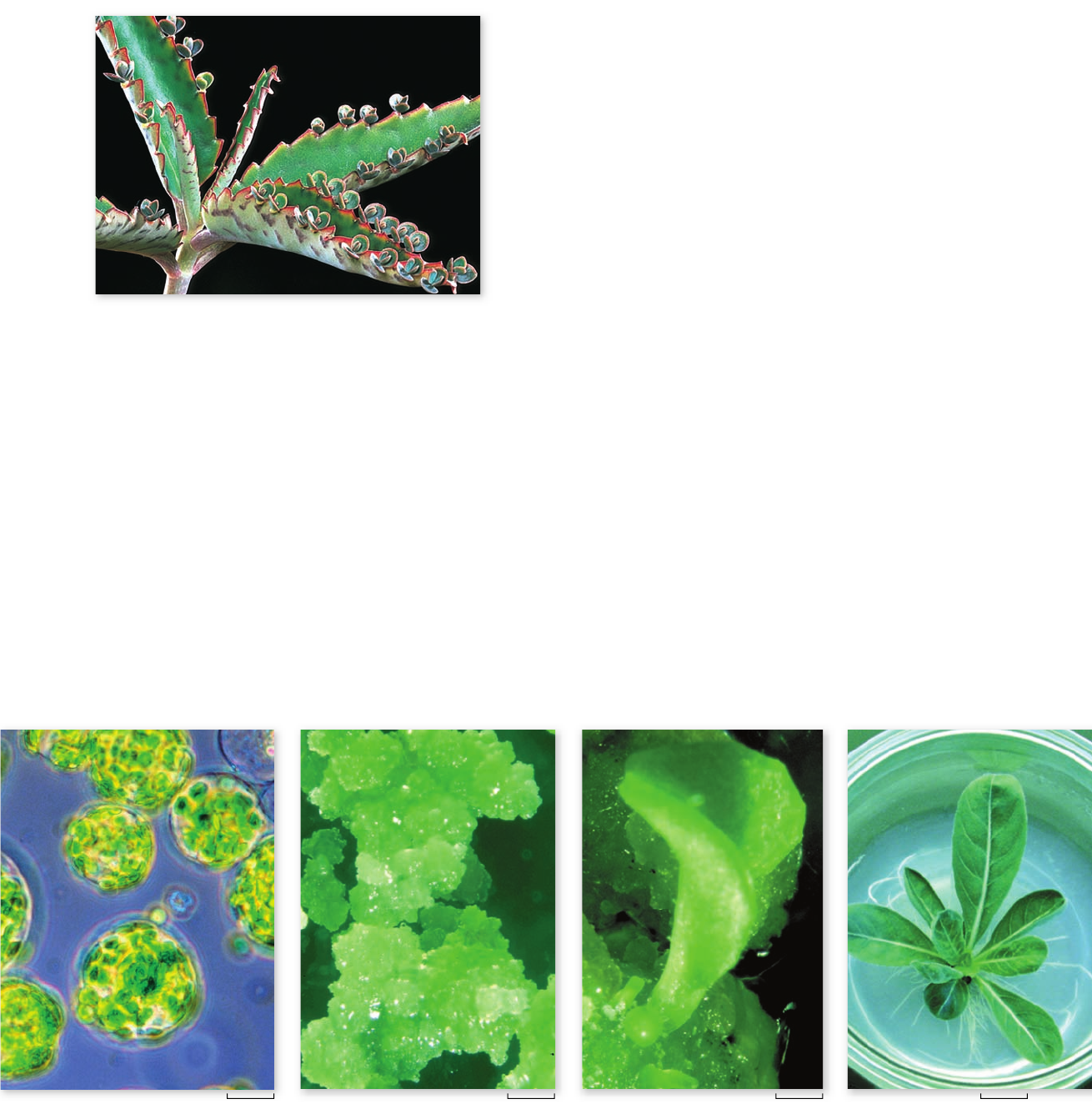
Figure 42.31
Protoplast regeneration.
Different stages in the recovery of intact plants from single plant protoplasts of evening
primrose. a. Individual plant protoplasts. b. Regeneration of the cell wall and the beginning of cell division. c. Production of somatic cell
embryos from the callus. d. Recovery of a plantlet from the somatic cell embryo in culture. The plant can later be rooted in soil.
Figure 42.30
Vegetative reproduction.
Small plants
arise from notches along the leaves of the house plant Kalanchoë
daigremontiana. The plantlets can fall off and grow into new plants,
an unusual form of vegetative reproduction.
each second node, the tip of the runner turns up and
becomes thickened. This thickened portion rst produces
adventitious roots and then a new shoot that continues
the runner.
Rhizomes. Underground horizontal stems, or rhizomes, are also
important reproductive structures, particularly in grasses
and sedges. Rhizomes invade areas near the parent plant,
and each node can give rise to a new owering shoot. The
noxious character of many weeds results from this type of
growth pattern, and many garden plants, such as irises, are
propagated almost entirely from rhizomes. Corms and
bulbs are vertical underground stems. Tubers are also
stems specialized for storage and reproduction. Tubers are
the terminal storage portion of a rhizome. Potatoes
(Solanum spp.) are propagated arti cially from tuber
segments, each with one or more “eyes.” The eyes, or
“seed pieces,” of a potato give rise to the new plant.
Suckers. The roots of some plants—for example, cherry, apple,
raspberry, and blackberry—produce suckers, or sprouts,
which give rise to new plants. Commercial varieties of
banana do not produce seeds and are propagated by
suckers that develop from buds on underground stems.
When the root of a dandelion is broken, as it may be if
one attempts to pull it from the ground, each root
fragment may give rise to a new plant.
Adventitious plantlets. In a few plant species, even the leaves
are reproductive. One example is the houseplant Kalanchoë
daigremontiana (see gure 42.30), familiar to many people
as the “maternity plant,” or “mother of thousands.” The
common names of this plant are based on the fact that
numerous plantlets arise from meristematic tissue located
in notches along the leaves. The maternity plant is
ordinarily propagated by means of these small plants,
which, when they mature, drop to the soil and take root.
In vegetative reproduction, new plants arise
from nonreproductive tissues
In a very common form of asexual reproduction called vegeta-
tive reproduction, new plant individuals are simply cloned from
parts of adults (figure 42.30) . The forms of vegetative repro-
duction in plants are many and varied.
Runners or stolons. Some plants reproduce by means of
runners (also called stolons)—long, slender stems that
grow along the surface of the soil. In the cultivated
strawberry, for example, leaves, owers, and roots are
produced at every other node on the runner. Just beyond
858
part
VI
Plant Form and Function
rav32223_ch42_839-862.indd 858rav32223_ch42_839-862.indd 858 11/16/09 2:32:44 PM11/16/09 2:32:44 PM
Apago PDF Enhancer
b.a.
Some herbaceous plants send new stems above the ground
every year, producing them from woody underground struc-
tures. Others germinate and grow, flowering just once before
they die. Shorter-lived plants rarely become very woody be-
cause there is not enough time for secondary tissues to accumu-
late. Depending on the length of their life cycles, herbaceous
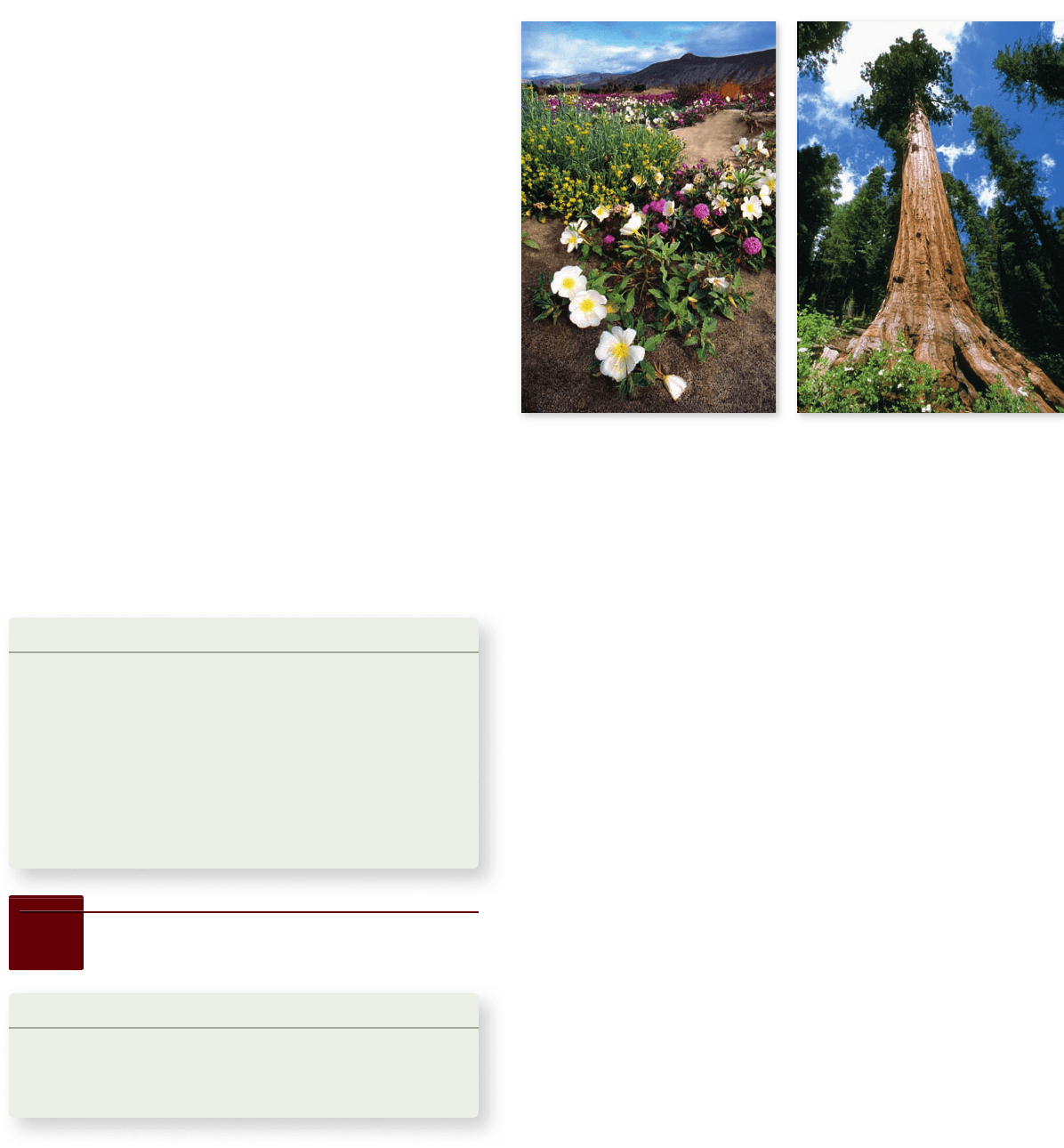
plants may be annual, biennial, or perennial, whereas woody
plants are generally perennial (figure 42.32).
Determining life span is even more complicated for clon-
ally reproducing organisms. Aspen trees (Populus tremuloides)
form huge clones from asexual reproduction of their roots.
Collectively, an aspen clone may form the largest “organism”
on Earth. Other asexually reproducing plants may cover less
territory but live for thousands of years. Creosote bushes (Lar-
rea tridentata) in the Mojave Desert have been identified that
are up to 12,000 years old!
Perennial plants live for many years
Perennial plants continue to grow year after year and may be
herbaceous (as are many woodland, wetland, and prairie wild-
flowers), or woody (as are trees and shrubs). The majority of
vascular plant species are perennials. Perennial plants in gen-
eral are able to flower and produce seeds and fruit for an indefi-
nite number of growing seasons.
Herbaceous perennials rarely experience any secondary
growth in their stems; the stems die each year after a period of
relatively rapid growth and food accumulation. Food is often
stored in the plants’ roots or underground stems, which can
Learning Outcomes
Distinguish between herbaceous and woody perennials.1.
Define perennial and annual plants.2.
Describe the life cycle of a biennial plant.3.
Once established, plants live for highly variable periods of time,
depending on the species. Life span may or may not correlate
with reproductive strategy. Woody plants, which have extensive
secondary growth, nearly always live longer than herbaceous
plants, which have limited or no secondary growth. Bristlecone
pine, for example, can live upward of 4000 years.
42.6
Plant Life Spans
Plants can be cloned from isolated
cells in the laboratory
Whole plants can be cloned by regenerating plant cells or tissues on
nutrient medium with growth hormones. This is another form of
asexual reproduction. Cultured leaf, stem, and root tissues can un-
dergo organogenesis in culture and form roots and shoots. In some
cases, individual cells can also give rise to whole plants in culture.
Individual cells can be isolated from tissues with enzymes
that break down cell walls, leaving behind the protoplast, a plant
cell enclosed only by a plasma membrane. Plant cells have
greater developmental plasticity than most vertebrate animal
cells, and many, but not all, cell types in plants maintain the abil-
ity to generate organs or an entire organism in culture. Con-
sider the limited number of adult stem cells in vertebrates and
the challenges associated with cloning discussed in chapter 19.
When single plant cells are cultured, wall regeneration
takes place. Cell division follows to form a callus, an undifferen-
tiated mass of cells (figure 42.31) . Once a callus is formed,
whole plants can be produced in culture. Whole-plant develop-
ment can go through an embryonic stage or can start with the
formation of a shoot or root.
Tissue culture has many agricultural and horticultural ap-
plications. Virus-free raspberries and sugarcane can be propa-
gated by culturing meristems, which are generally free of viruses,
even in an infected plant. As with other forms of asexual repro-
duction, genetically identical individuals can be propagated.
Learning Outcomes Review 42.5
In apomixis, embryos are produced by mitosis rather than fertilization;
in contrast, asexual vegetative reproduction occurs from vegetative
plant parts. Examples include runners, stolons, rhizomes, suckers, and
adventitious plant parts. In the laboratory, protoplasts are produced by
isolating cells and removing the cell walls. Inducing mitosis results in a
cluster of undiff erentiated cells called a callus, which can then be stimulated
to diff erentiate into a plant.
■ Under what conditions would vegetative reproduction
benefit survival?
Figure 42.32
Annual and perennial plants.
Plants live
for very different lengths of time. a. Desert annuals complete their
entire life span in a few weeks, owering just once. b. Some trees,
such as the giant redwood (Sequoiadendron giganteum), which occurs
in scattered groves along the western slopes of the Sierra Nevada in
California, live 2000 years or more, and ower year after year.
chapter
42
Plant Reproduction
859www.ravenbiology.com
rav32223_ch42_839-862.indd 859rav32223_ch42_839-862.indd 859 11/16/09 2:32:48 PM11/16/09 2:32:48 PM

Apago PDF Enhancer
42.1 Reproductive Development
Plant life cycles are characterized by an alternation of generations.
The transition to owering competence is termed phase change.
Phase change prepares a plant to respond to external and internal
signals to begin owering. External factors include light and
temperature, and internal factors include hormone production.
Mutations have claried how phase change is controlled.
In experiments with Arabidopsis, plants that ower earlier than normal
result from mutations in phase change genes. The implication is that
mechanisms have evolved to delay owering.
42.2 Flower Production
Four genetically regulated pathways to owering have been
identi ed. The balance between oral-promoting and oral-
inhibiting signals regulates owering.
The light-dependent pathway is geared to the photoperiod.
The light-dependent pathway induces owering based on the
length of the dark period a plant experiences during 24 hr. Plants
may be short-day, long-day, or day-neutral, depending on their
owering response.
The temperature-dependent pathway is linked to cold.
Some plants require vernalization, or exposure of seeds or plants to
chilling in order to induce owering.
The gibberellin-dependent pathway requires an increased
hormone level.
Decreased levels of gibberellins delay owering in plants with this
pathway. Gibberellins likely affect phase-change gene expression.
The autonomous pathway is independent of environmental cues.
The autonomous pathway is typical of day-neutral plants. A balance
between oral-promoting and oral-inhibiting signals controls
ower development.
Chapter Review
which the beans are continually picked with a population in
which the beans are left on the plant. The frequently picked
population will continue to grow and yield beans much longer
than the untouched population. The process that leads to the
death of a plant is called senescence.
Biennial plants follow a two-year life cycle
Biennial plants, which are much less common than annuals,
have life cycles that take two years to complete. During the first
year, biennials store the products of photosynthesis in under-
ground storage organs. During the second year of growth, flow-
ering stems are produced using energy stored in the underground
parts of the plant. Certain crop plants, including carrots, cab-
bage, and beets, are biennials, but these plants generally are har-
vested for food during their first season, before they flower. They
are grown for their leaves or roots, not for their fruits or seeds.
Wild biennials include evening primroses, Queen Anne’s
lace (Daucus carota), and mullein (Verbascum thapsis). Many plants
that are considered biennials actually do not flower until they
are three or more years of age, but all biennial plants flower only
once before they die.
Learning Outcomes Review 42.6
Woody perennials produce secondary growth, but herbaceous perennials
typically do not. Perennial plants continue to grow year after year, whereas
annual plants die after one growing season. During the fi rst year of a
biennial plant life cycle, food is produced and stored in underground storage
organs. During the second year of growth, the stored energy is used to
produce fl owering stems.
■ What are the advantages and disadvantages of a
biennial life cycle compared to an annual cycle?
become quite large in comparison with their less substantial
aboveground counterparts.
Trees and shrubs generally flower repeatedly, but there are
exceptions. Bamboo lives for many seasons as a nonreproducing
plant, but senesces and dies after flowering. The same is true for
at least one tropical tree ( Tachigali versicolor), which achieves great
heights before flowering and senescing. Considering the tre-
mendous amount of energy that goes into the growth of a tree,
this particular reproductive strategy is quite curious.
Trees and shrubs are either deciduous, with all the leaves
falling at one particular time of year and the plants remaining
bare for a period, or evergreen, with the leaves dropping through-
out the year and the plants never appearing completely bare. In
northern temperate regions, conifers are the most familiar ever-
greens, but in tropical and subtropical regions, most angiosperms
are evergreen, except where there is severe seasonal drought. In
these areas, many angiosperms are deciduous, losing their leaves
during the drought and thus conserving water.
Annual plants grow, reproduce,
and die in a single year
Annual plants grow, flower, and form fruits and seeds within
one growing season and die when the process is complete.
Many crop plants are annuals, including corn, wheat, and soy-
beans. Annuals generally grow rapidly under favorable condi-
tions and in proportion to the availability of water or nutrients.
The lateral meristems of some annuals, such as sunflowers or
giant ragweed, do produce some secondary tissues for support,
but most annuals are entirely herbaceous.
Annuals typically die after flowering once; the developing
flowers or embryos use hormonal signaling to reallocate nutri-
ents, so the parent plant literally starves to death. This can be
demonstrated by comparing a population of bean plants in
860
part
VI
Plant Form and Function
rav32223_ch42_839-862.indd 860rav32223_ch42_839-862.indd 860 11/16/09 2:32:59 PM11/16/09 2:32:59 PM

Apago PDF Enhancer
Floral meristem identity genes activate oral organ identity genes.
Once oral organ identity genes are turned on, the four oral organs
develop according to the ABC model. Class A genes alone specify
sepals, classes A and B together specify petals, classes B and C specify
stamens, and class C genes alone specify carpels.
42.3 Structure and Evolution of Flowers
Flowers evolved in the angiosperms.
Floral organs are believed to have evolved from leaves.
Complete owers have four whorls corresponding to the four oral
organs: the calyx, corolla, androecium, and gynoecium. Incomplete
owers lack one or more of the whorls.
Angiosperms may have radially or bilaterally symmetrical owers.
Gametes are produced in the gametophytes of owers.
Meiosis in the anthers produces microspores, which undergo mitosis
to produce pollen grains, which are the male gametophytes or
microgametophytes.
Each pollen grain contains the generative cell that later divides to
produce two sperm cells and a tube cell.
Meiosis in the ovules produces megaspores, which undergo mitosis
to produce embryo sacs, which are the female gametophytes or
megagametophytes.
The embryo sac contains seven cells, one of which is the egg cell and
one of which contains two polar nuclei. The latter cell develops into
triploid endosperm after fertilization.
42.4 Pollination and Fertilization
Early seed plants were wind-pollinated.
Wind-pollination is a passive process and does not carry pollen over
long distances. Consequently, plants must be relatively close together
to ensure that pollination occurs.
Flowers and animal pollinators have coevolved.
Animal pollinators provide an ef cient transfer of pollen that may
cover long distances. Animal-pollinated owers produce odors and
visual cues to guide pollinators.
Some owering plants continue to use wind pollination.
Many wind-pollinated plant species have male and female owers
on separate individuals or on separate parts of each individual. The
owers are grouped in large numbers and exposed to the wind.
Self-pollination is favored in stable environments.
Plants adapted to a stable environment bene t from having uniform
progeny that are likely to be more successful than those arising from
cross-pollination. Offspring from self-pollination are not genetically
identical, however.
Self pollination is also favored where animal pollinators are scarce.
Several evolutionary strategies promote outcrossing.
Outcrossing is promoted in plants in which male and female owers
are physically separated on the same plant or on different plants, or
in which the two owers mature on a different schedule.
Self-incompatibility prevents self-fertilization by preventing pollen
tube growth.
Angiosperms undergo double fertilization.
Double fertilization produces a diploid zygote and triploid
endosperm that provides nourishment to the zygote.
42.5 Asexual Reproduction
Asexual reproduction results in genetically identical individuals
because progeny are produced by mitosis.
Apomixis involves development of diploid embryos.
Apomixis is the production of embryos by mitosis rather than
fertilization. These embryos develop in seeds.
In vegetative reproduction, new plants arise from
nonreproductive tissues.
Vegetative parts such as runners, rhizomes, suckers, and adventitious
plantlets may give rise to new individual clones.
Plants can be cloned from isolated cells in the laboratory.
Stripping away the cell wall produces a protoplast, which can then
be induced to undergo mitosis to produce a callus. With the proper
treatments, the callus can differentiate into a complete plant.
42.6 Plant Life Spans
Perennial plants live for many years.
Perennials live for years, although they may undergo dormancy.
Annual plants grow, reproduce, and die in a single year.
Many crop plants are annuals and require replanting every year, such
as corn, wheat, and soy beans.
Biennial plants follow a two-year life cycle.
During the rst year, biennials grow and store nutrients. In the
second year, they produce owers and seeds. Biennial crop plants are
often harvested during the rst year, such as carrots.
U N DERS TAN D
1. Morphogenesis is the development of
a. growth form. c. a phase change.
b. reproductive structures. d. meristems.
2. Vernalization induces owering following exposure to
a. water. c. cold.
b. drought. d. heat.
3. Photoperiod is perceived by
a. phytochrome and cryptochrome.
b. phytochrome and chlorophyll.
c. cryptochrome and chlorophyll.
d. phytochrome, cryptochrome, and chlorophyll.
4. Which of the following is not a component of a ower?
a. Sepal c. Carpel
b. Stamen d. Bract
Review Questions
chapter
42
Plant Reproduction
861www.ravenbiology.com
rav32223_ch42_839-862.indd 861rav32223_ch42_839-862.indd 861 11/16/09 2:33:00 PM11/16/09 2:33:00 PM