
Raven P.H., Johnson G.B., Mason K.A. Biology (Ninth Edition)
Подождите немного. Документ загружается.

Apago PDF Enhancer
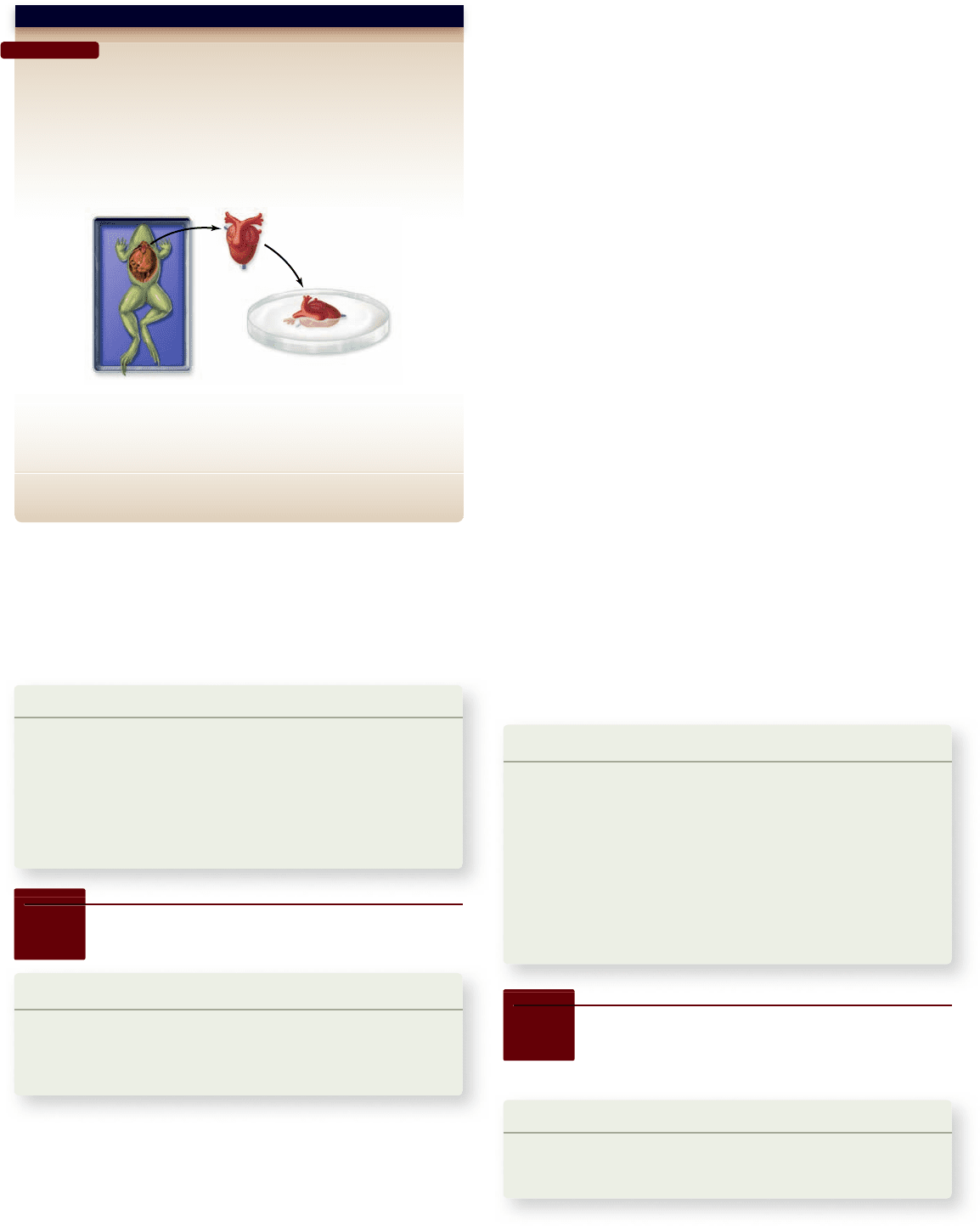
Question: Is the heartbeat a function of the nervous system, or does it
originate in the heart itself?
Hypothesis:
Cells in the heart are capable of generating an action
potential without stimulation by the nervous system.
Prediction: If the heartbeat is produced by cells in the heart, then an
isolated heart should continue to beat.
Test: Remove a frog’s heart and keep in a bath of nutrient solution
and oxygen.
Result: The heart continues to contract with no connection to the
nervous system.
Conclusion: The heartbeat is intrinsic to the heart.
Further Experiments: How would you integrate the conclusions from
this experiment with the one described in figure 44.12?
SCIENTIFIC THINKING
Isolated
heart
Heart placed in solution with
nutrients and oxygen.
43.6
Overview of Vertebrate
Organ Systems
Learning Outcomes
Identify the different organ systems in vertebrates.1.
Explain the functional organization of these systems.2.
regulates the rate of impulse activity (figure 43.5) . The impulses
generated by the specialized cell groups spread across the gap
junctions from cell to cell, synchronizing the heart’s contraction.
Chapter 50 describes this process more fully.
Learning Outcomes Review 43.4
Muscles are the motors of the body; they are able to contract to change their
length. Muscle tissue is of three types: smooth, skeletal, and cardiac. Smooth
muscles provide a variety of visceral functions. Skeletal muscles enable the
vertebrate body to move. Cardiac muscle forms a muscular pump, the heart.
■ Why is it important that cardiac muscle cells have
gap junctions?
43.5
Nerve Tissue
Learning Outcomes
Describe the basic structure of neurons.1.
Distinguish between neurons and their supporting cells.2.
Identify the two divisions of the nervous system.3.
The fourth major class of vertebrate tissue is nerve tissue
(table 43.4) . Its cells include neurons and their supporting cells,
called neuroglia. Neurons are specialized to produce and con-
duct electrochemical events, or impulses.
Figure 43.5
The source of the heartbeat.
Neurons sometimes extend long distances
Most neurons consist of three parts: a cell body, dendrites, and
an axon. The cell body of a neuron contains the nucleus. Den-
drites are thin, highly branched extensions that receive incom-
ing stimulation and conduct electrical impulses to the cell body.
The axon is a single extension of cytoplasm that conducts im-
pulses away from the cell body. Axons and dendrites can be
quite long. For example, the cell bodies of neurons that control
the muscles in your feet lie in the spinal cord, and their axons
may extend over a meter to your feet.
Neuroglia provide support for neurons
Neuroglia do not conduct electrical impulses, but instead sup-
port and insulate neurons and eliminate foreign materials in
and around neurons. In many neurons, neuroglia cells associate
with the axons and form an insulating covering, a myelin sheath,
produced by successive wrapping of the membrane around the
axon. Gaps in the myelin sheath, known as nodes of Ranvier,
serve as sites for accelerating an impulse (see chapter 44 ).
Two divisions of the nervous
system coordinate activity
The nervous system is divided into the central nervous
system (CNS), which includes the brain and spinal cord, and
the peripheral nervous system (PNS), which includes nerves
and ganglia. Nerves consist of axons in the PNS that are bun-
dled together in much the same way as wires are bundled to-
gether in a cable. Ganglia are collections of neuron cell bodies.
The CNS generally has the role of integration and interpreta-
tion of input, such as input from the senses; the PNS commu-
nicates signals to and from the CNS to the rest of the body,
such as to muscle cells or endocrine glands.
Learning Outcomes Review 43.5
Nerve tissue is composed of neurons and neuroglia. Neurons are specialized
to receive and conduct electrical signals; they generally have a cell body with
a nucleus, dendrites that receive incoming signals, and axons that conduct
impulses away from the cell body. Neuroglia have support functions,
including providing insulation to axons. The central nervous system (CNS)
and peripheral nervous system (PNS) both contain neurons and neuroglia.
■ In chapter 4 you read that the surface-area-to-volume
ratio limits cell size. How do neurons reach up to a meter
in length in spite of this?
872
part
VII
Animal Form and Function
rav32223_ch43_863-886.indd 872rav32223_ch43_863-886.indd 872 11/17/09 3:10:11 PM11/17/09 3:10:11 PM
Apago PDF Enhancer
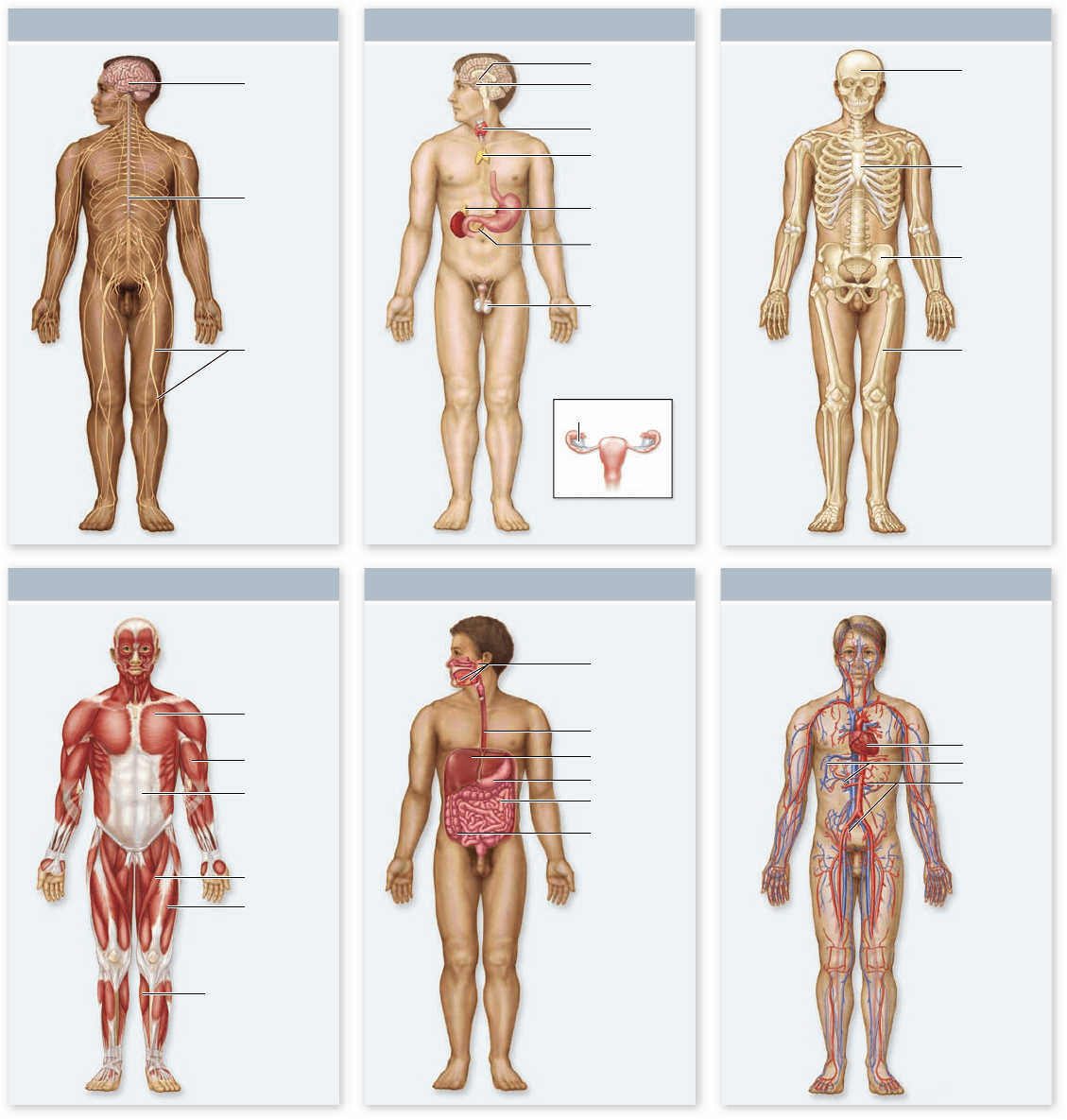
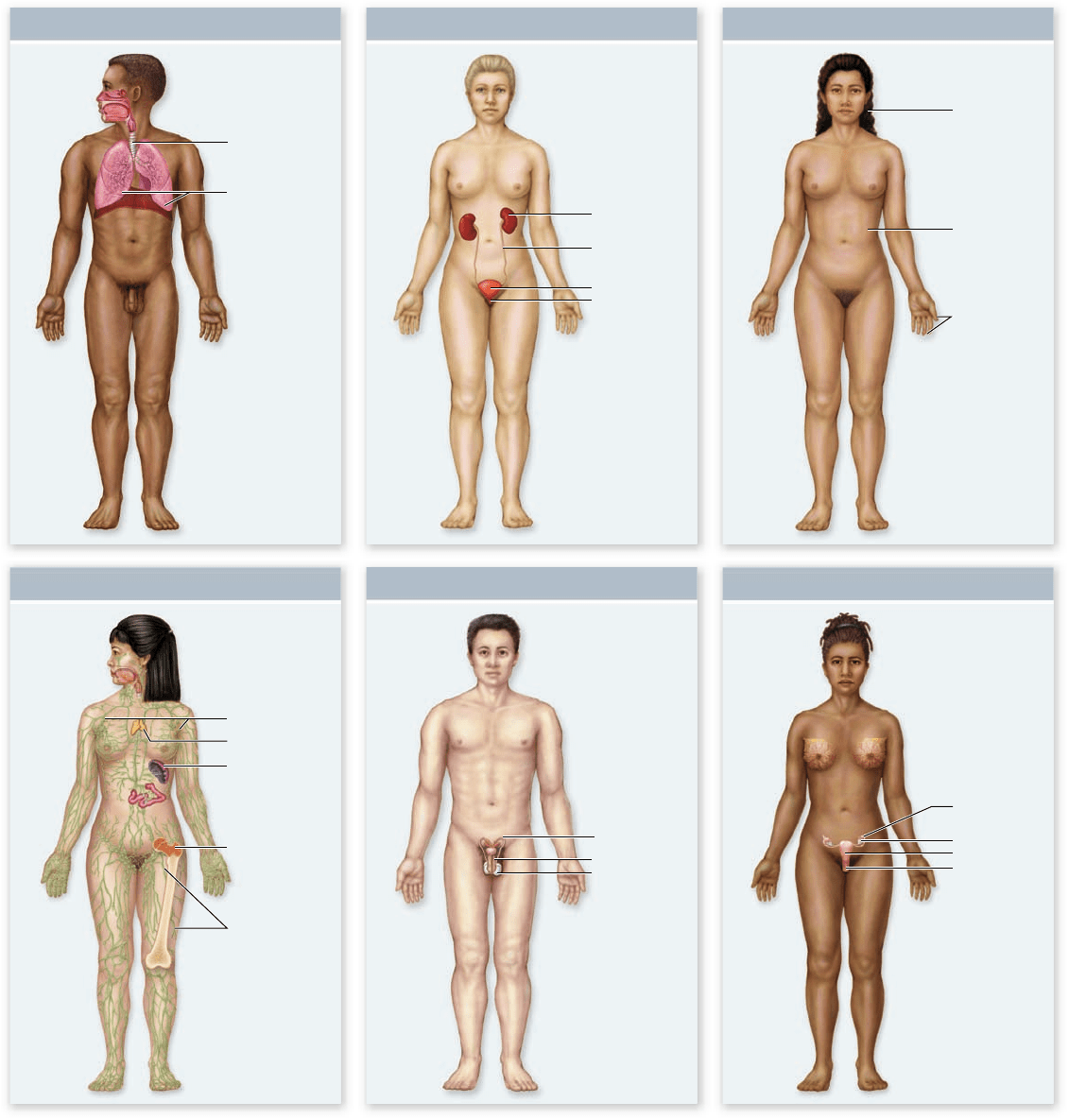
In the chapters that follow, we look closely at the major organ
systems of vertebrates (figure 43.6) . In each chapter, you will be
able to see the intimate relationship of structure and function.
We approach the organ systems by placing them in the follow-
ing functional groupings:
■ Communication and integration
■ Support and movement
■ Regulation and maintenance
■ Defense
■ Reproduction and development
Communication and integration sense
and respond to the environment
Two organ systems detect external and internal stimuli and co-
ordinate the body’s responses. The nervous system, which
consists of the brain, spinal cord, nerves, and sensory organs,
detects internal sensory feedback and external stimuli such as
light, sound, and touch. This information is collected and inte-
grated, and then the appropriate response is made.
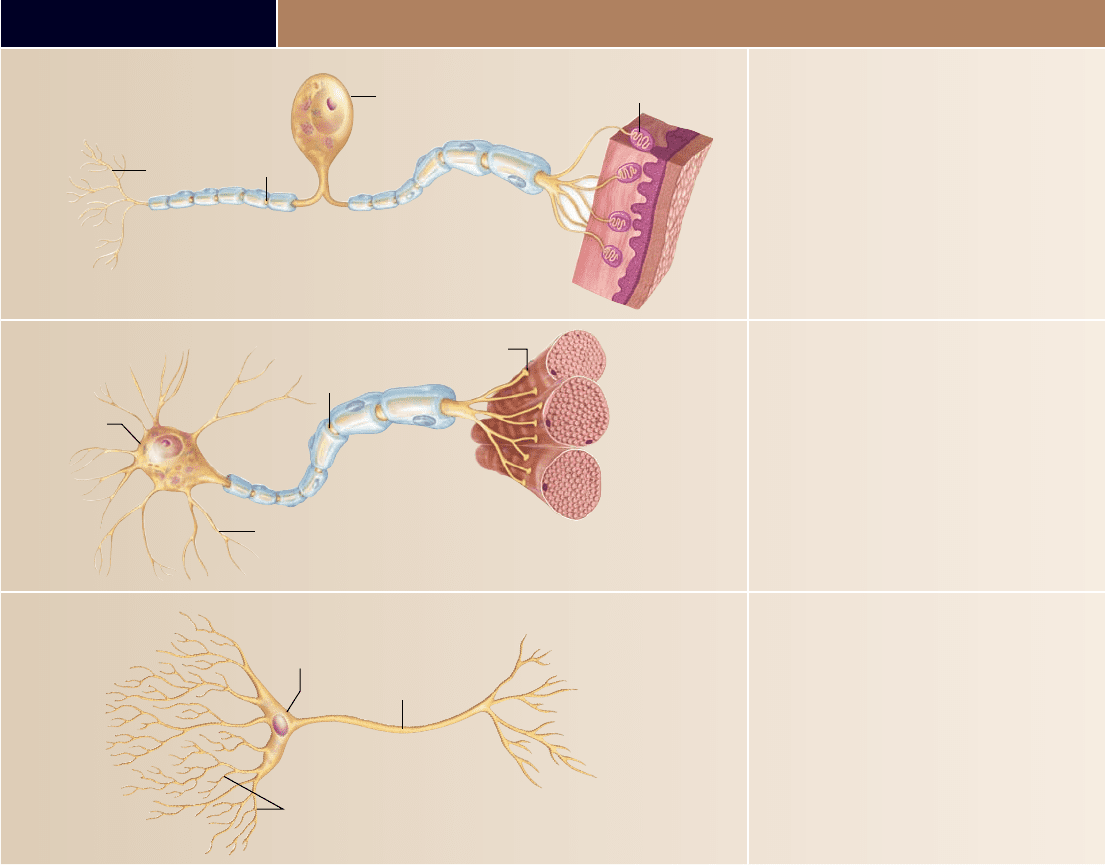
TABLE 43.4
Nerve Tissue
Sensory Neurons
Typical Location
Eyes; ears; surface of skin
Function
Receive information about the body’s condition and
external environment; send impulses from sensory
receptors to central nervous system
Characteristic Cell Types
Rods and cones; muscle stretch receptors
Motor Neurons
Typical Location
Brain and spinal cord
Function
Stimulate muscles and glands; conduct impulses out of
central nervous system toward muscles and glands
Characteristic Cell Types
Motor neurons
Interneurons
Typical Location
Brain and spinal cord
Function
Integrate information; conduct impulses between
neurons within central nervous system
Characteristic Cell Types
Interneurons
Dendrite Axon
Cell body
Cell body
Dendrite
Axon
Axon
Dendrites
Cell body
Sensory receptor
Neuromuscular
junction
The sensory systems are a subset of the nervous system
we consider in a separate chapter. These include the organs and
tissues that sense external stimuli, such as vision, hearing, smell,
and so on.
Working in parallel with the nervous system, the endocrine
system issues chemical signals that regulate and fine-tune the
myriad chemical processes taking place in all other organ systems.
Skeletal support and movement
are vital to all animals
The musculoskeletal system consists of two interrelated or-
gan systems. Muscles are most obviously responsible for move-
ment, but without something to pull on, a muscle is useless.
The skeletal system is the rigid framework against which most
muscles pull. Vertebrates have internal skeletons, but many
other animals exhibit external skeletons (such as insects) or hy-
drostatic skeletons (earthworms). Together, these two organ
systems enable animals to exhibit a wide array of finely con-
trolled movements.
chapter
43
The Animal Body and Principles of Regulation
873www.ravenbiology.com
rav32223_ch43_863-886.indd 873rav32223_ch43_863-886.indd 873 11/17/09 3:10:12 PM11/17/09 3:10:12 PM
Apago PDF Enhancer
Skull
Sternum
Pelvis
Femur
Nervous System Endocrine System Skeletal System
Testis
(male)
Ovary (female)
Pituitary
Hypothalamus
Thyroid
Thymus
Adrenal
gland
Pancreas
Arteries
Veins
Heart
Brain
Spinal
cord
Nerves
Circulatory System
Salivary
glands
Esophagus
Liver
Stomach
Small
intestine
Large
intestine
Digestive SystemMuscular System
Gastrocnemius
Pectoralis
major
Biceps
Rectus
abdominus
Sartorius
Quadriceps
Figure 43.6
Vertebrate organ systems. Shown are the 11 principal organ systems of the human body, including both male and
female reproductive systems.
Regulation and maintenance of the body’s
chemistry ensures continued life
The organ systems grouped under regulation and maintenance
participate in nutrient acquisition, waste disposal, material dis-
tribution, and maintenance of the internal environment. The
chapter on the digestive system describes how we eat, absorb
nutrients, and eliminate solid wastes. The heart and vessels of
the circulatory system pump and distribute blood, carrying
nutrients and other substances throughout the body. The
874
part
VII
Animal Form and Function
rav32223_ch43_863-886.indd 874rav32223_ch43_863-886.indd 874 11/17/09 3:10:13 PM11/17/09 3:10:13 PM
Apago PDF Enhancer
Respiratory System
Trachea
Lungs
Lymph nodes
Thymus
Spleen
Bone marrow
Lymphatic
vessels
Lymphatic/Immune System
Urinary System Integumentary System
Hair
Skin
Fingernails
Ureter
Bladder
Urethra
Kidney
Vas deferens
Testis
Penis
Reproductive System (male) Reproductive System (female)
Ovary
Fallopian
tube
Uterus
Vagina
body acquires oxygen and expels carbon dioxide via the
respiratory system.
Finally, vertebrates tightly regulate the concentration of their
body fluids. We explore these processes in the chapter on osmo-
regulation, which is largely carried out by the urinary system.
The body can defend itself
from attackers and invaders
Every animal faces assault by bacteria, viruses, fungi, pro-
tists, and even other animals. The body’s first line of defense
chapter
43
The Animal Body and Principles of Regulation
875www.ravenbiology.com
rav32223_ch43_863-886.indd 875rav32223_ch43_863-886.indd 875 11/17/09 3:10:15 PM11/17/09 3:10:15 PM
Apago PDF Enhancer
Animal body
External environment
Homeostatic
mechanisms
Cells of the body
Large
external
fluctuations
Small
internal
fluctuations
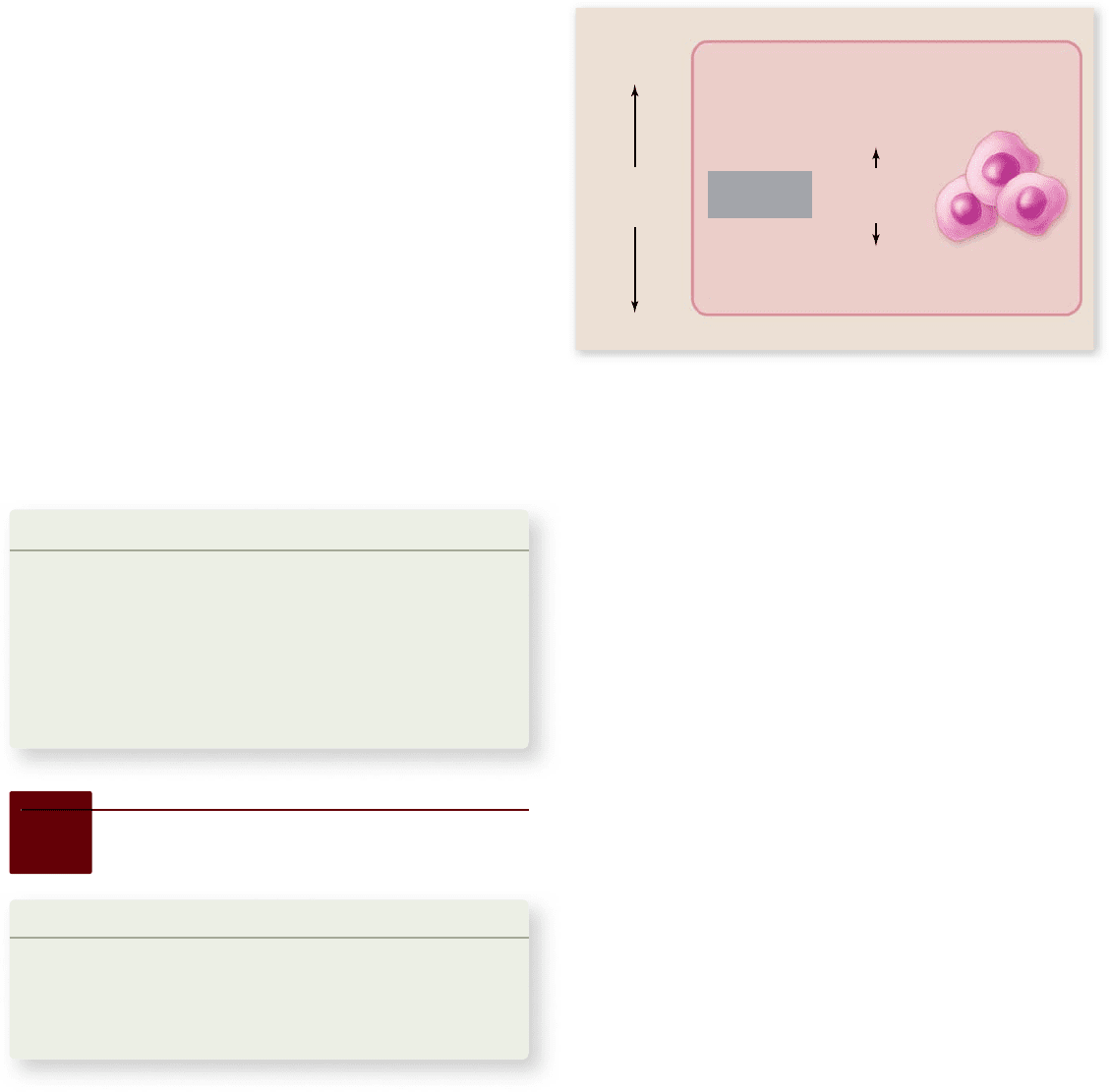
Figure 43.7
Homeostatic mechanisms help maintain
stable internal conditions. Even though conditions outside of
an animal’s body may vary widely, the inside stays relatively
constant due to many nely tuned control systems.
Negative feedback mechanisms
keep values within a range
To maintain internal constancy, the vertebrate body uses a type of
control system known as a negative feedback. In negative feed-
back, conditions within the body as well as outside it are detected
by specialized sensors, which may be cells or membrane receptors.
If conditions deviate too far from a set point, biochemical reactions
are initiated to change conditions back toward the set point.
This set point is analogous to the temperature setting on a
space heater. When room temperature drops, the change is de-
tected by a temperature-sensing device inside the heater controls—
the sensor. The thermostat on which you have indicated the set
point for the heater contains a comparator; when the sensor in-
formation drops below the set point, the comparator closes an
electrical circuit. The flow of electricity through the heater then
produces more heat. Conversely, when the room temperature in-
creases, the change causes the circuit to open, and heat is no longer
produced. Figure 43.8 summarizes the negative feedback loop.
In a similar manner, the human body has set points for
body temperature, blood glucose concentration, electrolyte
(ion) concentration, the tension on a tendon, and so on. The
integrating center is often a particular region of the brain or
spinal cord, but in some cases, it can also be cells of endocrine
glands. When a deviation in a condition occurs, a message is
sent to increase or decrease the activity of particular target or-
gans, termed effectors. Effectors are generally muscles or glands,
and their actions can change the value of the condition in ques-
tion back toward the set point value.
Mammals and birds are endothermic; they can maintain
relatively constant body temperatures independent of the envi-
ronmental temperature. In humans, when the blood temperature
exceeds 37°C (98.6°F), neurons in a part of the brain called the
hypothalamus detect the temperature change. Acting through
the control of motor neurons, the hypothalamus responds by
promoting the dissipation of heat through sweating, dilation of
blood vessels in the skin, and other mechanisms. These responses
tend to counteract the rise in body temperature.
is the integumentary system —intact skin. Disease-causing
agents that penetrate the first defense encounter a host of
other protective immune system responses, including the
production of antibodies and specialized cells that attack in-
vading organisms.
Reproduction and development
ensure continuity of species
The biological continuity of vertebrates is the province of the
reproductive system. Male and female reproductive systems
consist of organs where male and female gametes develop, as
well as glands and tubes that nurture gametes and allow gam-
etes of complementary sexes to come into contact with one an-
other. The female reproductive system in many vertebrates also
has systems for nurturing the developing embryo and fetus.
After gametes have fused to form a zygote, an elaborate
process of cell division and development takes place to change
this beginning diploid cell into a multicellular adult. This pro-
cess is explored in the animal development chapter.
Learning Outcomes Review 43.6
Vertebrate organ systems include the nervous, endocrine, skeletal,
muscular, digestive, circulatory, respiratory, urinary, integumentary,
lymphatic/immune, and reproductive systems. These may be grouped
functionally based on their roles in communication and integration, support
and movement, regulation and maintenance, defense, and reproduction
and development.
■ Is there any overlap between the different organ systems?
43.7
Homeostasis
Learning Outcomes
Explain homeostasis.1.
Illustrate how negative feedback can limit a response.2.
Illustrate how antagonistic effectors can maintain a 3.
system at a set point.
As animals have evolved, specialization of body structures has
increased. Each cell is a sophisticated machine, finely tuned to
carry out a precise role within the body. Such specialization of
cell function is possible only when extracellular conditions stay
within narrow limits. Temperature, pH, the concentrations of
glucose and oxygen, and many other factors must remain rela-
tively constant for cells to function efficiently and interact
properly with one another. The dynamic constancy of the in-
ternal environment is called homeostasis . The term dynamic is
used because conditions are never constant, but fluctuate con-
tinuously within narrow limits. Homeostasis is essential for life,
and most of the regulatory mechanisms of the vertebrate body
are involved with maintaining homeostasis (figure 43.7) .
876
part
VII
Animal Form and Function
rav32223_ch43_863-886.indd 876rav32223_ch43_863-886.indd 876 11/17/09 3:10:17 PM11/17/09 3:10:17 PM
Apago PDF Enhancer
Constantly monitors
conditions
Sensor
Compares conditions
to a set point based
on a desired value
Integrating Center
Deviation from
set point
Stimulus
Causes changes to
compensate for
deviation
Effector
Move system towards
set point
Response
Negative feedback
( – )
Thermostat
compares
temperature
with set point
Integrating Center
Room temperature
changes from set
point
Stimulus
• AC turns on
• Furnace turns off
Effector
Negative
feedback
Negative
feedback
Thermometer in
wall unit detects
the change in
temperature
Sensor
If Above Set Point
• AC turns off
• Furnace turns on
Effector
If Below Set Point
Room cools,
temperature
decreases
toward set point
Response
Room warms,
temperature
increases
toward set point
Response
Neurons in
hypothalamus
compare input
from sensory
neurons with
set point
Integrating Center
Body temperature
deviates from
set point
Stimulus
• Blood vessels
to skin dilate
• Glands release
sweat
Effector
Negative
feedback
Negative
feedback
Neurons in
hypothalamus
detect the change
in temperature
Sensor
If Above Set Point
• Blood vessels to
skin contract
• Muscles contract,
shiver
Effector
If Below Set Point
Body
temperature
drops
Response
Body
temperature
rises
Response
a. b.
Set Point = 70°
°
F Set Point = 37
°
C
( – )( – ) ( – )( – )
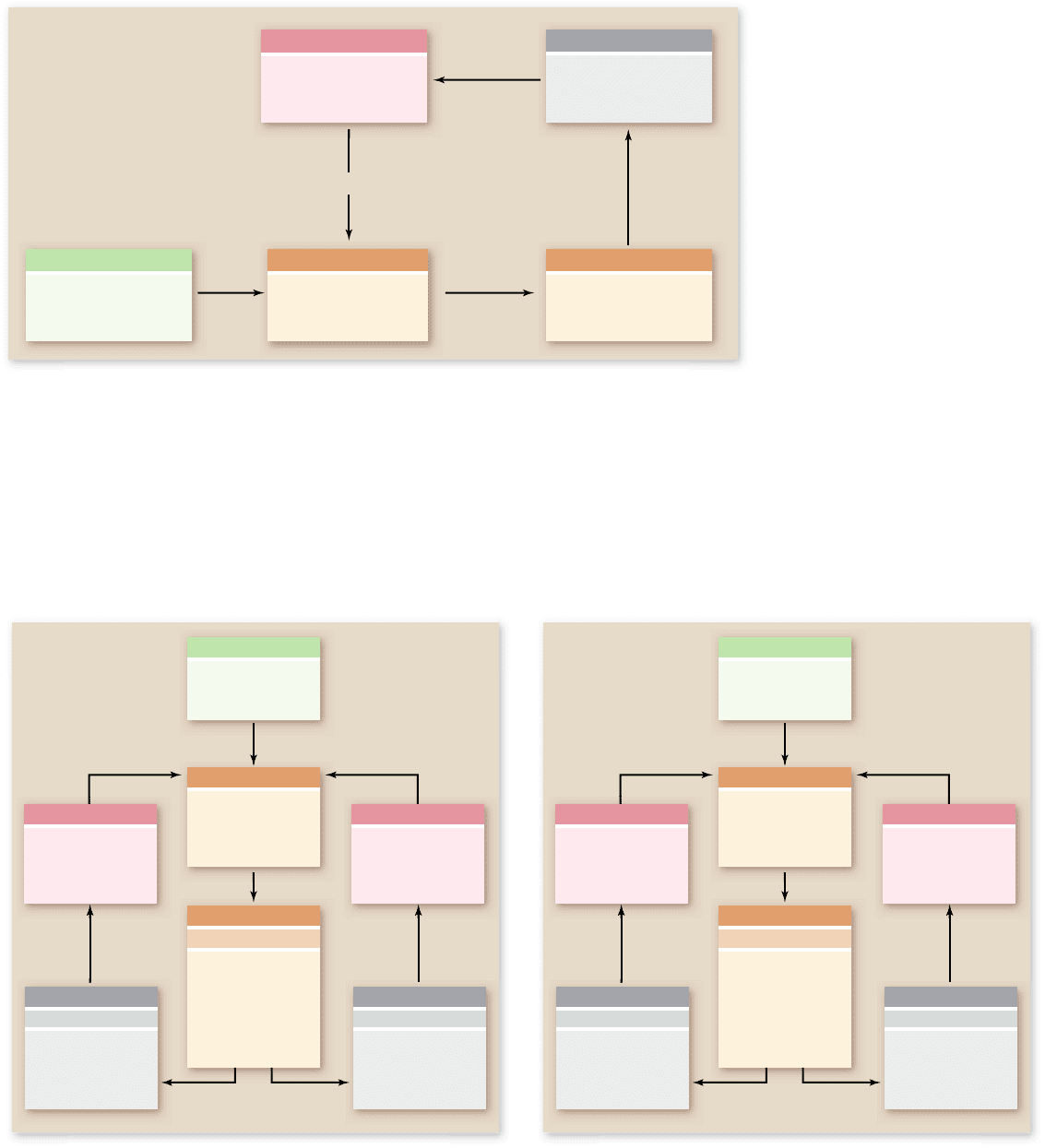
Figure 43.8
Generalized
diagram of a negative feedback
loop. Negative feedback loops
maintain a state of homeostasis, or
dynamic constancy of the internal
environment. Changing conditions
are detected by sensors, which feed
information to an integrating center
that compares conditions to a set
point. Deviations from the set point
lead to a response to bring internal
conditions back to the set point.
Negative feedback to the sensor
terminates the response.
Antagonistic e ectors act in opposite directions
The negative feedback mechanisms that maintain homeostasis
often oppose each other to produce a finer degree of control.
Most factors in the internal environment are controlled by sev-
eral effectors, which often have antagonistic (opposing) actions.
Control by antagonistic effectors is sometimes described as
“push–pull,” in which the increasing activity of one effector is
accompanied by decreasing activity of an antagonistic effector.
This affords a finer degree of control than could be achieved by
simply switching one effector on and off.
To return to our earlier example, room temperature can
be maintained by just turning the heater on and off, or turning
an air conditioner on and off. A much more stable temperature
is possible, however, if a thermostat controls both the air condi-
tioner and heater. Then the heater turns on when the air con-
ditioner shuts off, and vice versa (figure 43.9a) .
Figure 43.9
Room and body temperature are maintained by negative feedback and antagonistic e ectors. a. If a
thermostat senses a low temperature (as compared with a set point), the furnace turns on and the air conditioner turns off. If the temperature
is too high, the air conditioner turns on and the furnace turns off. b. The hypothalamus of the brain detects an increase or decrease in body
temperature. The comparator (also in the hypothalamus) then processes the information and activates effectors, such as surface blood vessels,
sweat glands, and skeletal muscles. Negative feedback results in a reduction in the difference of the body’s temperature compared with the set
point. Consequently, the stimulation of the effectors by the comparator is also reduced.
chapter
43
The Animal Body and Principles of Regulation
877www.ravenbiology.com
rav32223_ch43_863-886.indd 877rav32223_ch43_863-886.indd 877 11/17/09 3:10:18 PM11/17/09 3:10:18 PM
Apago PDF Enhancer
The brain receives
stretch information
from the uterus,
and compares
it with the set point
Integrating Center
Fetus is pushed
against the uterine
opening
Stimulus
Receptors in the
inferior uterus
detect increased
stretch
Sensor
The pituitary gland
is stimulated to
increase secretion of
the hormone oxytocin
Effector
If Above Set Point
Oxytocin causes
increased uterine
contractions
Response
Positive feedback
loop completed—
results in increased
force against inferior
uterus (cervix),
promoting the
birth of the baby
( + )
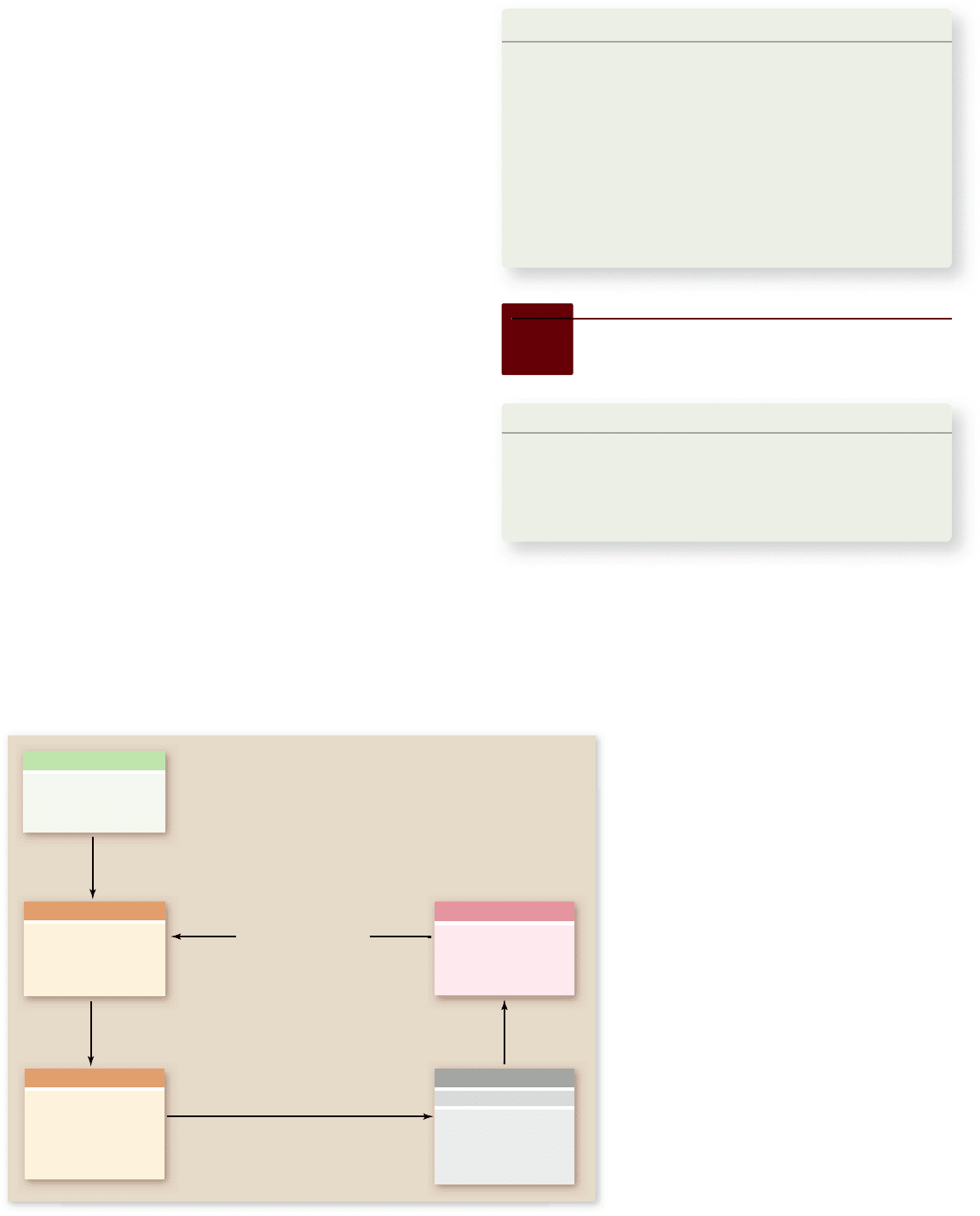
Figure 43.10
Positive feedback during
childbirth. This is one of the few examples of
positive feedback in the vertebrate body.
Antagonistic effectors are similarly involved in the con-
trol of body temperature. When body temperature falls, the
hypothalamus coordinates a different set of responses, such as
constriction of blood vessels in the skin and initiation of shiver-
ing, muscle contractions that help produce heat. These re-
sponses raise body temperature and correct the initial challenge
to homeostasis (figure 43.9b).
Positive feedback mechanisms
enhance a change
In a few cases, the body uses positive feedback mechanisms, which
push or accentuate a change further in the same direction. In a
positive feedback loop, the effector drives the value of the con-
trolled variable even farther from the set point. As a result, sys-
tems in which there is positive feedback are highly unstable,
analogous to a spark that ignites an explosion. They do not help
to maintain homeostasis.
Nevertheless, such systems are important components of
some physiological mechanisms. For example, positive feed-
back occurs in blood clotting, in which one clotting factor acti-
vates another in a cascade that leads quickly to the formation of
a clot. Positive feedback also plays a role in the contractions of
the uterus during childbirth (figure 43.10) . In this case, stretch-
ing of the uterus by the fetus stimulates contraction, and con-
traction causes further stretching; the cycle continues until the
uterus expels the fetus.
In the body, most positive feedback systems act as part of
some larger mechanism that maintains homeostasis. In the ex-
amples we have described, formation of a blood clot stops
bleeding and therefore tends to keep blood volume constant,
and expulsion of the fetus reduces the contractions of the uterus,
stopping the cycle.
Learning Outcomes Review 43.7
Homeostasis can be thought of as the dynamic constancy of an organism’s
internal environment. Negative feedback mechanisms correct deviations
from a set point for diff erent internal variables, such as temperature, pH,
and many others, helping to keep body conditions within a normal range.
Eff ectors that act antagonistically to each other are more eff ective than
eff ectors that act alone. Positive feedback mechanisms that accentuate
changes are less common and have specialized functions, such as blood
clotting and giving birth.
■ Do antagonistic effectors and negative feedback
function together?
43.8
Regulating Body Temperature
Learning Outcomes
Explain Q1.
10
and its significance.
Define how organisms can be categorized with respect to 2.
temperature regulation.
Describe mechanisms for temperature homeostasis.3.
Temperature is one of the most important aspects of the environ-
ment that all organisms must contend with. This provides a good
example to apply the principles of homeostatic regulation from
the last section. As we will see, some organisms have a body tem-
perature that conforms to the environment and others regulate
their body temperature. First, let’s consider why temperature is
so important.
Q
10
is a measure of
temperature sensitivity
The rate of any chemical reaction is affected by
temperature: The rate increases with increas-
ing temperature, and it decreases with decreas-
ing temperature. Reactions catalyzed by
enzymes show the same kinetic effects, but the
enzyme itself is also affected by temperature.
We can make this temperature depen-
dence quantitative by examining the rate of a
reaction at two different temperatures. The
ratio between the rates of a reaction at two
temperatures that differ by 10°C is called the
Q
10
for the enzyme:
Q
10
= R
T+10
/R
T
For most enzymes the Q
10
value is around
2, which means for every 10°C increase in
temperature, the rate of the reaction doubles.
Obviously, this cannot continue forever since
at high temperatures the enzyme’s structure is
affected and it can no longer be active.
878
part
VII
Animal Form and Function
rav32223_ch43_863-886.indd 878rav32223_ch43_863-886.indd 878 11/17/09 3:10:19 PM11/17/09 3:10:19 PM
Apago PDF Enhancer
Direct sunlight
Infrared thermal
radiation from
atmosphere
Infrared thermal
radiation from animal
Convection
wind
Evaporation
Dust and particles
Scattered
sunlight
Infrared thermal
radiation
from vegetation
Reflected sunlight
Reflected sunlight
Infrared thermal
radiation from ground
The Q
10
concept can also be applied to overall metabolism.
The equation remains the same, but instead of the rate of a single
reaction, the overall metabolic rate is used. When this has been
measured, most organisms have a Q
10
for metabolic rate around
2 to 3. This observation implies that the effect of temperature is
mainly on the enzymes that make up metabolism.
In rare cases—for example, in some intertidal inverte-
brates—the Q
10
is close to 1. Notice that this value means no
change in metabolic rate with temperature. In the case of these
intertidal invertebrates, they are exposed to large temperature
fluctuations as they are alternately flooded with relatively cold
water and exposed to direct sunlight and much higher air tem-
peratures. These organisms have adapted to deal with these
large temperature swings, probably through the evolution of
different enzymes in a single metabolic pathway that have
large differences in optimal temperature. This allows one en-
zyme to “make up” for others with decreased activity at a par-
ticular temperature.
Temperature is determined by
internal and external factors
Body temperature appears simple, yet a large number of vari-
ables influence it. These variables include both internal and
external factors, as well as behavior. As you may recall from
chapter 6, the second law of thermodynamics indicates that
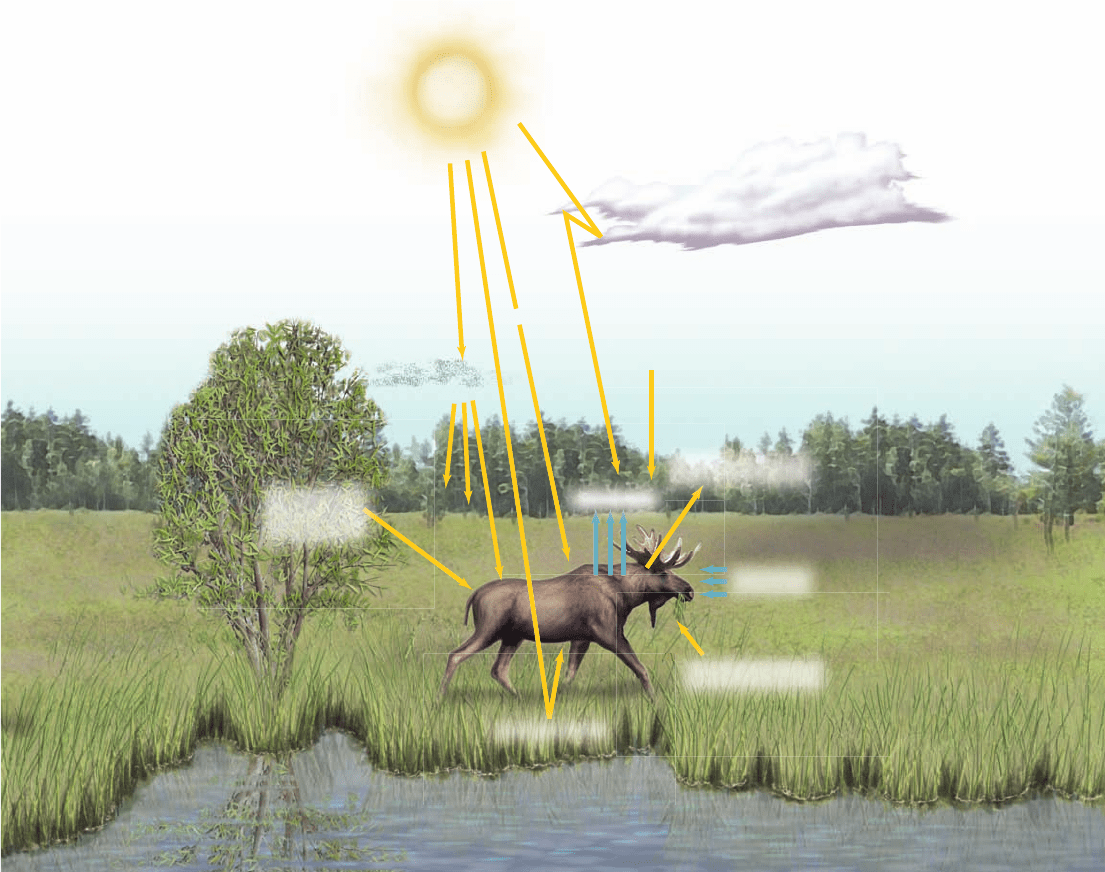
Figure 43.11
Methods of heat
transfer. Heat can be gained or lost by
conduction, convection, and radiation.
Heat can also be lost by evaporation of
water on the surface of an animal.
no energy transaction is 100% efficient. Thus the reactions
that make up metabolism are constantly producing heat as a
result of this inefficiency. This heat must either be dissipated
or can be used to raise body temperature.
Overall metabolic rate and body temperature are inter-
related. Lower body temperatures do not allow high metabolic
rates because of the temperature dependence of enzymes dis-
cussed earlier. Conversely, high metabolic rates may cause un-
acceptable heating of the body, requiring cooling.
Organisms therefore must deal with external and internal fac-
tors that relate body heat, metabolism, and the environment. The
simplest model for temperature, more accurately body heat, is:
body heat = heat produced + (heat gained – heat lost)
we can simplify this further to:
body heat = heat produced + heat transferred
Notice that the heat transferred can be either positive or
negative, that is, it can be used for both heating and cooling.
We recognize four mechanisms of heat transfer that are
relevant to biological systems: radiation, conduction, convec-
tion, and evaporation (figure 43.11).
■ Radiation. The transfer of heat by electromagnetic
radiation, such as from the Sun, does not require direct
contact. Heat is transferred from hotter bodies to colder
bodies by radiation.
rav32223_ch43_863-886.indd 879rav32223_ch43_863-886.indd 879 11/17/09 3:10:19 PM11/17/09 3:10:19 PM
Apago PDF Enhancer
0 1 –1 2 3 4
Time (min)
Temperature (⬚C) of thorax muscles
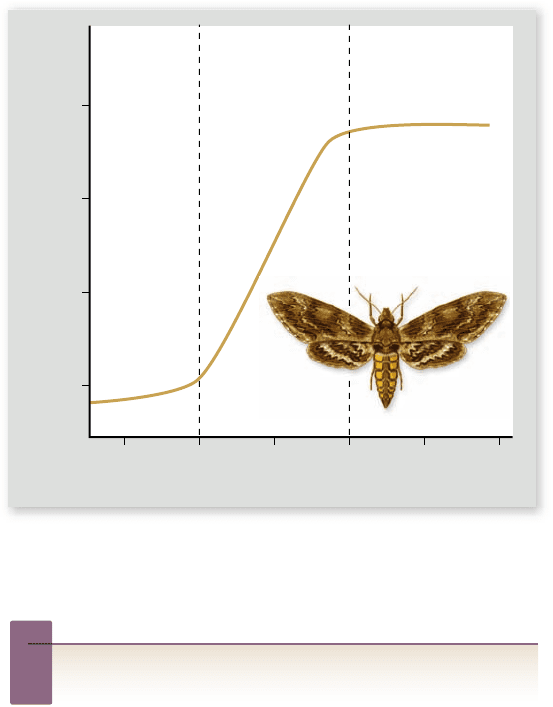
25
40
35
30
Preflight
No wing
movement
Warm up
Shiverlike
contraction
of thorax
muscles
Flight
Full-range
movement
of wings
Figure 43.12
Thermoregulation in insects. Some insects,
such as the sphinx moth, contract their thoracic muscles to warm up
for ight.
Inquiry question
?
Why does muscle temperature stop warming after 2 min?
■ Conduction. The direct transfer of heat between two
objects is called conduction. It is literally a direct transfer
of kinetic energy between the molecules of the two
objects in contact. Energy is transferred from hotter
objects to colder ones.
■ Convection. Convection is the transfer of heat brought
about by the movement of a gas or liquid. This
movement may be externally caused (wind) or may be
due to density differences related to heating and
cooling—for example, heated air is less dense and rises;
the same is true for water.
■ Evaporation. All substances have a heat of vaporization,
that is, the amount of energy needed to change them
from a liquid to a gas phase. Water, as you saw in chapter
2, has a high heat of vaporization, and many animals use
this attribute of water as a source of cooling.
Other factors
The overall rate of heat transfer by the methods just listed
depends on a number of factors that influence these physical
processes. These factors include surface area, temperature dif-
ference, and specific heat conduction. Taking these in order, the
larger the surface area relative to overall mass, the greater the
conduction of heat. Thus, small organisms have a relatively
larger surface area for their mass, and they gain or lose heat
more readily to the surroundings. This can be affected to a
small extent by changing posture, and by extending or pulling
in the limbs.
Temperature difference is also important; the greater the
difference between ambient temperature and body tempera-
ture, the greater the heat transfer. The closer an animal’s tem-
perature is to the ambient temperature, the less heat is gained
or lost.
Finally, an animal with high heat conductance tends to
have a body temperature close to the ambient temperature. For
animals that regulate temperature, surrounding the body with a
substance with lower heat conductance has an advantage: It acts
as insulation. Insulating substances includes such features as
feathers, fur, and blubber. For animals that regulate body tem-
perature through behavior, a high heat conductance can maxi-
mize heat transfer.
Organisms are classi ed based on heat source
For many years, physiologists classified animals according to
whether they maintained a constant body temperature, or their
body temperature fluctuated with environment. Animals that
regulated their body temperature about a set point were called
homeotherms, and those that allow their body temperature to
conform to the environment were called poikilotherms.
Because homeotherms tended to maintain their body
temperature above the ambient temperature, they were also
colloquially called “warm-blooded”; poikilotherms were termed
“cold-blooded.” The problem with this terminology is that a
poikilotherm in an environment with a stable temperature (for
example, many deep-sea fish species) has a more constant body
temperature than some homeotherms.
These limitations to the dichotomy based on temperature
regulation led to another view based on how body heat is gen-
erated. Animals that use metabolism to generate body heat and
maintain their temperatures above the ambient temperature
are called endotherms . Animals with a relatively low metabolic
rate that do not use metabolism to produce heat and have a
body temperature that conforms to the ambient temperature
are called ectotherms . Endotherms tend to have a lower thermal
conductivity due to insulating mechanisms, and ectotherms
tend to have high thermal conductivity and lack insulation.
These two terms represent ideal end points of a spectrum
of physiology and adaptations. Many animals fall in between
these extremes and can be considered heterotherms. It is a mat-
ter of judgment how a particular animal is classified if it exhibits
characteristics of each group.
Ectotherms regulate temperature
using behavior
Despite having low metabolic rates, ectotherms can regulate
their temperature using behavior. Most invertebrates use be-
havior to adjust their temperature. Many butterflies, for exam-
ple, must reach a certain body temperature before they can fly.
In the cool of the morning, they orient their bodies so as to
maximize their absorption of sunlight. Moths and many other
insects use a shivering reflex to warm their thoracic flight mus-
cles so that they may take flight (figure 43.12) .
880
part
VII
Animal Form and Function
rav32223_ch43_863-886.indd 880rav32223_ch43_863-886.indd 880 11/17/09 3:10:25 PM11/17/09 3:10:25 PM
Apago PDF Enhancer
Cold
blood
Cold
blood
Capillary
bed
5°C
Temperature
of environment
Core body
temperature
36°C
Veins Artery
Warm
blood
Vertebrates other than mammals and birds are also ecto-
thermic, and their body temperatures are more or less depen-
dent on the environmental temperature. This does not mean
that these animals cannot maintain high and relatively constant
body temperatures, but they must use behavior to do this. Many
ectothermic vertebrates are able to maintain temperature ho-
meostasis, that is, are homeothermic ectotherms.
For example, certain large fish, including tuna, swordfish,
and some sharks, can maintain parts of their body at a signifi-
cantly higher temperature than that of the water. They do so
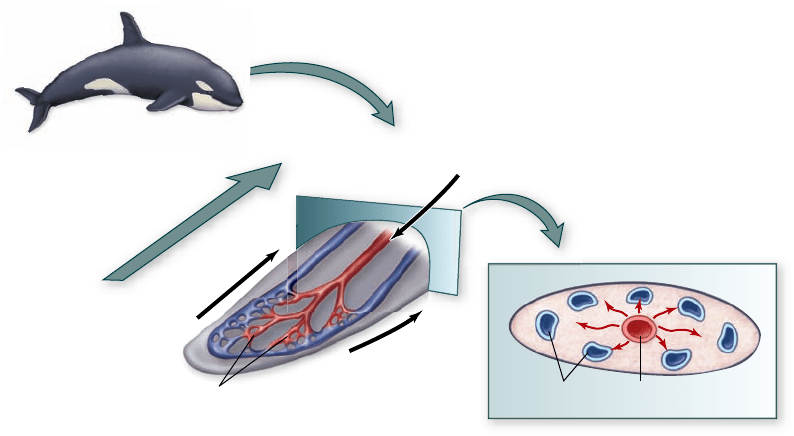
using countercurrent heat exchange. This circulatory adaptation
allows the cooler blood in the veins to be warmed through ra-
diation of heat from the warmer blood in the arteries located
close to the veins. The arteries carry warmer blood from the
center of the body (figure 43.13) .
Reptiles attempt to maintain a constant body tempera-
ture through behavioral means—by placing themselves in vary-
ing locations of sunlight and shade. That’s why you frequently
see lizards basking in the sun. Some reptiles can maximize the
effect of behavioral regulation by also controlling blood flow.
The marine iguana can increase and decrease its heart rate and
control the extent of dilation or contraction of blood vessels to
regulate the amount of blood available for heat transfer by con-
duction. Increased heart rate and vasodilation allows them to
maximize heating when on land, whereas decreased heart rate
and vasoconstriction minimize cooling when diving for food.
In general, ectotherms have low metabolic rates, which
has the advantage of correspondingly low intake of energy
(food). It is estimated that a lizard (ectotherm) needs only 10%
of the energy intake of a mouse (endotherm) of comparable
size. The tradeoff is that ectotherms are not capable of sus-
tained high-energy activity.
Endotherms create internal metabolic heat
for conservation or dissipation
For endotherms, the generation of internal heat via high met-
abolic rate can be used to warm the organism if it is cold, but
also represents a source of heat that must be dissipated at
higher temperatures.
The simplest response that affects heat transfer is to
control the amount of blood flow to the surface of the animal.
Dilating blood vessels increases the amount of blood flowing
to the surface, which in turn increases thermal heat exchange
and dissipation of heat. In contrast, constriction of blood ves-
sels decreases the amount of blood flowing to the surface and
decreases thermal heat exchange, limiting the amount of heat
lost due to conduction.
When ambient temperatures rise, many endotherms take
advantage of evaporative cooling in the form of sweating or
panting. Sweating is found in some mammals, including hu-
mans, and involves the active extrusion of water from sweat
glands onto the surface of the body. As the water evaporates, it
cools the skin, and this cooling can be transferred internally by
capillaries near the surface of the skin. Panting is a similar ad-
aptation used by some mammals and birds that takes advantage
of respiratory surfaces for evaporative cooling. For evaporative
cooling to be effective, the animal must be able to tolerate the
loss of water.
The advantage of endothermy is that it allows sustained
high-energy activity. The tradeoff for endotherms is that the
high metabolic rate has a corresponding cost in requiring rela-
tively constant and high rates of energy intake (food).
Body size and insulation
Size is one important characteristic affecting animal physiol-
ogy. Changes in body mass have a large effect on metabolic
rate. Smaller animals consume much more energy per unit
body mass than larger animals. This relationship is summa-
rized in the “mouse to elephant” curve that shows the non-
proportionality of metabolic rate versus size of mammals
(figure 43.14) .
For small animals with a high metabolic rate, surface area
is also large relative to their volume. In a cold environment, this
can be disastrous as they cannot produce enough internal heat
to balance conductive loss through their large surface area.
Figure 43.13
Countercurrent heat exchange. Many
marine animals, such as this killer whale, limit heat loss in cold
water using countercurrent heat exchange. The warm blood
pumped from within the body in arteries loses heat to the cooler
blood returning from the skin in veins. This warms the venous
blood so that the core body temperature can remain constant in
cold water, and it cools the arterial blood so that less heat is lost
when the arterial blood reaches the tip of the extremity.
chapter
43
The Animal Body and Principles of Regulation
881www.ravenbiology.com
rav32223_ch43_863-886.indd 881rav32223_ch43_863-886.indd 881 11/17/09 3:10:26 PM11/17/09 3:10:26 PM