
Raven P.H., Johnson G.B., Mason K.A. Biology (Ninth Edition)
Подождите немного. Документ загружается.

Apago PDF Enhancer
Electrode
inside axon
Extracellular
Intracellular
-
-
-
-
-
-
-
-
-
-
-
-
Oscilloscope
screen
;40 mV
:70 mV
0 mV
Electrode
outside axon
: : : : : : : : : :
; ; ; ; ; ; ; ; ; ;
; ; ; ; ; ; ; ; ; ;
: : : : : : : : : :
:
:
:
:
:
:
:
:
:
K
+
proteins and nucleic acids
Na
+
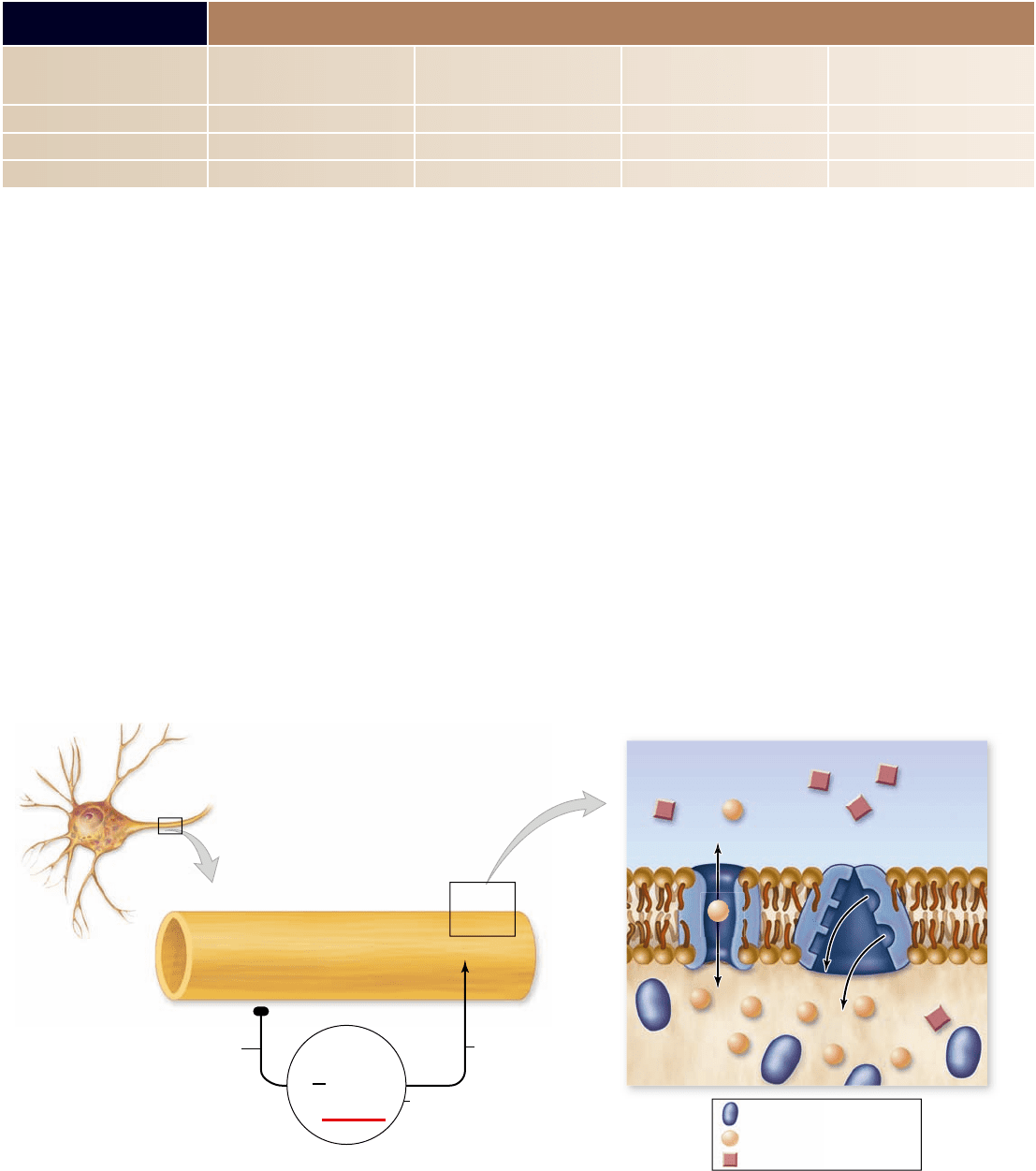
Figure 44.6
Establishment of the resting membrane potential. A voltmeter placed with one electrode inside an axon and the other
outside the membrane. The electric potential inside is –70 mV relative to the outside of the membrane. K
+
diffuses out of the cell through ion
channels because its concentration is higher inside than outside. Negatively charged proteins and nucleic acids inside the cell cannot leave the cell
and attract cations from outside the cell, such as K
+
. This balance of electrical and diffusional forces produces the resting potential. The sodium–
potassium pump maintains cell equilibrium by counteracting the effects of Na
+
leakage into the cell and contributes to the resting potential by
moving 3 Na
+
outside for every 2 K
+
moved inside.
Chemically gated channels
In most neurons, gated ion channels in dendrites respond
to the binding of signaling molecules (figure 44.7 ; see also
figure 9.4a). These are referred to as chemically gated, or
ligand-gated, channels. Ligands are chemical groups that attach
to larger molecules to regulate or contribute to their func-
tion. When ligands temporarily bind to membrane receptor
proteins or channels, they cause the shape of the protein to
change, thus opening the ion channel. Hormones and neuro-
transmitters act as ligands, inducing opening of ligand-gated
channels, and causing changes in plasma membrane permea-
bility that lead to changes in membrane voltage.
Depolarization and hyperpolarization
Permeability changes are measurable as depolarizations or hy-
perpolarizations of the membrane potential. A depolarization
makes the membrane potential less negative (more positive),
whereas a hyperpolarization makes the membrane potential
more negative. For example, a change in potential from
–70 mV to –65 mV is a depolarization; a change from –70 mV
to –75 mV is a hyperpolarization.
can be measured and viewed or graphed using a voltmeter and a
pair of electrodes, one outside and one inside the cell (figure 44.6) .
The uniqueness of neurons compared with other cells is not
the production and maintenance of the resting membrane poten-
tial, but rather the sudden temporary disruptions to the resting
membrane potential that occur in response to stimuli. Two types
of changes can be observed: graded potentials and action potentials.
Graded potentials are small changes that
can reinforce or negate each other
Graded potentials, small transient changes in membrane po-
tential, are caused by the activation of a class of channel proteins
called gated ion channels. Introduced in chapter 9, gated chan-
nels behave like a door that can open or close, unlike ion leakage
channels that are always open. The structure of gated ion chan-
nels is such that they have alternative conformations that can be
open, allowing the passage of ions, or closed, not allowing the
passage of ions. Each gated channel is selective, that is, when
open they allow diffusion of only one type of ion. Most gated
channels are closed in the normal resting cell.
TABLE 44.1
The Ionic Composition of Cytoplasm and Extracellular Fluid (ECF)
Ion
Concentration in ECF
(mM)
Concentration in Cytoplasm
(mM)
Ratio
(ECF:cytoplasm)
Equilibrium Potential
(mV)
Na
+
150 15 10:1 +60
K
+
51501:30–90
Cl
–
110 7 15:1 –70
892
part
VII
Animal Form and Function
rav32223_ch44_887-914.indd 892rav32223_ch44_887-914.indd 892 11/17/09 3:32:06 PM11/17/09 3:32:06 PM
Apago PDF Enhancer
Cytoplasm in postsynaptic cell
Synaptic cleft
Receptor
protein
Ion
channel
Acetylcholine
Cell
membrane
Na
+
Na
+
Na
+
Na
+
Na
+
⫺68
⫺69
⫺70
⫺71
Membrane potential (mv)
⫺72
E
1
E
2
I
E
1
+
E
2
+
I
1 2 3 4
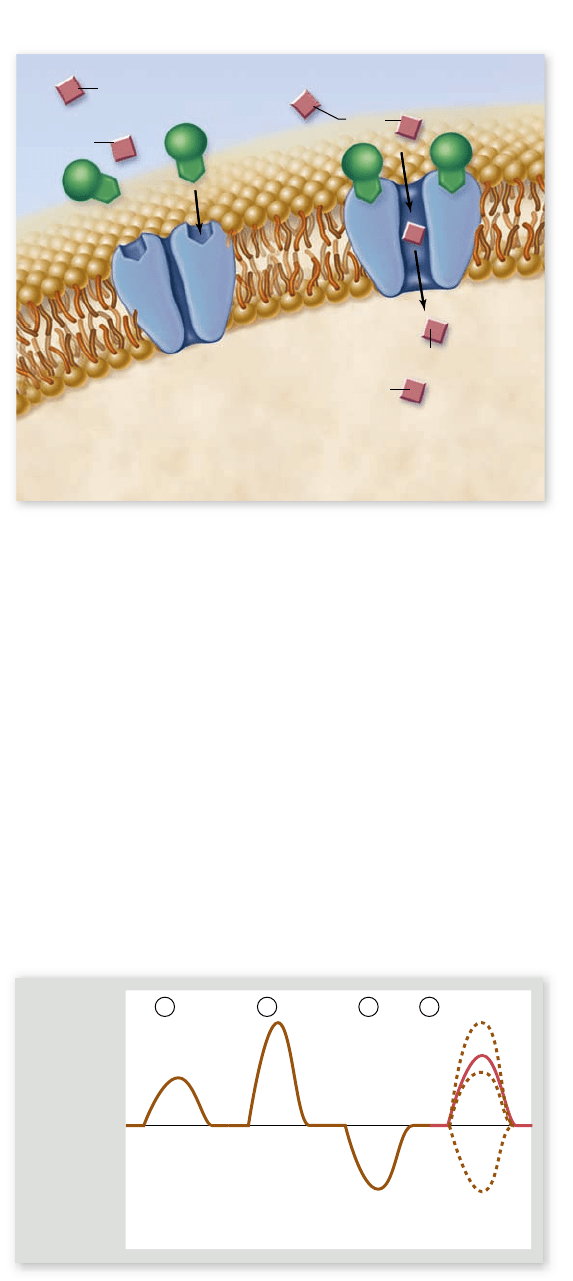
Figure 44.7
A chemically gated ion channel. The
acetylcholine (ACh) receptor is a chemically gated channel that can
bind the neurotransmitter ACh. Binding of ACh causes the channel
to open allowing Na
+
ions to ow into the cell by diffusion.
Figure 44.8
Graded potentials. Graded potentials are the
summation of subthreshold potentials produced by the opening of
different chemically gated channels. (1) A weak excitatory stimulus,
E
1
, elicits a smaller depolarization than (2) a stronger stimulus, E
2
.
(3) An inhibitory stimulus, I, produces a hyperpolarization. (4) If all
three stimuli occur very close together, the resulting polarity
change will be the sum of the three individual changes.
Action potentials result when
depolarization reaches a threshold
When a particular level of depolarization is reached (about
–55 mV in some mammalian axons), a nerve impulse, or action
potential , is produced in the region where the axon arises from
the cell body. The level of depolarization needed to produce an
action potential is called the threshold potential. Depolariza-
tions bring a neuron closer to the threshold, and hyperpolariza-
tions move the neuron further from the threshold.
The action potential is caused by another class of ion
channels: voltage-gated ion channels. These channels open
and close in response to changes in membrane potential; the
flow of ions controlled by these channels creates the action
potential. Voltage-gated channels are found in neurons and in
muscle cells. Two different channels are used to create an ac-
tion potential in neurons: voltage-gated Na
+
channels and
voltage-gated K
+
channels.
Sodium and potassium voltage-gated channels
The behavior of the voltage-gated Na
+
channel is more com-
plex than that of the K
+
channel, so we will consider it first. The
channel has two gates: an activation gate and an inactivation
gate. In its resting state the activation gate is closed and the
inactivation gate is open. When the threshold voltage is reached,
the activation gate opens rapidly, leading to an influx of Na
+
ions due to both concentration and voltage gradients. After a
short period the inactivation gate closes, stopping the influx of
Na
+
ions and leaving the channel in a temporarily inactivated
state. The channel is returned to its resting state by the activa-
tion gate closing and the inactivation gate opening. The result
of this is a transient influx of Na
+
that depolarizes the mem-
brane in response to a threshold voltage.
The K
+
channel has a single activation gate that is closed
in the resting state. In response to a threshold voltage, it opens
slowly. With the high concentration of K
+
inside the cell, and
the membrane now far from the equilibrium potential, an ef-
flux of K
+
begins. The positive charge now leaving the cell
counteracts the effect of the Na
+
channel and repolarizes
the membrane.
Tracing an action potential’s changes
Let us now put all of this together and see how the changing
flux of ions leads to an action potential. The action poten-
tial has three phases: a rising phase, a falling phase, and an
undershoot phase (figure 44.9) . When a threshold potential is
reached, the rapid opening of the Na
+
channel causes an in-
flux of Na
+
that shifts the membrane potential toward the
equilibrium potential for Na (+60 mV). This appears as the
rising phase on an oscilloscope. The membrane potential
never quite reaches +60 mV because the inactivation gate of
the Na
+
channel closes, terminating the rising phase. At the
same time, the opening of the K
+
channel leads to K
+
diffus-
ing out of the cell, repolarizing the membrane in the falling
phase. The K
+
channels remain open longer than necessary
to restore the resting potential, resulting in a slight under-
shoot. This entire sequence of events for a single action po-
tential takes about a millisecond.
These small changes in membrane potential result in graded
potentials because their size depends on either the strength of the
stimulus or the amount of ligand available to bind with their re-
ceptors. These potentials diminish in amplitude as they spread
from their point of origin. Depolarizing or hyperpolarizing po-
tentials can add together to amplify or reduce their effects, just as
two waves can combine to make a bigger one when they meet in
synchronization or can cancel each other out when a trough meets
with a crest. The ability of graded potentials to combine is called
summation (figure 44.8) . We will return to this topic in the next
section after we discuss the nature of action potentials.
chapter
44
The Nervous System
893www.ravenbiology.com
rav32223_ch44_887-914.indd 893rav32223_ch44_887-914.indd 893 11/17/09 3:32:07 PM11/17/09 3:32:07 PM
Apago PDF Enhancer
2. Rising Phase
Stimulus causes above threshold voltage
;50
0
1 2 3
⫺70
Membrane potential (mV)
Time
1. Resting Phase
Equilibrium between diffusion of
K
;
out
of cell and voltage pulling
K
;
into cell
Voltage-gated
potassium channel
Potassium
channel
Voltage-gated
sodium channel
Potassium channel
gate closes
Sodium channel
activation gate closes.
Inactivation gate opens.
Sodium channel
activation gate opens
3. Top of Curve
Maximum voltage reached
channel
inactivation gate
closes
Na
;
channel
inactivation gate
closed
Potassium
gate opens
4. Falling Phase
Potassium
gate open
Undershoot occurs as excess potassium
diffuses out before potassium channel closes
Equilibrium
restored
(ms)
Na
;
K
;
Na
;
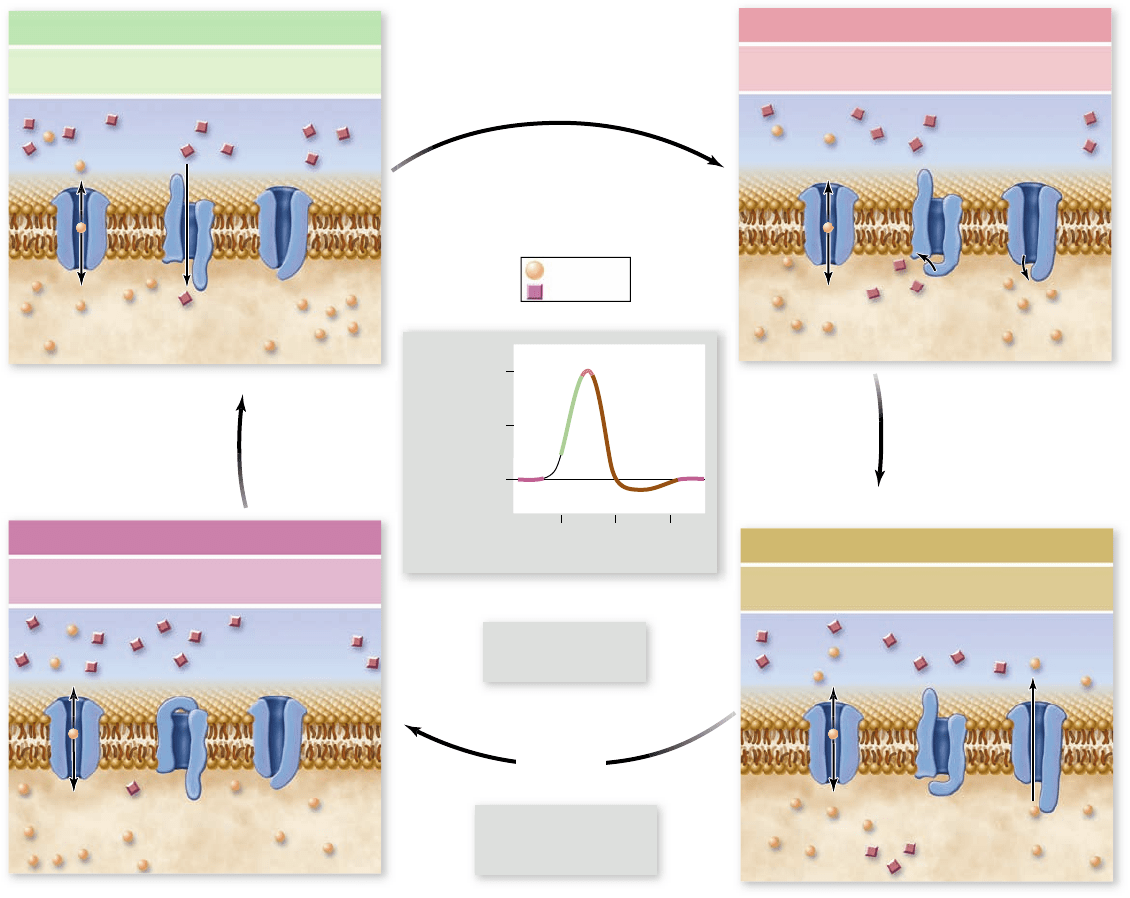
Figure 44.9
The action potential. (1) At resting membrane potential, voltage-gated ion channels are closed, but there is some
diffusion of K
+
. In response to a stimulus, the cell begins to depolarize, and once the threshold level is reached, an action potential is produced.
(2) Rapid depolarization occurs (the rising portion of the spike) because voltage-gated sodium channel activation gates open, allowing Na
+
to
diffuse into the axon. (3) At the top of the spike, Na
+
channel inactivation gates close, and voltage-gated potassium channels that were
previously closed begin to open. (4) With the K
+
channels open, repolarization occurs because of the diffusion of K
+
out of the axon. An
undershoot occurs before the membrane returns to its original resting potential.
action potential, the cytoplasm contains a little more Na
+
and a
little less K
+
than it did at rest. Although the number of ions
moved by a single action potential is tiny relative to the con-
centration gradients of Na
+
and K
+
, eventually this would have
an effect. The constant activity of the sodium–potassium pump
compensates for these changes. Thus, although active transport
is not required to produce action potentials, it is needed to
maintain the ion gradients.
Action potentials are propagated along axons
The movement of an action potential through an axon is not
generated by ions flowing from the base of the axon to the end.
The nature of action potentials
Action potentials are separate, all-or-none events. An action
potential occurs if the threshold voltage is reached, but not
while the membrane remains below threshold. Action poten-
tials do not add together or interfere with one another, as
graded potentials can. After Na
+
channels “fire” they remain
in an inactivated state until the inactivation gate reopens, pre-
venting any summing of effects. This is called the absolute
refractory period when the membrane cannot be stimulated.
There is also a relative refractory period during which stimu-
lation produces action potentials of reduced amplitude.
The production of an action potential results entirely
from the passive diffusion of ions. However, at the end of each
894
part
VII
Animal Form and Function
rav32223_ch44_887-914.indd 894rav32223_ch44_887-914.indd 894 11/17/09 3:32:08 PM11/17/09 3:32:08 PM
Apago PDF Enhancer
: : : : : : : : : :
; ; ; ; ; ; ; ; ; ;
; ; ; ; ; ; ; ; ; ;
: : : : : : : : : :
+ ; : : : : : : : :
- : ; ; ; ; ; ; ; ;
- : ; ; ; ; ; ; ; ;
+ ; : : : : : : : :
Na
+
+ ; - : ; ; ; ; ; ;
+ ; - : ; ; ; ; ; ;
- - + ; : : : : : :
- - + ; : : : : : :
Na
+
K
;
K
;
; ; ; + : : : ; ; ;
; ; ; + : : : ; ; ;
: : : : ; ; ; : : :
: : : : ; ; ; : : :
Na
+
K
;
: : - - - - - - ; ;
: : - - - - - - ; ;
; ; ; + + + + + : :
; ; ; + + + + + : :
Na
+
K
;
K
;
K
;
Cell
membrane
Cytoplasm
resting
repolarized
depolarized
TABLE 44.2
Conduction Velocities
of Some Axons
Axon
Diameter
(μm)
Myelin
Conduction
Velocity (m/s)
Squid giant axon 500 No 25
Large motor axon to human
leg muscle
20 Yes 120
Axon from human skin
pressure receptor
10 Yes 50
Axon from human skin
temperature receptor
5Yes 20
Motor axon to human
internal organ
1No 2
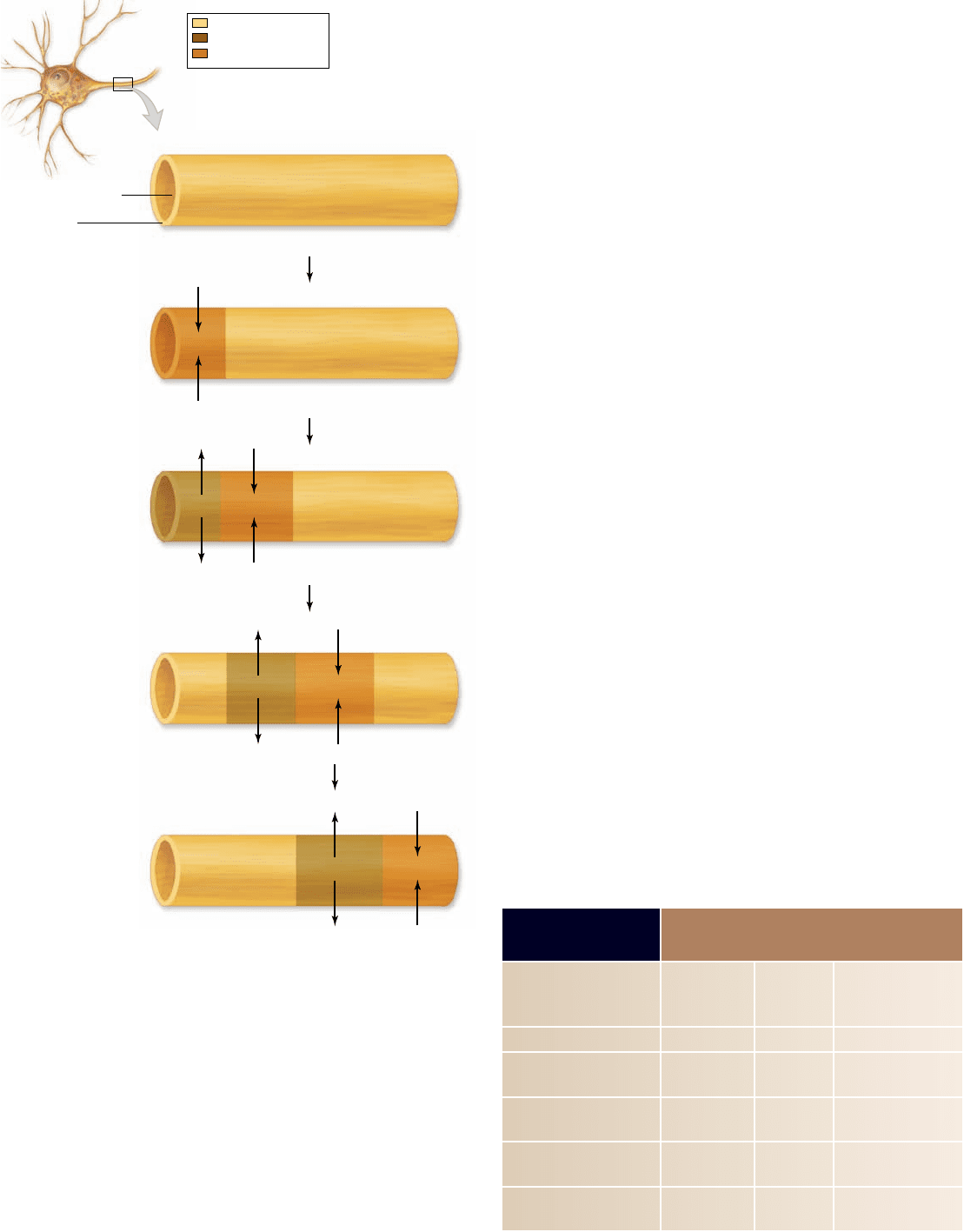
Figure 44.10
Propagation of an action potential in an
unmyelinated axon. When one region produces an action
potential and undergoes a reversal of polarity, it serves as a
depolarization stimulus for the next region of the axon. In this way,
action potentials regenerate along each small region of the
unmyelinated axon membrane.
influx of Na
+
can depolarize the adjacent region of membrane
to threshold, so that the next region produces its own action
potential (figure 44.10) . Meanwhile, the previous region of
membrane repolarizes back to the resting membrane poten-
tial. The signal does not back up because the Na
+
channels
that have just “fired” are still in an inactivated state and are
refractory (resistant) to stimulation.
The propagation of an action potential is similar to peo-
ple in a stadium performing the “wave”: Individuals stay in
place as they stand up (depolarize), raise their hands (peak of
the action potential), and sit down again (repolarize). The wave
travels around the stadium, but the people stay in place.
There are two ways to increase the velocity
of nerve impulses
Action potentials are conducted without decreasing in ampli-
tude, so the last action potential at the end of an axon is just as
large as the first action potential. Animals have evolved two
ways to increase the velocity of nerve impulses. The velocity of
conduction is greater if the diameter of the axon is large or if
the axon is myelinated (table 44.2) .
Increasing the diameter of an axon increases the velocity
of nerve impulses due to the electrical property of resistance.
Electrical resistance is inversely proportional to cross-
sectional area, which is a function of diameter, so larger diam-
eter axons have less resistance to current flow. The positive
charges carried by Na
+
flows farther in a larger diameter axon,
leading to a higher than threshold voltage farther from the
origin of Na
+
influx.
Larger diameter axons are found primarily in inverte-
brates. For example, in the squid, the escape response is con-
trolled by a so-called giant axon. This large axon conducts nerve
impulses faster than other smaller squid axons, allowing a rapid
escape response. The squid giant axon was used by Alan Lloyd
Hodgkin and Andrew Huxley in their pioneering studies of
nerve transmission.
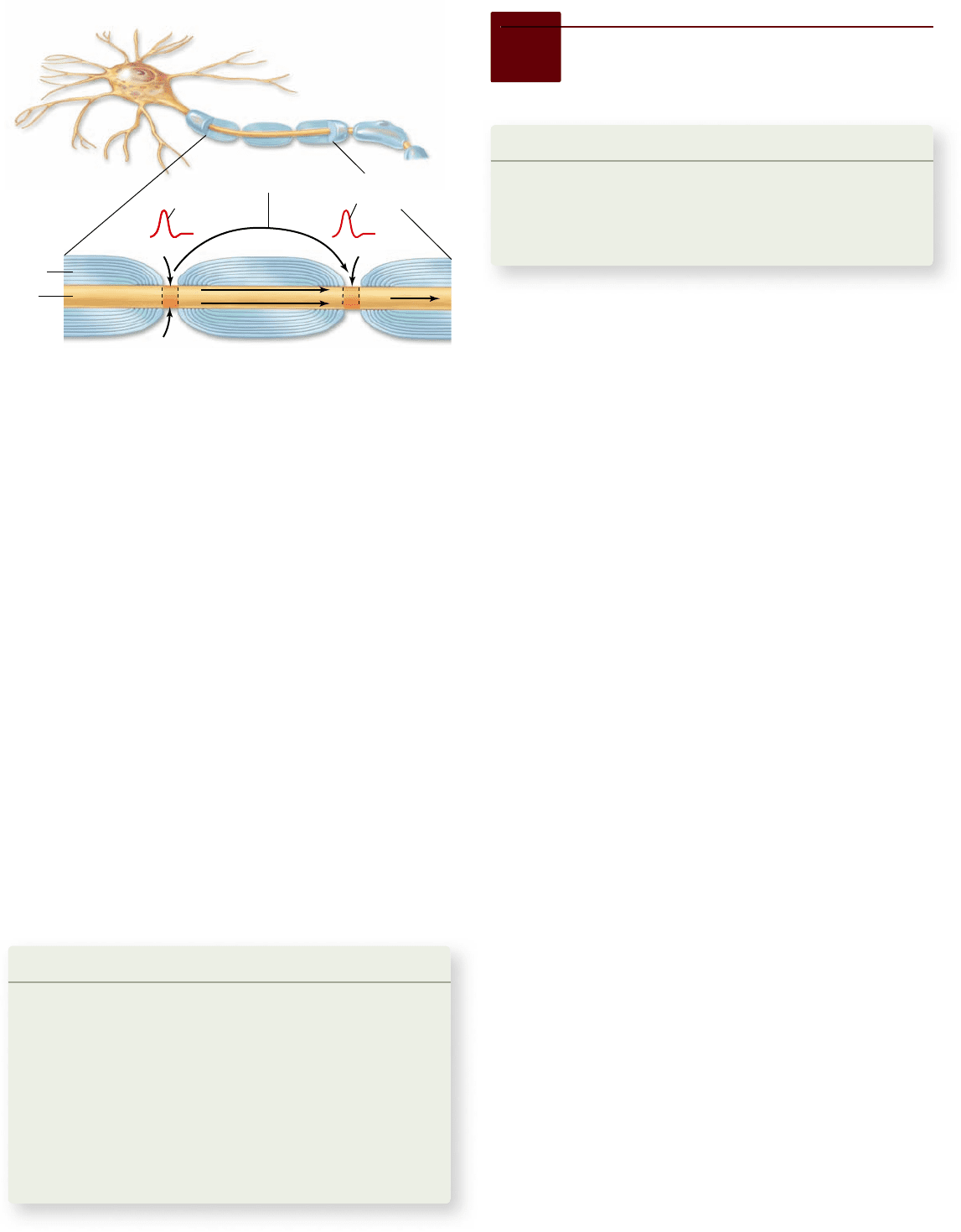
Myelinated axons conduct impulses more rapidly than
unmyelinated axons because the action potentials in myelinated
Instead an action potential originates at the base of the axon,
and is then recreated in adjacent stretches of membrane along
the axon.
Each action potential, during its rising phase, reflects a
reversal in membrane polarity. The positive charges due to
chapter
44
The Nervous System
895www.ravenbiology.com
rav32223_ch44_887-914.indd 895rav32223_ch44_887-914.indd 895 11/17/09 3:32:10 PM11/17/09 3:32:10 PM
Apago PDF Enhancer
Myelin
Axon
Action
potential
Action
potential
Saltatory
conduction
Na
+
Na
+
Na
+
;
; ; ;
;
;
-
Figure 44.11
Saltatory conduction in a myelinated
axon. Action potentials are only produced at the nodes of Ranvier
in a myelinated axon. One node depolarizes the next node so that
the action potentials can skip between nodes. As a result, saltatory
(“jumping”) conduction in a myelinated axon is more rapid than
conduction in an unmyelinated axon.
44.3
Synapses: Where Neurons
Communicate with Other Cells
Learning Outcomes
Distinguish between electrical and chemical synapses.1.
List the different chemical neurotransmitters.2.
Explain the effects of addictive drugs on the 3.
nervous system.
An action potential passing down an axon eventually reaches the
end of the axon and all of its branches. These branches may form
junctions with the dendrites of other neurons, with muscle cells,
or with gland cells. Such intercellular junctions are called
synapses. The neuron whose axon transmits action potentials to
the synapse is termed the presynaptic cell, and the cell receiving
the signal on the other side of the synapse is the postsynaptic cell.
The two types of synapses are
electrical and chemical
The nervous systems of animals have two basic types of synapses:
electrical and chemical. Electrical synapses involve direct cyto-
plasmic connections formed by gap junctions between the pre-
and postsynaptic neurons (see chapter 4; figure 4.27). Membrane
potential changes, including action potentials, pass directly and
rapidly from one cell to the other through the gap junctions.
Electrical synapses are common in invertebrate nervous systems,
but are rare in vertebrates.
The vast majority of vertebrate synapses are chemical
synapses (figure 44.12). When synapses are viewed under a light
microscope, the presynaptic and postsynaptic cells appear to
touch, but when viewed with an electron microscope most have
a synaptic cleft, a narrow space that separates these two cells
(figure 44.13).
The end of the presynaptic axon is swollen and contains nu-
merous synaptic vesicles, each packed with chemicals called
neuro transmitters . When action potentials arrive at the end of the
axon, they stimulate the opening of voltage-gated calcium (Ca
2+
)
channels, causing a rapid inward diffusion of Ca
2+
. This influx of
Ca
2+
triggers a complex series of events that leads to the fusion of
synaptic vesicles with the plasma membrane and the release of
neuro transmitter by exocytosis (see chapter 5; figure 44.14) .
The higher the frequency of action potentials in the pre-
synaptic axon, the greater the number of vesicles that release
their contents of neurotransmitters. The neurotransmitters dif-
fuse to the other side of the cleft and bind to chemical- or
ligand-gated receptor proteins in the membrane of the post-
synaptic cell. The action of these receptors produces graded
potentials in the postsynaptic membrane.
Neurotransmitters are chemical signals in an otherwise
electrical system, requiring tight control over the duration of
their action. Neurotransmitters must be rapidly removed from
the synaptic cleft to allow new signals to be transmitted. This is
accomplished by a variety of mechanisms, including enzymatic
axons are only produced at the nodes of Ranvier. One action
potential still serves as the depolarization stimulus for the next,
but the depolarization at one node spreads quickly beneath the
insulating myelin to trigger opening of voltage-gated channels
at the next node. The impulses therefore seem to jump from
node to node (figure 44.11) in a process called saltatory
conduction (Latin saltare, “to jump”).
To see how saltatory conduction speeds impulse trans-
mission, let’s return for a moment to the stadium wave anal-
ogy to describe propagation of an action potential. The
wave moves across the seats of a crowded stadium as fans
seeing the people in the adjacent section stand up are trig-
gered to stand up in turn. Because the wave skips sections of
empty bleachers, it actually progresses around the stadium
even faster with more empty sections. The wave doesn’t
have to “wait” for the missing people to stand, so it simply
moves to the next populated section—just as the action po-
tential jumps the nonconducting regions of myelin between
exposed nodes.
Learning Outcomes Review 44.2
Neurons maintain high K
+
levels inside the cell, and high Na
+
levels outside the
cell. Diff usion of K
+
to the outside leads to a resting potential of about –70 mV.
Opening of ligand-gated channels can depolarize or hyperpolarize the membrane,
causing a graded potential. Action potentials are triggered when membrane
potential exceeds a threshold value. Voltage-gated Na
+
channels open,
and depolarization occurs; subsequent opening of K
+
channels leads
to repolarization.
■ How can only positive ions result in depolarization
and repolarization of the membrane during an
action potential?
896
part
VII
Animal Form and Function
rav32223_ch44_887-914.indd 896rav32223_ch44_887-914.indd 896 11/17/09 3:32:11 PM11/17/09 3:32:11 PM
Apago PDF Enhancer
Terminal branch
of axon
Inward diffusion of Ca
+
Neurotransmitter (ACh)
Receptor
protein
Synaptic
cleft
Action potential
Synaptic
vesicle
Na
+
Ca
+
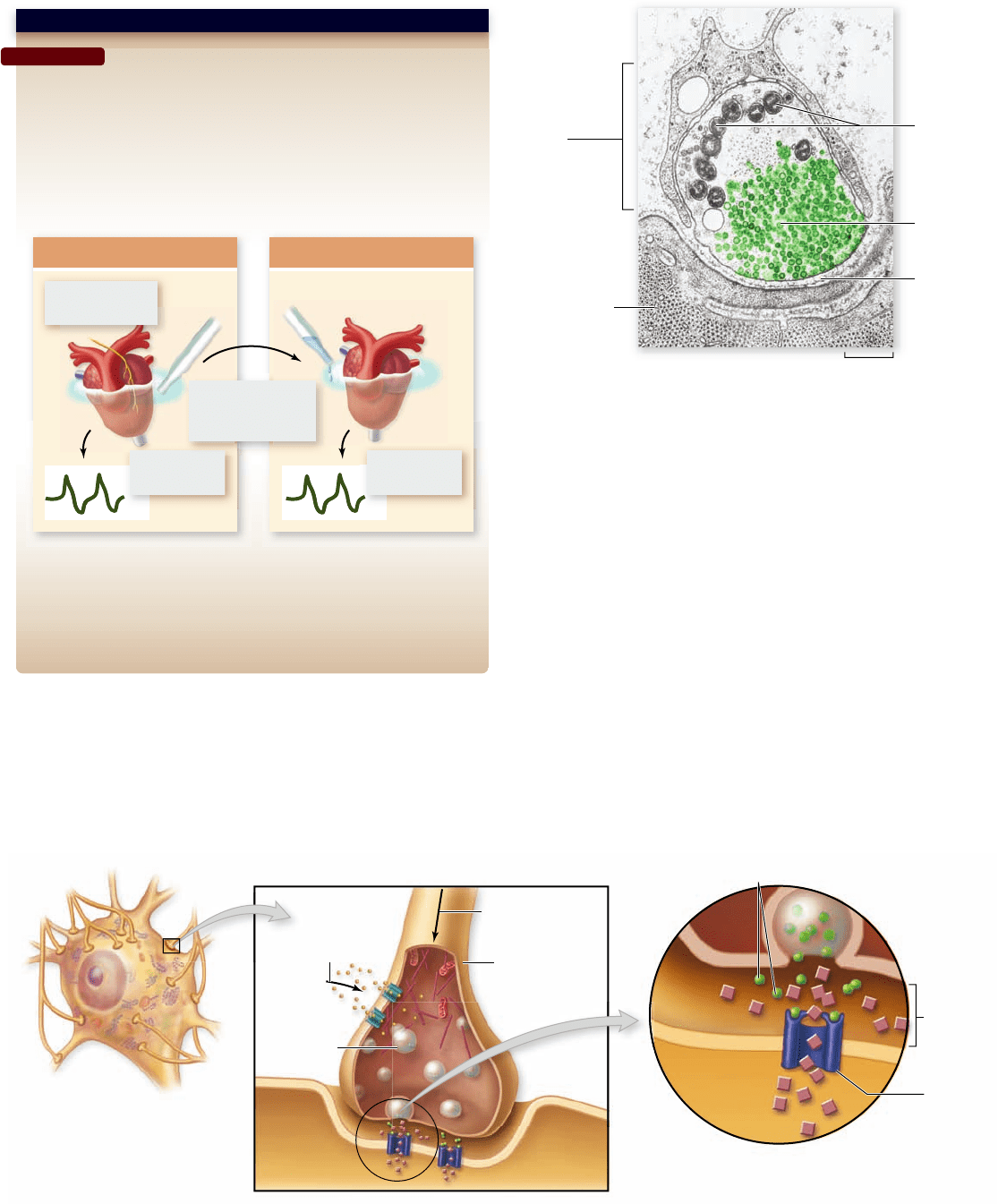
Donor Heart Recipient Heart
Question: Is communication between neurons, and between neurons
and muscle, chemical or electrical?
Hypothesis:
Signaling between a neuron and heart muscle is chemical.
Prediction: Application of chemical solutes from one heart will affect
the activity of another heart.
Test: Two frog hearts are placed in saline, one with vagus nerve
attached, the other without. The vagus heart is stimulated, then fluid
from around the vagus nerve is removed and applied to the other heart.
Result: Heart that was not stimulated by the vagus nerve slows as
though it was stimulated.
Conclusion: The nerve released a chemical signal that slowed heart rate.
Further Experiments: How does this conclusion extend the experiment
described in Fig 43.5?
SCIENTIFIC THINKING
2. Heart rate
slows.
1. Stimulate
vagus nerve.
3. Transfer fluid
from donor to
recipient heart.
4. Heart rate
slows.
Axon
terminal
Postsynaptic
cell (skeletal
muscle)
Mitochondria
Synaptic
vesicle
Synaptic
cleft
0.2 µm
Figure 44.12
Synaptic signaling.
Figure 44.14
The release of neurotransmitter. Action potentials arriving at the end of an axon trigger inward diffusion of Ca
2+
,
which causes synaptic vesicles to fuse with the plasma membrane and release their neurotransmitters (acetylcholine [ACh] in this case).
Neurotransmitter molecules diffuse across the synaptic gap and bind to ligand-gated receptors in the postsynaptic membrane.
Many di erent chemical compounds
serve as neurotransmitters
No single chemical characteristic defines a neurotransmitter,
although we can group certain types according to chemical
similarities. Some, such as acetylcholine, have wide use in the
nervous system, particularly where nerves connect with mus-
cles. Other neurotransmitters are found only in very specific
types of junctions, such as in the CNS.
Acetylcholine
Acetylcholine (ACh) is the neurotransmitter that crosses the
synapse between a motor neuron and a muscle fiber. This syn-
apse is called a neuromuscular junction (figures 44.14, 44.15) .
digestion in the synaptic cleft, reuptake of neurotransmitter
molecules by the neuron, and uptake by glial cells.
Several different types of neurotransmitters have been
identified, and they act in different ways. We next consider the
action of a few of the important neurotransmitter chemicals.
Figure 44.13
A synaptic cleft. An electron micrograph
showing a neuromuscular synapse. Synaptic vesicles have been
colored green .
chapter
44
The Nervous System
897www.ravenbiology.com
rav32223_ch44_887-914.indd 897rav32223_ch44_887-914.indd 897 11/17/09 3:32:12 PM11/17/09 3:32:12 PM
Apago PDF Enhancer
0
⫺70
1
0
Membrane potential (mV)
Time (ms)
Na
+
Na
+
Na
+
Gate Open EPSP
IPSP
Gate Closed
0
⫺70
1
0
Membrane potential (mV)
Time (ms)
Cl
-
Cl
-
Cl
-
Gate OpenGate Closed
a.
b.
Neurotransmitters
Neurotransmitters
15.4 μm
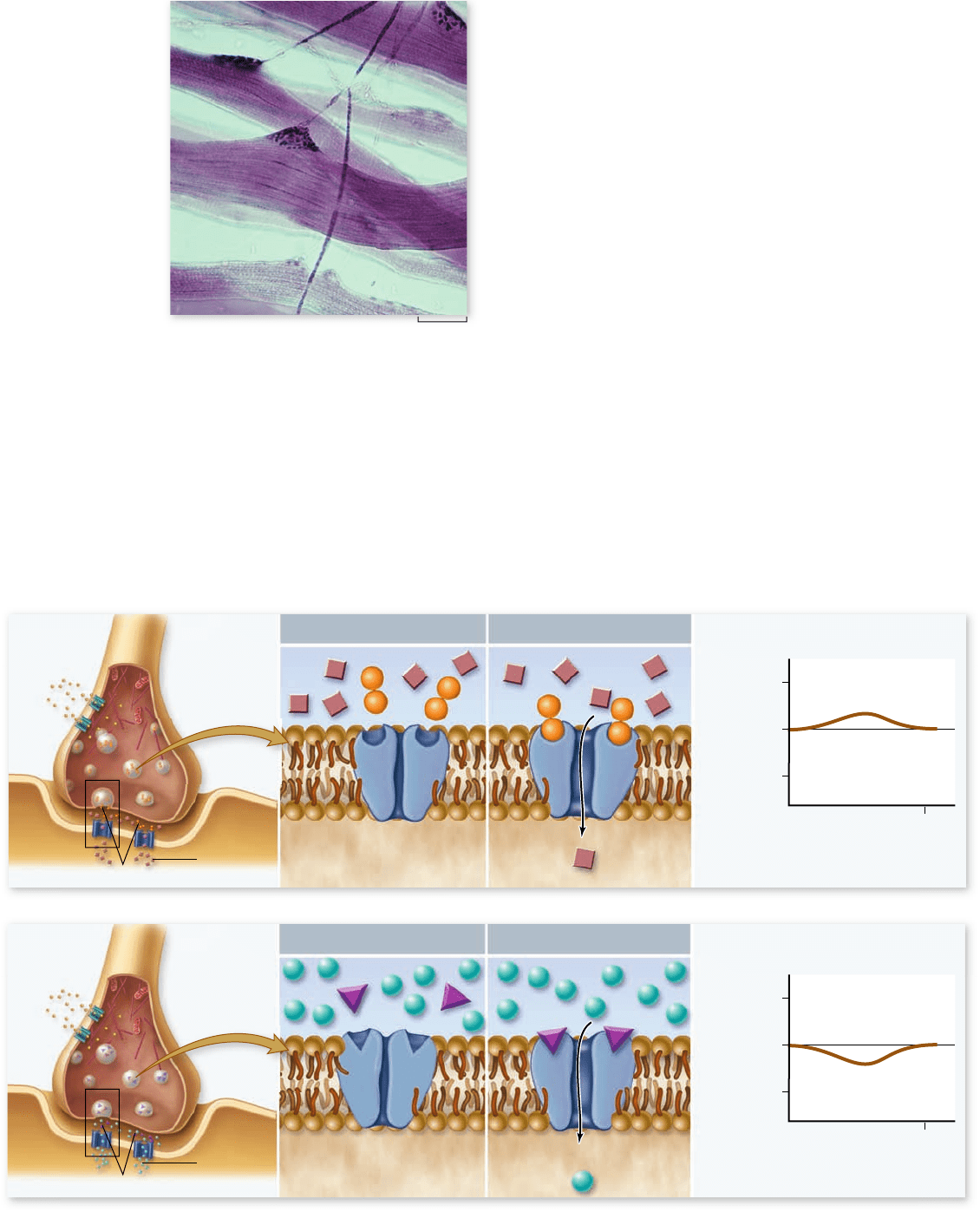
Figure 44.16
Di erent neurotransmitters can have di erent e ects. a. An excitatory neurotransmitter promotes a
depolarization, or excitatory postsynaptic potential (EPSP). b. An inhibitory neurotransmitter promotes a hyperpolarization, or inhibitory
postsynaptic potential (IPSP).
Acetylcholine binds to its receptor proteins in the post-
synaptic membrane and causes ligand-gated ion channels within
these proteins to open (see figure 44.7). As a result, that site
on the postsynaptic membrane produces a depolarization
(figure 44.16a) called an excitatory postsynaptic potential (EPSP).
The EPSP, if large enough, can open the voltage-gated channels
for Na
+
and K
+
that are responsible for action potentials. Be-
cause the postsynaptic cell in this case is a skeletal muscle fiber,
the action potentials it produces stimulate muscle contraction
through mechanisms discussed in chapter 47.
Figure 44.15
Neuromuscular
junctions. A light
micrograph shows
axons branching to
make contact with
several individual
muscle bers.
For the muscle to relax, ACh must be eliminated from the
synaptic cleft. Acetylcholinesterase (AChE), an enzyme in the
postsynaptic membrane, eliminates ACh. This enzyme, one of
the fastest known, cleaves ACh into inactive fragments. Nerve
gas and the agricultural insecticide parathion are potent inhibi-
tors of AChE; in humans, they can produce severe spastic pa-
ralysis and even death if paralysis affects the respiratory muscles.
Although ACh acts as a neurotransmitter between motor neu-
rons and skeletal muscle cells, many neurons also use ACh as a
neurotransmitter at their synapses with the dendrites or cell
bodies of other neurons.
Amino acids
Glutamate is the major excitatory neurotransmitter in the ver-
tebrate CNS. Excitatory neurotransmitters act to stimulate ac-
tion potentials by producing EPSPs. Some neurons in the
brains of people suffering from Huntington disease undergo
changes that render them hypersensitive to glutamate, leading
to neurodegeneration.
Glycine and γ-aminobutyric acid (GABA) are inhibitory
neurotransmitters. These neurotransmitters cause the opening of
ligand-gated channels for the chloride ion (Cl
–
), which has a con-
centration gradient favoring its diffusion into the neuron. Because
Cl
–
is negatively charged, it makes the inside of the membrane
898
part
VII
Animal Form and Function
rav32223_ch44_887-914.indd 898rav32223_ch44_887-914.indd 898 11/17/09 3:32:14 PM11/17/09 3:32:14 PM
Apago PDF Enhancer
a.
b.
62.5 µm
Axon
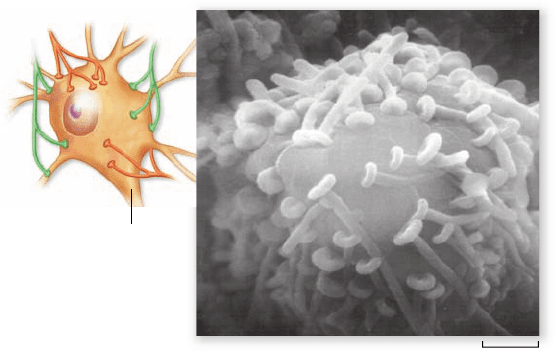
Figure 44.17
Integration of EPSPs and IPSPs takes place
on the neuronal cell body. a. The synapses made by some axons
are excitatory (green); the synapses made by other axons are
inhibitory (red). The summed in uence of all of these inputs
determines whether the axonal membrane of the postsynaptic cell
will be suf ciently depolarized to produce an action potential.
b. Micrograph of a neuronal cell body with numerous synapses.
tion back up to the brain. Endorphins, released by neurons in
the brain stem, also block the perception of pain. Opium and its
derivatives, morphine and heroin, have an analgesic (pain-
reducing) effect because they are similar enough in chemical
structure to bind to the receptors normally used by enkephalins
and endorphins. For this reason, the enkephalins and the en-
dorphins are referred to as endogenous opiates.
Nitric oxide (NO) is the first gas known to act as a regula-
tory molecule in the body. Because NO is a gas, it diffuses through
membranes, so it cannot be stored in vesicles. It is produced as
needed from the amino acid arginine. Nitric oxide diffuses out of
the presynaptic axon and into neighboring cells by simply pass-
ing through the lipid portions of the plasma membranes.
In the PNS, nitric oxide is released by some neurons
that innervate the gastrointestinal tract, penis, respiratory
passages, and cerebral blood vessels. These autonomic neu-
rons cause smooth-muscle relaxation in their target organs.
This relaxation can produce the engorgement of the spongy
tissue of the penis with blood, causing an erection. The drug
sildenafil (Viagra) increases the release of NO in the penis,
thus enabling and prolonging an erection. The brain releases
nitric oxide as a neurotransmitter, where it appears to partici-
pate in the processes of learning and memory.
A postsynaptic neuron must integrate
input from many synapses
Different types of input from a number of presynaptic neurons
influence the activity of a postsynaptic neuron in the brain and
spinal cord of vertebrates. For example, a single motor neuron
in the spinal cord can have in excess of 50,000 synapses from
presynaptic axons.
Each postsynaptic neuron may receive both excitatory and
inhibitory synapses (figure 44.17) . The EPSPs (depolarizations)
even more negative than it is at rest—for example, from –70 mV
to –85 mV (see figure 44.16b) . This hyperpolarization is called an
inhibitory postsynaptic potential (IPSP), and it is very important for
neural control of body movements and other brain functions. The
drug diazepam (Valium) causes its sedative and other effects by
enhancing the binding of GABA to its receptors, thereby increas-
ing the effectiveness of GABA at the synapse.
Biogenic amines
The biogenic amines include the hormone epinephrine (adren-
aline), together with the neurotransmitters dopamine, norepi-
nephrine, and serotonin. Epinephrine, norepinephrine, and
dopamine are derived from the amino acid tyrosine and are in-
cluded in the subcategory of catecholamines. Serotonin is a bio-
genic amine derived from a different amino acid, tryptophan.
Epinephrine is released into the blood as a hormonal se-
cretion, while norepinephrine is released at synapses of neu-
rons in the sympathetic nervous system (discussed in detail later
on). The effects of these neurotransmitters on target receptors
are responsible for the “fight or flight” response—faster and
stronger heartbeat, increased blood glucose concentration, and
diversion of blood flow into the muscles and heart.
Dopamine is a very important neurotransmitter used in
some areas of the brain controlling body movements and other
functions. Degeneration of particular dopamine-releasing neurons
produces the resting muscle tremors of Parkinson disease, and peo-
ple with this condition are treated with l-dopa (an acronym for
l –3,4–dihydroxyphenylalanine), a precursor from which dopamine
can be produced. Additionally, studies suggest that excessive activity
of dopamine-releasing neurons in other areas of the brain is associ-
ated with schizophrenia. As a result, drugs that block the produc-
tion of dopamine, such as the dopamine antagonist chlorpromazine
(Thorazine), sometimes help patients with schizophrenia.
Serotonin is a neurotransmitter involved in the regula-
tion of sleep, and it is also implicated in various emotional
states. Insufficient activity of neurons that release serotonin
may be one cause of clinical depression. Antidepressant drugs,
such as fluoxetine (Prozac), block the elimination of serotonin
from the synaptic cleft; these drugs are termed selective serotonin
reuptake inhibitors, or SSRIs.
Other neurotransmitters
Axons also release various polypeptides, called neuropeptides,
at synapses. These neuropeptides may have a typical neuro-
transmitter function, or they may have more subtle, long-term
action on the postsynaptic neurons. In the latter case, they are
often called neuromodulators. A given axon generally releases
only one kind of neurotransmitter, but many can release both a
neurotransmitter and a neuromodulator.
Substance P is an important neuropeptide released at syn-
apses in the CNS by sensory neurons activated by painful stimuli.
The perception of pain, however, can vary depending on circum-
stances. An injured football player may not feel the full extent of
his trauma, for example, until he is out of the game.
The intensity with which pain is perceived partly depends
on the effects of neuropeptides called enkephalins and endor-
phins. Enkephalins, released by axons descending from the
brain into the spinal cord, inhibit the passage of pain informa-
chapter
44
The Nervous System
899www.ravenbiology.com
rav32223_ch44_887-914.indd 899rav32223_ch44_887-914.indd 899 11/17/09 3:32:18 PM11/17/09 3:32:18 PM
Apago PDF Enhancer
Transporter
protein
Dopamine
Cocaine
Receptor
protein
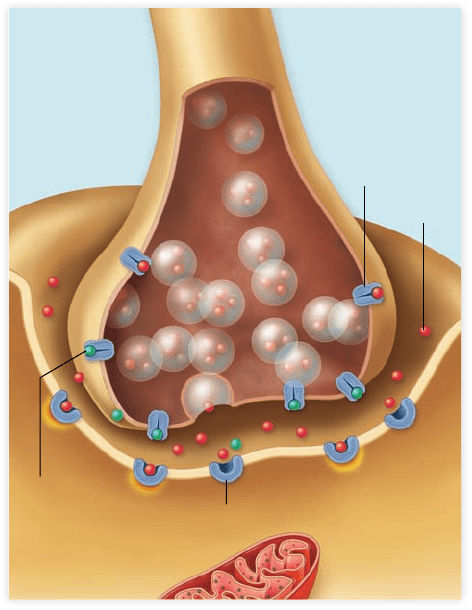
Figure 44.18
How cocaine alters events at the synapse.
When cocaine binds to the dopamine transporters, it prevents
reuptake of dopamine so the neurotransmitter survives longer in
the synapse and continues to stimulate the postsynaptic cell.
Cocaine thus acts to intensify pleasurable sensations.
mitter effects produced by drugs, long-term drug use means that
more of the drug is needed to obtain the same effect.
Cocaine
The drug cocaine causes abnormally large amounts of neuro-
transmitter to remain in the synapses for long periods. Cocaine
affects neurons in the brain’s “pleasure pathways” (the limbic
system, described later). These cells use the neurotransmitter
dopamine. Cocaine binds tightly to the transporter proteins on
presynaptic membranes that normally remove dopamine from
the synaptic cleft. Eventually the dopamine stays in the cleft,
firing the receptors repeatedly. New signals add more and more
dopamine, firing the pleasure pathway more and more often
(figure 44.18) .
Nicotine
Nicotine has been found to have no affinity for proteins on the
presynaptic membrane, as cocaine does; instead, it binds di-
rectly to a specific receptor on postsynaptic neurons of the
brain. Because nicotine does not normally occur in the brain,
why should it have a receptor there?
Researchers have found that “nicotine receptors” are a
class of receptors that normally bind the neurotransmitter ace-
tylcholine. Nicotine evolved in tobacco plants as a secondary
compound—it affects the CNS of herbivorous insects, and
therefore helps to protect the plant. It is an “accident of nature”
that nicotine is also able to bind to some human ACh receptors.
and IPSPs (hyperpolarizations) from these synapses interact with
each other when they reach the cell body of the neuron. Small
EPSPs add together to bring the membrane potential closer to
the threshold, and IPSPs subtract from the depolarizing effect of
the EPSPs, deterring the membrane potential from reaching
threshold. This process is called synaptic integration.
Because of the all-or-none characteristic of an action
potential, a postsynaptic neuron is like a switch that is either
turned on or remains off. Information may be encoded in the
pattern of firing over time, but each neuron can only fire or
not fire when it receives a signal.
The events that determine whether a neuron fires may be
extremely complex and involve many presynaptic neurons. There
are two ways the membrane can reach the threshold voltage: by
many different dendrites producing EPSPs that sum to the
threshold voltage, or by one dendrite producing repeated EPSPs
that sum to the threshold voltage. We call the first spatial
summation and the second temporal summation.
In spatial summation, graded potentials due to dendrites
from different presynaptic neurons that occur at the same time
add together to produce an above-threshold voltage. All of this
input does not need to be in the form of EPSPs, just so the
potential produced by summing all of the EPSPs and IPSPs is
greater than the threshold voltage. When the membrane at the
base of the axon is depolarized above the threshold, it produces
an action potential and a nerve impulse is sent down the axon.
In temporal summation, a single dendrite can produce
sufficient depolarization to produce an action potential if it
produces EPSPs that are close enough in time to sum to a de-
polarization that is greater than threshold. A typical EPSP can
last for 15 ms, so for temporal summation to occur, the next
impulse must arrive in less time. If enough EPSPs are produced
to raise the membrane at the base of the axon above threshold,
then an impulse will be sent.
The distinction between these two methods of summa-
tion is like filling a hole in the ground with soil: you can have
many shovels that add soil to the hole until it is filled, or a single
shovel that adds soil at a faster rate to fill the hole. When the
hole is filled, the axon will fire.
Neurotransmitters play a role
in drug addiction
When certain cells of the nervous system are exposed to a con-
stant stimulus that produces a chemically mediated signal for a
prolonged period, the cells may lose their ability to respond to
that stimulus, a process called habituation. You are familiar with
this loss of sensitivity—when you sit in a chair, for example, your
awareness of the chair diminishes after a certain length of time.
Some nerve cells are particularly prone to this loss of sen-
sitivity. If receptor proteins within synapses are exposed to high
levels of neurotransmitter molecules for prolonged periods, the
postsynaptic cell often responds by decreasing the number of re-
ceptor proteins in its membrane. This feedback is a normal func-
tion in all neurons, one of several mechanisms that have evolved
to make the cell more efficient. In this case, the cell adjusts the
number of receptors downward because plenty of stimulating
neurotransmitter is available. In the case of artificial neurotrans-
900
part
VII
Animal Form and Function
rav32223_ch44_887-914.indd 900rav32223_ch44_887-914.indd 900 11/17/09 3:32:19 PM11/17/09 3:32:19 PM
Apago PDF Enhancer
Cnidarian
Arthropod
Human
Cerebrum
Cerebellum
Spinal cord
Cervical
nerves
Thoracic
nerves
Lumbar
nerves
Femoral
nerve
Sciatic
nerve
Tibial
nerve
Sacral
nerves
Nerve
net
Nerve
cords
Associative
neurons
Brain
Giant
axon
Echinoderm
Flatworm
Central nervous
system
Peripheral
nerves
Brain
Ventral
nerve cords
Radial
nerve
Nerve ribs
Earthworm
Mollusk
44.4
The Central Nervous System:
Brain and Spinal Cord
Learning Outcomes
Describe the organization of the brain in vertebrates.1.
Describe characteristics of the human cerebrum.2.
Explain how a simple reflex works.3.
The complex nervous system of vertebrate animals has a long
evolutionary history. In this section we describe the structures
making up the CNS, namely the brain and the spinal cord.
First, it is helpful to review the origin and development of the
vertebrate nervous system.
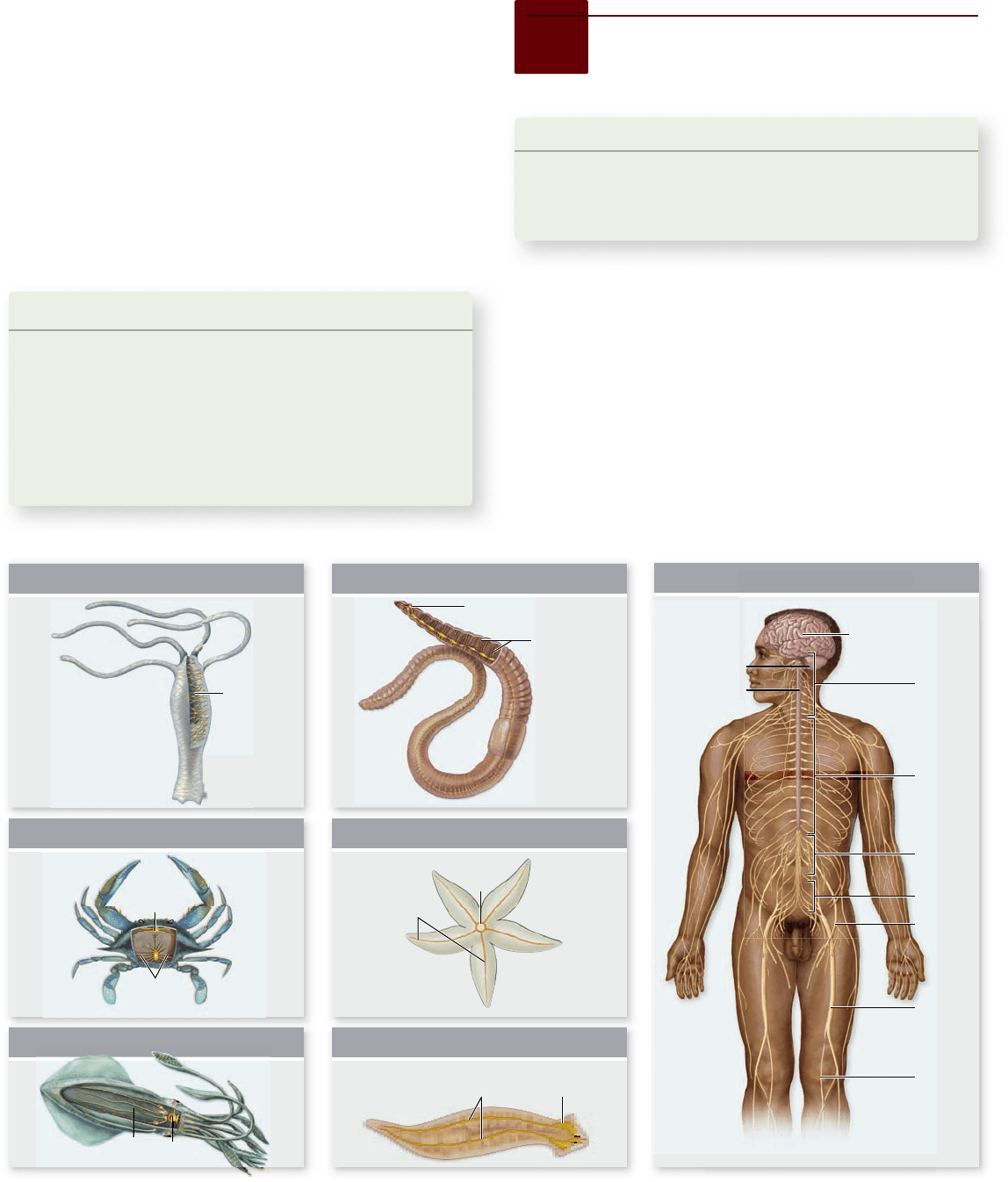
As animals became more complex,
so did their nervous systems
Among the noncoelomate invertebrates (see chapter 33),
sponges are the only major phylum that lack nerves. The sim-
plest nervous systems occur among cnidarians (figure 44.19) ,
When neurobiologists compare the nerve cells in the brains of
smokers with those of nonsmokers, they find changes in both
the number of nicotine receptors and the levels of RNA used to
make the receptors. The brain adjusts to prolonged, chronic
exposure to nicotine by “turning down the volume” in two
ways: (1) by making fewer receptor proteins to which nicotine
can bind; and (2) by altering the pattern of activation of the
nicotine receptors—that is, their sensitivity to stimulation by
neurotransmitters.
Having summarized the physiology and chemistry of neu-
rons and synapses, we turn now to the structure of the vertebrate
nervous system, beginning with the CNS and then the PNS.
Learning Outcomes Review 44.3
Electrical synapses involve direct cytoplasmic connections between two
neurons; chemical synapses involve chemicals that cross the synaptic
cleft, which separates neurons. Neurotransmitters include acetylcholine,
epinephrine, glycine, GABA, biogenic amines, substance P, and nitric oxide.
Many addictive drugs bind to sites that normally bind neurotransmitters or
to membrane transport proteins in synapses.
■ Why is tobacco use such a difficult habit to overcome?
Figure 44.19
Diversity of nervous systems. Nervous systems in animals range from simple nerve nets to paired nerve cords with
primitive brains to elaborate brains and sensory systems. Bilateral symmetry is correlated with the concentration of nervous tissue and sensory
structures in the front end of the nerve cord. This evolutionary process is referred to as cephalization.
chapter
44
The Nervous System
901www.ravenbiology.com
rav32223_ch44_887-914.indd 901rav32223_ch44_887-914.indd 901 11/18/09 4:06:34 PM11/18/09 4:06:34 PM