
Raven P.H., Johnson G.B., Mason K.A. Biology (Ninth Edition)
Подождите немного. Документ загружается.

Apago PDF Enhancer
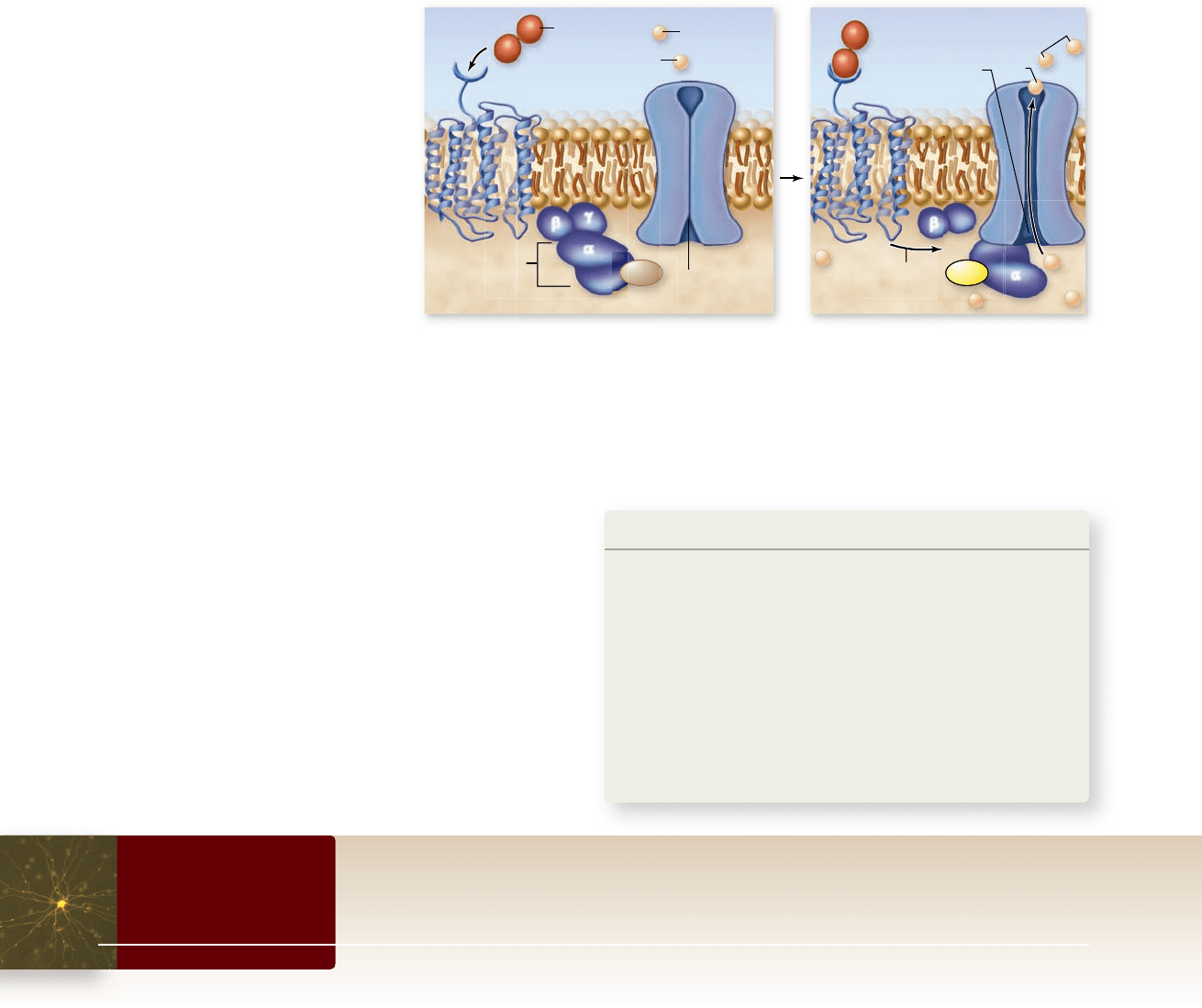
G protein
activates
Ligand
(signal)
Ion channel
closed
Ion channel
open
g
a
b
GDP
G protein
b
g
a
GTP
K
;
K
;
K
;
K
;
Figure 44.33
The parasympathetic
e ects of ACh require the action of
G proteins. The binding of ACh to its
receptor causes dissociation of a G protein
complex, releasing some components of this
complex to move within the membrane and
bind to other proteins that form ion channels.
Shown here are the effects of ACh on the
heart, where the G protein components cause
the opening of K+ channels. This leads to
outward diffusion of potassium and
hyperpolarization, slowing the heart rate.
44.1 Nervous System Organization
The three types of neurons in vertebrates are sensory neurons, motor
neurons, and interneurons (see gure 44.1).
The central nervous system is the “command center.”
The CNS consists of the brain and the spinal cord, where sensory
input is integrated and responses originate.
The peripheral nervous system collects information and carries
out responses.
The PNS comprises sensory neurons that carry impulses to the CNS
and motor neurons that carry impulses from the CNS to effectors.
The somatic nervous system primarily acts on skeletal muscles;
the autonomic nervous system is involuntary and consists of the
antagonistic sympathetic and parasympathetic divisions.
The structure of neurons supports their function.
Neurons have a cell body, dendrites that receive information, and a
long axon that conducts impulses away from the cell.
Supporting cells include Schwann cells and oligodendrocytes.
Neuroglia are supporting cells of the nervous system. Schwann cells
(PNS) and oligodendrocytes (CNS) produce myelin sheaths that
surround and insulate axons (see gure 44.3).
44.2 The Mechanism of Nerve Impulse
Transmission
An electrical di erence exists across the plasma membrane.
The sodium–potassium pump moves Na
+
outside the cell and K
+
into
the cell. Leakage of K
+
also moves positive charge outside the cell.
The membrane resting potential is typically –70 mV.
Chapter Review
The sympathetic nerve effects also are mediated by the
action of G protein–coupled receptors. Stimulation by norepi-
nephrine from sympathetic nerve endings and epinephrine
from the adrenal medulla requires G proteins to activate the
target cells. We describe these interactions in more detail, to-
gether with hormone action, in chapter 46 .
Learning Outcomes Review 44.5
The PNS comprises the somatic (voluntary) and autonomic (involuntary)
nervous systems. A spinal nerve contains sensory neurons, which carry
information from sense organs to the CNS, and motor neurons, which carry
directives from the CNS to targets such as muscle cells. The sympathetic
division of the autonomic nervous system activates the body for fi ght-
or-fl ight responses; the parasympathetic division generally promotes
relaxation and digestion.
■ Why would having the sympathetic and
parasympathetic divisions be more advantageous than
having a single system?
The answer is simple, the cells involved in each case have dif-
ferent receptors for ACh that produce different effects. In the
neuromuscular junction, the receptor for ACh is a ligand-gated
Na
+
channel that when open allows an influx of Na
+
that depo-
larizes the membrane. In the case of the heart, the inhibitory
effect on the pacemaker cells is produced because binding of
ACh to a different receptor leads to K
+
channels opening, re-
sulting in the outward diffusion of K
+
, hyperpolarizing the
membrane. The ACh receptor in the heart is a member of the
class of receptors called G protein–coupled receptors.
In chapter 9, you learned that G protein–coupled recep-
tors consist of a membrane receptor and effector protein that
are coupled by the action of a G protein. The receptor is acti-
vated by binding to its ligand, in this case ACh, and the receptor
activates a G protein that in turn activates an effector protein,
in this case a K
+
channel (figure 44.33) .
This kind of system can also lead to excitation in other
organs if the G protein acts on different effector proteins. For
example, the parasympathetic nerves that innervate the stom-
ach can cause increased gastric secretions and contractions.
912
part
VII
Animal Form and Function
rav32223_ch44_887-914.indd 912rav32223_ch44_887-914.indd 912 11/17/09 3:32:42 PM11/17/09 3:32:42 PM

Apago PDF Enhancer
Graded potentials are small changes that can reinforce or negate
each other.
Ligand-gated ion channels are responsible for graded potentials.
Graded potentials can combine in an additive way (summation).
Action potentials result when depolarization reaches a threshold.
Action potentials are all-or-nothing events resulting from the rapid
and sequential opening of votage-gated ion channels (see gure 44.9).
Action potentials are propagated along axons.
In ux of Na
+
during an action potential causes the adjacent region to
depolarize, producing its own action potential (see gure 44.10).
There are two ways to increase the velocity of nerve impulses.
The speed of nerve impulses increases as the diameter of the axon
increases. Saltatory conduction, in which impulses jump from node
to node, also increases speed (see gure 44.11).
44.3 Synapses: Where Neurons Communicate
with Other Cells
An action potential terminates at the end of the axon at the
synapse—a gap between the axon and another cell.
The two types of synapses are electrical and chemical.
Electrical synapses consist of gap junctions; chemical synapses release
neurotransmitters to cross the synapse (see gure 44.14).
Many di erent chemical compounds serve as neurotransmitters.
Neurotransmitter molecules include acetylcholine, amino acids,
biogenic amines, neuropeptides, and a gas—nitric oxide.
A postsynaptic neuron must integrate input from many synapses.
Excitatory postsynaptic potentials (EPSPs) depolarize the membrane;
inhibitory postsynaptic potentials (IPSPs) hyperpolarize it. The
additive effect may or may not produce an action potential.
Neurotransmitters play a role in drug addiction.
Addictive drugs often act by mimicking a neurotransmitter or by
interfering with neurotransmitter reuptake.
44.4 The Central Nervous System: Brain
and Spinal Cord
As animals became more complex, so did their nervous systems.
The nervous system has evolved from a nerve net composed of
linked nerves, to nerve cords with association nerves, and to the
development of coordination centers (see gure 44.19).
Vertebrate brains have three basic divisions.
The vertebrate brain is divided into hindbrain, midbrain, and
forebrain (see gure 44.20). The forebrain is divided further into
the diencephalon and telencephalon. The telencephalon, called the
cerebrum in mammals, is the center for association and learning.
The human forebrain exhibits exceptional information-
processing ability.
The cerebrum is divided into right and left hemispheres (see
gure 44.22), which are subdivided into frontal, parietal, temporal,
and occipital lobes (see gure 44.23). The cerebrum contains
the primary motor and somatosensory cortexes as well as the
basal ganglia.
The limbic system consists of the hypothalamus, hippocampus, and
amygdala, and it is responsible for emotional states.
Complex functions of the human brain may be controlled in
speci c areas.
The reticular activating system in the brainstem controls
consciousness and alertness. Short-term memory may be stored as
transient neural excitation; long-term memory involves changes in
neural connections.
The spinal cord conveys messages and controls some
responses directly.
Re exes are the sudden, involuntary movement of muscles in
response to a stimulus (see gures 44.28 and 44.29).
44.5 The Peripheral Nervous System: Sensory
and Motor Neurons
The PNS has somatic and autonomic systems.
Sensory axons (inbound) form the dorsal root of the spinal nerve.
The cell bodies are in the dorsal root ganglia.
Motor axons (outbound) form the ventral root of the spinal nerve.
Cell bodies are located in the spinal cord.
The somatic nervous system controls movements.
Somatic motor neurons stimulate skeletal muscles in response to
conscious commands and involuntary re exes.
The autonomic nervous system controls involuntary functions through
two divisions.
Sympathetic neurons originate in the thoracic and lumbar regions
of the spinal cord and synapse at an autonomic ganglion outside the
spinal cord (see gure 44.31). Parasympathetic neurons originate
in the brain and in sacral regions of the spinal cord and terminate
in ganglia near or within internal organs (see gure 44.32 and
table 44.5).
G proteins mediate cell responses to autonomic signals.
The binding of ACh activates a G protein that in turn activates a
K
+
channel, allowing out ow of K
+
and hyperpolarization of the
membrane and slowing heart rate.
UNDERSTAND
1. Which of the following best describes the electrical state
of a neuron at rest?
a. The inside of a neuron is more negatively charged than
the outside.
b. The outside of a neuron is more negatively charged than
the inside.
c. The inside and the outside of a neuron have the same
electrical charge.
d. Potassium ions leak into a neuron at rest.
2. The ____cannot be controlled by conscious thought.
a. motor neurons c. autonomic nervous system
b. somatic nervous system d. skeletal muscles
Review Questions
chapter
44
The Nervous System
913www.ravenbiology.com
rav32223_ch44_887-914.indd 913rav32223_ch44_887-914.indd 913 11/17/09 3:32:45 PM11/17/09 3:32:45 PM

Apago PDF Enhancer
3. A ght-or- ight response in the body is controlled by the
a. sympathetic division of the nervous system.
b. parasympathetic division of the nervous system.
c. release of acetylcholine from postganglionic neurons.
d. somatic nervous system.
4. Inhibitory neurotransmitters
a. hyperpolarize postsynaptic membranes.
b. hyperpolarize presynaptic membranes.
c. depolarize postsynaptic membranes.
d. depolarize presynaptic membranes.
5. White matter is____, and gray matter is____.
a. comprised of axons; comprised of cell bodies and dendrites
b. myelinated; unmyelinated
c. found in the CNS; also found in the CNS
d. all of these are correct
6. During an action potential
a. the rising phase is due to an in ux of Na
+
.
b. the falling phase is due to an in ux of K
+
.
c. the falling phase is due to an ef ux of K
+
.
d. both a and c occur.
7. A functional re ex requires
a. only a sensory neuron and a motor neuron.
b. a sensory neuron, the thalamus, and a motor neuron.
c. the cerebral cortex and a motor neuron.
d. only the cerebral cortex and the thalamus.
APPLY
1. Imagine that you are doing an experiment on the movement
of ions across neural membranes. Which of the following plays
a role in determining the equilibrium concentration of ions
across these membranes?
a. Ion concentration gradients
b. Ion pH gradients
c. Ion electrical gradients
d. Both a and c
2. The Na
+
/K
+
ATPase pump is
a. not required for action potential ring.
b. important for long-term maintenance of
resting potential.
c. important only at the synapse.
d. used to stimulate graded potentials.
3. Botox, a derivative of the botulinum toxin that causes food
poisoning, inhibits the release of acetylcholine at the
neuromuscular junction. How could this strange-sounding
treatment produce desired cosmetic effects?
a. By inhibiting the parasympathetic branch of the autonomic
nervous system
b. By inhibiting the sympathetic branch of the autonomic
nervous system
c. By causing paralysis of facial muscles, which decreases
wrinkles in the face
d. By causing facial muscles to contract, whereby the skin
is stretched tighter, thereby reducing wrinkles
4. The following is a list of the components of a chemical synapse.
A mutation in the structure of which of these would affect only
the reception of the message, not its release or the response?
a. Membrane proteins in the postsynaptic cell
b. Proteins in the presynaptic cell
c. Cytoplasmic proteins in the postsynaptic cell
d. Both a and b
5. Suppose that you stick your nger with a sharp pin. The
area affected is very small and only one pain receptor res.
However, it res repeatedly at a rapid rate (it hurts!). This is an
example of
a. temporal summation. c. habituation.
b. spatial summation. d. repolarization.
6. As you sit quietly reading this sentence, the part of the nervous
system that is most active is the
a. somatic nervous system.
b. sympathetic nervous system.
c. parasympathetic nervous system.
d. none of these choices is correct.
7. G protein–coupled receptors are involved in the nervous system by
a. controlling the release of neurotransmitters.
b. controlling the opening and closing of Na+ channels
during an action potential.
c. controlling the opening and closing of K+ channels during
an action potential.
d. acting as receptors for neurotransmitters on postsynaptic cells.
SYNTHESIZE
1. Tetraethylammonium (TEA) is a drug that blocks voltage-gated
K
+
channels. What effect would TEA have on the action
potentials produced by a neuron? If TEA could be applied
selectively to a presynaptic neuron that releases an excitatory
neurotransmitter, how would it alter the synaptic effect of that
neurotransmitter on the postsynaptic cell?
2. Describe the status of the Na
+
and K
+
channels at each of the
following stages: rising, falling, and undershoot.
3. Describe the steps required to produce an excitatory
postsynaptic potential (EPSP). How would these differ at an
inhibitory synapse?
4. Your friend Karen loves caffeine. However, lately she has been
complaining that she needs to drink more caffeinated beverages in
order to get the same effect she used to. Excellent student of
biology that you are, you tell her that this is to be expected. Why?
ONLINE RESOURCE
www.ravenbiology.com
Understand, Apply, and Synthesize—enhance your study with
animations that bring concepts to life and practice tests to assess
your understanding. Your instructor may also recommend the
interactive eBook, individualized learning tools, and more.
914
part
VII
Animal Form and Function
rav32223_ch44_887-914.indd 914rav32223_ch44_887-914.indd 914 11/17/09 3:32:45 PM11/17/09 3:32:45 PM

Apago PDF Enhancer
A
5
μ
m
Chapter
45
Sensory Systems
Introduction
All input from sensory neurons to the central nervous system (CNS) arrives in the same form, as electrical signals. Sensory
neurons receive input from a variety of different kinds of sense receptor cells, such as the rod and cone cells found in the
vertebrate eye shown in the micrograph. Different sensory neurons lead to different brain regions and so are associated with
the different senses. The intensity of the sensation depends on the frequency of action potentials conducted by the sensory
neuron. The brain distinguishes a sunset, a symphony, and searing pain only in terms of the identity of the sensory neuron
carrying the action potentials and the frequency of these impulses. Thus, if the auditory nerve is artificially stimulated, the
brain perceives the stimulation as sound. But if the optic nerve is artificially stimulated in exactly the same manner and
degree, the brain perceives a flash of light.
In this chapter, we examine sensory systems, primarily in vertebrates. We also compare some of these systems with
their counterparts in invertebrates.
Chapter Outline
45.1 Overview of Sensory Receptors
45.2 Mechanoreceptors: Touch and Pressure
45.3 Hearing, Vibration, and Detection of Body Position
45.4 Chemoreceptors: Taste, Smell, and pH
45.5 Vision
45.6 The Diversity of Sensory Experiences
CHAPTER
rav32223_ch45_915-936.indd 915rav32223_ch45_915-936.indd 915 11/17/09 3:54:50 PM11/17/09 3:54:50 PM
Apago PDF Enhancer
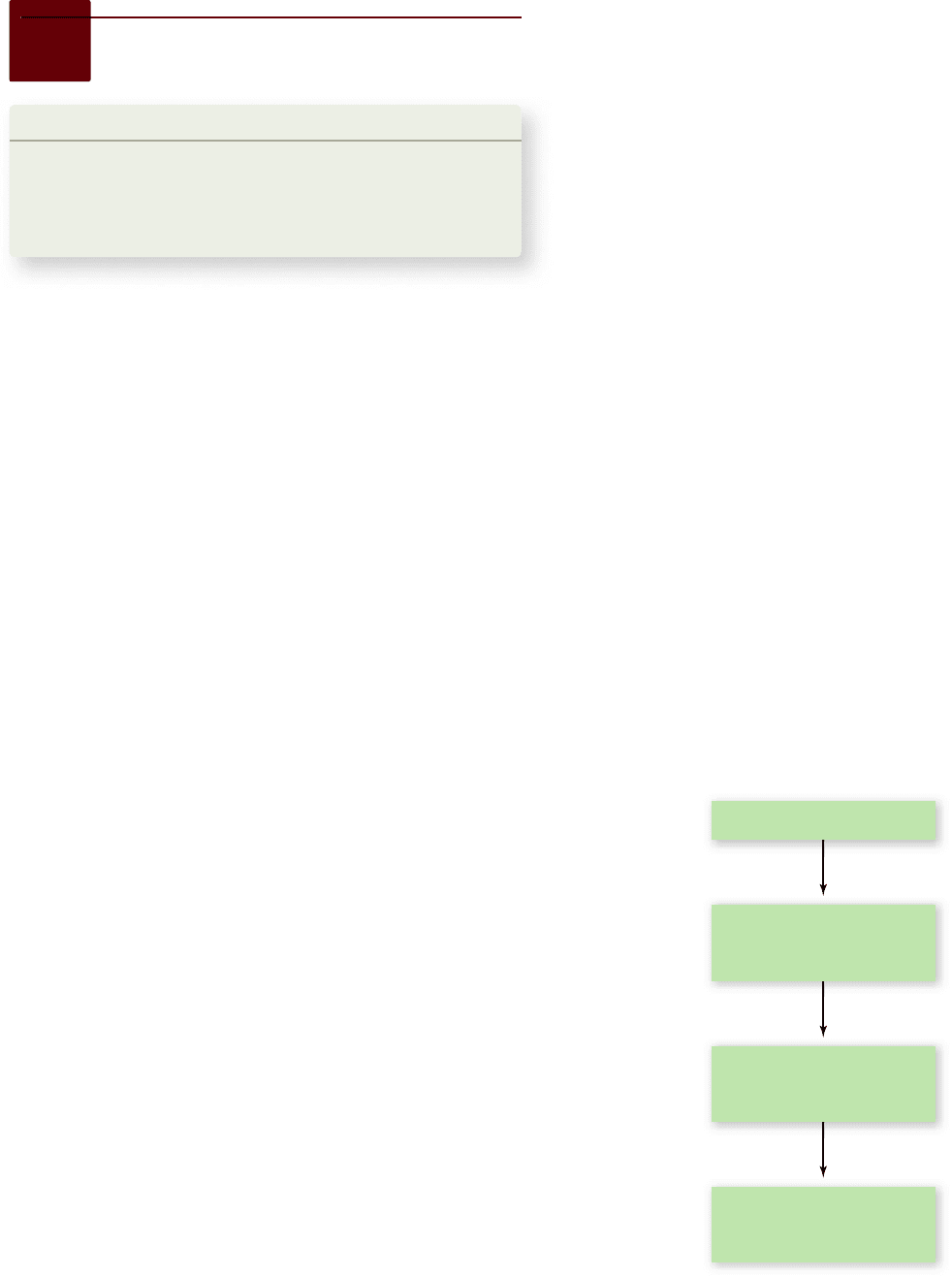
Stimulus
Transduction of stimulus
into receptor potential
in sensory receptor
Transmission of
action potential
in sensory neuron
Interpretation of stimulus
in central nervous
system
Figure 45.1
The path of sensory information. Sensory
stimuli are transduced into receptor potentials, which can trigger
sensory neuron action potentials that are conducted to the brain
for interpretation.
2. Chemoreceptors detect chemicals or chemical changes.
The senses of smell and taste rely on chemoreceptors.
3. Electromagnetic receptors react to heat and light
energy. The photoreceptors of the eyes that detect light
are an example, as are the thermal receptors found in
some reptiles.
The simplest sensory receptors are free nerve endings that re-
spond to bending or stretching of the sensory neuron’s mem-
brane to changes in temperature or to chemicals such as oxygen
in the extracellular fluid. Other sensory receptors are more
complex, involving the association of the sensory neurons with
specialized epithelial cells.
Sensory information is conveyed
in a four-step process
Sensory information picked up by sensory neurons is conveyed
to the CNS, where the impulses are perceived in a four-step
process (figure 45.1) :
Stimulation. 1. A physical stimulus impinges on a sensory
neuron or an associated, but separate, sensory receptor.
2. Transduction. The stimulus energy is transformed into
graded potentials in the dendrites of the sensory neuron.
Transmission. 3. Action potentials develop in the axon of the
sensory neuron and are conducted to the CNS along an
afferent nerve pathway.
Interpretation. 4. The brain creates a sensory perception
from the electrochemical events produced by afferent
stimulation. We actually perceive the ve senses with our
brains, not with our sense organs.
45.1
Overview of Sensory Receptors
Learning Outcomes
List the three categories of vertebrate sensory receptors.1.
Explain how sensory information is conveyed from 2.
sensory neurons to the CNS.
Describe how gated ion channels work.3.
When we think of sensory receptors, the senses of vision, hear-
ing, taste, smell, and touch come to mind—the senses that pro-
vide information about our environment. Certainly this external
information is crucial to the survival and success of animals, but
sensory receptors also provide information about internal
states, such as stretching of muscles, position of the body, and
blood pressure. In this section, we take a general look at types
of receptors and how they work.
Sensory receptors detect both
external and internal stimuli
Exteroceptors are receptors that sense stimuli that arise in
the external environment. Almost all of a vertebrate’s exterior
senses evolved in water before the invasion of land. Conse-
quently, many senses of terrestrial vertebrates emphasize stim-
uli that travel well in water, using receptors that have been
retained in the transition from sea to land. Mammalian hear-
ing, for example, converts an airborne stimulus into a water-
borne one, using receptors similar to those that originally
evolved in the water.
A few vertebrate sensory systems that function well in
the water, such as the electrical organs of fish, cannot function
in the air and are not found among terrestrial vertebrates. In
contrast, some land-dwellers have sensory systems that could
not function in water, such as infrared heat detectors.
Interoceptors sense stimuli that arise from within the
body. These internal receptors detect stimuli related to mus-
cle length and tension, limb position, pain, blood chemistry,
blood volume and pressure, and body temperature. Many of
these receptors are simpler than those that monitor the ex-
ternal environment and are believed to bear a closer resem-
blance to primitive sensory receptors. In the rest of this
chapter, we consider the different types of exteroceptors and
interoreceptors according to the kind of stimulus each is spe-
cialized to detect.
Receptors can be grouped into three categories
Sensory receptors differ with respect to the nature of the envi-
ronmental stimulus that best activates their sensory dendrites.
Broadly speaking, we can recognize three classes of receptors:
1. Mechanoreceptors are stimulated by mechanical forces
such as pressure. These include receptors for touch,
hearing, and balance.
916
part
VII
Animal Form and Function
rav32223_ch45_915-936.indd 916rav32223_ch45_915-936.indd 916 11/17/09 3:54:55 PM11/17/09 3:54:55 PM
Apago PDF Enhancer
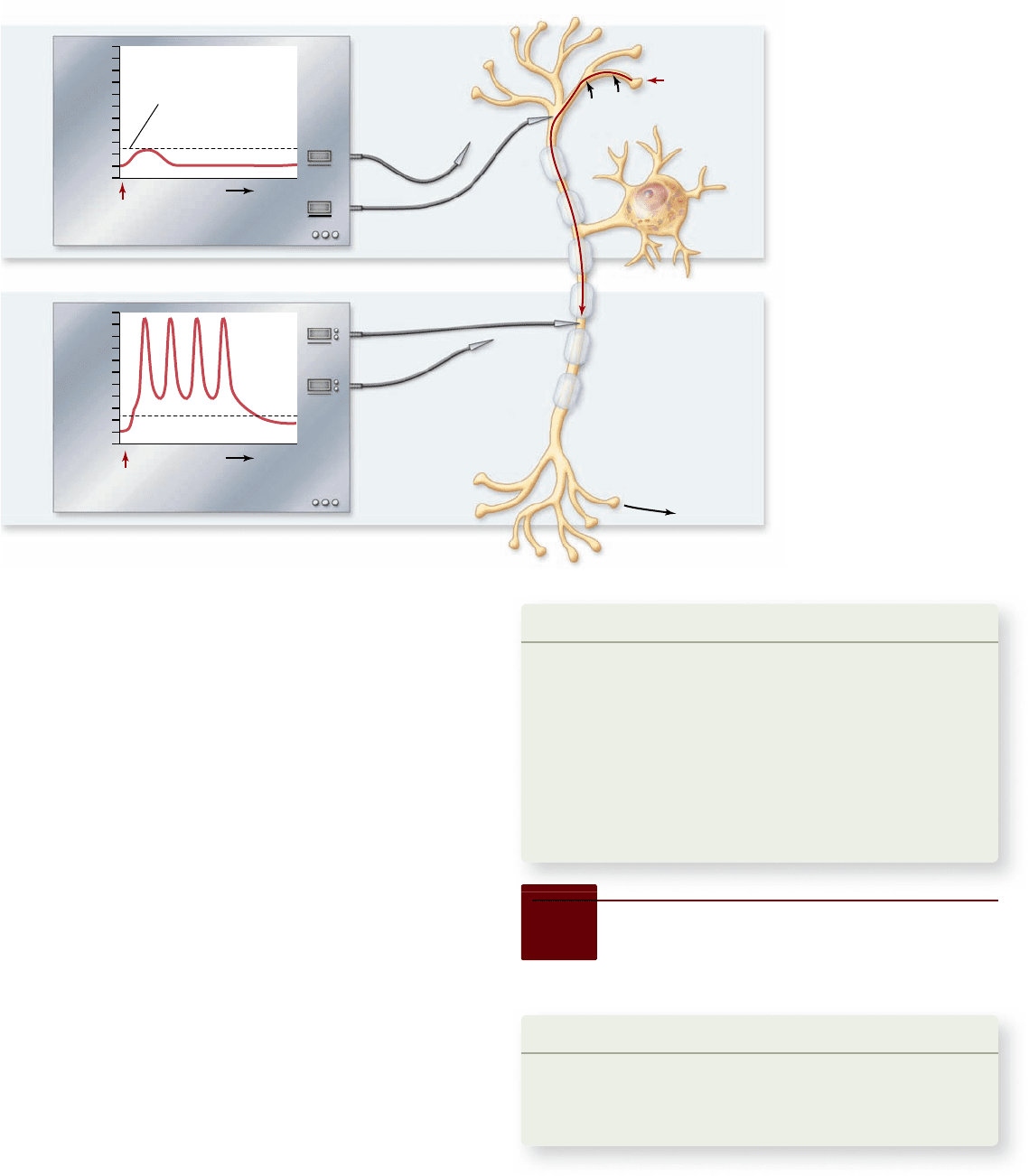
Na
+
Na
+
Stimulus-gated
channels
Voltage-gated
channels
To central
nervous system
Time
Receptor potential
Stimulus
applied
20
–10
–40
–70
Voltage (mV)
Threshold
Time
Train of action
potentials
Stimulus
applied
20
–10
–40
–70
Voltage (mV)
Stimulus
a.
b.
Learning Outcomes Review 45.1
Sensory receptors include mechanoreceptors, chemoreceptors, and
electromagnetic energy-detecting receptors. The four steps by which
information is conveyed to the CNS are stimulation, transduction,
transmission, and interpretation in the CNS. Gated ion channels open or
close in response to stimuli, altering membrane potential; if this change
exceeds a threshold, an action potential is generated .
■ Why is the relationship between intensity of
stimulus and frequency of action potentials said to
be logarithmic?
Sensory transduction involves
gated ion channels
Sensory cells respond to stimuli because they possess stimulus-
gated ion channels in their membranes. The sensory stimulus
causes these ion channels to open or close, depending on the
sensory system involved. In most cases, the sensory stimulus
produces a depolarization of the receptor cell, analogous to the
excitatory postsynaptic potential (EPSP, described in chapter 44)
produced in a postsynaptic cell in response to a neurotransmit-
ter. A depolarization that occurs in a sensory receptor on stimu-
lation is referred to as a receptor potential (figure 45.2a) .
Like an EPSP, a receptor potential is a graded potential: The
larger the sensory stimulus, the greater the degree of depolarization.
Receptor potentials also decrease in size with distance from their
source. This prevents small, irrelevant stimuli from reaching the cell
body of the sensory neuron. If the receptor potential or the summa-
tion of receptor potentials is great enough to generate a threshold
level of depolarization, an action potential is produced that propa-
gates along the sensory axon into the CNS (figure 45.2b).
The greater the sensory stimulus, the greater the depo-
larization of the receptor potential and the higher the fre-
quency of action potentials. (Remember that frequency of
action potentials, not their summation, is responsible for con-
veying the intensity of the stimulus.)
Generally, a logarithmic relationship exists between stim-
ulus intensity and action potential frequency—for example, a
particular sensory stimulus that is 10 times greater than an-
other sensory stimulus produces action potentials at twice the
frequency of the other stimulus. This relationship allows the
CNS to interpret the strength of a sensory stimulus based on
the frequency of incoming signals.
Figure 45.2
Events in
sensory transduction.
a. Depolarization of a free
nerve ending leads to a
receptor potential that
spreads by local current
ow to the axon. b. Action
potentials are produced
in the axon in response
to a suf ciently large
receptor potential.
45.2
Mechanoreceptors:
Touch and Pressure
Learning Outcomes
Explain how mechanoreceptors detect touch.1.
Distinguish between nociceptors, thermoreceptors, 2.
proprioceptors, and baroreceptors.
Although the receptors of the skin, called the cutaneous
receptors, are classified as interoceptors, they in fact respond to
stimuli at the border between the external and internal
environments. These receptors serve as good examples of the
specialization of receptor structure and function, responding to
pain, heat, cold, touch, and pressure.
chapter
45
Sensory Systems
917www.ravenbiology.com
rav32223_ch45_915-936.indd 917rav32223_ch45_915-936.indd 917 11/17/09 3:54:55 PM11/17/09 3:54:55 PM
Apago PDF Enhancer
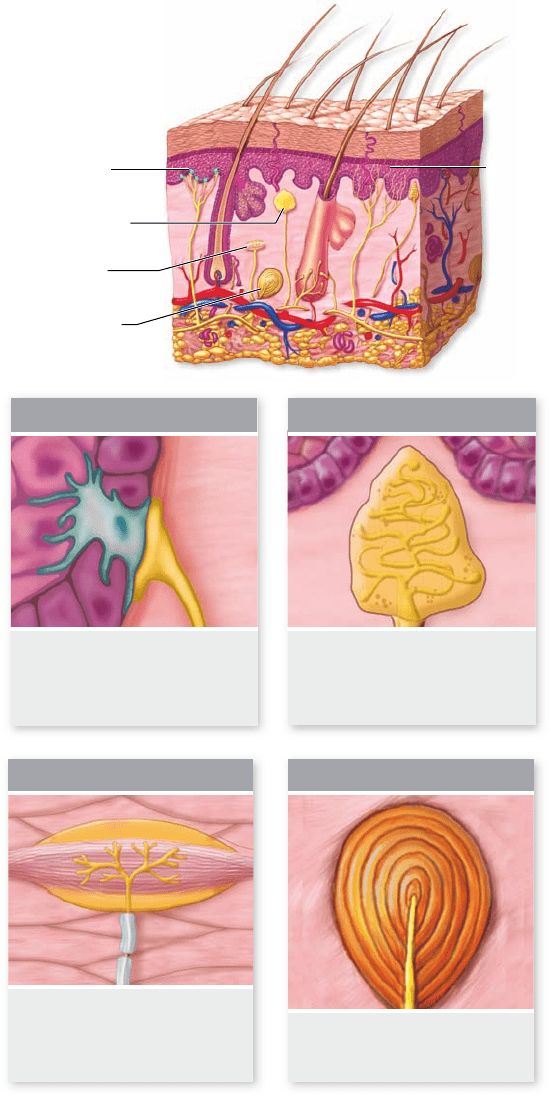
3. Ruffini Corpuscle
3. Ruffini
corpuscle
Tonic receptors located near
the surface of the skin that are
sensitive to touch pressure
and duration.
2. Meissner
corpuscle
1. Merkle
cell
4. Pacinian
corpuscle
Free
nerve
ending
1. Merkle Cell
Tonic receptors located near
the surface of the skin that are
sensitive to touch pressure
and duration.
2. Meissner Corpuscle
Phasic receptors sensitive to
fine touch, concentrated in
hairless skin.
4. Pacinian Corpuscle
Pressure-sensitive phasic
receptors deep below the skin
in the subcutaneous tissue.
Figure 45.3
Sensory receptors in human skin.
Cutaneous receptors may be free nerve endings or sensory dendrites
in association with other supporting structures.
Pain receptors alert the body
to damage or potential damage
A stimulus that causes or is about to cause tissue damage is per-
ceived as pain. The receptors that transmit impulses perceived as
pain are called nociceptors, so named because they can be sensi-
tive to noxious substances as well as tissue damage. Although spe-
cific nociceptors exist, many hyperstimulated sensory receptors
can also produce the perception of pain in the brain.
Most nociceptors consist of free nerve endings located
throughout the body, especially near surfaces where damage is most
likely to occur. Different nociceptors may respond to extremes in
temperature, very intense mechanical stimulation such as a hard
impact, or specific chemicals in the extracellular fluid, including
some that are released by injured cells. The thresholds of these
sensory cells vary; some nociceptors are sensitive only to actual tis-
sue damage, but others respond before damage has occurred.
Transient receptor potential ion channels
One kind of tissue damage can be due to extremes of tempera-
ture, and in this case the molecular details of how a noxious stim-
ulus can result in the sensation of pain are becoming clear. A class
of ion channel protein found in nociceptors, the transient recep-
tor potential (TRP) ion channel, can be stimulated by tempera-
ture to produce an inward flow of cations, primarily Na
+
and
Ca
2+
. This depolarizing current causes the sensory neuron to
fire, leading to the release of glutamate and an EPSP in neurons
in the spinal cord, ultimately producing the pain response.
TRP channels that respond to both hot and cold have
been found. Differences have also been found in the sensitivity
of TRP channels to the degree of temperature change, with
some responding only to temperature changes that damage tis-
sues and others that respond to milder changes. Thus, we can
respond to the feelings of hot and cold as well as feel pain as-
sociated with extremes of hot and cold.
The first such TRP channel identified responds to the chem-
ical capsaicin, found in chili peppers, as well as to heat. This explains
the sensation of heat we feel when we eat chili peppers, as well as
the associated pain! A cold-responsive TRP receptor also responds
to the chemical menthol, explaining how this substance is perceived
as “cold.” Chemical stimulation of TRP channels can reduce the
body’s pain response by desensitizing the sensory neuron. This an-
algesic response is why menthol is found in cough drops.
Thermoreceptors detect changes in heat energy
The skin contains two populations of thermoreceptors, which
are naked dendritic endings of sensory neurons that are sensi-
tive to changes in temperature. (Nociceptors are similar in that
they consist of free nerve endings.) These thermoreceptors
contain TRP ion channels that are responsive to hot and cold.
Cold receptors are stimulated by a fall in temperature and
are inhibited by warming, whereas warm receptors are stimulated
by a rise in temperature and inhibited by cooling. Cold receptors
are located immediately below the epidermis; they are three to
four times more numerous than are warm receptors. Warm re-
ceptors are typically located slightly deeper, in the dermis.
Thermoreceptors are also found within the hypothalamus
of the brain, where they monitor the temperature of the circulat-
ing blood and thus provide the CNS with information on the
body’s internal (core) temperature. Information from the hypo-
thalamic thermoreceptors alter metabolism and stimulate other
responses to increase or decrease core temperature as needed.
Di erent receptors detect touch,
depending on intensity
Several types of mechanoreceptors
are present in the skin, some in
the dermis and others in the
underlying subcutaneous
tissue (figure 45.3) .
918
part
VII
Animal Form and Function
rav32223_ch45_915-936.indd 918rav32223_ch45_915-936.indd 918 11/17/09 3:54:56 PM11/17/09 3:54:56 PM
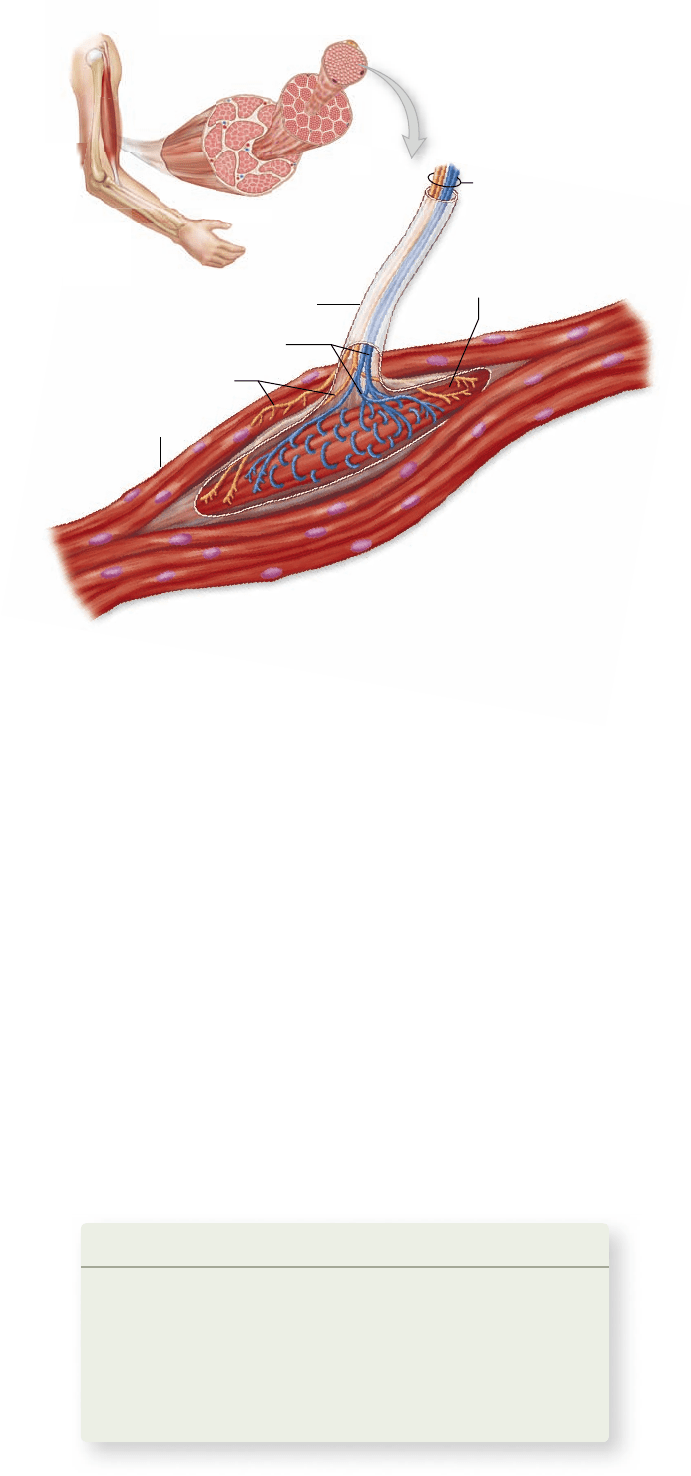
Apago PDF Enhancer
Nerve
Spindle sheath
Skeletal muscle
Biceps extension
causes it to stretch
Specialized
muscle fibers
(spindle fibers)
Motor neurons
Sensory neurons
These receptors contain sensory cells with ion channels that open
in response to mechanical distortion of the membrane. They detect
various forms of physical contact, known as the sense of touch.
Morphologically specialized receptors that respond to
fine touch are most concentrated on areas such as the fingertips
and face. They are used to localize cutaneous stimuli very pre-
cisely. These receptors can be either phasic (intermittently ac-
tivated) or tonic (continuously activated). The phasic receptors
include hair follicle receptors and Meissner corpuscles, which
are present on surfaces that do not contain hair, such as the
fingers, palms, and nipples.
The tonic receptors consist of Ruffini corpuscles in the
dermis and touch dome endings (Merkel’s disks) located near
the surface of the skin. These receptors monitor the duration of
a touch and the extent to which it is applied.
Deep below the skin in the subcutaneous tissue lie phasic,
pressure-sensitive receptors called Pacinian corpuscles. Each of
these receptors consists of the end of an afferent axon surrounded
by a capsule of alternating layers of connective tissue cells and ex-
tracellular fluid. When sustained pressure is applied to the cor-
puscle, the elastic capsule absorbs much of the pressure, and the
axon ceases to produce impulses. Pacinian corpuscles thus monitor
only the onset and removal of pressure, as may occur repeatedly
when something that vibrates is placed against the skin.
Muscle length and tension are
monitored by proprioceptors
Buried within the skeletal muscles of all vertebrates except the
bony fishes are muscle spindles, sensory stretch receptors that lie
in parallel with the rest of the fibers in the muscle (figure 45.4) .
Each spindle consists of several thin muscle fibers wrapped to-
gether and innervated by a sensory neuron, which becomes acti-
vated when the muscle, and therefore the spindle, is stretched.
Muscle spindles, together with other receptors in tendons
and joints, are known as proprioceptors. These sensory recep-
tors provide information about the relative position or move-
ment of the animal’s body parts. The sensory neurons conduct
action potentials into the spinal cord, where they synapse with
somatic motor neurons that innervate the muscle. This path-
way constitutes the muscle stretch reflex, including the knee-
jerk reflex mentioned in chapter 44. When the muscle is briefly
stretched by tapping the patellar ligament with a rubber mallet,
the muscle spindle apparatus is also stretched. The spindle ap-
paratus is embedded within the muscle, and, like the muscle
fibers outside the spindle, is stretched along with the muscle.
The result is the action potential that activates the somatic mo-
tor neurons and causes the leg to jerk.
When a muscle contracts, it exerts tension on the tendons
attached to it. The Golgi tendon organs, another type of pro pri-
o cep tor, monitor this tension. If it becomes too high, they elicit a
reflex that inhibits the motor neurons innervating the muscle. This
reflex helps ensure that muscles do not contract so strongly that
they damage the tendons to which they are attached.
Baroreceptors detect blood pressure
Blood pressure is monitored at two main sites in the body. One
is the carotid sinus, an enlargement of the left and right internal
carotid arteries that supply blood to the brain. The other is the
aortic arch, the portion of the aorta very close to its emergence
from the heart. The walls of the blood vessels at both sites con-
tain a highly branched network of afferent neurons called
baroreceptors, which detect tension or stretch in the walls.
When the blood pressure decreases, the frequency of
impulses produced by the baroreceptors decreases. The CNS
responds to this reduced input by stimulating the sympathet-
ic division of the autonomic nervous system, causing an in-
crease in heart rate and vasoconstriction. Both effects help
raise the blood pressure, thus maintaining homeostasis. A rise
in blood pressure increases baroreceptor impulses, which
conversely reduces sympathetic activity and stimulates the
parasympathetic division, slowing the heart and lowering the
blood pressure.
Learning Outcomes Review 45.2
Mechanical distortion of the plasma membrane of mechanoreceptors
produces nerve impulses. Nociceptors detect damage or potential damage
to tissues and cause pain; thermoreceptors sense changes in heat energy;
proprioceptors monitor muscle length; and baroreceptors monitor blood
pressure within arteries.
■ Why is it important to detect stretching of muscles?
Figure 45.4
How a muscle spindle works. A muscle
spindle is a stretch receptor embedded within skeletal muscle.
Stretching of the muscle elongates the spindle bers and stimulates
the sensory dendritic endings wrapped around them. This causes
the sensory neurons to send impulses to the CNS, where they
synapse with interneurons and, in some cases, motor neurons.
chapter
45
Sensory Systems
919www.ravenbiology.com
rav32223_ch45_915-936.indd 919rav32223_ch45_915-936.indd 919 11/17/09 3:54:58 PM11/17/09 3:54:58 PM
Apago PDF Enhancer
Round window
Tympanic
membrane
Malleus
Stapes
Semicircular
canals
Auditory
nerve to brain
Oval window
Skull
Incus
Auditory
canal
Cochlea
Eustachian
tube
Eustachian tube
Pinna
Middle
ear
Inner
ear
Outer
ear
a. b.
45.3
Hearing, Vibration, and
Detection of Body Position
Learning Outcomes
Explain how sound waves in the environment lead to 1.
production of action potentials in the inner ear.
Describe how hearing differs between aquatic and 2.
terrestrial animals.
Describe how body position and movement are detected 3.
by hearing-associated structures.
Hearing, the detection of sound waves, actually works better in
water than in air because water transmits pressure waves more
efficiently. Despite this limitation, hearing is widely used by
terrestrial vertebrates to monitor their environments, commu-
nicate with other members of their species, and detect possible
sources of danger.
Sound is a result of vibration, or waves, traveling through a
medium, such as water or air. Detection of sound waves is possible
through the action of specialized mechanoreceptors that first
evolved in aquatic organisms. The cells that are involved in the
detection of sound are also evolutionarily related to the gravity-
sensing systems discussed in the end of this section.
The lateral line system in sh detects
low-frequency vibrations
In addition to hearing, the lateral line system in fish provides a
sense of “distant touch,” enabling them to sense objects that
reflect pressure waves and low-frequency vibrations. This en-
ables a fish to detect prey, for example, and to swim in synchrony
with the rest of its school. It also enables a blind cave fish to
sense its environment by monitoring changes in the patterns of
water flow past the lateral line receptors.
The lateral line system is found in amphibian larvae, but
is lost at metamorphosis and is not present in any terrestrial
vertebrate. The sense provided by the lateral line system sup-
plements the fish’s sense of hearing, which is performed by the
sensory structures in their ears.
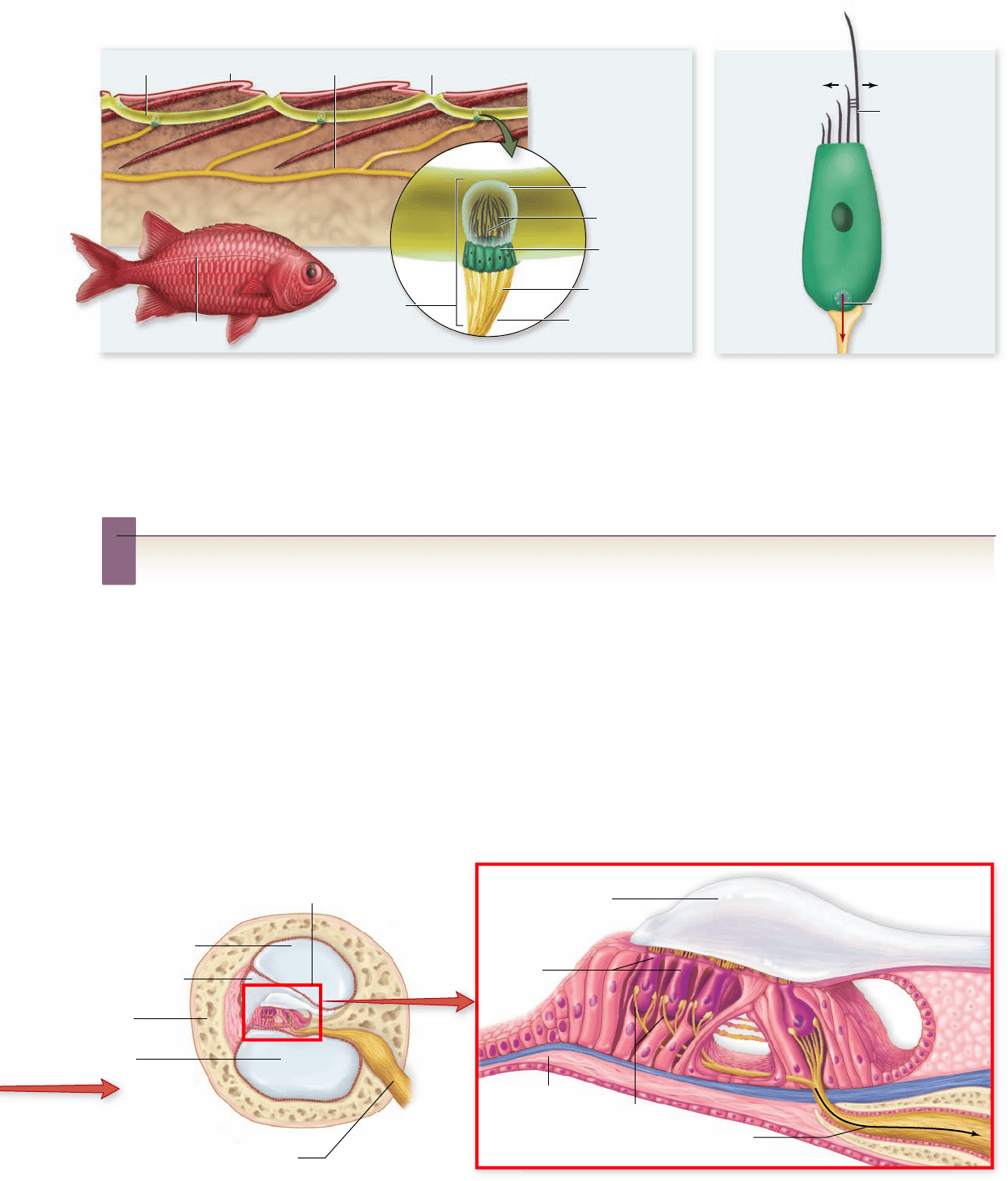
The lateral line system consists of hair cells within a lon-
gitudinal canal in the fish’s skin that extends along each side of
the body and within several canals in the head (figure 45.5a) .
The hair cells’ surface processes project into a gelatinous mem-
brane called a cupula. The hair cells are innervated by sensory
neurons that transmit impulses to the brain.
Hair cells have several hairlike processes, called stereocilia,
and one longer process called a kinocilium (figure 45.5b). The
stereocilia are actually micro villi containing actin fibers, and the
kinocilium is a true cilium that contains microtubules. Vibrations
carried through the fish’s environment produce movements of
the cupula, which cause the processes to bend. When the stereo-
cilia bend in the direction of the kinocilium, the associated sen-
sory neurons are stimulated and generate a receptor potential. As
a result, the frequency of action potentials produced by the sen-
sory neuron is increased. In contrast, if the stereocilia are bent in
the opposite direction, then the activity of the sensory neuron
is inhibited.
Ear structure is specialized to detect vibration
The structure of the ear allows pressure waves to be transduced into
nerve impulses based on mechanosensory cells like those in the lat-
eral line system. We will first consider the structure of the ear in fish,
which is related to the lateral line system that senses pressure waves
in water. Then we will consider how the structure of the ear of ter-
restrial vertebrates allows the sensing of pressure waves in air.
Hearing structures in fish
Sound waves travel through the body of a fish as easily as
through the surrounding water because the fish’s body is com-
posed primarily of water. For sound to be detected, therefore,
an object of different density is needed. In many fish, this func-
tion is served by the otoliths, literally “ear rocks,” composed of
calcium carbonate crystals. Otoliths are contained in the otolith
organs of the membranous labyrinth, a system of fluid-filled
chambers and tubes also present in other vertebrates. When
920
part
VII
Animal Form and Function
rav32223_ch45_915-936.indd 920rav32223_ch45_915-936.indd 920 11/17/09 3:55:02 PM11/17/09 3:55:02 PM
Apago PDF Enhancer
Lateral line
Lateral line scale Canal
Lateral
line organ
Nerve Opening
Stimulation of
sensory neuron
Stereocilia
Kinocilium
Inhibition
Excitation
Hair cell
Cupula
Cilia
Hair cell
Afferent axons
Sensory nerves
a.
b.
Vestibular canal
Auditory nerve
To auditory
nerve
Sensory
neurons
Hair
cells
Organ of Corti
Bone
Cochlear duct
Tympanic
canal
Basilar
membrane
Tectorial
membrane
c. d.
Figure 45.5
The lateral line system. a. This system consists of canals running the length of the sh’s body beneath the surface of the skin.
Within these canals are sensory structures containing hair cells with cilia that project into a gelatinous cupula. Pressure waves traveling through the
water in the canals de ect the cilia and depolarize the sensory neurons associated with the hair cells. b. Hair cells are mechanoreceptors with hairlike
cilia that project into a gelatinous membrane. The hair cells of the lateral line system (and the membranous labyrinth of the vertebrate inner ear) have a
number of smaller cilia called stereocilia and one larger kinocilium. When the cilia bend in the direction of the kinocilium, the hair cell releases a
chemical transmitter that depolarizes the associated sensory neuron. Bending of the cilia in the opposite direction has an inhibitory effect.
Inquiry question
?
How would the lateral line system of a shark detect an injured and thrashing fish?
Figure 45.6
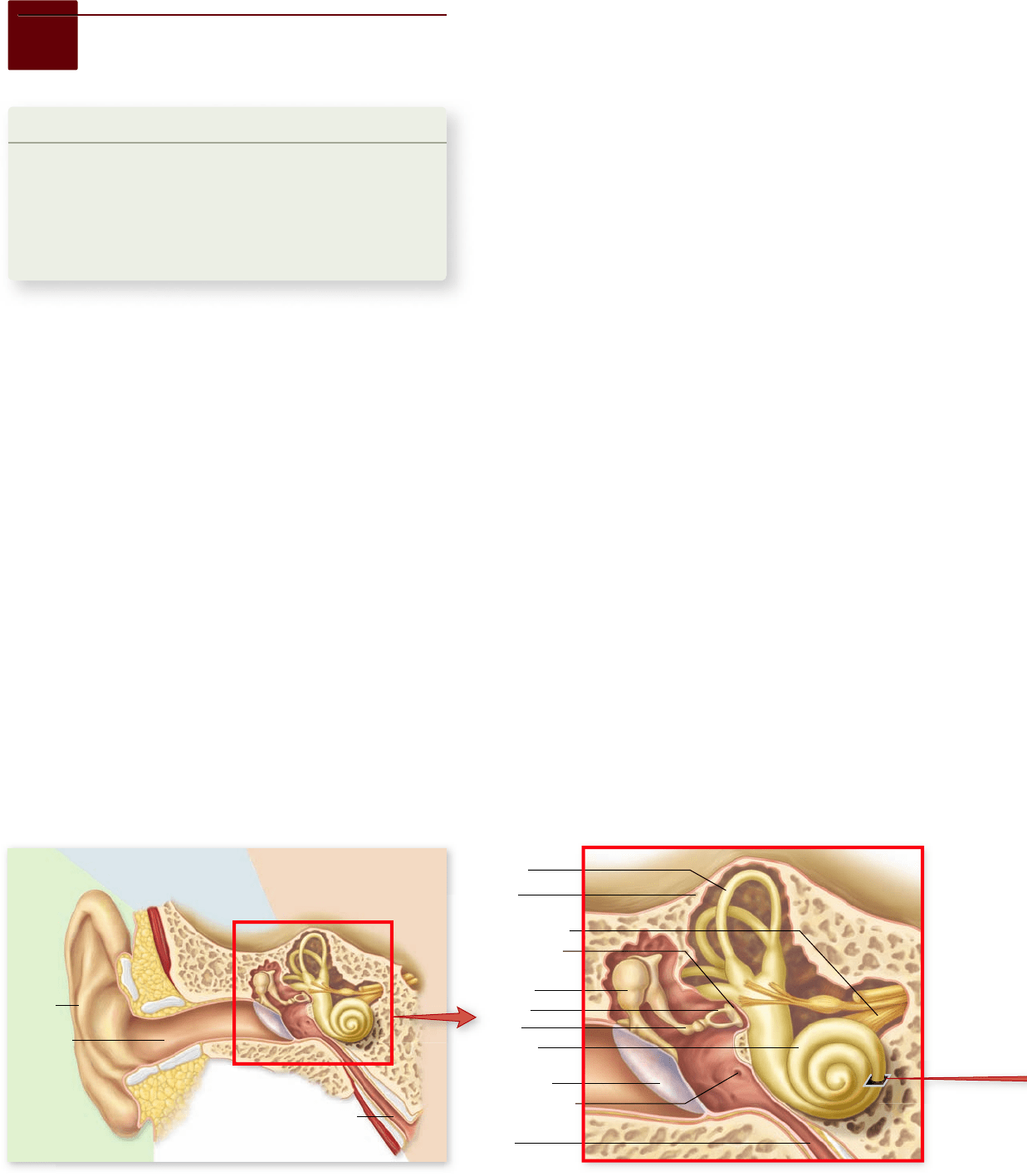
Structure and function of the human ear. The structure of the human ear is shown in successive enlargements
illustrating functional parts (a to d). Sound waves passing through the ear canal produce vibrations of the tympanic membrane, which causes
movement of the middle-ear ossicles (the malleus, incus, and stapes) against an inner membrane (the oval window). This vibration creates
pressure waves in the uid in the vestibular and tympanic canals of the cochlea. These pressure waves cause cilia in hair cells to bend,
producing signals from sensory neurons.
otoliths in fish vibrate against hair cells in the otolith organ,
action potentials are produced. Hair cells are so-called because
of the stereocilia that project from their surface.
Hearing structures of terrestrial vertebrates
In the ears of terrestrial vertebrates, vibrations in air may be chan-
neled through an ear canal to the eardrum, or tympanic membrane.
These structures are part of the outer ear. Vibrations of the tym-
panic membrane cause movement of one or more small bones that
are located in a bony cavity known as the middle ear.
Amphibians and reptiles have a single middle ear bone,
the stapes (stirrup), but mammals have two others: the malleus
(hammer) and incus (anvil) (figure 45.6a, b) . Where did these
two additional bones come from?
chapter
45
Sensory Systems
921www.ravenbiology.com
rav32223_ch45_915-936.indd 921rav32223_ch45_915-936.indd 921 11/17/09 3:55:06 PM11/17/09 3:55:06 PM