
Seybold J.S. Introduction to RF Propagation
Подождите немного. Документ загружается.

where the fade point is referenced to the average signal power, s
2
. This inte-
gral can be solved to yield a closed form.
Using this expression, the probability of a 12-dB fade is found to be 0.031,
which means that the signal will be more than 12 dB below the mean signal
level about 3.1% of the time. 䊐
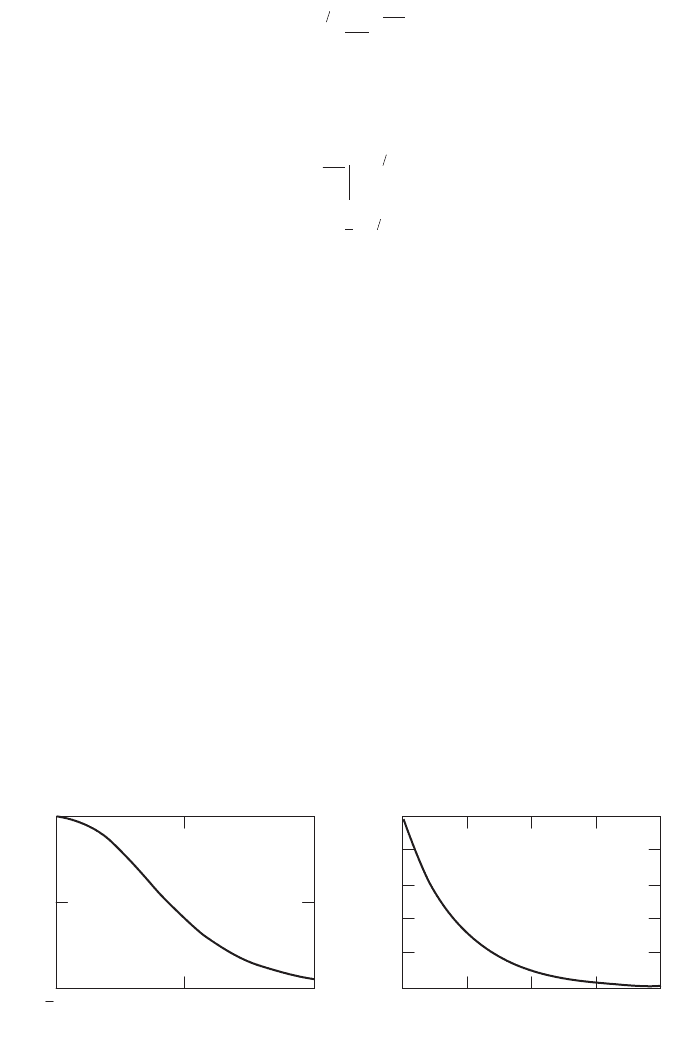
Figure 8.25 shows plots of probability versus fade depth. The left-hand plot
includes negative fades (signal enhancement), while the right-hand plot has an
expanded fade depth scale.
On the other hand, if there is an LOS component present or if one of the
reflections is dominant, then the envelope of the received signal is character-
ized by a Ricean pdf, rather than a Rayleigh. The determination of the prob-
ability of a fade is a little more complicated when the Ricean pdf is used, but
it is still tractable.
Example 8.9. Given a non-LOS communication link that has a dominant path
in addition to other weaker reflective paths, what is the probability of a 12-dB
or greater fade? The average power in the dominant path is equal to twice the
average received power.
The dominant reflection implies that the fading will be governed by a
Ricean pdf. The required parameters for the Ricean pdf (Appendix A) are as
follows:
Pe
Pe
x
r
x
x
x
=-
=-
-
-
-
-
2
2
10
20
10
2
0
1
2
10
1
s
s
P
r
edr
x
r
x
=
-
-
Ú
s
s
s
2
2
0
10
2
2
20
202 FADING AND MULTIPATH CHARACTERIZATION
10 0 10
0
0.5
1
Fade Probability for Rayleigh Fading
Fade Depth (dB)
Probability
10 15 20 25 30
0
0.01
0.02
0.03
0.04
0.05
Fade Probability for Rayleigh Fading
Fade Depth (dB)
Probability
Figure 8.25 Probability of fade versus fade depth for a Rayleigh fading signal.

s
2
is the average power from all of the reflections (i.e., the total average
received power)
A is the amplitude of the dominant reflection
K is the Ricean factor (K = 10log[A
2
/(2s
2
)])
Let the average received multipath power be represented by s
2
. The average
power in the dominant (or specular) path is equal to A
2
/2. Then for this
example,
Thus
Substituting for A, yields the desired expression
While not trivial, this integral can be evaluated using a computational aid such
as Mathcad to obtain the probability of a 12-dB or greater fade of 0.018.
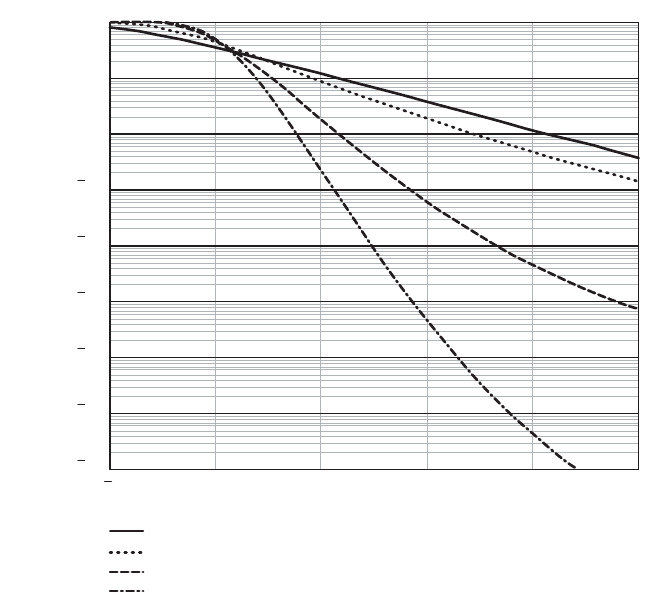
Figure 8.26 shows several curves of the probability of exceeding a fade depth
for several values of Ricean factor.
8.5 SUMMARY
For terrestrial communications, fading is roughly grouped into two types
of fading: large-scale and small-scale. Large-scale fading encompasses those
effects that change the path loss when the relative geometry of the transmit-
ter and receiver has changed by several wavelengths or more. Such effects
include increased free-space loss, ground-bounce loss, and shadowing. Small-
scale fading is fading that occurs due to movement on the order of a wave-
length and is primarily attributed to multipath. The expression for
ground-bounce multipath indicates that the path loss will be proportional to
the fourth power of the link distance and will be independent of the wave-
length when communication takes place over a smooth reflective surface. The
Rayleigh criterion is used to determine whether the surface can be charact-
gerized as smooth or not.
P
r
eI
r
dr
x
r
x
=
Ê
Ë
ˆ
¯
-+
()
-
Ú
s
s
s
s
s
2
4
2
0
10
0
22
2
20
2
A
P
r
eI
Ar
dr
x
rA
x
=
=
Ê
Ë
ˆ
¯
-+
()
-
Ú
2
2
2
0
10
0
2
22
2
20
s
ss
s
s
A
22
22=s
SUMMARY 203
Fresnel zone analysis is used to determine if any objects in the field of view
may be affecting propagation. By keeping 60% of the first Fresnel zone clear
of obstructions, the effect of stray reflection and diffraction is minimized. For
a large obstacle in the propagation path, it is possible to model the effect of
diffraction over the obstacle and estimate the wave strength at the receiver.
An obstacle that is below the line of sight may still diffract the electromag-
netic wave and cause the received wave to be attenuated. When there is no
single or dominant obstacle in the proagation path, but the receiver is shad-
owed by a large number of random objects, the receiver is picking up a signal
that has been attenuated (diffracted) by many different elements.The received
signal is affected by each of these elements in a multiplicative manner, and
when considered in dB the multiplication becomes addition. If the attenua-
tions are independent, then this becomes the sum of many independent
random variables, which tends to a Gaussian pdf as the number of contribu-
tions tends to infinity. Thus when multiple obstacles or diffractors are present,
log-normal fading is used to model the path loss or received signal level.
204 FADING AND MULTIPATH CHARACTERIZATION
50 5
Fade Depth (dB)
Probability
10 15 20
1
.
10
8
1
.
10
7
1
.
10
6
1
.
10
5
1
.
10
4
1
.
10
3
0.01
0.1
1
K = 0 dB
K = 5 dB
K = 10 dB
K = 13 dB
Probability vs Fade Depth for Ricean
Figure 8.26 Probability of exceeding a given fade depth for different values of K.
Once the large-scale fading has been characterized, the analyst may then
turn his or her attention to the small-scale fading effects, which occur in
reponse to changes in the tramsitter to receiver geometry on the order of a
wavelength. Small-scale fading is characterized as either fast- or slow-fading.
Slow fading is attributed to the Doppler spread between the direct signal and
the reflected (multipath signals). Slow fading is defined as the correlation time
of the fade being greater than the symbol interval so that the fade may be
treated as constant over the symbol. Receiver AGC can be used to adjust the
receiver to keep the amplitude of successive symbols consistent. For fast
fading, AGC is not helpful and the use of amplitude-dependent modulations
is not recommended.
Small-scale fading is also characterized by its spectral properties, either flat
or frequency selective. The spectral properties of the channel are dictated by
the delay spread, the variation in delay between the direct and reflected
signals. Excessive delay spread can lead to intersymbol interference. If the
channel is slow-fading and frequency-selective, then an equalizer can be used
to compensate for the spectral effects of the channel.
REFERENCES
1. L. V. Blake, Radar Range Performance Analysis, Munro Publishing Co., Silver
Spring, MD, 1991, pp. 261–263.
2. J. D. Parsons, The Mobile Radio Propagation Channel, 2nd ed., Wiley, West Sussex,
1992, pp. 21–22.
3. W. C. Y. Lee, Mobile Communication Engineering, Theory and Applications, 2nd
ed., McGraw-Hill, New York, 1998, pp. 109–114.
4. S. R. Saunders, Antennas and Propagation for Wireless Communication Systems,
Wiley, West Sussex, 1999, pp. 46–51.
5. N. Blaunstein, Radio Propagation in Cellular Networks, Artech House, Norwood,
MA, 2000, pp. 48–53.
6. J. D. Parsons, The Mobile Radio Propagation Channel, 2nd ed., Wiley, West Sussex,
1992, pp. 33–34.
7. W. L. Stutzman, G. A. Thiele, Antenna Theory and Design, 2nd ed., Wiley, Hoboken,
NJ, 1998, p. 556.
8. T. S. Rappaport, Wireless Communications, Principles and Practice, 2nd ed.,
Prentice-Hall, Upper Saddle River, NJ, 2002, pp. 129–134.
9. W. C. Y. Lee, Mobile Communication Engineering, Theory and Applications, 2nd
ed., McGraw-Hill, New York, 1998, p. 142.
10. ITU-R Recommendations, Propagation by Diffraction, ITU-R P.526–7, Geneva,
2001.
11. T. S. Rappaport, Wireless Communications, Principles and Practice, 2nd ed.,
Prentice-Hall, Upper Saddle River, NJ, 2002, pp. 134–136.
12. J. D. Parsons, The Mobile Radio Propagation Channel, 2nd ed., Wiley, West Sussex,
1992, pp. 45–46.
REFERENCES 205

13. B. McLarnon, VHF/UHF/Microwave Radio Propagation: A Primer for Digital
Experimenters, www.tapr.org
14. W. C. Y. Lee, Mobile Communication Engineering, Theory and Applications, 2nd
ed., McGraw-Hill, New York, 1998, pp. 147–149.
15. N. Blaunstein, Radio Propagation in Cellular Networks, Artech House, Norwood,
MA, 2000, pp. 135–137.
16. J. D. Parsons, The Mobile Radio Propagation Channel, 2nd ed., Wiley, West Sussex,
1992, pp. 42–45.
17. S. R. Saunders, Antennas and Propagation for Wireless Communication Systems,
Wiley, West Sussex, 1999, Chapter 9.
18. S. R. Saunders, Antennas and Propagation for Wireless Communication Systems,
Wiley, West Sussex, 1999, pp. 186–188.
19. ITU-R Recommendations, Multipath propagation and parameterization of its char-
acteristics, ITU-R P.1407–0, Geneva, 1999.
EXERCISES
1. Given a communication link with each transceiver mounted on a 20-m
tower, operating over a smooth, reflective terrain, what is the path loss
experienced over the path if the transceivers are 2 km apart? Assume the
frequency is 10GHz and the antennas each have unity gain (0 dB). Justify
your answer.
2. Consider a 1.9-GHz system with the following parameters:
If the maximum allowable path loss for reception is 148 dB, what is the
maximum distance at which 90% coverage can be obtained? You may use
the Lee Model for the median path loss with g=43.1 and L
0
= 106.3 dB.
Assume log-normal fading with s
t
= 8 dB and use n = 2.5 for the frequency
adjustment exponent in F
5
.
3. Consider a PCS cell that is located in a relatively rural area, where there is
only a small amount of blockage or shadowing, and free-space loss can be
used for the median path-loss computation. Given the system parameters
what is the maximum distance at which 95% coverage can be expected?
Assume that the shadowing is log-normal.
f
S
=
=
()
=
19
3
110
.
max
GHz
dB location variability
PL -dB maximum allowable path loss
s
hh
GG
mt
tm
==
==
530
20 0
m, m
dBd, dBd
206 FADING AND MULTIPATH CHARACTERIZATION
4. A millimeter-wave (28-GHz) data link uses a 0.3-m-diameter aperture
antenna on each end and a 20-dBm transmitter. The waveguide loss at the
back of the antenna is 1 dB and the radome loss is 0.5 dB. If the signal band-
width is 10 MHz, the equivalent noise temperature is 800K and the required
CNR for detection is 25 dB, what is the maximum distance between the
radios for reliable operation? Assume that the antenna efficiency is 60%,
both radios are mounted 10 m above the ground, and the ground is very
reflective. Also assume that a 20-dB fade margin is required. Generate a
link budget and then compute the maximum distance.
5. A 1.9-GHz data link uses a 0.3-m diameter aperture antenna on each end
and a 10-dBm transmitter. The waveguide loss at the back of the antenna
is 1 dB and the radome loss is 0.5 dB. If the signal bandwidth is 1 MHz, the
equivalent noise temperature is 800 K and the required CNR for detection
is 15 dB, what is the maximum distance between the radios for reliable oper-
ation? Assume that the antenna efficiency is 60%, both radios are mounted
2 m above the ground, and the ground is very reflective. Also assume that
a 20-dB fade margin is required. Generate a link budget and estimate the
maximum range.
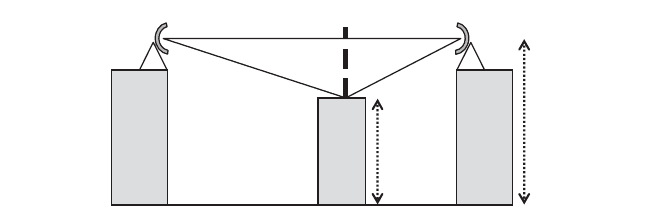
6. Consider the 2-km communication link shown in the accompanying dia-
gram. If the frequency of the link is 2.85 GHz, the middle building is located
between the other two as shown, and the roof is reflective, determine the
following:
•
Can FSL be used to plan the link (i.e., is the middle building producing
any significant blockage of the signal)? Justify your answer.
•
Will reflected signal from the roof cause a multipath type of signal fade
(i.e., cancellation)? Again explain your conclusions.
Assume that the antenna patterns are fairly broad, so that antenna dis-
crimination does not factor into the analysis.
EXERCISES 207
100 m
d = 2 km
a
2
a
1
90 m
d
1
= 1.6 km
d
2
= 0.4 km
Diagram for Exercise 5.
7. Given a channel with a coherence bandwidth, B
c
, of 100 KHz, is there likely
to be any significant distortion or intersymbol interference to a wireless
LAN operating at a symbol rate of 1 million symbols per second?

208
Introduction to RF Propagation, by John S. Seybold
Copyright © 2005 by John Wiley & Sons, Inc.
CHAPTER 9
Indoor Propagation Modeling
9.1 INTRODUCTION
Indoor propagation of electromagnetic waves is central to the operation of
wireless LANs, cordless phones, and any other indoor systems that rely on RF
communications. The indoor environment is considerably different from the
typical outdoor environment and in many ways is more hostile. Modeling
indoor propagation is complicated by the large variability in building layout
and construction materials. In addition, the environment can change radically
by the simple movement of people, closing of doors, and so on. For these
reasons, deterministic models are not often used. In this chapter, some statis-
tical (site-general) models are presented. When fit to empirical data, these
models can provide a reasonable representation of the indoor environment.
9.2 INTERFERENCE
While an understanding of indoor propagation is essential, another important
element of indoor wireless operation that should be considered is interference.
Unlike outdoor environments, where the operating distances are greater, in
an indoor environment, it is possible, and in fact common, to have an inter-
fering system operating within a few feet or less of a given system. A classic
but by no means isolated example is the desktop computer with a wireless
LAN card that also employs a wireless keyboard and/or mouse. The wireless
keyboard and mouse are likely to use the Bluetooth standard, which uses fre-
quency hopping in the 2.4-GHz ISM band. If the wireless LAN card is an
802.11b or g [direct sequence spread spectrum (DSSS) or orthogonal fre-
quency division multiplexing (OFDM)] system, then it will be operating in the
same frequency band and the potential for interference exists. In addition, a
computer has a variety of internal high-frequency digital clocks that generate
harmonics, which may fall within the system’s passband. A monitor may also
produce a substantial amount of interference. Add to that the RF energy radi-
ated by fluorescent lighting, other consumer products, and office equipment,
and it becomes clear that the interference environment indoors is very
unfriendly. It is important to account for this interference and to understand
that communication link problems in indoor environments may not be prop-
agation issues, but rather interference issues. Sometimes simply repositioning
a piece of equipment by a few feet is enough to resolve the problem.
The effect of various interferers can be estimated by computing the signal-
to-interference ratio at the receiver of interest or victim receiver. In general
the signal-to-interference ratio should be at least as large as the required
signal-to-noise ratio for acceptable operation. Another effect, called de-
sensing, can occur even when the interferer is operating at a different fre-
quency or on a different channel from the victim receiver. This can occur in
different ways. The most straightforward effect is when the interfering signal
is within the front-end bandwidth of the victim receiver and causes the victim
receiver’s AGC to reduce the front-end gain. Another effect is that the inter-
fering signal may actually overload the front end of the victim receiver, causing
nonlinear operation. This nonlinear operation will cause intermodulation
products to be produced [1], some of which may occur within the operating
channel, again resulting in reduced receiver sensitivity.
9.3 THE INDOOR ENVIRONMENT
The principal characteristics of an indoor RF propagation environment that
distinguish it from an outdoor environment are that the multipath is usually
severe, a line-of-sight path may not exist, and the characteristics of the envi-
ronment can change drastically over a very short time or distance. The ranges
involved tend to be rather short, on the order of 100 m or less. Walls, doors,
furniture, and people can cause significant signal loss. Indoor path loss can
change dramatically with either time or position, because of the amount of
multipath present and the movement of people, equipment, and/or doors [2].
As discussed in the previous chapter, multiple reflections can produce signal
smearing (delay spread) and may cause partial signal cancellation (signal
fading).
9.3.1 Indoor Propagation Effects
When considering an indoor propagation channel, it is apparent that in many
cases there is no direct line of sight between the transmitter and receiver. In
such cases, propagation depends upon reflection, diffraction, penetration, and,
to a lesser extent, scattering. In addition to fading, these effects, individually
and in concert, can degrade a signal. Delay and Doppler spread are usually
far less significant in an indoor environment because of the much smaller dis-
tances and lower speeds of portable transceiver as compared to outdoor envi-
ronments. However, this advantage is usually offset by the fact that many
THE INDOOR ENVIRONMENT 209

indoor applications are wideband, having short symbol times and therefore a
corresponding greater sensitivity to delay spread. In addition, the wave may
experience depolarization, which will result in polarization loss at the receiver.
9.3.2 Indoor Propagation Modeling
There are two general types of propagation modeling: site-specific and site-
general. Site-specific modeling requires detailed information on building
layout, furniture, and transceiver locations. It is performed using ray-tracing
methods in a CAD program. For large-scale static environments, this approach
may be viable. For most environments however, the knowledge of the build-
ing layout and materials is limited and the environment itself can change,
by simply moving furniture or doors. Thus the site-specific technique is not
commonly employed. Site-general models [3–6] provide gross statistical
predictions of path loss for link design and are useful tools for performing
initial design and layout of indoor wireless systems. Two popular models,
the ITU and the log-distance path loss models, are discussed in the following
sections.
9.3.3 The ITU Indoor Path Loss Model
The ITU model for site-general indoor propagation path loss prediction [3] is
(9.1)
where
N is the distance power loss coefficient
f is the frequency in MHz
d is the distance in meters (d > 1m)
Lf(n) is the floor penetration loss factor
n is the number of floors between the transmitter and the receiver
Table 9.1 shows representative values for the power loss coefficient, N, as given
by the ITU in Ref. 3, and Table 9.2 gives values for the floor penetration loss
factor.
The ITU model can be shown to be equivalent to the equation for free-
space loss with the distance power being N = 20 (when not traversing floors).
Thus the ITU model is essentially a modified power law model. This can be
seen as follows: The expression for free-space loss expressed in dB is given by
when N = 20. The first term on the right-hand side can be expressed as
LNd
dB
=-
()
+
()
+
()
20 20 4
10 10 10
log log loglp dB
L f N d Lf n
total
=
()
+
()
+
()
-20 28
10 10
log log dB
210 INDOOR PROPAGATION MODELING

Using the fact that
the expression for the path loss simplifies to
which, when expressed with two significant digits, agrees with the ITU site-
general indoor propagation model.
A few comments about the values in Table 9.1 and application of the ITU
site-general model are in order. A power loss coefficient value of N = 20 cor-
responds to free-space loss, and this will usually apply in open areas. Corri-
dors may channel RF energy, resulting in a power loss coefficient of N = 18
LfNd
dB
=
()
+◊
()
-20 27 54log log . dB
20 4 22log p
()
=
20 20 20
20 169 54 20 120 49 54 20
log log log
log . log . log
l
l
()
=
()
-
()()
()
=-
()()
-= -
()()
cf
ff
Hz
MHz MHz
THE INDOOR ENVIRONMENT 211
TABLE 9.1 Power Loss Coefficient Values, N, for the ITU Site-General Indoor
Propagation Model
Frequency Residential Office Commercial
900 MHz — 33 20
1.2–1.3 GHz — 32 22
1.8–2 GHz 28 30 22
4 GHz — 28 22
5.2 GHz — 31 —
60 GHz
a
—22 17
a
60 GHz is assumed to be in the same room.
Source: Table 2 from Ref. 3, courtesy of ITU.
TABLE 9.2 Floor Penetration Loss Factor, Lf(n), for the ITU Site-General Indoor
Propagation Model
Frequency Residential Office Commercial
900 MHz — 9 (n = 1) —
19 (n = 2)
24 (n = 3)
1.8–2 GHz 4n 15 + 4(n - 1) 6 + 3(n - 1)
5.2 GHz — 16 (n = 1 only) —
n is the number of floors penetrated (n ≥ 1).
Source: Table 3 from Ref. 3, courtesy of ITU.