
Tsoulos George (ред.) MIMO System Technology for Wireless Communications
Подождите немного. Документ загружается.

54 MIMO System Technology for Wireless Communications
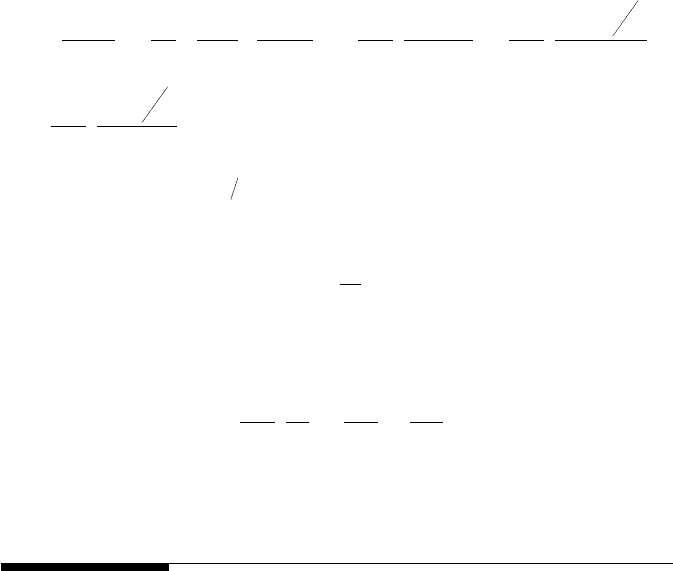
Assuming that or then I approaches zero and we can use the
approximation:
(2C.4)
Finally, Equation 2C.3 is given by:
(2C.5)
Equation 2C.5 proves that under the aforementioned assumptions V may be
omitted from the matrix (Equation 2.38).
References
1. D.S. Shiu, J. Foschini, J. Gans, and J.M Kahn. 2000. “Fading correlation
and its effect on the capacity of multielement antenna system,” IEEE
Transactions on Communications, 48, 502, 2000.
2. http://www.cs.ut.ee/~toomas_1/linalg/lin2/node14.html
3. A. Paulraj, R. Nabar, and D. Gore. 2003. Introduction to Space-Time Wireless
Communications, Cambridge: Cambridge University Press, Chap. 4.
4. I.E. Telatar, “Capacity of multi-antenna Gaussian channels,” Eur. Trans. Telecom.,
Vol. 10, No. 6, Dec. 1999.
5. http://rkb.home.cern.ch/rkb/AN16pp/node123.html
6. B.R. Ertel and P. Cardieri. 1998. “Overview of spatial channel models for an-
tenna array communication systems,” IEEE Personal Communication Magazine,
Vol. 5, Feb. 1998, pp. 10–22.
7. G.V. Tsoulos and G.E. Athanasiadou. 2002. “On the application of adaptive
antennas to microcellular environments: radio channel characteristics and
system performance,” IEEE Trans. Veh. Technol., Vol. 51, No. 1, Jan. 2002, pp.
1–16.
8. G.E. Athanasiadou, A.R. Nix, and J.P. McGeehan. 2000. “A microcellular ray-
tracing propagation model and evaluation of its narrowband and wideband
predictions,” IEEE J. Select. Areas Commun., Vol. 18, Mar. 2000, pp. 322–335.
VU
Q
U
QI
I
I
U
Q
=
e
=
©
«
ª
¹
»
º
= 2
22RR d d d
sin
cos
sin
112
2
2
4
2
=
()
¡
=
cos
sin
sin
sin
sin
I
I
U
Q
I
I
V
U
Q
d
d
22
2
I
I
()
sin
(2C.3)
Rd dR 1
sinII=
e
~
d
R
V
U
Q
I
I
UI
Q
U
Q
= = ~
e
4
4
1
22
ddd
R
4190_book.fm Page 54 Tuesday, February 21, 2006 9:14 AM
Theory and Practice of MIMO Wireless Communication Systems 55
9. G.E. Athanasiadou and A.R. Nix. 2000. “A novel 3D indoor ray-tracing prop-
agation model: the path generator and evaluation of narrowband and wide-
band predictions,” IEEE Trans. Veh. Technol., Vol. 49, July 2000, pp. 1152–1168.
10. 3GPP TR 25.996 V6.1.0 (www.3gpp.org).
11. L. Correia, ed. 2001. Wireless Flexible Personalised Communications, New York:
Wiley.
12. G.J. Foschini. 1996. “Layered space-time architecture for wireless communica-
tions in a fading environment when using multi-element antennas,” Bell Labs
Tech. J., Autumn 1996, pp. 41–59.
13. J.G. Proakis. 1983. Digital Communications, 4th ed., New York: McGraw-Hill,
Chap. 2.
14. A. Papoulis. 1984. Probability, Random Variables, and Stochastic Processes, New
York: McGraw-Hill.
15. M.A. Khalighi, J.-M. Brossier, G. Jourdain, and K. Raoof. 2001. “On capacity of
Ricean MIMO channels,” in Proc. 12th IEEE Int. Symp. Personal, Indoor and Mobile
Radio Communications, A-150 to A-154, Vol. 1, 2001.
16. A. Zelst and J.S. Hammerschmidt. 2002. “A single coefficient spatial correlation
models for multiple-input multiple output (MIMO) radio channels,” in Proc.
URSI XXVIIth General Assembly, 2002.
17. S. Loyka and G.V. Tsoulos. 2002. “Estimating MIMO system performance using
the Correlation matrix approach,” IEEE Commun. Letters, 6, 19, 2002.
18. J. Salz and J.H. Winters. 1994. “Effect of fading correlation on adaptive arrays in
digital mobile radio,” IEEE Trans. Veh. Technol., Vol. 43, Nov. 1994, pp. 1049–1057.
4190_book.fm Page 55 Tuesday, February 21, 2006 9:14 AM
57
3
Information Theory and Electromagnetism:
Are They Related?
Sergey Loyka and Juan Mosig
CONTENTS
3.1 Introduction..................................................................................................57
3.2 MIMO Channel Capacity ...........................................................................58
3.3 The Laws of Electromagnetism.................................................................59
3.4 Spatial Capacity and Correlation..............................................................61
3.5 Spatial Sampling and MIMO Capacity....................................................66
3.5.1 Bounds on Truncation Error in Sampling Series .......................69
3.5.2 Impact of Truncation Error on the Capacity ..............................71
3.6 MIMO Capacity of Waveguide Channels................................................75
3.6.1 Rectangular Waveguide Capacity ................................................77
3.6.2 Rectangular Cavity Capacity.........................................................82
3.7 Spatial Capacity of Waveguide Channels ...............................................84
3.8 Acknowledgments.......................................................................................85
References...............................................................................................................86
3.1 Introduction
Multi-antenna systems have recently emerged as a highly efficient strategy
for wireless communications in rich multipath channels [1–4]. However, it
is also well recognized that the wireless propagation channel has a profound
impact on MIMO system performance [3–8]. In ideal conditions (uncorre-
lated high rank channel) the MIMO capacity scales roughly linearly as the
number of Tx/Rx antennas. The effect of channel correlation is to decrease
the capacity and, at some point, this is the dominant effect. This effect is
highly dependent on the scenario considered. Many practically important
4190_book.fm Page 57 Tuesday, February 21, 2006 9:14 AM

58 MIMO System Technology for Wireless Communications
scenarios have been studied and some design guidelines have been proposed
as well.
Here we analyze the effect of propagation channel from a completely
different perspective [9–14]. Electromagnetic waves are used as the primary
carrier of information. The basic electromagnetism laws, which control the
electromagnetic field behavior, are expressed as Maxwell equations [15,16].
Hence, we ask the question: What is the impact, if any, of Maxwell equations
on the notion of information in general and on channel capacity in particular?
In other words, do the laws of electromagnetism impose any limitations on
the achievable channel capacity? Below, we concentrate on this last question
and try to answer it. We are not targeting particular scenarios; rather, we are
going to look at fundamental limits that hold in any scenario. Analyzing
MIMO channel capacity allows one, in our opinion, to come very close to
answering this question.
Our approach is a three-fold one [13]. First, we employ the channel corre-
lation argument and introduce the concept of an ideal scattering
to demon-
strate that the minimum antenna spacing is limited to about half a wave
length for any
channel (i.e., locating antennas closer to each other will result
in a capacity decrease because of correlation).
Second, we use the plane wave spectrum expansion of a generic electro-
magnetic wave and the Nyquist sampling theorem in the spatial domain to
show that the laws of electromagnetism in its general form (Maxwell equations)
limit the antenna spacing to half a wavelength, d
min
= Q
/2, for linear antenna
arrays but only asymptotically when the number of antennas n
q
h
. For a
finite number of antennas, this limit is slightly less than Q
/2 because a slight
oversampling is required to reduce the truncation error when using the
sampling series. In any case, the existence of the minimum spacing limits
the number of antennas and the MIMO capacity for a given aperture size.
It should be emphasized that this limitation is scenario-independent. It fol-
lows directly from Maxwell equations and is valid in any situation.
Third, we consider the MIMO capacity of waveguide and cavity channels
and demonstrate that there is a final number of degrees of freedom in that
environment also, which is dictated directly by Maxwell equations that can
be exploited for MIMO communications. Electromagnetics and information
theory can be nicely united in this case to produce insight that is not available
by using either of these disciplines separately. In particular, it turns out that
the traditional single-mode transmission, which is so popular in the electro-
magnetics community, is optimal only at a small signal-to-noise ratio (SNR).
3.2 MIMO Channel Capacity
We employ the celebrated Foschini-Telatar formula for the MIMO channel
capacity [1,2], which is valid for a fixed linear n
×
n
matrix channel with
4190_book.fm Page 58 Tuesday, February 21, 2006 9:14 AM
Information Theory and Electromagnetism: Are They Related?
59
additive white Gaussian noise and when the transmitted signal vector is
composed of statistically independent equal power components, each with
a Gaussian distribution, and the receiver knows the channel,
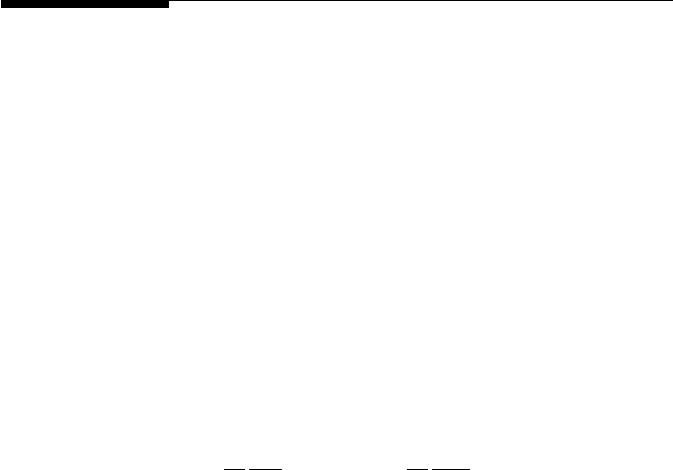
[bits/s/Hz]. (3.1)
Here, n
is the number of transmit/receive antennas, W
is the average SNR,
I
is a n
×
n
identity matrix, G
is the normalized channel matrix (the entries
are complex channel gains from each Tx to each Rx antenna), ,
which is considered to be frequency independent over the signal bandwidth,
and
+
denotes transpose conjugate. For simplicity, we consider a n
×
n
chan-
nel, but the results also hold true, sometimes with minor modifications, for
a n
R
×
n
T
channel, where n
R
and
n
T
are the number of Tx and Rx antennas,
respectively, n
R
|
n
T
.
In an ideal case of orthogonal full-rank channel Equation 3.1
reduces to
, (3.2)
i.e., the capacity is maximum and scales roughly linearly with the number
of antennas.
3.3 The Laws of Electromagnetism
It follows from Equation 3.1
that the MIMO channel capacity crucially
depends on the propagation channel G
. Since electromagnetic (EM) waves
are used as the carrier of information, the laws of electromagnetism must
have an impact on the MIMO capacity. They ultimately determine the behav-
ior of G
in different scenarios. Hence, we outline the laws of electromagne-
tism from a MIMO system perspective. In their most general form, they are
expressed as Maxwell equations with charge and current densities as the
field sources [15,16]. Appropriate boundary conditions must be applied in
order to solve them. We are interested in the application of Maxwell equa-
tions to find the channel matrix G
in Equation 3.1. Since the Rx antennas are
physically separated from the Tx ones, we assume that the physical support
of our channel is a source-free space, which includes scatterers, where EM
waves do propagate. In this case, Maxwell equations simplify to the system
of two decoupled wave equations [15]:
, (3.3)
where and are electric and magnetic field vectors, and c
is the speed of
light. There are six independent field components (or “polarizational degrees
tr[GG
+
=] n
Cn n=+
()
log /
2
1 W
y
y
=
y
y
=
2
2
2
2
2
2
2
2
1
0
1
0E
E
H
H
ct c t
,
EH
4190_book.fm Page 59 Tuesday, February 21, 2006 9:14 AM
60 MIMO System Technology for Wireless Communications
of freedom”) associated with Equation 3.3 (three for electric and three for
magnetic fields), which can be used for communication in rich-scattering
environments. Only two of them survive in free space at the far-field region
(“poor scattering”). Hence, in a generic scattering case the number of polar-
izational degrees of freedom varies between two and six, and each of them
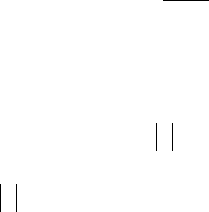
can be used for communication. Using the Fourier transform in time domain,
. (3.4)
Equation 3.3 can be expressed as [15]
, (3.5)
where K
denotes any of the components of E
and H
, r
is a position vector
and \
is the frequency. For a given frequency \
(i.e., narrowband assump-
tion), Equation 3.5 is a second-order partial differential equation in r
. It
determines K
(for given boundary conditions, i.e., a Tx antenna configuration
and scattering environment) and, ultimately, the channel matrix and the
channel capacity. Note that Equation 3.5 is general as it does not require any
significantly restrictive assumptions. The source-free region assumption
seems to be quite natural (i.e., Tx and Rx antennas are physically separated),
and the narrowband assumption is simplifying but not restrictive since Equa-
tion 3.5 can be solved for any
frequency and, further, the capacity of a
frequency-selective channel can be evaluated using well-known techniques.
Unfortunately, the link between Equation 3.5 and the channel matrix G
is
not explicit at all. A convenient way to study this link is to use the spatial
domain Fourier transform, i.e., the plane-wave spectrum expansion,
(3.6)
where k
is the wave vector. Using Equation 3.6, Equation 3.5 can be reduced
to [15]
. (3.7)
Hence, , and the electromagnetic field is represented in terms of
its plane-wave spectrum , which in turn is determined through given
boundary conditions, i.e., scattering environment and Tx antenna configu-
ration. In the next sections, we discuss limitations imposed by Equation 3.5
through Equation 3.7 on the MIMO channel capacity.
K\ K
\
(, ) (,)rr=
µ
te dt
jt
+
()
=
2
2
0K\ \ K\(, ) / (, )rrc
K\ K\
K
U
K\
(, ) (, )
(,)
()
(, )
krr
rk
kr
=
=
µ
µµ
ed
te
j
1
2
4
jjt
dd
()
,
\
\
kr
k
kk
2
2
0
()
=()(,)\K\/c
k = \/c
K\(,)k
4190_book.fm Page 60 Tuesday, February 21, 2006 9:14 AM
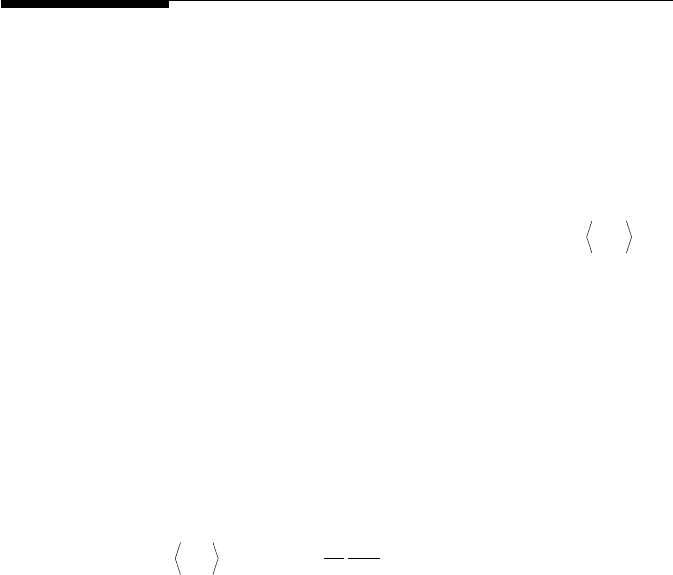
Information Theory and Electromagnetism: Are They Related?
61
3.4 Spatial Capacity and Correlation
The channel capacity is defined as the maximum mutual information [17],
, (3.8)
where are Tx and Rx vectors, and the maximum is taken over all possible
transmitted vectors subject to the total power constraint, .
Under some
conditions (quasi-static frequency-flat channel with additive
white Gaussian noise (AWGN), with perfect channel state information (CSI)
at the receiver), this results in Equation 3.1. In order to study the impact of
the electromagnetics laws on the channel capacity and, following the
approach of [1,2], we define
the spatial capacity
S
as the maximum mutual
information between the Tx vector on one side and the pair of the Rx vector
y
and the channel (assuming perfect CSI at the Rx end) on the other, the
maximum being taken over both
the Tx vector and EM field distributions,
(3.9)
where, to be specific, we assume that the electric field E
is used to transmit
data (H
field can be used in the same way), and the last constraint is due to
the boundary condition B
associated with the scattering environment. The
first constraint is the classical power constraint and the second one is due
to the wave equation. The channel matrix G
is a function of E
since the
electric field is used to send data. The spatial capacity S
is difficult to find
in general, since the constraints include a partial differential equation with
arbitrary boundary conditions.
One may consider a reduced version of this problem by defining a spatial
MIMO capacity as a maximum of the conventional MIMO channel capacity
(per unit bandwidth, i.e., in bits/s/Hz) over possible propagation channels
(including Tx and Rx antenna locations and scatterers’ distribution), subject
to some possible constraints. In this case, we replace Equation 3.9 by
, (3.10)
where the constraint is due to the Maxwell (wave) equations
and the capacity is maximized by changing G
(within some limits), for
example, by appropriate positioning of antennas. Unfortunately, the explicit
CI
p
=
()
{}
max ,
()x
xy
x, y
PP
xt
= f
+
xx
G
SI
P
p
T
=
{}
()
{}
f
+
max , , ( ) ,
(),xE
xyGE
xxconst.: ,, , , ,=
0
y
y
=
{}
2
2
2
2
1
0E
E
EE r
ct
tB
SC=
()
{}
()
max ,
G
GGconst.: MaxwellM
M Maxwell
()
4190_book.fm Page 61 Tuesday, February 21, 2006 9:14 AM
62 MIMO System Technology for Wireless Communications
form of the constraint is not known. Additional constraints (due to a
limited aperture, for example) may be also included. The aperture constraint
was discussed in [25] by introducing the concept of intrinsic capacity, which
is somewhat similar to our concept of spatial capacity. Note that the second
definition (Equation 3.10) will give a spatial capacity, which is, in general,
less than or equal to that in the first definition (Equation 3.9).
We have termed the maxima in Equation 3.9 and Equation 3.10 “spatial
capacity” or “capacity of a given space.” Since we have to vary the channel
during this maximization, the name “channel capacity” seems to be inap-
propriate simply because the channel is not fixed. On the other hand, we
vary the channel within some limits, i.e., within given space. Thus, the term
“capacity of a given space,” or “spatial capacity,” seems to be appropriate.
The question arises: What is this maximum and what are the main factors
that have an impact on the maximum? Using the ray-tracing (geometrical
optics) arguments and the recent result on the MIMO capacity, we further
demonstrate that there exists an optimal distribution of scatterers and of Tx/Rx
antennas that provides the maximum possible capacity in a given region of
space. Hence, the MIMO capacity per unit spatial volume can be defined in a
fashion similar to the traditional definition of the channel capacity per unit
bandwidth. This allows the temporal and spatial domains to enter into the
analysis on equal footing and, hence, demonstrates explicitly the space–time
symmetry of the capacity problem in the spirit of special relativity in physics.
In order to proceed further, we need some additional assumptions. Con-
sidering a specific scenario would not allow us to find a fundamental limit
simply because the channel capacity would depend on too many specific
parameters. For example, in outdoor environments the Tx and Rx ends of
the system are usually located far away from each other. Hence, any MIMO
capacity analysis (and optimization) must be carried out under the constraint
that the Tx and Rx antennas cannot be located close to each other. However,
there exists no fundamental limitation on the minimum distance between
the Tx and Rx ends. Thus, this maximum capacity would not be a funda-
mental limit. In a similar way, a particular antenna design may limit the
minimum distance between the antenna elements, but it is just a design
constraint
rather than a fundamental limit. Similarly, the antenna design has
an effect on the signal correlation (due to the coupling effect, for example),
but this effect is very design-specific and, hence, is not of a fundamental
nature. In other words, the link between the wave equations, Equation 3.3
or Equation 3.7 and the channel matrix G
is far from explicit, since too many
facts depend on Tx and Rx antenna designs and on many other details.
We will instead
consider a reduced version of this problem. In particular,
we investigate the case when the Tx and Rx antenna elements are constrained
to be located within given Tx and Rx antenna apertures. We are looking for
such location of antenna elements (within the given apertures) and such
distribution of scatterers that the MIMO capacity (“spatial capacity”) is max-
imum. While this maximum may not be achievable in practice, it gives a
good indication as to what the potential limits of MIMO technology are.
M
4190_book.fm Page 62 Tuesday, February 21, 2006 9:14 AM

Information Theory and Electromagnetism: Are They Related?
63
In order to avoid the effect of design-specific details, we adopt the follow-
ing assumptions. First, we consider a limited antenna aperture size (1D, 2D
or 3D) for both the Tx and Rx antennas. All the Tx (Rx) antenna elements
must be located within the Tx (Rx) aperture. As it is well known, a rich
scattering environment is required in order to achieve high MIMO capacity.
Thus, second, the rich (“ideal”) scattering assumption is adopted in its most
abstract form. Specifically, it is assumed that there is an infinite number of
randomly and uniformly located ideal scatterers (the scattering coefficient
equals to unity), which form a uniform scattering medium in the entire space
(including the space region considered) and which do not absorb EM field.
This is the concept of “ideal scattering” (which cannot be better than that).
Third, antenna array elements are considered to be ideal field sensors with
no size and no coupling between the elements in the Rx (Tx) antenna array.
Our goal is to find the maximum MIMO channel capacity in such a scenario
(which posses no design-specific details) and the limits imposed by the
electromagnetism laws. It should be emphasized that the effect of electro-
magnetism laws is already implicitly included in some of the assumptions
above. In order to simplify analysis further, we use the ray (geometrical)
optics approximation, which justifies the ideal scattering assumption above.
Knowing that the capacity increases with the number of antennas, we try
to use as many antennas as possible. Is there any limit to it? Since antennas
have no size (by the assumption above), the given apertures can accommo-
date the infinite number of antennas. However, if antennas are located close
to each other the channel correlation increases and, consequently, the capac-
ity decreases. A certain minimum distance between antennas must be
respected in order to avoid capacity decrease, even in ideal rich scattering.
Figure 3.2 demonstrates this effect for uniformly spaced linear array anten-
nas for the scattering scenario depicted in Figure 3.1: if d
< d
min
, the effect of
correlation is significant and the capacity is less than the maximum one [8].
While d
min
depends on the scattering environment, i.e., the angular spread
)
of incoming multipath,
,
even in rich scattering (i.e., )
= 360°) d
min
~
Q
/2, which is consistent with the
Jakes model [22]. While the model above is a two-dimensional (2D) one, it
can be extended to 3D applying it to both orthogonal planes and, due to the
symmetry of the problem (no preferred direction), similar results should
hold in 3D as well. Rigorous analysis shows that the correlation between
adjacent elements in that case is sin(2Ud/Q)/(2Ud/Q) (with the first zero at
d
0
= Q/2) and the same minimum spacing requirement holds true, d
min
= Q/2.
We summarize the effect of d
min
as follows. When we increase the number
of antenna elements over a fixed aperture, the capacity at first increases. But
at some point, due to aperture limitation, we have to decrease the distance
d
min
max , .
Q
~
¯
°
±
¿
À
Á
1
2
05
)
4190_book.fm Page 63 Tuesday, February 21, 2006 9:14 AM