
Tsoulos George (ред.) MIMO System Technology for Wireless Communications
Подождите немного. Документ загружается.

354 MIMO System Technology for Wireless Communications
spatial diversity gain [2], spatial multiplexing gain [3], and beamforming
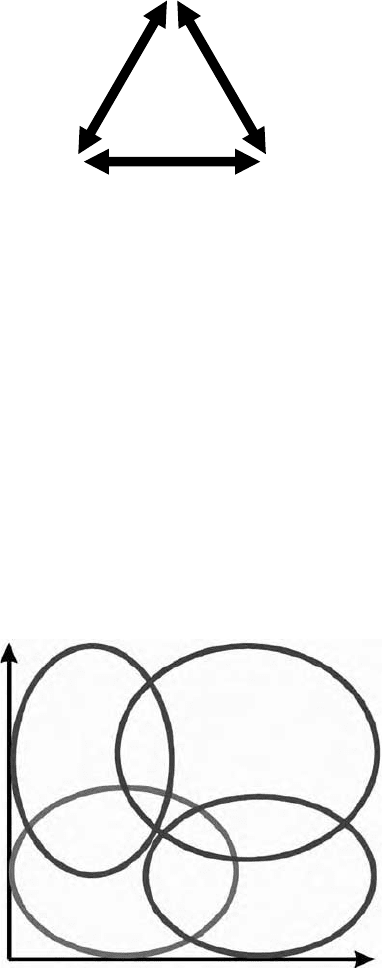
gain. These tradeoffs are illustrated in the triangle in Figure 12.1. In his
doctoral thesis, Weichselberger has shown that this “magic triangle” can be
broken up into three dichotomies, depending on whether the channel is
directive or diverse at either link end [1]. The chart in Figure 12.2 illustrates
the possible dichotomies depending on the available diversities or directiv-
ities of the MIMO channel. The diversity gain decreases outage probabilities,
while the multiplexing gain increases physical layer symbol rate. Decreased
outage probabilities translate into increased coverage without increasing
transmit power.
FIGURE 12.1
The magic triangle of Array Gain, Diversity, and Spatial Multiplexing [1].
FIGURE 12.2
Diversity vs. directivity dichotomies.
•
Increase power
• Beamforming
•
Multiply data rates
• Spatially orthogonal channels
Spatial
Multiplexing
• Mitigate fading
• Reduce outage
• Space-time coding
Diversity
Array gain
Diverse
Rx side
Rx-diversity
Spatial
multiplexing
(Rx-Tx-diversity)
Beam-forming
Directive Diverse Tx side
Tx-diversity
4190_book.fm Page 354 Tuesday, February 21, 2006 9:14 AM

Network Planning and Deployment Issues for MIMO Systems 355
Diversity gains have been exploited on the receiver side in mobile commu-
nications for several decades. Relatively recent is the introduction of transmit
diversity through space–time coding in third generation cellular networks.
According to the 3GPP air interface specification, transmit diversity must be
supported by the terminals. This means that network operators have the
choice of whether or not to provision for transmit diversity in their radio
networks. A significant challenge associated with specifying the performance
of downlink transmit diversity in cellular networks is the identification of a
representative mobile terminal performance. The mobile terminal implemen-
tation influences the performance of transmit diversity schemes. For packet
services with automatic repeat request (ARQ), diversity gains at the physical
layer translate into a reduced number of required retransmissions. Thus,
transmit diversity gains result in increased MAC-layer throughput for packet
services by reducing the average retransmission count. Spatial transmit
diversity schemes are particularly suited for microcells where the capacity
gains are large and beamforming is less appropriate due to large angular
spread [4].*
Spatial multiplexing gains increase the symbol rate on the transmitter side
and translate into higher peak data rates. Currently, spatial multiplexing is
not specified as a mandatory feature in any type of commercial radio access
network, although proprietary MIMO systems with spatial multiplexing
gains are commercially available. Spatial multiplexing is anticipated as a
future enhancement for third generation cellular systems, wireless LANs,
and wireless metropolitan networks (MANs). For spatial multiplexing, the
identification of a representative mobile terminal performance is even more
troublesome than for the case of transmit diversity.
A summary of the information-theoretical limits on the available gains
from multiple transmit and receive antennas is given in Table 12.1. The SIMO
configuration refers to a single transmit antenna and M
R
receiver antennas,
TABLE 12.1
Information-Theoretic Limits on Gains in SIMO, MISO, and MIMO
Systems [3]
Configuration Channel State at Tx
Expected Array Gain
(Beamforming Gain) Diversity Order
SIMO Unknown M
R
M
R
SIMO Known M
R
M
R
MISO Unknown 1 M
T
MISO Known M
T
M
T
MIMO Unknown M
R
M
R
M
T
MIMO Known E{Q
max
} M
R
M
T
* Actually, the use of angular spread as a means for characterizing a MIMO radio channel is
rather coarse. It is more appropriate to evaluate angular spreads after clustering the propagation
paths of the MIMO channel [5].
4190_book.fm Page 355 Tuesday, February 21, 2006 9:14 AM

356 MIMO System Technology for Wireless Communications
which correspond to receiver antenna diversity. We note that the diversity
gain becomes M
R
and the expected array gain is also M
R
. For the MISO
configuration, multiple transmit antennas are deployed with a single receive
antenna. This corresponds to transmit diversity when the transmitter is
ignorant of the channel and to transmit beamforming if the transmitter
knows the channel, respectively. The limits in this table assume that the
receiver always knows the channel. We note that the gains are not just limited
by the numbers of antennas in a cellular network configuration, but also by
the availability of channel state information at the transmit side. For further
details, we refer to [3].
A key problem of network planning for MIMO systems is a lack of avail-
able MIMO propagation models, which can be used for predicting the signal
field strength jointly with the number of available dimensions in the signal
space for specific sites. In contrast, propagation models for single antenna
transmission and reception can be considered mature. In modern radio net-
work planning tools, the propagation model consists of a basic pathloss
model, line-of-sight checking, and corrections for topography, morphogra-
phy, and street orientation [4, chap. 3]. Propagation models for MIMO trans-
mission are much less understood, but the recently developed model within
COST 273 carries great promise [6].
For MIMO systems in which the transmitter does not have channel state
knowledge, the instantaneous capacity can be calculated from
where I
M
R
denotes the identity matrix of order M
R
and H is the MIMO channel
matrix, W is the mean receive SNR, and X
H
is the Hermitian transpose of X.
If the distribution of H were known, the distribution of C could be deter-
mined. Sadly, the distribution of H parameterized by receiver location, base
station antenna array height, and configuration in real environments is little
understood. Most current MIMO literature treats the matrix elements of H
as (more or less) independent identically distributed, which leads to opti-
mistic values of capacity. It would mean that adjacent receive antenna ele-
ments carry fully decorrelated signals, e.g., as a consequence of random
multipath from all directions in a non-line-of-sight (NLOS) environment. In
[7], it was shown that MIMO capacity can have a large local variation in an
indoor scenario, depending on the position of the antenna arrays and on the
environment. The only solution currently at hand is to carry out detailed
MIMO channel measurements to link topology and morphography with
MIMO channel statistics.
Finally, we point out that the gains summarized in Table 12.1 affect the
signal to interference plus noise ratio (SINR) of individual links. These gains
affect the link quality statistics directly. In interference-limited situations,
C
M
M
T
R
=+
©
«
ª
¹
»
º
log det
H
I
W
HH
4190_book.fm Page 356 Tuesday, February 21, 2006 9:14 AM
Network Planning and Deployment Issues for MIMO Systems 357
these gains translate into throughput gains. If the situation is operating near
the hard-blocking limit, no such throughput gains can be achieved.
12.1.1 Introduction to Network Planning
In order to understand why effective radio network planning is essential for
every operator, we will present some numbers from an investor’s perspective
[8]: Governments in Europe raised about 120 billion Euro in fees for UMTS
licenses. As an example, the government in the U.K. raised 39.3 billion Euro
in fees from five Mobile Network Operators (MNOs), which is about 31.2
Euro per head of the population per year, for the duration of the license
validity (20 years).
All of a sudden, many national governments realized that UMTS fees could
be extremely valuable, and this set the scene for a feeding frenzy among
governments trying to maximize the proceeds of access rights to UMTS
frequency bands. The German auction resulted in a per capita fee (30.9 Euro
per head of the population per year — for 20 years) that was similar to the per
capita fee in the U.K. market. This enormous amount of money, which is
just an investment for the “admission to further invest money,” has to be
earned by the operators during the license validity period of typically
15–20 years. For many other governments the outcome of further auctions
was disappointing, or in other words, operators had a more realistic view
of business cases and license fees.
3G operators are currently making heavy investments in UMTS infrastruc-
ture. The analysis in [8] shows that the costs of building 3G networks in
Europe will be in excess of 140 billion Euro.
In order to launch these networks, strategies for the deployment must be
coupled with realistic business cases in order to determine the demand for
future services and applications, as well as investments required for network
infrastructure.
The evaluation of network infrastructure requirements can be achieved by
system dimensioning, i.e., radio network planning. The network planning
must be able to model the system behavior for individual business cases,
service profiles, and network loadings. Since radio network planning and
optimization are ongoing processes, the network efficiency, and hence the
required investments, will heavily depend on them.
The capacity and coverage analyses in 3G CDMA networks can no longer
be separated from the actual traffic demand in the system. However, the
future 3G traffic demand can be divided into two individual aspects.
• Increased data rates: In GSM the average data rate is on the order
of 10 kbit/s. In UMTS we expect an increase in the service data rate
of up to 384 kbit/s or even higher.
• Increased number of subscribers: The number of users in UMTS
networks is expected to grow substantially over the next few years.
4190_book.fm Page 357 Tuesday, February 21, 2006 9:14 AM
358 MIMO System Technology for Wireless Communications
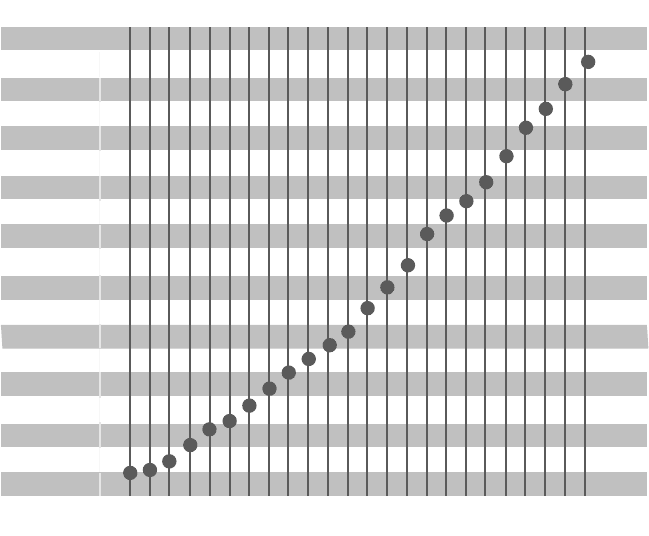
Figure 12.3, as an example from the world’s most experienced UMTS
network FOMA, shows the increase in the number of users in the
W-CDMA network of NTT-DoCoMo in Japan, reaching more than
12 million by April 2005.
Since 3G CDMA networks are interference-limited, higher traffic means
higher interference, and hence, a permanent network improvement and
optimization based on future traffic and service expectations will be essen-
tial. A direct consequence of this is the development of enhanced radio
network planning and optimization tools, with the aim of adjusting the
UMTS radio network configuration depending on the actual requirements.
12.1.1.1 Planning and Optimizing for Advanced 3G Technologies
While the initial planning and deployment of 3G networks is going on, a
number of enhanced and advanced features are expected to be deployed
and used over the next few years. In order to maximize the return on
investment of these advanced technologies, their usage needs to be compre-
hensively planned and optimized.
FIGURE 12.3
Subscriber growth from the world’s first commercial W-CDMA network, FOMA (NTT DoCoMo,
Japan). Source: NTT DoCoMo.
AMMJJJDF A MJSON AM J JASONDF
2004 2005
16,000
15,000
14,000
19,000
18,000
17,000
13,000
12,000
11,000
10,000
9,000
8,000
7,000
6,000
5,000
4,000
3,000
2,000
1,000
11,501
7,569
5,272
3,045
14,907
18,588
(ousand)
4190_book.fm Page 358 Tuesday, February 21, 2006 9:14 AM

Network Planning and Deployment Issues for MIMO Systems 359
Examples for such technologies are Remote Electrical Tilt (RET) antennas
(3GPP [9]), Tower Mounted Amplifiers (TMA), Tower Mounted Boosters
(TMB), micro- and picocells, higher sectorization, additional carriers, Multi
User Detection (MUD), higher order receive/transmit diversity, smart anten-
nas* and, most recently, MIMO transceivers.
With the introduction of HSDPA (high speed downlink packet access),
UMTS will provide data rates of up to 14 Mbit/s.** HSDPA will use a higher-
order modulation scheme (namely 16-QAM) which will bring new challenges
for the planning and optimization process in UMTS.
12.1.1.2 Advanced Planning and Optimization Methods
While automatic frequency planning was of little interest during the early
days of GSM, it is highly important for all GSM networks these days. Basi-
cally every single GSM planning tool has an automatic frequency planning
functionality included.
In 3G-CDMA networks the use of advanced methods is even more impor-
tant due to the more complicated nature of CDMA networks. The equivalent
to automatic frequency planning tools in GSM are automatic design and
optimization tools that support the planning and optimization process, as
well as the introduction of advanced radio technologies in 3G and beyond.
The basis for decisions on the network quality, key design, and optimization
performance indicators for UMTS networks include:
• Clear Pilot dominance: Distinct cell boundaries with limited over-
lapping areas are in high demand.
• Pilot E
c
/I
o
: Pilot E
c
/I
o
planning and optimization is the most impor-
tant step in any CDMA design.
• Pilot Pollution: A polluter is a received pilot sequence in the down-
link that meets all criteria to enter a given mobile’s active set but is
not admitted due to the active set’s size limit or restrictions by the
implemented RAKE receiver.
• Handover Areas: Desired handover percentages are in the range of
20 and 35%.
• System load: Using traffic forecasts, service types, and traffic distri-
bution maps, Monte Carlo simulations can be carried out to identify
cell loading and throughput of the network.
* Smart antennas become finally available for 3G radio network technologies. In the North
American CDMA2000 networks vendors such as Nortel, Lucent, and Samsung have already
introduced smart antenna base stations. In the Chinese 3G standard TD-SCDMA smart antennas
are used at every single base station. Smart antenna base stations are commercially available,
such as the Siemens NB430TS and the NB450TS. Even though they are not mandatory, smart
antennas are becoming an industry standard for TD-SCDMA.
** NTT DoCoMo committed to HSDPA and introduced this technology before the end of 2005.
4190_book.fm Page 359 Tuesday, February 21, 2006 9:14 AM
360 MIMO System Technology for Wireless Communications
Automated design and optimization tools are currently attracting great
interest from 3G operators and vendors. They will be highly important to
maximize the coverage, quality, and capacity tradeoff in 3G networks, and at
the same time, to maintain a high flexibility for future CDMA needs and
requirements.
12.1.2 Coverage and Capacity Enhancement Methods
The key reason for operators to introduce advanced coverage and capacity
enhancement methods is to achieve a better return on investment. The return
on investment in wireless network infrastructure is given by the income
enabled due to the usage of the infrastructure equipment. However, since the
availability of the infrastructure is a requirement, rather than a driver for higher
revenues, it is more and more considered as bit pipe for wireless services.
Therefore, a general business strategy for wireless service providers is to
reduce the infrastructure cost as much as possible, while providing sufficient
coverage, quality, and capacity for the network.
12.1.2.1 Fewer Base Stations
Automated design optimization tools in combination with advanced radio
technologies are currently developed and used for 3G radio network plan-
ning and design. These tools compute the minimum resources required to
satisfy coverage/quality/capacity requirements. Simultaneously, design
optimization finds the best radio configuration for each site/sector as well
as the best strategy to introduce advanced radio technologies. By doing so,
such tools boost the overall network performance. The more efficient use of
the infrastructure results in fewer base stations for the same performance,
compared to a manual design.
12.1.2.2 Savings in CapEx and OpEx
The design and deployment of a radio network is an ongoing process. The
requirements for the network change during the network lifecycle. While
the provision of sufficient coverage is of highest priority at rollout, service
quality and capacity requirements dominate in the longer term.
To reduce the costs of the initial network, staged deployment plans are
developed. Again, automated design optimization tools and advanced radio
technologies deliver these staged network plans. They can provide sufficient
coverage at low cost within the rollout stage.
Operator costs for the network are often expressed as capital expenditure
(CapEx) and operating expenditure (OpEx) [10]. Later on, when the network
is more mature, the design objectives will change to sufficient system capacity.
The staged network deployment features of design optimization tools ensure
that the infrastructure investment is put in the right place at the right time.
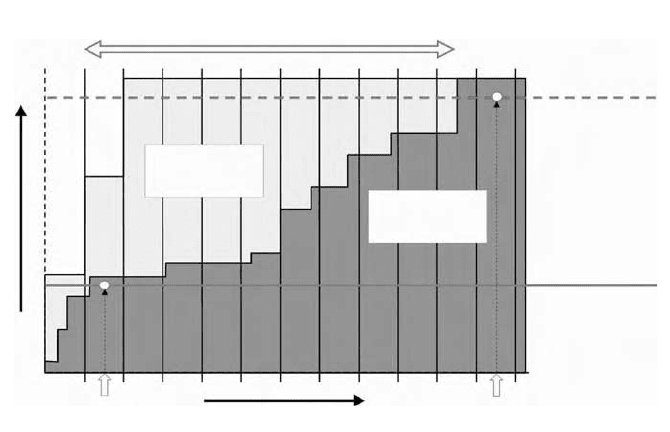
This results in significant savings in both CapEx and OpEx; see Figure 12.4.
4190_book.fm Page 360 Tuesday, February 21, 2006 9:14 AM
Network Planning and Deployment Issues for MIMO Systems 361
It also helps reduce the risk of overbuilding networks. This means, for
example, that a radio network is deployed to deliver high service capacity.
However, with the lack of available handsets on the market, high capacity
is not a top priority. It would be sufficient to provide high capacity at a later
stage.
By applying staged deployment methods for radio networks, large por-
tions of budget can be saved on the present value of the required CapEx
and OpEx to realize these networks; see Figure 12.4.
Examples of UMTS deployments have shown that up to 12% of the present
value of both CapEx and OpEx can be saved.
12.1.2.3 Best Deployment of Budget
Another important aspect for a good radio network plan is the efficient use
of corporate budgets. This means that a radio network planner should make
the most efficient use of an available budget.
At a corporate level, different budgets are applied to different markets or
deployment areas. With cost and efficiency analysis available in automated
planning, design, and optimization functionalities corporate budgets can be
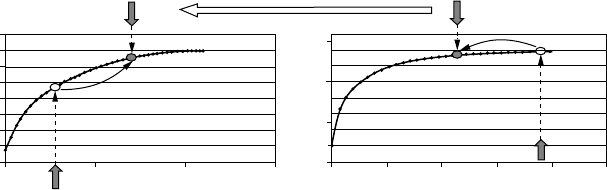
spent in the most efficient way. An example of this is shown in Figure 12.5.
The planning target here is network coverage in both Market A and Market
B. Based on the “coverage per cost” analysis, the radio engineer can make
the decision to move the available budget to the area where the most positive
effect on coverage can be achieved.
FIGURE 12.4
Savings in the present value of both CapEx and OpEx with optimization techniques.
Savings in present value of both
CapEx and OpEx
Num
b
er o
f
no
d
e Bs
Required
performance
Time/costs
Required
performance
Initial coverage
requirements
Additional coverage
and capacity
requirements
With
optimization
Without
optimization
4190_book.fm Page 361 Tuesday, February 21, 2006 9:14 AM
362 MIMO System Technology for Wireless Communications
12.1.2.4 Most Cost-Effective Technology Deployment
3G radio networks are expected to include a mix of various advanced tech-
nologies such as Remote Electrical Tilt (RET) antennas, cf. [9], Tower
Mounted Amplifiers (TMA), microcells, transmit diversity, smart antennas,
etc. This leads to the question of the best utilization, penetration, and deploy-
ment of the more advanced (but also more expensive) technologies. From
these deployments, a number of questions arise, such as:
• Which technologies should be considered when?
• How many smart antennas should be deployed based on the costs?
• Where should advanced techniques be deployed in the most effec-
tive manner?
• How should advanced techniques be configured?
• How should conventional antennas be configured?
These questions can be answered by using enhanced radio network plan-
ning and optimization tools in order to maximize the overall radio network
performance, constrained by investment and operational costs.
12.1.3 Base Stations with Downlink Transmit Diversity and Beamforming
The gain in spectral efficiency for downlink beamforming in UMTS Time
Division Duplex (TDD) mode was evaluated in simulation studies [11].
System-level simulations were carried out to evaluate the network through-
put for the downlink by means of beamforming at the base station transmit-
ter and multiuser detection in the mobile station receiver. The system-level
model is based on the sectorized macro-environment specified in [12]. For
downlink speech traffic at 8 kbit/s using transmit beamforming at the base
stations and multiuser-detection at the mobile stations, the gain in spectral
efficiency due to downlink beamforming is 55% higher than the gain resulting
FIGURE 12.5
Efficient use of budget.
Implementation costs($)
Step 1: Budget limitation market A
Implementation costs($)
Step 3: Move corporate budget so that it
is used in the most effective way
Step 2: Budget limitation market B
Coverage(km
2
)
Coverage(km
2
)
4190_book.fm Page 362 Tuesday, February 21, 2006 9:14 AM

Network Planning and Deployment Issues for MIMO Systems 363
from power control and dynamic channel allocation combined. With down-
link beamforming and power control together, there is no additional gain
from employing dynamic channel allocation. It was found that there is a 2.6-
fold spectral efficiency gain if antenna arrays of eight elements are deployed
in a sectorized macrocellular environment. For further details on the simu-
lation scenario and additional results, we refer to [11]. Very similar results
apply for Time Division Synchronous Code Division Multiple Access (TD-
SCDMA), which is also known as the low chiprate TDD-mode of UMTS.
One way to enhance the coverage is the introduction of downlink diversity
methods. Downlink diversity will add 3 dB to received power. The UMTS
specification supports transmit diversity in the downlink with two transmit
antennas since its earliest release. It supports the Alamouti space–time trans-
mit diversity scheme [13] for the downlink, which does not require channel
knowledge at the Node B transmitter. This is the “open loop” downlink
transmit diversity employing a space–time block coding based transmit
diversity (STTD). The STTD encoding is optional in the UMTS radio access
network. STTD support is mandatory at the mobile station. Channel coding,
interleaving, and spreading are done as without transmit diversity.
UMTS also supports closed-loop transmit diversity schemes [14]. These
are known as closed loop modes 1 and 2, respectively. The spread complex-
valued signal is fed to both TX antenna branches, and weighted with
antenna-specific complex-valued weight factors. The weight factors (actually
the corresponding phase adjustments in closed loop mode 1 and
phase/amplitude adjustments in closed loop mode 2) are determined by the
mobile station and signaled to the UMTS radio access network access point
(=cell transceiver) using the uplink Dedicated Physical Control Channel
(DPCCH).
For the closed loop mode 1, different orthogonal dedicated pilot symbols
in the DPCCH are sent on the two different antennas. For closed loop mode
2, the same dedicated pilot symbols in the DPCCH are sent on both antennas.
It is anticipated that Release 7 of 3GPP will specify MIMO transmission with
four transmit antennas at the base station.* A total of eight MIMO proposals
for UMTS are listed in [15]. Similarly, the IEEE 802.11n standard will incorpo-
rate MIMO transmission using OFDM with adaptive modulation based on
channel state information signaled through a feedback control channel.
A tricky problem is interference in MIMO systems with several concurrent
users. Each dominant interferer — each MIMO user to all the others in the
system or cell — will require (at least) one degree of freedom to eliminate.
This reduces the capacity gain of spatial multiplexing such that MIMO system
capacity will be only insignificantly larger than what can be obtained by
smart antennas alone [16,17]. Multi-user detection and cooperation of access
points (base stations) in a cellular environment will be necessary to restore
capacity to the theoretical limit [18].
* More precisely, MIMO is currently a study item within the Third Generation Partnership
Project (3GPP) for “Long Term Evolution” of UMTS.
4190_book.fm Page 363 Tuesday, February 21, 2006 9:14 AM