
Vaccari D.A., Strom P.F., Alleman J.E. Environmental Biology for Engineers and Scientists
Подождите немного. Документ загружается.

18.5.1 Phase I Reactions
Phase I reactions include oxidation, reduction, and hydrolysis. These reactions may pre-
pare xenobiotics for the phase II reactions.
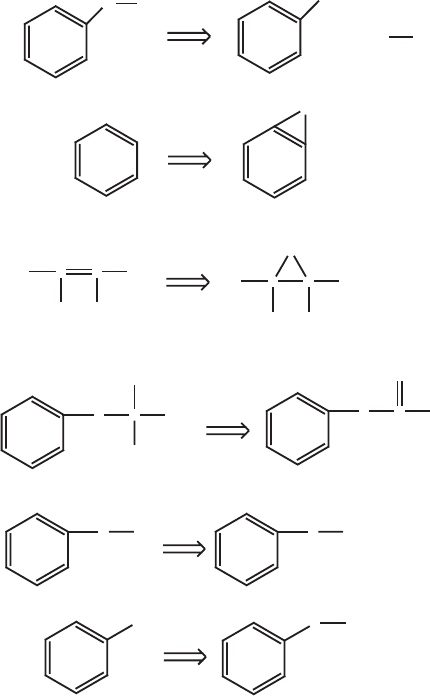
Oxidation Toxins can be oxidized by numerous pathways. However, the most important
system is the group of enzymes called monooxygenases, containing the cytochrome P450
enzyme system (also called mixed-function monooxygenases). These are nonspecific
membrane-bound enzymes found mainly in the endoplasmic reticulum of the liver, but
also in other tissues. Their function is to take one of the oxygen atoms from an O
2
mole-
cule and insert it into the toxin molecule while the other is combined with two protons to
produce H
2
O:
RH þ O
2
þ NADPH
2
) ROH þ H
2
O þ NADP
Specific examples are shown in Figure 18.3. Although not shown in the figure, all of
these reactions involve NADPH
2
and O
2
as reactants and monooxygenase as a catalyst.
O R
OH
ROH
+
phenol
dealkylation
O
epoxide
epoxidation
R
1
C C R
2
HH
R
1
C C R
2
HH
O
epoxide
deamination
H
2
C
C CH
3
NH
2
H
H
2
C
C CH
3
O
hydroxylation
H
2
C
CH
3
H
2
C
OH
NH
2
H
N
OH
Figure 18.3 Microsomal oxidation biotransformation reactions.
748
FATE AND TRANSP ORT OF TOXINS

One important effect of cytochrome P450 monooxygenases is to convert aromatics
into epoxides. It is thought that this metabolite is responsible for the cancer-causing beha-
vior of aromatics such as benzene and benzo[a]pyrene. The epoxides are unstable and
convert readily to phenols. Phenol is found in the urine of persons exposed to benze ne.
Other enzymes can convert epoxides into dihydrodiols, which are nontoxic and easily
excreted.
Some chemicals, called inducers, increase the rate of biotransformation of other com-
pounds by stimulating the synthesis of more cytochrome P450. Thus, these substances are
likely to interact with other substances in a more than additive manner (Section 19.5).
Table 18.2 lists some of these compounds.
Other compounds inhibit cytochrome P450 and thus may interact in a less than additive
manner with other substances. Some of these are listed in Table 18.3. The effect of indu-
cers and inhibitors can be used to show whether a substance or its metabolite is causing
the toxic effect. For example, bromobenzene causes necrosis in the liver, which is
increased by phenobarbital and decreased by other inhibitors. Therefore, the damage
must be caused mostly by a metabolite.
The liver enzyme alcohol dehydrogenase converts ethanol into acetaldehyde, which is
even more toxic than ethanol. This is followed b y the action of aldehyde dehydrogenase,
which forms easily excreted acids.
Reduction Under low-oxygen tension conditions, the cytochrome P450 monooxy-
genase system is capable of catalyzing reduction of azo and nitro compounds to amines
(Figure 18.4). Other types of compounds that are reacted reductively are those containing
an aldehyde, ketone, disulfide, sulfoxide, quinone, N-oxide, or alkene group. Aldehydes
are converted to alcohols and ketones to secondary alcohols.
Another reduction mechanism is the replacement of a halogen bonded to a carbon by
a hydrogen (reductive dehalogenation). This is responsible for the hepatotoxicity of
carbon tetrachloride and similar halogenated alkanes. (Dehalogenation can also be
TABLE 18.2 Pollutants and Other Substances That Induce Cytochrome P450
Drugs Industrial Chemicals PAHs
Barbiturates Aldrin/dieldrin Lindane Benzo[a]pyrene
Ethanol Chlordane PCBs Dibenzanthracene
Nicotine Chloroform Piperonyl butoxide 3-Methylcholanthrene
Steroids DDT, DDD Pyrethrum
Heptachlor Urethane Ketones
Toxaphene
Source: Williams and Burson (1985).
TABLE 18.3 Substances That Inhibit Cytochrome P450
Piperonyl butoxide Aminotriazole Carbon tetrachloride
Chloramphenical a-Napthyl isocyanate Bromobenzene
Cobaltous chloride Carbon disulfide
Source: Williams and Burson (1985).
BIOTRANSFORMATION
749
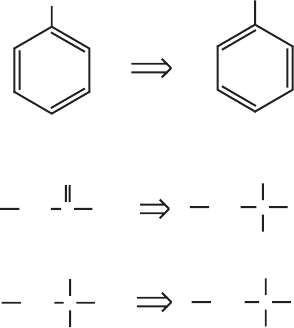
performed oxidatively by replacing a hydrogen and a halogen with oxygen, or by
eliminating two adjacent halogens and forming a carbon–carbon double bond.)
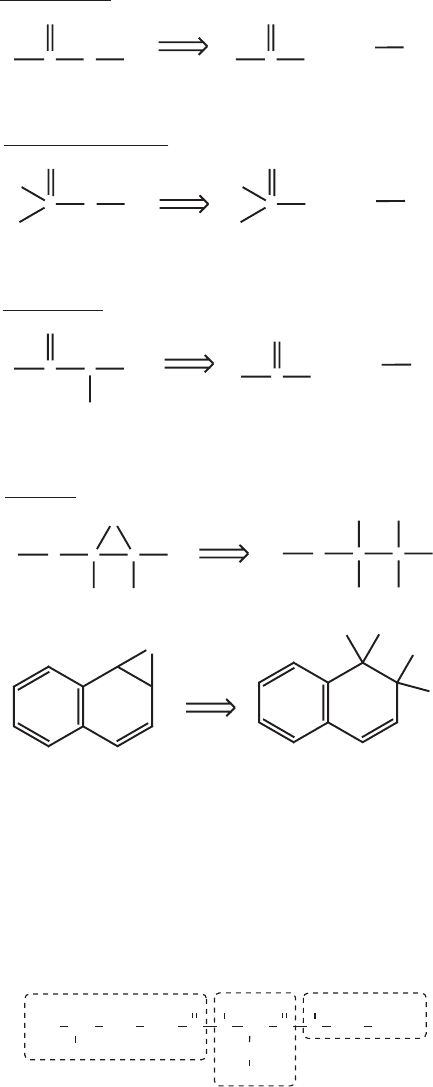
Hydrolysis Esters, epoxides, and amides are subject to hydrolysis catalyzed by a variety
of enzymes (Figure 18.5). One important group is the cholinesterases, which include
acetylcholinesterase. This was described above, although in the context of the toxic effect
of pesticides. Carboxylesterases bind or hydrolyze organophosphorus pesticides. Epoxide
hydrolase converts epoxides, such as those formed by cytochrome P450 enzymes, into
diols. This protects against the genotoxic effect of the epoxides.
18.5.2 Phase II Reactions
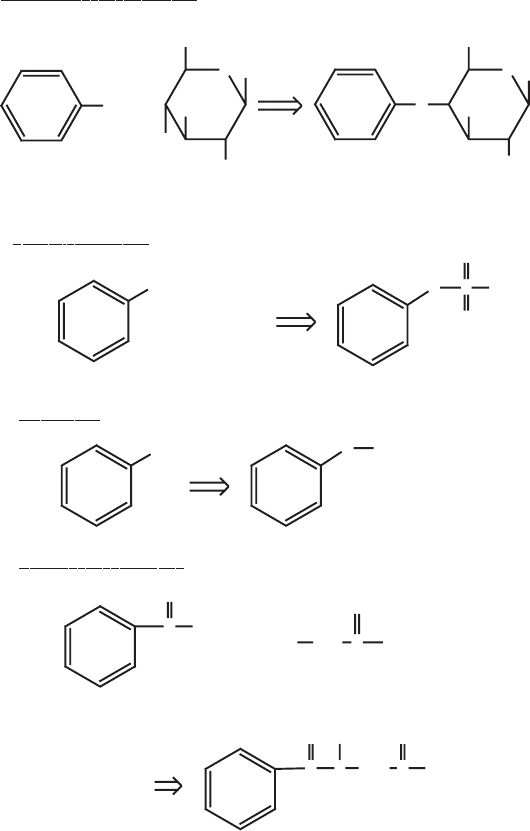
Conjugations These phase II reactions involve combining the toxin with another mole-
cule or functional group. These usually increase polarity, and therefore solubility, to faci-
litate excretion. Phase II reactions usually take place in the cytoplasm rather than in
microsomes. They tend to be faster than phase I reactions, making the latter a rate-limiting
step.
The most important detoxification mechanism is the conjugation with glucuronic acid
(Figure 18.6). The enzyme responsible for it is found in the endoplasmic reticulum of
many tissues, but especially in the liver. Many classes of compounds can be glucuroni-
dated, including aliphatic and aromatic alcohols and amines.
Other conjugations involve addition of amino acids such as glutamine or glycine, or
sulfate, methyl, or acetyl groups. The enzymes for these processes are found in the
endoplasmic reticulum and the mitochondria, but mostly in the cytoplasm of hepatic
cells. Methylation differs from the other phase II conjugations in that it tends to reduce
aqueous solubility rather than increase it. The methyl group is usually added to a heteroa-
tom (O, N, or S). A rare exception is the methylation of a carbon in benzo[apyrene to form
6-methylbenzo[a]pyrene.
NO
2
NH
2
RCH
2
CCH
3
O
RCH
2
CCH
3
OH
H
RCH
2
C
Cl
Cl
Cl
RCH
2
C
Cl
Cl
H
Figure 18.4 Reduction biotransformation reactions.
750
FATE AND TRANSP ORT OF TOXINS
One of the most important detoxification mechanisms is the formation of mercap-
turic acid derivatives. This mechanism acts on a wide variety of xenobiotics. The
reaction sequence starts with conjugation of the toxin with glutathione. Glutathione is a
tripeptide:
CH CH
2
H
2
NCH
2
C N CH C N CH
2
COOH
COOH
OOH
CH
2
SH
H
glutathione
γ
-glutamate
glycine
cysteine-SH
a) Aliphatic ester
R
1
COR
2
O
H
2
O
esterase
RCOH
O
+
R
2
OH
ester
acid
alcohol
b) Organophosphate ester
R
1
POR
3
S
H
2
O
esterase
R
1
POH
S
+
R
3
OH
organophosphate ester
acid alcohol
R
2
R
2
c) Peptide bond
R
1
CNR
2
H
O
H
2
O
amidase
R
1
COH
O
+
R
2
NH
2
acid
amine
amide or peptide
R
1
H
2
C
CC
O
HH
R
2
H
2
O
epoxide
hydrolase
R
1
H
2
C
CC
HH
R
2
OH OH
O
H
2
O
epoxide
hydrolase
HOH
OH
H
d) Epoxide
Figure 18.5 Hydrolysis biotransformation reactions.
BIOTRANSFORMATION 751
Notice the sulfhydryl (SH) group on the cysteine. It is this that is bonded to the
foreign molecule in the first step. For example, consider the reaction of glutathio ne
with 1-chloro-2,4-dinitrobenzene shown in Figure 18.7a. The second step is remov al of
the two free amino acids leaving a thiol ester with cysteine. This is followed by the
third and final step in Figure 18.7b, a reaction with acetyl-CoA to produce 2,4-dinitrophe-
nyl mercapturic acid. This mechanism is effective with electrophilic compounds . It is an
important detoxification mechanism for elimination of carcinogenic epoxides produced
by the monooxygenases.
Glucuronic acid conjugation
Sulfate conjugation
Methylation
OH
OCH
3
Amino acid conjugation
COH
O
+
H
2
NCH
2
COH
O
CN
O
CH
2
COH
HO
H
2
O
+
glycine
benzoic acid
+ H
2
SO
4
+ H
2
O
OH
+
O
COOH
OH
OH
OH
OH
O
O
COOH
OH
OH
OH
+ H
2
O
phenol glucuronic acid phenylglucuronide
OH
OS
O
O
OH
Figure 18.6 Conjugation (phase II) biotransformation reactions.
752
FATE AND TRANSP ORT OF TOXINS
Bioactivation may involve a complicated series of reactions in several tissues. For
example, 2,6-dinitrotoluene is first oxidized by cytochrome P450 and conjugated with
glucuronic acid in the liver. It is then excreted in the bile, where bacteria reduce one or
both nitro groups to amines and split off the glucuronide. These are reabsorbed by the
intestines and return to the liver. The amine group is then hydroxylated by P450 enzymes.
The resulting compound can react with DNA, causing mutations that can lead to liver
cancer. Table 18.4 lists some compounds that are bioactivated.
18.6 EXCRETION
Compounds that are not biotransformed or stored are excreted to the exterior of the organ-
ism. It is remarkable that the body can do this for many xenobiotic compounds as well as
natural ones. The kidney is the most important organ for excretion of toxins or their
metabolites. The liver is next in importance, followed by the lungs. Lesser roles are
played by the hair, skin, sweat, nails, and milk.
As you may recall from Chapter 9, the kidney works by first passively filtering about
125 mL/min of plasma from the 6 00 mL/min of blood perfusing it. This passes solutes and
macromolecules up to molar mass 60,000, thus retaining cells and most plasma proteins.
Then, by tubular reabsorption involving both active and passive transport, the nephr on
conserves water, several sal ts, and other nutrients, such as sugars and amino acids, and
forms concentrated urine. Finally, tubular secretion actively transports wastes, including
salts, drugs, and toxins. The final urine flow is about 1.0 mL/min.
O
2
N
NO
2
SCH
2
+
H
3
CCCoA
O
O
2
N
NO
2
S
COOH
NH C CH
3
O
+ CoA
acetyl-CoA
2.4-dinitrophenyl mercapturic acid
CH
2
CH
CH
COOH
NH
2
O
2
N
NO
2
Cl
+ γ-Glu-CySH-Gly
O
2
N
NO
2
SCys
γ-Glu
Gly
+ HCl
2,4-dinitrochlorobenzene
glutathione
(a)
(b)
Figure 18.7 Glutathione conjugation (phase II) biotransformation reaction.
EXCRETION 753

The rate of excretion (mass per unit time) divided by the concentration in the blood
is called the renal clearance. If a toxin is filtered, but neither reabsorbed nor secreted,
the full 125 mL/min are ‘‘cleared’’ of toxin. If the toxin is partially absorbed and not
secreted, the renal clearance will be less than 125 mL/min. Toxins that are actively
secreted can have a renal clearance as high as the perfusion rate of 600 mL/min.
Lipophilic toxins tend to be protein bound in the blood, and thus are retained at the
filtration step. Those that are dissolved in the plasma are fairly easily reabsorbed. Active
transport can excrete even those compounds that are bound. For example, it was found
that DDA, a polar metabolite of DDT, was excreted 250 times as rapidly as DDT in
mosquito fish, although both were protein bound to a similar extent. The fact that DDA
was being actively transported was established by the observation that metabolic inhibi-
tors decreased its excretion rate. The DDT, on the other hand, was probably being reab-
sorbed by passive diffusion.
Ionic molecules have less tendency to be reabsorbed. Therefore, excretion of weak
acids and bases will depend on their dissociation constant and the pH of the urine.
Urine is usually acidic, making passive diffusion more important for organic bases than
for organic acids. Excretion of acids has been manipulated therapeutically by increasing
the pH of the urine by ingestion of bicarbonate. This increases the ionization of the acids,
preventing their reabsorption. In addition, the nephrons have separate mechanisms for
active secretion of organic acids and bases. Biotransformation by the liver and other
TABLE 18.4 Bioactivated Compounds
Parent Compound Toxic Metabolite Toxic Effect
Allyl formate Acrolein Hepatic necrosis
Benzene Benzene epoxide Bone marrow depression
Bromobenzene Bromobenzene epoxide Hepatic, renal, bronchiolar
necrosis
Carbon tetrachloride Trichloromethane free Hepatic necrosis, hepatic
radical cancer
Carcinogenic alkylnitrosamines a-Hydroxylation Hepatic cancer
Carcinogenic aminoazo dyes N-Hydroxy derivatives Hepatic cancer
Chloroform Phosgene Hepatic, renal necrosis
Ethanol Acetaldehyde Varied
Fluoroacetate Fluorocitrate General toxicity
Halothane Free radical Hepatic necrosis
Hemolysis-producing aromatic N-Hydroxy metabolites Hemolysis
amines
Methanol Formaldehyde Retinal and general toxicity
Methemoglobin-producing aromatic N-Hydroxy metabolites Methemoglobinemia
amines and nitro compounds
Naphthylamine N-Hydroxy naphthlamine Bladder cancer
Nitrates Nitrites Methemoglobinemia
Nitrites plus secondary or tertiary Nitrosamines Hepatic, pulmonary cancers
amines
Olefins Epoxides Skin cancer
Parathion Paraoxon Neuromuscular paralysis
Urethane N-Hydroxyurethane Cancers, cytotoxicity
Source: Lu (1991).
754 FATE AND T RANSPORT OF TOXINS
organs serves to increase excretion by the kidney by increasing the polarity of the toxins.
They also tend to lower the pK
a
of o rganic acids, increasing their ionization.
Besides its role in biotransformation, the liver excretes directly via bile. The liver
tends to be more effective than the kidney in excretion of protein-bound compounds
and compounds with molar mass greater than about 300 to 400. The liver has separate
active transport mechanisms for organic acids, bases, and neutrals, and possibly a separate
system for metals.
Although most toxins excreted in the bile are eliminated with the feces, many can be
reabsorbed in the intestines. All the blood from the intestines passes through the liver
before going elsewhere in the body; thus, compounds can be reexcreted. This results in
a cycle called the enterohepatic circulation. This is especially true of lipophilic com-
pounds. In such cases, elimination can be facilitated by ingesting an adsorbent such as
activated carbon. This will compete with the intestines to absorb the toxin and then
carry it out with the feces. Sometimes, lipophilic compounds which have b een rendered
more soluble by conjugation reactions in the liver can have the bonds hydrolyzed by
intestinal microorganisms, increasing their reabsorption.
The importance of excretion by the bile has been demonstrated by the observation that
toxicity can increase severalfold in animals with experimentally blocked bile ducts. For
example, this increases the toxicity of diethylstilbestrol (DES) to rats by 130 times.
The lungs are important in excretion by the passive diffusion of compounds with high
vapor pressure or Henry’s constants. This means smaller, relatively nonpolar molecules
such as hydrocarbons and chlorinated hydrocarbons. Soluble compounds such as ethanol
are found if the blood concentration is high enough. Thus, the concentration of chloro-
form in exhaled breath is proportional to the blood concentration. Since storage in
depot fats acts as a reservoir for these compounds, they may be detected in the breath
long after exposure has ceased. In fish, excretion through the gills also seems to be
most important for lipophilic compounds that are not biotransformed rapidly.
Metals are concentrated on hair. Although in humans this is not an important excretion
mechanism, it provides an easy way to test for exposure. In fact, since hair grows about
1 cm per month, it is possible to test segments of hair to obtain an indication of the time
history of exposure. Excretion by hair is important in furred animals, and this must be
taken into account when attempting to extrapolate to humans from laboratory tests on
rats or other small mammals.
Due to its fat content of 3 to 5%, milk can be important for excretion of lipophilic
compounds. These include chlorinated hydrocarbons such as DDT and PCBs. The pro-
cesses that transport calcium into the milk are thought to do the same for lead. Unfortu-
nately, this route of excretion is more important as a source of these contaminants for
nursing young than as a way of clearing the toxicant from the mother.
18.7 PHARMAKOKINETIC MO DELS
A model is a kind of analogy. It is a surrogate for a real proce ss that is easier to analyze
and experiment with. A mathematical model is thus a set of equations that behave
similar to a real system. Often, the process of developing a mathematical model helps
to develop our mental model, leading to improved understanding. Furthermore, the
model may be useful in making predictions, and for designing engineered systems to
obtain desired results.
PHARMAKOKINETIC MODELS 755

Ultimately, we would like to predict actual toxic effects. The models described here,
however, will only predict the exposure of an organism to substances in the environment
and the concentration of various tissues that results. Our interest will first be in pharma-
cokinetic models, models of the behavior of toxic substances within organisms: how they
are taken up, distributed and stored, biotransformed, and excreted. The same principles
can then be used for environmental models, models of the fate and transport of toxic
substances between and among compartments of the environment (air, water, soil, etc.,
and different organisms in the environment), which control exposure.
A common type of model is the compartment model, which represents organisms by
one or more volumes characterized by a single concentration for each substance being
modeled and which is physicochemically and biologically uniform. For example, an
organism could be represented by three compartments: the gut, systemic fluids (blood),
and target organs. The compartments are connected to each other and to the environment
by transport mechanisms. Biochemical reactions create or consume the modeled sub-
stance within the compartments. Mathematical relations describe the rate at which each
of these processes adds or removes material from each compartment. The process of
model development can be broken down into the following steps:
1. Define the compartments that will make up the model.
2. Identify the transport mechanisms that move substances between compartments.
3. Identify the biochemical reactions producing or destroying the modeled substance
in each compartment.
4. Write the mathematical description of the individual transport fluxes and reaction
processes.
5. Link the processes with material balance considerations to produce the final
mathematical form of the model.
6. Mathematically solve the mode l using the appropriate initial and boundary condi-
tions.
7. Validate the model by comparing with experimental results.
Material balance expresses the law of conservation of matter. The balance of the
matter that enters or leaves a compartment, or is created or destroyed within it, must result
in an accumulation. This can be expressed in this way:
accumulation ¼ inputs þ outputs þ reactions ð18:13Þ
The accumulation term is the change in mass, M, within the compartment, which in turn is
the product of volume, V, and concentration, C. All the terms in equation (18.13) should
have the units [M t
1
]. It is common to assume that the volume of the compartment is
constant (no growth). In this case, the accumulation can be expressed in terms of the
change in concentration in the compartment:
accumulation ¼
dM
dt
¼
dðVCÞ
dt
¼ V
dC
dt
ð18:14Þ
The fluxes are the mass transport flows moving matter from one compartment to
another, or to or from the environment. These include the various forms of absorption,
756 FATE AND T RANSPORT OF TOXINS
such as passive diffusion [equation (18.11) or film theory equation (18.12)]. An important
type of flux is advection, the result of a substance being carried into a compartment by
fluid flow. Examples include transport of a toxin to the liver by blood flow, or water flow-
ing through the gills of a fish. Advective flux, F, can be represented by the product of flow,
Q, and concentration:
F ¼ QC ð18:15Þ
Advective flux can also describe uptake by ingestion, wherein the flow is the mass of
food ingested per unit time, and the concentration is the average toxin concentration in the
food. Fluxes must have positive signs for transport into a compartment, and negative for
movement out.
The biochemical reactions are described using the methods from chemical kinetics.
The general form of the reaction term is
R ¼ Vr ð18:16Þ
where r is the reaction rate , that is, the mass produced or consumed per unit volume per
unit time. The rate is described, in turn, by a rate law, which gives the dependence of the
rate on other factors, especially concentrations of reactants. Often, simpl e elementary rate
laws can be assumed. In some cases more complex kinetics may be assumed, such as a
rate based on Michaelis–Menten kinetics [equation (5.36)], or one of the other rate equa-
tions from Section 5.3.1. Here we describe two of the simpler kinetic rate laws, which are
often sufficiently accurate to describe many reactions. The first is the zero-order reac-
tion, in which the rate is constant independent of the concentration of reactants:
r ¼k ð18:17Þ
The sign will be positive for production reactions and negative for destruction. An
example of a zero-order reaction is the metabolism of ethanol in humans (Problem 18.1).
The other simple elementary rate law is the first-order reaction, in which the rate of
reaction is proportional to the amount of reactant present:
r ¼kC ð18:18Þ
First-order reaction is probably the most com mon rate law. The negative form is called
first-order decay. Its use will lead us to several important parameters for describing
toxicant behavior which are developed in the next two sections.
Models developed as just describ ed are differential equations which, when solved with
appropriate initial conditions, predict the concentration of toxin in a compartment vs.
time. Simpler models can be solved analytically giving the result as a function. More
complex models must often be solved numerically using a computer, giving the concen-
tration vs. time as a table of values. Models that predict how results change with time are
called dynamic models.
Often, if enough time is allowed to elapse, dynamic models show that concentrations
approach a constant value. In the limit as time goes to infinity, all changes cease, and a
steady-state condition exists. Mathematically, the steady-state condition could be found
by taking the limit of an analytical solution as time goes to infinity. Even simpler, and
PHARMAKOKINETIC MODELS 757