
Yam, Kit L. (ed.). The Wiley encyclopedia of packaging technology
Подождите немного. Документ загружается.

its ability to fill these socioeconomic needs. Below are some
major socioeconomic forces driving the food packaging
industry.
. Consumer lifestyle. This lifestyle is the need that
drives innovations in conveniently packaged foods.
In recent years, consumer lifestyle has been influ-
enced greatly by the aging population, increasing
number of smaller families, single-person house-
holds, and dual-income families. As a result, the
consumer is increasingly demanding food products
that are convenient, good tasting, safe, wholesome,
and nutritious. This change has also created oppor-
tunities for innovative food packaging to satisfy
target consumers of diverse demographics. For in-
stance, packaging has played an important role in
the development of convenient food products, such
as on-the-go snacks, microwavable foods, and refri-
gerated meals (also known as meal solutions).
. Value. This need, defined as benefits/cost ratio, is
driven by the consumer. Higher benefits may be
achieved by enhancing the functions of packaging
to satisfy the unmet needs of the consumer. Lower
cost may be achieved by using less expensive packa-
ging materials, using high-speed machines to in-
crease productivity, and using more compact
package designs to reduce distribution cost. For
instance, material cost may be reduced by replacing
a thicker monolayer material with a thinner, multi-
layer material, production speed may be increased
by replacing double-seamed containers with heat
sealed containers, and distribution cost may be
reduced by replacing heavy glass containers with
plastic containers. In the efforts of reducing cost, it
is important that product quality and safety are not
significantly compromised.
. Profits. This need is driven by food companies to
maintain or grow their businesses. To earn profits,
food companies frequently rely on packaging inno-
vations to meet the ever-changing market needs.
Profits also spark intense competition in the packa-
ging industry to fill the market needs. For example,
beverages may be packaged in different forms,
which include glass bottles, plastic bottles, alumi-
nium cans, and stand-up pouches—and this diver-
sity provides a battleground for packaging materials
suppliers to capture the market through optimiza-
tion or innovation.
. Food safety and biosecurity. This food security is the
need that drives innovations in protective food
packaging. Each year in the United States alone,
food-borne diseases cause approximately 76 million
illnesses, 325,000 hospitalizations, and 5000 deaths.
Microbial contamination is a major cause of food-
borne illness that can occur during harvesting,
processing, distributing, handling, store display,
and food preparation. After the tragic event of
September 11, food bioterrorism (e.g., deliberate
contamination of commercial food products) has
become a serious public threat. Packaging can
effectively protect against microbial contamination
and product tampering. Innovative food packag-
ing, such as antimicrobial packaging, advanced
package integrity inspection systems, tamper-
evident packaging, and biochemical sensors are in-
creasingly sought to provide enhanced food safety
and biosecurity.
. Food packaging regulations. These regulations are
the needs that drive research and development that
relate to food packaging safety issues, such as the
migration of unwanted compounds from package to
food (especially during situations such as microwav-
ing) and the use of recycled materials in food
packages. The purpose of food packaging regulations
is to protect the consumer against unacceptable
levels of food contamination by packaging compo-
nents. This concept also has led to a continued
interest in studying the migration of packaging
components under various conditions and in devel-
oping sophisticated analytical methods to detect
volatile compounds at lower concentrations.
. Environmental concerns. These concerns drive in-
novations in environmentally friendly packaging. As
landfill sites are diminishing, packaging waste dis-
posal has become a major public concern in many
developed countries. A growing pressure exists for
the society to favor food packages that use less
material and are easy to reuse, recycle, or inciner-
ate. Also, a continued quest is underway for bio-
based and biodegradable packaging materials that
have good mechanical and barrier properties.
SOUS VIDE OR COOK/CHILL FOOD
PRODUCTS
DONG SUN LEE
Department of Food Science
and Biotechnology, Kyungnam
University, Masan, Gyeongnam,
Republic of Korea
The principle of conventional cook/chill processing is to
cook, chill, and hold the prepared food for later use,
providing time buffer in food service establishments or
at home. Sous vide processing and packaging is an im-
proved variant of the cook/chill process in which the
prepared foods or meals are vacuum-packed in a heat-
resistant barrier plastic pouches or trays, pasteurized in
hot water, and cooled rapidly. The products are stored by
the producer and distrbuted under chilled temperature
until mealtime. At the point of consumption, the sealed
package may be reheated in a hot-water bath or a combi-
nation steam oven; the food contents may be transferred to
another container to be heated on stovetop or inside a
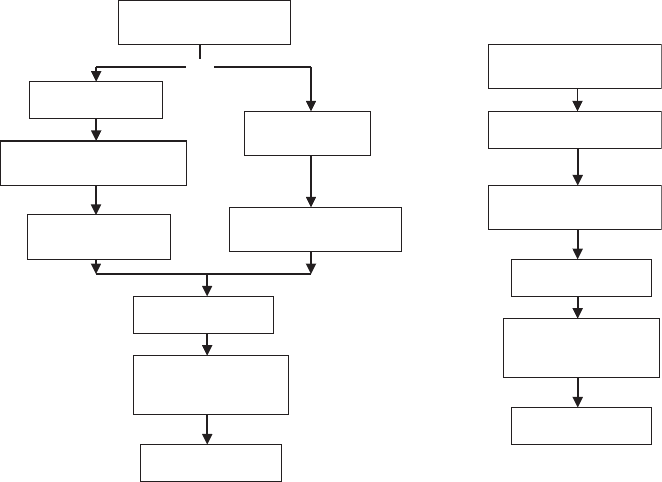
microwave or conventional oven. Figure 1 presents typical
procedures of sous vide and cook/chill processing. The
1148 SOUS VIDE OR COOK/CHILL FOOD PRODUCTS
term sous vide emphasizes the vacuumed packaging con-
ditions of the cook/chilled products. There are wide varia-
tions of processes in application of this technology, and
thus in actual practice there are often no clear distinctions
between sous vide and cook/chill.
Sous vide (orignated from the term ‘under vaccum’ in
French) or cook/chill process has been used extensively to
produce pre-packaged refrigerated foods for both the retail
and institutional markets. The combination of mild heat
treatment and refrigeration can produce high-quality
ready-to-eat meals with extended shelf life. The sous
vide and cook/chill products in foodservice systems ensure
a time buffer providing the flexibility of meal provision.
Increased demand for high-quality prepared foods and
productive food service operation from consumers and
catering industry has led to the rapid commercial devel-
opment of these new processes and packaging technolo-
gies. Particularly, the sous vide and cook/chill technology
enabled multiunit restaurant operators to develop a cen-
tralized kitchen system that prepares the foods centrally
and serves satellite food service locations with effective
inventroy control.
PROCESS AND PRODUCTS
Sous vide with Pasteurization
This method is basically a heat-cook of the product that
has been filled into a heat-resistant pack and hermetically
sealed under vacuum. The heat-cook achieves also pas-
teurization effect to inactivate vegetative microorganisms
and some spore formers. This process prevents postproces-
sing contamination and retains product quality attributes.
Foods such as meat, fish, poultry products, pasta, legumes,
or diced vegetables are prepared by this technique. This
technique has been most often employed for high-volume
uses of hotel, restaurant, and institutional foods, and
expanded to retail sector.
The initial preparation includes blanching, grilling,
searing, or mixing of meat, seafood, pasta, and/or vegeta-
bles. The prepared items or mix is assembled or packaged
in a pouch or tray, which is then vacuumized and sealed
hermetically. The products may be precooled prior to the
packaging step for controlling the vacuumization opera-
tion and attaining consistent temperature and quality.
The pasteurization or cooking step employs heating under
hot water, air/steam combination, or microwave. Hot
water may be used for immersing medium or spraying.
Usually the pasteurization process is determined based on
the product core temperature reaching 75–931C. Cooking
time and temperature depend on the product and shelf life
desired (see below). After cooking, the products must be
quickly chilled to o31C before distribution. The chilling
can be attained by agitated ice water bath or air-blast
chiller.
Resistance to high temperature (mostly up to 1001C) is
the primary requirement of the materials for sous vide
packaging. High-density polyethylene (HDPE), polypro-
pylene (PP), nylon, and ployethyelene tetrephthalate
(PET) are used in single-layer and/or laminated struc-
tures. For long-shelf-life products, a high oxygen barrier
layer of polyvinylidene chloride (PVDC) or ethylene vinyl
alcohol (EVOH) may be placed inside the multilayered
structures. For some meat products, a slight adhesion of
film to the product to retain moisture and reduce purge is
desirable. Good abrasion resistance to withstand possible
abuses during distribution is also important. Depending
on the packaging equipment, bags, trays, casings, and roll
stock are available.
Ingredient preparation,
precooking
Packaging under vacuum
Cooking and hot
filling
Cooking and
pasteurization
Rapid cooling
Sealing and holding for
short time
Chilled storage and
distribution
Reheated serve
or
Cooling (optional)
Ingredient preparation,
cooking
Placing in pan or
container
Rapid cooling
Chilled storage and
distribution
Reheated serve
Cooling (optional)
(a)(b)
Figure 1. Typical procedures for manufac-
turing (a) sous vide products and (b) cook/
chill food products.
SOUS VIDE OR COOK/CHILL FOOD PRODUCTS 1149
Sous Vide with Hot Fill
Hot fill is most often used for pumpable foods such as
soups, sauces, stews condiments, fruit-based beverages,
and toppings. The products are usually prepared in large,
steam-jacketed kettles and heated to a minimum tem-
perature of 851C. Products are then transferred via pump/
fill stations into preformed clipped casings, or through a
vertical form/fill/seal (VF/F/S) machine that uses roll
stock to create a flexible pouch. Heating and filling
while maintaining that temperature helps to remove air
and attain pasteurization effect for the required shelf
life. Controlling the temperature of filling is critical for
ensuring the required pasteurization and safety of the
foods. The proper choice of cooking and packaging
equipment depends on the product and the volume re-
quirements. Pump/fill stations and clipped casings work
best with low to moderate volumes of production.
Sustained, high-volume production of a single product is
done most efficiently with VF/F/S equipment and roll
stock film.
For maximum shelf life, air inside the casings or
pouches must be removed during the packaging process,
and rapid chilling is needed to preserve the flavor and
nutritional characteristics of the food. For food safety, the
product temperature is recommded to be reduced to 31Cin
less than 2 h. Tumble chillers are generally most effective
in cooling products placed in casings; blast chillers are
most often used on VF/F/S packages.
Pouch packaging can be sized to fit the commercial
need. Pouches can be produced containing as little as an
ounce of product to more than two gallons. Custom size to
fit specific requirements (a package containing the exact
amount of filling for one pie, for instance) can be easily
made, thereby improving sanitation and inventory man-
agement and reducing storage requirements.
While sous vide packages with hot fill require the same
heat resistance and barrier properies as those of sous vide
with pasteurization, more abuse resistance is particularly
required to endure the shock of tumble chilling and to
withstand the rigors of distribution.
Cook/Chill with Other Hurdles
Packaging after cooking and chilling in conventional cook/
chill process has postprocess contamination risks. Micro-
organisms present in the environment, packaging materi-
als, and cooking and packaging equipment can transfer
to the product after it has been cooked (pasteurized) and
can cause spoilage. Sanitation during production and
strict temperature control afterward are critical for deliv-
ery of safe food products to consumers. The products are
preferably cooked and chilled in near-cleanroom condi-
tions to reduce the chance of postprocess contamination.
Other preservation hurdles such as modified atmo-
sphere packaging, irradiation, preservative, and high-
pressure treatment can be used in combination to provide
longer shelf life. Modified atmosphere packaging is the
technique most often used for baked goods, fresh pastas,
precooked vegetables, and multicomponent meal items.
After preparation, foods are immediately packaged in a
gas-flushed environment using a high-barrier material.
The gas mixture is selected to fit the particular require-
ments of the product (see Modified Atmosphere
Packaging).
EQUIPMENT
Any cook/chill or sous vide methods require specialized
kitchen layouts to achieve optimum output. Conventional
cook/chill production can be accomplished with standard
cooking equipment found in most commercial kitchens.
A method to quickly cool the just-cooked products may
need to be added, however, if cold storage space or ice
baths are not able to handle the volume. Product can be
placed in holding pans for chilling in cold storage or
immediate use.
The sous vide process incorporating pasteurization or
hot fillling uses a variety of high-volume production
equipment. Steam-jacketed kettles with vertical sweep-
and-fold tilting mixers are used for soups, sauces, taco
meats, and puddings. The same kinds of kettles equipped
with horizontal stationary mixers are used for thicker
foods such as mashed potatoes and batters.
Tilting skillets are used for searing, browning, frying,
poaching, and boiling. Ground and stew meats, fried foods,
and poached fish are generally prepared with this equip-
ment. After cubed meats are seared or browned, they are
often transferred to kettles for further preparation as
ingredients in soups or stews.
Metered filling stations (pump/fill equipment) are used
to pump premeasured amounts of cooked product into
clipped casings or premade pouches. After filling, the
containers are closed with a metal clip. Moderate volume
production of low- and high-viscosity foods with small
particulates (less than 1 in. in diameter) are packaged
with this kind of equipment.
For larger volumes of pumpable products, VF/F/S
equipment is used, creating pouches from roll stock in a
continuous
operation. These packages
are heat-sealed as
part of the filling process.
Blast chillers or tumble chillers are used to quickly
reduce the temperature of these products. The choice is
based on product, package style, and cooling temperature.
Blast chillers are most often used for chilling prechilled
product to a desired state or moderate speed cooling
without mechanical stress. Tumble chillers are the most
effective method of reducing cooked food temperatures
from pasteurization levels to 31C. They can be aggressive,
however, and are generally used with foods that have little
or no particulates.
Continuous-belt chillers operate by transferring the
packaged product through a cold-water bath, chilled brine,
or spray. They are less abusive and thus a preferred
cooling method for pouches vertically form/fill/sealed.
The chiller length and way of product pass are designed
to ensure proper dwell time to reach the desired tempera-
ture. For applications such as meat prepared in cook-in
casings, cook/chill tanks are used. This specialized piece of
equipment cooks the product in a hot-water bath, and then
it drains the water and replaces it with cold water for
quicker and more efficient cooling.
1150 SOUS VIDE OR COOK/CHILL FOOD PRODUCTS

SAFETY AND SHELF LIFE
Safety and quality of sous vide or cook/chill products rely
on the pasteurization and low temperature if the produc-
tion has been preformed under hygienic process control.
The pasteurization process destructs most of pathogenic
and spoilage microorganisms, but not all of them. The
chilled storage delays the growth of any surviving micro-
organisms for limited time period, but not forever. The
organisms able to survive the pasteurization and grow at
refrigerated conditions are of the most concerns to cook/
chill products. Psychrotrophic bacteria able to grow below
51C are of major concerns. Mesophilic organisms cannot
grow at temperature below 101C and is of little concern for
properly chill-stored products (typically below 31C).
Storage even at properly chilled temperature is not
sufficient to prevent growth of psychrotrophic organisms.
Therefore pasteurization conditions should be selected for
required degree of microbial inactivation or shelf life of the
products should be limited. For acid foods with pH less
than 5.0, any psychrotophic, heat-resistant pathogenic
bacteria cannot survive mild pasteurization process.
When these products are properly pasteurized, they can
be stored without any concerns on public health as long as
the storage temperature is controlled below 81C. However,
in the pasteurized foods having pH Z5.0, some heat-
resistant pathogenic bacteria can survive and grow to
produce toxin, which can be a health hazard. The most
noted organisms are vegetative Listeria monocytogenes
and spore-forming nonproteolytic Clostridium botulinum.
L. monocytogenes is a typical vegetative heat-resistant
organism and can be destroyed with milder heat treat-
ment (typically 2 min at 701C based on product center
temperature), providing shelf life less than 10–14 days at
below 81C. Inactivation of nonproteolytic C. botulinum
requires severe condition (typically 10 min at 901C based
on product center temperature) and can provide longer
shelf life up to 40 days at storage below 81C. The product
shelf life is dependent on product’s intrinsic characteris-
tics, heat treatment condition, additional hurdles applied,
and storage temperature. For maximum shelf life of the
products and food safety, storage temperatures between 0
and 31C are desired.
As an aid to control the quality and safety of sous vide
or cook/chill products, norms or guidelines are sometimes
given for their microbial state (Table 1).
BIBLIOGRAPHY
1. T. Martens, Harmonization of Safety Criteria for Minimally
Processed Foods, Inventory Report FAIR CT96-1020, Alma
Sous Vide Competence Centre, Leuven, Belgium, 1998.
2. J. M. Farber, in J. M. Farber, and K. L. Dodds, eds., Principles
of Modified Atmosphere and Sous Vide Product Packaging,
Technomic Publication, Lancaster, PA, 1995, pp. 425–458.
3. D. A. Shapton and N. F. Shapton, Principles of Practices for the
Safe Processing of Foods, Butterworth-Heinemann, Oxford,
UK, 1994.
General References
M
. Dickens, in A. L. Brody, and K. S. Marsh, eds., The Wiley
Encyclopedia of Packaging Technology 2nd edition, John Wiley
& Sons, New York, 1997, pp. 283–285.
S. Ghazala (ed.), Sous Vide and Cook-Chill Porcessing for the Food
Industry, Aspen Publishers, Gaitherburg, MD, 1998.
J. M. Farber and K. L. Dodds (ed.), Principles of Modified Atmo-
sphere and Sous Vide Product Packaging, Technomic Publica-
tion, Lancaster, PA, 1995.
M. H. Brown and G. W. Gould, in C. Dennis and M. Stringer, eds.,
Chilled Foods, A Comphrensive Guide, John Wiley & Sons,
New York, 1997, pp. 111–146.
SPECIFICATIONS AND QUALITY ASSURANCE
CLAIRE KOELSCH SAND
Ameripak, Inc., Stillwater,
Minnesota
DANNETTE FAY CASPER
Minnetonka, Minnesota
Specifications have evolved to customer-driven platforms
that define in detail how the package fits the product,
enable environmental chain of custody tracking, detail
environmental characteristics, provide essential meas-
urements, and ensure compliance with international
Table 1. Examples of Microbial Norms or
Recommendations for Cook/Chill Products
Source or Advising
Body Microbiological Norms
TNO, Netherlands Immediately after processing:
Free from vegetative pathogens and
toxigenic bacteria
Mesophilic aerobic count: 10
3
to max.
10
5
per g
Enterobacteriaceae:o10 per g
Lactic acid bacteria:o10 per g
At the end of shelf life
Total aerobic count: r10
6
per g
Salmonella and Campylobacter:
absent in 25 g
Listeria monocytogenes: absent in
0.01 g
Staphyloccocus aureus: r10
5
per g
Bacillus cereus: r10
5
per g
Clostridium perfringens: r10
5
per g
DOH guidelines, UK Before reheating
Total aerobic count:o10
5
per g
Salmonellae spp.: absent in 25 g
E. coli or coliform:o10 per g
C. perfringens: r10
2
per g
S. aureus (coagulase + ve):o10
2
per g
L. monocytogenes: absent in 25 g
Source: Adapted from Martens (1), Farber (2), and Shapton and Shapton
(3).
SPECIFICATIONS AND QUALITY ASSURANCE 1151

regulations and the final relationship to the final consu-
mer. This is a major switch from specifications that
defined solely manufacturing requirements and provided
internal documentation. This evolution has provided the
impetus of change for quality assurance procedures. Now,
quality programs have evolved from the standard ISO
certifications to Six-Sigma and data-linked quality value
chain-driven programs. This article explains basic ele-
ments of specifications and quality assurance. General
packaging and component specific packaging specification
and quality procedures are addressed.
Specifications are, in the simplest sense, the means of
communicating information critical to purchasing, pro-
duction, and distribution functions between the vendor,
product manufacturer, customer, and postconsumer dis-
posal, through the entire value chain. Each of these
functions requires the assurance that the correct packa-
ging components are purchased and will be appropriately
used and distributed to the end consumer and beyond. For
this reason, specifications are clear, have extreme detail,
and are the focal point for discussions on packaging.
Specifications also reflect the capability of manufactur-
ing methods to attain certain tolerances and parameters.
This ability has evolved as the technology to attain and
measure specific package component attributes has im-
proved. One example is the use of digital technology as a
means of measuring finish and closure threads versus the
human eye. In this case, digitized images enable measure-
ments to the nanometer level and we could define mea-
surements to the nanometer in all closures and threads.
But, defining all measurements in a specification to the
nanometer level is not always appropriate for all
packages. This is because tolerances and parameters
that are too tight foster unwarranted manufacturing
challenges, higher costs, and environmental damage.
And, likewise, specifications that are too loose often result
in damaged products. Higher costs and slower manufac-
turing speeds may be justified in one industry (for exam-
ple, in medical device packaging) and not another
(sporting goods). Achieving the optimal tolerances and
parameters makes for an efficient operation and allows for
the specification to be accepted within the entire value
chain.
Today, packaging specification tolerances and para-
meters are designed appropriately with the entire packa-
ging value chain in mind and enable the incorporation of
environmentally friendly practices, use of high-speed
manufacturing, and flexible shipping to protect products
efficiently for customers.
GENERAL PACKAGING SPECIFICATIONS AND QUALITY
PROCEDURES
General packaging specifications are developed with the
needs of the end user in mind and relate expectations
independent of the supplier of the packaging materials.
General packaging specifications are employed to outline
characteristics common to all packaging components of
the same component type. For example, rigid injection-
molded components such as jars, tubs, and closures are
within one component type. The purpose of the general
specification is to specify general and broad standards and
expectations for components that may include items men-
tioned in Figure 1. Included in the general packaging
specification is the expectation that the packaging will be
within quality limits such as the now common Six Sigma
procedure. Use of Six Sigma defines acceptable ranges and
Closures used by the Charlotte Corporation will conform the following General Specification:
International Standards. Tolerances for migration from additives, packaging materials, and
processing aids must not exceed regulations established in the Federal Food, Drug, and
Cosmetic Act and/or the approved global organizations.
General Manufacturing Procedures. This material shall be produced under General
Manufacturing Procedures (GMP) to ensure that it is safe for food-contact purposes.
The vendor may not make any changes in the materials or equipment used to
manufacture the packaging component without prior changes in the Component
Specific Specification. Obvious defects in the packaging components will result in an
entire lot being rejected. Established 6 sigma guidelines to be followed.
Inks and Colorants. International approved inks and colorants must be used. One sample .
from each lot should be sent to Charlotte Graphics Department for approval of the
colorant and inks used in each lot. Deviation from the color standard will result in a
reject of the packaging components.
Packaging and Distribution. All components must be packed in a polyethylene bag within a
corrugated box not to exceed a weight of 50 lb per packed corrugated case. Cases will
be labeled on four sides in type size equal to or larger than 14-point. Labels to include
production date, lot number, order number, component identification number, vendor
name and address, and the number of closures per container. Temperatures during
storage and distribution of the components should not exceed 90°F and 60% relative
humidity.
Environmental Chain of Custody. Tracking the Chain of Custody of packaging components
shall follow approved international regulations and sanctioned sources for each
packaging component.
Figure 1. General packaging specifi-
cations for injection-molded compo-
nents.
1152 SPECIFICATIONS AND QUALITY ASSURANCE
the use of appropriate standardizations. Concepts such as
Six Sigma establish appropriate procedures in order max-
imize efficiencies, define opportunities for cost reduction,
and comply with General Manufacturing Practices (GMP).
As shown in Figure 1, the general specification is very
vague and further refinement to a component-specific
specification is required before the packaging components
can be of known dimensions and consistency.
COMPONENT-SPECIFIC SPECIFICATIONS
Component-specific packaging specifications for each
package component are developed jointly with the parties
involved to ensure both an understanding of compliance to
specifications. As a case study, if the incoming packaging
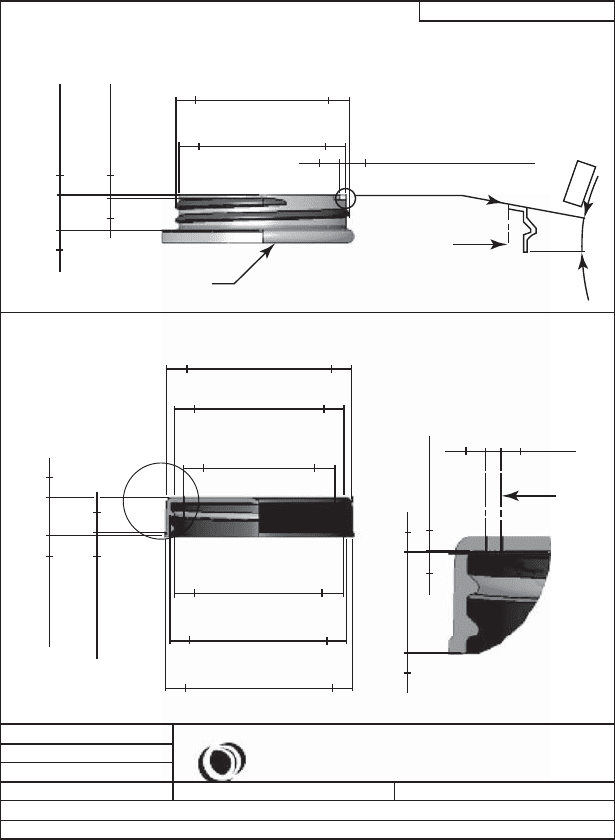
is an injection-molded closure (see Figure 2), specifications
are developed jointly with the resin, tool molding, closure
and liner, capping machine manufacturers, and the end
user of the closure. All phases of manufacturing the
packaging component leading up to the end user
contribute to constructing the specification. In addition,
all functions throughout the process are connected to
other manufacturers by a quality umbrella that ensures
the manufacturers and end user what was specified.
All internal quality procedures become part of the
specification.
Manufacturing specifications are developed jointly be-
tween the suppliers of the packaging component, technol-
ogy functions, and the production facility. The team
identifies critical control points throughout the process
where a specification is required. Then a test protocol and
a specification range are developed to ensure that the
production facility operates within the required range. For
example, if a closure needs to have a defined removal
torque at 2–6 months to meet guidelines of ‘‘openability,’’
specific removal torque values are written into the speci-
fication. Furthermore, the relationship between removal
torque at 2–6 months and application torque must be
known. So, controlling application torque at the manufac-
turing level is a critical control point. A correlation
between removal torque can be made. For example, an
Container data
Thread data
1.) 53-400 Finish
2.) L or M Thread style
3.) 6 TPI-.166 Pitch
4.) 1.25 Turns thread
Min.land 0.075
Optional
H
0.423
0.393
S
0.040
0.030
H
0.395
0.385
0.470
0.450
S
0.061
0.031
Bead optional
Cap data
Over ribs
Fine matt
Seal ring
B
T
E
2.067
2.032
1.973
1.938
I
1.760
1.730
2.190
2.170
1.880
1.860
1.995
1.975
2.100
2.080
2.230
2.210
2.000
1.87
4 Seal
rings
A
A
10°
Thread data
1.) 6 TPI-.166 Pitch
2.) 1.250 Turns of thread
3.) * Dims are total range
including taper draft
* E
* T
0.010
0.060
B (3 : 1)
Spec. no: S-053-400-03
Cap size:
Material:
Gram weight: 5.2
Date: 05/15/04
53 mm
Part description:
Specification no:
S-053-400-03
53-400 Fine rib-matt top cap
Compiled by:
DAW
6775 McKinley Street
Drawn by: RCL
Rev: -
Innovative Molding, Incorporated
Phone: (707) 829-2666
Sebastopol, CA 95472
Fax: (707) 829-5212
Innovative
Poly pro
Figure 2. Representative industry component
specification.
SPECIFICATIONS AND QUALITY ASSURANCE 1153

application torque range of 45–50 in.-lb results in a re-
moval torque of 28–30 in.-lb at 2–6 months shelf life. Thus,
on-line checks to verify machine settings of 45–50 in.-lb
on each chuck are necessary. Sampling frequency is
established.
An example of how specifications are derived using a
closure specification follows. Let us suppose that the
consumers of the end product require that the removal
torque on the closure be 28–30 in. lb. between 2 and 6
months of shelf life for ‘‘openability.’’ Quality protocol will
define the acceptable variability. This requires the follow-
ing working relationships within the value chain:
. The approved resin supplier works with resin sup-
pliers to identify a resin that will have low variability
of closure thread dimensions. This will translate into
less torque variability.
. The mold maker and closure supplier design the tool
to accommodate this resin and provide low thread
tolerances.
. Quality specifications detailing defects, Six Sigma, and
actions to be taken regarding defects are established
jointly by the closure manufacture and the end user.
. Closure supplier and capping manufacturer ensure
that the capping equipment is designed for the
closure and establishes the application torque range
to attain the required 28- to 30-in.-lb removal torque.
. Manufacturer of product verifies that the specifica-
tion is followed via uniform quality checks on re-
tained samples.
. Disposal companies, retailers, and manufacturer fa-
cilitate redefined closure disposal, recycling, or reuse.
Achieving the proper the removal torque is accomplished
through specifying the optimal resin, tool design, toler-
ance within the closure and liner material, and ensuring
that the capping manufacturer can produce capping
equipment to sufficient tolerances. Figures 2 and 3 illus-
trate a representative component-specific specification for
a closure. Figure 2 expands on the general specification
shown in Figure 1 and adds details specific to a closure.
Each area from the resin selection to the capping is subject
to internal quality procedures to verify that the product
specified is the product produced.
Finished package specifications provide the final check
in the process to verify that the packaging components
Matthew Corp. Division Food, #32 Spec. Code S-053-400-03 Issue Date: 2009
Packaging Component 53mm Poly pro dispensing closure Application Products 32-7840
Production Location Approval Related Specifications
Shipping case: 32-7800-410
______ Durand, Michigan Bottle: 32-7800-110
______ Royal Oak, Michigan Front label: 32-7800-110
______ Eleanor, Wyoming Back label: 32-7800-510b
Dimensions as shown in print number PS-354-14
Tolerances: +- 0.008 inches
Approved Materials
Resin H-78356jck Processing Aids: ASBX 198, ASBX 200
Colorants Evan color code blue #81 Regulatory Compliance Number: 15
6 sigma
Maximum minimum tolerances
Special Consideration
Removal Torque to be 28−30 inch-pound at 2−6 months shelf life of the finished product. Vendor
must comply with General Specifications for all Packaging Components.
Approvals
Specification Originator ______________________ Supplier __________________________
Purchasing ____________________________
Figure 3. Representative industry quality
document.
Subject Specification Report
Label placement
Label color
Glue coverage
Scuff/tear
Removal torque
Closure color/scuff
Bottle scuff
Paneling
Grease/dirt
0.0625in.
Color Standards
80% of label
No tolerance
40 ± 5 in.-lb
Color standards
No tolerance
0.0625in.
No tolerance
Deviations from horizontal and vertical
Forward suspect deviations to graphics
Percent covered and location of no or excess
coverage
Scuffing location and retain label
Deviations and time of removal torque
Forward suspect deviations to graphics
Location
Deviation and location
Location and type
Figure 4. Representative finished-goods specifi-
cation.
1154 SPECIFICATIONS AND QUALITY ASSURANCE
were received, were used, and will arrive to the consumer
packaged as intended. This is also established using a
standard Bill of Materials or similar document. Finished
package specifications are developed by the manufactur-
ing facility, marketing, technology, operations functions,
and international environmental concerns. Often visual
verifications of package compliance are acceptable, but
quantifiable scales of acceptance provide a clear image of
shift, manufacturing, and location variability. They also
ensure a solid data-based framework for decision making.
An example of a finished package specification for a
package system using the closure specification discussed
previously is shown in Figure 4.
CONCLUSION
Packaging specifications and quality procedures extend
throughout the value chain to:
. Communicate expectations of quality and consis-
tency.
. Translate specific needs and features of packaging
components.
. Provide internal parameters for the appropriate
manufacturing of packaging components.
. Convey consumer needs into clear quantifiable
specifications.
. Facilitate tracking of components throughout the
chain of custody.
. Define appropriate disposal of packaging compo-
nents.
STANDUP FLEXIBLE POUCHES
MICHAEL J. GREELY
Totani America, Inc., Green
Bay, Wisconsin
Conventional standup pouches are those with bottom
‘‘horizontal’’ panel gussets, more commonly known as
bottom gussets. The gussets are heat-sealed to produce
flexible bases on which the pouches may stand without
support. This base permits the two sidewalls or facewalls
to spread at the bottom when the pouch is filled. In effect,
standup flexible pouches are three-panel flexible pouches
that are self-standing when full or partially full of product
heavy enough to bear down on the bottom panel. In most
instances, the bottom panel is a separate sheet of flexible
material, but some structures fold a single web sheet into
a ‘‘W’’ shape and heat-seal a base from this configuration.
Standup flexible pouches with separate bottom gussets
have been in existence for several decades.
These pouches are very adaptable for packaging of dry
products and liquids. In many applications, they are a
suitable replacement for other types of packaging, includ-
ing plastic or glass bottles, cans, and boxes. The advan-
tages of standup pouches for packaging are numerous.
They are environmentally sound, offering source reduc-
tion of solid waste ranging from 70% to 90% by both
weight and volume. The use of pouches reduces the need
for recycling, landfill, and/or incineration. Another advan-
tage of standup pouches is that they offer the use of four-
to six-color graphics, for improved shelf appeal and accep-
tance. Standup pouches offer cost savings, with reduced
transportation costs. Unlike the shipping of traditional
large plastic empty containers, there is no shipping of
‘‘air.’’ There is further savings with reduced inventory
space and storage costs for containers. Standup flexible
pouches take up only one-eightieth of the cubic feet
compared to storing an equal quantity of rigid containers
(see Figure 1).
Other standup flexible pouch structures employ side-
wall folds or side gussets and overlapping flat sheet bases.
Because they do not have the bottom gusset, these
pouches do not stand up quite as well, and they have
been used more successfully for dry products than for
liquids. Both types of standup flexible pouches are cur-
rently being used and/or considered for dry products
packaging.
Conventional flexible pouches can be fabricated with
four face-to-face seals, with three face-to-face/one overlap,
or with fin seals with a vertical form/fill/seal machine. In
any case, they are generally not able to stand indepen-
dently because they have a single bottom fin seal or fold
that brings the face and back panels together. In the
standup flexible pouch, rather than a single seal or fold,
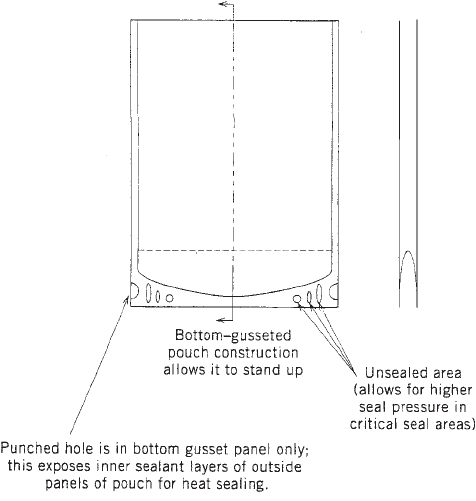
Figure 1. Section view of standup pouch. Unsealed area (allows
for higher seal pressure in critical seal areas).
STANDUP FLEXIBLE POUCHES 1155

there are two seals: one of the bottom-to-face panel, and
the other of the bottom-to-back panel. In unopened form,
the bottom gusset panel is generally folded in and hidden.
When opened, the bottom panel (or the bottom fins of the
expanded face panels) functions as a base on which the
pouch stands (see Figure 2).
Standup flexible pouches generally employ two face-to-
face fusion side seals and a single face-to-face across-the-
top seal in addition to the bottom seals. When viewed from
the side, it looks like a distorted triangle with the base of
the triangle at the bottom. The across-the-top seals may be
interrupted by a spout insert, zipper closure, or other
structural devices to facilitate opening, dispensing of
contents, and reclosing. The application of spouts and
closure devices adds versatility and ease of use to the
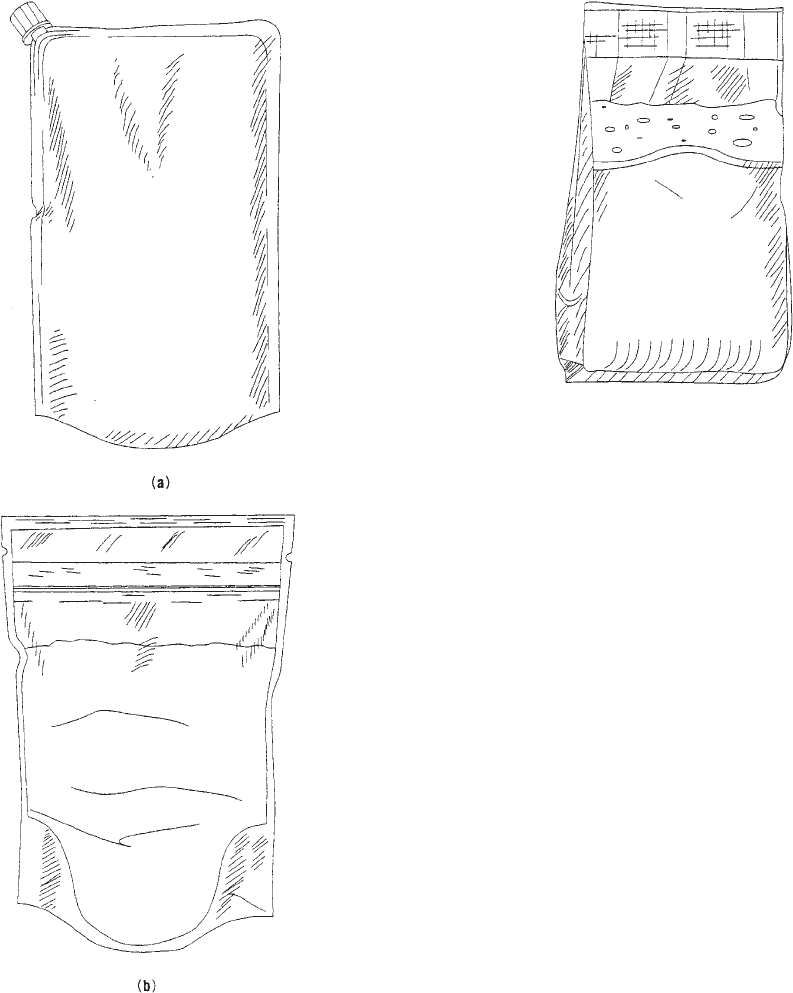
standup flexible pouches (see Figures 3, 4a,b).
Other flexible pouches that have self-standing capabil-
ities include (a) pouches with side gussets that permit the
bottom to fold into a flat position, like a paper grocery
sack, and (b) those with four-corner side seals to actually
form a rectangular solid shape from several webs of
flexible materials. In such pouches, the product itself
and not the package provides the rigidity to impart the
standup feature (see Figure 5).
HISTORY
Historically, standup flexible pouches have been in exis-
tence commercially for about 50 years. The first pouches
were developed by French machine maker Thimonnier. In
fact, standup flexible pouches are often generically (and
erroneously) called Doy Packs after their inventor, M.
Louis Doyen, majority shareholder of Thimonnier.
By the end of the 1960s, preformed standup
flexible pouches were being used in the United States for
sugar candies and in Europe for olives in brine and
for wine, among the earlier applications of such pou-
ches for liquid contents. During the early to mid-1970s,
the standup flexible-pouch concept was applied to
the European-initiated Capri Sun, a shelf-stable fruit-
flavored beverage. Capri Sun marked the first major
application of standup flexible pouches for liquid product
contents.
Relatively few new applications appeared until the
mid- to late 1980s, with the reemergence of environ-
mentalist pressures for package source reduction. German
liquid detergent manufacturers converted polyethylene
bottles into standup flexible pouches. By this time,
Thimonnier had developed machines that could pro-
duce and fill standup pouches directly from rollstock.
Other manufacturers had also developed horizontal form/
fill/seal machines for standup pouches, although the ma-
jority of liquids were still packaged in premade standup
pouches (see ‘‘ 2’’ section). The detergent packaging was
reasonably successful in Germany, where strict environ-
mental regulations were already in effect. The same
concept, although offering environmental and economic
benefits, has not been as successful in North American
markets.
Actually, standup flexible pouches found greater com-
mercial success in Japan than in Europe during the 1980s,
spear-headed by Fujimori.
Figure 2. When standup pouch is filled, the bottom gusset opens
or expands. Bottom of side panels function as base of pouch.
Figure 3. Section view of unopened and filled standup pouch.
1156 STANDUP FLEXIBLE POUCHES
TECHNOLOGY
All standup flexible pouches are not alike. In general, they
may be classified as one of the following types:
1. Preformed Pouches. Pouches are made on a separate
converting machine and delivered to a packager in
ready-to-open, fill-and-seal form); often with dispen-
sing spouts and zippers already built in.
2. Horizontal Form/Fill/Seal Pouches. Pouches fabri-
cated in-line by the packager from flexible roll stock
materials on machines that fold the sidewalls and
die-cut openings for heat-sealing into the bottom
section (see Form/fill/seal, horizontal).
The most widely used standup flexible pouches for
liquids are made from preformed pouches produced by
flexible package converters using laminated film struc-
tures. Most standup pouch flexible-material constructions
are relatively simple webs, such as trap-printed polyester
film plus an interior stiffener/sealant of low-density or
linear low-density polyethylene (LDPE or LLDPE). Effect-
ing a seal in the pouch requires polyethylene-to-polyethy-
lene or analogous fusion heat sealing. The sealing of the
bottom-web material to the two face webs requires that
the heat sealants face each other, which dictates die cutting
large openings in the bottom material (see Figure 1).
Positive sealing is essential for liquid containment
because liquid is pressing against the base heat seals. Of
significance is the hydraulic pressure exerted by the liquid
against the bottom seals, particularly when there is an
impact or a drop, and the liquid exerts a sudden high force
against the heat-seal area. Thus, although the thick
gauges of polyethylene sealant serve to enhance the
standup feature, an important reason for their presence
in such quantities is to provide sufficient strength to resist
hydraulic shock. This problem also justifies the preferred
use of LLDPE, which has greater stress resistance than
does low-density polyethylene. Many pouches use a nylon
cast or biaxially oriented film/polyethylene lamination as
the bottom gusset.
In earlier years, the materials employed included nylon
film as well as, or in place of, polyester film, plus exterior
coatings. The materials for consumer-size pouches now
are largely polyester/polyethylene combinations that have
proved satisfactory in commercial practice. Output speeds
of intermittent motion preformed pouchmaking machines
today are always faster than those on form/fill/seal ma-
chines because of multilane possibilities as well as the
limiting factors of filling and sealing on the filling ma-
chines. Furthermore, it is easier to incorporate dispensing
Figure 4. Standup pouches with (a) reclosable pour spout and
(b) reclosable zipper.
Figure 5. Side-gusseted pouch.
STANDUP FLEXIBLE POUCHES 1157