
Yam, Kit L. (ed.). The Wiley encyclopedia of packaging technology
Подождите немного. Документ загружается.

of in-mold labeled PET and PP bottles are made by
injection-stretch blow molding.
The greatest percentage of labels for EB-IML is still
produced by integrated converters on large gravure
presses, but polyolefin film is now the preferred substrate
over 60-lb, coated two-side (C2S) paper litho stock. Film
in-mold labels (FIML) are now used in the majority of
EB-IML applications, and this trend is expected to con-
tinue for the foreseeable future.
Both paper and film labels for EB-IML require a heat-
activated sealant layer on the backside. This sealant layer
can be an ethylene–vinyl acetate heat seal coating applied
on-press by the converter or a coextruded layer produced
during the film manufacturing process by an independent
substrate supplier. Regardless of the production method,
the proper choice of adhesive is critical to the successful
functioning of the label during the blow molding opera-
tion. Label defects such as blisters can result if the
adhesive does not activate completely during blow mold-
ing. Once the labels are printed, they are die cut into
stacks of individual labels by any one of several different
methods including flat bed, rotary, or ‘‘high-die.’’
Gravure printed in-mold labels can have up to 10 colors
and offer the highest quality graphics. Advances in print
quality now make it feasible to successfully print in-mold
labels by other methods such as sheet-fed offset, web
offset, and a variety of narrow-web combination presses.
These narrow-web presses can combine flexo, uv-flexo,
rotary letterpress, and hot-foil stamping to create the
type of highly unusual effects desired for labeling of
personal care products. Narrow-web or sheet-offset prin-
ters use paper or film label stock that has been precoated
with the heat-activated adhesive by another converter or
an independent substrate supplier. Labels printed on
narrow-web equipment can be rotary die cut inline or
offline; those printed by sheet-fed offset presses are gen-
erally high-die cut.
The most successful film in-mold labels for EB-IML are
polyolefin-based materials supplied in both white opaque
and clear versions. Many of these are coextrusions of
modified HDPE that incorporates a sealable layer and
thus do not require application of a liquid adhesive
during the converting process. Film in-mold labels offer
many advantages over paper IML. These include im-
proved moisture and product resistance, fewer label
defects, easier recycling, and the ability to create a
‘‘no label’’ look. A film in-mold labeled container also has
little or no label panel bulge typical of a paper IML
application. However, film labels still cost at least 50%
more than paper labels and are more difficult to print
and handle because of static and other problems unique
to thin, unsupported plastic substrates. Other disadvan-
tages of the EB-IML process are higher tooling and setup
costs, cycle time penalty for label placement and bottle
cool-down, and the need to remove paper labels for
recycling.
Film in-mold labels have captured a large share of
the market and are now used extensively on laundry-
product, household-cleaner, premium orange-juice, and
motor-oil containers. They have replaced pressure-
sensitive and heat-transfer labels in a number of health
and beauty aid applications where the ‘‘no label’’ look is
desired.
INJECTION IN-MOLD LABELING
Injection in-mold labeling (IM-IML) of open top contain-
ers, which has long predominated over EB-IML of bottles
in Europe and Asia, is now showing significant growth in
North America. The largest market for these containers is
for dairy products such as butter, margarine, ice cream,
and yogurt. Buckets for paint and cups for soft drinks are
also rapidly growing markets. Injection molded in-mold
labeled containers can be almost any shape and size from
the smallest rectangular tub holding 100 g to large 10-L
buckets.
Injection molding of plastic containers differs signifi-
cantly from blow molding in several ways. Instead of a hot,
taffy-like parison inflated by high pressure air into the
confines of a hollow blow mold, the plastic used in injection
molding is a viscose liquid injected under high tempera-
ture and pressure through ports or ‘‘gates’’ into the closed
mold. The open space in the closed injection mold will
become the container as defined by the male and female
halves of the closed mold. The liquid plastic completely
fills this space, forming the shape of the container. Once
the plastic has solidified, the mold opens and the container
is ejected.
Another difference is the labels used for IM-IML. Un-
like EB-IML labels, IM-IML labels do not require a heat
activated adhesive on the back side. These labels are
thinner and are made of the same material as the con-
tainer. The liquid plastic, injected at high temperature
and pressure, fuses to the back of the label without the
need for an adhesive. The most common container and
label material is polypropylene. Injection molds are man-
ufactured to very tight tolerances and so must the labels
used for IM-IML. Die cutting precision required for IM-
IML is about three times that of EB-IML.
As in EB-IML, the IM-IML process requires magazines
to hold the labels, robotics to pick the labels from the
magazine, and molds designed to accommodate the labels.
The most common method of holding the label in the mold
before the mold closes is electrostatic attraction. The label
is given an electrostatic charge after it is picked up from
the magazine by the robot.
If the label is for a rectangular container, an assisting
device pushes it into the mold cavity. The charge on the
label causes it to transfer to the inner surface of the mold.
The mold closes and the molten plastic is injected into the
mold, either through the male half (inside gating) or from
the female side through a hole in the bottom of the label
(outside gating). The plastic completely fills the space
between
the back of
the label clinging to the mold cavity
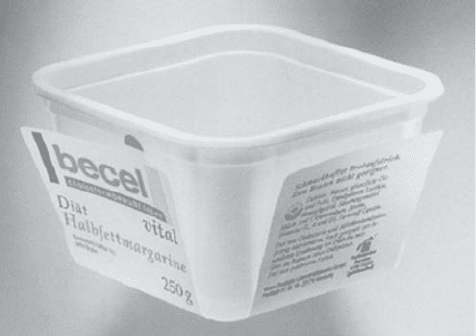
wall and the male half of the mold. A single label in the
shape of a Maltese cross can cover the bottom and all four
sides of a rectangular container in one operation. The
‘‘wings’’ of the label are carefully die cut to meet on the
corners of the container (Figure 2).
Cylindrical containers are in-mold labeled in much the
same way except that the charged label wraps around the
358 DECORATING: IN-MOLD LABELING
core before the core is inserted into the mold cavity. Once
inside the mold cavity, the static charge causes the label to
transfer from the core to the inside surface of the mold.
The injected molten plastic fills the space between the
back of the label and the core.
THERMOFORM IN-MOLD LABELING
Labels similar in appearance to those used in IM-IML are
given an electrostatic charge and inserted into the open
mold cavity. These labels can be film or paper and have a
heat-activated adhesive on the back side very much like
those used in EB-IML. Once the labels are positioned in
the mold cavity, plastic film or sheet is positioned over the
open mold and heated to the point where it just begins to
lose its structural integrity. A ram that matches the
interior of the container forces the hot plastic film down
into the mold cavity. The heat from the plastic film and the
pressure from the ram activates the adhesive on the back
of the label. The finished, labeled container is then ejected
from the mold. T-IML containers can be polypropylene,
polystyrene, or other suitable plastics.
Thermoforming machine manufacturers are working to
improve both the quality of T-IML containers and the
efficiency of the process to better compete against IM-IML.
IML has evolved from the simple blow-molded and
injection-molded containers produced in the early days
of the process into the sophisticated, even elegant pro-
ducts found in retail markets around the world. Further
refinements in materials and processes can be expected to
provide better containers at lower costs in the years
ahead.
BIBLIOGRAPHY
General Reference
R. B. Schultz, The ABC’s of IML: A Basic Course, seminar guide
presented by RBS Technologies, Inc., March 2007.
DIAGNOSTIC SENSORS IN PACKAGING AND
IN SHELF-LIFE STUDIES
J. J .F. VAN VEEN and
W. D.
VAN DONGEN
TNO Quality of Life, Advanced
Food Analysis Group, Zeist,
The Netherlands
INTRODUCTION
Active and intelligent packaging may provide several
benefits to the quality and safety of packed food. The
active systems focus on the extension of the shelf life by
keeping its quality for a longer period.
The intelligent systems monitor the quality of the food
product or the storage conditions of the packed food. In the
EU, ‘‘intelligent’’ packaging is defined as ‘‘packaging that
monitors the internal and/or external conditions of a
product through its life cycle.’’ However, a more suitable
name would be diagnostic systems because their main
function is to monitor the quality or the storage conditions
of the food. A real intelligent system would be a package
that takes an appropriate action after a deviation from the
desired situation is measured. The value of a measured
parameter will in that case act as a trigger for an active
packaging system.
Degradation of food products may cause off-flavors or
loss of nutritional value resulting in inferior product
quality and consumer rejection. The mechanism of degra-
dation and the reaction products highly depend on the type
of product. Degradation of nutrients, flavour, and additives
is mainly determined by light, pH, oxygen (oxidation),
moisture, and other product matrix components.
Optimization of the composition and packaging of
food products with respect to shelf life and sensory
quality can be done with classical techniques such as high-
performance liquid chromatography (LC) and gas chro-
matography (GC) and microbial testing.
However, noninvasive sensors provide an attractive
alternative, because no sampling is required and the
same package can be monitored in time under various
conditions. This is in contrast to classical techniques
where each measurement requires its own sample. In
addition, if monitoring of each food package is required,
these cheap noninvasive sensors are the only possible
solution.
Apart from degradation, monitoring of contaminants
such as pathogens or pesticides, in terms of quality control
of food products, is also a useful application of noninvasive
sensors in this field (1).
A useful classification of noninvasive sensors in packa-
ging that can be used for diagnostic purposes and for shelf-
life studies is:
. Time–temperature indicators (TTIs), monitoring the
conditions during storage and transportation of the
food products
. Leak indicators in modified atmospheric packaging
(MAPs) monitoring the integrity of the food package
Figure 2. ‘‘Wings’’ of a container label.
DIAGNOSTIC SENSORS IN PACKAGING AND IN SHELF-LIFE STUDIES 359
. Freshness or spoilage indicators monitoring the ac-
tual condition of the packed food product.
. Microbiological growth indicators monitoring the in-
crease of the microbiological cell number or cfu.
All of these indicators, except for TTIs, are positioned
inside the package and consequently they have to be
considered as food contact materials (FCM).
In the United States, Japan, and Australia, smart
packaging is already being successfully applied to extend
the shelf-life food quality and safety. In Europe, the
application of smart packaging systems is limited. The
main reason for this is that until 2004, the legislative
position of such food contact materials was uncertain.
One could raise the question, Who is waiting for these
diagnostic sensors? Are they consumer-oriented or are
they a desire of the retail or is it purely B2B (business-
to-business)? Or is it purely meant for R&D purposes? The
latter is certainly true as can be seen in the examples
given in the following paragraphs. In our vision it is also
clear that at this moment, B2B applications, like quality
control in the food chain, will be the main application.
Because these diagnostic sensors in food packaging
are at the moment not meant for checking the quality of
the food product by the consumer, a visual detection of the
sensor response is not strictly required. Therefore, the
readout of the sensor could also be realized in an instru-
mental way, detecting features that cannot be observed by
the human eye. This could be an optical scanner detecting
optical changes in the sensor, such as fluorescence or
absorption changes in the infrared region or the change
in certain electrical properties.
Enabling technologies for discovery of markers and for
(future) developments of diagnostic sensors in food packa-
ging are advanced, comprehensive analysis for the dis-
covery of food degradation markers, the integration with
RFIDs (electronic version of noninvasive sensors), and the
implementation of nanotechnology in new, innovative
sensor concepts.
TIME–TEMPERATURE INDICATORS (TTIs)
These indicators or sensors are meant for those food
products that easily deteriorates at higher temperature.
The basic idea behind it is that they monitor the history of
the temperatures at which the food product has been
exposed. In fact they display an irreversible change,
typically a color change, caused by both the time and the
temperature.
In that way they should safeguard whether or not the
food product has been exposed to high temperatures
somewhere in the food chain, typically the cold chain.
The ‘‘run-out’’ time of the sensor has to be correlated to the
shelf life of each food product or groups of food products
because the parameter time–temperature is only an in-
direct measure of the quality of the food product.
A major advantage of TTIs is that they can be attached
to the outside of the package and as a consequence no food
approvals are required here because they are not food
contact materials.
Principles used for this type of sensors are enzymatic
reactions, polymerization reactions, and even microbiolo-
gical responses. These irreversible reactions are, in gen-
eral, coupled to a colorimetric change that accumulates in
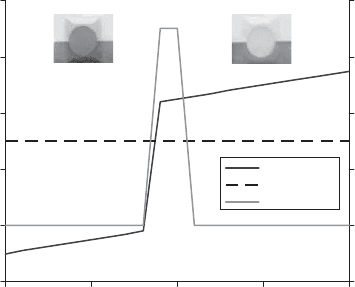
time and that can be detected visually (Figure 1). A
number of companies are active in this field, such as
Vitsab, Lifelines, Timestrip, and Cryolog.
Because these sensors behave in an accumulative way,
the reagents have to be stored in separate chambers and
the reaction has to be started or in other words the TTI
has to be activated. This is typically done by means of a
mechanical action.
Nowadays the introduction of RFID has raised the
question, Can these electronic devices be used for mon-
itoring the temperature history as well? Indeed, this is
possible with so-called active RFIDs (RFID with internal
power supply in the label) that are coupled to a tempera-
ture sensor. In contrast to the visual TTIs, they can tell us
not only if the food product has been exposed to a high
temperature, but also when this has happened because
these devices log the temperature in time (at the moment
with only a limited time resolution). A major drawback of
these electronic devices, in particular active RFIDs, is that
their cost price is still far too high to be applied in single
food packaging.
LEAK INDICATORS
Nowadays, many packaging concepts are based on mod-
ified atmosphere packaging (MAP) that apply modified
concentrations of oxygen, nitrogen, or carbon dioxide.
Usually, low oxygen (O
2
) or high carbon dioxide (CO
2
)
atmospheres are used to increase the shelf life of the food
product of oxygen-sensitive products such as beer, meat,
or pre-baked products. This clearly leads to a need for O
2
or CO
2
indicators that can be applied as noninvasive
sensors inside the package.
These sensors could also be used for indicating micro-
bial growth in the case of nonpermeable packaging
0.00
0.20
0.40
0.60
0.80
1.00
0 5 10 15 20
Da
y
s
Absorption
0
4
8
12
16
20
°C
colour
threshold
temperature
Figure 1. Schematic graph of the principle of operation of a TTI;
color change from green (safe) to yellow (unsafe).
360 DIAGNOSTIC SENSORS IN PACKAGING AND IN SHELF-LIFE STUDIES
material (e.g., glass). However, in flexible packaging the
consumption or production of these metabolic gases will
always be in competition with the ingress or losses
through these materials.
Therefore the main application of O
2
or CO
2
indicators
in packaging will be as leakage indicators to safeguard the
integrity of the package (seal defects, pinholes) or to verify
the efficiency of oxygen or carbon dioxide scavangers. The
main application at the moment would be in B2B applica-
tions, in quality control at filling lines, and in R&D
applications.
In the latter they could be used for gas permeation
measurements, testing of packaging materials, or testing
of packaging concepts (for instance, beer in plastic bot-
tles). This could also be used in shelf-life studies or in
studies measuring the rates of fat oxidation or of oxygen
consumption by microorganisms.
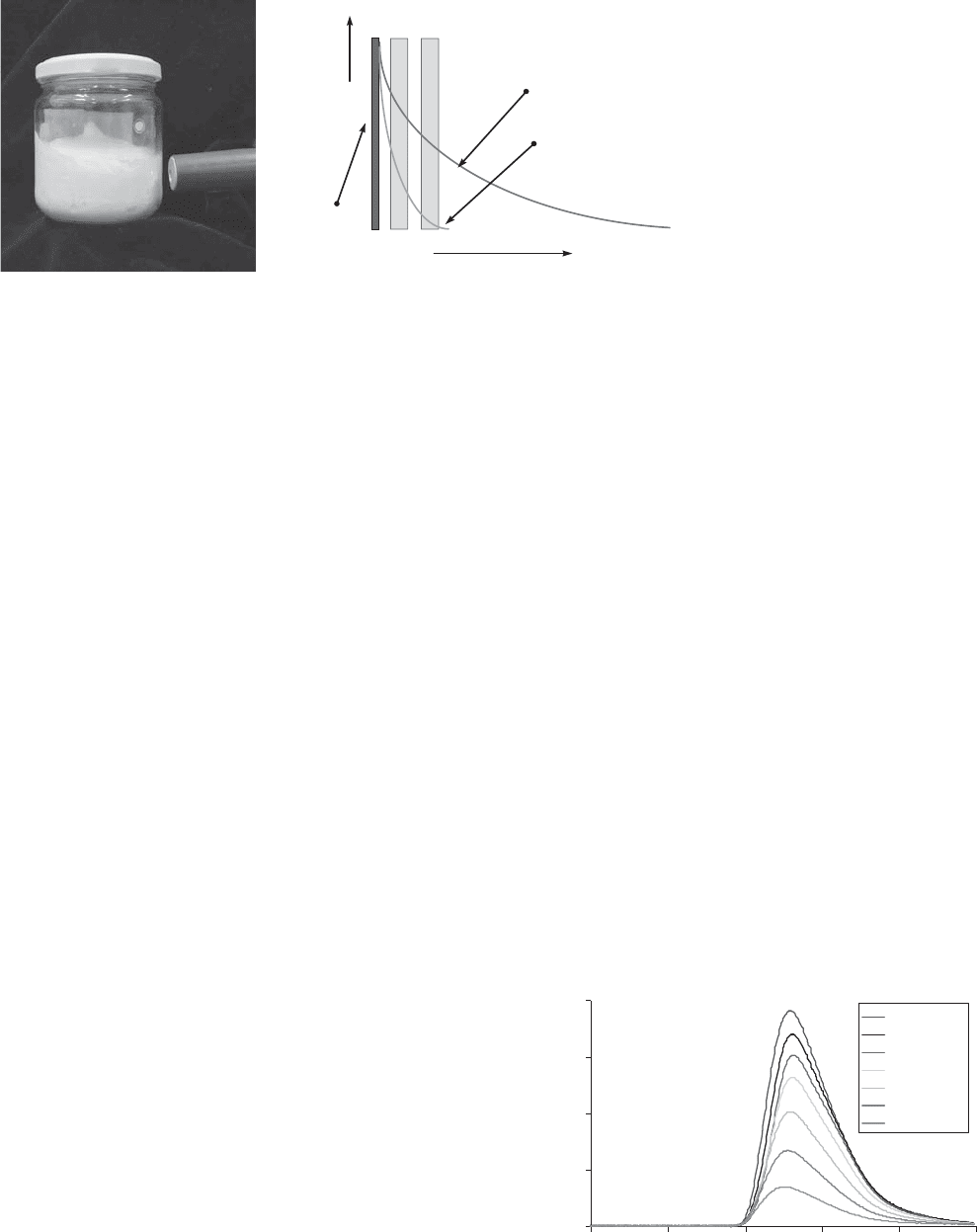
TNO developed a noninvasive optical technique (2) that
is based on the quenching of fluorescence of a dye
embedded in a gas-permeable hydrophobic polymer by
oxygen (Figure 2). This quenching also results in a change
in the fluorescence lifetime of the dye. This effect can be
recorded by an optical reader, also taking care of the
illumination by means of a blue light-emitting diode.
The oxygen concentrations can be measured in
liquids (e.g., dissolved oxygen) or in gas. Today this
technique is being marketed as the Oxysenset techni-
que, enabling the detection of oxygen concentrations
from ambient (21%) down to 0.01 mg/L in liquids or
0.02% by volume in gas. The sensor is independent of
pH (2–12), is almost free of interference by other matrix
components and the measurements itself does not con-
sume oxygen.
Other noninvasive oxygen sensors, including those
based on color or fluorescent intensity changes, have
been described in literature. Commercially available sys-
tems for oxygen detection are currently provided by GSR/
NCSR, Ocean Optics, PreSense, and Oxysense.
Noninvasive CO
2
indicators for food packaging, based
on similar optical principles, are being developed at
this moment in various research institutes. These are
mainly sensors that make use of the permeation of carbon
dioxide into a polymer with impregnated pH-sensitive
dyes. These indicators can be color-based for visual detec-
tion or fluorescence based for instrumental detection
(Figure 3).
DISCOVERY OF FOOD DEGRADATION MARKERS
For the development of smart packaging, which is able to
monitor compounds correlating with freshness, quality, or
safety, it is essential to have specific markers. A lack of
specificity means that, for example, color changes indicat-
ing contamination can occur in products free from any
significant deterioration. Therefore exact correlations ap-
pear necessary between target metabolites (indicators),
product type, and (organoleptic) quality and safety. To find
the appropriate marker, advanced analytical approaches
in combination with food packaging research techniques
allow obtaining insight in the key processes of food
degradation. The combination of analytical techniques
and food packaging research techniques such as gas
permeability and optical oxygen measurements allow the
selection of appropriate markers to avoid food degradation
processes like lipid oxidation and growth of aerobic
microorganisms.
To study more complex research issues such as off-
flavor research, optimization and control of products, and
aging or alteration of food during storage such as oxida-
tion in complex food stuffs, more advanced analytical
methods can be applied. The idea is to perform a compara-
tive nonbiased determination of nearly all components in
a broad range of polarity and molecular weight in a
sample. This is in contrast to target analytical techniques
as mentioned above, which aims at measuring a limited
With Oxygen
Fluorescence decay
without Oxygen
Time
I
fluorescence
Light pulse
AB
Figure 2. Sample with oxydot and
reader pen (left), fluorescence decay
curve (right).
0
2000
4000
6000
8000
400 450 500 550 600 650
nm
Int
0% CO
2
0.05% CO
2
0.1% CO
2
0.2% CO
2
0.5% CO
2
1% CO
2
3% CO
2
Figure 3. Spectra of the fluorescent intensity (green light) of a
noninvasive carbon dioxide sensor excited by a blue polymer LED.
DIAGNOSTIC SENSORS IN PACKAGING AND IN SHELF-LIFE STUDIES 361

number of known parameters and/or compounds. Such
comprehensive techniques are based on GC or LC coupled
to mass spectrometry (MS). Next, data preprocessing tools
and multivariate data analysis (MVA) are applied to find
the relevant correlations between the analytical data with
certain properties of interest (e.g., food degradation).
FRESHNESS OR SPOILAGE INDICATORS
Freshness indicators would be more ideal as, for instance,
TTIs or leak indicators, because they also take into
account the starting quality of the product as well as all
‘‘supply chain’’ mistakes. Real freshness indicators will
indicate the actual freshness of the product instead of
indirect measures of the freshness.
The freshness of a food product may express itself in
certain metabolic products, gaseous or dissolved in the
product. A freshness indicator that indicates if the product
is not suitable for consumption anymore is referred to as a
spoilage indicators. However, it is preferred if in an earlier
stage an indication of the decrease of freshness is ob-
tained. In that case we speak about a freshness indicator.
Nearly all of the freshness or spoilage indicators are still
in a development stage at universities, research institutes,
or innovative companies. In general, it can be stated that
gaseous metabolic products are less complicated to detect
than dissolved metabolic products.
Issues that also play an important role here are micro-
biological quality and sensory quality.
E
XAMPLES OF SPECIFIC PARAMETERS THAT CAN BE USED FOR
FRESHNESS OR SPOILAGE INDICATORS
Specific Parameter/Marker
Volatile amines
H
2
S
Ethanol, ethylene
Acetaldehyde
Hexanal, butyric acid
ATP
CO
2
Toxins
Food Product
Fish
Poultry
Vegatables, fruit
Yogurt, fruit
Salads (oils, fats)
Meat, fish
Meat (salads)
Meat (salads)
An important safety issue—in particular, in the case of
(raw) meat products—is the monitoring of toxins or the
pathogenic microorganisms such as Salmonella or Cam-
pylobacter that produce these toxins. Some attempts have
been made to accomplish this, like the immunochemical
detection principle for toxins by Toxin Alert.
The key challenge for toxin indicators is that patho-
genic microorganisms generally exist in or on a food
product at very low concentrations which can already be
dangerous for humans. In addition, they are not homo-
geneously distributed throughout the whole food. Conse-
quently, an indicator or sensor for toxins has to be
extremely sensitive and needs to have a contact area
with the food as large as possible. For all of these reasons,
it is not likely that toxin indicators will become available
in the near future.
Other, more realistic examples are, for instance, indi-
cators for H
2
S, volatile amines, ethanol, ethylene, or
volatile carbonic acids.
A useful freshness indicator for poultry has been
developed by VTT in Finland based on the color change
of myoglobin from brown to green in the presence of the
marker H
2
S.
Ethylene is a useful indicator for the ripeness of most
fruits. Colorimetric indicators for this parameter are under
development by several institutes (e.g., RipeSenset).
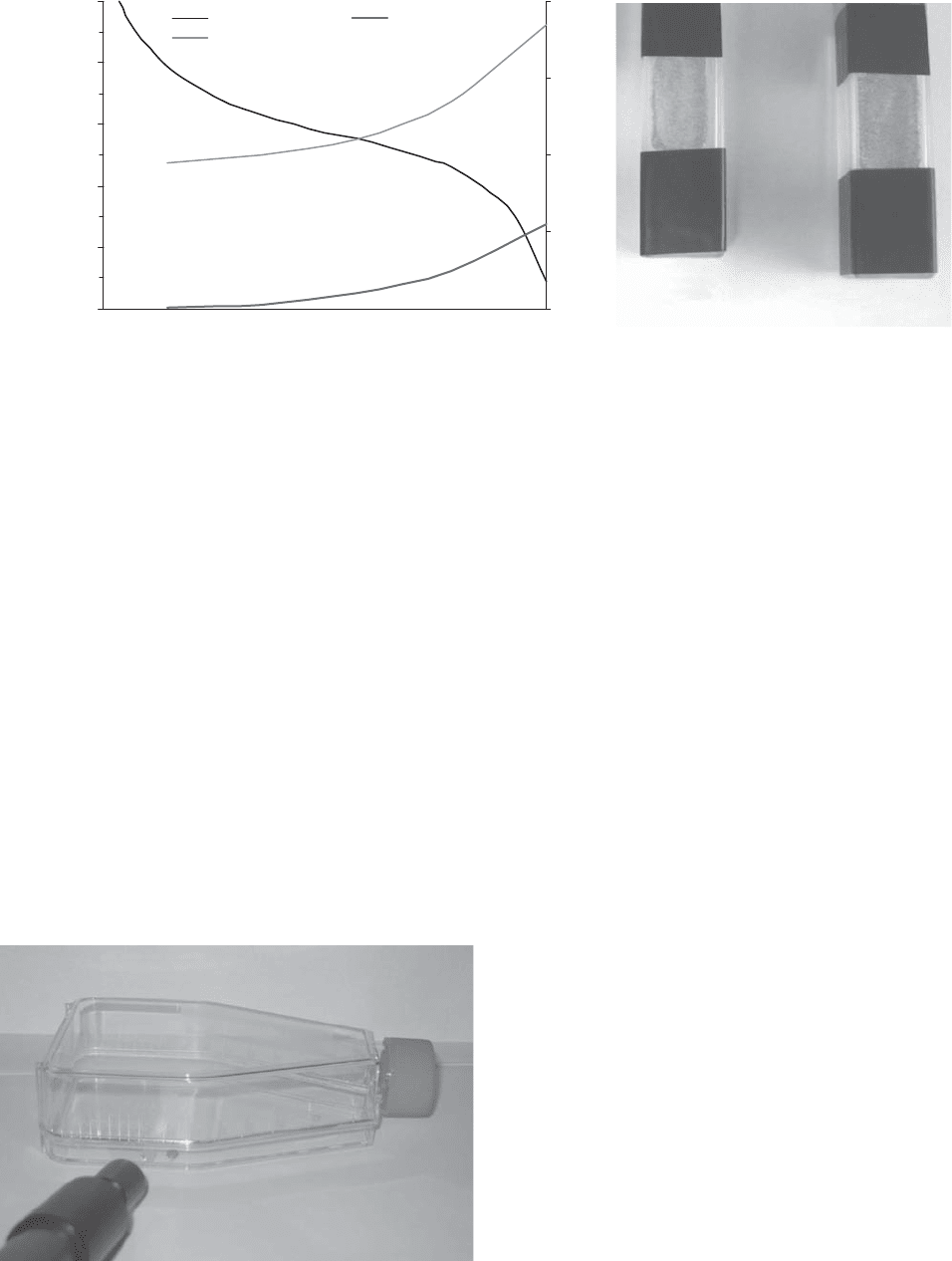
Another good example is the freshness indicator of
fresh-packed fish products (Figure 4). This indicator can
be specifically based on the amount of trimethyl amine
(TMA) formed by the bacterial reduction of trimethyl
amine N-oxide (TMAO) or, less specifically, on the total
volatile base concentration (sum of basic reduced nitrogen
gases, including ammonia). These indicators have to be
validated for specific type of fish products (e.g., fatty or
nonfatty fishes) and they have to be sensitive enough to
predict the shelf life on a reliable basis. The latter implies
that they have to be able to monitor TMA or TVB (total
volatile base) on a ppm level. TNO has developed such a
sensor based on a visual detectable color change from
green to blue of a few ppm of either ammonia or trimethyl
amine.
Another indicator from TNO being in the same cate-
gory as the volatile base indicator is the one based on the
sum of volatile carbonic acids, as a measure of rancidity
for fatty products such as salads, that change color from
purple to blue.
A special kind of freshness indicator is a so-called
microbial growth indicator, because this will display the
freshness of the product by means of the number of
microorganisms present in the food product in stead of
specific (chemical) parameters formed in the product or in
the headspace of the packaging. Such an indicator has to
be nonspecific with respect to the type of microorganism,
and it could be useful for monitoring the overall freshness
of meat products.
Such a nonspecific sensor is under development at TNO
(3). This development started for sterile products in
closed, aseptic containers (for instance, in case of tissue
engineering or clinical food) where the indicator only tells
whether or not the product is (still) sterile (see Figure 5).
In most food applications, however, sterility is not an issue
and the indicator has to display the growth instead of the
presence of microorganisms.
This particular indicator or sensor is based on the
assumption that microorganisms will produce certain
extracellular enzymes, such as proteases and amylases,
which can be detected by means of a color change or by
means of a chance in fluorescent properties of the indica-
tor. Because the applied principle is cumulative, the
indicator will not only be able to detect low levels of initial
growth, but will also hold its value after the logarithmic
growth phase of the microorganisms.
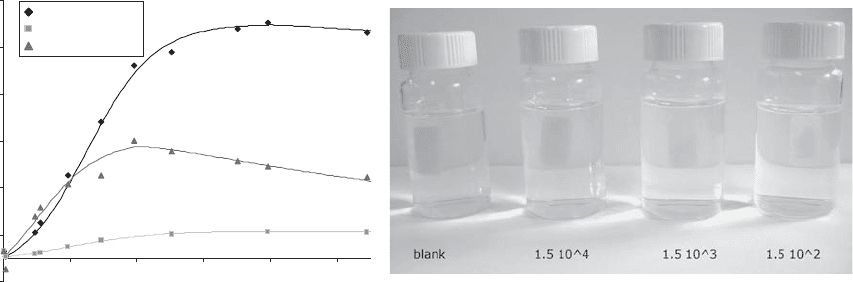
In the graph in Figure 6, it can be seen that the sensor,
more or less independent of type of microorganism,
will only depend on its growth rate and on its cap-
ability to produce external enzymes like, in this case,
proteases.
362 DIAGNOSTIC SENSORS IN PACKAGING AND IN SHELF-LIFE STUDIES
LEGISLATION
The EU is the only region in the world which has legisla-
tion specific for smart packaging substances. However,
delays in drawing up the legislation have hampered the
introduction of smart packaging (especially for releasing
systems) in Western Europe food markets. A European
Commission funded project [FAIR-project CT-98-4170 (4)]
known by the acronym ACTIPAK came up with recom-
mendations that were taken up in the drafting of amend-
ments to the EU Framework Directive for food contact
materials 89/109/EEC (5). This resulted in the adoption of
a new framework Regulation (1935/2004) (6) in which
provisions are made to allow the use of smart packaging
systems. The new Regulation applies to smart packaging,
containing deliberately added substances, provided that
the packaging can be shown to enhance the safety, quality,
or shelf life of the packaged foods or provides information
on the conditions of the packaged food. A major provision
is that the composition of food may be changed by the use
of active packaging, provided that the final food complies
with relevant rules on food and food additives. However,
such changes should never result into the masking of
spoilage or misleading the consumer. The Regulation
(1935/2004 is valid in all EU Member States without a
need for implementation in national laws) announces
additional rules laid down in a specific measure. At the
moment a specific regulation [EMB/973 Rev. 6B (7)] for
smart packaging is being drafted and discussed with the
Member States. The final regulation most likely will not
differ significantly from the document now available.
However, the extent of the authorization procedure is still
open for discussion. It is clear that any authorization will
only be related to the substance(s) that cause the smart
function. Inert parts of a smart packaging (i.e., a sachet,
box, foil) will remain the responsibility of the manufac-
turer. The inert part should comply with the rules for food
contact materials valid at EU or national level [e.g.,
Directive 2002/72/EC (8)].
In addition, some of the systems are subject to regula-
tions on food additives, labeling, environment/waste, food
hygiene, and general safety. The EU system requires the
opinion of the European Food Safety Authority (EFSA)
before it can be inserted in any regulation. Therefore, the
smart components need to be evaluated by the EFSA for
its safety in food contact applications. EFSA guidelines
are under preparation but may be adapted to the final
specific regulation for smart packaging. The following
issues will (most likely) be part of the guidelines:
. Toxicological evaluation of the smart components,
taking into account the potential level of migration
into the food.
. Demonstration of efficacy of smart materials is under
discussion. Because this is not a safety issue, in many
cases, the need for a demonstration of efficacy may be
reduced or completely withdrawn. In those cases it is
a up to the user to ensure that the smart packaging is
efficious. However, the requirement in the Frame-
work regulation that the consumer should not be
misled may be a reason to check the efficacy even in
the absence of a health risk
0
2
4
6
8
10
Storage time on ice (days)
Panel score
0
10
20
30
40
mg N /100 g
Freshness score mg N-TMA / 100 g
mg N-TVB / 100 g
Blank
25 ppm NH
3
Figure 4. Freshness indicator for freshness of fish products based on total volatile base detection.
Figure 5. Photograph of a noninvasive sensor for sterile pro-
ducts with optical readout.
DIAGNOSTIC SENSORS IN PACKAGING AND IN SHELF-LIFE STUDIES 363
. Migration data regarding the smart component. Con-
ventional migration methods may not be applicable,
and dedicated migration methods may be required to
demonstrate that migration of smart components
does not endanger human health.
. Advise to the Commission for insert of the smart
component in a list of authorized components.
Based on the outcome of that evaluation, the Commission
(DG SANCO) will grant a petitioner, authorization for the
submitted smart systems, which will be entered in the
Regulation. The general requirements for food contact
materials (1935/2004/EC (6)) also apply to smart packa-
ging systems and, consequently, they shall not endanger
human health. Labeling should comply with the food
additive Directive89/107/EEC (9).
TRENDS
Presently, diagnostic sensors are mainly applied in the
business-to-business (B2B) market in the form of TTI
indicators to monitor the storage conditions of tempera-
ture-sensitive products. However, TTI is only an indirect
measure of food quality and is not likely to replace the
‘‘best-before’’ dates.
The main drivers in packed food for the near future will
be food safety and quality of fresh products. This implies
that there will be a need for freshness, microbial growth,
and toxin indicators. In this respect, it will be essential
that the indicators provide a clear, unambiguous indica-
tion of product quality, safety, and shelf life. Probably all
new diagnostic sensors will first be used in B2B applica-
tions with a some form of added value. It could be used as
a quality indicator or shelf-life indicator, removed before
presenting the products to the consumer, or invisible to
the consumer. If the retail can guarantee that no patho-
gens are present in meat, this will give added value to the
product. It would, for instance, allow the retailer to sell
higher-value raw meat products. Or by improved selection
and order picking directed by the shelf-life indicator,
replacing the principle of ‘‘first-in first-out’’ by picking on
remaining shelf life, the shelf life could be increased. An
additional shelf-life day is absolutely a very interesting
business driver for fresh products.
Nanotechnology will be more and more applied in the
development of new freshness and toxin indicators, en-
abling more sophisticated and more selective sensor
principles.
Also the combination with electronic devices, such as
RFID and polymeric electronics, will expand the possibi-
lities of diagnostic and intelligent packaging in future. A
major demand for these devices will be the breakdown of
cost price.
Currently, the market for diagnostic packaging is small
compared to the more mature market of active packaging.
However, we believe that the overall trend for diagnostic
packaging will be a growth scenario.
BIBLIOGRAPHY
1. S. Gunasekaran., ed., Nondestructive Food Evaluation, Marcel
Dekker Inc, NewYork–Basel, 2001.
2. A. Draaijer, Optical Sensor for Measuring Oxygen, WO 01/
63264, August 30, 2001.
3. J. J. F. van Veen; Method for the Non-invasive Detection of
Micro-organisms in Closed Containers, WO 04/024945.
4. FAIR-Project PL 98-4170. ‘‘Actipak’’: Evaluating Safety, Effec-
tiveness, Economic–Environmental Impact and Consumer
Acceptance of Active and Intelligent Packaging, Duration
1998–2001. Final report: 2003.
5. Council Directive 89/109/EEC of 21 December 1988 on the
approximation of the laws of the Member States relating to
materials and articles intended to come into contact with
foodstuffs, Official Journal, L040, 11/02/1989, 0038–0044.
6. Regulation (EC) No. 1935/2004 of the European Parliament
and the Council of 27 October 2004 on materials and articles
intended to come into contact with food and repealing Direc-
tives 80/590/EEC and 89/129/EEC, Official Journal of the
European Union L338, 13-11-2004, 4–17.
7. Working Document on a Draft Regulation on active and
intelligent materials and articles intended to come into contact
with foodstuffs. Version updated to 16 June 2006; EMB/973
Rev. 6B.
−50
50
150
250
350
450
550
0246810
Da
y
s
Accumulative protease activity at rt (a.u.)
E.Coli
L.B.Plantarum
A.Niger
Figure 6. Proof-of-principle with a fluorescent indicator (left) for different microorganisms. Quantification of a color indicator (right) for
various protease.
364 DIAGNOSTIC SENSORS IN PACKAGING AND IN SHELF-LIFE STUDIES
8. Corrigendum to Commission Directive 2002/72/EC of 6 August
2002 relating to plastic materials and articles intended to come
into contact with foodstuffs (Official Journal L220, 15/8/2002,
0018–0058), Official Journal L0392, 13/02/2003, 01–42.
9. Council Directive of 21 December 1988 on the approximation of
the laws of the Member States concerning food additives
authorised for use in foodstuffs intended for human consump-
tion (89/107/EEC), Official Journal L040, 11/02/1989, 0027–
0033.
DISTRIBUTION HAZARD MEASUREMENT
DENNIS E. YOUNG, CPP
School of Packaging, Michigan
State University, East Lansing,
Michigan
To be successful in the marketplace, products must be
available to consumers. Most manufacturers produce pro-
ducts in one or several central locations, gaining the
efficiency of larger scale operations. Markets and consu-
mers, however, are far less concentrated and are located in
widely separated areas, even thousands of miles away
from the point of manufacture. This characteristic of most
producers and consumers generates the need for physical
distribution, which represents a key part of the supply
chain system of any manufacturer. As global markets open
and distribution channels grow in length and complexity,
logistics takes on increasing importance.
Physical distribution in its simplest form combines
three related logistic activities. Transportation moves
products from point to point using a plethora of modes
and equipment. Warehousing buffers the uncertainties of
production and demand and helps ensure availability to
satisfy demand. Handling connects the elements of the
system, which include production to warehouse, ware-
house to truck, truck to retail, and so on. Each element
includes hazards to the safe passage of products and
packages. In each case, the hazards are characteristic of
the operations performed within that distribution ele-
ment. All these activities also occur in an atmosphere
that may change the results of the activities. Temperature
and moisture, for example, can affect the characteristics of
packaging materials, which compromises their protective
ability.
Transportation requires vehicles, and vehicles produce
vibration as a consequence of their motion. The disconti-
nuities of transit media, such as road roughness, rail
irregularities, water waves and air currents, are among
the original sources of vibration. The vehicle reacts to
these irregularities, amplifying some types and reducing
other types. Vehicle suspension and structure play a role
in vibration modification. The result is a complex mix of
vibration frequencies and intensities, which change in
response to immediate conditions. Figure 1 shows an
example of actual vehicle vibration, demonstrating the
change of vibration intensity over time. These transit
vibrations may produce fatigue, abrasions, crumbling,
separation, and other types of damage in products and
packages.
Warehouses gain efficiency by the careful use of space.
This usually involves stacking one product and package
on another to fill the available storage cube of the building.
Unit loads of products may be stacked several items high
in floor loading warehouses. Even with storage that uses
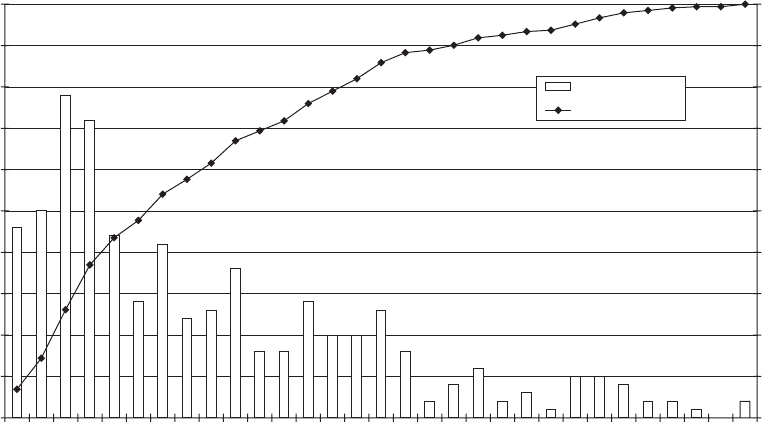
Drop Height Distribution
All significant drops on all packages
0
5
10
15
20
25
30
35
40
45
50
6 8 10 12 14 16 18 20 22 24 26 28 30 32 34 36
Drop Height (in.)
0%
10%
20%
30%
40%
50%
60%
70%
80%
90%
100%
Frequency
Cumulative %
Figure 1. Example drop height distribution data.
DISTRIBUTION HAZARD MEASUREMENT 365
racks to contain packages and unit loads, stacking often
occurs, albeit with lower heights. The loads imposed on
packages by the warehousing system can exist for weeks
or even months. These warehouse loads may produce
collapse, denting, buckling, bending, and other types of
damage in products and packages.
Handling operations include the manual movement
and placement of packaged products in sorting, transfer-
ring, and vehicle loading and unloading. Persons are often
assisted by mechanical tools in this handling, including
lift trucks, dollies, conveyors, and similar devices. Some
handling operations are fully automated and use robotics
or purpose-built devices to lift and place packages. Vehi-
cles are also handled, and vehicle impacts such as railcar
switching and truck docking may be hazardous. Inherent
in handling is the possibility of accidental or purposeful
drops, including severe mishandling. The shocks experi-
enced by the product and package when dropped in
handling may produce breakage, shatter, bending, mis-
alignment, chipping, and other types of damage in pro-
ducts and packages.
Along with packaging material performance and pro-
duct fragility, knowledge of the hazards of distribution is
critical to successful protective packaging development.
Data on package drops, vehicle vibration, compressive
loads, and atmospheric conditions are central to determin-
ing the target performance of packages. If the general
probability of occurrence of these hazards is known, then
intelligent decisions on level of protection are possible.
Small, battery-powered instruments capable of accu-
rate measurements and recording of transit hazards are
available from several manufacturers. Instruments that
can measure shock, drop, impact, and vibration usually
employ accelerometers, or acceleration transducers. Like-
wise, instruments for detecting compressive loads would
use some version of a load cell or weighing transducer.
Temperature and humidity measurement requires appro-
priate sensors. In all cases, power from batteries and
signal conditioning matched to the sensors are needed.
Data are converted from the continuous or analog form
into small, discrete steps by internal electronics. This
analog-to-digital conversion (ADC) allows the data to be
stored and understood by digital devices, including com-
puters. Once detected, hazard data are stored in compu-
ter-compatible memory within the instrument, which is
available for eventual transfer to a personal computer for
analysis.
The process of measuring the hazards of distribution
requires careful planning. The following steps are
recommended:
. Observation
. Measurement
. Analysis
. Specification
. Validation
The first step to a quantitative understanding of supply
change distribution hazards is qualitative. Obser-
vation of the distribution system details the elements of
distribution, such as handling, transit, and warehousing,
and it assists in understanding how these pieces fit
together into a system. Attention should be paid to
possible sources of handling drops or impacts. A block
diagram of how a package travels from manufacture to
consumption is a useful tool to develop. With these ob-
servations, targets for the measurement step may be
selected. A certain handling operation, or a transportation
mode or route, or an entire trip or system, may be selected.
Independent variables, such as position in the vehicle or
weight of package may be targeted at this stage. Much
may be learned from observation alone. Although largely
qualitative, the information gained is valuable to establish
the order of events and the specific characteristics of
equipment (vehicles, conveyors, etc.) and process (unload-
ing, sorting, loading, etc.).
The measurement step concentrates on qualitative
data collection. The location of the measurement system
and transducers is critical at this point. Measurement
needs to be taken at a point where eventual tests will be
controlled. For example, if the goal is a vibration test, then
the test system will be taking the place of the vehicle bed,
as this is the point of input to packages transported in the
vehicle. The test system will be programmed to simulate
the motion of this vehicle. Accordingly, the measurement
system must monitor the vehicle bed. Measurements
taken of the response vibration, inside the packaging,
will be interesting for package performance characteriza-
tion but are not specifically useful for the development of
test specifications.
Drop height data are collected by an instrument inside
of the package that experiences the drop. Data on com-
pressive load would also be taken by inside-package
instruments. Shock and impact data-collection points
depend on how the eventual test will be controlled.
Temperature and humidity data may be taken at any
point but with due consideration of the mitigating effects
of the package.
All data types should be time stamped and date
stamped when collected if possible. This allows the user
to evaluate the location of each data event, which includes
the truck terminal, warehouse, road or rail section, flight
number
, or loading
dock. Small parcel tracking and vehi-
cle global positioning system (GPS) information are tools
to help interprete the data collected.
The analysis step focuses on converting raw data to
information. Data from an electronic recorder are orga-
nized and stored by events as individual readings or
packets of time. Slowly changing data, such as tempera-
ture, atmospheric pressure, or relative humidity, may be
sampled by individual readings. Dynamic data, i.e., shock
and vibration, need to be captured in time packets so that
the rapidly changing nature of the original event may be
observed. Drop heights may be estimated by the instru-
ment software, and vibration data may be sorted for
frequency content.
Data analysis should begin with a careful consideration
of the goal of the measurement program. Temperature and
relative humidity data help to define the exposure to
extreme levels, the time of exposure, and how exposure
changes over time and with the distribution situation.
366 DISTRIBUTION HAZARD MEASUREMENT
These data can be used to develop laboratory tests or to
assess the degree of hazard to product or package.
If the goal is the development of a random vibration
test, then spectral analysis is the typical form. If data
taken by a recorder inside a package are to be used to set
up a drop test specification, then data analysis should
include the number of drops, orientation of drops, and
drop-height distribution. A useful form of data analysis for
drop-height distribution is a drop-height histogram with
cumulative percentages. Figure 1 shows an example from
handling drop data collected in shipments by a parcel
delivery mode (1). Similar results have been obtained in
less-than-truckload (LTL) domestic shipments (2) and in
many other studies.
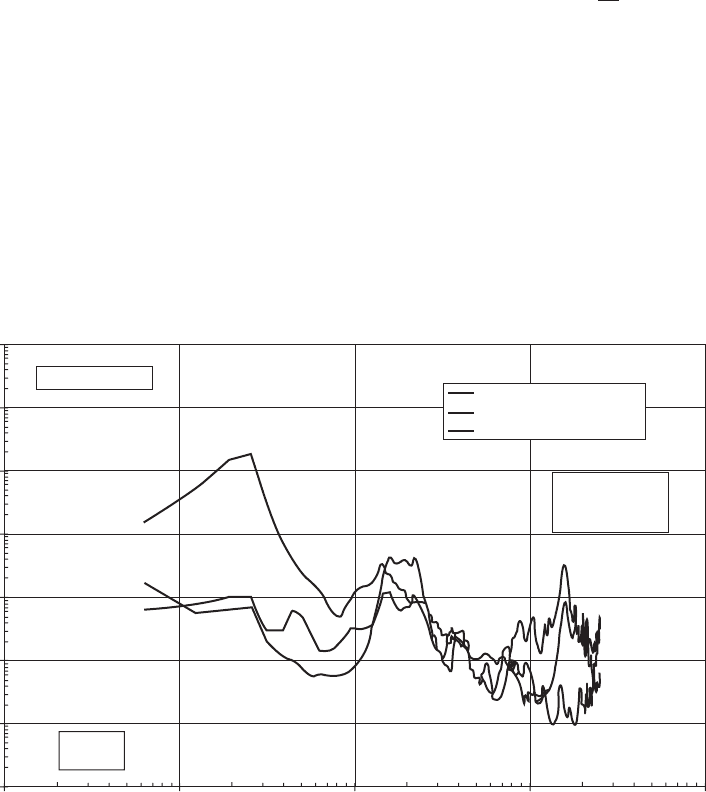
Figure 2 shows a summary analysis of truck vibration
in a truck distribution environment, in this example, a
large semitrailer on intercity roads in China (3). In all
these examples, the information should serve as illustra-
tions of analysis form and content, not as definitions of
these shipment conditions.
One key advantage of laboratory testing is the ability to
compress time in the evaluation of package performance.
A shipment that might take several days of elapsed time
can be simulated in the laboratory in a matter of hours.
The specific technique for time compression depends on
the test being performed.
Time compression for drops is clear. The time between
drops in actual shipment may range from minutes to days.
In the laboratory simulation, drops are conducted with
minimal waiting time, so the elapsed time is compressed.
The time compression for top-load compression tests to
simulate the effects of long term storage in a short test
time is being developed by some users.
Time compression for vibration is more complex. In
general, increased test amplitude intensity (G level) may
be traded for reduced time. There are undoubtedly prac-
tical limits to such compression. A shipment of 20 h transit
time probably cannot be effectively simulated in 10 min.
Random vibration test durations of one to X6 h may prove
successful in replicating field damage. Shorter or longer
vibration test durations may be required to achieve de-
sired results. The default vibration time of 3 h used by
ASTM D4169 is suggested as an initial target Interna-
tional Safe Transit Association (ISTA) links test time and
transportation distance using a similar relationship. The
ISTA process relates test time to transportation distance.
For example, a palletized load would be tested in one axis
for time = miles traveled/5 , with a maximum time of
240 min (5). There are several approaches to vibration
time compression. Among these is the following general-
ized approach. Within limits, the trip time may be
compressed to laboratory time using the following rela-
tionship, which was adopted from test equivalence for-
mula (6):
L
2
¼ L
1
T
1
T
2
a
where
L
2
= level of lab test vibration (overall G
rms
)
T
2
= time duration of lab test
L
1
= level of field measurement (overall G
rms
)
T
2
= time duration of field measurement
a = exponent, typically 0.3–0.5
Test specifications should also include consideration of
the diversity of distribution environment hazard levels. For
example, a series of drop heights should be constructed to
Vertical: overall=0.20 G
ms
Longitudinal: overall=0.08
Lateral: overall=0.07 G
ms
China project
1.0000000
0.1000000
Power spectral density (PSD) (G
rms
2
/Hz)
0.0100000
0.0010000
0.0001000
0.0000100
0.0000010
0.0000001
0.1 1.0 10.0
Frequency (Hz)
100.0 1000.0
Data sort
G
rms
>=0.04
Timer partition
Data by
DYA Inc.
Figure 2. Example random vibration spectrum date.
DISTRIBUTION HAZARD MEASUREMENT 367