
Yam, Kit L. (ed.). The Wiley encyclopedia of packaging technology
Подождите немного. Документ загружается.


reflect the actual occurrences measured in the field. Rather
than a series of drops all at the same drop height, a series
should be constructed with different drop heights, because
that is how drops happen in actual handling. Such a series
might include several low heights, a few midlevel drops,
and one high drop. This is modeled on the actual hazard,
where high drop heights occur seldom, and lower drops
occur more often.
This level diversity technique is also valuable for
vibration testing. Data may be sorted by event amplitude
and grouped. The estimated actual time that vibration
occurred at each group level is then calculated. One
background level, which reflects most events recorded
may be combined with one of more higher level tests of
shorter durations. The time compression may be applied
to some or all test segments that result. This multilevel
test specification should provide a more robust simula-
tion of the logistic environment hazard than a single-
level test.
The validation step is a potentially time-consuming,
but necessary, effort. During validation, the user com-
pares actual field results with laboratory results and
makes any required adjustments. This may include se-
lected testing of products with known shipping histories.
Of particular interest would be products that have
exhibited repeatable, definable damage during transit.
A laboratory test that produces similar results is the
goal. If the test specification under development achieves
this end, then it has demonstrated a degree of validity. A
several such test cases will increase the validity and
confidence in this specification. In general, exercise cau-
tion when using new test specifications that have not
undergone validation, especially in the evaluation of new
products and packages where no history is available.
All stages of the process, from observation through
validation, should be documented carefully. In this way,
future users may extend the development process to new
logistical operations or assess the need for additional
measurement and analysis efforts.
BIBLIOGRAPHY
1. D. Batz, and D. Young. ‘‘The Lighter the Package, the Higher
the Drop and Other Packaging Myths,’’ Proceedings of Dimen-
sions 06, ISTA, East Lansing, MI, 2006.
2. S. R. Pierce and D. E. Young, ‘‘Package Handling in Less-Than-
Truckload Shipments: Focused Simulation Measurement and
Test Development,’’ Proc. IoPP Educational Symp. Transport
Packaging, IoPP, Herndon, VA, 1996.
3. Young, D. and T. Baird. ‘‘The China Project,’’ Proceedings of
Dimensions 04, ISTA, East Lansing, MI, 2006.
4. ASTM International, 2008 Annual Book of ASTM Standards,
Vol. 15.09, ASTM International, West Conshohocken, PA,
2008.
5. International Safe Transit Association, Project 3B, Interna-
tional Safe Transit Association, East Lansing, MI, 2009.
6. A. J. Curtis, N. G. Tinling, and H. T. Abstein, Selection and
Performance of Vibration Tests, SVM8, p 97, The Shock
and Vibration Information Center, USDOD, Washington, DC,
1971.
DRUMS, FIBER
GERALD A. GORDON
Sonoco Products Company,
Industrial Container Division,
Lombard, Illinois
Updated by Staff
INTRODUCTION
A fiber drum is a cylindrical container made with a side-
wall made of paper or paperboard having ends and
components made of similar or other materials such as
metal, plastic, plywood, or composite materials. It is made
by the convolute (not spiral) winding of multiple plies of
paperboard into a tubular body, to which are attached
headings that may be made from solid fiberboard, metal,
plastic, natural wood, or plywood. No single ply of the
sidewall may be less than 0.012 in. (0.30 mm) thick. The
sidewall plies must be firmly glued together and may
include protective layer(s) of metal foil, plastic, or other
appropriate materials. The outer ply may be water-
proofed, or, at the least, must be sized to resist the effect
of casual water. Fiber drums provide high strength and
low tare weight for the packaging of industrial commod-
ities. A fiber drum intended for heavy-duty use may weigh
as little as half that of a comparable steel drum.
Fiber drums are used globally and offer a strong, cost-
effective means for the packaging of solid granular pow-
der, paste, semiliquid, and liquid products. Fiber drums
were originally introduced as an alternative to the metal
drum and therefore had a circular cross section. In recent
years, drums with a square cross section and rounded
corners have become available. Fiber drums make up
about 30% of the industrial containers used in the United
States (1).
CONSTRUCTION
Sizes
Fiber drums are manufactured in a wide range of diameters
and capacities: in diameter from about 8-in. (200 mm) to
23 in. (584 mm) in 1
1
2
-in: (38-mm) increments, and in capa-
city from 0.75 gal (2.8 L) to 75 gal (285 L), with almost
infinite variability, since capacity is controlled by the slit
width of the tube, which can be adjusted in
1
8
-in: (3-mm)
increments .
Stacking
The stacking strength of a fiber drum is determined by the
number of plies of paperboard in the sidewall. This
commonly varies from 4 plies for lightweight drums to
11 plies for large drums intended to carry heavy loads
(these ply counts are for 0.012-in. board; the increasingly
common use of heavier board requires fewer plies). The
stacking strength is also a function of the moisture con-
tent of the paperboard; the higher the humidity, the
lower the stacking strength. Taking these and other
368 DRUMS, FIBER

construction factors into account, the bottom drum in a
stack of large, heavy-duty fiber drums might safely sup-
port as much as 2000 lb (900 kg).
Linings and Barriers
The basic structure of a drum may be modified by the
insertion of a laminated barrier board (a sandwich made
from aluminum foil and/or polyethylene between two plies
of lightweight paperboard) into the sidewall to reduce the
moisture vapor transmission rate (MVTR). Alternatively
(or sometimes additionally), a laminated integral lining
made of paperboard, plastic film, and sometimes alumi-
num foil may be used as the interior surface of the tube, to
impart MVT resistance, oxygen transport resistance, and/
or chemical resistance to the drum. The plastic part of
such a laminated lining may include polyethylene (as
barrier layer or as adhesive for a different barrier),
polyester, poly(vinyl alcohol), silicone release lining, or a
laminate of a special barrier polymer with polyethylene. A
lightweight polyethylene lining or a loose polyethylene
bag is also frequently used in the packaging of dry
products to reduce MVTR. A ‘‘skin’’ (pigmented polyethy-
lene-coated board) or label (decorated stock) may be
wound as the outside ply of the drum, with the colored
plastic or decorated stock to the outside, to provide
protection from moisture or physical abuse, or to project
information, using the drum surface as a ‘‘billboard.’’
Table 1 shows that the MVTR of fiber drums may vary
over a factor in excess of 300, depending on lining or
barrier construction.
Adhesive
The adhesive most commonly used in the manufacture of
fiber drums is sodium silicate, or water glass. Silicate
adhesive has the advantages of low cost and general
effectiveness, but the disadvantage of being water-soluble,
and therefore producing drums with poor water resis-
tance. Thus, a silicate drum subjected to a 5-day exposure
in a water-spray test will lose about 90% of its stacking
strength.
For drums requiring moisture proof capability, poly
(vinyl acetate) (PVA) is used. There is also use of poly
(vinyl alcohol) and dextrin. The main requirements for the
adhesive are good wet tack and a quick setting speed. It is
important to use an adhesive with high solids content to
ensure that the amount of water added, as a consequence
of using the adhesive, is kept to a minimum.
Lids
Fiber drums are known as open top drums. This means
they have a lid that matches the diameter of the drum.
The lid can be made of wood, plastic, steel, or fiberboard.
The lid is held in place with a metal band, normally steel.
Tight head drums have tops that are permanently fixed to
the body. These drums are made only from plastic or steel.
Steel lids are used in high performance specifications.
Tight end drums are used for liquids and semiliquid
products. Depending on the global manufacturer, there
is a preference for the lid material. In the United King-
dom, the popular choice is plastic (polyethylene). In the
United States the choice is split between plastic and
fiberboard. In order to assist in the stacking of drums
and in the stability of the stack of drums, it is usual for the
lids to be designed in such a way that they locate within
the base chimes of the drum on the next layer. For drums
that require an airtight seal, a gasket is incorporated into
the plastic or steel (1).
DRUM STYLES
Drums with Metal Chimes
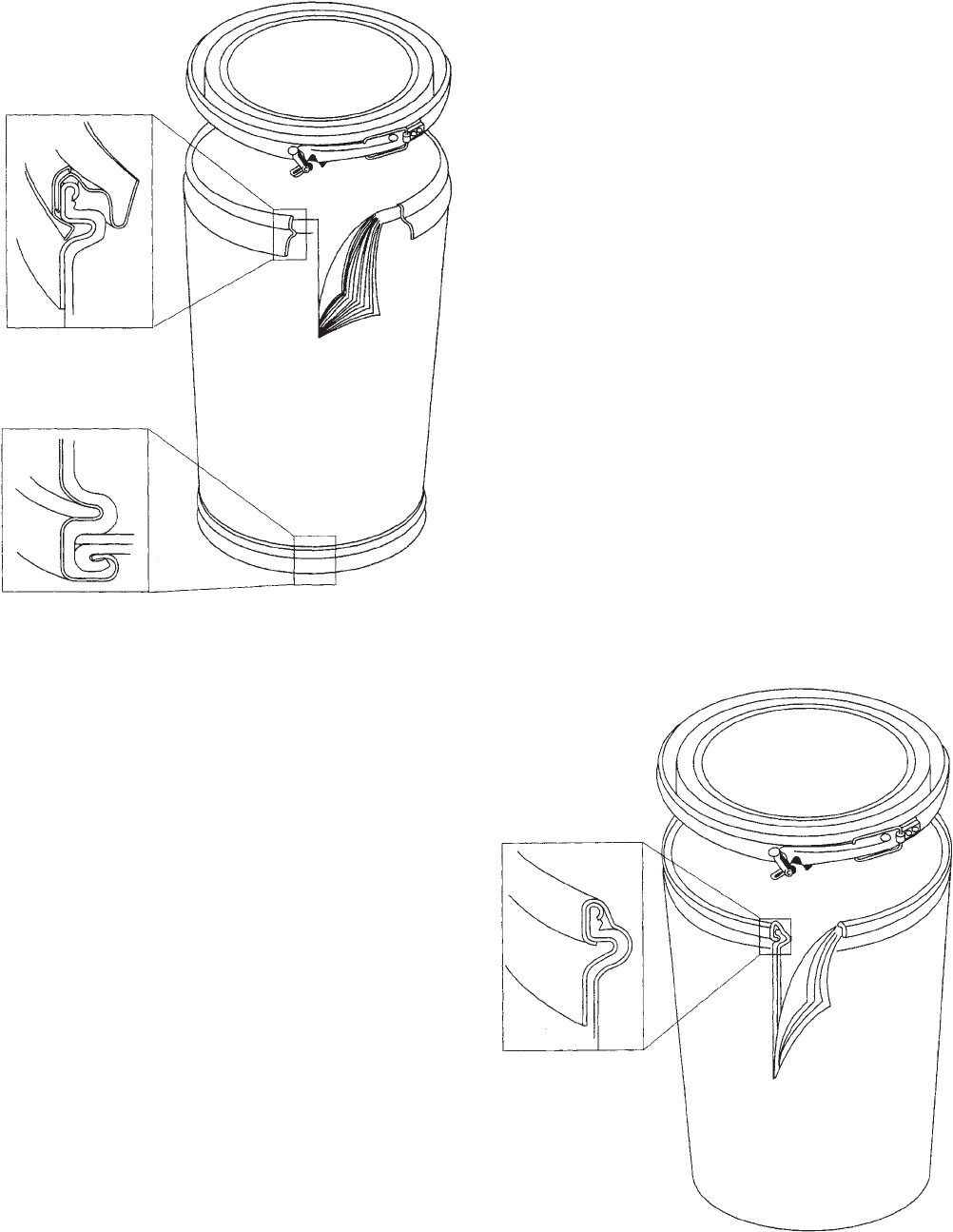
Figure 1 shows the most common style of fiber drum, with
metal chimes on the top and bottom of the drum. These
chimes are mechanically formed during drum assembly to
attach the bottom heading to the sidewall (bottom inset)
and to provide an attachment site for a toggle-action
locking band to hold the cover onto the drum (top inset).
This drum style can provide the highest level of abuse
resistance and product protection by a fiber drum. Many
variations are commercially available for this versatile
drum style.
Drums for Packaging Liquids
If made with an interior lining, caulking compound in the
bottom juncture, and a gasketed steel or, preferably,
plastic cover, a metal-chime drum can be used for the
packaging of liquids, ranging from self-sealing latex ad-
hesives to water-based chemical solutions, to solvent-
based cleaners and fiberglass gelcoats. Such drums can
also be provided with a spun-on locking band to produce a
tight-head drum that provides an even better top seal. The
use of fiber drums to package liquids has grown signifi-
cantly with advancements in lining materials and manu-
facturing processes that have expanded the holding
capabilities of the drums.
Table 1. Water-Vapor Transmission Rate of Chime-Style
Fiber Drums
a
Construction Weight
Increase
Silicate adhesive, no lining 10,000+ (est.)
Silicate adhesive, polyethylene barrier (0.7 mil) 600
Silicate adhesive, polyethylene lining (2 mils) 350
Flame activated polyethylene adhesive, no
lining
175
Silicate adhesive, aluminum-foil barrier 125
Silicate adhesive, polyethylene/aluminum foil
lining
30
a
Total weight increase of a desiccant inside a 55-gal fiber drum with rubber
gasketed steel cover, in grams of water per 30 days, with the drum exposed
to 1001F and 90% RH. The values listed above are for comparative purposes
only and should not be understood as absolute values that would be picked
up by a specific product.
DRUMS, FIBER 369
Composite Fiber Drums
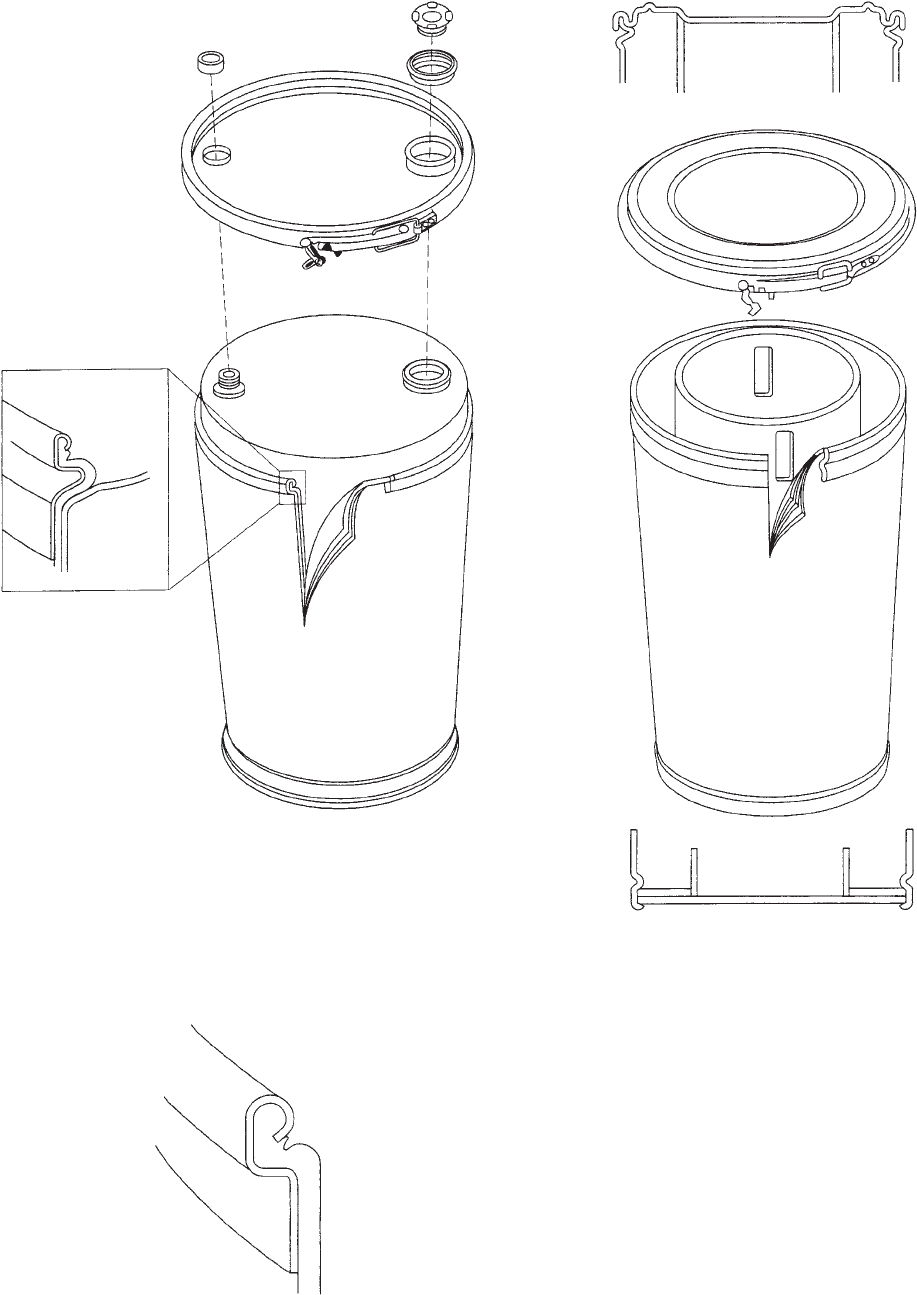
Figures 2 and 3, respectively, show open-head and tight-
head composite fiber drums intended for the packaging of
liquids. Some drums have a self-supporting plastic insert,
or inner receptacle, inside each drum to contain the liquid.
The inner receptacle is an integral part of the packaging
and is filled, shipped, and emptied as such.
Straight-Sided Drums
Figure 4 shows the straight-sided chime of a drum in-
tended for the packaging of hot-melt adhesives and other
products that are dispensed by use of a platen pump. Since
a close-fitting platen must slide into the drum to dispense
the product, the inverted groove design typical of other
drums with metal chimes cannot be used. Instead of
reducing the diameter at the groove to provide purchase
for a lock band as in the standard design, the chime and
fiber tube of a straight-sided drum must be expanded
outward by about 8%. Since paper typically can be elon-
gated only about 3% before failure, the development of this
drum style was not a simple task. This drum style may
also be made with two tops (i.e., two removable headings)
so that when the platen pump has removed as much
product as it can reach, the drum may be inverted, the
bottom removed, and the residual heel removed and
placed on top of the next drum for dispensing.
Drums for Packaging Wire
Figure 5 shows a drawing of a drum designed for the
packaging and dispensing of wire. The drum is made with
a central core, around which the wire is coiled and from
which it is dispensed.
Drums for the Aseptic Packaging of Foods
The aseptic packaging of foods at ambient temperatures
requires a containment system that provides a good
barrier to both oxygen and biological contaminants that
might cause food spoilage. In this system the food is
packaged in a high-strength polyester/polyethylene/alu-
minum-foil bag, which is then placed inside the drum. The
drum itself is of heavy-ply construction, frequently using
weatherproof adhesive, to allow outdoor storage. The
drum functions to provide protection from mechanical
abuse and moisture. The bag provides the barrier to
chemical and/or biological degradation of the food (see
also Aseptic Packaging).
Drums without Chimes
Figure 6 shows the simplest of drum designs: a fiber tube
with steel or plastic headings attached by stitching, tap-
ing, adhesively bonding, or the use of mechanical clips.
The top and bottom headings are designed to interlock to
facilitate stacking. This inexpensive drum design, gener-
ally with an inner polyethylene bag, is commonly used for
the packaging of such low-cost products as detergent and
ice-melt compound in relatively small sizes.
Figure 1. Drum with metal chimes.
Figure 2. Open-head composite fiber drum.
370 DRUMS, FIBER
Nestable Fiber Drums
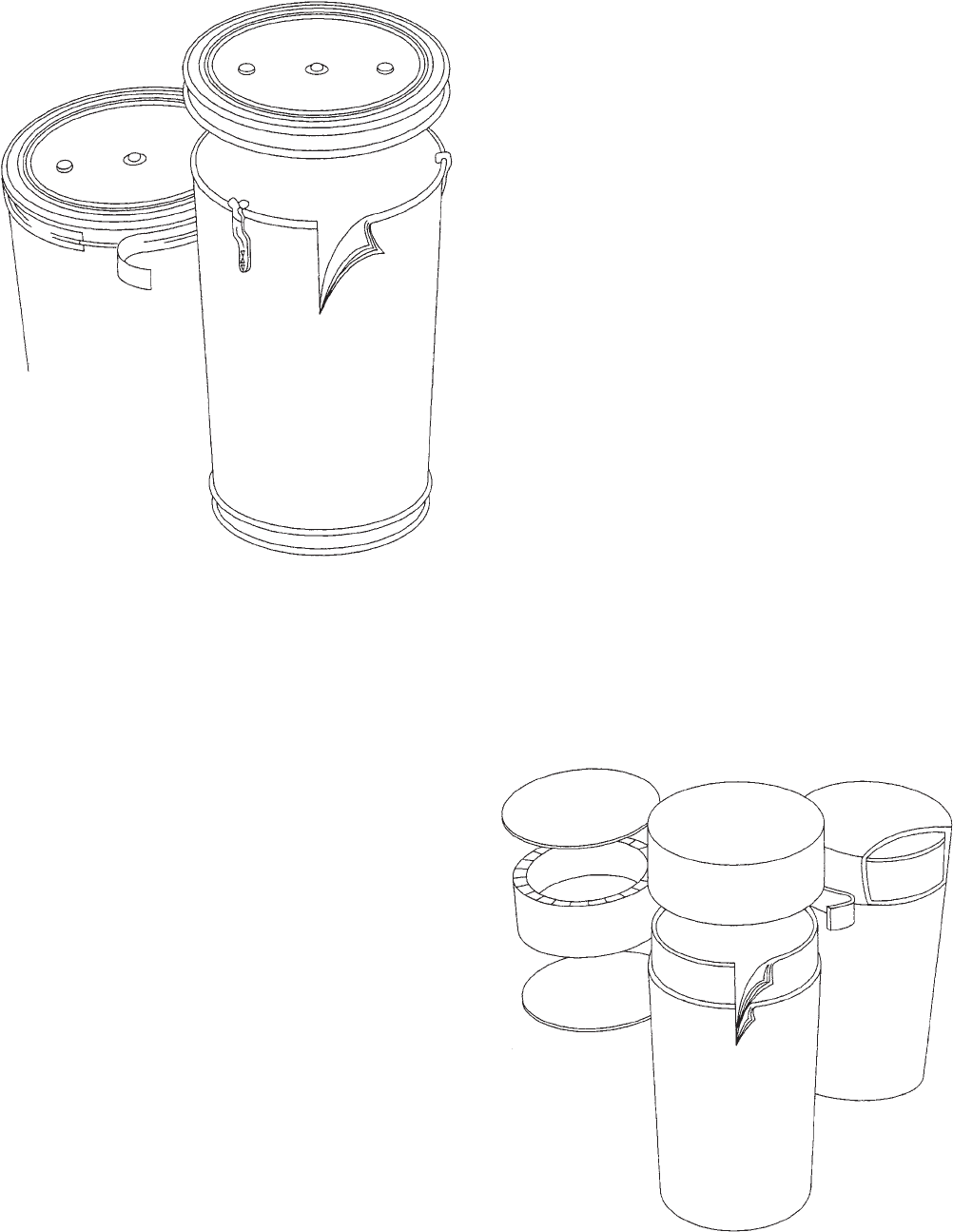
A striking variation of this drum style is a nestable fiber
drum. A frustroconical tube is made by the winding of
precut sheets of paperboard, one for each ply. An integral
polyethylene lining and plastic headings (adhesively
bonded on the bottom, taped on the top) complete the
structure. The advantage of this construction lies in the
reduction of shipping cost and storage space for empty
drums, but at the sacrifice of some stacking strength. This
drum design was developed for the storage and transport
of hazardous medical waste for incineration.
All-Fiber Constructions
Drums made only from fiberboard have somewhat greater
structural integrity than do the chimeless drums de-
scribed above. As shown in Figure 7, in the manufacture
of such drums the bottom-end portion of a tube is notched
and/or folded in and is then covered inside and out with
fiber disks that are stitched and/or glued to produce a
Figure 4. Crimp of straight-sided drum.
Figure 3. Tight-head composite fiber drum.
Figure 5. Drum for packaging wire.
DRUMS, FIBER 371
strong and secure heading. Covers, designed for slip fit,
are made in the same way, but from a short piece of tube.
Drums of this style are available in several design
variations. The simplest has a drum bottom with a cover
of somewhat larger diameter, which slides over the drum,
leaving a step or ridge at the juncture between cover and
drum. The cover is often taped in place, but this may leave
an unsightly ridge. This drum design can also be made
with a tube and two covers, often used for the shipment of
rolls of plastic or other materials that need protection to
prevent damage to the roll edge.
In a somewhat stronger all-fiber design, the drum body
is composed of two components (Figure 7): a tube that is
glued into a somewhat shorter shell of somewhat larger
diameter. The cover, having the same diameter as the
shell, slides on over the exposed portion of the tube,
leaving no ridge at its juncture with the shell. In a fourth
variation of this style, the drum body is squared off to
provide for more efficient use of storage space. The trade-
off for this gain is some reduction in stacking strength as
compared to the right circular cylindrical form of other
drums. The primary application for all-fiber drums is for
the packaging of dry powders, frequently with an inner
polyethylene bag.
REGULATIONS
The manufacture and use of fiber drums are regulated by
a wide variety of governmental and nongovernmental
national and international agencies.
NMFC and UFC
The National Motor Freight Classification (NMFC) and
the Uniform Freight Classification (UFC) are nongovern-
mental agencies concerned with the shipment of all com-
modities, hazardous or not, by common carrier by highway
and rail, respectively, in the United States. As part of their
function of setting freight rates for such shipments, these
agencies also set construction specifications for the packa-
ging to be used.
Other
The U.S. Department of Transportation (DOT), the Inter-
national Maritime Organization (IMO), which publishes
the International Maritime Dangerous Goods Code
(IMDG), the International Civil Aviation Organization
(ICAO), the International Air Transport Association
(IATA), and RID/ADR, the organizations regulating inter-
national shipments of dangerous goods by road and rail in
Europe have several things in common. First, they are all
concerned only with the shipment of hazardous materials
(the transport of dangerous goods). As far as these agencies
are concerned, nonhazardous materials may be shipped in
any packaging that the shipper desires to use. Second, they
have all based their regulations, to a large extent, on the
UN Recommendations on the Transport of Dangerous
Goods (Orange Book). Fiber drums that conform with the
UN Packaging Group I, II, or III Standards are often used
to transport hazardous products in solid/dry form. Fiber
drums cannot be used to transport hazardous liquids (1).
APPLICATIONS
Fiber drums are commonly used for the packaging of a
broad range of products, from apple juice to zinc powder.
Figure 6. Drum without chimes.
Figure 7. All-fiber drum.
372 DRUMS, FIBER
Major markets include dry and solid chemicals, liquid and
hot-melt adhesives, paints and coatings, liquid textile
chemicals, such foods as tomato paste and dried onions,
and rolls of plastic film and carpeting. Fiber drums are
also used for the transport and dispensing of electrical
wire and for the transport of hazardous wastes to incin-
erators and landfills.
RECYCLING
Fiber drums can be either reused, the component materials
recovered and recycled, or disposed of in an energy-to-
waste system. Internationally agreed identification code
data and reycling logo can be applied to drum side-
walls and base that indicate their composition (2). This
information is used as a guide to recycling. Fiber drum
manufacturers can supply information and support on
environmental and waste management issues.
BIBLIOGRAPHY
G. A. Gordon, ‘‘Drums, Fiber’’ in A. J. Brody and K. S. Marsh, eds.,
The Wiley Encyclopedia of Packaging, John Wiley & Sons, New
York, 1997, pp. 310–315.
Cited Publications
1. Fibrestar Drums, Ltd., ‘‘Fibre Drums’’ in M. J. Kirwan, ed.,
Paper and Paperboard Technology, Blackwell Publishing,
London, 2005.
2. SEFFI, European Drum Association, www.seffi.org, 2004.
DRUMS, PLASTIC
BRUNO POETZ
ERNEST WURZER
Mauser Werke GmBH,
Du
¨
sseldorf, Germany
Chemicals and other industrial products are shipped
mainly in pails and drums. In most parts of the world, 1-
to 6-gal (4- to 23-L) open-top plastic containers, generally
injection-molded (see Injection molding), are called pails
(see Pails, plastic). In North America, 1- to 6-gal (4- to 23-
L) closed-head (i.e., bung-type) blow-molded containers
(see Blow molding) are called pails as well, or jerrycans.
The term jerrycan is often used in other countries to
describe bung-type containers in the 1- to 16-gal (4- to
61-L) size range. In general, however, the word drum
applies to open- and closed-head containers larger than
6 gal (23 L). In North America, the standard drum sizes
are 15, 20, 30, 35, 55, and 57 gal (57, 76, 114, 132, 208,
216 L). In Western Europe and most other parts of the
world, standard drum sizes are 30, 60, 120, and 216 L
(roughly 8, 16, 32, 55, and 57 gal).
Polyethylene liners for steel and fiber drums were
blow-molded and rotationally molded in the United States
and Western Europe in the 1950s, but there were no self-
supporting plastic alternatives until the 1960s. In 1963,
U.S. production of all-plastic 5-gal (19-L) pails and 16-gal
(61-L) drums began. In western Europe, production of 16-
gal open-top and bung-type drums started at about the
same time, and a 32-gal (121-L) open-top drum soon
followed. The introduction of all-plastic 55-gal (208-L)
drums did not come until the early 1970s. The develop-
ment of large all plastic drums took many years because
they required special resins and processing equipment.
Market acceptance has also required special designs.
Plastic containers have excellent performance charac-
teristics. They are strong, lightweight, durable, corrosion-
free, and weather-resistant and, in accordance with
international transport regulations, are authorized to
carry a great number of hazardous materials. Most plastic
drums are used for chemicals, but they are also used in the
food-processing industry for the shipment and storage of
products that include concentrated fruit juice, vegetable
pulps, and condiments.
RESINS
Self-supporting plastic drums are made of extra-high-
molecular-weight (EHMW) high-density polyethylene (see
Polyethylene, high-density). The molecular weight of these
resins is so high that their flow rates cannot be expressed
in terms of melt index (MI) as measured according to
ASTM 1238, Condition E (44 psi or 303 kPa). The MI of
relatively low-molecular-weight HDPE injection-molding
resins ranges from 1 to 20 g/10 min; the MI of higher-
molecular-weight blow-molding bottle resins is less than
1 g/10 min. Measuring the flow of EHMV resins requires
higher pressure (Condition F, 440 psi or 3 MPa), and the
values obtained are expressed in terms of high-load-melt
index (HLMI). The HLMI of resins used for self-supporting
drums range from 1.5 to 12 g/10 min. Design trends in
plastic drums are related to the availability of EHMW
resins. In the United States, 10 HLMI became the standard
resin for drums with separate plastic- or metal-handling
rings. The development of drums with integral handling
rings required higher-molecular-weight resins (HLMI 1.5–
3) that were available in Western Europe before they were
produced in the United States.
All properties of polyethylene depend on three impor-
tant factors: molecular weight (length of molecule chains),
density (degree of crystallinity), and molecular weight
distribution (distribution of longer and shorter chains).
As molecular weight increases (and MI or HLMI de-
creases), toughness and resistance to stress cracking
increases. The tradeoff for these improved properties is
difficulty in processing. HDPE has crystallinity of 60–80%
at density of 0.942–0.965 g/cm
3
. (In contrast, LDPE has
crystallinity of 40–50% at density of 0.918–0.930 g/cm
3
.)
As density increases, toughness and stress crack resis-
tance decrease, but stiffness, hardness, and resistance to
oils and chemicals improves. Molecular-weight distribu-
tion is related primarily to processing.
DRUMS, PLASTIC 373
Chemical Resistance
Chemical resistance is particularly important in drum
design. All 55-gal (208-L) drums use EHMW high-density
resins, but there are variations within that category.
Drums used for chemicals that are compatible with
HDPE generally use relatively high-molecular-weight
(e.g., HMLI 1–3) and relatively high-density (i.e., W0.95-
g/cm
3
) resins. Where stress cracking is a potential pro-
blem, relatively low-molecular-weight (e.g., HLMI 6–10)
and relatively low-density (i.e., o0.95-g/cm
3
) resins give
better performance. Although no chemical dissolves poly-
ethylene (particularly high-molecular-weight polyethy-
lene), the effects of certain chemicals include strong
swelling action by penetration into the container walls,
stress cracking, oxidation, degradation by destruction of
the macromolecules, or permeation through the container
wall. Resistance tests should be made based on laboratory
samples and on containers in use.
The resistance to stress cracking must be examined
before using self-supporting plastic drums. The ESCR test
prescribed in ASTM D1693 can be used for material
selection, but tests must be performed on finished contain-
ers. This can be done by storing a drum filled with 5%
surfactant for more than 3 months at temperatures higher
than 401C. Stress cracking may occur if there are stresses
in the wall. Tensile and compressive stresses can be
avoided by using an optimum wall-thickness distribution
in production or in the design of the blow-molding tool.
They may also occur when the products contain surface-
active substances such as wetting agents at concentra-
tions up to 20%. HDPE’s resistance to stress cracking
depends on the density and the molecular weight of the
raw materials. As density increases, ESCR decreases.
As molecular weight increases, ESCR increases.
High-molecular-weight blow-molding resins with densi-
ties of 0.947–0.954 g/cm
3
have a high degree of stress-
crack resistance and are ideal for drums (1).
HPDE drums can safely package a wide variety of
chemicals. Uses within the chemical industry include
dairy, agricultural, electronic, specialty, photographic,
and oil-well applications, as well as those for organic and
inorganic chemicals and natural flavorings.
Permeability
HDPE is susceptible to permeation by certain chemicals.
Special attention should be paid to inorganic chlorinated
hydrocarbons (e.g., per- and trichloroethylene) and aro-
matic hydrocarbons (e.g., benzene, toluene, and xylene).
Normally, inorganic chlorinated or aromatic hydrocarbons
cannot be packed in HDPE drums owing to permeation,
but the permeation rate can be reduced by several meth-
ods of surface modification (see Surface modification).
Within the HDPE family, high-molecular-weight grades
have relatively high resistance to permeation. The risk is
also reduced by using relatively thick walls.
UV Resistance
The service life of HDPE containers cannot be accurately
predicted because it largely depends on climatic conditions.
Different colorings (see Colorants), especially black (with
carbon black), blue, green, white, and gray, increase re-
sistance to weathering and protect the product from light.
Depending on climatic conditions, additional UV stabili-
zers must be added.
DESIGN
Closed-Head Drums
Closed-head drums, also called tight-head drums, are
available in different designs, with 2-in. (51-mm) and
3/4-in. (19-mm) bungs, in 15-, 30-, and 55-gal 57-, 114-,
and 208-L) sizes. They are used where handling equipment
is available to accommodate them. This is important
because large self-supporting drums are designed to re-
place composite steel drums (steel with plastic liners or
coatings), for which mechanical handling equipment is
available worldwide. In the United States, plastic drums
were initially designed with metal handling rings so that
the drums could package heavy liquids (e.g., up to 1.8 g/cm
3
or 825 lb/55 gal) and still be handled by traditional steel-
drum handling equipment, particularly the ‘‘parrot’s beak.’’
A different approach was taken in Europe and other
parts of the world, where the L-ring drum was 30- and 55-
gal (114- and 208-L) capacities has become the standard.
L-ring drums are produced by blow-molding the drum and
integral rings in one step. The use of this configuration
required the development of a wider parrot’s beak, and at
first it was approved only for liquids with densities less
than 1.2 g/cm
3
or 550 lb/55 gal. The L-ring is now approved
for heavier liquids.
Open-Top Drums
For general applications, open-top drums are provided in
8-, 15-, 30-, and 55-gal (30-, 51-, 114-, and 208-L) sizes. The
advantages of the standard open-top drum are easy
handling, absolute tightness, good stacking properties,
and high radial rigidity. They are used most often for
water-based products such as glues, softeners, and liquid
soaps, as well as for foodstuffs. The standard open-top
drum can be cleaned easily and reused.
SHIPMENT OF HAZARDOUS MATERIALS
International regulations for transport of dangerous goods
(hazardous materials in the United States) are one of the
central issues regarding the use of plastic drums because
of heightened worldwide concern for environmental pro-
tection and the increasing number and volume of danger-
ous goods being shipped. HDPE is a safe and durable
material for shipping dangerous goods.
United Nations Regulations
International regulations concerning packaging tests
for hazardous materials are contained in the United Na-
tions Transport of Dangerous Goods (2) and in the Inter-
national Maritime Dangerous Goods Code (IMDG Code),
which regulates substances shipped overseas. The
374 DRUMS, PLASTIC
recommendations do not specify how a package is to be
made. They stipulate package-performance tests for each
dangerous substance and modification of the test proce-
dures based on the degree of hazard and some physical
properties of the substance. They require a certification
mark to show that the package has passed the tests. Self-
supporting plastic drums can be used for a wide variety of
dangerous substances. A typical drum marking under
these regulations would be
UN ¼1H1=Y:1:8=150=84=D=Mauser 824
where UN = United Nations; 1H1 = plastic drum, small
opening; Y.1.8 = Group II products up to 1.8 g/cm
3
;
150 = test pressure, kPa; 84 = year of production; D = FRG;
Mauser = producer; and 824 = registration number.
U.S. Regulations
The Materials Transportation Bureau (MTB) of the De-
partment of Transportation (DOT) has expanded Specifi-
cation 34 (CFR, Title 49, Part 178.19) to include 55-gal
(208-L) plastic drums (3). Previously, only drums of up to
30 gal were included, and 55-gal (208-L) drums needed
special exemptions. The revision eliminates the need for
those exemptions. They are now marked DOT-34-55. Some
familiar commodities have been written into the regula-
tions with no restrictions, but many of the chemical
listings in Part 173.24(d) prescribe channel compatibility
and permeation tests. Reference to specific types of poly-
ethylene has been deleted from the most recent revision.
Minimum wall thickness is specified, but this does not
create significant differences between drum construction
in the United States and other countries.
European Regulations
European regulations for rail and road transport of ha-
zardous materials in plastic containers up to 250 L (66 gal)
include testing procedures based on test data obtained
with model liquids such as acetic acid, nitric acid, water,
white spirit, surface-active agent, and n-butyl acetate. On
the basis of the dangerous properties of these materials,
all other dangerous substances can be approved and
assimilated as long as their individual requirements are
taken into account in testing. Plastic containers are
included in the packaging regulations as follows: up to
15 gal (57 L) for Class-1 dangerous substances (very
dangerous); up to 55 gal (208-L) for Classes 2 (dangerous)
and 3 (less dangerous). Apart from the requirements
concerning approval of the containers, quality assurance
in production plays an important role in the safe trans-
portation of dangerous goods.
Plastic drums will continue to gain importance, parti-
cularly if worldwide standardization occurs.
BIBLIOGRAPHY
Bruno Poetz and Ernest Wurzer, ‘‘Drums, Plastic’’ in M. Bakker,
ed., The Wiley Packaging Encyclopedia Technology, 1st edition,
John Wiley & Sons, New York, 1986, pp. 247–249.
Cited Publications
1. D. L. Peters, P. E. Campbell, and B. T. Morgan, ‘‘High Mole-
cular Weight High Density Polyethylene Powder for Extrusion
Blow Molding of Drums and Other Large Parts’’ in Proceedings
42nd SPE Annual Technical Conference and Exhibition, 1984,
Society of Plastics Engineers, Inc., Brookfield, CT, 1984, p. 939.
2. ‘‘General Recommendations on Packing,’’ United Nations
Transport of Dangerous Goods—Recommendations of the Com-
mittee of Experts on the Transport of Dangerous Goods, 3rd
revised edition, United Nations, New York, 1984, Chapter 9.
3. Fed. Reg. 49(116), 24684 (June 14, 1984) and 49(199), 40033
(October 12, 1984).
DRUMS/PAILS, STEEL
RICHARD B. NORMENT
Steel Shipping Container
Institute, Washington, DC
Despite centuries of innovation, no one has devised a more
useful and adaptable medium-sized container for liquids
and semisolids than a cylindrical container. Its shape,
based on the circle, provides maximum strength; when
fully laden, it can be tipped over and rolled. Early ocean
shippers employed heavy, easily breakable clay and cera-
mics. They knew smelting and metalworking, but evi-
dently could not produce metal containers much larger
than pots and pans. From the Middle Ages until recent
times, the standard container material was wood, usually
oak, formed into metal-bound, stave-constructed barrels
and kegs (see Barrels). The wooden barrel had no weight
advantage but was far stronger and could be manufac-
tured anywhere of materials widely available at low cost.
Design differed little from the early jars, featuring the
same bilged sides for maximum strength. In almost every
trading nation, the wooden barrel reigned as the universal
shipping container for liquids and semisolids until the late
19th century, when the first steel barrels appeared in
Europe.
Impetus for the invention and development of the
modern steel drum had begun years earlier with the Great
Oil Rush of 1859. Oil-drilling technology improved so
rapidly that by 1869, U.S. wells were producing
4,800,000 barrels (7.6 10
5
m
3
) a year. That introduced a
much tougher problem: how to store and ship the oil. The
only container available was the wooden barrel. Demand
soon outstripped the production capacity of the cooperage
firms, and oak became scarce and very expensive. The
immediate solution was the development of pipelines,
railroad tank cars, and the tank truck. But for smaller
packages, oil-industry shippers still had to struggle along
for another 40 years with the time-honored wooden barrel.
Kerosene was the most important barreled product. The
wooden barrel’s chief problem was leakage. Designed to
hold 50 gal (0.189 m
3
), it commonly lost enough per trip to
arrive at its destination containing only about 42 gal
(0.159 m
3
), a figure that has remained the standard
‘‘barrel’’ measurement of the oil industry.
DRUMS/PAILS, STEEL 375
A few years after their development in Europe, the first
steel barrels were produced commercially in the United
States by Standard Oil at Bayonne, NJ, in 1902. Con-
structed from 12 to 14-gauge terne steel, they were heavy,
clumsy, bilged affairs with riveted or soldered side seams
and were anything but leakproof. Extremely rugged,
many of them lasted 20–30 years. They were also expen-
sive compared with wooden barrels. Despite the need,
steel barrels were slow to catch on; yet technical develop-
ments came rapidly. In about 1907, the welded side seam
was introduced, which curtailed the leakage problems of
riveted barrels and reduced costs. Shortly afterward, the
first true 55-gal (208-L) drum was introduced, with its
characteristic straight sides contrasting markedly with
the bilged barrel. Rolling hoops were introduced soon
thereafter, both expanded and attached, with the latter
utilizing an I-bar section. The mechanical flange was
invented after 1910. These improvements were far-reach-
ing and gave the new container added advantages. Among
them was lighter weight, which reduced shipping costs
and reduced the amount of steel required. The new drum
design permitted use of 16- and 18-gauge steels instead of
the far heavier gauges used previously. These drum
developments were followed in 1914 by the first true steel
5-gal (18.9-L) pail featuring the first lug cover.
The use of steel containers grew slowly before 1914,
despite their cost, weight, and safety advantages over
wooden containers. The advent of World War I marked
the beginning of the end for the wooden barrel, along with
the eventual dominance of the steel drum and pail.
Wartime demand also spurred many improvements in
manufacturing techniques and equipment. After the war,
many innovations appeared, including pouring pails, agi-
tator drums for paints, and new, colorful decorating
techniques. Manufacturers began to use steel containers
for products other than petroleum products and chemi-
cals. Toward the end of the 1930s, the steel-container
industry started gearing up for a second wartime effort.
This time, however, the demands were far more stringent,
requiring fuel containers for a highly mechanized war on
more than one front. Innovation took a back seat to
production considerations as war machines on the ground
and in the air consumed vast amounts of fuel and chemi-
cals. The 55-gal (208-L) 18- and 16-gauge drums were
indispensable to the fuel supply of island bases and
assaults in the Pacific, frontline mechanized operations
in Europe, and to air and ground operations in East Asia.
Apart from its ruggedness, the fact that a cylindrical drum
could be rolled by one man was an important feature.
Although a downturn in steel drum and pail production
occurred at the end of World War II, it was of short
duration. Resumption of business created a demand
from industry, agriculture, and consumers. The accelera-
tion in chemical and pharmaceutical product development
and output provided new markets for steel drums and
pails. Demand for paints, lacquers and varnishes, adhe-
sives, inks, foodstuffs, and other products made the steel
shipping container industry one of the largest users of
cold-rolled sheet steel (approximately 1 million tons in
1993). Despite the introduction of competitive containers
made of other materials and of intermediate-bulk
containers, U.S. production increased from 2.4 million
drums in 1922 to 32.35 million drums in 1993.
Drums range in size from 13 to 110 gal (49 to 416 L), but
the 55-gal drums account for 80% of annual production.
Over 75% of all new drums are used for liquids, and the
rest are used for viscous and dry products. About 70% of
the market is accounted for by five broad product cate-
gories: chemicals (35%); petroleum products, including
lubricants (15%); paints, coatings, and solvents (10%);
food and pharmaceutical products (5%); and janitorial
supplies, cleaning compounds, and soaps (5%).
As a result of increased environmental awareness,
drum manufacturers, drum users, reconditioners, pail
and drum recyclers, and steelmills have developed pro-
grams to collect, recondition, and/or recycle used steel
drums and pails. In addition the recycled content of steel
has surpassed an average of 25% per container. In fact,
more steel is recycled than all other packaging materials
combined (53 million tons of steel scrap in 1993) (1). Thus,
choosing steel packaging conserves energy and natural
resources and reduces waste. Each year over 40 million
drums are reconditioned, thus prolonging the useful life of
steel drums.
The industry’s growing involvement in drum and pail
reclamation is an important factor in purchasing agents’
or packaging engineers’ decisions to select the appropriate
container for their company’s products.
DRUM AND PAIL CONSTRUCTION
Steel drums [13–110 gal (49.2–416 L)] and pails [1–12 gal
(3.8–45.4 L)] are generically fabricated from cold-rolled
sheet steel in a range of thicknesses from 0.0946 in.
(2.4 mm) (formerly 12-gauge) to 0.0115 in. (0.292 mm)
(formerly 29-gauge). They consist of a cylindrical body
with a welded side seam and top and bottom heads. The
thickness of steel used in pails and small drums usually
range from 0.0115 in. (0.3 mm) to 0.0269 in. (0.7 mm),
while thicker steel [i.e., from 0.030 in. (0.8 mm) to 0.0533
in. (1.4 mm)] are used for larger, reconditionable drums
(see Table 1).
Most drums are made of commercial-grade cold-rolled
sheet steel, but stainless steel, nickel, and other alloys are
used for special applications. Only about 45% of all new
drums are lined with interior protective coatings, but the
percentage is much higher (i.e., 80%) for drums used for
chemicals. Over the years, the cost and weight of steel
drums have been reduced owing to technological ad-
vances, such as the introduction of the triple-seam chime
in
the early 1980s
. Improvements in cold-rolled steel
chemistry, surface quality, and gauge control have also
contributed to a reduction in cost and weight. Until the
early 1960s, most tight-head drums were made of steel
0.0428 in. (1.1 mm) thick (formerly 18-gauge). There has
since been a shift to a lighter-gauge drum with a steel
thickness of 0.043 in. (1.1 mm) in the top and bottom heads
and 0.030 in. (0.8 mm) in the body (formerly known as the
20/18 drum, now marked as 1.1/.8/1.1). Currently, 55-gal
(208-L) drums of 0.0378-in. (1.0-mm) steel thickness are
being manufactured to transport hazardous materials,
376 DRUMS/PAILS, STEEL

and 55-gal drums of 0.030-in. (0.8-mm) thickness or
thinner are used for nonhazardous materials. Other pop-
ular sizes are 30 and 16 gal. In addition, the 85-gal drum,
known as the ‘‘salvage drum,’’ is used to transport leaking
or damaged packagings and debris from hazardous
materials accidents. Each size can fit the non-bulk packag-
ing needs of the drum user. [For a complete list of
standard drum sizes and dimensions, consult ANSI MH2-
1991 (2).]
STYLES
Two basic styles of drums exist: the tighthead (or non-
removable head), with permanently attached top and
bottom heads, and the open head (or removable head), in
which the removable top head or cover is secured by using
a separate closing ring with either a bolted or lever-
locking closure (see Figure 1).
Expanded rolling hoops, ie, swedges, in the drum body
stiffen the cylinder and provide a low friction surface for
rolling filled containers.
Tight-head drums (and pails) have their top and bottom
heads mechanically rolled (seamed) in multiple layers to
the body using a nonhardening seaming compound to form
a joint (chime). Two openings, one 2 in. (51 mm) and the
other 3/4 in. (19 mm), for filling and venting are usually
provided in the top head, although side openings and
other opening combinations and sizes are sometimes
used. The openings are fitted with mechanically inserted
threaded flanges conforming with American National Pipe
thread standards. Threaded plugs for insertion in the
flanges are made of steel or plastic and have resilient
gaskets where appropriate. On full-removable-head
drums, the top of the body sidewall is rolled outward to
form a follow curl (false wire) to which the top head or
cover is attached using a gasket of resilient material and a
separate closing ring.
Steel pails are generally of the same configuration and
style as the large-capacity steel drums, but are usually of
thinner metal and may have only one expanded body hoop.
A bail handle or carrying grip is often provided for
handling purposes. A common closure for open-head pails
is a lug cover that is crimped in place around the top curl
and is removed by lifting the lugs (see Figure 1).
PROTECTION AND LININGS
Most steel pails and drums are fabricated from steel
treated to resist rusting owing to moisture in the air.
Steel is a nonpermeable, biodegradable material that is
compatible with most chemicals and petroleum-based
products.
Coatings are applied to the inside of drums (linings)
and the outside (paint) to provide additional protection
and decoration. State and federal environmental regula-
tions control the amount of volatile organic compounds
(VOCs) emitted during the application of the linings and
the paint. Because conventional linings and paint contain
some degree of organic solvent or heavy-metal pigments,
these are being replaced by water-based or high-solids
linings and nontoxic paint. In many instances, steel drum
and pail manufacturers use after-burners to incinerate all
vapors emitted in the paint booths, thereby reducing
VOCs. Companies also recapture spray paint for remixing
and reapplication on containers to conserve paint and
protect the environment.
Interior
Linings are used for protection against acids, alkalies, and
some organic chemicals. Phenolics provide protection
against certain acids, and epoxies offer protection against
alkalies. Linings consisting of varying percentages of
epoxy and phenolic materials are most commonly used
today. In some instances, the needed protection is supplied
by a flexible or semirigid polyethylene liner insert.
Exterior
New steel containers can be painted, lithographed, or silk-
screened to provide an attractively decorated and durable
finish. Enamels are sprayed or roller-coated, baked, and
oven-cured to give a scuff-resistant exterior coating. Black
is generally the standard color, but other colors are
available as well. Product and manufacturer information
for merchandising or to satisfy transportation needs is
applied by lithography, silk-screening, or stenciling.
STANDARDIZATION
National standards for steel pails and drums have been
developed in the United States within the American
National Standards Institute (ANSI) by a Committee on
Steel Pails and Drums sponsored by the Steel Shipping
Container Institute.
These dimensional standards have received interna-
tional acceptance and have provided many advantages in
Table 1. Sheet Steel Thicknesses Versus Gauge No
a
Minimum Thickness Nominal Thickness Marking
b
Gauge No. in. mm mm
12 0.0946 2.40 2.4
16 0.0533 1.35 1.4
18 0.0428 1.09 1.1
19 0.0378 0.960 1.0
20 0.0324 0.823 0.8
22 0.0269 0.683 0.7
24 0.0209 0.531 0.5
26 0.0159 0.404 0.4
28 0.0129 0.328 0.3
29 0.0115 0.292 0.3
a
Sheet steel thickness is measured at any point no less than 3/8 in.
(9.53 mm) from the edge. New DOT regulations that went into effect for
new packaging manufacturers on October 1, 1994 no longer refer to steel
thicknesses in gauges but rather in millimeters.
b
Nominal thickness markings are those applied as part of the durable and
permanent UN marks on the drum and pail (4). Consult ISO Standard
3574 for nominal thickness tolerances.
DRUMS/PAILS, STEEL 377