
Yam, Kit L. (ed.). The Wiley encyclopedia of packaging technology
Подождите немного. Документ загружается.

‘‘symbol,’’ something consumers could easily identify. They
told consumers to stop using polystyrene foam (often mis-
identified as styrofoam, a Dow Chemical trade name).
Thus, eschewing PS foam became a simple way consumers
could do their part to save the earth.
The original rationale for banning foam was that it w as
not degradable in landfills, was not made of a renewable
resource, used toxic chemicals in manufacture, killed sea life
when ingested (allegedly styrene leaches into food from the
containers), and uses harmful CFCs. The plastics industry
formed a new group (Council for Solid Waste Solutions) to
lobby plastics waste issues in general. CSWS (Now Amer-
ican Plastics Council) had to hire lobbyists throughout the
country to combat the new w ave of PS foam bans.
Since this historical event, environmental regulations
have expanded into all forms of commerce and regulations
have increased many-fold. Environmental regulations in-
volving recycling and solid waste management affect the
packaging industry most.
The United States Environmental Agency’s official
statement on packaging states that in most parts of the
developed world, packaging constitutes as much as one-
third of the nonindustrial waste stream. As more countries
are raising their standards of living, more countries are
seeing significant growth in packaging waste. At least 28
countries have laws designed to encourage recycling and
reduced packaging. Many countries require manufacturers
to take back packaging discards or pay for their recycling.
There are no federal package mandates of a similar
nature in the United States. States and local governments
concern about waste continues to grow. New containers
emerge that complicate recycling. Demand for secondary
materials from abroad have put increased pressure on
recyclers who are competing for limited feedstock.
Packaging can be made more sustainable by applying
the principles of product stewardship: eliminating toxic
constitutents; using less material; making packaging
more reusable; using more recycled content; and making
it more readily recyclable (1).
All of the 50 states plus 12 of the Canadian provinces
have environmental agencies and regulations that cover
state, local, and municipal laws. Basically, they all follow
the mandate; for example, New Hampshire Title X-Chapt
149-M states that waste management rules are in place
to to protect human health, preserve the natural environ-
ment, and conserve dwindiling resources through
proper management of waste. The reader is advised to
check the web sites for the individual states of interest.
Examples of rules from some states are given in the
following discussion.
WASTE MANAGEMENT/RECYCLING
The individual United States and provinces of Canada
have laws on the books that reflect the product stewardship
principles of the U.S. EPA. New York State’s Solid Waste
Management Act of 1988 sets out the principles of reduce,
recycle, and reuse. The California Beverage Container
Recycling and Litter Reduction Act, effective as of Septem-
ber 1986 and amended in January 2008, sets out the law for
efficient and large scale bottle and container recycling.
Sections 14500–14501 declare that California’s intent is
to gather manufacturers, distributors, and consumers to
join in a large-scale redemption and recycling of beverage
containers. The recycling goal was set out as 80%; and
when any one type of container falls below 65%, an
increased refund value is increased. (This may be elimi-
nated by a new law presented to the California Legislature
in 2008.) The Legislature also urged cities and counties
to make redemption and recycling centers available to
the public. The responsibilty to provide redemption oppor-
tunities rest jointly with manufacturers, distributors,
dealers, recyclers, processors, and the Department of Con-
servation. It established this act to significantly reduce
beverage container litter in the state.
In addition, industry has accepted recycling. Coca Cola
wants to set a goal of 100% recycling of its cans. Coca Cola
will recycle more than 100 million pounds each of PET and
aluminum (2).
RECYCLED CONTENT MANDATE
Some states have minimum recycled content standards for
plastics (CA, OR, WI), glass containers (CA, OR), and
trash bags (CA).
California Beverage Container Recycling and Litter
Reduction Act Section 14549 states that every glass con-
tainer manufacturer shall report to the California Depart-
ment of Conservation the amount of total tons of new
glass food, drink, and beverage containers and the tons of
California postfilled glass used in manufacturing these
containers. Each glass manufacturer shall use a minimum
of 35% postfilled glass in the manufacture of glass bev-
erage and food containers measured on an annual basis;
but if a glass manufacturer demonstrates that its use of
postfilled glass during the annual period is made up of at
least 50% mixed color cullet, then the manufacturer may
use a minimum of 25% postfilled glass. A new law in
California (AB 2449) covers the recycling of plastic bags.
Oregon’s Rigid Container Recycling law (Or Rev St
459A.650-655) required that by 1995 all rigid containers
must contain 25% recycled plastics or plastic resins that
are recycled at a rate of 25% or must be reused at least five
times.
Wisconsin has a law that requires 10% recycled content
in rigid plastic containers eight ounces and over.
LANDFILL BANS
All states have landfill bans. They cover a whole spectrum of
waste from batteries, appliances, and yard waste to news-
p
ape
r and packaging materials . Wisconsin is one of the first
states to enact sweeping landfill bans . Laws were enacted to
manage waste reuse and recycling (Adminstrative code
NR542-549). In the 1990s when The Waste Reduction and
Recycling Law was passed, 17% of waste was recycled. By
the end of 2004, when laws on landfill bans and recycling
were fully implemented, recycling rose to 32%.
In 1995, Wisconsin’s law was amended to include
packaging materials. Forbidden in landfills are aluminum
398 ENVIRONMENTAL REGULATIONS, NORTH AMERICA
and steel containers, glass containers, corrugated card-
board, plastic containers, polystyrene foam packaging,
and bi-metal containers, Plastics #3–7 can be landfilled
or incinerated. If a market will exist for recycling of these
plastics, they will be banned from landfills.
North Carolina was the benchmark state for local land-
fill bans. A total of 32 communities at first had some sort of
local landfill bans in this #2 manufacturing state. Some just
banned corrugated containers (OCC), others banned all
kinds of recyclables. The bans forced businesses to recycle
and push haulers to either set up routes or pull out OCC at
landfills when the price was right.
DEPOSITS/BOTTLE BILLS
The term ‘‘bottle bill’’ refers to a container deposit law;
that is, a refundable deposit is paid on a beer, soft drink, or
other beverage container at time of purchase.
In 1971, Oregon passed the first bottle bill in the
United States (3). The law covered all beer and soft drink
containers. By 1986, ten states enacted some form of bottle
bill. Some of these states cover water, juice, and other
beverages not included in the Oregon bill. In 2009, Oregon
will make its first change to its original bill by covering
bottle water and flavored bottled water (4)
In 2008, eleven states and twelve Canadian provinces
have a deposit law. Several states and provinces have
expanded their laws to cover beverages such as juice and
sports drinks, tea, and bottled water; beverages that did
not exist when most bottle bills were passed. The eleven
U.S. states are California, Connecticut, Delaware, Hawaii,
Iowa, Maine, Michigan, Massachusetts, New York, Ore-
gon, and Vermont
These bills were intended to reduce beverage container
litter. Now the protection of natural resources through
recycling and reduction of solid waste going to landfills are
the goals. Seven states reported a reduction in beverage
container litter ranging from 73% to 83%.
Unclaimed or unredeemed deposits have been deter-
mined to be the property of the distributors and the bottle
bill states. These containers are considered abandoned by
the public and involve millions of dollars a year.
There are still areas where food packagers have been
successful in defeating proposed bottle bills such as in
Columbia, Missouri in 2007. Also, there have been com-
plaints that redemption rates are declining because de-
posits are not keeping up with inflation. However, Senator
Ed Markey of Massachusetts has introduced an amend-
ment to the Solid Wastes Disposal Act to require a refund
value for certain beverage containers (of metal, glass, or
plastic or in combination) and resources would go to the
state for pollution prevention and recycling. This Bottle
Recycling Climate Protection Act (introduced November 5,
2007) would apply to all of the United States. States with
high recycling rates would be exempt (5).
HEAVY METALS BANS
The model Toxics in Packaging Bill, developed by the
Coalition of Northeastern Governors (CONEG), is law in
18 states. In 1995, six states moved to amend the law in an
effort to clean up some loose ends (6).
The model bill states that no package may be sold if any
packaging component (including inks, dyes, pigments,
adhesives, stabilizers, or other additives) contains lead,
cadmium, mercury, or hexavalent chromium intentionally
introduced during manufacture or distribution. The law
usually gives manufacturers two years to phase down to
600 ppm; then 250 ppm, with 100 ppm after four years. The
model law allows state regulators to later institute bans on
other heavy metals if they are found to be a threat.
GREEN AND ECO-LABELING
Laws are on the books in many states to guard against false
claims of environmental value. An ecolabel identifies over-
all environmental preference of a product within a product
category based on life-cycle considerations. In contrast to
self-styled labels, these labels are awarded by an impartial
third party. Ecolabeling is a worldwide effort. It is, how-
ever, only one type of environmental label and gives the
consumer information about the relative environmental
quality of a product In North America, the Global Ecolabel-
ling Network Secretariat is located in Ottawa, Ontario,
Canada (7) The International Organization for Standardi-
zation has undertaken efforts to attempt to standardize
three major voluntary environmental labeling types.
Type 1: environmental labels; Type 2: self-declaration
claims; and Type 3: environmental declarations, for exam-
ple, report cards and information labels. ISO 14020 guiding
principles for labeling, including ecolabels, are accuracy,
avoiding unecessary trade barriers, scientific basis, provi-
sion of information on methodology, life-cycle approach,
allowance of innovation, minimal adminstrative burden;
open consensual process; and provision of information on
products. Companies that want to participate in an ecola-
beling program make application and submit products
for third-party testing. If approved, the companies pay
licensing fees for permission to use the program’s label
for a specified period. Ecolabeling is a voluntary policy
instrument. An increase in certified products indicates that
producers or providers see an advantage is displaying the
label. Consumer surveys indicate that there is a preference
for products perceived as environmentally positive. The
willingness of consumers to pay for green products has
been regularly confirmed. However, surveys show that
superior environmental performance generally only be-
comes a key competitive factor once product performance,
quality, and value have become established.
Green Seal, Inc., is a third-party certification organiza-
tion in the United States. One of their certifications
involves paper products used in food preparation (8).
RESIN CODING
The resin identification code developed by the Society of
the Plastics Industry in 1989 was intended to assist plastic
recyclers
in sorting bottles
by resin type. Even though
there are thousands of different resin grades used by
ENVIRONMENTAL REGULATIONS, NORTH AMERICA 399
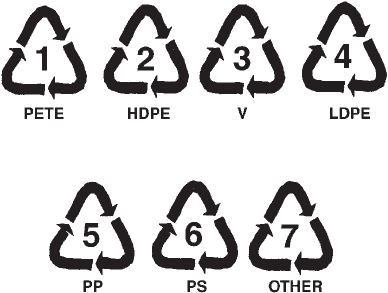
industry, a committee decided on some basic identification
numbers and abbreviations for seven types as shown in
Figure 1.
Some of the states objected to the codes at first because
of a concern that the code would be used as a recycling
symbol, and not all resins are welcome in curbside bins.
Nevertheless, the SPI model bill was pushed and passed in
39 states. While there still is much confusion, industry
and consumer/government interests have been unable to
agree on an acceptable change in the code.
Many companies inappropriately use the SPI code as
a green claim on bags, nonretail bottles, and clamshells,
which are unwelcome in curbside bins. Even though two
states technically require the code on plastic clamshells,
legal experts say there have never been any enforcement
actions against companies not using the code.
If companies are using blends of polymers or multilayer
bottles that recycle, then experts say it is generally
acceptable to put that resin number (e.g., PET) on the
bottle. Many large companies have in practice.
NAFTA/MEXICO
The North American Free Trade Agreement (NAFTA)
came into effect January 1, 1994. The agreement sets
out rules for trade among Canada, the United States, and
Mexico. Mexico faces severe environmental degradation.
Mexico’s principal environmental law is the General Law
of Ecological Balance and Environmental Protection, in
effect since 1988.
Mexico generates about 80,000 t of municipal waste
every day. About 70% of this is collected every day, but
only a fraction is adequately transported or deposited in a
sanitary landfill. Mexico is serious about solving its severe
environmental problems. It is believed that there is an
extraordinary opportunity for U.S. environmental firms to
export solutions to Mexico. ACCESS-MEXICO is a low-
cost program and source of Mexico’s environmental laws
in English. It is considered to be a key element in reducing
barriers between the United States and Mexico and is a
source of information for anyone wishing to do business in
Mexico (9).
BIBLIOGRAPHY
Michelle Raymond, ‘‘Environmental Regulations, North America’’
in The Wiley Encyclopedia of Packaging, 2nd edition, John
Wiley & Sons, New York, 1997, pp. 351–355.
Cited Publications
1. ‘‘Product Stewardship, Packaging,’’ United States Envi-
ronmental Protection Agency, www.epa.gov, updated July
2007.
2. ‘‘C-C Sets Recycling Goal,’’ Atlanta Business Chronicle, De-
cember 13, 2006.
3. ‘‘Oregon Bottle Bill,’’ Oregon Department of Environmental
Quality, www.deq.state.or.us, accessed March 2008
4. Fact Sheet, the Expanded Bottle Bill, State of Oregon Depart-
ment of Environmental Quality, June 26, 2007.
5. Bottle Bill Resource Guide, Container Recycling Institute,
www.bottlebill.org, updated July 2007.
6. New York State Hazardous Packaging law (article 37),
www.dec.ny.gov/chemical.
7. Introduction to Ecolabelling, Global Ecolabelling Network,
Ottawa, Canada, July 2004.
8. ‘‘Paper Used in the Preparation of Food, Green Seal’s Stan-
dards and Certification, Green Seal, January 1, 1997,
www.greenseal.org/certiifcation/standards.
9. ‘‘Environmental Issues/Mexico,’’ U.S.-Mexico Chamber of Com-
merce, www.usmcoc.org, April 2005.
General References
U.S. Recycling Laws by State, Raymond Communications, Silver
Spring, MD, August 16, 2004.
Green Labeling: A Global Guide for Marketers and Manufac-
turers, Raymond Communications, Silver Spring, MD, August
18, 2005.
ENVIRONMENTAL IMPACT OF PACKAGING
SUSAN SELKE
School of Packaging, Michigan
State University, East Lansing,
Michigan
The term environment subsumes many concepts related
to how packages and packaging systems function in the
broader context of our planet, its people, and its ecosys-
tems. Increasingly, packaging designers, manufacturers,
and users are paying attention to the environmental
impacts of packaging. This is being driven by a combina-
tion of (a) pressure from consumers and from regulators
and (b) the desire of business and industry to engage
in responsible corporate citizenship. In this article, we
discuss the broad topic of environmental impacts of packa-
ging and provide an overview of some of the major current
environmental concerns impacting packaging. We will
Figure 1. Identifications and abbreviations for seven types of
resin grades.
400 ENVIRONMENTAL IMPACT OF PACKAGING
examine the solid waste impacts of packaging and the
topic of sustainability in greater detail.
LIFE CYCLE ASSESSMENT
In discussing the environmental impacts of packages and
packaging systems, a key concept is the need to take an
approach that looks at systems and that encompasses the
entire life cycle. For example, if we were to determine
whether glass bottles or steel cans were environmentally
preferable based on the energy use in filling alone, we
would obviously be neglecting a vast array of considera-
tions that are also important. Similarly, if we were to
attempt to decide whether packaging juice in pouches was
environmentally preferable to packaging it in bottles, we
might reach an inappropriate conclusion if we failed to
consider the requirements for the associated distribution
packaging (not to mention other aspects of the transport
and delivery system).
Therefore, there is general agreement that the appro-
priate framework for evaluating environmental impacts
must include (a) the whole system and (b) the entire life of
the item being evaluated, from ‘‘cradle to grave.’’ This
approach is known as life cycle assessment or life cycle
analysis (LCA) and is the analysis of the environmental
impacts of product or process systems, including packa-
ging, with the goal of selecting those that have the least
overall adverse environmental impacts, or of modifying
systems to diminish those impacts.
While actually performing an LCA is fraught with
complications and can be extremely sensitive to the as-
sumptions and data used, not to mention the difficulty in
making decisions from the complex sets of information
generated, there is general agreement that this is the
correct philosophical approach to use. We will not discuss
LCA in detail, but rather will use the concept as an
organizing principle for this discussion.
A wealth of information is available on LCA, and
extensive efforts are underway to further develop this
methodology. One of the primary sources of information is
the Life Cycle Initiative developed by the United Nations
Environmental Program (UNEP) in cooperation with the
Society for Environmental Toxicology and Chemistry
(SETAC) (1). There are also a variety of LCA studies of
particular materials and systems. Unfortunately, some of
these reach contradictory conclusions. Increasingly, com-
puter-based systems are available to calculate LCAs, but
they too often fail to provide adequate information about
the underlying data and assumptions used. Because of the
complexity of doing full-fledged LCAs, there is also con-
siderable interest in and development of modified LCAs,
which are more limited in their approach and provide data
in a form that is much easier to use for decision making,
even though it is less complete. The Wal-Mart ‘‘Scorecard’’
can be regarded as one of these (2).
RESOURCE DEPLETION AND CONSERVATION
Depletion of natural resources may occur when nonrenew-
able resources are utilized in the production of packaging
materials. For example, the manufacture of aluminum
cans may consume aluminum ore, which is a finite re-
source. (On the other hand, ore is not consumed if the cans
are made from 100% recycled aluminum.) Whether this is
a serious concern is dependent in large part on the relative
scarcity or abundance of the resource in question, as well
as on the amount that is used for packaging. For example,
large amounts of sand and sandstone are used in the
production of glass bottles, but the earth’s supply of this
resource is abundant, so resource depletion is not a serious
concern. In contrast, the earth’s supply of chromium is
rather small, but only relatively tiny amounts of chro-
mium are used in the manufacture of tin-free steel for
packaging, so while the overall global depletion of chro-
mium might be a concern, packaging does not play a
significant role in such depletion. In principle, use of
renewable resources is less of a concern than use of
nonrenewable resources since renewable resources, by
definition, can be replenished. The major raw materials
used for all the major packaging materials (wood, paper,
aluminum, steel, glass, and plastics) are, fortunately,
relatively abundant at this time, at least to the extent
that serious shortages are not likely to arise in the near
future, given current and projected patterns of use. Fu-
ture availability of petroleum and natural gas for plastics
is likely the most serious concern. However, manufacture
of plastics packaging is responsible for much less than 5%
of petrochemical resource use; and when life cycle energy
is included, plastics often use less total petrochemicals
than do competitive materials.
Of course, recycling of materials can extend their
availability by reducing demands on the resource base.
ENERGY
In addition to material resources, packaging is also a
consumer of energy resources. The typical mix of energy
resources used differs by material. In the production of
paper, renewable biomass (wood) is a major energy source,
as well as being the primary raw material. On the other
hand, in production of paper from recycled fiber, petro-
leum products are the primary energy source. For plastics,
petroleum and natural gas are both raw materials and
energy sources. The aluminum industry is heavily depen-
dent on electrical power, and production of aluminum
metal from ore is highly energy-intensive. The glass
industry relies primarily on natural gas and electricity
as energy sources. The manufacture of steel from ore uses
coal as the primary energy source. Transporting of packa-
ging materials of all types uses primarily petroleum-based
energy. All packaging materials use electricity at various
points in their manufacture. Electricity is not a primary
energy
source and depends
on a mix of energy technolo-
gies, including hydroelectric and nuclear power, but in the
United States is most heavily dependent on coal. Modifi-
cation of packaging processes to make them more energy-
efficient can result in significant cost savings as well as
environmental benefits. Beginning in the late 1970s and
early 1980s, increasing fuel prices and consequent interest
in energy efficiency led to a number of studies comparing
ENVIRONMENTAL IMPACT OF PACKAGING 401
the energy use of various alternative packaging systems
for products (3–5). These are the forerunners of more
recent life-cycle assessment studies.
Waste-to-energy incineration can recover valuable em-
bedded energy from combustible packaging materials and
thus diminish dependence on other fuel sources.
POLLUTION
Emission of air and water pollutants during the manu-
facture, distribution, and disposal of packaging also im-
pacts the environment. Different packaging materials are
associated with different types of pollution concerns.
Manufacture of paper, for instance, produces water efflu-
ents with a high load of organic materials, producing a
significant biological oxygen demand (BOD). In the man-
ufacture of plastics, on the other hand, air emissions of
volatile organics are generally a more serious concern
than water emissions. For all types of packaging materi-
als, proper control and treatment of effluent streams is
important for protection of the environment, and is man-
dated by government regulations. This is true not only
for manufacture of packaging materials but also for the
converting processes that change these materials into
packages. The practice of waste minimization (defined as
reduction of the production of toxic materials), commonly
practiced in the chemical industry, can also have benefits
for the packaging industry in dealing with requirements
for proper treatment of effluent streams. Simply put, if
a toxic material is not used or produced, it will not be
present in effluent streams and thus will not require
treatment for its removal. An example that is common-
place in packaging is the substitution of water-based inks
and adhesives for solvent-based systems in a variety of
printing and converting operations. This substitution
enabled many converters to avoid the necessity of instal-
ling expensive air pollution control systems to collect
volatile organics when new air emission regulations
were enacted. Three particular types of pollution concerns
have been regarded as of particular importance in recent
years.
Ozone Depletion
In the mid-1980s, it was discovered that an ‘‘ozone hole’’
was formed over Antarctica in the spring, and a vast
body of scientific evidence has since accumulated linking
the destruction of stratospheric ozone throughout the
globe with chlorofluorocarbons (CFCs) and similar com-
pounds. As a result, there has been a global phase-out of
ozone-depleting substances (ODS). There is no longer any
manufacture of CFCs in industrialized countries. This is
essentially now a non-issue for packaging, because the
necessary changes in aerosol propellants and foams are
for the most part complete, worldwide. Nevertheless, it
will still be a number of years before the ozone layer
returns to its normal condition. The 2006 international
report on ozone depletion predicts that ozone levels in
Antarctica will return to pre-1980 levels by about 2060–
2075 (6).
Global Warming
In the late 1980s, a number of scientists became increas-
ingly concerned about the possibility that increases in the
atmospheric concentration of carbon dioxide and other
‘‘greenhouse gases’’ were acting to increase average global
temperatures. Potential consequences of such tempera-
ture rise were believed to include an increase in ocean
levels and consequent flooding, changes in rainfall pat-
terns, change in ecosystems with adverse effects on ani-
mal and plant populations, and a variety of other effects,
including increases in the number and severity of tropical
storms.
Subsequent developments have increased the evidence
base that global temperatures are in fact increasing, and
better understanding of the mechanisms behind global
climate has led to a clear scientific consensus that anthro-
pogenic greenhouse gases are leading to increasing global
temperatures and rising sea levels. In 2007, the Inter-
governmental Panel on Climate Change (IPCC) released
its 4th Assessment Report (7).
Among the IPCC findings are that global temperatures
have increased by about 0.61 C (1.11F) over the last 100
years, that this increase is due to human effects on the
climate, specifically increases in concentrations of green-
house gases, and that the rate of increase has increased to
about 1.81C (3.21 F) per century over the last 25–30 years.
This higher rate is expected to be sustained over the next
century. Carbon dioxide concentrations increased from the
preindustrial level of about 280 ppmv (parts per million by
volume) to 358 ppmv by 1994, and by 2005 they were about
379 ppmv. Current carbon dioxide concentrations are
higher than they have been at any time in at least the
last 420,000 years. The last time the earth had CO
2
levels
as high as they are today was likely 10–20 million years
ago (7).
Sea levels have increased around the world by about
17 cm (6.7 in.) over the last 100 years. The rate of increase
was about 1.8 mm per year between 1961 and 2003,
increasing to about 3.1 mm per year from 1993 to 2003.
IPCC is not sure whether this faster rate is due to natural
variability, or to an increase in the long-term trend. The
primary cause of sea level rise is the combination of (a)
thermal expansion in response to increased ocean tem-
peratures and (b) increased volume of water in the oceans
due to melting of ice (7).
The fourth IPCC assessment says the most likely
temperature scenario for the future is a warming of 2–
4.51C (3.6–8.11F) this century, reflecting a continuing
warming rate of about 0.21C per decade. This rate of
warming is unprecedented in at least the last 10,000
years. IPCC says it cannot rule out values substantially
higher than 4.51C, but feels an increase of less than 1.51C
is very unlikely (7). For sea level, the current projections
are for increases of 0.18–0.59 m (7–23 inches) this century.
These projections do not include the full effects of changes
in the Greenland and Antarctic ice sheets—which could
increase the estimates by 0.1–0.2 m, or perhaps even more.
IPCC felt that these phenomena are not yet well enough
understood to be incorporated in the predictions. More-
over, ocean levels will continue to increase long after 2100,
402 ENVIRONMENTAL IMPACT OF PACKAGING
even if greenhouse gas concentrations have stabilized, and
may have reached only half their eventual total even by
500 years from now (7). Collapse of the West Antarctic ice
sheet could raise sea levels by as much as 5 m. Only a few
years ago, this was thought to be highly unlikely at least
for several millennia, but some scientists now think it is
not nearly so far-fetched. Melting of the ice sheet in
Greenland is considered much more likely, and this alone
could increase sea levels by as much as 7 m (8).
Use of fossil fuels for energy is the primary cause
of increased carbon dioxide concentrations in the atmo-
sphere.
Chlorine, Chlorinated Organics, and Plasticizers
In recent years, there has been increasing concern about
the effects of chlorine, and in particular of chlorinated
organic compounds, as well as other chemicals that can
interfere with action of natural hormones or that have
hormone-mimicking effects (endocrine disruptors and si-
milar compounds).
Initial attention focused largely on dioxins. Consider-
able concern was expressed about incineration of polyvinyl
chloride (PVC) because of fear that presence of PVC in
incinerators would lead to increased dioxin production.
Despite evidence that PVC is at most a minor factor in
dioxin production in incinerators, with combustion and
emission-control system conditions being much more
significant, opponents of incineration often have raised
this as a major issue. Concern has also been raised about
possible hormonal disruption effects associated with a
variety of other chlorinated organic compounds. PVC
again is often targeted as a contributor to these problems.
Organizations such as Greenpeace have even called
for elimination of chlorine-based chemical production
processes.
While attacks on chlorine have diminished somewhat,
a current target is a variety of phthalate plasticizers. A
recent U.S. study found high levels of plasticizers in a
significant fraction of water samples (9). The Canadian
government has listed plasticizers as one of the sources of
endocrine disrupting substances (10). The Center for
Bioenvironmental Research at Tulane and Xavier Univer-
sities is one of many other sources about such effects (11).
Concern about these chemicals was refueled in part by
the publication of Our Stolen Future (12) in 1996. The
organization by this name continues to provide updated
information about endocrine disruption (13).
SOLID WASTE ISSUES
Much of the criticism of packaging in recent years has
been related to its disposal. During the 1980s, a number of
municipalities in the United States, particularly on the
East Coast, began to encounter significant problems with
lack of availability of disposal facilities for municipal solid
waste (MSW). Packaging accounts for approximately one-
third of the MSW stream by weight, a fraction that has
been relatively constant for several decades, so it became a
natural target for efforts to decrease the amount of MSW
requiring disposal. At the same time, there was a change
in the general philosophy about solid waste management
techniques from heavy reliance on landfilling to use of a
more complex mixture of options.
In the United States, this was expressed, by the EPA
and others, as the philosophy of integrated solid waste
management, incorporating the solid waste management
hierarchy. This hierarchy placed waste reduction at the
top, as the most desirable option, followed by recycling and
composting, next incineration, and finally landfilling at
the bottom. The goal was to manage waste materials as far
up the hierarchy as was practical.
Waste reduction
Waste reduction, or source reduction, is an action that
prevents generation of waste. Using less material in a
package means that less will be disposed at the end of
the package life. Furthermore, it results in savings in
production, processing, and transportation of materials.
Of course, this must be balanced against the function of
the package. Elimination of packaging would mean the
elimination of many of the products we enjoy, as well.
Similarly, underpackaging can lead to significant product
damage, thus increasing waste. The packaging industry
has a long tradition of source reduction, accomplished for
the most part with the goal of saving money by using less
material for packages. Glass bottles, plastic bottles, metal
cans, and many other package forms have become thinner
and lighter over the years.
Reuse of packages is another form of waste reduction.
While some types of reusable packaging, such as refillable
beverage bottles, have decreased in use, in the distribu-
tion packaging segment, reuse has enjoyed some revival in
the last decade or so. Some industries have switched from
corrugated boxes to plastic or metal crates or bins. One-
way wood pallets have been replaced by reusable plastic
pallets in a number of applications. There have been
efforts to combine source reduction and reuse by providing
no-frills refill packages for consumer products such as
laundry detergent, but with limited success.
The U.S. Environmental Protection Agency, in its series
of reports on MSW, now also includes discussion and
quantification (to the extent possible) of source reduction
(14).
Recycling
Much of the attention related to reducing packaging waste
going to disposal has focused on recycling, including both
(a) designing packages for easier recyclability and (b)
using recycled materials in manufacture of packages.
There are significant differences between packaging ma-
terials
in average recycling
rates and in the potential for
incorporation of recycled content.
Aluminum beverage cans used to boast the highest
recycling rate for any packaging material, but their rate
has fallen from its historic high of 65% in 1992, while the
rates for other packaging materials have increased. In
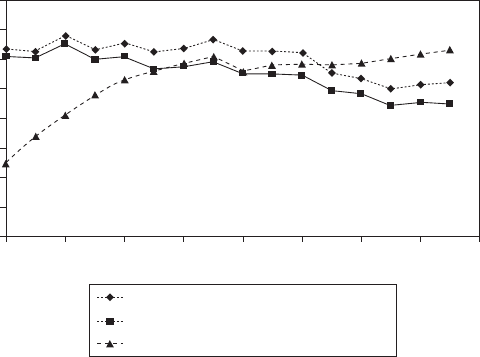
2005, the recycling rate was only 44.8% (Figure 1) (14, 15).
It should be noted that the Aluminum Association cites
higher rates, but includes imported used beverage cans in
ENVIRONMENTAL IMPACT OF PACKAGING 403
calculating the rate (15), a practice that is not accepted by
EPA.
A substantial portion of the aluminum beverage cans
recycled come from the 11 states with deposit systems for
carbonated beverage containers (and in some cases on
other beverages; one of these states exempts aluminum
cans from the deposit). The aluminum industry set up a
network of buyback centers in many nondeposit states,
but these have decreased in relative significance as
collection of cans and other recyclables at curbside has
increased. Aluminum cans remain one of the most valu-
able materials collected in such programs. New aluminum
cans are an important end market for recycled aluminum.
Using recycled aluminum is economically attractive due to
the high cost of virgin raw materials (bauxite) and to the
large energy savings associated with making aluminum
sheet from recycled aluminum rather than from bauxite
(95% energy savings).
The recycling rate for steel cans has actually exceeded
the rate for aluminum cans for the last several years. The
rate reached a historical high of 62.9% in 2005 (Figure 1)
(14, 16). While steel cans are also commonly collected in
curbside recycling programs, recovery of steel from gar-
bage going to waste-to-energy incineration facilities is
another important source. This is possible because of the
magnetic nature of steel, which allows it to be fairly easily
separated from the mixed waste, either prior to or after
incineration. While steel cans generally contain about
25% recycled content, most collected cans are used in
nonpackaging applications. Used cans are now recognized
as a valuable source of high-quality steel scrap.
The recycling rate for glass containers is considerably
lower than for aluminum and steel, about 25.3% in 2005
(not including refilling), and has been relatively stable for
the last decade (14). In contrast to aluminum, raw materi-
als for glassmaking are relatively low in cost. While
energy savings do accrue from using recycled glass
(cullet) in making new containers, they are significantly
more modest than with aluminum. The energy required
to process the cullet and transport it to the glass-making
facility may consume a significant amount of this
savings. An additional problem with glass recycling is
the requirement for separation of the glass by color. While
automated sorting equipment does exist, this is often still
a hand-sorting operation and is restricted to unbroken
containers. Facilities for sorting commingled recyclables
(material recovery facilities, MRFs) typically lose a sub-
stantial fraction of their incoming glass stream to break-
age. Container manufacturing is the major market for
recycled glass and can accommodate very little color
contamination. Uses for mixed-color cullet can be found
in construction and related industries, where recycled
glass can substitute for some of the aggregate in concrete
and asphalt, for instance, but these are low-value uses
that are often uneconomical. The major sources of collec-
tion of glass containers for recycling are deposit systems
for beverage containers and curbside recycling programs.
A significant number of curbside programs have stopped
collecting green glass because of lack of markets, and some
have stopped collecting glass containers all together,
primarily because of contamination of paper with broken
glass in single-stream collection systems.
Recycling of paper and paperboard packaging materi-
als is heavily dependent on the particular form of packa-
ging involved. Corrugated has the highest recycling rate
of all packaging materials, 71.5% according to EPA
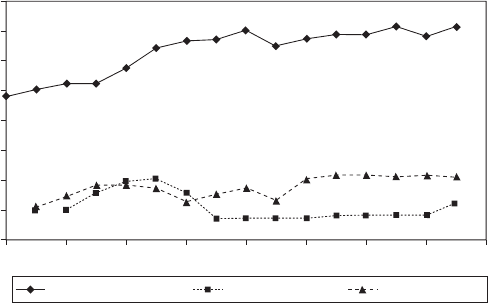
(Figure 2) (14) and 76.6% according to the Paper Industry
Association Council (PIAC) (17). Most of this material
originates in the business sector, rather than from indivi-
dual consumers. Retail stores, factories, and so on, can
generally achieve savings in their waste disposal bills by
participating in programs to source-separate corrugated
boxes for recycling. In addition, some garbage collection
operations divert selected loads of waste, known to contain
a high percentage of corrugated, to sorting facilities where
hand sorting is used to recover this material. An addi-
tional source of material is dropoff collection sites. Curb-
side collection of corrugated is less available, though it
does appear to be growing. Major end-use markets for
corrugated containers include manufacture of new corru-
gated, boxboard, and kraft paper for grocery sacks. While,
in general, paper fibers are shortened and weakened by
the processing required to repulp and clean the fibers, it is
possible to make recycled grades of board with properties
1990
0
10
20
30
40
Percent
50
60
70
80
1992 1994 1996 1998 2000 2002 2004 2006
Aluminum beverage cans, Al. Assoc.
Aluminum beverage cans, CRI/EPA
Steel cans
Figure 1. Aluminum beverage can and steel can recycling
rates (14–16).
404 ENVIRONMENTAL IMPACT OF PACKAGING
near those of virgin materials, especially when the re-
cycled content is blended with virgin fiber. Kraft bags and
sacks had a recycling rate of about 21% in 2005, consider-
ably lower than the rate for corrugated. Some of this is
collected through drop-off sites or curbside collection,
often along with corrugated or newspapers. Recycling of
folding cartons was almost unheard of before 1990, but
reached a rate of 11.9% in 2005. Efforts have been made to
recycle milk cartons and aseptic ‘‘juice boxes,’’ but they
have not had much success, and recycling rates for these
materials remain negligible. The overall recycling rate for
paper and paperboard packaging was 58.8% in 2005 (14).
In addition to domestic uses, export of recovered paper is
significant.
Recycling of plastic packaging differs considerably by
resin and container type. For a long time, the ‘‘star’’ of
plastics recycling was polyethylene terephthalate (PET)
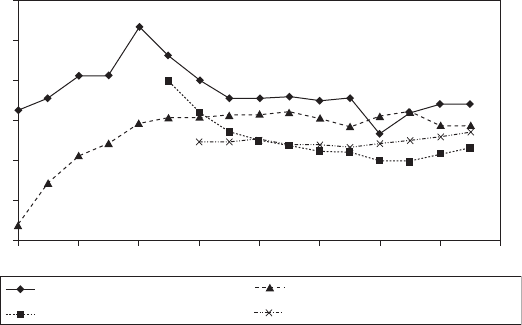
soft drink bottles, which reached a recycling rate of 53.3%
in 1994, according to EPA (Figure 3) (18). However, the
recycling rate has fallen substantially since then, and in
2005 was only 34.1% (14). The 11 deposit states provide a
major source of this material. As PET has spread into the
‘‘custom’’ bottle market, curbside collection has become
increasingly important as a source of recyclable materials.
The growing use of single-serve beverage bottles and, in
particular, the rapid growth in bottled water have con-
tributed to the declining PET bottle recycling rate. These
bottles are often consumed away from home and, except in
Maine and California, are not covered by deposits. The
PET industry has worked on establishing convenient
drop-off sites for bottles, especially at special events, but
this has not been sufficient to reverse the decline. Other
types of PET packages have a lower recycling rate than
bottles. The overall PET container recycling rate in 2005
was 26.5%; the overall PET packaging recycling rate was
25.2% (14). The major use of recycled PET is fiber applica-
tions such as fiberfill, carpet, and clothing. Other major
uses include containers, automotive parts, strapping, and
other products (19). Recycled PET is acceptable for direct
food contact in certain circumstances. First, some such
applications, such as use in egg cartons or vegetable trays,
provide limited potential for migration. Second, some
applications use a layer of virgin plastic to provide a
functional barrier between potential contaminants in
recycled PET and the product. Third, some mechanical
recycling processes have received letters of nonobjection
from FDA after demonstrating their ability to remove
potential contaminants. Finally, some systems use ter-
tiary recycling processes (methanolysis or glycolysis) to
chemically break down the polymer into monomers, purify
them, and use them as feedstocks for production of PET
that is identical to virgin resin.
Currently the most widely recycled plastic packaging
material is natural high-density polyethylene (HDPE)
bottles, such as those for milk and water, which were
recycled at a rate of 28.8% in 2005 (Figure 3) (14). The
major source of these bottles is curbside collection pro-
grams. The high-quality unpigmented homopolymer is
suitable for a variety of uses, including applications in
packaging, housewares, toys, pipe, and traffic cones. Sig-
nificant packaging applications include motor-oil bottles
(blended with virgin resin), household chemical bottles (as
a buried inner layer), and bins and pallets. Some recycled
HDPE is also used in film form, primarily for shopping
bags. Recovery of pigmented HDPE bottles is somewhat
lower than for unpigmented bottles, 26.0% in 2005 com-
pared to 28.3% for unpigmented bottles, according to the
American Chemistry Council (20), and its uses are more
limited because of the complications caused by the mix-
tures of colors. Motor-oil bottles and agricultural pipe are
two major markets. The demand for recycled HDPE, as for
other recycled materials, tends to be strongly influenced by
ups and downs in the supply and cost of virgin materials.
A significant amount of plastic film is recycled from two
major sources, stretch wrap and bags. Pallet stretch wrap is
widely collected for recycling, although precise recycling
rates are not readily available. It is collected in the same
way as most corrugated—through commercial sources. It
used to be common for grocery and other retail stores to
have drop-off bins for collection of plastic merchandise
bags, but many such programs have disappeared, and
recycling of bags has fallen. EPA reports a ‘‘bags and sacks’’
recycling rate of 3.2% in 1990, but only 0.6% for 2005 (14).
Two major markets for recycled plastic film and bags are
plastic lumber and trash bags. Other markets include
housewares, agricultural film, and merchandise bags.
In the 1980s and early 1990s, the National Polystyrene
Recycling Company engaged in an effort to recycle
1990
0
10
20
30
Percent
40
50
60
70
80
1992 1994 1996 1998 2000 2002 2004 2006
Bags & sacksFolding cartonsCorrugated boxes
Figure 2. Corrugated, folding carton, and paper bag re-
cycling rates (14).
ENVIRONMENTAL IMPACT OF PACKAGING 405
expanded polystyrene from food-service applications.
These efforts have largely disappeared. Most current
polystyrene recycling is limited to foam cushioning mate-
rials, primarily (in the United States) through the efforts
of the Alliance of Foam Packaging Recyclers (21).
Some recycling of polypropylene (PP) bottles takes
place in communities with ‘‘all plastic bottles’’ collection
programs. The ‘‘rule of thumb’’ is that about 5% of PP can
be included in HDPE recycling without adversely affect-
ing the performance of the recycled material. Of course, it
must be noted that the caps and fitments that may be
included on the collected HDPE bottles are usually PP
and contribute to this total. Most specific recycling of PP
packaging is caps on PET bottles. The density-based
separation systems that are a routine part of PET recy-
cling are quite good at separating PP and PET.
Little recycling of other plastic packaging materials is
occurring in the United States. PVC is recycled to an
appreciable extent in Europe, but not much in the United
States Some recycling of comingled plastics occurs; the
major products are substitutes for wood or concrete, often
for outdoor use. However, such systems are rare and their
economic success has been marginal at best.
As can be seen above, the most desirable way to collect
materials for recycling is significantly influenced by the
type of material to be collected and by where it is most
available. For corrugated boxes and stretch wrap, collection
efforts focus on the commercial sources that discard most of
these materials. For beverage bottles, deposit legislation,
originally passed primarily as a litter-prevention measure,
has been proven to be a very effective method of collection,
in terms of recovery rate. In Michigan, the only state with a
10-cent deposit on all covered containers, recovery rates are
over 97% (22). For understandable reasons, retailers gen-
erally oppose expansion of deposit systems. Nevertheless,
both Maine and California have expanded deposits to cover
most beverage containers with the explicit goal of increas-
ing recycling. Efforts are underway in other states to do the
same. Curbside collection programs generally offer signifi-
cantly higher diversion rates than drop-off collection, due to
the greater convenience that they provide. The variety
of materials accepted obviously influences the proportion
of materials diverted from disposal. Other important
variables are the amount of effort the consumer is expected
to go to in preparing the materials, the logistics of the
system (is a container or cart provided, is collection weekly
or less often, etc.), is participation in recycling less or more
expensive than simply putting the materials in the garbage
(pay-as-you-throw plans), is recycling voluntary or manda-
tory, how much effort is devoted in a community to educat-
ing and motivating residents to participate, and so on.
Composting
Composting is the managed biodegradation of waste ma-
terials. It has grown substantially as a disposal option for
yard waste, but is still very limited, in the United States,
as an organized system for disposal of MSW. Obviously,
only the biodegradable fraction of MSW can be handled by
composting. In principle, this includes most paper and
wood packaging, as well as those plastics that are truly
biodegradable. In practice, some composting systems are
limited to food and yard wastes, not accepting any packa-
ging materials, and others accept packaging materials
only if they are paper. Difficulties in getting compostable
plastics accepted in such systems include the limited use
of these materials, the difficulty in differentiating compo-
stable from noncompostable plastics, and concern on the
part of operators that the materials will cause problems in
the proper functioning of their systems or adversely affect
their markets.
Incineration
The next step down the solid waste management hierar-
chy is incineration. As practiced in the United States
today, it is virtually always coupled with energy recovery,
and therefore offers not only a reduction in the volume
of solid waste requiring landfilling but also the generation
of energy, which can displace some combustion, usually of
coal. To avoid unacceptable air pollution, sophisticated
and expensive pollution control equipment is required.
The ash generated from the noncombustible residues
combined with that from the air pollution control systems
may contain levels of heavy metals high enough to require
disposal as a hazardous waste. The recommended practice
is to dispose of these materials in ash monofills. While in
1990
0
10
20
30
Percent
40
50
60
1992 1994 1996 1998 2000 2002 2004 2006
PET soft drink bottles, EPA
PET bottles, NAPCOR
HDPE milk & water bottles, EPA
HDPE bottles, ACC/APPR
Figure 3. PET and HDPE bottle recycling rates (14, 19,
20).
406 ENVIRONMENTAL IMPACT OF PACKAGING
the mid-1980s EPA called for significantly increased use of
incineration and it did grow substantially, it has remained
relatively stagnant since the mid-1990s. Reasons include
public opposition and high cost.
The growth in incineration was instrumental in the
development of U.S. state legislation prohibiting the delib-
erate introduction of lead, cadmium, mercury, and hexa-
valent chromium into packaging materials (except in
narrowly defined circumstances) and in limiting their
inadvertent presence. These laws, based on model legisla-
tion promulgated by CONEG, the Coalition of Northeast-
ern Governors, are commonly referred to as Toxics in
Packaging legislation and as of 2007 had been passed in
19 states (23).
Landfill
Landfilling is at the bottom of the solid waste manage-
ment hierarchy, seen as the least desirable option, but
nonetheless one that is always necessary for residual
materials that cannot be effectively handled by options
higher in the hierarchy. The major drawbacks of land-
filling are the space that it uses and its potential for
groundwater contamination. On the positive side, landfills
are often the least expensive option for handling many
types of waste and can serve as a source of methane for use
as a fuel.
OTHER ENVIRONMENTAL IMPACTS
In addition to the effects discussed above, packaging can
be associated with a variety of other environmental im-
pacts, such as destruction of natural habitats, loss of
scenic beauty, and noise pollution. For the most part,
packaging plays only a minor role in such impacts. For
instance, use of paper, including packaging, is often cited
as a prime factor in destruction of tropical rainforests.
However, slash-and-burn agriculture is a much more
significant factor. Little rainforest destruction can be
attributed primarily to harvesting of wood for manufac-
ture of wood or paper packaging.
LEGISLATION
No discussion of packaging and the environment would be
complete without a mention of legislation, which has been,
in many cases, the primary driving force behind
the increased attention given to environmental impacts.
The mid-1990s have brought a slowing in the pace of
legislative demands for packaging changes, but they
remain an important factor. In the United States, legisla-
tion at the state level remains more significant than
federal legislation. In Europe, both EEU (European Eco-
nomic Union) and individual country legislation are sig-
nificant. Extended producer responsibility (EPR) is the
guiding framework. In Canada, both Ontario and Quebec
have fee systems for manufacturers based on the amount
of packaging, to help support recycling programs. Ex-
tended product responsibility, also denoted EPR but shar-
ing the responsibility among producers, consumers, and
government, guides policy there. A variety of other efforts
could be cited around the world.
Recently, plastic merchandise bags have been identified
as a particular concern in many localities. Several coun-
tries or other political units have enacted use fees to
increase the cost of such bags. Others have banned their
use outright.
GREEN MARKETING
The environmental attributes of a package are increasingly
being used as a marketing tool. In several cases, enforce-
ment activities have been undertaken against companies
making such claims without proper justification. It is
extremely important for any business contemplating en-
vironmental claims on a package to ensure that the claims
are in compliance with relevant guidelines and regulations
in the countries or states in which they will be sold.
SUSTAINABILITY
Increasingly, the concept of sustainability is being seen as
providing useful guidance for decision-making in packa-
ging as well as in other areas. While sustainability has
been defined in a number of ways, the basic idea is to
operate in ways that meet current needs without ad-
versely impacting the ability of future generations to
meet their own needs (24).
Adverse environmental impacts associated with a pro-
duct or process will generally negatively impact its sus-
tainability. Therefore, life cycle analysis can be a useful
tool in evaluating sustainability.
Another concept with a close connection to sustainabil-
ity is the idea of cradle-to-cradle design. In this type of
design, waste streams associated with production, use, or
disposal of a product become feedstocks for production of
either the same type of product or some other product.
This idea was popularized by McDonough and Braungart
in the book Cradle to Cradle (25). Minimizing waste of
materials is one approach to enhancing sustainability.
The Sustainable Packaging Coalition is a leading pro-
ponent of the selection and use of packaging systems that
are sustainable. SPC defines sustainable packaging as
packaging that (26):
Is beneficial, safe & healthy for individuals and communities
throughout its life cycle
Meets market criteria for performance and cost
Is sourced, manufactured, transported, and recycled using
renewable energy
Maximizes the use of renewable or recycled source materials
Is manufactured using clean production technologies and best
practices
Is made from materials healthy in all probable end-of-life
scenarios
Is physically designed to optimize materials and energy
Is effectively recovered and utilized in biological and/or in-
dustrial cradle to cradle cycles
Evaluating the environmental impact or sustainability
of packaging systems is often very complex. Specific results
ENVIRONMENTAL IMPACT OF PACKAGING 407