
Yam, Kit L. (ed.). The Wiley encyclopedia of packaging technology
Подождите немного. Документ загружается.

Multiplying the tolerant limit and product weight to
obtain
Maximum allowable O
2
¼ð5 10
6
Þð100Þ¼5 10
4
g;
which is the amount of O
2
allowed to enter into the
package before the product becomes unacceptable. Be-
cause the molecular weight of O
2
= 32 and 1 g mole of
O
2
= 22400 cc, the unit of maximum allowable value may
be converted from weight to volume
Maximum allowable O
2
¼ð5 10
4
Þð22400Þ=32
¼0:35 cc
P
i
may be assumed to be zero since the product is
vacuum packed. P
e
may be assumed to be 0.21 atm, the
normal partial pressure of O
2
in air. Therefore, the shelf
life may be estimated by Equation (3) as
t
s
¼
O
2; max
L
PA P
e
P
i
ðÞ
¼
0:35ðÞ10ðÞ
0:12=100ðÞ80ðÞ0:21 0ðÞ
¼174 days:
REFERENCES
1. D.S. Lee, K.L. Yam, and L. Piergiovanni, Food Packaging
Science and Technology, CRC Press, Boca Raton, 2008, pp.
85–86.
ETHYLENE–VINYL ALCOHOL COPOLYMERS
RONALD H. FOSTER
EVAL Americas, Houston,
Texas
Ethylene–vinyl alcohol copolymers are hydrolyzed copoly-
mers of ethylene and vinyl alcohol. The polymer poly(vinyl
alcohol) has exceptionally high barrier properties to var-
ious gases, solvents, and chemicals, but it is water-soluble
and difficult to process. By copolymerizing vinyl alcohol
with ethylene, the high barrier properties are retained
and improvements are achieved in moisture resistance
(EVOH is not water-soluble) and processability.
The resulting EVOH copolymer has the following mo-
lecular structure:
(CH
2
CH
2
)
x
(CH
2
CH)
y
OH
Ethylene unit Vinyl alcohol unit
There are currently two global suppliers of EVOH copoly-
mers. Kuraray Company Ltd. (EVALt resins) and Nippon
Gohsei (Soarnol resins) are both Japanese companies with
manufacturing facilities in Japan, Europe, and the United
States. Chang Chun Group of Taipei, Taiwan has recently
announced the startup of an EVOH production facility in
Taiwan and is reportedly in the process of providing initial
product samples to the market. Manufacturing capacity
for EVOH resins worldwide is approximately 220 million
lb annually. Table 1 lists the range of EVOH resins
available.
EVOH copolymer resins first became commercially
available in 1972 in Japan. However, widespread use of
these resins did not occur until 1983 when U.S. food
producers started using the resin for all-plastic, squeez-
able bottles.
The primary use of these resins is still food packaging,
where the excellent gas-barrier properties are utilized to
prevent oxygen degradation of food products. This has
ultimately led to the replacement of many metal and glass
food packages with the benefit of reduced weight and
improved ease of use. In addition, usage has broadened
due to EVOH’s superior resistance to solvents, chemicals,
and hydrocarbons, expanding into nonpackaging indus-
trial applications such as the agricultural chemical, auto-
motive, appliance, and protective-clothing areas.
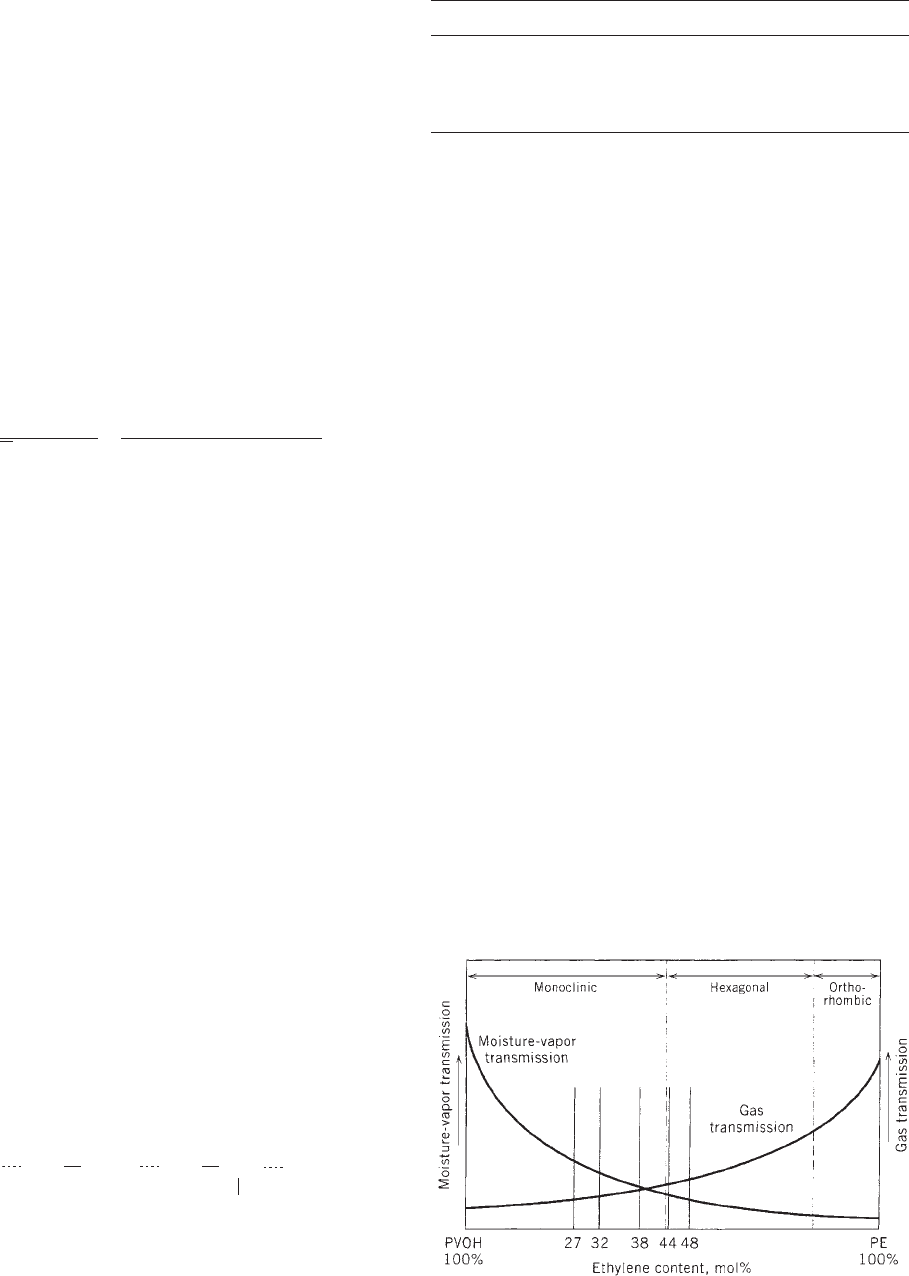
EVOH copolymers are highly crystalline in nature, and
their properties are dependent on the relative concentra-
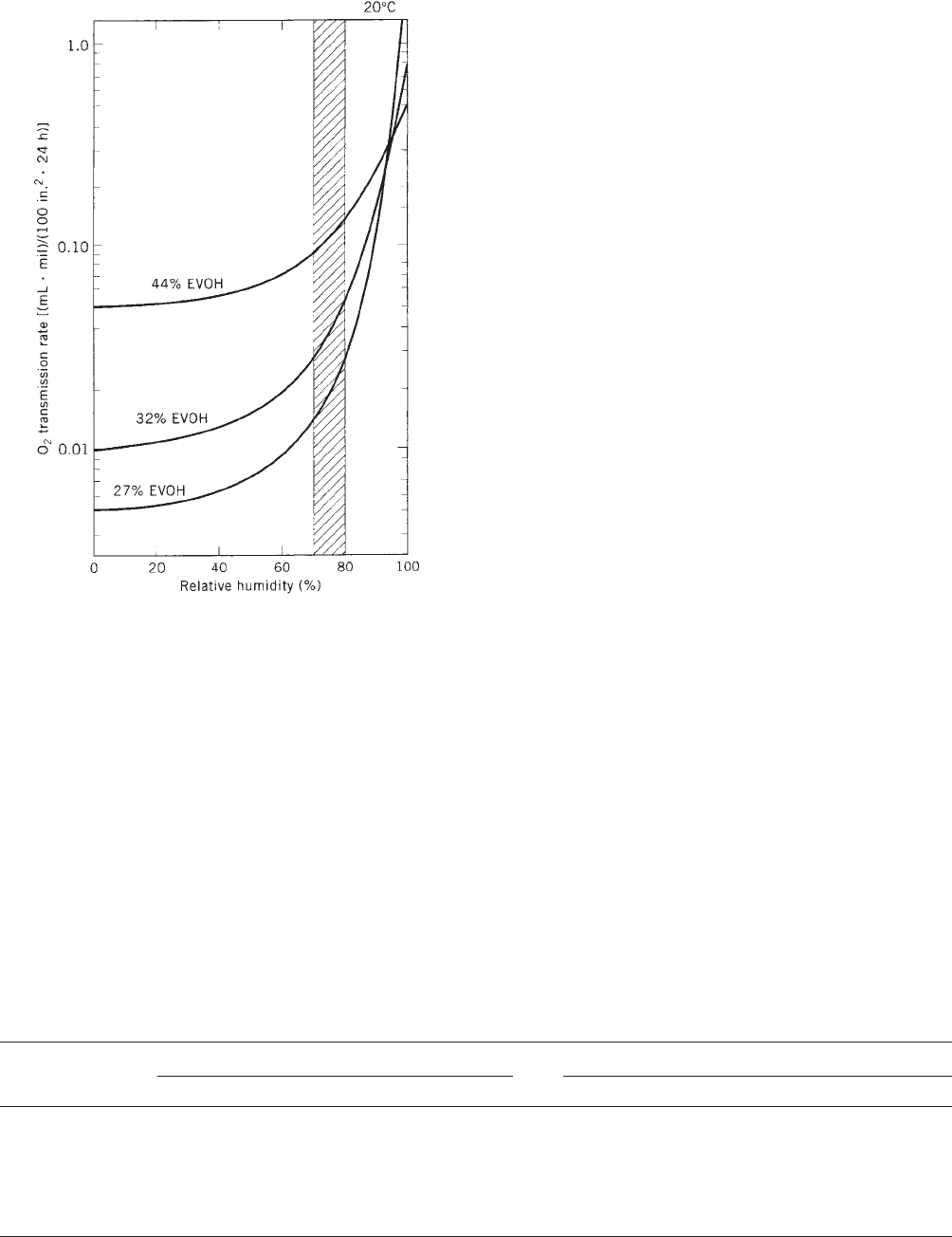
tion of the comonomers. Figure 1 shows the relationship
between comonomer concentration and moisture and gas
transmission barrier properties, and Figure 2 shows the
relationship between relative humidity and oxygen trans-
mission rate.
It is this combination of exceptional barrier properties
that permit the use of thin layers of these materials in
multilayer packaging and nonpackaging structures.
Table 1. Range of EVOH Resins
Property Range
Melt index (g/10 min) 0.7–20
Density (g/mL) 1.12–1.22
Ethylene content (mol%) 24–48
Melting point (1C) 156–196
Figure 1. Comonomer concentration vs barrier properties.
418 ETHYLENE–VINYL ALCOHOL COPOLYMERS
EVOH COPOLYMER PROPERTIES
The general characteristics of EVOH copolymer resins are
discussed in the following paragraphs.
Gas-Barrier Properties
EVOH resins are best known for their outstanding barrier
to the permeation of gases such as oxygen, carbon dioxide,
nitrogen, and helium. The use of EVOH copolymers in a
packaging structure enhances flavor and quality retention
by preventing oxygen from penetrating the package. For
packages utilizing modified-atmosphere packaging (MAP)
technology, EVOH resins effectively retain the carbon
dioxide, oxygen, or nitrogen used to enhance the product.
(See also Barrier polymers.)
Table 2 compares the gas transmission properties of
EVOH copolymers with other commonly used packaging
materials.
Hydrocarbon and Solvent Resistance
EVOH resins have a very high resistance to hydrocarbons
and organic solvents. The weight-percent (wt%) increase
in EVOH resins after immersion for 1 year at 201Cin
various solvents is 0% for solvents such as cyclohexane,
xylene, petroleum ether, benzene, and acetone; 2.3% for
ethanol; and 12.2% for methanol.
Table 3 shows the performance of protective gloves
containing an EVOH layer, and Table 4 reflects the
resistance of EVOH to various fuels. These properties
make EVOH resins an excellent choice for the packaging
of oily foods, edible oils, agriculture pesticides, organic
solvents, and other industrial applications.
Flavor, Fragrance, and Odor Protection
Protecting food products has become increasingly impor-
tant, especially with the current trend away from product
additives and the move toward smaller portion-size packa-
ging. Protection can mean different things in different
situations. One of the areas receiving increased attention
in food packaging is the flavor–aroma barrier (see Aroma
Barrier Testing).
The food industry is becoming increasingly aware of the
importance of flavor barriers in containing natural flavors
and preventing extraneous flavors from contaminating
the product. Some food products are notorious for their
ability to absorb extraneous flavor or aromas. Another
important flavor consideration is commonly called ‘‘flavor
scalping,’’ in which some plastics, such as polyolefins,
selectively absorb certain flavor constituents from the
product.
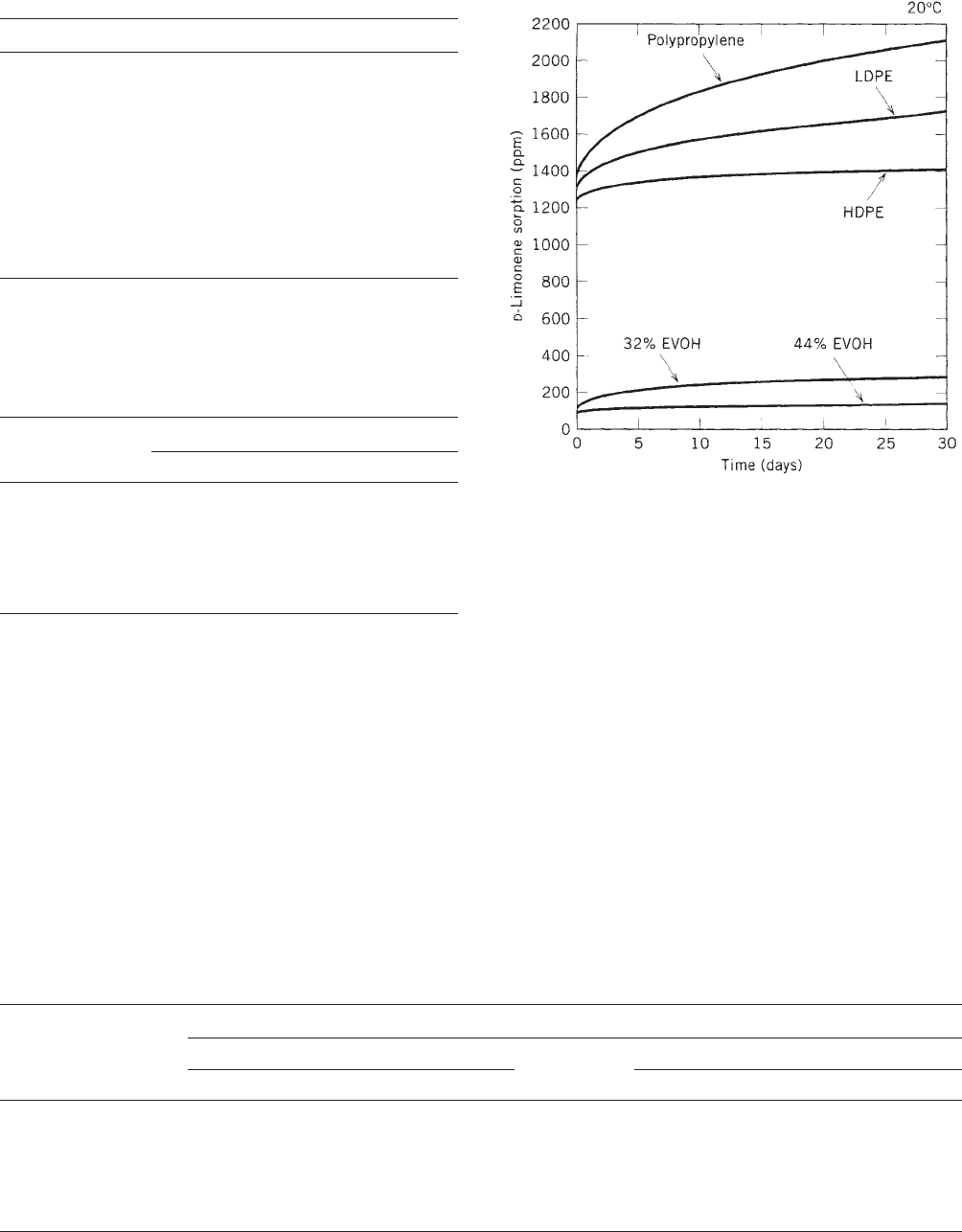
EVOH resins provide excellent protection to the migra-
tion of flavors and the absorption of
D-limonine, which is
the primary flavor constituent in citrus juices, as can be
seen in Table 5 and Figure 3.
Where food products are concerned, aroma barrier is
somewhat analogous to flavor barrier. Food products must
be protected from outside aromas in the distribution
chain, grocery store, and home. Other food and nonfood
products such as garlic, agricultural chemicals, pesticides,
insecticides, or perfumes can be highly aromatic. In this
Figure 2. Oxygen transmission rate versus relative humidity.
Table 2. Gas Transmission Rate
a
(mL mil)/(100 in.
2
24 h atm) (mL 25 mm)/(m
2
24 h atm)
O
2
N
2
CO
2
He O
2
N
2
CO
2
He
32 mol% EVOH 0.02 0.002 0.06 18.8 0.31 0.03 1.0 291.2
38 mol% EVOH 0.03 0.005 0.15 22.0 0.39 0.08 2.3 341.3
44 mol% EVOH 0.08 0.008 0.23 25.3 1.2 0.12 3.5 391.5
PVDC 0.15 0.01 1.1 27.3 2.3 0.19 17.4 423.2
Oriented nylon 3.6 1.4 13.2 232.0 55.2 21.7 205.2 3596
Oriented PET 4.6 0.46 19.6 180.0 71.3 7.1 303.8 2790
a
At 231C (731F), 65% rh.
ETHYLENE–VINYL ALCOHOL COPOLYMERS 419
case, the desire is to retain the aroma in the package and
not let it escape into the surrounding environment.
As shown in Table 6, EVOH can provide protection to
aroma migration.
Mechanical and Optical Properties
Although not intended for use as structural resins, EVOH
resins have high mechanical strength, elasticity, and sur-
face hardness, and excellent weatherability. These films
are highly antistatic in nature, preventing the buildup of
dust and/or static charges. EVOH films have a very high
gloss and low haze, resulting in outstanding clarity char-
acteristics. Table 7 compares the mechanical and other
properties of EVOH resins.
Processability
EVOH resins are thermoplastic polymers easily processed
on conventional fabrication equipment without special
modifications. Using commercially available equipment,
EVOH resins, in conjunction with other resins, are suita-
ble for use in the following processes:
. Blow film
. Cast film
. Sheet extrusion
. Blow molding
. Profile extrusion
. Extrusion coating
Table 3. Protective Glove Performance
a
Chemical or Solvent Time Chemical or Solvent Time
Acetone 1440 MMA 1440
Acetonitrile 1440 MEK 1440
Aniline 1440 Methylene chloride 1440
Benzene 1440 Nitrobenezene 1440
Carbon disulfide 1440 Sodium hydroxide 1440
Chloroform 1440 Styrene 1440
Diethylamine 60 Sulfuric acid 93% 1440
DMF 1440 Tetrachloroethylene 1440
Ethyl acetate 1440 Toluene 1440
n-Hexane 1440 Trichlorethylene 1440
Methanol 1440 Xylene 1440
a
Breakthrough time in minutes (1440 min = 24 h).
Source: Evaluated by ASTM F739.
Table 4. Resistance to Fuels
a
[(g mil)/(100 in.
2
24 h atm) at 401C]
Fuel or Component 32% EVOH 27% EVOH Nylon HDPE
REF Fuel C 0.0009 0.0008 0.015 208
CM15 0.61 0.46 5.0 168
MTBE15 0.0007 0.0006 0.012 166
MTBE100 0.0002 — 0.003 26
Toluene 0.001 — — 301
Isooctane 0.003 — — 24
a
Note: REF Fuel C—100% hydrocarbon; CM15—REF Fuel C + 15% metha-
nol; MTBE15—REF Fuel C + 15% MTBE.
Figure 3. D-Limonene sorption.
Table 5. Flavor Permeability
Permeation [g/(m
2
24 h)]
731F, 0% rh 731F, 75% rh
Structure
D-Limonene Methyl Salicylate D-Limonene Methyl Salicylate
A 0.001 0.001 0.01 0.01
B 0.001 0.0003 0.01 0.002
C 0.0003 0.0002 — —
D 0.040 0.009 0.01 0.002
E 0.032 2.16 0.01 6.79
F 0.040 0.87 0.01 2.15
Note: A—HDPE/tie/EVOH/tie/EVA; B—LDPE/tie/PA/EVOH/PA/tie/LDPE; C—PA/tie/EVOH/tie/LDPE; D—LDPE/tie/EVOH/tie/LDPE; E—PP/LDPE/tie/
PETG/tie/LDPE/PP; F—PVDC concentrated OPP.
420 ETHYLENE–VINYL ALCOHOL COPOLYMERS

Depending on the requirements, EVOH resins can be
coextruded with all types of polyolefins, nylon, polystyr-
ene, polyvinyl chloride, and polyester. Downstream pro-
cessing such as thermoforming, vacuum forming, and
printing is easily accomplished with EVOH resin- or
film-containing structures.
Regulatory Approvals
Depending on the resin grade, EVOH resins and films
have FDA approval for direct food contact as specified
in the code of Federal Regulations, Title 21, Section
177.1360. EVOH resins and films can also be used in
high-temperature laminates (retortable applications), pro-
vided that a functional barrier layer is used to separate
the EVOH layer from the food product.
Various other approvals related to the use of EVOH
resins and films in meat and cheese products and in other
countries such as Latin America, Canada, and Europe
have been granted by the appropriate regulatory agencies.
EVOH resins are considered nontoxic according to the
USP Class VI test protocol.
PACKAGING STRUCTURES
Throughout the world today, the primary use for EVOH
resins and films is food packaging. All plastic multilayer
structures containing EVOH provide a cost-effective alter-
native to traditional forms of packaging such as glass or
metal. In addition, they also offer other advantages such
as convenience of use and source reduction of packaging
materials.
Rigid and semirigid containers such as bottles, trays,
bowls and tubes, flexible films, and paperboard cartons
containing EVOH as the functional barrier layer are
commercially available today. These structures utilize
the multilayer concept to protect the barrier layer
(EVOH) from the effects of moisture. This concept is also
used to produce an economical structure by using rela-
tively inexpensive materials, such as polyolefins, as the
bulk of the structure. Most multilayer structures used
today have five to nine layers. Multilayer structures
can be produced by either coextrusion and lamination
technology.
When using EVOH in multilayer structures, it is
necessary to use an adhesive layer to gain adequate
bonding strength to the other polymers. Commercially
available adhesive resin such as Admer (Mitsui Petro-
chemical Industries Ltd.), Plexar (Equistar), Tymor (Mor-
ton Chemical), or Bynel (DuPont Company) are suitable
for use with EVOH resins.
Rigid and Semirigid Containers
The most common methods of producing these containers
are thermoforming, blow molding, and profile extrusion.
Most thermoformed containers are produced in a two-step
process. First a coextruded multilayer sheet is produced.
This sheet, containing a barrier layer (EVOH), is then
formed into the final container using either melt-phase or
solid-phase thermoforming technology. There are two
Table 6. Aroma Protection
Days to Aroma Leakage
Construction Thickness (mm) Vanillin (Vanilla) Menthol (Peppermint) Piperonal (Heliotropin) Camphor
PET/EVOH/LDPE 12/15/50 15 25 27 W30
OPP/EVOH/LDPE 18/15/50 30 W30 27 W30
PET/EVOH 12/15 W30 W30 30 W30
PET/LDPE 12/50 2 16 5 W30
OPP/LDPE 17/50 6 2 1 13
Table 7. Mechanical Properties of EVOH Resins
Property Unit EVOH Resin Grades
Ethylene content mol % 27 32 38 44 48
Melting point 1C 191 181 175 164 156
Crystalization temperature 1C 167 161 151 142 134
Glass-transition temperature 1C 72 69625548
Melt index at 2101C g/10 min 3.0 3.8 3.8 13.0 14.7
Density g/mL 1.20 1.19 1.17 1.14 1.12
Tensile strength, break psi 10,385 10,385 6,685 7,395 5,405
Tensile strength, yield psi 13,655 11,235 9,385 8,535 6,260
Elongation, break % 200 230 280 380 330
Elongation, yield % 6 8 6 7 3
Young’s modulus psi 10
4
45.5 38.4 34.1 29.9 29.1
Rockwell hardness M 104 100 93 88 —
Tabor abrasion mg — 1.2 1.2 2.0 2.2
ETHYLENE–VINYL ALCOHOL COPOLYMERS 421
exceptions to the two-step process: the use of rotary
thermoforming and the ‘‘omni’’ process originated by
American National Can, which is a variation of the
injection blow-molding process.
Multilayer bottles are produced using either extrusion
blow-molding or injection blow-molding technology. Like-
wise, tubes can be produced using direct-profile coextru-
sion, heat sealing of extruded sheet, or blow-molding
coextrusion processes.
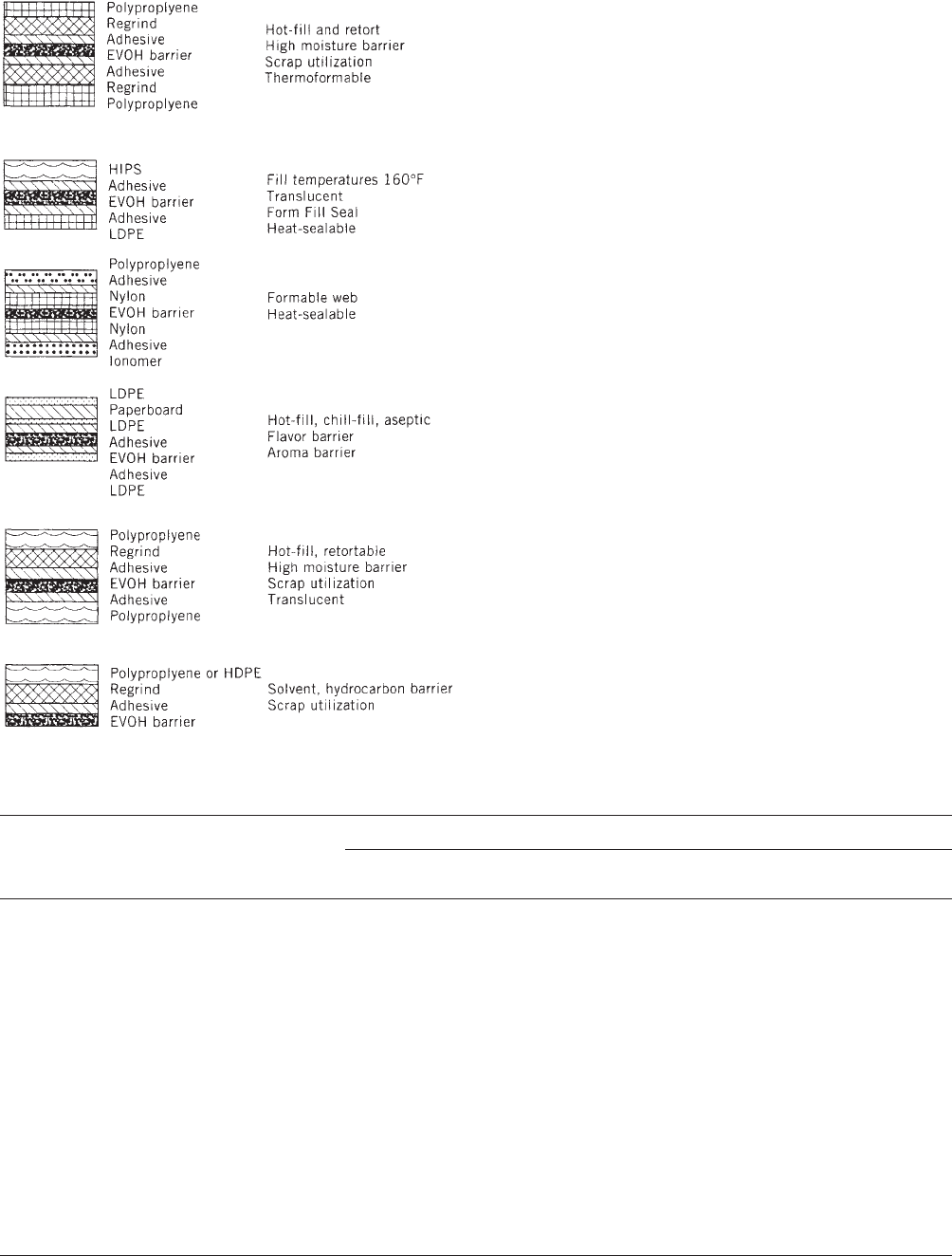
Figure 4 shows typical multilayer structures used for
rigid and semirigid containers.
Flexible Films
Flexible films consume the largest volume of EVOH of any
package structure. Flexible films are produced by several
methods. These include solution coating, laminating coex-
trusion coating, and coextruding either tubular or flat
(cast) films. Converting operations such as vacuum form-
ing, printing, form, fill, seal, and heat sealing are used to
fabricate packaging structures from these films. Figure 4
shows typical multilayer flexible-film constructions.
Monolayer EVOH films, either biaxially oriented or non-
oriented, can be used in conjunction with the laminating
or coextrusion coating process to also produce flexible
films.
Paperboard Containers
In recent years, the use of EVOH to replace aluminum foil
as the barrier layer in paperboard cartons has grown
rapidly. These containers, used primarily for juice pro-
ducts but also for nonfood products, utilize the EVOH in
several ways. Besides serving as an oxygen barrier, the
EVOH layer can also be used to prevent ‘‘flavor scalping’’
(fresh juice) or as an aroma barrier (laundry products).
Coextrusion coating onto paperboard is the primary
Figure 4. Barrier constructions.
Table 8. EVOH Film Properties
EVALt EVOH Grades
Property Unit EF-XL EF-F EF-E
Oriented
Polyamide
PVDC-Coated
Polypropylene
Thickness mils 0.6 0.6 0.8 0.6 0.9
Tensile strength at break MD psi 29,700 11,600 10,150 23,450 24,100
TD 28,300 7,550 6,400 31,290 31,200
Elongation at break MD % 100 180 260 90 140
TD 100 140 190 90 60
Young’s modulus MD psi 10
4
51.0 28.4 28.4 24.2 28.4
TD 51.0 27.0 27.0 21.3 37.0
Tear strength MD g 260 380 460 500 300
MD 330 300 440 450 200
Dimensional stability at 141C, 1 h MD % 4.0 2.7 1.6 1.5 10.4
TD 0.5 0.9 1.2 0.9 12.5
Melting point 1C 181 181 164 220 165
O
2
transmission rate at 201C mL/100 in.
2
65% 24 h atm 0.01 0.02 0.08 1.92 0.55
85% 0.04 0.08 0.17 5.4 0.55
100% 0.23 1.0 0.52 19.0 0.55
H
2
O transmission rate 401C, 90% rh g/100 in.
2
2.6 6.5 2.3 16.8 0.3
24 h atm
422 ETHYLENE–VINYL ALCOHOL COPOLYMERS

process for producing these containers. Typical structures
may be seen in Figure 4.
EVOH FILMS
In addition to EVOH resins, monolayer EVOH films are
also available. These films, either biaxially oriented or
nonoriented, provide a unique balance of attractive ap-
pearance of toughness, dimensional stability, barrier prop-
erties, and economics. When combined with other types of
polymeric films in a laminating or laminating–coating
process, the resulting structure provides properties simi-
lar to those of a coextruded structure. Table 8 lists the
properties of several monolayer EVOH films.
APPLICATIONS
Since the introduction of EVOH resins and films in Japan
during the 1970s and in the United States and Europe in
the 1980s, the use of these materials has continued to
grow. Table 9 shows a portion of the commercial applica-
tions utilizing EVOH as a barrier layer.
Economics
To determine the most economical barrier polymer, the
price of obtaining the barrier needed for a given applica-
tion at a given set of use conditions and a given packaging
structure must be compared. Factors such as price per
pound of the polymer, polymer yield, oxygen transmission
rate, and the use of recycled scrap must be considered.
When the low barrier cost of EVOH resins is combined
with their recyclability and the new developments in
coextrusion technology, the packaging specialists has
available a means to design a packaging structure that
will not only compete with glass and metal containers on a
performance basis but also provide a definite economic
advantage.
BIBLIOGRAPHY
General References
M. Salame, ‘‘The Use of Low Permeation Thermoplastics in Food
& Beverage Packaging,’’ in Coatings and Plastics Preprints of
the 167th Meeting of the American Chemical Society, Division
of Organic Coatings and Plastics Chemistry, 34(1), 515 (April
1974).
R. Foster, ‘‘Plastics Barrier Packaging—The Future is Bright,’’ in
Proceedings of the Society of Plastics Engineers, Inc., Regional
Technical Conference, April 1984.
C. R. Finch, ‘‘Coextrusion Economics,’’ in Coextrusion Comes of
Age, Society of Plastics Engineers, Extrusion Division Regio-
nal Technical Conference, Chicago Section, June 1981.
K. Ikari, ‘‘Oxygen Barrier Properties and Applications of Kuraray
EVAL Resins,’’ in Proceedings of the Second Annual Interna-
tional Conference on Coextrusion Markets and Technology,
Schotland Business Research, Inc., Princeton, NJ, Nov. 1982.
S. Sonsino, Packaging Design, Van Nostrand Reinhold, New York,
1990.
Table 9. EVOH Applications
Fabrication Process Application Structure
Cast coextrusion Processed meats, natural cheese, snacks, bakery PP/nylon/EVOH/nylon/LLDPE
Nylon/nylon/EVOH/nylon/Surlyn
sa
Nylon/EVOH/Surlyn
s
PET/LDPE/EVOH/Surlyn
s
Blown coextrusion Processed meats, bag-in-box, red meat, pouches Nylon/LLDPE/EVOH/LLDPE
LLDPE/EVOH/LLDPE
LLDPE/EVOH/LLDPE/Surlyn
s
Nylon/EVOH/LLDPE
Lamination Coffee, condiments, snacks, lidstock OPET/EVOH/LDPE/LLDPE
PP/nylon/EF-XL/nylon/LLDPE
OPET/EVOH/OPET/PP
Coextrusion coating Juice, bakery, laundry products LDPE/paperboard/LDPE/EVOH/LDPE
LDPE/paperboard/LDPE/EVOH/LDPE/
EVOH
OPP/LDPE/EVOH/LDPE/EVA
Thermoforming Vegetables, fruit sauce, entrees, pudding PP/regrind/EVOH/regrind/PP
PS/EVOH/LDPE
Coextrusion blow
molding
Ketchup, sauces, cooking oil, salad dressing, agricultural chemicals,
juice
PP/regrind/EVOH/PP
HDPE/regrind/EVOH/HDPE
HDPE/regrind/EVOH
PET/EVOH/PET/EVOH/PET
Profile coextrusion Cosmetics, toothpaste, condiments, pharmaceuticals LDPE/EVOH/LDPE
LDPE–LLDPE/EVOH/LDPE–LLDPE
a
Surlyn
s
is a registered trademark of E. I. Dupont de Nemours & Co, Inc.
Note: Tie layers are used between any layers of EVOH and either PE or PP. These are omitted from the table for clarity.
ETHYLENE–VINYL ALCOHOL COPOLYMERS 423

EUROPEAN PACKAGING LEGISLATION
LUIGI ROSSI
European Commission; and
Strategic Advisor for Keller and
Heckman LLP
At the end of the 1950s, following the issue of U.S. Food
and Drug Administration (FDA) Act on food contact
materials (FCM, 1958), some European countries began
adopting the first regulations and recommendations. All
these new European rules were designed to avoid exces-
sive release into foodstuffs of the substances contained in
the materials, especially in plastics, and above all to rule
out the possibility of a health hazard to the consumer as a
result of the toxicity of some of the substances used to
manufacture these materials.
In the European Union (EU) the differences in the
provisions adopted at national level were sources of
problems for packaging companies, which were forced to
adjust production to the country of destination and apply
for authorization to use a new material. This led to a
growing need to approximate (‘‘harmonize’’) the various
laws and thereby remove legal barriers to community
trade in packaged food which, with the abolition of cus-
toms duty and the new systems of sales (supermarkets)
and lifestyles (pre-packaged food), were developed
extensively.
In 1960 the Council of Europe (CoE) takes the initiative
to harmonize the rules on plastics (see later). In 1972
the European Commission (EC) drew up a broad program
of action designed to harmonize all existing national
laws in the field of FCM (plastics, paper, ceramics, rubber,
etc.). Because this attempt is not yet finished, depend-
ing by the material considered, rules derived from EU
or national authorities or CoE exist in Europe, making
the description of European Packaging Legislation extre-
mely difficult. Therefore this note describes briefly
the main aspects of current legal situation in Europe
summarizing the rules on the basis of the material and
the origin.
EU LEGISLATION
The legal binding acts ( = laws) are called ‘‘measures’’ and
can be adopted under a directive or regulation*. These
measures can be divided into three categories:
. Measures applicable to all materials and articles
. Measures applicable to one category of materials and
articles
. Measures relating to individual or groups of
substances
All the measures adopted and mentioned here may be
found in all EU official languages in EC website
w
and
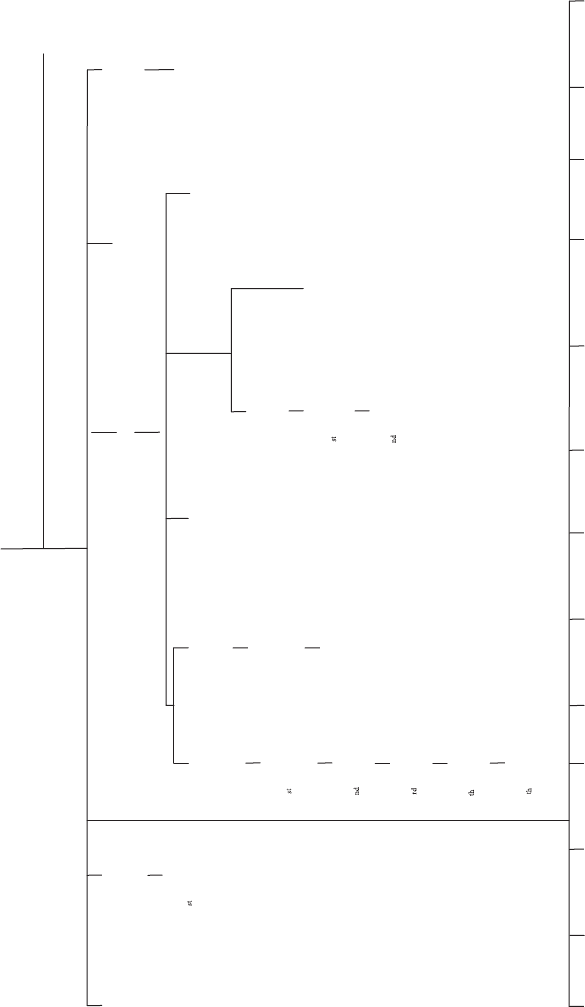
summarized in Figure 1.
Measures Applicable to All FCM
Framework Legislation. The Framework measure, Reg-
ulation (EC) 1935/2004, adopted in 2004 replaces those
adopted in 1976 and 1989. It establishes for all FCM:
. The definition of the scope
. The obligation to manufacturing the FCM following
the ‘‘good manufacturing practice’’
. The interdiction of an ‘‘unsafe’’ migration of the con-
stituents of the materials or articles (safety clause)
. The prevention of any unacceptable contamination of
the foods even if this contamination does not imply
health problems (inertness clause)
. The prevention of any deterioration in the organo-
leptic characteristics of foods (i.e., taste, odor, or
texture of the foods)
. The information, through an appropriate labeling
(‘‘for food contact’’) or a symbol (
) to the consumer
or food industry of the suitability of the materials and
articles to come in contact with food (labeling clause)
. The obligation for the business operators to trace
FCM i.e. to identify the businesses from which, and
to which, the FCM are supplied (traceability clause)
. The procedures for the authorization of substances
and materials
. The obligation to consult the European Food Safety
Authority (EFSA) if the specific measure deals with
aspects having an impact on the consumer health
. The safeguard measures to be taken in certain
dangerous situations
. The public access to the technical dossier made
available by the business operator when the author-
ization of a substance is required
. The right of the business operator to require a
certain confidentiality on the management by EC or
EFSA of certain data, the disclosure of which may
significantly harm its competitive position
. The possibility to share data of the technical dossier
needed to obtain the authorization of a substance to
avoid
. The obligation to have declaration of compliance for
materials and articles covered by specific legislation
. The obligation for the MS to check the conformity of
FCM to the related laws (control clause)
. The establishment of a Community Reference La-
boratory (CRL) for food contact materials (see later)
Regulation on Good Manufacturing Practice (GMP). The
obligation to apply the rules of GMP is included in general
terms in the framework regulation. To ensure a
* Directives are binding acts that require the transposition in the
national laws.
Regulations are directly applicable legal acts.
w
http://ec.europa.eu/food/food/chemicalsafety/foodcontact/legisl_
list_en.htm
424 EUROPEAN PACKAGING LEGISLATION
Paper and Board
Waxes
Metals and alloys
Ion-exchange resins
Cork
Glass
Active and intelligent
materials
Wood
Textiles
Adhesives
Printing inks
Silicones
Varnishes and
coatin
g
s
372/2007/EC
Transitional migration
limits for plasticizers in
gaskets in lids
1935/2004/EC
Framework
2023/2006/EC
Good Manufacturin
g
practice
(applicable to all
Food Contact)
Elastomers and
Rubbers
93/11/EEC
Nitrosamines
2007/42/EC
Regenerated
Cellulose Film
84/500/EEC
Ceramics
2005/31/EC
1
amendment
+ Coatings
1895/2005/EC
BADGE/BFDGE/NOGE
97/48/EC
2
amendment
82/711/EEC
Migration Testing
93/8/EEC
1
amendment
85/572/EC
List of simulants
Plastic Materials
78/142/EEC
Vinyl Chloride
80/766/EEC
VC in PVC
analysis
81/432/EEC
VC in food
analysis
2004/1/EC
1
amendment
2002/72/EC
Monomers
Additives
2004/19/EC
2
amendment
2005/79/EC
3
amendment
2007/19/EC
4
amendment
2008/39/EC
5
amendment
Recycled Plastics
Figure 1.
Overview of community legislation.
EUROPEAN PACKAGING LEGISLATION 425

harmonized application of GMP throughout the EU and
throughout the different business sectors, the basic prin-
ciples of GMP are detailed in Regulation (EC) No. 2023/
2006. These requirements, applicable as of August 1, 2008,
have to be applied at all stages of production of FCM and
in all sectors. All aspects of the GMP need to be adequately
documented, and the documentation should be available
to control authorities. Imports from third countries should
also apply adequate GMP systems in their production. For
two materials, GMP requirements have been further
detailed— that is, for printing inks and for recycled
plastics.
Specific Measures on A FCM
Measures on specific materials deal with the groups of
FCM mentioned in Table 1. Until now, only four groups of
materials have been regulated by EU measures: regener-
ated cellulose films, ceramics, plastics, and recycled
plastics. Some general rules exist also for active and
intelligent materials.
Directive on Regenerated Cellulose Film (RCF). Directive
93/10/EEC, which codified two previous directives, regu-
lated the regenerated cellulose film. It establishes (a) a list
of authorized substances and (b) the restrictions on the
composition of the material.
In 2004 a new amendment, Directive 2004/14/EC,
authorized a new type of regenerated cellulose film with
a coating consisting of plastics, which is compostable and
biodegradable in accordance with the requirement of
packaging waste Directives.
Ceramics. Directive 84/500/EEC sets out migration lim-
its for lead and cadmium and the method of analysis.
Moreover, it specifies the requirement of the declaration
of compliance as well as the supporting documentation to
be made available to the national competent authorities on
request. This documentation shall contain the results of the
analysis carried out, the test conditions and the name and
the address of the laboratory that performed the testing.
Directive on Plastics Materials. Finally, the Commission
began to draw up rules for plastic materials. Due to the
wide divergence of national regulations, their poor scien-
tific basis and the need to reach a large agreement
between Member States, the Commission was obliged to
take a very cautious, step-by-step approach toward har-
monization. Therefore the main provisions are dispersed
in numerous directives and amendments. They are mainly
regulated by three measures:
. Directive 2002/72/EC, which set out the main
provisions
. Directives 82/711/EEC and 85/572/EEC, which set
out the basic rules to checking the compliance with
the quantitative restrictions and specifications in-
serted in the Directive 2002/72/EC
Their main provisions are related to:
. The overall migration limit (OML), which for all the
plastics have the same value, that is, 60 mg/kg (of
food/food simulant) or 10 mg/dm
2
(of surface area in
contact with food)
. The positive lists of monomers and additives (for
additives as of January 1, 2010), which collect all
the substances authorized and then prevent the use
of monomers and additives not listed
. The quantitative restrictions or specifications applic-
able to the substance(s) (e.g., SML, QM and QMA)
. The functional barrier (FB), which is a layer permit-
ting the use of nonauthorized substances in the
layer(s) not in direct contact with food, provided
that (a) their migration in food or food simulant
does not exceeds 0.01 mg/kg (of food/food stimulant)
and (b) the substances are not classified in EU as
proved or suspect ‘‘carcinogenic’’ ‘‘mutagenic’’ or
‘‘toxic to reproduction’’
. Certain more restrictive provisions for young children
. The rules on the choice of food simulants in relation
to food in contact and the conditions of contact
(duration and temperatures) in the conventional,
standardized migration testing
The field of application is quite limited because it applies
only to materials and articles made up of one or more
layers exclusively of plastics material. The multi layers
consisting of at least one layer other than plastic are
excluded even if the material in contact with food is
made of plastic.
Recycled Plastics. Regulation (EC) No. 2008/1016,
which applies to mechanical recycling of plastics, foresees
the individual authorization of the recycling process at the
community level based on the safety evaluation of the
recycling process performed by EFSA. Because the recy-
cling processes are unique based on technology applied,
individual authorization dedicated to the applicant will be
issued. All recycling processes shall be accompanied by an
adequate quality assurance system that should be audited
by member states. Recycled plastic as well as the
Table 1. Groups of Materials Including Recycled
Materials which May Require an EU Legislation
Active and intelligent materials and articles
Adhesives
Ceramics
Cork
Rubbers
Glass
Ion-exchange resins
Metals and alloys
Paper and board
Plastics
Printing inks
Regenerated cellulose
Silicones
Textiles
Varnishes and coatings
Waxes
Wood
426 EUROPEAN PACKAGING LEGISLATION
materials and articles containing recycled plastics need to
be accompanied by a declaration of compliance.
Directives Concerning Individual or Groups of Substances
While legislating on a broad scale (i.e., in relation to
various sectors of production), the Commission has also
been obliged to lay down rules for individual substances
that have been the cause of considerable public concern.
This applies to the individual measures related to vinyl
chloride monomer used in PVC, mono- (MEG) and diethy-
lene glycol (DEG) used in regenerated cellulose film, N-
nitrosamines and N-nitrosatable substances from rubber
teats and soothers, certain epoxy derivatives in plastics,
azodicarbonamide in plastics, and some plasticizers in
gaskets in lids.
NATIONAL LAWS
The national laws are not yet fully harmonized at the EU
level, whereas, additional national laws remain in place.
In these cases a possible option to avoid technical obsta-
cles to the trade in the EU is given by the application of
the so-called Principle of mutual recognition, set out in
Articles 28 and 30 of the Treaty. It states that any product
lawfully produced and marketed in one member state
must be admitted to the market of any other member
state. Therefore it is important to know the additional
national laws in force in member states. Due the complex-
ity of this issue, it is necessary to consult directly national
legislations. Useful references can be found in the SANCO
website* and on the Internet.
w
COUNCIL OF EUROPE (COE)
In the absence of national laws or also, sometimes in their
presence, the resolutions of the CoE may be useful to
export in EU or in the marketing between member states.
CoE is a European international institution that was
created before the EU and is independent from it. CoE
adopts resolutions, guidelines, and technical documents
(TD) on FCM not covered by EU law. These documents are
not binding texts unless the countries transpose (partially
or totally) them into national law. Numerous resolutions,
guidelines, and TD regarding various types of materials
such as paper, inks, coatings, rubber, silicones, ions resin
exchange, cork, and metals have been adopted. Some have
been recently transposed into national legislation of some
EU countries. All CoE adopted texts are reported in the
CoE website.
=
OTHER (CEN, JRC)
Other European organizations set out not binding guide-
lines in the field of the method.
The Commission Agency, Joint Research Center (JRC),
was selected as CRL. Its activity is described in its
website.
y
The European Committee for Standardization (‘CEN’)
produces harmonized standards to develop and validate
test methods. It established several validated method of
analysis for the determination of overall and specific
migration limits. All the methods adopted by CEN are
described in the CEN website.
z
FINAL CONCLUSIONS
Harmonization of legislation at the community level is
moving forward quite slowly for various reasons. However,
the harmonization continues and will continue as neces-
sary to remove the technical barriers to the exchange and
ensure more safety in the use of FCM.
EXPORT PACKAGING
FRANK W. GREEN
Point O’View
Export shipments have been a major business for thou-
sands of years. Even today, export cargo is carried by
surface ships in the holds and on decks. Since the world-
wide acceptance of containerization, a large percentage of
exports is moved in cargo containers. A smaller, but
growing, quantity of high-value and high-priority items
is shipped by air as break bulk or in air containers.
There are no standards, rules or regulations, codes,
references, or guidelines for the export packaging of specific
products. In a sense, every item, destination, and form of
shipment dictates the requirements. When packaging for
export, every detail must be carefully considered. The
products and packages will be completely out of the control
of the shipper, and they may be ‘‘somewhere out there’’ for
weeks. Export shipping is the test. The package fails at its
weakest point. It is almost impossible to overpack. Export
shipments must arrive in good order. They may have taken
months to arrange and to produce. They cannot be easily
replaced or repaired at destination.
HAZARDS OF EXPORT SHIPMENTS
The packaging engineer must understand and meet the
requirements and hazards of various forms of shipments
(see the Distribution hazards article).
1. Break bulk cargo in the holds and on the docks of
oceangoing surface vessels of many types, sizes,
flags, and ages.
* http://ec.europa.eu/food/food/chemicalsafety/foodcontact/
index_en.htmt
w
www.foodcontactmaterials.com
=
http://www.coe.int/T/E/Social_Cohesion/soc-sp/Public_Health/
Food_contact/
y
http://crl-fcm.jrc.it/
z
http://www.cen.eu/catweb/67.250.htm
EXPORT PACKAGING 427