
Yam, Kit L. (ed.). The Wiley encyclopedia of packaging technology
Подождите немного. Документ загружается.


3. Minor defect
a. Do not leak
b. Are of economic, not public health, concern
c. Flex cracks, dents, abrasions, convolutions
Classification of defects has been completed for packages
that contain food products that may support the growth of
Clostridium botulinum, the bacteria causing botulism.
Sources of information are listed in the bibliography at
the end of this article.
Second, make a drawing of the package for each type of
defect. Mark the drawings to show the location of the
defects. This graphic summary will reveal where defects
occur most frequently on the package. Photos of represen-
tative defective packages will also be useful.
Third, select the test method most likely to reveal the
defect at the point on the package where it occurs.
Methods that test the entire package are preferred to
methods that test only a portion of the package. With most
test methods for package integrity, the design of fixtures to
hold packages during testing is important. Dynamic test
methods apply stress to packages, and changes may be
measured over a range. Static tests apply pressure at a
fixed level, and measurement is made after the package
has been under this condition for a specified period of
time. Evaluation of packages is needed to determine when
a static or a dynamic method provides better results.
Fourth, follow the path taken by packages starting at
the point of manufacture, through filling, processing,
warehouse, and distribution, all the way to the consumer.
Draw this pathway as a flow chart and identify where
defects are first detected. The cause is often just upstream
Table 2. Nondestructive On-line Testing Methods for Packages
Method Nondestructive Application
1. Air-leak testing Yes Empty rigid and flexible containers and sealed packages
2. Biotesting No Recommended only for testing new package designs
3. Burst testing No Heat seals of flexible and semirigid packages
4. Chemical etching No Only a laboratory method for samples
5. Compression testing Yes Sealed flexible packages
6. Distribution simulation Yes Simulates all modes of distribution and suitable for all types of
packages
7. Dye testing No A laboratory test useful for locating leaks
8. Electester Yes Useful for detecting liquids that separate when spoiled within
sealed containers
9. Electrolytic Yes A laboratory test useful for locating leaks in films and coatings
10. Gas-leak detection Yes Useful for locating leaks through seals and packaging materials
11. Incubation No Most useful following simulated abuse and biotesting
12. Light Yes Empty formed packages may be examined at high speed
13. Machine vision Yes Many commercial devices
14. Proximity tester Yes Useful for measuring deflection of metal jar lids, and films
containing metal foils drawn down by vacuum on semirigid
packages
15. Seam scope No Useful for visually observing the overlap between double-seams
and the distribution of sealing compound
16. Sound Yes Many commercial devices
17. Tensile testing No A laboratory method
18. Vacuum testing Yes Both empty and sealed packages
19. Visual inspection Yes Most common method
Table 1. Recommended Test Methods for Food Packages
a
Package descriptions
1. Paperboard packages
2. Flexible pouches
3. Plastic packages with heat-sealed lid
4. Plastic cans with double-seamed metal end
5. Metal cans
6. Glass bottles and jars
Test Method 123456
1. Air-leak testing OOOOOO
2. Biotesting OOOOOO
3. Burst testing O X X O NA NA
4. Chemical etching O O O NA NA NA
5. Compression, squeeze testing X X O O NA NA
6. Distribution (abuse) testing OOOOOO
7. Dye penetration X O X O X X
8. Electesting O NA NA O O O
9. Electrolytic X X O NA NA NA
10. Gas-leak detection OOOOOO
11. Incubation X XXXXX
12. Light NA OOOOO
13. Machine vision OOOOOO
14. Proximity tester O O O X X X
15. Seam scope projection NA NA NA X X X
16. Sound X NA XXXX
17. Tensile (peel) test NA X X O O O
18. Vacuum testing NA O X O X X
19. Visual inspection X XXXXX
a
X, recommended method; O, optional method; NA, not appropriate
method.
648 LEAK TESTING
from this point. Go to that location and observe for the
occurrence of defects on the packages. Proceed upstream
until defects are no longer detected. Search for actions
that contact the package at the point where defects
commonly appear.
Fifth, determine what physical action might form each
defect. This is easier to visualize if you are able to locate
the source of the defects and observe their formation
during production or handling. There may be more than
one cause for the same defect, and some defects may be
nothing more than different stages of the same defect. Use
normal packages to try to reproduce the defects to verify
the possible causes of damage. Often testing in a packa-
ging laboratory can help to verify damage mechanisms.
Refer to Table 1 to select the appropriate test method for
your package defect.
Sixth, conduct validation testing of the method to
determine the threshold sensitivity for small holes. Some
test methods may be used online in a nondestructive
manner.
NONDESTRUCTIVE TESTING METHODS
Most package testing methods may be automated for
laboratory testing or for use in manufacturing. The ideal
testing method will be nondestructive and fast enough to
be performed on the production line. Online nondestruc-
tive testing provides the opportunity to individually test
packages for hermetic integrity. Table 2 lists some current
applications and limitations of on-line nondestructive test
methods for packages.
Many of the online nondestructive testing methods
available today use sensors that do not contact the pack-
age. Examples include light leak detectors, pressure-dif-
ferential sensors, proximity detectors, and sound and
machine vision systems. The ability to perform nondes-
tructive testing to packages using other methods that
contact packages is limited by the design of fixturing
capable of coupling the package to the sensor at produc-
tion line speeds
BIBLIOGRAPHY
General References
AOAC/FDA, ‘‘Classification of Visible Can Defects (Exterior)’’ in
Bacteriological Analytical Manual, 6th edition, Food and Drug
Administration/Association of Official Analytical Chemists,
Arlington, VA, 1984.
AOAC/FDA, ‘‘Examination of Flexible and Semirigid Packages for
Integrity’’ in Bacteriological Analytical Manual, 7th edition,
Food and Drug Administration/Association of Official Analy-
tical Chemists, Arlington, VA, 1992.
FPI, Canned Foods: Principles of Thermal Process Control, Acid-
ification, and Container Closure Evaluation, Food Processors
Institute, Washington, DC, 1988.
NFPA, Flexible Package Integrity Bulletin, Bulletin 41-L, Na-
tional Food Processors Association, Washington, DC, 1989.
J. A. G. Rees and J. Bettison, Processing and Packaging of Heat
Preserved Foods, Van Nostrand Reinhold, New York, 1990.
LIFE-CYCLE ASSESSMENT
WILLIAM E. FRANKLIN
TERRIE K. BOGUSKI
PAUL FRY
Franklin Associates, Ltd.
Prairie Village, Kansas
Consumer product companies are facing new challenges
in the packaging arena today. The packaging they use
must be attractive, keep the product fresh and usable,
and provide for the safety of users by being tamper
resistant, childproof, or unbreakable. Now, packaging
must also be environmentally friendly. Although it is
more difficult to claim environmental friendliness than
it used to be, the environmental effect of packaging
materials is a primary area of concern for many compa-
nies. Life-cycle assessment (LCA) is a tool that can be
used to address this concern by evaluating the potential
environmental effects of packaging options. LCA can
show companies whether a packaging change is likely
to cause more or less environmental burdens than what
is in current use.
LCA DEFINED
Life-cycle assessment is the quantitative determination of
the resource and energy use as well as the environmental
burdens of a given product or process over its entire life
cycle. It is often called a ‘‘cradle to grave’’ analysis, because
it takes into account the resource and energy use, and the
environmental burdens of a given product or package
system from the cradle (raw-material acquisition) to the
grave (final disposal by the consumer). Life-cycle assess-
ments are generally comparative in nature. Typically,
there is a comparison of one or more products or packages
that provide the same functional use. The benefit that
LCAs provide is that they look beyond the resource and
environmental burdens of the immediate production and
disposal of the product or package being studied. This is
done by including the indirect effects caused by the
production processes leading up to the final product or
packages. Some of these indirect effects are the mining of
raw materials, the energy and emissions resulting from
transportation, and the energy and emissions associated
with the production of electricity. These added ‘‘indirect’’
effects often result in substantial added environmental
burdens of a product.
The first life-cycle study was done on packaging (in
1970), and packaging has been the focus of a high percen-
tage of the LCAs that have been conducted since then. The
use of LCAs in this industry has continued to increase
over the past 5 years, even as broader uses of LCA are
growing in importance. Typically, LCA is viewed as an
environmental management tool. More specifically, it has
been used as a green design tool, especially in the packa-
ging industry. ‘‘Green design’’ is defined as a product or
package design that is compatible with environmental
goals.
LIFE-CYCLE ASSESSMENT 649
PACKAGING CHOICES: CHOOSING OPTIMAL SIZE
BASED ON ENVIRONMENTAL EVALUATION
For example, a beverage bottler may want to determine
what bottle size produces the least environmental burdens
for delivery of an equivalent amount of beverage to their
customer. The choices in this example are 1-, 2-, or 3-L
polyethylene terephthalate (PET) bottles. Each bottle
requires the manufacture of a cap, a thin PET bottle
wall and bottom, and a thicker bottle neck. The manufac-
ture of the bottle neck and cap requires substantially more
resources than the manufacture of the thin PET bottle
wall and bottom. All three bottles use the same sized cap.
A logical review of these choices may lead one to believe
that the 3-L bottle would be the optimum choice. This
would seem to be an obvious conclusion because the
delivery of 6L of beverage requires six 1-L bottles, three
2-L bottles, or two 3-L bottles and the manufacture of their
associated caps and necks (putting them on an equivalent
basis). Thus, one would assume that the 3-L bottle would
deliver the desired quantity of the beverage with rela-
tively smaller environmental burdens. As expected, the 2-
L bottle uses less energy and produces less emissions to
the air, water, and land than does the 1-L because of the
reduced number of bottle tops manufactured. However,
this same logic does not hold for the 3-L bottle. As an LCA
would indicate, the 3-L bottle, because it holds larger
quantities of liquid, requires a greater rigidity and wall
thickness than do the 1- and 2-L sizes. This extra require-
ment is enough to make the environmental burdens of the
3-L bottle equivalent to that of the 2-L bottle (1). This is
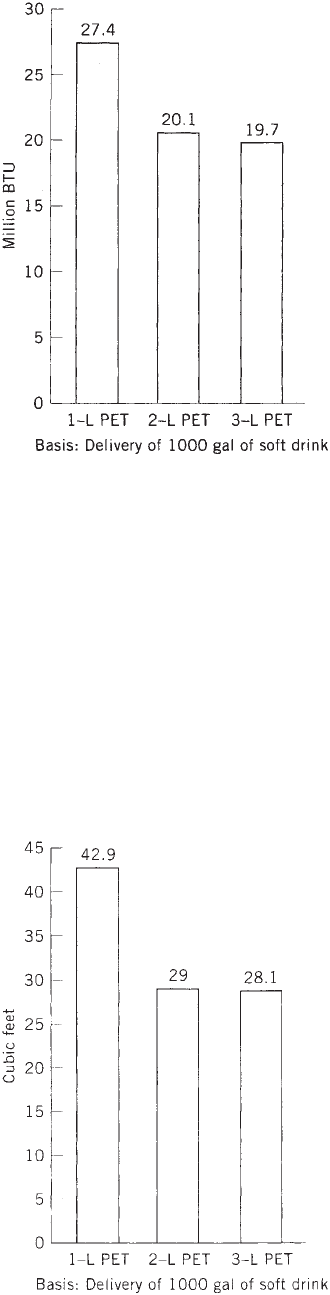
illustrated in Figure 1, 2, which show the energy and
solid-waste totals generated by a computer model for the
delivery of an equivalent quantity of soft drink. Figure 1
shows the total energy usage for the three soft-drink
container sizes. The graph illustrates the extra energy
necessary for the 1-L bottle and shows that this same
advantage between the 2- and 3-L bottles does not exist.
This same relationship holds for solid-waste totals, which
are illustrated in Figure 2.
So, in actuality, the optimal beverage delivery size is
either the 2- or 3-L sizes, and not the 3-L, as logic would
indicate. This is not to say that the 1-L bottle is without
merit; in fact, all three sizes are strong in the marketplace.
For example, the 1-L (or smaller) container is an indivi-
dual serving size. As this example shows, the value of an
LCA is that it takes into account the products entire life
cycle, and it provides a comparison with the other packa-
ging options. Often, this cradle-to-grave comparison pro-
vides results that are contrary to common opinion.
USES OF LCA
Although LCA is now a tool for green design, its uses have
continued to extend into other applications. The areas of
LCAusagecanbebrokendownintothefollowingfourbasic
categories: (a) environmental management, (b) ecolabeling,
(c) regulatory purposes, and (d) information and education
(2–4). The first category is using LCAs as an environmental
management tool for internal use within an industry and/or
company. Some of these uses include product design (more
specifically green design), assistance in meeting ISO 14000
guidelines, and cost effectiveness . The second category of
LCA uses also has economic implications, and that is for
ecolabeling. Typically, ecolabeling may be used to sway
public opinion regarding a product or give environment
sanction to a product based on some stated criteria. The
label can sway public opinion to increase market share.
Ecolabeling based on LCA principles is a very active concept
in Europe. However, the ecolabeling approach is fraught
with complexities that are not resolved. In the United
States, LCA is not viewed widely as a public policy tool for
Figure 2. Solid waste for PET soft-drink containers.
Figure 1. Energy requirement for PET soft-drink containers.
650 LIFE-CYCLE ASSESSMENT
labeling or for environmentally preferable products or
packages. Nonetheless, this type of initiative is a proposal
under public review.
The third category of LCA uses is providing informa-
tion for regulatory purposes. Both the U.S. Food and Drug
Administration (FDA) and the Environmental Protection
Agency (EPA) are requiring more environmental informa-
tion when applying for product approval. For example,
applications to the FDA for approval of new packaging
that will be in contact with food now require information
on the environmental consequences of the new packaging.
This information must include a comparison of the new
packaging with the packaging it will replace or compete
with. This additional information is typically outlined well
by an LCA.
The final category of LCA uses is also for information
and education. This includes providing information that
will be used internally to educate the members of an
industry of the extent and complexity of a products
production. This same information can be used externally
to educate the public or regulatory agencies about an
identified product. All of these uses show that LCA utility
extends beyond the world of environmental applications.
As its utility continues to expand, knowledge of LCA
becomes more and more important for those involved in
the packaging industry.
LCA COMPONENTS
The LCA can be broken down into four major components:
goal definition and scoping, life-cycle inventory (LCI),
impact assessment (now defined as inventory interpreta-
tion), and improvement assessment (2, 3). To this date,
most life-cycle studies have included life-cycle inventories
and some improvement assessment. There has been lim-
ited success in completing impact assessments because of
the lack of quality data and a consistent, accepted
methodology.
Goal Definition and Scoping. ‘‘Goal definition and scop-
ing’’ is the task of identifying the purpose and basis of the
study. The purpose of the study should be a clear and
unambiguous statement of why the study is being pur-
sued. This statement helps to define the system and the
processes within the system that need to be analyzed. The
‘‘system’’ under study is defined in the same manner as it
is defined in classic thermodynamics.
Thermodynamics breaks a process down into two com-
ponents: the system and the surrounding environment.
The surrounding environment acts as a source of all
inputs and a ‘‘sink’’ for all outputs. The description of
the system is a description of all flows that go across the
system’s boundaries. For example, the surroundings pro-
vide the raw materials for the system that enters across
the boundaries. Conversely, all air, water, and solid-waste
emissions along with the desired product cross the bound-
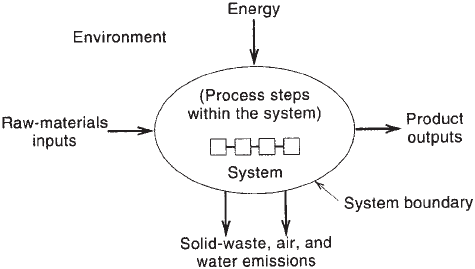
aries into the surroundings. This is illustrated in Figure 3.
Thus, an LCA takes into account all materials and energy
that cross or are held within the system.
The boundaries for an LCA include the acquisition of
raw materials, manufacture of intermediate materials and
final product, use of product, and final disposition of the
product. Also included in the boundaries are any use,
reuse, or recycling that occurs; the energy and emissions
for each processing step; the energy and emissions to
transport from one step to the next; and any energy and
emissions necessary to process energy sources into usable
fuels. The energy and emissions from extracting the fuels
that are consumed often contribute significantly to the
LCA results. Therefore, the fuel extraction steps, which
include spills and losses, should be included with the data
for fuel combustion. In fact, relatively simple flow dia-
grams such as Figure 3 turn into a complex network of
processes when an actual product or package is evaluated.
Also, whether the product or package is reusable can be an
important consideration. A good example is a reusable
glass or ceramic cup. Each reuse requires the washing of
the cup with hot water and detergent. Over the lifetime of
a cup, it may be washed hundreds of times or it may break
and thus have a short life. The burdens from the genera-
tion of the hot water and detergent for the reuse of the cup
could outweigh the burdens from the generation of the cup
from raw materials. In other words, the reuse cycle may
create unanticipated burdens compared with a single-use
item such as a paper or plastic cup.
One of the most important parts of defining the scope
and boundaries of a study is the definition of the func-
tional unit. This identifies the unit of product that is going
to be studied and compared. Some examples are the unit
surface area covered by paint, the packaging used to
deliver a given volume of beverage, or the amount of
detergent used for a standard household wash (2). So
with these boundary definitions, the product under study
is examined from cradle (raw-material acquisition) to
grave (final disposition of the product).
Life-Cycle Inventory. The boundaries and scope provide
direction into completion of LCA. The LCI is the next stage
of the LCA and is the most frequently used and best
developed stage. The LCI is often used separately from
the other components of the LCA, because the inventory
portion of the LCA is more clearly defined. This clearer
definition is because the methodology of LCI is based on
scientific principles. LCI is essentially based on the law of
Figure 3. Definition of system in LCA.
LIFE-CYCLE ASSESSMENT 651
conservation of mass, the conservation of energy, and
thermodynamic definitions of systems. Using these scien-
tific principles, the basis of LCIs can be developed and
applied consistently with each LCI regardless of the
product analyzed. The LCI consists of seven unique
steps: (a) definition of scope and boundaries, (b) identifica-
tion of unit operations, (c) development of systems and
network diagrams, (d) data gathering, (e) creation of a
computer model, (f) analysis and reporting of study re-
sults, and (g) the interpretation of results leading to
specific conclusions.
The definition of scope and boundaries is directed by
the scope and boundaries identified by the full LCA. If the
LCI is used separately from an LCA, then the scope and
boundaries for the LCI need to be defined in a similar
manner as was described for the full LCA.
Once the functional unit and the system to be studied
are identified, the system must be broken down into
individual unit operations from the beginning to the end
of the life cycle. This process serves as a blueprint for the
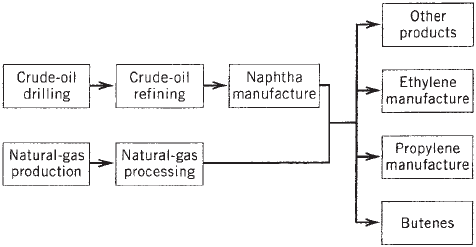
process of gathering data (5). For example, to make
ethylene from petroleum, each step in the life cycle, from
the drilling of crude oil and natural gas, to producing
ethylene, needs to be broken down into discrete steps. For
each of these discrete steps, a system boundary must be
identified, with all the inputs and outputs that cross the
boundaries identified as well. For the preceding example,
the process of making ethylene would include the inputs of
natural gas and/or naphtha as raw materials and energy
resources (6). Outputs would include ethylene, propylene,
and butenes (coproducts), air, water, and solid-waste
emissions to the environment. This process as part of
the whole life cycle is shown in Figure 4. Once the inputs
and outputs for each individual process are identified in
this manner, the entire process is linked according to the
functional unit defined in the scope of the study. The
difficulty lies in obtaining the data for each individual
step within the life cycle.
Data gathering is a resource-consuming process, but its
importance cannot be overemphasized. The entire LCI/
LCA is dependent on the quality of the data gathered.
Each unit operation should have a complete breakdown of
all inputs and outputs, both material and energy. With the
advent of computer technology, the quantity of data used
and the accuracy and complexity of LCIs that can be
undertaken have increased tremendously. With the use
of spreadsheets or computer programs, the air, water, and
solid-waste emissions, as well as the energy usage for each
individual unit operation, can be totaled with respect to
the functional unit selected in the scoping of the project.
The computer model can then be modified to determine
how changes in the functional unit, or the process condi-
tions, will affect the overall results. For example, the
delivery of peanuts could have two packaging alterna-
tives: a glass jar or a composite aluminum and plastic bag.
Once the two packaging alternatives are put on an
equivalent basis, an LCA can identify the environmental
burdens and resource consumption for each packaging
alternative. From the LCA comparisons of the two
packages, a choice can be made as to which of the two
alternatives produces the least potential environmental
burden.
Various LCI software packages are available to compa-
nies that do not wish to collect data or develop their own
computer models. One such software package is REPAQ
(trademark), which was developed specifically for screen-
ing packaging options. With the availability of LCI soft-
ware such as REPAQ, the packaging engineer can now
determine how modifications in packaging systems
(shape, size, weight, and composition) can change the
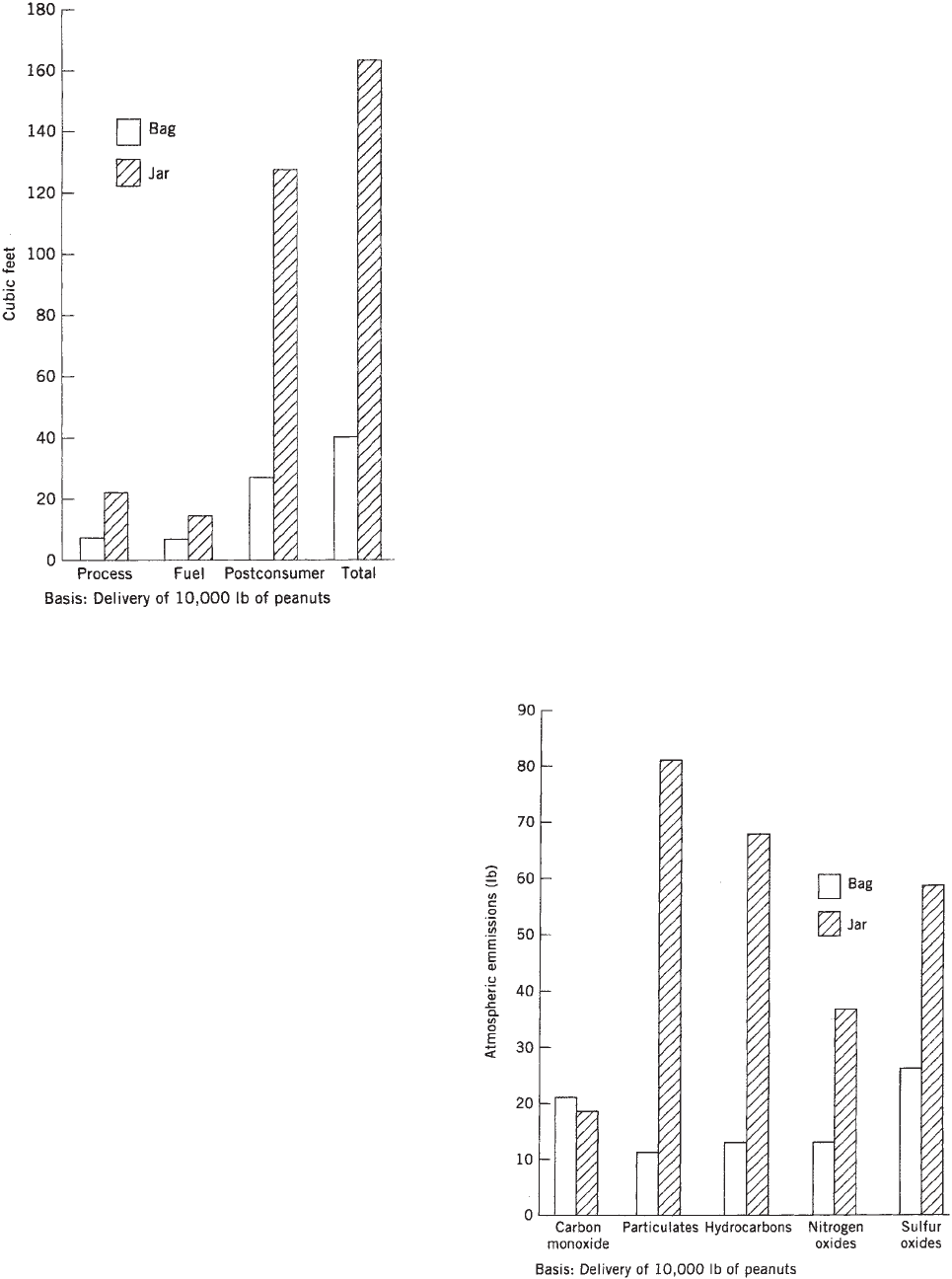
overall outcome of the LCI results (7). Figures 5–7 illus-
trate a partial output from REPAQ. The figures illustrate
the comparative solid waste, atmospheric emissions, and
energy usage of the jar and the bag from the example
above. A typical computer output will consist of a com-
parative listing of 20–30 atmospheric emissions, 20–30
waterborne emissions, and a breakdown of solid waste and
energy. The advantage of computer modeling that is the
size, weight, and compositions of the two options can be
modified, or secondary packaging can be added or re-
moved, and the graphic summary will give immediate
feedback on how the LCI results would change. With this
type of information, a packaging system that helps meet
environmental goals can be designed quickly.
IMPACT ASSESSMENT (INVENTORY ASSESSMENT)
The life-cycle inventory provides a great deal of informa-
tion about the energy use and emissions associated with
the life cycle of a given product. This information, how-
ever, cannot be generally applied to the product’s effect on
human health, ecological quality, and natural resource
depletion. This is simply because one pound of a given
emission may provide substantially different effects on
human health or the environment than a pound of a
different emission. Impact-assessment methodology helps
to categorize the LCI information into sets of common
impact measures, such as increased mortality, habitat
destruction, or global warming, which allow the interpre-
tation of the total environmental effects of the system
being evaluated (8).
According to the definition of impact assessment put
forth by SETAC and the U.S. EPA, the impact assessment
can be broken down into three steps: classification, char-
acterization, and valuation (2, 3, 9). Classification is the
process of assigning the initial aggregation of LCI data
Figure 4. Steps in the production of ethylene.
652 LIFE-CYCLE ASSESSMENT
into relatively homogenous impact groups. There are four
general impact categories: environmental or ecosystem
quality, quality of human life (including health), natural
resource use, and social welfare. These categories are then
broken down into even more specific impact groups. Two
examples of these groups are global warming and ozone
depletion. Each emission outlined in the inventory is
placed into one or more of these impact groups. The
selection of impact groups is somewhat related to what
emissions are being released by the systems under con-
sideration. The selection process is twofold, with the
analyst first asking: ‘‘What environmental problems could
these emissions potentially cause?’’ The second question
the analyst asks is: ‘‘What environmental impacts are
important or of interest to the audience of the study?’’
Answering both questions results in a comprehensive list
of impact groups to evaluate.
Once the inventory emissions are classified into impact
groups, the process of characterization begins. Character-
ization is the selection of the actual or surrogate char-
acteristics to describe impacts. For example, acid
equivalents could be used to characterize emissions clas-
sified as having acid-rain potential. This provides an
assessment of the relative magnitude of the given impact
on the more general categories such as human health. The
difficulty in the characterization process comes with the
fact that scientific factors have not been developed for all
the impact categories, and thus coming up with a common
descriptor for each group is subjective at best.
The third and final step of impact assessment is
valuation, which is the assignment of relative values or
weights to different impacts. This step essentially allows
for the evaluation of the different emissions across all
impact groups. With this composite information, decision
makers can then decide the total impacts of a product
system. Valuation is extremely subjective and is depen-
dent on the value system of those assigning relative
weights to the impact groups.
Beyond the classification step, impact assessment
quickly becomes subjective and value laden. The lack of
a well-accepted and nonsubjective model for impact as-
sessment limits its applicability to industry. However,
development of nonsubjective models, or models that limit
subjectivity, is ongoing.
IMPROVEMENT ASSESSMENT
Similar to impact assessment, improvement assessment
has not undergone the consensus examination of the
methodology that life-cycle inventory has undergone. How-
ever, improvement assessment based on life-cycle inven-
tories is common practice. The purpose of the improvement
assessment is threefold: (a) it evaluates LCA results for
their relevance to the predetermined LCA goals and
objectives, and it identifies opportunities for reducing the
environmental impacts of a product system; (b) it trans-
lates all results and their determined importance to the
LCA audience in a clear and concise manner; and (c) it uses
Figure 5. REPAQ comparison of solid waste.
Figure 6. REPAQ comparison of atmospheric emissions.
LIFE-CYCLE ASSESSMENT 653
the impact assessment or the LCI as a baseline to deter-
mine the effect, if any, of the instituted improvements.
Improvement assessment identifies and evaluates any
opportunities for reducing environmental burdens. These
opportunities may be uncovered by the inventory portion
of the LCA by identifying areas of large energy usage or
environmental emissions. The improvement assessment
can then identify those areas where increased efficiency or
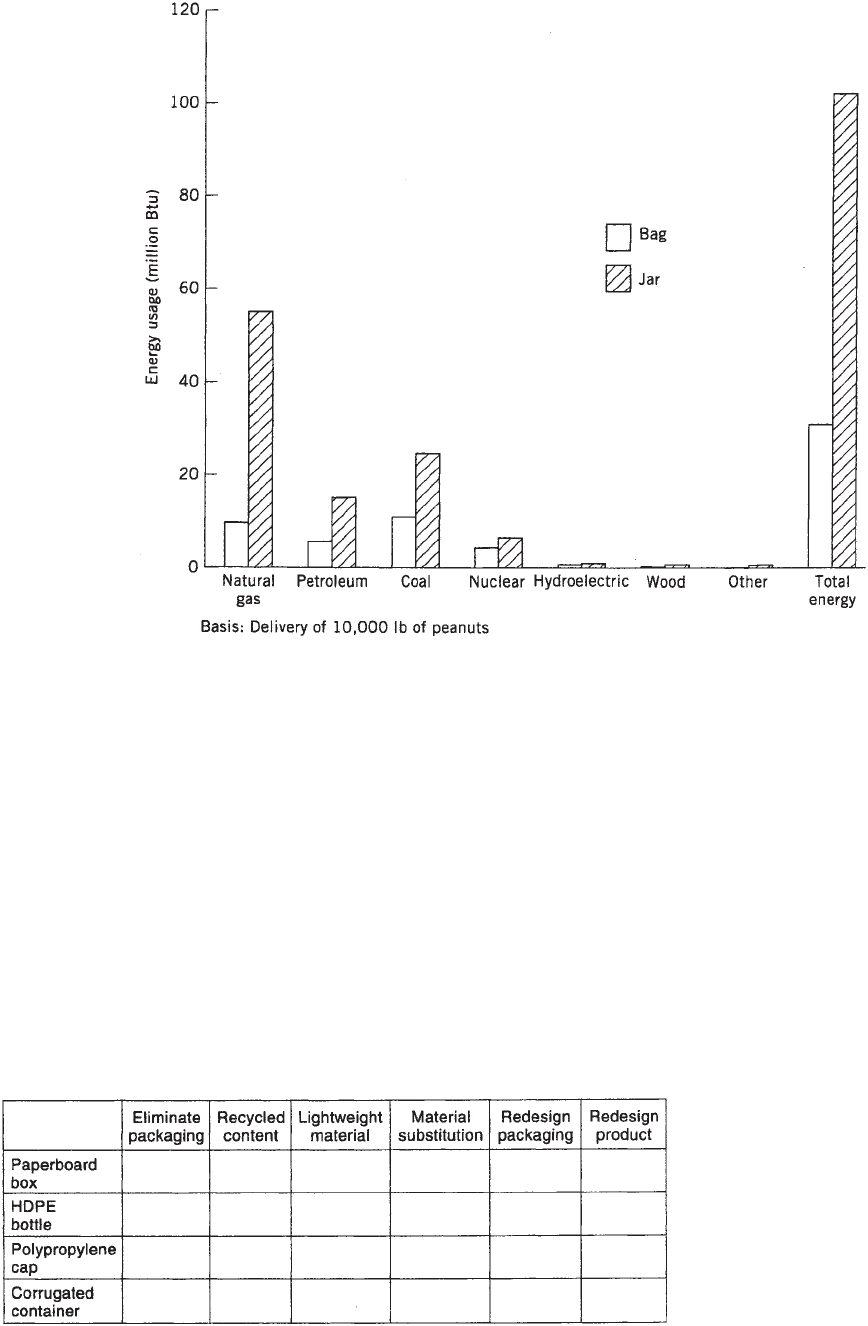
modifications would be appropriate. Figure 8 is a table of
some areas for improved efficiency that could be identified
in an improvement assessment. The packaging of over-
the-counter (OTC) medication is used for this example.
The package components are listed in the first column,
and possible modifications to the package system are
listed in the top row. With this sort of grid, possible
improvements can be assessed. For example, could some
of the packaging, such as the paperboard box, be elimi-
nated? Instead of packaging the bottle in a box, the bottle
could be placed directly on the shelf. Could the packaging
makeup be changed by using recycled content, making it
lighter, or making it from a different resin? Could the
package or the product be redesigned? For example, could
the bottle be filled more, or could some filler be removed
from the product? Each of these options can be reviewed to
see how modification would affect the environmental
burdens of the packaging as a whole.
Similarly, the improvement assessment can use informa-
tion provided by the impact assessment. This information
takes the inventory results one step further by identifying
not only the quantities of energy used and environmental
Figure 7. REPAQ comparison of energy usage.
Figure 8. Improvement options for pack-
aging a consumer product.
654 LIFE-CYCLE ASSESSMENT
emissions but also their potential impacts. The improve-
ment assessment takes the inventory and impact informa-
tion and condenses it to a few clear and concise conclusions.
These conclusions drive the process or product change that
will result in reducing the environmental impact of the
system being studied. Once these changes are made, the
impact and inventory portions of the LCA can be used as a
baseline to determine the effects of any improvements made
to the system.
LIMITATIONS OF LCA
Beyond the obvious limitations of the lack of consensus for
impact and improvement assessments methodologies,
LCAs do have limitations. Often LCA results—or, more
specifically, LCI results—are extrapolated beyond what is
supported by the study. Most studies have specific para-
meters that describe a given comparison. These para-
meters can include weight of the product, delivery of a
quantity of useful product, time period, and specific loca-
tion of the comparison. If any of these parameters are
changed, then the relative comparison may or may not be
accurate. Thus, the study results are limited to the specific
study conditions. Second, there has been a desire to use
LCAs as public policy instruments to determine whether a
specific material or product is ‘‘good’’ or ‘‘bad’’ for the
environment. Although LCAs and LCIs provide a founda-
tion of useful information on resource usage, environmen-
tal emissions, and potential impacts, they do not quantify
all environmental consequences of a product or process.
Thus, LCA is an effective tool for evaluating environmen-
tal tradeoffs and consequences of specific actions. It is not
a tool for measuring the magnitude of environmental
‘‘goodness’’ for specific materials or products. As processes
and products change, their LCA profile also changes
relative to other alternative processes and products.
Life-cycle assessments have been used by the packa-
ging industry for 25 years to help meet both financial and
environmental goals. They provide a strong basis for
making design decisions as well as environmental plan-
ning. As the applications and knowledge of LCAs continue
to grow, the value to the packaging industry will continue
to grow as well.
BIBLIOGRAPHY
1. V. R. Sellers and J. D. Sellers, Comparative Energy and
Environmental Impacts for Soft Drink Delivery Systems,
Franklin Associates, Ltd, Prane Village, KS, 1989.
2. Society of Environmental Toxicology and Chemistry, A Techni-
cal Framework for Life-Cycle Assessments, workshop report for
Society of Environmental Toxicology and Chemistry, Aug.
1990; Society of Environmental Toxicology and Chemistry
and SETAC Foundation for Environmental Education, Inc.,
Washington, DC, 1991.
3. Society of Environmental Toxicology and Chemistry, ‘‘Guide-
lines for Life-Cycle Assessment: A ‘Code of Practice,’’ from the
SETAC Workshop held at Sesimbra, Portugal, Mar. 31–Apr. 3,
1993, Society of Environmental Toxicology and Chemistry
(SETAC), 1993.
4. The Nordic Council, Product Life Cycle Assessment, Principles
and Methodology, Nordic Council of Ministers, Copenhagen,
Denmark, 1992.
5. T. K. Boguski, R. G. Hunt, J. M. Cholakis, and W. E. Franklin,
‘‘Environmental Life Cycle Assessment,’’ in M. A. Curran, ed.,
LCA Methodology, McGraw-Hill, New York, 1996.
6. I. Bousted, Eco-balance, Methodology for Commodity Thermo-
plastics. A Report for The European Center for Plastics in the
Environment, Brussels, Dec. 1992.
7. REPAQ (trademark): A Software Package Designed to Evaluate
and Design Optimum Packaging Alternatives, Franklin Associ-
ates, Ltd., Prairie Village, KS.
8. Franklin Associates, Ltd., Life Cycle Assessment of Ethylene
Glycol and Propylene Glycol Based Antifreeze, Prarie Village,
KS, 1994.
9. U.S. Environmental Protection Agency, Life-Cycle Impact As-
sessment: A Conceptual Framework, Key Issues, and Summary
of Existing Methods, EPA-452/R-95-002, July 1995.
General References
T. K. Boguski, R. G. Hunt, and W. E. Franklin, ‘‘General Math-
ematical Models for LCI Recycling,’’ Resource, Conserv. Recycl.
12, 147–163 (1994).
T. Boguski, J. Wood, R. Hunt, and W. Franklin, Life Cycle Analysis
and Green Design, Franklin Associates, Ltd., Prairie Village,
KS.
R. Hunt, J. Sellers, and W. Franklin, ‘‘Resource and Environ-
mental Profile Analysis: A Life Cycle Environmental Assess-
ment for Products and Procedures,’’ Environ. Impact Assess.
Rev. (Spring 1992).
LIGHT PROTECTION FROM PACKAGING
THOMAS EIE*
Matforsk AS, Norwegian Food
Research Institute, Aas,
Norway; and Department of
Chemistry, Biotechnology, and
Food Science, Norwegian
University of Life Sciences, Aas,
Norway
WHAT IS LIGHT?
According to the electromagnetic wave theory, visible light
is the small portion of electromagnetic energy with wave-
lengths between 380 and 770 nm that our eyes are sensi-
tive to. The sensitivity of the human eyes depends very
much on the wavelength of the light. Highest sensitivity is
found in the green/yellow area peaking at 555 nm. At 400
and 750 nm the sensitivity is about 10,000 times lower
than at 555 nm. Ultraviolet (UV) light is the portion of
electromagnetic energy with wavelengths between 100
and 400 nm. This short-waved and energy-richer light
can be divided into three bands according to their
* Present position: Senior Packaging Developer, Bama Industri
AS, Lier, Norway.
LIGHT PROTECTION FROM PACKAGING 655
biological effects: UV-C (100–280 nm), UV-B (280–315 nm),
and UV-A (315–400 nm). Infrared light is the band be-
tween 770 and 1,000,000 nm. It contains the least amount
of energy per photon of any other band (1).
Traditionally, light has been measured in lumen (lm) or
lux (lm/m
2
) by a lux meter. Lumen is the light flux through
1m
2
of the surface of a globe with a 1-m radius with a light
source of 1 candela in the center. One candela is roughly
the light from one common candle and has been defined as
1/60 of the light from 1 cm
2
of the surface of a black object
at 17731C (temperature of freezing platinum). The wave-
length chosen for definition of candela is 555 nm, the same
wavelength to which the human eye is most sensitive (2).
This means that the readings from a lux meter are
strongly correlated to the sensitivity of the human eye,
giving high response to green and yellow light and poor
response to blue and red light. This may be very useful for
measuring light related to human vision, but not useful
for measuring light correlated to food photooxidation. In
such cases a spectroradiometer is more relevant. This
instrument measures the spectral power distribution of
light in W/m
2
for each nanometer wavelength.
SUNLIGHT AND ARTIFICIAL LIGHT
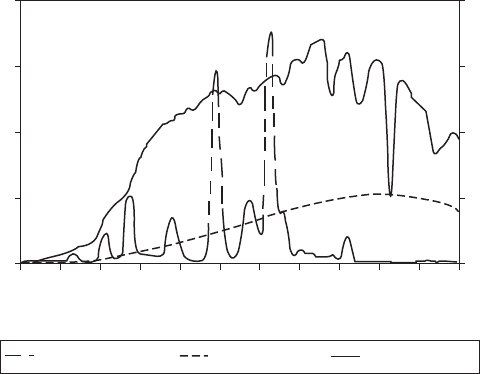
Figure 1 shows the irradiation from the sun, measured on
a clear winter day at 591N, and from two common artificial
light sources, a halogen lamp, and a warm-white fluores-
cent tube. While the sun and the halogen lamp emit
energy in the whole visible region of the spectrum
(although the energy emission is small in the blue part
of the spectrum), the emission from the fluorescent tube is
characterized by uncontiguous peaks of energy with a
pattern typical for each type of tube. The visible light
energy (380–770 nm) emitted from the sun is 16.6 times
stronger than the visible light measures 30 cm from the
fluorescent tube. The light energy from the halogen lamp
is 2.3 times stronger than the fluorescent tube.
According to the Inverse Square Law defining the
relationship between the irradiance from a point source
and distance, the intensity varies in inverse proportion to
the square of the distance (1). If the irradiance is 1.6 W/m
2
at 15 cm, the irradiance will be, for example, 0.4 W/m
2
at
30 cm and 0.04 W/m
2
at 100 cm.
THE EFFECT OF LIGHT ON FOOD
The effect of light on the sensory and nutritional stability
of food can be explained by both photolytic oxidation
(production of free radicals primarily from lipids during
exposure to light) and photosensitized oxidation (3).
Photosensitized oxidation begins with the absorption of
light by special biomolecules, called photosensitizers, that
are able to absorb light to elicit a specific response (4).
Examples of photosensitizers in food are chlorophylls,
pheophytins, porphyrines, riboflavin, myoglobin, and syn-
thetic colorants (5). As light energy is absorbed, an
electron is boosted to a higher energy level and the
sensitizer becomes unstable. Only a few picoseconds are
required for a chlorophyll molecule to absorb energy and
be transformed into a singlet-excited state (3).
In the presence of oxygen, two competing reactions of
the excited sensitizer can occur, called Type I and Type II
reactions. In Type I reactions the excited sensitizer may
react directly with a substrate forming radicals or radical
ions, resulting in oxygenated products. In Type II reac-
tions the excited photosensitizer may react with ground-
state oxygen to form singlet oxygen that is very reactive,
causing a variety of oxidation processes (6).
Important characteristics for photosensitizers are their
molar extinction coefficient curves, indicating how much
energy the molecule is able to absorb at each wavelength,
and their absorption peaks. By comparing the molar
extinction curves for riboflavin (vitamin B2), b-carotene,
chlorophyll b, and octaethylporphyrin (7), it becomes
evident that many of these photosensitizers absorb most
of their energy up to B500 nm (blue-blue/green area of the
spectrum), indicating the potential harmfulness of this
light. Chlorophyll b has, in addition, an absorption peak in
the 630-nm region (red light) and the porphyrin has some
300
0.00
0.01
0.02
W/m
2
nm (lighting)
W/m
2
nm (sunli
g
ht)
0.03
0.04
350 400 450 500 550 600
Wavelength (nm)
650 700 750 800 850
0.00
0.03
0.06
0.09
0.12
Fluorescent tube
Halogen spot Winter sunlight
Figure 1. Energy distribution from the sun (mea-
sured 12 December 2007 11:55 at N59 39.945 E10
45.440), from a warm-white fluorescent tube (Osram
L 58W/830 Lumilux Warm White) and a 12-V 20-W
Ikea halogen lamp (both measured at a 15-cm dis-
tance). Measurements performed using an Apogee
spectroradiometer (Apogee Instruments Inc., Logan,
UT).
656 LIGHT PROTECTION FROM PACKAGING
smaller absorption peaks in the 500- to 580-nm region
(green and yellow light). While riboflavin is often identi-
fied as the major photosensitizer in food causing photo-
oxidation (8), this compound has a 10- to 15-fold lower
molar extinction peaks than the other three mentioned
photosensitizers. Recent research (9, 10) has clearly de-
monstrated the importance of natural contents of por-
phyrins and chlorophyll-like compounds as powerful
photosensitizers in dairy products.
Oxidative changes in food are important in terms of the
nutritional quality, palatability, and even toxicity of our
food supply (11). Riboflavin-photosensitized oxidation
causes destruction of vitamin A, vitamin C, vitamin D,
and vitamin E (12).
LIGHT PROTECTION BY PACKAGING MATERIALS
When sunlight, which represents a complete spectrum in
the visible light region, reaches the surface of a piece of
colored, transparent material, some light is reflected,
some light is transmitted, and the rest is absorbed. The
amount of energy transmitted in each part of the spec-
trum, the availability of oxygen (13) and the type and
concentration of photosensitizers will determine the de-
gree and character of the photooxidative degradation of
the food product.
The importance of the optical properties of packaging
materials is often underestimated, and little attention is
generally given to the shelf life of light-sensitive food
products (14). Today, consumers are demanding transpar-
ent packing, to better appraise the product prior to
purchase. Furthermore, environmental concerns have
caused a reduction in the use of aluminum and metallized
foils. These factors have led to increased use of transpar-
ent packing materials within the entire food sector. How-
ever, packing of foods in transparent materials greatly
increases the risk of light-induced oxidation (15).
Some packaging materials, such as tin-plated steel,
aluminum (also foils), and thick fiber boards (e.g. corru-
gated boards and solid boards), are practically imperme-
able to light and thus offer very good protection against
light. Materials that to varying degree offer light protec-
tion are discussed below.
700600
Wavelength (nm)
500400300200
0
10
20
30
40
50
60
70
% Light transmission
80
90
100
800
900
Clear glass, 2.2 mm
Green glass, 3.2 mm
Blue glass, 2.9 mm
Brown glass, 2.6 mm
Figure 2. Light transmission in clear, blue, green,
and brown glass as measured by a Perkin Elmer
Lambda 800 UV–vis spectrometer with an integrat-
ing sphere (Perkin Elmer Ltd., Buckinghamshire,
UK).
100
90
80
70
60
50
% Light transmission
40
30
20
10
0
200 300 400 500
Wavelength (nm)
600 700 800 900
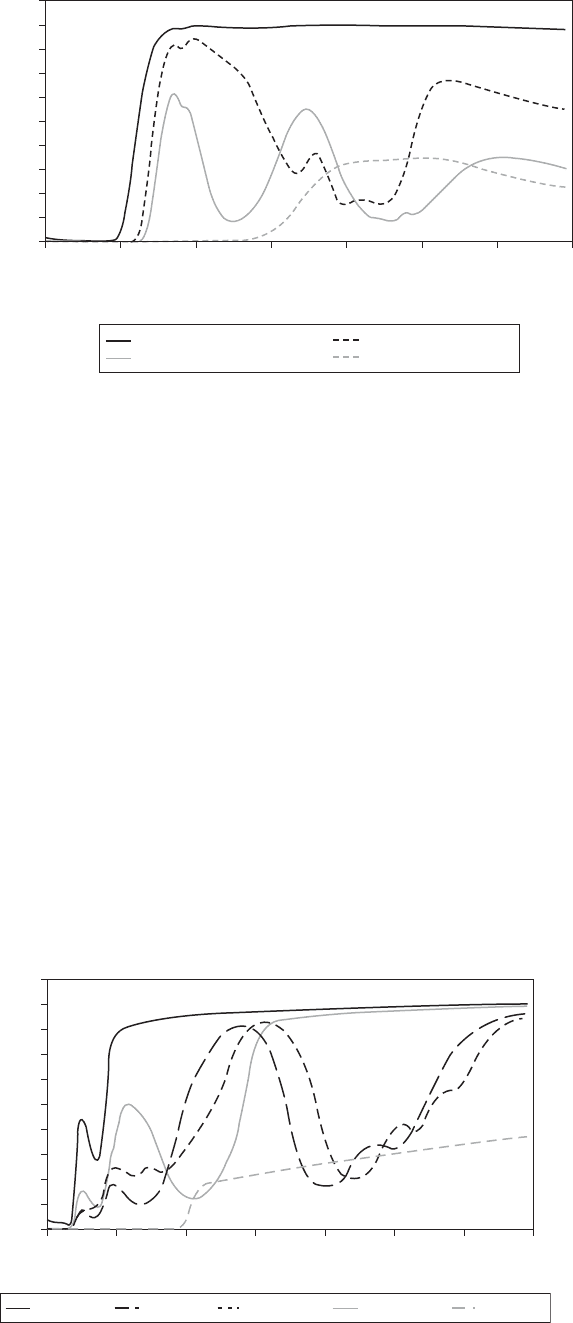
Clear PP Blue PP Green PP Yellow PP White PP
Figure 3. Light transmission in clear, blue, green, yel-
low, and white injection molded polypropylene lids as
measured by a Perkin Elmer Lambda 800 UV–vis spec-
trometer with an integrating sphere (Perkin Elmer Ltd.,
Buckinghamshire, UK).
LIGHT PROTECTION FROM PACKAGING 657