
Yam, Kit L. (ed.). The Wiley encyclopedia of packaging technology
Подождите немного. Документ загружается.

participative support effort with the military researchers.
Among these firms were: Reynolds Metals, Flexible Packa-
ging Division of the Continental Can Company, Dow
Chemical, American Can Company, and Morton Chemical
Company. Reynolds Metals went so far as to establish a
pilot production line for vegetables. A tangible recognition
of this military–industry cooperation was the receipt of
the Institute of Food Technologists’ Industrial Achieve-
ment Award in 1978 jointly by Reynolds Metals, Conti-
nental Can Company, and the U.S. Army Natick Research,
Development, and Engineering Center.
There were foreign developments, more or less parallel-
ing those by the U.S. military. Although some of the
developments were proprietary, there was considerable
interchange of experiences through visits and joint tech-
nical sessions. Among those nations known to be probing
flexible packaging for thermoprocessed foods were Japan,
United Kingdom, Italy, Sweden, Germany and Canada.
These foreign developments were oriented more toward
commercial markets than toward military. Japanese and
Italian representatives cited commercial successes.
The U.S. military’s program can be visualized in four
general development phases. During all phases the pro-
gram was supported by laboratory activities to develop
quality assurance tests and performance criteria. Overall,
as previously stated, from concept acceptance to ration
fielding (i.e., the four phases) took 20 years. Early in the
program, field tests revealed that if made properly, the
retort pouch performed well, but the tests also revealed
that the form–fill–seal–process system and product
formulation required technical and engineering modifica-
tions and improvements. This was to be truly an inte-
grated product-package development. This took time. The
development phases were as follows.
Feasibility Testing
This phase included selection of candidate films; labora-
tory and small pilot plant size preparation of entrees
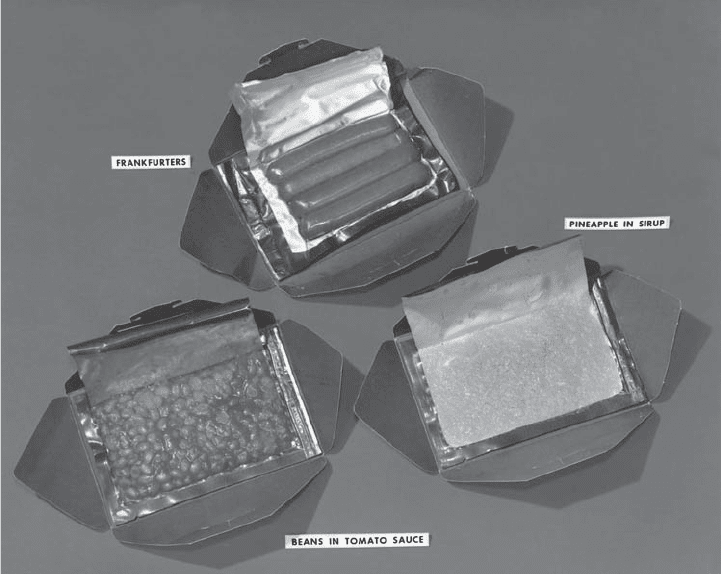
(Figure 2); informal field evaluation via such activities
as carrying carton-enclosed pouched items in combat
clothing pockets over a clothing-wear obstacle course
(including prone position crawling over obstacles); initia-
tion of storage tests; vibration and drop test cycles
simulating transport abuse; and initial organoleptic ac-
ceptability evaluations. Extractives studies to meet Food
and Drug Administration regulatory standards were per-
formed, submitted, and accepted. The basic structural
requirements of the film were established: a 0.004-in.
sealant and basic strength layer, a 0.0005-in. aluminum
foil oxygen/water vapor barrier, and an outer 0.0005-in.
protective layer. The pouch at this initial stage of devel-
opment enclosed and adhered to a kraft board envelope-
folder.
The initial sealant layers were polyvinyl chloride (PVC)
or a medium- to high-density polyethylene (HDPE) mod-
ified with polyisobutylene, each film bonded to the foil ply
by an isocyanate adhesive system. As the result of occa-
sional off-flavor transfer and delamination, the PVC
material was replaced by the proprietary HDPE blend.
Figure 2. Thermally processed items. Early retort pouch items (for the MRE), opened to display typical items. Current ration of 24 menus
contains 40–42 thermoprocessed entre
´
e items in flexible pouches.
778 MILITARY FOOD PACKAGING
Where feasible and comparatively valid, pouch perfor-
mance was compared to MCI canned entrees. The pouch
performed well.
Initial Field Tests
The limited feasibility tests were promising enough that
more extensive troop usage field tests were carried out—in
Louisiana, Georgia, Arizona, and Alaska. These tests were
more formal; that is, they were carried out independently
by the Test and Evaluation Command (TECOM). The
Nlabs, the developer, could only act as observers. Based
on TECOM test personnel and user-documented assess-
ments, the retort pouch performed satisfactorily. The
material used featured the HDPE blend as the sealant
ply. Failures were few and mostly related to closure seal
defects; that is, irregularities and leaks caused by product
caught in the seal area.
Palatability was assessed by ratings on a 1–10 (inedible
to highly liked) hedonic scale by the users. The control for
all aspects of these tests was the can in the Meal, Combat,
Individual (MCI). Perhaps the most valid indication of
acceptability was the free choice of the pouch over the can
following tests in Alaska—that is, a choice with no hint of
a Hawthorne effect.
The overall conclusion was that the retort pouch was
acceptable for combat rations, but the failure rate (pri-
marily defects in the closure seal area) was too high for a
thermoprocessed food package.
Production Capability
Based on the field test revelation that filling and sealing
flexible pouches with original high water content fluid,
semisolid, and one-piece solid foods remained a significant
performance and reliability problem, a decision was made
to establish a pilot line of full-sized equipment, alter and/
or add functions to improve performance, and run diverse
representative food items in adequate amounts to provide
valid reliability data (in terms of low percent failures).
This approach would also provide future production moni-
tors an experience base for assisting contractors in start-
ups and in correcting production deficiencies. It would also
test quality assurance sampling and test protocols. Under
contract, a so-called Natick–Swift production Reliability
Program was established. This program was carried out
by a consortium headed by Swift and Company, with
membership by Continental Can Company, Pillsbury
Company, FMC Corporation, and Bartelt packaging ma-
chinery company. The package design was the four-side
seal and was formed online from a roll stock of 75-
mm-modified polyolefin (blend of polyisobutylene with
medium- to high-density polyethylene) as the sealant
ply, a 9-mm aluminum foil barrier, and 12-mm polyethylene
terephthlate (Mylar) as the outer layer. Six diverse
products were run: covering those considered pumpable
into formed pouches (beef stew, pineapple); solids termed
placeable (beefsteak, four frankfurters in one pouch); and
viscous items termed extrudable (fruitcake, combination
ham and chicken loaf). Overall results were a 0.002% seal-
failure rate and a 0.016% closure-seal-contamination fail-
ure rate for 298,971 packages.
As reported by Lampi et al. (4), the Natick–Swift
Reliability program revealed an overall outgoing seal
defect rate of 0.017%. Tsutsumi (7) reported a final pouch
defect rate of 0.02% in Japan. Nughes (8) reported similar
rates in Italy. If one accepts a failure rate of 0.1% as
published for the ordinary can, the pouch appeared to
meet commonly accepted reliability standards.
The description of the line and results of its usage to
pack six diverse products are described in the Proceed-
ings, Symposium on Flexible Packaging for Heat Pro-
cessed Foods (1973) sponsored by the National Academy
of Science, National Research Council. Each participant
detailed their task and its results. Overviews of results are
included.
As briefly stated earlier, other pilot and manufacturing
lines had been established. Systems, circa 1977, are
summarily described by Lampi (9). Tsutsumi (10, 11)
covers a Japanese approach. Goldfarb (12, 13) describes
the Reynolds Metals system, the use of which is covered by
Mermelstein (14). Although these production systems
were not directly oriented to military use, their successful
functioning reinforced confidence in the feasibility of the
pouch for U.S. military rations.
As mentioned previously, laboratory tests and other
supporting activities were ongoing during the general
development phases. These were conducted with two
films: One of them was used in the comprehensive Relia-
bility Program; which was modified high-density poly-
ethylene (HDPE), the other had polypropylene (PP) as
the sealant layer. The latter had surfaced as an applicable
film in usage paralleling the use of HDPE in separate but
similar activities. Details of the many tests and develop-
ments are covered by Lampi (9), and those associated with
seal performance are discussed by Lampi et al. (4). Among
the activities and findings are
Extractives Studies. Extractives studies were carried out
to establish that no meaningful contaminants were mi-
grating from the packaging materials into package con-
tents. Initial approvals were obtained; and in a later
general review (15) of the status of the program submitted
to regulatory agencies before fielding, no extractives pro-
blems were identified. However, just before the military
was
to start procurement,
the FDA reported the presence
of 0.3 to 3.0 ppb of toluene diisocyanate migrating
into products. This caused a roughly five-year delay
(1975–1980) while coextrusion as a bonding technique
was finalized, assessed for migratory safety, and put into
use. Then, procurement of the MRE began.
Storage Stability. Storage studies were carried out on
representative products, such as ground beef in barbeque
sauce, pork sausage, and ham and chicken loaf (containing
ingredients apt to penetrate polymeric films), and with
two films (HDPE and PP) to assess product organoleptic
stability and to measure the effects of time and tempera-
ture on package seal tensile strengths and seal and body
area bonding. Storage temperatures were 71.61F and
100.41F. Criteria at that time (1969–1973) were four years
at 71.61F and six months at 100.41F (currently three years
at 80.61F).
MILITARY FOOD PACKAGING 779
The foods passed storage organoleptic stability criteria
on the basis of periodic hedonic ratings and in some
comparisons with like products in traditional cans.
Seal area tensile strengths and laminate bondings held
up very well over 27-month-long storage at 71.61F and
100.41F (16).
Resistance to Rough Handling. Retort pouches with
HDPE and PP sealant layers and containing fluid and
semifluid products were compared to like products in cans
when exposed to a rough handling cycle. The cycle was
vibration in case lots at 1 G for one hour followed by a
series of 10 drops from a height of 46 cm (18 in.) (ASTM D-
775-68, Objective B). The treatments were followed by
visual examination and microbiological testing via a bio-
tester (17). Neither film nor type of product had failures
exceeding the can—a tentative performance standard for
this type of testing could be 2% or fewer leakers as
detected by microbiological testing.
In addition, free-fall airdrop of cases of rations in a field
test demonstrated that the pouch met the recovery criter-
ion of 75% useable items.
Indication of Spoilage (Leaking or, More Likely, Under-
processing). With metal cans, swelling (i.e., a convex lid
shape) has been traditionally used as a proven indication
of microbiological spoilage. Cans and pouches were
equally inoculated with gas-producing bacteria through
silicone sealant septa and monitored visually for swelling.
Obvious swelling of the pouch was doubling of its thick-
ness, easily judged by any user. The pouch showed gaseous
swelling in 48 h, while it took the can 72–120 h.
Definition of a ‘‘Good’’ Seal. Based on production ex-
perience, early field tests, storage tests, and controlled
laboratory tests, the criteria for defining a high-perfor-
mance seal for retort pouches was established as follows:
1. Fusion must exist.
2. Internal pressure level
. 20 psig
. Hold time: 30 s
. Maximum seal yield: 1/16 in.
. Restrained pouch thickness: 1/2 in.
3. Tensile strength level
. 12 lb/in.
. Crosshead speed: 10 in./min
. Sample width: 1/2 in.
4. Visual—No visible aberrations.
Fusion exists when the opposing seal surfaces form a weld
where neither surface is visually distinguishable when
seal area is tensioned beyond the point of failure. The
presence of fusion cannot be understated. A polymeric film
heat seal can pass all requirements, including tensile and
burst tests and general appearance, at the time of forma-
tion but based on experience that was not good, such a
nonfusion seal will fail on storage. To assist visual judg-
ment of seals, a table of photographs has been assembled
showing acceptable and nonacceptable seal surfaces and
characteristics (4, 16).
Seal Defect Scanner. In cognizance of the vagaries of
human leak defect assessment, an automatic seal defect
detection apparatus was devised, built, and tested. The
procedure used infrared radiometric scanning of heated
seal surfaces. One surface of a seal was heated, and any
heat impeded by defects in the seal area was detected on
the opposite side by the infrared scanner. Both the heat
source and scanner were stationary; the package seal was
aligned and passed between these two elements, and
packages with defective seals were diverted. Scanning
speed was 6 in./s. The apparatus cost was considered
high. Another deterrent to its use in the mid-1970s,
ironically, was that a criterion for acceptance/rejection
was a problem. It was too sensitive, rejecting pouches
with very minor seal deformations that did not negatively
affect seal integrity.
Leakers. The pouches are currently scanned by humans
visually for defects including leaks during and immedi-
ately following production. Subsequent leakers are de-
tected by transportation handlers and users visually
and discarded. Swollen pouches including those possibly
caused by product caking and plugging leak sites are
discarded. This procedure fortunately works as evidenced
by the 22 years of successful reasonably cost-effective
production and use of the MRE at the current rate of 46
million meals per year.
Since the initial consideration of using flexible packa-
ging for thermoprocessed foods, there has been concern
over the presence, significance, and reliable detection of
leaks. The deficiency of visual inspection (even multiple
ones, loss of acuity with time-related fatigue) has been
cited as justification to develop online detection devices. A
prerequisite to exploring objective leak detection concepts
is establishment of criterion (i.e., the smallest leak that
needs to be detected).
Finding leaks, on the pouch body or through seals, is
governed by two specific characteristics. First, whereas a
rigid
can exhibits a
pressure difference between the out-
side atmosphere and its contents that could suck contam-
ination through any void into the can, a pouch, on the
removal of headspace air, collapses around the contents to
a point where no external to contents pressure drop exists.
A bio-tester (18) was constructed to create a momentary
pressure difference and has been used as the primary
bacteria penetration detection apparatus.
Secondly, fluid contents can plug defects and greatly
reduce the sensitivity of such detection devices as the
Mead Test (pulling a vacuum on a container submerged in
water). With dry products, a 5-mm-diameter defect could be
detected, while with a pouch filled with distilled water, even
a68-mm hole was not detected. The accumulated knowledge
on pouch leaks starting with tests on films per se and
ending with production, handling, and field experience
through 1979 (the active development period) included:
1. Single plies of polymeric materials contain pinholes
that could permit passage of bacteria. A three-ply
780 MILITARY FOOD PACKAGING
construction does not; the statistical chances of
three holes coinciding to allow bacterial passage
are extremely rare. Candidate polymeric films are
not degraded by direct exposure to bacterial
concentrations.
2. Manipulation of foil containing laminates results in
minute breaks in the thin foil; these breaks do not
result in film failure or microbial hazards. The total
area exposed by such foil breaks is insignificant in
that their effect on water vapor and oxygen trans-
mission is nil.
3. Using a laser (crudely because of their technical
infancy) to ‘‘drill’’ minute holes in a three-ply
retortable laminate and exposing filled pouches
made with this material, each having a ‘‘laser
hole’’ to a bacterial ‘‘soup’’ in a tester, a tentative
minimum, laboratory-created defect was listed as a
11-mm diameter hole. In perspective, such a hole/
defect size is roughly 1/10th the thickness of the
packaging material. Because of the small number
of samples, no statistically valid conclusion was
possible.
4. In one series of tests, retortable materials were
subjected to multiple flexing, punctured by a fine
sharp needle, and abrasion on a raised peak. Flexing
resulted in a porous area that permitted gas flow but
could not be defined even microscopically. Puncture
by a fire-hardened fine-tip needle resulted in rela-
tively large defects (greater than 100-mm size) that
were visually detectable. Abrasion caused a variety
of hole sizes, the smallest of which was equal to a
24.4-mm diameter round hole.
5. Pouches that failed during a rough handling cycle,
as established by biotesting, were examined micro-
scopically to try to define the size of leak sites.
The smallest was 20 15 mm, the next largest was
20 40 mm, six were in the 100- to 999-mm range,
and 24 were 1000 mm or larger.
Nine defects were undefined or destroyed during pouch
opening.
At the time the MRE was accepted as the standard
combat ration, the best estimate on leak occurrence was
that one package in 100,000 could have a leak smaller
than 100 mm.
Leak Detection Methodology. In this Production Cap-
ability development time frame, a concerted effort was
made to determine if any nondestructive online- or line-
associated leak test method could be made to apply to the
retort pouch. Spencer and Bodman (19) surveyed 24
conceivably applicable concepts. Criteria were a 30-mm
channel through the seal area and a 10-mm defect on the
pouch body. For fluid foods, the best candidate was a
change in the conductivity of deionized water by product
forced out of the package by compression. For solid foods
(i.e., beefsteak), a helium tracer gas procedure detected
holes as small as 30 mm.
In each case, however, the design of an apparatus to
cover handling, preparation for analysis, performing the
analysis, and recharging or resetting for the next pouch
would have approached the size and complexity of the
basic production line.
Implementation and Field Improvements
The Meal, Ready-to-Eat, Individual (MRE) replaced the
Meal, Combat, Individual (MCI, commonly and belatedly
still referred to as the C ration) in 1975 with the caveat
that testing be continued with the U.S. department of
Agriculture to confirm that insect penetration would not
become a problem. Reportedly, after further exposure to
gnawing and chewing insects, there is no problem. Also, at
roughly this same time, as cited previously, notice was
received from the Food and Drug Administration that 0.3
to 3.0 ppb of toluene di-isocyanate was determined to be
extracted by products from adhesives systems used in the
lamination of the desire films. Rather than try to cope with
adhesives, film suppliers developed coextrusion techni-
ques with approved polymers, and current films are so
currently formed.
The
MRE, as it
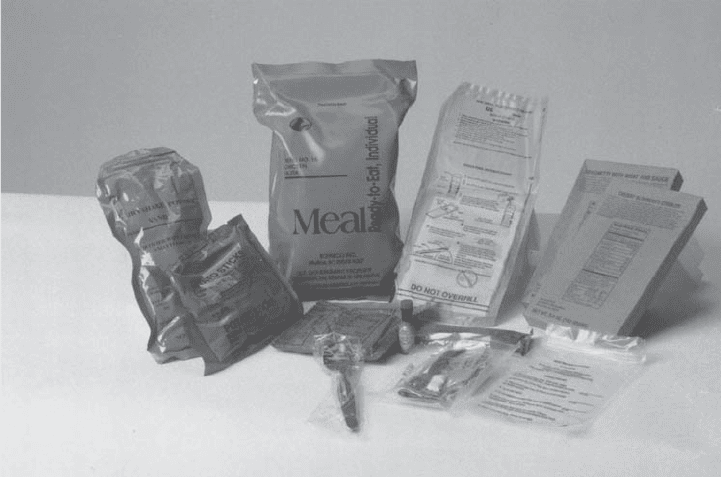
is currently configured (Figure 3),
consists of entree/starch, crackers, spread (cheese, peanut
butter, jam, or jelly), desert/snack, accessory packet (bev-
erages, condiments, matches, gum, toiletries), and flame-
less ration heater (FRH).
There are 24 menus/12 meals to a case. Each meal
provides 1300 kcal. Water requirement is approximately
23 oz to rehydrate beverages. The FRH has been in each
meal bag since 1993. Each meal weighs 1.5 lb and takes up
1/12th of a cubic foot in volume.
The first four or five procurements surfaced the need
for technical assistance to suppliers, a need for coordi-
nated support by the procurement agency, and the
engineering support function of the developer. The pro-
duction of retort pouched items, although based on a blend
of frozen and canned food capabilities, required a higher
level of flexible package performance, and new inspection
standards, and it was viewed by its proponents as essen-
tially a new technology.
From this rather tenuous start, with strong institu-
tional review, assessment, and support, the MRE has been
improved in both individual item quality and menu con-
figuration. Through the year 2004 procurement, MRE
XXVI, the ration has been expanded to 24 menus includ-
ing four vegetarian meals. Since 1993, 150 new items have
been approved; 35 least acceptable items have been elimi-
nated. Over 75% of ration components are now non-
developmental items—that is, adapted directly from
commercially prevalent items. At this time, the ration
usage rate is such that storage stability is not a factor of
concern. Providing combatants that represent a country-
wide demography is paramount. Currently, the MRE
usage rate is 46 million meals per year.
Nutritional adequacy, related directly to combatant
performance, has been periodically measured. For exam-
ple, Lichton et al. (20) evaluated the nutritional value of
the MRE during a 34-day field exercise (at an elevation of
1800 m). Compared with a control group, those fed only
MREs lost weight. Neither group appeared to be dehy-
drated. Both groups displayed normal values of serum
MILITARY FOOD PACKAGING 781
proteins, vitamins, and zinc, denoting acceptable nutri-
tional status.
The old C-ration cans were heated in water, in an
inverted combat helmet, in a canteen cup using heat
tablets, or in bulk in water in any large barrel or tank.
The advent of the Kevlar helmet removed one common
field heating method. Subsequently, after some user skep-
ticism, an effective flameless ration heater was developed
and has been in each MRE meal bag since 1993. This 22-g
flat card-like heater can heat 200 g of retort-pouched food
in roughly 10 min. Any water can be used to activate
the heating action. An initial version discharged a small
amount of hydrogen, innocuous during use, but considered
a possible hazard when multiple cases were transported in
a closed container. A new hydrogen-free ration heater has
been developed.
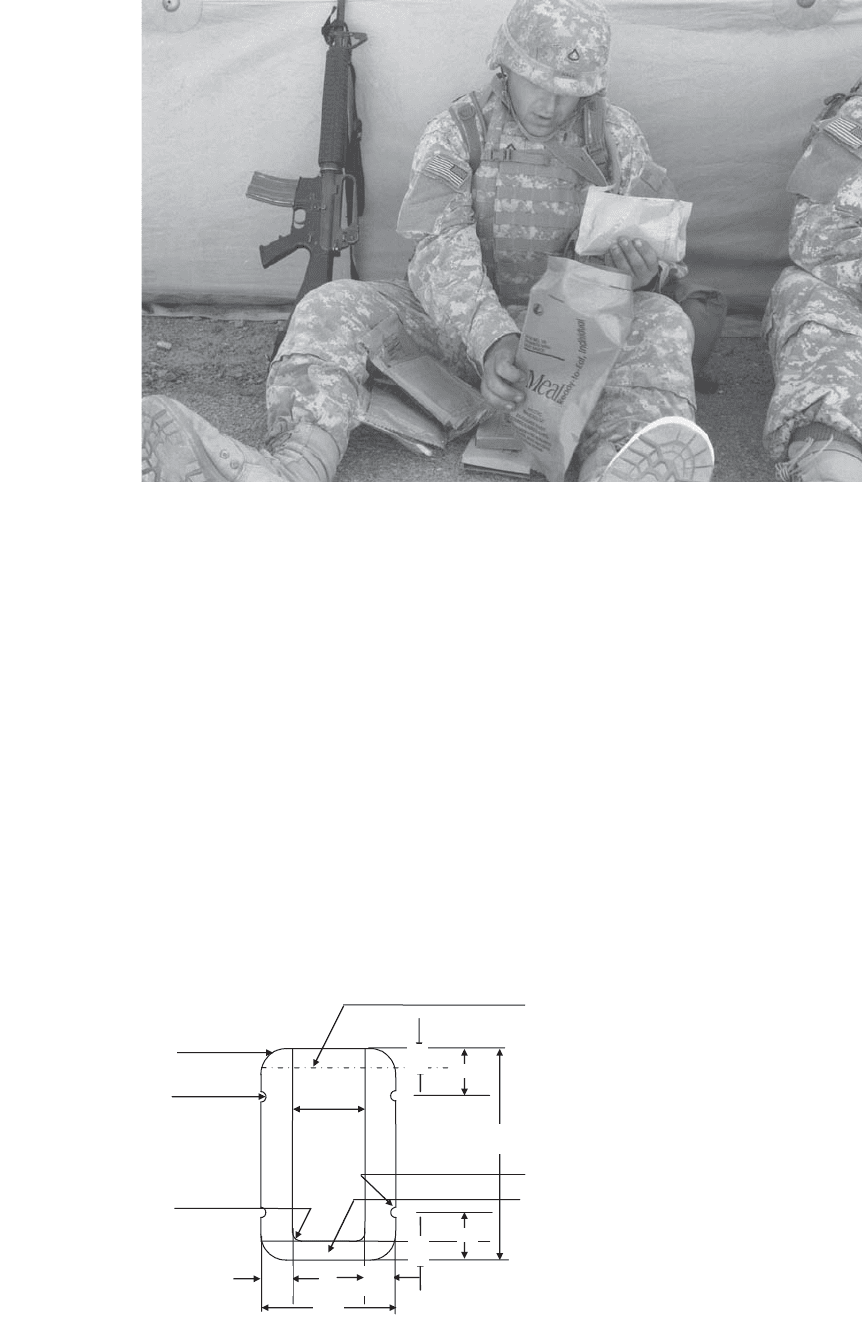
After all the technical effort and testing, the MRE, plus
the engineering support it requires, has now supported
the military person for over 20 years (Figure 4). The
current packaging materials and the ensuing pouch used
to prepare thermoprocessed ration items are given in
Performance Specification MIL-PRF-44073F (Figure 5),
Change 3, November 2006.
The skeleton requirements as abstracted from the
specification are:
1. Pouch material (from the inside to the outside)
a. Preformed pouches: 0.003- to 0.004-in.-thick poly-
olefin, 0.00035- to 0.0007-in.-thick aluminum foil,
0.0006-in.-thick biaxially oriented polyamide-
type 6, 0.0005-in.-thick polyester.
b. Drawn pouch; tray-shaped body of a horizontal
form-fill-seal system, tray-shaped body: 0.003- to
0.004-in.-thick polyolefin, 0.0006 inch thick
biaxially oriented type-6 polyamide, 0.0015- to
0.00175-in.-thick aluminum foil, 0.0010- to
0.0014-in.-thick oriented polypropylene Lid,
0.003- to 0.004-in.-thick polyolefin, 0.00035 to
0.0007 inch thick aluminum foil, 0.0005- to
0.00075-in.-thick polyester.
2. Pouch configurations are shown in Figure 5, and
dimensions are shown in Table 2.
3. Performance requirements are:
a. Material must be capable of being formed into
pouches.
b. Oxygen transmission rate must not exceed
0.06 cc/m
2
/24 h/atm; Water vapor transmission
rate must not exceed 0.01 g/m
2
/24 h.
c. Residual gas volume shall not exceed 10 cc for
fruit or 20 cc for non-fruit items.
d. Filled pouches shall withstand a pressure of
20 psig for 30 s.
e. Postprocessed pouches must withstand abuse at
281F with a survival rate of 75% and a survival
rate of 100% at 1601F.
f. Pouches including seals must be free of visual
defects.
g. The carton enclosing each pouch needs to con-
form to Specification PPP-B-566, Boxes, Folding,
and Paperboard.
The MRE is constantly being improved and updated—
menus and materials. As of 2006, the MRE is destined
to continue to be the combat ration for the foreseeable
future.
Figure 3. Meal, Ready-to-Eat, Individual. The large bag, labeled ‘‘Meal,’’ contains the rest of the items shown. The light-colored bag is the
flameless ration heater.
782 MILITARY FOOD PACKAGING
UNITIZED GROUP RATION (UGR)
When field conditions permit group feeding in small units
or even larger congregations, the unitized group ration
(UGR) has been designed, tested, and fielded for such
situations. The basic objective was to simplify the logistics
for supporting small group feeding. The traditional proce-
dure had been to order a slew of food items via individual
requests and, similarly, to assemble preparation, serving,
and dining ware. That is, for each field operation, a
multitude of individual issue requests were submitted
and, on receipt of items, rather haphazardly assembled.
The UGR is a pre-assembly of all the preparation, dining,
and consumable items into a single unit to support a
designated number of personnel.
The unitized group ration (UGR) is a program designed
to provide the highest-quality group meals to troops in the
field by increasing variety, consumption, acceptability, and
nutritional intake. It is an efficient method to provide
breakfast, lunch, and dinner by packing 50 meals to-
gether. There are about 7 breakfast menus and 14 lunch
and dinner menus, depending on options, for selection.
The pre-mixed selection of menus ensures variety and
maximizes consumption by avoiding repetition and ennui.
The unitized ration also includes disposable trays, cups,
flatware, and trash bags. There are four different group
ration options, namely, unitized Group Ration Heat and
Serve (UGR-H&S), unitized group ration A (UGR-A),
unitized group ration B (UGR-B), and the recently fielded
addition to the UGR concept, the UGR-E (‘‘E’’ for express)
featuring self-heating.
UGR-H&S. This option is available for military per-
sonnel who are in the worldwide operations and
Figure 4. Combatant in the field preparing to eat the MRE.
3/ 8 R, TYP 2 PLACES
‘V’ or ‘C’ SHAPED TEAR
NOTCHES AT TOP HALF
OF POUCH
BOTTOM EDGE
CLOSURE SEAL
ALTERNATE
LOCATIONS OF
TEAR NOTCHES AT
BOTTOM HALF OF
POUCH
A
B
E E
C
C
D
F
SIDE
SEAL
BOTTOM SEAL
ROUNDED CORNERS
AT ALL 4 CORNERS
(RADIUS ~ 3/ 8 in
Figure 5. Pouch configuration.
MILITARY FOOD PACKAGING 783
have organized food service facility. It includes a
complete 50-person meal except for milk, cereal,
bread, fruits, and vegetables. The breakfast includes
a combination of egg, pork, beef, juice, dessert, and
others. The lunch and dinner includes a combination
of vegetable, meat, rice, pasta, juice, dessert, and
fruits. Each menu, including other enhancements,
provides about 1450 kcal per serving. The UGR-
H&S Option has a pallet containing 4 tiers, and
each tier provides about 100 meals assembled at
government depots. They have a shelf life of 18
months at 801 F.
UGR-A. The UGR-A is similar to UGR-H&S except
that this includes perishable/frozen type entrees (A-
Rations) along with commercial-type components.
Currently, there are 7 breakfast and 14 lunch/dinner
menus available, and they provide around 1450 kcal
of energy per serving. Each pallet contains about 12
modules or 600 meals built-to-order with direct
vendor delivery. The average shelf life is around
3–6 months for frozen entrees.
UGR-B. The UGR-B ration includes dehydrated
food and also commercial type items. Currently, it
offers 7 breakfast and 14 lunch/dinner menus, with
each meal providing an average of 1300 kcal of
energy per serving. Each pallet contains around
8 modules or 400 meals assembled at govern-
ment depots. They have a shelf life of 18 months at
801F.
UGR-E. As cited in Natick PAM 30–25, 7th edition,
November 2006, ‘‘The UGR-E includes separate
group-serving polymeric trays and/or institutional-
sized pouches that contain a shelf stable entre
´
e,
Table 2. Pouch Dimensions
Pouch Sizes Dimensions (inches)
ABCDEF
5-oz size 4
3
4
(7
1
16
)6
1
6
to 6
1
4
1(7
1
16
)
3
4
max.
7
32
min.
1
8
min.
6
1
6
to 7
3
8
1
1
2
(7
1
16
) 1 max
Primary 8-oz size 4
3
4
(7
1
16
)8
1
8
(+
1
8
,—
1
16
)1
1
2
(7
1
16
) 1 max
7
32
min.
1
8
min.
Alternate 8-oz size 5
1
4
(7
1
16
)7
1
4
(+
1
8
,
1
16
)1
1
2
(7
1
16
) 1 max
7
32
min.
1
8
min.
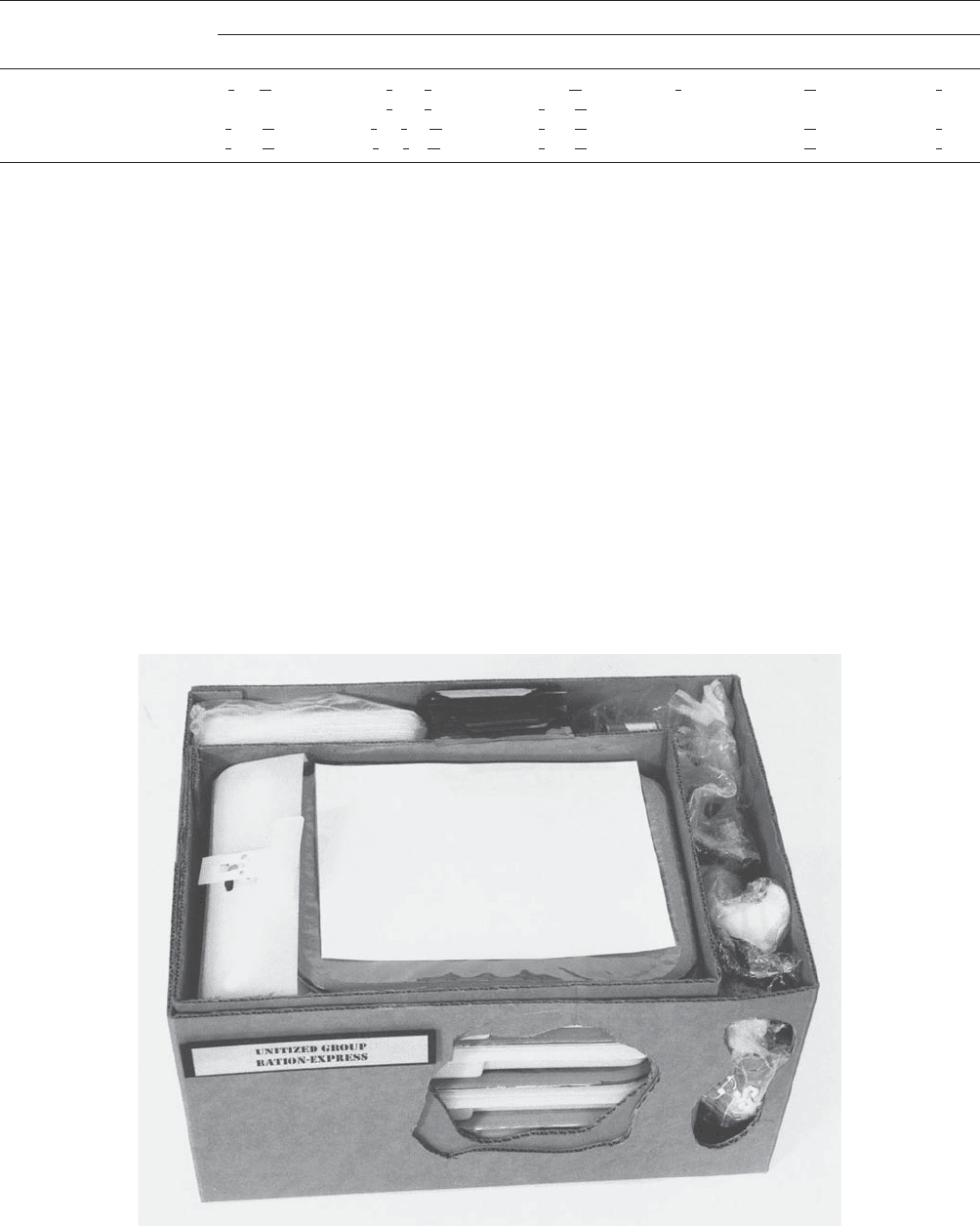
Figure 6. Case containing components of the Unitized Group Ration—Express (UGR-E) ; section cut open to display arrangement of
contents.
784 MILITARY FOOD PACKAGING
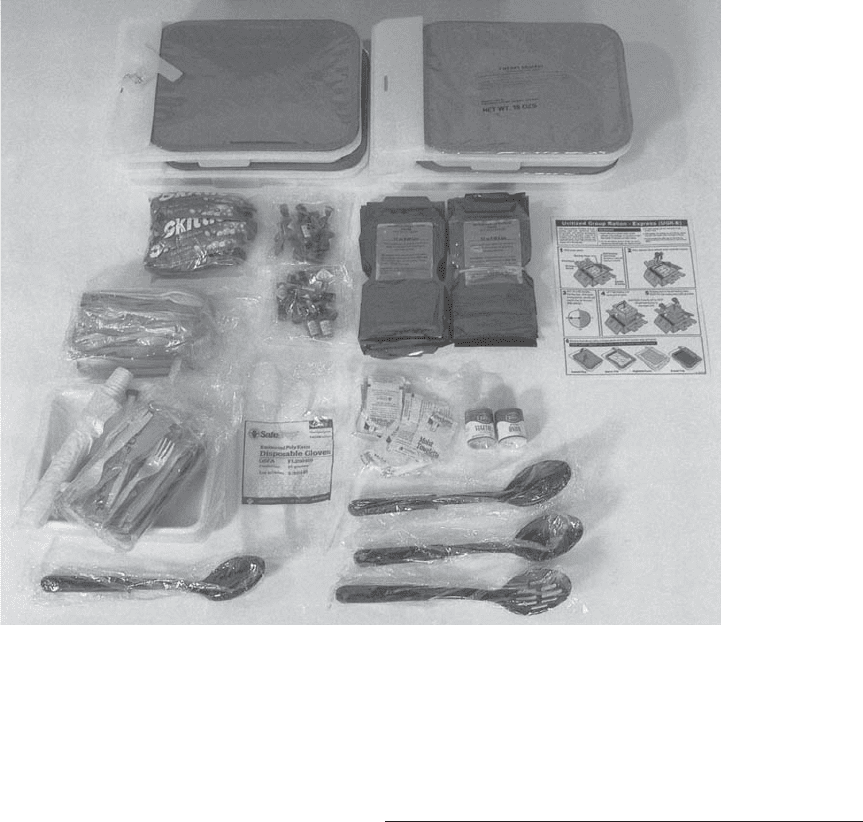
vegetable, starch, and dessert (Figure 6). Additional
items include drink pouches, snacks/candies, com-
partmented dining trays, disposable eating and ser-
ving utensils, condiments, beverage bases, napkins,
wet-naps, and a trash bag (Figure 7). The UGR-E
will be available in up to three breakfast and six
lunch/dinner menus. Each UGR-E will provide 18
complete meals. The self-heated meal modules may
be pre-positioned or carried by operational units. The
UGR-E has a minimum 18-month shelf life at 801F.
Each pallet contains 18 UGR-Es or 324 meals. When
a remote unit requires hot food, a tab is pulled to
activate the heaters. In 30 to 45 minutes the module
is opened and hot food is ready to be served in trays/
pouches to Warfighters, like a cook prepared meal.
After opening, the heaters continue to provide heat,
keeping the foods hotter longer.’’
SUMMATION
Current developments and support to combat feeding
emphasize improvements in quality, responsiveness to
menu likes and dislikes, ration designs compatible with
high mobility field tactics, and minimizing the time and
complexity of individual and small group food prepara-
tion. In many instances, as opposed to activities prior to
World War II, the military is pioneering food product and
packaging development. At the same time, they utilize
applicable commercial items when advantageous. The
criticality of adequate nutrition to combatant performance
seems to be finally recongnized and institutionalized.
Acknowledgments: The administrative and technical contribu-
tions of all who delved into the myriad of concepts and require-
ments to support the satisfactory feeding of combat troops merit
special acknowledgment. The historical reviews by F. A. Koehler
and S. M. Moody were keys to coverage to World War II. I also
wish to acknowledge the encouragement plus the editing and
organizational support of Professor Kit L. Yam of Rutgers, the
State University of New Jersey, without which this contribution
would not have been completed.
BIBLIOGRAPHY
1. F. A. Koehler, ‘‘Army Operational Rations—Historical Back-
ground,’’ Spacial Rations for the Armed Forces, 1946–53,
QMC Historical Studies, series II, No. 6, Historical Branch,
Office of the Quartermaster General, Washington, DC, 1958,
Chapter 1.
2. Anonymous. Conference and Notes on Rations, QMS, January
1949.
3. S. M. Moody, ‘‘Chow Time: Military Feeding’’ in Bunker Hill to
Bosnia: The History of the Development and Utilization of
Military Rations in the United States Armed Forces, 2000,
p. 90.
Figure 7. Components of the UGR-E; food and utensils to prepare and feed 18 combatants.
MILITARY FOOD PACKAGING 785
4. R. A. Lampi, G. L. Schulz, T. Ciavarini, and P. T. Burke,
‘‘Performance and Integrity of Retort Pouch Seals,’’ Food
Technol. 30, 38–48 (1976).
5. K. E. Paquette, ‘‘Irradiation of Prepackaged Food: Evolution
of the Food and Drug Administrations Regulation of
Packaging Materials’’ in Irradiation of Food and Packaging:
Recent Developments, ACS Symposium Series 875,
American Chemical Society, Washington, D.C., 2004, pp.
182–202.
6. V. A. Loveridge, and L. E. Milch, ‘‘Physical Evaluation of High
Dose Irradiated Multilayer Pouches.’’ in Irradiation of Food
and Packaging. Recent Developments, ACS Symposium Series
875, American Chemical Society, Washington, D.C., 2004, pp.
305–313.
7. Y. Tsutsumi, The growth of food packed in retortable pouches
in Japan. Presented at Annual Packaging Institute Forum,
Chicago, 1974.
8. F. Nughes, ‘‘European Developments in Retortable Pouch
Packaging,’’ presented at Annual Packaging Institute Forum,
Chicago, 1974.
9. R. A. Lampi, ‘‘Flexible Packaging for Thermoprocessed
Foods.’’ in E. M. Mrak, G. F. Stewart, and C. O. Chichester,
Advances in Food Research, Vol. 23, Academic Press, New
York, 1977, p. 305–428.
10. Y. Tsutsumi, ‘‘Retort Pouch—Its Development and
Applications to Foodstuffs in Japan,’’ J. Plastics. 49, 24–30,
(1972).
11. Y. Tsutsumi, ‘‘The Growth of Food Packed in Retortable
Pouches in Japan,’’ Act. Rep. Res. Dev. Assoc. Military Food
Packaging. Syst. 27(1), 149–153 (1975).
12. P. L. Goldfarb, ‘‘Pouch for low acid foods I,’’ Mod. Packaging
43(12), 70–76 (1970).
13. P. L. Goldfarb, Pouch for low acid foods II. Mod. Packaging
44(1), 70–76 (1971).
14. N. H. Mermelstein, ‘‘An Overview of the Retort Pouch in the
U.S.,’’ Food Technol. 28–37 (1976).
15. J. W. Szczeblowski, ‘‘An Assessment of the Flexible
Packaging Systems for heat processed foods,’’ Technical re-
port 71-57- GP, U.S. Army Natick Laboratories, Natick, MA,
1971.
16. G. L. Schulz, ‘‘Test Procedures and Performance Values
Required to Assure Reliability’’ in Proceedings, Symposium
on Flexible Packaging for Heat-Processed Foods, National
Academy of Sciences, National Research Council, 1973, p.
71–82.
17. D. T. Maunder, J. F. Folinazzo, and J. J. Killoran, ‘‘Bio-test
Method for Determining Integrity of Flexible Packages of Self
Stable Foods,’’ Food Technol. 22(5), 81 (1968).
18. G. O., Payne, Jr., C. J. Spiegel, and F. E. Long, ‘‘Study of
Extractable Substance and Microbial Penetration of
Polymeric Packaging Materials to Develop Flexible Plastic
Containers for Irradiation Sterilized Foods,’’ Technical report
69- 57-FL, U.S. Army Natick Laboratories, Natick, MA,
1969.
19. W. T. Spencer, and H. A. Bodman, ‘‘Non-destructive Testing of
Packages of Thermoprocessed Foods,’’ Final report Phase II
(Draft) Contract DAAG17- 69-C-0013, U.S. Army Natick
Laboratories, Natick, MA, 1970.
20. I. J. Lichton, J. B. Miyamura, and S. W. McNutt, Nutritional
Evaluation of Soldiers Subsisting on Meal, Ready-to-Eat
Operational Rations for an Extended Period: Body Measure-
ments, Hydration, and Blood Nutrients,’’ Am. J. Clin. Nutr.
48, 30–37 (1988).
MILITARY PACKAGING
JEANNE M. LUCCIARINI
ROBERT L. T ROTTIER
US Army Natick Soldier
Center, US Army Natick
Soldier RD&E Center
BACKGROUND
Developing food packaging to withstand the military logis-
tics system poses both unique and difficult challenges.
There are unusual supply constraints caused by the world-
wide presence and the complex requirements of the Mili-
tary Services. Current and future logistical complexities
resulting from widely dispersed joint service operations,
multinational deployments, and humanitarian missions
have significantly changed the operational and organiza-
tional strategies in recent years. Even during peacetime—
such as for humanitarian relief or disaster assistance—the
military must satisfy its essential supply needs, anywhere
in the world, at any point in time, and in the face of
potentially severe and extreme environmental conditions.
Moreover, the products inside must arrive in a usable
condition, with very low levels of damage. Unless the
rations retain the properties that make them suitable and
desirable for consumption, they will be ineffective—or
worse, they could pose a health hazard. Consequently,
packaging technologists and engineers must design packa-
ging systems in anticipation of worst-case supply situations.
The current military policy necessitates readiness to
counter aggression or to provide disaster assistance wher-
ever it occurs, thus requiring the prepositioning of rations
for subsequent mobilization anywhere in the world. Con-
sequently, military rations must be shelf-stable across a
wide temperature and humidity range over prolonged
periods of time. The current shelf-life requirement of
many fielded rations is a minimum of 3 years at 801F
and 6 months at 1001F. In addition, air drop delivery of
some rations is to be expected. During development of the
military’s primary individual combat ration—the Meal,
Ready-to-Eat (MRE)—cases of meals were dropped free-
fall from an aircraft flying at 110 knots indicated air speed
and at an absolute altitude of 150 feet. Based on those
tests, the required recovery rate of the MRE components
was set at a minimum of 75% and remains the require-
ment even today.
CURRENT PACKAGING SYSTEMS
As in the commercial market, plastic materials are ideally
suited for military food packaging. Plastic materials offer
advantages such as material strength, light weight, corro-
sion resistance, and versatility. Through lamination tech-
nology and the use of plastic materials, the military has
significantly improved the quality of operational rations.
786 MILITARY PACKAGING
These improvements have resulted from decreased ther-
mal process times, decreased overall weight, and reduced
volume. The development of multilayer structures allows
one to tailor a packaging structure for a specific product,
thus relying on the synergism of the various materials.
Such materials are currently being used to package the
MRE, which is used to sustain individuals during opera-
tions that preclude organized food service facilities, but
where resupply is established or planned. Each meal
contains an entre
´
e/starch, crackers or snack bread, a
spread (cheese, peanut butter, or jelly), a dessert/snack,
beverage powders, an accessory packet, a plastic spoon,
and a flameless ration heater (FRH). The flexibly pack-
aged entre
´
es are thermally sterilized, or retorted, at
temperatures up to 2501F to ensure shelf stability. The
entre
´
es are packaged in a retortable pouch, which is a
quad-laminate material constructed, from the inside out,
of 0.003- to 0.004-in.-thick polyolefin, 0.0035- to 0.0007-
in.-thick aluminum foil, 0.0006 inch thick biaxially or-
iented polyamide-type 6, and 0.0005-in.-thick pigmented
polyester. The polyolefin used for the sealant layer is
typically cast polypropylene (cPP) because it provides
good heat sealability, flexibility, and low taste and odor
transfer properties. The aluminum foil provides sufficient
barrier to moisture and oxygen to meet the shelf-life
requirements. The polyamide layer was incorporated
into the structure in order to address handling and cold
weather issues. The outside layer is typically biaxially
oriented polyethylene terephthalate (BOPET) because it
provides good strength and toughness. It also has excel-
lent dimensional stability and heat resistance, which is
ideal for the elevated sealing temperatures that it
encounters.
Tri-laminate, high-barrier structures are also used to
package various components in the MRE that are not
retorted. For example, for the crackers and snack bread,
the packaging materials may be constructed, from the
inside out, of 0.003-in.-thick ionomer, 0.00035-in.-thick
aluminum foil, and 0.0005-in.-thick oriented PP. These
items are typically vacuum-packaged to prolong shelf life
and to facilitate the use of horizontal form/fill/seal (FFS)
equipment. However, this type of vacuum-packing often
introduces problems with pinholes and flex cracks in the
aluminum foil. The ionomer resin is used to alleviate this
problem due to its outstanding puncture and impact
resistance. Ionomers have ionic interchain forces that
stiffen the polymer chain without hurting the melt pro-
cessability, and, because of melt strength, are ideal for
FFS applications such as the MRE crackers and snack
bread. The ionomer layer may be substituted with a blend
of linear low-density polyethylene (LLDPE) and low-den-
sity polyethylene (LDPE). A major difference between this
structure and the retort pouch is that the adhesives used
to bond the layers of the retort pouch are more heat-
resistant. Other commercially packaged components (e.g.,
commercial candies) are typically overwrapped in similar
tri-laminate pouches if their primary package does not
provide sufficient O
2
and H
2
O protection or rough hand-
ling survivability.
In 1993, the FRH was incorporated into the MRE. The
FRH consists of a chemical heating matrix composed
mainly of magnesium and iron enclosed in a heat sealable
nonwoven polyester scrim material and sealed in a high-
density polyethylene (HDPE) heater bag. The HDPE is
pigmented olive drab to address battlefield signature
concerns. The electrochemical heaters are activated by
the addition of less than 2 oz of water, and the exothermic
reaction raises the temperature of an 8-oz entre
´
e 1001F
in 12 min or less. It also keeps the entre
´
e warm for
approximately 1 h if the tactical situation prevents the
user from eating immediately. HDPE was selected as
the heater bag material due to its chemical resistance,
good moisture barrier properties, good thermal proper-
ties, and good mechanical properties. The film is processed
by blown film extrusion and, because of the orientation
of the polymer chains in the direction of flow, it tears
evenly in one direction only. This is important to facilitate
opening of the bag, since tear notches are incorporated
into the design. Due to its excellent thermal properties, it
is able to withstand the temperatures encountered during
the heating reaction. Its moisture barrier properties ade-
quately prevent the permeation of water vapor into the
bag during storage, which further prevents accidental
activation of the heater pad. In some instances, when
FRHs are pre-positioned onboard ships, the FRHs are
further overwrapped in foil pouches to eliminate moisture
ingress.
Another addition to the MRE is the water-activity
controlled, shelf-stable pouched snack bread. In order to
retard potential oxidation of the bread, a ferrous-based
oxygen scavenger sachet was added to the package. The
scavenger itself is packaged in a pouch constructed from
spunbonded polyolefin, which allows the passage of oxy-
gen molecules into the sachet, thus extending the shelf life
of the bread product.
MODIFIED ATMOSPHERE PACKAGING
JEFFREY BRANDENBURG
The JSB Group, LLC,
Greenfield, Massachusetts
Modified atmosphere packaging (MAP) is a term applied
to a range of food packaging technologies that rely on
mixtures of the atmospheric gases oxygen (O
2
), carbon
dioxide (CO
2
), and nitrogen (N
2
), in concentrations differ-
ent than those in air, to retard deterioration processes in
foods. Such atmospheres, sometimes with the addition of
small amounts of other gases such as carbon monoxide
(CO), ethanol (EtOH), sulfur dioxide (SO
2
), or argon (Ar),
maintain foods in a ‘‘fresh’’ state for periods of time
necessary to move them through extended distribution
and marketing chains.
The majority of these technologies rely on a combina-
tion of MAP and rigorous refrigeration to forestall
microbial and chemical deterioration. The key to the
technologies lies in the different concentrations and
MODIFIED ATMOSPHERE PACKAGING 787