
Yam, Kit L. (ed.). The Wiley encyclopedia of packaging technology
Подождите немного. Документ загружается.

MOLECULAR WEIGHT OF PACKAGING
POLYMERS
KIT L. YAM
Department of Food Science,
Rutgers University, New
Brunswick, New Jersey
An important characteristic of packaging polymers is their
molecular sizes relative to the much smaller organic or
inorganic molecules. The molecular weight of a packaging
polymer, a measure of its molecular chain length, can
significantly affect the physical properties of the polymer.
As molecular weight increases, tensile and impact
strengths increase sharply before leveling off, while melt
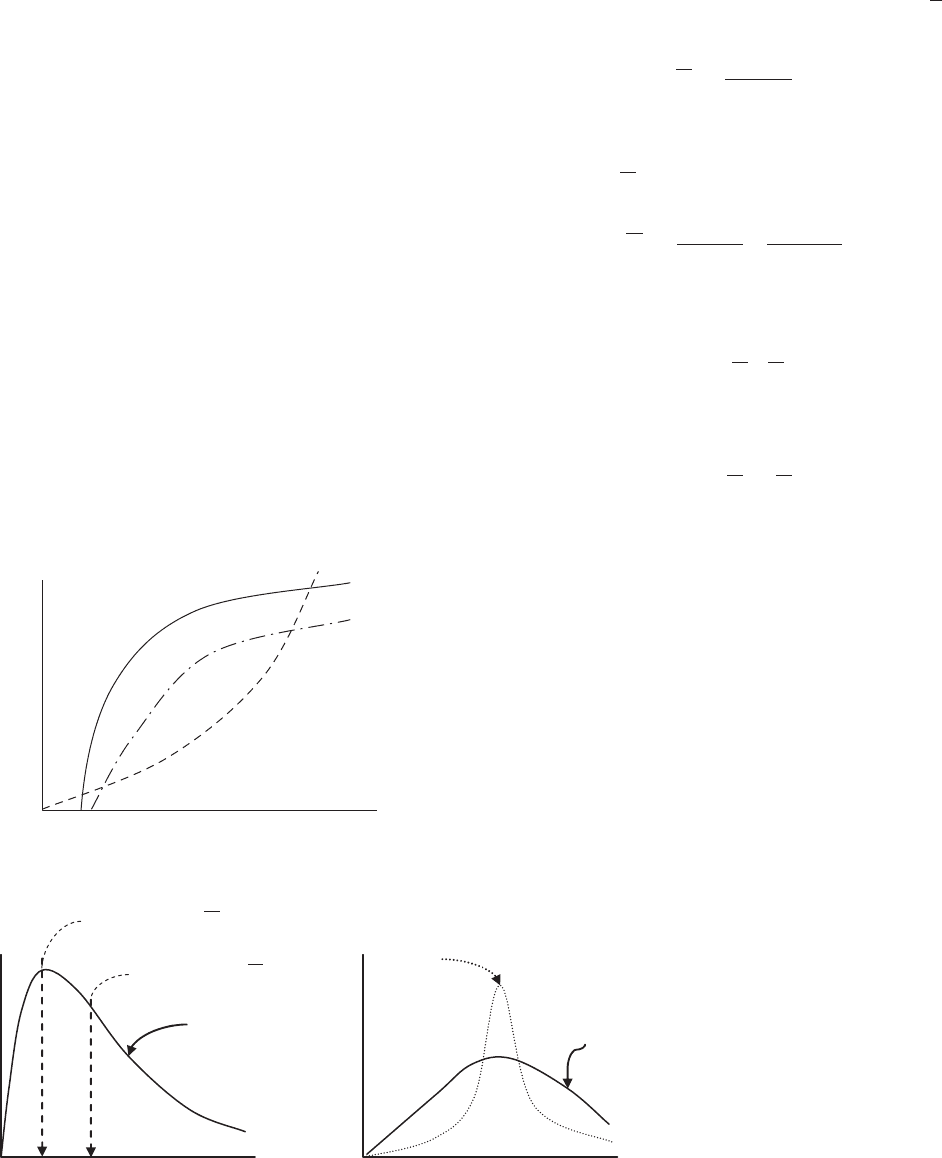
viscosity increases slowly and then sharply (Figure 1).
When selecting molecular weight for a specific applica-
tion, the strength and melt viscosity should be compro-
mised. The molecular weight should be high enough to
acquire adequate strength, but low enough to avoid high
melt viscosity, which makes the polymer difficult to pro-
cess, such as flowing into a mold or through an extruder
die. Typically, the practical molecular weight range for
packaging polymers is between 50,000 and 200,000 as
mentioned above.
Unlike small molecules such as oxygen or water, a
polymer does not have a single molecular weight. This is
because polymer molecules of different sizes are formed
during the polymerization reaction. The relative fraction
of different sizes may be characterized using a plot of
frequency versus molecular weight, known as molecular
weight distribution (MWD), as shown in Figure 2.
Two average molecular weights are often obtained from
the MWD. The number-average molecular weight
M
n
is
defined as
M
n
¼
P
i
N
i
M
i
P
i
N
i
ð6:1Þ
where N
i
and M
i
are the number and molecular weight of
polymer molecule i, respectively. The weight-average mo-
lecular weight
Mw is defined as
M
w
¼
P
i
w
i
M
i
P
i
w
i
¼
P
i
N
i
M
2
i
P
i
N
i
M
i
ð6:2Þ
where w
i
is weight of polymer molecule i.
The polydispersity index (PDI) is defined as
PDI ¼
M
w
=M
n
ð6:3Þ
which is a measure of the spread of the molecular weight
distribution. The value of PDI is always Z1. PDI = 1
means that all the polymer molecules have the same
molecular weight and thus
M
n
¼ M
w
However, PDI = 1 is
difficult if not impossible to achieve; most commercial
packaging polymers have PDI greater than 2. A higher
PDI is associated with a broader MWD (Figure 2(b)),
meaning more variation in molecular weights among the
polymer molecules.
A broader MWD tends to decrease the tensile and
impact strengths of a polymer but increase its ease of
processability, due to the smaller molecules in the dis-
tribution acting as a plasticizer or processing aid.
Chain Entanglement
A unique characteristic associated with large molecular
weight of packaging polymers is chain entanglement, the
ability of polymer chains to become entangled with one
another. The degree of chain entanglement increases with
length of the polymer chain or molecular weight of the
Tensile
strengt
h
Molecular wei
g
ht
Impact
strength
Melt
viscosity
Physical properties
Figure 1. Effects of molecular weight on polymer properties.
Weight-average, M
w
Number-average, M
n
Molecular weight
(a) (b)
Number of polymer
Molecular weight
Number of polymer
MWD
Broad
MWD
Narrow
MWD
Figure 2. Molecular weight distribution.
798 MOLECULAR WEIGHT OF PACKAGING POLYMERS
polymer. Polymers consisting of short chains are weak and
brittle but become strong and ductile above some critical
length. A minimum of 1000 to 2000 repeating units, for
example, is necessary for polyethylene to acquire the
strength adequate for packaging foods.
Chain entanglement is important for packaging poly-
mers. For example, during thermoforming or blow mold-
ing of a thermoplastic, the polymer is in molten state with
its molecular chains resembling cooked spaghetti (or, more
vividly, wriggling long worms) tangled up on a plate.
Chain entanglement holds the polymer chains together
but also allows them to slide pass one other, thereby
providing both the necessary strength and the pliability
for the polymer to be molded into a film, bottle, or other
shapes. After cooling, sliding between polymer chains is
more difficult and chain entanglement makes the polymer
strong and resilient.
Summation of Intermolecular Forces
The physical properties of a material are greatly influ-
enced by the forces (such as dipole–dipole forces, hydrogen
bonding, and dispersion forces) between its molecules (see
Structure/Property Relationships of Packaging Materi-
als). Although intermolecular forces exist between all
molecules, their influences are more pronounced for poly-
mers. Summation of intermolecular forces refers to the
total force between neighboring molecules—this total
force is particularly significant for packaging polymer
molecules due to their long molecular chains.
The effects of summation of intermolecular forces may
be observed in the physical states of large and small
molecules: for example, polyethylene of solid versus
ethane of gas. Except for the difference in size, the
chemical structures are the same and weak nonpolar
intermolecular forces operate on both compounds.
Although weak nonpolar forces are operating in both
compounds, the summation of intermolecular forces is
much greater for the long polyethylene chains of solid
than for ethane gas. Yet polyethylene molecules are held
more strongly together due to greater summation of
intermolecular forces.
Summation of intermolecular forces and chain entan-
glement can significantly influence the mechanical, ther-
mal, rheological, and other properties of thermoplastics.
MULTILAYER FLEXIBLE PACKAGING
THOMAS J. DUNN
Printpak Inc., Atlanta,
Georgia
Multilayer flexible packaging offers packaged-goods man-
ufacturers the opportunity to match the functional needs
of their products precisely to the materials used to pack-
age them. The same materials used as complete, sealed
flexible packages are also suitable for use as lidding on
rigid containers, film covers on carded and blister packs,
and wrapping materials. These functional needs, broadly
defined, are (a) package appearance, (b) package barrier,
and (c) product containment.
Multilayer flexible packaging consists of combinations
of metal, plastic, or cellulosic substrates (foils, films, and
paper), individually ranging in thickness from 0.0001 in.
(0.1 mil or 2.5 mm) to about 0.005 in. (5 mils or 125 mm).
The aggregate thickness of the combination is defined
by convention to be less than 0.01 in. (10 mils 250 mm).
(Thicker composites are typically considered ‘‘sheet’’ ma-
terials.) This material is fashioned into various container
formats (pouch, bag, wrapper, etc.) that hold a product.
The manufacture of multilayer flexible packaging is
known as converting. In producing material for a particu-
lar application, specific text and related graphic informa-
tion (e.g., pictorials and use suggestions or bar codes)
are typically printed onto one of the substrates. Several
processes—coating, laminating, and coextrusion—then
combine this printed layer with others to provide the
overall material functionality.
Packaged-goods manufacturers usually buy the compo-
site directly in roll form. They use various types of
integrated packaging machinery to form the material
into a pouch or bag-like container, fill it with a premea-
sured product amoount, and finally seal it. Alternately, the
converter will fabricate bags or pouches from the compo-
site material. The packaged-goods manufacturer then fills
and seals these containers using a variety of manual or
automated means.
PACKAGE APPEARANCE
Consumers and industrial users require various visual
cues and information on the packages of products they
use. Multilayer flexible packages must communicate to
these users specific information about the product within:
product identification (including for example, name, in-
gredients and specific type), product quantification (e.g.,
count, volume, or net weight), manufacturer’s identity and
address, and warnings about any hazards presented by
the product. In addition, manufacturers will usually pro-
vide product-use information (with text, icons, and/or
pictorials) on the package. If the product is branded, the
package must effectively communicate trademarks, logos,
and brand colors. The appearance of a multilayer flexible
package may also be used to communicate a variety of
marketing claims for the product/package (e.g., new
formulations, new packaging types/formats nutritional
positioning, and compliance with certain religious require-
ments), promotional efforts of the manufacturer intended
to stimulate sales, or linkages to other products. Multi-
layer flexible packaging provides abundant options to fill
these needs.
Materials Options
Multilayer flexible packaging ranges in opacity from
totally opaque to completely transparent. In the opaque
form, it serves to deliver light-sensitive photographic and
MULTILAYER FLEXIBLE PACKAGING 799

X-ray films to users. When transparent, it can merchan-
dise a variety of consumer products, allowing the would-be
buyer to directly view them before purchase. Aluminum
foil historically served as the most effective material for
blocking light. With mirrorlike spectral reflecting proper-
ties, composite materials with foil have come to connote
product quality and freshness (1). Metallized plastic films
with vacuum-deposited aluminum coatings have been
effective in imitating this shelf appearance, but they
typically do not provide all the light barrier or other
preservative qualities of foil.
A variety of plastic films combine to make transparent
multilayer flexible materials. Cellophane, the earliest
transparent film, is a cellulosic product; however, as a
plain, uncoated material it had severe limitations (2). This
material was first used as an unsupported (single-layer)
packaging material. In fact, much of the product–process
development in multilayer flexible packaging over the
past 50 years derives from the need to overcome various
use limitations of cellophane (e.g., brittleness from cold-
temperature or low-humidity storage). Modern transpar-
ent films include polyethylene, polypropylene, polyesters,
and nylons, among others. These films can also be pig-
mented with white, black, or various hues to complement
colors printed on the package.
Printing Options
Multilayer flexible-packaging materials are printed using
primarily rotogravure and flexographic processes. Unlike
traditional lithographic printing process, both flexible
material processes lend themselves to the effectively limit-
less choice of package size available with flexible packa-
ging. These high-quality, high-speed methods provide a
full range of textural, machine-readable, and pictorial
information. Some materials are printed on their outside
surface (surface printing). In such cases, a protective
coating is often applied over the ink to protect it from
scuffing, chemical destruction, or other abuse. In contrast,
the more common practice for multilayer flexible materi-
als is to print on the inner surface of an outer, transparent
layer of the multilayer flexible material (reverse printing).
The surface is then laminated to the other layers. The
outside layer itself then serves to protect the ink from
abuse. It also usually presents a very glossy appearance to
the package as it is displayed (see also Printing).
PACKAGE BARRIER
Multilayer flexible-packaging materials provide documen-
ted levels of barrier to environmental factors: light, moist-
ure vapor, and oxygen (Table 1). These factors can interact
with and impair packaged products for which multilayer
flexible films provide protection. The materials are gen-
erally considered impervious to microorganisms, although
packaging shelf-stable processed foods in them requires
confirmation of this barrier function down to the level of a
submicrometer void (3).
Oxidation of oils fats and vitamins in foods and other
products can be retarded by barrier multilayer flexible
materials if the oxygen-rich atmosphere within the pack-
age is replaced with an inert gas such as nitrogen (gas
flush) or evacuated and then sealed under vacuum. Inter-
action with water vapor can be more dynamic. Dry food
(moisture content o3%) and hygroscopic granular pro-
ducts need protection from moisture migrating from a
humid exterior into the package. Moist products, includ-
ing aqueous solutions or suspensions, need moisture-
barrier materials that will prevent the loss of product
moisture into a low-humidity exterior. Recent advances in
controlled and modified atmosphere packaging systems
utilize the barrier of flexible multilayer packaging materi-
als to nitrogen, carbon dioxide, and flavors/aromas as well.
These barrier functions and standard methods for quanti-
fying them are not generally established in the industry.
Extended Shelf Life
Flexible multilayer packaging is successfully used for
retort processing of various food formulations. These
‘‘retort pouches’’ are capable of preserving their contents
for 48 months. The primary barrier properties are pro-
vided by a layer of aluminum foil or, in a few cases, by a
transparent layer of saran (polyvinylidene chloride,
‘‘PVDC’’) film or aluminum-oxide/silicon-oxide-coated
plastic films.
Industry-standard practices are established for the safe
and reliable production of these packaged products (4).
Shelf-life extension is also achieved in practice by
aseptic packaging of sterile products. In this process, a
sterilizing technique, such as a steam or hydrogen peroxide
bath, or exposure to an electron beam, is used to clean the
product-contact surfaces of the flexible multilayer material
Table 1. Typical Transmission by Selected Flexible Materials
a
Transmission Rate
Gauge (mil) Material Optics: Haze or Optical Density Moisture vapor Oxygen
1 LDPE 6% (haze) 0.8 W100
1 HDPE 30% (haze) 0.35 W100
0.7 Oriented polypropylene 1.6% (haze) 0.49 90
0.5 Oriented polyester 2.5% (haze) 2.8 6
0.5 Oriented nylon 3.0% (haze) 24 4
0.7 Metallized-oriented polypropylene 2.3 (OD) 0.02 8
0.5 Metallized-oriented polyester 3.0 (OD) 0.05 0.08
a
Values as supplied by various commercial film suppliers. Moisture-vapor values: g/(100 in.
2
24 h) at 1001F and 90% RH. Oxygen values: ml/ (100 in.
2
24 h)
at 1001F and 90% RH.
800 MULTILAYER FLEXIBLE PACKAGING

in a sterile environment. Then, while still in a sterile
environment, a commercially sterile product is packaged
in this material and hermetically sealed.
The barrier properties of flexible multilayer packaging
materials are typically not as dependable as that of rigid
packages (e.g., metal cans and glass bottles) traditionally
used for extended shelf-life packaging. This is the result of
(a) imperfections in the thin layer of materials involved,
(b) measurable transmission of oxygen through fabricated
multilayer polymeric containers, and (c) voids in heat-
sealed (i.e., welded) areas of the fabricated containers.
Ongoing research is directed toward developing reliable,
nondestructive testing of 100% of flexible pouches contain-
ing long-shelf-life processed foods (3) (see also Shelf Life).
Material Barrier Properties
The barrier presented by a plastic film to migrating
gaseous molecules is a complex property of that film (see
also Barrier Polymers). It is considered to be a mass-
transport phenomenon in which the gas first dissolves into
the polymer; then, it diffuses through small voids in the
polymer in response to the net gas concentration differ-
ences on either side of the polymer; and finally, desorbs
and leaves the polymer on the side of lower concentration
(5). In practice, the industry uses an equilibrium (iso-
static) technique in which a constant concentration gra-
dient for the permeating gas is maintained across the film.
In this steady-state condition, transmission of the per-
meant is expressed as a mass (or standard volume) of the
permeant per unit area in a 24-h period. Ambient tem-
perature and film thickness are also reported (6). Table 1
provides a summary of barrier performance for commonly
used films.
The barrier to migrating gaseous molecules presented
by aluminum foil is not characterized by this plastic film
model. Foil, free from small voids as in polymers, is a
perfect barrier to migrating molecules. With the inevitable
pinholes in foils (representing o0.001% of the surface
area), however, the transport mechanism is one of flow
through orifices (7). At the point of flow, the polymeric
model applies, if the foil is laminated to a plastic film.
Barriers to Organic Volatiles
Food and nonfood products often contain volatile compo-
nents critical to the utility and purpose of that product.
Inside a sealed flexible multilayer package, these compo-
nents can volatize into the headspace of the container. In
this mobile form, they can dissolve and diffuse through
a polymer film, much like environmental gases. If the
solubility and transmission rates are of sufficient magni-
tude, product shelf life can be significantly decreased.
Similarly, volatiles from the enviroment external to the
package or from packaging materials themselves can
desorb into the package headspace and contaminate pro-
ducts inside. While a variety of proprietary studies have
been reported, attempts to develop standardized methods
and measures for typical volatiles have gained the support
of industry participants only very recently.
PRODUCT CONTAINMENT
This function of multilayer flexible packaging is the most
complex, and perhaps the most critical. If the material
fails to contain its product properly, its intended appear-
ance and barrier performance are quickly compromised.
Containment relies on the physical strength of the com-
posite material to deliver a product securely to its in-
tended market. It also depends on the ability to ‘‘seal’’
packages by using heat and/or pressure to weld opposing
surfaces of a two-dimensional leaf of material into the
three-dimensional container (e.g., pouch, bag).
Physical Strength
Standard physical measures of material strength are used
to characterize films, foils, and papers. Table 2 summarizes
typical properties of interest. The specific product to be
packaged dictates the level of strength (as measured by
any particular physical property) that a composite flexible
material must have. For example, dried soup mixes and
ground coffee contain small, sharp, granular particles that
can readily puncture or rub through a material unless
‘‘puncture resistance’’ is adequate. The actual environmen-
tal contexts within which punctures take place are com-
plex and dynamic—so much so that traditional strength of
materials measurements taken alone are not sufficient
predictors of success in a given application. The pouch of
dried soup mix, for example, is typically sold as a multi-
pack inside a paperboard carton. Through distribution and
storage, any pouch face in direct contact with the paper-
board will experience abrasive forces greater than ones
rubbing against other pouches. To satisfy the need to
specify materials without the time and expense of dynamic
simulation or actual field testing, a variety of specialized
tests with associated testing apparatus have been devel-
oped to discriminate among the relevant performance
levels of various materials (Table 3). Many of these have
been adapted from the paper industry where analogous
Table 2. Materials Properties of Interest
Property Reference
Ultimate tensile ASTM D882
Tensile at elongation ASTM D882
Elongation at break ASTM D882
Secant modulus ASTM D882
Density ASTM D1505
Table 3. Specialized Materials Properties
Property Reference
Tear strength TAPPI T414
Dart drop impact ASTM D4272
Puncture ASTM F1306
Burst TAPPI T403
Flex durability ASTM F392
Abrasion resistance ASTM F735
Bond strength ASTM F904
MULTILAYER FLEXIBLE PACKAGING 801
needs for distinguishing among materials in nonpackaging
uses have long been recognized.
The growing interest in packaging relatively large
volumes of liquids (i.e., W200 mL) demands a new level
of strength in multilayer flexible-packaging materials.
Linear low-density polyethylene (a copolymer of ethylene
and longer-chain a olefins, typically octene) is the material
of choice for such applications. Its tensile strength and
elasticity can withstand the surges of hydraulic pressure
as liquids in pouches are compressed during shipping and
handling. Laminating this film to oriented-polyester film
with its high tensile strength provides a reinforced com-
posite material with the ability to contain several liters of
liquid. This film laminated to oriented-nylon film for its
high puncture strength might be the choice if the package
must withstand small diameter puncture abuse.
Heat-Seal Strength
Obviously, the container made of a multilayer flexible
material can be no stronger than the seals that weld it
together. Seals are typically made by applying pressure
with heated surfaces to opposing faces of the composite
materials, melting the thermoplastic material of the con-
tacting surfaces. The two surfaces then fuse together as
the thermoplastics cool.
Cohesive coatings are the major exception to heat
sealing. Such coatings are similar to pressure-sensitive
ones in that they will adhere when they are applied with
pressure to another surface. Unlike pressure sensitives,
cohesives adhere only to surfaces coated with similar
coatings. In practice, cohesive coatings are applied in a
perimeter pattern on the inside surface of a packaging
film. The cohesive property allows this pattern-coated film
to be unwound from roll form on a packaging machine.
The package is formed around a product using only
pressure to adhere the opposing cohesive surfaces. Heat-
sensitive products, such as chocolate bars, can be wrapped
in this manner without melting. Packaging line speeds
can also be increased as the sealing pressure can be
transmitted to the interface essentially instantly (8).
Heat sealing, in contrast, requires time to raise the inter-
face temperature to the melting point because the heated
surfaces can contact only the opposite side of the surface to
be sealed.
The process of making heat seals relies on the basic
thermoplastic properties of the polymers on the inside of a
multilayer flexible package (the ‘‘seal’’ layer) (9). In theory,
this welding process involves a dynamic fluid material
moving under pressure. However, heat-sealing practice
for the most part ignores the rheological properties of the
molten polymer and uses a static set of temperature,
pressure, and time variables to control the heat-sealing
process on packaging machinery. A matched pair of seal-
ing ‘‘jaws’’ is maintained at constant temperature and
brought together with the packaging material between
them. Assuming that the packaging machine’s pressure
settings are correct, the thickness of the material and the
minimum distance between the jaws dictate the pressure
at the sealing interface. The ‘‘dwell’’ time during which
maximum pressure is maintained is dictated by the line
speed of the machinery. The process assumes that the
outer layers of the multilayer flexible-packaging material
are themselves sufficiently heat-resistant to avoid melt-
ing. Paper and cellophane can easily withstand sealing
temperatures, typically 250–3501F. Heat-set oriented-
plastic films of nylon, polyester, or polypropylene are the
usual thermoplastic options. Pressure effects at the inter-
face of seal layers can be enhanced by using serrated or
ridge surfaces on the seal jaws that mate with comple-
mentary patterns in the closed position. (In theory, such
shapes can be used to impart shear forces to the molten
polymers. This would cause stronger welds more quickly.)
Various preheating techniques (e.g., infrared lamps or
heated guide surfaces) have been developed to speed up
the process of melting the interface layers. New grades of
‘‘metallocene polyethylene’’’ (linear low-density polyethy-
lene, polymerized using catalyst systems made of metal-
locene materials) have densities lower than traditional
grades. As a result of this combination of density and
chemical composition, such products have strength and
the ability to seal faster and/or at lower temperatures.
(See Sealing, Heat)
While the integrity of the package itself depends on
reliable seals, consumer access to the packaged products
can require that the seals be broached with relatively little
effort. Such ‘‘easy-open’’ seals have been accomplished by a
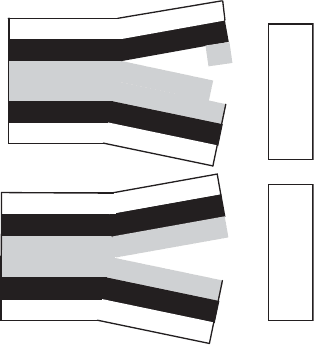
variety of means (Figure 1). One major technique (‘‘seals’’)
involves using a thin layer of low-melt-point polymer as
the seal layer. This is welded to itself in the sealing process.
As the consumer pulls on the seal to open the pouch, the
thin layer breaks away from the other layer(s) of the
multilayer material. This allows access to the interior of
the package past a layer that was previously buried within
the composite material. Alternatively, the seal layer can be
contaminated with an immiscible material that is blended
into the polymer that will actually melt to form the weld.
This can be either an inorganic material or an immiscible
polymer with a higher melt point. When the seal is made,
the welded area is decreased by the amount of interface
area comprised of the ‘‘contaminate.’’ This is designed to be
large enough to allow access to the package interior by
Clean-peel
Outer Layer
Barrier layer
Sealant Layer
Sealant Layer
Barrier layer
Outer layer
Delamination
Outer Layer
Barrier layer
Sealant Layer
Sealant Layer
Barrier layer
Outer layer
Figure 1. Easy-open seal types.
802 MULTILAYER FLEXIBLE PACKAGING
using a specified force to separate the original seal inter-
face (‘‘clean-peel seals’’).
Reclosing flexible packages remains an industry chal-
lenge. Dry products (e.g., cereals, snacks, cookies, crack-
ers, and pharmaceutical products) can quickly lose their
crispness in an opened package. And moist products, such
as shredded cheese, can dry out, particularly in refriger-
ated air. Pressure-sensitive tapes and interlocking plastic
ridges (plastic ‘‘zippers’’) are used in several applications
at present. Widespread adoption of recloseable features
for flexible packages awaits a reliable, low-cost technique.
Alternatives to separate pieces of pressure-sensitive tapes
have been developed that actually incorporate pressure
sensitive layers into the multilayer structure (10). Re-
closeable zippers for packages have been enhanced with
rigid ‘‘sliders’’ that are easily gripped and reliably press
the zipper ‘‘ridges’’ together into the closed position (11).
MANUFACTURING MULTILAYER FLEXIBLE PACKAGING
The converting operations for manufacturing multilayer
flexible packaging are printing, laminating, and finishing
processes. Such operations are designed and equipped to
convert a variety of raw materials into many kinds of
customized products. Even within a specific category of
packaged product, the actual multilayer flexible packa-
ging specified by one customer may differ dramatically
from that purchased by another. Differences in product
formulations, packaging machinery, distribution systems,
and marketing approaches combine to require different
levels of appearance, barrier, and containment. These
functional differences, in turn, dictate differences in spe-
cified raw materials.
Printing
Flexible packaging printing involves both flexographic
(images on rubber plates that stamp ink onto a substrate)
and rotogravure (images etched into metal cylinders that
release ink to a substrate from small engraved cells)
printing processes. The choice between processes is now
primarily one of customer preference. Historically, con-
verters specializing in foil and opaque packaging were
rotogravure printers. Until the 1980s, this process was the
only one capable of reproducing quality continuous tone
(pictorial) graphics. Flexographic printers were more
common among cellophane and plastic-film converters,
where transparent packaging required only basic text
printing. Flexographic continuous-tone printing has be-
come much more acceptable for high-quality graphics over
the past 10 years. With consolidation of converters within
the industry and internal diversification by the remaining
suppliers, this distinction of capabilities along opaque and
transparent substrate lines has virtually disappeared.
Both printing processes use liquid inks comprised of
colored pigments, a polymeric ‘‘vehicle’’ (binder), and a
volatile solvent. The solvent (an organic liquid or water) is
evaporated from the printed substrates as the vehicle
solidifies and adheres to the printed substrate. Each of
these three ink components must be selected to meet
various functional and environmental requirements (12).
When the printed surface is to be the outside of the
outer layer of the multilayer flexible package, a protective
layer, or overprint varnish, is often applied over the ink to
prevent scuffing and to provide a high-gloss effect. This
coating must also be resistant to hot sealing jaws that will
contact it as heat seals are made. In contrast, when the
printed surface is on the inside of the outer layer, the ink
must be formulated to adhere to the material that will be
used to bond it to the next layer. It must also have an
internal strength sufficient to support the overall strength
requirements of the entire multilayer material. These
properties must be maintained at the temperatures that
the ink will experience during heat sealing and any
thermal process of the product in the package.
Adhesive Laminating
The majority of adhesive laminations in multilayer flex-
ible packaging are manufactured using the dry-bond
process. In this technique, a liquid adhesive is applied to
one substrate. Any one of a number of web-coating meth-
ods (e.g., direct, offset, or reverse gravure; wirewound
rods; air knife) is used to meter and apply the adhesive
onto the substrate. The adhesive coating is then dried
with hot air. This dried surface can be adhered to a second
substrate using heat and pressure at a nip point. The
newest generation of flexible packaging adhesives involve
2 or more liquids comprised of reactive prepolymeric
chemicals. When mixed, these so-called 100% solids ad-
hesives undergo chemical reactions that essentially bind
up all of the applied coating materials into a solid layer of
cross-linked adhesive. No volatile diluents need be evapo-
rated from the coatings to achieve the solid layer.
The adhesive formulations themselves represent a
reactive chemistry (typically urethanes or acrylics) that
is chosen to withstand the processing and distribution
environment of the filled product. This can be high
temperatures of retort processing (2801F), migrating vo-
latile organics that can redissolve adhesive solids, or other
packaging components that can interact to discolor com-
ponents of the lamination. Because the adhesives are
reactive chemicals that are expected to polymerize and/
or crosslink when coated, government food-additive reg-
ulations control the presence of any unreacted residuals in
the composite materials (13). (See also Adhesives.)
Extrusion Lamination
Extrusion lamination involves using a thin (as low as 0.3
mil or 9 mm) layer of plastic (typically low-density poly-
ethylene (LDPE) or a copolymer of LDPE) to bond together
two layers of film, paper, and/or foil. The method has the
advantage
over adhesive laminations
of adding substan-
tial thickness to a multilayer lamination as well as con-
tributing to the overall strength of the material. It grew
out of the process of coating paperboard with low-density
polyethylene (an alternative to wax coatings for such
packages as milk cartons) (14). At present, the technique
accounts for the majority of printed multilayer flexible
packaging.
MULTILAYER FLEXIBLE PACKAGING 803
The process enjoys significant cost advantages over the
alternative of producing separate thin layers of polyethy-
lene and using dry bond adhesives to adhere the separate
layers together. It has no environmental emissions and
permits the processing of thinner layers of plastic than
can be handled otherwise. The intrinsic adhesive affinity
of low-density polyethylene (LDPE) toward other sub-
strates is limited. However, a variety of LDPE copolymers,
adhesion primers, and processing aids have been devel-
oped to broaden the applicability of the method (15).
Coextrusion
The cost advantages of extrusion laminations are exploited
in the extreme in the coextrusion process. This method
entirely eliminates the use of any separately manufac-
tured substrates. It simultaneously extrudes several layers
of molten plastic into a single multilayer material. Each
plastic maintains its identity as a separate layer in the
film and can contribute various functions accordingly. For
example, a coextruded film of nylon, ethylene vinyl alcohol,
and ionomer provides, respectively, heat resistance, oxygen
barrier, and low-temperature sealing for the material used
to vacuum-package processed meats. Of course, a pure
coextruded film precludes the use of (a) reverse-printed
substrates and (b) paper and foil entirely. However, hybrid
processes in which a multilayer extruded curtain is used to
‘‘coextrusion-laminate’’ or ‘‘coextrusion-coat’’ traditional
substrates have been developed.
Coextrusion has proven to be a powerful option for
achieving a mix of functional features in ultra-thin-base
films. In effect, base-film suppliers can mix and match
materials in a manner analogous to a converter’s lamina-
tion processes. For example, a current standard seal layer
for snack food packaging is a coextruded oriented-polypro-
pylene film comprised of a B0.05 mil (1-mm) bonding layer
for metal adhesion, a core layer of B0.6 mil (15-mm) of
homopolymer polypropylene, and a seal layer of B.01 mil
(2 mm) of propylene–ethylene copolymer. This film is va-
cuum-metallized and extrusion-laminated to a reverse-
printed 0.7 mil (18 mm) oriented-polypropylene film to pro-
vide a strong, easy-open package with excellent light and
moisture barrier and sufficient oxygen barrier to maintain
an internal nitrogen-flush headspace for about 3 months.
Finishing
The converter will print and laminate multilayer flexible-
packaging materials in typical widths of 40–60 in. (1–
1.7 m). These are usually wider than the rolls that a
packaging machine can form, fill, and seal. The converter
then slits the wide rolls into several narrower lanes
suitable for the customers’ machines. This product is
then sold in roll form to the customer in very compact
form. A typical 0.003-in. (75-mm)-thick multilayer mate-
rial wound on a core 3 in. (75 mm) in diameter can be
delivered in 18-in. (450-mm)-diameter rolls containing
about 7000 packages 12 in. (300 mm) long.
An alternative to multilayer flexible packaging in rolls
is the premade bag or pouch form. For this product, the
front and back of the pouch are printed side-by-side. This
single package is folded longitudinally and heat-sealed
inside-to-inside along the fold and two of the other three
sides. These flat pouches are sent to the customer, who fills
them with product and seals shut or otherwise closes the
fourth side.
CURRENT TRENDS IN MULTILAYER FLEXIBLE
PACKAGING
Innovation has been a reliable characteristic of flexible
packaging over past decades (16), and significant devel-
opment efforts continue to introduce new flexible films
and composites that improve package functionality in
essentially all of the areas discussed here. Recently, two
emergiing issues, packaging sustainability and active/
smart packaging, have emerged to further drive industry
inovation.
Appearance
New technical processes for achieving appropriate quality
for the graphical images reproduced on flexible packaging
materials are being actively developed in the first decade
of the 21st century. Increasingly, graphics origination,
review, and appproval efforts are accomplished using
Internet-based exchange of digital files. Such files are in
turn used to generate digital printing media (flexo plates
or cylinders). Techniques exist to actually drive digital
print engines to print flexible packaging materials, but are
not widely used at this writing because of ink costs and
limited throughput.
Advanced digital controls on printing presses permit
the adoption of ‘‘expanded color gamut’’ printing. This
technology tracks the color value and printed density of
six or seven standard colors (compared to the four tradi-
tional ‘‘process colors’’: cyan, magenta, yellow, and black)
in order to provide specific colors and color effects with
regularity and consistency between production lots.
Criminal efforts to market counterfeit branded goods
have
stimulated the development
of various appearance
techniques to authenticate the source of packaged goods
in the market place. These include overt (visible to the
consumer) methods as holographic reproductions. Covert
means (such as fluorescent inks) support scrutiny of
wholesale or retail stocks by trained agents of producers
or buyers of the packaged goods.
Barrier
Transparent alternatives to opaque foil and metallized
multilayer barrier materials increasingly find their way
into commercial packages. The most common of these are
ceramic or metallic oxides (for example, silicon and alumi-
num oxides) that are deposited on plastic films in vacuum
coating operations comparable to those used to produce
widely used metallized barrier materials. The oxide vapors
are produced with evaporative methods from solid forms of
the compounds or with reactive methods in which precur-
sors of the oxides are introduced into a chamber and
plasma or chemical reaction energy used to form the
oxides. Other transparent coating techniques have been
developed to combine the oxygen barrier properties of
804 MULTILAYER FLEXIBLE PACKAGING

polyvinyl alcohol with the moisture barrier properties of a
metallic-compound-containing material (17).
Nanotechnology in flexible barrier materials is most
evident in attempts to disperse nanometer-thick platelets
of naturally occurring clay minerals in polymers. The
objective is to arrange the platelets so as to form a
‘‘tortuous path’’ for gaseous molecules that would perme-
ate through a polymer layer. The technology is now best
practiced with polymers, such as nylon and ethylene vinyl
alcohol, that have regions of relativlely strong electro-
static polarity distributed throughout them. Nonpolar
molecules, especially polyolefins, are unable to break
apart the natural clay particles to achieve the needed
distribution of platelets in the polymer. Research into the
use of surfactants (with their distinct polar and nonpolar
ends) has shown promise in effectively dispersing plate-
lets into polyolefins.
Containment
Ironically, flexible packages seem to be trying to become
more rigid, at least stiff enough to stand up. The Doyen
standup pouch concept has been used for hot-fill juice
containers for over three decades (18). European and
Japanese consumers are exposed to many other commer-
cial examples at present. In the United States, many
domestic market introductions have succeeded. The for-
mat is now a mainstay for consumer products in the
States. In the 2007 Flexible Packaging Association (FPA)
Achievement awards and Innovation showcase, 13 Doyen-
style pouches were recognized (19). Further evolution
includes pouches shaped to suggest their prior rigid
package formats, such as (a) bottles or jars (three such
examples were included in the 2007 FPA awards) and (b)
pouches fabricated with flat bottoms perpendicular to
distinct side panels (six such examples included in the
2007 FPA awards).
Ease of opening for flexible packaging has emerged as a
significant challenge to growth for the industry (20). An
aging population with decreasing manual dexterity has
come to demand easy-opening flexible packaging and can
recognize the differences, as ‘‘Consumer Reports’’ found
with three different brands of ready-to-eat cereal with
flexible coextruded film liners in folding cartons (21).
Packaging Sustainability
By nature, multilayer flexible packaging contains many
materials intrinsically bonded together. This fact miti-
gates against recycling the component materials, as has
been possible for many monomaterial packaging systems
(e.g., HDPE merchandise bags and milk bottles, PET
beverage containers, aluminum cans, and glass bottles;
note that some progress has been made in separating at
least some components of multilayer materials for eco-
nomic recovery) (22). Rather than minimizing packaging
residuals after use by recycling, the flexible-packaging
industry has been urging consumer and regulatory con-
sideration of the advantages of using less packaging
material for a product as it is put into commerce (23).
Flexible-material packaging systems offer significant re-
duction of both waste volumes and weights when
compared to traditional systems. A few of these are
summarized in Table 4.
Other strengths regarding sustainable industrial de-
velopment practices exhibited by flexible packaging come
from the ability to use ‘‘biopolymers,’’ polymers from
carbon sources grown in contemporary farming, forestry,
or aquaculture systems, rather than from fossil fuels.
Modified starch has been extruded into film and fabricated
into bags. Lactic acid has been extracted from corn and
then polymerized into polylactic acid. Numerous flexible
barrier packages have incorporated this material into
commercial packages at this writing.
Active/Smart Flexible Packages
‘‘Active packaging’’ (packaging that changes conditions
and/or environment in the package to extend shelf life,
Table 4. Flexible-Packaging Source Reduction
Packaging System Reduction (%)
Baseline Reduced Weight Volume
Coffee can Brick pack 70 55
Detergent bottle Concentrate pouch 85 84
Diaper carton Film bag 85 86
Soup can Soup pouch 93 97
Glass bottle Flexible pouch 96 82
Glass bottle Drink box 90 70
Source: Flexible Packaging Association.
Table 5. Active and Smart Packaging Types
Package Type Example Source Integral/Separate
Active
Microwave susceptors Graphic
Packaging
Integral
Purge absorbers Maxwell Chase Separate
Oxygen absorbers Mitsubishi
Ageless
s
Separate
Oxygen indicators Toppan Separate
Oxygen scavenging film Cryovac Integral
Carbon dioxide
controller
Guinness Widget Separate
Antibody immobilizer Toxin Alert, Inc. Separate
Temperature reliant
permeation
Landec
Intelimer
s
Separate
Volatiles: absorption/
release/transmission
CSP Technologies Integral
Odor controllers Cell Resin
Technologies,
Integral
Antimicrobials Englehard Integral
Smart
Antitheft devices/tags Sensormatic Separate
Temperature indicators Tempilabel Separate
Time-temperature
integrators
3M Separate
Quality/spoilage
indicators
Cox Technologies,
Inc.
Separate
Ripeness indicators Ripesense
Limited
Separate
RFID Alien Technology Separate
MULTILAYER FLEXIBLE PACKAGING 805

enhance sensory properties, and/or improve food safety)
and ‘‘smart packaging’’ (packaging that senses change
and/or changes package properties) technologies have
long been recognized in the packaging industry as possi-
ble, but for a variety of commercial and legal issues have
not been widely adopted in the U.S. consumer market. The
European Union, in contrast, has actively encouraged
commercialization of the technologies. The European
‘‘FAIR’’ Project CT98-4170 sought ‘‘[t]o enable the applica-
tion of active and smart concepts throughout Europe and
to establish and implement these concepts in the current
relevant regulations for food packaging in Europe.’’ In
their view, ‘‘Active packaging y will likely emerge as the
preservation technology of the twenty-first century’’ (24).
Cooksey reported on commercial applications of active
and smart packaging technologies in 2006 (25) A summary
of these examples is given in Table 5. The table also
indicates whether the technology is ‘‘integral’’ to the
packaging material or a ‘‘separate’’ label, sachet, or other
device incorporated into the package.
As is apparent here, much of the commercial and
proposed application of active/smart packaging technology
intends the use of separate and additional components in
or on the package (along with the product itself) rather
than a packaging material that inherently provided the
functionality itself. Such merged material performance is
the subject of much current research (26).
BIBLIOGRAPHY
1. Aluminum Association, Aluminum Foil, 2nd edition, Wa-
shington, DC, 1981.
2. W. A. Jenkins, and J. P. Harrington, Packaging Foods with
Plastics, Technomic Publishing, Lancaster, PA, 1991, p. 34.
3. B. Blakistone, ‘‘New Developments in Plastic Packaging Seal
Integrity Testing: One Key to the Future of High Speed
Plastic Packaging’’ in Proceedings of the 1994 IOPP Packa-
ging Technology Conference, Institute of Packaging Profes-
sionals, Herndon, VA, 1994.
4. ASTM, F1168, Standard Guide for Use in the Establishment
of Thermal Processes for Foods Packaged in Flexible Contain-
ers, American Society for Testing and Materials, Philadel-
phia, 2000.
5. Michigan State University, School of Packaging, ‘‘Product
Storage Stability Based on the Permeability of the Package
Storage System,’’ Course Notes, July 10–13, 1984, East Lan-
sing, MI, 1984.
6. ASTM,
D3985, Standard Test Method for Oxygen Gas Trans-
mission Rate through Plastic Film and Sheeting Using a
Coulometric Senso and
F1249, Standard Test Method for
Water Vapor Transmission Rate through Plastic Film and
Using a Modulated Infrared Sensor, American Society for
Testing and Materials, Philadelphia, 2005.
7. British Aluminium Foil Rollers Association, Barrier Proper-
ties of Aluminum Foil: A Handbook, London, 1973.
8. R. J. Ginsberg, ‘‘Cohesive Coatings Offer Food Field Cost
Advantages, Higher Speeds,’’ Packag. Devel. Syst. July/Au-
gust, 23–35 (1979).
9. T. Dunn, ‘‘Use of Differential Scanning Calorimetry in Devel-
oping and Apply Films for Flexible Packaging’’ in M. L.
Troedel, ed., Current Technologies in Flexible Packaging,
ASTM STP912, American Society for Testing and Materials,
Philadelphia, 1984.
10. L. S. Timm and T. E. Bublitz, U.S. Patent 5,993,962, ‘‘Reseal-
able packaging system,’’ November 30, 1999; and S. J. Strauss
et al., U.S. Patent 5,089,320; ‘‘Resealable packaging mate-
rial,’’ February 18, 1992.
11. D. Van Erden, U.S, Patent 6,112,374; ‘‘Zipper for slider
package,’’ September 5, 2000; and T. J. May, U.S. Patent
6,491,432, ‘‘Resealable closure mechanism having a slider
device and methods,’’ December 10, 2002.
12. T. Dunn, ‘‘Flexible Packaging and Environmental Control in
the 80’s and 90’s,’’ in Proceedings of Envirocon ‘89, The
Packaging Group Inc., Princeton, NJ, 1989.
13. U.S. Food and Drug Administration, ‘‘Indirect Food Additives:
Adhesive Coatings and Components,’’ Code of Federal Reg-
ulations, Title 21, Part 175.
14. T. Bezigian, ‘‘Extrusion Coating and Laminating—The
Growth of an Industry,’’ Converting Mag. (Part I, p. 48ff.,
January 1992; Part II, p. 30ff., February 1992).
15. R. Isbister, ‘‘Chemical Priming for Extrusion Coating,’’ J.
TAPPI 71(5), 101–104 (1988).
16. T. Dunn, ‘‘Flexible Packaging 1994: Issues, Trends, and Life
Cycle Analysis,’’ in Proceedings of the TAPPI International
Packaging Symposium, Chicago, July 1994.
17. H. Ohba, et al., U.S. Patent # 6,605,344;‘‘Gas-barrier films’’;
August 12, 2003; 16 pp.
18. A. Brody, ‘‘The Source Reduction Pros and Cons of Liquid
Stand-up Pouches’’ in Proceedings Green Packaging ‘94 Con-
ference,’’ Packaging Strategies, Washington, DC, June, 1994.
19. Anonymous, ‘‘Honoring Innovation: 2007 Flexible Packaging
Achievement Awards and Innovation Showcase’’; Flexible
Packaging Association, Linthicum, MD, March 2007, 36pp.
20. Anonymous, ‘‘The Oyster Awards: Consumer Reports’s Hard-
to-Open-Packaging Hall of Shame Welcomes New Inductees,’’
Consumer Reports, March 2007.
21. Anonymous, ‘‘The Oyster Awards: Consumer Reports’s picks
for America’s hardest-to-open packages,’’ Consumer Reports,
March 2006.
22. E. Klein, ‘‘The Greening of Coated Paperboard’’ in Proceed-
ings of the TAPPI Polymers, Laminations, & Coatings Con-
ference, Nashville, TN, August 1994.
23. T. Dunn, ‘‘Source Reduction Needs Defining to Have Max-
imum Impact,’’ Packag. Technol. Eng. 3(4), 44–47 (1994).
24. L. Vermeiren, et al., 1999; ‘‘Developments in the Active
Packaging of Foods’’ in Trends in Food Science & Technology,
Vol. 10, Elsevier Science Ltd., Amsterdam, pp. 77–86.
25. K. Cooksey, ‘‘General Overview of Active and Intelligent
Packaging,’’ in National Plastics Exposition-Educational
Conference, Chicago, IL, June 21, 2006.
26. A. L. Brody, et al., Active Packaging for Food Applications,
CRC Press, Boca Raton, FL, 2001, 236 pp.
806 MULTILAYER FLEXIBLE PACKAGING

N
NANOCOMPOSITE PACKAGING MATERIALS
M. D. SANCHEZ-GARCIA
J. M. LAGARON
Novel Materials and
Nanotechnology Lab., IATA,
Valencia, Spain
NANOCOMPOSITES CURRENT INTEREST AND
APPLICATIONS IN FOOD PACKAGING
Nanotechnology is by definition the creation and use of
structures with at least one dimension in the nanometer-
length scale that creates novel properties and phenomena
otherwise not displayed by either isolated molecules or
bulk materials. Since Toyota researchers in the late 1980s
found that mechanical, thermal, and barrier properties of
nylon-clay composite materials improved to a significant
extent by reinforcement with less than 5% of clay (1),
extensive research work has been performed in the study
of nanocomposites for packaging application. The term
‘‘nanocomposite’’ refers to composite materials that con-
tain typically low additions of some kind of nanostruc-
tured materials. Most nanocomposites being considered in
the packaging sector are based in low additions, typically 1
to 7 wt.-%, of modified nanoclays.
Nanoscale structures display a high surface-to-volume
ratio, which becomes ideal for applications that involve
composite materials, chemical reactions, drug delivery,
controlled and immediate release of substances in active
an functional packaging technologies, and energy storage,
for instance, in intelligent packaging (2, 3).
Until recently, the most interesting packaging technol-
ogy based on blending to generate barrier properties was
the so-called oxygen scavengers. This technology is known
to lead to relatively low levels of oxygen in contact with
the food because it traps permeated oxygen from both the
headspace and the outside. However, in carbonated bev-
erages for instance, a barrier to carbon dioxide is also a
requirement. As most commodity plastic packaging mate-
rials, e.g., polyethylene terephthalate (PET) and its main
sustainable counterpart the PLA, are not sufficient bar-
rier to these gases, multilayer structures had to be devised
in which one layer (made of Ethylene vinyl alcohol copo-
lymer (EVOH), MXD6, polyethylene naphthalene (PEN),
and nanocomposites of PA6) needs be high barrier to
carbon dioxide and to oxygen. An alternative, technology
is the use of oxygen scavenger but these only reduce O
2
,
and not CO
2
, at the packaging headspace. The nanobio-
composites technology can overcome this in monolayer
solutions because barrier properties are usually not only
to oxygen but also to other gases and low-molecular-
weight components such as water vapor and food aroma
components (4).
In general, the rationale behind the interest of the
nanocomposites is that with low additions of the
nanofiller, many relevant properties can be enhanced
without a significant drop in interesting properties of
the matrix such as transparency or toughness. As stated
above, one property that has attracted more interest in the
food-packaging area, because of its direct implication in
food quality and safety issues, is the possibility of increas-
ing the barrier properties to gases and vapors of plastics
and bioplastics. Thus, by simple application of models
such as the one of Nielsen, and for the case of laminar
structures with high aspect ratios (L/2W of 180), the model
predicts permeability reductions of the matrix of up to
about one order of magnitude for fractional volume (j)
layered clay additions of ca. 0.05 (see Figure 1).
In this technology, it is reckoned that the presence of
exfoliated layers of clay in the polymer results in enhance-
ment of the so-called tortuosity (or detour) factor. The
equation in Figure 1 shows a simple formalism to model
permeability of systems comprising impermeable plates of
a layered filler oriented perpendicular to the permeant
transport direction and evenly dispersed across the poly-
mer matrix. The use of other models such as the one of
Cussler predicts even higher permeability reductions but
most experimental data with barrier improvements below
10-fold fit better the above Nielsen model (5).
Numerous studies in the literature report that experi-
mental improvements in barrier properties to water vapor,
i.e., about 60% permeability reduction in polyvinyl alcohol
(PVOH) (6) and even larger in gluten at 11% relative
humidity (RH) (7), and to oxygen [above 75% in EVOH (8–
10) and up to 64% in polylactic acid (PLA) (11, 12)], can be
achieved via polymer nanocomposites. It is therefore a
proven fact that the integration of ceramic nanoparticles
with tailor made modifications in plastics matrices does
help increase the barrier to oxygen and vapors and reduce
the water sensitivity of biopolymer matrices.
There are several technologies to achieve nanodisper-
sion, namely, in situ polymerization, dispersion in solu-
tion, and dispersion by melt blending. The latter route is
perhaps the most interesting methodology from an applied
view point because it can be used more widely to convert
most plastics into final articles (13–15).
Nanoclays are currently being considered as barrier
layers in multi-layer packaging to improve barrier
L
P
matrix
P
nano
φ
clay
+
=
2W
1
1− φ
clay
W
d ′
L
d
Figure 1. Schematics showing the tortuosity effect imposed by
nanolayered clays to the transport of low-molecular-weight com-
ponents through a film and a typical model equation that takes
this effect into account in the permeability coefficient.
807