
Yam, Kit L. (ed.). The Wiley encyclopedia of packaging technology
Подождите немного. Документ загружается.

Borden Global Packaging, UK, has recently announced
the availability of their version of foamed CPET under the
trade name Ovenex Lite. Trays made of Ovenex Lite
contain 25–33% less material than their solid counter-
parts. Commercial availability in stock sizes are available
from Borden in mid-1996. Borden uses their own process
for foaming CPET for which a patent is pending.
Thermoset Polyester. Thermoset polyester plates were
the first commercial application of dual-ovenable materi-
als when used for frozen meals in the mid-1980s. The
compound used is an unsaturated polyester that is highly
filled with minerals such as talc and calcium carbonate,
along with glass fibers and catalyst materials to produce
the chemical reaction to convert the compound into mate-
rial that is irreversibly set. The polyester compound is
mixed and extruded to form logs that are cut to the proper
size and weight for the finished container. The material is
placed into a heated mold in a hydraulic press that closes
the mold. The pressure causes the material to flow into the
shape of the mold, and the heat cures the compound while
under pressure into the finished and irreversible material.
Typically, the container must be sanded to remove any
flashing around the edges and often is run through a
conveyor oven for a postbake cycle to drive off any residual
uncured compound, and washed to remove any dust from
sanding. This process produces containers that are very
strong and stiff, even at high temperatures (4251F), and
are heavy with a china-like feel and appearance. Unlike
thermoforming from a sheet of material with consistent
thickness, thus producing containers having essentially
the same material thickness throughout, compression
molding permits the finished containers to have varying
degrees of thickness throughout the dimension to add
strength or design features where desired. Because of
the amount of material used, the multiple steps in the
manufacturing process, and the relatively low output per
machine cycle for compression molding presses, the price
for a thermoset polyester plate is proportionally higher
than competitive thermoformed plastic materials that can
be produced at much higher rates with less material and
cellulose-based containers that have a lower material cost.
Nylon 6/6. Mineral-filled nylon (or polyamides) is a
dual-ovenable material that today is no longer commer-
cially available. Developed by DuPont Canada during
the mid-1980s, mineral-filled nylon was also converted
by DuPont Canada by injection molding into containers.
Mineral-filled nylon plates have a higher temperature
resistance and stiffness (5001F) than does CPET and were
priced between CPET and thermoset polyester containers.
Although the material was successfully introduced com-
mercially, the use was limited because of the higher cost
than CPET; also, the hydroscopic nature of filled nylon
plates sometimes caused performance problems in the
microwave oven. Nylon has good resistance to oils and
fats; however, within the moist operating environment of
the microwave oven, some of the water present in the food
would be absorbed into the nylon plate, resulting in a loss of
dimensional stability. Nylon plates’ strength was in the
conventional oven, where unlike some competitive thermo-
plastic materials, it retained its rigidity.
Nylon plates were injection-molded, a process that
generally has higher tooling costs and higher operating
costs when compared with thermoforming comparable
unit volumes.
Polyetherimide. Polyetherimide (PEI) is a high-tem-
perature thermoplastic resin available from General Elec-
tric Plastics under the trade name Ultem.
PEI provides a dual-ovenable material for applications
of about 3501F. PEI is available only in injection-molding
grades, and with its high price per pound, it is generally
better suited for multiple-use versus single-use applica-
tions. PEI also has good chemical and stain resistance,
allowing for it to effectively be cycled through commercial
dishwashing systems.
PEI has been used for plates and containers in institu-
tional feeding programs and airline meals.
Polysulfone. Polysulfone (PSO) is an amorphous ther-
moplastic with good rigidity and toughness. PSO is
capable of withstanding oven temperatures below 3251F,
making it well suited to low-temperature and microwave
applications. PSO is available in transparent form, lend-
ing its use in appliances as a replacement for glass and
other multiple-use applications.
Because of its high price, PSO has not been used in
single-use applications.
Liquid-Crystal Polymer. Liquid-crystal polymers (LCPs)
offer very good high-temperature resistance up to about
5001F in some grades. LCP can be injection-molded and is
generally pigmented from its natural beige color (see also
Liquid crystalline polymers).
LCP is transparent to microwave energy; however,
the high price of this resin limits its use to specialized
applications. At one time, LCP was in commercial use as
dual-ovenable cookware marketed by Tupperware.
Aluminum. Prior
to the explosion
of microwavable foods
during the mid-1980s, aluminum trays dominated the
prepared- and frozen-meals market as well as food-service
applications such as school-lunch programs. As a package
material for use only in conventional ovens, aluminum
was ideal. It was capable of withstanding very high
temperatures for long times—certainly exceeding the
temperature limitations of the food, was usually available
at attractive prices, and could be run at a high speed on
packaging equipment.
During the early stages of the microwave oven, arcing
occurred when metal objects were placed in the oven
cavity during operation, sometimes disabling the unit.
This was largely corrected when the electronics were
improved so that energy could not be reflected back into
the magnetron. Even though it was safe for metal objects
to be used in the microwave oven, consumers did not want
to take the risk.
In the mid-1980s, Alcoa developed a plastic-coated
aluminum tray that was formed without the typical
wrinkled corners. The vinyl/epoxy coating was often
758 MICROWAVABLE PACKAGING AND DUAL-OVENABLE MATERIALS
pigmented to appear more like plastic and allowed the
tray to work in both conventional and microwave ovens.
Performance in the microwave oven is different from that
of plastic- or cellulose-based materials since the aluminum
shields microwave energy, often leading to longer heating
times than for similar trays of competitive materials. This
lends the design of the tray shape to be shallow to lessen
the amount of microwave energy shielded. Coated alumi-
num foil trays were used commercially for pot pies where
they were able to maintain high filling line speeds.
Polycarbonate. Polycarbonate (PC) is an amorphous
thermoplastic resin that is capable of withstanding tem-
peratures above 4001F. PC can be injection-molded, blow-
molded, and thermoformed.
PC has been used in applications for multiple-use
products such as microwavable cookware. PC is virtually
unbreakable, making it a good replacement for glass. PC
was used in a commercial package during the late 1980s
for Stouffer’s dual-ovenable meals. The structure used
was thermoformed from a three-layer coextruded sheet;
however, because of its high price per pound, it was
replaced by competitive materials that offered acceptable
performance for a much lower cost.
MICROWAVE-ONLY MATERIALS
Polypropylene. During the late 1980s, polypropylene
grew as a microwave material because of its flexibility
and relatively low cost. Polypropylene (PP) use in packa-
ging was bolstered by the rapid growth of shelf-stable
meals such as Lunch Buckets (registered trademark) and
the like, in which ethyl vinyl alcohol (EVOH) is used to
improve the oxygen-barrier properties required to safely
preserve the cooked food at ambient temperatures.
Microwavable containers of PP can be thermoformed or
injection-molded, generally in two different types: homo-
polymer PP and random copolymer PP. Homopolymer PP
is produced using propylene monomer without the addi-
tion of other monomers. Random copolymer PP is similar
in polymeric structure to homopolymer PP but also in-
cludes the random addition of ethylene to a polypropylene
chain as it grows. Random copolymer PP gains some
molecular orientation, providing certain advantages over
homopolymer PP such as improved impact strength and
much better clarity.
Homopolymer PP can also be filled with minerals such
as talc or calcium carbonate at levels of 20–40%. Filled
homopolymer PP will have a slightly higher end-use
temperature and greater stiffness than its unfilled form.
Polyphenylene Oxide/Polystyrene. Polystyrene (PS) by
itself does not have a sufficiently high-temperature resis-
tance (about 1801F), but when blended with polypheny-
lene oxide (PPO), the temperature-resistance properties
are increased depending on the ratio of PS to PPO. For
temperature resistance in the range of 212–2301F, a blend
of 25% PPO and 75% PS is recommended.
PPO has a low resin flow and is therefore difficult
to form; however, when it is blended with PS, the
flow characteristics and processing requirements are
improved. PPO/PS can be thermoformed on equipment
used for PS forming with only minor modifications. It is
important to have accurate blending during the extrusion
process; therefore, a high-intensity mixing screw is re-
quired. Additionally, PPO/PS is able to be foamed (much
like expanded polystyrene) by extruding with tandem
extruder systems and blowing agents used for polystyrene
such as pentane.
PPO is available from General Electric Plastics under
the trade name Noryl.
Polyethylene. High-density polyethylene (HDPE) is an
acceptable thermoplastic resin for some microwave appli-
cations. HDPE starts to lose its rigidity at temperatures
above 2001F, resulting in distortion of the tray or con-
tainer, so care must be given in selecting this material for
food products that will not exceed this temperature. This
means that foods that have a high fat or oil content or
those that generate steam will not be good candidates for
HDPE. Generally, applications for HDPE are for foods
that do not have a long heating cycle and have a homo-
genous texture to balance heating throughout the food,
thereby eliminating hot spots.
The advantages of HDPE are its relatively low cost in
comparison with other resins, its processing ease, and its
good impact properties at frozen temperatures. HDPE for
food trays is most commonly thermoformed but also can be
injection-molded (see also Polyethylene, high density).
Glass. Although glass usage as a packaging material
has declined steadily, it is a material that is able to
withstand the rigors of microwave heating. Because of
the advantages plastic has over glass in consumer safety,
transportation costs, and design flexibility, there are
very few applications where glass is selected as a packa-
ging material because of its ability to be used in the
microwave.
BIBLIOGRAPHY
H. A. Rubbright and N. O. Davis, The Microwave Decade, Packa-
ging Strategies, West Chester, PA, 1989, p. 6.
MICROWAVEABLE FOODS PACKAGING
KIT L. YAM
Department of Food Science,
Rutgers University, New
Brunswick, New Jersey
INTRODUCTION
While microwaveable food products have been quite pop-
ular in the past two decades, there still remain many
challenges for the developer and manufacturer. Besides
convenience, other factors such as taste and texture are
MICROWAVEABLE FOODS PACKAGING 759
also important to the consumer. Quite often, the consumer
perceives food heated by the microwave oven as not
tasting as good as that heated by the conventional oven.
This is because the heating mechanisms of food in the
microwave oven and conventional oven are indeed quite
different. To develop successful microwaveable food pro-
ducts, the developer must have a good understanding of
the microwave heating of food, as well as careful consid-
erations of the package design and consumer expectation.
BASICS OF MICROWAVE HEATING OF FOOD
Microwave heating of food is a complex process that
requires a good understanding of several relevant disci-
plines: electromagnetism, food engineering, food chemis-
try, food packaging, and food microbiology. It is beyond the
scope of this article to provide detailed descriptions of the
many aspects of this complex process. Instead, this article
is aimed at acquainting the reader with the basic working
knowledge most relevant to the microwave heating of
foods. More general information can be found from refer-
ences in the literature (1–3).
Microwaves
Microwaves are short electromagnetic waves located in
the portion of electromagnetic wave spectrum between
radio waves and visible light. The energy is delivered in
the form of propagating sine waves with an electric field
and a magnetic field orthogonal to each other. Microwaves
are relatively harmless to humans because they are a form
of non-ionizing radiation, unlike the much more powerful
ionizing radiation (such as X ray or gamma ray) that can
damage the cells of living tissue. Microwaves are used in
daily applications such as cooking, radar detection, tele-
communications, and so on.
Most microwave ovens for food applications operate at
two frequencies. The household microwave oven operates
at 2450 MHz (2.45 10
9
cycles per second), and the in-
dustrial microwave oven operates at 915 MHz (9.15 10
8
cycles per second). The wavelengths associated with those
frequencies are 0.122 and 0.382 m, respectively, when the
microwaves are assumed to travel at the speed of light
(3 10
8
m/s). Microwaves travel at approximately the
speed of light in air, but they travel at a lower speed
inside a food material. The relationship between fre-
quency and wavelength is expressed by the equation
v =fl, where v is velocity (m/s), f is frequency (Hz), and l
is wavelength (m) of an electromagnetic wave.
There are three possible modes of interaction when
microwaves impinge upon a material: absorption of
microwaves by the material, reflection of microwaves
by the material, and transmission of microwaves through
the material. The material may be a food or a packaging
material. The food must absorb a portion of the microwave
energy in order for heating to occur. Most foods do not
reflect microwaves, and thus all the remaining unab-
sorbed microwave energy is transmitted. Some packaging
materials, such as susceptors, absorb microwave energy
and become hot. Metals, such as aluminum foils, reflect
microwaves. Paper, plastics, and glass are transparent to
microwaves. To optimize the microwave heating of food, it
is necessary to consider the reflection, absorption, and
transmission of microwaves by the food and the package.
In the microwave oven, microwaves are generated by
an electronic vacuum tube known as a magnetron. The
microwaves then travel through a hollow metal tube
(called a ‘‘waveguide’’) to the oven cavity. To improve the
heating uniformity, the microwave oven is often equipped
with a stirrer or a turntable. The stirrer is a fanlike set of
spinning metal blades used to scatter the microwaves and
disperses them evenly within the oven. The turntable
rotates the food during the microwave process. The his-
tory, features, standardization, and safety matters relat-
ing to the microwave oven are discussed by Decareau (1).
Microwave/Heat Conversion
Microwave energy is not heat energy. In order for micro-
waves to heat food, they must first be converted to heat.
There are two mechanisms by which this energy conver-
sion can occur: dipole rotation and ionic polarization. The
two mechanisms are quite similar, except the first involves
mobile dipoles while the second involves mobile ions. Both
dipoles and ions interact only with the electric field, not
the magnetic field.
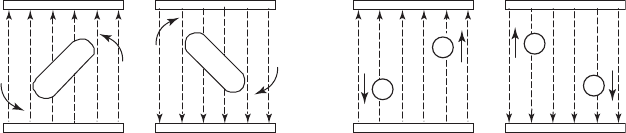
Figure 1a illustrates the dipole rotation mechanism of a
polar molecule. In the presence of an electrical field, the
polar molecule behaves like a microscopic magnet, which
attempts to align with the field by rotating around its axis.
As the polarity of the electric field changes, the direction of
rotation also changes. The molecule thus absorbs micro-
wave energy by rotating back and forth billions of times at
the frequency of microwaves. Since the molecule is often
bound to other molecules, the rotating action also causes it
to rub against those other molecules. The rubbing action
disrupts the bonds between the molecules, which in turn
causes friction and heat dissipation.
(a) Di
p
ole rotation
+
++++
-- ------
+
--
--
++++
-- ------
-- ------
(b) Ionic
p
olarization
++
--
++
++++
-- ------
+
+
--
Figure 1. Microwave/heat conversion mechan-
isms. The dashed lines denote the alternating
electric field at the frequency of microwaves. (a)
A dipole rotates back and forth. At high frequen-
cies (such as 2450 MHz), there is not sufficient
time for the dipole to rotate 1801, and thus the
actual rotation angle is much smaller. (b) A
positive ion and a negative ion oscillate in an
alternating electric field.
760 MICROWAVEABLE FOODS PACKAGING
The water molecule is the most abundant polar molecule
in food. The water molecules in liquid water are quite
mobile, and they readily absorb microwave energy and
dissipate it as heat through dipolar rotation. In contrast,
the water molecules in ice are much less mobile due to the
confined crystal structure, and they do not absorb micro-
wave well. The distribution of moisture and the state of
water (liquid water or ice) are often two critical factors that
determine the behavior of microwave heating of foods .
Figure 1b illustrates the ionic polarization of a positive
ion and a negative ion in solution. In the presence of an
electric field, the ions move in the direction of the field. As
the polarity of the electric field changes, the ions move
in the opposition direction. The ions absorb microwave
energy by oscillating themselves at the frequency of
microwaves. The oscillating action in turn causes heat
dissipation through friction. The common ions in food are
those from salts such as sodium chloride. Since ions are
less abundant than water molecules in most foods, ionic
polarization often plays a less important role than dipole
rotation.
Dielectric Properties
While dipole rotation and ionic polarization provide a
qualitative understanding of the microwave/heat conver-
sion mechanisms, the dielectric properties provide a
quantitative characterization of the interactions between
microwave electromagnetic energy and food. The dielec-
tric properties, along with thermal and other physical
properties, determine the heating behavior of the food in
the microwave oven.
An important dielectric property is dielectric loss factor
(euu), which indicates the ability of the food to dissipate
electrical energy. The term ‘‘loss’’ refers to the loss of
energy in the form of heat by the food. It is useful to
remember that a material with a high euu value (also
known as a lossy material) heats well, while a material
with a low euu value heats poorly in the microwave oven.
The dielectric loss factor is related to two other dielectric
properties by the equation
tan d ¼ euu=eu ð1Þ
where tan d is loss tangent and eu is dielectric constant.
The dielectric properties (eu and ev ) are functions of
frequency, temperature, moisture content, and salt con-
tent. Values of dielectric properties for foods and other
materials can be found in the literature (4–6). Examples
of ev and e u values at 2450 MHz are shown in Table 1.
Although the literature values can be used as guidelines,
actual measurements are often required because of the
variability of composition of the materials.
The dielectric properties provide a quick indication of
how well a material heats in the microwave oven. For
example, the euu value of water (12.48) at 25 1C is several
orders of magnitude higher than that of ice (0.0029) at
12 1C. This means that water heats far better than ice in
the microwave oven. Ice is almost transparent to micro-
waves because its molecules are tightly bound and do not
rotate easily through the mechanism of dipolar rotation.
The dramatic increase in ev value is also observed when
ice changes to water—that is, during the thawing of frozen
foods
including beef,
potato, and spinach (Table 1). Plas-
tics and paper have low euu values because they are almost
transparent to microwaves.
Penetration Depth
The speed of microwave heating is due to the deep
penetration of microwaves into the food, and the dielectric
properties can be used to determine the extent of penetra-
tion. When microwaves strike a food surface, they arrive
with some initial power level. As microwaves penetrate
the food, their power is attenuated since some of their
energy is absorbed by the food. The term penetration
depth (D
p
) is defined as the depth at which the microwave
power level is reduced to 36.8% (or 1/e) of its initial value.
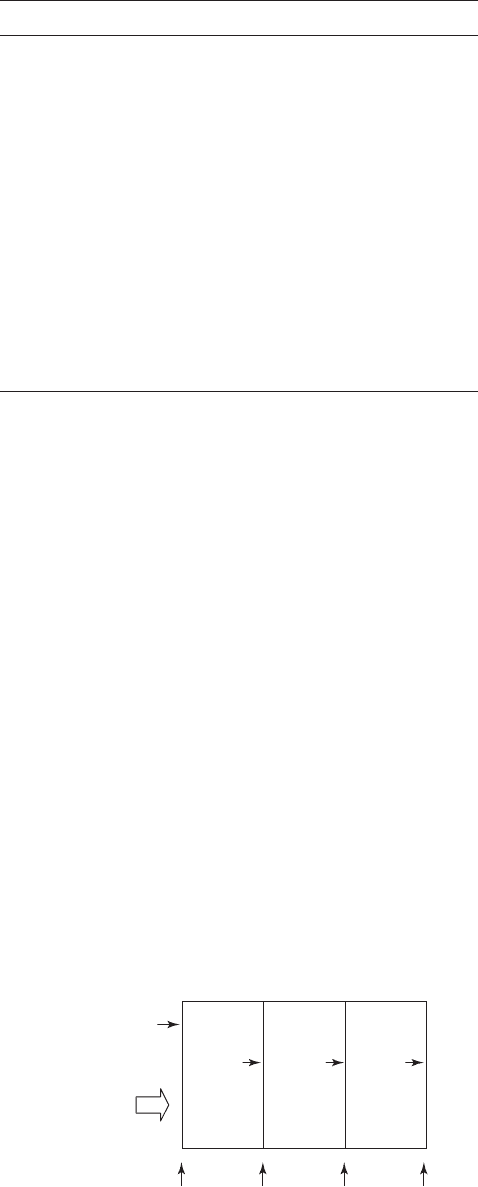
The meaning of penetration depth is further illustrated
in Figure 2. At the first D
p
, 36.8% of the initial power
remains, while 63.2% of the power is absorbed. At the
second D
p
, (0.368)
2
= 13.5% remains and 86.5% is ab-
sorbed. At the third D
p
, (0.368)
3
= 5.0% remains and 95%
is absorbed. The penetration depth depends on the com-
position of material, the frequency of microwaves, and
temperature.
Table 1. Dielectric Constant (eu), Dielectric Loss Factor
(ev), and Penetration Depth (D
p
) of Various Foods at
2450 MHz
Food or Other Material eu ev D
p
(cm)
Ice (12 1C) 3.2 0.0029 1203
Water (1.5 1C) 80.5 25.0 0.71
Water (25 1C) 78 12.48 1.38
Water (75 1C) 60.5 39.93 0.40
0.1 M NaCl (25 1C) 75.5 18.1 0.94
Fat and oil (average) 2.5 0.15 20.6
Raw beef (15 1C) 5.0 0.75 5.83
Raw beef (25 1C) 40 12 1.04
Roast beef (23 1C) 28 5.6 1.85
Boiled potatoes (15 1C) 4.5 0.9 4.6
Boiled potatoes (23 1C) 38 11.4 1.07
Boiled spinach (15 1C) 13 6.5 1.11
Boiled spinach (23 1C) 34 27.2 0.45
Polyethylene 2.3 0.003 986
Paper 2.7 0.15 21.4
Metal N 00
Free space 1 0 N
1st
D
p
2nd
D
p
3rd
D
p
100%
0%
Power remains
Power absorbed
36.8%
63.2%
13.5%
86.5%
Microwaves
Food surface
5.0%
95.0%
Figure 2. Power levels at various penetration depths.
MICROWAVEABLE FOODS PACKAGING 761
Typical values of D
p
for various materials at 2450 MHz
are also shown in Table 1. As mentioned earlier, liquid
water absorbs microwaves far better than ice. The D
p
of
water at 25 1C is 1.38 cm, but D
p
of ice at 12 1Cis
1203 cm! Frozen foods have longer penetration depths
than unfrozen foods. For example, the D
p
values for frozen
beef and unfrozen beef are 5.83 cm and 1.04 cm,
respectively.
CHALLENGES IN MICROWAVE HEATING OF FROZEN
FOOD
While microwave heating offers the benefits of speed
cooking and convenience, it also presents many technical
challenges to the food scientist or technologist. Those
challenges arise from the need to deal with the many
variables relating to the food, package, and microwave
oven. For the food, there are variables of food composition,
shape, size, specific heat, density, dielectric properties,
and thermal conductivity. For the package, there are
variables of shape, size, and properties of packaging
material. For the microwave oven, there are variables
relating to the design of the oven. A related and more
important challenge is to solve the problems of the con-
sumer. From the consumer’s point of view, the most
noticeable problems are those associated with nonuniform
heating, lack of browning and crisping, and variation in
microwave ovens.
Nonuniform Heating
Nonuniform heating is a major problem associated with
microwave heating. The problem is especially noticeable
for frozen food. It is not uncommon for a frozen food heated
in a microwave oven to boil around the edges while the
center remains frozen. The problem is caused by the
differences in microwave energy absorption of liquid water
and ice.
In frozen foods, the water molecules on the surface are
relatively free to move compared to the water molecules
inside the food. When a frozen food is microwaved, heating
begins at the surface where the water molecules are more
ready to absorb microwave energy. This causes the adja-
cent ice crystals to melt and the surface temperature to
rise, while the inside temperature is still little unaffected.
As more liquid water is available, the heating of the
surface becomes more rapidly. This can lead to ‘‘runaway
heating,’’ in which heating is excessive at the surface
while the inside is still frozen. To minimize runaway
heating during thawing, microwave energy should be
delivered at a slow rate, which allows more time for heat
to conduct from the surface to the inside.
Irregular shape of the food can also cause nonuniform
heating. The thin parts tend to overcook, while the thick
parts tend to undercook. This situation also occurs in
conventional cooking but is less pronounced because the
cooking is slower. Another cause of nonuniform heating is
that different foods have different dielectric and thermal
properties. When a microwave meal consists of two or
more items, it is possible that the items heat at different
rates. For example, when microwave heating a frozen
meal consisting of meat and vegetable, the vegetable often
becomes overheated and dried out before the meat reaches
the serving temperature.
Lack of Browning and Crisping
Another problem is that, unlike the conventional oven, the
microwave oven is not able to produce foods that are
brown and crisp. This is because the heating mechanisms
of the conventional oven and the microwave oven are quite
different.
In the conventional oven, the food is heated by hot air
in the oven; and if the heating element is not shielded, the
food is also heated by radiated heat. Heating is concen-
trated on the food surface by means of heat convection and
radiation. The inside of the food is also heated, at a slowly
rate, by means of heat conduction. The heating causes the
moisture on the food surface to evaporate rapidly, and
later it causes browning and crisping to occur. Although
the moisture inside the food tends to migrate to the
surface, the rate is not sufficiently fast to prevent brown-
ing and crisping. As a result, the food surface becomes
brown and crispy while its inside remains moist and soft.
In the microwave oven, there is no hot air, and heating
is mostly due to the interaction between microwaves and
water. Microwave heating is not concentrated on the food
surface, but it is distributed within the food depending on
the penetration depth. The heating on the food surface is
no longer sufficiently intense to cause browning and
crisping. Unless the food is microwaved for a long time
to remove all or most of the water in the food (which is not
desirable because the food quality may no longer be
acceptable), browning and crisping either do not occur at
all or are inadequate.
Browning formulations have been developed for var-
ious meat and dough products (1). Commercial steak
sauces, barbecue sauces, soy sauces, and so on, are
brushed on meat before microwave heating. Reusable
browning dishes are also available for browning food
surfaces in the microwave oven. Most of the commercial
browning dishes are made of glass–ceramic substrate with
tin oxide coating on the underside. The packaging indus-
try has also developed a disposable browning and crisping
material, known as susceptor, discussed later in this
article.
Variation in Microwave Ovens
Yet another problem is the large variation of performance
in different microwave ovens. Microwave ovens are avail-
able in different powers, oven cavity sizes, with or without
a turntable, with or without a stirrer (to distribute micro-
waves more evenly in the oven). Consequently, different
microwave ovens may produce greatly different results,
even if the same cooking instructions are used. To accom-
modate the differences, the food manufacturer can only
place vague microwave heating instructions on their
packages. For example, a package may contain vague
instructions such as ‘‘heat between 4 and 8 minutes,
depending
on the microwa
ve oven.’’
762 MICROWAVEABLE FOODS PACKAGING
Meeting the Challenges
There is no easy solution to deal with the complex process
of microwave heating. In developing a microwavable food
product, the scientist or technologist has to rely on
the somewhat useful but incomplete scientific knowledge
described in the previous sections, as well as trial-and-
error or empirical methods.
From the discipline point of view, there are three
approaches to deal with the challenges. The first is the
food chemist’s approach, in which food ingredients are
modified and browning formulations are added to make
the food more microwaveable. The second is the packaging
engineer’s approach, in which the package is modified to
enhance the performance of microwave heating. The third
is the microwave engineer’s approach, in which new and
useful features are added to the microwave oven. Ideally,
these approaches should be integrated into a system to
deliver the highest quality of microwaveable foods to the
consumer.
Many microwaveable food products have failed in the
past because of lack of performance or high cost. Good
technical and marketing tools are essential for developing
better-tasting microwaveable products, without increas-
ing the cost or decreasing the effectiveness of cooking.
Although the food manufacturer and the packaging sup-
plier have been working together to develop microwave-
able products, there has been relatively little collaboration
between them and the oven manufacturer. There is a need
to have all parties (including also the academia) work
more closely together to bring about innovations that can
deliver better microwaveable products to the consumer.
MICROWAVEABLE PACKAGING
The primary functions of the package are to contain,
protect, and sell the product. A general discussion on the
packaging of frozen foods is presented in Chapter 6. If the
package is used to hold the food during microwave heating
(as is the case for many microwaveable frozen meals), the
interactions between microwave and the package must
also be considered. Since the package can transmit, re-
flect, or absorb microwaves, it can also greatly influence
the microwave heating behavior. The package may act
‘‘passively’’ by simply transmitting microwaves. The pack-
age may also act ‘‘actively’’ by reflecting and absorbing
microwaves in a manner that the power distribution of
microwaves and the surface temperature of package are
modified. To optimize microwave heating, it is necessary to
properly balance these three microwave/package interac-
tions (transmission, reflection, and absorption) to optimize
the heating of the food. Microwaveable packaging materi-
als may be classified into microwave transparent materi-
als, microwave reflective materials, and microwave
absorbent materials.
Microwave Transparent Materials
A microwaveable package must be wholly or partly trans-
parent to microwaves. The most common microwave
transparent materials are paper and plastics. Although
glass is also transparent to microwaves, it is seldom used
to package frozen food.
Plastic-coated paperboard trays are popular for micro-
wavable frozen meals, mainly because of their low cost.
The trays combine the rigidity of the paperboard and the
chemical resistance of the plastic. The inside of the trays is
either extrusion-coated with a resin or adhesive-lami-
nated with a plastic film. For microwave-only applications,
plastics such as low-density polyethylene (LDPE), high-
density polyethylene (HDPE), and polypropylene (PP) are
used. For dual oven applications (i.e., usable in both
microwave and conventional ovens), polyethylene ter-
ephthalate (PET) is used because of its high temperature
stability (up to about 200 1C).
Molded pulp trays are another common paper product.
The containers are dual ovenable and can be molded into
several compartments. They are stronger and can carry
more load than the paperboard containers.
Thermoformed plastic trays are also common heating
containers for microwaveable frozen foods. LDPE trays
are suitable for light microwave heating because the trays
tend to distort at temperatures as low as 75 1C. PP trays
have a distortion temperature of about 110 1C. Homopoly-
mer PP trays are brittle at low temperatures and can
crack during distribution and handling at freezer tem-
peratures. Copolymer PP trays have somewhat improved
low-temperature durability. Crystallized PET (CPET)
trays are the most widely used plastic trays for micro-
waveable frozen meals. The CPET trays are functional in
the temperature range from 40 to 220 1C. Thus the trays
can withstand not only the low temperatures encountered
in distribution and handling, but also the temperatures in
conventional oven (i.e., the trays are dual ovenable).
Microwave Reflective Materials
Aluminum foil, aluminum/plastic laminate, and alumi-
num/plastic/paperboard laminate are the most common
microwave reflective materials. Since these materials do
not allow the transmission of microwave, they are also
known as microwave shielding materials.
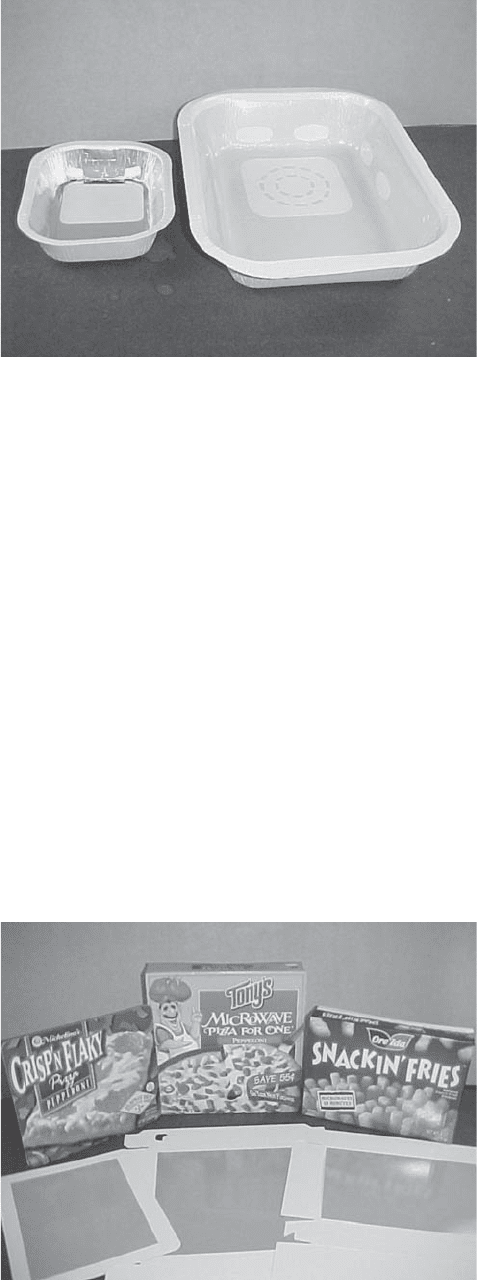
Aluminum is often used to selectively shield micro-
waves from certain areas of a food (Figure 3). For example,
a multicomponent meal may consist of food items that
heat at different rates in the microwave oven. The more
microwave-sensitive
food item(s) can
be shielded so that
the entire meal can be heated more even.
Aluminum is also used as an electromagnetic field
modifier to redirect microwave energy in a manner to
optimize the heating performance (10). Aluminum can
intensify the microwave energy locally or redirect it to
places in the package that otherwise would receive rela-
tively little direct microwave exposure. This approach has
been used to redirect microwave energy from the edges to
the center for frozen food products such as lasagna.
When aluminum foils are used in the microwave oven,
precautions are necessary to prevent arcing, which can
occur between foil packages and the oven walls, between
two packages, across tears, wrinkles, and so on. Arcing can
be prevented by following several simple design rules (11).
For example, any foil components should be receded from
MICROWAVEABLE FOODS PACKAGING 763
the edge of the package to avoid arcing with the oven
walls. In additional to following those rules, it is also
necessary to thoroughly test the package/product to en-
sure that the package is safe to use.
Microwave Absorbent Materials
Microwave absorbent materials used for food packaging
are commonly known as susceptors. The major purpose of
susceptors is to generate surface heating to mimic the
browning and crisping ability of the conventional oven.
Although many types of susceptors have been invented
(12), the only commercially available type is the metal-
lized film susceptor (Figure 4). This type of susceptor
consists of a metallized polyethylene terephthalate film
laminated to a thin paperboard. The metal layer is a very
thin (less than 100 angstroms), discontinuous layer of
aluminum, which is responsible for generating localized
resistance heating when exposed to microwaves. The
heating can cause the susceptor to reach surface tempera-
tures over 200 1C within seconds.
Susceptors have been used for products such as pizza,
French fries, waffles, frozen hot pies, and popcorn. Sus-
ceptors are available in the forms of flat pads, sleeves, and
pouches. The flat pads are suitable for products (such
as pizza) that require heating only on one surface. The
sleeves and pouches are suitable for heating on multiple
surfaces (9). Susceptors are also available in various
patterns, in which portions of the metallized layer are
deactivated (10). The patterns are designed to provide
more control of heating. A company uses a printed check-
erboard pattern to generate various levels of heating
based on the size of the check.
There is a public concern of migration of mobile com-
pounds from the susceptor to the food, because the sus-
ceptor can reach high temperature. The FDA has issued
voluntary guidelines regarding the safe use of the suscep-
tor for the packaging to follow.
CONCLUDING REMARKS
While microwaveable foods and meals have become an
integral part of our lifestyle, improvements are still
needed to continue to justify their place in the freezer
case. Although microwaveable products can provide the
consumer with convenience, they often fail to impress the
consumer with taste and texture. There are many techni-
cal and economical challenges for developing new and
improved microwaveable frozen products. To meet those
challenges, the industry (food manufacturer, packaging
supplier, and oven manufacturer) and the academia
should work more closely together—to innovate and de-
velop better microwaveable food products that are more
tasty, healthy, and convenient to use.
BIBLIOGRAPHY
1. R. V. Decareau, Microwave Foods: New Product Development,
Food & Nutrition Press, Trumbull, Connecticut, 1992.
2. C. R. Buffler, Microwave Cooking and Processing: Engineer-
ing Fundamentals for the Food Scientist, Van Nostrand
Reinhold, New York, 1993.
3. A. K. Datta and R. C. Anantheswaran, Handbook of Micro-
wave Technology for Food Applications, Marcel Dekker, New
York, 2001.
4. N. E. Bengtsson and P. O. Risman, ‘‘Dielectric Properties of
Foods at 3 GHz as Determined by a Cavity Perturbation
Technique II. Measurements of Food Materials,’’ J. Microwave
Power 6(2), 107–123 (1971).
5. S. O. Nelson, ‘‘Electrical Properties of Agricultural Products
(A Critical Review),’’ Trans. ASAE 16(2), 384–400 (1973).
6. A. K. Datta, E. Sun, and A. Solis, ‘‘Food Dielectric Property
Data and Their Composition-Based Prediction’’ in M A. Rao
and S. S. H. Rizvi. eds., Engineering Properties of Foods,
Marcel Dekker, New York, 1995, pp. 457–494.
7. C. Saltiel, A. K. Datta, ‘‘Heat and Mass Transfer in Microwave
Processing,’’ Adv. Heat Transfer 32, 000–000 (1998).
8. K. G. Ayappa, Modeling Transport Processes During Micro-
wave Heating: A Review,’’ Revi. Chem. Eng. 13(2), 1–68
(1997).
Figure 3. Trays with selectively shielded areas. (Courtesy of
Graphic Packaging Inc.)
Figure 4. Metallized film susceptors. (Courtesy of Graphic Pack-
aging Inc.)
764 MICROWAVEABLE FOODS PACKAGING

9. J. R. Quick, J. L. Alexander, C. C. Lai, S. A. Matthews, D. J.
Wenzel, Tube from Microwave Susceptor Package, U.S. Patent
No. 5,180,894, January 19, 1993.
10. T. H. Bohrer and R. K. Brown, ‘‘Packaging Techniques for
Microwaveable Foods’’ in A. K. Datta and R. C. Ananthes-
waran, eds., Handbook of Microwave Technology for Food
Applications, Marcel Dekker, New York, 2001, pp. 397–469.
11. A. Russell, ‘‘Design Considerations for Success in Microwave
Active Packaging Development’’ in Conference Proceedings,
Future-Pak 99, George O. Schroeder Associates Inc., 1999.
12. G. L. Robertson, ‘‘Packaging of Microwavable Foods’’ in Food
Packaging Principles and Practice, Marcel Dekker, New York,
1992, pp. 409–430.
MIGRATION FROM FOOD CONTACT
MATERIALS
MANFRED OSSBERGER
FABES Forschungs-GmbH
INTRODUCTION
Food and packaging are closely tied together. Food packa-
ging material requires optimization of its properties to
control physical and chemical interaction between food
and packaging. In general, food consists of numerous
ingredients with in many cases low chemical stability.
Therefore, food has to be packed to protect it against
spoilage, insects, micro-organisms, light, and other envir-
onmental impacts like humidity or oxygen, which could all
lead to a decrease of the food quality. Protection against
unauthorized access and information about the packaged
foodstuff are some other important functions of packaging.
There are a variety of plastics with different properties
composed of several polymers and containing additives
that are likely to migrate used to fulfill the specific
packaging requirements. It is important to realize that
not only the food quality is time dependent, but also the
food packaging is not at ‘‘steady state.’’ After production
the packaging mass transfer processes starts immediately.
Two diffusion-controlled processes have to be considered:
. Permeation (lat. permeare) refers to the process,
where chemical substances diffuse from the environ-
ment into the food or vice versa.
. Migration (lat. migrare) means the diffusion of sub-
stances from the packaging into the food or from the
food into the packaging.
In addition, chemical reactions in the packaging or food or
between them are also possible and have to be taken into
account.
PLASTIC MONOLAYER MATERIALS IN CONTACT WITH
FOODSTUFF
Diffusion (kinetics) and partitioning (thermodynamics)
constitute the most important interactions:
The driving force of diffusion comprises different che-
mical potentials between two adjacent media, which was
first mentioned and investigated by Adolf Fick (1829–
1901), who postulated the following laws:
Fick’s 1st law: J ¼D
@c
@x
ð1Þ
where J expresses the flux (or ‘‘current density’’ of parti-
cles), c the concentration of particles, and x the distance
for particles travel. The flux J expresses the amount of
matter passing through a unit area of a film in unit time.
Fick’s 1st law is the solution of Fick’s 2nd law under
steady state conditions @c=@t = 0 as in the case of permea-
tion, e.g., of gases like oxygen or water vapor through
packaging materials (1, 2).
Fick’s 2nd law:
@c
@t
¼ D
@
2
c
@x
2
ð2Þ
where t expresses the time and D the diffusion coefficient.
Fick’s 2nd law describes the diffusion of migrants, e.g., in
the two-phase system of packaging and food in the direc-
tion of the concentration gradient.
Most solutions of the second diffusion equation for
systems in contact with liquid are derived from analogous
mathematical solutions of the heat conductance equation
(standard works by Carslaw and Jaeger, Crank) (3, 4).
These analytical solutions are obtained by using simplify-
ing assumptions. For example, one get the expression
m
F; t
A
¼
2
ffiffiffi
p
p
c
P;0
r
P
ffiffiffiffiffiffiffiffi
D
P
t
p
ð3Þ
where m
F,t
is the amount of the migrated compound at
time t, A the contact area, c
P,0
(wt/wt) the initial concen-
tration of the migrant in the polymer, r
P
the density of the
polymer, D
P
the diffusion coefficient of the migrant in the
polymer, and t the contact time. There it is assumed that
the solubility of the migrant in the liquid is very high, the
thickness of the packaging infinite, and the migration far
from equilibrium.
This expression overestimates migration as the system
approaches equilibrium (mass transfer greater than ap-
proximately 60%). Therefore, more general solutions have
to be defined to characterize the migration process (see
next equation):
m
F; t
A
¼ c
P;0
r
P
d
P
a
1 þa
1
X
N
n¼1
2a 1 þ aðÞ
1 þa þ a
2
q
2
n
exp D
P
t
q
2
n
d
2
P
"#
ð4Þ
with a ¼
V
F
=V
P
K
P;F
; K
P;F
¼ c
P;N
r
P
=c
F; N
r
F
and tan q
n
¼aq
n
where in addition to constants defined for Equation (3),
r
F
is the density of the liquid food, d
P
is the thickness of
MIGRATION FROM FOOD CONTACT MATERIALS 765

the polymer, V
P
and V
F
the volume of the polymer and the
liquid food, K
P,F
the partition coefficient, and q
n
the
positive roots of the trigonometric identity. K
P, F
is defined
as the ratio of the migrant concentration in the polymer
and the liquid food at equilibrium. Using this expression,
overestimation is limited and the migration can be esti-
mated at equilibrium; there a finite volume of the polymer
is assumed.
Regarding Equation (4), the total amount of material is
transported away from the contact layer into the foodstuff
at the beginning of migration. Thus, the concentration in
the contact layer goes to zero. Whereas the diffusion rate
of the migrants in the packaging material is the rate-
determining step, the partition coefficient K
P,F
(and a,
respectively) plays an increasing role with longer migra-
tion times. Especially for K
P,F
c1(a{1), there is only very
low migration into the food.
If the foodstuff is viscous or solid, one gets a different
solution of Fick’s 2
nd
law since the diffusion coefficient of
the migrant in the solid food has to be taken into account:
m
F; t
A
¼
2
ffiffiffi
p
p
c
P;0
r
P
b
1 þb
ffiffiffiffiffiffiffiffi
D
P
t
p
ð5Þ
with b ¼
1
K
P;F
ffiffiffiffiffiffiffi
D
F
D
P
s
where D
F
is the diffusion coefficient of the migrant in the
food. For D
F
cD
P
and K
P,F
r 1, equation (3) results.
In order to use equation (4), the two coefficients D
P
and
K
P,F
are needed. As the values of both coefficients can vary
over orders of magnitudes and may not be readily avail-
able, one has to assume ‘‘worst-case’’ scenarios like good
solubility of the migrant in the liquid food or simulant (i.e.,
K
P,F
= 1). In order to estimate upper limits of D
P
, the
following semi-empirical formula was developed (5–7):
D
P
¼ D
0
exp A
P
0:1351M
2=3
r
þ 0:003M
r
10454
T
ð6Þ
with A
P
¼ A
0
P
t
T
where D
0
is 10
4
cm
2
/s, A
P
the material specific constant,
M
r
the relative molar mass of the migrant (Dalton), and T
the temperature (Kelvin). Values of the constant t and Au
P
for certain polymers are given in Table 1. The equation
can be used for M
r
r4000 Dalton. As regulation asks for
safety margins and thus ‘‘worst-case’’ Au
P
values for mod-
eling migration to avoid underestimation, it is possible to
match the parameter A
P
to yield a ‘‘worst-case’’ value, Au*
P
(see Table 1). This leads to corresponding D*
P
instead of
the real D
P
. In equation (6), A
P
rA*
P
= Au*
P
t/T, the para-
meter A*
P
should now be regarded as an ‘‘upper-bound’’
conductance of the polymer.
Values for A
P
are obtained by performing kinetic stu-
dies, measuring migration after, e.g., 1, 2, 4, 8, and 10 days
(see example; Figure 1). By comparison of the experimen-
tal data with calculated data (software programes, please
see last section), one can calculate D
P
and K
P,F
.
For the polyolefines, another semi-empirical diffusion
model has been developed by Limm and Hollifield (8):
D
P
¼ D
0
exp aM
1=2
r
KM
1=3
r
=T
ð7Þ
with values for D
0
, a, and K given in Table 2.
A basic conclusion of both Fickus laws is that if a
concentration gradient is present, diffusion takes place
immediately. The velocity of mass transport is subject to
the diffusion coefficient D, the kinetic dimension of the
diffusion process, which is a function of temperature. D for
a migrant with medium molecular weight varies from ca.
Table 1. Values for worst case A
P
(Au
*
P
), mean A
P
(
A
0
P
)
and the parameter s for estimating diffusion coefficients
D
P
in polymers (eq. 6)
Polymer Au*
P
A
0
P
Au
P
(max) Au
P
(min) t
LDPE 11.7 10.0 11 7.0 0
HDPE 13.2 10.0 12.6 5.0 1577
PP 12.4 9.4 12.9 6.2 1577
PET 6.35 2.2 7.2 4.3 1577
PEN 3.7 0.34 3.8 5.5 1577
PS 0.7 2.8 0 6.5 0
HIPS 0.1 2.7 0 6.2 0
PA(6,6) 1.9 1.54 2.3 7.7 0
0
20
40
60
80
100
120
024681012
Irganox 1010 - 80°C
Calc.
conc. (μg/dm
2
)
Time (days)
Figure 1.
766 MIGRATION FROM FOOD CONTACT MATERIALS

10
5
cm
2
/s in solutions to 10
18
cm
2
/s in PET-materials.
The quantity of migrants in the other layer(s) can be
further dictated by thermodynamics, which is expressed
by the partition coefficient K. Consequently, if the diffu-
sion rate is high, but the migrant is not soluble in the
other media, there will be only low mass transport from
the origin to the adjacent layer(s). This coefficient is
strongly influenced by the solubility of the migrant in
the contacting media and varies roughly from K
P,F
= 1 for
well solubility to K
P,F
= 1000 for bad solubility. In addition
to estimations for diffusion coefficients, procedures exist to
estimate the partition coefficients (9).
In summary, the quantity of migration is strongly
controlled by the diffusion coefficient (D) and partition
coefficient K, which are affected by the identity of the
packaging material and its chemical structure (- D, K ),
chemical structure and polarity of the migrant (- K),
molecular weight of the migrant (- D), concentration of
the migrant in the packaging (- D), kind of packed food
(water, acid, alcoholic, fatty, dry) (- D, K) and if there is
an interaction between food and packaging (- D), volume
of the packed food (- K), and time and temperature
conditions (- D, K) at which the packed food is stored.
The preceding discussion holds true only if the diffu-
sion and partition coefficients are constant while diffusion
takes place and if the packaging is inert against the
packed foodstuff. Otherwise if D and K vary with time or
swelling is observed, diffusion can no longer be described
by Fick’s 2
nd
law (‘‘non-Fickian processes’’). In addition, at
very low migrant concentrations, the migration rate may
no longer be proportional to its concentration in the
polymer. Considering paper and board, physical interac-
tions and mass transportation are controlled by sorption
processes, what makes estimation more intricate.
MULTILAYER PLASTIC MATERIALS IN CONTACT WITH
FOODSTUFF
In the past, packaging was generally made of monolayer
materials like polyethylenes (PE), polypropylenes (PP),
polyamides (PA), polystyrenes (PS), polyethylene ter-
ephthalates (PET), paper and board, aluminium, cera-
mics, and glass. As each material has unique useful
properties, several materials are now combined into multi-
layer materials. In addition, such multilayer systems
consist of lacquers, coatings, printing, and/or adhesive
layers. Migration processes may originate from all differ-
ent layers, each with different physical properties (like D
and K, vapor impermeability). As a consequence, migra-
tion processes are more complicated and the use of numer-
ical models and algorithms is sometimes necessary (see
the section ‘‘Measurement Procedures for Quantification
of Migrants’’), especially if there are analytical problems.
MIGRANTS
The use of glass as a food contact material is advantageous
as there is no migration possible. In contrast, as men-
tioned, migration in plastics has to be considered. A
common feature of all polymer materials is their backbone
of natural or synthetic macromolecules composed of hun-
dreds of repetitions of small chemical units (monomers)
that are connected via covalent bonds. Compared with
pure natural polymers, e.g., proteins, synthetic polymers
are polydisperse; i.e., the polymer is a mixture of
molecules with various chain lengths and molar masses.
Up to ca. 2% of low-molecular-weight molecules with
M
W
o 10
3
g/mol account for the polymer, which are of
possible toxicological interest. All other polymer com-
pounds are immobile due to their high molecular weight.
Hence, there is a trend to switch from monomeric
additives to polymeric additives. The disadvantage of
this is the lower reactivity, and thus, higher concentra-
tions of polymeric additives are needed.
Actually many more substances are incorporated into
plastics that the producer and end user has to pay atten-
tion to. In addition to the residual amounts of initiators
(e.g., peroxide compounds) and metal oxide catalysts,
there are a huge amount of additives, such as antioxi-
dants, plasticisers, antistatics, lubricants, and pigments,
added to the polymer for better processing, protection, or
appearance of the polymer, which are all possible mi-
grants. Some common examples for each additive group
are given in Table 3.
Beside that not-intended-additives (NIAS) such as
transformation products and contamination from plastic
and additive production are additional sources of
migrants.
As stated in the Introduction, migration is possible in
two directions, from the packaging into the food and from
the food into the packaging. Therefore, many substances
(and flavors) in food are also likely to migrate (e.g.,
Limonene, which is contained in soft drinks, migrates
into plastic packaging). This is also true considering
permeation. ‘‘Flavors’’ or gases can permeate from the
environment into the food and thus have to be taken into
account. It should also be stressed that sometimes migra-
tion of, e.g., antistatics and lubricants is intended and
crucial for certain applications.
MEASUREMENT PROCEDURES FOR QUANTIFICATION
OF MIGRANTS
The purpose of migration testing is to ensure the compli-
ance of food packaging by detection and quantification of
migrants. Since migration and not extraction is to be
measured, interactions changing the mechanical and dif-
fusion properties of the package should be minimized
between food contact material and foodstuff.
Table 2. Values for D
0
, a and K in eq. (7).
Polymer ln(D
0
) a K
LDPE 4.16 0.555 1140.5
HDPE 0.90 0.819 1760.7
PP 2.10 0.597 1335.7
MIGRATION FROM FOOD CONTACT MATERIALS 767