
Yao N. Focused Ion Beam Systems: Basics and Applications
Подождите немного. Документ загружается.

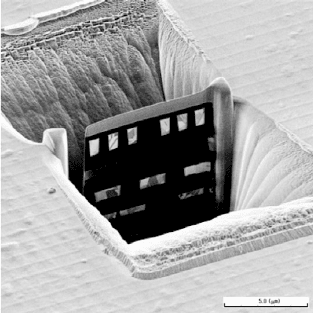
the required TEM observation resolution. In order to realize such micro-
processing, the process must be performed by a well-focused and compara-
tively low current ion beam. For this reason, processing cannot be completed
within a short time, and alteration of the ion beam irradiation position
caused by environment changes, such as the instrument room temperature,
during processing time cannot be ignored. Accordingly, technology to enable
the beam irradiation position to be corrected is required.
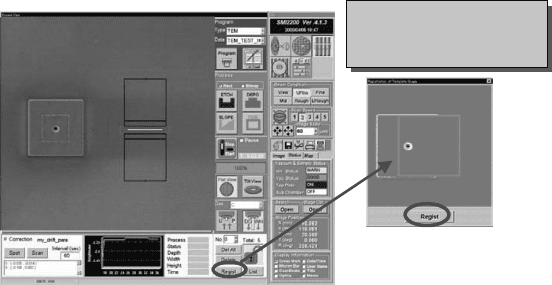
As shown in Figure 14.33, a mark is formed for position correction
within the same visual field as the process region. The position of the
position correction mark is periodically verified with the observation field
during processing. Moving the mark position in the observation field
means moving the beam irradiation position according to the amount of move-
ment, allowing the beam irradiation position to be set at a fixed position. As
a result, precision processing can be done even when the process time is long.
Automation
With the design rule miniaturization of integrated circuits, device structures
have become miniaturized and complex. As a result, high-resolution obser-
vation of device cross-sectional structures by TEM or STEM must increase
and multiple productions of TEM samples for observation are required.
In the past, the operator searched for problems and defective spots at the
site of device development or production processes, and the main trend was
in specimen production.
From this, however, utilization by production control is assumed, and fixed
point observation is called for within the routine work of specified points on a
Figure 14.32 Example of TEM specimen production using the lift-out
method.
Focused ion beam systems378
wafer. In this case, a system is required in which the tool automatically detects
a targeted pattern on a wafer, and automatically produces a TEM specimen at
a set location. The remaining thickness of the specimen is 100 nm.
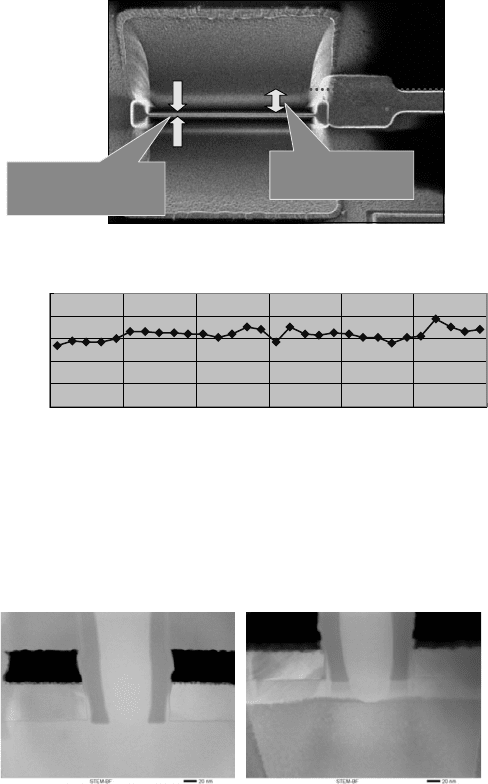
Figure 14.34 shows an example of evaluating STEM specimen auto pro-
duction for 200 mm wafers using the SMI3200 FIB tool, which has the same
performance as the SMI3050.
The following evaluation method was used:
1. Process targe t pos ition settings : the pro cess posit ion is set a t a dist ance of 1.7 mm
below the wire as shown in Figure 14.34(a). (Not e that since the deviat ion in the
x direction is suffici ently small for proce ss wi dth, it is not a target for evaluat ion.)
2. Sample size: wid th of 10 mm, dep th of 7 mm, remai ning thickne ss of 160 nm. The
process ing tim e is app roximatel y 20 min for making one sampl e.
3. Thirty dies on top of the same wafer were selected and automa tically pro cessed.
The total process ing tim e was app roximatel y 10 hours.
Figure 14.34(b) shows the measured thickness of 30 lamellae. The fol-
lowing results were verified:
standar d deviat ion of specimen ’s remaining thickne ss (3 ) ¼ 15.2 nm;
standar d deviat ion of specimen pro duction pos ition (3 ) ¼ 43.6 nm.
We verified that no large error exists in the image if the specimen thickness
has a deviation range of 80 to 150 nm when doing STEM observation of the
Si that is used mainly by semiconductor integrated circuits, as shown in
Figure 14.35.
Consequently, the specimen thickness deviation obtained by this experi-
ment is permitted to get reasonable STEM images. Technology that auto-
matically produces nanometer level specimens using the FIB tool is now
being established.
Mark is a circle. Center of a
circle is not changed by FIB
observation.
Figure 14.33 Drift correction.
Focused ion beam systems as a multifunctional tool for nanotechnology 379
Low acceleration voltage process
TEM observation is a useful tool for observing the internal structure of
specimens and in particular the lattice structure. Nonetheless, the crystal
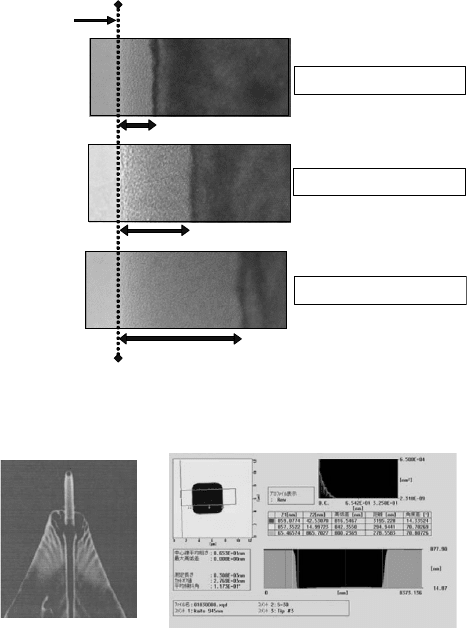
structure may be damaged by FIB processing. Figure 14.36 shows that the
amount of damage becomes smaller in proportion to the acceleration voltage
of the ion beam used in sputter etching.
A: Thickness
160 nm
B: Distance
1.7 µm
Measured thickness of samples
(a)
(b)
100
120
140
160
180
200
1 6 11 16 21 26
Number of samples
Thickness (nm)
Figure 14.34 TEM specimen auto production. (a) Process condition, (b) result
of evaluation.
STEM observation
Thickness=80 nm Thickness=150 nm
V
ACC
= 200 kV
Figure 14.35 Specimen thickness and STEM image observation by
JEM2500SE (JEOL).
Focused ion beam systems380
For this reason, the finishing process in producing a specimen must be
performed at a low acceleration voltage when observing lattice images at a
high magnification.
The latest research has reported that the acceleration voltages for this
purpose can be as low as 1 kV [15].
14.4.2 Probe preparation for the scanning probe microscope
The scanning probe microscope is a tool that scans the surface of specimens
with the tip of a needle, detects movement between the needle tip and
specimen surface, and observes and measures the shape and physical properties
of the specimen surface. Because of its ability to measure various properties, the
scanning probe microscope is a powerful tool for nanotechnology.
The performance of the scanning probe microscope cannot be overstated
although it is controlled by the properties of the needle itself. Figure 14.37
V
ACC
= 5 kV
Damage layer = 6.6 nm
Si surface
V
ACC
= 15 kV
V
ACC
= 30 kV
Damage layer = 14.4 nm
Damage layer = 23.3 nm
Figure 14.36 Three examples of the damage caused to similar specimens at
different acceleration voltages.
Figure 14.37 Scanning probe microscope needle produced using 3D
deposition technology. Length ¼1300 nm, diameter ¼60 nm.
Focused ion beam systems as a multifunctional tool for nanotechnology 381
shows an example of a scanning probe microscope needle being made using
FIB 3D deposition technology.
The tungsten pillar is formed similarly to that of carbon introduced earlier,
and is used as a needle. Depending on the need, the needle can be further
sharpened by sputter etching the tip with the FIB. Here we see the start of 3D
deposition as applied to an actual product.
14.4.3 EB mask repair
To get smaller structures, a short wavelength light source is needed. A
method of making electronic beams a light source electron beam is one of the
candidates for new generation lithography. EPL and LEEPLE are known as
electron beam lithography technologies. Masks used by electron beam
lithography consist of a shading part that does not allow electrons on a
silicon substrate to reach the specimen surface and a transparent part that
allows electrons to pass through and reach the specimen surface. Figure 14.38
shows defects in the photo and EPL masks.
The masking portion of the conventional photo mask is thin. Its thickness
is about 0.1 mm. When white defects and black defects are corrected,
operators do not need to think three-dimensionally to fix them.
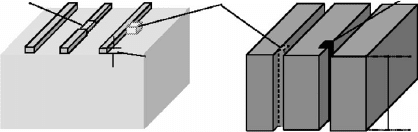
On the other hand, the EPL mask repair operator must see a 2 mm thick
silicon substrate in 3D, grasp the defects, and correct them. These corrections
first became possible using FIB 3D shape production technology [16,17].
Several technologies used in correction of masks for electron beam expo-
sure are outlined below.
Taper correction
Ion beam density distribution is a normal distribution. Generally, the ‘‘width
of half peak’’ defines the beam diameter and advances the development into
Clear defect
(a) (b)
Opaque defect Clear defec
t
~0.1 µm
2 µm
Glass Si
2D structure
3D structure
Rigid glass
Low <1
Thin metal film (~0.1 mm)
Thin membrane
High >10
Si membrane
Substrate
aspect ratio
pattern material
(~2 mm)
Figure 14.38 Defects of (a) photo masks and (b) EPL masks.
Focused ion beam systems382
narrowing this width. When the FIB tool was first commercialized, the beam
diameter was about 100 nm. Today tools with a diameter of 4 nm are being
produced. The performance of the FIB has been dramatically improved,
but the beam profile relies on physical phenomena and still has a normal
distribution.
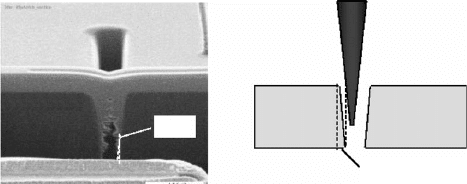
For this reason, when the sputter etching process is performed, a taper that
corresponds to this beam profile in the sidewall of the processed area can be
done. This is shown in Figure 14.39. In the case of the EPL mask, you must
see through the entrance of the hole of the translucent part to the exit and
there must be no obstacles. What is obvious is that the exit slit cannot be
narrower than the entrance slit.
In order to conquer this problem, the specimen stage is tilted. As shown by
Figure 14.39, a taper of 1.5–3
can be used, and the sidewall can be made
vertical to the surface by tilting the specimen to cope with the taper angle.
This technology is used even for TEM specimen production. In order to
define the thickness of a lamella specimen, the finishing process tilts and the
process is performed.
Preparation of high aspect holes
As the mask is for forming microscopic shapes on the surface of specimen, a
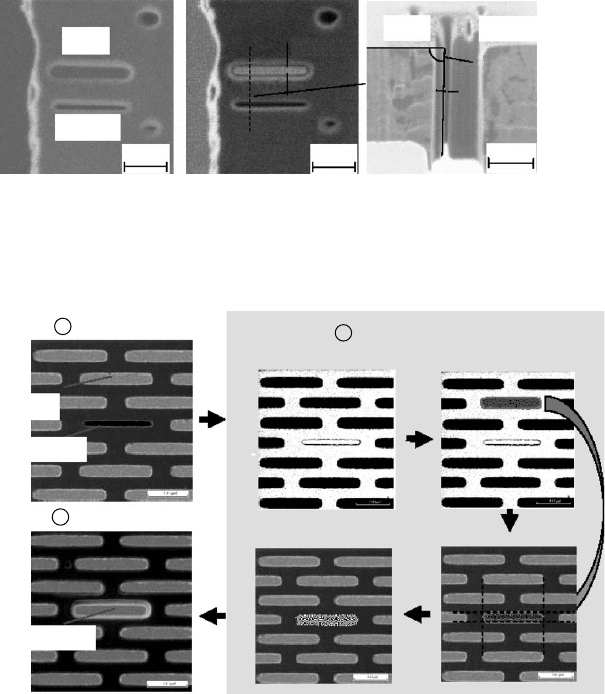
tool that makes as small a hole as possible is required. Figure 14.40 intro-
duces an example of making a microscopic hole using gas accelerated etching.
GAE processing using accelerated etching and normal processing not using
gas is performed on a silicon substrate that becomes a mask.
Normal processing can only drill extremely shallow holes because there is
no means of transporting the drill cuttings outside the hole. GAE processing
is able to open holes of high aspect ratio because the cuttings react with the
gas and are carried outside the hole.
Cross-sectional image
of FIB-etched trench
FIB
I
p
: 48 pA
C depo
Si
~3˚
EPL mask
~50 –100 nm
Figure 14.39 Taper correction. The typical taper angle of an FIB etched
pattern is roughly 1.5–3
; difference of critical dimension between top and
bottom 50–100 nm. I
p
is the ion beam current at a sample.
Focused ion beam systems as a multifunctional tool for nanotechnology 383
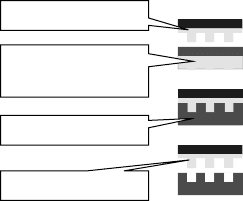
Shape reappearance
Correction of defects is based on normal shape data. The best way to obtain
normal shape data is from CAD data used in production of the original
mask. Nonetheless, in the present state where integration has drastically
improved, CAD data typically consist of information of the entire element
and the amount of information is large and cannot be easily handled.
Therefore, you can select a normal shape near the defect, create correction
information from the image of the normal shape using pattern recognition
technology, and perform the process based on the correction information.
Figure 14.41 introduces G-Copy, which performs defect correction by this
idea. (Note: G-Copy is a function name of the SIR-series.)
GAE
GAE
(a) (b) (c)
Normal
Normal
50 nm
Within 90±1˚
0.3 µm 0.3 µm
0.5 µm
Figure 14.40 High aspect holes. (a) Surface image, (b) transmission image,
(c) cross-sectional imag e. Conditions shown are for halogen gas,
P
a
¼3·10
3
Pa, I
p
¼0.15 pA, time ¼250 s. The taper angle is within
90 ± 1
. P
a
is the pressure of the halogen gas for GAE.
Defective region
Repaired pattern
1 Before repair
3 After repair
2 Geometry-copy process
Correct pattern
Binarization of image
Processing Setup of processed region
Corner round: corres
p
ondin
g
to correct
p
attern
Copy of correct pattern
Figure 14.41 G-Copy.
Focused ion beam systems384
Nanotechnology is expected to be applied for biotechnology. Cells and
genetics are subjects in the field of biotechnology, but when making micro-
scopic structures related to these, the shape information of these must be
taken in and cases of production based on the shape information anticipated.
From the technology introduced here we can expect a growth in production
of structures that correspond to unknown samples.
14.4.4 Micro-mold preparation
Professor Choi proposed nanoimprint technology as a way to mass produce
microscopic shapes by pushing a mold in thermoplastic organic matter and
transcribing shapes [18]. Figure 14.42 outlines the process of producing
nanoimprints.
In this example, the micro-mold was realized by processing a silicon oxide
film on a silicon substrate. Thermoplastic organic matter is placed on the
silicon substrate then heated at 200
C. After the thermoplastic organic
matter is sufficiently heated, the mold is pushed against the workpiece then
cooled. The mold is removed after sufficient cooling, enabling the shape of
the mold to be transcribed onto the surface of the workpiece.
This technology is expected to be a technology that complements the
current trend of photo lithography. Generally, only 2D shapes can be tran-
scribed with photo lithography but nanoimprinting lets you tilt sidewalls, for
example, by making a 3D mold. We believe that making and correcting this
mold can be done by using FIB sputter etching and deposition [19]. Making
shapes is possible by using technology introduced in Section 14.4.3.
Incidentally, the evaluation of temperature characteristics of microscopic
structures made by FIB are not being sufficiently implemented [20]. This is a
subject for the future.
Figure 14.43 introduces preparatory experimental results for temperature
characteristics of microstructures made by FIB. A carbon wall by carbon
Step 1
Heating (200 ˚C)
Step 2
Push and cooling
Step 3
Release
Substrate (Si)
Mold (SiO
2
)
Thermoplastic
resin
Si substrate
Figure 14.42 Nanoimprint technology.
Focused ion beam systems as a multifunctional tool for nanotechnology 385
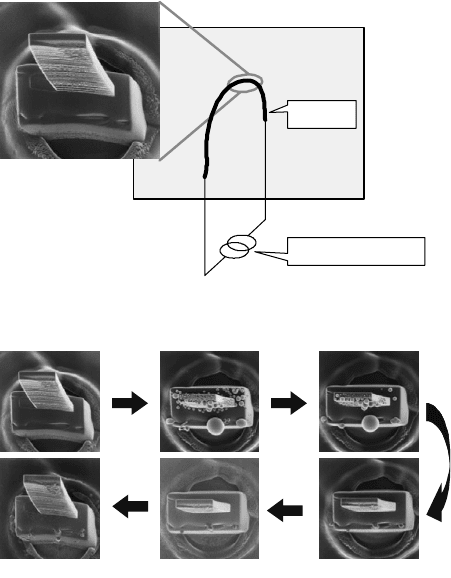
deposition was made on a heater wire. Changes in the carbon wall are
observed when the heater temperature increases.
Because this experiment was preparatory, measurement of temperature was
not correctly performed. The heater temperature exceeds 700
C.
What is clear from the experiment is that gallium is extracted from the
surface of the specimen if high-temperature conditions continue, becomes
shaped like a water drop, and finally evaporates. Extremely small particles
can be seen when the surface of the specimen is observed after high-
temperature treatment; however, they can be removed by washing with water.
This experiment shows that heat treatment must be performed in advance
and the gallium removed when using a workpiece made by FIB, as a mold,
for example, at high temperatures. Since the shape does not change before
and after the heat treatment, the possibility that it can be used as a tool for
Carbon wall
Heater
Current source
In the vacuum chamber
Before heating 2.5A 3min
(a)
(b)
2.5A 8min
2.5A 8min
+2.6A 5min
+2.7A 5min
2.5A 8min
+2.6A 5min
After heating
Figure 14.43 Basic experiment with micr o molds. (a) Experiment, (b) results.
Focused ion beam systems386
making and correcting molds used in nanoimprinting of FIB tools can be
verified by gathering more detailed data.
14.4.5 Unfolding of biotechnology
In the latest research, while verifying the behavior of cells one by one,
advanced experiments are desired. For this reason, it is desirable that specific
conditions be given to cells one by one, and experimental technology that
separately verifies how the effects are received is established.
A cell is generally several micrometers across, which is about the size of the
nano wine glass introduced in Figure 14.27. In terms of size, production of a
container that controls cells one by one is made possible using FIB. If
information about the shape of the specimen is precisely obtained in advance,
a container of optimum shape can be made from those data.
In addition, a nanoscale manipulator was fabricated by FIB deposition
[21]. Cells will be picked up by nanomanipulator, and brought to containers
made by FIB deposition.
Today, evaluation has begun on what effect a container made by FIB will
have on the organic specimen, such as a cell. These are only the first steps and
we look forward to the results of later research.
14.4.6 Ultra-high speed device development
The performance improvement of integrated circuits in which Si is used is
remarkable. However, a device made of GaAs is able to get better perfor-
mance than a device made of Si.
Nevertheless, an ultra-high speed element produced on a semiconductor
board made from a chemical compound other than silicon, for example,
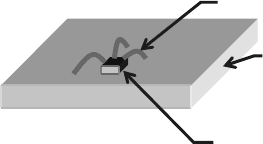
achieves a high performance not realized by silicon. Accordingly, as shown in
Figure 14.44, a hybrid integrated circuit is one of the solutions to achieve a
high-speed device.
Device produced using conventional processes
Hi
g
h s
p
eed device
Wire produced by FIB 3D-deposition
Figure 14.44 Ultra-high speed hybrid device.
Focused ion beam systems as a multifunctional tool for nanotechnology 387