
Ambaum M., Thermal Physics of the Atmosphere
Подождите немного. Документ загружается.


9.7 RADIATIVE–CONVECTIVE EQUILIBRIUM 187
Taking the derivative of this equation with respect to the long-wave optical
depth and substituting the Schwarzschild equations for the long-wave com-
ponents we find
2B − L
↓
− L
↑
−
˙
q
SW
/
LW
+ dH/dı = 0. (9.61)
Here we have rewritten the derivative of the net upward short-wave compo-
nent in terms of the short-wave heating
˙
q
SW
; that is,
˙
q
SW
=−dS
n
/dz =−
LW
dS
n
/dı. (9.62)
We can take a further derivative with respect to the optical depth and again
use the Schwarzschild equations for the long-wave components to find
I 2
dB
dı
+ L
n
−
d
dı
˙
q
SW
LW
+
d
2
H
dı
2
= 0. (9.63)
This equation expresses the temperature lapse rate with optical depth in terms
of the radiative and enthalpy fluxes. It is straightforward to verify that the
temperature lapse rate with geometric height =−dT/dz is related to dB/dı
by
dB/dı =−4T
3
/
LW
. (9.64)
We can now consider the implications of these budget equations for the at-
mospheric profile.
First consider the case where the atmosphere is transparent to short-wave
radiation and there are no enthalpy fluxes, H = 0. There is no convergence
of the short-wave flux, dS
n
/dz = 0, as there is no black body contribution to
the short-wave flux. The equilibrium condition, Eq. 9.60, then becomes
L
n
=−S
n
= constant = T
4
b
, (9.65)
where we have expressed the constant net upward short-wave flux in terms
of the radiation temperature of the planet (T
b
= 255 K in the case of the
Earth). We conclude that at radiative equilibrium
2
dB
dı
=−T
4
b
. (9.66)
This equation can be integrated with the integration constant set by applying
Eq. 9.61 at the top of the atmosphere: 2B(TOA) = T
4
b
. The solution is
I T = T
b
1 + ı
TOA
− ı
2
1/4
. (9.67)

188 CH 9 THERMAL RADIATION
The surface temperature T
E
in this radiative equilibrium model equals
T
E
= T
b
1 + ı
TOA
2
1/4
. (9.68)
The above set-up gives a more complete description of the greenhouse ef-
fect: in radiative equilibrium the temperature increases going downward
into the atmosphere. The more optically thick the atmosphere is, the larger
this temperature increase is. This explains the high surface temperatures of
Venus: with its high albedo, Venus has a relatively low radiation temperature
(T
b
≈ 227 K) but the Venusian atmosphere is optically so thick that its surface
temperature can go above 700 K.
If we take the long-wave absorbers to be well mixed, as is the case for
CO
2
, we can use Eq. 9.44 to express the optical depth coordinate in terms
of pressure. Taking p
0
the surface pressure, then the optical depth from the
surface to some pressure p is
ı = ı
TOA
(p
0
+ p)(p
0
− p)
p
2
0
. (9.69)
Indeed, at the surface p = p
0
, the optical depth vanishes and at the top of the
atmosphere p = 0 the optical depth becomes ı
TOA
. So in terms of pressure,
the radiative equilibrium profile, Eq. 9.67, becomes
T = T
b
1 + ı
TOA
p
2
/p
2
0
2
1/4
. (9.70)
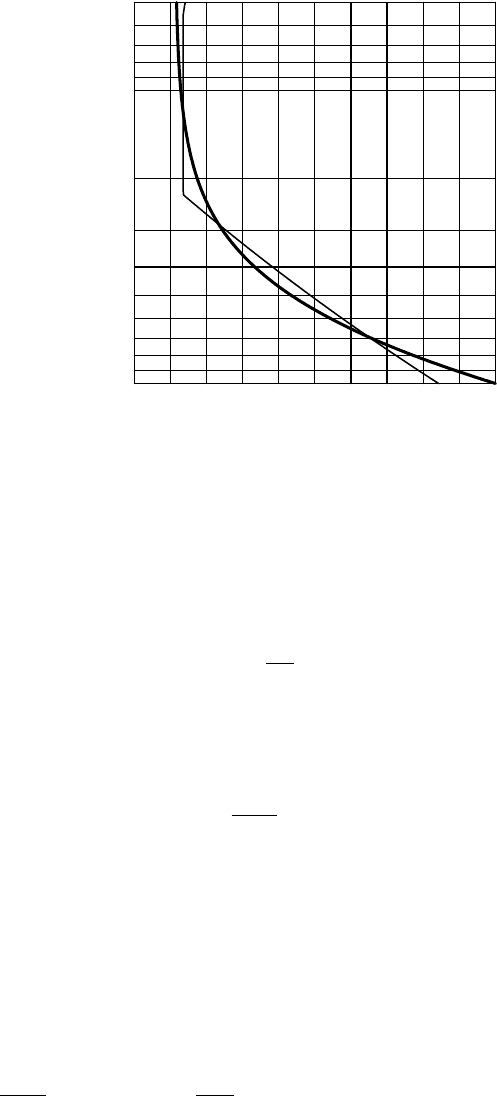
Figure 9.10 shows a typical profile for radiative equilibrium with Earth-
like parameters. Its lapse rate near the surface is so large it is convec-
tively unstable. We need convective enthalpy fluxes to get more realistic
profiles.
53
Next we will introduce an enthalpy flux, H, while the atmosphere remains
transparent to short-wave radiation. The equilibrium condition, Eq. 9.60,
then becomes
L
n
=−S
n
− H = T
4
b
− H. (9.71)
Substituting in Eq. 9.63 we find
2
dB
dı
=−T
4
b
+ H −
d
2
H
dı
2
. (9.72)
53
For more comprehensive model calculations of radiative-convective equilibrium, see
Manabe, S. & Wetherald, R. T. (1967) J. Atmos. Sci. 24, 241–259; Ramanathan V. &
Coakley, J. A. (1978) Rev. Geoph. Space Phys. 16, 465–489
9.7 RADIATIVE–CONVECTIVE EQUILIBRIUM 189
100
1000
–70
–60 –50 –40 –30 –20 –10
0 10 20 30
p (hPa)
T (ºC)
FIGURE 9.10 Radiative equilibrium profile (thick line) as predicted from Eq. 9.70 using an
long-wave optical depth of ı
TOA
= 3.0. The thin line shows the US Standard Atmosphere,
1976 for comparison.
Integrating this equation between ı and ı
TOA
and using the boundary condi-
tion 2B(TOA) = T
4
b
(from Eq. 9.61) we find the solution
2T
4
= T
4
b
(1 + ı
TOA
− ı) +
dH
dı
−
ı
TOA
ı
H dı. (9.73)
For H = 0 this equation reduces to Eq. 9.67. The surface temperature T
E
in
this model is given by
2T
4
E
= T
4
b
(1 + ı
TOA
) +
dH
sfc
dı
−
ı
TOA
0
H dı. (9.74)
Upward enthalpy fluxes act to cool the surface: the second term on the right-
hand side is opposite to the local heating rate at the surface due to the en-
thalpy fluxes. Because enthalpy fluxes tend to be maximal at the surface, this
term tends to be negative. The third term is also always negative for upward
fluxes.
It is instructive to write Eq. 9.72 in terms of a temperature lapse rate by
using Eq. 9.64. The lapse rate is given by
8T
3
LW
= T
4
b
− H +
d
2
H
dı
2
. (9.75)

190 CH 9 THERMAL RADIATION
From this it becomes clear how the presence of enthalpy fluxes reduces the
lapse rate. Indeed, the radiative equilibrium profile of Eq. 9.67 is convectively
unstable and the ensuing enthalpy fluxes act to reduce the lapse rate. Strictly
speaking, the enthalpy fluxes act to reduce the combination T
3
, but this is
generally equivalent to a reduction in .
To account for the negative lapse rates of the stratosphere we need to
take into account short-wave absorption. The ozone layer is the main con-
tributor to short-wave absorption in the stratosphere. The heating due to the
short-wave absorption,
˙
q
SW
, follows from the convergence of the net down-
ward shortwave flux as in Eq. 9.62. For simplicity we set the enthalpy flux
H to zero (this is a good approximation in the stratosphere). In this case
the equilibrium equation, Eq. 9.58, and the lapse rate equation, Eq. 9.63,
become
dL
n
dı
=
˙
q
SW
LW
, (9.76a)
2
dB
dı
=−L
n
+
d
dı
˙
q
SW
LW
. (9.76b)
The first equation expresses how the heating by the shortwave absorption
is compensated by a long-wave cooling. The second equation expresses how
the lapse rate (expressed in terms of dB/dı) is modified: although the net
downward long-wave flux remains negative, the lapse rate is reduced below
regions of short-wave absorption where the second term on the right-hand
side of Eq. 9.76b is positive.
The lapse rate below a region of short-wave heating is lower than the lapse
rate above a region of short-wave heating. To demonstrate this, take a further
derivative of Eq. 9.76b with respect to the optical depth to find
2
d
2
B
dı
2
=−
˙
q
SW
LW
+
d
2
dı
2
˙
q
SW
LW
. (9.77)
Now for simplicity assume the short-wave heating is confined between levels
at optical depths ı
0
and ı
1
. We choose these bounding levels to be just out-
side the region of short-wave heating itself. Integrating the above equation
between these two levels we find
2
dB
1
dı
− 2
dB
0
dı
=−
z
1
z
0
˙
q
SW
dz. (9.78)
Here we changed variables in the integral by noting that
LW
dz = dı. The
right-hand side of this equation is negative. Now using Eq. 9.64 to express
dB/dı in term of lapse rate , we find that the lapse rate at level 1 is
larger than the lapse rate at level 0. Outside this region of short-wave ab-
sorption, the lapse rate is set by Eq. 9.66. Above the region the net upward

9.8 THERMODYNAMICS OF A PHOTON GAS 191
long-wave flux is still T
4
b
. This means that the introduction of a single re-
gion of short-wave absorption in a radiative equilibrium model reduces the
lapse rate below that region. This reduced lapse rate effectively defines the
stratosphere.
9.8 THERMODYNAMICS OF A PHOTON GAS
Thermodynamics can be applied to a gas of photons, particles that mediate
the electromagnetic field. In this section we will derive the Stefan–Boltzmann
law and the Wien displacement law from thermodynamic arguments only.
54
In Chapter 1 we used a kinematic argument to derive how the pressure in a
gas can be written as an average of the momentum transfer in the direction of
a wall over all particles that collide with the wall, see Eq. 1.11. For a photon
gas this equation needs to be reinterpreted: despite being massless, a photon
does have momentum. We can derive an equivalent version of Eq. 1.11 where
we replace M
1
U by P
x
, the momentum of the particle in the direction of the
wall. We then find for the pressure p
p =
˜
n U P
x
, (9.79)
with, as before,
˜
n the volumetric particle number density and U the particle
velocity in the direction of the wall. Because the particles on average have
no directional preference we could have used any velocity and momentum
component in the above equation. We can therefore rewrite the pressure as
the average of the contributions from all directions,
p =
1
3
˜
n U · P, (9.80)
with U the vector velocity of the particle and P its vector momentum.
A photon moves with the speed of light, c, and has momentum of magni-
tude P, which is related to the energy e of the photon by
e = cP. (9.81)
We can substitute this in the above kinematic expression to find the pressure
p of the photon gas,
p =
1
3
˜
ncP=
1
3
˜
ne. (9.82)
54
The present derivation is partly based on Adkins, C. J. (1983) Equilibrium thermody-
namics, 3rd edn. Cambridge University Press, Cambridge.
192 CH 9 THERMAL RADIATION
The volumetric energy density
˜
u of the photon gas can be written as
˜
u =
˜
ne. So we arrive at
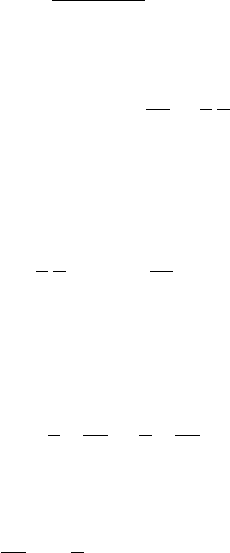
I p =
˜
u/3, (9.83)
which is the equation of state for a photon gas. The Stefan–Boltzmann law
and the Wien displacement law can be derived from this equation of state.
We use the following expressions for the total entropy S, total energy U,
and pressure p of the equilibrium radiation field:
S =
˜
sV, U =
˜
uV, p =
˜
u/3, (9.84)
with
˜
s and
˜
u the volumetric energy densities of entropy and energy. With
these expressions, the first law in differential form
dS =
dU + p dV
T
(9.85)
can be rewritten as
V d
˜
s +
˜
s dV = V
d
˜
u
T
+
4
3
˜
u
T
dV. (9.86)
Because
˜
u and, for the same reason,
˜
s are only functions of temperature,
55
in-
dependent variations in temperature and volume lead to the following equal-
ities:
˜
s =
4
3
˜
u
T
, d
˜
s =
d
˜
u
T
. (9.87)
In order for both equations to be true, the differential version of the first
equation must be equivalent to the second equation. The differential of the
first equation is
d
˜
s =
4
3
d
˜
u
dT
−
˜
u
T
dT
T
. (9.88)
This equals d
˜
u/T, as in the second Eq. 9.87, if and only if
d
˜
u
dT
= 4
˜
u
T
. (9.89)
This equation can be integrated to find
I
˜
u = kT
4
, (9.90)
55
We can add a constant S
0
to the total entropy S by adding S
0
/V to the entropy density
˜
s and still satisfy Eq. 9.87. By the third law, this constant is zero.
9.8 THERMODYNAMICS OF A PHOTON GAS 193
with k an integration constant. As a corollary we find a relationship between
entropy density and energy density of the equilibrium radiation field,
I
˜
s =
4
3
˜
u
T
=
4
3
kT
3
. (9.91)
The Stefan–Boltzmann equation now follows from the result derived in
Appendix D, which states that the total radiative energy flux J
u
is related
to the volumetric energy density
˜
u by
J
u
=
˜
uc/4, (9.92)
with c the speed of light. For a photon gas in equilibrium we therefore have
I J
u
=
kc
4
T
4
(9.93)
with k as in Eq. 9.90. This is the Stefan–Boltzmann law with J
u
the total black
body emission and kc/4 the Stefan–Boltzmann constant.
The Wien displacement law follows from a more general thermodynamic
prediction on the possible shape of the spectrum of thermal radiation. We
proceed by performing a thought experiment where we adiabatically com-
press the radiation in a cubic vessel with perfectly reflecting walls and
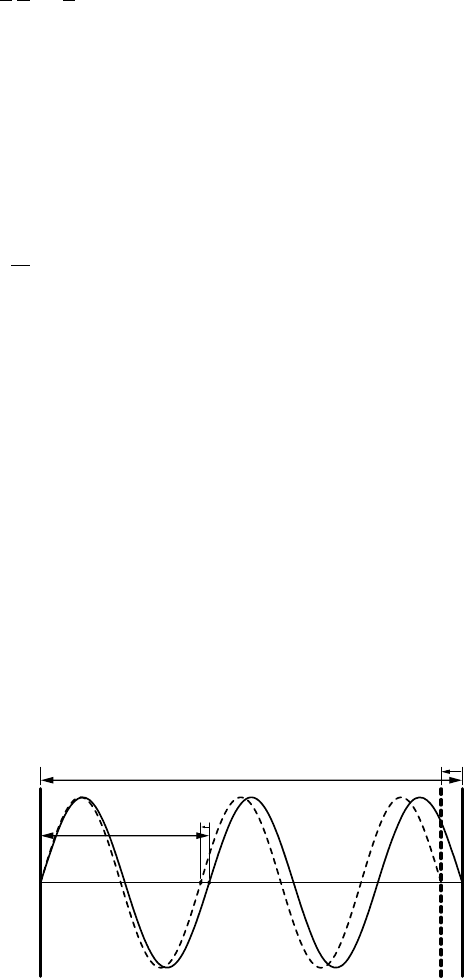
with edge size L. Any single wavemode with wavenumber will adjust
its wavelength to fit the size of the vessel, see Figure 9.11. We therefore
have
∝ L. (9.94)
The total energy of the vessel changes according to the first law under adia-
batic conditions,
dU =−p dV. (9.95)
L
δ L
λ
δλ
FIGURE 9.11 Compressing the vessel of size L leads to a proportional compression of a
wave with wavelength .
194 CH 9 THERMAL RADIATION
If we substitute U =
˜
uV and p =
˜
u/3wefind
4
˜
u dV + 3V d
˜
u = 0, (9.96)
which integrates to
˜
u
3
V
4
= constant (9.97)
or, because V = L
3
and the wavelength of any mode is proportional to the
edge size L,
˜
u
4
= constant. (9.98)
From the derivation of the Stefan–Boltzmann law, Eq. 9.90, we know that
˜
u
is proportional to T
4
. We conclude that for a single wavemode
T = constant (9.99)
on adiabatic compression.
The first law can also be applied to parts of the spectrum. So if we take the
total energy
˜
u
V between wavelengths and + then the first law
for adiabatic compression reads
d(
˜
u
V) =−p
dV, (9.100)
with p
=
˜
u
/3 the partial pressure due to the wavemodes in that
wavelength range. We arrive at the analogous expression of Eq. 9.98,
˜
u
4
= constant. (9.101)
But because the wavelength interval will compress proportional to L, just
as , we find that on adiabatic compression
˜
u
5
= constant. (9.102)
Finally, in Section 9.1 we argued that
˜
u can only be a function of and T.
56
We have now gathered enough properties of
˜
u to predict some important
properties of the spectrum. We have during the adiabatic compression of the
radiation that for any wavemode
T = constant, (9.103a)
˜
u
5
= constant, (9.103b)
˜
u
= f (,T). (9.103c)
56
We have assumed that the radiation remains black during the compression.

9.9 DERIVATION OF THE PLANCK LAW 195
To satisfy these properties for all , we see that
˜
u
must be of the form
I
˜
u
=
−5
g(T), (9.104)
for some function g. The Planck law, Eq. 9.6, is of this form (remember that
the energy density
˜
u
is proportional to the energy flux B
). An equivalent
expression of the form of the spectrum is
I
˜
u
= T
5
g
(T), (9.105)
for some other function g
where g
(x) = g(x)x
−5
. From this form of the
spectral distribution we find that the only dependency on the wavelength is
contained in the proportionality to g
(T). The maximum of g
(x) corresponds
to some x
m
. This then corresponds to some wavelength
m
with
I
m
= x
m
/T. (9.106)
This is Wien’s displacement law with x
m
the displacement constant.
9.9 DERIVATION OF THE PLANCK LAW
One cannot help but be impressed by the thermodynamic arguments leading
to Eq. 9.104, or the equivalent Eq. 9.105. These equations contain the Stefan–
Boltzmann law and the Wien displacement law. However, thermodynamics
alone cannot take us any further. The derivation of the Planck law itself
requires quantum mechanical concepts. We present its derivation here as it is
one of the classic results in physics. This by now canonical derivation is based
on statistical mechanics, which employs the Boltzmann factor introduced in
Section 4.6.
57
We consider a standing electromagnetic wave of wavelength in a cubic
vacuum vessel with perfectly reflecting walls and with edge size L. The elec-
tromagnetic wave corresponds to a photon with energy, e, which is related
to the wavelength, , as
e = hc/. (9.107)
Introducing the total wavenumber K ,with K = 2, this is written
e =
h
2
Kc. (9.108)
The wavenumber K is the length of the three-dimensional wave vector K =
(K
x
,K
y
,K
z
).
57
For further reading see Kittel C. & Kroemer, H. (1980) Thermal physics 2nd edn. W.
H. Freeman, New York; Baierlein, R. (1999) Thermal physics Cambridge University Press,
Cambridge.

196 CH 9 THERMAL RADIATION
We first need to know how many wavevectors of total wavenumber K there
are. In a cubic vessel with reflecting walls, the components K
i
of the wavevec-
tor can only have discrete values such that precisely N
i
half wavelengths fit
inside the vessel size L; for example, see Figure 9.11. We therefore have
58
K
i
= N
i
/L. (9.109)
So for each one-dimensional wavenumber /L we can fit one wavenumber
K
i
. An elementary volume of the size (/L)
3
in three-dimensional wavenum-
ber space therefore contains one three-dimensional wavenumber mode. Pho-
tons also have an internal degree of freedom called spin. For a photon the
spin can be either up or down. So each elementary volume in wavenumber
space corresponds to two possible photon modes – each wavenumber mode
has a degeneracy of 2.
The wave vectors with total wavenumber between K and K+dK represent a
three-dimensional spherical shell in wave-vector space with volume 4K
2
dK.
Because all wavenumber components K
i
are assumed positive, only 1/8 of this
shell contributes to the total wavenumber volume. An elementary volume of
(/L)
3
contains two degenerate photon modes so the number of modes g
K
dK
corresponding to the shell between total wavenumber K and K + dK is
g
K
dK =
K
2
L
3
2
dK. (9.110)
We now express this as the number of modes g
e
de with photon energies
between e and e + de. We have
g
e
de = g
K
dK. (9.111)
Using Eq. 9.108 we now find that
g
e
=
8e
2
L
3
h
3
c
3
. (9.112)
This function is called the density of states of the energy level.
So what is the probability of finding N photons at some mode with energy
e? The Boltzmann factor exp (−e/k
B
T) gives the probability of finding a
photon in a single mode of energy e, see Section 4.6. The probability P
e
(n)de
of finding n photons between energies e and e + de therefore is
P
e
(n) = g
e
exp (−ˇne)
Z
, (9.113)
58
The argument presented here is not complete in quantum mechanics as we ignore the
ground level of each wave mode. However, this does not change the phase space density
g
K
, which is the purpose of the quantization presented here.