
Ambaum M., Thermal Physics of the Atmosphere
Подождите немного. Документ загружается.


218 CH 10 NON-EQUILIBRIUM PROCESSES
For computational simplicity, we approximate the radiative output
˙
R
out,i
in
each region i by a linear function of the radiation temperature. The appro-
priate linearization of Stefan’s law is
˙
R
out,i
=
˙
R
in
2
T
b
+ 4(T
i
− T
b
)
T
b
, (10.64)
with
˙
R
in
=
˙
R
in,1
+
˙
R
in,2
the global radiative heat input, T
b
the global mean
radiation temperature, and T
i
the radiation temperature in region i. For Earth
we have
˙
R
in
= 120 PW and T
b
= 255 K. (10.65)
The above linear approximation produces a radiative output of
˙
R
in
/2 = 60 PW
per region when the radiation temperature is T
b
= 255 K, and it has the same
variation with temperature as Stefan’s law at this point. It is possible to use
linear fits to real data to get more accurate versions for the Earth system.
The system is in equilibrium when the heat input is the same as the heat
output for each region,
˙
Q
in,i
=
˙
R
out,i
. (10.66)
Substituting Eqs. 10.62 and 10.64 we can solve for the equilibrium temper-
ature in each region as a function of meriodional heat flux J,
T
1
= T
b
1 +
1
4
˙
R
in,1
− J −
˙
R
in
/2
˙
R
in
/2
, (10.67a)
T
2
= T
b
1 +
1
4
˙
R
in,2
+ J −
˙
R
in
/2
˙
R
in
/2
. (10.67b)
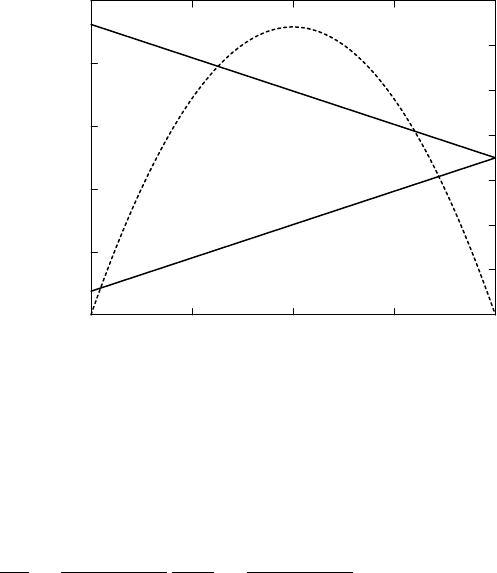
Figure 10.2 shows the two temperatures as a function of J for Earth param-
eters. As expected, for the maximum poleward heatflux J
max
, given by
J
max
= (
˙
R
in,1
−
˙
R
in,2
)/2, (10.68)
we find that the radiation temperatures in the two regions become the same.
For Earth parameters, we have J
max
= 20 PW.
The entropy production d
i
S/dt due to the heat flux can be estimated as
d
i
S
dt
= J
1
T
2
−
1
T
1
, (10.69)
10.4 CLIMATE THERMODYNAMICS 219
230
240
250
260
270
280
0 5 10 15 20
0
1
2
3
4
5
6
7
T (K)
d
i
S/ dt (mW m
− 2
K
− 1
)
J (PW)
T
2
T
1
d
i
S/ dt
FIGURE 10.2 Results for the two-box model of the Earth system for varying poleward heat
flux J. Solid lines: radiation temperature of equatorial region, T
1
, and polar region, T
2
.
Dashed line: irreversible entropy production due to the poleward meridional heat flux.
The entropy production is expressed per unit area on Earth.
which is equivalent to the expression for the heat conduction example of
Section 2.3, Eq. 2.32. Using the above expressions for T
1
and T
2
we find
d
i
S
dt
=
J (J
max
− J)
˙
R
in
T
b
T
1
T
2
≈
J (J
max
− J)
˙
R
in
T
b
, (10.70)
where it should be noted that both T
1
and T
2
are also functions of J. The
approximation on the right-hand side is better than one part in a hundred for
the relevant range of values for J. It can be seen that the irreversible entropy
production vanishes when J = 0 or when J = J
max
. In the intermediate range,
the entropy production is positive, with a maximum production rate when
J ≈ J
max
/2, see Fig 10.2.
For Earth parameters, the maximum of entropy production of about
6.5mWm
−2
K
−1
occurs for J ≈ 10 PW. This value of the poleward heat flux is
close to the sum of the observed values at 30
◦
N and 30
◦
S. This coincidence
may well be fortuitous. However, problem 10.3 shows how maximum entropy
production can be used to predict the sensible and latent heat flux between
the surface and the atmosphere. Also, much more complicated models have
been produced that appear to indicate that observed fluxes are close to those
that maximize the production of entropy.
66
Maximum entropy production
is perhaps the principle of non-equilibrium thermodynamics that parallels
66
Paltridge, G. W. (1975) Quart. J. Roy. Met. Soc. 101, 475–484; Ozawa, H. et al.
(2003) Rev. Geoph. 41(4), 1–24; Kleidon, A. & Lorenz, R., eds. (2005) Non-equilibrium
thermodynamics and the production of entropy. Springer, Berlin.

220 CH 10 NON-EQUILIBRIUM PROCESSES
the maximum entropy principle of equilibrium thermodynamics. However,
as yet, no convincing theoretical grounding exists and competing principles
have been formulated.
The thermodynamics of the Earth system presents one of the great chal-
lenges of physics.
P
ROBLEMS
10.1. Rainfall rates. Equations 10.38 and 10.39 can be used to get an inter-
esting estimate of typical rainfall rates. We get a low estimate of the
entropy production rate if we assume that the up-and-down motion
leading to Eq. 10.38 is produced by a buoyancy oscillation. Then the
entropy production can be estimated as
ds
dt
=
c
p
T
(
d
−
s
) Nız,
with ız the amplitude of the buoyancy oscillation. Combine this equa-
tion with Eq. 10.39 to show that a typical rainfall rate for such motion,
˙
r, expressed in mm h
−1
, is
˙
r =
3.6 × 10
6
gNızH
l
L
1 −
s
d
with the density of air in the cloud region,
l
the density of liquid wa-
ter, and H the depth of the cloud. Does this equation produce realistic
rainfall rates? How can this equation be improved?
10.2. Use Gauss’ theorem to show that the global budgets of Eqs. 10.43
and 10.44 lead to the local budgets of Section 10.1.
10.3. Vertical heat fluxes and maximum entropy production. Consider the
cloud-free single slab model of the atmosphere discussed in Section 9.3.
Now include in the budget a latent and sensible heat flux H from the
surface to the slab. Show that, if the long-wave emissivity of the slab is
LW
= 1, the entropy production of the latent and sensible heat flux is
maximal when H ≈ 133Wm
−2
. At this value we find a surface temper-
ature T
E
= 280 K and an entropy production d
i
S/dt = 46 mW m
−2
K
−1
.
The observed value of H is about 100 W m
−2
and of the surface tem-
perature T
E
is about 288 K. The entropy production is in line with
what complex general circulation models predict. What happens if
we change the long-wave emissivity of the slab to a more realistic
LW
= 0.8?

Appendix A
Functions of several
variables
Here we review some aspects of partial differentiation that are of relevance to
applications in thermodynamics. Consider a functional relationship between
variables x, y, and z (the arguments here can be straightforwardly extended
to more variables)
F(x, y, z) = 0. (A.1)
An equation of state is an example of such a relationship; for an ideal gas we
have F(p, v, T) = pv −RT. Assuming F to be suitably smooth, we can, at least
locally, define z to be a function of the two variables x and y, z = z(x, y) (this
is formalized in the implicit function theorem). We can use a Taylor expansion
to calculate what happens to z if we perturb the variables by a small amount
ıx and ıy:
z(x + ıx, y + ıy) = z(x, y) +
∂z
∂x
y
ıx +
∂z
∂y
x
ıy + ... (A.2)
The dots here indicate terms of higher order in ıx or ıy that are small when
variations are small. The subscripts indicate explicitly which parameters are
to be kept constant in the differentiation; this is useful for thermodynamic ap-
plications, where it is common to use different combinations of variables. For
infinitesimal variations dx and dy in variables x and y the infinitesimal dif-
ference dz (also called the differential of z) becomes
dz = z(x + dx, y +dy) − z(x, y) =
∂z
∂x
y
dx +
∂z
∂y
x
dy (A.3)
This equation is really a shorthand notation for expressing the local depen-
dence of z on x and y. A typical use of this shorthand notation is the following:
suppose variables x and y are functions of time t. The derivative of z with
221
Thermal Physics of the Atmosphere Maarten H. P. Ambaum
© 2010 John Wiley & Sons, Ltd. ISBN: 978-0-470-74515-1

222 APPENDIX A FUNCTIONS OF SEVERAL VARIABLES
respect to t then is
dz
dt
=
∂z
∂x
y
dx
dt
+
∂z
∂y
x
dy
dt
. (A.4)
Equation A.3 expresses in an efficient way that z is a function of x and y only
and how z varies locally with variations in x or y.
From Eq. A.1, we can also express x locally as a function of y and z, x =
x(y, z). The differential of x then is
dx =
∂x
∂y
z
dy +
∂x
∂z
y
dz. (A.5)
Substituting Eq. A.3 in Eq. A.5 we find
dx =
∂x
∂y
z
dy +
∂x
∂z
y
∂z
∂x
y
dx +
∂z
∂y
x
dy
. (A.6)
This equation can be rearranged to get
∂x
∂z
y
∂z
∂x
y
− 1
dx +
∂x
∂y
z
+
∂x
∂z
y
∂z
∂y
x
dy = 0. (A.7)
As this has to be true for any dx and dy, the terms between the square brackets
each have to vanish. This then leads to the reciprocal theorem,
I
∂x
∂z
y
∂z
∂x
y
= 1, (A.8)
and the reciprocity theorem,
I
∂x
∂y
z
=−
∂x
∂z
y
∂z
∂y
x
. (A.9)
Finally, it can be verified by Taylor expansion that for multiple derivatives
the order of differentiation is unimportant,
I
∂
∂y
∂z
∂x
y
x
=
∂
∂x
∂z
∂y
x
y
. (A.10)
This property is used in the derivation of the Maxwell relations in Chapter 3.

Appendix B
Exergy and thermodynamic
stability
Given the total internal energy U and the volume V of a system, the second
law states that a system will move to a state of maximum total entropy S. This
defines the equilibrium state of the system: any spontaneous internal rear-
rangement of the system would correspond to an increase in entropy, by the
second law. However, if the entropy is maximum, no such rearrangements
can exist. The system must therefore be stable. In this section we will exam-
ine how to generalize this argument to understand thermodynamic stability
if there are different constraints.
Consider a closed system interacting with its environment through heat
fluxes dQ and work exchange dW. The environment is assumed to be ‘large’:
its temperature and pressure will not change through interactions with the
system. The environment is a heat and work reservoir at fixed temperature
T
0
and pressure p
0
. Engineers sometimes call this environment ‘the atmo-
sphere’. For most engineering applications, systems are in contact with an
atmosphere that does not change its temperature or pressure while interact-
ing with the system. This is also the case for an air parcel interacting with its
environment.
We first assume that the system under consideration (engine, air parcel,
drop) is not necessarily in thermal equilibrium with its environment. It will
be characterized by its own intensive properties, temperature T and pressure
p, and its extensive properties, volume V and entropy S.
On any interaction with the environment the system will change its internal
energy U by
dU = dQ + dW, (B.1)
with dQ the heat exchange and dW the work exchange with the environ-
ment. The second law in the form of Eq. 2.28 defines the heat exchange dQ
in terms of the entropy change of the system,
T
0
dS = dQ + T
0
d
i
S, (B.2)
223
Thermal Physics of the Atmosphere Maarten H. P. Ambaum
© 2010 John Wiley & Sons, Ltd. ISBN: 978-0-470-74515-1
224 APPENDIX B EXERGY AND THERMODYNAMIC STABILITY
with d
i
S the irreversible entropy change of the system, which, according to
the second law, is always non-negative, d
i
S ≥ 0. The relevant temperature is
T
0
because the exchange is with the environment at fixed temperature.
For environmental applications we only consider reversible exchange of
work with the environment. This means that the work exchange dW can be
written
dW =−p
0
dV. (B.3)
Again, the relevant pressure for the work exchange is p
0
, the fixed pressure
of the environment.
We can now combine the above equations to
dU − T
0
dS + p
0
dV =−T
0
d
i
S ≤ 0. (B.4)
This can be compactly written as the differential of the exergy, A,
67
I A = U − T
0
S + p
0
V, (B.5)
so that
I dA = dU − T
0
dS + p
0
dV. (B.6)
We have
dA =−T
0
d
i
S ≤ 0. (B.7)
For a given environment, the exergy is a state variable of the system. As a
consequence of the second law, the exergy of a system in contact with its en-
vironment can only reduce. The system is at equilibrium with its environment
if its exergy is minimum. So for a system in equilibrium with its environment
we have
dA = 0 at equilibrium. (B.8)
This equation allows us to define conditions for equilibrium in a given
environment.
Let us assume the system is in local thermodynamic equilibrium, although
not necessarily in equilibrium with its environment. For such systems, the
variation in internal energy is given by the first law
dU = T dS − p dV. (B.9)
67
There are various synonyms for exergy. The most commonly encountered synonym is
availability, hence the symbol A.
APPENDIX B EXERGY AND THERMODYNAMIC STABILITY 225
Combining this equation with the differential of the exergy, Eq. B.6, we find
dA = (T − T
0
)dS − (p − p
0
)dV. (B.10)
This expression is used to define equilibrium under four different conditions.
Case 1: the system is thermally isolated and has a fixed volume. Because
in Eq. B.10 the two contributions to the variations in A are independent,
both must vanish identically. The last term vanishes because we set dV =
0. Because the system is thermally isolated, the temperature of the system
is not bound to the temperature of the environment. For dA to vanish we
therefore must have dS = 0. In this case, the equilibrium condition dA = 0is
equivalent to dU = 0. The equilibrium conditions therefore are
dS = 0, dV = 0, dU = 0. (B.11)
Case 2: the system is in thermal contact with the environment but has fixed
volume. The thermal contact leads to an equilibrium condition of T = T
0
and therefore dT = 0. We also have dV = 0. In this case, the equilibrium
condition reduces to dA = dU − T dS = dF = 0, because T is constant (F is
the Helmholtz free energy). The equilibrium conditions for this case are
dT = 0, dV = 0,dF= 0. (B.12)
Case 3: the system is thermally isolated and remains isobaric. Thermal iso-
lation requires dS = 0, as in case 1. The isobaric condition requires that at
equilibrium p = p
0
, and therefore dp = 0. The equilibrium condition becomes
dA = dU + p dV = dH = 0, because p is constant (H is the enthalpy). The
equilibrium conditions now are
dS = 0,dp= 0,dH= 0. (B.13)
Case 4: the system is in thermal contact with the environment and remains
isobaric. For equilibrium we now need T = T
0
and p = p
0
. The equilibrium
condition is dA = dU − T dS + p dV = dG = 0(G is the Gibbs function). We
now have
dT = 0,dp= 0,dG= 0. (B.14)
We find that each thermodynamic potential occurs with its own natural vari-
ables. The above analysis shows how to apply the maximum entropy condition
under different external constraints.
In an engineering context, the exergy is a measure of how much useful
work a system can perform in a given environment.
68
This is the origin of the
68
See Bejan, A. (2006) Advanced Engineering Thermodynamics, 3rd edn. J. Wiley & Sons,
Hoboken.
226 APPENDIX B EXERGY AND THERMODYNAMIC STABILITY
synonym ‘availability’. Suppose the system can produce work in other ways
than just expansion against the environment. The useful work output dL of a
system then is defined as
dL =−dW − p
0
dV. (B.15)
The useful work output is the total work output of the system −dW minus
the work spent by expansion against the environment p
0
dV. Using the first
law, Eq. B.1, the second law, Eq. B.2, and the definition of exergy, Eq. B.5
this can be rearranged to
dL =−dA − T
0
d
i
S. (B.16)
The first term on the right-hand side is the reversible part of the work output
dL
rev
=−dA. Note that at equilibrium with the environment dA = 0sono
useful work can be extracted. The above expression can be rewritten as the
Guoy–Stodola theorem,
I dL
lost
= dL
rev
− dL = T
0
d
i
S ≥ 0. (B.17)
The system destroys useful work at a rate which is proportional to its irre-
versible entropy production.

Appendix C
Thermodynamic diagrams
The thermodynamic state of a simple substance is determined by two vari-
ables. That means that a two-dimensional diagram with a particular ther-
modynamic variable on each of the two coordinate axes will be sufficient
to describe any thermodynamic state of the substance. The pV diagrams in
Chapter 1 and 2 are examples. As we saw in Chapter 2, the area on a pV
diagram corresponds to (work) energy. The area inside a closed cycle C on a
pV diagram is
area =
C
p dV, (C.1)
which also equals the total work performed by an air parcel over the cycle. We
tend to reserve the phrase ‘thermodynamic diagram’ for two-dimensional di-
agrams where the area corresponds to an energy. So, for example, a diagram
with T and S on the axes would also be a thermodynamic diagram with the
integral of T dS being the heat input for an air parcel over a cycle.
We can construct alternative thermodynamic diagrams with area conserv-
ing transformations of pV diagrams or TS diagrams. Here we will not describe
in general how such transformations may be constructed; they can range from
fairly trivial ones, such as rotations or translations, to more convoluted ones,
such as area preserving deformations.
In atmospheric science we often use tephigrams, which are rotated Ts di-
agrams (we use specific entropy here, so area corresponds to energy per
unit mass), and so-called skewT–log p diagrams, where the coordinate axes
are essentially skewed versions of T and ln p. Tephigrams derive their name
from the combination ‘T-’, with an early twentieth century notation for
specific entropy. The tephigram is now the most commonly used thermody-
namic diagram in Europe; in the US the skewT–logp diagram is currently
more fashionable. Some local meteorological services use their own variants
of thermodynamic diagrams.
The tephigram is a rotated and translated rectangular subsection of the Ts
diagram. Figure C.1 illustrates how a tephigram maps onto a Ts diagram. The
227
Thermal Physics of the Atmosphere Maarten H. P. Ambaum
© 2010 John Wiley & Sons, Ltd. ISBN: 978-0-470-74515-1