
Boults Е. Illustrated history of landscape design
Подождите немного. Документ загружается.

197
fi rst national park, “for the benefi t and
enjoyment of the people.”
The landscape of Yosemite Valley was
equally valued as an icon of American
identity. During a sabbatical from his
work on Central Park, Olmsted accepted
a post with the Mariposa Mining Com-
pany to oversee operations in the Sierra
Nevada. From 1863–1865 Olmsted
undertook a series of commissions in
northern California. Most signifi cant
was his appointment by the governor to
develop a management plan for Yosemite
Valley, which was designated a state
park in 1864.
YOSEMITE
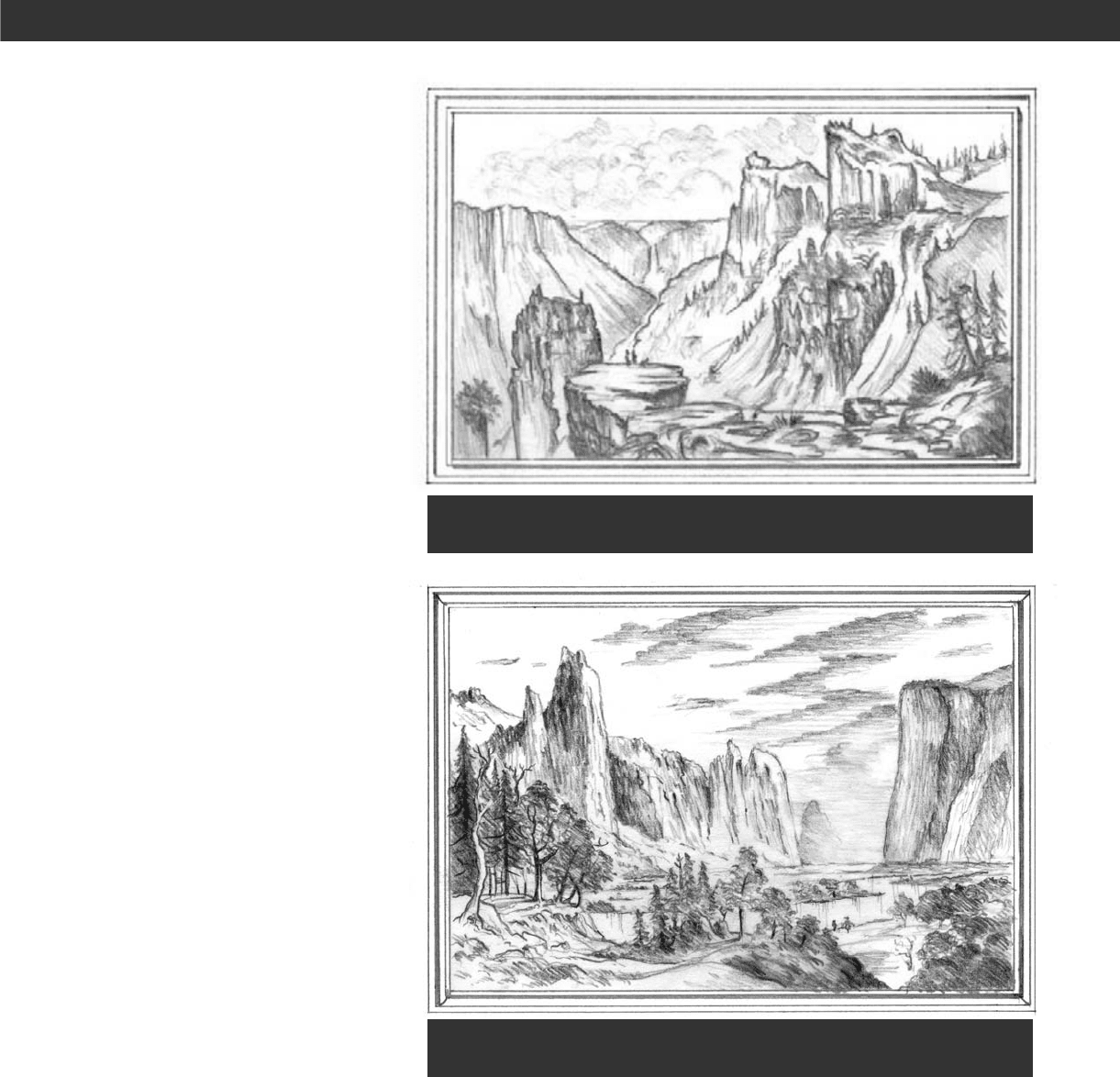
The public’s fi rst glimpse of Yosemite
Valley was through the photographs
of Carleton Watkins, the drawings of
Thomas Ayres, and the large-format
paintings of Albert Bierstadt. Many
artists depicted the same view, creating
iconographic images of humans dwarfed
by the great mountains, trees, and wa-
terfalls. American character came to be
defi ned by the idea of rugged individual-
ism—by wilderness unlike any other in
the world.
The 1890 census declared the frontier
offi cially closed.
17
Suddenly, Americans
sought to retain the wilderness areas
that had become critical to their
national identity. The Romantic senti-
ment of the 19th century planted the
seeds of a conservation and wilderness
ethic.
Opinions differed on how the landscape
should be preserved. John Muir, a
naturalist, environmental observer, and
founder of the Sierra Club, advocated a
preservation ethic and concluded that
nature should be left alone. He support-
ed public ownership of wilderness areas.
Gifford Pinchot, a forester, advocated
a conservation ethic based on the wise
use and management of resources
through scientifi c principles such as
sustained yield of forests.
Muir’s relationship with President
Theodore Roosevelt was key to the
setting aside of public lands to be
established as national parks. Early
20th-century environmental legisla-
tion created the National Forest
Service, in 1905, and the National
19th CENTURY
/
AMERICA
Park Service, in 1916. Stephen Mather,
the first chief of the Park Service,
determined criteria for designat-
ing park land (scenic value, scientific
value, or historic value) and developed
master plans for the management of
each site.
THE GRAND CANYON OF THE YELLOWSTONE RIVER, 1871: Thomas Moran’s paint-
ings introduced the majesty of the American West to the public.
VALLEY OF THE YOSEMITE, 1864: Albert Bierstadt’s paintings were known for
their luminous atmospheric effects.
198
The conceptualization and representa-
tion of America’s unique wilderness
helped the nation compete culturally
with Europe. In addition to artistic pro-
duction, countries sought to showcase
on the world stage their industrial and
technological advancements. Interna-
19th CENTURY / AMERICA
tional expositions and world’s fairs were
popular 19th-century attractions.
America had emerged as an agricultural
and economic leader, and by the second
half of the 19th century, a political and
industrial power. The World’s Columbian
WORLD’S COLUMBIAN EXPOSITION OF 1893
Exposition was held in 1893 to showcase
American progress since Columbus’s
arrival 400 years earlier. The City of
Chicago beat out St. Louis, New York
City, and Washington, DC, to host the
event. It became known as the Chicago
World’s Fair.
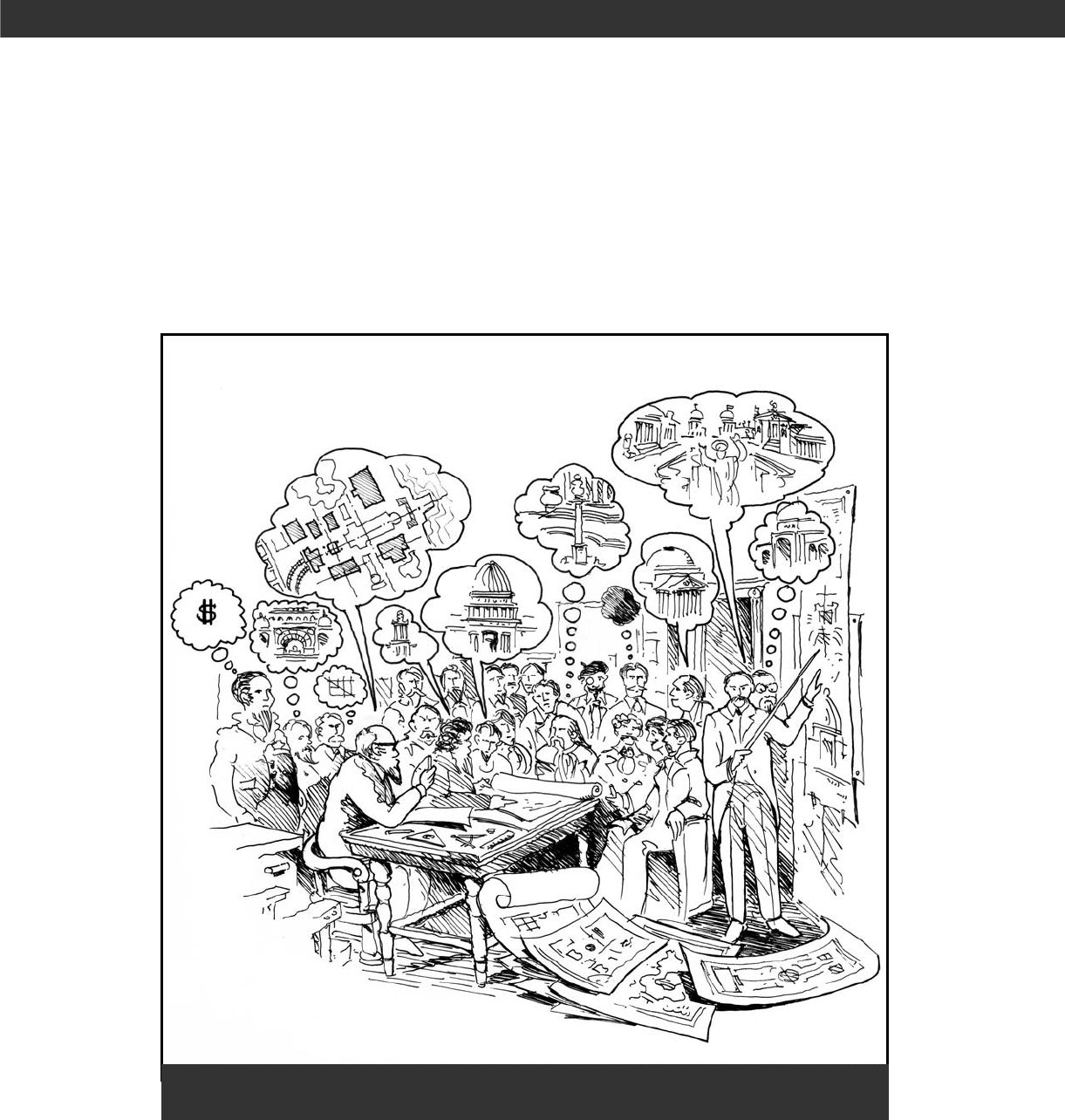
MEETING OF THE MINDS: The World’s Columbian Exposition brought together artists, sculptors, archi-
tects, and landscape designers, initiating a collaborative approach to design.
199
Chicago World’s Fair
CASE STUDY:
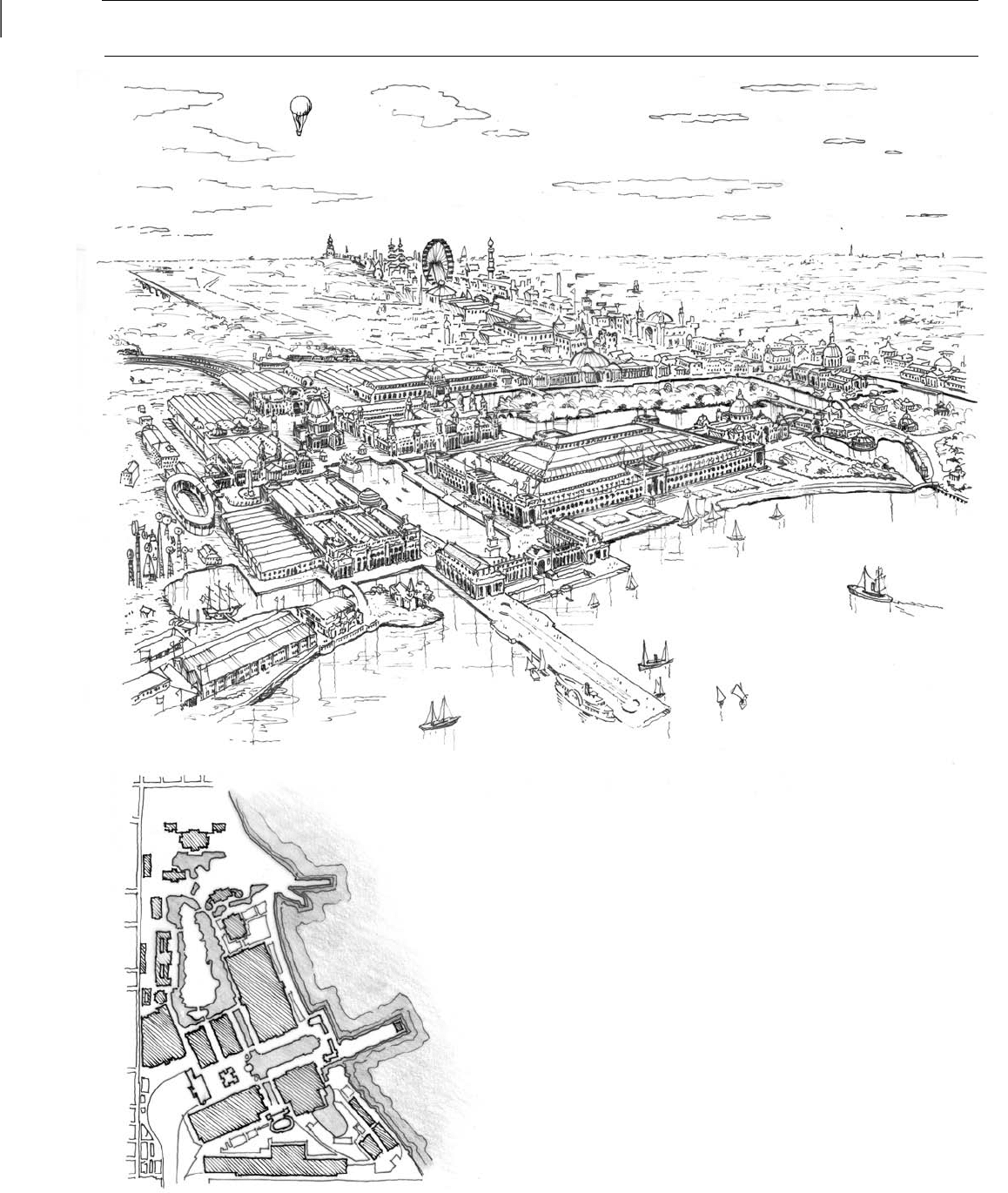
Olmsted’s site plan for the fairgrounds helped establish a new
language of urban design.
200
BEAUX-ARTS
IDEALS
Olmsted collaborated with Beaux-
Arts-trained designer Daniel Burnham
(1846–1912) to create the master
plan for the fairgrounds. A neoclassi-
cal design vocabulary was adhered to
by most of the architects invited to
design the temporary structures. The
pavilions were all 60 feet high and made
out of nondurable materials; the plaster
19th CENTURY /AMERICA
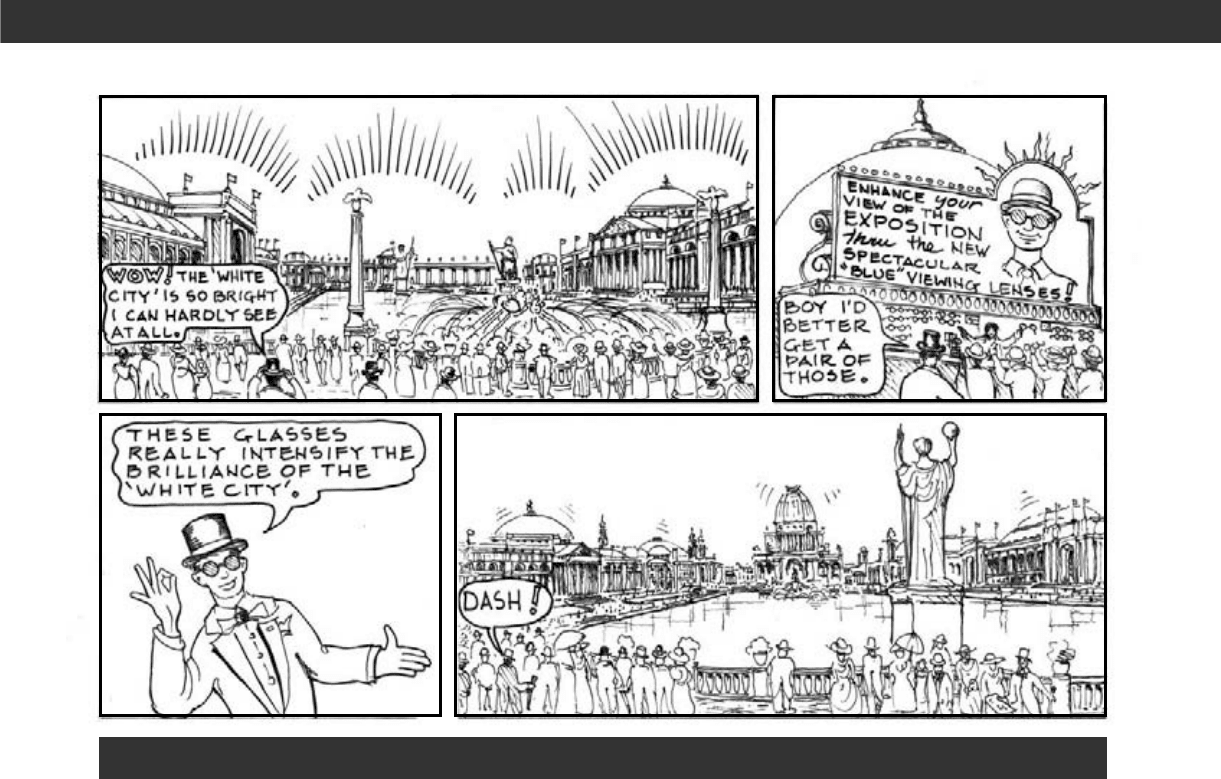
and stucco fi nishes created a uniform
complex known as the White City. Olm-
sted showed the monumental buildings
located around a central basin of water
called the Court of Honor. The buildings
framed a powerful rectangular void; open
space organized architecture. Although
Gilded Age grandeur was antithetical
to Olmsted’s ideal of pastoral urban
open space, he did offer a naturalistic
escape—he created a tree-lined island
with curvilinear pathways in the free-
form lagoon north of the Court of Honor.
The Chicago World’s Fair was a great
success and very well attended. Its
lasting impact was the new spirit of
multidisciplinary collaboration and
the growing sense of civic pride that
inspired the City Beautiful move-
ment in the early 20th century. Many
civic beautifi cation projects adopted
the same neoclassical idiom. Modern
conceptions of urban planning emerged
from this infl uential exposition of art
and technology.
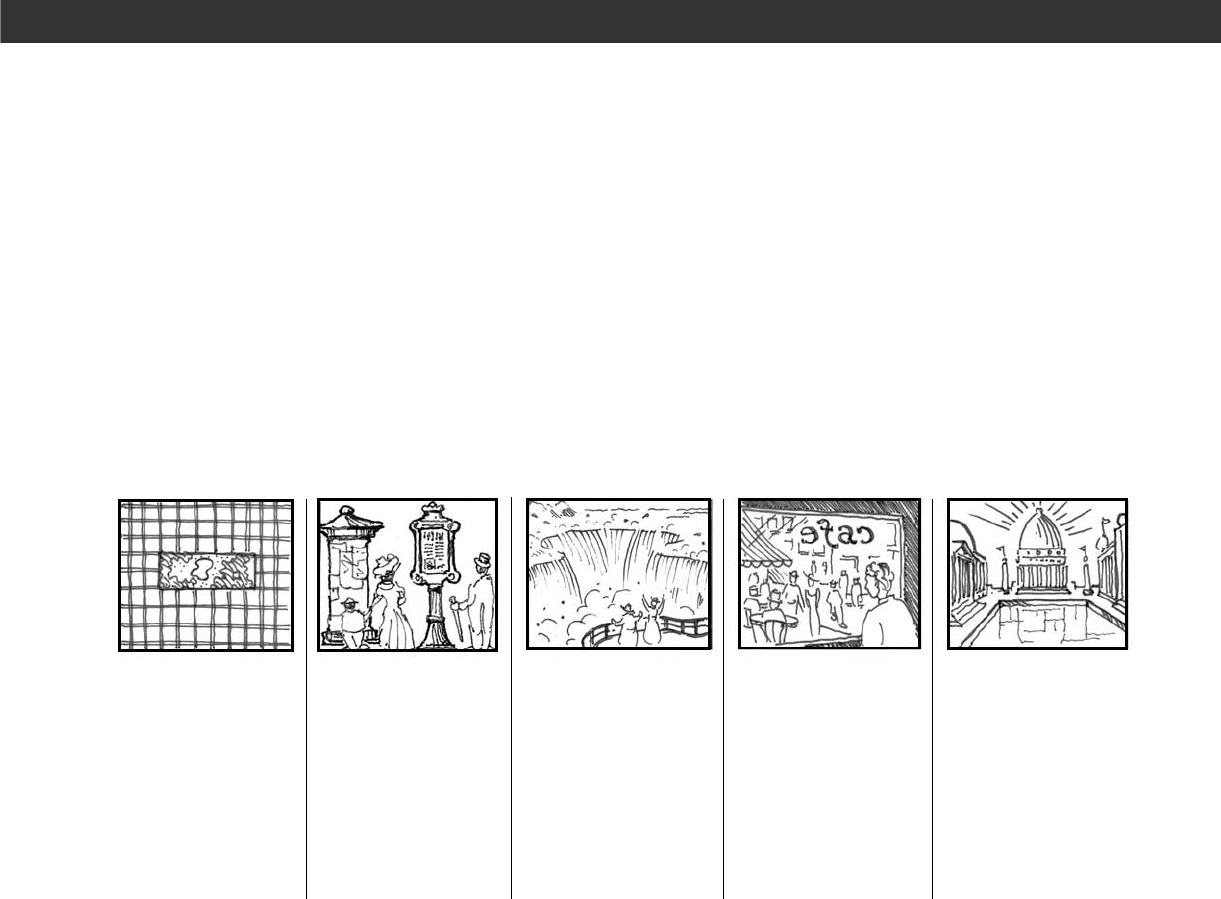
A DAY AT THE FAIR: Spectators could purchase blue-tinted glasses to cut down on the glare from the White City.
201
19th CENTURY / CONCLUSION
SUMMARY
The Industrial Revolution brought widespread change to the landscape and to society. The shift from an agricultural to an indus-
trial economy created a new class of low-wage workers in European and American cities. Social reformers lobbied to improve the
living conditions of the urban poor by providing public parks. The aesthetic language of the English landscape garden was adopted
as a model for the parks, and persists in the Western imagination as an icon of nature. The physical and social structures that
have come to defi ne city life took shape in the 19th century.
The Romantic sentiment of the 19th century contributed to a conception of nature as being restorative. People understood the
political, economic and social value of the landscape, and campaigned to access its benefi ts. By the end of the century, landscape
architecture was established as a profession in America.
ACCESSIBILITY
An awareness of
social factors is criti-
cal to a successful
design. The fi rst public
parks opened in the
19th century.
IDENTITY
Space becomes place
when it has iden-
tifi able character.
Alphand’s design
vocabulary defi ned
Second Empire Paris.
TRANSFORMATION
Landscapes, both
built and natural, are
capable of altering
emotional states.
Transcendental philos-
ophers helped create a
wilderness myth about
the American West.
OBSERVATION
Urban environments
create opportunities
for social exchange.
Parisian boulevards
accommodated a vari-
ety of interactions.
COLLABORATION
Design is a collab-
orative and iterative
process. A multi-
disciplinary team of
experts assembled
to design the Chicago
World’s Fair.
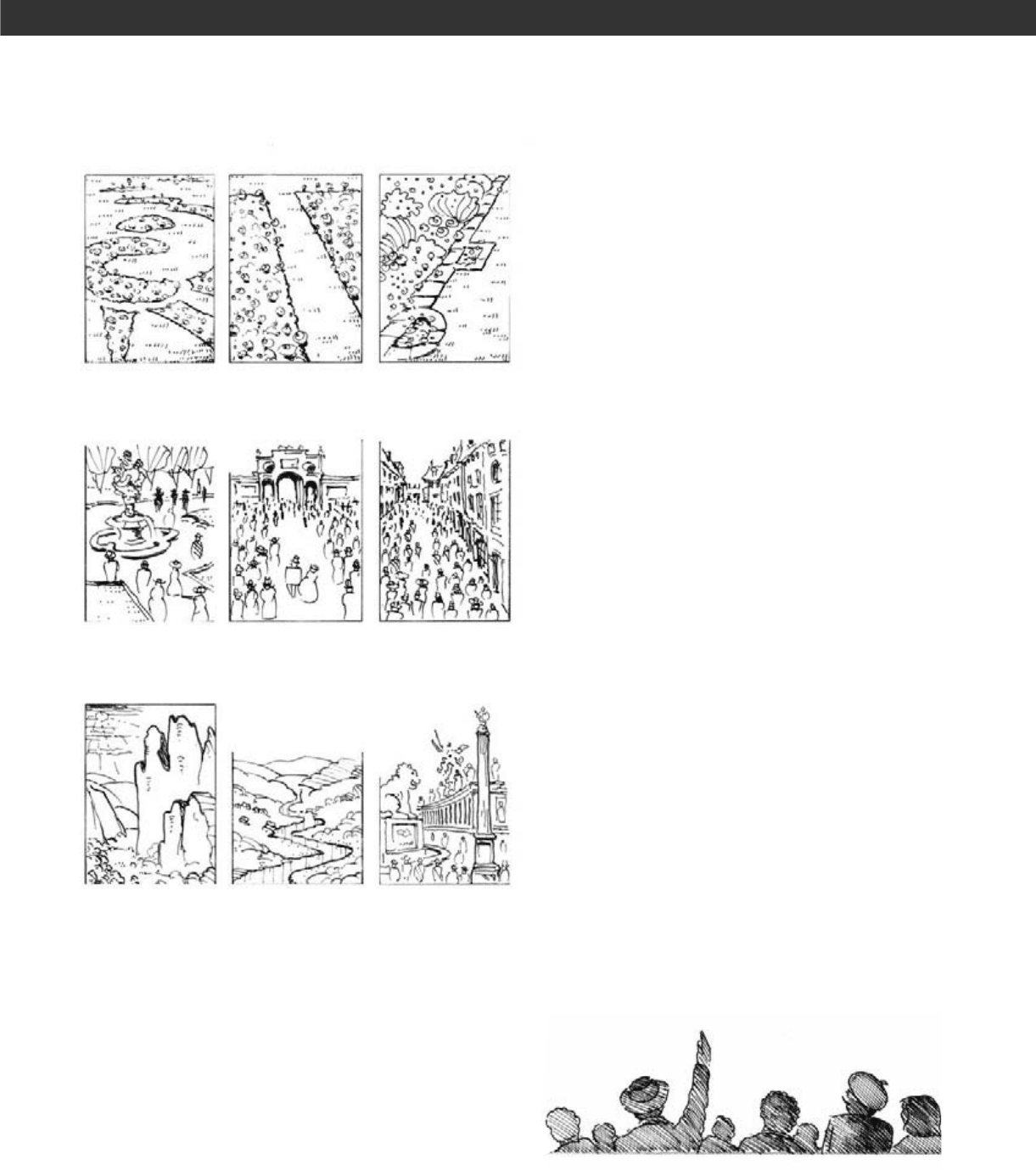
DESIGN PRINCIPLES
202
19th CENTURY / CONCLUSION
DESIGN VOCABULARY
BOOKS
COLD MOUNTAIN, by Charles Frazier
T
HE DEVIL AND THE WHITE CITY, by Erik Larson
G
REAT EXPECTATIONS, by Charles Dickens
T
HE LAST OF THE MOHICANS, by James Fennimore Cooper
L
ITTLE WOMEN, by Louisa May Alcott
M
Y ANTONIA, by Willa Cather
M
OBY DICK, by Herman Melville
N
ATURE, by Ralph Waldo Emerson
P
ASSAGE TO INDIA, by E.M. Forster
T
HE RAVEN, by Edgar Allan Poe
W
ALDEN, by Henry David Thoreau
W
UTHERING HEIGHTS, by Emily Bronte
FILMS
AMISTAD (1997)
A
NGELS AND INSECTS (1995)
D
AISY MILLER (1974)
T
HE GANGS OF NEW YORK (2002)
A
N IDEAL HUSBAND (1999)
J
ANE EYRE (1996)
O
SCAR AND LUCINDA (1997)
T
HE SWAN (1956)
S
WEENEY TODD (2007)
PAINTINGS AND SCULPTURE
THE THIRD OF MAY, by Francisco Goya (1804)
T
HE HAYWAIN, by John Constable (1821)
S
CHROON MOUNTAIN, ADIRONDACKS, by Thomas Cole (1838)
F
UR TRADERS DESCENDING THE MISSOURI, by George Caleb
Bingham (1845)
N
OCTURNE IN BLACK AND GOLD, by James McNeil Whistler
(1874)
L
E MOULIN DE LA GALETTE, by Auguste Renoir (1876)
T
HE THINKER, by Auguste Rodin (1879)
W
HEAT FIELD AND CYPRESS TREES, by Vincent Van Gogh
(1889)
ENGLAND
Beds and Borders
FRANCE
Place and Promenade
AMERICA
Mountains and Monuments
F
o
r further exploration
203
20th CENTURY
O
ver the course of a century, the world saw the biggest wars ever fought, the fastest speeds ever
achieved, an enormous growth in population and migration, a revolution in manufacturing, the great-
est economic catastrophe and recovery, the formation of “superpowers,” and massive devastation to
the Earth in terms of species extinction and climate change. The magnitude of change is almost incompre-
hensible. The institutions and foundations that structured and supported human life advanced, but not with-
out consequence. While communication and transportation systems seemingly shrunk the world, the distance
between industrialized societies and developing nations remained great.
Western culture reached new heights of complexity in the 20th century. Infl uences on the built landscape were
tremendously diverse. No single style or approach represents the age. The development of the profession of
landscape architecture accelerated in the early 20th century, particularly in America. Signifi cant movements
that affected American landscape design include the Country Place Era, the City Beautiful Movement, Mod-
ernism, Land Art, Environmentalism, Postmodernism and Ecological Design. The following chapter is organized
according to these themes, through a discussion of key people and representative projects.
204
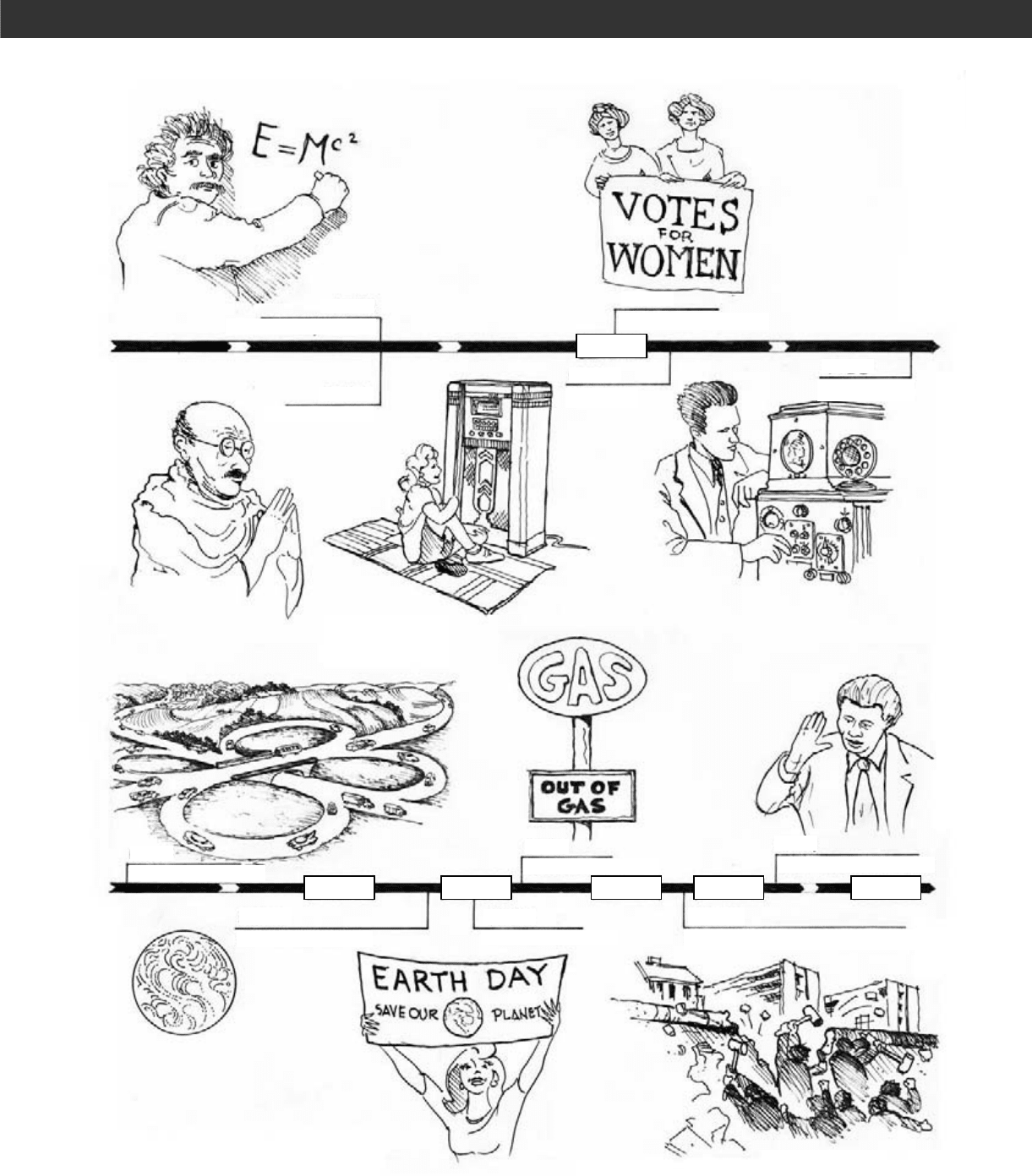
20th CENTURY / A BRIEF CHRONOLOGY
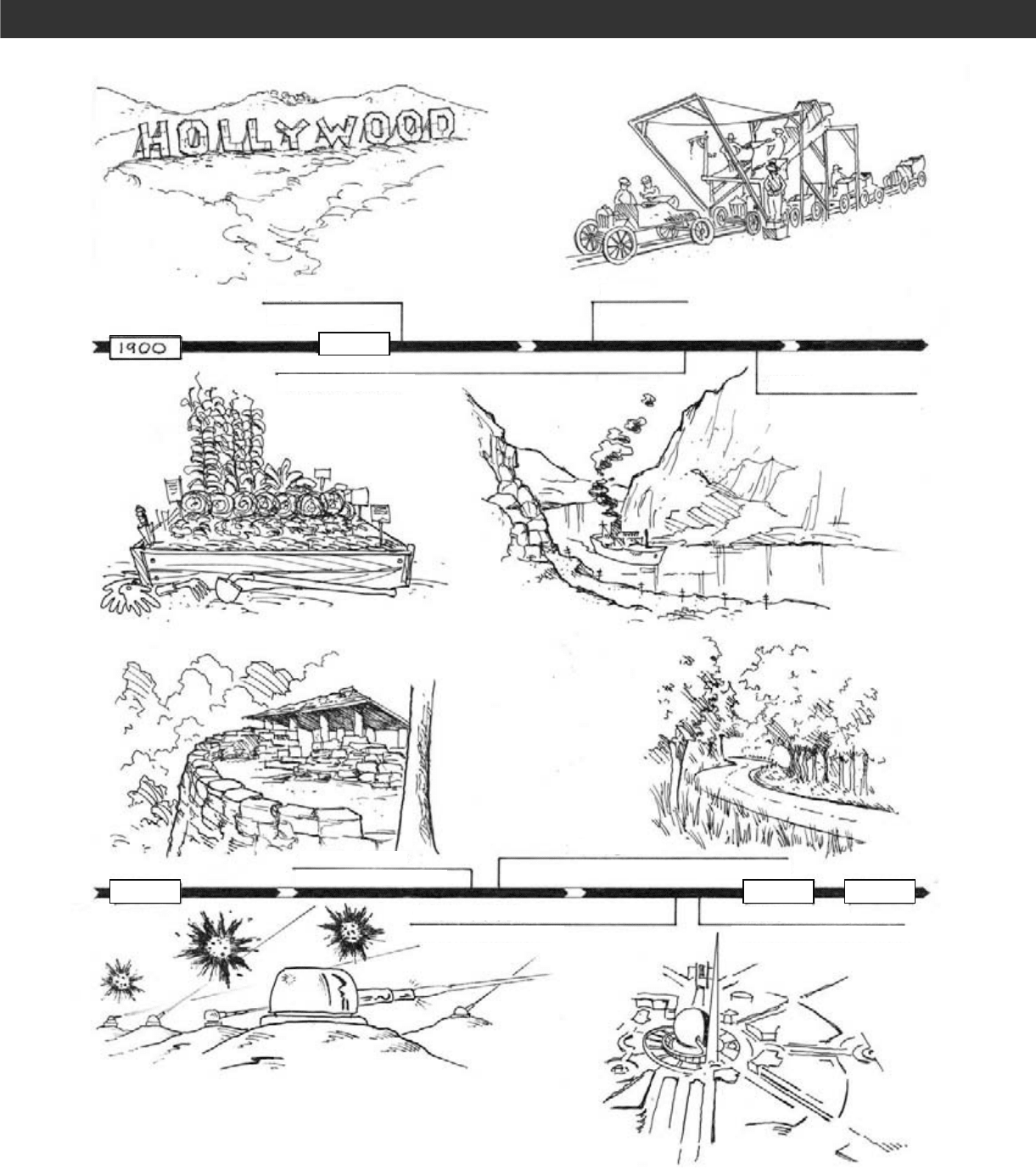
1900
1930 1940 1950
1911
1914
1935–1943
1939–1945
1939
1935
1914–1918
1913
HOLLYWOOD
PANAMA CANAL
NEW DEAL
WORLD WAR II WORLD OF TOMORROW
BLUE RIDGE PARKWAY
WORLD WAR I
CARS
1910
205
20th CENTURY / A BRIEF CHRONOLOGY
1960 1970 1980 1990 2000
1920
1920
1922
1928
1956
1973
1970 1989
1994
1969
1915
1915
SUFFRAGE
RADIO
TELEVISION
HIGHWAY ACT
OIL CRISIS
EARTH DAY
FALL OF THE BERLIN WALL
END OF APARTHEID
MOON LANDING
SPACE / TIME
GANDHI

206
1911 HOLLYWOOD
Nestor Company opened the fi rst movie
studio on the corner of Sunset Boule-
vard and Gower Avenue. Film became a
major industry in southern California.
In the second half of the 20th century,
consumerism and popular entertain-
ment became the industries that
changed the face of the landscape.
1913 CARS
Henry Ford invented an assembly-line
process for the mass production of
automobiles. Cars became the dominant
form of transportation and had the
greatest single effect on the landscape.
1914–1918 WORLD WAR I
The assassination of the heir to the
Austro-Hungarian Empire led to war in
Europe, which grew to involve countries
on all continents. The redrawn map of
Europe and the subsequent shift of
power set the stage for the next world
war. Resources were scarce at the end
of the war; food crops were planted in
homeowner’s front yards as “victory
gardens.”
1914 PANAMA CANAL
The Atlantic and Pacifi c Oceans were
now connected.
1915 SPACE/TIME
Albert Einstein published his general
theory of relativity.
1915 MAHATMA GANDHI
Mohandas Gandhi became known as
“mahatma,” or great soul, because of his
efforts to eradicate poverty and help
India gain independence from Britain.
He returned to India from South Africa
in 1915 and led nonviolent protests and
other acts of civil disobedience.
1920 SUFFRAGE
The Nineteenth Amendment to the U.S.
Constitution gave women the right to
vote.
1922 RADIO
KDKA in Pittsburg, Pennsylvania, was
the fi rst radio station to broadcast to
the public. At the time, radio had a more
widespread infl uence on culture than the
Internet has today.
1928 TELEVISION
Milo T. Farnsworth invented the fi rst
working television in 1928. The technol-
ogy evolved over the next decade. The
fi rst commercial television transmission
was in 1941. Cultural trends were initi-
ated and spread through mass media,
feeding a consumerist society.
1935–1943 NEW DEAL
U.S. President Franklin Delano Roosevelt
initiated the Works Progress Admin-
istration (WPA), employing millions of
workers and artists in the repair and
adornment of public properties. The
Civilian Conservation Corps (CCC) main-
tained forests, beaches, and parks.
1935 BLUE RIDGE PARKWAY
Landscape architect Stanley W. Abbott
planned the 500-mile scenic byway be-
tween North Carolina and Virginia, linking
the Great Smoky Mountains National
Park and Shenandoah National Park. The
CCC constructed the project.
1939–1945 WORLD WAR II
Germany’s attempt to reorganize
Europe according to Fascist doctrine re-
sulted in a war of unprecedented dimen-
sions. More than 55 million people died,
including millions who perished in Nazi
concentration camps. The fi rst atomic
bomb was dropped by the U.S. on Japan.
The United States and the Soviet Union
emerged as world superpowers. Ideo-
logical differences led to the Cold War
and the establishment of Eastern and
Western blocs.
1939 THE WORLD OF TOMORROW
The 1939 World’s Fair held in Queens,
New York, presented a vision of America
in the future. One of the attractions
was Futurama, where people rode above
a model of “Democracity”—an urban
environment consisting of residential,
commercial, and industrial regions sepa-
rated by a superhighway.
1956 HIGHWAY ACT
To facilitate rapid evacuation of cities
during the Cold War, the U.S. govern-
ment funded the construction of an
Interstate Highway system. The super-
highways and expressways facilitated
suburban growth and led to dependence
on the automobile.
1969 MOON LANDING
Americans Neil Armstrong and Buzz
Aldrin walked on the moon. The Apollo VIII
mission (1968) transmitted the fi rst
images of the Earth seen from space.
1970 EARTH DAY
The efforts of U.S. Senator Gaylord
Nelson to raise the environmental
consciousness of the country led to the
declaration of the fi rst Earth Day, which
is now celebrated worldwide.
1973 OIL CRISIS
America’s dependency on foreign oil was
brought to the attention of the public
when the Organization of Petroleum
Exporting Countries (OPEC) oil embargo
ended shipment of oil to America, in pro-
test of the country’s support of Israel.
1989 FALL OF THE BERLIN WALL
East and West Germany were reunited.
The dissolution of the Eastern Bloc in
1991 ended the Cold War. Globalization
had begun.
1994 END OF APARTHEID
In 1990, political activist Nelson Man-
dela was released from prison in South
Africa, after 27 years. The fi rst demo-
cratic elections, open to all races, were
held in the country in 1994. Mandela was
elected president.
20th CENTURY / A BRIEF CHRONOLOGY