
Carson Ph., Mumford C. Hazardous Chemicals Handbook (Справочник по опасным химическим веществам)
Подождите немного. Документ загружается.


Carbon monoxide
Carbon monoxide is produced by incomplete combustion of carbon and its compounds. In the
laboratory it can be prepared by careful dehydration of formic or oxalic acid with sulphuric acid:
HCO
2
H → CO + H
2
O
Traditionally, pure CO is not used industrially; water gas or producer gas are used instead.
However, pure CO is made by thermal decomposition of nickel carbonyl:
Ni(CO)
4
→ Ni + 4CO
Carbon monoxide is a toxic, flammable, colourless and odourless gas which is slightly lighter
than air and slightly soluble in water. Some physical constants are given in Table 9.8. Corrosion
by pure carbon monoxide is considered negligible. It is shipped as a non-liquefied gas in high-
pressure steel containers. Its main uses include fuel gas mixtures with hydrogen and for reduction
of ores. Its main hazards are its extreme toxic effects which stem from its ability to complex with
haemoglobin (with which it has an affinity 300 times that of oxygen) resulting in chemical
asphyxiation (see Table 5.31). It burns in air with a characteristic blue flame. It combines directly
with chlorine in sunlight to produce highly toxic phosgene:
Table 9.7 Physiological effects of ammonia
Atmospheric concentration Effects
(ppm)
20 First perceptible odour
40 A few individuals may suffer slight eye irritation
100 Noticeable irritation of eyes and nasal passages after few minutes’ exposure
400 Severe irritation of the throat, nasal passages and upper respiratory tract
700 Severe eye irritation
No permanent effect if exposure <30 min
1700 Serious coughing, bronchial spasms, <30 min exposure may be fatal
5000 Serious oedema, strangulation, asphyxia
Fatal almost immediately
Table 9.8 Physical properties of carbon monoxide
Molecular weight 28.01
Specific volume @ 21°C, 1 atm 13.8 cu.ft/lb (861.5 ml/g)
Boiling point @ 1 atm –191.5°C
Triple point –205.01°C
Specific gravity @ 21°C, 1 atm 115.14 mm Hg
Density (liquid) @ bp 0.9678
Latent heat of vaporization @ bp 1444 cal/mole
Latent heat of fusion @ tp 200.9 cal/mole
Flammable limits in air 12.5–74%
Autoignition temperature 650°C
Specific heat (gas) @ 25°C, 1 atm
C
p
0.2491 cal/g°C
C
v
0.1774 cal/g°C
ratio
C
p
/
C
v
1.4
Viscosity (gas) @ 0°C, 1 atm 0.0166 centipoise
Entropy (gas) @ 25°C 47.266 cal/mole°C
Heat of formation (gas) @ 25°C –26.417 kcal/mole
CARBON MONOXIDE 279

280 COMPRESSED GASES
CO + Cl
2
→ COCl
2
Liquid carbon monoxide in the presence of nitrous oxide poses blast hazards.
Precautions for handling carbon monoxide in compressed gas cylinders in addition to those
given in Table 9.3 include:
• Handle in well-ventilated conditions.
• Consider the need for respiratory equipment.
• Use CO gas detection system if used indoors or in confined spaces.
• Check the system periodically for leaks.
• Avoid accidental contact with ignition sources.
• Segregate stocks from oxygen cylinders or other oxidizing or flammable substances.
Table 9.9 First aid measures following exposure to a compressed gas
Obtain medical help immediately
Inhalation Remove victim to uncontaminated area and carry out artificial respiration
In the case of hydrogen sulphide, ensure that the patient remains rested and refrains
from exercise for 24 hr
For chlorine gassing, lay victim on stomach with head and shoulders slightly lowered;
discourage from coughing
Skin contact Use emergency shower, removing contaminated clothing and shoes at the same
time
Eye contact Wash promptly with copious amounts of water for ≥15 min
Chlorine
Chlorine can be made on a small scale by oxidation of hydrogen chloride with, e.g., manganese
dioxide:
MnO
2
+ 4HCl → MnCl
2
+ Cl
2
+ 2H
2
O
Industrially, chlorine is obtained as a by-product in the electrolytic conversion of salt to sodium
hydroxide. Hazardous reactions have occurred between chlorine and a variety of chemicals including
acetylene, alcohols, aluminium, ammonia, benzene, carbon disulphide, diethyl ether, diethyl zinc,
fluorine, hydrocarbons, hydrogen, ferric chloride, metal hydrides, non-metals such as boron and
phosphorus, rubber, and steel.
Chlorine is very reactive and finds wide use, e.g. in water purification, sanitation, as a bleaching
agent, as a versatile raw material in synthetic chemistry etc. In liquid form, chlorine is a clear
amber dense liquid. The gas is greenish-yellow, about 2.5 times as dense as air. Although non-
flammable, it will support combustion. Liquid chlorine causes severe irritation and blistering of
skin. The gas has a pungent suffocating odour and is irritant to the nose and throat. It is an
extremely powerful blistering agent and respiratory irritant. Persons exposed to chlorine become
restless, sneeze, develop sore throat and salivate copiously. Effects on the body are summarized
in Table 9.10 and physical characteristics are given in Table 9.11.
Moist chlorine is corrosive to skin and to most common materials of construction. Wet chlorine
at low pressure can be handled in chemical stonewear, glass or porcelain and in certain alloys and
plastics.
The effect of temperature on vapour pressure is shown in Figure 9.3. Cylinders are normally
protected from over-pressurization by a fusible metal plug melting at about 85°C.

The following safety measures supplement the general precautions listed in Table 9.3:
• Provide convenient showers, eye-wash facilities and appropriate respiratory protection for
emergencies.
• Work in well-ventilated area wearing appropriate skin protection and respiratory equipment.
• Check for leaks (e.g. with aqueous ammonia) and consider the need for detection/alarm systems.
Leaks should be dealt with immediately after evacuating the area.
• Never connect the cylinder directly to vessels of liquid since suck-back into the cylinder may
result in violent reaction. Insert a trap in the line between the chlorine supply and the receiver
of sufficient capacity to accommodate all the liquid.
• Never supply heat directly to the cylinder.
• Segregate stocks of chlorine from acetylene, hydrogen, ammonia and fuel gases and ensure no
accidental contact with ethers, hydrocarbons and other organics and finely divided metals.
Never mix chlorine with another gas in the cylinder.
• In the event of exposure, apply first aid as in Table 9.9 (refer also to Table 13.17).
Table 9.10 Physiological effects of chlorine
Atmospheric Effects
concentration
(ppm)
1 Minimum concentration causing slight symptoms after several hours
3.5 Minimum concentration detectable by odour
4 Maximum concentration that can be breathed for 1 hr without damage
15 Minimum concentration causing throat irritation
30 Minimum concentration causing coughing
40–60 Concentration dangerous within 30 min
1000 Concentration likely to be fatal after a few deep breaths
Table 9.11 Physical properties of chlorine
Molecular weight 70.906
Vapour pressure at 21°C 5.88 bar
Specific volume at 21°C, 1 atm 337.1 ml/g
Boiling point at 1 atm –34.05°C
Freezing point at 1 atm –100.98°C
Specific gravity, gas at 0°C, 1 atm (air = 1) 2.49
Specific gravity, liquid at 20°C 1.41
Density, gas at 0°C, 1 atm 3.214 g/l
Density, liquid at 0°C, 3.65 atm 1.468 g/l
Critical temperature 144°C
Critical pressure 77.1 bar
Critical density 0.573 g/ml
Latent heat of vaporization at boiling point 68.8 cal/g
Heat of fusion at flash point 22.9 cal/g
Specific heat, liquid at 0–24°C 0.226 cal/g °C
Specific heat, gas at 15°C, 1 atm
C
p
0.115 cal/g °C
C
v
0.085 cal/g °C
ratio
C
p
/
C
v
1.355
Thermal conductivity, gas at 0°C 1.8 × 10
–5
cal/s cm
2
°C/cm
Viscosity, gas at 20°C, 1 atm 0.0147 cP
Viscosity, liquid at 20°C 0.325 cP
Solubility in water at 20°C, 1 atm 7.30 g/l
CHLORINE 281
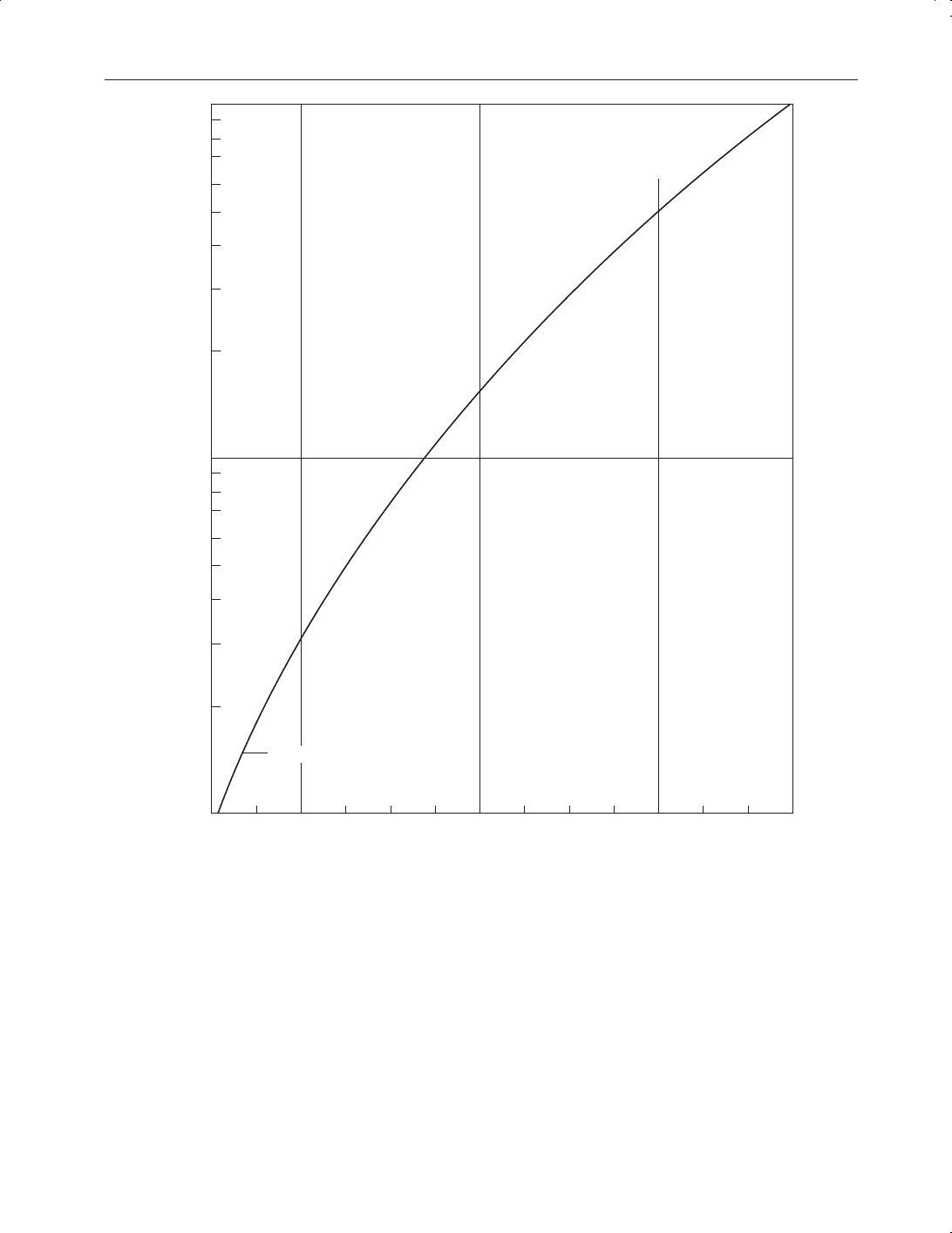
282 COMPRESSED GASES
2752502252001751501251007550250–25–50°F
13510710793796652372510–4–18–32–46°C
Temperature
1000
900
700
600
500
400
300
200
100
90
70
800
40
80
60
50
30
20
10
Critical
pressure
1118.7 psia
at 144°C
Vapour pressure (psia)
Boiling point
Hydrogen
Hydrogen does not appear free in the atmosphere except at levels below 1 ppm, since rapid
diffusivity enables molecules to escape the earth’s gravitational field and it is continuously lost
from the atmosphere. It is present in the earth’s crust at about 0.87% in combination with oxygen
in water and with carbon and other elements in organic substances. It is prepared commercially
on a small scale by action of sulphuric acid on zinc:
Figure 9.3
Chlorine vapour pressure versus temperature

Zn + H
2
SO
4
→ ZnSO
4
+ H
2
and industrially by electrolysis of sodium chloride, or sodium hydroxide, or by reduction of steam
by carbon monoxide:
C + H
2
O → CO + H
2
O (water gas)
H
2
+ CO + H
2
O → CO
2
+ 2H
2
Hydrogen is used for the hydrogenation of oils and fats, in metallurgy, metal welding/cutting,
ammonia synthesis and petroleum refining. It is the lightest gas known. It is colourless and
odourless, only slightly soluble in water but readily soluble in hydrocarbons. Hydrogen is non-
toxic but can act as an asphyxiant. It is usually shipped in containers at 2000 psig (137.9 bar) at
21°C, often protected by frangible discs backed up by a fusible metal plug melting at 100°C.
Physical properties are given in Table 9.12.
Table 9.12 Physical properties of hydrogen
Molecular weight 2.016
Specific volume at 21°C, 1 atm 11 967 ml/g
Boiling point at 1 atm –252.9°C
Triple point at 0.0695 atm –259.3°C
Specific gravity, gas at 23.9°C, 1 atm (air = 1) 0.06952
Density, gas at 0°C, 1 atm 0.0899 g/l
Density, liquid at –253°C, 1 atm 0.0708 g/ml
Critical temperature –240.2°C
Critical pressure 12.98 bar
Critical density 0.03136 g/ml
Latent heat of vaporization at boiling point 106.5 cal/g
Latent heat of fusion at triple point 13.875 cal/g
Flammable limits in air 4.0–75% by volume
Auto-ignition temperature 585°C
Specific heat, gas at 0–200°C, 1 atm
C
p
3.44 cal/g °C
C
v
2.46 cal/g °C
ratio
C
p
/
C
v
1.40
Thermal conductivity at 0°C 0.00040 cal/s cm
2
°C/cm
Viscosity, gas at 15°C, 1 atm 0.0087 cP
Solubility in water at 15.6°C, 1 atm 0.019 vol/vol H
2
O
The main danger with hydrogen is of fire or explosion. Hydrogen burns in chlorine to yield
hydrogen chloride. Although relatively inactive at ambient temperature it reacts with many elements
either at high temperatures or in the presence of catalysts and can react dangerously with air,
acetylene, aromatics, unsaturated organic matter, halogens, metals such as lithium, calcium,
barium, strontium and potassium, and with oxidants such as chlorine dioxide, oxides of nitrogen
and palladium oxides. The following precautions are important to supplement those in Table 9.3:
• Use only in well-ventilated conditions to avoid accumulation at high levels.
• Eliminate means of accidental ignition.
• Use only explosion-proof electrical equipment and spark-proof tools.
• Ground all equipment and lines used with hydrogen.
• Check for leaks with soapy water and consider the need for automatic detection/alarms.
HYDROGEN 283

284 COMPRESSED GASES
Hydrogen chloride
Hydrogen chloride may be conveniently prepared by heating sodium chloride with sulphuric acid:
NaCl + H
2
SO
4
→ NaHSO
4
+ HCl
When this reaction has occurred accidentally sufficient hydrogen chloride has been liberated to
explosively burst the vessel. The purest form of hydrogen chloride is made by the action of water
on silicon tetrachloride:
2H
2
O + SiCl
4
→ SiO
2
+ 4HCl
Commercially, hydrogen chloride is obtained either as a by-product in the manufacture of salt
cake from sodium chloride, or by allowing chlorine produced as a by-product in electrolytic
processes to react with hydrogen in the presence of activated charcoal. It is also formed as a by-
product in the manufacture of phenol.
Anhydrous hydrogen chloride is a colourless, pungent, heavy, corrosive, thermally-stable gas
with a suffocating odour. It is heavier than air and fumes strongly in moist air and is highly
soluble in water with evolution of much heat. Physical properties are given in Table 9.13 and its
pressure vs temperature profile in Figure 9.4. It is shipped as a liquefied gas with a cylinder
pressure of about 613 psig at 21°C and platinum coated frangible bursting discs and fusible metal
plugs. Its main uses are as a chemical intermediate and in hydrochlorinations. Its toxicity results
from its severe irritating effects to the upper respiratory tract and corrosivity towards skin, eyes
and mucous membranes. Neutralization of alkalis in tissues can result in death from oedema or
spasm of the larynx. At exposures of 50–100 ppm work is impossible, and difficult at 10–50 ppm;
the TLV is a short-term exposure limit of 5 ppm ceiling.
Table 9.13 Physical properties of hydrogen chloride
Molecular weight 36.46
Vapour pressure @ 21°C 613 psig
Specific volume @ 21°C, 1 atm 661.7 ml/g
Boiling point @ 1 atm –85.03°C
Freezing point @ 1 atm –114.19°C
Specific gravity (gas) @ 0°C, 1 atm 1.268
Density (gas) @ 0°C, 1 atm 1.639 g/l
Density (liquid) @ –36°C 1.194 g/l
Critical temperature 51.4°C
Critical pressure 1198 psia (81.5 atm)
Critical density 0.42 g/ml
Latent heat of vaporization @ bp 103.12 cal/g
Specific heat (gas) @ 15°C, 1 atm
C
p
0.1939 cal/g °C
C
v
0.1375 cal/g °C
ratio
C
p
/
C
v
1.41
Viscosity (gas) @ 20°C, 1 atm 0.0156 cP
Solubility in water @ 0°C, 1 atm 82.31 g/100 g water
The gas is essentially inert to common materials of construction such as stainless steel under
normal conditions of use. Platinum and gold are also not attacked by pure hydrogen chloride.
In the presence of moisture, however, most metals are corroded and it is advised that the
proposed use and pressures are discussed with the supplier so that suitable construction materials
are established prior to installation. Hydrogen chloride neither burns nor supports combustion,
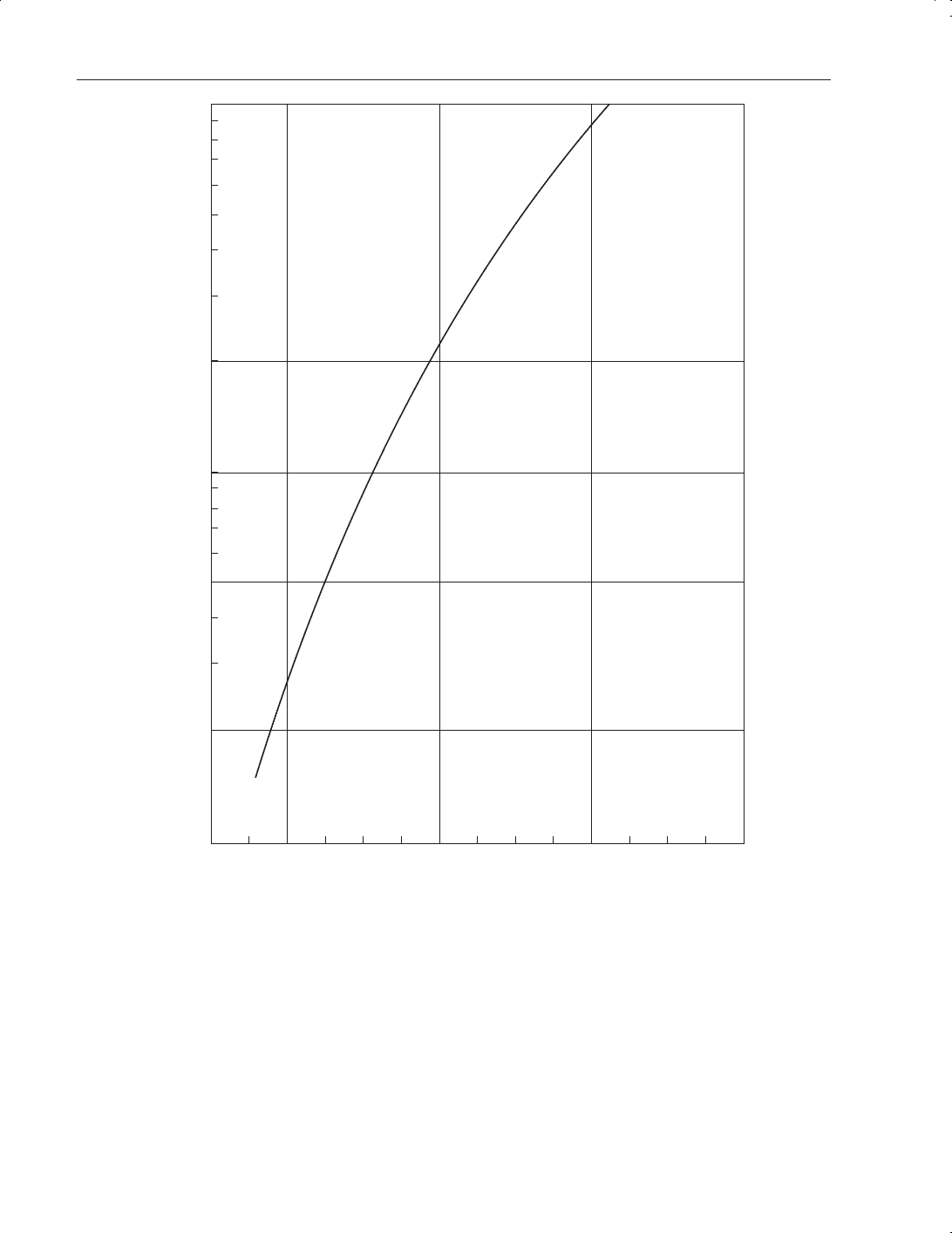
1000
500
200
100
50
20
200150100500–50–100–150°F
93663710–18–46–73–101°C
Temperature
Vapour pressure (psia)
Figure 9.4
Hydrogen chloride vapour pressure vs temperature
although burning sodium will continue to burn in it forming hydrogen and sodium chloride.
Hydrogen chloride gas has produced runaway reactions with dinitrotoluene, fluorine (with ignition),
sodium, and alcoholic hydrogen cyanide.
Liquid hydrogen chloride does not conduct electricity and is without action on zinc, iron,
magnesium, calcium oxide and certain carbonates. However, it does dissolve aluminium.
Some special precautions for use of compressed hydrogen chloride gas include:
• Store and use under ventilated conditions.
HYDROGEN CHLORIDE 285

286 COMPRESSED GASES
• Avoid galvanized pipe and brass or bronze fittings.
• Wear protective clothing such as rubber or plastic aprons, rubber gloves, gas-tight goggles and
respiratory equipment as appropriate.
• Ensure fast-acting showers are available close to site of use/storage plus eye-wash fountains or
similar facilities for eye irrigation.
• Prevent suck-back of foreign material into the cylinder by use of check valves or vacuum break
traps.
• Switch off gas lines from use backwards to the cylinder.
Hydrogen sulphide
Hydrogen sulphide is usually prepared on a small scale by the action of hydrochloric acid on
ferrous sulphide:
FeS + 2HCl → FeCl
2
+ H
2
S
The purest form is obtained by passing a mixture of sulphur vapour and hydrogen over finely
divided nickel at 450°C.
Hydrogen sulphide is used in the preparation of metal sulphides, oil additives etc., in the
purification and separation of metals, as an analytical reagent and as raw material in organic
synthesis. It burns in air with a blue flame:
2H
2
S + 3O
2
→ 2SO
2
+ 2H
2
O
or if oxygen is depleted:
2H
2
S + O
2
→ 2H
2
O + S
Hydrogen sulphide occurs naturally, e.g. in natural gas and petroleum, volcanic gases, and from
decaying organic matter. It may be present near oil wells and where petroleum is processed.
Commercially it is obtained as a by-product from many chemical reactions including off-gas in
the production of some synthetic polymers (e.g. rayon, nylon) from petroleum products, and by
the action of dilute mineral acids on metal sulphides. Physical properties are summarized in Table
9.14 and effects of temperature on vapour pressure are shown in Figure 9.5.
Hydrogen sulphide is a dense, colourless, highly flammable water-soluble gas with an offensive
odour of rotten eggs. It is highly toxic; its effects on the body are given in Table 5.32. Acute
poisoning may result from exposures at or above 700 ppm due to systemic effects, including
attack on the nervous system and respiratory collapse. Hydrogen sulphide may become rapidly
oxidized on contact with a range of metal oxides and in certain cases may ignite or explode. It can
also react dangerously with a host of oxidants, rust and soda lime.
Cylinders are typically protected from over-pressurization by frangible gold-plated discs and
fusible plugs.
Important precautions include:
• Use in well-ventilated conditions and eliminate sources of ignition.
• Operators should work in pairs.
• Do not rely on the sense of smell to detect hydrogen sulphide leaks. Strips of wet lead acetate
paper turn black on exposure to hydrogen sulphide and offer a simple indicator, as do colour
indicator tubes. For plant-scale operations, instrumental multi-point detectors and alarms are
likely to be more appropriate.

• Segregate cylinders of hydrogen sulphide from oxygen or other highly-oxidizing or combustible
materials.
• Ground all lines and equipment used with hydrogen sulphide.
• Insert traps in the line to prevent suck-back of liquid into the cylinder.
• Provide respiratory protection for emergencies.
• In the event of exposure, apply first aid as indicated in Table 9.9.
Liquefied petroleum gases (LPG)
LPG is a mixture of propane and n- and iso-butanes, plus small amounts of their olefinic counterparts.
The main sources are natural gas wells, gas from crude oil wells and the cracking of crude oil. The
requirements for commercial LPG are defined in national standards and a stenching agent is
added for some uses.
The common LPGs in general use are commercial propane, comprising predominantly propane
and/or propylene, and commercial butane. The physico-chemical properties of propane and the
butanes are given in Table 9.15. These compounds are gaseous at normal ambient temperature
and pressure but are readily liquefied by the application of moderate pressure. They are stored and
distributed as liquids in low pressure cylinders or bulk containers at ambient temperature and
allowed to revert to gas at the point of use. Large-scale storage and shipment by sea is in
refrigerated vessels at close to atmospheric pressure.
Butane itself is considered to be insoluble in water. Exposures of up to 5% for 2 hours appear
not to present problems. The TLV is 800 ppm. The relationship between pressure and temperature
is given by Figure 9.6.
Propane has a characteristic natural gas odour and is basically insoluble in water. It is a simple
asphyxiant but at high concentrations has an anaesthetic effect. The TLV is 2500 ppm. It is usually
shipped in low-pressure cylinders as liquefied gas under its own vapour pressure of ca 109 psig
at 21°C. Its pressure/temperature profile is given in Figure 9.7.
Table 9.14 Physical properties of hydrogen sulphide
Molecular weight 34.08
Vapour pressure at 21°C 17.4 bar
Specific volume at 21°C, 1 atm 701 ml/g
Boiling point at 1 atm –60.33°C
Freezing point at 1 atm –85.49°C
Specific gravity, gas at 15°C, 1 atm (air = 1) 1.1895
Density, gas at 0°C, 1 atm 1.5392 g/l
Density, liquid at boiling point 0.993 g/ml
Critical temperature 100.4°C
Critical pressure 90.23 bar
Critical density 0.349 g/ml
Latent heat of vaporization at boiling point 131 cal/g
Latent heat of fusion at melting point 16.7 cal/g
Specific heat, gas at 25°C, 1 atm
C
p
0.240 cal/g °C
C
v
0.181 cal/g °C
ratio
C
p
/
C
v
1.32
Thermal conductivity at 0°C 3.05 × 10
–5
cal/s cm
2
°C/cm
Flammable limits in air 4.3–45% by volume
Auto-ignition temperature 260°C
Solubility in water at 20°C, 1 atm 0.672 g/100 ml water
Viscosity, gas at 0°C, 1 atm 0.01166 cP
LIQUEFIED PETROLEUM GASES (LPG) 287
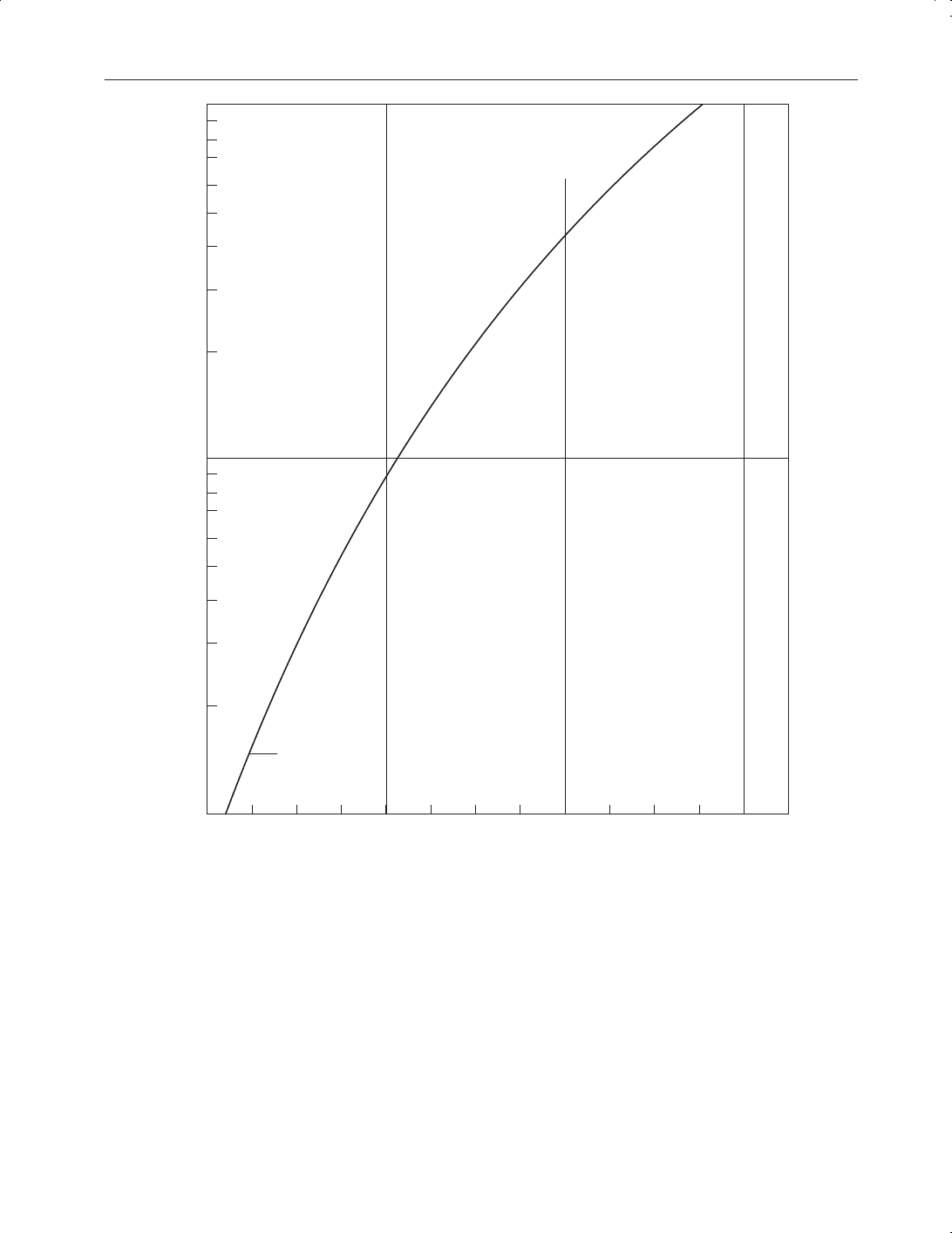
288 COMPRESSED GASES
1000
900
800
700
600
500
400
300
200
100
90
80
70
60
50
40
30
20
10
2252001751501251007550250–25–50°F
10793796652372510–4–18–32–46°C
Temperature
–75
–60
–100
–73
Vapour pressure (psia)
Critical
pressure
1309 psia
at 100.4°C
Boiling point
LPG is considered to be non-toxic with no chronic effects, but the vapour is slightly anaesthetic.
In sufficiently high concentrations, resulting in oxygen deficiency, it will result in physical
asphyxiation. The gases are colourless and odourless but an odorant or stenching agent (e.g.
methyl mercaptan or dimethyl sulphide) is normally added to facilitate detection by smell down
to approximately 0.4% by volume in air, i.e. one-fifth of the lower flammable limit. The odorant
is not added for specific applications, e.g. cosmetic aerosol propellant.
The main danger with LPG arises from its flammability. Fire or explosion may be fuelled by
gas escape from leaking cylinders, from an appliance which has not been turned off properly, or
Figure 9.5
Hydrogen sulphide vapour pressure vs temperature