
Carson Ph., Mumford C. Hazardous Chemicals Handbook (Справочник по опасным химическим веществам)
Подождите немного. Документ загружается.


from an appliance in which the flame has been extinguished. Any fire near an LPG cylinder may
cause it to overheat and catch fire, or result in a BLEVE with missiles projected over long
distances.
The following safety measures supplement the general precautions listed in Table 9.3:
• Do not store or use a cylinder on its side, but upright with the valve uppermost.
• Do not store or leave full or empty cylinders below ground level.
• Never change a cylinder without first closing the cylinder valve and extinguishing naked lights
in the vicinity.
Table 9.15 Properties of LPGs
Propane Butane isoButane
Molecular weight 44.1 58.1 58.1
Vapour pressure at 21°C, i.e. cylinder 7.7 1.15 21.6
pressure (kg/cm
2
gauge)
Specific volume at 21°C/l atm (ml/g) 530.6 399.5 405.8
Bp at 1 atm (°C) –42.07 –0.5 –11.73
Mp at 1 atm (°C) –187.69 –138.3 –159.6
SG, gas at 16°C/l atm (air = 1) 1.5503 2.076 2.01
Density, liquid at sat. pressure (g/ml) 0.5505 0.5788 0.563
(20°C) (20°C) (15°C)
Density, gas at 0°C/l atm (kg/m
3
) 2.02 2.70 –
Critical temperature (°C) 96.8 152 135
Critical pressure (atm) 42 37.5 37.2
Critical density (g/ml) 0.220 0.225 0.221
Latent heat of vap. at bp (cal/g) 101.76 92.0 87.56
Latent heat of fusion at mp (cal/g) 19.10 19.17 18.67
Specific heat, liquid at 16°C (cal/g°C) – 0.5636 0.5695
Specific heat, gas at 16°C:
C
p
(cal/g°C) 0.3885 0.3908 0.3872
C
v
(cal/g°C) 0.3434 0.3566 0.3530
ratio
C
P
/
C
v
1.13 1.1 1.1
Specific heat ratio at 16°C/l atm, C
P
/C
v
1.131 1.096 1.097
Gross heat of combustion at 16°C/l atm 22.8 30.0 29.8
(cal/ml)
Viscosity, gas at 1 atm (centipoise) 0.00803 0.0084 0.00755
(16°C) (15°C) (23°C)
Coefficient of cubical expansion at 15°C 0.0016 0.0011 –
(per °C)
Surface tension (dynes/cm) 16.49 16.02 15.28
(–50°C) (–10°C) (–20°C)
Solubility in water at 1 atm (volumes/100 6.5 – 1.7
volumes water) (18°C) – (17°C)
Flammable limits in air (% by volume) 2.2–9.5 1.9–8.5 1.8–8.4
Autoignition temp. (°C) 467.8 405 543
Max. explosion pressure (MPa) 0.86 0.86 –
Min. ignition energy (MJ) 0.25 0.25 –
Max. flame temperature (°C) 2155 2130 –
Max. burning velocity (m/s) 0.45 0.38 –
Necessary min. inert gas conc. for explosion
prevention in case of emergent outflow of gas
in closed volumes (% v/v):
Nitrogen 45 41 –
Carbon dioxide 32 29 –
LIQUEFIED PETROLEUM GASES (LPG) 289
290 COMPRESSED GASES
1000
500
100
20
300
149
200
93
100
37
°F25
–4°C
Temperature
Vapour pressure (psia)
• Store cylinders, both full and empty, in a cool location away from flammable, toxic, or corrosive
materials and preferably at least 6.1 m from any source of ignition or heat.
• Replace any valve-protecting covers on empty cylinders, or those not in use. Handle cylinders
with care.
• Unless the installation is designed to be permanent, always disconnect a cylinder after use.
• Always wear appropriate protective equipment, including gloves and goggles, when filling an
LPG cylinder.
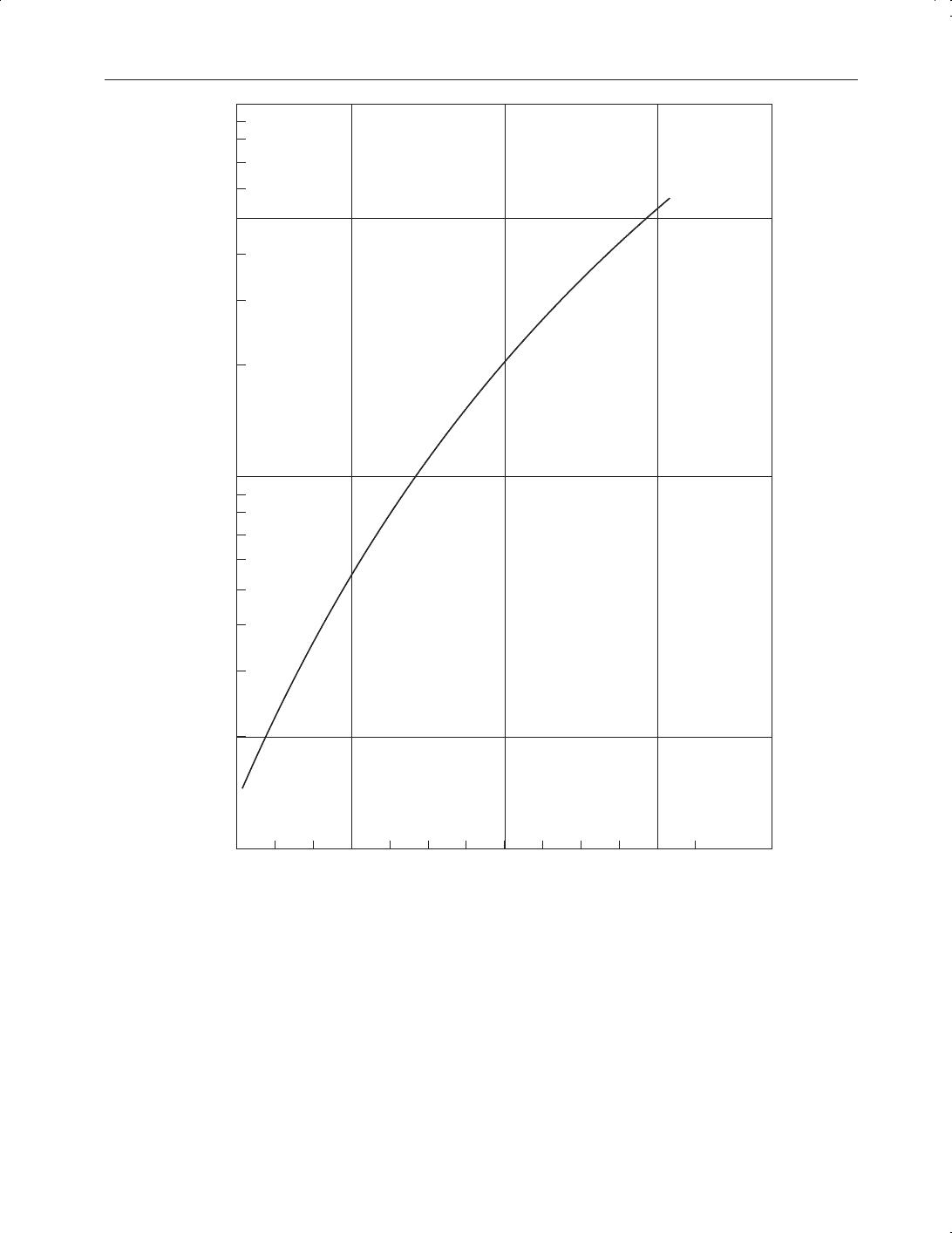
Figure 9.6
n-Butane vapour pressure vs temperature
The general requirements for the storage of LPG cylinders are given in Tables 9.16 to 9.18.
Considerations in the transport of cylinders by road are given in Chapter 15.
Methane
Methane is obtained commercially from natural gas wells and from cracking of petroleum fractions.
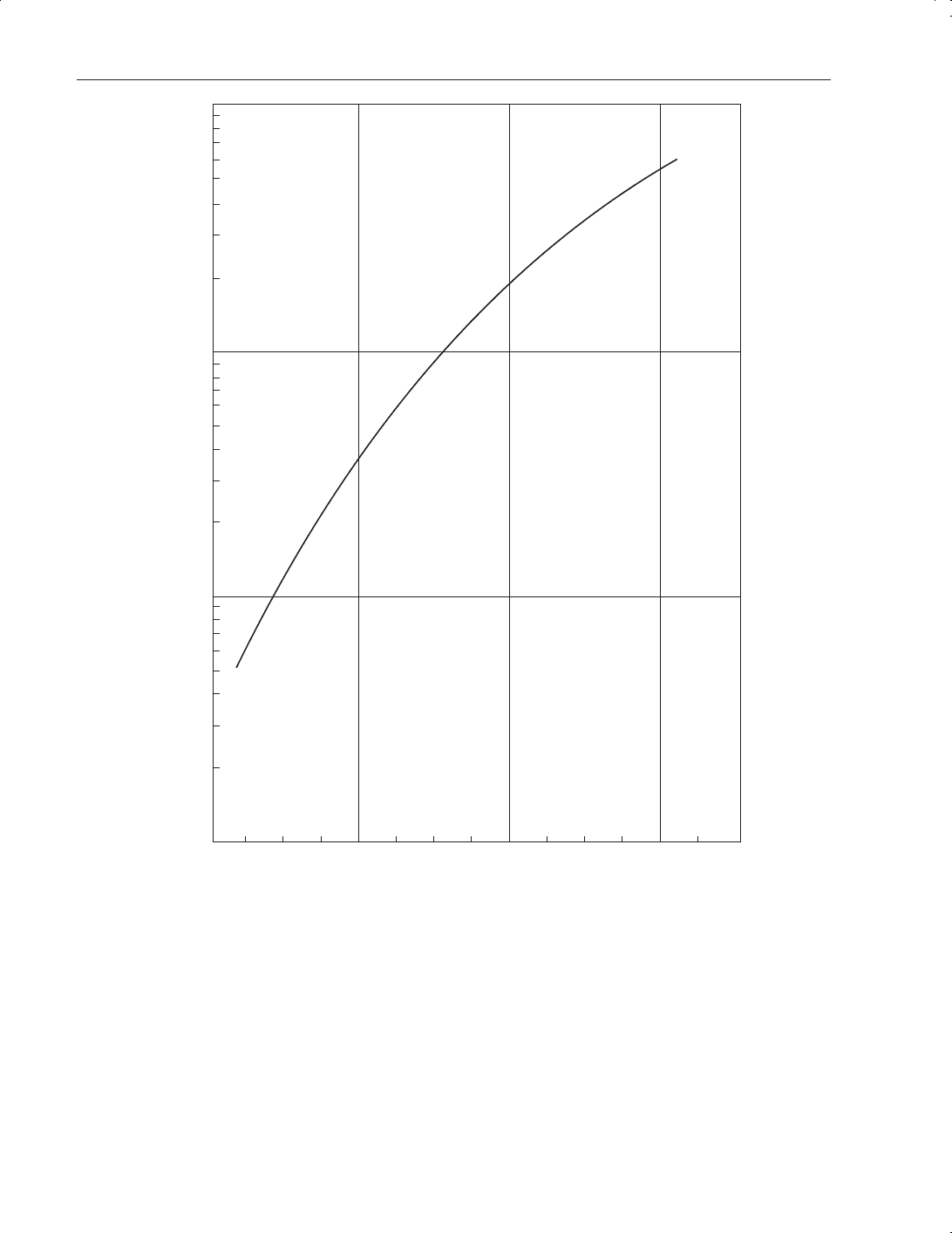
Figure 9.7
Propane vapour pressure vs temperature
1000
100
10
5
1501000–100°F
6637–18–73°C
Temperature
Vapour pressure (psia)
METHANE 291

292 COMPRESSED GASES
Table 9.16 General requirements for storage of LPG cylinders
• Store in the open in a well-ventilated area at ground level.
• Avoid other materials stacked near restricting natural ventilation.
Flammable liquid and combustible, corrosive, oxidizing or toxic substances and compressed gases should be kept
separately.
• Avoid cylinders impeding or endangering means of escape from premises or from adjoining premises.
• The store floor should be level. A load-bearing surface (concrete, paved or compacted) is required where cylinders are
to be stacked.
• Security arrangements should be such as to prevent tampering or vandals. Fencing should be of robust wire mesh which
does not obstruct ventilation.
• The area should be at the separation distance from the property boundary, any building or fixed source of ignition quoted
in Table 9.17. This may only be reduced if suitable fire-resisting separation is provided.
• To give additional protection from thermal radiation from any cylinder stack fire the minimum separation distance to any
nearby building housing a vulnerable population should, for quantities >400 kg, be 8 m or as in Table 9.17, column 3,
whichever is the greater. This may be reduced to those in Table 9.17, column 4, by the installation of fire-resisting
separation or a fire wall.
• Prohibit all sources of ignition, including smoking, within a store or within the separation distance (exclude motor
vehicles other than fork-lift trucks and those for delivery/collection from open-air stores).
• Avoid openings into buildings, cellars, or pits within 2 m or the separation distances, whichever is greater. (Any gully or
drain unavoidably within 2 m should have the opening securely covered or fitted with a water seal to prevent vapour
ingress.)
• Electrical equipment suitable for a Zone 2 area (e.g. to BS 5345) and constructed to a recognized standard should be
installed within the store and separation distance. Zone 2 areas are summarized in Table 9.18.
• Clearly mark the area with notices indicating an LPG storage area, flammable contents, prohibition of ignition sources
and procedures to follow in case of fire.
• Avoid accumulation of rubbish, small bushes, dry leaves etc. within the separation distance. Remove weeds and long
grass within the separation distance and up to 3 m from cylinders.
• Cylinders should be stored upright with the valves closed with any protective cover, cap or plug in place. Cartridges
without valves may be stored on their sides.
• Cylinders on a vehicle or trailer parked overnight rate as a single stack so that the separation distance in Table 9.17,
column 3, is applicable.
• Cylinders received into store and taken out for delivery should be checked for damage or leakage. Stacks should be
inspected daily for stability and that they contain no damaged/leaking cylinders.
• Cylinders should be handled carefully to avoid personal injury or damage to them.
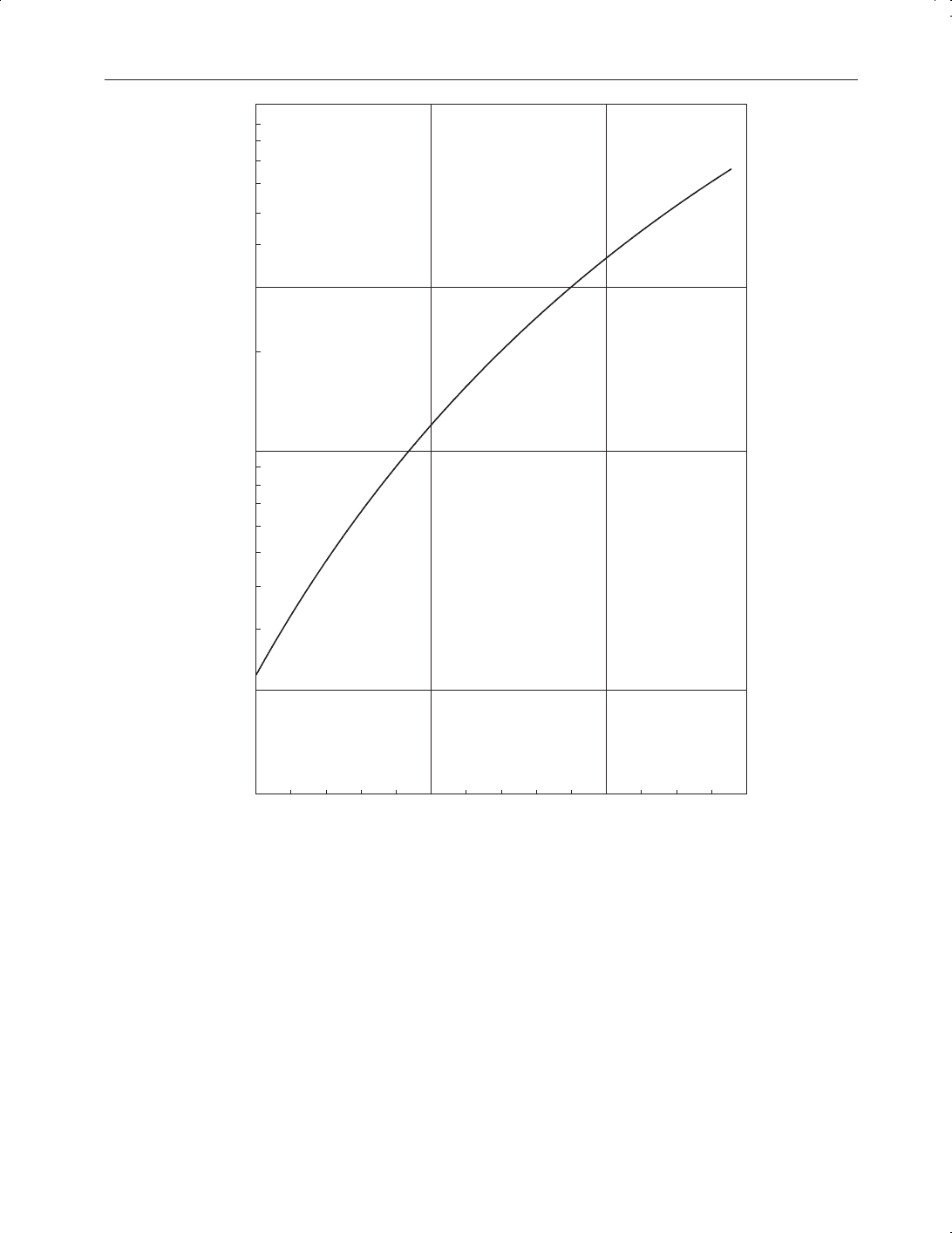
The physical properties of methane are given in Table 9.19 and the relationship between pressure
and temperature in Figure 9.8. It is considered to be non-toxic but is an asphyxiant at high
concentrations. Coalminers have inhaled air containing up to 9% methane with no apparent
untoward effect but higher concentrations of at least 10% in air result in a feeling of pressure on
the eyes and forehead which will disappear after breathing fresh air. Characteristic symptoms of
asphyxiation occur at higher concentrations (i.e. rapid respiration, fatigue, nausea, vomiting
possibly leading to loss of consciousness and anoxia). At low concentrations the odour of methane
is undetectable; at exposures of >5000 ppm there is a sweet oil-type odour. Selected grades
contain an odorizer, e.g. natural gas for commercial and domestic full.
It is considered to be chemically inert at room temperature and atmospheric pressure but it does
react under more forcing conditions and vigorous reactions have occurred with halogens, interhalogen
compounds, and oxidizing agents such as liquid oxygen and dioxygen difluoride.
The main hazard is that of flammability. The following precautions supplement those in Table
9.3 for the storage of methane gas cylinders:
• Store in a purpose-built compound preferably in the open air and well ventilated.
• Locate free from fire risk and away from sources of heat and ignition.
• Maintain clear access, and restrict access to the compound. Mark with hazard warning signs.
• Prohibit the use of naked flames or smoking in the vicinity of, or inside, the compound.

• Store separately from oxygen and oxidants, using a fire-resistant partition where necessary.
• Store the minimum quantity practicable.
• Check periodically for general condition and leakage.
Nitrogen
Nitrogen is an odourless, colourless gas which comprises ca 79% by volume of air and is an
essential constituent of all living organisms, e.g. as protein. It is made in the laboratory by gently
Table 9.17 Recommended minimum separation distances for total storage of LPG in cylinders or size of maximum
stack (the greater of the two distances is advised)
(1) (2) (3) (4)
Total quantity LPG store Size of largest stack Minimum separation Minimum separation
distance to boundary, distance to boundary,
building or fixed building or fixed ignition
ignition sources from the source from fire wall
nearest cylinder (where (where provided)* **
no fire wall provided)
(kg) (kg) (m) (m)
From 15 to 400 1*** Nil
,, 400 to 1000 Up to 1000 3 1
,, 1000 to 4000 4 1
,, 4000 to 6000 From 1000 to 3000 5 1.5
,, 6000 to 12 000 6 2
,, 12 000 to 20 000 ,, 3000 to 5000 7 2.5
,, 20 000 to 30 000 ,, 5000 to 7000 8 3
,, 30 000 to 50 000 ,, 7000 to 9000 9 3.5
,, 50 000 to 60 000 ,, 9000 to 10 000 10 4
,, 60 000 to 100 000 11 4.5
,, 100 000 to 150 000 ,, 10 000 to 20 000 12 5
,, 150 000 to 250 000 ,, 20 000 to 30 000 15 6
Above 250 000 20 7
*The distance from the nearest cylinder to a boundary, building etc. should be not less than in column 3 when measured
around the fire wall.
**Minimum distance from nearest cylinder to fire wall should normally be 1.5 m except as qualified.
***No separation distance is required for these quantities where boundary walls and buildings are of suitable construction.
Table 9.18 Areas classified as requiring Zone 2 electrical equipment
Location Extent of classified area
Storage in open air In the storage area up to a height of 1.5 m above the top of the
stack or beneath any roof over the storage place.
Outside the storage area or the space covered by any roof up to
1.5 m above ground level and within the distance set out for a
fixed source of ignition in Table 9.17, column 3.
Storage within a specially designed building or in The entire space within the building or storage area and outside
a specially designed storage area within a building any doorway, low level ventilator or other opening into the
store within the separation distance set out in Table 9.17,
column 3, up to a height of 1.5 m above ground level.
NITROGEN 293
294 COMPRESSED GASES
–110–150–200–250°C
–79–102–129–157°F
Temperature
1000
300
100
20
Vapour pressure (psia)
warming a concentrated solution of equimolar proportions of ammonium chloride and sodium
nitrite:
NH
4
Cl + NaNO
2
→ NaCl + NH
4
NO
2
→ N
2
+ 2H
2
O
On the industrial scale nitrogen is obtained by the fractional distillation of liquid air (see page
261). It will neither burn nor support combustion. Nitrogen is distributed as a pressurized gas in
grey cylinders with black shoulders. (Oxygen-free nitrogen has opposed white spots on the
cylinder shoulder.) It finds wide use in its inert capacity, e.g. in electrical equipment and in the
chemical and food industries. Large volumes of atmospheric nitrogen are converted into ammonium
sulphate for fertilizer and into nitric acid.
Figure 9.8
Methane vapour pressure vs temperature

Since it is chemically inert no special materials of construction are required. Selected physical
properties are listed in Table 9.20.
Nitrogen is non-toxic but will cause asphyxiation through oxygen depletion of air and is the
most common cause of gassing accidents in industry. There are no warning signs before
unconsciousness occurs, and at high concentrations almost instant unconsciousness may occur
and prove fatal (page 77). Table 5.7 summarizes the health effects of oxygen-deficient atmospheres.
Nitrogen oxides
The various oxides of nitrogen are given in Chapter 5.
Nitrous oxide is a colourless, non-flammable, non-corrosive gas with a sweetish odour and
taste. It is prepared both in the laboratory and on a commercial scale by heating ammonium
nitrate:
NH
4
NO
3
→ N
2
O + 2H
2
O
Heating must be terminated when two-thirds of the nitrate has decomposed since explosive
nitrogen trichloride may be formed from traces of ammonium chloride impurity.
Nitrous oxide may also be obtained by the controlled reduction of nitrates or nitrites, decomposition
of hyponitrites, or thermal decomposition of hydroxylamine.
It is generally considered not to be toxic and non-irritating. One of its main applications is, in
combination with air or oxygen, as a weak anaesthetic in medicine and dentistry. At low concentrations
it produces hysteria (hence the term laughing gas). At high concentrations in the absence of air it
is a simple asphyxiant. It is also used as a dispersing agent in whipping cream.
It does not react with oxygen, ozone, hydrogen, chlorine, potassium, phosphine or aqua regia.
However, whilst stable at ordinary temperatures, it decomposes readily to oxygen and nitrogen at
600°C and therefore supports combustion of burning substances. When nitrous oxide is transferred
from a stock cylinder to smaller cylinders the gas expansion results in cooling and a reduction in
pressure. On heating the stock container to increase pressure and thereby facilitate transfer the gas
Table 9.19 Physical properties of methane
Molecular weight 16.04
Specific volume @ 21°C 1479.5 ml/g
Boiling point @ 1 atm –161.5
o
C
Freezing point @ 1 atm –182.6°C
Triple point –182.5°C
Triple point pressure 0.115 atm
Specific gravity (gas) @ 16°C, 1 atm 0.5549
Density (gas) @ 0°C, 1 atm 0.72 g/l
Density (liquid) @ bp 0.4256 g/l
Critical temperature –82.1°C
Critical pressure 673.3 psia (45.8 atm)
Critical density 0.162 g/ml
Latent heat of vaporization @ bp 121.54 cal/g
Specific heat (gas) @ 16°C, 1 atm
C
p
/
C
v
1.307
Flammable limits in air 5.3–14%
Autoignition temperature 540°C
Minimum ignition energy 0.28 mJ
Flame temperature 1880°C
Limiting oxygen index 11.5%
Viscosity (gas) @ 1 atm, 4.4°C 0.0106 cP
NITROGEN OXIDES 295

296 COMPRESSED GASES
decomposes causing explosive rupture of the stock cylinder. This emphasizes the importance of
keeping cylinders away from heat sources, e.g. oxyacetylene welding operations. Explosive reaction
has also occurred between nitrous oxide and a variety of chemicals including amorphous boron,
ammonia, carbon monoxide, hydrogen, hydrogen sulphide, and phosphine. Because the oxygen
content of 36.4% is higher than the 21% in air, combustion or oxidation in nitrous oxide is much
faster than in air.
It is transported in high pressure steel cylinders equipped with brass valves.
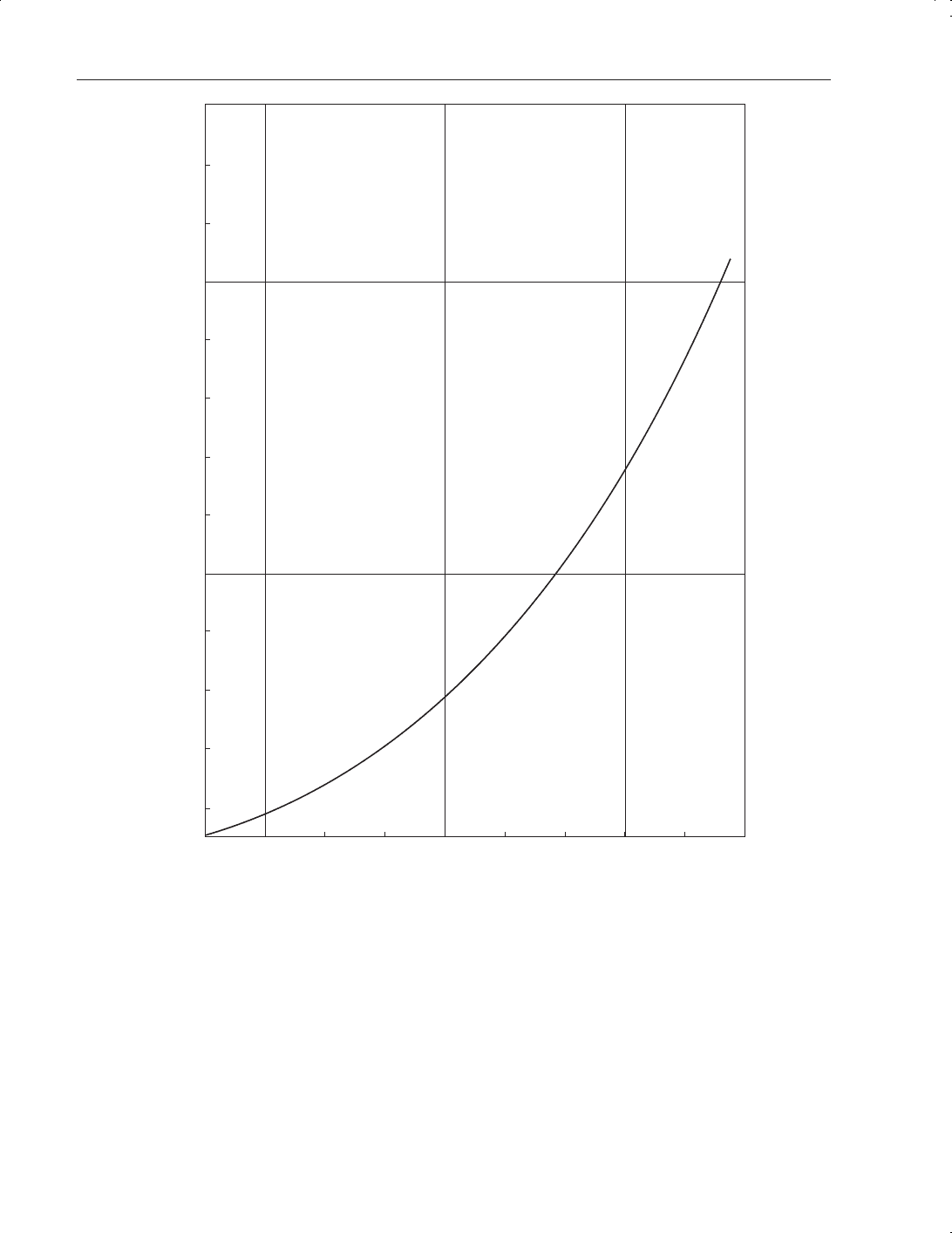
Physical properties are summarized in Table 9.21 and the vapour pressure/temperature relationship
is depicted by Figure 9.9. The general precautions in Table 9.3 apply.
Nitric oxide is made commercially by oxidation of ammonia above 500°C in the presence of
platinum, or by reduction of nitrous acid with ferrous sulphate or ferrous halides. The physical
Table 9.20 Physical properties of nitrogen
Molecular weight 28.0134
Specific volume @ 21°C 861.5 ml/g
Boiling point @ 1 atm –195.8°C
Triple point –210.0°C
Triple point pressure 94.24 mm Hg
Density (gas) @ 20°C 1.250 g/l
Density (liquid) @ bp 0.8064 g/ml
Critical temperature –147.1
o
C
Critical pressure 33.5 atm
Critical density 0.311 g/ml
Latent heat of vaporization @ bp 47.51 cal/g
Specific heat (gas) @ 16°C, 1 atm
C
p
0.2477 cal/g°C
C
v
0.1765 cal/g°C
ratio
C
p
/
C
v
1.4
Viscosity (gas) @ 15°C, 1 atm 0.01744 centipoises
Dielectric constant (liquid) @ bp 1.433
Solubility in water @ 0°C 2.3 ml/100 ml water
Table 9.21 Physical properties of nitrous oxide
Molecular weight 44.013
Vapour pressure @ 21°C 745 psig
Specific volume @ 21°C, 1 atm 543 ml/g
Boiling point @ 1 atm –89.5°C
Freezing point @ 1 atm –90.84°C
Specific gravity (gas) @ 15°C, 1 atm 1.530
Density (gas) @ 0°C, 1 atm 1.907 g/l
Density (liquid) @ bp 1.266 g/l
Critical temperature 36.5°C
Critical pressure 1054 psia (71.7 atm)
Critical density 0.457 g/l
Latent heat of vaporization @ bp 89.9 cal/g
Specific heat gas @ 25°C, 1 atm
C
p
0.2098 cal/g°C
C
v
0.1610 cal/g°C
ratio
C
p
/
C
v
1.3
Viscosity (gas) @ 0°C, 1 atm 0.01362 centipoise
Solubility in water @ 0°C, 1 atm 1.3 volumes/volume of water
1300
1000
500
100
1000–60–80°F 60
38–18–51–62°C 16
Temperature
Vapour pressure (psia)
properties of nitric oxide are given in Table 9.22. This is also a colourless, non-flammable gas
which is basically non-corrosive to standard materials of construction. Liquid nitric oxide like
other cryogenic oxidizers (e.g. ozone) is very sensitive to detonation in the absence of fuel. It is
the simplest molecule that is capable of detonation in all three phases: the liquid oxide may
explode during distillation. Nitric oxide is more toxic than nitrous oxide. It decomposes into its
elements only when heated to 1000°C and therefore it is not a ready supporter of combustion.
Vigorously burning phosphorus continues to burn in the gas but burning sulphur or charcoal is
extinguished.
Figure 9.9
Nitrous oxide vapour pressure vs temperature
NITROGEN OXIDES 297

298 COMPRESSED GASES
Nitric oxide combines readily with atmospheric oxygen at ambient temperature to produce
brown fumes of pungent nitrogen dioxide, and in the presence of charcoal with chlorine to form
nitrosyl chloride:
2NO + O
2
→ NO
2
2NO + Cl
2
→ 2NOCl
It is shipped in cylinders as a non-liquefied gas at a pressure of about 500 psig at 21°C and is
primarily used as a chemical intermediate (e.g. in production of nitric acid). It is somewhat
soluble in water producing nitric acid, making the gas slightly irritating to the lower reaches of
the respiratory system and mucous membranes causing congestion to the throat, bronchi and
oedema of the lungs with little warning. The acids neutralize alkali in tissue with subsequent
adverse effect on blood pressure, producing headaches and dizziness. The OEL is 25 ppm (8 hr
TWA) and 35 ppm (15 min STEL), but generation of the more toxic dioxide on release to air is
always a major consideration.
Some special safety measures include:
• Handle only in well-ventilated areas, preferable with a hood equipped with forced ventilation.
• Provide adequate number of exits from the work area.
• Use approved personal protection as appropriate, including self-contained breathing apparatus
and associated training.
• Provide suitable first-aid cover.
• Prevent air contamination in high-pressure reactions since the nitrogen dioxide which could
form may pose ignition and detonation hazards.
Gaseous nitrogen dioxide is a brown, paramagnetic, non-flammable, toxic, strongly oxidizing,
corrosive substance shipped in approved, low-pressure steel cylinders. It is prepared in situ by
heating lead nitrate:
2Pb(NO
3
)
2
→ 2PbO + 4NO
2
+ O
2
It is available commercially from several routes including as a product from the manufacture of
sodium nitrate from sodium chloride and nitric acid, and from a process involving the passage of
ammonia and air over heated platinum and treating the nitric oxide so formed with oxygen.
Table 9.22 Physical properties of nitric oxide
Molecular weight 30.006
Specific volume @ 21°C, 1 atm 811 ml/g
Boiling point @ 1 atm –151.7°C
Freezing point @ 1 atm –163.6°C
Density (gas) @ 0°C, 1 atm 1.3402 g/l
Density (liquid) @ bp 1.269 g/l
Critical temperature –93°C
Critical pressure 940.8 psia (64 atm)
Critical density 0.52 g/ml
Latent heat of vaporization @ bp 110.2 cal/g
Specific heat (gas) @ 15°C, 1 atm
C
p
0.2328 cal/g°C
C
v
0.1664 cal/g°C
ratio
C
p
/
C
v
1.4
Viscosity (gas) @ 15°C 1 atm 0.0178 cP
Solubility in water @ 0°C, 1 atm 7.34 ml/100 g water