
Francoise J.-P., Naber G.L., Tsun T.S. (editors) Encyclopedia of Mathematical Physics
Подождите немного. Документ загружается.

(1, I, J, K) are basis vecto rs for Q
1
considered as a
real four-dimensional linear vector space, and (a, b)
and (q
0
, q
1
, q
2
, q
3
) are all real. The squares of the
imaginary quantities i and I, J, K are all 1: i
2
= 1;
I
2
= J
2
= K
2
= 1 and the imaginary quaternion
basis elements anticommute: {I, J} =
{J, K} = {K, I} = 0. The unimodular subgroup
SL(n; Q) of GL( n; Q) is obtained by replacing each
quaternion matrix element by a 2 2 complex
matrix, setting the determinant of the resulting 2n
2n matrix group to þ1, and then mapping each of the
n
2
complex 2 2 matrices back to quaternions.
Many other important groups are defined by
imposing linear or quadratic constraints on the n
2
matrix elements of GL(n; F) or SL(n; F). The
compact metric-preserving groups U(n; F) leave
invariant lengths (preserve a positive-definite metric
g = I
n
) in linear vector spaces. The matrices M 2
U(n; F) satisfy M
y
I
n
M = I
n
. These conditions define
the orthogonal groups O(n) = U(n; R) and the uni-
tary groups U(n) = U(n; C). Their noncompact
counterparts O(p, q) and U(p, q) leave invariant
nonsingular indefinite metri cs
g ¼ I
p;q
¼
I
p
0
0 I
q
in real and complex n = (p þ q)-dimensional linear
vector spaces: M
y
I
p, q
M = I
p, q
.
Intersections of matrix Lie groups are also Lie
groups. The special metric-preserving groups are
intersections of the special linear groups SL(n; F )
GL(n; F) (with F = Q, SL(n; Q) is defined as
described above) and the metric-preserving sub-
groups U(n; F) GL(n; F):
SLðn; RÞ\Uðn; RÞ¼SOðnÞ; nðn 1Þ=2
SLðn; CÞ\Uðn; CÞ¼SUðnÞ; n
2
1
SLðn; QÞ\Uðn; QÞ¼SpðnÞ¼USpð2nÞ; nð 2n þ1Þ
The real dimensions of these groups are given in the
right-hand column. Under the replacement of qua-
ternions by 2 2 complex matrices, the group of
n n metric-preserving and unimodular matrices
Sp(n)overQ is identified as USp(2n), an isomorphic
group of 2n 2n matrices over C.
Noncompact forms SO(p, q), SU(p,q), and Sp(p,q) =
USp(2p,2q) are defined similarly.
The Lie group SU(2) rotates spin states to spin
states in a complex two-dimensional linear vector
space. It leaves lengths, i nner products, and
probabilities invariant. If an interaction is spin
independent, only a n invariant (‘‘Casimir invar-
iant’’) constructed from the spin operators can
appear in the H amiltonian. The same group can act
in isospin space, rotating proton to neutron states.
The Lie group SU(3) similarly rotates quark states
or color states into quark states or color states,
respecti vely. The Lie group SU(4) rotates spin–
isospin states into t hemselves. The conformal group
SO(4, 2) leaves angles but not lengths in spacetime
invariant. It is the l argest group that leaves the
source-free Maxwell equations invariant. It is also
the largest group that transforms all the (bound,
scattering, and parabolic) hydrogen atom states
into themselves.
Lie groups such as the Poincare´ group (inhomo-
geneous Lorentz group) and the Galilei group have
the matrix structures
t
1
Oð3; 1Þ t
2
t
3
t
4
00001
2
6
6
6
6
6
6
4
3
7
7
7
7
7
7
5
x
y
z
ct
1
2
6
6
6
6
6
6
4
3
7
7
7
7
7
7
5
v
1
t
1
Oð3Þ v
2
t
2
v
3
t
3
000 1 t
4
000 01
2
6
6
6
6
6
6
4
3
7
7
7
7
7
7
5
x
y
z
t
1
2
6
6
6
6
6
6
4
3
7
7
7
7
7
7
5
respectively. In these transformations t = (t
1
, t
2
, t
3
)
describes translations in the space (x-, y-, and z-)
directions, v = (v
1
, v
2
, v
3
) describes boosts, and t
4
resets clocks. The matrices in these defining matrix
representations are reducible.
The Heisenberg covering group H
4
is a four-
dimensional Lie group with a simple 3 3 matrix
structure:
Heisenberg covering group ¼ H
4
¼
1 ld
0 nr
001
2
4
3
5
;
n 6¼ 0
This matrix representation of H
4
is faithful but
nonunitary.
‘‘Linearization’’ of a Lie Group
At the topological level, a Lie group is homoge-
neous. That is, every point in a manifold that
parametrizes a Lie group looks like every other
point. At the algebraic level, this is not true – the
identity group operation e is singled out as an
exceptional group element. At the analytic level, the
group composition law z = (x, y ) is nonlinear, and
can therefore be arbitrarily co mplicated.
Lie Groups: General Theory 287

The study of Lie groups is enormously simplified
by exploiting these three observations. Specifically,
it is useful to ‘‘linearize’’ the group multiplication
law in the neighborhood of the identity. The
linearization leads to a local Lie group. This is a
linear vector space on which there is an additional
structure. Once the local Lie group properties are
known in the neighborhood of the identity, they are
known everywher e else in the group, since the group
is homogeneous.
A Lie group is linearized in the neighborhood of
the i dentity by expressing an operator near the
identity in the form g() = I þ X, where the local
Lie group operator X = x
i
X
i
,theX
i
are n
linearly independent vect or fields on the manifold
M
n
, and the small coordinates x
i
measure the
distance (in some rough sense) of g()fromthe
point that parametrizes the identity group opera-
tion e = g(0). For another group operation
g(Y) = I þ Y in the neighborhood of the identity,
the following holds.
1. The product g(X)g(Y) = (I þ X)(I þ Y) = I þ
(X þ Y) þ (h.o.t) is in the local Lie group.
2. The commutator g
i
g
j
g
1
i
g
1
j
in the group
leads to
gðXÞgðYÞgðXÞ
1
gðYÞ
1
¼ I þ
1
2
XY YXðÞþh:o:t
¼ I þ
1
2
X; Y
½
þ h:o:t
in the local Lie group.
The first condition shows that the local Lie
group is a linear vector space. The n vector fields
X
i
can be chosen as a set of basis vectors in this
space.
The second condition shows that the commutator
of two vectors in this linear vector space is also in
this linear vector space. The commutator endows
this lin ear vector space with an additional combina-
torial operation (‘‘vector multiplication’’) and pro-
vides it with the structure of an algebra, called a Lie
algebra.
Definition A Lie algebra la consists of a set of
operators X, Y, Z, ..., together with the operations
of vector addition, scalar multiplication, and com-
mutation [X,Y] that satisfy the following three
axioms:
(i) Closure (linear vector space). If X, Y 2 la, X þ
Y 2 la and [X, Y] 2 la.
(ii) Antisymmetry.[X, Y] = [Y, X].
(iii) Jacobi ident ity .[X,[Y, Z]] þ [Y,[Z, X]] þ
[Z,[X, Y]] = 0.
The structure of a Lie algebra, or local Lie group,
is summarized by the structure constants, defined in
terms of the basis vectors X
i
,by
X
i
; X
j
¼ c
ij
k
X
k
summation convention
The structure constants c
ij
k
are components of a
third-order tensor, covariant and antisymmetric
in two indices (c
ij
k
= c
ji
k
) and cont ravariant in
the third. These components obey the Jacobi
identity, which places a quadratic constraint on
them:
c
ij
s
c
sk
t
þ c
jk
s
c
si
t
þ c
ki
s
c
sj
t
¼ 0
Linearization of a Lie group generates a Lie
algebra. A Lie group can be recovered by the
inverse process. This is the exponential operation.
A group operation a finite distance from the origin
(the point identified with the identity group opera-
tion) of the manifold that parametrizes the Lie
group can be obtained from the limiting procedure
( = 1=K ! 0):
gðXÞ¼ lim
K!1
Y
I þ
1
K
X
K
¼ e
X
¼ EXPðXÞ
The exponential operation is well defined for real
numbers, complex numbers, quaternions, n n
matrices over these fields, and vector fields.
A 1:1 correspondence between Lie groups and Lie
algebras does not exist. Isomorphic Lie groups have
isomorphic Lie algebras. But nonisomorphic Lie
groups may also possess isomorphic Lie algeb ras.
The best known examples of nonisomorphic Lie
groups and their isomorphic Lie algebras are
SOð3Þ6¼ SUð2Þ; soð3Þ¼suð2Þ
SOð4Þ6¼ SUð2ÞSUð 2Þ; soð4Þ¼suð2Þþsuð2Þ
SOð5Þ6¼ Spð2Þ¼USpð4Þ; soð5Þ¼spð2Þ¼uspð4Þ
There is a 1:1 correspondence between Lie algebras
and ‘‘locally’’ isomorphic Lie groups. This has been
extended to global Lie groups by a beautiful
theorem due to E Cartan.
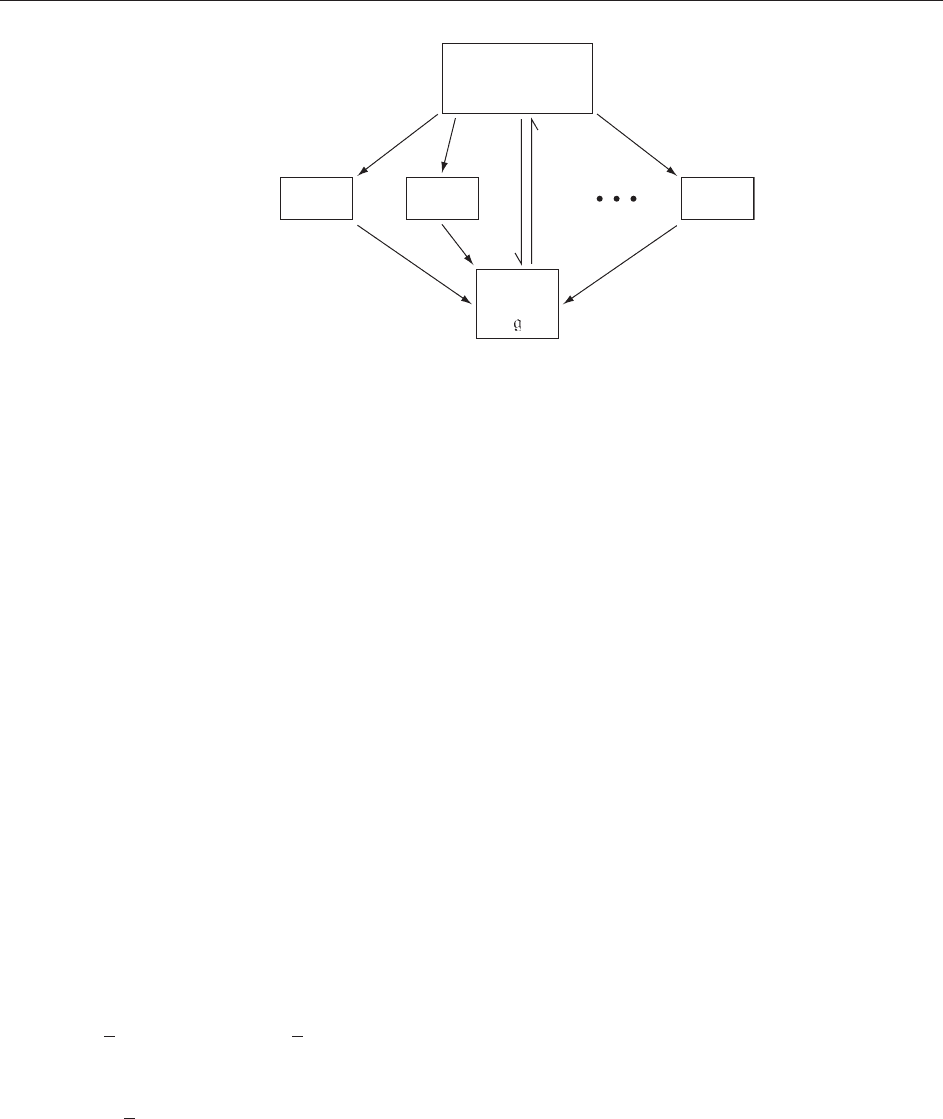
Theorem (Cartan) There is a 1:1 correspondence
between Lie algebras and simply connected Lie
groups. Every Lie group with the same Lie algebra
is either the simply connected (‘‘universal covering’’)
group or is the quotient of this universal covering
group by one of its discrete invariant subgroups.
This relation is summarized in Figure 1
.
As a concrete example, the Lie algebra of
SO(3), which is the group of real 3 3matrices
satisfying M
y
I
3
M = I
3
and det(M) = þ1, is
spanned by the three ‘‘angular momentum vector
288 Lie Groups: General Theory
fields’’ L
i
(x) =
ijk
x
j
@
k
or the three angular
momentum matrices
L
1
¼ L
23
¼
000
00þ1
0 10
2
6
6
4
3
7
7
5
L
2
¼ L
31
¼L
13
¼
001
00 0
þ10 0
2
6
6
4
3
7
7
5
L
3
¼ L
12
¼
0 þ10
100
000
2
6
6
4
3
7
7
5
The Lie group SU(2) is the group of complex 2 2
matrices satisfying M
y
I
2
M = I
2
and det(M) = þ1. Its
Lie algebra is spanned by the three spin matrices
S
j
= (i=2)
j
, which are multiples of the Pauli spin
matrices
j
:
S
1
¼
i
2
0 þ1
þ10
; S
2
¼
i
2
0 i
þi 0
S
3
¼
i
2
þ10
0 1
The two Lie algebras are isomorphic as they share
isomorphic commutation relations [J
1
, J
2
] = J
3
(and
cyclic), J
j
= L
j
or J
j
= S
j
. The group SU(2) is simply
connected. Its maximal discrete invariant subgroup D
consists of all multiples of the identity, I
2
,sothat
= 1. According to Cartan’s theorem, SO(3) =
SU(2)=D
2
, D
2
= {I
2
, I
2
}. The group SO(3) is doubly
connected, with a two-element homotopy group.
Matrix Lie Algebras
A deep theorem of Ado guarantees that every Lie
algebra is equivalent to a matrix Lie algebra, even
though the same is not true of Lie groups.
Sets of n n matrices that close under vector
addition, scalar multiplication, and commutation
(M
1
2 la, M
2
2 la )[M
1
, M
2
] = M
1
M
2
M
2
M
1
2 la)
form matrix Lie algebras. The antisymmetry proper-
ties and Jacobi identity are guaranteed by matrix
multiplication.
Lie algebras for the general linear groups
GL(n; F) consist of n n matrices over F.Lie
algebras for the special linear groups SL(n; F)
consistoftracelessn n matrices. T he Lie algebras
of the unitary groups consist of anti-Hermitian
matrices. The Lie algebras of U(p, q; F) consist of
matrices that obey
M
y
I
p;q
þ I
p;q
M ¼ 0; M 2 uðp; q; FÞ
The matrix Lie algebras of other matrix Lie groups
are obtained by constructing the most general Lie
group operation in the neighborhood of the identity
by linearization. For example, the Lie algebra of the
Heisenberg covering group H
4
is
1 ld
0 nr
001
2
6
4
3
7
5
!
1 l d
01þ n r
00 1
2
6
4
3
7
5
! I
3
þ nNþ rRþ lLþ dD
N ’ a
y
aR’ a
y
000
010
000
2
6
4
3
7
5
000
001
000
2
6
4
3
7
5
Simply connected
Lie group
SG
Multiply
connected
Lie
groups
Lie,
algebra,
SG /D
r
SG /D
2
SG /D
1
Linearization “LOG”
(unique)
EXP (unique)
Figure 1 Cartan’s theorem states that there is a 1:1 correspondence between Lie algebras and simply connected Lie groups. All
other Lie groups with this Lie algebra are quotients of the covering group by one of its discrete invariant subgroups D
j
D
Max
: There is
a relation between the discrete invariant subgroup D
j
and the homotopy group of SG=D
j
. Reproduced with permission from Gilmore R
(1974) Lie Groups, Lie Algebras, and Some of Their Applications. New York: Wiley.
Lie Groups: General Theory 289

L ’ aD’ I ¼ a; a
y
010
000
000
2
6
4
3
7
5
001
000
000
2
6
4
3
7
5
The four 3 3 matrices N, R, L, D that span the Lie
algebra h
4
of H
4
satisfy commutation relations
isomorphic with the commutation relations satisfied
by the photon operators (a
y
a, a
y
, a, I = [a, a
y
]). The
3 3 matrix representations of the group H
4
and
the algebra h
4
are faithful. The representation of H
4
is nonunitary and that of h
4
is non-Hermitian.
Thereisasimplewaytorelatealargeclass
of operator Lie algebras to matrix Lie algebras.
If A, B, C, ... belong to a Lie algebra of n n
matrices with [A, B] ¼ C, the matrix-to-operator
mapping
A !A¼x
i
A
i
j
@
j
preserves commutation relations, for
A; B½¼x
i
A
i
j
@
j
; x
r
B
r
s
@
s
¼ x
i
A
i
j
@
j
; x
r
B
r
s
@
s
x
r
B
r
s
@
s
; x
i
A
i
j
@
j
¼ x
i
A
i
j
B
j
s
@
s
x
r
B
r
i
A
i
j
@
j
¼ x
i
A; B½
i
j
@
j
¼C
This relation depends on the bilinear products x
i
@
j
satisfying commutation relations
x
i
@
j
; x
r
@
s
¼ x
i
@
s
j
r
x
r
@
j
s
i
These commutation relations are satisfied by pro-
ducts of creation and annihilation operators a
y
i
a
j
for
either bosons (b
y
i
b
j
) or fermions ( f
y
i
f
j
). These matrix-
to-operator mappings can be extended to include
bilinear products such as x
i
x
j
, x
i
@
j
, @
i
@
j
and their
boson and fermion counterparts a
i
a
j
, a
y
i
a
j
, a
y
i
a
y
j
. For
example, the vector fields associated with the
operator J
1
for SO(3) and SU(2) are x
i
(L
1
)
i
j
@
j
=
x
2
@
3
x
3
@
2
and u
i
(S
1
)
i
j
@
j
= (i=2)(u
1
@
2
þ u
2
@
1
).
Boson and fermion bilinear products a
y
i
a
j
(1 i,
j n) are isomorphic to u(n). Boson bilinear products
b
i
b
j
, b
y
i
b
j
, b
y
i
b
y
j
are isomorphic to usp(2n) whi le
fermion bilinear products f
i
f
j
, f
y
i
f
j
, f
y
i
f
y
j
are isomorphic
to so (2n).
Structure of Lie Algebras
The study of Lie algebras is greatly facilitated by
studying their structure. The structure is determined
by the commutation properties of the Lie algebra.
Invariant Subalgebra
If a Lie algebra has an invariant subalgebra, then
the commutator of anything in the algebra with
anything in the subalgebra is in the subalgebra.
Suppose a is a linear vector subspace of g.
If [g, a] a,thena is an invariant subspace of g.
In particular, [a, a] a and a is therefore also
a subalgebra of g: it i s an invariant subalgebra
in g.
Example The Lie algebra iso(3) consists of the
three rotation operators L
ij
= x
i
@
j
x
j
@
i
and the
three displacement operators P
k
= @
k
. The subset
of displacement operators is an invariant subspace
in iso(3), since it is mapped into itself by all
commutators. It is also a subalgebra in iso(3). This
particular invariant subalgebra is commutative.
Solvable Algebra
If g is a Lie algebra, the linear vector space obtained
by taking all possible commutators of the operators
in g is called the ‘‘derived’’ algebra: [g, g] = g
(1)
g.
If g
(1)
= g, there is no point in continuing this
process. If g
(1)
g, it is useful to define g = g
(0)
and to continue this process by defining g
(2)
as the
derived algebra of g
(1)
: g
(2)
= [g
(1)
, g
(1)
]. We can
continue in this way, defining g
(nþ1)
as the algebra
derived from g
(n)
. Ultimately (for finite-dimensional
Lie algebras), either g
(nþ1)
= 0org
(nþ1)
= g
(n)
for
some n. If the former case occurs,
g ¼ g
ð0Þ
g
ð1Þ
g
ð2Þ
g
ðnÞ
g
ðnþ1Þ
¼ 0
the Lie algebra g
(0)
is called solvable. Each algebra
g
(i)
is an invariant subalgebra of g
(j)
, i > j.
Example The Lie algebra spanned by the boson
number, creation, annihilation, and identity opera-
tors is solvable. The series of derived algebras has
dimensions 4, 3, 1, 0.
g
ð0Þ
g
ð1Þ
g
ð2Þ
g
ð3Þ
a
y
a
a
y
a
y
aa
III
Semidirect Sum Algebra
When a Lie algebra g has an invariant subalgebra a,
the linear vector space of the Lie algebra g can be
written as the direct sum of the linear vector
subspace of the subalgebra a plus a complementary
subspace b . The subspace b is generally not by itself
a Lie algebra. The Lie algebra g is written as a
semidirect sum of the two subspaces. The semidirect
290 Lie Groups: General Theory

sum structure satisfies the commutation relations
shown:
b; b½b ^ a
g ¼ b ^ a b; a½a
a; a½a
The subspace b can be given the structure of an
algebra modulo the component of the commutator
in a: b = g mod a.
Example The three-dimensional Lie algebra spanned
by the photon operators a
y
, a, I has a semidirect sum
decomposition where b is spanned by a
y
, a and a is
spanned by I. The subspace b is not closed under
commutation, and a is commutative. The Lie algebra
iso(3) also has the structure of a semidirect sum, with
b = b = so(3) and the invariant subalgebra a is
spanned by the three displacement operators P
k
.
Nonsemisimple Algebra
A Lie algebra is nonsemisimple if it has a solvable
invariant subalgebra.
Example The Lie algebra spanned by bilinear
products of photon creation and annihilation opera-
tors a
y
i
a
j
, creation operators a
y
i
, annihilation opera-
tors a
j
, and the identity operator I(1 i, j n)
is nonsemisimple. The solvable invariant subalgebra
is spanned by the 2n þ 2 operators consisting of the
single photon operators a
y
i
, a
j
, the identity operator
I, and the total number operator
^
n =
P
n
i = 1
a
y
i
a
i
.
Semisimple Algebra
A Lie algebra is semisimple if it has no solvable
invariant subalgebras.
Example The Lie algebra so(4) is semisimple. This
Lie algebra has two invariant subalgebras, both
isomorphic to so(3). The direct sum decomposition
soð4Þ¼soð3Þþsoð3Þ
is well known to physical chemists and is respon-
sible for the dualities that exist between rotating and
laboratory frame descriptions of molecular systems.
Simple Algebra
A Lie algebra is simple if it has no invariant
subalgebras at all. The prettiest page in the theory
of Lie groups is the classification theory of the
simple Lie algebras. We turn to this subject now.
Lie Algebra Tools
Two powerful tools have been developed for study-
ing the structure of a Lie algebra. These are the
regular representation and the Cartan–Killing form.
Regular Representation
This repre sentation assigns the structure constan ts to
a set of nn n matrices according to
X
! RðX
Þ
¼ c
; X
; X
¼ c
X
The matrices of the regular representation contain
exactly as much information as the components of
the structure tensor. They can be studied by
standard linear algebra methods. For example, a
secular equation can be used to put the commuta-
tion relations into canonical form.
The structure of the matrices of the regular
representation determines the structure of the Lie
algebra. The identification is carried out according to
the usual rules of representation theory, as shown in
Figure 2.IfabasisX
can be found in which all the
matrices of the regular representation are simulta-
neously reducible, the algebra possesses an invariant
subalgebra. If the representation is not fully reduci-
ble, the invariant subalgebra is solvable. If the regular
representation is fully reducible, the algebra consists
of the direct sum of two (or more) smaller, mutually
commuting subalgebras. If the regular representation
is irreducible, the algebra is simple.
If a Lie algebra is solvable (solv), all matrices in
the regular representation can be transformed to
upper triangular matrices. If the Lie algebra is
nilpotent (nil solv), the diagonal matrix elements
in the upper triangular matrices are zero. The
converses are also true.
Cartan–Killing Form
The Cartan–Killing form is a second-order sym-
metric tensor that is constructed from the third-
order antisymmetric tensor c
by cross-contraction
g
¼ c
c
¼ g
¼ tr RðX
ÞRðX
Þ¼ X
; X
¼ X
; X
The metric g
can be used to place an inner product
(X
, X
) on this linear vector space. This inner
product is not necessarily positive definite.
Nonsemisimple Semisimple Simple
Reducible Fully reducible Irreducible
Figure 2 When the regular matrix representation of a Lie
algebra is reducible, fully reducible, or irreducible, the Lie
algebra is nonsemisimple, semisimple, or simple.
Lie Groups: General Theory 291

The matrix g
can also be treated by standard
linear algebra methods. Since it is real and
symmetric, it can be diagonalized. If there are
n
negative eigenvalues, n
þ
positive eigenvalues,
and n
0
vanishing eigenvalues (n = n
þ n
þ
þ n
0
), the
Lie algebra has a corresponding linear vector space
decomposition of the form
g ¼ g
þ g
þ
þ g
0
The inner product is positive definite on the
subspace g
þ
and negative definite on g
. We call
g
0
the singular subspace. The subspace g
0
is closed
under commutation and in fact is a nilpotent
invariant subalgebra of g.
Decomposition of Lie Algebras
The most general Lie algebra g is the semidirect sum
of a semisimple Lie algebra ss and a solvable
invariant subalgebra solv:
ss; ss½¼ss
g ¼ ss ^ solv ss; solv½solv
solv; solv½solv
The decomposition of g into its component parts
is accomplished by a simple two-step algorithm.
1. Compute the Cartan–Killing metric for g and
determine the singular subspace. If there is none,
stop. If the dimension of g
0
> 0, nil = g
0
is the
maximal nilpotent invariant subalgebra of g.
2. Compute the structure constants of the Lie
algebra g
0
= g nil = g mod nil = g=nil, the
Cartan–Killing metric tensor on g
0
, and the
decomposition g
0
= g
0
þ g
0
þ
þ g
0
0
. Then a = g
0
0
is
abelian and invariant in g
0
. In fact, a is the largest
abelian invariant subalgebra in g
0
.
The algorithm stops here, for the algebra
g
00
= g
0
mod a = g
0
=a = g
0
þ g
0
þ
has no singular sub-
space under its Cartan–Killing metric.
Under this algorithm, the decomposition of g into
its semisimple part and its maximal solvable
invariant subalgebra is
g ¼ g
0
þ g
0
þ
^ g
0
0
^ g
0
The maximum solvable invariant subalgebra solv
in g is the semidirect s um of a and nil: solv = g
0
0
^
g
0
= a ^ nil. In addition, ss = g mod solv =
g=solv = g
0
þ g
0
þ
. The subspace g
0
is closed
under commutation and e xponentiates into a
compact subgroup of G
0
. The subspace g
0
þ
exponentiates to a noncompact coset in G
0
that is
simply connected.
Every element in a semisimple Lie algebra can be
expressed as the commutator of two elements in the
Lie algebra. In this sense, a semisimple algebra
reproduces itself under commutation.
To illustrate this algorithm, we tear apart the
eight-dimensional Lie algebra spanned by the photon
operators a
y
i
a
j
,1 i, j 2 and a
y
3
a
3
, a
y
3
, a
3
, I,
where the photon operators obey [a
i
, a
y
j
] =
ij
I. The
regular representative of the general linear combi-
nation X =
P
ij
m
ij
a
y
i
a
j
þ na
y
3
a
3
þ ra
y
3
þ la
3
þ I is
RðXÞ¼
0 m
12
m
21
0 m
12
m
21
m
21
m
21
þm
11
m
22
0
m
12
m
12
0 m
11
þ m
22
2
6
6
6
6
6
6
6
6
6
6
6
6
4
0
nl
n r
0
3
7
7
7
7
7
7
7
7
7
7
7
7
5
a
y
1
a
1
a
y
2
a
2
a
y
1
a
2
a
y
2
a
1
a
y
3
a
3
a
y
3
a
3
I
The Cartan–Killing inner product is the trace of the
square of this matrix:
ðX; XÞ¼tr RðXÞ
2
¼ 2ðm
11
m
22
Þ
2
þ 8m
12
m
21
þ 2n
2
The subspace g
0
is spanned by a
y
1
a
1
þ a
y
2
a
2
, a
y
3
, a
3
, I,
leaving the four operators a
y
1
a
1
a
y
2
a
2
, a
y
1
a
2
,
a
y
2
a
1
, a
y
3
a
3
to span g
0
. A simple calculation shows
that g
0
0
is spanned by a
y
3
a
3
. As a result:
The Lie algebra is the direct sum g = sl(2; R) þ
u(1) þ h
4
.
Subspace Spanned by
g
0
þ
a
y
1
a
1
a
y
2
a
2
,
1
ffiffi
2
p
(a
y
1
a
2
þ a
y
2
a
1
)
g
0
1
ffiffi
2
p
(a
y
1
a
2
a
y
2
a
1
)
g
0
0
a
y
3
a
3
g
0
a
y
1
a
1
þ a
y
2
a
2
, a
y
3
, a
3
, I
292 Lie Groups: General Theory

Structure of Semisimple Lie Algebras
The Cartan–Killing metric g
is nonsingular on a
semisimple Lie algebra. The metric and its inverse g
,
canbeusedtoraiseandlowerindices.Inparticular,the
tensor whose components are c
= c
g
is third-
order antisymmetric: c
= c
= c
=c
....
Classification of semisimple Lie algebras is equivalent to
classifying such tensors.
Another useful way to describe semisimple Lie
algebras is to search for a canonical structure for the
commutation relations. A useful canonical form is
an eigenvalue form
X; Y½¼Y
In a basis X
i
, with X = x
i
X
i
and Y = y
j
X
j
, this
equation reduces to a standard eigenvalue equation
for the regular representation
X
j
X
k
y
j
Rðx
i
X
i
Þ
j
k
j
k
X
k
¼ 0
Thus, the search for a standard form for the commuta-
tion relations reduces to a study of the secular equation
det RðXÞIðÞ¼
X
n
j¼0
ðÞ
nj
j
ðXÞ¼0 ½1
The coefficients
j
(X) are homogeneous polynomials
of degree j in the coefficients x
i
of X = x
i
X
i
.
In order to extract maximum information from
this secular equation, a generic vector X 2 g is
chosen. Such a choice minimizes all degeneracies.
With a generic choice of X 2 g, it is useful to define
the rank, l, of the Lie algebra g as:
1. the number of functionally independen t coeffi-
cients
j
(X) in the secular equation;
2. the number of independent roots,
1
,
2
, ...,
l
of the secular equation;
3. the dimension of the subspace H g that
commutes with X;and
4. the number of independent (Casimir) operators
that commute with all X
i
: C
j
(X) =
j
(x
i
!X
i
):
[C
j
(X), X
i
] = 0.
For example, for so(3) or su(2), the secular
equation for X = x
i
X
i
is
det
0 x
3
x
2
x
3
0 x
1
x
2
x
1
0
2
6
4
3
7
5
I
3
2
6
4
3
7
5
¼ðÞ
3
þðÞ
2
ðxÞ¼0
where
2
(x) = x
2
1
þ x
2
2
þ x
2
3
. The rank is l = 1. There
is one independent coefficient
2
(x)andone
independent root of this equation,
1
=
ffiffiffiffiffiffiffiffiffiffiffiffiffiffiffiffiffi
ij
x
i
x
j
p
=
i
ffiffiffiffiffiffiffiffiffi
x x
p
. The only linear operators that commute
with X are scalar multiples of X. There is one
independent homogeneous operator that commutes
with all generators X
i
, obtained by the substitutions
x
i
! L
i
(for so(3)) or x
i
! S
i
(for su(2)):
C
2
ðLÞ¼
2
ðx
i
! L
i
Þ¼L
2
1
þ L
2
2
þ L
2
3
The secular equation [1] is over the field of real
numbers. This is not an algebraically clos ed field.
There is no guarantee that the number of indepen-
dent functions
j
(x) in the secular equ ation is equal
to the numb er of (real) roots of this equation until
we extend the field from R to C, which is
algebraically closed. As a result, the classification
of semisimple Lie algebras is done over complex
numbers. After the complex extensions of the simple
Lie algebras have been classified, their different
inequivalent real forms can be determined.
Root Spaces
When the secular equation for the regular represen-
tation of a generic element in a Lie algebra is solved,
the commutation relations can be put into a simple
and elegant canonical form. This canonical form
depends on the rank, l, of the Lie algebra, not the
dimension, n, of the Lie algebra. This provides a
very useful simplification, as n l
2
.
For this canonical form, the independent roots
1
(x),
2
(x), ...,
l
(x) are gathered into a single
vector a with l components. The vectors a =
(
1
,
2
, ...,
l
) are called root vectors. The root
vectors exist in an l-dimensional space on which a
positive-definite inner product can be defined. The
root vectors for a rank-l semisimple Lie algebra g
span this Euclidean space. The basis vectors of g
can be identified with the roots in the root space.
The roots in a root space have the following
properties:
1. A positive-definite metric can be placed on the
root space.
2. The vector 0 is a root.
3. The root 0 is l-fold degenerate.
4. If a is a root and ca is a root, c = 1, 0.
5. If a and b are roots,
b
0
¼ b
2a b
a a
a
is also a root and 2a b=a a is an integer, n
1
.In
fact, b
0
is the root obtained by reflecting b in the
hyperplane orthogonal to a.
6. The set of reflections generated by nonzero roots
itself forms a group, the Weyl group of the Lie
algebra.
Lie Groups: General Theory 293
7. The angle between roots a and b is determined by
cos
2
ða; bÞ¼
a b
a a
a b
b b
¼
n
1
2
n
2
2
¼ 0;
1
4
;
2
4
;
3
4
; 1
The integers n
1
, n
2
for noncolinear roots are
constrained by jn
1
n
2
j < 4.
8. The relative lengths of the roots are determined
by the angles between them:
9. When the roots are normalized so that
X
a6¼0
i
j
¼
ij
or
X
a6¼0
a a ¼ l
the commutation relations can be placed in the
canonical form presented in the next section.
It is possible to build up all possible root space
diagrams using an ‘‘Aufbau’’ construction. We start
with a rank-1 root space. This consists of three roots
in R
1
: a, 0, a.
To construct rank-2 root spaces, a new noncolinear
root b is adjoined to the two nonzero roots. The new
root and the old roots span R
2
. The new root can only
have a limited set of angles with the roots already
present. The set of roots a, b is completed by reflection
in hyperplanes orthogonal to all roots present. If any
pair of roots violates the angle conditions, the result
is not a root space. In this way, the rank-2 root
spaces G
2
(30
),B
2
=C
2
(45
),A
2
(60
), and D
2
=A
1
þ
A
1
(90
)areconstructedfromA
1
. Proceeding in this
way, it is possible to construct rank-3 root spaces
(B
3
, C
3
, A
3
= D
3
) from the rank-2 root spaces, the
rank-4 root spaces from the rank-3 root spaces, and so
forth. Ultimately, there are four unending chains
A
n
, B
n
, C
n
, D
n
and five exceptional root spaces
G
2
, F
4
, E
6
, E
7
, E
8
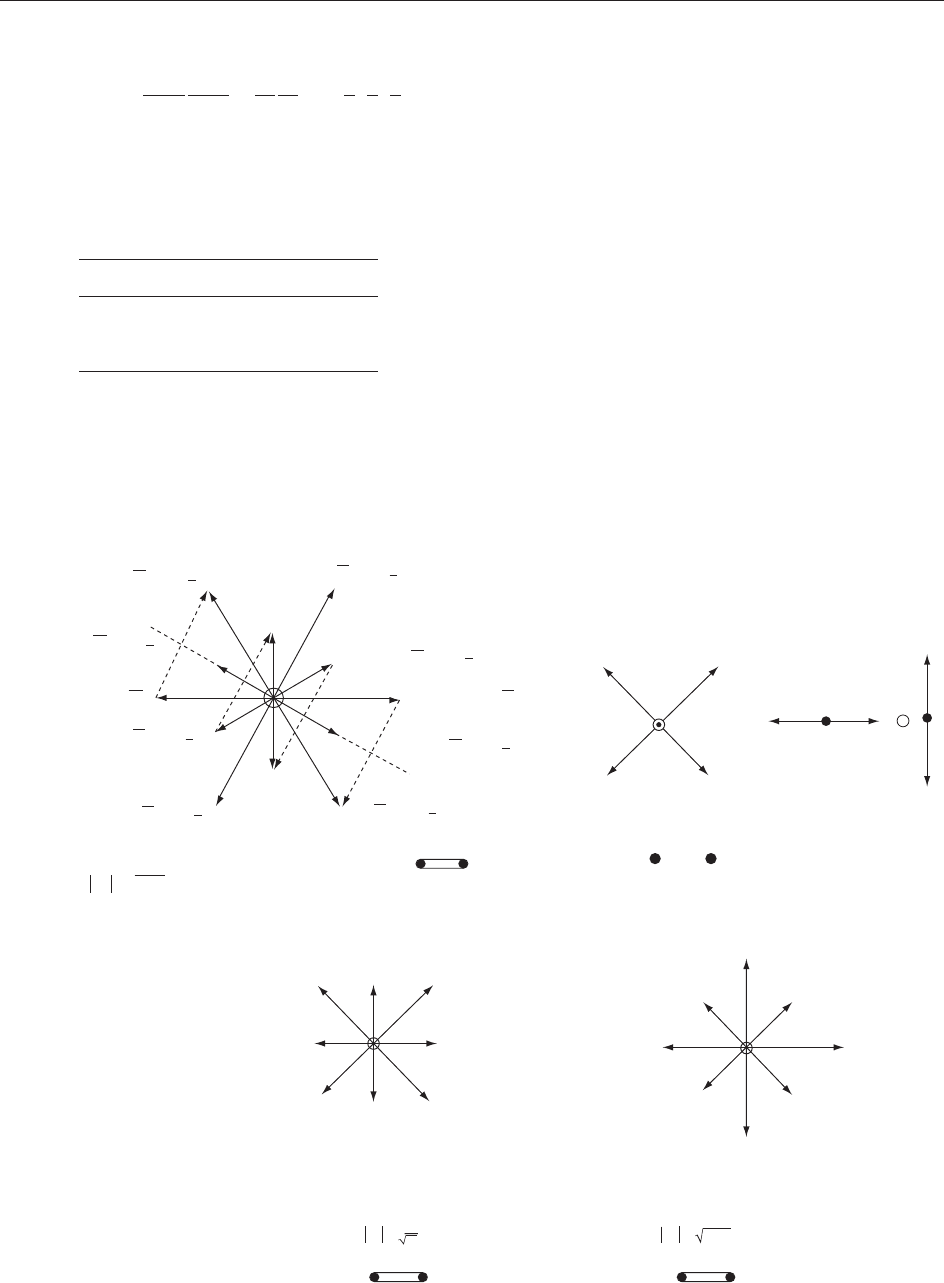
. The rank-2 root spaces are shown
in Figure 3 and the rank-3 root spaces are shown in
– α
1
=
–e
1
+
e
2
– α
1
=
–e
1
+
e
2
α
1
+
2α
2
=
e
1
+
e
2
α
1
+
α
2
=
e
1
2α
1
+
α
2
=
2e
1
α
1
+
α
2
=
e
1
+
e
2
α
1
=
e
1
+
e
2
α
1
=
e
1
–
e
2
α
2
=
e
2
α
2
=
2e
2
– α
2
=
–e
2
– α
2
=
–2e
2
– α
1
– α
2
=
–e
1
–2α
1
– α
2
=
–2e
1
– α
1
– 2α
2
= –e
1
– e
2
– α
1
– α
2
= –e
1
–
e
2
±e
1
±e
2
; ±e
1
; ±e
2
±e
1
±e
2
; ± 2e
1
; ± 2e
2
e
1
=
1
6
α
1
α
2
B
2
2
1
α
1
α
2
C
2
2
1
e
1
=
1/12
– α
1
=
–e
1
+
e
2
α
2
=
e
1
+
e
2
α
1
=
e
1
–
e
2
– α
2
=
–e
1
–
e
2
±e
1
± e
2
α
2
B
2
=
α
1
1
1
– α
2
– α
2
α
2
α
1
±e
1
±e
2
=
+
A
1
A
2
⊕
α
1
α
2
G
2
=
3
1
– α
1
= – √3/2e
1
+ e
2
3
2
√3/2e
1
+ e
2
3
2
– α
1
– α
2
= – √3/2e
1
+ e
2
1
2
– α
1
– 2α
2
= – √3/2e
1
– e
2
1
2
α
1
+ 2α
2
= √3/2e
1
– e
2
1
2
α
1
+ α
2
= √3/2e
1
– e
2
1
2
– α
1
– 3α
2
= – √3/2e
1
– e
2
3
2
α
1
= √3/2e
1
– e
2
3
2
–2α
1
– 3α
2
= – √3e
1
2α
1
+ 3α
2
= – √3e
1
= √1/12
e
1
e
2
= α
2
–e
2
= – α
2
α
1
+ 3α
2
′
Figure 3 Rank-2 root spaces: G
2
30
, B
2
= C
2
45
, A
2
60
, D
2
= A
1
þ A
1
90
.
cos
2
((a, b)) (a, b) a a=b b
3/4 30
, 150
3
1
2/4 45
, 135
2
1
1/4 60
, 120
1
294 Lie Groups: General Theory
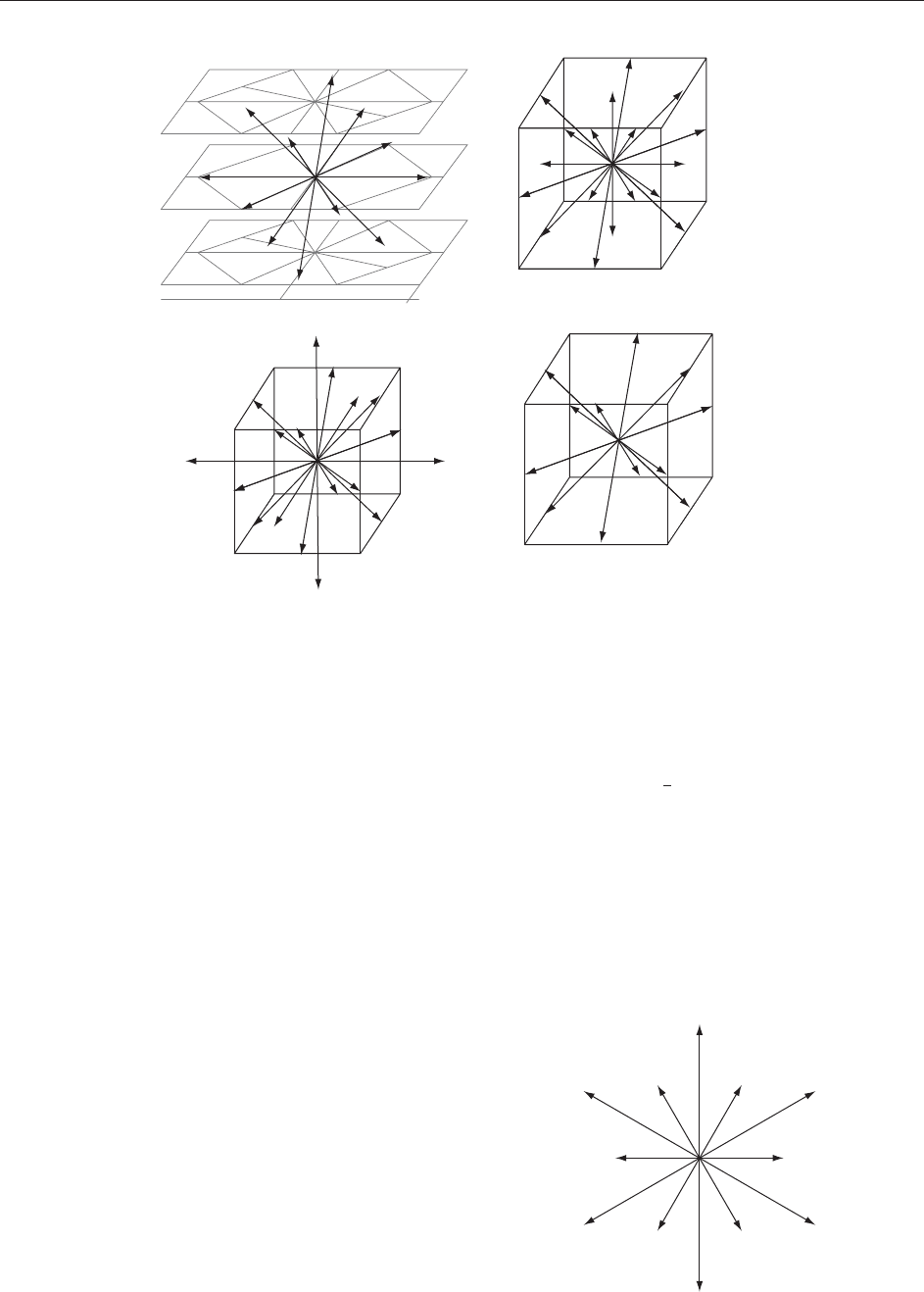
Figure 4. The normalization factors (cf. point (9) above)
are shown for the rank-2 root spaces in Figure 3.
Canonical Commutation Relations
The canonical commutation relations are expressed
in terms of root vectors. The l operators in g with
the l-fold degenerate root vector 0 are H
1
, H
2
, ...,
H
l
. These l operators mutually commute. In a
matrix Lie algebra, they can be taken as simulta-
neously commuting diagonal matrices. Associated
with each nonzero root a 6¼ 0, there is exactly one
basis vector, E
a
,ing. The canonical commutation
relations are expressed in terms of the roots as
follows:
H
i
; H
j
¼01 i; j l
H
i
; E
a
½¼
i
E
a
E
a
; E
a
½¼a H
E
a
; E
b
¼
N
ab
E
aþb
a þ b a root
0 a þ b not a root
(
The structure constants N
ab
are determined from a
recursion relation derived from a chain of roots
b m a, b (m 1)a, ..., b þ (n 1)a, b þ na,
where b (m þ 1)a and b þ (n þ 1) a are not roots
(cf. Figure 5). The structure constants are
N
2
a; b
¼
1
2
nð1 þ mÞða aÞ
The operators H and E
a
are often called diagonal
and shift operators, respectively. They are general-
izations of the shift operators J
3
and J
of angular
momentum theory. The general idea is as follows.
Since the operators H
i
mutually commute, the
matrices (H
i
) representing these operators can be
chosen as diagonal in any matrix representation.
e
3
–
e
2
,+
e
3
+
e
2
–
e
3
+
e
1
+
e
2
e
1
–
e
1
+
e
2
+
e
1
+
e
3
–
e
,+
e
3
–
e
2
,+
e
4
–
e
2
+
e
4
e
1
–
e
3
e
1
–
e
4
e
1
–
e
4
e
1
–
e
4
–
e
1
+
e
2
e
2
+
e
3
+
e
1
,–
e
2
–
e
1
,+
e
2
+
e
1
,–
e
3
–
e
1
+
e
3
–
e
1
+
e
4
+
e
2
+
e
3
+
e
1
+
e
3
+
e
2
–
e
3
+
e
1
–
e
3
–
e
2
–
e
3
+
e
2
–
e
3
+
e
1
–
e
3
–
e
2
–
e
3
+
e
2
–
e
3
2
e
1
–2
e
2
–2
e
1
2
e
2
–2
e
3
+
e
1
–
e
3
–
e
2
+
e
3
–
e
1
–
e
3
–
e
3
e
1
–
e
1
,–
e
3
e
B
3
D
3
C
3
A
3
Figure 4 Rank-3 root spaces: A
3
, B
3
, C
3
, D
3
= A
3
.
β + α
α
– α
– β
β
+ 2
α
β
β
– α
Figure 5 An a chain containing .
Lie Groups: General Theory 295

The action of any of these operators on a basis
vector in this representation is H
i
jmi= m
i
jmi. The
operator E
a
shifts the eigenvalue of H according to
HðE
a
jmiÞ ¼ ð½H; E
a
þE
a
HÞjmi¼ða þ mÞðE
a
jmiÞ
In this sense the operators E
a
act on basis vectors
jmi in such a way that the eigenvalue m is shifted by
a to m þ a.
For the simple classical Lie algebras, the roots can
be expressed in terms of an orthogonal Euclidean
basis set as shown in Table 1 and Figures 3 and 4
for the rank-2 and rank-3 root spaces. The roots for
the five remaining inequivalent simple Lie algebras
(‘‘exceptional’’ algebras) are shown in Table 2.
The diagonal and shift operators for several of the
classical Lie algebras can be related to bilinear
products of boson or fermion creation and ann ihila-
tion operators. For u(n), the bilinear products a
y
i
a
j
are related to E
a
with a = e
i
e
j
,1 i 6¼ j n, and
H
i
= a
y
i
a
i
. This holds for either boson or fermion
operators. For sp(2n; R), we have the identifications
with bilinear products of boson operators as
follows: þe
i
þ e
j
$ b
y
i
b
y
j
, þe
i
e
j
$ b
y
i
b
j
, e
i
e
j
$ b
i
b
j
, and H
i
= b
y
i
b
i
. In particular, þ2e
i
$ b
y2
i
and 2e
i
$ b
2
i
. For so(2n), we have the identifica-
tions with bilinear products of fermion operators as
follows: þe
i
þ e
j
$ f
y
i
f
y
j
, þe
i
e
j
$ f
y
i
f
j
, e
i
e
j
$
f
i
f
j
, and H
i
= f
y
i
f
i
. In particular, f
y
i
f
y
i
= f
2
i
= 0. These
identifications make it a relatively simple matter to
construct unitary matrix representations of the
compact Lie groups SU(n) that are symmetric or
antisymmetric, of USp(2n) that are symmetric, and
of SO(2n) that are antisymmetric (bosons $ sym-
metric, fermions $ antisymmetric).
Dynkin Diagrams
Every root in a rank-l root space can be represented as
a linear combination of l ‘‘basis roots.’’ These basis
roots can be chosen in such a way that all coefficients
are integers. In fact, the basis roots can be chosen so
that all linear combinations that are roots involve only
positive integers (and zero) or only negative integers
and zero. This comes about because every shift
operator E
d
can be written as a multiple commutator
E
d
E
a
; E
b
; E
g
; d ¼ a þ b þ g
One simple way to construct such a basis set of
fundamental roots is to construct an (l 1)-dimen-
sional plane through the or igin of the root space that
contains no nonzero roots, and choose as l funda-
mental roots the l roots on one side of this
hyperplane that are closest to it. For the classical
simple Lie algebras, the fundamental roots are:
Root Space a
1
a
2
a
l1
a
l
A
l1
e
1
e
2
e
2
e
3
e
l1
e
l
D
l
e
1
e
2
e
2
e
3
e
l1
e
l
e
l1
þ e
l
B
l
e
1
e
2
e
2
e
3
e
l1
e
l
þ1e
l
D
l
e
1
e
2
e
2
e
3
e
l1
e
l
þ2e
l
Table 2 Roots for the simple exceptional Lie algebras
Root space Rank Dimension Roots Conditions
G
2
214 þe
i
e
j
1 i 6¼ j 6¼ k 3
[(e
i
þ e
j
) 2e
k
]
F
4
452 e
i
e
j
, 2e
i
1 i < j 4
e
1
e
2
e
3
e
4
E
6
678 e
i
e
j
1 i < j 5
1
2
( e
1
e
2
e
3
e
4
e
5
)
ffiffi
3
p
4
e
6
a
E
7
7 133 e
i
e
j
1 i < j 6
1
2
( e
1
e
2
e
3
e
4
e
5
e
6
)
ffiffi
2
p
4
e
7
b
E
8
8 248 e
i
e
j
1 i < j 8
1
2
( e
1
e
2
e
3
e
4
e
5
e
6
e
7
e
8
) a
a
Even number of þ signs.
b
Even number of þ signs within bracket.
Table 1 Roots for the simple classical Lie groups and algebras
Group Algebra Root space Rank Roots Conditions
SU(l ) su(l) A
l1
l 1 þe
i
e
j
1 i 6¼ j l
SO(2l ) so(2l) D
l
l e
i
e
j
1 i < j l
SO(2l þ 1) so(2l þ 1) B
l
l e
i
e
j
, e
k
1 i < j, k l
Sp(l) = USp(2l) sp(l) = usp(2l) C
l
l e
i
e
j
, 2e
k
1 i < j, k l
296 Lie Groups: General Theory