
Hogg S. Essential microbiology
Подождите немного. Документ загружается.

JWBK011-05 JWBK011-Hogg August 12, 2005 15:56 Char Count= 0
98 MICROBIAL GROWTH
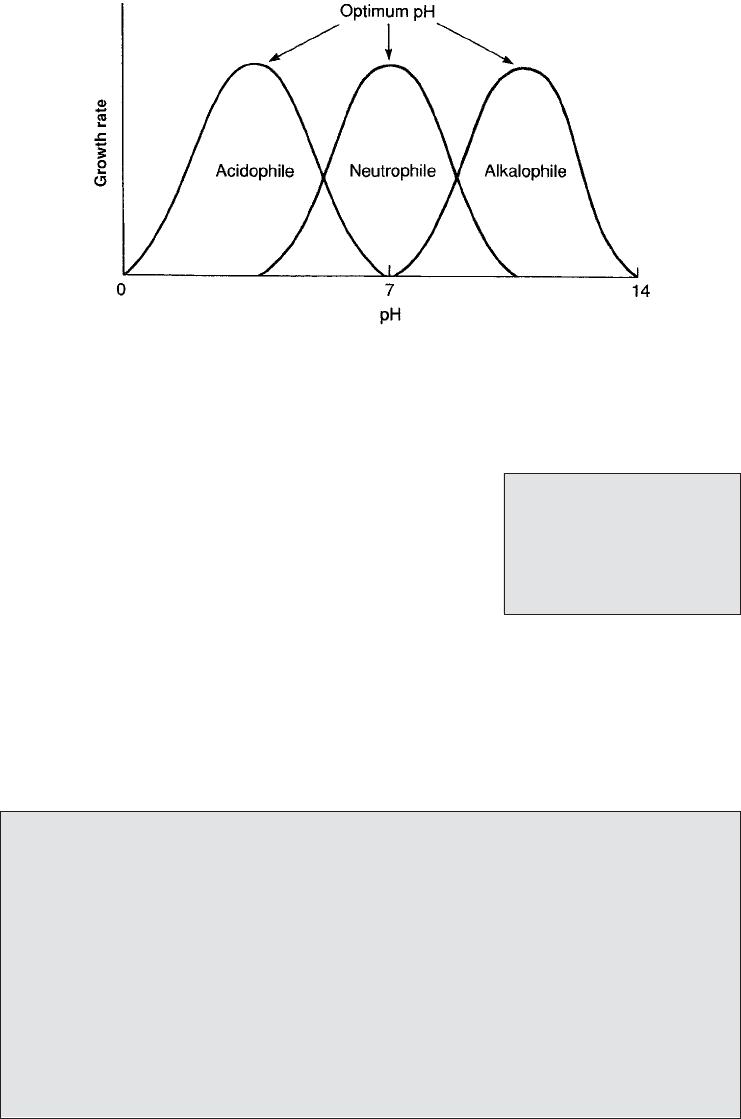
Figure 5.6 Effect of pH on microbial growth rate. Individual species of microorganism
occupy a relatively narrow range of pH. Although for most species this is around neutrality,
both acidophilic and alkalophilic forms exist. The shape of the curve reflects the properties
of a particular organism’s enzymes and other proteins
Acidophilic = ‘acid-
loving’; a term applied
to organisms that show
optimal growth in acid
conditions (pH < 5.5).
are tolerant of acid conditions, and fewer still are aci-
dophilic. Fungi, on the other hand, generally prefer
slightly acid conditions and therefore tend to dominate
bacteria when these prevail. The reason for the growth
rate falling away either side of the optimum value is again
due to alterations in three-dimensional protein structure.
The pH value of growth media is adjusted to the de-
sired value by the addition of acid or alkali during its preparation. The metabolic ac-
tivities of microorganisms often means that they change the pH of their environment
as growth proceeds, so it is important in a laboratory growth medium that a desirable
pH is not only set but maintained. This is achieved by the use of an appropriate buffer
system. Phosphate buffers are widely used in the microbiology laboratory; they enable
media to minimise changes in their pH when acid or alkali is produced (see Box 5.3).
Box 5.3 Buffers
The pH of a batch culture may change from its intended value as a result of an or-
ganism’s metabolic activity. Buffers are added to a medium in order to minimise the
effect of these changes. Such buffers must be non-toxic to the organism in ques-
tion, and phosphate buffers are commonly used in microbial systems. Phosphate
combines with hydrogen ions or hydroxyl ions to form respectively a weak acid or a
weak base:
H
+
+ HPO
4
2−
−−−−−−→ H
2
PO
4
−
OH
−
+ H
2
PO
4
−
−−−−−−→ HPO
4
2−
+ H
2
O
This reduces the impact on the pH of the medium.

JWBK011-05 JWBK011-Hogg August 12, 2005 15:56 Char Count= 0
FACTORS AFFECTING MICROBIAL GROWTH 99
Oxygen
An aerobe is an organ-
ism that grows in the
presence of molecular
oxygen, which it uses as
a terminal electron ac-
ceptor in aerobic respi-
ration.
An anaerobe is an
organism that grows in
the absence of molecu-
lar oxygen
Oxygen is present as a major constituent (20 per cent) of
our atmosphere, and most life forms are dependent upon
it for survival and growth. Such organisms are termed
aerobes. Not all organisms are aerobes however; some
anaerobes are able to survive in the absence of oxygen,
and for some this is actually a necessity.
Aerobic organisms require oxygen to act as a terminal
electron acceptor in their respiratory chains (see Chapter
6). Such organisms, when grown in laboratory culture,
must therefore be provided with enough oxygen to sat-
isfy their requirements. For a shallow layer of medium
such as that in a petri dish, sufficient oxygen is available
dissolved in surface moisture. In a deeper culture such as
a flask of broth however, aerobes will only grow in the surface layers unless additional
oxygen is provided (oxygen is poorly soluble in water). This is usually done by shaking
or mechanical stirring.
Obligate anaerobes cannot tolerate oxygen at all (see Box 5.4). They are cultured
in special anaerobic chambers, and oxygen excluded from all liquid and solid media.
Facultative anaerobes are able to act like aerobes in the presence of oxygen, but have the
added facility of being able to survive when conditions become anaerobic. Aerotolerant
anaerobes are organisms that are basically anaerobic; although they are not inhibited by
atmospheric oxygen, they do not utilise it. Microaerophiles require oxygen, but are only
able to tolerate low concentrations of it (2–10 per cent), finding higher concentrations
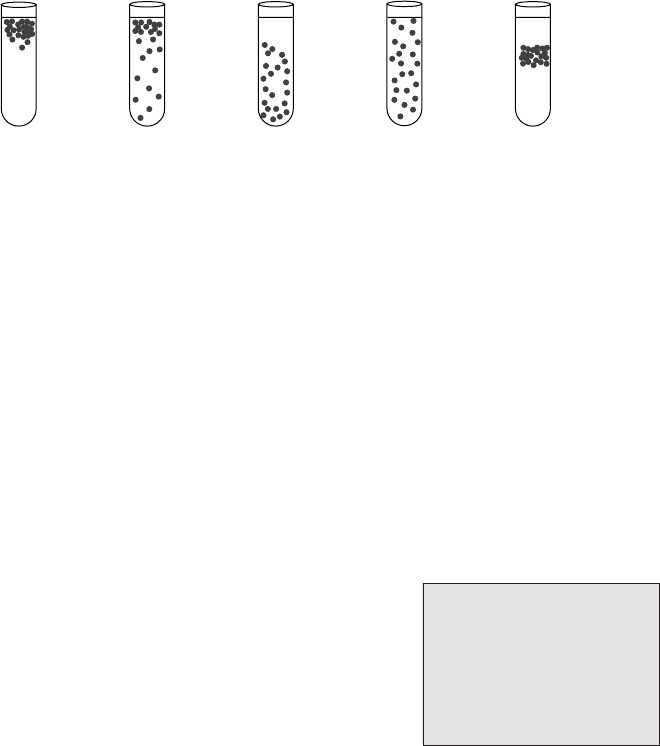
harmful. Organisms inoculated into a static culture medium will grow at positions that
reflect their oxygen preferences (Figure 5.7).
Carbon dioxide
In Chapter 4 we saw that autotrophic organisms are able to use carbon dioxide as a
carbon source; when grown in culture, these are provided with bicarbonate in their
growth medium or incubated in a CO
2
-enriched atmosphere. However, heterotrophic
bacteria also require small amounts of carbon dioxide, which is incorporated into var-
ious metabolic intermediates. This dependency can be demonstrated by the failure of
these organisms to grow if carbon dioxide is deliberately removed from the atmosphere.
Box 5.4 How can oxygen be toxic?
It seems strange to us to think of oxygen as a toxic substance, however it can be
converted by metabolic enzymes into highly reactive derivatives such as the su-
peroxide free radical (O
2
−
), which are very damaging to cells. Aerobes and most
facultative anaerobes convert this to hydrogen peroxide, by means of the enzyme
superoxide dismutase. This is further broken down by catalase. Obligate anaerobes
do not possess either enzyme, and so cannot tolerate oxygen.
JWBK011-05 JWBK011-Hogg August 12, 2005 15:56 Char Count= 0
100 MICROBIAL GROWTH
(a) Obligate
aerobes
(c) Obligate
anaerobes
(d) Aerotolerant
anaerobes
(b) Facultative
anaerobes
(e) Microaerophiles
Figure 5.7 Microorganisms have different oxygen requirements. In a static culture, mi-
croorganisms occupy different regions of the medium, reflecting their pattern of oxygen
usage. (a) Obligate aerobes must grow at or near the surface, where oxygen is able to dif-
fuse. (b) Facultative anaerobes are able to adjust their metabolism to the prevailing oxygen
conditions. (c) Obligate anaerobes, in contrast, occupy those zones where no oxygen is
present at all. (d) Aerotolerant anaerobes do not use oxygen, but neither are they inhibited
by it. (e) Microaerophiles have specific oxygen requirements, and can only grow within a
narrow range of oxygen tensions
Osmotic pressure
Osmosis is the diffusion of water across a semipermeable membrane from a less con-
centrated solution to a more concentrated one, equalising concentrations. The pressure
required to make this happen is called the osmotic pressure. If a cell were placed in a
Plasmolysis is the shrink-
age of the plasma mem-
brane away from the
cell wall, due to osmotic
loss of water from the
cell.
hypertonic solution (one whose solute concentration is
higher), osmosis would lead to a loss of water from the
cell (plasmolysis). This is the basis of using high con-
centrations of salt or other solutes in preserving foods
against microbial attack. In the opposite situation, wa-
ter would pass from a dilute (hypotonic) solution into the
cell, causing it to swell and burst. The rigid cell walls of
bacteria prevent them from bursting; this, together with
their minute size, makes them less sensitive to variations
in osmotic pressure than other types of cell. They are generally able to tolerate NaCl con-
centrations of between 0.5 and 3.0 per cent. Haloduric (‘salt-tolerant’) bacteria are able
to tolerate concentrations ten times as high, but prefer lower concentrations, whereas
halophilic (‘salt-loving’) forms are adapted to grow best in conditions of high salinity
such as those that prevail in the Dead Sea in the Middle East. In order to do this without
plasmolysis occurring, they must build up a higher internal solute concentration, which
they do by actively concentrating potassium ions inside the cell.
Light
Phototrophic organisms require light in order to carry out photosynthesis. In the lab-
oratory, care must be taken that light of the correct wavelength is used, and that the
source used does not also act as a heat source. Fluorescent light produces little heat,

JWBK011-05 JWBK011-Hogg August 12, 2005 15:56 Char Count= 0
THE KINETICS OF MICROBIAL GROWTH 101
but does not provide the wavelengths in excess of 750 nm needed by purple and green
photosynthetic bacteria.
The kinetics of microbial growth
Unicellular organisms divide by binary fission; each cell grows to full size, replicates its
genetic material then divides into two identical daughter cells. By identical means, two
cells divide into four, four into eight and so on, leading to an exponential increase in
cell numbers:
1 −−−−−→ 2 −−−−−→ 4 −−−−−→ 8 −−−−−→ 2
n
If we were to plot the number of cells in a population against time, we would get an
exponential curve (Figure 5.8a). It is more convenient when plotting a growth curve
(a)
Cell
numbers
Time (min)
(b)
Log cell
numbers
Time (min)
Figure 5.8 (a) Under ideal physicochemical conditions, the number of cells in a population
of a unicellular organism increase exponentially. (b) A plot of the log of cell numbers against
time during exponential growth gives a straight line
JWBK011-05 JWBK011-Hogg August 12, 2005 15:56 Char Count= 0
102 MICROBIAL GROWTH
Log cell numbers
Log
phase
Stationary
phase
Death
phase
Time
Lag
phase
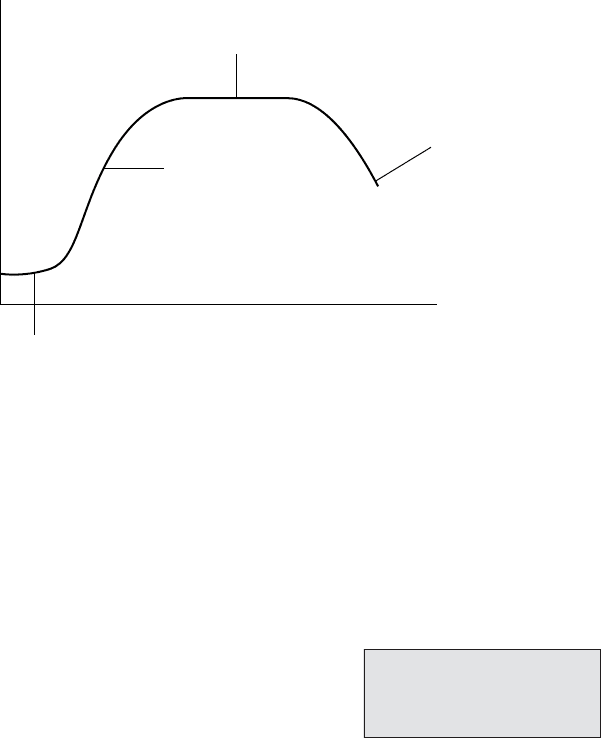
Figure 5.9 A microbial growth curve. The four phases of a typical growth curve are shown.
See text for details
to plot the logarithm of cell numbers of against time, giving us a straight line (Fig-
ure 5.8b). Such exponential growth cannot continue indefinitely, however, and growth
usually slows down due to either the supply of nutrients becoming exhausted, or be-
cause metabolism leads to an accumulation of harmful waste substances. Unicellular
growth usually occurs in a series of different phases (Figure 5.9):
Inoculum is the term
given to the cells used to
‘seed’ a new culture.
1 Lag phase. When an inoculum of bacteria is first in-
troduced into some growth medium, it will probably
require a period to adapt to its new surroundings –
the less familiar these are, the longer the period of
adaptation (see also Box 5.5). If, for example, the
carbon source in the medium is unfamiliar, the cells will need time to synthesise the
necessary enzymes for its metabolism. The length of the lag phase will also depend
on the age and general health of the cells in the inoculum. During this period, there
is no net increase in bacterial numbers, however the cells are metabolically active.
2 Log (exponential) phase. When the bacteria have acclimatised to their new environ-
ment and synthesised the enzymes needed to utilise the available substrates, they
are able to start regular division by binary fission. This leads to the exponential
increase in numbers referred to above. Under optimal conditions, the population of
cells will double in a constant and predictable length of time, known as the gener-
ation (doubling) time. The value for the widely used laboratory bacterium E. coli
is 20 min, and for most organisms it is less than an hour. There are some bacteria,
however, whose generation time is many hours. Thus, during exponential growth,
the number of cells can be expressed as:
N
T
= N
0
× 2
n

JWBK011-05 JWBK011-Hogg August 12, 2005 15:56 Char Count= 0
THE KINETICS OF MICROBIAL GROWTH 103
Box 5.5 Diauxic growth
When E. coli grows in a medium containing glucose and lactose, it preferentially
metabolises the former since it is more energy efficient to do so. The cell has a regula-
tory mechanism that suppresses the synthesis of lactose-metabolising enzymes until
all the glucose has been used up (see Chapter 11). At this point a second lag phase
is entered, while the lactose metabolising enzymes are synthesised. Such growth is
termed diauxic, and the resulting growth curve is characteristically biphasic.
Bacterial
growth
rate
Time
Glucose
used up
Growth on
glucose
Growth on
lactose
where N
0
is the number of cells at the start of exponential growth, N
T
is the number
of cells after time T, L is the length of the lag phase and n is the number of doubling
times that have elapsed. n is therefore equal to T/T
d
, where T
d
is the doubling time.
Substituting into the first equation:
N
T
= N
0
× 2
T/T
d
This can be expressed more conveniently by using logarithms to the base 2 (don’t
worry too much about how this is done!):
log
2
N
T
= log
2
N
0
+
T − L
T
d
Therefore,
log
2
N
T
− log
2
N
0
T − L
=
1
T
d
Thus, if we know the number of cells at the start and end of a period of exponential
growth, we can calculate the doubling time. See Box 5.6 for a worked example.
We can also determine the mean growth rate constant (K); this is a measure of the
number of doublings of the population per unit time, and is equal to 1/T
d
∗
.
Many antibiotics such as penicillin (Chapter 14) are only effective when cells are
actively dividing, since they depend on disrupting new cell wall synthesis.
∗
You may also come across the instantaneus growth rate (µ), which equals
0.693
T
d

JWBK011-05 JWBK011-Hogg August 12, 2005 15:56 Char Count= 0
104 MICROBIAL GROWTH
Box 5.6 Calculating an increase in microbial numbers
Example:
An inoculum of 10
7
bacterial cells was introduced into a flask of culture medium
and growth monitored. No change was seen for 18 minutes (the lag phase), then
growth occurred rapidly. After a further 76 minutes, the population had increased
to 4.32 × 10
8
cells. What is the doubling time (T
d
) of the culture?
(To obtain values of log
2
, multiply log
10
values by 3.322)
1
T
d
=
log
2
N
T
− log
2
N
o
T − L
1
T
d
=
log
2
(4.32 × 10
8
) − log
2
10
7
76
1
T
d
=
(3.322 × 8.6355) − (3.322 × 7)
76
28.6871 − 23.254
76
=
1
T
d
T
d
=
76
5.4331
= 14 minutes
3 Stationary phase. As discussed above, the exponential phase is limited by environ-
mental factors, and as the rate of growth slows down, the culture enters the next
phase. The levelling out of the growth curve does not mean that cell division has
ceased completely, but rather that the increase due to newly formed cells is can-
celled out by a similar number of cell deaths. Eventually, however, as the death rate
increases, the overall numbers fall and we enter the final phase of growth.
4 Death phase . As cells die off and the culture is unable to replace them, the total
population of viable cells falls. This is the death (or decline) phase.
Batch culture and continuous culture
The phases of growth described above apply to a batch culture. In this form of culture,
appropriate nutrients and other conditions are provided for growth, then an inoculum
is added and the culture incubated. No further nutrients are added and no waste prod-
ucts are removed, thus conditions in the culture are continually changing. This results
in active growth being of limited duration for the reasons outlined above.
Sometimes it is desirable to keep the culture in the logarithmic phase, for example
if the cells are being used to produce alcohol or antibiotics. In a continuous culture,
nutrient concentrations and other conditions are held constant, and the cells are held
in a state of exponential growth. This is achieved by continuously adding fresh culture
medium and removing equal volumes of the old. Parameters such as pH can also be mon-
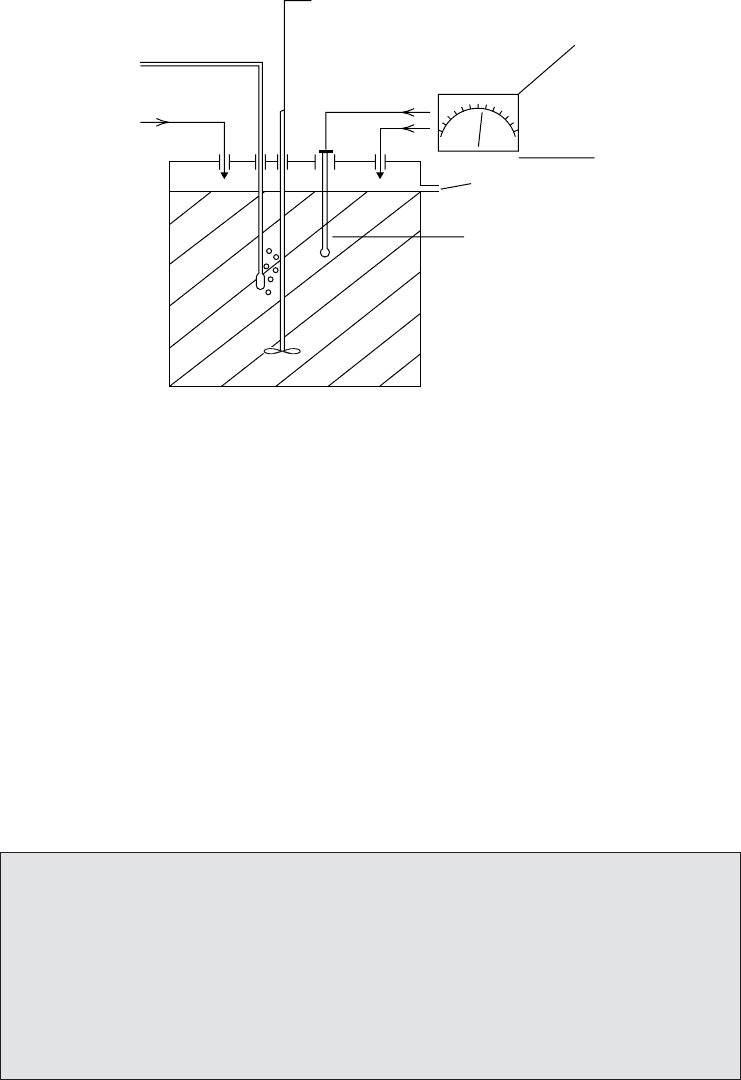
itored and adjusted. The equipment used to do this is called a chemostat (Figure 5.10); it
JWBK011-05 JWBK011-Hogg August 12, 2005 15:56 Char Count= 0
GROWTH IN MULTICELLULAR MICROORGANISMS 105
Air supply
Nutrient
Overflow
pH
electrode
Stirrer
Acid/alkali
addition to
adjust pH
pH
controller
Figure 5.10 Continuous culture of microorganisms: the chemostat. By the continuous
addition of new nutrients and removal of waste, the culture is kept in a steady state, with
both cell numbers and nutrient composition remaining constant
produces a steady-state culture whose population size is kept constant by careful control
of flow rates and nutrient concentrations.
Growth in multicellular microorganisms
If uninterrupted, growth in fungi proceeds radially outwards from the initiating spore
(Box 5.7), allowing the fungal colony to colonise new regions potentially rich in nutrients
(Box 5.8). Actual growth occurs solely at the hyphal tip; as this happens, the terminal
cell grows longer, until eventually a new cross wall or septum is formed. Cells away
Box 5.7 See for yourself!
You can observe growth at a hyphal tip for yourself with a petri dish culture of a
fungus such as Mucor and a light microscope fitted with an eyepiece graticule.
Focus on the outer visible edge of a colony, then identify the tip of one of the
ouwardly radiating hyphae. Align it with the graticule scale and note the position
of the tip. Return after half an hour and note the new value, being careful not to
disturb the microscope in the meantime. You may be surprised at how far the hypha
has travelled in such a short time!

JWBK011-05 JWBK011-Hogg August 12, 2005 15:56 Char Count= 0
106 MICROBIAL GROWTH
Box 5.8 Who believes in fairies?
The well-known phenomenon of ‘fairy rings’can be explained in terms of the radial
growth of fungi. As the underground mycelium of certain members of the Basid-
iomycota extends outwards, it releases enzymes into the soil, degrading organic
matter ahead of it and releasing nutrients such as soluble nitrogen for the grass,
whose growth becomes more lush at this point, and forms the familiar ring. Further
back, the branching mycelium outcompetes the overlying grass and deprives it of
minerals. Fairy rings are more likely to be found on cultivated land such as lawns and
golf courses, because in order to spread uniformly they require a relatively homo-
geneous medium
from the tip do not become any longer during hyphal extension, however hyphae in this
region may develop into aerial reproductive structures. Older hyphae at some distance
from the tip may become completely empty of cytoplasm.
Cell counts and turbidometric measurements are not appropriate to estimate growth
of fungi; however total mycelial mass can be measured and its change plotted against
time. A fungal growth cycle shows roughly the same phases of growth as described
above for bacteria.
Test yourself
1 Total cell counts include both and cells.
2
cell counts only include those that are capable of forming
.
3
methods measure the degree to which suspended cells scatter a
beam of light.
4 Microorganisms which show optimal growth at low and high temperatures
are termed, respectively,
and .
5 Loss of growth activity at high temperatures is due to
of enzymes.
6 Fungi are generally more tolerant than bacteria of
pH conditions.
7
are often required in laboratory growth media to prevent signifi-
cant changes in pH.
8
can only tolerate oxygen at low concentrations.
9
cannot tolerate oxygen at all, and live only in its absence.

JWBK011-05 JWBK011-Hogg August 12, 2005 15:56 Char Count= 0
TEST YOURSELF 107
10 bacteria have evolved to thrive in conditions of extremely high
salinity.
11 Bacteria produce two identical daughter cells by a process of
.
12 Given ideal growth conditions, the size of a population of bacteria would
increase in a
fashion.
13 The four phases of a typical growth curve are
, ,
and .
14 The small sample of cells used to start off a culture is called an
.
15 A
maintains a population of cells constantly in phase,
by carefully controlling nutrients and flow rates.