
Hogg S. Essential microbiology
Подождите немного. Документ загружается.

JWBK011-05 JWBK011-Hogg August 12, 2005 15:56 Char Count= 0
108

JWBK011-06 JWBK011-Hogg August 12, 2005 16:0 Char Count= 0
6
Microbial Metabolism
You may have wondered why it was necessary to learn all that biochemistry in Chapter 2;
well, you are about to find out! In the following pages, you will learn about the processes
by which microorganisms obtain and use energy.
Why is energy needed?
Like all other living things, microorganisms need to acquire energy in order to survive.
Energy is required:
r
to maintain the structural integrity of the cell by repairing any damage to its
constituents
r
to synthesise new cellular components such as nucleic acids, polysaccharides
and enzymes
r
to transport certain substances into the cell from its surroundings
r
for the cell to grow and multiply
r
for cellular movement.
Catabolism is the term
used to describe reac-
tions that break down
large molecules, usually
coupled to a release of
energy.
Anabolism is the term
used to describe reac-
tions involved in the
synthesis of macromole-
cules, usually requiring
an input of energy
Metabolism is the term used to describe all the biochemi-
cal reactions that take place inside a cell; it includes those
reactions that release energy into the cell, and those that
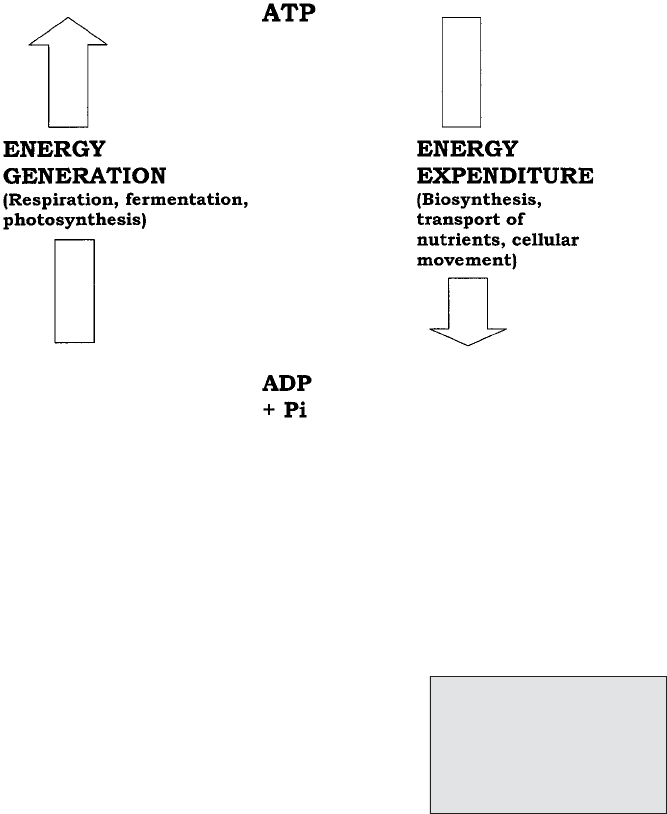
make use of that energy. Figure 6.1 summarises these
processes.
As we saw in Chapter 4, most microorganisms ob-
tain their energy from the nutrients they take into the
cell; these may come from an organic or an inorganic
source. Once inside the cell, these nutrients must then
be biochemically processed by reactions that trap some
of their chemical energy, at the same time breaking
them down into smaller molecules. These then serve as
building blocks for the synthesis of new cellular com-
ponents. Chemical compounds contain potential energy
within their molecular structure, and some of this can be
109
JWBK011-06 JWBK011-Hogg August 12, 2005 16:0 Char Count= 0
110 MICROBIAL METABOLISM
Figure 6.1 Microorganisms use a variety of processes to generate biochemical energy in
the form of the compound adenosine triphosphate (ATP). As ATP is broken down to ADP
and inorganic phosphate, the energy released is used for the maintenance, reproduction and
survival of the cell
released when they are broken down. In other metabolic types, energy is obtained from
the sun by means of photosynthesis; once again, however, the energy is used for synthetic
purposes.
An enzyme is a cellu-
lar catalyst (usually pro-
tein), specific to a partic-
ular reaction or group of
reactions.
Central to the metabolic processes of any cell are
enzymes. Without them, the many biochemical reactions
referred to above simply wouldn’t take place at a fast
enough rate for living cells to maintain themselves. We
shall start our consideration of metabolism by taking a
look at enzymes: what they are, and how they work.
In the later sections of the chapter, we shall consider in
more detail those processes by which energy is acquired and spent.
Enzymes
An enzyme is a cellular catalyst; it makes biochemical reactions proceed many times
more rapidly than they would if uncatalysed. The participation of an enzyme can in-
crease the rate of a reaction by a factor of millions, or even billions.
Traditionally, all enzymes have been thought of as globular proteins, but around
twenty years ago it was demonstrated (surprisingly) that certain RNA molecules also
have catalytic properties. These ribozymes however, are very much in the minority,
carrying out specific cut-and-splice reactions on RNA molecules, and in the present
JWBK011-06 JWBK011-Hogg August 12, 2005 16:0 Char Count= 0
ENZYMES 111
Enzyme
Active sites
Substrate
Enzyme-substrate
complex
Product
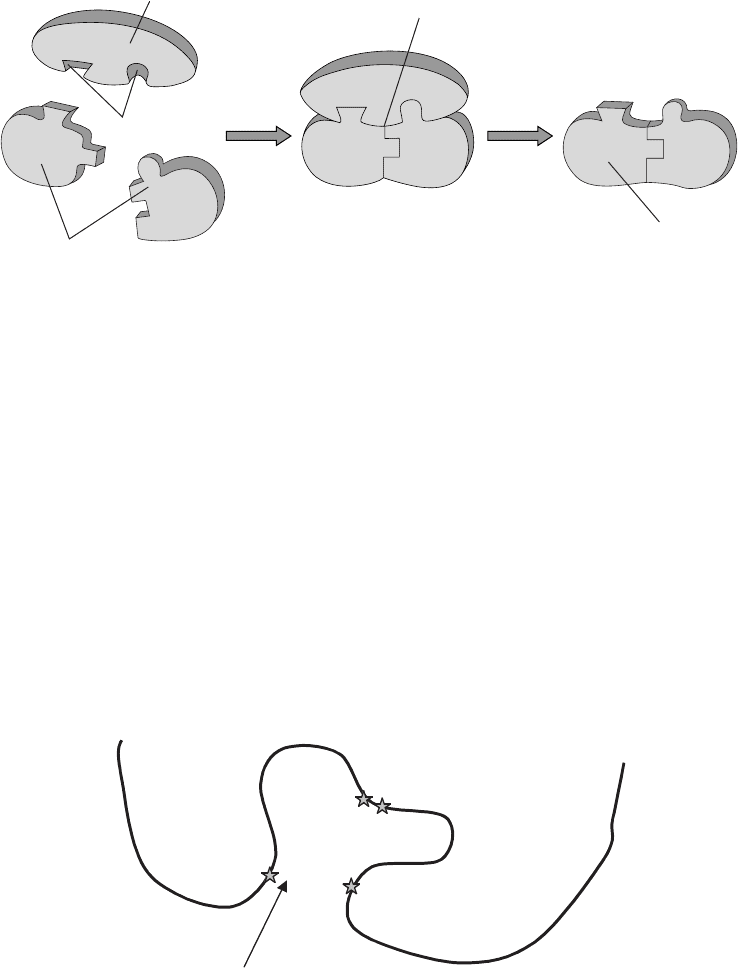
Figure 6.2 Enzyme–substrate interaction. An enzyme interacts with its substrate(s) to form
an enzyme–substrate complex, leading to the formation of a product. In the example shown,
two substrate molecules are held in position by the enzyme and joined together. From Black,
JG: Microbiology: Principles and Explorations, 4th edn, John Wiley & Sons Inc., 1999.
Reproduced by permission of the publishers
context can be ignored. In this book we shall confine our discussion of enzymes to the
protein type.
Like any other catalyst, an enzyme remains unchanged at the end of a reaction. It
must, however, at some point during the reaction bind to its substrate (the substance
upon which it acts) to form an enzyme–substrate complex (Figure 6.2) by multiple
weak forces such as electrostatic forces and hydrogen bonding. Only a small part of
the enzyme’s three-dimensional structure is involved in this binding; these few amino
acids make up the active site, which forms a groove or dent in the enzyme’s surface,
into which the appropriate part of the substrate molecule fits (Figure 6.3). The amino
HIS 95
GLU 97
GLU 165
LYS 12
Substrate-
binding cleft
Figure 6.3 Catalytic activity occurs at the active site of an enzyme. Four amino acids play
an important role in the active site of triose phosphate isomerase; note how they are far
apart in the primary sequence, but are brought together by subsequent protein folding
JWBK011-06 JWBK011-Hogg August 12, 2005 16:0 Char Count= 0
112 MICROBIAL METABOLISM
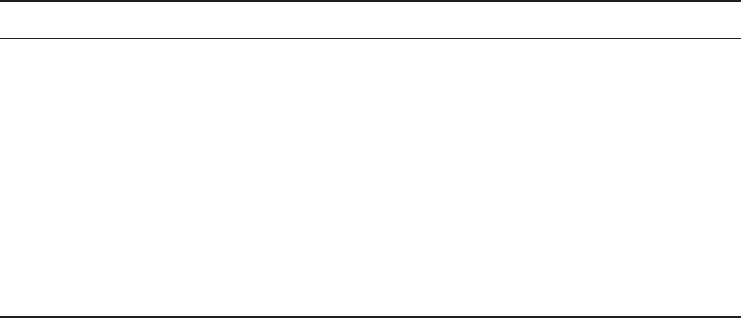
Table 6.1 Major classes of enzymes
Class Name Reaction type Example
1 Oxidoreductases Oxidation/reduction (electron
transfer) reactions
Lactate dehydrogenase
2 Transferases Transfer of functional groups e.g.
phosphate, amino
Glucokinase
3 Hydrolases Cleavage of bonds with the
addition of water (hydrolysis)
Glucose-6-phosphatase
4 Lyases Cleavage of C−C, C−OorC−N
bonds to form a double bond
Pyruvate decarboxylase
5 Isomerases Rearrangement of atoms/groups
within a molecule
Triose-phosphate isomerase
6 Ligases Joining reactions, using energy
from ATP
DNA ligase
acid residues that go to make up the active site may be widely separated in the enzyme’s
primary structure, but by means of the secondary and tertiary folding of the molecule,
they are brought together to give a specific conformation, complementary to that of
the substrate. It is this precise formation of the active site that accounts for one of the
major characteristics of enzymes, their specificity. You should not think, however, that
these few residues making up the active site are the only ones that matter; the enzyme
can only fold in this way because the order and arrangement of the other amino acids
allows it.
Enzyme classification
Most enzymes have names that end in the suffix –ase. The first part of the name
often gives an indication of the substrate; for example, urease and pyruvate decar-
boxylase. Other enzymes have names that are less helpful, such as trypsin, and others
have several alternative names to confuse the issue further. To resolve such problems,
an internationally agreed system of nomenclature has been devised. All enzymes are
assigned initially to one of six broad groups according to the type of reaction they carry
out, as shown in Table 6.1. Each enzyme is then placed into successively more specific
groupings, each with a number. Thus regardless of any colloquial or alternative names,
each enzyme has its own unique and unambiguous four-figure Enzyme Commission
‘signature’ (pyruvate decarboxylase, mentioned above, is EC 4.1.1.1).
Certain enzymes have a non-protein component
Many enzymes require the involvement of an additional, non-protein component in
order to carry out their catalytic action. These ‘extra’ parts are called cofactors; they
JWBK011-06 JWBK011-Hogg August 12, 2005 16:0 Char Count= 0
ENZYMES 113
Activation energy without enzyme
Activation energy with
enzyme
Change in free
energy (∆G)
Reactants
Course of reaction
Energy
level
Products
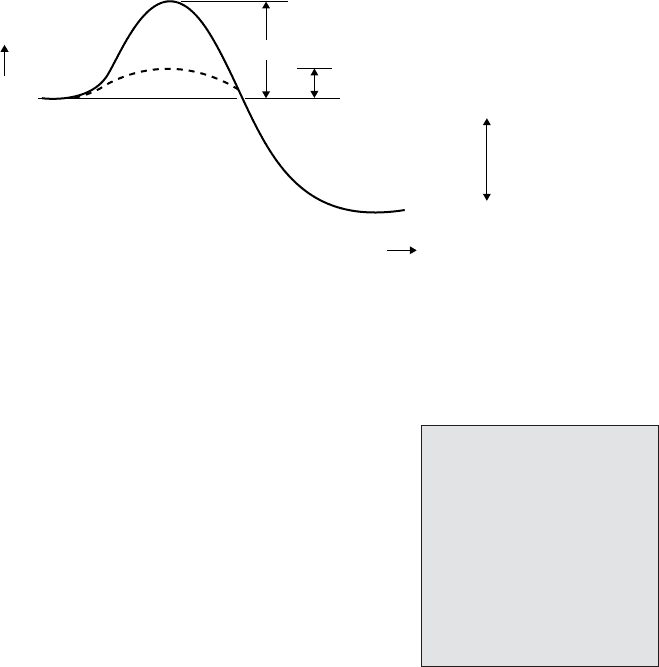
Figure 6.4 An enzyme lowers the activation energy of a reaction. By lowering the amount
of energy that must be expended in order for a reaction to commence, enzymes enable it
to proceed much more quickly. Note that G, the change in free energy, remains the same
whether the reaction is catalysed or not
The purely protein com-
ponent of an enzyme
is known as the apoen-
zyme. The complex of
apoenzyme and cofac-
tor is called the holoen-
zyme. The apoenzyme
on its own does not have
biological activity.
are usually either metal ions (e.g. Mg
2+
,Zn
2+
) or com-
plex organic molecules called coenzymes. Some of the
most important coenzymes act by transferring electrons
between substrate and product in redox reactions (see
below).
How do enzymes speed up a reaction?
For any chemical reaction to take place there must be a
small input of energy. This is called the activation energy,
and is often likened to the small push that is needed to loosen a boulder and allow it
to roll down a hill. It is the energy needed to convert the molecules at the start of a
reaction into intermediate forms known as transition states, by the rearrangement of
chemical bonds. The great gift of enzymes is that they can greatly lower the activation
energy of a reaction, so that it requires a smaller energy input, and may therefore occur
more readily (Figure 6.4).
Environmental factors affect enzyme activity
The rate at which an enzyme converts its substrate into product is called its velocity (v),
and is affected by a variety of factors.
Temperature
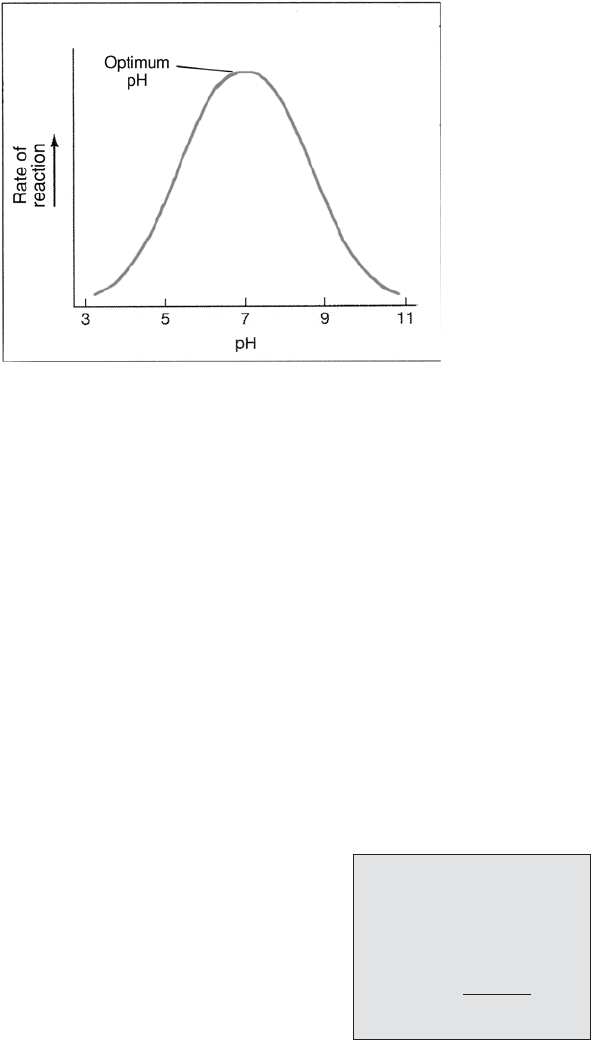
The rate of any chemical reaction increases with an increase in temperature due to the
more rapid movement of molecules, and so it is with enzyme-catalysed reactions, until a
peak is reached (the optimum temperature) after which the rate rapidly falls away. What
JWBK011-06 JWBK011-Hogg August 12, 2005 16:0 Char Count= 0
114 MICROBIAL METABOLISM
a)
b)
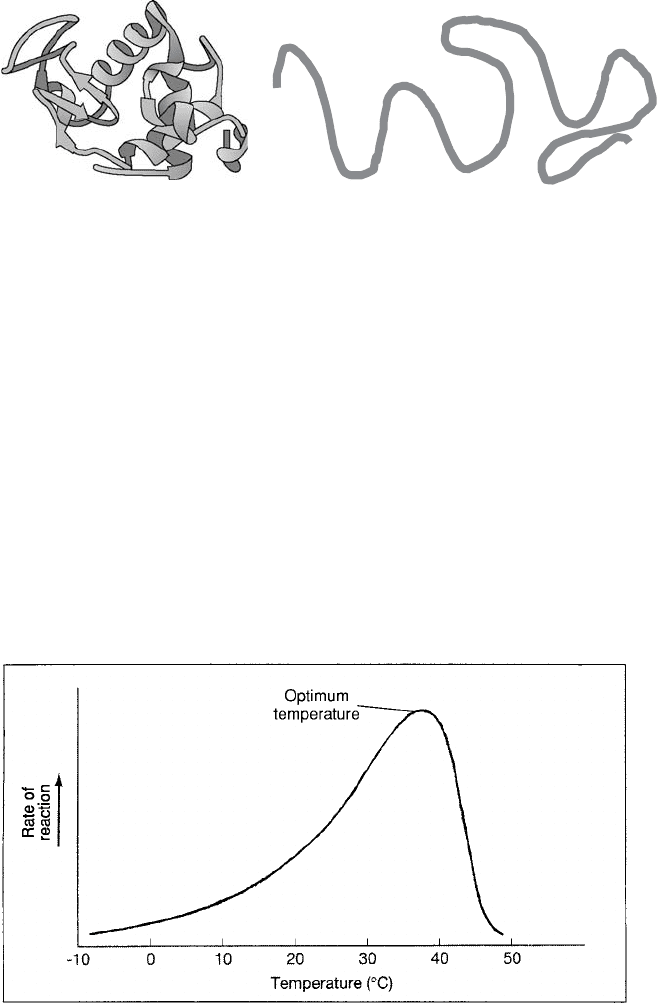
Figure 6.5 Disruption of an enzyme’s three-dimensional structure causes denaturation.
Disruption of the bonds that form the secondary and tertiary protein structure of an enzyme
lead to a loss of catalytic activity, as the amino acids forming the active site are pulled
apart. a) From Bolsover, SR , Hyams, JS, Jones, S, Shepherd, EA & White, HA: From Genes
to Cells, John Wiley & Sons, 1997. Reproduced by permission of the publishers
causes this drop in the velocity? Recall from Chapter 2 that the very ordered secondary
and tertiary structure of a protein molecule is due to the existence of numerous weak
molecular bonds, such as hydrogen bonds. Disruption of these by excessive heat results
in denaturation (Figure 6.5), that is, an unfolding of the three-dimensional structure. In
the case of an enzyme, this leads to changes in the configuration of the active site, and
a loss of catalytic properties. The effect of temperature on enzyme activity is shown in
Figure 6.6. The graph can be thought of as a composite of two lines, one increasing
with temperature due to the rise in thermal energy of the substrate molecules, and one
falling due to denaturation of the protein structure. Before the optimum temperature it
is the former which dominates, then the effect of the latter becomes more pronounced,
and takes over completely.
Figure 6.6 Effect of temperature on enzyme activity. Below the optimum temperature, the
rate of reaction increases as the temperature rises. Above the optimum, there is a sharp
falling off of reaction rate due to thermal denaturation of the enzyme’s three-dimensional
structure
JWBK011-06 JWBK011-Hogg August 12, 2005 16:0 Char Count= 0
ENZYMES 115
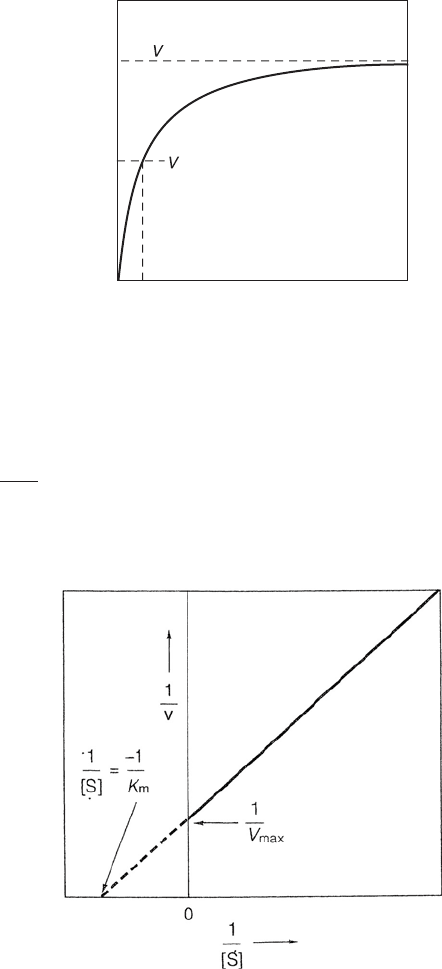
Figure 6.7 Effect of pH on enzyme activity. Either side of the optimum pH value, changes
in ionisation of amino acid side chains lead to protein denaturation and a loss of enzyme
activity
pH
Enzyme velocity is similarly affected by the prevailing pH. Once again, this is due to
alterations in three-dimensional protein structure. Changes in the pH affect the ioni-
sation of charged ‘R’-groups on amino acids at the active site and elsewhere, causing
changes in the enzyme’s precise shape, and a reduction in catalytic properties. As with
temperature, enzymes have an optimum value at which they operate most effectively;
when the pH deviates appreciably from this in either direction, denaturation occurs,
leading to a reduction of enzyme activity (Figure 6.7).
Microorganisms are able to operate in a variety of physicochemical environments, a
fact reflected in the diversity of optimum values of temperature and pH encountered in
their enzymes.
Substrate concentration
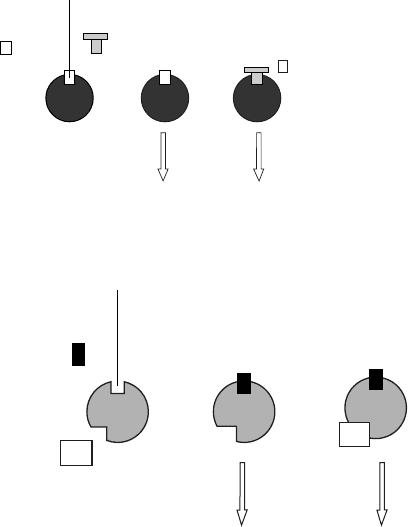
Under conditions where the active sites of an enzyme population are not saturated, an
The Michaelis--Menten
equation relates the rate
of a reaction to substrate
concentration, [S]:
v =
V
max
[S]
[S] + K
m
increase in substrate concentration will be reflected in
a proportional rise in the rate of reaction. A point is
reached, however, when the addition of further sub-
strate has no effect on the rate (Figure 6.8). This is be-
cause all the active sites have been occupied and the
enzymes are working flat out; this is called the max-
imum velocity (V
max
). A measure of the affinity an en-
zyme has for its substrate (i.e. how tightly it binds to it) is
given by its Michaelis constant (K
m
). This is the substrate
concentration at which the rate of reaction is half of the V
max
value. Values of V
max
and
K
m
are more easily determined experimentally by plotting the reciprocals of [S] and V
to obtain a straight line (Figure 6.9).
JWBK011-06 JWBK011-Hogg August 12, 2005 16:0 Char Count= 0
116 MICROBIAL METABOLISM
max
max
/2
v
0Km
[S]
Figure 6.8 Enzyme activity is influenced by substrate concentration. The initial rate of
reaction (v
o
) is proportional to substrate concentration at low values of [S]. However, when
the active sites of the enzyme molecules become saturated with substrate, a maximum rate
of reaction (V
max
) is reached. This cannot be exceeded, no matter how much the value of
[S] increases. The curve of the graph fits the Michaelis–Menten equation. K
m
is the value of
[S] where v =
V
max
2
.
Figure 6.9 The Lineweaver–Burk plot. Plotting the reciprocal values of V
o
and [S] enables
values of K
m
and V
max
to be derived from the intercepts on a straight-line graph
JWBK011-06 JWBK011-Hogg August 12, 2005 16:0 Char Count= 0
ENZYMES 117
Some enzymes do not obey Michaelis–Menten kinetics. The activity of allosteric
enzymes is regulated by effector molecules which bind at a position separate from the
active site. By doing so, they induce a conformational change in the active site that
results in activation or inhibition of the enzyme. Thus effector molecules may be of two
types, activators or inhibitors.
Enzyme inhibitors
Many substances are able to interfere with an enzyme’s ability to catalyse a reaction.
As we shall see in Chapter 14, enzyme inhibition forms the basis of several methods of
microbial control, so a consideration of the main types of inhibitor is appropriate here.
Perhaps the easiest form of enzyme inhibition to understand is competitive inhibition.
Here, the inhibitory substance competes with the normal substrate for access to the
enzyme’s active site; if the active site is occupied by a molecule of inhibitor, it can’t
bind a molecule of substrate, thus the reaction will proceed less quickly (Figure 6.10a).
Active site
of enzyme
Substrate
Competitive inhibitor
Products
No Products
a)
b)
Active site
of enzyme
Substrate
Products
Reduced rate of
product formation
Non-competitive
inhibitor
Figure 6.10 Enzyme inhibition. (a) A competitive inhibitor mimics the structure of the
normal substrate molecule, enabling it to fit into the active site of the enzyme. Although it
is not acted on by the enzyme and no products are formed, such an inhibitor prevents the
normal substrate gaining access to the active site. (b) A non-competitive substance binds to
a second site on the enzyme and thus does not affect substrate binding; however distortion
of the enzyme molecule makes catalysis less efficient