
Hogg S. Essential microbiology
Подождите немного. Документ загружается.

JWBK011-09 JWBK011-Hogg August 12, 2005 19:58 Char Count= 0
228 THE PROTISTA
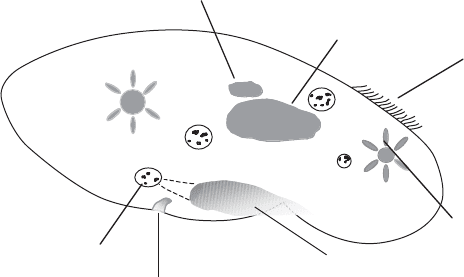
Contractile
vacuole
Food
vacuole
Macronucleus
Micronucleus
Cilia
Cytoproct
Cytostome
Figure 9.13 Paramecium, a ciliate. Ciliates such as Paramecium have specialised structures
for the ingestion food particles and elimination of waste. Note the rows of cilia covering the
surface
Most ciliates possess a specialised ‘mouth’ structure, the cytostome, through which
food particles are ingested (Figure 9.13). The beating of cilia directs them to a
cytopharynx, a membrane-covered passage or tube, which enlarges and detaches to form
a food vacuole. Fusion with lysosomes and digestion by enzymes occurs as described
earlier. Undigested particles are ejected from a region on the surface (the anal pore or
cytoproct).
As well as cilia, some members of the group have trichocysts projecting from the cell
surface, harpoon-like structures that can be used for attachment or defence.
Some ciliated protozoans are anaerobic, such as those found in the rumen of cattle.
The only ciliate known to cause disease in humans is Balantidium coli, which causes a
form of dysentery.
The amoebas (Sarcodina)
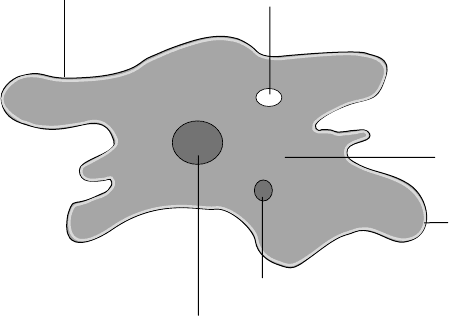
The amoebas are characterised by the possession of pseudopodia (=‘false feet’), tem-
porary projections from the cell into which cytoplasm flows until the organism has
moved forward (Figure 9.14). This means that amoebas are continually changing their
body shape and the position of their internal organelles. Pseudopodia are also used to
capture and engulf food, forming a vacuole around it. Once again, digestive enzymes
are released from lysosomes and the food particle dissolved. Once absorption of soluble
nutrients has taken place, undigested waste is ejected by the vacuole moving back to
the cell surface.
Reproduction in the amoebas is by simple binary fission. Most amoebas are free-
living, in aquatic environments; their mode of movement and feeding makes them well
adapted to life on the bottom of ponds and lakes, where there is a good supply of prey
organisms and suspended organic matter. Also included in the group, however, are some
important parasites, including Entamoeba histolytica, which causes amoebic dysentery
JWBK011-09 JWBK011-Hogg August 12, 2005 19:58 Char Count= 0
‘THE PROTOZOA’ 229
Pseudopodium
Endoplasm
Ectoplasm
Food vacuole
Nucleus
Contractile
vacuole
Figure 9.14 Amoeboid structure. The internal features of an amoeba change position as
the cell changes its shape by cytoplasmic streaming
in humans. Ingested in faecally contaminated water, it is responsible for some 50 000
–100 000 deaths world-wide every year. Unlike its free-living relatives, Entamoeba is
unable to reproduce outside of its host.
Amoebas with external shells: Foraminifera and Radiolaria
Some types of amoeba have an external shell covering the cell. The Foraminifera secrete
a shell of protein coated with calcium carbonate; their shells are covered with pores
through which their long, filamentous pseudopodia project. Some foraminiferans are
zooplankton, microscopic organisms living at the surface of the sea, while others are
bottom-dwellers. It is the discarded shells of countless long-dead creatures such as these
that make up deposits of limestone many hundreds of metres in depth. Many thousands
of shells are needed to form just1gofsuch a deposit! The White Cliffs of Dover are an
example of a limestone deposit made up largely of foraminiferan shells.
The outer surface of radiolarians is composed of silica, which again is perforated to
allow the passage of many very fine pseudopodia.
The sporozoans (Apicomplexa)
Members of this group are all parasitic, infecting a range of vertebrates and inverte-
brates. They have complex life cycles involving both haploid and diploid phases and
infecting more than one host. Probably the best known is Plasmodium, the causative
agent of malaria, which spends part of its life in a species of mosquito (Figure 9.15).
Sporozoans are characterised by a spore-like stage called a sporozoite, which is involved
JWBK011-09 JWBK011-Hogg August 12, 2005 19:58 Char Count= 0
230 THE PROTISTA
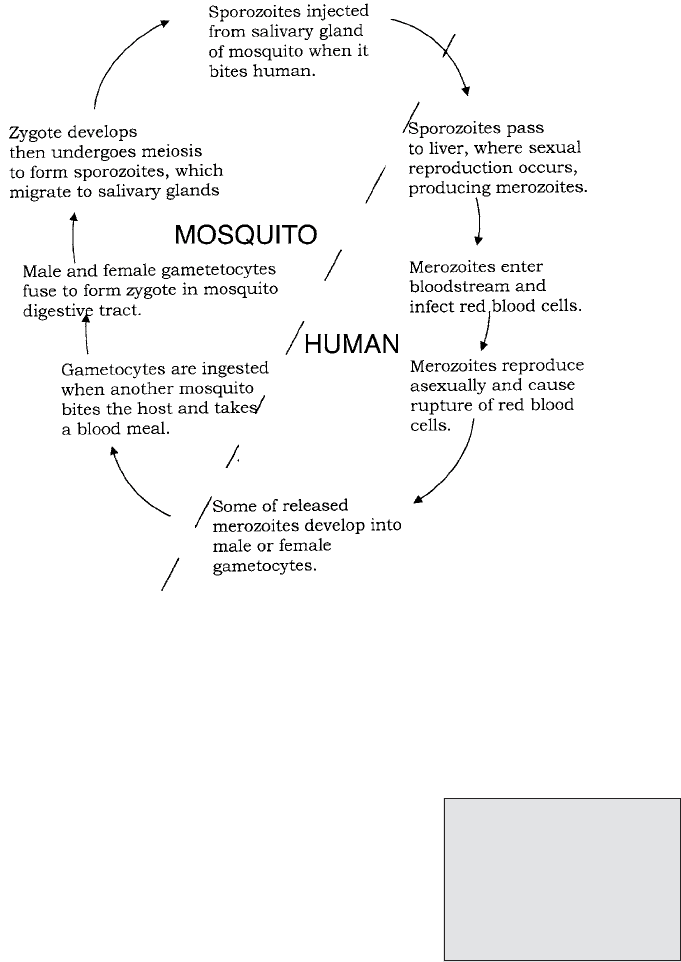
Figure 9.15 Plasmodium, the causative agent of malaria, has two hosts. Four different
species of Plasmodium cause malaria, the most widespread human infectious disease. Each
is transmitted by the Anopheles mosquito. Asexual reproduction (schizogeny) takes place
in the human host; the sexual cycle occurs in the mosquito, following ingestion of blood
containing gametocytes
A sporozoite is a motile
infective stage of mem-
bers of the Sporozoa that
gives rise to an asex-
ual stage within the new
host.
in the transmission of the parasite to a new host. The tip
of the sporozoite contains a complex of structures that
assist in the penetration of the host’s tissues. Unlike the
protozoans discussed above, sporozoans are generally
non-motile, and absorb soluble nutrients across the cell
surface rather than ingesting particulate matter.
The slime moulds and water moulds
(the fungus-like protists)
The final group to consider in this chapter are the so-called ‘fungus-like’ protists. Its
members are phylogenetically diverse, and as we’ll see towards the end of this chapter,
JWBK011-09 JWBK011-Hogg August 12, 2005 19:58 Char Count= 0
THE SLIME MOULDS AND WATER MOULDS (THE FUNGUS-LIKE PROTISTS) 231
its two principal groupings, the slime moulds and the water moulds, are placed far apart
from each other in modern classification systems.
Oomycota (water moulds)
Water moulds resemble true fungi in their gross structure, comprising a mass of branched
hyphae. At the cellular and molecular level however, they bear very little resemblance,
and are not at all closely related.
The Oomycota derive their name from the single large egg cell that is fertilised to
produce a diploid zygote as part of the sexual reproduction cycle.
Many water moulds play an important role in the decomposition of dead plants
and animals in freshwater ecosystems, while others are parasitic on the gills of fish.
Terrestrial members of the Oomycota include a number of important plant pathogens,
such as rusts and mildews, which can have a devastating effect on crops such as tobacco
and potatoes.
Fruiting body
development
Zygote
(2n)
Fusion
Amoeba
(n)
Amoeba
(n)
May briefly
assume
flagellate
form
Meiosis
Multinucleate
amoeba
Mitosis
without cell
division
Haploid
spores
Plasmodium
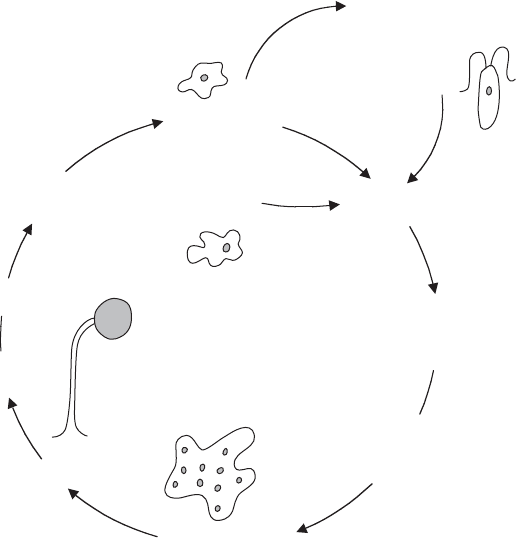
Figure 9.16 The plasmodial slime moulds. Acellular slime moulds such as Physarum pro-
duce amorphous coenocytic plasmodia which move by amoeboid movement and phago-
cytically engulf particles of food. Fruiting bodies bearing sporangia release haploid spores,
which germinate to form new amoebas
JWBK011-09 JWBK011-Hogg August 12, 2005 19:58 Char Count= 0
232 THE PROTISTA
Myxomycota (plasmodial slime moulds)
At one stage in their life cycle, the plasmodial or acellular slime moulds exist as a
single-celled amoeboid form. Two of these haploid amoebas fuse to give a diploid cell,
which then undergoes repeated divisions of the nucleus, without any accompanying cell
division; the result is a plasmodium, a mass of cytoplasm that contains numerous nuclei
A plasmodium is a mass
of protoplasm contain-
ing several nuclei and
bounded by a cytoplas-
mic membrane.
surrounded by a single membrane (Figure 9.16).This re-
tains the amoeboid property of cytoplasmic streaming,
so the whole multinucleate structure is able to move in
a creeping fashion. This ‘feeding plasmodium’, which
may be several centimetres in length and often brightly
coloured, feeds phagocytically on rotting vegetation.
Fruiting bodies develop from the plasmodium when it
is mature or when conditions are unfavourable, and a cycle of sexual reproduction is
entered. When favourable conditions return, meiosis gives rise to haploid spores, which
germinate to produce the amoeboid form once more.
Fertilisation
Zygote
(2n)
Meiosis
Amoeba
(n)
Aggregation
Pseudo-
plasmodium
(‘Slug’)
Development of fruiting body
Fruiting body
(sporangiophore)
Spores
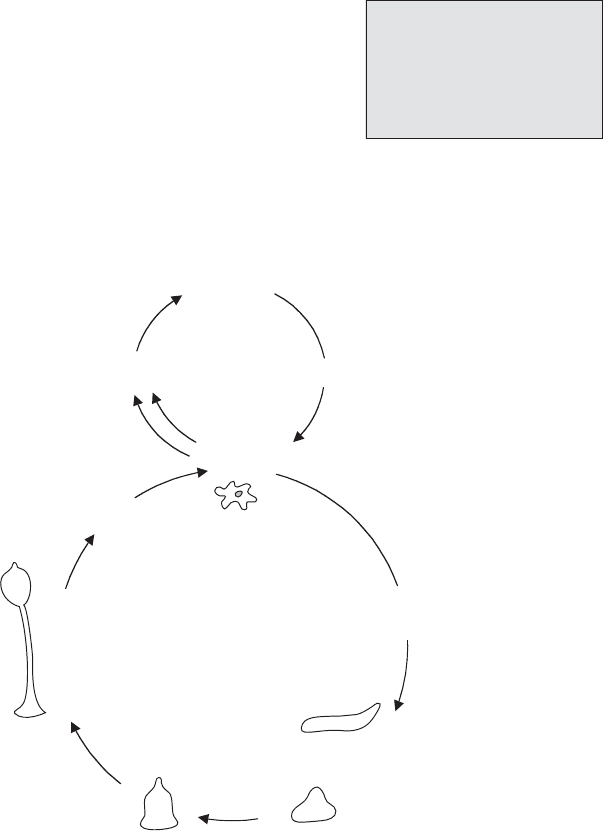
Figure 9.17 The cellular slime moulds. Fruiting bodies develop from the pseudoplasmod-
ium or ‘slug’ and release haploid spores that develop into individual amoebas. Only haploid
forms participate in this cycle, which is therefore asexual. Sexual reproduction can also oc-
cur, involving the production of dormant diploid spores called macrocysts. Note that the
pseudoplasmodium of cellular slime moulds is entirely cellular
JWBK011-09 JWBK011-Hogg August 12, 2005 19:58 Char Count= 0
THE SLIME MOULDS AND WATER MOULDS (THE FUNGUS-LIKE PROTISTS) 233
Diplomonadida
Parabasalia
Euglenophyta
Kinetoplastida
Dinoflagellata
Apicomplexa
Ciliophora
Oomycota
Chrysophyta
Phaeophyta
Rhodophyta
Chlorophyta
Charophyta
Plantae
Myxomycota
Dictyostelida
Fungi
Choanoflagellata
Metazoa
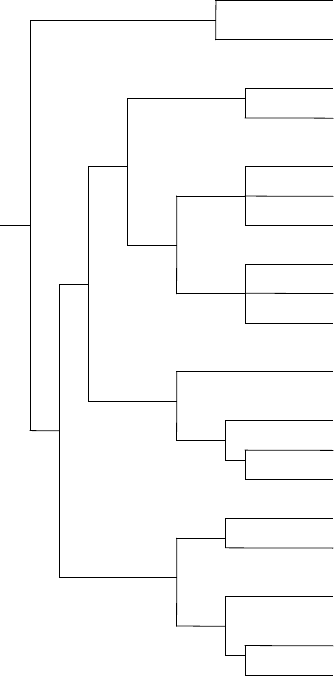
Figure 9.18 A modern view of eucaryotic taxonomy. A possible scheme for the relationship
between protistan groups based on 18S RNA data. The positions of the fungi, plants and
multicellular animals (Metazoa) are also shown. Note that some protistan groups placed
together in traditional schemes (e.g. kinetoplastids and choanoflagellates) are very distant
in phylogenetic terms. The diplomonads and parabasilians are shown as diverging from the
main stock before the acquisition of mitochondria through endosymbiosis with bacteria.
This hypothesis may need to be revised in light of recent evidence that these organisms did
once possess mitochondria but have since lost them
Dictyostelida (cellular slime moulds)
A unicellular amoeboid form also figures in the life cycle of the other group of slime
moulds, the Dictyostelida (Figure 9.17). This haploid amoeba is the main vegetative
form, but when food supplies are scarce, large numbers aggregate to form a slug-like
blob, superficially not unlike the plasmodium described above. Unlike the plasmod-
ium, however, this aggregate is fully cellular, so each component cell retains its plasma
membrane.

JWBK011-09 JWBK011-Hogg August 12, 2005 19:58 Char Count= 0
234 THE PROTISTA
Compare the life cycle of cellular slime moulds (Figure 9.17) with that of the plas-
modial kind (Figure 9.16). Fruiting bodies again develop, giving rise to spores that
germinate into new amoebas. No meiosis step is required, however, because the whole
cycle comprises haploid forms, and this is therefore a form of asexual reproduction. A
simple sexual cycle may also occur, when haploid amoebas fuse to give a diploid zygote.
Protistan taxonomy: a modern view
Traditional classification of the protists was on the basis of physical features such as
the possession of flagella, chloroplasts and other structures. This had the effect of plac-
ing into separate groups organisms that, at the molecular level, are closely related. The
kinetoplastids and the euglenophytes, for example, although both flagellate forms, were
distantly separated because the latter contained chloroplasts. They are now known to
be closely related in phylogenetic terms (Figure 9.18). On the other hand, the kineto-
plastids were previously placed together with choanoflagellates as zooflagellates, but
molecular analysis now shows the two groups to have little in common in evolutionary
terms.
Test yourself
1 In nutritional terms, all algae are .
2 Although the Cyanophyta carry out oxygenic photosynthesis, they are not
classified with the algae, because they are ———.
3 Euglenophytes store their carbohydrate in an unusual form called
.
4 The
is a reddish structure situated near the flagellum,
and is responsible for reacting to light stimuli.
5 Members of the Pyrrophyta are more commonly known as the
.
6 Diatoms are surrounded by a
made of silica, which is perforated
by numerous
.
7 During asexual reproduction in the diatoms, one daughter cell at each division
gets progressively smaller. This is stopped by entering a phase of
.
8 The group of algae thought to be phylogenetically the closest to the green
plants is the
.
9 Multicellular algae are not differentiated into root, stem and leaf; their veg-
etative body form is called a
.

JWBK011-09 JWBK011-Hogg August 12, 2005 19:58 Char Count= 0
TEST YOURSELF 235
10 Sexual reproduction involving clearly differentiated sperm and egg cells is
termed
.
11 Species which have reproductive structures of the two sexes on separate in-
dividuals are said to be
.
12 A
alternation of generations involves morphologically distinct
sporophyte and gametophyte adult phases.
13 The coloration of the red algae is due to
and , which
mask the presence of
.
14 Protozoans are a
diverse group, which do not share a
.
15 Osmoregulation in protozoans is carried out by the
.
16 The kinetoplastids include
, the causative agent of African sleeping
sickness. They show little evolutionary relationship to the other group of
flagellated protozoans, the
.
17
such as Giardia lack conventional mitochondria.
18 Ciliates possess two kinds of
.
19 The
are amoebas that have a calcium-based shell.
20 The acellular slime moulds are characterised by the formation of a
,
a mass of cytoplasm containing numerous nuclei.
JWBK011-09 JWBK011-Hogg August 12, 2005 19:58 Char Count= 0
236
JWBK011-10 JWBK011-Hogg August 12, 2005 19:20 Char Count= 0
10
Viruses
In Chapter 1, we saw how, in the late 19th century, one disease after another, in plants
as well as in animals, was shown to have a bacterial cause. In 1892, however, the Rus-
sian Dimitri Iwanowsky made a surprising discovery concerning the condition known
as tobacco mosaic disease. He showed that an extract from an infected leaf retained
the ability to transmit the disease to another plant even after being passed through a
porcelain filter. This recently developed device was believed to remove even the smallest
bacteria, and it was therefore proposed that perhaps the cause of the disease was not an
organism, but a filterable toxin. The work of the Dutch botanist Martinus Beijerinck
and others around the turn of the century, however, (see Table 10.1) led to the idea of
viruses, filterable entities much smaller than bacteria, that were responsible for a wide
range of diseases in plants, animals and members of the microbial world.
What are viruses?
All viruses are obligate intracellular parasites; they inhabit a no-man’s-land between
the living and the non-living worlds, and possess characteristics of both. They are now
known to differ radically from the simplest true organisms, bacteria, in a number of
respects:
r
they cannot be observed using a light microscope
r
they have no internal cellular structure
r
they contain either DNA or RNA, but not both*
r
they are incapable of replication unless occupying an appropriate living host
cell
r
they are incapable of metabolism
r
individuals show no increase in size.
When inside a host cell, viruses show some of the features of a living organism, such
as the ability to replicate themselves, but outside the cell they are just inert chemical
*
Some viruses have DNA and RNA at different phases of their growth cycle. See p. 253
237