
Hogg S. Essential microbiology
Подождите немного. Документ загружается.


JWBK011-10 JWBK011-Hogg August 12, 2005 19:20 Char Count= 0
238 VIRUSES
Table 10.1 Some milestones in the history of virology
1892 Tobacco Mosaic Disease (TMD) shown to be
caused by a filterable agent.
Iwanowsky
1898 Proposal that TMD is due to a novel type of
infectious agent.
Beijerinck
Demonstration of first viral disease in animals (foot
and mouth).
Loeffler & Frosch
1901 Demonstration of first human viral disease (yellow
fever).
Reed
1915/1917 Discovery of bacterial viruses (bacteriophages). Twort, d’Herelle
1918 Spanish influenza pandemic
1935 TMV is first virus to be crystallised. Stanley
1937 Separation of TMV into protein and nucleic acid
fractions.
Bawden & Pirie
1939 Viruses visible under electron microscope Kausche, Pfankuch
& Ruska
1955 Spontaneous reassembly of TMV from protein and
RNA components.
Fraenkel-Conrat
& Williams
1971 Discovery of viroids. Diener
1980 Sequencing of first complete viral genome (CaMV) Frank
1982 Sequencing of first RNA genome (TMV)
Recombinant Hepatitis B vaccine
Discovery of prions Prusiner
1983 Discovery of HIV, thought to be causative agent of
AIDS
Montaigner and Gallo
1990 Retrovirus used as vector in first human gene
therapy trial.
Anderson
2001 BSE outbreak in UK
2003 Outbreak of new human viral disease (SARS) in SE
Asia
TMV, Tobacco mosaic virus; CaMV, Cauliflower mosaic caulimovirus.
structures, thus fuelling the debate as to whether they can be considered to be life forms.
A particular virus has a limited host range, that is, it is only able to infect certain cell
types. Nobody is sure how viruses evolved; Box 10.1 describes some current ideas.
Viral structure
The demonstration by Wendel Stanley in 1935 that a preparation of tobacco mosaic
virus could be crystallised was an indication of the relative chemical homogeneity of
viruses, and meant that they could not be thought of in the same terms as other living
things. Compared to even the most primitive cellular organism, viruses have a very
simple structure (Figure 10.1). An intact viral particle, or virion, has in essence just
two components: a core of nucleic acid, surrounded and protected by a protein coat or

JWBK011-10 JWBK011-Hogg August 12, 2005 19:20 Char Count= 0
VIRAL STRUCTURE 239
Box 10.1 Where do viruses come from?
Three major mechanisms have been proposed for the evolution of viruses:
r
‘Escaped gene’ theory: Viruses derive from normal cellular nucleic acids and
‘gain independence’ from the cell. DNA viruses could come from plasmids or
transposable elements (see Chapter 12), while RNA viruses could derive from
mRNA.
r
Regressive theory: Gradual degeneration of procaryotes living parasitically in
eucaryotic cells. Enveloped forms such as poxviruses are most likely to have been
formed in this way.
r
Coevolution theory: Independent evolution alongside cellular forms from primor-
dial soup.
Some scientists consider it unlikely that the same mechanism could account for
the diversity of viruses we see today, and therefore propose that viruses must have
evolved many times over. A study published in 2004 conversely proposes that all
viruses share a common ancestor and may even have developed before cellular
life forms.
capsid, the combination of the two being known as the nucleocapsid. In certain virus
types, the nucleocapsid is further surrounded by a membranous envelope, partly derived
from host cell material. Most viruses are smaller than even the smallest bacterial cells;
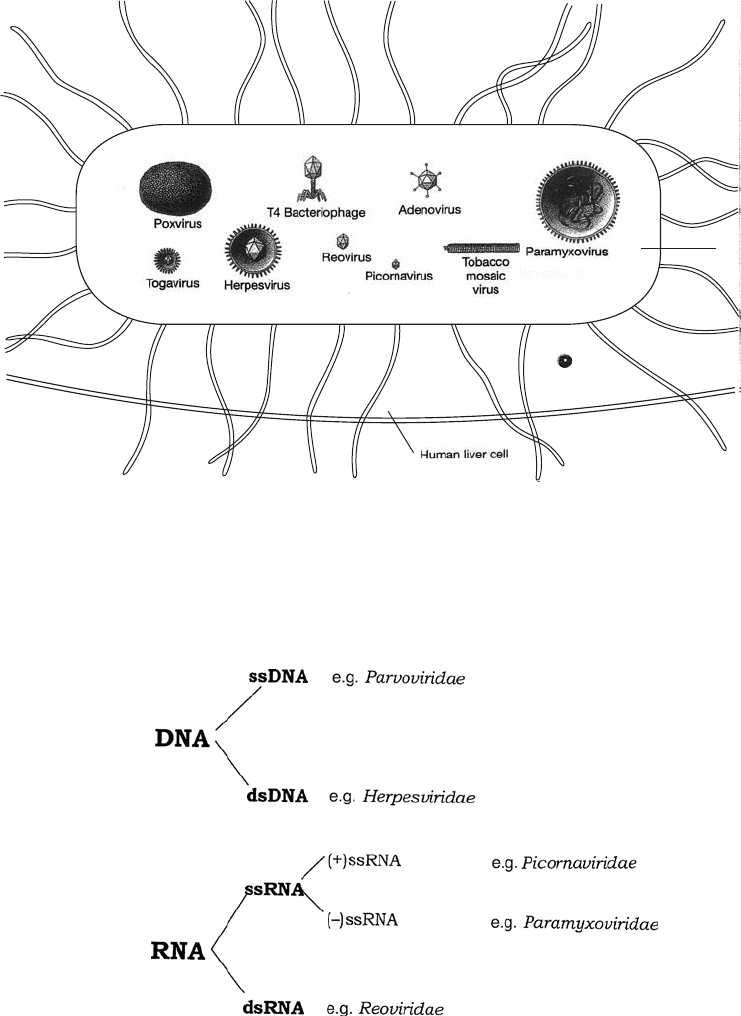
Figure 10.2 shows the size of some viruses compared to that of typical bacterial and
eucaryotic cells.
The viral genome
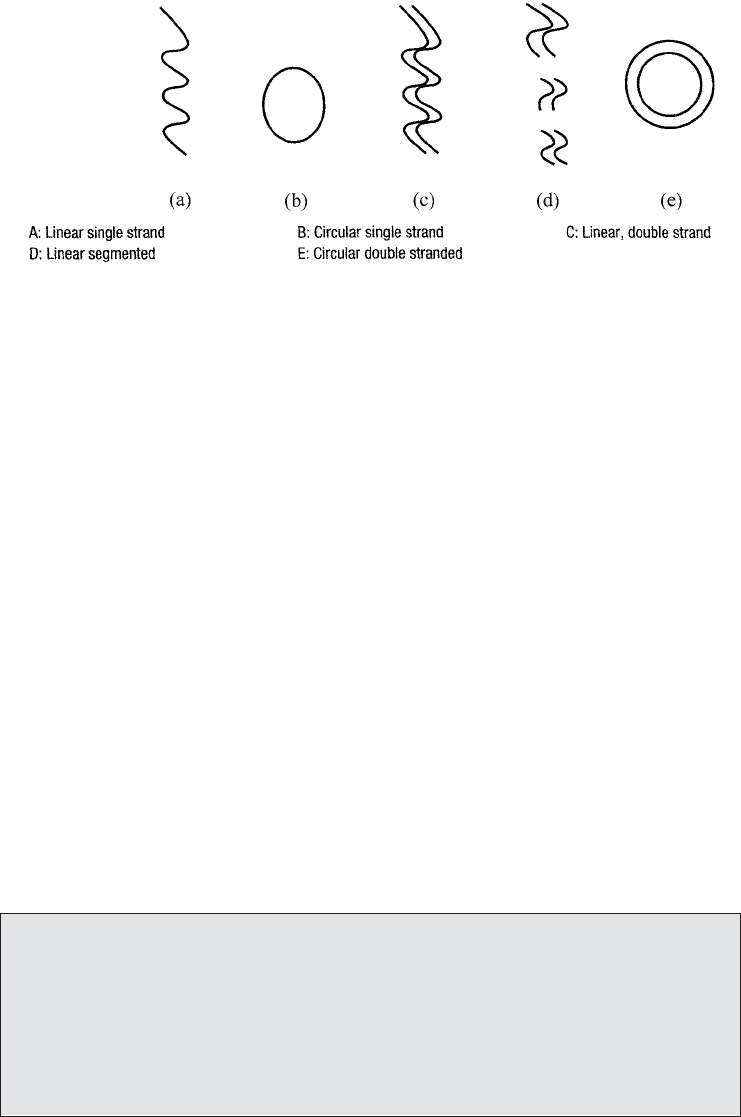
The genetic material of a virus may be either RNA or DNA, and either of these may be
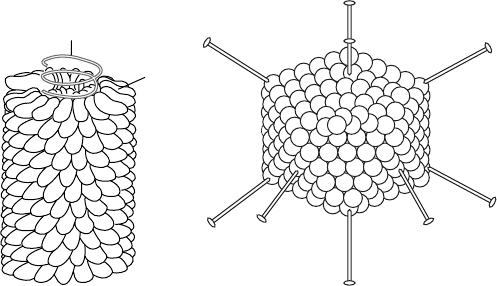
single-stranded or double-stranded (Figure 10.3). As shown in Figure 10.4, the genome
may furthermore be circular or linear. An additional variation in the viral genome is
RNA/DNA
Protein coa
t
(capsid)
Figure 10.1 Viral structure. Viruses comprise a nucleic acid genome surrounded by a
protein coat (capsid). Both naked and enveloped forms are shown
JWBK011-10 JWBK011-Hogg August 12, 2005 19:20 Char Count= 0
240 VIRUSES
Escherichia col
i
Ribosome
Figure 10.2 Viruses are much smaller than cells. The viruses shown are drawn to scale
and compared to an E. coli cell and a human liver cell. As a guide, E. coli cells are around
2 µm in length. From Black, JG: Microbiology: Principles and Explorations, 4th edn, John
Wiley & Sons Inc., 1999. Reproduced by permission of the publishers
Figure 10.3 The diversity of viral genomes
JWBK011-10 JWBK011-Hogg August 12, 2005 19:20 Char Count= 0
VIRAL STRUCTURE 241
Figure 10.4 Viral genomes. Viral genomes may be circular or linear. Some RNA viruses
have their genome broken up into segments, each encoding a separate protein (a) Linear
single strand; (b) Circular single strand; (c) Linear double strand; (d) Linear segmented;
(e) Circular double stranded. From Hardy, SP: Human Microbiology, Taylor and Francis,
2002. Reproduced by permission of Thomson Publishing Services
seen in certain RNA viruses, such as the influenza virus; here, instead of existing as a
single molecule, it is segmented, existing as several pieces, each of which may encode
a separate protein. In some plant viruses, the segments may be present in separate
particles, so in order for replication to occur, a number of virions need to co-infect a
cell, thereby complementing each other (multipartite genomes)! Double-stranded RNA
is always present in the segmented form.
The size of the genome varies greatly; it may contain as few as four genes or as many
as over 200 (see Box 10.2). These genes may code for both structural and non-structural
proteins; the latter include enzymes such as RNA/DNA polymerases required for viral
replication.
Single-stranded RNA viral genomes can be divided into two types, known as (+)
sense and (−) sense RNA. The former is able to act as mRNA, attach to ribosomes and
become translated into the relevant proteins within the host cell. As such, it is infectious
in its own right. Minus (−) sense RNA, on the other hand, is only infectious in the
presence of a capsid protein possessing RNA polymerase activity. This is needed to
convert the (−) RNA into its complementary (+) strand, which then acts as a template
for protein production, as described above.
Box 10.2 The mother of invention
A gene in most organisms comprises a discrete linear sequence of DNA with a distinct
starting point, which codes for a specific protein product. Some viruses however
use the same stretch of DNA for more than one gene. By beginning at different
points and using different reading frames, the same code can have a different
meaning! These overlapping genes, which are also found in some bacteria, provide
an ingenious solution to the problem of having such a small genome size.
JWBK011-10 JWBK011-Hogg August 12, 2005 19:20 Char Count= 0
242 VIRUSES
Icosahedral
(adenovirus)
Helical
(part of tobacco mosaic virus)
RNA
Protein
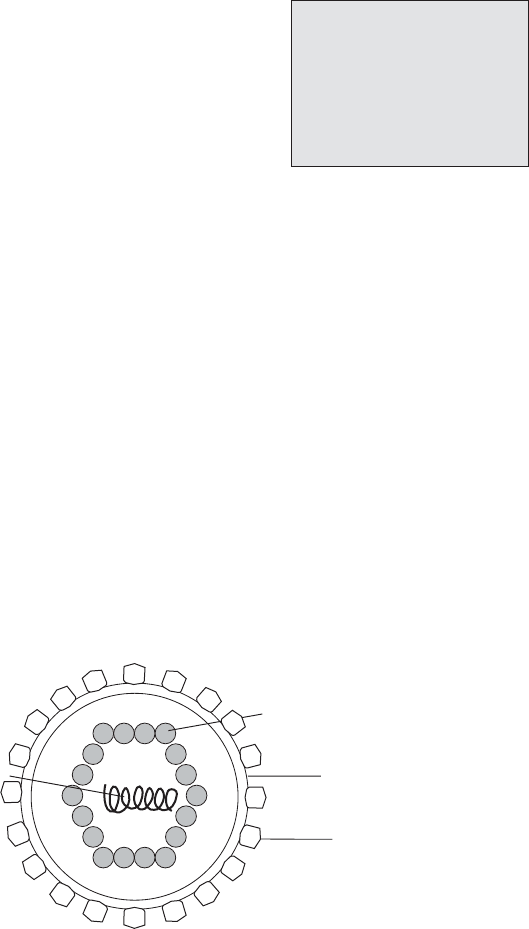
Figure 10.5 Viral capsids have two basic forms, helical and icosahedral. Complex viruses
represent a fusion of both forms. From Harper, D: Molecular Virology, 2nd edn, Bios Sci-
entific Publishers, 1998. Reproduced by permission of Thomson Publishing Services
When DNA forms the genome of viruses, it is usually double-stranded (dsDNA),
although some of the smaller ones such as the parvoviruses have ssDNA (Figure 10.3).
Capsid structure
The characteristic shape of a virus particle is determined by its protein coat or capsid.
In the non-enveloped viruses, the capsid represents the outermost layer, and plays a role
in attaching the virus to the surface of a host cell. It also acts to protect the nucleic acid
against harmful environmental factors such as UV light and desiccation, as well as the
acid and degradative enzymes encountered in the gastrointestinal tract.
The capsid is made up of a number of subunits called capsomers (Figure 10.5),
and may comprise a few different protein types or just one. The number of cap-
somers is constant for a particular viral type. This repetitive subunit construction is
necessitated by the small amount of protein-encoding RNA/DNA in the viral genome.
The capsomers have the ability to interact with each other spontaneously to form the
completed capsid by a process of self-assembly. This would be less easily achieved if
there were large numbers of different protein types. Capsomers are arranged symmet-
rically, giving rise to two principal capsid shapes, icosahedral and helical (Figure 10.5).
Both shapes can be found in either enveloped or non-enveloped viruses. Complex
viruses, such as certain bacteriophages, contain elements of both helical and icosahedral
symmetry.
Helical capsids
A number of plant viruses, including the well-studied tobacco mosaic virus, have a rod-
like structure when viewed under the electron microscope (Figure 10.5a). This is caused
by a helical arrangement of capsomers, resulting in a tube or cylinder, with room in the
JWBK011-10 JWBK011-Hogg August 12, 2005 19:20 Char Count= 0
CLASSIFICATION OF VIRUSES 243
centre for the nucleic acid element, which fits into a groove on the inside. The diameter
of the helix is determined by the nature of the protein(s) making up the capsomers; its
length depends on the size of the nucleic acid core.
Icosahedral capsids
The icosahedron has a
low surface-area to vol-
ume ratio, allowing for
the maximum amount of
nucleic acid to be pack-
aged.
An icosahedron is a regular three-dimensional shape
with 20 triangular faces, and 12 points or corners (Fig-
ure 10.5). The overall effect is of a roughly spherical
structure.
The viral envelope
Envelopes are much more common in animal viruses than in those of plants. The lipid
bilayer covering an enveloped virus is derived from the nuclear or cytoplasmic membrane
of a previous host. Embedded in this, however, are proteins (usually glycoproteins)
encoded by the virus’s own genome. These may project from the surface of the virion as
spikes, which may be instrumental in allowing the virus to bind to or penetrate its host
cell (Figure 10.6). The envelope is more susceptible than the capsid to environmental
pressures, and the virus needs to remain moist in order to survive. Consequently, such
viruses are transmitted by means of body fluids such as blood (e.g. hepatitis B virus) or
respiratory secretions (e.g. influenza virus).
Classification of viruses
As we saw at the beginning of this chapter, viruses are not considered to be strictly
living, and their classification is a complex issue. As with true organisms we have
species, genera, families and orders of viruses, but none of the higher groupings (class,
phylum, kingdom). Latin binomials (e.g. Homo sapiens, Escherichia coli), familiar
RNA/DNA Envelope
Spike
Protein coat
(capsid)
Figure 10.6 An enveloped virus. The envelope derives from the host cell’s membrane, and
includes virus-encoded proteins. Some viral envelopes contain projecting spikes, which may
assist in attachment to the host

JWBK011-10 JWBK011-Hogg August 12, 2005 19:20 Char Count= 0
244 VIRUSES
Virus families always end
in ‘-viridae’,subfamilies in
‘-virinae’ and genera in
‘-virus’. Such names are
italicised and capi-
talised, whereas this is
not done for species.
e.g. Order: Monone-
gavirales, Family: Para-
myxoviridae, Subfamily:
Paramyxovirinae,
Genus: Morbillivirus, Spe-
cies: measles virus. For in-
formal usage, we would
talk about, for example,
‘the picornovirus fam-
ily’, or the ‘enterovirus
genus’.
from conventional biological taxonomy, are not used for
viruses; however, a proposal for non-Latinised viral bi-
nomials has been proposed. Originally, no attempt was
made to draw up any sort of phylogenetic relationship
between the viruses, but more recent developments in
sequencing of viral genomes has meant that insights are
being gained in this area.
Factors taken into account in the classification of
viruses include:
r
host range (vertebrate/invertebrate, plant, al-
gae/fungi, bacteria)
r
morphology (capsid symmetry, enveloped/non-
enveloped, capsomer number)
r
genome type/mode of replication (see Figure
10.3).
An indication of just how
complex the taxonomy
of viruses can be is given
by the fact that in 1999,
a paper was published
in a leading virology jour-
nal, entitled: ‘How to
write the name of virus
species’!
In 1971, David Baltimore proposed a scheme that or-
ders the viruses with respect to the strategies used for
mRNA production. This results in seven major group-
ings (Table 10.2). The most recent meeting (2005) of
the International Commission on Taxonomy of Viruses
(ICTV, established in 1973) produced a report which
recognises three orders, 73 families, 287 genera and
more than 1900 species of virus. Countless others, undis-
covered or insufficiently characterised, also exist.
Viral replication cycles
One characteristic viruses share in common with true living organisms is the need to
reproduce themselves
∗
. As we have seen, all viruses are obligate intracellular parasites,
and so in order to replicate, a host cell must be successfully entered. It is the host cell
Table 10.2 Major groupings of viruses based on the Baltimore system
Group I dsDNA viruses
Group II ssDNA viruses
Group III dsRNA viruses
Group IV (+) sense ssRNA viruses
Group V (−) sense ssRNA viruses
Group VI Single-stranded (+) sense RNA with DNA intermediate
Group VII Double-stranded DNA with RNA intermediate
∗
Since the processes involved proceed at the molecular rather than the organismal level, it is more appropriate
to speak of viral replication than of reproduction.
JWBK011-10 JWBK011-Hogg August 12, 2005 19:20 Char Count= 0
VIRAL REPLICATION CYCLES 245
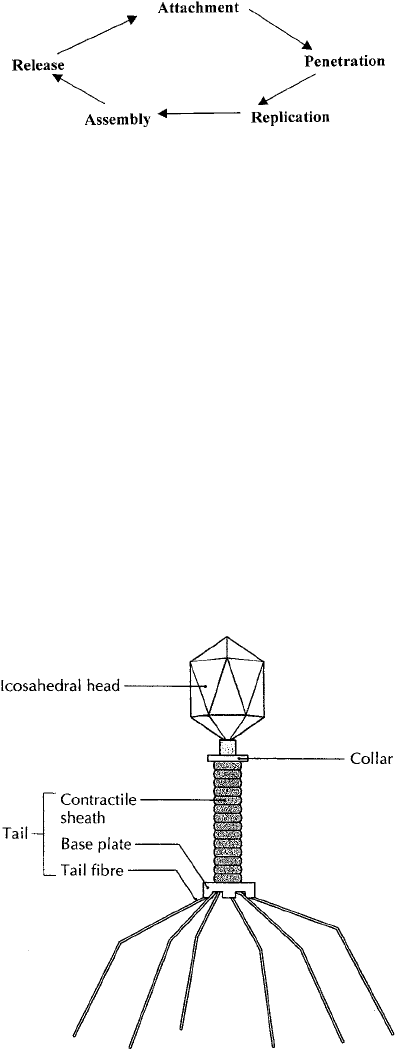
Figure 10.7 Main stages in a viral replication cycle. The replication cycle of all viruses is
based on this generalised pattern
that provides much of the ‘machinery’ necessary for viral replication. All viral growth
cycles follow the same general sequence of events (Figure 10.7), with some differences
from one type to another, determined by viral structure and the nature of the host cell.
Replication cycles in bacteriophages
Viruses that infect bacterial cells are called bacteriophages (phages for short), which
means, literally, ‘bacteria eaters’. Perhaps the best understood of all viral replication
cycles are those of a class of bacteriophages which infect E. coli, known as the T-even
phages. These are large, complex viruses, with a characteristic head and tail structure
(Figure 10.8). The double-stranded, linear DNA genome contains over 100 genes, and
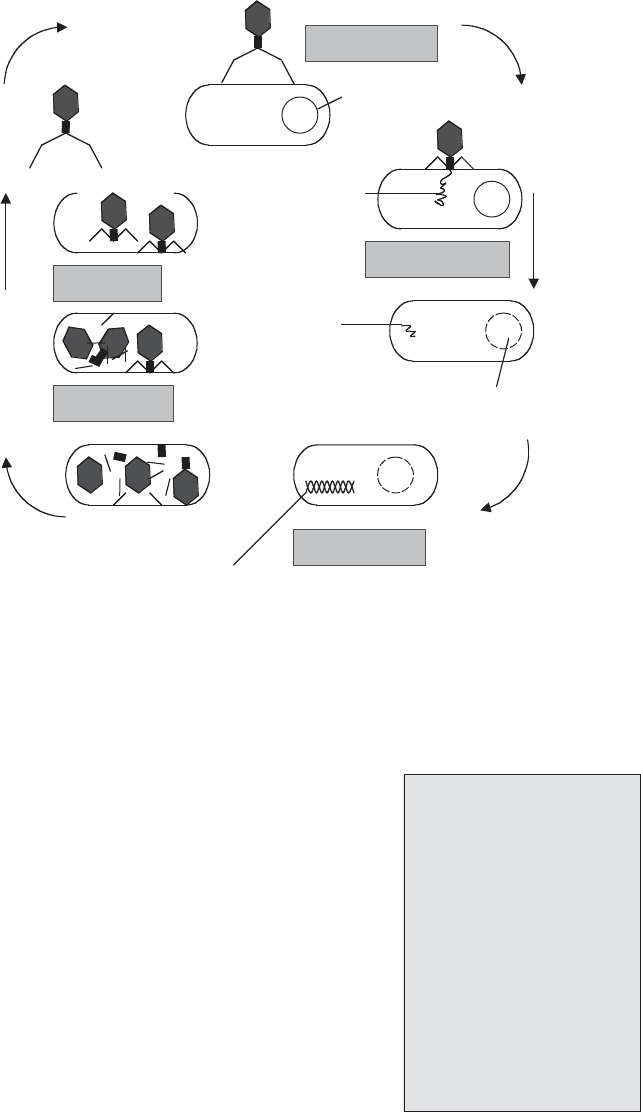
is contained within the icosahedral head. The growth cycle is said to be lytic, because
it culminates in the lysis (=bursting) of the host cell. Figure 10.9 shows the lytic cycle
of phage T4, and the main stages are described below.
Figure 10.8 A T-even bacteriophage. Note the characteristic ‘head plus tail’ structure. The
tail fibres and base plate are involved in the attachment of the phage to its host cell’s surface.
Reproduced by permission of Professor Michael J Pelczar, University of Maryland
JWBK011-10 JWBK011-Hogg August 12, 2005 19:20 Char Count= 0
246 VIRUSES
‘Early’
protein
synthesis
(phage
enzymes)
Host DNA
degrades
3. Replication
Synthesis of
‘late’ structural
p
roteins
4. Assembly
1. Attachment
2. Penetration
5. Release
Release of new
phage particles
Injection of
phage DN
A
Phage
DNA
Host chromosome
Lysis of host
Figure 10.9 The lytic cycle of phage T4. The cycle comprises the five main stages described
in the text; from injection of phage of DNA to cell lysis takes 22 minutes. The number of
phage particles released per cell is called the burst size, and for T4 it ranges from 50 to 200
You might reasonably
ask yourself why cells
would evolve recep-
tor molecules for viruses,
when the outcome is
clearly not in their
interests. The answer is, of
course, that they
haven’t; the receptors
have other biological
properties, but the
viruses have ‘taken them
over’.
1 Adsorption (attachment): T4 attaches by means of
specific tail fibre proteins to complementary recep-
tors on the host cell’s surface. The nature of these
receptors is one of the main factors in determining a
virus’s host specificity.
2 Penetration: The enzyme lysozyme, present in the
tail of the phage, weakens the cell wall at the point
of attachment, and a contraction of the tail sheath
of the phage causes the core to be pushed down
into the cell, releasing the viral DNA into the in-
terior of the bacterium. The capsid remains en-
tirely outside the cell, as elegantly demonstrated in
the famous experiment by Hershey and Chase (see
Chapter 11).
JWBK011-10 JWBK011-Hogg August 12, 2005 19:20 Char Count= 0
VIRAL REPLICATION CYCLES 247
‘Early’ proteins are viral
enzymes including DNA
polymerase, used to syn-
thesise more phage
DNA, and others that
disrupt normal host pro-
cesses. Later, production
switches to ‘late’, struc-
tural proteins, required
for the construction of
capsids; these are pro-
duced in much greater
quantities.
3 Replication: Phage genes cause host protein and nu-
cleic acid synthesis to be switched off, so that all
of the host’s metabolic machinery becomes dedi-
cated to the synthesis of phage DNA and proteins.
Host nucleic acids are degraded by phage-encoded
enzymes, thereby providing a supply of nucleotide
building blocks. Host enzymes are employed to repli-
cate phage DNA, which is then transcribed into
mRNA and translated into protein.
4 Assembly: Once synthesised in sufficient quanti-
ties, capsid and DNA components assemble sponta-
neously into viral particles. The head and tail regions
are synthesised separately, then the head is filled with
the DNA genome, and joined onto the tail.
5 Release: Phage-encoded lysozyme weakens the cell wall, and leads to lysis of the cell
and release of viral particles;these are able to infect new host cells, and in so doing
recommence the cycle. During the early phase of infection, the host cell contains
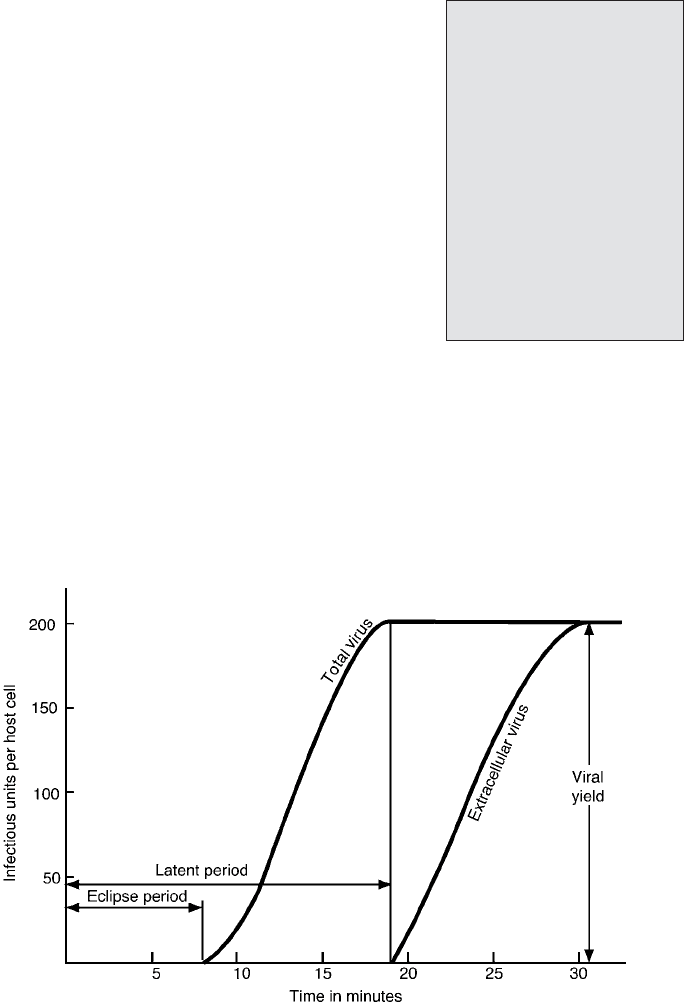
components of phage, but no complete particles. This period is known as the eclipse
period. The time which elapses between the attachment of a phage particle to the cell
surface and the release of newly-synthesised phages is the latent period (sometimes
known as the burst time); for T4 under optimal conditions, this is around 22 minutes.
This can be seen in a one-step growth curve, as shown in Figure 10.10.
Figure 10.10 The one-step growth curve. During the eclipse period the host cell does not
contain complete phage particles. Following synthesis of new particles, they are released,
signalling the end of the latent period. The left-hand curve represents the number of phage
particles, while the number of free (extracellular) particles is shown by the right-hand curve