
Hogg S. Essential microbiology
Подождите немного. Документ загружается.

JWBK011-11 JWBK011-Hogg August 12, 2005 19:21 Char Count= 0
298 MICROBIAL GENETICS
Affected
section
removed
3.
Nicks made in
phosphate-suga
r
backbone either
side of mutation
2.
Mutation
1.
New strand
synthesised
with correct
sequence
4.
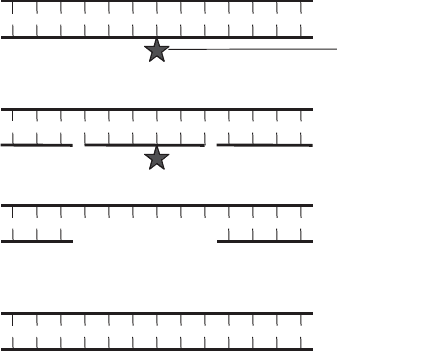
Figure 11.22 Excision repair. A section of the affected strand either side of the mutation
is removed and replaced by the action of DNA polymerase and DNA ligase
called DNA photolyase, which breaks the bonds formed between adjacent thymine
bases by UV light (see above) before replication takes place. Unusually, the photolyase
is dependant on visible light (>300 nm) for activation. Another form of direct repair,
involving the enzyme methylguanine transferase allows the reversal of the effects of
alkylating agents.
Loss of repair mechanisms can allow mutations to become established which would
normally be corrected. A harmful strain of E. coli which emerged in the 1980s was
shown to have developed its pathogenicity due to a deficiency in its repair enzymes.
Carcinogenicity testing: the Ames test
The great majority of carcinogenic substances, that is, substances that cause cancer
in humans and animals, are also mutagenic in bacteria. This fact has been used to
develop an initial screening procedure for carcinogens; instead of the expensive and
time-consuming process of exposing laboratory animals (not to mention the moral
issues involved), a substance can be tested on bacteria to see if it induces mutations.
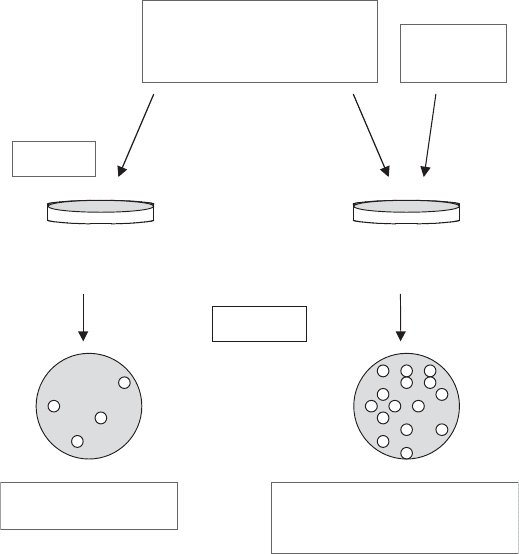
The Ames Test assesses the ability of a substance to cause reverse mutations in aux-
otrophic strains of Salmonella that have lost the ability to synthesise the amino acid his-
tidine (his
−
). Rates of back mutation (assessed by the ability to grow in a histidine-free
medium) are compared in the presence and absence of the test substance (Figure 11.23).
A reversion to his
+
at a rate higher than that of the control indicates a mutagen. Many
substances are procarcinogens, only becoming mutagenic/carcinogenic after metabolic
conversion by mammals; in order to test for these, an extract of rat liver is added to the
experimental system as a source of the necessary enzymes.
JWBK011-11 JWBK011-Hogg August 12, 2005 19:21 Char Count= 0
GENETIC TRANSFER IN MICROORGANISMS 299
his
-
strain of Salmonella
+
liver homogenate
Plate onto
minimal
medium (no
histidine)
Test
compound
Control
Some spontaneous
His+ colonies
Significantly greater number
of colonies than control
suggests a mutag
en
Incubate
Figure 11.23 The Ames test. The test assesses the ability of a mutagen to bring about reverse
mutations in a strain of S. typhimurium auxotrophic for histidine. Since it is possible that a
small number of revertants may occur due to spontaneous mutation, results are compared
with a control plate with no added mutagen
Genetic transfer in microorganisms
The various mechanisms of mutation described above result in an alteration in the
genetic make-up of an organism. This can also occur by recombination, in which genetic
material from two cells combines to produce a variant different to either parent cell.
In bacteria, this involves the transfer of DNA from one cell (donor) to another
(recipient). Because transfer occurs between cells of the same generation (unlike the ge-
netic variation brought about by sexual reproduction in eucaryotes, where it is passed
to the next generation), it is sometimes referred to as horizontal transfer. There are
three ways in which gene transfer can occur in bacteria, which we shall explore in the
following sections.
Transformation
Transformation is the simplest of these, and also the first to have been described. We have
already referred to the classic experiment of Fred Griffith in 1928, the first demonstration
JWBK011-11 JWBK011-Hogg August 12, 2005 19:21 Char Count= 0
300 MICROBIAL GENETICS
Injection
Bacteria
Live smooth
Heat-killed smooth
Heat-killed smooth
Live rough
Live rough
+
Dead mouse
has live smooth
bacteria
Mouse dies
Mouse lives
Mouse lives
Mouse dies
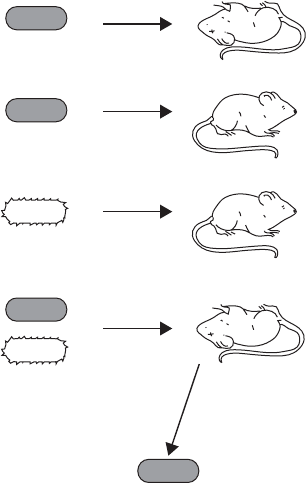
Figure 11.24 Transformation: the Griffith experiment. See the text for details. The result
of the fourth experiment showed for the first time that genetic material could be passed from
one bacterium to another. From Reece, RJ: Analysis of Genes and Genomes, John Wiley &
Sons, 2003. Reproduced by permission of the publishers.
that genetic transfer can occur in bacteria. Griffith had previously demonstrated the
existence of two strains of the bacterium Streptococcus pneumoniae, which is one of
the causative agents of pneumonia in humans, and is also extremely virulent in mice.
The S (smooth)-form produced a polysaccharide capsule, whilst the R (rough)-form
did not. These formed recognisably different colonies when grown on a solid medium,
but more importantly, differed in their ability to bring about disease in experimental
animals. The R-form, lacking the protective capsule, was easily destroyed by the defence
system of the host. Griffith observed the effects of injecting mice with bacterial cells of
both forms; these are outlined below and in Figure 11.24. The results of experiments
1–3 were predictable, those of experiment 4 startlingly unexpected:
1 Mice injected with live cells of the R-form were unaffected.
2 Mice injected with live cells of the S-form died, and large numbers of S-form bacteria
were recovered from their blood.
3 Mice injected with cells of the S-form that had been killed by heating at 60
◦
C were
unharmed and no bacteria were recovered from their blood.

JWBK011-11 JWBK011-Hogg August 12, 2005 19:21 Char Count= 0
GENETIC TRANSFER IN MICROORGANISMS 301
4 Mice injected with a mixture of living R-form and heat-killed S-form cells died, and
living S-form bacteria were isolated from their blood.
The S-form bacteria recovered from the mice in the crucial fourth experiment possessed
a polysaccharide capsule like other S-forms, and, critically, were able to pass on this
characteristic to subsequent generations. This finding went against the prevailing view
that bacteria simply underwent binary fission, a completely asexual process involving
no genetic transfer. Griffith deduced that some as yet unknown substance had passed
from the heat-killed S-form cells to some of the living R-forms and conferred on them
the ability to make capsules (see Box 11.7). Not long afterwards it was shown that this
process of transformation could happen in the test tube, without the involvement of a
host animal, and, as we have seen, it was eventually shown that Griffith’s ‘transforming
principle’ was DNA.
How does transformation occur?
The uptake of foreign DNA from the environment is known to occur naturally in a num-
ber of bacterial types, both Gram-positive and Gram-negative, by taking up fragments
of naked DNA released from dead cells in the vicinity. Being linear and very fragile,
the DNA is easily broken into fragments, each carrying on average around 10 genes.
Transformation will only happen at a specific stage in the bacterial life cycle, when cells
are in a physiological state known as competence. This occurs at different times in dif-
ferent bacteria, but is commonly during late log phase. One of the reasons why only a
low percentage of recipient cells become transformed is that only a small proportion of
them are at any one time in a state of competence. The expression of proteins essential
to the transformation process is dependant on the secretion of a competence factor.
The exact mechanism of transformation varies somewhat according to species; the
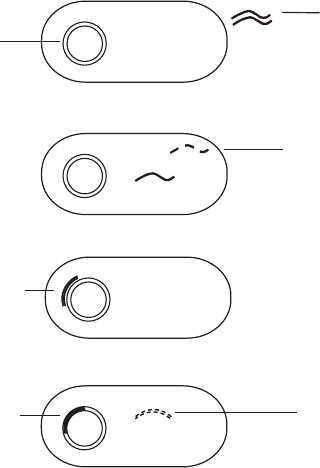
process for Bacillus subtilis is shown in Figure 11.25. Mere uptake of exogenous DNA
is not enough to cause transformation; it must also be integrated into the host genome,
displacing a single strand, which is subsequently degraded. Upon DNA replication
and cell division, one daughter cell will inherit the parent genotype, and the other
Box 11.7 Transformation is not due to reverse mutation
At the time of Griffith’s experiment, it was already known that the wildtype S-form
could mutate to the R-form and vice versa. It might therefore be argued that the
results of his fourth experiment could easily be explained away in this way. Griffith’s
experiment was sufficiently well designed to refute this argument, however, because
the bacteria he used were of two different serotypes, meaning that they produced
different types of capsule (types II and III). Even if the IIR-form cells had mutated
back to the wildtype (IIS), they could not have produced the type III capsule Griffith
observed in the bacteria he recovered from the mice. The only explanation is that
the ability to make type III capsules had been acquired from the heat-killed type III
cells.
JWBK011-11 JWBK011-Hogg August 12, 2005 19:21 Char Count= 0
302 MICROBIAL GENETICS
Donor DNA
Host
chromosome
a)
b)
c)
d)
Replacement of
host strand by
donor DNA
Degraded host strand
Degraded
second strand
Recombination
w
ith homologous
sequence
Figure 11.25 Transformation in Bacillus subtilis. (a) A fragment of donor DNA become
bound to the recipient cell surface by means of a DNA-binding protein. (b) After binding,
a nuclease contained at the cell surface degrades one strand of the donor DNA, leaving the
other strand to be ferried, by other transformation-specific proteins, to the interior of the cell.
(c) A fragment of single-stranded DNA aligns with a homologous stretch on the recipient
chromosome. (d) The donor fragment becomes integrated by a process of non-reciprocal
recombination. At the next cell division, one daughter cell is a transformant, whilst the
other retains the parental genotype
the recombinant genotype. In the latter, there is a stable alteration of the cell’s genetic
composition, and a new phenotype is expressed in subsequent generations.
Uptake of donor DNA from an unrelated species will not result in transformation;
this is due to a failure to locate a homologous sequence and integrate into the host’s
chromosome, rather than an inability to gain entry to the cell.
Induced competence
Transformation is not thought to occur naturally in E. coli, but, if subjected to certain
treatments in the laboratory, cells of this species can be made to take up DNA, even from
a completely unrelated source. This is done by effecting a state of induced or artificial
competence, and by introducing the foreign DNA in a self-replicating vector molecule,
which does not depend on integration into the host chromosome. As we shall see in the
next chapter, this is of enormous significance in the field of genetic engineering.
JWBK011-11 JWBK011-Hogg August 12, 2005 19:21 Char Count= 0
GENETIC TRANSFER IN MICROORGANISMS 303
Box 11.8 Auxotrophic mutants
A type of mutant that has proved to be of great use to the microbial geneticist is
the auxotrophic mutant. Here, the mutation causes the organism to lack a gene
product, usually an enzyme, involved in the synthesis of a nutrient such as an amino
acid or vitamin. If the nutrient in question is supplied in the culture medium, the
auxotroph can survive quite happily, as its ‘handicap’is not exposed. If the nutrient
is not provided however, as in a minimal medium, the cells would be unable to grow.
Thus microbiologists can detect the existence of an auxotrophic mutant by use of
selective media.
Conjugation
In 1946, Edward Tatum and Joshua Lederberg (the latter aged only 21 and still a
student!) demonstrated a second form of genetic transfer between bacteria. These ex-
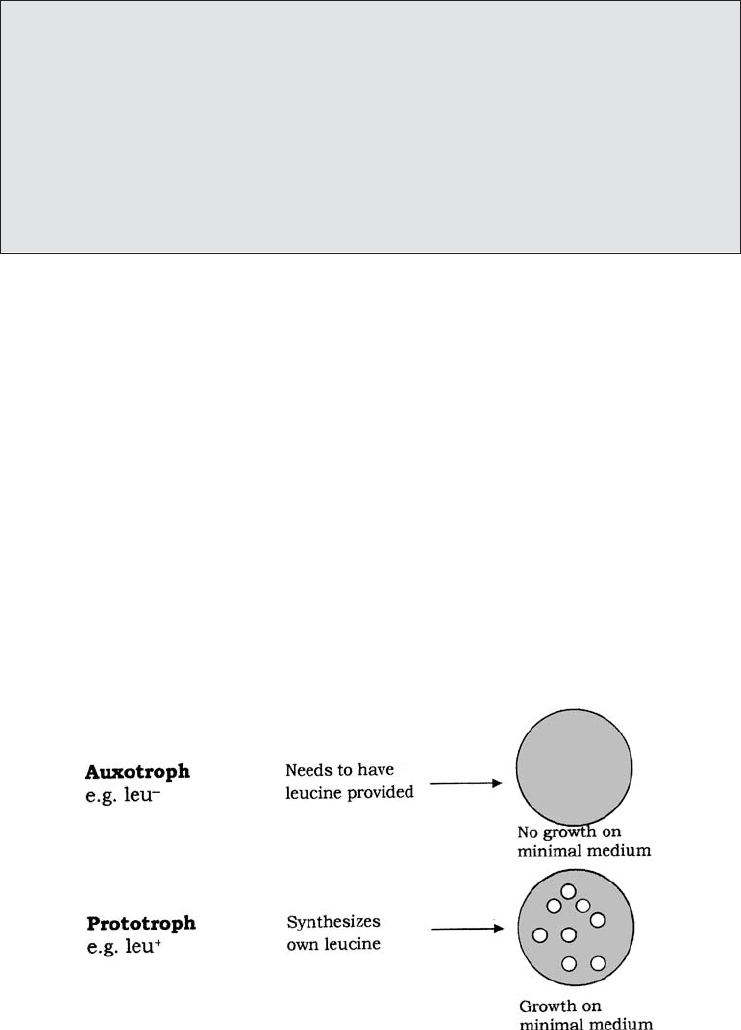
periments involved the use of auxotrophic mutants (Box 11.8), which have lost the
ability to make a particular enzyme involved in the biosynthesis of an essential nutri-
ent. These can be recognised experimentally by their inability to grow on a medium
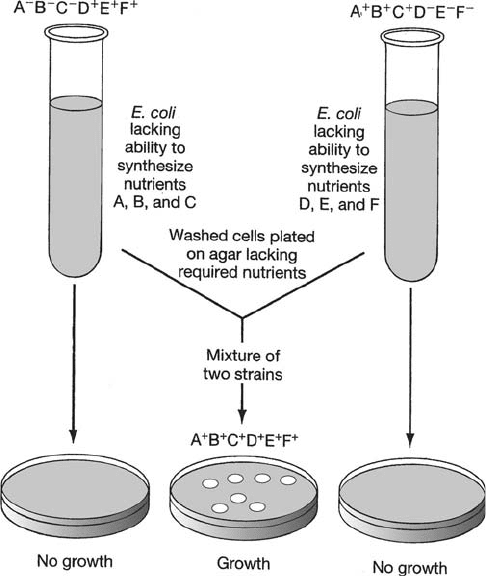
lacking the nutrient in question (Figure 11.26). The results of Tatum and Lederberg’s
experiments suggested that a process was taking place in bacteria akin to sex in eucary-
otes, in which there was a recombination of the cells’ genetic material (Figure 11.27).
Transformation, as demonstrated by Griffith, could not explain their results, since the
addition of a DNA-containing extract of one strain to whole cells of the other did not
result in prototroph formation. This was confirmed in an ingenious experiment in which
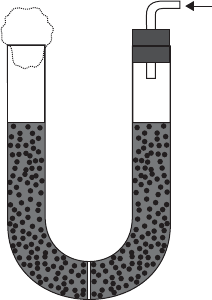
Bernard Davis showed that Tatum and Lederberg’s results were only obtained if direct
cell-to cell contact was allowed (Figure 11.28).
Figure 11.26 Auxotrophic mutants provide useful genetic markers. They are unable to
synthesise a particular nutrient, and can be detected by their inability to grow on a minimal
medium (one containing only inorganic salts and a carbon source such as glucose)
JWBK011-11 JWBK011-Hogg August 12, 2005 19:21 Char Count= 0
304 MICROBIAL GENETICS
Figure 11.27 Tatum and Lederberg: sexual recombination in bacteria. Two strains with
complementary genotypes (auxotrophic for certain genes, prototrophic for others) are each
unable to grow on a minimal medium. When the two are mixed, however, colonies are
formed, indicating that recombinant bacteria prototrophic for all the genes have been
formed. The bacteria are washed before plating out to avoid the carry-over of nutrients
from the initial broth to the minimal medium. From Black, JG: Microbiology: Principles
and Explorations, 4th edn, John Wiley & Sons Inc., 1999. Reproduced by permission of the
publishers
Gene transfer in conjugation is one way only
The process of conjugation was initially envisaged as a fusion of the two partner cells to
give a diploid zygote, which subsequently underwent meiosis to give haploid offspring
with modified genotypes. The work of William Hayes, however, showed that the devel-
opment of colonies of recombinant cells was dependant on the survival of only one of
the participating strains, the other strain being required only as a donor of DNA.
It became apparent that in E. coli, there are two distinct mating types, which became
known as F
+
and F
−
, depending on whether or not they possessed a plasmid called
the F (fertility) plasmid. This contains some 30 or 40 genes responsible for its own
replication and for the synthesis of a thread-like structure expressed on the cell surface
called a sex pilus. In a mixture of F
+
and F
−
cells, the sex pilus contacts an F
−
cell, then
JWBK011-11 JWBK011-Hogg August 12, 2005 19:21 Char Count= 0
GENETIC TRANSFER IN MICROORGANISMS 305
Application of
alternating suction
and pressure
Cells of
genotype
a b
+
Cells of
genotype
a
+
b
Glass
filter
Figure 11.28 The Davis U-tube experiment. Two bacterial strains were placed in two arms
of a U-tube, separated by a filter which did not permit the passage of cells. Although suction
was used to transfer medium between compartments, no recombinants resulted. The results
provided direct evidence that cell-to-cell contact is essential for conjugation to occur
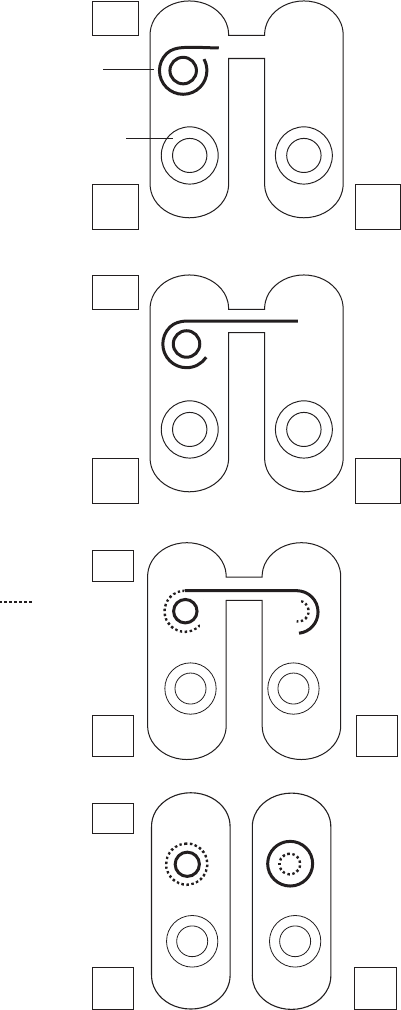
contracts, to pull the two cells together. A single strand of plasmid DNA is then passed
across a channel made between the two cells, and enters the F
−
cell (Figure 11.29). This
then serves as a template for the production of the complementary second strand, and
similarly the single strand left behind in the donor cell is replicated, leaving us with a
double-stranded copy of the F plasmid in both cells. By acquiring the F plasmid, the
recipient F
−
cell has been converted to F
+
.
When conjugation involves a form of donor cell called Hfr (high frequency of recom-
bination), genes from the main bacterial chromosome may be transferred. In these, the
F plasmid has become integrated into the main bacterial chromosome; and thus loses its
ability to replicate independently (Figure 11.30). It behaves just like any other part of
the chromosome, although of course it still carries the genes for conjugation and pilus
formation. When conjugation occurs, a single strand of Hfr DNA is broken within the F
sequence, and is transferred in a linear fashion, carrying behind it chromosomal DNA.
Recombination in the recipient cell results in the replacement of a homologous segment
of DNA by the transferred material, which is then faithfully replicated in subsequent
generations. If transfer is uninterrupted, a process which takes around 100 minutes in
E. coli, eventually the remaining stretch of F plasmid will enter the F
−
cell, bringing up
the rear. The fragile nature of the pilus means, however, that transfer is rarely complete,
and only a limited portion of the bacterial genome is transferred. This means that those
F
−
cells receiving DNA from Hfr cells usually remain F
−
, unlike those in a cross with F
+
cells, because the remainder of the F sequence is not transferred. It soon became clear
that this phenomenon afforded a great opportunity to determine the relative positions of
genes on the bacterial chromosome. This was done by interrupted mating experiments,
in which the time allowed for conjugation is deliberately limited by mechanical break-
age of the sex pili, and correlated with the phenotypic traits transferred to the recipient
cells (Figure 11.31). By these means a genetic map of the bacterial chromosome could
be developed.
JWBK011-11 JWBK011-Hogg August 12, 2005 19:21 Char Count= 0
306 MICROBIAL GENETICS
F+ F-
Transfer continues
into the F- cell.
2.
F+ F-
One strand of the
plasmid DNA in the
F+ cell is nicked,
and passes 5’ end
first into the
conjugation tube.
F plasmid
Bacterial
chromosome
1.
F+ F+
Upon completion of
replication, the cells
separate. By gaining
the F plasmid, the F-
cell has been converted
to F+.
4.
= new strand
F+ F-
The single strand in
each cell acts as a
template for the
production of a
second strand by
the ‘rolling circle’
mechanism
3.
Figure 11.29 Conjugation in bacteria. A single-stranded copy of the F plasmid passes
across a conjugation tube from an F
+
to an F
−
cell. Both this and the copy left behind act
as templates for their own replication, leaving both cells with a complete F plasmid. This
means that the recipient cell is converted from F
−
to F
+
.
JWBK011-11 JWBK011-Hogg August 12, 2005 19:21 Char Count= 0
F+
F-
Hfr
F factor integrates into
chromosome
Single strand of
F episome
nicked and
passed to F-
cell.
Chromosomal
DNA not
incorporated
is degraded
F factor
Chromosomal
gene transfer
Last part of F
factor. Recipient
cell only becomes
Hfr if this is
transferred.
Hfr
F-
Transferred chromosomal
is replicated and may be
incorporated into F-
chromosome by
recombination
Figure 11.30 Conjugation with an Hfr cell results in transfer of chromosomal genes. Hfr
cells are formed by the integration of the F factor into the bacterial chromosome. Dur-
ing conjugation, transfer begins part of the way along the F episome, and continues with
chromosomal DNA. The amount of chromosomal material transferred depends on how long
conjugation is able to proceed. Conjugation may be followed by recombination of transferred
chromosomal material with its homologous sequence on the recipient cell’s chromosome
307