
Hogg S. Essential microbiology
Подождите немного. Документ загружается.

JWBK011-12 JWBK011-Hogg August 12, 2005 20:21 Char Count= 0
328 MICROORGANISMS IN GENETIC ENGINEERING
Multiple
cloning site
Terminator
Selectable
marker
ori
Ribosomal
binding site
Operator
Promoter
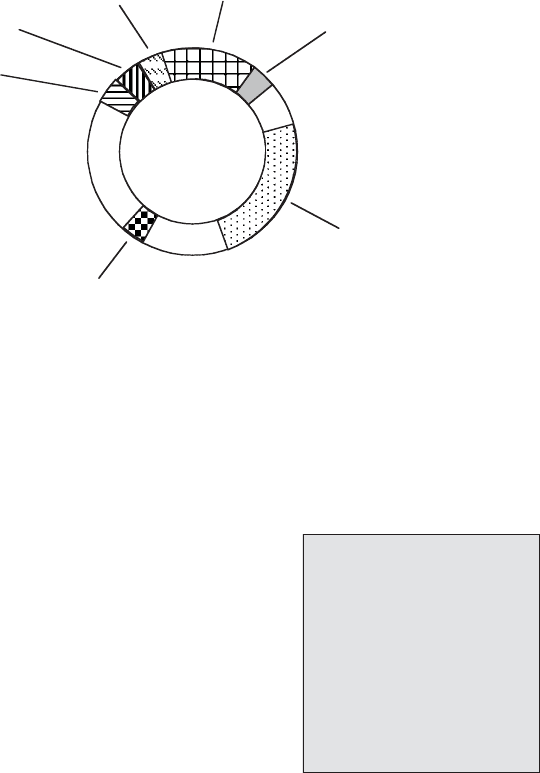
Figure 12.11 A cassette vector. In order for a foreign gene to be transcribed and translated
successfully, it must be surrounded by the appropriate expression sequences. In a cassette
vector, these sequences flank the RE recognition sites at which the foreign DNA is inserted
Another obstacle to the cloning of such proteins concerns a fundamental difference in
the way that procaryotic and eucaryotic systems convert the message encoded in DNA
to messenger RNA (see Chapter 11). Procaryotes lack the means to remove introns, so
Complementary DNA
(cDNA) is DNA pro-
duced using mRNA as a
template, using the en-
zyme reverse transcrip-
tase. It represents only
the coding sequences
of the parent DNA mole-
cule.
if a human gene, for example, is expressed, the whole
of the primary transcript will be translated, instead of
just the coding sequences, leading to a non-functional
protein. This problem can be circumvented by cloning
not the entire gene, but its cDNA, that is, just those DNA
sequences that are transcribed into mRNA and subse-
quently translated into amino acid sequences. This can
be done by isolating mRNA, then using reverse transcrip-
tase to make a DNA copy. In the case of proteins such as
insulin, the very small size enabled artificial genes to be
synthesised, based on their known amino acid sequences.
Eucaryotic cloning vectors
A number of problems are associated with the expression of complex eucaryotic genes
in bacterial cloning systems, some of which have just been outlined. In order to avoid
these, such genes may be expressed in eucaryotic cloning systems, the model system
for which is the yeast Saccharomyces cerevisiae. This holds many attractions for the
experimenter:
r
it is safe and easy to handle in the laboratory

JWBK011-12 JWBK011-Hogg August 12, 2005 20:21 Char Count= 0
EUCARYOTIC CLONING VECTORS 329
Table 12.1 Characteristics of yeast cloning vectors
Plasmid type Abbreviation Features
Yeast episomal plasmid YEp Contain 2 µm circle (naturally occurring yeast
plasmid) origin of replication and whole of
pBR322 sequence. Can integrate into yeast
chromosomal DNA or replicate independently.
High copy number
Yeast integrative plasmid YIp Bacterial plasmid containing yeast selectable
marker. Stably integrates into yeast
chromosome. Unable to exist independently in
yeast. Low transformation rate and single copy
number
Yeast replicative plasmid YRp Carries yeast chromosomal origin of replication
(ARS); high copy number; unstable
Yeast centromere plasmid YCp Contain centromere sequence – ensures stability,
but low (single) copy number
r
it grows at higher density than E. coli
r
it grows much faster than other eucaryotic cells in culture (e.g. cultured mam-
malian cells)
Several types of vector have been developed for use in yeasts. These are summarised in
Table 12.1. The choice of which type to use will depend on the relative importance to a
particular application of factors such as yield and long-term stability. Most yeast vectors
are shuttle vectors, that is, vectors that can be replicated in more than one type of host
cell (in this case, yeast and E. coli). Initial cloning is more easily done in E. coli, then
the recombinant vector is transferred to yeast cells, which can carry out functions such
as protein folding and glycosylation that are not possible in bacteria. Shuttle vectors
must contain selectable markers and an origin of replication (or means of integration)
for both cell types.
YACs, BACs and PACs
The centromere is the
central region of the
chromosome that en-
sures correct distribution
of chromosomes be-
tween daughter cells
during cell division, whilst
telomeres are important
in preserving the stability
of the tips of each chro-
mosome arm.
We saw earlier in this chapter how the use of cosmid
vectors extended the size of cloneable insert to around
45kb. Many eucaryotic genes, however, are bigger than
this, and so cannot be cloned in a single sequence us-
ing such a system. In addition, the ability to clone large
DNA fragments is essential for the physical mapping
of complex eucaryotic genomes such as that of humans
(3 × 10
9
bp). Yeast artificial chromosomes (YACs) have
been developed to accommodate insert fragments of up
to 1Mb (1000kb). They contain key sequences from a
JWBK011-12 JWBK011-Hogg August 12, 2005 20:21 Char Count= 0
330 MICROORGANISMS IN GENETIC ENGINEERING
EcoRI
Genomic DNA
Partial digest
with EcoRI
EcoRI
EcoRI
EcoRI
EcoRI
EcoRI
EcoRI
EcoRI
EcoRI EcoRI
Genomic
DNA
Mix and ligate
EcoRI
EcoRI
EcoRI
EcoRI
EcoRI
AMP
R
AMP
R
AMP
R
pYAC4
SUP4
ARS2
ARS2
ARS2
URA3
URA3
CEN4
TRP1
URA3
TRP1
ori
ori
ori
CEN4
TRP1
CEN4
TEL
TEL
TEL
BamHI BamHI
BamHI
BamHI
Cut with EcoRI
and BamHI
TEL
TEL
TEL
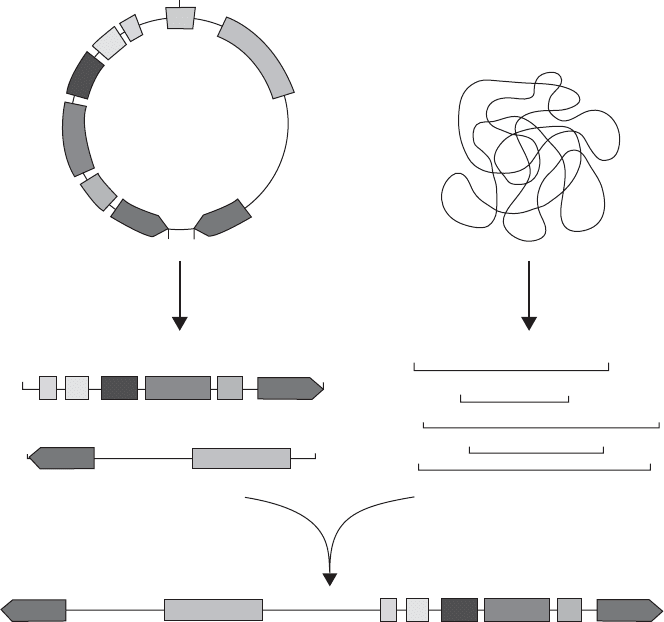
Figure 12.12 Yeast artificial chromosomes (YACs) are used to clone large fragments of
DNA. Cleavage with the REs BamHI and SnaBI leads to the formation of two arms, between
which fragments of foreign DNA of several hundred kb may be ligated. The final construct
contains a centromere, telomere sequences and an origin of replication, and is able to act
like a natural chromosome. From Reece, RJ: Analysis of Genes and Genomes, John Wiley &
Sons, 2003 Reproduced by permission of the publishers
yeast chromosome that ensure its stable replication; these include an origin of replica-
tion (the autonomous replication sequence, ARS) the CEN sequence from around the
centromere, and the telomeres at the end of the chromosome. When placed in S. cere-
visiae cells, the presence of these sequences allows the YAC to replicate along with the
natural chromosomes.
The fragment to be cloned is inserted between the two arms of the YAC (Figure 12.12).
Each arm carries a selectable marker; it is important to have two, to ensure that each
construct comprises both a right and a left arm, and not two of the same. Insertional
inactivation of a third selectable marker (situated around the point of insertion) allows
the detection of recombinants.
JWBK011-12 JWBK011-Hogg August 12, 2005 20:21 Char Count= 0
EUCARYOTIC CLONING VECTORS 331
Bacterial artificial chromosomes (BACs) allow the cloning of fragments as large as
300kb in length into E. coli host cells, although 100–150kb is more routinely used. They
are based on the naturally occurring F plasmid of E. coli; recall from our description of
bacterial conjugation in Chapter 11 that the F plasmid can pick up considerable lengths
of chromosomal DNA, when it becomes known as F’. BACs have the advantage over
YACs that they are easier to manipulate, and inherently more stable.
Phage P1-derived artificial chromosomes (PACs) are another relatively recently de-
veloped class of vector for use in E. coli, with a comparable capacity to that of BACs.
Viruses as vectors in eucaryotic systems
Several proteins of clinical or commercial interest are too complex to be expressed using
microbial host cells, even eucaryotic ones, and are only properly produced in mammalian
systems. Vectors based on animal viruses such as SV40, adenoviruses and vaccinia virus
have been successfully developed for use in these. Vaccinia has been particularly valuable
in the development of recombinant vaccines.
Viruses of humans such as adenoviruses and retroviruses have also been tested as
vectors in the exciting new technique of gene therapy, which attempts to ameliorate the
effects of genetic disorders by introducing the ‘correct’ form of the defective gene into
the patient’s cells. Here it is important to ensure stable integration of the inserted DNA
into the host chromosome.
A large virus that infects insects, the baculovirus, has been found to be a highly
efficient vector for the large-scale expression of eucaryotic proteins in cultured in-
sect cells. The rate of expression is much higher than in cultured mammalian cells,
and the necessary protein folding and post-translational modifications are correctly
executed.
Cloning vectors for higher plants
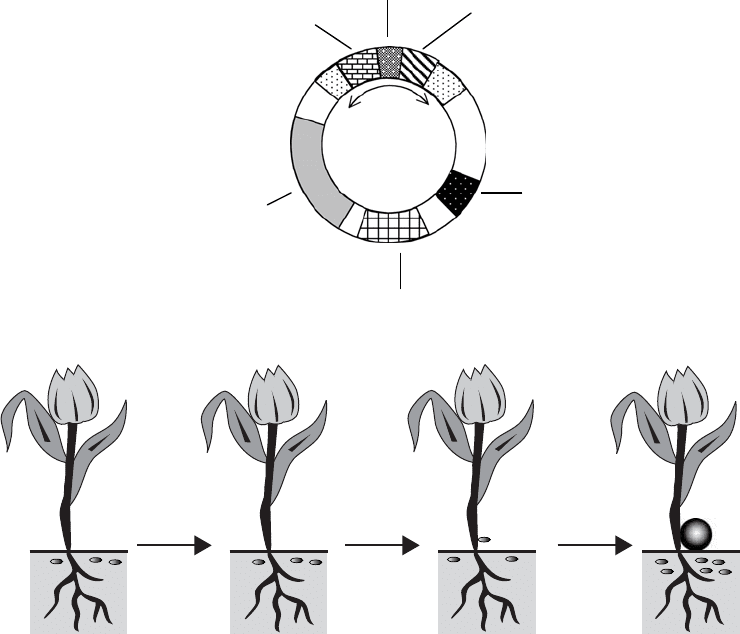
The most important single tool for the genetic engineering of plants is the Ti plasmid.
This is found naturally in the soil bacterium Agrobacterium tumefaciens, which infects
plants at wound sites, and leads to a condition called crown gall disease. The impor-
tant feature of this plasmid is that part of it, called the T-DNA, can integrate into the
host plant’s chromosomes, and be expressed along with host genes (Figure 12.13). Ge-
neticists were quick to spot the potential of the Ti plasmid, replacing tumour-forming
genes with foreign genes, and having them expressed in plant tissues. The recombinant
A. tumefaciens is used to infect protoplasts, which can be regenerated into a whole plant,
every cell of which will contain the integrated foreign gene. The Ti plasmid system has
been used in the successful transfer of genes for insect- and herbicide-resistance into
economically significant crop plants.
Plant viruses have very limited usefulness as vectors. Only the caulimoviruses and the
geminiviruses have DNA rather than RNA as their genomic material, and a variety of
problems, including instability of inserts and narrow host range, have been encountered
with the use of these.
JWBK011-12 JWBK011-Hogg August 12, 2005 20:21 Char Count= 0
332 MICROORGANISMS IN GENETIC ENGINEERING
Auxin
synthesis
Opine
synthesis
Opine
utilisation
ori
Virulence genes
Cytokinin
synthesis
(a)
T DNA
Ti
plasmid
Wound
Invasion by
Agrobacterium
Formation of
crown gall
Opine
production
(
b
)
Figure 12.13 Agrobacterium tumefaciens. (a) The Ti plasmid. The T-DNA contains genes
for tumour production and the synthesis of opines, unusual amino acid derivatives that
serve as nutrients for A. tumefaciens. (b) Crown gall formation by A. tumefaciens. The
T-DNA integrates into the DNA of the host, where its genes are expressed. This ability has
been exploited in order to transfer foreign genes into plant cells. From Reece, RJ: Analysis of
Genes and Genomes, John Wiley & Sons, 2003. Reproduced by permission of the publishers
Genetically engineered insect resistance using Bacillus thuringiensis
Destruction of crops by insect pests is a huge problem throughout the world, and the
use of chemical insecticides is only partially successful in countering it. The drawbacks
to the use of such chemicals are manifold:
r
they are often non-specific, so beneficial insects as well as harmful ones are
killed

JWBK011-12 JWBK011-Hogg August 12, 2005 20:21 Char Count= 0
POLYMERASE CHAIN REACTION (PCR) 333
r
they are often non-biodegradable, so they can have lasting environmental ef-
fects
r
aerial spraying only reaches upper leaf surfaces
r
resistance develops with continued use.
A form of natural insecticide does exist; it is a crystalline protein produced during
sporulation by Bacillus thuringiensis. This is highly toxic to insects when converted
to its active form by the enzymes of the gut. This δ-endotoxin is relatively selective;
different strains of B. thuringiensis produce different forms of the toxin, which are
effective against the larvae of different insects. Surprising as it may seem, the use of the
δ-endotoxin as an insecticide was patented a hundred years ago; however, the success
of it has been limited due to a variety of practical considerations.
The development of genetic engineering techniques has meant that attention has
turned in more recent times to introducing the genes for the δ-endotoxin into the crops
themselves, so that they synthesise their own insecticide. This has been achieved with
some success, but the problem of the insects building up resistance remains.
As a spin-off from the Human Genome Project, the genetic make-up of many microor-
ganisms has been elucidated. One of these is Photorhabdus luminescens, which encodes
a toxin lethal to the two species of mosquito responsible for the spread of malaria, and
it is hoped that determining the sequence of the gene will lead to applications in insect
control.
Polymerase chain reaction (PCR)
First described in the mid-1980s by Kary Mullis, PCR is probably the most significant
development in molecular biology since the advent of gene cloning. PCR allows us to
amplify a specific section of a genome (for example a particular gene) millions of times
PCR selectively repli-
cates a specific DNA se-
quence by means of in
vitro enzymatic amplifi-
cation.
from a tiny amount of starting material (theoretically
a single molecule!). The impact of this powerful and
highly specific process has been felt in all areas of biology
and beyond. Medicine, forensic science and evolutionary
studies are but three areas where PCR has opened up
new possibilities over the last 15 years or so. To appre-
ciate how PCR works, you will need to understand the
role of the enzyme DNA polymerase in DNA replication,
as outlined in the previous chapter. This is the enzyme,
you’ll recall, that when provided with single-stranded
DNA and a short primer, can direct the synthesis of a
complementary second strand. Figure 12.14 illustrates
the three steps in the PCR process:
A primer is a short nu-
cleotide sequence that
can be extended by
DNA polymerase. In
PCR, synthetic primers
are designed to flank ei-
ther side of the target se-
quence.
r
Denaturation: by heating to 95
◦
C, the DNA is sepa-
rated into single strands, providing a template for the
DNA polymerase.
JWBK011-12 JWBK011-Hogg August 12, 2005 20:21 Char Count= 0
334 MICROORGANISMS IN GENETIC ENGINEERING
3’5’
5’3’
5’
5’
3’
Primers
3’
5’
5’
3’
1. Denature at 95
o
2. Anneal primers at 50-60
o
3’
5’
5’
3’
5’
5’
3’
3. Extend primers at 72
o
T
hermostable DNA
polymerase
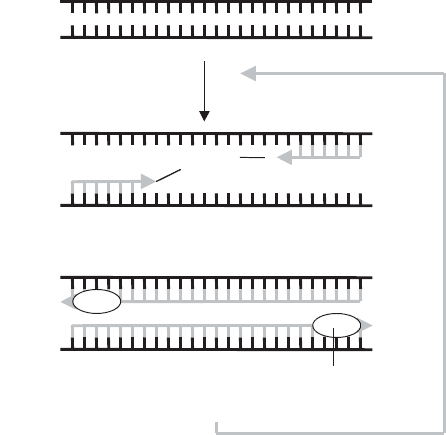
Figure 12.14 The polymerase chain reaction (PCR). Millions of copies of a specific se-
quence of DNA can be made by PCR. Samples are subjected to repeated cycles of denatu-
ration, annealing of primers and extension by a thermostable DNA polymerase (for details
see the text). At the end of the first cycle (shown in the diagram), each of the four strands
can serve as a template for replication in cycle two. After 30 cycles, over a billion copies of
the target sequence will have been made
r
Primer annealing: at a lower temperature (typically 50–60
◦
C, the exact value de-
pends on the primer sequence), short single-stranded primers are allowed to attach.
Primers are synthetic oligonucleotides with a sequence complementary to the regions
flanking the region we wish to amplify. One primer anneals to each strand, at either
side of the target sequence.
r
Polymerase extension: at around 72
◦
C, the DNA polymerase extends the primer by
adding complementary nucleotides and so forms a second strand.
The net result of this process is that instead of one double-stranded molecule, we now
have two. We now come to the key concept of PCR; if we raise the temperature to 95
◦
C
again to start another cycle, we will have not two, but four single-stranded templates to
work on, each of which can be converted to the double-stranded form as before. After
20 such cycles we should have, in theory, over a million copies of our original molecule!
Typical PCR protocols run for 30–35 cycles. All this can be achieved in just a couple
of hours; the temperature cycling is carried out by a programmable microprocessor-
controlled machine called a thermal cycler.
PCR has widespread applications in microbiology, as in other fields of biology, but
in addition, microorganisms play a crucial role in the process itself. If you have read the

JWBK011-12 JWBK011-Hogg August 12, 2005 20:21 Char Count= 0
TEST YOURSELF 335
above description of PCR carefully, something should have struck you as being not quite
right: how can the DNA polymerase (a protein) tolerate being repeatedly heated to over
90
◦
C, and what sort of an enzyme can work effectively at 72
◦
C? The answer is that
the DNA polymerase used in PCR comes from thermophilic bacteria such as Thermus
aquaticus, a species found naturally in hot springs. The optimum temperature for Taq
polymerase is 72
◦
C, and it can tolerate being raised to values considerably higher than
this for short periods. The availability of this enzyme meant that it was not necessary
to add fresh enzyme after each cycle, and the whole process could be automated, a key
factor in its subsequent phenomenal success.
Test yourself
1 are enzymes that cut DNA at specific se-
quences in the
backbone.
2 Joining together DNA fragments from different sources produces a
molecule.
3 DNA fragments with
tend to join together because of
their complementary single-stranded overhangs.
4 In order to gain access to a host cell and be replicated, a fragment of DNA
must be taken up by a
molecule.
5
enable us to detect which host cells have been trans-
formed. A commonly used example is resistance to
. By insert-
ing foreign DNA at this point, recombinants can be detected by
.
6 Another name for a polylinker is a
.
7 A short sequence of labelled single-stranded DNA used to locate a specific
target sequence is known as a
.
8 The removable central section of the phage Lambda genome is known as a
fragment.
9 Bacteriophage
is a useful vector if DNA is required in a
form.
10 Cloning vectors combining features of plasmids and phage Lambda are called
.
11
vectors incorporate foreign DNA at a site that is surrounded by
essential signal sequences.

JWBK011-12 JWBK011-Hogg August 12, 2005 20:21 Char Count= 0
336 MICROORGANISMS IN GENETIC ENGINEERING
12 E. coli is not a suitable host for the expression of complex eucaryotic proteins
because it lacks the molecular machinery to carry out
modifications
such as
.
13
DNA contains only those sequences that are involved in coding
for a polypeptide product.
14 Yeast plasmids are based on a naturally occurring sequence called the
.
15
vectors are able to replicate in both and cells.
16 A virus found to be useful in the expression of eucaryotic genes is the
. It is grown in cultured cells.
17 The soil bacterium A. tumefaciens contains a plasmid called
, which
causes crown gall disease. Part of it, the
, integrates into host
chromosomes.
18 Genes from Bacillus thuringiensis coding for
have been introduced
into plant cells, making them
resistant.
19 The polymerase chain reaction (PCR) comprises repeated cycles of the follow-
ing three steps:
, of primers and by
DNA polymerase.
20 PCR results in an
increase in the number of copies of the target
sequence.
JWBK011-13 JWBK011-Hogg August 12, 2005 16:31 Char Count= 0
Part V
Control of Microorganisms
337